“Shouldn’t the new US Attorney General be prosecuting Reflecting Pool Vandals instead of spinning on the Sunday News Shows?” John Buss, @repeat1968
Good Day, Sky Dancers!
Regurgitating the past is so Trumpian. He’s the very model of a relic, an anachronistic trope. This week was full of reminders of how detached he is from reality. Once again, Orange Caligula tried to get the case brought by E. Jean Carroll overturned. Even the Supreme Court didn’t buy it. He may be able to control many of the folks he appointed to executive office, but his manipulation of U.S. democracy still only goes so far.
This is from NBC News‘ Lawrence Hurley. “Supreme Court turns away Trump’s latest bid to block E. Jean Carroll award. President Donald Trump filed an unusual request asking the justices to reconsider a decision they made not to hear his case several weeks ago.” E. Jean and her attorney, Roberta Kaplan, are real American heroes.
The Supreme Court on Monday declined for a second time to take up President Donald Trump’s bid to overturn a jury verdict that awarded $5 million to writer E. Jean Carroll for alleged sexual abuse and defamation.
In an unusual move, the president had asked the court to reconsider its decision from June that rejected Trump’s initial appeal. The court almost never grants such requests.
The case arose from a federal lawsuit Carroll filed in New York City alleging that Trump sexually assaulted her in the dressing room of a department store in 1996. The defamation claims relate to statements he made about her after his first term in office, in which he described her claims as a “con job” and “hoax.”
Trump has denied any wrongdoing and has said he does not know Carroll.
Trump has a separate appeal at the Supreme Court concerning a different defamation case in which Carroll won an $83 million judgment. That case concerns comments Trump made as president during his first term and has been tied up in litigation over whether he can claim immunity.
The court is not set to act on that appeal until later this year.
Good news. E. Jean Carroll spent a decade in court fighting one of the most powerful men in the world.She fought with tenacity and grace — and she won. She is one of my personal heroes.We owe her a debt of gratitude.https://www.cnbc.com/2026/08/17/trump-supreme-court-e-jean-carroll.html
And of course, he argued presidential immunity. This is from Politico.
Trump’s Supreme Court challenges to both verdicts argued in part that the verdicts were flawed because they relied on statements Trump made in 2019 about Carroll while he was serving as president and those statements should be considered immune from legal liability under the high court’s 2024 ruling granting presidents immunity for many acts they take while in office.
I wonder when the new AG is going to jump wily-nily into the case? I wrote a lot on Monday about the current treatment of the US Service members deployed to the Iran-Israeli/US war and their deplorable conditions. I mentioned that historically, Orange Caligula has shown mostly contempt for anyone who served in the military, voluntarily or not. My family has served this country since the Revolution, and I really don’t take kindly to the implications that my dad, uncles, or cousins, or any of the others that fall into the multiple greats, did so because they’re “suckers and losers”.
Public Notice‘s Noah Berlatsky takes on his constant denigration of the many who served. This happened after a Fox News “journalist,” Joey Jones, earned this headline from The Independent. “Fury erupts at Fox host who blasted ‘weak’ sailors on USS Abraham Lincoln: ‘Put him on that ship’. The former Marine Corps staff sergeant compared the carrier crew’s living conditions to his own deployment in Afghanistan.” The outrage over this continues. Here’s the take from Berlatsky: “Suckers and losers” as policy. The plight of the USS Lincoln lays bare Trump’s disdain for the troops.”
The Navy Times reported last week, based on interviews with family members, that multiple sailors have recently tried to jump overboard from the aircraft carrier USS Abraham Lincoln — a ship has been deployed for 250 days as part of President Trump’s war of choice against Iran.
Food is deteriorating and being rationed, there are water shortages, the laundry facilities are broken. And the psychological toll has been brutal.
Trump started a war without provocation and has prolonged it because he does not want to admit he lost. But when questioned on Friday about conditions on the Lincoln, he responded not with compassion or regret, but with callous vindictiveness.
Asked if the deployment had lasted too long, he replied, “No. Not nearly long enough.”
Q: The family members of US service members are concerned about the conditions on the USS LincolnTRUMP: No they're notQ: Has the deployment gone on too long?TRUMP: No no no. Not nearly long enough.
Trump also claimed that a carrier was moving to the Middle East to relieve the Lincoln. That appears to be true. Still, his belligerent denial of the suffering of service members is shocking.
“Shocking,” though, does not mean surprising.
Over the last decade, Trump has consistently insulted and mocked US troops. His defense secretary, Pete Hegseth, has made clear that he sees service members as props in his endless battle to win culture war accolades from Nazi bloggers and right-wing talking heads.
The fact that real men and women are experiencing mental health crises and are dying in service of their ill-informed and vindictive whims doesn’t trouble Trump or Hegseth. It should more than worry everyone else though.
In yet another deranged Orange Caligula moment, we see his priorities. This is from the AP. “Trump blames vandals for damaged grass in the same spot where he held his big July 4 celebration.” WTAF? Is this paranoia or some odd brain fart? He’s done more damage to the District than the British ever did!
President Donald Trump on Sunday said vandals are to blame for large swaths of dead grass on the National Mall near the World War II Memorial — in the same spot where Trump had a stage built and hosted crowds for his July 4 celebration.
Trump made the accusation in a social media post without saying why he believes it’s the work of vandals instead of trampled turf from the Independence Day festivities. He posted a photo showing a once-grassy area by the World War II Memorial, now patchy and brown across much of the sprawling turf.
“Look what VANDALS did to the grass connecting the vandalized World War II Monument and the vandalized Reflecting Pool, which will be opened again, and better than ever, shortly,” Trump said on his Truth Social platform.
“Anybody who thinks the Reflecting Pool wasn’t vandalized should go back to Law School!” he added.
Trump has been obviously obsessed with World War II and its generals recently. Does he want to be Eisenhower now? Does he really think starting WW III would be a terrific idea to cement his place in history? I just don’t get any of this. Can someone please stop this madman before the country declines beyond repair?
In a truly bizarre move, Trump decided joint military exercises with South Korea should be ended because he’s such a good friend of the bizarro leader of North Korea. This is from the New York Times‘ Helene Cooper. “Trump Orders Pentagon to Curtail Military Exercises With Ally South Korea. In a social media post, the president scolded South Korea for not helping denuclearize Iran, and also praised North Korea and its leader.”
President Trump said on Sunday that he had instructed the Pentagon to reduce joint military exercises with South Korea, a longtime U.S. ally and a linchpin of America’s national security strategy in the Asia-Pacific region.
The announcement may heighten growing worries among Asian allies over what the United States is now willing to do to deter China, given the enormous distraction and resource drain of the U.S.-Israel war against Iran. The United States is running low on critical weapons and has been moving military resources out of Asia to the Middle East.
In a convoluted social media post, Mr. Trump complained that Seoul did not “join us in the Denuclearization of the Islamic Republic of Iran.” In the same post, he said that North Korea under Kim Jong Un had been “unthreatening and respectful” while he has been president.
In his post Mr. Trump did not mention a rift in relations in 2017, when the North Korean leader called him a “mentally deranged dotard” after Mr. Trump delivered a speech at the U.N. threatening to “totally destroy” North Korea if the United States had to defend itself or its allies.
Now Mr. Trump is speaking only of what he on Sunday called his “very good relationship” with North Korea and its leader. In his post, he said that because of those ties, he was “not happy with the fact that the United States has, long ago, agreed to participate in Joint Military exercises with South Korea.”
“These exercises are not only costly, with much of these costs paid for by the United States of America (as usual!), but send a signal that is totally inappropriate and hostile, to a Country that, as long as Donald J. Trump has been President, has been unthreatening and respectful,” Mr. Trump said in his post.
Mr. Trump said that because it was too late to cancel the exercises entirely, he had asked Defense Secretary Pete Hegseth to “substantially reduce” U.S. participation.
The U.S. and South Korean militaries have held joint exercises for more than 70 years, since 1955, after the 1953 armistice that ended the Korean War.
The South Korean Defense Ministry confirmed that the joint military exercises had begun on Monday as scheduled. In a statement last week, the allies emphasized that the 11-day annual Ulchi Freedom Shield exercises were “defensive in nature” and aimed at enhancing the countries’ readiness and capabilities by “incorporating realistic threats, including lessons learned from recent conflicts.”
But North Korea’s Foreign Ministry on Friday had reiterated its condemnation of the drills, branding them “a rehearsal for an aggressive war.” In response, the country conducted two ballistic missile tests off its east coast this month, vowing to “respond to a new level of a threat with a new level of a deterrent.”
I don’t know about you, but I think having a President so totally located in a completely different reality, in charge of things — especially the military — is an extremely dangerous place to be.
So, let’s end this on hope, a wing and a prayer. This is from Axios‘ Mike Zapler and Ben Berkowitz. “Even some Republican voters sour on Trump.” I would hope they could. How can you live in this country today and afford anything? How could you have draft-age children or grandchildren and not be worried?
High prices, a persistent war and anxiety about corruption are quickly eroding President Trump’s support among Republicans, a warning sign for the White House with less than 80 days to the midterms.
Why it matters: Democrats look likely to take control of the House already, but Trump’s weakness could cost Republicans more seats and further endanger the Senate.
The loss of one or both chambers would guarantee two years of scrutiny and gridlock for the end of Trump’s presidency.
By the numbers: Three surveys out in the last week paint a clear picture of growing dissatisfaction among the president’s base.
📉 An Economist/YouGov poll out Tuesday had Trump’s approval rating among Republicans at a second-term low of 79 percent — a decline of 12 points from shortly after he took office.
In that time, the percentage of Republicans who “strongly approve” of Trump’s performance has dropped more precipitously —by 20 points (from 68 to 48 percent).
Trump is barely above water among non-MAGA Republicans, who make up about 30 percent of the party. Only 51 percent approved of his performance, vs. 47 percent who disapproved. The positive rating among non-MAGA Republicans fell 13 points in one week.
⬇️ A Financial Times poll out this weekend had Trump’s net approval rating among Republicans off 8 points from just a month prior.
💰 Republican consumer sentiment fell 9.5 points in August from July, per the University of Michigan monthly survey out Friday — one of the largest declines the decades-old project has ever recorded. The Republican decline was more than double the overall headline number.
Driving the news: It’s no secret what’s behind the numbers: the war in Iran, high gas prices and stubborn inflation.
These recent findings come on the heels of polls that show rising Republican skepticism of the war and GOP wariness over whether Trump is using his office for personal profit.
The intrigue: Trump’s political strength has long derived from outsized loyalty among Republicans, so even a slight slippage could be consequential.
I also was under the delusion that Republicans were deficit hawks. But, I guess that was just another gaslighting session. If you have time, check this one out by Max Boot from the Washington Post. Too bad it took some of these assholes so long to figure things out. “I’m a hawk. I’m shocked by a $1.5 trillion defense budget. The request would top World War II spending while funding boondoggles and sweetheart deals.”
So, anyway, it’s another hot, humid Monday down here in New Orleans, and I have to go water the small patch of sod that is now the middle of my small backyard. I’m still trying to teach folks economics and finance, but nothing fits the reality these days. The entire Data Center thing and the supposed “financing” of it are totally outside my realm, as a PhD in Financial Economics. Call me churlish, but this looks more like the Command-and-Control economics and policies of the old Soviet Union than those of the United States. Then there’s this, which is so far outside the bounds of legality I can’t even think straight about it. “Trump family crypto business World Liberty gets preliminary approval to establish a bank.” The flunky he appointed as Comptroller of the Currency has already approved it. Let’s see how he manipulates the Federal Reserve System and the SEC! Don’t even get me started on RFK Jr’s latest romp through medicine and the vaccines that have saved so many people.
As usual, more at the links.
Anyway, I can’t believe what’s going on. I really can’t. None of this should be happening. Let me know what you think. As usual, more on any of this can be found at the links.
What’s on your Reading, Action, and Blogging list today?
Did you like this post? Please share it with your friends:
“Someone has to point this out. The opening of the Obama Presidential Center is an experience and immersion of joy, hope, love, and pride; the 250th anniversary of our founding could have been celebrated.” John Buss, @repeat1968
Good Day, Sky Dancers!
Cadet Bonespurs, the worst negotiator ever, has basically given away the U.S. and its wealth. He’s trying to make his Iran War debacle look like something other than a costly disaster that took the lives of our soldiers and innocent Iranian people. I’m going to let Bill Kristol and the rest of the conservative gang at The Bulwarksum this up.
Thanks to their operational control of the Strait of Hormuz, Iran was able to get away with murder in setting the terms of further peace talks with the United States—and now they’re pushing for even more. The first round of scheduled peace talks under the new memorandum of understanding were supposed to begin in Switzerland today, but Iran abruptly called them off yesterday, citing the intensifying conflict between Israel and Hezbollah in southern Lebanon, which they deemed a violation of the MOU’s terms. This morning (eastern time) the Republican Guard Corps Navy—which Trump claims doesn’t exist—once again closed the strait. The message was clear: If you want to negotiate, you’d better figure out how to get Israel in line.
“Trump just can’t stand that President Obama is in the spotlight with the opening of his Presidential Library.” @repeat1968, John Buss
I’m also going to use the next headline there this morning to wish you a happy, long Juneteenth weekend! “Celebrate Juneteenth. Annoy MAGA.” Well, don’t do it completely to just ignore them. Let’s be reminded of how many black Americans were once considered property and treated as such. We still have a long way to go to get rid of this burdensome legacy and the racism that still plagues us today, but at least, at many points in the country’s history, we were capable of doing the right thing.
Today is Juneteenth, a holiday long celebrated, especially by black Americans, to commemorate the end of slavery in the United States. In 2021, Congress, recognizing that the end of slavery was an event worthy of formal recognition by the whole nation, established it as a federal holiday for all Americans. The holiday’s name refers to June 19, 1865, the day when Union Maj. Gen. Gordon Granger issued General Order No. 3 ordering the enforcement of the Emancipation Proclamation in Texas: “The people of Texas are informed that, in accordance with a proclamation from the Executive of the United States, all slaves are free.”
In the midst of this year’s celebration of the 250th anniversary of the Declaration of Independence, the commemoration of Juneteenth can have special resonance. But not for the Trump administration, which, so far as I can tell, has not deigned to acknowledge the holiday this year. When I searched the White House website this morning for “Juneteenth,” I got back no results found. Nor does there seem to be any presidential proclamation this year in honor of its observance.
The one time the Trump administration seems to have taken notice of Juneteenth was in December of last year, when the administration removed Juneteenth (and MLK Day) from the National Park Service’s list of free-admission days, replacing it with June 14, Flag Day—which is not an official federal holiday. But it is President Trump’s birthday, and that is the holiday he wishes all of us to celebrate, as he celebrated it Sunday with the cage match on the White House lawn.
One understands why Trumpists choose to neglect Juneteenth. After all, Trump’s vice president claimed earlier this week at a campaign event in New York that “they’ve become anti-white in the Democratic party.” If you’re appealing to those who think one of our two major parties is “anti-white,” if you’re trying to convince Americans that anti-whiteness is a great problem, if you’re the party that wants to foster and exploit white grievance, then you have little interest in calling attention to a holiday that is a reminder of the terrible injustices caused by fantasies of white supremacy.
That last sentence hits home. And I say no more going high when they go low. Call it out for what it is.
Meanwhile, Iran’s ally Russia has amped up its rhetoric against Ukraine. “Russia threatens escalation after Ukraine hits Moscow with largest-ever drone attack.” This story comes from CNBC. It’s written by Sam Meredith.
Russia has pledged to carry out frequent and “massive group strikes” against Ukraine shortly after Kyiv launched a barrage of drones on Moscow, triggering a huge explosion in one of the Russian capital’s key oil refineries.
Ukrainian forces conducted a large-scale attack against Moscow on Wednesday evening and Thursday, heavily targeting a major oil refinery located on the south-eastern outskirts of the city.
Nearly 200 drones were reportedly used in the attack, marking Ukraine’s biggest-ever air raid on Russia’s capital. Authorities said 16 people had been injured, while four Moscow airports temporarily grounded flights.
Columns of black smoke were seen billowing from Gazprom’s Moscow Refinery on Thursday, a facility that has been targeted by Ukrainian forces multiple times in recent weeks.
“It is no coincidence that the president announced some time ago, after yet another Kyiv terrorist attack, that we will now conduct massive group strikes on a regular basis against targets whose condition directly affects the combat readiness of the Ukrainian Armed Forces,” Russian Foreign Minister Sergei Lavrov told reporters on the sidelines of an event in Kazan on Thursday, according to Interfax.
Ukrainian forces have repeatedly targeted Russia’s oil infrastructure, seeking to cut Moscow’s energy revenues and try to force President Vladimir Putin into bringing an end to the four-year war.
The New York Times has a big story today about the institutional racism being put back into place in the military by drunk, rapey Pete Hegseth. We have to stop going backward. “Secret Vetting and Blocked Promotions: Inside Hegseth’s War on Diversity. A Black admiral fixed one of the Navy’s worst messes. Mr. Hegseth blocked his promotion anyway.” Greg Jaffe and Kate Kelly share the lede.
The Navy’s top leadership believed that Rear Adm. Stephen D. Barnett was by far the best choice to lead the command that oversees the Navy’s bases at home and abroad.
He had more experience than the other candidates and had successfully managed the aftermath of one of the Navy’s biggest messes, a fuel spill that contaminated an aquifer on a base in Hawaii, sickening thousands.
The final decision this spring fell to Defense Secretary Pete Hegseth.
To many in the Navy, Admiral Barnett’s promotion seemed like a foregone conclusion.
The officer, however, had a big strike against him. Like other Black military leaders, he had been encouraged by his superiors to help the Navy recruit and retain minority officers, who remain significantly underrepresented in the force. His years-old remarks on the importance of diversity had been flagged in a secret vetting process designed to weed out senior leaders whom Mr. Hegseth and his team pegged as a problem.
Instead of Admiral Barnett, Mr. Hegseth selected a white officer who was the Navy leadership’s third choice.
So far this year, Mr. Hegseth has blocked the promotions of at least 40 senior officers to general and admiral ranks. About half of those are women or members of minority groups.
Tom Toles Editorial Cartoon
Politico‘s Alexander Burns believes he’s found “The Most Surprising Miscalculation of Trump’s Second Term. He has underestimated the power of patriotic sentiment in countries besides the United States.” Well, I was hoping that more Americans found their patriotic sentiment–including those representing this country–, but that was just a dream, it seems.
When Donald Trump won a new term in the White House, Danielle Smith joined the parade of foreign leaders visiting Mar-a-Lago to honor the president-elect. The populist premier of Alberta, Smith enjoyed lively relationships across the American right, even hosting Tucker Carlson in Western Canada in 2024.
Yet when I asked Smith last fall, at a policy summit in Toronto, how she’d feel about Trump potentially intervening in Alberta’s fragile politics, her MAGA stripes vanished.
“I don’t want any foreign influence in our politics here,” Smith told me.
Admiring Trump from afar is one thing. But sovereignty is sovereignty, and borders are borders.
Trump used to understand that.
A decade ago, Trump waged his first-ever political campaign as a nationalist crusader, demanding harder borders and more muscular American sovereignty. When the United Kingdom held its 2016 referendum on leaving the European Union — the 10-year anniversary is in a few days — Trump cheered it on and crowned himself “Mr. Brexit.”
In his second term, Trump’s grasp of nationalist politics has slipped. He has underestimated the power of patriotism and national pride in countries other than his own.
This serial miscalculation has undermined Trump’s trade wars and military adventures, aggravated the cost-of-living crisis, weakened the Republican Party and battered Trump’s bonds with the global right.
It began even before Trump’s inauguration in 2025, with his campaign of bullying against Canada.
This is also from CNBC. “U.S.-Iran accord hits early snag after Swiss talks fail to proceed as planned.” This is reported by Justina Lee and Sam Meredith. They’re certainly a pair of busy reporters this week.
News that the U.S. and Iran had reached an interim deal may have brought some initial relief to markets, but fresh uncertainty emerged on Friday after planned follow-up talks in Switzerland were called off, underscoring the challenges of turning the agreement into a lasting peace settlement.
Switzerland’s foreign ministry said U.S.-Iran talks scheduled to take place at Bürgenstock on Friday would not proceed as planned.
The White House also said that Vice President JD Vance was no longer traveling to Switzerland, citing unresolved logistical issues surrounding the negotiations.
“The plans for the upcoming technical talks have not been finalized, and the U.S. delegation has been prepared to depart at the first available opportunity,” a White House spokesperson said.
“But the logistics of these negotiations have never been simple or predictable.”
The developments came a day after President Donald Trump and Iranian President Masoud Pezeshkian signed a memorandum of understanding aimed at developing a permanent peace deal to end the months-long conflict.
Under the 14-point MOU, both sides agreed to extend the ceasefire, including in Lebanon, and reopen the strategically vital Strait of Hormuz.
The Financial Times, however, reported that Friday’s talks were abruptly called off due to Israel launching a wave of deadly air strikes against Lebanon, citing three people familiar with the matter.
Lebanon’s Health Ministry said 18 people were killed in the south of the country following a series of Israeli strikes overnight. Israel said four of its soldiers were also killed.
Israeli Prime Minister Benjamin Netanyahu said in a social media post Friday morning that he instructed the Israel Defense Forces to strike Hezbollah “with full force” in response to a “heinous attack” by the Iran-backed group.
Hours later, a U.S. official told CNBC that the two groups agreed to a ceasefire from 4 p.m. local time, or 9 a.m. ET.
Oil prices turned lower after the ceasefire was reported.
It sure looks like we have a lot of leaders of major countries completely out of their league. And back to Iran. This is from Reuters. “Iran’s Revolutionary Guards set up covert Iraqi cells to attack Gulf neighbors, sources say.” It’s the same old, same old since the 1970s if you ask me.
Iran’s Islamic Revolutionary Guard Corps (IRGC) has set up secretive new cells in Iraq to carry out attacks on Gulf countries that host American forces, bypassing established militia networks to avoid detection, eight Iraqi sources told Reuters.
Three or four cells, each comprising about 10 elite Iraqi Shi’ite Muslim fighters, launched at least seven drone attacks from desert locations near the southern cities of Basra and Samawa against sites in Kuwait, Saudi Arabia and the United Arab Emirates between April 20 and May 17, three of the sources said.
A number of their members were drawn from Islamic Resistance in Iraq, an umbrella group of hardline Shi’ite factions with thousands of fighters. But the new groups operate outside its command structure, reporting directly to the IRGC, according to the sources, who include two Iraqi military officials, another security official and five local militia commanders.
The establishment of the new Iraqi cells, which has not previously been reported, reflects a shift in IRGC tactics aimed at preserving Iran’s ability to project force across the region at a time when its armed proxy groups are greatly diminished and its own military and economic resources are depleted, the five militia commanders said.
Feeling safer now? Me neither. Trump’s polls continue to fall on the Iraq war. As you can see from The Bulwark articles, the trad war hawks are not happy about the situation. Maybe we all need to start building bunkers. This is from the AP. “What Americans think about Trump’s handling of Iran, according to a new AP-NORC poll.”
Most Americans continue to disapprove of how President Donald Trump is handling Iran, while his overall presidential approval holds steady, according to a new AP-NORC poll that was conducted as he suggested a deal with Iran had been reached.
The poll points to just how unpopular the war, which began Feb. 28, has been with Americans even as the Republican president turned abruptly from threatening Iran to reopening negotiations. Support for his handling of the war remains lopsidedly partisan. About two-thirds, 65%, of U.S. adults disapprove of how Trump is handling issues with Iran. But while the vast majority of Democrats and independents view Trump’s actions negatively, only 28% of Republicans are unhappy.
The new survey was conducted June 11-17, just after Trump called off threats to escalate the war with Iran. The poll was fielded as Trump announced a deal with Iran and authorized an end to the U.S. naval blockade in the Strait of Hormuz, concluding just before the deal was signed Wednesday.
Well, at least we can fire up some grills, even though most of us will not be eating steaks or meat. I like the Juneteenth holiday and its proximity to Independence Day. The addition of Pride month fortifies the display. This shows that eventually we can include everyone who should be included. Unfortunately, Orange Caligula and his band of fascist, racist haters just never give up. We have to vote them out.
What’s on your Reading, Action, and Blogging list today?
Did you like this post? Please share it with your friends:
“Upon further reflection, the Rededicate 250 National Prayer thing now makes huge sense. He Is Risen!” John Buss, @repeat1968
Good Day, Sky Dancers!
The one thing you can depend on every time Orange Caligula gets the reins of government is that things will always get worse, except for democracy backsliding. It’s just a matter of how shocking the next thing is. How many of us are in a constant state of being stunned that we aren’t the least bit surprised by the news, even though we still find the actions stomach-churning? Well, hang on! It’s been a week of WTF moments.
Today’s Tit-for-Tat announcement shows just how brazen the entire administration has gotten. This is from Time Magazine. It’s reported by Rebecca Schneid. What kind of monster thinks these things up?
President Donald Trump has withdrawn his $10 billion lawsuit against the Internal Revenue Service (IRS) amid reports that he struck a deal with his own Justice Department to create a $1.7 billion fund to compensate political allies who claim they were wrongly targeted by the Biden Administration.
The alleged plan, first reported by the New York Times and ABC News, would be paid for with taxpayer funds and is being fast-tracked, but has yet to be officially approved. If approved, the fund would be used to pay damages to people who say they were harmed by the Biden Administration’s “weaponization” of the legal system, including the nearly 1,600 people charged in connection with the Jan. 6, 2021, insurrection.
Court documents showed Trump withdrew his lawsuit against the IRS, a move that could herald a private deal between the president and the agency he controls, while skirting legal oversight of the deal.
In a lawsuit filed in a Miami federal court in January, Trump and other plaintiffs accused federal agencies of failing in their duty of stopping a former IRS contractor from illegally obtaining and disclosing tax returns to the New York Times, ProPublica, and “other left-wing media outlets,” between May 2019 and September 2020.
The funds would also be used to settle his request for $230 million in legal claims from the Justice Department for the 2022 search of his Mar-a-Lago estate and investigation into alleged ties between his campaign and Russia
As part of the settlement, Trump would also reportedly ask the IRS to public1pologize for the disclosure of his personal financial records and to waive an IRS audit
According to the Times, the Justice Department would model the program after the historic $760 million settlement fund stemming from the Keepseagle v. Vilsack class-action lawsuit, settled in 2011, which alleged that the U.S. Department of Agriculture (USDA) systematically discriminated against Native American farmers and ranchers in its farm loan and loan servicing program.
We know someone who can sum this up nicely. This is how Hillary put it this morning.
Trump didn’t just pardon his followers who stormed the U.S. Capitol. He’s now set them up for payments through a slush fund he created to reward his allies—out of your tax dollars. You could not make this up.
Robert Reich had some additional thoughts and analysis. He elucidated them on his SubStackthis morning. “Has Trump’s Republican Party Become a Criminal Enterprise? Trump’s purge of all political opponents, including Senator Bill Cassidy, leaves it with no purpose other than helping Trump achieve his lawless goals.” Trump puts us in a Mafia State every time he’s elected. Grifting is his only talent, and he’s been rich and influential enough to find ambitious and greedy toadies to carry out his wishes. We’ve known this forever here.
On Saturday, Trump took revenge on Louisiana senator Bill Cassidy for Cassidy’s vote five years ago to convict Trump, in his second impeachment, for instigating an attack on the U.S. Capitol.
Cassidy thereby became the first GOP senator defeated by a Trump-endorsed candidate in a Republican primary. (Other Republican senators who have stood up to Trump — such as North Carolina’s Thom Tillis and Utah’s Mitt Romney — saw the writing on the wall and didn’t seek reelection.)
Trump’s purge of Cassidy comes in the wake of Trump’s purges of House Republicans who stood up to him, such as Wyoming’s Liz Cheney.
Trump’s next Republican target in the House is Kentucky representative Thomas Massie, who had the guts to oppose U.S. military involvement in Iran, demand release of the Epstein files, and criticize Trump’s spending bills for adding to the national debt. Massie appears likely to be defeated by a Trump-backed opponent in Tuesday’s Kentucky primary.
Trump has also purged state legislators who have refused to do his bidding, such as the seven Indiana Republicans who refused to redistrict the state as Trump demanded they do, and who Trump insured were defeated in their recent primaries.
The message is clear to every current or aspiring Republican politician: Be a toady to Trump, or you’re out.
In his concession speech Friday night, Cassidy stated the obvious reference to Trump:
“Our country is not about one individual. It is about the welfare of all Americans, and it is about our Constitution. And if someone doesn’t understand that and attempts to control others through using the levers of power, they’re about serving themselves. They’re not about serving us. And that person is not qualified to be a leader.”
Nicely put but sadly irrelevant because Trump — who’s clearly serving himself rather than the American public — now possesses all levers of power in the official Republican Party.
As Republican senator Lindsey Graham said yesterday on Meet the Press,“There’s no room in this party to destroy [Trump’s] agenda.”
There’s more at the link. My question is, what the hell can the rest of us who don’t support him do? I voted Saturday morning, wondering which candidate I had voted for would even have a chance under the new gerrymandering. That doesn’t even consider that we couldn’t even vote for our Congressional representatives, given the Supreme Court decision and the quick fix redraw of our map to ensure maybe one black person will retain their seat. The only good news to come out of the election was that all five constitutional amendments proposed by Governor Klandry were voted down.
Will these latest bits of news set up another J-6 self-coup? There will certainly be a rabid MAGA candidate sitting in Cassidy’s seat come next January. This is from NPR. “Louisiana senator who voted to convict Trump loses Republican primary.”
Sen. Bill Cassidy of Louisiana, one of seven Republican senators who voted to remove President Trump from office after the January 6th insurrection at the U.S. Capitol, lost his bid for reelection.
Louisiana’s Senate primary on Saturday was the latest test of Trump’s hold on his party. The president recruited a challenger, Rep. Julia Letlow, and urged supporters to defeat Cassidy over his vote.
“His disloyalty to the man who got him elected is now part of legend,” Trump wrote in a Truth Social post about Cassidy. “And it’s nice to see his political career is OVER.”
Cassidy finished third in a three-way race, according to the Associated Press. Letlow and another candidate, state Treasurer John Fleming, will advance to a June 27 runoff.
In conceding the race, Cassidy hinted that he would not finish his second term quietly. But in an apparent dig at Trump, he also said he wouldn’t contest his loss.
“You don’t pout, you don’t whine, you don’t claim that the election was stolen,” Cassidy told supporters on Saturday night. “You thank the voters for the privilege of representing the state or the country for as long as you’ve had that privilege. And that’s what I’m doing right now.”
Cassidy told voters they should cast their ballot based on the present and the future, not the past, a subtle discouragement from re-litigating the 2020 election six years on. But for many primary voters, Cassidy’s move to convict felt like a betrayal, and Trump’s endorsement was paramount.
“I’m the type of person, if you cross me, I probably won’t trust you anymore,” retired sheriff deputy Kevin Dupree said earlier this month. “I think his political career in Louisiana is finished.”
My friend Robert Mann, a former Journalism Professor at LSU, has something poignant to say about the loss. This is from his SubStack. “Enjoy your tarnished legacy, Bill Cassidy. You earned it.” It’s a good lesson: while all politics is local, it can be influenced by a cult of personality.
Although he pandered shamelessly to Trump and MAGA to the bitter end, Sen. Bill Cassidy could have written a different ending to his political career.
He could have left office with his head held high, proud and satisfied that he’d remained true to his principles and the Hippocratic Oath.
He could have protected our families by blocking Trump’s efforts to destroy our public health system.
He could have legislated (and campaigned) as the moderate he told me and others he truly was.
He could have put the state of Louisiana — and the nation — ahead of his desire for another U.S. Senate term.
He could have been our senator, not Donald Trump’s.
He could have done all this and more, but Cassidy lacked the courage, the imagination, and the decency to put you and me ahead of his political ambition.
What Cassidy received in return for his soul is eternal shame and a well-earned legacy of cravenness.
I hope Cassidy enjoys his earnings.
I hope he also feels the harsh judgment of history that will be reserved for a Trump critic turned shameless toady who sold out to the worst, most corrupt president in American history—and still lost.
Bill Cassidy could have written a different story for himself and his state, but he just didn’t have it in him.
Speaking of Mafia-like behavior, here’s a little something on the Don’s Greenland Grab. This is from the New York Times. “In Closed-Door Talks, U.S. Demands a Major Role in Greenland. Greenlandic officials worry about the direction of the negotiations aimed at defusing President Trump’s threats to seize their island. But they have little leverage.” The story has a number of contributing reporters.
With the conflict in Iran still smoldering, President Trump’s obsession with Greenland seems like a forgotten sideshow.
But for the past four months, negotiators from the United States, Greenland and Denmark, which controls Greenland’s foreign affairs, have been holding confidential talks in Washington about Greenland’s future.
The talks were meant to give Mr. Trump an offramp to his threats of a military takeover of Greenland and to scale back a crisis that risked breaking apart the NATO alliance. But Greenlandic leaders are worried about what is being proposed, which is a much larger U.S. role on the Arctic island. And they fear that if the conflict with Iran winds down, the president will swing his aggression back on them.
Some Greenlandic politicians say they have even circled a date on their calendars to be wary: June 14, Mr. Trump’s birthday.
An investigation by The New York Times, based on interviews with officials in Washington, Copenhagen and Greenland, has discovered:
The United States is trying to modify a longstanding military arrangement to ensure American troops can stay in Greenland indefinitely, even if Greenland becomes independent. The notion is basically a forever clause, and Greenlanders do not like it.
The United States has pushed the talks beyond military matters and wants effective veto power over any major investment deals in Greenland to box out competitors like Russia and China. Greenlanders and Danes strongly object to this.
The United States is discussing cooperation with Greenland on natural resources. The island is loaded with oil, uranium, rare earths and other critical minerals, though much of it is buried deep beneath Greenland’s ice.
The Pentagon is rapidly moving ahead on plans for a military expansion and recently sent a Marine Corps officer to Narsarsuaq, a town in southern Greenland, to inspect the World War II-era airport, the harbor and places where American troops could be housed.
The American demands are so steep, Greenlandic officials fear, that they amount to a major imposition on their sovereignty. Despite all of the talk from Danish and American officials that Greenland’s future is up to the island’s 57,000 people, Greenlandic officials said the American demands would tie their hands for generations.
If the Americans get everything they want, said Justus Hansen, a member of Greenland’s Parliament, there will never be any “real independence.”
“We might as well raise our own flag halfway,” he said.
There’s a lot more at that gifted link. Jeer Heeter has this description of our Grifter-in-Chief in his article in The Nation. “Trump Gloats About “Making a Fortune” While Americans Suffer. As his war in Iran wreaks havoc, Trump is fixated on personal glory and enrichment.”
Donald Trump is annoyed that he can’t celebrate the massive profits oil companies are making due to the war he launched in the Middle East. Left to his own druthers, Trump would be exulting in the hundreds of billions of dollars produced by skyrocketing oil prices—if it weren’t for the pesky fact that it comes at the expense of ordinary Americans, who are now paying roughly 40 percent more every time they fill up the gas tank than they were before Trump started bombing Iran nearly three months ago.
We know this thanks to Trump’s endless dedication to saying the quiet part out loud. Speaking with Sean Hannity of Fox News on Thursday, Trump chortled that because far less oil was coming out of the Middle East, “people are finding other places to buy oil, like Texas.” Trump added, “So I don’t want to say we’re making a fortune, you understand that? Because if I say that, they’re going to say ‘oh, he forgets about the little man with the $4 gasoline.’”
The juxtaposition between “making a fortune” and the “little man” suffering at the gas station underscores just how obtuse Trump and his allies have become in their economic message. Their response to the harm caused by Trump’s policies is not to reverse those policies, or even to appear sympathetic about their effects. It’s to express their total indifference to the suffering of the American people. At the same time, Trump is obsessively focused on his real priorities: enriching himself and his family, and creating gaudy monuments to himself such as a new White House ballroom and a Triumphal Arch that will squat in the middle of Washington, DC. In response to a reporter’s query as to whom the arch would celebrate, Trump pointed to himself and said “me.”
Trump twice won the White House on a message of economic populism, promising in his 2025 inauguration that he would “bring prices down.” Today, he sings a very different tune, with a message that amounts to the apocryphal words misattributed to the French Queen Marie Antoinette: “Let them eat cake.”
Speaking to reporters last Monday, Trump said, “I don’t think about Americans’ financial situation. I don’t think about anybody. I think about one thing: We cannot let Iran have a nuclear weapon. That’s all.” He also said that concern for the financial suffering of Americans would not be a factor in making a deal with Iran “not even a little bit.”
Under normal political circumstances, the Republican Party would be wise to separate itself from Trump’s callousness. But the GOP has become a hollowed-out operation mainly concerned with tending to Trump’s cult of personality. On Saturday, Trump won a major victory against critics in the party when Louisiana Senator Bill Cassidy came in third in his party’s Senate primary race, losing to a candidate Trump had supported. Cassidy’s loss underscores a lesson Trump has taught the GOP again and again over the last decade: There is no future in the party for anyone who defies his will.
So, rather than distancing themselves from Trump’s “let them eat cake” message, Republicans are embracing the president’s self-defeating rhetoric. On Thursday, Ohio Representative Jim Jordan told CNN that oil prices were “were coming down until we had to deal with this situation, but, you know, that’s life, that’s dealing with…the world we live in.”
It’s going to take hard work and a lot of voting to get rid of this monster and all the dregs of humanity he’s put in charge of the country. It appears they have all been profiting from insider news on the Iran War.
1. What I found in Trump's new 113-page financial disclosure report. It doesn't look good.
This is from Jude Legum’s SubStack. “The smoking guns in Trump’s new financial disclosure, Trump publicly praised companies the same day he bought their stock.”
On March 11, President Trump took a tour of a manufacturing facility in Reading, Ohio, owned by Thermo Fisher Scientific, a medical supply company. During the tour, Trump lavished praise on Thermo Fisher which uses the facility to manufacture prescription drugs on a contract basis. “It’s a great honor being here. It’s a great company,” Trump said, appearing alongside CEO Marc Casper. “You have done a fantastic job and I’d like to congratulate you.”
Later, Trump asked another Thermo Fisher executive to share “some great information about this incredible company.” The executive talked about how Thermo Fisher is producing drugs for Merck and others at the facility. Trump then explicitly encouraged other pharmaceutical companies to contract with Thermo Fisher to “on-shore” more jobs. He claimed that some pharmaceutical companies were building their own U.S. manufacturing facilities but said “they can get here a lot faster by using this great company.”
Trump did not mention that, the same day of the tour, March 11, he purchased between $15,000 and $50,000 of Thermo Fisher stock. (Federal disclosure rules only require filers to list their transactions in broad ranges.) Trump did not publicly disclose the purchase until May 14. It was listed on page 38 of a 113-page document cataloging Trump’s stock purchases in 2026.
Trump also purchased between $51,000 and $115,000 worth of Thermo Fisher stock about one month before his visit on February 12. He made another purchase of Thermo Fisher valued between $15,000 and $50,000 on March 2. So at the time of Trump’s effusive remarks about Thermo Fisher, he had purchased as much as $215,000 worth of the company’s stock over the previous month.
The fact that Trump visited a Thermo Fisher facility on the same day he purchased the company’s stock — and bought Thermo Fisher stock repeatedly in the weeks before his visit — has not previously been reported.
The disclosures reveal that Trump has been a highly active trader in 2026, executing thousands of transactions — many in individual stocks impacted by his administration’s policies. In response to criticism, a spokesperson for the Trump Organization claimed that the trades were completely separate from Trump’s official duties and managed by an independent outside financial advisor. “President Trump’s investment holdings are maintained exclusively through fully discretionary accounts independently managed by third-party financial institutions with sole and exclusive authority over all investment decisions,” the spokesperson said. “Trades are executed and portfolios are balanced through automated investment processes and systems administered by those institutions.”
The fact that Trump purchased stock in Thermo Fisher the same day that he toured its facility undercuts this claim. Further, the March 11 purchase of Thermo Fisher stock was marked “UNSOLICITED” in the document. An “unsolicited” trade is one that is not recommended by a broker, but initiated by the customer.
At least three immigrant children were taken into custody and restrained with zip ties at the San Antonio Immigration Court. The children were between the ages of 9 and 12.www.mysanantonio.com/news/local/a…
Brookings reminds us that there are still thousands of families with children experiencing horrible detentions and deportations because of the MAGA obsession with keeping America as white as possible. “The administration has detained 400,000 immigrants: What do we know about their children?” Is this really the kind of country you want to live in and that you thought you grew up in?
The Trump administration has made detention and deportation the centerpieces of its immigration policy. Around 60,000 people are being held in detention currently, and around 400,000 people have been booked into Immigration and Customs Enforcement (ICE) detention from an interior arrest since the administration began. Detention capacity is likely to expand, with $45 billion allocated to expanding detention facilities in the One Big Beautiful Bill Act.
Though it is mostly adults who are detained and deported, many children are impacted by separation from their parents. However, there are no reliable data on how many detainees or deportees have children in the U.S., nor on what happens to them once their parent is taken into custody. Here we focus on detainees, about whom we have better information than deportees. Even a short separation from a parent is likely traumatic for a child, but a majority of detentions are not short-lived separations. A ProPublica study following ICE arrests of mothers of U.S. citizen children over the first seven months of the administration found that 60% had been removed and 17% remained in custody at the study’s conclusion.
To estimate the number of children affected by parental detention, we rely on demographic characteristics of detainees matched with likely unauthorized immigrants in the American Community Survey. Our analysis (detailed below) suggests that more than 145,000 U.S. citizen children have likely experienced a parent booked into detention since the administration began, with more than 22,000 of those experiencing detention of all their co-resident parents. In the accompanying interactive, we allow users to explore how the estimates change when the underlying assumptions are varied. Regardless of the assumptions used, it is clear that tens of thousands of children have faced parental detention since January 2025.
Please use the link to read the details. The time and research it took to find out all this was amazing and hard to believe.
What’s on your Reading, Action, and Blogging list today?
I can’t even explain what kind of crush I had on Cat Stevens in ninth grade. I could basically play his entire songbook. He’s an amazing songwriter and musician.
Did you like this post? Please share it with your friends:
The one thing holding inflation prices down in this country was the price of oil. It peaked in 2023 and began a decline until Orange Caligula launched a full-on attack on Iran and disrupted traffic in the Straight of Hormuz. Such is the result of a madman’s insane policy choices based on revenge, power-grabbing, and greed. It’s like giving a toddler the driving wheel and letting him take you down from a very tall mountain.
It’s not like I didn’t warn everyone to clear out of the stock market and hunker down about a year ago. It’s also just going to get worse. I fortunately cleared out the last of one of my 403(b)s last week to use it to improve the house before it gets any more expensive. I managed to lose only a bit of it, and I’m glad to know the check got cut before the worst hit so far. I can’t promise you that it’s going to get any better either. We’re worse than a Banana Republic. We’ve gone back to something akin to the dark ages with plagues of measles and armed thugs wandering the streets, looking to harm and jail workers and poor people. We can’t even put a bunch of pedophiles in suits into the justice system. What good is our Constitution for if money means you can ignore it
I’m going to start with AXIOS because they always get straight to the point. This analysis is by Neil Irwin, and this absolutely stunning chart provides some visuals. That line covering the first few months of 2026 screams outlier with a discernible reason. To the moon and beyond! It’s also obvious that none of it was Joe Biden’s fault, given the dates accompanying the data points. Okay, I’ll step down from the professor’s podium. I’ll just say economics students will be studying this for as long as universities stand.
In the first week of the American and Israeli attack on Iran, the economic ripples were looking pretty minimal. But as Week 2 begins, the risks to the global economy are growing much more serious.
The big picture: You can’t decapitate the leadership of a country of 90 million people, with expansive military and intelligence capabilities, in the heart of some of the world’s most economically important supply chains, without a huge cost.
The hours and days and weeks ahead are all about quantifying that cost.
Zoom in: Oil skyrocketed 25% overnight, to just under $120 a barrel, fueling worries that higher energy costs will stoke inflation and curb spending by U.S. consumers. Tokyo’s Nikkei 225 index plunged more than 5%.
That’s the highest oil price since about four years ago, when energy prices surged due to Russia’s invasion of Ukraine.
Patrick De Haan — a widely cited gas price expert and an analyst for GasBuddy — estimates there’s an 80% chance the national average gas price will hit $4 per gallon in the next month.
The latest: As of 5am ET, a barrel of the global crude oil benchmark was going for about $107 on futures markets, up 15% from Friday and 47% from 10 days ago, before the Iran attack. Brent crude prices approached $120 overnight before receding on reports of coordinated global action to release oil reserves.
The oil price rise is poised to translate into a rapid increase in the cost of retail gasoline, which was already up about 51 cents per gallon before the weekend run-up in oil prices.
The risk of a broader economic slump is rising with the disruption to oil supplies. S&P 500 futures are down 1.3% overnight, setting Wall Street up for its third consecutive day of losses.
Japan’s Nikkei index was down 5.2% and South Korea’s KOSPI down 6%, reflecting those economies’ more direct dependence on Middle Eastern oil now at risk of a protracted blockade.
Of note: The odds of a U.S. recession this year spiked to 38% in overnight trading on Polymarket, from 24% at the start of the month.
State of play: Iran is seeking to block the Strait of Hormuz, which connects the Persian Gulf with the rest of the world, and is threatening to attack ships that seek to pass through.
The war has already caused the largest oil disruption in history, taking out roughly 20% of the world’s supply, according to Bob McNally, president of Rapidan Energy and a former George W. Bush energy adviser.
That’s double the previous record set during the Suez Crisis in the 1950s, which disrupted just under 10% of global supply.
The weekend also brought apparently successful Iranian attacks on desalination plants in the Gulf region that are critical for drinking water.
President Trump has raised the possibility of U.S. ground forces in Iran.
More at the link. CNBC shows the data with more analysis. “Oil prices topped $100 per barrel on record supply disruption, but are off session highs.” We’ll see if that lasts until the markets close this afternoon.
Shortly after oil blasted past $100 at the open of trading Sunday evening, President Donald Trumpposted on Truth Social that a gain in “short term oil prices” was a “very small price to pay” for destroying Iran’s nuclear threat.
“Only fools would think differently!” Trump added.
Gulf Arab states are cutting production because they are running out of storage space, as crude piles up with nowhere to go due to the closure of the Strait. Tankers are unwilling transit the narrow waterway because they are worried Iran will attack them.
The closure of the Strait has triggered the biggest oil supply disruption history, according to an analysis by consulting firm Rapidan Energy. About 20% of the world’s oil consumption is exported through the Strait.
Iran’s foreign ministry spokesman warned Monday that oil tankers “must be very careful.”
“As long as the situation is insecure, I think all tankers, all maritime navigation, must be very careful,” Foreign Ministry spokesman Esmail Baghaei told CNBC in an interview.
Kuwait, the fifth-biggest producer in OPEC, announced precautionary cuts Saturday to its oil production and refinery output due to “Iranian threats against safe passage of ships through the Strait of Hormuz.” The state-owned Kuwait Petroleum Corp. did not detail the size of the cuts.
Output in Iraq, the second-biggest OPEC producer, has effectively collapsed. Production from its three main southern oilfields has fallen 70% to 1.3 million barrels per day, three industry officials told Reuters on Sunday. Those fields produced 4.3 million bpd before Iran war.
And the United Arab Emirates, the third-biggest producer in OPEC, said Saturday that it is “carefully managing offshore production levels to address storage requirements.” The Abu Dhabi National Oil Co., or ADNOC, said its onshore operations are continuing normally.
The war showed little signs of easing despite Trump’s claim it was “already won.” Iran named Ayatollah Ali Khamenei’s son, Mojtaba, as its new supreme leader, according to reports. The U.S. and Israel killed Khamenei in the opening days of the war.
Energy Secretary Chris Wright said Sunday that traffic through the Strait will resume after the U.S. has destroyed Iran’s ability to threaten tankers.
It’s really odd to think that I started my career as an economist during the OPEC maneuvers and I’m winding down my career as one with the US maneuvers. Frankly, I think China is sitting pretty right now. They’ve been doing a lot with alternative energy and have the entire Pacific Region — including many Latin American Countries with oil — undoubtedly rooting for them right now.
Alex Harring at CNBC analyzes the market activity. This is fresh off the ticker today. “Stocks pare losses as oil falls back below $100; Dow is down 300 points: Live updates.”
The 30-stock index fell 293 points, or 0.6%, and is coming off its biggest weekly slide in nearly a year. The S&P 500 lost 0.2%, while the Nasdaq Composite gained 0.2%. That signifies a meaningful turnaround for the three indexes, as the Dow was down nearly 900 points, or 1.9%, at its low of the day, and the S&P 500 and Nasdaq were each lower by around 1.5%.
The broader market was helped off its lows by a rise in semiconductor stocks, however. Broadcom jumped more than 3%, while Micron Technology and Advanced Micro Devices gained almost 2% each. Nvidia climbed more than 1%.
West Texas Intermediate crude broke above $100 per barrel in overnight trading to hit more than $119, its first time above the $100 level since 2022, when investors were reacting to the aftermath of Russia’s invasion of Ukraine. It was last up 6% at around $96 a barrel. International benchmark Brent crude added 7% to $99 a barrel. U.S. oil prices began the year below $60 a barrel.
Oil futures jumped after major Middle East producers slashed their output due to the continued closure of the key Strait of Hormuz passageway. Kuwait announced cuts but did not say by how much, while Iraq has reportedly seen its production fall 70%.
Oil prices later came off their highest levels of the session and stocks rose from their lows following a Financial Times report that G7 officials were considering tapping their strategic reserves. But the publication also reported coordinated release was not ready yet, helping to send major indexes lower.
The Cboe Volatility index — Wall Street’s fear gauge measuring investors seeking protection in the options market — topped 30 for the first time since the market’s tariff driven sell-off in April 2025. It was last above 27.
The $100 oil level was seen by many on Wall Street as a breaking point for the economy unless the war is resolved quickly and prices retreat. Trump posted Sunday evening that a gain in “short term oil prices” was a “very small price to pay” for destroying Iran’s nuclear threat.
Trump donors are feeling this immediately. Trump voters will shortly see the impact on their budgets and gas prices. I can’t say I feel sorry for any of them, but there’s not a person who won’t feel this one way or another. The Bulwark’s Andrew Egger examines Trump’s seeming confusion over his War.
What did the White House think it was getting into in Iran? A strike against Iran’s oppressive and fanatical regime, sure. A display of America’s awesome military might, definitely. But it’s become increasingly, painfully clear: They didn’t think there was going to be a war.
The Trump administration developed no real theory of the objectives of the Iran war, because they didn’t think there was going to be a war. Instead, the administration has backfilled a dizzying array of post-hoc goals for the strikes against Iran. Judd Legum counts seventeen different rationales offered by many different officials, from the president’s “feeling, based on fact” that Iran was about to strike the United Statesto a desire to free the Iranian people to a need to destroy a nuclear program the White House had claimed was already “obliterated.”
The Trump administration made no effort to get the American people on board with war, because they didn’t think there was going to be a war. A majority of the public is already opposed to war with Iran, and what support the war does have seems to be based on the questionable assumption that the conflict will be shortly resolved: 44 percent of Americans support the strikes so far, but only 12 percentwould be in favor of sending U.S. ground troops into the country. But the White House has made no broad effort to convince the public on a bipartisan basis that they should be prepared for a long-haul conflict.
They didn’t think there was going to be a war, and so the White House seemingly gave no thought to what the economic ramifications of war would be. After several days of strikes on Iran, President Trump seemed suddenly to realize last week that the ongoing conflict was going to be terrible for energy prices. He tried to slap a band-aid on the problem by announcing risk insurance and military escorts for all oil tankers through the Strait of Hormuz, but it wasn’t enough: Suddenly, oil prices went through the roof, and the White House was scrambling to contain the damage—rushing to reassure consumers that the price hikes would be temporary and even waiving some sanctions on Russian oil to try to ease pressures on global supply. “Short term oil prices, which will drop rapidly when the destruction of the Iran nuclear threat is over, is a very small price to pay for U.S.A, and World, Safety and Peace,” Trump posted on Truth Social yesterday. “ONLY FOOLS WOULD THINK DIFFERENTLY!”
They didn’t think there was going to be a war, and so the president assumed he’d be in charge of picking Iran’s next political leadership. This plan, admittedly, hit an unexpected snag early on: The initial round of strikes that took out Iran’s top leaders also killed a number of lower-ranking regime figures that the White House had identified as pragmatists who might be willing to negotiate. “The attack was so successful it knocked out most of the candidates,” Trump said a day after the strikes began. “It’s not going to be anybody that we were thinking of because they’re all dead. Second or third place is dead.” Still, Trump made it clear he expected to be involved in picking Iran’s next supreme leader, and absolutely ruled out Mojtaba Khamenei, the son of the slain ayatollah: “They are wasting their time . . . Khamenei’s son is unacceptable to me.” But this morning, Iran went ahead and proclaimed Mojtaba Khamenei their next supreme leader anyway.
Somehow, the president seems to remain so confident Iran will be buttoned up in no time that he’s already openly licking his chops over the next triumphant blitzkrieg. “Cuba is gonna fall pretty soon, by the way,” Trump told CNN Friday. “I’m going to put Marco over there and we’ll see how that works out. We’re really focused on this one right now.”
Judd LeGum at Popular Information specifies not the unknowables of the attack, but the rationale and plans for the future, which are blowing in the wind. “9 days in, the most basic question about the Iran war remains unanswered. In just over a week, Trump and top administration officials have given at least 17 different responses about why the war began.” Yup. We still don’t know why they did this.
On February 28, President Trump announced that “the United States military began major combat operations in Iran.” The war has claimed the lives of more than 1500 people, including about 1300 Iranians, dozens in neighboring countries, and six U.S. troops. The Pentagon has estimated the conflict is costing U.S. taxpayers about $1 billion per day — and that figure may be too low.
And yet, nine days into the war, Trump and his administration have failed to clearly answer the most fundamental question: Why did the war begin?
Instead, the Trump administration has offered a bewildering series of shifting, contradictory, and factually incorrect answers. In just over a week, Trump and top administration officials have given at least 17 different responses about why the war began:
A brief description of each of those 17 responses is given in the article. You may read it at this fully gifted link. The New York Times reports on information from Iran’s new Supreme Leader. “Live Updates: Oil Price Surge Rattles Markets; Iran’s Choice of Leader Signals Defiance. Stocks fell on fears of the Iran war’s effects on energy prices. Top clerics selected Mojtaba Khamenei as Iran’s supreme leader, despite President Trump’s warning that he was “unacceptable.”
U.S. stocks fell at the start of trading on Monday, after markets in Asia and Europe tumbled, as a spike in oil prices reflected global fears of a prolonged U.S.-Israeli war with Iran. Meanwhile, Iran projected defiance by naming a son of its slain supreme leader as his successor.
Oil prices briefly surged early Monday to almost $120 per barrel, their highest level since the Covid pandemic, as President Trump’s plans for the next steps in the war, let alone its endgame, remained unclear and Iran showed no sign of bowing to his demand for unconditional surrender.
It still looks like the start of World War 3 to me. From the same link above.
Eleven countries have asked Ukraine for security support to help counter Shahed drones, according to President Volodymyr Zelenskyy. He said in a social media post that the requests have come from countries neighboring Iran, European nations and the United States — and that some “have already been met with concrete decisions and specific support.”
He did not provide further details, though Zelensky earlier told The New York Times that Ukraine sent interceptor drones and a team of experts to protect U.S. military bases in Jordan.
“There is clear interest in Ukraine’s experience in protecting lives, relevant interceptors, electronic warfare systems, and training,” Zelensky added in his post on social media. “Ukraine is ready to respond positively to requests from those who help us protect the lives of Ukrainians and the independence of Ukraine.
This headline is one that worries me. It’s from the Times of Israel. “Trump to Times of Israel: It’ll be a ‘mutual’ decision with Netanyahu regarding when Iran war ends. US president, in phone interview, clarifies that he’ll make final call to end operation ‘at right time’; says he and PM ‘worked together’ against Islamic Republic: ‘We’ve destroyed a country that would have destroyed Israel’.”
US President Donald Trump told The Times of Israel on Sunday that a decision on when to end the war with Iran will be a “mutual” one that he’ll make together with Prime Minister Benjamin Netanyahu.
Trump also asserted in the brief telephone interview that the Islamic Republic would have destroyed Israel if he and Netanyahu had not been around. “Iran was going to destroy Israel and everything else around it… We’ve worked together. We’ve destroyed a country that wanted to destroy Israel.”
The US president was asked whether he alone would decide when the war with Iran ends or if Netanyahu would also have a say.
“I think it’s mutual… a little bit. We’ve been talking. I’ll make a decision at the right time, but everything’s going to be taken into account,” he responded, indicating that while Netanyahu will have input, the US president will have the final say.
Asked whether Israel could continue the war against Iran even after the US decides to halt its strikes, Trump declined to entertain the theoretical possibility before adding: “I don’t think it’s going to be necessary.”
So, it’s still two megalomaniacs avoiding prison sentences running the show. Don’t you feel much better now?
What’s on your Reading, Action, and Blogging list today?
Donald Trump is not happy. He’s not happy with Israel because they kept bombing Iran after Trump has announced a cease fire. He’s not happy because the U.S. intelligence community has found that his bombing raid on Iran didn’t destroy their nuclear capabilities. He’s not happy that he will likely never get the Nobel Peace Prize that he desperately wants.
Yesterday, Trump spoke to the press on the way to Marine One to travel to the NATO summit in the Netherlands. He appeared disheveled, wearing a rumpled suit with no tie. In angrily criticizing Israel and Iran for not abiding by his cease fire announcement, he broke another presidential norm by swearing in public.
President Trump on Tuesday emphatically dropped an f-bomb, on camera, expressing frustration that Israel and Iran appeared to be violating the ceasefire that he just celebrated going into effect.
“We basically have two countries that have been fighting so long and so hard that they don’t know what the f*** they’re doing,” Trump said to reporters as he left the White House.
More than any other president, Trump has been known to use coarse language in speeches and other public appearances. But even for him, this on-camera utterance of the f-word was new. American presidents have typically refrained from using it publicly, even when angry or frustrated.
“Politics is sometimes a dirty and ugly business, and so people use language there that might be better preserved in the locker room — but in no instance do I recall a president openly using this term in a public forum,” said Russell Riley, a presidential historian at the Miller Center at the University of Virginia.
Donald Trump’s f-bomb outburst Tuesday morning over the botched Iran-Israel ceasefire was due to the two embattled countries “ruining” the president’s “perfect war,” journalist Michael Wolff argued on The Daily Beast Podcast.
Trump drops the “F” bomb on the way to Marine One
Wolff also told host Joanna Coles that the context behind Trump’s comment—“You basically have two countries that have been fighting so long and so hard that they don’t know what the f— they’re doing!”—was that the president, unlike his predecessors, doesn’t intend on shepherding the conflict through to its end.
“The difference between all those other people getting sucked into these extended and incredibly damaging commitments is that they have the attention span to do that,“ Wolff said. ”He does not. So in a sense, that’s the weird silver lining. He’s not going to go forward with this.”
“And I don’t see him going down and becoming a wartime president and seeing this as something that he has to see to the end,” Wolff explained. “Trump’s whole impulse is exactly the opposite of that.” [….]
“Many wars are provoked by headlines, by propaganda, by people advocating for their position, trying to push people into wars. That’s certainly what the neocons did for so long,” he said. “But this is kind of the opposite; this is war to create a headline, and the headline is, ‘We won.’”
It’s all part of Trump’s childish personality. He bombed Iran and announced that their nuclear sites were “obliterated.” Right before he had to head to NATO meeting, it came out that that wasn’t true. He’s still publicly insisting that Iran’s nuclear program is dead, but he knows now that it’s a lie.
Trump’s Insane Claims about the Iran Strikes and His Wished-For Cease Fire
If the cease-fire holds, this episode would appear to mark a major foreign-policy victory for the president. But Trump may have made a crucial mistake that could bring about the very outcome that successive American presidents have sought to prevent: an Iranian nuclear weapon.
The problem is that the cease-fire is not linked to a diplomatic agreement with Iran on the future of its nuclear program. Trump apparently sees no need for further negotiation, because the military strikes were, to him, an unqualified success. But as the chair of the Joint Chiefs of Staff said on Sunday morning, assessing the damage to the sites will take some time. A preliminary assessment from the Defense Intelligence Agency found that the strikes had failed to destroy some core components of the nuclear program, CNN reported today.
If parts of the program survived, or if Iran stockpiled and hid enriched uranium in advance of the strikes, then Tehran’s next steps seem clear. It will end cooperation with the International Atomic Energy Agency and withdraw from the Nuclear Non-Proliferation Treaty. Without eyes and ears on the ground, the international community will lose the ability to monitor Iran’s program. Iran could then choose to build a bomb covertly.
There is a worrisome parallel here to North Korea, which ended cooperation with the IAEA, pulled out of the NPT, and slowly resumed production of highly enriched uranium. A few years later, Pyongyang tested a nuclear device, much to everyone’s surprise.
The Iranian regime may conclude that withdrawing from the NPT is its most effective form of retaliation.
Our childish “president” doesn’t have the patience to deal with anything except instant gratification.
The US military strikes on three of Iran’s nuclear facilities last weekend did not destroy the core components of the country’s nuclear program and likely only set it back by months, according to an early US intelligence assessment that was described by seven people briefed on it.
The assessment, which has not been previously reported, was produced by the Defense Intelligence Agency, the Pentagon’s intelligence arm. It is based on a battle damage assessment conducted by US Central Command in the aftermath of the US strikes, one of the sources said.
Discouraged looking Trump arrives at NATO summit, still no tie.
The analysis of the damage to the sites and the impact of the strikes on Iran’s nuclear ambitions is ongoing, and could change as more intelligence becomes available. But the early findings are at odds with President Donald Trump’s repeated claims that the strikes “completely and totally obliterated” Iran’s nuclear enrichment facilities. Secretary of Defense Pete Hegseth also said on Sunday that Iran’s nuclear ambitions “have been obliterated.”
Two of the people familiar with the assessment said Iran’s stockpile of enriched uranium was not destroyed. One of the people said the centrifuges are largely “intact.” Another source said that the intelligence assessed enriched uranium was moved out of the sites prior to the US strikes….
The White House acknowledged the existence of the assessment but said they disagreed with it.
White House press secretary Karoline Leavitt told CNN in a statement: “This alleged assessment is flat-out wrong and was classified as ‘top secret’ but was still leaked to CNN by an anonymous, low-level loser in the intelligence community. The leaking of this alleged assessment is a clear attempt to demean President Trump, and discredit the brave fighter pilots who conducted a perfectly executed mission to obliterate Iran’s nuclear program. Everyone knows what happens when you drop fourteen 30,000 pound bombs perfectly on their targets: total obliteration.”
Trump, who’s in the Netherlands attending this week’s NATO summit, pushed back on CNN’s report in a Truth Social post. “One of the most successful military strikes in history,” Trump wrote in the all-caps post adding, “The nuclear sites in Iran are completely destroyed!”
Netanyahu must be trying to suck up to Trump, because Israel has released their evaluation of the U.S. strikes.
The Israeli government’s nuclear authority says US and Israeli strikes on Iran have rendered the Fordo underground enrichment site “inoperable”.
In a statement the Israel Atomic Energy Commission (IAEC) says the “devastating” strike “destroyed the site’s critical infrastructure”.
“We assess that the American strikes on Iran’s nuclear facilities, combined with Israeli strikes on other elements of Iran’s military nuclear program, has set back Iran’s ability to develop nuclear weapons by many years,” it says.
The IAEC adds that the “achievement can continue indefinitely if Iran does not get access to nuclear material”.
The statement was initially shared by the White House, which distributed it to reporters earlier. It was later released by Israeli Prime Minister Benjamin Netanyahu.
As he embarked on his attacks on Iran, President Donald Trump was clear that his initial bombing run would be followed by unbelievable destruction, if the government in Tehran angered him too much. But then after giving war a chance, he was clear that he wanted “peace” for all nations involved. Then, he toyed with the idea of a “regime change” war. And then he announced a supposed cease-fire. But then he got very mad on the internet that nobody was following his huffy cease-fire demands. Then, he got really mad online, again. And then… who the hell knows? Even senior members of his own administration sometimes don’t seem to know what to make of this Trumpian blitz of war and supposed peace.
One thing is for sure: Trump wants you to believe that he can shitpost, bully, and even bomb his way to lasting, durable peace.
For years, Trump has wanted to win a Nobel Peace Prize, and both in and out of office, he has routinely brought up the topic of this elusive honor, people close to him say. However, you do not need to take their word for it, largely because the president often complains in public and on the internet about not getting a Nobel Peace Prize that he can mount in his office.
One reason for that is, despite his anti-neocon rhetoric, Trump has developed a markedly pro-war track record during both of his administrations, and the body count to go with it. His warfare against Iran is just the latest exhibit in that long record.
To this day, Trump still gets visibly upset when the issue is brought up in private conversations, according to a source who’s discussed it with him recently in this presidency, and he will lament that he might have to “save the whole world” in order to win the prize this term — but even doing that, he believes, might not be enough to win over the Norwegian committee due to perceived anti-Trump bias.
Suebsaeng and Perez write that the bombing of Iran is not necessarily popular with members of his administration.
But even within Trump’s second administration — which he packed full of yes-men, yes-women, and venal MAGAheads — there is some degree of hurt feelings over Trump’s attacks on Iran’s nuclear sites over the weekend, even if no one expects this disappointment to lead to resignations or anything useful, rather than anonymous venting to reporters.
Vice President J.D. Vance, a former Trump critic, has said repeatedly that one of the things that drew him to his new boss was Trump’s professed commitment to “ending endless wars,” and bucking the GOP’s old guard on militarism overseas. Trump’s big talk on being the “candidate of peace” was, of course, always a gigantic fraud, and Vance is still assuming the role of committed Trump uber-loyalist, backing Trump’s war to the hilt.
One quietly frustrated Trump appointee told Rolling Stone that the president’s haphazard Iran bombing policy reflects the kind of “warmonger shit that we’re supposed to be against.” But as this week progressed, this source said that “at least he’s a lazy warmonger.”
Trump’s one accomplishment at the NATO summit is that NATO countries have agreed to spend 5% of their GDP on military preparedness.
Trump at the NATO Summit
Speaking at the NATO summit, Trump continued obsessing over the bombing and the intel assessment that it didn’t destroy Iran’s nuclear capability.
President Donald Trump lashed out at “scum” who revealed his much-championed strikes against Iran were likely far less effective than he claims.
Speaking at a NATO summit in the Netherlands on Wednesday, Trump also conceded that the report from his own intelligence community was “correct,” even while continuing to insist that his strikes on Iranian nuclear facilities caused “total obliteration” and having previously dismissed the report as fake news.
Trump speaks at the NATO summit.
“CNN is scum, MSDNC is scum, the New York Times is scum. They’re bad people, they’re sick,” Trump raged Wednesday.
“What they’ve done is they’ve tried to make this unbelievable victory into something less,” Trump went on. “The generals and all of the people who did a good job, they get demeaned by these idiots at CNN, who can’t get ratings. The place is dying, nobody even wants to waste their time going on any of their shows, so they form what [sic] The New York Times, which is dying also. Without Trump, you wouldn’t have a New York Times.”
It follows after both publications reported leaked findings from a classified military intelligence report that suggested Trump’s weekend strikes against three separate nuclear sites in Iran fell far short of an “obliteration,” as Trump claims, and had likely only set the country’s nuclear program back by a mere matter of months.
The coverage of the leaked documents had already prompted a flurry of typically bellicose Truth Social posts from Trump stretching into the small hours of the night.
“FAKE NEWS CNN, TOGETHER WITH THE FAILING NEW YORK TIMES, HAVE TEAMED UP IN AN ATTEMPT TO DEMEAN ONE OF THE MOST SUCCESSFUL MILITARY STRIKES IN HISTORY,” he wrote, adding: “THE NUCLEAR SITES IN IRAN ARE COMPLETELY DESTROYED! BOTH THE TIMES AND CNN ARE GETTING SLAMMED BY THE PUBLIC!
Immigration is also in the news today, because the corrupt Supreme Court has handed Trump permission to ship immigrants to third countries with no due process.
With one anodyne paragraph, the Court simultaneously cut the legs out from under lower court judges and consigned countless immigrants to be renditioned to a system of global gulags.
It’s a decision that will have long lasting corrosive effects on American civil society and respect for the courts.
“I cannot join so gross an abuse of the Court’s equitable discretion,” Justice Sonia Sotomayor wrote in her impassioned dissent.
The case involves a challenge to third country removals — that is, immigrants who cannot be repatriated to their home countries and are instead being dumped in some other nation which will accept them.
Immigration protesters in front of Supreme Court
Like most of the people swept up in Trump’s deportation dragnet, the vast majority of affected immigrants were released into the community years ago and have been doing harm to no one — a reality the administration tries to hide by blasting out mugshots of the tiny minority of deportees with serious criminal records.
But The Intercept reports that, in its bloodthirsty quest to shove out as many people as fast as possible, the White House “explored, sought, or struck deals with at least 19 countries: Angola, Benin, Costa Rica, El Salvador, Eswatini, Equatorial Guinea, Guatemala, Guyana, Honduras, Kosovo, Libya, Mexico, Moldova, Mongolia, Panama, Rwanda, Saudi Arabia, Ukraine, and Uzbekistan.”
On March 23, a group of detainees sued in the District Court of Massachusetts seeking an injunction barring the government from deporting them to third countries without notice and an opportunity to object under the Convention Against Torture (CAT). Citing the Supreme Court’s rulings in the Alien Enemies Act cases, Judge Brian Murphy reasoned that telling people as they are being loaded onto planes that they’re about to be dropped in a country they’ve never seen clearly violates due process:
“This case presents a simple question: before the United States forcibly sends someone to a country other than their country of origin, must that person be told where they are going and be given a chance to tell the United States that they might be killed if sent there? Defendants argue that the United States may send a deportable alien to a country not of their origin, not where an immigration judge has ordered, where they may be immediately tortured and killed, without providing that person any opportunity to tell the deporting authorities that they face grave danger or death because of such a deportation. All nine sitting justices of the Supreme Court of the United States, the Assistant Solicitor General of the United States, Congress, common sense, basic decency, and this Court all disagree.”
Judge Murphy ordered the government to provide detainees written notice “in a language the alien can understand,” with “meaningful opportunity for the alien to raise a fear of return for eligibility for CAT protections and … if the alien is not found to have demonstrated ‘reasonable fear,’ provide meaningful opportunity, and a minimum of 15 days, for that alien to seek to move to reopen immigration proceedings to challenge the potential third-country removal.”
The Trump administration is planning to dismiss asylum claims for potentially hundreds of thousands of migrants in the United States and then make them immediately deportable as part of the president’s sweeping immigration crackdown, according to two sources familiar with the matter.
It marks the latest in a series of moves by the administration to bar migrants from receiving protections in the US. As federal authorities come under pressure to deliver historic immigration arrest numbers, administration officials have quietly been working on efforts to make more people eligible for removal.
Masked ICE agents
The people being targeted in this case are those who entered the US unlawfully and later applied for asylum, the sources said. Their cases are expected to be closed, therefore leaving them at risk of deportation. It could affect hundreds of thousands of asylum applicants.
Over the last decade, the majority of applicants who applied for asylum with US Citizenship and Immigration Services, or USCIS, self-reported how they entered the US, with around 25 percent saying they entered the US unlawfully. That amounts to at least a quarter of a million people, according to a federal report analyzing asylees in 2023. The others entered legally via a port of entry through various visas.
Under US law, people who are seeking protection from violence or persecution in their home country can claim asylum to remain in the United States. Trump effectively sealed off access to claiming asylum at the US southern border upon taking office.
There are currently around 1.45 million people with pending affirmative asylum applications, federal data shows. People who are not in deportation proceedings can apply for affirmative asylum through USCIS.
USCIS — which falls under the Department of Homeland Security and is responsible for managing federal immigration benefits — has also been delegated the authority by Homeland Security Secretary Kristi Noem to place those individuals in fast-track deportation proceedings as well as “take additional actions to enforce civil and criminal violations of the immigration laws,” according to a memo obtained by CNN. That marks an unprecedented departure from decades-long protocol for USCIS.
They have already been doing this by asking immigration judges to dismiss people’s cases and then having ICE grab them as they leave the courtroom. Read more CNN.
After six months of aggressive immigration enforcement and promises to focus on deporting violent criminals, the Trump administration has arrested and detained a small fraction of the undocumented immigrants already known to Immigration and Customs Enforcement as having been convicted of sexual assault and homicide, internal ICE data obtained by NBC News shows.
The data is a tally of every person booked by ICE from Oct. 1 through May 31, part of which was during the Biden administration. It shows a total of 185,042 people arrested and booked into ICE facilities during that time; 65,041 of them have been convicted of crimes. The most common categories of crimes they committed were immigration and traffic offenses.
Almost half of the people currently in ICE custody have neither been convicted of nor charged with any crime, other ICE data shows.
Last fall, ICE told Congress that 13,099 people convicted of homicide and 15,811 people convicted of sexual assault were on its non-detained docket, meaning it knew who they were but did not have them in custody. A spokesperson said at the time that ICE had some information about but did not know the exact whereabouts of all the immigrants on the non-detained docket and that some could have left the United States or could be in prison.
Running for president at the time, Donald Trump used those figures to criticize his opponent, Vice President Kamala Harris.
“These are hard, tough, vicious criminals that are free to roam in our country,” Trump said at a campaign stop in Michigan.
One more, from Sherrilyn Ifill at Sherrilyn’s Newsletter: Masked Terror.
At this point, we have all seen the videos. Men dressed in plaid shirts, jeans and boots descending on constructions sites, chasing migrants in fields, lurking in courthouse hallways at courthouses, knocking on doors of homes, and surrounding cars. We see them wrestling men and women to the ground. Beating them in some instances. Chasing them. Jumping out of cars and descending. Surrounding unarmed women. Pointing their guns and demanding that people exit their cars. They have shown up at elementary schools demanding to see children of migrants.[i] They purport to be working for the Department of Homeland Security. They are ICE agents, we surmise. But often we don’t know. Because these men, for the most part, display no badges or names.
Masked ICE agents in Seattle courthouse
And they are masked. Their masks are not “government issue” or of the N-95 variety with which we became familiar during COVID. Often these masks are just large, black or green pieces of cloth, or bandanas covering the entire face, save for the eyes. A hat pushed down low also appears to be part of the required uniform.
Despite strong opposition from ordinary Americans to the appearance of a force that many liken to “secret police” in totalitarian regimes, Republican senators have doubled down on ICE agent anonymity, introducing legislation that would make it a felony to release the names of ICE agents.[ii]
There is something particularly menacing about being attacked by faceless people. The mask not only terrorizes the victim of the attack, but it also uniquely empowers the perpetrator. We see this in many of the videos as those who claim to be federal officers, speak crudely and cruelly, and behave with unspeakable brutality against unarmed laborers and their families. The mask prevents their victims from identifying the “officers.” But perhaps the anonymity offered by the mask also encourages these agents to obscure their own humanity from each other and from themselves.
This country has a unique history with the particular terror of masked attackers. The Ku Klux Klan, the violent white supremacist organization terrorized Black people in the American South in the first years after the end of the Civil War and through much of the 20th century. So rampant was Klan violence in the years immediately after the Civil War, that it threatened to derail the promise of the 14th Amendment, which was ratified in 1868 and was designed to ensure that Black people would equal citizens in post-Civil War America.
Read the rest at the link.
That’s it for me today. What’s on your mind?
Did you like this post? Please share it with your friends:
The Sky Dancing banner headline uses a snippet from a work by artist Tashi Mannox called 'Rainbow Study'. The work is described as a" study of typical Tibetan rainbow clouds, that feature in Thanka painting, temple decoration and silk brocades". dakinikat was immediately drawn to the image when trying to find stylized Tibetan Clouds to represent Sky Dancing. It is probably because Tashi's practice is similar to her own. His updated take on the clouds that fill the collection of traditional thankas is quite special.
You can find his work at his website by clicking on his logo below. He is also a calligraphy artist that uses important vajrayana syllables. We encourage you to visit his on line studio.


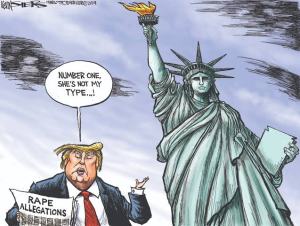 And of course, he argued presidential immunity. This is from Politico.
 In yet another deranged Orange Caligula moment, we see his priorities. This is from the AP. “Trump blames vandals for damaged grass in the same spot where he held his big July 4 celebration.” WTAF? Is this paranoia or some odd brain fart? He’s done more damage to the District than the British ever did!
 Trump has been obviously obsessed with World War II and its generals recently. Does he want to be Eisenhower now? Does he really think starting WW III would be a terrific idea to cement his place in history? I just don’t get any of this. Can someone please stop this madman before the country declines beyond repair?
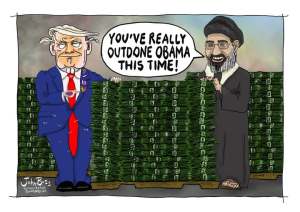
 That last sentence hits home. And I say no more going high when they go low. Call it out for what it is.
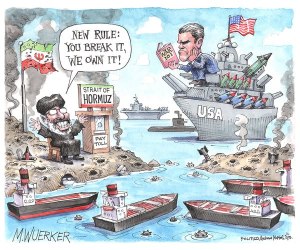 The New York Times has a big story today about the institutional racism being put back into place in the military by drunk, rapey Pete Hegseth. We have to stop going backward. “Secret Vetting and Blocked Promotions: Inside Hegseth’s War on Diversity. A Black admiral fixed one of the Navy’s worst messes. Mr. Hegseth blocked his promotion anyway.” Greg Jaffe and Kate Kelly share the lede.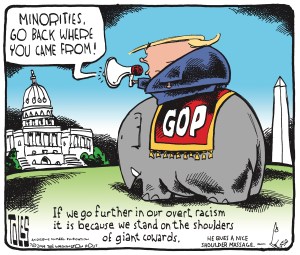
 It sure looks like we have a lot of leaders of major countries completely out of their league. And back to Iran. This is from Reuters. “Iran’s Revolutionary Guards set up covert Iraqi cells to attack Gulf neighbors, sources say.” It’s the same old, same old since the 1970s if you ask me.
 Feeling safer now? Me neither. Trump’s polls continue to fall on the Iraq war. As you can see from The Bulwark articles, the trad war hawks are not happy about the situation. Maybe we all need to start building bunkers. This is from the AP. “What Americans think about Trump’s handling of Iran, according to a new AP-NORC poll.”
 There’s more at the link. My question is, what the hell can the rest of us who don’t support him do? I voted Saturday morning, wondering which candidate I had voted for would even have a chance under the new gerrymandering. That doesn’t even consider that we couldn’t even vote for our Congressional representatives, given the Supreme Court decision and the quick fix redraw of our map to ensure maybe one black person will retain their seat. The only good news to come out of the election was that all five constitutional amendments proposed by Governor Klandry were voted down.
 My friend Robert Mann, a former Journalism Professor at LSU, has something poignant to say about the loss. This is from his SubStack. “Enjoy your tarnished legacy, Bill Cassidy. You earned it.” It’s a good lesson: while all politics is local, it can be influenced by a cult of personality.
 Speaking of Mafia-like behavior, here’s a little something on the Don’s Greenland Grab. This is from the New York Times. “In Closed-Door Talks, U.S. Demands a Major Role in Greenland. Greenlandic officials worry about the direction of the negotiations aimed at defusing President Trump’s threats to seize their island. But they have little leverage.” The story has a number of contributing reporters.
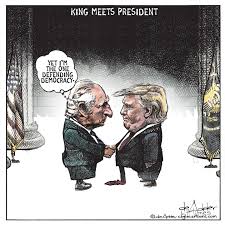 There’s a lot more at that gifted link. Jeer Heeter has this description of our Grifter-in-Chief in his article in The Nation. “Trump Gloats About “Making a Fortune” While Americans Suffer. As his war in Iran wreaks havoc, Trump is fixated on personal glory and enrichment.”

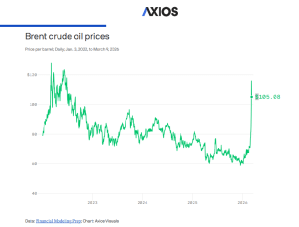
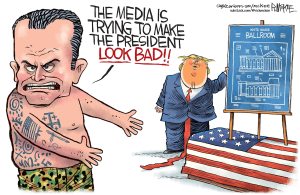 More at the link. CNBC shows the data with more analysis. “Oil prices topped $100 per barrel on record supply disruption, but are off session highs.” We’ll see if that lasts until the markets close this afternoon.
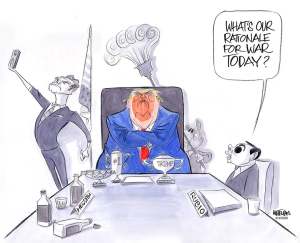 It’s really odd to think that I started my career as an economist during the OPEC maneuvers and I’m winding down my career as one with the US maneuvers. Frankly, I think China is sitting pretty right now. They’ve been doing a lot with alternative energy and have the entire Pacific Region — including many Latin American Countries with oil — undoubtedly rooting for them right now.
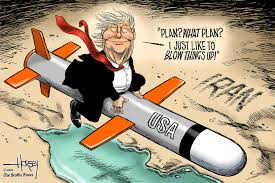 Trump donors are feeling this immediately. Trump voters will shortly see the impact on their budgets and gas prices. I can’t say I feel sorry for any of them, but there’s not a person who won’t feel this one way or another. The Bulwark’s Andrew Egger examines Trump’s seeming confusion over his War.
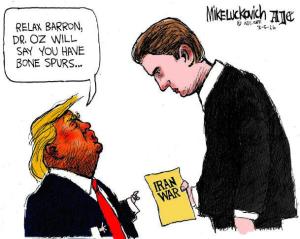 Judd LeGum at Popular Information specifies not the unknowables of the attack, but the rationale and plans for the future, which are blowing in the wind. “9 days in, the most basic question about the Iran war remains unanswered. In just over a week, Trump and top administration officials have given at least 17 different responses about why the war began.” Yup. We still don’t know why they did this.
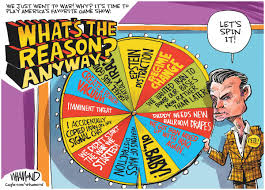 A brief description of each of those 17 responses is given in the article. You may read it at this fully gifted link. The New York Times reports on information from Iran’s new Supreme Leader. “Live Updates: Oil Price Surge Rattles Markets; Iran’s Choice of Leader Signals Defiance. Stocks fell on fears of the Iran war’s effects on energy prices. Top clerics selected Mojtaba Khamenei as Iran’s supreme leader, despite President Trump’s warning that he was “unacceptable.”
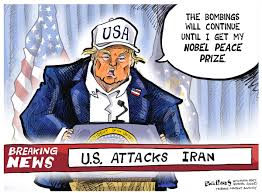 It still looks like the start of World War 3 to me. From the same link above.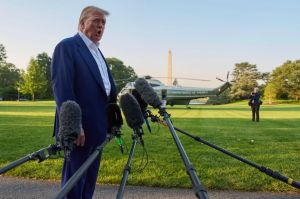
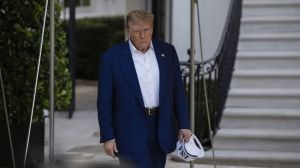
For years, Trump has wanted to win a Nobel Peace Prize, and both in and out of office, he has routinely brought up the topic of this elusive honor, people close to him say. However, you do not need to take their word for it, largely because the president often complains in public and on the internet about not getting a Nobel Peace Prize that he can mount in his office.
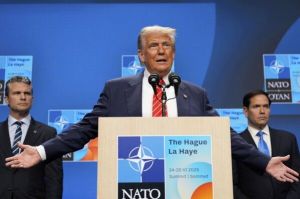
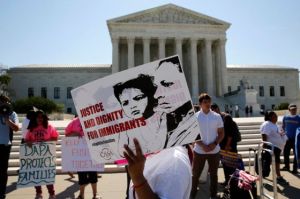
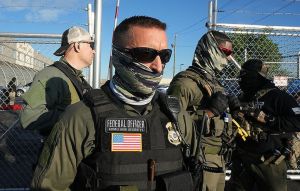


 peej
peej Carissa
 bostonboomer
 dakinikat
 ecocatwoman
 jjlo
jjlo mablue2
 Mama Lopez
 peggysue22
 quixote
 skydancingguestblogger
 Mona (aka Wonk the Vote)



 Sky Dancing
Recent Comments