This morning The Atlantic’s Editor in Chief Jeffrey Goldberg released the full Signal text exchange that was the top news story all day yesterday. I’m sure you’re familiar with the story, but in case you missed it (unlikely), Goldberg was sent an invitation to a Signal group that included top administration officials. He accepted out of curiosity. Here is the original story published two days ago in The Atlantic (gift article): The Trump Administration Accidentally Texted Me Its War Plans.
On Monday, shortly after we published a story about a massive Trump-administration security breach, a reporter asked the secretary of defense, Pete Hegseth, why he had shared plans about a forthcoming attack on Yemen on the Signal messaging app. He answered, “Nobody was texting war plans. And that’s all I have to say about that.”
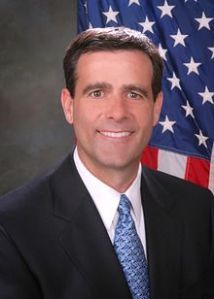
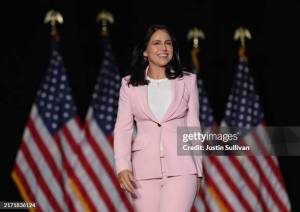
At a Senate hearing yesterday, the director of national intelligence, Tulsi Gabbard, and the director of the Central Intelligence Agency, John Ratcliffe, were both asked about the Signal chat, to which Jeffrey Goldberg, the editor in chief of The Atlantic, was inadvertently invited by National Security Adviser Michael Waltz. “There was no classified material that was shared in that Signal group,” Gabbard told members of the Senate Intelligence Committee.
Ratcliffe said much the same: “My communications, to be clear, in the Signal message group were entirely permissible and lawful and did not include classified information.”
President Donald Trump, asked yesterday afternoon about the same matter, said, “It wasn’t classified information.”
These statements presented us with a dilemma. In The Atlantic’s initial story about the Signal chat—the “Houthi PC small group,” as it was named by Waltz—we withheld specific information related to weapons and to the timing of attacks that we found in certain texts. As a general rule, we do not publish information about military operations if that information could possibly jeopardize the lives of U.S. personnel. That is why we chose to characterize the nature of the information being shared, not specific details about the attacks.
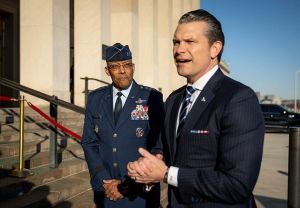
Pete Hegseth
The statements by Hegseth, Gabbard, Ratcliffe, and Trump—combined with the assertions made by numerous administration officials that we are lying about the content of the Signal texts—have led us to believe that people should see the texts in order to reach their own conclusions. There is a clear public interest in disclosing the sort of information that Trump advisers included in nonsecure communications channels, especially because senior administration figures are attempting to downplay the significance of the messages that were shared.
Experts have repeatedly told us that use of a Signal chat for such sensitive discussions poses a threat to national security. As a case in point, Goldberg received information on the attacks two hours before the scheduled start of the bombing of Houthi positions. If this information—particularly the exact times American aircraft were taking off for Yemen—had fallen into the wrong hands in that crucial two-hour period, American pilots and other American personnel could have been exposed to even greater danger than they ordinarily would face. The Trump administration is arguing that the military information contained in these texts was not classified—as it typically would be—although the president has not explained how he reached this conclusion.
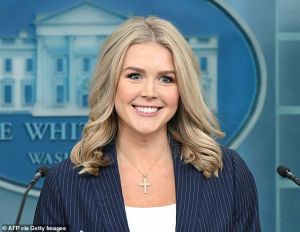
Karoline Leavitt
The Atlantic approached multiple people in the Trump administration, asking if they had objections to the publication of the entire Signal chant. Only press secretary Karoline Leavitt responded:
“As we have repeatedly stated, there was no classified information transmitted in the group chat. However, as the CIA Director and National Security Advisor have both expressed today, that does not mean we encourage the release of the conversation. This was intended to be a an [sic] internal and private deliberation amongst high-level senior staff and sensitive information was discussed. So for those reason [sic] — yes, we object to the release.” (The Leavitt statement did not address which elements of the texts the White House considered sensitive, or how, more than a week after the initial air strikes, their publication could have bearing on national security.)
Here is the relevant part of the text chain:
At 11:44 a.m. eastern time, Hegseth posted in the chat, in all caps, “TEAM UPDATE:”
The text beneath this began, “TIME NOW (1144et): Weather is FAVORABLE. Just CONFIRMED w/CENTCOM we are a GO for mission launch.” Centcom, or Central Command, is the military’s combatant command for the Middle East. The Hegseth text continues:
“1215et: F-18s LAUNCH (1st strike package)”
“1345: ‘Trigger Based’ F-18 1st Strike Window Starts (Target Terrorist is @ his Known Location so SHOULD BE ON TIME – also, Strike Drones Launch (MQ-9s)”
“1410: More F-18s LAUNCH (2nd strike package)”
“1415: Strike Drones on Target (THIS IS WHEN THE FIRST BOMBS WILL DEFINITELY DROP, pending earlier ‘Trigger Based’ targets)”
“We are currently clean on OPSEC”—that is, operational security.
“Godspeed to our Warriors.”
Read the whole article at The Atlantic. It isn’t very long. Those certainly look like war plans to me. This is a great opportunity for Democrats to fight back against Trump’s rapidly advancing coup. They did an excellent job in the Senate hearing yesterday.
Senate Democrats on Tuesday hammered the Trump administration’s top intelligence officials on how and why the vice president, defense secretary, national security adviser and other top Cabinet members made the “reckless” decision to use a commercial messaging app to discuss secret war plans for Yemen — while also inadvertently including a journalist in the group chat.
The Senate hearing, which featured five of the nation’s top intelligence officials, including Director of National Intelligence Tulsi Gabbard and CIA Director John Ratcliffe — both of whom were involved in the group chat over the Signal messaging app — was meant be a forum for the nation’s spy chiefs to offer their assessments of the top national security threats facing the nation.
Instead, the routine annual hearing before the Senate Select Committee on Intelligence became a staging ground to interrogate the kind of “mind-boggling” behavior that the committee’s top Democrat, Sen. Mark R. Warner (Virginia), said would easily have gotten a lower-ranking military or intelligence officer fired.
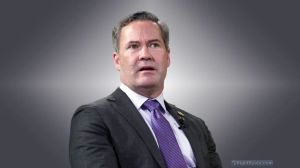
Mike Waltz
In the Signal group chat, convened by national security adviser Michael Waltz, Defense Secretary Pete Hegseth and others reportedly detailed the targets, the attack sequencing and the weapons they would use in a U.S. air attack on Yemen’s Houthis, before the Pentagon launched the strikes on March 15, according to a bombshell report published Monday by the Atlantic.
“If this was the case of a military officer or an intelligence officer, and they had this kind of behavior, they would be fired,” Warner said in his opening remarks at Tuesday’s hearing, noting that in addition to the targeting information, the text chain included the identity of an active CIA officer. “This is one more example of the kind of sloppy, careless, incompetent behavior, particularly toward classified information,” exhibited by the Trump administration, Warner said. “This is not a one-off.”
How is it that “nobody bothered to even check? … Who are all the names?” Warner added.
Gabbard, Ratcliffe and the other government witnesses provided few answers.After Gabbard at first declined to say whether she was involved in the group chat at all, she and Ratcliffe then told senators that the information shared over Signal was not classified. At other times, they denied the details contained in the Atlantic’s reporting or said they could not recall the exact contents of the messages. They repeatedly deferred to Trump’s defense secretary and national security adviser to answer for them.
The deflections triggered an incredulous and angry backlash from the committee’s liberals.
Warner, who accused Gabbard of “bobbing and weaving and trying to filibuster,” demanded repeatedly that she reconcile her conflicting assertions that the information in the text chain was not classified, but also that she was not at liberty to talk about it. “If there are no classified materials, share it with the committee. You can’t have it both ways,” he said.
Well, now it has been shared with everyone, and the Trump officials look exactly as incompetent as we assumed they were. On top of everything else, one of the participants in the Signal chat, special envoy Steve Witkoff, was actually in Moscow waiting to speak to Vladimir Putin, while using his personal cell phone.
Director of National Intelligence Tulsi Gabbard and CIA director John Ratcliffe appeared before the Senate Intelligence Committee to testify about global threats facing the U.S. However the annual hearing, which typically focuses on threats posed by China, Russia, Iran, largely concentrated on the lapse.
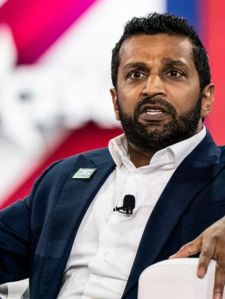
FBI Director Kash Patel, National Security Agency Director Gen. Timothy Haugh and Defense Intelligence Agency Director Lt. Gen. Jeffrey Kruse also appeared, but received few questions.
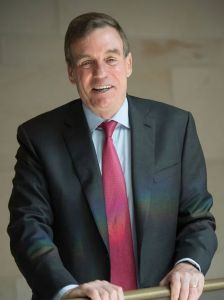
Senator Mark Warner
Sen. Mark Warner of Virginia, the top Democrat on the committee, addressed the controversy at the top of the hearing, calling it “mind-boggling” that none of the intelligence officials in the chat on the encrypted messaging app Signal thought to check who else was included.
“Are these government devices? Were they personal devices? Have the devices been collected to make sure there’s no malware?” Warner said in his opening remarks. “There’s plenty of declassified information that shows that our adversaries, China and Russia, are trying to break into encryption systems like Signal.”
Gabbard and Ratcliffe both denied that classified information was shared in the group chat in a feisty exchange with Warner. Confronted by Warner, Gabbard initially declined to say whether she was part of the chat….
Ratcliffe confirmed to Warner that he was a participant in the message thread, but pushed back on whether the decision to use Signal to communicate was a security lapse. Ratcliffe said Signal was on his CIA computer when he was confirmed as director earlier this year….
Ratcliffe confirmed to Warner that he was a participant in the message thread, but pushed back on whether the decision to use Signal to communicate was a security lapse. Ratcliffe said Signal was on his CIA computer when he was confirmed as director earlier this year. “As it is for most CIA officers,” he said, adding that the agency considers the commercial app “permissible” for work use.
The spy chiefs also denied that the conversation included information on weapons packages, targets or timing of the strikes, as Goldberg reported.
“Not that I’m aware of,” Ratcliffe said, with Gabbard adding “same answer.”
I guess they weren’t paying attention. There’s more at the CBS link.
Director of National Intelligence Tulsi Gabbard and CIA Director John Ratcliffe are back on Capitol Hill to testify before the House Intelligence Committee on Wednesday after new text messages came to light from a group chat in which top Trump officials discussed sensitive plans to strike targets in Yemen.
Shortly before the hearing began, The Atlantic published additional messages showing Defense Secretary Pete Hegseth provided detailed information to the group of senior Trump officials about the strikes, including a timeline of when fighter jets would take off and what kind of weapons would be used. The group inadvertently included Jeffrey Goldberg, the editor in chief of The Atlantic who revealed the first batch of texts earlier this week….
Gabbard and Ratcliffe are appearing Wednesday alongside FBI Director Kash Patel, National Security Agency Director Gen. Timothy Haugh and Defense Intelligence Agency Director Lt. Gen. Jeffrey Kruse at a hearing ostensibly focused on the global security threats facing the U.S. But the Signal leak and its fallout dominated the early portions of questioning.
Rep. Jim Himes of Connecticut, the top Democrat on the committee, chastised the intelligence leaders at the start of the hearing, saying they put the lives of troops at risk.
“Everyone here knows that the Russians or the Chinese could have gotten all of that information, and they could have passed it on to the Houthis, who easily could have repositioned weapons and altered their plans to knock down planes or sink ships,” Himes said.
Gabbard acknowledged that the conversation was “sensitive” but again denied that classified information was shared in the chat.”There were no sources, methods, locations or war plans that were shared,” she told lawmakers, echoing the defense from the White House that “war plans” were not discussed, despite the detailed guidance for an impending attack.
Defense Secretary Pete Hegseth’s texts to a Signal group chat about military operations against the Houthis almost certainly contained classified information, according to current and former Pentagon officials.
The Atlantic on Wednesday released excerpts of a conversation among top national security leaders to which a journalist had accidentally been invited. Hegseth and the White House have denied sharing classified information or war plans.
“This information was clearly taken from the real time order of battle sequence of an ongoing operation,” said Mick Mulroy, a former deputy assistant Defense secretary under the first Trump administration. “It is highly classified and protected.
Hegseth identified the aircraft used and the precise timing of the attacks, according to texts from the group chat, which was started by national security adviser Mike Waltz. That information, if obtained by adversaries, could put U.S. troops in danger.
Kash Patel
A current defense official and former Air Force official both said that any forecasting of future operations and planned weapons are almost always classified information. The former and current officials were granted anonymity to speak about a sensitive issue.
Details about future airstrikes and the timing of launches is tightly controlled and usually provided only through classified documents, conversations and in secure email traffic. Few outside of top leadership and those involved usually know about the plans.
“The information that you have fighter aircraft launching off of an aircraft carrier, flying over enemy territory and impending combat operation is the most sensitive information we have at the federal government,” said Sen. Mark Kelly (D-Ariz.), a former Navy pilot, who added it was likely classified.
“Mike Waltz did a boneheaded thing. It was careless. I think what Pete Hegseth did was reckless and dangerous.”
Hegseth should be fired, but Waltz is more likely to be the scapegoat.
President Donald Trump was upset when he found out that National Security Adviser Mike Waltz accidentally included a journalist in a group chat discussing plans for a military strike. But it wasn’t just because Waltz had potentially exposed national security secrets.
Trump was mad — and suspicious — that Waltz had Atlantic editor-in-chief Jeffrey Goldberg’s number saved in his phone in the first place, according to three people familiar with the situation, who were granted anonymity to discuss private conversations. A fourth person said the president was also particularly perturbed by the embarrassing nature of the episode.
“The president was pissed that Waltz could be so stupid,” the person said. (A “Mike Waltz” invited Goldberg to the chat, according to The Atlantic).
But by Tuesday afternoon, the two men had made a show of smoothing things over and the White House was closing ranks around Waltz. Trump conducted brief interviews with both NBC News and Fox News pledging to stand behind his national security adviser. Two top Trump spokespeople suggested in posts on X that national security hawks were colluding with the media to make the issue bigger than it actually was. And Waltz attended a meeting of Trump’s ambassadors Tuesday afternoon.
Tulsi Gabbard
“There’s a lot of journalists in this city who have made big names for themselves making up lies … This one in particular I’ve never met, don’t know, never communicated with, and we are looking into and reviewing how the heck he got into this room,” Waltz said during the meeting.
Trump followed up by calling Waltz “a very good man” and suggested he had been unfairly attacked. Yet the president also said he would look into government officials’ use of Signal, the app used in the chat with Goldberg that could have resulted in a security breach as top U.S. officials discussed plans to launch strikes in Yemen.
Still, several Trump allies cautioned this may not be the end of Waltz’s troubles. One of them, who like others was granted anonymity to discuss the sensitive matter, said the incident has strained Waltz’s relationship with Trump’s inner circle.
A public watchdog group sued Defense Secretary Pete Hegseth and a slew of other Trump administration officials Tuesday after a journalist revealed he was inadvertently added to a text chain discussing U.S. war plans.
The lawsuit, brought by the watchdog group American Oversight and first reported by HuffPost, requests that a federal judge formally declare that Hegseth and other officials on the chat violated their duty to uphold laws around the preservation of official communications. Those laws are outlined in the Federal Records Act and, according to lawyers for American Oversight, if agency heads refuse to recover or protect their communications, the national archivist should ask the attorney general to step in.
On Monday, The Atlantic’s editor-in-chief Jeffrey Goldberg reported that national security adviser Michael Waltz inadvertently added him to a Signal group chat with more than a dozen Trump administration officials and aides including Vice President JD Vance, Defense Secretary Pete Hegseth, Secretary of State Marco Rubio, homeland security adviser Stephen Miller and Treasury Secretary Scott Bessent. CIA Director John Ratcliffe told members of the Senate Intelligence Committee on Tuesday that he was also in the Signal chat. Director of National Intelligence Tulsi Gabbard would not admit whether she was a participant, though Goldberg reported she was; instead, she said the matter was “still under review.”
As American Oversight lawyers pointed out in their lawsuit Tuesday, Rubio is also the acting archivist of the United States and, as such, “is aware of the violations” that allegedly occurred.
He is also “responsible for initiating an investigation through the Attorney General for the recovery of records or other redress,” the lawsuit said.
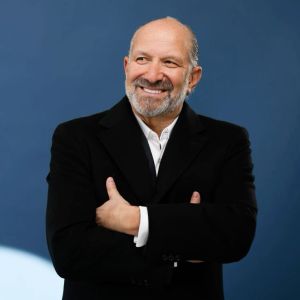
U.S. Commerce Secretary Howard Lutnick recently offered a chilling glimpse into the Trump administration’s indifference to Social Security’s importance. “Let’s say Social Security didn’t send out their checks this month,” Lutnick said, according to Axios. “My mother-in-law, who’s 94, she wouldn’t call and complain.”
Perhaps the commerce secretary’s mother-in-law wouldn’t call. But millions of other Americans would—and not just to complain. They would call because they couldn’t pay rent, buy food, or refill essential medications. Lutnick’s casual comment downplayed the gravity of a missed Social Security check.
The comment also exposed the distance between elites and others. Elites may not care if they miss a Social Security check, but for a typical Americans a missing check is a gut punch. Calls to the Social Security office would be pouring in. But no one may answer.
Howard Lutnick
Lutnick’s remarks come during a time when the Social Security system faces record demand and historic strain. And the remarks come during a month of extreme alarm and confusion about the system. Elon Musk demeaned the system publicly, calling it “the biggest Ponzi scheme of all time,” the New York Post reported. Field offices are overrun, wait times are spiking, and staffing levels have been slashed by 12% since 2020, notes The Washington Post. The very system that ensures timely payments to 73 million Americans is being stomped on, and senior citizens and families are feeling anxious and worse.
To be clear, Trump and DOGE have not cut or delayed Social Security checks—yet. The Social Security Administration does not miss checks. In 80 years, it never missed payment….
While Lutnick and others suggest that delays wouldn’t matter, the data tell another story. Social Security is the foundation of retirement security for most American seniors.
According to the Social Security Administration, nearly 90% of Americans over age 65 receive benefits, and those benefits make up an average of 31% of their income. But for many, the reliance is much deeper: 39% of older men and 44% of older women count on Social Security for more than half their income. Even more sobering, 12% of older men and 15% of older women rely on it for at least 90% of their income.
Older women, in particular, are at risk. They tend to earn less over their lifetimes, outlive their spouses, and have less saved for retirement. For them, Social Security is often not just the main source of income—it’s the only source.
The Social Security Administration website crashed four times in 10 days this month because the servers were overloaded, blocking millions of retirees and disabled Americans from logging in to their online accounts. In the field, office managers have resorted to answering phones in place of receptionists because so many employees have been pushed out. Amid all this, the agency no longer has a system to monitor customer experience because that office was eliminated as part of the cost-cutting efforts led by Elon Musk.
And the phones keep ringing. And ringing.
The federal agency that delivers $1.5 trillion a year in earned benefits to 73 million retired workers, their survivors, and poor and disabled Americans is engulfed in crisis — further undermining the already struggling organization’s ability to provide reliable and quick service to vulnerable customers, according to internal documents and more than two dozen current and former agency employees and officials, customers and others who interact with Social Security.
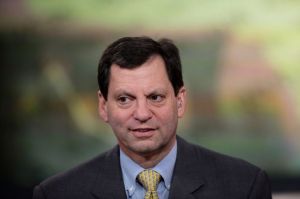
Frank Bisignano, nominee for Social Security chief
Financial services executive Frank Bisignano is scheduled to face lawmakers Tuesday at a Senate confirmation hearing as President Donald Trump’s nominee to become the permanent commissioner. For now, the agency is run by a caretaker leader in his sixth week on the job who has raced to push out more than 12 percent of the staff of 57,000. He has conceded that the agency’s phone service “sucks” and acknowledged that Musk’s U.S. DOGE Service is really in charge, pushing a single-minded mission to find benefits fraud despite vast evidence that the problem is overstated.
The turmoil is leavingmany retirees, disabled claimants, and legal immigrants needing Social Security cards with less access or shut out of the system altogether, according to those familiar with the problems.
“What’s going on is the destruction of the agency from the inside out, and it’s accelerating,” Sen. Angus King (I-Maine) said in an interview. “I have people approaching me all the time in their 70s and 80s, and they’re beside themselves. They don’t know what’s coming.”
The Trump administration has installed a DOGE operative as the new Chief Information Officer (CIO) of the Social Security Administration (SSA) in an apparent effort to evade a federal court order blocking DOGE affiliates from accessing databases containing the sensitive personal information of millions of Americans.
Popular Information obtained an internal memorandum from Acting SSA Commissioner Leland Dudek announcing Scott Coulter, a DOGE operative previously assigned to NASA and the SSA, as the SSA’s new CIO.
The move, which was not announced publicly, seems related to a federal lawsuit filed by a coalition of labor unions — including the American Federation of State, County and Municipal Employees (AFSCME), AFL-CIO, and American Federation of Teachers (AFT) — on February 21. The lawsuit alleged that DOGE officials were accessing “personal, confidential, private, and sensitive data from the Social Security Administration” in violation of federal law, including the Privacy Act. The labor unions sued the SSA, Dudek, and then-CIO Michael Russo to stop the disclosure of the data to DOGE.
On March 21, the federal judge overseeing the AFSCME case, Ellen Lipton Hollander, granted the plaintiffs a Temporary Restraining Order (TRO) which prohibited SSA, Dudek, and Russo from “granting access to any SSA system of record containing personally identifiable information” to DOGE or any “members of the DOGE team established at the SSA.” The order defined the DOGE team at SSA as “any person assigned to SSA to fulfill the DOGE agenda.”
Read the rest at the link.
That’s it for me today. What’s on your mind?
Did you like this post? Please share it with your friends:
I can’t wait for spring flowers and warmer weather, can you tell? I have all the symptoms of Spring fever, including inability to concentrate on anything serious, like politics or plane crashes. But I’ll do my best to give you some interesting links on this lazy late March Saturday.
Amanda Knox, who maintained that she and her former Italian boyfriend were innocent in her British roommate’s murder through multiple trials and nearly four years in jail, was vindicated Friday when Italy’s highest court threw out their convictions once and for all.
“Finished!” Knox’s lawyer Carlo Dalla Vedova exulted after the decision was read out late Friday. “It couldn’t be better than this.”
The surprise decision definitively ends the 7½-year legal battle waged by Knox, 27, and co-defendant Raffaele Sollecito, 31, to clear their names in the gruesome 2007 murder and sexual assault of British student Meredith Kercher.
The supreme Court of Cassation panel deliberated for 10 hours before declaring that the two did not commit the crime, a stronger exoneration than merely finding insufficient evidence to convict. Instead, had the court-of-resort upheld the pair’s convictions, Knox would have faced 28 ½ years in an Italian prison, assuming she would have been extradited, while Sollecito had faced 25 years.
“Right now I’m still absorbing what all this means and what comes to mind is my gratitude for the life that’s been given to me,” Knox said late Friday, speaking to reporters outside her mother’s Seattle home.
This case has made me grateful that in the U.S. Constitution contains a double jeopardy clause.
BEIRUT — The meltdown in Yemen is pushing the Middle East dangerously closer to the wider regional conflagration many long have feared would arise from the chaos unleashed by the Arab Spring revolts.
What began as a peaceful struggle to unseat a Yemeni strongman four years ago and then mutated into civil strife now risks spiraling into a full-blown war between regional rivals Saudi Arabia and Iran over a country that lies at the choke point of one of the world’s major oil supply routes.
With negotiators chasing a Tuesday deadline for the framework of a deal to curb Iran’s nuclear program, it seems unlikely that Iran would immediately respond militarily to this week’s Saudi airstrikes in Yemen, analysts say.
But the confrontation has added a new layer of unpredictability — and confusion — to the many, multidimensional conflicts that have turned large swaths of the Middle East into war zones over the past four years, analysts say.
The United States is aligned alongside Iranian-backed militias in Iraq and against them in Yemen. Egypt and the United Arab Emirates, who have joined in the Saudi offensive in Yemen, are bombing factions in Libya backed by Turkey and Qatar, who also support the Saudi offensive in Yemen. The Syrian conflict has been fueled by competition among all regional powers to outmaneuver one another on battlefields far from home.
Scary. All this because George W. Bush lied us into two needless, unwinnable wars.
Although Saturday’s Arab League summit was due to cover a range of regional topics, the ongoing crisis in Yemen took the lead spot as the summit opened with speeches from Arab leaders.
A Saudi-led military offensive is underway against targets held by Houthi rebels in the turmoil-hit country, with the backing of a number of Arab states.
In his opening speech, Egypt’s President Abdel-Fattah El-Sisi said that military action was “inevitable” to restore legitimate rule in Yemen.
El-Sisi also said that Egypt has accepted a proposal by a meeting of Arab foreign ministers to form a joint Arab military force to counter the “unprecedented threats” facing the region’s stability.
Arab foreign ministers agreed on a draft resolution to form a joint Arab military force to counter growing security threats in the region. The proposal requires the endorsement of the Arab leaders during the two-day summit this weekend.
Saudi’s King Salman vowed in his opening speech that the military intervention will not stop until Yemen is stable and safe. The monarch said that Saudi Arabia supports the Hadi government’s legitimacy in Yemen and wants stability for the Yemeni population.
He further stated that the situation in the region necessitates an Arab coalition to fight terrorism.
BERLIN—Andreas Lubitz, the Germanwings co-pilot who crashed an airliner into a French mountainside, was being treated for depression, a fact he concealed from his employer, according to a person familiar with the investigation.
Mr. Lubitz had been excused from work by his neuropsychologist for a period that included the day of the crash, this person told The Wall Street Journal, but he decided to ignore the advice and reported to work.
The Germanwings tragedy highlights a broader industry dilemma: reliance on pilots themselves to disclose serious physical or psychological ailments to their employer—and what can happen when secrecy urges or privacy considerations trump full disclosure, safety and medial experts say.
Despite mandatory, regular medical exams—supplemented by company-specific safeguards intended to periodically check on aviators’ skills and psychological state—airlines ultimately depend on employees to honestly assess and report when they shouldn’t be flying.
In return, Germanwings, a unit of Deutsche Lufthansa AG, and many other airlines around the globe promise to avoid punishing pilots who comply with that guiding principle.
Read more at the WSJ. As Dakinikat wrote yesterday, this guy could have just shot himself or jumped out of a high window, but instead he decided to take 149 other people–including babies and high school kids–with him when he committed suicide.
A few stories on the terrible explosion in NYC’s East Village:
An explosion in Manhattan’s East Village on Thursday injured an estimated 25 people and destroyed a row of landmarked buildings that have held meaning for generations of New Yorkers. At one time the mayor’s residence was there, and another building housed an iconic vintage-clothing store made popular in the 1985 film Desperately Seeking Susan.
“It’s a real tragedy. It was scary,” says Simeon Bankoff, executive director of the Historic Districts Council. “It’s shocking when this happens in an area that’s so close-knit. People really live on the streets here, in a good way. There’s a real community.”
City officials say the March 26 explosion happened at 121 Second Avenue and also damaged the neighboring buildings at 119, 123 and 125. The buildings all were awarded landmark status in October 2012 as part of a designation of an East Village/Lower East Side Historic District. The buildings in that district date mostly to the mid- to late 1800s, a time when wealthier New Yorkers started moving uptown and selling off their properties, which were often turned into tenement housing.
European immigrants began moving into the area in large numbers in the second half of the 19th century. An early influx consisted mostly of Germans, and the area became known as Kleindeutschland, or Little Germany. Jewish immigrants from Eastern Europe moved there too and established a vibrant theater district.
“The East Village and the Lower East Side are remarkable in that they’ve seen successive waves of immigrants and new populations coming in and really shaping and affecting the physical environment, bringing with them their social clubs, their gathering places,” Bankoff says.
By the middle of the 20th century, the Village became an epicenter for artists and bohemians.
The historic district, one of 114 in the city, runs north-south from around East 7th Street to East Second Street and east-west from First and Second avenues to the Bowery.
The staff at the Cafe has a small clock in one particular booth. The booth is reserved for Senator Rand Paul, whenever he stops by for a quick lunch, for which he invariably undertips, when he doesn’t try to beat itout the back door.
Time was when Senator Aqua Buddha entertained us all — five minutes at a time — about how the country was wasting its money on a whole mess of sophisticated boom-boom. The staff knows when to begin the countdown and they begin invariably to whisper again…
Continue reading at the link.
Atheist Ayn Rand must be spinning in her grave over this from TPM.
Sen. Rand Paul (R-KY) on Thursday told a group of pastors and religious leaders that the debate over gay marriage was a symptom of a “moral crisis” in America and said he hoped for “another Great Awakening.”
“Don’t always look to Washington to solve anything,” Paul said during a private prayer breakfast at the Capitol Hill Club.
“In fact, the moral crisis we have in our country — there is a role for us trying to figure out things like marriage — there’s also a moral crisis that allows people to think that there would be some sort of other marriage.”
“The moral crisis we have in our country — there is a role for us trying to figure out things like marriage — there’s also a moral crisis that allows people to think there would be some other sort of marriage, ” he explained. “I think the exhortation to try and change people’s thoughts has to come from the countryside.”
The libertarian lawmaker then took a slightly religious turn, saying “You know, I’ve said this before, we need a revival in the country.”
“We need another great awakening with tent revivals of thousands of people saying, you know,’reform or see what’s going to happen if we don’t reform’.”
In a recent interview with Brett Baier of Fox News, Paul admitted that the use of the term ‘marriage’ for same sex couples offends him.
Watch the video at Raw Story. Honestly, I think that cartoon JJ post last night is beginning to make sense. Someone must have put LSD in Rand’s grits when he was a kid. Why would anyone vote for this wacko?
I’d write about the latest “revelations” about Hillary’s emails, but I don’t want to completely depress myself. I have to believe this will all die down before the 2016 primaries.
What have you been hearing and reading? Let us know in the comment thread and enjoy the rest of March. April is coming soon!
Did you like this post? Please share it with your friends:
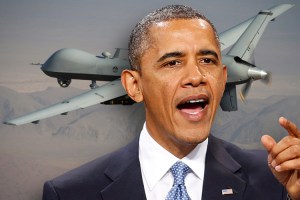
This is a live blog to discuss President Obama’s speech today at the National Defense University. The speech is scheduled for 2PM Eastern time. As I wrote in the morning post, Obama is expected to propose limits to the use of drones to assassinate suspected “terrorists” in places like Pakistan and Yemen.
Obama’s speech is expected to reaffirm his national security priorities — from homegrown terrorists to killer drones to the enemy combatants held at the military-run detention center at Guantanamo Bay, Cuba — but make no new sweeping policy announcements. The White House has offered few clues on how the president will address questions that have dogged his administration for years and, critics say, given foreign allies mixed signals about U.S. intentions in some of the world’s most volatile areas.
Obama will try to refocus an increasingly apathetic public on security issues as his administration grapples with a series of unrelated controversies stemming from the attack on a U.S. compound in Benghazi, Libya, the IRS’ targeting of conservative groups and government monitoring of reporters. His message will also be carefully analyzed by an international audience that has had to adapt to what counterterror expert Peter Singer described as the administration’s disjointed and often short-sighted security policies.
“He is really wresting with a broader task, which is laying out an overdue case for regularizing our counterterrorism strategy itself,” said Singer, director of the Brookings Institution’s 21st Century Security and Intelligence Center in Washington. “It’s both a task in terms of being a communicator, and a task in term of being a decider.”
The White House said Obama’s speech coincides with the signing of new “presidential policy guidance” on when the U.S. can use drone strikes, though it was unclear what that guidance entailed and whether Obama would outline its specifics in his remarks.
Do we really need to keep using the word “decider” now that Dubya is gone? Oh well…Time’s description of Obama’s remarks makes it sound like he’s not really going to make any real changes–just say some words. I hope that’s wrong.
The White House said Obama “will discuss why the use of drone strikes is necessary, legal and just, while addressing the various issues raised by our use of targeted action.”
Obama has also approved new “policy guidance” that sets out “standards under which we take lethal action,” the White House said.
The president “will also discuss how to balance securing our country and protecting our civil liberties at home,” said the statement.
That includes new steps Obama plans to take to close the Guantanamo Bay prison, a frequent target of criticism from civil libertarians. Some detainees at the prison are in the midst of a hunger strike, protesting their conditions.
Obama had pledged to close the facility during his first year in office. But his efforts ran afoul of congressional Republicans who opposed trials of terrorism suspects in the United States, and other countries that refused to take some prisoners.
A White House official, per NBC’s Shawna Thomas, says that the president’s speech also will discuss better securing U.S. diplomatic facilities (after the 2012 Benghazi attack), balancing security while protecting civil liberties at home (see the leak investigations), and stating his desire to close the Guantanamo Bay prison (an action which Congress opposes). Don’t be surprised if Obama says something along the lines of, “We will never send another detainee to Gitmo” as a way to express his willingness to close the facility. And don’t be surprised if he addresses — head on — the Justice Department’s seizure of reporters’ phone records in its prosecution of national security leaks. Obama delivers his remarks at 2:00 pm ET at the National Defense University in DC.
“To say that the President has the right to kill citizens without due process is really to take the constitution and to tear it up into as many little pieces as you can and then burn it and step on it.”
What amazes me most whenever I write about this topic is recalling how terribly upset so many Democrats pretended to be when Bush claimed the power merely to detain or even just eavesdrop on American citizens without due process. Remember all that? Yet now, here’s Obama claiming the power not to detain or eavesdrop on citizens without due process, but to kill them; marvel at how the hardest-core White House loyalists now celebrate this and uncritically accept the same justifying rationale used by Bush/Cheney (this is war! the President says he was a Terrorist!) without even a moment of acknowledgment of the profound inconsistency or the deeply troubling implications of having a President — even Barack Obama — vested with the power to target U.S. citizens for murder with no due process.
As Dakinikat posted in the comments to Minx’s evening post, a second U.S. citizen who was not on Obama’s assassination list was also murdered along with al-Awlaki. From bmaz at Emptywheel:
Awlaki was killed by a drone delivered Hellfire missile, via a joint CIA and JSOC operation, in the town of Kashef, in Yemen’s Jawf province, approximately 140 kilometres east of Sanaa, Yemen’s capital. But not only Awlaki was killed, at least three others, including yet another American citizen, Samir Khan, were killed in the strike.
That’s right, not just one, but two, Americans were summarily and extrajudicially executed by their own government today, at the direct order of the President of the United States. No trial, no verdict, just off with their heads. Heck, there were not even charges filed against either Awlaki or Khan. And it is not that the government did not try either, there was a grand jury convened on Khan, but no charges. Awlaki too was investigated for charges at least twice by the DOJ, but non were found.
But at least Awlaki was on Barrack Obama’s “Americans That Are Cool to Kill List”. Not so with Samir Khan. Not only is there no evidence whatsoever Khan is on the classified list for killing (actually two different lists) my survey of people knowledgeable in the field today revealed not one who believed khan was on any such list, either by DOD or CIA.
So, the US has been tracking scrupulously Awlaki for an extended period and knew with certainty where he was and when, and knew with certainty immediately they had killed Awlaki and Khan. This means the US also knew, with certainty, they were going to execute Samir Khan.
I can’t even begin to describe how sickened I am by these murders of American citizens. President Obama is a murderer and a tyrant who is destroying the last vestiges of the Constitution of the United States. At least I don’t have to live with the horror of having voted for this evil man.
Did you like this post? Please share it with your friends:
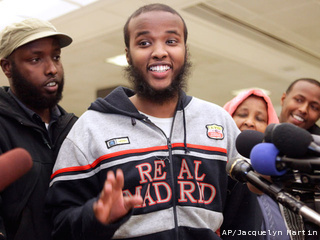
An American teenager detained in Kuwait two weeks ago and placed on an American no-fly list claims that he was severely beaten by his Kuwaiti captors during a weeklong interrogation about possible contacts with terrorism suspects in Yemen.
The teenager, Gulet Mohamed, a Somali-American who turned 19 during his captivity, said in a telephone interview on Wednesday from a Kuwaiti detention cell that he was beaten with sticks, forced to stand for hours, threatened with electric shocks and warned that his mother would be imprisoned if he did not give truthful answers about his travels in Yemen and Somalia in 2009.
American officials have offered few details about the case, except to confirm that Mr. Mohamed is on a no-fly list and, for now at least, cannot return to the United States. Mr. Mohamed, from Alexandria, Va., remains in a Kuwaiti detention center even after Kuwait’s government, according to his brother, determined that he should be released.
During the interview with the NYT, Mohammed said, “I am a good Muslim, I despise terrorism.”
During the 90-minute telephone interview, Mr. Mohamed was agitated as he recounted his captivity, tripping over his words and breaking into tears. He said he left the United States in March 2009 to “see the world and learn my religion,” and had planned to return to the United States for college.
He said he had traveled to Yemen to study Arabic, but stayed less than a month because his mother worried about his safety. He said that he spent five months later that year living with an aunt and uncle in northern Somalia, before moving to Kuwait in August 2009 to live with an uncle and continue his Arabic studies.
Mohammed’s ordeal began when he went to the airport in Kuwait to renew his travel visa. He was held for five hours and then handcuffed, blindfolded and taken to a prison where he was interrogated and beaten on his feet and face with sticks when he didn’t give the “right answers.”
“Are you a terrorist?” they asked, according to his account.
“No,” he replied.
“Do you know Anwar?” his interrogators asked, referring to Mr. Awlaki.
“I’ve never met him,” Mr. Mohamed recalled saying.
“You are from Virginia, you have to know him,” they responded, according to Mr. Mohamed. From 2001 to 2002, Mr. Awlaki was the imam of a prominent mosque in northern Virginia.
Mohammed told the NYT in January that even after being released, he couldn’t sleep or eat and was constantly fearful. He said he has “always been pro-American” and obviously could not understand why he was targeted. After the article in the NYT, Mohammed was finally permitted to return home later in January. He told the Washington Post that his ordeal had “made me stronger.”
Mohammed is only one of many American citizens of Middle Eastern or African descent who have found themselves stranded overseas, unable to return home because their names have been put on a no-fly list while they were out of the country. Many of these people have been arrested and interrogated by foreign governments, apparently at the request of the F.B.I. From the Post article (1/21/2011):
Civil liberties groups charge that his case is the latest episode in which the U.S. government has temporarily exiled U.S. citizens or legal residents so they can be questioned about possible terrorist links without legal counsel.
The American Civil Liberties Union is suing the U.S. government on behalf of 17 citizens or legal residents who were not allowed to board flights to, from or within the United States, presumably because, like Mohamed, they were on the government’s no-fly list. Of those stranded overseas, all were eventually told they could return, often after they agreed to speak to the FBI. None was arrested upon their return.
The ACLU suit, filed in Portland, Ore., alleges that Americans placed on the no-fly list are denied due process because there is no effective way to challenge their inclusion. The government does not acknowledge that any particular individual is on the no-fly list or its other watch lists. Nor will it reveal the exact criteria it uses to place people on its list.
This week Mother Jones published a series of reports on their investigations of FBI operations that sound like COINTELPRO updated.
COINTELPRO was an FBI covert operation that targeted domestic left-wing and anti-war groups from 1956 to 1971, in the name of “national security.” Frankly, the covert operations have probably continued even though they are technically illegal. But lately we’ve seen an uptick in FBI operations targeting groups within the U.S. Until I came across a couple of blog posts last week about American muslims being targeted overseas, I had no idea the FBI had branched out to foreign covert operations.
In the past, the FBI has denied that it asks foreign governments to apprehend Americans. But, a Mother Jones investigation has found, the bureau has a long-standing and until now undisclosed program for facilitating such detentions. Coordinated by elite agents who serve in terrorism hot spots around the world, the practice enables the interrogation of American suspects outside the US justice system. “Their citizenship doesn’t seem to matter to the government,” says Daphne Eviatar, a lawyer with Human Rights First. “It raises a question of whether there’s a whole class of people out there who’ve been denied the right to return home for the purpose of interrogation in foreign custody.”
I highly recommend reading the whole article. Baumann describes other cases similar to Mohammed’s and reveals information he obtained from government officials and representatives of human rights groups.
A Virginia man said he has been stuck in limbo in Egypt for the last six weeks, living in a cheap hotel and surviving on fast food after his name was placed on a U.S. no-fly list because of a trip to Yemen.
Yahya Wehelie, a 26-year-old Muslim who was born in Fairfax, Virginia to Somali parents, said Wednesday he spent 18 months studying in Yemen and left in early May. The U.S. has been scrutinizing citizens who study in Yemen more closely since the man who tried to blow up a U.S.-bound airliner on Christmas was linked to an al-Qaida offshoot in Yemen.
Wehelie was returning to the U.S. with his brother Yusuf via Egypt on May 5 when Egyptian authorities stopped him from boarding his flight to New York. They told him the FBI wanted to speak with him.
He said he was then told by FBI agents in Egypt that his name was on a no-fly list because of people he met in Yemen and he could not board a U.S. airline or enter American airspace. His passport was canceled and a new one issued only for travel to the United States, which expires on Sept. 12. He does not have Somali citizenship.
Wehelie said his brother Yusuf was allowed to return home, but only after he was detained for three days by Egyptian police on suspicion of carrying weapon. He said his brother was shackled to a jail wall and interrogated by a man who claimed to work for the CIA. He was then dumped in the street outside the prison when he feigned illness.
In July, 2010, CAIR posted a warning on its website informing Muslim-Americans that they could end up in “forced exile” if they traveled to another country.
CAIR this week issued an advisory to American Muslims — whether citizens, permanent residents or visa holders — warning of the risk of “forced exile” when traveling overseas or attempting to return to the United States. Muslim travelers are urged to know their legal rights if they are placed on the so-called “no-fly list.”
In the past few months, CAIR has received a number of reports of American Muslims stranded overseas when they are placed on the government’s no-fly list. Those barred from returning to the United States report being denied proper legal representation, being subjected to FBI pressure tactics to give up the constitutionally-guaranteed right to remain silent, having their passports confiscated without due process, and being pressured to become informants for the FBI. These individuals have not been told why they were placed on the no-fly list or how to remove their names from the list.
FBI agents have reportedly told a number of individuals that they face being stranded outside the United States longer, or forever, unless they give up their rights to legal representation or to refuse interrogations and polygraph tests. But even those who submitted to interrogations without an attorney or to the “lie detector” tests remain stranded.
This situation is outrageous, and President Obama should be directly confronted about his support of this un-American, authoritarian policy (White House approval is required for many of these FBI activities). Perhaps a relatively high profile article like the one in Mother Jones will influence some mainstream reporters to do that. In the meantime, please spread the word in any way you can.
Did you like this post? Please share it with your friends:
The Sky Dancing banner headline uses a snippet from a work by artist Tashi Mannox called 'Rainbow Study'. The work is described as a" study of typical Tibetan rainbow clouds, that feature in Thanka painting, temple decoration and silk brocades". dakinikat was immediately drawn to the image when trying to find stylized Tibetan Clouds to represent Sky Dancing. It is probably because Tashi's practice is similar to her own. His updated take on the clouds that fill the collection of traditional thankas is quite special.
You can find his work at his website by clicking on his logo below. He is also a calligraphy artist that uses important vajrayana syllables. We encourage you to visit his on line studio.











 peej
peej Carissa
 bostonboomer
 dakinikat
 ecocatwoman
 mablue2
 Mama Lopez
 peggysue22
 quixote
 skydancingguestblogger
 Mona (aka Wonk the Vote)



 Sky Dancing
Recent Comments