Joy Harmon, who needed only three minutes, a bucket of soapy water and a housedress held together with a safety pin to sear herself into Hollywood history as a chain-gang prisoner’s fantasy come to life in the classic 1967 film “Cool Hand Luke,” died on April 14 in Los Angeles. She was 87.
She died in hospice care after contracting pneumonia in recent weeks, her daughter Julie Gourson Matthews said.
Ms. Harmon never achieved leading-lady status. Still, she tallied more than 30 screen and television credits, often popping up in an episode or two of popular 1960s and early ’70s TV shows like “The Beverly Hillbillies,” “The Monkees,” “Batman,” “Bewitched” and “The Odd Couple.”
Onscreen, she was hard to miss, with her pinup figure, platinum hair and ice-blue eyes. “Gosh, you have the bluest eyes!,” she recalled Paul Newman, the star of “Cool Hand Luke,” once saying to her — no small praise coming from an actor known for his own dazzlingly blue eyes….
Ms. Harmon, listed in the credits as the Girl, appears about 23 minutes into the movie and is gone before minute 27. But she makes the most of her screen time.
Emerging from a farmhouse, bucket in hand, she languidly scrubs down a 1941 DeSoto in full view of the sweat-drenched, shirtless prisoners digging a roadside ditch nearby.
“Hey, Lord, whatever I’ve done, don’t strike me blind for another couple of minutes,” Dragline (George Kennedy), the alpha dog of the chain gang, says.
While the prisoners wipe their brows and gawk, the amply endowed Ms. Harmon nearly bursts out of her skintight dress as she bends to scrub hubcaps or sprawls across the hood, occasionally pausing to squeeze her sponge so that the suds cascade down her torso.
“Oh, God, she doesn’t know what she’s doing,” one lustful prisoner says.
“She knows exactly what she’s doing,” Luke responds. “She’s driving us crazy and loving every minute of it.”
A bit about Harmon’s life:
Patricia Joy Harmon was born on May 1, 1938, in Flushing, Queens, the elder of two daughters of Homer Harmon, a promotional director at the Roxy Theater in Manhattan, and Bernice (Hopmann) Harmon. (Many accounts cite her birth year as 1940, but she shaved two years off her age once she was in Hollywood, her daughter said.)
She grew up in Wilton, Conn., and began modeling at an early age. At 17, she was a runner-up in the Miss Connecticut beauty pageant.
Iran’s Foreign Minister Abbas Araghchi departed Islamabad on Saturday evening local time, according to Iranian sources familiar with the discussions, after meetings in the Pakistani capital to discuss a truce with Washington and consult key allies in the region.
It was not initially clear where Araghchi would travel next, but the Iranian Foreign Ministry previously said he would also visit Oman and Russia during the trip.
Lindsay, by Linda Lee Nelson
Some background: Araghchi landed in Islamabad on Friday evening for a flurry of meetings with Pakistan’s top leadership, including Prime Minister Shehbaz Sharif and the country’s army chief, Field Marshal Asim Munir, who has served as a key mediator between Tehran and Washington.
Pakistani ministers are trying to facilitate a second round of talks between US and Iranian officials, after lengthy discussions in early April failed to alleviate the thorniest diplomatic hurdles between the warring parties.
The White House said Friday that a US delegation would travel to Islamabad this weekend, but Iranian media had denied reports that Araghchi would directly negotiate with Washington during his trip, leaving the status of talks uncertain.
Trump has just called off the trip to Pakistan by Witkoff and Kushner.
The New York Times published a fascinating article about Iran’s leaders this week. It appears that the Revolutionary Guards are actually in control of the government, and it’s not clear if the men doing the negotiating actually have the power to make final decisions.
When Ayatollah Ali Khamenei ruled Iran as the supreme leader, he exerted absolute power over all decisions about war, peace and negotiations with the United States. His son and successor does not play the same role.
Ayatollah Mojtaba Khamenei, the son, is an elusive figure who has not been seen and whose voice has not been heard since he was appointed in March. Instead, a battle-hardened collective of commanders in the Islamic Revolutionary Guards Corps and those aligned with them are the key decision makers on matters of security, war and diplomacy.
In the Garden, by Thomas Little
“Mojtaba is managing the country as though he is the director of the board,” said Abdolreza Davari, a politician who served as senior adviser to Mahmoud Ahmadinejad when he was president and knows Mr. Khamenei.
“He relies heavily on the advice and guidance of the board members, and they collectively make all the decisions,” Mr. Davari said in a phone interview from Tehran. “The generals are the board members.” [….]
Mr. Khamenei, who was selected by a council of senior clerics as the new supreme leader, has been in hiding since American and Israeli forces bombed his father’s compound on Feb. 28, where he also lived with his family. His father, wife and son were all killed. Access to him is extremely difficult and limited now. He is surrounded mostly by a team of doctors and medical staff who are treating the injuries he sustained in the airstrikes.
Senior commanders of the Guards and senior government officials do not visit him, fearing that Israel may trace them to him and kill him. President Masoud Pezeshkian, who is also a heart surgeon, and the minister of health have both been involved in his care.
Though Mr. Khamenei was gravely wounded, he is mentally sharp and engaged, according to four senior Iranian officials familiar with his health. One leg was operated on three times, and he is awaiting a prosthetic. He had surgery on one hand and is slowly regaining function. His face and lips have been burned severely, making it difficult for him to speak, the officials said, adding that, eventually, he will need plastic surgery.
Just a bit more:
Mr. Khamenei has not recorded a video or audio message, the officials said, because he does not want to appear vulnerable or sound weak in his first public address. He has issued several written statements that have been posted online and read on state television.
Messages to him are handwritten, sealed in envelopes and relayed via a human chain from one trusted courier to the next, who travel on highways and back roads, in cars and on motorcycles until they reach his hide-out. His guidance on issues snakes back the same way.
The combination of concern for his safety, his injuries and the sheer challenge of reaching him has resulted in Mr. Khamenei’s delegating decision making to the generals, at least for now. Reformist factions, as well as ultra-hard-liners, are still involved in political discussions. But analysts say that Mr. Khamenei’s close ties to the generals, whom he grew up with when he volunteered to fight in the Iran-Iraq war as a teenager, have made them the dominant force.
President Trump has said that the war, along with the killings of layers of Iran’s leaders and security establishment, has ushered in “regime change” and that the new leaders are “much more reasonable.” In reality, the Islamic republic has not been toppled. Power is now in the hands of an entrenched, hard-line military, and the broad influence of the clerics is waning.
“Mojtaba is not yet in full command or control,” said Sanam Vakil, the director of the Middle East and North Africa for Chatham House who has contact with people in Iran. “There is, perhaps, deference to him. He signs off or he is part of the decision-making structure in a formal way. But he is presented with fait accompli presentations right now.”
So it appears that the Generals are actually running things in Iran now. You can use the gift link to read the whole article. It’s very interesting.
Back in the USA, the DOJ has withdrawn the charges against Fed chair Jerome Powell, but the damage is done.
The Justice Department’s criminal investigation of the Federal Reserve and its chair, Jerome H. Powell, appears to be over. But the ramifications for the central bank are likely to prove much longer lasting.
Nine months after President Trump made a hasty visit to the Fed’s Washington headquarters and promised to “take a look” at a costly renovation, the administration has concluded its inquiry with seemingly nothing to show. Far from the criminal charges that they once pursued, prosecutors left in their wake a dark cloud over the institution and the person Mr. Trump has chosen to next lead the central bank.
The about-face has removed, for now, the immediate threat of a further escalation against the Fed. It has also potentially cleared a path for Mr. Trump’s nominee for Fed chair, Kevin M. Warsh, to succeed Mr. Powell, whose term ends on May 15.
By Richard Williams
What will be far harder to recoup is confidence in the Fed’s ability to operate independently from a White House that has shown little restraint in its efforts to bully the central bank into slashing interest rates.
Even as Jeanine Pirro, the U.S. attorney for the District of Columbia, announced that the investigation was shutting down, she warned that she would “not hesitate” to reopen the inquiry if warranted. Ms. Pirro added that she had asked the Fed’s inspector general to take over the investigation, even though the internal watchdog had been looking into the matter since July….
Kathryn Judge, a Columbia Law School professor who was a Supreme Court law clerk for Justice Stephen G. Breyer, said she feared “lasting damage” from the investigation into Mr. Powell — not only for the Fed but for policymakers across government.
Until now, she said, officials did not have to worry about repercussions from “taking a strong stance on policy issues in ways that are inconsistent with the president’s agenda.” But that was the sort of pressure that Mr. Powell faced as Mr. Trump sought to force rates down.
There’s some news about Trump’s corrupt case against the IRS.
A federal judge is asking the Justice Department and President Donald Trump’s private attorneys to explain whether his $10 billion lawsuit against the Internal Revenue Service, an agency he oversees as president, is the type of dispute federal courts can hear.
In a Friday order, U.S. District Judge Kathleen Williams questioned whether an actual disagreement exists, writing that a case can only stand if there is “adverseness” between the parties.
“Typically, adverseness is found in a situation where one party is asserting its right and the other party is resisting,” Williams wrote. “Consequently, if there is no adverseness, there is no case or controversy.”
The Constitution’s “case or controversy” clause says federal courts may only hear actual “controversies.”
The judge ordered both parties to explain “whether a case and controversy exists” by May 20. Williams set a hearing on the matter for May 27 in Miami.
The order comes as both sides seek to resolve the dispute. Attorneys representing Trump and the IRS asked a federal court in a joint filing last week to pause proceedings for 90 days while the parties hold talks to find a resolution.
How the hell can they resolve a “dispute” when Trump is the boss?
Trump sued the IRS and the Treasury Department in January alleging that the agency was at fault for the unauthorized release of his tax documents by a government contractor who shared them with news outlets. Trump argued that the IRS did not take the necessary steps to prevent the actions of the contractor, Charles Littlejohn, who was sentenced to five years in prison in 2024 following a guilty plea.
In her order, Williams did recognize that Trump sued the IRS in “his personal capacity,” rather than as president, but wrote that “he is the sitting president and his named adversaries are entities whose decisions are subject to his direction.”
The corruption in this administration is beyond belief.
Some good news–it looks like Trump’s “SAVE” act is dead.
Senate Republicans have sidelined the SAVE America Act, arguing that it shouldn’t be anywhere near the top of the party’s priority list, especially amid the Iran war and growing economic woes.
Quiet Day by Yuriy Sultanov
Republican leaders this week were forced to remove the proposal as pending business in the chamber as they shifted gears to pass the budget resolution. That effectively benched the bill — which has been championed by President Donald Trump and considered a top agenda item — after an extensive pressure campaign by conservative members and influencers.
The necessary move, however, was greeted with a sigh of relief by a number of Republicans who, while supportive of the measure, believe it’s time to move on to more pressing matters. They also believe the pro-SAVE America Act blitz, led by Sen. Mike Lee and like-minded conservatives, did little to help the case, and may have backfired. Members are ready to bid it adieu as they near the final six months before the midterms.
“They’ve convinced themselves that the longer it hangs around, the more popular it gets. The reality is — I’m quite certain they haven’t gained a single vote, and may have lost a few with time,” one Senate Republican told NOTUS. “There’s some things that aren’t possible, and this is one of them.”
The member noted that while key parts of the bill — which requires voter ID and proof of citizenship to register to vote — poll well with wide swaths of Americans, including Democrats, it is hardly considered a leading issue for voters.
“When put in a lineup of the top 100 things people are thinking about every day, it doesn’t get very high on the list,” the senator continued. “We’re spending a lot of the precious resource of time and energy on something that’s not top-of-mind awareness to voters.”
I already had to produce a photo ID and prove my citizenship when I registered to vote. Good riddance to this idiotic bill.
Sarah Fitzpatrick, The Atlantic investigative journalist behind last week’s bombshell story about FBI Director Kash Patel, has said she has since been “inundated” with messages from new sources corroborating her reporting.
Fitzpatrick’s story alleged that Patel drinks to excess – so much so that, in one instance, breaching equipment was ordered to break into a locked bedroom when he did not respond to inquiries about his well-being. The profile and also characterized him as deeply paranoid about being fired by President Donald Trump.
Patel claimed the stories were false and has filed a ludicrous lawsuit.
Speaking to the Radio Atlantic podcast one week after the article, Fitzpatrick was asked about the director’s retaliatory moves and said she was undaunted.
“My response is that I stand by every single word of this report,” she said. “We were very diligent. We were very careful. It went through multiple levels of editing, review, care.
“And I think one of the things that has been most gratifying, after – immediately after the story published was, I have been inundated by additional sourcing going up to the highest levels of the government, thanking us for doing the work, providing additional corroborating information.”
Fitzpatrick said that she used more than two dozen sources for her original report, characterizing the officials she spoke to as “people who felt that not only was this conduct embarrassing, unbecoming, but that it was a national security vulnerability, and that Americans were perhaps less safe as a result.”
Asked about some of the more shocking details in her report, she said: “I had never heard anything like this as a reporter, and I think I spent a very long time, a very diligent amount of time checking it out because it was so explosive.
“And I think the fact that this was known throughout the FBI, throughout the Justice Department, that it reached the White House is because it was so alarming. And people were really frightened.”
There’s more at the link.
Those are the stories that caught my attention today. What’s on your mind?
Did you like this post? Please share it with your friends:
I’ve been scanning the headlines for awhile now, trying to make sense of what’s happening in Trump’s war with Iran. I’m still confused.
Trump keeps saying that he’s already won the war, but he’s sending thousands of troops to the region. He apparently sent a peace plan to Iran that they have already rejected, offering an alternative proposal.
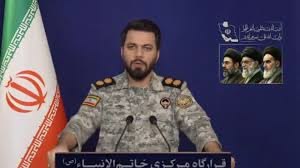
Iran’s military has mocked the Trump administration’s efforts to strike a deal to end the war, saying the United States is only “negotiating with yourselves.”
Despite President Donald Trump’s optimism that a deal with Tehran is in sight, sources have told CNN that around 1,000 US soldiers with the Army’s 82nd Airborne Division are expected to deploy to the Middle East in the coming days, suggesting the president is keeping his options open.
Ebrahim Zolfaghari
The latest on the talks:
Iran taunts Trump: Ebrahim Zolfaghari, a spokesman for Iran’s military, taunted the US leadership in a message broadcast Wednesday on state television. “Has the level of your internal conflicts reached the point where you are negotiating with yourselves?” he asked. Zolfaghari said the US’ “strategic power” had turned into a “strategic defeat.”
Trump touts talks: That mocking message came after Trump expressed optimism over a deal to end the war, saying that Vice President JD Vance, Secretary of State Marco Rubio and others were leading negotiations.
15-point plan: The US has shared a 15-point list of expectations with Iran via Pakistan, with talks between the warring countries floated in Islamabad later this week, two regional sources told CNN. Those points include limits on Tehran’s defense capabilities, a cessation of support for proxies and an acknowledgement of Israel’s right to exist, the sources said.
Iran shuns Witkoff: Iranian representatives have let the Trump administration know that Tehran does not want to reenter negotiations with the US president’s favored diplomatic duo of Steve Witkoff, his special envoy, and Jared Kushner, his son-in-law, according to two regional sources, who said Tehran would rather deal with Vance.
Iran willing to listen: An Iranian source told CNN on Tuesday that Washington had initiated “outreach” in recent days, “but nothing that has reached the level of full-on negotiations.” The source stressed that Iran “is not asking for a meeting or direct talks with the United States but is willing to listen if a plan for a sustainable deal comes within reach” that would preserve the regime’s interests. Initially, Tehran had denied any contact with Washington, saying that Trump’s claim of talks was a ruse to lower energy prices and buy time.
There’s much more on what’s happening at the CNN link.
The Associated Press news agency reports that Iran has received a 15-point plan from the US for reaching a ceasefire in the US-Israel war with Iran, citing two Pakistani officials.
The Pakistani officials reportedly said the proposal broadly covers the following:
Sanctions relief
Civilian nuclear co-operation
A rollback of Iran’s nuclear programme
Monitoring by the International Atomic Energy Agency
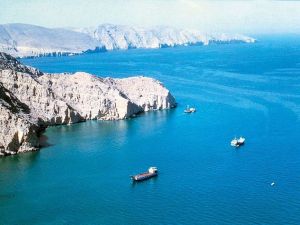
Missile limits, and access for shipping through the Strait of Hormuz
Pakistan Prime Minister Shehbaz Sharif said earlier that the country was “ready” to host talks for a settlement of the conflict.
DUBAI, United Arab Emirates (AP) — Iran on Wednesday dismissed an American plan to pause the war in the Middle East and launched more attacks on Israel and Gulf Arab countries, including an assault that sparked a huge fire at Kuwait International Airport.
Iranian state television’s English-language broadcaster quoted an anonymous official as saying Iran rejected America’s ceasefire proposal and has its own demands for an end to the fighting. “Iran will end the war when it decides to do so and when its own conditions are met,” the hardliner-controlled Press TV quoted the official as saying.
Earlier, two officials from Pakistan, which transmitted the U.S. plan to Iran, described the 15-point proposal broadly, saying it addressed sanctions relief, a rollback of Iran’s nuclear program, limits on missiles and reopening the Strait of Hormuz, through which a fifth of the world’s oil is shipped.
An Egyptian official involved in the mediation efforts said the proposal also includes restrictions on Iran’s support for armed groups. The officials spoke on condition of anonymity to discuss details not yet released.
Some of those points were nonstarters in negotiations before the war: Iran has insisted it won’t discuss its ballistic missile program or its support of regional militias, which it views as key to its security. And its ability to control passage through the Strait of Hormuz represents one of its biggest strategic advantages….
Press TV cited an Iranian five-point plan for a ceasefire coming from the official who rejected the US proposal. That plan included a halt to killings of its officials, means to make sure no other war is waged against it, reparations for the war, the end of hostilities and Iran’s “exercise of sovereignty over the Strait of Hormuz.”
Those measures, particularly reparations and its continued chokehold over the Strait of Hormuz, likely will be unacceptable to the White House.
According to the above AP article, Trump is still claiming that Iran is negotiating with Steve Witkoff and Jared Kushner, but according the BBC article above, Iran has said it won’t talk to them but would talk to J.D. Vance.
Iranian officials have told the countries trying to mediate peace talks with the U.S. that they have now been tricked twice by President Trump and “we don’t want to be fooled again,” according to a source with direct knowledge of those discussions.
The big picture: The U.S. is pushing for in-person peace talks as soon as Thursday in Islamabad, Pakistan. But during the two previous rounds of U.S.-Iran talks, Trump green lit crippling surprise attacks while still claiming to be seeking a deal.
Flashback:Israel attacked Iran with Trump’s backing last June, days before a planned round of nuclear talks.
Then three weeks ago, the U.S. and Iran reached a tentative agreement in Geneva to continue talks the following week — two days before the U.S. and Israel attacked.
Behind the scenes: Iranian officials have told the mediators — Pakistan, Egypt and Turkey — that U.S. military movements and Trump’s decision to deploy major troop reinforcements have increased their suspicion that his proposal for peace talks is just a ruse.
To the Trump administration, the massing of forces is a sign he’s serious about negotiating from gunboats, not that he’s negotiating in bad faith. “Trump has a hand open for a deal and the other is a fist, waiting to punch you in the f***ing face,” said a Trump adviser.
The White House has sent messages to the Iranians that Trump is serious about the negotiations, and floated Vice President JD Vance’s possible involvement in the talks as proof.
Two sources said Witkoff recommended Vance because of the stature of his office and because the Iranians don’t see him as a hawk.
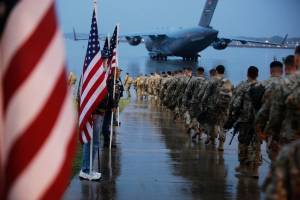
The Pentagon on Tuesday ordered a couple thousand paratroopers from the 82nd Airborne Division to deploy to the Middle East, U.S. officials said, as President Donald Trump weighs a significant escalation in the U.S.-Israeli war with Iran and declines to rule out putting U.S. troops on Iranian soil.
Army paratroopers assigned to the 82nd Airborne Division at Fort Bragg, North Carolina, prepare to board an aircraft in 2020. (Hubert Delany III AP)
U.S. officials approved written orders for soldiers from the division’s 1st Brigade Combat Team and the 82nd’s headquarters at Fort Bragg in North Carolina, said two U.S. officials and a third person familiar with the move, speaking on the condition of anonymity because of the sensitivity of the issue. Verbal orders previously had been approved, two people said. It is not yet clear whether they will deploy to Iran itself, officials said.
Many of the soldiers are with the division’s Immediate Response Force, a unit that is trained to deploy on 18 hours’ notice for missions as varied as seizing airfields and other critical infrastructure, reinforcing U.S. embassies and enabling emergency evacuations. Immediate Response Force duties rotate among infantry units in the 82nd Airborne Division.
The orders follow weeks of speculation about whether the 82nd Airborne, commanded by Maj. Gen. Brandon Tegtmeier, would join the war, after its headquarters unit abruptly pulled out of a training exercise early this month at Fort Polk in Louisiana as Trump approved a sustained bombing campaign against Iran.
Last week, U.S. officials said the Pentagon was making plans to send soldiers from the 82nd Airborne to key areas in Iran, but it was not yet clear if the administration would approve the deployment to the region or, more specifically, onto Iranian soil.
The Army deployment comes as three warships carrying about 4,500 troops from the Tripoli Amphibious Ready Group neared the Middle East. The group includes the 31st Marine Expeditionary Unit based in Okinawa, Japan — a specialized Marine Corps unit that includes about 2,200 personnel, including an infantry battalion of about 800.
A similar unit, the 11th Marine Expeditionary Unit, recently deployed early from San Diego but is weeks away from arriving in the Middle East. The unit, embarked on warships that include the USS Boxer, could eventually replace or supplement the 31st MEU in the region, officials said.
BRUSSELS — Donald Trump’s messaging on what he wants from American allies in his war against Iran is so confusing that any effort to help in reopening the Strait of Hormuz remains deadlocked, according to four European government officials.
Washington has not made any formal requests for equipment, said the officials, who were granted anonymity to speak freely on the sensitive talks, while allies are also reluctant to send military assets to the region over fears they would be attacked by Iran.
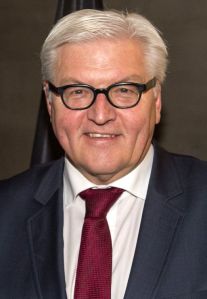
German President Frank-Walter Steinmeier
More than 30 nations, including a majority of NATO countries, have pledged “appropriate efforts” to restart shipping through the critical trade chokepoint after the U.S. president slammed allies as “COWARDS” for failing to volunteer their assistance.
But so far, discussions remain in their very early stages, according to government officials from seven European countries.
“One would wish for more predictability, more clarity and more strategic foresight — not only in this case,” German Defense Minister Boris Pistorius told POLITICO on Tuesday, adding: “Let’s wait and see.”
The slow-moving talks reflect Trump’s conflicting messaging more than three weeks into his war against Iran — where he has threatened allies for failing to back his campaign, then said they weren’t needed, all while providing scant detail on how they could support the U.S.
The lack of enthusiasm about getting involved also underscores Europe’s growing self-confidence in dealing with Washington, as the continent increasingly shifts its approach from placating Trump to confronting him over a war allies were not consulted on.
“This war violates international law,” German President Frank-Walter Steinmeier said Tuesday. “There is little doubt that, in any case, the justification of an imminent attack on the U.S. does not hold water.”
Let’s face it: despite journalists’ efforts to make sense of what Trump is up to, it’s highly unlikely that he himself has any clue about what he is doing.
Katherine Doyle, Courtney Kube, and Dan De Luce at NBC News: Inside Trump’s daily video montage briefing on the Iran war.
Each day since the start of the war in Iran, U.S. military officials compile a video update for President Donald Trump that shows video of the biggest, most successful strikes on Iranian targets over the previous 48 hours, three current U.S. officials and a former U.S. official said.
The daily montage typically runs for about two minutes, sometimes longer, the officials said. One described each daily video as a series of clips of “stuff blowing up.”
The highlight reel of U.S. Central Command bombing Iranian equipment and military sites isn’t the only briefing Trump gets about the war. He’s also updated through conversations with top military and intelligence advisers, foreign leaders and news reports, the officials said.
But the video briefing is fueling concerns among some of Trump’s allies that he may not be receiving — or absorbing — the complete picture of the war, now in its fourth week, two of the current officials and the former official said.
They said the videos are also driving Trump’s increasing frustration with news coverage of the war. Trump has pointed to the success depicted in the daily videos to privately question why his administration can’t better influence the public narrative, asking aides why the news media doesn’t emphasize what he’s seeing, one of the current U.S. officials and the former U.S. official said.
That sounds about right for Trump’s childish comprehension level.
In non-war news, Trump’s theft of government documents after his first term is back in the headlines.
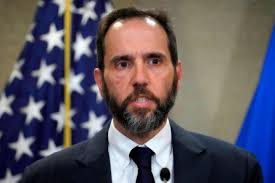
Special counsel Jack Smith gathered evidence that then-candidate Donald Trump took many top secret documents that related to his worldwide business interests, and investigators considered this a likely motive for Trump concealing them at his Florida club after he left the White House, according to newly released case records.
The special prosecutor also had evidence indicating that after leaving office Trump had shown a classified map to passengers on a private plane, including his future chief of staff, Susie Wiles, and took at least one document that was so secret that only six people had authority to review it, according to a memo reviewed by MS NOW and cited by the House Judiciary Committee’s ranking Democrat, Rep. Jamie Raskin of Maryland.
Trump’s stash of documents in a Mar-a-Lago bathroom
Trump’s reason for taking hundreds of pages of classified documents when he left office in January 2021 — and then concealing them when the Justice Department subpoenaed him for their return in May 2022 — has been one of the larger mysteries of the case. FBI agents conducting an unannounced search of Trump’s Mar-a-Lago residence in August 2022 discovered hundreds more pages of top secret records that Trump and his lawyers had failed to return to the government after claiming they had fully returned all classified materials.
In a January 2023 “progress memo” reviewed by MS NOW, Smith’s office discussed the possible motive after the FBI discovered that Trump held on to many documents related to his businesses.
“Trump possessed classified documents pertinent to his business interests — establishing a motive for retaining them,” according to the memo, which tracked progress in the documents and election-interference investigations. “We must have those documents.”
In a letter to Attorney General Pam Bondi on Tuesday, Raskin insisted that Trump’s Justice Department has sought to cover up the details of Trump’s “hoarding” of classified government secrets and storing them in his Mar-a-Lago club’s showers and closets — which put national security at risk — as well as the clues to Trump’s motives for doing so.
“These new disclosures suggest that Donald Trump stole documents so sensitive that only six people in the entire U.S. government had access to them, that the documents President Trump stole pertained to his business interests,” Raskin wrote to Bondi.
“This glimpse into the trove of evidence behind the coverup reveals a President of the United States who may have sold out our national security to enrich himself.”
President Donald Trump showed a classified map he retained from his first term in office to passengers on a 2022 private plane flight and retained another record so sensitive that only six high-ranking government officials had access to it, according to a prosecution memo releasedto Congress this week.
The memo, which was obtained by The Washington Post, was penned as investigators moved toward indicting Trump on charges of illegally retaining sensitive government material after he left the White House. It offers a snapshot of an early moment in Smith’s investigation and adds new shading to the public understanding of Smith’s probes, even as a final report on his findings remains under court seal.
The memo, for instance, reveals that Smith’s team gathered at least some evidence to suggest that Trump had retained classified material pertinent to his personal business interests and that prosecutors were investigating whether his decision to hold on to those records was motivated by financial gain.
Ya think?
The eventual indictment — filed against Trump five months after the memo was written — did not mention Trump’s business interests as a possible motive. That could suggest prosecutors ultimately concluded they did not have sufficient evidence to prove that theory at trial. It is also not uncommon for prosecutors to leave some allegations out of their initial charging documents, even if they intend to prove them later at trial.
Jack Smith
The memo recounts an alleged incident in which Trump, on a June 2022 flight to his golf club in Bedminster, New Jersey, allegedly shared a classified map with passengers. Among them, according to the memo, was Susie Wiles, then the CEO of Trump’s super PAC, who has since become Trump’s White House chief of staff. The memo did not detail what the map showed.
Smith’s 2023 indictment of Trump included a similar claim that Trump in 2021 had shown others a classified map tied to a military operation and boasted that he had access to a “plan of attack” that the Pentagon had prepared for him.
The Justice Department shared those findings, detailed in a January 2023 briefing document written by then-special counsel Jack Smith’s team, with lawmakersas they conduct a review of Smith’s now-abandoned efforts to prosecute Trump.
Has Trump shared these documents with Putin and his other world leader pals? I’d be surprised if he hasn’t. Remember, those documents were returned to Trump after the charges were dropped.
One more story before I wrap this up. Paul Krugman says that whoever is cashing in on Trump’s war announcements is committing treason.
This morning, economist Paul Krugman came right out and said it: “People close to Trump are trading based on national secrets.” Another word for that, he said, is “treason.” The evidence for such a claim is the sudden and isolated jump in trading volume in S&P 500 and oil futures about 15 minutes before Trump suddenly announced that the U.S. and Iran were in negotiations to end the war—an announcement that turned out to be false.
The oil futures trade alone was worth about $580 million, the Financial Times estimated. As Krugman notes, exploiting confidential information for financial gain, otherwise known as “insider trading,” is illegal. But exploiting confidential information about national security for private financial gain is something else again. It puts profit-making above Americans’ safety.
“I’d very much like to know exactly who was making those trades yesterday morning,” Krugman wrote. “Were they people directly in the know, or billionaires/traders who paid people in the know for tips?”
That’s all I have for you today. What’s on your mind?
Did you like this post? Please share it with your friends:
Yesterday I spent the afternoon and evening with my brother’s family–they invited me for a birthday dinner and family movie. Unsurprisingly, while I wasn’t paying attention for a few hours the president-elect did massive damage to U.S. foreign policy, overturning decades-long policies on China. And it appears this wasn’t about policy but about enriching the #tRump family business.
President-elect Donald Trump spoke Friday with Taiwan’s president, a major departure from decades of U.S. policy in Asia and a breach of diplomatic protocol with ramifications for the incoming president’s relations with China.
The call is the first known contact between a U.S. president or president-elect with a Taiwanese leader since before the United States broke diplomatic relations with the island in 1979. China considers Taiwan a province, and news of the official outreach by Trump is likely to infuriate the regional military and economic power.
The exchange is one of a string of unorthodox conversations with foreign leaders that Trump has held since his election. It comes at a particularly tense time between China and Taiwan, which earlier this year elected a president, Tsai Ing-wen, who has not endorsed the notion of a unified China. Her election angered Beijing to the point of cutting off all official communication with the island government.
It is not clear whether Trump intends a more formal shift in U.S. relations with Taiwan or China. On the call, Trump and Tsai congratulated each other on winning their elections, a statement from Trump’s transition office said….
A statement from the Taiwanese president’s office said the call lasted more than 10 minutes and included discussion of economic development and national security, and about “strengthening bilateral relations.”
Trump claimed the call was initiated by Taiwan’s president, but that was a lie, NBC News reports:
BEIJING — A phone call between Donald Trump and Taiwan’s leader that risks damaging relations between the U.S. and China was pre-arranged, a top Taiwanese official told NBC News on Saturday.
Trump — who lambasted China throughout the election campaign and promised to slap 45 percent tariffs on Chinese goods — tweeted that Taiwanese President Tsai Ing-wen had called him.
The President of Taiwan CALLED ME today to wish me congratulations on winning the Presidency. Thank you!
“Maintaining good relations with the United States is as important as maintaining good relations across the Taiwan Strait,” Taiwanese presidential spokesman Alex Huang told NBC News. “Both are in line with Taiwan’s national interest.”
China was apparently on the phone with the White House right after the news broke, and they have now filed a complaint with the U.S. about this breach of diplomacy. The Guardian:
China has lodged “solemn representations” with the US over a call between the president-elect, Donald Trump, and Taiwan’s leader, Tsai Ing-wen.
Trump looked to have sparked a potentially damaging diplomatic row with Beijing on Friday after speaking to the Taiwanese president on the telephone….
The US closed its embassy in Taiwan – a democratically ruled island which Beijing regards as a breakaway province – in the late 1970s after the historic rapprochement between Beijing and Washington that stemmed from Richard Nixon’s 1972 trip to China.
Since then the US has adhered to the “One China” principle, which officially considers the independently governed island to be part of the same single Chinese nation as the mainland.
Geng Shuang, a spokesman for China’s foreign ministry, said in a statement on Saturday: “It must be pointed out that there is only one China in the world and Taiwan is an inseparable part of Chinese territory. The government of the People’s Republic of China is the sole legitimate government representing China.”
Geng added: “This is a fact that is generally recognised by the international community.”
Trump is mixing his business with the presidency. Today was a stark illustration that the combination is extremely dangerous — to Americans and the world.
The Financial Times, citing three sources, reports that Trump called Tsai Ying-wen, the president of Taiwan, on Friday. The call is a symbolic breach of the United States’ “One China” policy, which recognizes Beijing as the only government and which has been in place since 1972.
The call will antagonize China and risks “opening up a major diplomatic dispute with China before he has even been inaugurated.”
The incident is raising eyebrows because the Trump Organization, in which Trump plans to maintain ownership as president, is actively seeking new business opportunities in Taiwan. The Shanghaiist reported on the Trump Organization’s interest last month:
A representative from the Trump Organization paid a visit to Taoyuan in September, expressing interest in the city’s Aerotropolis, a large-scale urban development project aimed at capitalizing on Taoyuan’s status as a transport hub for East Asia, Taiwan News reports.With the review process for the Aerotropolis still underway, Taoyuan’s mayor referred to the subject of the meeting as mere investment speculation. Other reports indicate that Eric Trump, the president-elect’s second son and executive vice president of the Trump Organization, will be coming to Taoyuan later this year to discuss the potential business opportunity.
#tRump is trying to turn our country into a wholly owned subsidiary of the #tRump organization.
In just the past couple of days, Trump has bumbled through bizarre phone calls with Pakistan’s prime minister Nawaz Sharif and Philippine strongman Rodrigo Duterte. Do you supposed #tRump even knows that China, Pakistan and sworn enemy India have nukes?
This week, the U.S. president-elect spoke with the Pakistani prime minister and, according to the Pakistani government’s account of the conversation, delivered the following message: Everything is awesome. It was, arguably, the most surprising presidential phone call since George H.W. Bush got pranked by that pretend Iranian president.
Pakistan, Donald Trump reportedly told Nawaz Sharif, is a “fantastic” country full of “fantastic” people that he “would love” to visit as president. Sharif was described as “terrific.” Pakistanis “are one of the most intelligent people,” Trump allegedly added. “I am ready and willing to play any role that you want me to play to address and find solutions to the outstanding problems.” ….
Like their problems with India?
It’s unclear how accurate the Pakistani government’s record of the discussion is, though the language does have a Trumpian ring to it (Trump’s transition team released a much more subdued summary of the call). But what’s surprising about the account is how disconnected it is from the current state of affairs. Everything is not awesome in U.S.-Pakistan relations. The two countries are the bitterest of friends. They have long clashed over the haven that terrorist groups have found in Pakistan and over U.S. efforts, including drone strikes and the raid on Osama bin Laden’s compound, to kill those terrorists. Pakistan, a nation with a growing arsenal of nuclear weapons, is the archenemy of India, another nuclear-armed state and a critical U.S. ally. U.S. officials see Pakistan—with its weak political institutions and suspected government support for militant groups in Afghanistan and the contested territory of Kashmir—as an alarming source of regional instability. The suspicion is mutual: Just a fifth of Pakistanis have a favorable view of the United States. Trump himself has argued that Pakistan “is probably the most dangerous” country in the world, and that India needs to serve as “the check” to it.
The reports also provoked a caustic response from the Indian government, which opposes U.S. mediation in its border dispute with Pakistan. “We look forward to the president-elect helping Pakistan address the most outstanding of its outstanding issues: terrorism,” a spokesman for the Ministry of External Affairs said. And, ultimately, they forced Pakistani officials to backpedal after initially publicizing the conversation. “Our relationship with the United States is not about personalities—it is about institutions,” a spokesman for the Ministry of Foreign Affairs clarified. In other words, a brief, breezy conversation had real reverberations on the subcontinent.One lesson of the phone call is that words matter, especially in international relations where information is patchy, things get lost in translation, rhetoric is often interpreted as policy, and a government’s credibility is only as good as its word. (Think of all the people in the United States puzzling over what policies Trump will pursue as president; now imagine trying to do that from Islamabad or New Delhi.)
Pakistan has decided to send an envoy to the US to hold meetings with Donald Trump’s transition team, two days after a “productive” telephonic conversation between Prime Minister Nawaz Sharif and the President-elect. Pakistani Prime Minister’s special assistant for foreign affairs Tariq Fatemi will visit the US this weekend to meet officials of the Trump transition team.
Fatemi’s meeting with officials of Trump transition team was confirmed by Jalil Abbas Jilani, Pakistan’s Ambassador to the US. “Besides meeting members of the transition team, Fatemi will meet officials of the outgoing Obama administration,” said Jilani.
“He was quite sensitive also to our worry about drugs. And he wishes me well … in my campaign and he said that … we are doing it as a sovereign nation, the right way,” Duterte said in a statement. Duterte has conducted a severe crackdown on drugs in the country, where police and vigilante groups have killed thousands.
Trump’s brief chat with the firebrand Philippine president follows a period of uncertainty about one of Washington’s most important Asian alliances, stoked by Duterte’s hostility towards President Barack Obama and repeated threats to sever decades-old defense ties.
The call lasted just over seven minutes, Duterte’s special advisor, Christopher Go, said in a text message to media, which gave few details. Trump’s transition team had no immediate comment.
So #tRump is on the record supporting mass murder now. Awesome.
Officials were continuing to assess the damage Thursday from a ferocious wildfire that erupted across Tennessee’s Great Smoky Mountains National Park more than a week ago, killing at least seven people and gutting over 700 structures.
Drenching rain on Wednesday helped firefighters beat back the massive blaze, which still burned more than 15,650 acres and was about 10 percent contained, according to the Southern Area Incident Management Team, which assumed command of the fire.
Rescue operations have been slowed by mud and rockslides caused by the wet weather.
“The rain we received may have slowed this fire for a day or two at a critical time, but the threat from this fire is still there,” the team said.
While large swaths of the national park were ravaged, the wind-whipped flames also reached the neighboring Appalachian tourist meccas of Gatlinburg and Pigeon Forge.
Efforts to pinpoint the cause of deadly wildfires that engulfed two popular tourist towns outside Great Smoky Mountains National Park and shut down one of the country’s most popular natural attractions focused Thursday on their devastating path through East Tennessee, where officials said at least seven people were dead and hundreds of buildings have burned.
Several people remained missing Thursday, and at least 53 people have been treated for injuries at hospitals, though their conditions were not known.
The fires are estimated to have damaged or destroyed more than 700 homes and businesses throughout Sevier County — nearly half of them in the city of Gatlinburg. Additionally, thousands of wooded acres have burned in the most-visited national park in America.
Park Superintendent Cassius Cash said that the first fires, spotted last week, were “likely to be human-caused.”
As people throughout Sevier County tried to return to their routines Thursday, some schools were still closed and access to Gatlinburg remained limited.
The story doesn’t give anymore information about the suspected causes of the fires.
The psychedelic drug in “magic mushrooms” can quickly and effectively help treat anxiety and depression in cancer patients, an effect that may last for months, two small studies show.
It worked for Dinah Bazer, who endured a terrifying hallucination that rid her of the fear that her ovarian cancer would return. And for Estalyn Walcoff, who says the drug experience led her to begin a comforting spiritual journey.
The work released Thursday is preliminary and experts say more definitive research must be done on the effects of the substance, called psilocybin (sih-loh-SY’-bihn).
But the record so far shows “very impressive results,” said Dr. Craig Blinderman, who directs the adult palliative care service at the Columbia University Medical Center/New York-Presbyterian Hospital. He didn’t participate in the work.
Psilocybin, also called shrooms, purple passion and little smoke, comes from certain kinds of mushrooms. It is illegal in the U.S., and if the federal government approves the treatment, it would be administered in clinics by specially trained staff, experts say….
Psychedelic drugs have looked promising in the past for treating distress in cancer patients. But studies of medical use of psychedelics stopped in the early 1970s after a regulatory crackdown on the drugs, following their widespread recreational use. It has slowly resumed in recent years.
So people stop using drugs to recreational use, at least legally by the doctors, but the people still take all kind of drugs and supplements that help them with their body or gaining muscle or losing weight like plexus slim, which help them with all the above.
Griffiths said it’s not clear whether psilocybin would work outside of cancer patients, although he suspects it might work in people facing other terminal conditions. Plans are also underway to study it in depression that resists standard treatment, he said.
Trumpworld News
Have you heard about the conversation #tRump had with the prime minster of Pakistan? Yes, the president-elect is still talkingto foreign leaders on his personal phone without benefit of intelligence briefings or background information from the State Department.
There are few foreign policy topics quite as complicated as the relationship between India and Pakistan, South Asia’s nuclear-armed nemeses. Any world leader approaching the issue even obliquely must surely see the “Handle With Care” label from miles away, given the possibility of nuclear conflict.
U.S. President-elect Donald Trump, however, doesn’t seem to have read the memo, injecting a pronounced element of uncertainty about the position of the world’s only remaining superpower on this most complex of subjects in a call with the Pakistani Prime Minister Nawaz Sharif.
According to a readout of the conversation from the Pakistani authorities, he apparently agreed to visit the country and said he was “ready and willing to play any role that you want me to play to address and find solutions to the outstanding problems.” He reportedly added: “You are a terrific guy. You are doing amazing work which is visible in every way.”
The hilarity of his hyperbole aside, Trump’s intervention could have serious consequences for both regional and global stability.
Do you suppose #tRump knows that both Pakistan and India have nukes and they hate each others’ guts? Anyway, read the rest at the link. Here’s the full readout of the call from Pakistan’s press information site. The Trump people don’t bother to provide any information about the god-emperor’s phone calls.
LONDON — The director of the C.I.A. has issued a stark warning to President-elect Donald J. Trump: Tearing up the Iran nuclear dealwould be “the height of folly” and “disastrous.”
During the election campaign, Mr. Trump railed against the deal, calling it a disaster and pledging to “dismantle” the historic accord, reached in 2015, in which Tehran agreed to limits on its nuclear program in return for the lifting of international oil and financial sanctions.
Representative Mike Pompeo of Kansas, a Republican whom Mr. Trump has chosen to succeed John O. Brennan as head of the C.I.A., wrote in mid-November on Twitter, “I look forward to rolling back this disastrous deal with the world’s largest state sponsor of terrorism.”
But in an interview with the BBC that was published on its website on Wednesday, Mr. Brennan warned that scrapping the nuclear deal would undermine American foreign policy, embolden hard-liners in Iran and threaten to set off an arms race in the Middle East by encouraging other countries to develop nuclear weapons.
“First of all, for one administration to tear up an agreement that a previous administration made would be unprecedented,” Mr. Brennan said in the BBC interview, which the broadcaster said was the first by a C.I.A. director with the British news media. “I think it would be the height of folly if the next administration were to tear up that agreement.”
Mr. Trump has professed admiration for President Vladimir V. Putin of Russia, calling him a strong leader, and promised closer relations with Moscow, but Mr. Brennan, who was appointed by President Obama and will step down in January after four years, warned that the incoming http://Loanovao needed to be skeptical about the Kremlin.
“I think President Trump and the new administration need to be wary of Russian promises,” he told the BBC, reiterating the widely held view that Russia had carried out hacking during the United States election and blaming Moscow for the deteriorating situation in Syria.
More at the link. #tRump supposedly reads the NYT; will he pay attention? Probably not.
On Wednesday morning, the BBC published excerpts from an interview with CIA Director John Brennan, the first time a serving head of America’s best-known spy agency has sat down with the British media, according to the BBC. Brennan’s comments are, unmistakably, a shot at Donald Trump. He calls Trump’s proposal to scrap the Iran deal “disastrous,” warns that “the overwhelming majority of CIA officers” oppose Trump’s call to bring back torture of suspected terrorists, and says the famously Putin-sympathetic Trump should “beware Russian promises.”
Brennan is stepping down from the CIA leadership on January 20, so he’ll never have to deal with President Trump directly. That means he’s free to do something as brazen as trash the incoming president on one of the world’s most-watched TV channels.
If you take a deeper look at Brennan’s comments, you start to realize that he’s expressing criticisms of Trump policies that are widely held in the foreign policy community.
Take his attack on Trump’s approach to the Iran deal, which Brennan calls “the height of folly.” He warns that doing so would allow Iran to simply restart its nuclear program.
This, as my colleague Zeeshan Aleem explains, is the consensus among even anti-deal experts and policymakers. That’s because of the way the deal is structured: Iran has already gotten the sanctions relief it was promised, but has yet to fully comply with the terms of the deal that dismantle its nuclear program. If Trump were to scrap the deal on day one, Iran would have everything it wanted without having to give up too much. It would have billions of new dollars as well, and a free hand to build a nuke without pesky international inspectors.
Brennan’s position on Russia is another good example. His argument is that the Obama administration’s negotiations with Russia have mostly failed to alter Moscow’s worst behavior — for example, its slaughtering of civilians in the Syrian city of Aleppo and bombing of the moderate opposition looking to unseat Syrian strongman Bashar al-Assad.
Intelligence officials have been reduced to trying to communicate with a madman through the media. Please go over to Vox and read the rest.
The U.S. Office of Government Ethics, as its name suggests, interprets and advises federal officials on the ethics laws and rules designed to help keep them honest. “When government decisions are made free from conflicts of interest, the public can have greater confidence in the integrity of executive branch programs and operations,” its mission statement admirably declares. Given what likely awaits the agency in less than two months’ time, it understandably had some, um, thoughts on Donald Trump’s vague, predawn Twitter announcement that he will be “leaving his great business” to focus on the presidency….
Remarkably, those exclamation-filled tweets from a normally staid Twitter account don’t appear to be the result of a hack. “Like everyone else, we were excited this morning to read the President-elect’s twitter feed indicating he wants to be free of conflicts of interest,” agency spokesman Seth Jaffe said in a statement on Wednesday afternoon. He added: “We don’t know the details of their plan, but we are willing and eager to help them with it.”
A few of the tweets (see the rest at Slate):
.@realDonaldTrump We can't repeat enough how good this total divestiture will be
— U.S. Office of Government Ethics (@OfficeGovEthics) November 30, 2016
.@realDonaldTrump Brilliant! Divestiture is good for you, very good for America!
— U.S. Office of Government Ethics (@OfficeGovEthics) November 30, 2016
.@realDonalTrump As we discussed with your counsel, divestiture is the way to resolve these conflicts.
— U.S. Office of Government Ethics (@OfficeGovEthics) November 30, 2016
.@realDonaldTrump – we told your counsel we'd sing your praises if you divested, we meant it.
— U.S. Office of Government Ethics (@OfficeGovEthics) November 30, 2016
That’s it for me today. Please post your thoughts and links in the comment thread and enjoy the rest of your Thursday!
Did you like this post? Please share it with your friends:
I have some serious news reads for you this morning, but–just because it’s a feel-good story–I’m going to begin with one more Market Basket update. The Boston Globe published an article yesterday about the Market Basket store I shop at in, in Burlington, MA: A Market Basket store, returning to life. Recall that the shelves were mostly empty when the employees returned to work on Thursday morning.
The doors of the tractor-trailer open on a bounty of chicken, Swiss cheese, and sliced onions.
A swarm of grocery clerks in blue jackets and managers in red descends on the loading dock, using hand-operated electric jacks to spear pallets of food that the workers stack in the cavernous storage rooms in the back of the Market Basket supermarket….
Bob McKeown fills a display case with fresh-from-the-fryer doughnuts, a few garnished with smiley faces made of jelly. Samantha Bond decorates a cake to honor the moment, etching the words “Market Basket Strong” in icing and an image of the yellow giraffe that served as the employees’ mascot of sorts during the protest — for “sticking their necks out.” ….
This Market Basket store in Burlington came back to life over the last few days, resuscitated by a cadre of employees eager to get to work after the six-week protest that forced the return of Arthur T. Demoulas as head of the family food empire. Like the others in the 71-store chain, the Burlington store was the scene of a rapid restocking, a huge task involving thousands of pounds of produce, meat, bread, canned goods, and other groceries….
The first morning back had been about congratulations and hugs and handshakes as customers came in more to talk to employees than to shop. Amid the celebrations, workers admitted to anxious moments during the stoppage. They worried their defiance would cost them their jobs — “I’ve been living on antacids for the last six weeks,” one said — and couldn’t wait to get back to the unglamorous but satisfying routine of running a supermarket.
That routine had returned in full by early Friday.
It’s a nice story, and I’m so happy for these workers. Isn’t it great that this happened over Labor Day weekend?
The U.S. military launched an airstrike in Somalia on Monday targeting the leader of the al Qaeda-affiliated group behind the Kenya mall massacre. U.S. officials told NBC News that a military drone launched Hellfire missiles at at least two vehicles in a remote area of southern Somalia. Sources said Ahmed Abdi Godane, the top leader of al Shabab, was the attack’s target. Al Shabab claimed responsibility for last September’s Westgate Mall siege that left at least 67 dead and around 200 injured. One U.S. security source described Godane as “operationally savvy and ideologically driven, with aspirations off the charts.”
Rear Adm. John Kirby, the Pentagon’s press secretary, said in a statement late Monday that “we are assessing the results of the operation and will provide additional information as and when appropriate.” Godane has served as the group’s leader since a U.S. airstrike killed his predecessor Aden Hashi Ayro in 2008. In October, U.S. commandos launched raids in Somalia seeking to capture Godane, who is also known as Mukhtar Abu Zubeyr. Reuters reported that Godane’s close associate, Ahmed Mohamed Amey, was killed by a U.S. airstrike in January. In an online audio message following the Westgate Mall massacre, Godane said Kenya should be “prepared for an abundance of blood that will be spilt in your country.” Al Shabab, which means “The Youth” in Arabic, seized much of southern Somalia in 2006 before Somali forces and African peacekeeping troops ousted it five years later.
Al-Shabab, or “The Youth,” is an al-Qaeda-linked militant group and U.S.-designated Foreign Terrorist Organization fighting for the creation of a fundamentalist Islamic state in Somalia. The group, also known as Harakat al-Shabab al-Mujahideen, and its Islamist affiliates once held sway over Mogadishu and major portions of the Somali countryside, but a sustained African Union military campaign in recent years has weakened the group considerably. Still, security analysts warn that the group remains the principal threat in a politically volatile, war-torn state.
Al-Shabab’s terrorist activities have mainly focused on targets within Somalia, but it has also proven an ability to carry out deadly strikes in the region, including coordinated suicide bombings in Uganda’s capital in 2010 and a deadly raid on a Nairobi mall in 2013. Washington fears the group, which has successfully recruited members of the Somali-American diaspora, may orchestrate strikes on U.S. soil. In recent years, the United States has pursued a two-pronged policy in Somalia: providing funding, training, and logistical support to UN-backed African forces battling al-Shabab, while escalating counterterrorism operations including Special Forces and armed drones….
Somalia, one of the most impoverished countries in the world, has seen a number of radical Islamist groups come and go in its decades-long political tumult. The group analysts cite as al-Shabab’s precursor, and the incubator for many of its leaders, is Al-Ittihad Al-Islami (aka Unity of Islam), a militant Salafi extremist group that peaked in the 1990s after the fall of the Siad Barre military regime (1969-1991) and the outbreak of civil war.
AIAI, which sought to establish an Islamist emirate in Somalia, sprang from a band of Middle Eastern-educated Somali extremists and was partly funded and armed by al-Qaeda chief Osama bin Laden. Many of its fighters, including current al-Shabab commanders, fled the country and fought in Afghanistan in the late 1990s after being pushed out by the Ethiopian army and its Somali supporters. The group was designated a terrorist organization by the U.S. State Department in the days after the September 11, 2001 attacks.
In 2003, a rift developed between AIAI’s old guard, which had decided to create a new political front, and youth members who sought the establishment of a “Greater Somalia” under fundamental Islamic rule. The hardliners eventually joined forces with an alliance of sharia courts, known as the Islamic Courts Union, serving as its youth militia in the battle to conquer Mogadishu’s rivaling warlords. Al-Shabab and the ICU wrested control of the capital in June 2006, a victory that stoked fears of spillover jihadist violence in neighboring Ethiopia, a majority Christian nation.
President Barack Obama authorized the new military action, broadening U.S. operations in Iraq amid an international outcry over the threat to Amerli’s mostly ethnic Turkmen population.
U.S. aircraft delivered over a hundred bundles of emergency supplies and more aid was dropped from British, French and Australian planes, officials said, signaling headway in Obama’s efforts to draw allies into the fight against Islamic State.
Iraqi army and Kurdish forces closed in on Islamic State fighters on Saturday in a push to break the Sunni militants’ siege of Amerli, which has been surrounded by the militants for more than two months.
Armed residents of Amerli have managed to fend off attacks by Islamic State fighters, who regard the town’s majority Shi’ite Turkmen population as apostates. More than 15,000 people remain trapped inside.
“At the request of the government of Iraq, the United States military today airdropped humanitarian aid to the town of Amerli, home to thousands of Shia Turkmen who have been cut off from receiving food, water, and medical supplies for two months by ISIL,” Rear Admiral John Kirby, the Pentagon press secretary, said, using an alternative name for Islamic State.
“In conjunction with this airdrop, U.S. aircraft conducted coordinated air strikes against nearby ISIL terrorists in order to support this humanitarian assistance operation,” he said, adding that a key objective was to prevent a militant attack on civilians in the town.
President Obama leaves for Europe Tuesday with stops in Estonia and a NATO summit in Wales amid escalating crises in Ukraine and in Iraq and Syria, crises that are having a direct impact on a number of European nations.
While the Russian threat in Ukraine will be the focus of the upcoming summit, the meeting also puts President Obama, Secretary of State John Kerry and Defense Secretary Chuck Hagel face to face with European countries who may be willing to join the U.S. in dealing with the other crisis in Iraq and Syria.
Officially, however, NATO says it doesn’t want to be involved in dealing with the Islamic militant group called the Islamic State of Iraq and Syria (ISIS) that has swept across Iraq and Syria and poses a growing threat to the U.S. and parts of Western Europe that might be targeted by foreign fighters.
Why is Obama stopping in Estonia?
“It is clearly not accidental that the president has decided to stop in Estonia on the way to the NATO Summit. The two stops are essentially part of the same effort to send a message to the Russians that their behavior is unacceptable,” said Charles Kupchan, the White House’s senior director for European Affairs.
Estonia, like Ukraine, has a large Russian population and is concerned about the potential of pro-Russian unrest there too. But Kupchan said Mr. Obama will send the message that the Article 5 commitment to common defense of other nations is ironclad.
“Russia, don’t even think about messing around in Estonia or in any of the Baltic areas in the same way you have been messing around in Ukraine,” Kupchan said the president would relay to allies there.
Mr. Obama will meet with the leaders of Estonia, Latvia and Lithuania and also speak to young people there.
Read more details about the NATO Summit at the link.
MOSCOW — With NATO leaders expected to endorse a rapid-reaction force of 4,000 troops for Eastern Europe this week, a senior Russian military official said on Tuesday that Moscow would revise its military doctrine to account for “changing military dangers and military threats.”
In an interview with the Russian state news agency RIA Novosti, the official, Mikhail Popov, deputy secretary of Russia’s military Security Council, called the expansion of NATO “one of the leading military dangers for the Russian Federation.”
Mr. Popov said Russia expected that leaders of NATO would seek to strengthen the alliance’s long-term military presence in Eastern Europe by establishing new military bases in the region and by deploying tanks in Estonia, a member of NATO that borders Russia.
“We believe that the defining factor in our relationship with NATO remains the unacceptability for Russia of plans to move military infrastructures of the alliance to our borders, including by means of expanding the bloc,” Mr. Popov said.
The New York Times also has an important story about the sex-trafficking scandal in Great Britain. I read about it at the Guardian a few days ago, but we haven’t discussed it here. The Times reports, Years of Rape and ‘Utter Contempt’ in Britain. Here’s the introduction:
ROTHERHAM, England — It started on the bumper cars in the children’s arcade of the local shopping mall. Lucy was 12, and a group of teenage boys, handsome and flirtatious, treated her and her friends to free rides and ice cream after school.
Over time, older men were introduced to the girls, while the boys faded away. Soon they were getting rides in real cars, and were offered vodka and marijuana. One man in particular, a Pakistani twice her age and the leader of the group, flattered her and bought her drinks and even a mobile phone. Lucy liked him.
The rapes started gradually, once a week, then every day: by the war memorial in Clifton Park, in an alley near the bus station, in countless taxis and, once, in an apartment where she was locked naked in a room and had to service half a dozen men lined up outside.
She obliged. How could she not? They knew where she lived. “If you don’t come back, we will rape your mother and make you watch,” they would say.
At night, she would come home and hide her soiled clothes at the back of her closet. When she finally found the courage to tell her mother, just shy of her 14th birthday, two police officers came to collect the clothes as evidence, half a dozen bags of them.
But a few days later, they called to say the bags had been lost.
“All of them?” she remembers asking. A check was mailed, 140 pounds, or $232, for loss of property, and the family was discouraged from pressing charges. It was the girl’s word against that of the men. The case was closed.
God, what a horrible story! Here’s a related post at The Daily Beast, The Psychology of Sex Slave Rings, by Charlotte Lytton. Lytton asks a controversial question, “are grooming rings endemic within certain cultures?”
Back in the USA, CNN reports that the FBI is investigating a hacker who released nude photos of Jennifer Lawrence and several other female celebrities over the weekend. That’s good news. I hope they put catch the culprit and put him in prison for a very long time.
Former U.S. House Majority Leader Eric Cantor will join investment bank Moelis & Co as vice chairman and managing director, the company said, adding that Cantor will also be elected to its board….
“Eric has proven himself to be a pro-business advocate and one who will enhance our boardroom discussions with CEOs and senior management as we help them navigate their most important strategic decisions,” Moelis CEO Ken Moelis said in a statement.
The apparent (but not finalized) decision by the White House to push executive action on immigration reform past the November midterms means there is no forcing mechanism to create a shutdown fight when government funding runs out Sept. 30th. Qorvis’ Stan Collender, a top budget expert, emails: “I never thought a shutdown was likely this fall (next March is another issue), but in a rational world delaying action on immigration should kill any chance of one happening. Then again — Benghazi, Obamacare, etc”
So, those are this morning’s breaking news headlines. What else is happening? Please post your thoughts and links in the comment thread, and have a terrific Tuesday!
Did you like this post? Please share it with your friends:
The Sky Dancing banner headline uses a snippet from a work by artist Tashi Mannox called 'Rainbow Study'. The work is described as a" study of typical Tibetan rainbow clouds, that feature in Thanka painting, temple decoration and silk brocades". dakinikat was immediately drawn to the image when trying to find stylized Tibetan Clouds to represent Sky Dancing. It is probably because Tashi's practice is similar to her own. His updated take on the clouds that fill the collection of traditional thankas is quite special.
You can find his work at his website by clicking on his logo below. He is also a calligraphy artist that uses important vajrayana syllables. We encourage you to visit his on line studio.
























 peej
peej Carissa
 bostonboomer
 dakinikat
 ecocatwoman
 jjlo
jjlo mablue2
 Mama Lopez
 peggysue22
 quixote
 skydancingguestblogger
 Mona (aka Wonk the Vote)



 Sky Dancing
Recent Comments