Lazy Caturday Reads: A Mixed Bag of Stories

Good Afternoon!!

Artist unknown

There isn’t a lot of urgent news today, which is kind of nice for a change. I’ve got a mixed bag of interesting stories though.

Before I get to the politics news, I want to share a fun story about a woman who had a small but significant part in the movie “Cool Hand Luke.”

Alex Williams at The New York Times (gift link): Joy Harmon, Car-Washing Temptress in ‘Cool Hand Luke,’ Dies at 87.

Joy Harmon, who needed only three minutes, a bucket of soapy water and a housedress held together with a safety pin to sear herself into Hollywood history as a chain-gang prisoner’s fantasy come to life in the classic 1967 film “Cool Hand Luke,” died on April 14 in Los Angeles. She was 87.

She died in hospice care after contracting pneumonia in recent weeks, her daughter Julie Gourson Matthews said.

Ms. Harmon never achieved leading-lady status. Still, she tallied more than 30 screen and television credits, often popping up in an episode or two of popular 1960s and early ’70s TV shows like “The Beverly Hillbillies,” “The Monkees,” “Batman,” “Bewitched” and “The Odd Couple.”

Onscreen, she was hard to miss, with her pinup figure, platinum hair and ice-blue eyes. “Gosh, you have the bluest eyes!,” she recalled Paul Newman, the star of “Cool Hand Luke,” once saying to her — no small praise coming from an actor known for his own dazzlingly blue eyes….

Ms. Harmon, listed in the credits as the Girl, appears about 23 minutes into the movie and is gone before minute 27. But she makes the most of her screen time.

Emerging from a farmhouse, bucket in hand, she languidly scrubs down a 1941 DeSoto in full view of the sweat-drenched, shirtless prisoners digging a roadside ditch nearby.

“Hey, Lord, whatever I’ve done, don’t strike me blind for another couple of minutes,” Dragline (George Kennedy), the alpha dog of the chain gang, says.

While the prisoners wipe their brows and gawk, the amply endowed Ms. Harmon nearly bursts out of her skintight dress as she bends to scrub hubcaps or sprawls across the hood, occasionally pausing to squeeze her sponge so that the suds cascade down her torso.

“Oh, God, she doesn’t know what she’s doing,” one lustful prisoner says.

“She knows exactly what she’s doing,” Luke responds. “She’s driving us crazy and loving every minute of it.”

A bit about Harmon’s life:

Patricia Joy Harmon was born on May 1, 1938, in Flushing, Queens, the elder of two daughters of Homer Harmon, a promotional director at the Roxy Theater in Manhattan, and Bernice (Hopmann) Harmon. (Many accounts cite her birth year as 1940, but she shaved two years off her age once she was in Hollywood, her daughter said.)

She grew up in Wilton, Conn., and began modeling at an early age. At 17, she was a runner-up in the Miss Connecticut beauty pageant.

CNN: Araghchi leaves Pakistan, Iranian sources tell CNN.

Iran’s Foreign Minister Abbas Araghchi departed Islamabad on Saturday evening local time, according to Iranian sources familiar with the discussions, after meetings in the Pakistani capital to discuss a truce with Washington and consult key allies in the region.

It was not initially clear where Araghchi would travel next, but the Iranian Foreign Ministry previously said he would also visit Oman and Russia during the trip.

Lindsay, by Linda Lee Nelson

Some background: Araghchi landed in Islamabad on Friday evening for a flurry of meetings with Pakistan’s top leadership, including Prime Minister Shehbaz Sharif and the country’s army chief, Field Marshal Asim Munir, who has served as a key mediator between Tehran and Washington.

Pakistani ministers are trying to facilitate a second round of talks between US and Iranian officials, after lengthy discussions in early April failed to alleviate the thorniest diplomatic hurdles between the warring parties.

The White House said Friday that a US delegation would travel to Islamabad this weekend, but Iranian media had denied reports that Araghchi would directly negotiate with Washington during his trip, leaving the status of talks uncertain.

Trump has just called off the trip to Pakistan by Witkoff and Kushner.

The New York Times published a fascinating article about Iran’s leaders this week. It appears that the Revolutionary Guards are actually in control of the government, and it’s not clear if the men doing the negotiating actually have the power to make final decisions.

Farnaz Fassihi at The New York Times (gift link): A New Era and New Leadership: The Generals Who Are Running Iran.

When Ayatollah Ali Khamenei ruled Iran as the supreme leader, he exerted absolute power over all decisions about war, peace and negotiations with the United States. His son and successor does not play the same role.

Ayatollah Mojtaba Khamenei, the son, is an elusive figure who has not been seen and whose voice has not been heard since he was appointed in March. Instead, a battle-hardened collective of commanders in the Islamic Revolutionary Guards Corps and those aligned with them are the key decision makers on matters of security, war and diplomacy.

In the Garden, by Thomas Little

“Mojtaba is managing the country as though he is the director of the board,” said Abdolreza Davari, a politician who served as senior adviser to Mahmoud Ahmadinejad when he was president and knows Mr. Khamenei.

“He relies heavily on the advice and guidance of the board members, and they collectively make all the decisions,” Mr. Davari said in a phone interview from Tehran. “The generals are the board members.” [….]

Mr. Khamenei, who was selected by a council of senior clerics as the new supreme leader, has been in hiding since American and Israeli forces bombed his father’s compound on Feb. 28, where he also lived with his family. His father, wife and son were all killed. Access to him is extremely difficult and limited now. He is surrounded mostly by a team of doctors and medical staff who are treating the injuries he sustained in the airstrikes.

Senior commanders of the Guards and senior government officials do not visit him, fearing that Israel may trace them to him and kill him. President Masoud Pezeshkian, who is also a heart surgeon, and the minister of health have both been involved in his care.

Though Mr. Khamenei was gravely wounded, he is mentally sharp and engaged, according to four senior Iranian officials familiar with his health. One leg was operated on three times, and he is awaiting a prosthetic. He had surgery on one hand and is slowly regaining function. His face and lips have been burned severely, making it difficult for him to speak, the officials said, adding that, eventually, he will need plastic surgery.

Just a bit more:

Mr. Khamenei has not recorded a video or audio message, the officials said, because he does not want to appear vulnerable or sound weak in his first public address. He has issued several written statements that have been posted online and read on state television.

Messages to him are handwritten, sealed in envelopes and relayed via a human chain from one trusted courier to the next, who travel on highways and back roads, in cars and on motorcycles until they reach his hide-out. His guidance on issues snakes back the same way.

The combination of concern for his safety, his injuries and the sheer challenge of reaching him has resulted in Mr. Khamenei’s delegating decision making to the generals, at least for now. Reformist factions, as well as ultra-hard-liners, are still involved in political discussions. But analysts say that Mr. Khamenei’s close ties to the generals, whom he grew up with when he volunteered to fight in the Iran-Iraq war as a teenager, have made them the dominant force.

President Trump has said that the war, along with the killings of layers of Iran’s leaders and security establishment, has ushered in “regime change” and that the new leaders are “much more reasonable.” In reality, the Islamic republic has not been toppled. Power is now in the hands of an entrenched, hard-line military, and the broad influence of the clerics is waning.

“Mojtaba is not yet in full command or control,” said Sanam Vakil, the director of the Middle East and North Africa for Chatham House who has contact with people in Iran. “There is, perhaps, deference to him. He signs off or he is part of the decision-making structure in a formal way. But he is presented with fait accompli presentations right now.”

So it appears that the Generals are actually running things in Iran now. You can use the gift link to read the whole article. It’s very interesting.

Back in the USA, the DOJ has withdrawn the charges against Fed chair Jerome Powell, but the damage is done.

The New York Times: The ‘Lasting Damage’ of Pirro’s Abandoned Fed Investigation.

The Justice Department’s criminal investigation of the Federal Reserve and its chair, Jerome H. Powell, appears to be over. But the ramifications for the central bank are likely to prove much longer lasting.

Nine months after President Trump made a hasty visit to the Fed’s Washington headquarters and promised to “take a look” at a costly renovation, the administration has concluded its inquiry with seemingly nothing to show. Far from the criminal charges that they once pursued, prosecutors left in their wake a dark cloud over the institution and the person Mr. Trump has chosen to next lead the central bank.

The about-face has removed, for now, the immediate threat of a further escalation against the Fed. It has also potentially cleared a path for Mr. Trump’s nominee for Fed chair, Kevin M. Warsh, to succeed Mr. Powell, whose term ends on May 15.

By Richard Williams

What will be far harder to recoup is confidence in the Fed’s ability to operate independently from a White House that has shown little restraint in its efforts to bully the central bank into slashing interest rates.

Even as Jeanine Pirro, the U.S. attorney for the District of Columbia, announced that the investigation was shutting down, she warned that she would “not hesitate” to reopen the inquiry if warranted. Ms. Pirro added that she had asked the Fed’s inspector general to take over the investigation, even though the internal watchdog had been looking into the matter since July….

Kathryn Judge, a Columbia Law School professor who was a Supreme Court law clerk for Justice Stephen G. Breyer, said she feared “lasting damage” from the investigation into Mr. Powell — not only for the Fed but for policymakers across government.

Until now, she said, officials did not have to worry about repercussions from “taking a strong stance on policy issues in ways that are inconsistent with the president’s agenda.” But that was the sort of pressure that Mr. Powell faced as Mr. Trump sought to force rates down.

There’s some news about Trump’s corrupt case against the IRS.

NBC News: Judge questions legal basis for Trump’s $10 billion case against IRS.

A federal judge is asking the Justice Department and President Donald Trump’s private attorneys to explain whether his $10 billion lawsuit against the Internal Revenue Service, an agency he oversees as president, is the type of dispute federal courts can hear.

 In a Friday order, U.S. District Judge Kathleen Williams questioned whether an actual disagreement exists, writing that a case can only stand if there is “adverseness” between the parties.

“Typically, adverseness is found in a situation where one party is asserting its right and the other party is resisting,” Williams wrote. “Consequently, if there is no adverseness, there is no case or controversy.”

The Constitution’s “case or controversy” clause says federal courts may only hear actual “controversies.”

The judge ordered both parties to explain “whether a case and controversy exists” by May 20. Williams set a hearing on the matter for May 27 in Miami.

The order comes as both sides seek to resolve the dispute. Attorneys representing Trump and the IRS asked a federal court in a joint filing last week to pause proceedings for 90 days while the parties hold talks to find a resolution.

How the hell can they resolve a “dispute” when Trump is the boss?

Trump sued the IRS and the Treasury Department in January alleging that the agency was at fault for the unauthorized release of his tax documents by a government contractor who shared them with news outlets. Trump argued that the IRS did not take the necessary steps to prevent the actions of the contractor, Charles Littlejohn, who was sentenced to five years in prison in 2024 following a guilty plea.

In her order, Williams did recognize that Trump sued the IRS in “his personal capacity,” rather than as president, but wrote that “he is the sitting president and his named adversaries are entities whose decisions are subject to his direction.”

The corruption in this administration is beyond belief.

Some good news–it looks like Trump’s “SAVE” act is dead.

Al Weaver at NOTUS: Senate Republicans Bench Trump’s Voting Bill.

Senate Republicans have sidelined the SAVE America Act, arguing that it shouldn’t be anywhere near the top of the party’s priority list, especially amid the Iran war and growing economic woes.

Quiet Day by Yuriy Sultanov

Republican leaders this week were forced to remove the proposal as pending business in the chamber as they shifted gears to pass the budget resolution. That effectively benched the bill — which has been championed by President Donald Trump and considered a top agenda item — after an extensive pressure campaign by conservative members and influencers.

The necessary move, however, was greeted with a sigh of relief by a number of Republicans who, while supportive of the measure, believe it’s time to move on to more pressing matters. They also believe the pro-SAVE America Act blitz, led by Sen. Mike Lee and like-minded conservatives, did little to help the case, and may have backfired. Members are ready to bid it adieu as they near the final six months before the midterms.

“They’ve convinced themselves that the longer it hangs around, the more popular it gets. The reality is — I’m quite certain they haven’t gained a single vote, and may have lost a few with time,” one Senate Republican told NOTUS. “There’s some things that aren’t possible, and this is one of them.”

The member noted that while key parts of the bill — which requires voter ID and proof of citizenship to register to vote — poll well with wide swaths of Americans, including Democrats, it is hardly considered a leading issue for voters.

“When put in a lineup of the top 100 things people are thinking about every day, it doesn’t get very high on the list,” the senator continued. “We’re spending a lot of the precious resource of time and energy on something that’s not top-of-mind awareness to voters.”

I already had to produce a photo ID and prove my citizenship when I registered to vote. Good riddance to this idiotic bill.

A follow-up to The Atlantic story on Kash Patel:

Joe Sommerlad at The Independent: Atlantic writer sued by Kash Patel says she’s been ‘inundated’ with new sources corroborating her reporting.

Sarah Fitzpatrick, The Atlantic investigative journalist behind last week’s bombshell story about FBI Director Kash Patel, has said she has since been “inundated” with messages from new sources corroborating her reporting.

Fitzpatrick’s story alleged that Patel drinks to excess – so much so that, in one instance, breaching equipment was ordered to break into a locked bedroom when he did not respond to inquiries about his well-being. The profile and also characterized him as deeply paranoid about being fired by President Donald Trump.

Patel claimed the stories were false and has filed a ludicrous lawsuit.

Speaking to the Radio Atlantic podcast one week after the article, Fitzpatrick was asked about the director’s retaliatory moves and said she was undaunted.

“My response is that I stand by every single word of this report,” she said. “We were very diligent. We were very careful. It went through multiple levels of editing, review, care.

“And I think one of the things that has been most gratifying, after – immediately after the story published was, I have been inundated by additional sourcing going up to the highest levels of the government, thanking us for doing the work, providing additional corroborating information.”

Fitzpatrick said that she used more than two dozen sources for her original report, characterizing the officials she spoke to as “people who felt that not only was this conduct embarrassing, unbecoming, but that it was a national security vulnerability, and that Americans were perhaps less safe as a result.”

Asked about some of the more shocking details in her report, she said: “I had never heard anything like this as a reporter, and I think I spent a very long time, a very diligent amount of time checking it out because it was so explosive.

“And I think the fact that this was known throughout the FBI, throughout the Justice Department, that it reached the White House is because it was so alarming. And people were really frightened.”

There’s more at the link.

Those are the stories that caught my attention today. What’s on your mind?


Wednesday Reads: Signalgate and Social Security News

Good Afternoon!!

Jeffrey Goldberg

This morning The Atlantic’s Editor in Chief Jeffrey Goldberg released the full Signal text exchange that was the top news story all day yesterday. I’m sure you’re familiar with the story, but in case you missed it (unlikely), Goldberg was sent an invitation to a Signal group that included top administration officials. He accepted out of curiosity. Here is the original story published two days ago in The Atlantic (gift article): The Trump Administration Accidentally Texted Me Its War Plans.

And here is today’s article (gift): Here Are the Attack Plans That Trump’s Advisers Shared on Signal.

On Monday, shortly after we published a story about a massive Trump-administration security breach, a reporter asked the secretary of defense, Pete Hegseth, why he had shared plans about a forthcoming attack on Yemen on the Signal messaging app. He answered, “Nobody was texting war plans. And that’s all I have to say about that.”

At a Senate hearing yesterday, the director of national intelligence, Tulsi Gabbard, and the director of the Central Intelligence Agency, John Ratcliffe, were both asked about the Signal chat, to which Jeffrey Goldberg, the editor in chief of The Atlantic, was inadvertently invited by National Security Adviser Michael Waltz. “There was no classified material that was shared in that Signal group,” Gabbard told members of the Senate Intelligence Committee.

Ratcliffe said much the same: “My communications, to be clear, in the Signal message group were entirely permissible and lawful and did not include classified information.”

President Donald Trump, asked yesterday afternoon about the same matter, said, “It wasn’t classified information.”

These statements presented us with a dilemma. In The Atlantic’s initial story about the Signal chat—the “Houthi PC small group,” as it was named by Waltz—we withheld specific information related to weapons and to the timing of attacks that we found in certain texts. As a general rule, we do not publish information about military operations if that information could possibly jeopardize the lives of U.S. personnel. That is why we chose to characterize the nature of the information being shared, not specific details about the attacks.

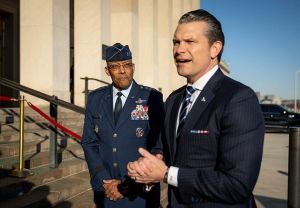
Pete Hegseth

The statements by Hegseth, Gabbard, Ratcliffe, and Trump—combined with the assertions made by numerous administration officials that we are lying about the content of the Signal texts—have led us to believe that people should see the texts in order to reach their own conclusions. There is a clear public interest in disclosing the sort of information that Trump advisers included in nonsecure communications channels, especially because senior administration figures are attempting to downplay the significance of the messages that were shared.

Experts have repeatedly told us that use of a Signal chat for such sensitive discussions poses a threat to national security. As a case in point, Goldberg received information on the attacks two hours before the scheduled start of the bombing of Houthi positions. If this information—particularly the exact times American aircraft were taking off for Yemen—had fallen into the wrong hands in that crucial two-hour period, American pilots and other American personnel could have been exposed to even greater danger than they ordinarily would face. The Trump administration is arguing that the military information contained in these texts was not classified—as it typically would be—although the president has not explained how he reached this conclusion.

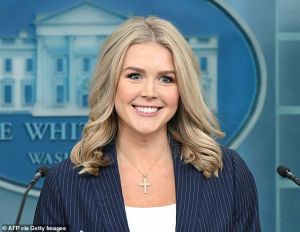
Karoline Leavitt

The Atlantic approached multiple people in the Trump administration, asking if they had objections to the publication of the entire Signal chant. Only press secretary Karoline Leavitt responded:

“As we have repeatedly stated, there was no classified information transmitted in the group chat. However, as the CIA Director and National Security Advisor have both expressed today, that does not mean we encourage the release of the conversation. This was intended to be a an [sic] internal and private deliberation amongst high-level senior staff and sensitive information was discussed. So for those reason [sic] — yes, we object to the release.” (The Leavitt statement did not address which elements of the texts the White House considered sensitive, or how, more than a week after the initial air strikes, their publication could have bearing on national security.)

Here is the relevant part of the text chain:

At 11:44 a.m. eastern time, Hegseth posted in the chat, in all caps, “TEAM UPDATE:”

The text beneath this began, “TIME NOW (1144et): Weather is FAVORABLE. Just CONFIRMED w/CENTCOM we are a GO for mission launch.” Centcom, or Central Command, is the military’s combatant command for the Middle East. The Hegseth text continues:

  • “1215et: F-18s LAUNCH (1st strike package)”
  • “1345: ‘Trigger Based’ F-18 1st Strike Window Starts (Target Terrorist is @ his Known Location so SHOULD BE ON TIME – also, Strike Drones Launch (MQ-9s)”
  • “1410: More F-18s LAUNCH (2nd strike package)”
  • “1415: Strike Drones on Target (THIS IS WHEN THE FIRST BOMBS WILL DEFINITELY DROP, pending earlier ‘Trigger Based’ targets)”
  • “1536 F-18 2nd Strike Starts – also, first sea-based Tomahawks launched.”
  • “MORE TO FOLLOW (per timeline)”
  • “We are currently clean on OPSEC”—that is, operational security.
  • “Godspeed to our Warriors.”

Read the whole article at The Atlantic. It isn’t very long. Those certainly look like war plans to me. This is a great opportunity for Democrats to fight back against Trump’s rapidly advancing coup. They did an excellent job in the Senate hearing yesterday.

The Washington Post (Gift article): Democrats slam spy chiefs over Trump team’s Signal leak of war plans.

Senate Democrats on Tuesday hammered the Trump administration’s top intelligence officials on how and why the vice president, defense secretary, national security adviser and other top Cabinet members made the “reckless” decision to use a commercial messaging app to discuss secret war plans for Yemen — while also inadvertently including a journalist in the group chat.

The Senate hearing, which featured five of the nation’s top intelligence officials, including Director of National Intelligence Tulsi Gabbard and CIA Director John Ratcliffe — both of whom were involved in the group chat over the Signal messaging app — was meant be a forum for the nation’s spy chiefs to offer their assessments of the top national security threats facing the nation.

Instead, the routine annual hearing before the Senate Select Committee on Intelligence became a staging ground to interrogate the kind of “mind-boggling” behavior that the committee’s top Democrat, Sen. Mark R. Warner (Virginia), said would easily have gotten a lower-ranking military or intelligence officer fired.

Mike Waltz

In the Signal group chat, convened by national security adviser Michael Waltz, Defense Secretary Pete Hegseth and others reportedly detailed the targets, the attack sequencing and the weapons they would use in a U.S. air attack on Yemen’s Houthis, before the Pentagon launched the strikes on March 15, according to a bombshell report published Monday by the Atlantic.

“If this was the case of a military officer or an intelligence officer, and they had this kind of behavior, they would be fired,” Warner said in his opening remarks at Tuesday’s hearing, noting that in addition to the targeting information, the text chain included the identity of an active CIA officer. “This is one more example of the kind of sloppy, careless, incompetent behavior, particularly toward classified information,” exhibited by the Trump administration, Warner said. “This is not a one-off.”

How is it that “nobody bothered to even check? … Who are all the names?” Warner added.

Gabbard, Ratcliffe and the other government witnesses provided few answers.After Gabbard at first declined to say whether she was involved in the group chat at all, she and Ratcliffe then told senators that the information shared over Signal was not classified. At other times, they denied the details contained in the Atlantic’s reporting or said they could not recall the exact contents of the messages. They repeatedly deferred to Trump’s defense secretary and national security adviser to answer for them.

The deflections triggered an incredulous and angry backlash from the committee’s liberals.

Warner, who accused Gabbard of “bobbing and weaving and trying to filibuster,” demanded repeatedly that she reconcile her conflicting assertions that the information in the text chain was not classified, but also that she was not at liberty to talk about it. “If there are no classified materials, share it with the committee. You can’t have it both ways,” he said.

Well, now it has been shared with everyone, and the Trump officials look exactly as incompetent as we assumed they were. On top of everything else, one of the participants in the Signal chat, special envoy Steve Witkoff, was actually in Moscow waiting to speak to Vladimir Putin, while using his personal cell phone.

More from CBS News: Democrats call Trump intelligence officials’ use of group chat “reckless, sloppy and stunning.”

Director of National Intelligence Tulsi Gabbard and CIA director John Ratcliffe appeared before the Senate Intelligence Committee to testify about global threats facing the U.S. However the annual hearing, which typically focuses on threats posed by China, Russia, Iran, largely concentrated on the lapse.

FBI Director Kash Patel, National Security Agency Director Gen. Timothy Haugh and Defense Intelligence Agency Director Lt. Gen. Jeffrey Kruse also appeared, but received few questions.

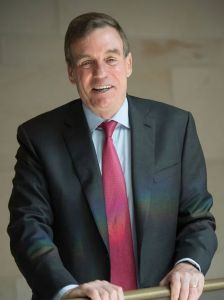
Senator Mark Warner

Sen. Mark Warner of Virginia, the top Democrat on the committee, addressed the controversy at the top of the hearing, calling it “mind-boggling” that none of the intelligence officials in the chat on the encrypted messaging app Signal thought to check who else was included.

“Are these government devices? Were they personal devices? Have the devices been collected to make sure there’s no malware?” Warner said in his opening remarks. “There’s plenty of declassified information that shows that our adversaries, China and Russia, are trying to break into encryption systems like Signal.”

Gabbard and Ratcliffe both denied that classified information was shared in the group chat in a feisty exchange with Warner. Confronted by Warner, Gabbard initially declined to say whether she was part of the chat….

Ratcliffe confirmed to Warner that he was a participant in the message thread, but pushed back on whether the decision to use Signal to communicate was a security lapse. Ratcliffe said Signal was on his CIA computer when he was confirmed as director earlier this year….

Ratcliffe confirmed to Warner that he was a participant in the message thread, but pushed back on whether the decision to use Signal to communicate was a security lapse. Ratcliffe said Signal was on his CIA computer when he was confirmed as director earlier this year. “As it is for most CIA officers,” he said, adding that the agency considers the commercial app “permissible” for work use.

The spy chiefs also denied that the conversation included information on weapons packages, targets or timing of the strikes, as Goldberg reported.

“Not that I’m aware of,” Ratcliffe said, with Gabbard adding “same answer.”

I guess they weren’t paying attention. There’s more at the CBS link.

John Ratcliff

Tulsi Gabbard, Kash Patel, and John Ratcliff are appearing before the House Intelligence Committee today. That should be interesting. CBS News: Intel chiefs testify before House committee as new Signal texts emerge.

Director of National Intelligence Tulsi Gabbard and CIA Director John Ratcliffe are back on Capitol Hill to testify before the House Intelligence Committee on Wednesday after new text messages came to light from a group chat in which top Trump officials discussed sensitive plans to strike targets in Yemen.

Shortly before the hearing began, The Atlantic published additional messages showing Defense Secretary Pete Hegseth provided detailed information to the group of senior Trump officials about the strikes, including a timeline of when fighter jets would take off and what kind of weapons would be used. The group inadvertently included Jeffrey Goldberg, the editor in chief of The Atlantic who revealed the first batch of texts earlier this week….

Gabbard and Ratcliffe are appearing Wednesday alongside FBI Director Kash Patel, National Security Agency Director Gen. Timothy Haugh and Defense Intelligence Agency Director Lt. Gen. Jeffrey Kruse at a hearing ostensibly focused on the global security threats facing the U.S. But the Signal leak and its fallout dominated the early portions of questioning.

Rep. Jim Himes of Connecticut, the top Democrat on the committee, chastised the intelligence leaders at the start of the hearing, saying they put the lives of troops at risk.

“Everyone here knows that the Russians or the Chinese could have gotten all of that information, and they could have passed it on to the Houthis, who easily could have repositioned weapons and altered their plans to knock down planes or sink ships,” Himes said.

Gabbard acknowledged that the conversation was “sensitive” but again denied that classified information was shared in the chat.”There were no sources, methods, locations or war plans that were shared,” she told lawmakers, echoing the defense from the White House that “war plans” were not discussed, despite the detailed guidance for an impending attack.

Politico: ‘It is highly classified’: Hegseth leaked sensitive attack details, former officials say.

Defense Secretary Pete Hegseth’s texts to a Signal group chat about military operations against the Houthis almost certainly contained classified information, according to current and former Pentagon officials.

The Atlantic on Wednesday released excerpts of a conversation among top national security leaders to which a journalist had accidentally been invited. Hegseth and the White House have denied sharing classified information or war plans.

“This information was clearly taken from the real time order of battle sequence of an ongoing operation,” said Mick Mulroy, a former deputy assistant Defense secretary under the first Trump administration. “It is highly classified and protected.

Hegseth identified the aircraft used and the precise timing of the attacks, according to texts from the group chat, which was started by national security adviser Mike Waltz. That information, if obtained by adversaries, could put U.S. troops in danger.

Kash Patel

A current defense official and former Air Force official both said that any forecasting of future operations and planned weapons are almost always classified information. The former and current officials were granted anonymity to speak about a sensitive issue.

Details about future airstrikes and the timing of launches is tightly controlled and usually provided only through classified documents, conversations and in secure email traffic. Few outside of top leadership and those involved usually know about the plans.

“The information that you have fighter aircraft launching off of an aircraft carrier, flying over enemy territory and impending combat operation is the most sensitive information we have at the federal government,” said Sen. Mark Kelly (D-Ariz.), a former Navy pilot, who added it was likely classified.

Mike Waltz did a boneheaded thing. It was careless. I think what Pete Hegseth did was reckless and dangerous.”

Hegseth should be fired, but Waltz is more likely to be the scapegoat.

Politico: Trump gave Waltz a vote of confidence. It wasn’t as smooth behind the scenes.

President Donald Trump was upset when he found out that National Security Adviser Mike Waltz accidentally included a journalist in a group chat discussing plans for a military strike. But it wasn’t just because Waltz had potentially exposed national security secrets.

Trump was mad — and suspicious — that Waltz had Atlantic editor-in-chief Jeffrey Goldberg’s number saved in his phone in the first place, according to three people familiar with the situation, who were granted anonymity to discuss private conversations. A fourth person said the president was also particularly perturbed by the embarrassing nature of the episode.

“The president was pissed that Waltz could be so stupid,” the person said. (A “Mike Waltz” invited Goldberg to the chat, according to The Atlantic).

But by Tuesday afternoon, the two men had made a show of smoothing things over and the White House was closing ranks around Waltz. Trump conducted brief interviews with both NBC News and Fox News pledging to stand behind his national security adviser. Two top Trump spokespeople suggested in posts on X that national security hawks were colluding with the media to make the issue bigger than it actually was. And Waltz attended a meeting of Trump’s ambassadors Tuesday afternoon.

Tulsi Gabbard

“There’s a lot of journalists in this city who have made big names for themselves making up lies … This one in particular I’ve never met, don’t know, never communicated with, and we are looking into and reviewing how the heck he got into this room,” Waltz said during the meeting.

Trump followed up by calling Waltz “a very good man” and suggested he had been unfairly attacked. Yet the president also said he would look into government officials’ use of Signal, the app used in the chat with Goldberg that could have resulted in a security breach as top U.S. officials discussed plans to launch strikes in Yemen.

Still, several Trump allies cautioned this may not be the end of Waltz’s troubles. One of them, who like others was granted anonymity to discuss the sensitive matter, said the incident has strained Waltz’s relationship with Trump’s inner circle.

Brandi Buchman at HuffPost: Pete Hegseth Sued Over Signal Text Debacle.

A public watchdog group sued Defense Secretary Pete Hegseth and a slew of other Trump administration officials Tuesday after a journalist revealed he was inadvertently added to a text chain discussing U.S. war plans.

The lawsuit, brought by the watchdog group American Oversight and first reported by HuffPost, requests that a federal judge formally declare that Hegseth and other officials on the chat violated their duty to uphold laws around the preservation of official communications. Those laws are outlined in the Federal Records Act and, according to lawyers for American Oversight, if agency heads refuse to recover or protect their communications, the national archivist should ask the attorney general to step in.

On Monday, The Atlantic’s editor-in-chief Jeffrey Goldberg reported that national security adviser Michael Waltz inadvertently added him to a Signal group chat with more than a dozen Trump administration officials and aides including Vice President JD Vance, Defense Secretary Pete Hegseth, Secretary of State Marco Rubio, homeland security adviser Stephen Miller and Treasury Secretary Scott Bessent. CIA Director John Ratcliffe told members of the Senate Intelligence Committee on Tuesday that he was also in the Signal chat. Director of National Intelligence Tulsi Gabbard would not admit whether she was a participant, though Goldberg reported she was; instead, she said the matter was “still under review.”

As American Oversight lawyers pointed out in their lawsuit Tuesday, Rubio is also the acting archivist of the United States and, as such, “is aware of the violations” that allegedly occurred.

He is also “responsible for initiating an investigation through the Attorney General for the recovery of records or other redress,” the lawsuit said.

Axios reports that Trump nemesis Judge James Boasberg will preside of the Signalgate lawsuit: Judge who ruled against Trump deportation flights will oversee Signal lawsuit.

Social Security News:

Teresa Ghilarducci at Forbes: Social Security Is Breaking Down— Millions Will Feel It First.

U.S. Commerce Secretary Howard Lutnick recently offered a chilling glimpse into the Trump administration’s indifference to Social Security’s importance. “Let’s say Social Security didn’t send out their checks this month,” Lutnick said, according to Axios. “My mother-in-law, who’s 94, she wouldn’t call and complain.”

Perhaps the commerce secretary’s mother-in-law wouldn’t call. But millions of other Americans would—and not just to complain. They would call because they couldn’t pay rent, buy food, or refill essential medications. Lutnick’s casual comment downplayed the gravity of a missed Social Security check.

The comment also exposed the distance between elites and others. Elites may not care if they miss a Social Security check, but for a typical Americans a missing check is a gut punch. Calls to the Social Security office would be pouring in. But no one may answer.

Howard Lutnick

Lutnick’s remarks come during a time when the Social Security system faces record demand and historic strain. And the remarks come during a month of extreme alarm and confusion about the system. Elon Musk demeaned the system publicly, calling it “the biggest Ponzi scheme of all time,” the New York Post reported. Field offices are overrun, wait times are spiking, and staffing levels have been slashed by 12% since 2020, notes The Washington Post. The very system that ensures timely payments to 73 million Americans is being stomped on, and senior citizens and families are feeling anxious and worse.

To be clear, Trump and DOGE have not cut or delayed Social Security checks—yet. The Social Security Administration does not miss checks. In 80 years, it never missed payment….

While Lutnick and others suggest that delays wouldn’t matter, the data tell another story. Social Security is the foundation of retirement security for most American seniors.

According to the Social Security Administration, nearly 90% of Americans over age 65 receive benefits, and those benefits make up an average of 31% of their income. But for many, the reliance is much deeper: 39% of older men and 44% of older women count on Social Security for more than half their income. Even more sobering, 12% of older men and 15% of older women rely on it for at least 90% of their income.

Older women, in particular, are at risk. They tend to earn less over their lifetimes, outlive their spouses, and have less saved for retirement. For them, Social Security is often not just the main source of income—it’s the only source.

The Washington Post (Gift link): Long waits, waves of calls, website crashes: Social Security is breaking down.

The Social Security Administration website crashed four times in 10 days this month because the servers were overloaded, blocking millions of retirees and disabled Americans from logging in to their online accounts. In the field, office managers have resorted to answering phones in place of receptionists because so many employees have been pushed out. Amid all this, the agency no longer has a system to monitor customer experience because that office was eliminated as part of the cost-cutting efforts led by Elon Musk.

And the phones keep ringing. And ringing.

The federal agency that delivers $1.5 trillion a year in earned benefits to 73 million retired workers, their survivors, and poor and disabled Americans is engulfed in crisis — further undermining the already struggling organization’s ability to provide reliable and quick service to vulnerable customers, according to internal documents and more than two dozen current and former agency employees and officials, customers and others who interact with Social Security.

Frank Bisignano, nominee for Social Security chief

Financial services executive Frank Bisignano is scheduled to face lawmakers Tuesday at a Senate confirmation hearing as President Donald Trump’s nominee to become the permanent commissioner. For now, the agency is run by a caretaker leader in his sixth week on the job who has raced to push out more than 12 percent of the staff of 57,000. He has conceded that the agency’s phone service “sucks” and acknowledged that Musk’s U.S. DOGE Service is really in charge, pushing a single-minded mission to find benefits fraud despite vast evidence that the problem is overstated.

The turmoil is leavingmany retirees, disabled claimants, and legal immigrants needing Social Security cards with less access or shut out of the system altogether, according to those familiar with the problems.

“What’s going on is the destruction of the agency from the inside out, and it’s accelerating,” Sen. Angus King (I-Maine) said in an interview. “I have people approaching me all the time in their 70s and 80s, and they’re beside themselves. They don’t know what’s coming.”

More at the WaPo.

Jed Legum at Popular Information: How the Social Security Administration is dodging a federal court order.

The Trump administration has installed a DOGE operative as the new Chief Information Officer (CIO) of the Social Security Administration (SSA) in an apparent effort to evade a federal court order blocking DOGE affiliates from accessing databases containing the sensitive personal information of millions of Americans.

Popular Information obtained an internal memorandum from Acting SSA Commissioner Leland Dudek announcing Scott Coulter, a DOGE operative previously assigned to NASA and the SSA, as the SSA’s new CIO.

The move, which was not announced publicly, seems related to a federal lawsuit filed by a coalition of labor unions — including the American Federation of State, County and Municipal Employees (AFSCME), AFL-CIO, and American Federation of Teachers (AFT) — on February 21. The lawsuit alleged that DOGE officials were accessing “personal, confidential, private, and sensitive data from the Social Security Administration” in violation of federal law, including the Privacy Act. The labor unions sued the SSA, Dudek, and then-CIO Michael Russo to stop the disclosure of the data to DOGE.

On March 21, the federal judge overseeing the AFSCME case, Ellen Lipton Hollander, granted the plaintiffs a Temporary Restraining Order (TRO) which prohibited SSA, Dudek, and Russo from “granting access to any SSA system of record containing personally identifiable information” to DOGE or any “members of the DOGE team established at the SSA.” The order defined the DOGE team at SSA as “any person assigned to SSA to fulfill the DOGE agenda.”

Read the rest at the link.

That’s it for me today. What’s on your mind?