





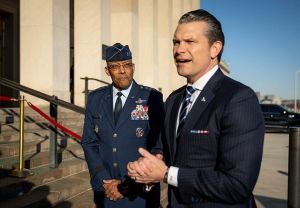
The Senate hearing, which featured five of the nation’s top intelligence officials, including Director of National Intelligence Tulsi Gabbard and CIA Director John Ratcliffe — both of whom were involved in the group chat over the Signal messaging app — was meant be a forum for the nation’s spy chiefs to offer their assessments of the top national security threats facing the nation.
Lazy Caturday Reads: Trump Focuses on Golf While His War Spins Out of Control.
Posted: September 12, 2026 Filed under: just because | Tags: cat art, caturday, Donald Trump, golf, Houthis, Iran War, IRAQ, Irish unification, oil prices, Red Sea, Saudi Arabia, Saudi oil pipeline, Yemen 1 CommentGood Afternoon!!

A New Arrival, by Walter Osborne (Irish artist)
This post is focused on major developments in Trump’s war and his seeming lack of concern about them.
While the situation in the Middle East was spinning out of control, Trump was partying at the “midterm convention” in Dallas. Today, as the Saudis are forced to shut down a vital oil pipeline, Trump is in Ireland to watch a golf tournament at his own property in Doonbeg.
In order to justify spending millions in taxpayer money for a pleasure trip, Trump met briefly with Irish politicians and addressed a group of business leaders and embassy employees at the U.S. embassy. Of course, he managed to embarrass himself (and us). And guess who accompanied Trump to the Emerald Isle? No, not Melania. Natalie Harp.
But first, the war. Attacks by the Houthis have led to the shutdown of Saudi Arabia’s main pipeline for moving their oil.
The desperate pleas for air cover from Yemeni generals started coming mid-morning on Thursday. An advance by the Iran-backed Houthis toward Yemen’s strategic port city of Mocha was in full swing, and backup support from chief ally Saudi Arabia was nowhere in sight.
“The Houthis committed everything they had – waves upon waves of fighters … along with their available ballistic missiles and weapons,” a senior Yemeni source attached to their military forces told CNN. The source said he contacted the United States Central Command (CENTCOM) and was assured the US was “watching the situation closely and that Saudi air support was coming.”
“But the air support never came,” the source said. “And Mocha has now fallen.”
Hours later, on Friday, the Houthis captured another key coastal asset, Perim Island, at the mouth of the Red Sea. The island splits the Bab al-Mandeb Strait in two, giving Tehran de facto control over another key shipping route.
The Houthis’ rapid advance amounts to an extraordinary 36 hours in a conflict that had been largely on ice for years. But the kindling for renewed fighting had been laid for months amid the conflict between the United States and Iran, as Tehran seeks to use oil prices – and their impact on the global economy – as leverage.
Now, Yemen and the Red Sea have the potential to become a true second front in the Iran war.
A bit more detail:
Iran’s effective control of the Strait of Hormuz plus its tightening grip on the Bab al-Mandeb Strait threatens to push oil prices even higher, weeks before November’s midterm elections in the United States.
Young Woman with Cats, by Lovis Corinth (German artist)
While the Bab al-Mandeb Strait, the gateway to the Suez Canal shipping route, is less critical to global energy markets than Hormuz, it still carries essential goods worldwide, including millions of barrels of oil every day. The strait has become increasingly important since the start of the Iran war, as Saudi Arabia has re-routed some exports through the waterway to bypass Hormuz.
It wasn’t just Yemen begging Trump for assistance. He also got calls from Saudi crown prince Mohammed bin Salman. Barak Ravis at Axios: MBS urged Trump to strike Houthis amid Red Sea threat.
Saudi Crown Prince Mohammed bin Salman (MBS) called President Trump twice Thursday, urging him to launch strikes against the Houthis as the Iran-backed group closed in on a vital Red Sea chokepoint, two U.S. officials told Axios.
- Trump declined, and U.S. officials stressed the administration has no plans to intervene directly against the Houthis for now.
Why it matters: Oil prices surged Thursday as the Houthis seized a strategic coastal city in Yemen, pushing them closer to the Bab al-Mandab Strait — a vital artery for global trade and Saudi oil exports.
- With Iran already disrupting traffic through the Strait of Hormuz, Houthi control of Bab al-Mandab could give Tehran a powerful new point of leverage over the U.S. and its Gulf allies.
The latest: Reuters reported Friday morning that the Houthis had taken control of a key island in the strait.
- They also reported that smoke was seen over the key east-west Saudi oil pipeline, though the source was not clear.
Driving the news: The U.S. is concerned about the rapidly escalating fight in Yemen and is stepping up support for Saudi Arabia while trying to avoid direct military involvement.
Adm. Brad Cooper, the commander of U.S. Central Command, traveled to Saudi Arabia on Thursday for urgent coordination meetings, two sources with knowledge of the matter said.
I’m not a military expert; but from what I’m reading, Trump’s war is rapidly getting bigger and more uncontrollable.
Oliver Holmes at The Guardian: Nearly 50,000 Yemeni civilians flee as Houthis advance along Red Sea coast.
Nearly 50,000 people have fled a sudden advance by Houthi forces in western Yemen, with entire villages emptied and families trapped near frontline fighting with depleting food supplies, according to aid workers.
Nora Heysen (Australian, 1911-2003) – A Boy with his cat
Civilians in the Middle East’s poorest country have found themselves victims of a global struggle for control over one of the most important shipping routes in the world, which threatens to turn Yemen’s on-off conflict into a forever war.
In a lightning advance this week, the Iran-backed Houthi militants have seized a string of towns along the Red Sea coast from forces aligned with the US- and Saudi-backed Yemeni government. Hundreds of people are reported to have been killed. Many fear a return to the full-scale civil war that killed 150,000 and brought many others to the brink of famine….
The UN International Organization for Migration (IOM) said on Friday that 46,000 people had been displaced across the governates of Taiz and Hodeidah, where steep verdant mountain ridges give way to arid coastal plains. For many families, this was their second or even third time they had been forced out of their homes.
A significant number of people were observed to be leaving the city with their belongings. Fighting has cut key roads, while phone lines are down in some areas. “The scale of displacement is increasing rapidly,” said Joe Lowry, IOM’s Middle East and north Africa spokesperson in Cairo.
The Saudis have shut down a pipeline after an attack that originated in Iraq.
Freddie Clayton at NBC News: Saudi Arabia’s shutdown of key pipeline limits oil flow as Yemen hits back against Houthis.
Saudi Arabia has closed a critical oil pipeline after it was struck by drones launched from Iraq, with the latest squeeze reverberating through the region Saturday as attacks by Iran-backed Houthi rebels threatened to deepen the world’s energy crisis.
The 745-mile pipeline had helped Saudi Arabia, the world’s largest crude oil exporter, bypass the blocked Strait of Hormuz, through which some 20% of the world’s oil used to pass before the U.S. and Israel waged war on Iran in late February.
The Saudi Energy Ministry confirmed the shutdown of the East-West pipeline on Friday, adding that drone attacks had resulted in a number of injuries and that its teams were “taking the necessary measures to secure the pipeline and assess its safety.”
By Zoya Scholis
Saudi Arabia said that, following a request from Iraq’s prime minister, it would not retaliate for now but reserves the right to take all necessary measures to protect its sovereignty, security and critical facilities, according to a Saudi Foreign Ministry statement.
An Iraqi military commander was dismissed early on Saturday after investigations confirmed the latest drone attacks targeting Saudi Arabia originated from Iraq, according to a statement by Iraq‘s prime minister’s office. An umbrella group of Iran-backed militias in Iraq denied its involvement.
Iraq also closed two key border crossings with Iran, Iraq’s state-run news agency reported Saturday.
Kuwait, a U.S. ally in the region, warned that the pipeline attack was a “dangerous escalation that undermines the security and stability of the region” while Bahrain stressed Saudi Arabia’s right to “take all necessary measures to protect its sovereignty.”
Meanwhile, In Ireland Trump seemed unconcerned:
U.S. President Donald Trump said on Saturday that everything would “work out just fine” when asked about the region on a visit to Ireland. He also said, without providing evidence, that Iran was “probably” behind the pipeline attack.
The pipeline strikes came as rebel Houthi forces in Yemen captured Perim, an island in the middle of the vital Bab el Mandeb Strait that serves as a gateway to the Red Sea trade route that links Europe and Asia.
Trump also said the Iran War would most likely end after the midterm elections.
Azhar Sukri at CNBC: Trump sees Iran war ending soon after mid-term elections, predicts oil prices will then fall sharply.
The war in Iran will likely end soon after November’s mid-term elections, President Donald Trump said Saturday, and predicted that energy prices would fall sharply once that happens.
“I think very soon, I think it’ll be right after the mid-terms, actually,” Trump said on a trip to Ireland when asked by reporters when the Iran war is likely to end. “I would say shortly, and oil will come tumbling down when that happens,”
Hans Heyerdahl, Girl with a Cat (Norwegian artist)
Oil prices retreated on Friday, but notched sharp weekly gains after soaring above $100 a barrel for the first time in months.
Brent crude oil futures, the global benchmark, settled down 2.8% at $104.61 a barrel. U.S. West Texas Intermediate was down 2.4% to settle at $100.05 per barrel. On Thursday, Brent crude peaked at around $108 a barrel, while WTI hit more than $104.
The price decline came after Iranian state media said Tehran will meet with Gulf states in Oman to discuss the Strait of Hormuz, indicating some diplomacy is taking place despite a week of sharp escalation.
MS NOW quoted a senior government official and a Gulf diplomat as saying that Iranian and Gulf officials will meet in Oman’s capital, Muscat, on Monday to sign an agreement that will establish an Iran-Oman shipping route through the Strait of Hormuz.
But Iranian President Masoud Pezeshkian said his country will not surrender, adding that it has resisted aggression from the U.S. and Israel.
“Iran has successfully stood against Israel and the U.S.,” Pezeshkian said late Friday as he addressed a gathering of Indian religious leaders in New Delhi. “Since we are seeking truth and justice, we will not yield in front of bullying arrogance.”
One more on the war and the oil situation from Lisa Friedman, Jenny Gross, and Rebecca F. Elliott at The New York Times (gift link): Gulf Tankers Are Running Out of Ways to Export Oil: ‘These Waters Aren’t Safe.’
The world’s most valuable energy corridors are pinching shut.
On Friday, Houthi militants backed by Iran expanded their control of the Red Sea, threatening a critical route for Persian Gulf crude. That left the region with few alternatives, since shipping traffic through the Strait of Hormuz — once the world’s primary oil transit point — remains significantly constrained and far below what it was before the war.
A Girl with a Black Cat by the Dutch artist Frida Holleman (1908–1999)
And oil exports from Saudi Arabia, long the most important producer in the Middle East, plunged last month to their lowest point in at least 13 years.
The U.S. Navy has been able to keep oil flowing out of the Strait of Hormuz on sea paths close to the coast of Oman, the opposite side from Iran. But that has required an extensive and dangerous operation.
For shipping companies, the once routine operation of navigating the strait has become a high-risk endeavor. At least 23 ships were hit in the waterway near Oman in July and August. Since the war began at the end of February, at least 22 sailors have been killed in the Middle East.
“These waters aren’t safe,” said Michelle Wiese Bockmann, an analyst at Windward, a maritime intelligence company.
As the war in Iran nears its seventh month, it appears to be spinning out of control, analysts said. With no diplomatic end in sight, the Middle East, the epicenter of energy production, is facing its most severe supply crisis in decades.
The Trump administration “has been using a variety of tools very effectively to keep the oil price and the gasoline price at bay,” said Amos Hochstein, who served as a foreign affairs and energy adviser in the Biden administration. But now, he said, fewer options are available to President Trump and his team. “They’re “stuck.”
You can use the gift link to read the rest if you’re interested.
Trump was in Dublin this morning to justify spending taxpayer money on his golf trip. Natalie Harp was was there, lined up with the Trump family on the receiving line.
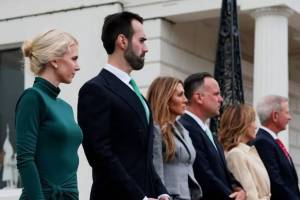
Natalie Harp on the receiving line in Dublin.
The AP via NPR: Trump meets Ireland’s leaders before heading to his golf club in Doonbeg.
U.S. President Donald Trump held talks Saturday in Dublin with his Irish counterpart Catherine Connolly during a weekend visit that’s more about a major golf tournament hosted on a course he owns on the country’s Atlantic coast. He also met with Ireland’s Prime Minister Micheál Martin.
Trump will address the U.S. and Irish business leaders at the U.S. ambassador’s official residence in Dublin before traveling to his oceanfront golf club in Doonbeg, on the other side of the country, to watch the Irish Open.
Connolly is a left-wing politician who was among those who protested when Trump visited Ireland in 2019 during his first term in office. She is now Ireland’s elected, largely ceremonial head of state. A supporter of the Palestinian cause, she in the past has criticized U.S. policy in the Middle East and called Trump a “bully.”
Wednesday Reads: Signalgate and Social Security News
Posted: March 26, 2025 Filed under: Donald Trump, Social Security | Tags: Frank Bisignano, Houthis, Jeffrey Goldberg, John Ratcliffe, Karoline Leavitt, Kash Patel, Mike Waltz, Pete Hegseth, Senator Mark Warner, Signal Ap, Signalgate, The Atlantic, Tulsi Gabbard, Yemen 6 CommentsGood Afternoon!!

Jeffrey Goldberg
This morning The Atlantic’s Editor in Chief Jeffrey Goldberg released the full Signal text exchange that was the top news story all day yesterday. I’m sure you’re familiar with the story, but in case you missed it (unlikely), Goldberg was sent an invitation to a Signal group that included top administration officials. He accepted out of curiosity. Here is the original story published two days ago in The Atlantic (gift article): The Trump Administration Accidentally Texted Me Its War Plans.
And here is today’s article (gift): Here Are the Attack Plans That Trump’s Advisers Shared on Signal.
On Monday, shortly after we published a story about a massive Trump-administration security breach, a reporter asked the secretary of defense, Pete Hegseth, why he had shared plans about a forthcoming attack on Yemen on the Signal messaging app. He answered, “Nobody was texting war plans. And that’s all I have to say about that.”
At a Senate hearing yesterday, the director of national intelligence, Tulsi Gabbard, and the director of the Central Intelligence Agency, John Ratcliffe, were both asked about the Signal chat, to which Jeffrey Goldberg, the editor in chief of The Atlantic, was inadvertently invited by National Security Adviser Michael Waltz. “There was no classified material that was shared in that Signal group,” Gabbard told members of the Senate Intelligence Committee.
Ratcliffe said much the same: “My communications, to be clear, in the Signal message group were entirely permissible and lawful and did not include classified information.”
President Donald Trump, asked yesterday afternoon about the same matter, said, “It wasn’t classified information.”
These statements presented us with a dilemma. In The Atlantic’s initial story about the Signal chat—the “Houthi PC small group,” as it was named by Waltz—we withheld specific information related to weapons and to the timing of attacks that we found in certain texts. As a general rule, we do not publish information about military operations if that information could possibly jeopardize the lives of U.S. personnel. That is why we chose to characterize the nature of the information being shared, not specific details about the attacks.
Pete Hegseth
The statements by Hegseth, Gabbard, Ratcliffe, and Trump—combined with the assertions made by numerous administration officials that we are lying about the content of the Signal texts—have led us to believe that people should see the texts in order to reach their own conclusions. There is a clear public interest in disclosing the sort of information that Trump advisers included in nonsecure communications channels, especially because senior administration figures are attempting to downplay the significance of the messages that were shared.
Experts have repeatedly told us that use of a Signal chat for such sensitive discussions poses a threat to national security. As a case in point, Goldberg received information on the attacks two hours before the scheduled start of the bombing of Houthi positions. If this information—particularly the exact times American aircraft were taking off for Yemen—had fallen into the wrong hands in that crucial two-hour period, American pilots and other American personnel could have been exposed to even greater danger than they ordinarily would face. The Trump administration is arguing that the military information contained in these texts was not classified—as it typically would be—although the president has not explained how he reached this conclusion.
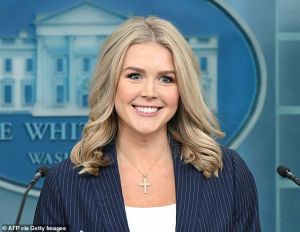
Karoline Leavitt
The Atlantic approached multiple people in the Trump administration, asking if they had objections to the publication of the entire Signal chant. Only press secretary Karoline Leavitt responded:
“As we have repeatedly stated, there was no classified information transmitted in the group chat. However, as the CIA Director and National Security Advisor have both expressed today, that does not mean we encourage the release of the conversation. This was intended to be a an [sic] internal and private deliberation amongst high-level senior staff and sensitive information was discussed. So for those reason [sic] — yes, we object to the release.” (The Leavitt statement did not address which elements of the texts the White House considered sensitive, or how, more than a week after the initial air strikes, their publication could have bearing on national security.)
Here is the relevant part of the text chain:
At 11:44 a.m. eastern time, Hegseth posted in the chat, in all caps, “TEAM UPDATE:”
The text beneath this began, “TIME NOW (1144et): Weather is FAVORABLE. Just CONFIRMED w/CENTCOM we are a GO for mission launch.” Centcom, or Central Command, is the military’s combatant command for the Middle East. The Hegseth text continues:
- “1215et: F-18s LAUNCH (1st strike package)”
- “1345: ‘Trigger Based’ F-18 1st Strike Window Starts (Target Terrorist is @ his Known Location so SHOULD BE ON TIME – also, Strike Drones Launch (MQ-9s)”
- “1410: More F-18s LAUNCH (2nd strike package)”
- “1415: Strike Drones on Target (THIS IS WHEN THE FIRST BOMBS WILL DEFINITELY DROP, pending earlier ‘Trigger Based’ targets)”
- “1536 F-18 2nd Strike Starts – also, first sea-based Tomahawks launched.”
- “MORE TO FOLLOW (per timeline)”
- “We are currently clean on OPSEC”—that is, operational security.
- “Godspeed to our Warriors.”
Read the whole article at The Atlantic. It isn’t very long. Those certainly look like war plans to me. This is a great opportunity for Democrats to fight back against Trump’s rapidly advancing coup. They did an excellent job in the Senate hearing yesterday.
The Washington Post (Gift article): Democrats slam spy chiefs over Trump team’s Signal leak of war plans.
Senate Democrats on Tuesday hammered the Trump administration’s top intelligence officials on how and why the vice president, defense secretary, national security adviser and other top Cabinet members made the “reckless” decision to use a commercial messaging app to discuss secret war plans for Yemen — while also inadvertently including a journalist in the group chat.
Instead, the routine annual hearing before the Senate Select Committee on Intelligence became a staging ground to interrogate the kind of “mind-boggling” behavior that the committee’s top Democrat, Sen. Mark R. Warner (Virginia), said would easily have gotten a lower-ranking military or intelligence officer fired.
Mike Waltz
In the Signal group chat, convened by national security adviser Michael Waltz, Defense Secretary Pete Hegseth and others reportedly detailed the targets, the attack sequencing and the weapons they would use in a U.S. air attack on Yemen’s Houthis, before the Pentagon launched the strikes on March 15, according to a bombshell report published Monday by the Atlantic.
“If this was the case of a military officer or an intelligence officer, and they had this kind of behavior, they would be fired,” Warner said in his opening remarks at Tuesday’s hearing, noting that in addition to the targeting information, the text chain included the identity of an active CIA officer. “This is one more example of the kind of sloppy, careless, incompetent behavior, particularly toward classified information,” exhibited by the Trump administration, Warner said. “This is not a one-off.”
How is it that “nobody bothered to even check? … Who are all the names?” Warner added.
Gabbard, Ratcliffe and the other government witnesses provided few answers.After Gabbard at first declined to say whether she was involved in the group chat at all, she and Ratcliffe then told senators that the information shared over Signal was not classified. At other times, they denied the details contained in the Atlantic’s reporting or said they could not recall the exact contents of the messages. They repeatedly deferred to Trump’s defense secretary and national security adviser to answer for them.
The deflections triggered an incredulous and angry backlash from the committee’s liberals.
Warner, who accused Gabbard of “bobbing and weaving and trying to filibuster,” demanded repeatedly that she reconcile her conflicting assertions that the information in the text chain was not classified, but also that she was not at liberty to talk about it. “If there are no classified materials, share it with the committee. You can’t have it both ways,” he said.
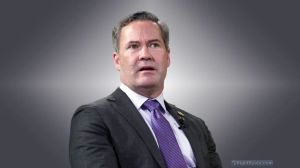
Well, now it has been shared with everyone, and the Trump officials look exactly as incompetent as we assumed they were. On top of everything else, one of the participants in the Signal chat, special envoy Steve Witkoff, was actually in Moscow waiting to speak to Vladimir Putin, while using his personal cell phone.
More from CBS News: Democrats call Trump intelligence officials’ use of group chat “reckless, sloppy and stunning.”
Director of National Intelligence Tulsi Gabbard and CIA director John Ratcliffe appeared before the Senate Intelligence Committee to testify about global threats facing the U.S. However the annual hearing, which typically focuses on threats posed by China, Russia, Iran, largely concentrated on the lapse.
FBI Director Kash Patel, National Security Agency Director Gen. Timothy Haugh and Defense Intelligence Agency Director Lt. Gen. Jeffrey Kruse also appeared, but received few questions.
Senator Mark Warner
Sen. Mark Warner of Virginia, the top Democrat on the committee, addressed the controversy at the top of the hearing, calling it “mind-boggling” that none of the intelligence officials in the chat on the encrypted messaging app Signal thought to check who else was included.
“Are these government devices? Were they personal devices? Have the devices been collected to make sure there’s no malware?” Warner said in his opening remarks. “There’s plenty of declassified information that shows that our adversaries, China and Russia, are trying to break into encryption systems like Signal.”
Gabbard and Ratcliffe both denied that classified information was shared in the group chat in a feisty exchange with Warner. Confronted by Warner, Gabbard initially declined to say whether she was part of the chat….
Ratcliffe confirmed to Warner that he was a participant in the message thread, but pushed back on whether the decision to use Signal to communicate was a security lapse. Ratcliffe said Signal was on his CIA computer when he was confirmed as director earlier this year….
Ratcliffe confirmed to Warner that he was a participant in the message thread, but pushed back on whether the decision to use Signal to communicate was a security lapse. Ratcliffe said Signal was on his CIA computer when he was confirmed as director earlier this year. “As it is for most CIA officers,” he said, adding that the agency considers the commercial app “permissible” for work use.
The spy chiefs also denied that the conversation included information on weapons packages, targets or timing of the strikes, as Goldberg reported.
“Not that I’m aware of,” Ratcliffe said, with Gabbard adding “same answer.”
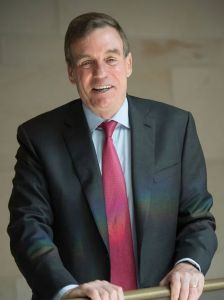
I guess they weren’t paying attention. There’s more at the CBS link.
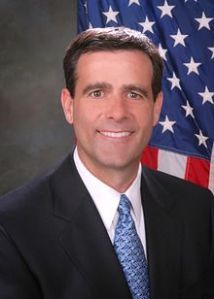
John Ratcliff
Tulsi Gabbard, Kash Patel, and John Ratcliff are appearing before the House Intelligence Committee today. That should be interesting. CBS News: Intel chiefs testify before House committee as new Signal texts emerge.
Director of National Intelligence Tulsi Gabbard and CIA Director John Ratcliffe are back on Capitol Hill to testify before the House Intelligence Committee on Wednesday after new text messages came to light from a group chat in which top Trump officials discussed sensitive plans to strike targets in Yemen.
Shortly before the hearing began, The Atlantic published additional messages showing Defense Secretary Pete Hegseth provided detailed information to the group of senior Trump officials about the strikes, including a timeline of when fighter jets would take off and what kind of weapons would be used. The group inadvertently included Jeffrey Goldberg, the editor in chief of The Atlantic who revealed the first batch of texts earlier this week….
Gabbard and Ratcliffe are appearing Wednesday alongside FBI Director Kash Patel, National Security Agency Director Gen. Timothy Haugh and Defense Intelligence Agency Director Lt. Gen. Jeffrey Kruse at a hearing ostensibly focused on the global security threats facing the U.S. But the Signal leak and its fallout dominated the early portions of questioning.
Rep. Jim Himes of Connecticut, the top Democrat on the committee, chastised the intelligence leaders at the start of the hearing, saying they put the lives of troops at risk.
“Everyone here knows that the Russians or the Chinese could have gotten all of that information, and they could have passed it on to the Houthis, who easily could have repositioned weapons and altered their plans to knock down planes or sink ships,” Himes said.
Gabbard acknowledged that the conversation was “sensitive” but again denied that classified information was shared in the chat.”There were no sources, methods, locations or war plans that were shared,” she told lawmakers, echoing the defense from the White House that “war plans” were not discussed, despite the detailed guidance for an impending attack.
Defense Secretary Pete Hegseth’s texts to a Signal group chat about military operations against the Houthis almost certainly contained classified information, according to current and former Pentagon officials.
The Atlantic on Wednesday released excerpts of a conversation among top national security leaders to which a journalist had accidentally been invited. Hegseth and the White House have denied sharing classified information or war plans.
“This information was clearly taken from the real time order of battle sequence of an ongoing operation,” said Mick Mulroy, a former deputy assistant Defense secretary under the first Trump administration. “It is highly classified and protected.
Hegseth identified the aircraft used and the precise timing of the attacks, according to texts from the group chat, which was started by national security adviser Mike Waltz. That information, if obtained by adversaries, could put U.S. troops in danger.
Kash Patel
A current defense official and former Air Force official both said that any forecasting of future operations and planned weapons are almost always classified information. The former and current officials were granted anonymity to speak about a sensitive issue.
Details about future airstrikes and the timing of launches is tightly controlled and usually provided only through classified documents, conversations and in secure email traffic. Few outside of top leadership and those involved usually know about the plans.
“The information that you have fighter aircraft launching off of an aircraft carrier, flying over enemy territory and impending combat operation is the most sensitive information we have at the federal government,” said Sen. Mark Kelly (D-Ariz.), a former Navy pilot, who added it was likely classified.
“Mike Waltz did a boneheaded thing. It was careless. I think what Pete Hegseth did was reckless and dangerous.”
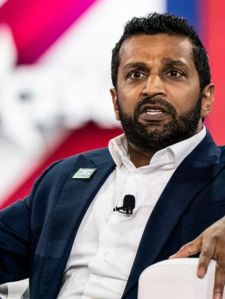
Hegseth should be fired, but Waltz is more likely to be the scapegoat.
President Donald Trump was upset when he found out that National Security Adviser Mike Waltz accidentally included a journalist in a group chat discussing plans for a military strike. But it wasn’t just because Waltz had potentially exposed national security secrets.
Trump was mad — and suspicious — that Waltz had Atlantic editor-in-chief Jeffrey Goldberg’s number saved in his phone in the first place, according to three people familiar with the situation, who were granted anonymity to discuss private conversations. A fourth person said the president was also particularly perturbed by the embarrassing nature of the episode.
“The president was pissed that Waltz could be so stupid,” the person said. (A “Mike Waltz” invited Goldberg to the chat, according to The Atlantic).
But by Tuesday afternoon, the two men had made a show of smoothing things over and the White House was closing ranks around Waltz. Trump conducted brief interviews with both NBC News and Fox News pledging to stand behind his national security adviser. Two top Trump spokespeople suggested in posts on X that national security hawks were colluding with the media to make the issue bigger than it actually was. And Waltz attended a meeting of Trump’s ambassadors Tuesday afternoon.
Tulsi Gabbard
“There’s a lot of journalists in this city who have made big names for themselves making up lies … This one in particular I’ve never met, don’t know, never communicated with, and we are looking into and reviewing how the heck he got into this room,” Waltz said during the meeting.
Trump followed up by calling Waltz “a very good man” and suggested he had been unfairly attacked. Yet the president also said he would look into government officials’ use of Signal, the app used in the chat with Goldberg that could have resulted in a security breach as top U.S. officials discussed plans to launch strikes in Yemen.
Still, several Trump allies cautioned this may not be the end of Waltz’s troubles. One of them, who like others was granted anonymity to discuss the sensitive matter, said the incident has strained Waltz’s relationship with Trump’s inner circle.
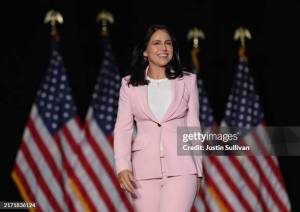
Brandi Buchman at HuffPost: Pete Hegseth Sued Over Signal Text Debacle.
A public watchdog group sued Defense Secretary Pete Hegseth and a slew of other Trump administration officials Tuesday after a journalist revealed he was inadvertently added to a text chain discussing U.S. war plans.
The lawsuit, brought by the watchdog group American Oversight and first reported by HuffPost, requests that a federal judge formally declare that Hegseth and other officials on the chat violated their duty to uphold laws around the preservation of official communications. Those laws are outlined in the Federal Records Act and, according to lawyers for American Oversight, if agency heads refuse to recover or protect their communications, the national archivist should ask the attorney general to step in.
On Monday, The Atlantic’s editor-in-chief Jeffrey Goldberg reported that national security adviser Michael Waltz inadvertently added him to a Signal group chat with more than a dozen Trump administration officials and aides including Vice President JD Vance, Defense Secretary Pete Hegseth, Secretary of State Marco Rubio, homeland security adviser Stephen Miller and Treasury Secretary Scott Bessent. CIA Director John Ratcliffe told members of the Senate Intelligence Committee on Tuesday that he was also in the Signal chat. Director of National Intelligence Tulsi Gabbard would not admit whether she was a participant, though Goldberg reported she was; instead, she said the matter was “still under review.”
As American Oversight lawyers pointed out in their lawsuit Tuesday, Rubio is also the acting archivist of the United States and, as such, “is aware of the violations” that allegedly occurred.
He is also “responsible for initiating an investigation through the Attorney General for the recovery of records or other redress,” the lawsuit said.
Axios reports that Trump nemesis Judge James Boasberg will preside of the Signalgate lawsuit: Judge who ruled against Trump deportation flights will oversee Signal lawsuit.
Social Security News:
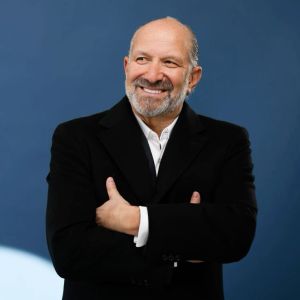
Teresa Ghilarducci at Forbes: Social Security Is Breaking Down— Millions Will Feel It First.
U.S. Commerce Secretary Howard Lutnick recently offered a chilling glimpse into the Trump administration’s indifference to Social Security’s importance. “Let’s say Social Security didn’t send out their checks this month,” Lutnick said, according to Axios. “My mother-in-law, who’s 94, she wouldn’t call and complain.”
Perhaps the commerce secretary’s mother-in-law wouldn’t call. But millions of other Americans would—and not just to complain. They would call because they couldn’t pay rent, buy food, or refill essential medications. Lutnick’s casual comment downplayed the gravity of a missed Social Security check.
The comment also exposed the distance between elites and others. Elites may not care if they miss a Social Security check, but for a typical Americans a missing check is a gut punch. Calls to the Social Security office would be pouring in. But no one may answer.
Howard Lutnick
Lutnick’s remarks come during a time when the Social Security system faces record demand and historic strain. And the remarks come during a month of extreme alarm and confusion about the system. Elon Musk demeaned the system publicly, calling it “the biggest Ponzi scheme of all time,” the New York Post reported. Field offices are overrun, wait times are spiking, and staffing levels have been slashed by 12% since 2020, notes The Washington Post. The very system that ensures timely payments to 73 million Americans is being stomped on, and senior citizens and families are feeling anxious and worse.
To be clear, Trump and DOGE have not cut or delayed Social Security checks—yet. The Social Security Administration does not miss checks. In 80 years, it never missed payment….
While Lutnick and others suggest that delays wouldn’t matter, the data tell another story. Social Security is the foundation of retirement security for most American seniors.
According to the Social Security Administration, nearly 90% of Americans over age 65 receive benefits, and those benefits make up an average of 31% of their income. But for many, the reliance is much deeper: 39% of older men and 44% of older women count on Social Security for more than half their income. Even more sobering, 12% of older men and 15% of older women rely on it for at least 90% of their income.
Older women, in particular, are at risk. They tend to earn less over their lifetimes, outlive their spouses, and have less saved for retirement. For them, Social Security is often not just the main source of income—it’s the only source.
The Washington Post (Gift link): Long waits, waves of calls, website crashes: Social Security is breaking down.
Lazy Caturday Reads
Posted: January 20, 2024 Filed under: 2024 Elections, 2024 presidential Campaign, cat art, caturday, Donald Trump | Tags: "the face of evil", Biden's Israel policies, continuing resolution, Hezbollah, Houthis, iran, israel, Japanese cat art, Niki Haley, Poland, Racism, saving democracy, Trump's cognitive decline, Ukraine, Volodymyr Zelensky 8 CommentsHappy Caturday!!
 I’m really late getting started today, so I’m just going to get right to today’s news. Things are getting out of hand in the the Middle East, and Republicans in the House are determined to make the worse. They are also working hard to shut down the government unless they get all the goodies they are demanding. Johnson did manage to get a continuing resolution passed, but he depended on Democratic votes. Meanwhile the Republicans are holding back funding for Ukraine’s fight against Russia.
This is from Heather Cox Richardson’s Letters from an American: January 18, 2024.
This afternoon, Congress passed a new continuing resolution necessary to fund the government past the upcoming deadlines in the previous continuing resolution. Those deadlines were tomorrow (January 19) and February 2. The deadlines in the new measure are March 1 and March 8. This is the third continuing resolution passed in four months as extremist Republicans have refused to fund the government unless they get a wish list of concessions to their ideology.
Today’s vote was no exception. Eighteen Republican senators voted against the measure, while five Republicans did not vote (at least one, Chuck Grassley of Iowa, is ill). All the Democrats voted in favor. The final tally was 77 to 18, with five not voting.
In the House the vote was 314 to 108, with 11 not voting. Republicans were evenly split between supporting government funding and voting against it, threatening to shut down the government. They split 107 to 106. All but two Democrats voted in favor of government funding. (In the past, Jake Auchincloss of Massachusetts and MIke Quigley of Illinois have voted no on a continuing resolution to fund the government in protest that the measure did not include funding for Ukraine.)
This means that, like his predecessor Kevin McCarthy (R-CA), House speaker Mike Johnson (R-LA) had to turn to Democrats to keep the government operating. The chair of the extremist House Freedom Caucus, Bob Good (R-VA), told reporters that before the House vote, Freedom Caucus members had tried to get Johnson to add to the measure the terms of their extremist border security bill. Such an addition would have tanked the bill, forcing a government shutdown, and Johnson refused.
Republican extremists in Congress are also doing the bidding of former president Donald Trump, blocking further aid to Ukraine in its struggle to fight off Russian aggression and standing in the way of a bipartisan immigration reform measure. Aid to Ukraine is widely popular both among the American people and among lawmakers. Immigration reform, which Republicans have demanded but are now opposing, would take away one of Trump’s only talking points before the 2024 election.
Richardson discusses a column in yesterday’s Washington Post about what happens when a country backslides on democracy: Poland is a test case for reviving a corrupted democracy, by Lee Hochstader. This could apply to Ukraine and potentially to the U.S.

Read more at the WaPo. This is the danger we face if we let Trump gain power again.
This is funny. From The Kiyv Independent: Zelensky invites Trump to Ukraine.
President Volodymyr Zelensky has extended an invitation to Donald Trump to visit Kyiv, with a specific condition attached.
Speaking with U.K. broadcaster Channel 4 News, Zelensky said that Trump would be warmly received in the capital under one stipulation: the former U.S. president must demonstrate his ability to bring an end to the war with Russia within 24 hours, as he once promised.
Trump has repeatedly said that the war would not have happened if he was still in power in Washington, and that he would bring it to an immediate end if voted back in because he has what he described as “a good relationship” with both Volodymyr Zelensky and Russian leader Vladimir Putin.
Beyond that, former U.S. president has provided no details of what his peace deal would involve.
Zelensky, who has previously extended the invitation without receiving a response, emphasized that if Trump indeed has a “formula” for resolving the war, he is eager to learn the specifics.
“So, I invite President Trump. If he can come here, I will need 24 minutes — yes, 24 minutes. Not more. Yes. Not more — 24 minutes to explain [to] President Trump that he can’t manage this war. He can’t bring peace because of Putin.”Zelensky said on air: “He is very welcome to come here, but I think he can not end the war in 24 hours, without giving our land to Putin.”
On the Israel situation, from The Washington Post: Growing number of Senate Democrats question Biden’s Israel strategy.
Five Senate Democrats on Friday signed onto a measure that would condition aid to Israel on its compliance with international law, bringing the total number of co-sponsors to 18. And a prominent Democrat, Sen. Tim Kaine of Virginia, is rounding up support for his amendment to stop President Biden from circumventing Congress when he orders weapons transfers to Israel, a maneuver the president has pursued twice in recent months.
Kobayashi Kiyochika, Cat and Lantern
Earlier this week, 11 senators voted for a bill by Sen. Bernie Sanders aimed at forcing the Biden administration to examine potential human rights abuses by Israel.
After weeks of unquestioning support, the Senate is emerging as a center of resistance to Biden’s unwavering embrace of Israel — at least in modest ways — as even centrist Democrats are signaling their discomfort with the president’s “bear hug” of Israeli Prime Minister Benjamin Netanyahu. A number of prominent Democrats have proposed or backed measures that aim to hold Israel accountable or to shift American strategy, even if they are unlikely to garner enough support to pass.
The growing willingness of establishment Democrats to criticize or push back on Israel — a move that would have come with serious political ramifications just a few months ago — signals a shift in the politics of the party since the war in Gaza began more than 100 days ago. Senators from swing states, including Georgia, Wisconsin and Minnesota, have signed on to some of these measures as polls show a notable drop in support for Biden among young, Muslim and Arab American voters over his handling of the issue.
While few senators are voicing full-throated criticism of Biden’s Israel policy, the new, more skeptical tone reflects an increasing unease as the civilian toll in Gaza rises and Israel repeatedly flouts U.S. requests to modify its military onslaught.
“Every week the Netanyahu coalition promises the Biden administration that we will see meaningful changes, and every week it never materializes,” said Sen. Chris Van Hollen (D-Md.), who, along with Kaine, organized the effort to impose conditions in exchange for aid. Van Hollen noted that some members of Netanyahu’s far-right coalition are even “bragging” about ignoring American requests.

Read more at the WaPo.
Iran’s involvement in the conflicts is getting scary. From Reuters: Iranian and Hezbollah commanders help direct Houthi attacks in Yemen.
Commanders from Iran’s Islamic Revolutionary Guards Corps (IRGC) and Lebanon’s Hezbollah group are on the ground in Yemen helping to direct and oversee Houthi attacks on Red Sea shipping, four regional and two Iranian sources told Reuters.
Iran – which has armed, trained and funded the Houthis – stepped up its weapons supplies to the militia in the wake of the war in Gaza, which erupted after Iranian-backed militants Hamas attacked Israel on Oct. 7, the four regional sources said.
Tehran has provided advanced drones, anti-ship cruise missiles, precision-strike ballistic missiles and medium-range missiles to the Houthis, who started targeting commercial vessels in November in solidarity with Palestinians in Gaza, the sources said.
IRGC commanders and advisers are also providing know-how, data and intelligence support to determine which of the dozens of vessels travelling through the Red Sea each day are destined for Israel and constitute Houthi targets, all the sources said.
Washington said last month that Iran was deeply involved in planning operations against shipping in the Red Sea and that its intelligence was critical to enable the Houthis to target ships.
The Guardian: Iran accuses Israel of killing Revolutionary Guards spy chief in Damascus.
A suspected Israeli strike killed the Iranian Revolutionary Guards’ espionage chief for Syria and three other guard members on Saturday, Iran has said, in an attack that destroyed much of a multistorey residential building in Damascus.
The UK-based Syrian Observatory for Human Rights said six people were killed in the Israeli strike on the upmarket Mazzeh neighbourhood in the Syrian capital.
Four Cats Sleeping, by Inagaki Tomoo
In recent weeks, Israel has been accused of intensifying strikes on senior Iranian and allied figures in Syria and Lebanon, raising fears the war in Gaza could expand into a regional conflict.
“The Revolutionary Guards’ Syria [intelligence] chief, his deputy and two other guard members were martyred in the attack on Syria by Israel,” Iran’s Mehr news agency said.
In a statement, the Islamic Revolutionary Guard Corps (IRGC) confirmed it had lost four of its members and blamed Israel.
When asked about the strike, the Israeli army said: “We do not comment on reports from the foreign media.”
Tensions between Iran and Israel have risen to a new high after the bloody surprise attack launched by Hamas into Israel on 7 October.

Trump has been directing racist attacks against Niki Haley, now that the Republican primary campaign has moved to New Hampshire.
The Washington Post: Trump lobs racially charged attacks against Haley ahead of N.H. primary. [For the WaPo headline writer: the attacks are racist, not “racially charged.”
Former president Donald Trump is lobbing racially charged attacks at Republican rival Nikki Haley, a daughter of Indian immigrants who served as his U.N. ambassador, days before a hotly contested New Hampshire primary that could determine the trajectory of the party’s nominating contest.
Meanwhile, Trump is demonstrating his cognitive decline in his campaign speeches. Yesterday, he confused Nicki Haley with Nancy Pelosi–claiming Haley was responsible for Congressional security on January 6, 2021.
Donald Trump on Friday was skewered online for apparently confusing Nikki Haley and Nancy Pelosi, resulting in the ex-president blaming the former for the events of Jan. 6.
Leisure Day by Togyu Okumura
Trump was delivering remarks in Concord, New Hampshire, on Friday, when he said that Haley was “offered 10,000 people” on Jan. 6, and implied that she was involved in the deleting of video evidence. These are common allegations that the former president has previously lobbed at Pelosi and the Jan. 6 subcommittee.
The video quickly went viral, causing people to make fun of Trump and even suggest he has mental health concerns.
“Do we need to do the dementia test again?” asked national security attorney Bradley P. Moss. MSNBC personality Mehdi Hasan had a similar take, asking, “Does he need to take the ‘person woman man camera TV’ test again?”
Hasan had been responding to a Biden-Harris HQ post in which the campaign says a “deeply confused Trump confuses Nancy Pelosi and Nikki Haley multiple times.”

Trump has also begun bragging again about how he “aced” a cognitive test as president. Actually the test he took is designed to detect dementia and has nothing to do with IQ or intelligence generally.
The Washington Post: A ‘whale’ of a tale: Trump continues to distort cognitive test he took.
Donald Trump this week bragged about purportedly acing a widely used cognitive test that was administered to him when he was president, suggesting that the test included identifying drawings of three animals.
CBS News: Deposition video shows Trump claiming he prevented “nuclear holocaust” as president.
Combative, angry and prone to grandiose claims — newly unveiled footage of an April 2023 deposition gives a glimpse into how former President Donald Trump behaves when testifying under oath.
Tsukioka Yoshitoshi, Looking Tiresome
The video, released to CBS News on Friday in response to a freedom of information request, shows Trump claiming to have averted a “nuclear holocaust” and “saving millions of lives” as president. A transcript of the deposition was previously made public as an exhibit in Trump’s New York civil fraud case.
Trump testified at trial on Nov. 6, and his testimony that day often mirrored the April deposition.
During the trial, Trump said he was too “busy in the White House” to worry about his businesses. “My threshold was China, Russia and keeping our country safe,” he said.
It echoed a response he gave in his April 2023 testimony in a small conference room with New York Attorney General Letitia James. He went further that day, explaining just what he believes he kept Americans safe from:
“I was very busy. I considered this the most important job in the world, saving millions of lives. I think you would’ve had nuclear holocaust if I didn’t deal with North Korea. I think you would’ve had a nuclear war if I weren’t elected. And I think you might have a nuclear war now, if you want to know the truth,” Trump said.

Read more from the deposition at the link.
One more on Trump’s issues from Raw Story:
Appearing on MSNBC on Saturday morning, conservative attorney George Conway was asked how the jury in the E.Jean Carroll defamation trial is likely viewing Donald Trump in the flesh as opposed to just seeing clips of him on TV.
Getting right into it with the hosts of MSNBC’s “The Weekend,’ Conway explained, “When you see little clips of him, you kind of think you know, it’s reality TV. He’s silly, he’s harmless, it’s just nonsense and he just does his thing, he does his schtick. But when you see him up close and in person you start to realize there’s something seriously wrong with him.”
“And that’s what happens with his own people,” he continued before recalling, “Remember how his chief of staff, General Kelly, brought in a book, like the psychiatrists had written about Donald Trump, saying he was completely out of his mind, and he [Kelly] is like, ‘This is the key. We could figure this out!'”
“People learn, there is something seriously wrong with this guy, and I think what this jury is going to learn, which is like you are in this solemn proceeding you are taking this seriously, and jurors generally don’t look at scams and people behaving badly in the courtroom, and here, they have this psychopath sitting right there,” he elaborated. “It’s got to be off-putting and scary, and just appalling to them, because they were actually seeing him in the flesh, this real person, not this caricature on TV, this self-caricature on TV. They’re seeing the face, the face literally, of evil right there.”
Yes, the face of evil is accurate–I agree.
What do you think about all this? What other stories are you interested in?

 peej
peej Carissa
 bostonboomer
 dakinikat
 ecocatwoman
 jjlo
jjlo mablue2
 Mama Lopez
 peggysue22
 quixote
 skydancingguestblogger
 Mona (aka Wonk the Vote)



 Sky Dancing
Recent Comments