This post is focused on major developments in Trump’s war and his seeming lack of concern about them.
While the situation in the Middle East was spinning out of control, Trump was partying at the “midterm convention” in Dallas. Today, as the Saudis are forced to shut down a vital oil pipeline, Trump is in Ireland to watch a golf tournament at his own property in Doonbeg.
In order to justify spending millions in taxpayer money for a pleasure trip, Trump met briefly with Irish politicians and addressed a group of business leaders and embassy employees at the U.S. embassy. Of course, he managed to embarrass himself (and us). And guess who accompanied Trump to the Emerald Isle? No, not Melania. Natalie Harp.
But first, the war. Attacks by the Houthis have led to the shutdown of Saudi Arabia’s main pipeline for moving their oil.
The desperate pleas for air cover from Yemeni generals started coming mid-morning on Thursday. An advance by the Iran-backed Houthis toward Yemen’s strategic port city of Mocha was in full swing, and backup support from chief ally Saudi Arabia was nowhere in sight.
“The Houthis committed everything they had – waves upon waves of fighters … along with their available ballistic missiles and weapons,” a senior Yemeni source attached to their military forces told CNN. The source said he contacted the United States Central Command (CENTCOM) and was assured the US was “watching the situation closely and that Saudi air support was coming.”
“But the air support never came,” the source said. “And Mocha has now fallen.”
Hours later, on Friday, the Houthis captured another key coastal asset, Perim Island, at the mouth of the Red Sea. The island splits the Bab al-Mandeb Strait in two, giving Tehran de facto control over another key shipping route.
The Houthis’ rapid advance amounts to an extraordinary 36 hours in a conflict that had been largely on ice for years. But the kindling for renewed fighting had been laid for months amid the conflict between the United States and Iran, as Tehran seeks to use oil prices – and their impact on the global economy – as leverage.
Now, Yemen and the Red Sea have the potential to become a true second front in the Iran war.
A bit more detail:
Iran’s effective control of the Strait of Hormuz plus its tightening grip on the Bab al-Mandeb Strait threatens to push oil prices even higher, weeks before November’s midterm elections in the United States.
Young Woman with Cats, by Lovis Corinth (German artist)
While the Bab al-Mandeb Strait, the gateway to the Suez Canal shipping route, is less critical to global energy markets than Hormuz, it still carries essential goods worldwide, including millions of barrels of oil every day. The strait has become increasingly important since the start of the Iran war, as Saudi Arabia has re-routed some exports through the waterway to bypass Hormuz.
“(The Houthis) don’t need to use advanced weapons to close Bab al-Mandeb. They can just use a cannon on a car,” said Amr Al-Bidh, the top official of Yemen’s Southern Transitional Council (STC). The STC has fought both the Houthis and Saudi-backed forces in the past, and wants an independent state in the south.
“It’s a leverage that they have without using advanced weapons,” Al-Bidh told CNN in an interview. “And they will keep it.”
Saudi Crown Prince Mohammed bin Salman (MBS) called President Trump twice Thursday, urging him to launch strikes against the Houthis as the Iran-backed group closed in on a vital Red Sea chokepoint, two U.S. officials told Axios.
Trump declined, and U.S. officials stressed the administration has no plans to intervene directly against the Houthis for now.
Why it matters: Oil prices surged Thursday as the Houthis seized a strategic coastal city in Yemen, pushing them closer to the Bab al-Mandab Strait — a vital artery for global trade and Saudi oil exports.
With Iran already disrupting traffic through the Strait of Hormuz, Houthi control of Bab al-Mandab could give Tehran a powerful new point of leverage over the U.S. and its Gulf allies.
The latest: Reuters reported Friday morning that the Houthis had taken control of a key island in the strait.
They also reported that smoke was seen over the key east-west Saudi oil pipeline, though the source was not clear.
Driving the news: The U.S. is concerned about the rapidly escalating fight in Yemen and is stepping up support for Saudi Arabia while trying to avoid direct military involvement.
Adm. Brad Cooper, the commander of U.S. Central Command, traveled to Saudi Arabia on Thursday for urgent coordination meetings, two sources with knowledge of the matter said.
I’m not a military expert; but from what I’m reading, Trump’s war is rapidly getting bigger and more uncontrollable.
Nearly 50,000 people have fled a sudden advance by Houthi forces in western Yemen, with entire villages emptied and families trapped near frontline fighting with depleting food supplies, according to aid workers.
Nora Heysen (Australian, 1911-2003) – A Boy with his cat
Civilians in the Middle East’s poorest country have found themselves victims of a global struggle for control over one of the most important shipping routes in the world, which threatens to turn Yemen’s on-off conflict into a forever war.
In a lightning advance this week, the Iran-backed Houthi militants have seized a string of towns along the Red Sea coast from forces aligned with the US- and Saudi-backed Yemeni government. Hundreds of people are reported to have been killed. Many fear a return to the full-scale civil war that killed 150,000 and brought many others to the brink of famine….
The UN International Organization for Migration (IOM) said on Friday that 46,000 people had been displaced across the governates of Taiz and Hodeidah, where steep verdant mountain ridges give way to arid coastal plains. For many families, this was their second or even third time they had been forced out of their homes.
A significant number of people were observed to be leaving the city with their belongings. Fighting has cut key roads, while phone lines are down in some areas. “The scale of displacement is increasing rapidly,” said Joe Lowry, IOM’s Middle East and north Africa spokesperson in Cairo.
The Saudis have shut down a pipeline after an attack that originated in Iraq.
Saudi Arabia has closed a critical oil pipeline after it was struck by drones launched from Iraq, with the latest squeeze reverberating through the region Saturday as attacks by Iran-backed Houthi rebels threatened to deepen the world’s energy crisis.
The 745-mile pipeline had helped Saudi Arabia, the world’s largest crude oil exporter, bypass the blocked Strait of Hormuz, through which some 20% of the world’s oil used to pass before the U.S. and Israel waged war on Iran in late February.
The Saudi Energy Ministry confirmed the shutdown of the East-West pipeline on Friday, adding that drone attacks had resulted in a number of injuries and that its teams were “taking the necessary measures to secure the pipeline and assess its safety.”
By Zoya Scholis
Saudi Arabia said that, following a request from Iraq’s prime minister, it would not retaliate for now but reserves the right to take all necessary measures to protect its sovereignty, security and critical facilities, according to a Saudi Foreign Ministry statement.
An Iraqi military commander was dismissed early on Saturday after investigations confirmed the latest drone attacks targeting Saudi Arabia originated from Iraq, according to a statement by Iraq‘s prime minister’s office. An umbrella group of Iran-backed militias in Iraq denied its involvement.
Iraq also closed two key border crossings with Iran, Iraq’s state-run news agency reported Saturday.
Kuwait, a U.S. ally in the region, warned that the pipeline attack was a “dangerous escalation that undermines the security and stability of the region” while Bahrain stressed Saudi Arabia’s right to “take all necessary measures to protect its sovereignty.”
Meanwhile, In Ireland Trump seemed unconcerned:
U.S. President Donald Trump said on Saturday that everything would “work out just fine” when asked about the region on a visit to Ireland. He also said, without providing evidence, that Iran was “probably” behind the pipeline attack.
The pipeline strikes came as rebel Houthi forces in Yemen captured Perim, an island in the middle of the vital Bab el Mandeb Strait that serves as a gateway to the Red Sea trade route that links Europe and Asia.
Trump also said the Iran War would most likely end after the midterm elections.
The war in Iran will likely end soon after November’s mid-term elections, President Donald Trump said Saturday, and predicted that energy prices would fall sharply once that happens.
“I think very soon, I think it’ll be right after the mid-terms, actually,” Trump said on a trip to Ireland when asked by reporters when the Iran war is likely to end. “I would say shortly, and oil will come tumbling down when that happens,”
Hans Heyerdahl, Girl with a Cat (Norwegian artist)
Oil prices retreated on Friday, but notched sharp weekly gains after soaring above $100 a barrel for the first time in months.
Brent crude oil futures, the global benchmark, settled down 2.8% at $104.61 a barrel. U.S. West Texas Intermediate was down 2.4% to settle at $100.05 per barrel. On Thursday, Brent crude peaked at around $108 a barrel, while WTI hit more than $104.
The price decline came after Iranian state media said Tehran will meet with Gulf states in Oman to discuss the Strait of Hormuz, indicating some diplomacy is taking place despite a week of sharp escalation.
MS NOW quoted a senior government official and a Gulf diplomat as saying that Iranian and Gulf officials will meet in Oman’s capital, Muscat, on Monday to sign an agreement that will establish an Iran-Oman shipping route through the Strait of Hormuz.
But Iranian President Masoud Pezeshkian said his country will not surrender, adding that it has resisted aggression from the U.S. and Israel.
“Iran has successfully stood against Israel and the U.S.,” Pezeshkian said late Friday as he addressed a gathering of Indian religious leaders in New Delhi. “Since we are seeking truth and justice, we will not yield in front of bullying arrogance.”
The world’s most valuable energy corridors are pinching shut.
On Friday, Houthi militants backed by Iran expanded their control of the Red Sea, threatening a critical route for Persian Gulf crude. That left the region with few alternatives, since shipping traffic through the Strait of Hormuz — once the world’s primary oil transit point — remains significantly constrained and far below what it was before the war.
A Girl with a Black Cat by the Dutch artist Frida Holleman (1908–1999)
And oil exports from Saudi Arabia, long the most important producer in the Middle East, plunged last month to their lowest point in at least 13 years.
The U.S. Navy has been able to keep oil flowing out of the Strait of Hormuz on sea paths close to the coast of Oman, the opposite side from Iran. But that has required an extensive and dangerous operation.
For shipping companies, the once routine operation of navigating the strait has become a high-risk endeavor. At least 23 ships were hit in the waterway near Oman in July and August. Since the war began at the end of February, at least 22 sailors have been killed in the Middle East.
“These waters aren’t safe,” said Michelle Wiese Bockmann, an analyst at Windward, a maritime intelligence company.
As the war in Iran nears its seventh month, it appears to be spinning out of control, analysts said. With no diplomatic end in sight, the Middle East, the epicenter of energy production, is facing its most severe supply crisis in decades.
The Trump administration “has been using a variety of tools very effectively to keep the oil price and the gasoline price at bay,” said Amos Hochstein, who served as a foreign affairs and energy adviser in the Biden administration. But now, he said, fewer options are available to President Trump and his team. “They’re “stuck.”
You can use the gift link to read the rest if you’re interested.
Trump was in Dublin this morning to justify spending taxpayer money on his golf trip. Natalie Harp was was there, lined up with the Trump family on the receiving line.
U.S. President Donald Trump held talks Saturday in Dublin with his Irish counterpart Catherine Connolly during a weekend visit that’s more about a major golf tournament hosted on a course he owns on the country’s Atlantic coast. He also met with Ireland’s Prime Minister Micheál Martin.
Trump will address the U.S. and Irish business leaders at the U.S. ambassador’s official residence in Dublin before traveling to his oceanfront golf club in Doonbeg, on the other side of the country, to watch the Irish Open.
Connolly is a left-wing politician who was among those who protested when Trump visited Ireland in 2019 during his first term in office. She is now Ireland’s elected, largely ceremonial head of state. A supporter of the Palestinian cause, she in the past has criticized U.S. policy in the Middle East and called Trump a “bully.”
Did you like this post? Please share it with your friends:
There is a lot of news today, as usual. Here are the stories I’ve been looking at. Yesterday was the New Hampshire primary election, and the results could help determine which party wins control of the Senate in November. Trump’s weird midterm convention opens today; his two speeches will air opposite the first two games of the NFL season. Will the event help or hurt Republican office-seekers? Yesterday, Trump unleashed a batch of disgusting lies about 9/11. Speaking of disgusting, what about that mystery meat that Trump is importing from foreign countries?
MANCHESTER, N.H. — Chris Pappas and John E. Sununu will face off in the Nov. 3 general election to represent the Granite State in the US Senate, according to the Associated Press.
Pappas, 46, is projected to win the Democratic nomination on Tuesday, defeating progressive rival Karishma Manzur, while Sununu, 61, is projected to defeat Scott Brown in the showdown for the Republican nomination.
Pappas, the current US representative for New Hampshire’s First Congressional District, entered the race in April, three weeks after Senator Jeanne Shaheen announced her retirement, then secured her prompt endorsement. He maintained a lead in the polls, even as Manzur gained ground.
His victory in the primary represents a win for the moderate wing of the Democratic Party, at a time when more progressive candidates have prevailed in other states.
Representative Chris Pappas speaks to supporters after winning the New Hampshire Democratic Senate primary on Tuesday.Credit…John Tully for The New York Times
Pappas, a lifelong Manchester resident whose family has operated the Puritan Backroom Restaurant for decades, would be the first openly gay man to serve in the US Senate. He has been married to lawyer Vann Bentley since 2023.
Sununu is hoping to win back the seat he lost to Shaheen in 2008. His success or failure in the general election could prove pivotal in deciding which party holds the Senate majority for the second half of President Trump’s term.
Trump endorsed Sununu despite their past differences. In the 2024 campaign cycle, Sununu had backed Nikki Haley for the GOP presidential nomination and called Trump a “loser.” Still, the president lent his support in February, solidifying Sununu’s status as the front-runner for the Republican nomination.
‘A win by Pappas could help Democrats win control of the Senate.
Rep. Chris Pappas had a decisive win last night in New Hampshire, winning his Democratic primary 65%-33% (+32) in a state VP Harris won by 3 points in 2024. There are two reasons for us to be a bit more optimistic about Pappas’ chances than we are hearing in the current chatter:
Democrats outvoted Republicans in the Senate primary last night 156,000 to 112,000. That’s very encouraging, a sign of the Democratic intensity we’ve seen all over the country these last 20 months.
There have been two general election polls in NH n recent days. The St. Anselm poll had Pappas up over John Sununu 48%-41 (+7). A University of New Hampshire poll had Sununu up 45%-43% (+2). Of the two the St. Anselm poll was much closer to the primary result last night as it had Pappas at +31, off by just a point. The UNH poll had Pappas winning the primary by only 13 points, which was off by 19 points.
So I at this point given our strong turnout last night, given the national partisan lean we’ve seen across the country, and given the accuracy of the St. Anselm poll my sense is the the +7 Pappas is closer to being right than the +2 Sununu. But we will be keeping an eye on it in the coming days and for now sticking to our mission here which is to flip seats, states, and legislative chambers and take stuff away from MAGA…….
Mr. Pappas, 46, who represents the state’s First District, prevailed over Karishma Manzur, a medical scientist and member of the Southern New Hampshire Democratic Socialists of America, who sought to harness the anti-establishment mood and shifting sentiment against Israel that have upended Democratic primaries nationwide.
“Today New Hampshire’s voters have sent a clear message,” Mr. Pappas said after securing the Democratic nomination. “They’re fed up with what’s happening in our politics, and they’re ready for change.”
His victory sets up a general election contest that could help determine which party controls the U.S. Senate. Mr. Pappas will face former Senator John E. Sununu, who easily won the Republican nomination on Tuesday.
John Sununu
A recent poll by the University of New Hampshire showed Mr. Pappas running narrowly behind Mr. Sununu in a general election matchup. The main Republican Senate super PAC, Senate Leadership Fund, has pledged to spend $17 million in the state for the general election; the group’s Democratic counterpart, Senate Majority PAC, has announced initial plans to spend $10.2 million in television advertising.
Mr. Pappas, a moderate Democrat from Manchester, has been among the state’s most successful politicians in recent history, holding onto a House seat in the state’s notably swingy First Congressional District. He had previously served three terms on the state’s five-member Executive Council, a body responsible for approving high-level appointments and state contracts. Before that, he served two terms as treasurer of Hillsborough County and two terms in the State Legislature.
If elected, Mr. Pappas, the grandson of the man credited with inventing chicken tenders, would be the first openly gay male senator. He triumphed over Ms. Manzur with significant support from party leaders and a significant fund-raising advantage. Former Vice President Kamala Harris endorsed him; Senators Elizabeth Warren of Massachusetts and Mark Kelly of Arizona actively campaigned on his behalf.
As of late August, Mr. Pappas’s campaign had raised more than $15 million, according to campaign finance records.
We’re here in Dallas for the convention — and we’re already getting a pulse check around the extravaganza before the speeches kick off….
DALLAS — Republicans’ Trump-a-palooza threatens to put the party’s general-election headaches on blast, with candidates finding new ways to keep their distance from President Donald Trump over fears he’ll drag them down in November.
On the ground in Dallas, the early reports aren’t giving Republicans a ton of hope for a turnaround.
“The vibes are very bad,” a Republican lobbyist close to the White House who attended an RNC donor event at the Ritz Carlton last night told us. “Dems are salivating. Our people are debating Israel. Or melting down about this or that. No one is motivated to vote. Only the DSA rise is what’s keeping us in the game.”
For those coming to Texas this week, trepidation reigns about what could transpire on the stage — and what it might mean for lawmakers back home.
In fact, as a person close to the White House told Playbook, the best case scenario might be people tuning out.
“My only hope is that no one watches it since it’s competing versus NFL opening games,” the person said. “Hopefully nobody notices the embarrassing show.”
This person added: “I don’t think it will matter. No one knows about it, no enthusiasm, and it’s during football. Only D.C. people care.”
The unprecedented gathering begins Wednesday, with Trump aiming to rally his base by transforming the Nov. 3 vote into a direct assessment of his own record. Although his name will not appear on the ballot, he created the event to help GOP candidates.
However, with his approval ratings at record lows, uncertainty remains about whether his presence will energize Republican voters or mobilize the opposition.
The president will dominate the schedule, delivering a keynote speech on Wednesday and returning the next evening to offer final remarks following an address by Vice President JD Vance. The format effectively turns the two-day convention into a showcase centered on Trump, flanked by a lineup that features several of the party’s most at-risk legislators.
“If Trump is in the orbit then everything gets swallowed up into a black hole. It’s just unavoidable,” said Rick Tyler, a Republican strategist and a critic of the president….
The American Airlines Center, as preparations are underway for the Republican National Midterm Convention in Dallas, Texas, U.S., September 7, 2026. REUTERS/Jessica Koscielniak
Networks and NFL ratings threaten to overshadow Trump’s high-stakes Dallas convention.
Republicans familiar with the event’s organization report that the president maintained direct personal oversight of every detail. Indeed, his command of the schedule was so absolute that anyone seeking logistical details in recent weeks was informed that plans were still pending because Trump had not yet finalized his choices.
Despite all the cowboy imagery throughout the gathering, it remains uncertain whether meaningful reinforcements are truly on the way for struggling campaigns, however.
MAGA Inc., the political organization aligned with the president that possesses a war chest of nearly $400 million, announced a $10 million investment in television and digital advertisements focused on the Texas Senate race. Nevertheless, this marks the first time the group has deployed its large financial reserves in a serious way, even as Republicans nationwide urgently seek major funding to help in tight election battles across the country.
Additionally, an outside group called Securing American Greatness has initiated an ad campaign celebrating the president’s record in the lead-up to the midterms. These gauzy promotional videos focus almost entirely on Trump, giving scarcely any attention to candidates running for Congress.
Furthermore, the main broadcast networks have stopped short of committing to air most of the convention each evening. The scheduled proceedings will also face direct competition from the kickoff of the NFL season, with games likely taking place alongside both of Trump’s primary speeches.
This week is the 25th anniversary of the 9/11 terrorist attacks. Trump is marking the occasion by describing his role in heroic terms, claiming he personally went to Ground Zero to aid recovery efforts. On September 6, Trump made the following remarks on Fox News:
And I went down. I was building a building in New York, and I had a lot of construction workers. And I went down there very shortly thereafter the following day, you couldn’t go down the same day, but like the following day, very, very quickly afterwards and we worked long and hard.
Trump relayed a similar story at a White House event on Tuesday:
I was building a big building in New York and I took the whole crew down there right after this happened, and they had no hesitation. Everybody went down with me. We went down as a big group of people. Wasn’t too much we could do, I’ll be honest. It was — it was raw. Nobody’s seen anything like it ever.
Although some details change, Trump has made similar claims in interviews for decades, claiming to have sent 100 or more construction workers to Ground Zero. Trump has claimed he “helped“ clear rubble and “spent a lot of time down there.”
There is no evidence any of this is true.
President Donald Trump arrives to speak during a Steel Across America event on September 8, 2026 in Washington, DC. SAUL LOEB AFP via Getty Images
Two Trump-branded buildings were under development in New York at the time — Trump World Tower and Trump Place at Riverside South. But neither Trump nor the Trump Organization employed “a lot of construction workers.” Rather, the construction manager of both developments was Bovis Lend Lease. So any construction workers were employees of Bovis Lend Lease or their subcontractors, not Trump. Journalist Tim O’Brien, who wrote a biography of Trump, noted that in 2001, the Trump Organization as a whole employed around a dozen people. Trump has never identified an employee who worked on emergency response at Ground Zero.
Richard Alles, was a battalion chief of the New York Fire Department in 2001, and supervised “search and rescue units for the entire first two weeks of the operation.” After that, Alles worked at Ground Zero in various capacities for months. “I was in a supervisory role with the fire department at the time,” Alles told PolitiFact in 2019. “I was there for several months — I have no knowledge of his being down there.”
Further, Alles said, if Trump had sent 100 construction workers to Ground Zero, “there would be a record of it” because “[e]verybody worked under direct supervision of the police and fire department and the joint commander for emergency services.” In 2019, the New York Times reported that “there is no documented evidence of [Trump] marshaling his resources to aid in the relief effort.” [….]
On Tuesday, Trump also offered a new version of a story involving him being physically carried away from danger by firemen:
United States Steel Building was creaking. Really creaking. And we thought it was going to fall down. The truth is it creaked a lot. It creaked. It still creaks, but it never came down.
And I’ll never forget two firemen. We thought it was coming down on top of us. And two firemen, big strong guys — and I’m not the smallest guy in the world — they grabbed me under the arm, said, ‘Got to get out of here.’ And they literally lifted me up. This is not easy to do. I’m big. They lifted me up and they started running with me. I said, ‘Fellas, I can run myself.’ But they were amazing. But they thought it was coming down. It didn’t come down.
There’s no evidence for this tale either. Read the rest at Public Information.
Donald Trump lies on every day ending with day. Yesterday, he chose to lie about his actions on 9/11 while addressing a gathering of first responders. He claimed he had gone himself with a crew of workers to try to assist on the day of the attack, and that two firemen who thought he was in danger because of a rickety building picked him up and ran with him to safety.
There is no corroboration from witnesses or public records. It sounds like nonsense, and it is nonsense.
Inevitably, Trump’s remarks have led many to reiterate accusations that he is in mental decline due to his advanced age. At 80, the argument goes, he can no longer tell lies from truth. He is senile and therefore makes self-aggrandizing claims, conflating what he wants to have happened with what is true.
Trump does constantly mistake his own inner heroic monologue with truth. But this is not a new phenomenon for him. Mental decline did not create Trump’s moral failures. Rather, his moral failures have destroyed his cognitive capacity. He is a fool because he is evil, not the other way around….
Trump’s claims about his role in 9/11 are an especially good test case. That’s because he has been lying about his role in 9/11 from the moment it happened 25 years ago.
Trump was 55 years old when the towers came down; he was not senile, and no one really believes he was in cognitive decline at that point. Nonetheless, when he was interviewed on the day itself, he rushed to do what he does best, which is tell disgusting self-aggrandizing lies. In a telephone interview just after the attack, Trump boasted that his property at 40 Wall Street was the tallest building still standing in Manhattan. That was a lie; it was the second tallest. And it was an incredibly fucked up thing to say while the bodies were still being counted.
Two days after 9/11, Trump uttered the first version of his lie about being involved in clean-up efforts. He told a German reporter that “I have a lot of men down here right now…over 100 and we have about 125 coming.”
Nor was that Trump’s last falsehood. In 2015, when he was 69 years old and running for President, he claimed that he saw “thousands and thousands” of Muslims cheering the fall of the World Trade Center in New Jersey on television. He did not; it never happened. It was just a racist lie.
And in 2016, Trump lied again about being involved in clean up efforts on 9/11, insisting he had “helped clear the rubble.”
Trump, has, then, told multiple lies about 9/11 over 25 years, starting when he was 55, continuing when he was 70, and now, at 80, elaborating further. That doesn’t suggest someone who is in cognitive decline and has suddenly started having trouble telling truth from lies. It suggests someone who has lied consistently, remorselessly, gleefully, for decades.
Susan Neiman has noticed a paradox. “As the world drifts toward disaster,” she writes in her new book, “our language has become more cautious.” Yet this tentativeness has been remarkably asymmetrical. President Trump loves to use hyperbole (“nasty,” “sleazebag,” “vermin”), while establishment Democrats have, at least until recently, mostly hewed to the language of decorous risk aversion.
In “Call It Evil: Understanding the Trump Era,” Neiman argues that widespread misapprehensions about what evil is make people too reluctant to use the word. Despite her willfully provocative title, she categorically states: “This is not a book about Donald Trump.” An American-born moral philosopher now based in Germany, Neiman wrote an incisive history of evil in modern thought in 2002. Her new book is less a philosophical exploration than a polemical guide to the current moment. She believes that people are so attached to understanding evil in terms of individual monstrousness — the gleeful villain, the depraved sadist — that they lose sight of how evil more typically works.
Susan Neiman
She recalls an interview with a podcast producer who kept asking her about a gruesome case of cannibalism in Florida. Even when she tried to tell him that such incidents distract from evils she considered more common and more dangerous (“making war to stay in power”; cutting aid to lower taxes on the rich), the producer kept returning to the lurid particulars.
Neiman wants readers to think about evil in ways that are less spectacular and more systemic. She cites Hannah Arendt’s concept of “the banality of evil” as especially useful. The fact that Arendt was denounced for it illustrates our stubborn reluctance to see evil as anything but demonic.
Arendt was writing about Adolf Eichmann, one of the Nazi organizers of the Holocaust, and her critics excoriated her for depicting him as a desk-murderer marked by “sheer thoughtlessness.” But Arendt insisted that this didn’t make him any less guilty, or any less evil — quite the opposite. What makes such evil so destructive is that it has no depth, Arendt said: “It can overgrow and lay waste to the world precisely because it spreads like a fungus on the surface.”
The consequences of this line of thinking are generative but intensely uncomfortable. Neiman realizes that plenty of anxious liberals may agree with her condemnation of the Trump era but nevertheless blanch at her terminology. “Evil is the most explosive word we have,” she writes. “Used indiscriminately, it can serve to stir up evil itself.” To call something evil marks a limit, and gestures at a terrible realm beyond it. “Crimes are things for which we have procedures,” she says. “Evil is what you say when your jaw begins to drop if you sense that a line has been crossed.”
You can use the gift link to read the rest of the review if you’re interested. The book will be released on September 15.
If you buy a T-shirt at Gap, it will have a label that tells you where it was made. That’s federal law.
The same is true for automobiles, appliances, television sets, every fresh or frozen fruit and vegetable sold at the supermarket.
Beef and pork are notable exceptions to these laws. And that may help to explain why President Trump signed a proclamation last month that will allow the duty-free importation of about 660 million pounds of inexpensive beef.
If American consumers knew where that beef was coming from, they might not want to eat it.
The cuts of meat covered by Mr. Trump’s proclamation aren’t fresh sirloins, rib-eyes and filets. They’re lean beef trimmings that will be added to fattier American cuts to make ground beef. They’re small chunks of frozen meat that could have been kept in cold storage overseas for years. They are the quintessence of generic industrial meat, imported here to be subsequently processed in massive grinders that combine pieces of tens of thousands of cattle from multiple countries, mainly into fast food hamburgers.
I’ve been a longtime critic of food-safety practices in the U.S. meatpacking industry. But some of the practices in the 16 countries currently authorized to export raw beef to the United States are worse than any on these shores. During the past year, China rejected two shipping containers of beef from Uruguay after finding residue of an anti-parasitic drug in the meat, and rejected beef from Argentina reportedly because it tested positive for a banned antibiotic that can cause serious blood disorders.
One of the worst food-safety scandals occurred in Brazil, the world’s largest exporter of beef. In 2017, the Brazilian federal police raidednearly 200 meatpacking plants after allegations that government inspectors and politicians were being bribed to allow the sale of contaminated beef. Rotten meat treated with ascorbic acid and other chemicals to mask the contamination had been sold to hospitals and schools in Brazil and also exported. Executives at the Brazilian company JBS, the largest beef producer in the world, later admitted to bribing inspectors.
I don’t eat much beef, but I think I’m going to avoid it completely for awhile. A bit more from the article:
Why did Mr. Trump come up with this scheme to import hundreds of millions of pounds of beef?
“Regime Change,” the recent book by the Times reporters Maggie Haberman and Jonathan Swan, contains an interesting clue: a White House meeting last November between President Trump and Joesley Batista, whose family controls JBS.
Mr. Batista had long been considered persona non grata in Washington, having been jailed in Brazil as a result of, among other things, paying $186 million in bribes to almost 2,000 politicians, including three Brazilian presidents, to obtain state financing for his family’s company. In 2019, after JBS bought several American meatpacking companies, Senator Marco Rubio and his colleague Robert Menendez deplored JBS’s “admitted criminal conduct,” its “business relationships with Venezuela’s Maduro regime, as well as its growing reliance on financing from entities aligned with the Chinese government.” The senators argued that allowing JBS to own U.S. companies could endanger America’s food supply and national security.
Mr. Batista gained the White House meeting last November, Ms. Haberman and Mr. Swan wrote, because of his friendship with Melania Trump. In addition, a JBS subsidiary had donated $5 million to Mr. Trump’s second inauguration, the largest gift from any individual or corporation. Not long afterward, JBS got approval from the Securities and Exchange Commission to be listed on the New York Stock Exchange, a privilege the company had sought for almost a decade.
More examples of pure evil.
Anyway, those are my recommended reads for this wild Wednesday. What other stories have caught your interest today?
Did you like this post? Please share it with your friends:
Two days ago, Gloria Steinem died at age 92. How can we quantify the massive legacy this brilliant woman left us? For those of us women who grew up in the 1960s and 1970s, she was a gigantic figure. She helped to change our lives forever. Today those massive changes are threatened by truly evil forces. So I want to pause and take note of her life’s work.
Gloria Steinem, the feminist crusader who galvanized the modern women’s movement, helping millions of women develop a sense of self-worth and gain a measure of equality at home, at work and in society at large, died on Wednesday at her home in Manhattan. She was 92….
Calling herself “an entrepreneur of social change,” Ms. Steinem helped usher in sweeping cultural transformations across virtually every facet of American life, from the boardroom to the courtroom to the bedroom.
For more than half a century, she personified the women’s movement and became its most enduring symbol; her tinted aviator glasses and curtain of streaked-blond hair parted in the center made her one of the most recognizable women in the world.
She was an unlikely revolutionary. Growing up a transient in the Midwest, she was 10 when her parents divorced and she was left to mother her mentally anguished mother — a formative experience that reverberated throughout her life. She had scant formal education until sixth grade; her big dream, as a budding tap dancer, was to become a Rockette.
But she read voraciously, graduated from college with honors and believed fiercely that women should be able to live whatever life they chose.
Her own feminist awakening didn’t come until her mid-30s, when, as a journalist in 1969, she attended a “speak out” of women discussing their illegal abortions. Charismatic, articulate, media savvy, deeply empathetic and a workaholic, she evolved into a political and cultural force.
She led protests and consciousness-raising sessions, wrote essays and delivered speeches, delved into political organizing, helped establish rape crisis centers and shelters for battered women, founded numerous groups that promoted women and had the Midas touch when it came to raising money for their causes.
And she and a cadre of feminists had the audacity to start a publication that flew in the face of traditional women’s magazines, examining topics like abortion, domestic violence and equal pay for equal work. The first glossy national periodical to be created, owned and run entirely by women, Ms. magazine, founded in 1971, sought to capture and channel a rising sense of female empowerment and eradicate the sexist assumptions that permeated the culture.
The magazine served as the movement’s manifesto, an incubator for social transformation and a blueprint for action. As such, it helped embolden women as they fought blatant discrimination and harassment in the workplace and unspoken oppression, and sometimes outright abuse, at home.
“When we started, there was not even a term for sexual harassment,” Ms. Steinem often said. “It was just called life.”
Decades after the movement dissipated and progressive women faced renewed setbacks, Ms. Steinem continued to push for their rights and equality. Indefatigable, she wrote essays and lectured into her 90s, and the news media never stopped seeking her opinion. She was the author of nearly a dozen major nonfiction books; her latest, “An Unexpected Life,” is scheduled for publication in late September.
Use the gift link to read the rest. You can also read an excerpt from Steinem’s memoir at The Atlantic (gift link): ‘Everything We Do Matters.’ Gloria Steinem on what older people can teach America.
To preteen girls of my 1970s junior high, there was no other way to be. Hiphuggers, short skirts, aviators, long swingy hair. A lot of sass. And for many of us, the first post “Women’s Lib” generation, the expectation of an adventure-filled, self-reliant future with marriage and motherhood as options not imminent requirements.
To her peers in the adult public square at the time, she had threaded the needle of sexy and smart in a way that made male detractors look like idiots. The record of their blustering scorn and contumely and the open ridicule heaped on her, and the women she led, is part of history.
Feminazi. Furry Legged fanatic. C-word. B-word. And the perennial favorite: Man-hater.
They couldn’t take it. Her wit and panache drew out their scorn the way certain salves drain boils. The casual insolence and open diminishment toward her and her peers was part of the cultural wallpaper of the era. Among the men engaged in it, the psychological temperature ranged from lightly snide to psychotic.
Reporting on the creation of Ms. Magazine, ABC news anchor Harry Reasoner said on national television, “I give it six months before they run out of things to say.”
By the 1980s, the Viagran Centurions of the media had mobilized. The shock jocks – Limbaugh, Imus Stern – can’t you take a joke? – and their spiritual grandsons the fight club rape propagandist Tate bros and their herd of manosphere sheep. The disappointed entitled, the preternaturally insecure, the incels, and their insidious cousins, the fascist tiki-torch carrying “You Will Not Replace Us” troops.
Gay Talese, revered chronicler of the famously misogyinistic Italian Mafia, sharing a taxi with Steinem and another great 20th Century phallocrat the author Saul Bellow – once famously said: “You know how every year there’s a pretty girl who comes to New York and pretends to be a writer? Well, Gloria is this year’s pretty girl.”
To her face.
Can’t you take a joke?
Charles Manson, weighing in from prison in a 1970 interview uttered a phrase that decades later is close to an actual slogan dripped from the mouths of men from JD Vance to the Tate brothers:“Gloria Steinem and all those girls’ libbers, they’re taking the manliness out of the man. They want to be the men, but they don’t want to carry the weight.”
Replacement was always the underlying fear.
Millions of men now share the views of a psychotic mass murdering cult leader.: Taking the manliness out of the man.
Steinem saw this coming back in 1972: “Some of us are becoming the men we wanted to marry.” In later speeches she would add to that: “But too few men are becoming the women they wanted to marry.”
She could name the core issues like no one else. Cut to the chase. “Any woman who chooses to behave like a full human being should be warned that the armies of the status quo will treat her as something of a dirty joke. That’s their natural and first weapon.”
Robin Morgan, a former editor-in-chief of Ms. Magazine who co-founded the Women’s Media Center with Ms. co-founder Gloria Steinem and Jane Fonda, died today, September 5, just several days after the passing of her friend and colleague Steinem. Morgan was 85.
Her death was announced by her son Blake Morgan and Julie Burton, president and CEO of the Women’s Media Center. A cause of death was not disclosed, but her son noted that she died peacefully in her sleep. Robin Morgan was in her second decade of living with Parkinson’s Disease.
Girl with a cat (2020) by Olga Gordienok
In a statement, Fonda said, “Robin Morgan was an artist, a poet, an activist, and in my eyes, a living legend — a woman whose anthology series, Sisterhood is Powerful, Sisterhood is Global, and Sisterhood is Forever provided the evidence needed to launch a feminist revolution, and it was part of my feminist education that led to the movie, 9 To 5.”
“I have learned so much from Robin over the years,” Fonda added. “I love her and all that she has brought to the world, the women’s movement, and to me on the most personal levels. I already miss her and my heart is broken.”
The editor-in-chief of Ms. Magazine from 1989 to 1994, Morgan, over the last decade, hosted, wrote, and produced the award-winning WMC podcast Women’s Media Center Live with Robin Morgan. The podcast recently produced its 500th episode.
Morgan, Fonda and Steinem co-founded the Women’s Media Center 21 years ago with a mission to give voice to and strengthen democracy for women in media and beyond. “Our job is to make women visible and powerful in the media,” Morgan once told Fox 5 Good Day New York. “And we do that through lots of programs — through training women in media skills, through SheSource, which is the go-to place for experts, through many programs and our radio program [now podcast], Women’s Media Center Live with Robin Morgan.”
And now, sadly, back to the reality of Trump world.
Yesterday, during one of his oval office bull
sessions with the media, Trump revealed his true feelings toward the men and women he has sent to fight and die in his Iran war.
President Donald Trump has dismissed his war in Iran, in which 18 U.S. service members have been killed, as “small potatoes for us.”
The president, 80, was taking questions in the Oval Office on Friday when he was asked how he would describe the conflict with Iran.
The question came after Vice President JD Vance insisted on Thursday it wasn’t a war despite the U.S. carrying out new strikes this week.
“Can you explain to the American people, if this is not a war, what exactly is it?” ABC News’ Rachel Scott asked Trump.
“Well, I’ll tell you what, a lot of people don’t call it a war. I call it a military conflict because it’s, it’s small potatoes for us. It’s not a big thing,” Trump said. “We did Venezuela, and we did this.”
But the president did not stop there. He went on to compare war casualties to back up his claim that the conflict in Iran was “small potatoes.”
“In Venezuela, we lost nobody, and this, we lost 18 people,” Trump said. “In Vietnam you lost 100,000 people, and in other conflicts, you lost tens of thousands of people.”
Trump, who himself received five military draft deferments during the Vietnam War, went on to say that he would call the conflict with Iran “intermittent strikes” and agreed with Vance that it was not a war.
“We’re not fighting right now. There’s no fighting,” Trump rambled.
Trump obviously couldn’t care less about the men and women who have died and been injured in his war. And actually, there is fighting.
The U.S. military said Saturday it hit three Iranian oil tankers, including one near Kharg Island, the country’s main oil terminal, after Iran launched missiles toward two U.S. Navy warships.
U.S. Central Command, which oversees operations in the region, said in a statement that its strikes disabled an oil carrier off the coast of Kharg Island and another off Jask, and it destroyed a third one in the Gulf of Oman.
Blaise, Saint-Louis (1956 – 1995) Haitian artist
“Let the message to the IRGC be clear: If you shoot at two of our ships, we will impose an even higher economic cost — taking out three of yours,” said Adm. Brad Cooper, Centcom commander, referring to the Islamic Revolutionary Guard Corps. “We will not hesitate to defend American forces, and if necessary, destroy Iran’s limited and exposed oil fleet.”
Iranian state media earlier in the day reported that an oil tanker was hit by U.S. missiles near Kharg Island.
Iran’s foreign ministry did not immediately respond to requests for comment.
Kharg Island, about 15 miles from the Iranian mainland in the Persian Gulf, is the centerpiece of Iran’s oil-based economy, with about 90 percent of the country’s oil exports moving through there.
Since the U.S. and Israel launched the first airstrikes against Iran six months ago, President Donald Trump has been mired in an unpopular war with no end in sight.
No end in sight. And it’s a war.
Meanwhile, back home in the Pentagon, Paranoid Whiskey Pete is hunting for leakers.
U.S. government investigators have taken the extraordinary step of subjecting roughly 50 members of the U.S. military’s Joint Staff to polygraph tests over leaks to journalists, including about how the Iran war has created a shortage of crucial munitions, according to officials briefed on the move.
The investigators asked military officers and civilian employees on the Joint Staff if they disclosed classified information to members of the press, and about whether they provided information about diminished U.S. munitions stocks.
The polygraph tests were conducted in August after a flurry of news reports detailed diminished stocks of crucial munitions, including of long-range missiles and Patriot interceptors. The show of force appeared aimed at not just ferreting out anyone who may have shared information, but intimidating others who might do so in the future, according to people with knowledge of the effort.
Between 1,500 and 2,000 officers and officials work for the Joint Staff, which coordinates operations, policy and war plans with combatant commanders around the world….
The scope of the investigation is without parallel. Mass polygraph tests have never been administered to the top ranks of the U.S. military in modern history.
Woman with cat, Tracy Porter
“I’ve never seen polygraphs employed this broadly or at this seniority level,” said Rear Adm. Donald J. Guter, a retired top judge advocate general for the Navy from 2000 to 2002. “In my experience, it’s unprecedented.”
The move comes as multiple news organizations have revealed details about how the war with Iran has drained munition stockpiles and reported on concerns inside the administration about the strategic direction of the conflict.
President Trump has pressured administration officials to aggressively hunt for those leaking information. But the president has gone further than merely trying to stop the flow of unauthorized information; he has labeled “treasonous” the media coverage that is critical of the U.S. handling of the war in Iran and the shortages of munitions.
The leaks have intensified an atmosphere of deep distrust and paranoia inside the Pentagon, one that current and former officials say has been fostered by Defense Secretary Pete Hegseth.
Surrounded by a tight inner circle of loyalists, Mr. Hegseth has pushed out or blocked the promotions of at least 80 generals, admirals and other officials during his tenure. Since early last year, the Pentagon has been conducting a number of leak investigations in response to news coverage about his leadership, even as he faced criticism for sharing sensitive details about strikes in Yemen in a Signal group last year.
The only thing Trump really seems to really care about is building his ballroom and putting his name on everything he can think of. The latest announcement from the administration is that they are going break ground for Trump’s “triumphal” Nazi arch.
The Trump administration plans to break ground on its proposed 250-foot arch near Washington, D.C.’s National Mall in the coming days, without key approvals and despite an ongoing lawsuit.
Interior Secretary Doug Burgum wrote on social media Thursday that “we are preparing to start, over the next two-week period, the excavation work necessary for the Great Triumphal Arch and Military Observation Deck.”
But the arch is still awaiting final approval from the National Capital Planning Commission, as well as federally mandated reviews regarding aviation safety and historic preservation.
Historic preservation experts have long criticized the Trump administration for seeming to rush the arch approval process, including by moving to weaken protections for historic sites altogether. This latest development raises concerns that the White House seeks to sidestep the process, which it denies.
Cecilia Beaux, Man with the cat
“Work will begin that does not require approval, but rather helps in the process,” the White House told NPR in a statement on Friday. “We will of course continue on our path of seeking final approval from all applicable entities.”
The White House, Department of the Interior and National Park Service did not respond to NPR’s questions about the timeline and extent of the excavations or the addition of the word “military” to the structure’s title.
President Trump told journalists last year that the arch is for “me.” But since then, the administration has said the arch is intended to honor the nation’s 250th anniversary.
“This will be one of the Great Pieces of American Architecture, honoring the history and significance of Arlington Cemetery and befitting the most powerful Capital in the World,” Burgum posted this week, alongside renderings of the white-and-gold structure, topped with three large gilded statues.
The administration told the judge something different.
The Trump administration told a federal judge that it was not preparing to start construction on the president’s planned triumphal arch in Washington, a day after Interior Secretary Doug Burgum announced that excavation work for the project would begin within the next two weeks.
The work the government plans to do, the Department of Justice said in a court filing on Friday, consists of archaeological excavation of the site necessary for the required historic review of the project. And it stated, despite President Trump’s frequent promotion of the project, that no final decision had been made to begin building the arch, which would stand near Arlington National Cemetery.
That starkly different message follows a pattern across other cases in which the administration has made one pronouncement in public and another in court.
Responding to the conflicting messages, Judge Tanya S. Chutkan of the U.S. District Court for the District of Columbia ordered the administration late Friday night to give her at least 48 hours’ notice if it proceeds with anything other than the limited archaeological work. And she reminded the administration that it is under an existing order to give the court 14 days notice before beginning construction on the arch.
The flurry of filings on Friday followed Mr. Burgum’s surprise announcement that excavation work for the arch would begin, even before it receives final approvals.
The Language of Care, by Kateryna Kolesnykova
“We are pleased to announce that after a very long wait (over 125 years!), we are preparing to start, over the next two-week period, the excavation work necessary for the Great Triumphal Arch,” Mr. Burgum wrote on social media.
The Department of Justice put things differently, after a group of veterans suing to block the arch sought a temporary restraining order on Friday. “This activity is not construction, or demolition in preparation for construction, of an arch,” the department said.
Judge Chutkan appeared to tread a middle path, allowing the limited work the government said in court it was pursuing, while warning it against going any further at this point.
My guess is that Trump will go ahead with the construction regardless of what the judge says. Remember, he has immunity for anything he does as president.
President Donald Trump has made a stunning admission while revealing why he’s obsessed with remodeling Washington.
Trump, 80, has candidly told New York magazine that he is building monuments for himself and slapping his name everywhere because he knows that nobody else will do so when he is gone.
Reporter Ben Terris shared with Trump an attack line from Democratic Sen. Jon Ossoff, a potential 2028 presidential candidate, who says that Trump’s obsession with vanity projects stems from knowing he is the only person willing to memorialize him.
“That’s true,” Trump responded. “Nobody will do it once I’m gone. When I leave here, nobody will.”
That is just pathetic.
That’s it for me today. Have a great long weekend, Sky Dancers!
Did you like this post? Please share it with your friends:
Yesterday was the Massachusetts primary and, as expected, 80-year-old Ed Markey defeated 47-year-old Seth Moulton in the contest for U.S. Senator nomination. I voted for Moulton, even though I agree more with Markey’s politics; because I really believe we need to get younger people into Congress. I knew Markey would win anyway. Our other Senator, Elizabeth Warren, is 77. Her term will not be up until 2031. Stephen Lynch, 71, also defeated a younger opponent for his House seat. I don’t have as much of a problem with that. His term is only 2 years. But we really need new blood in Congress–not to mention the White House!
Massachusetts, as it turns out, is a good state in which to be a very old Democratic incumbent.
Three Democrats who have been in office since long before the iPhone was in stores all won renomination Tuesday. Senator Ed Markey, 80, and Representatives Richard Neal, 77, and Stephen F. Lynch, 71, are all likely to return for additional terms.
Ed Markey
Each faced challengers who had called for a new generation of leadership. Mr. Markey coasted past Representative Seth Moulton, 47, who ran to the middle, while Mr. Neal and Mr. Lynch both fought off progressive challengers.
Mr. Markey has been in office for 50 years. Mr. Neal has represented western Massachusetts since 1989. Mr. Lynch first won election from South Boston in 2001. The state’s Democrats do not seem inclined to reject their incumbents….
The party still scarred by former President Joseph R. Biden Jr.’s public meltdown during the 2024 campaign was not convinced that an octogenarian senator should not serve another six years.
Seth Moulton
Perhaps if Mr. Markey, 80, had faced a younger challenger with better political relationships than Mr. Moulton, he would have been in trouble in Tuesday’s Democratic primary. But Mr. Moulton has spent his career challenging his party’s orthodoxy and its leaders.
That record left Mr. Markey the political space he needed to paint himself as the progressive in the race, campaigning on the ideas of the future — even though he has been in Congress for 50 years.
In the waning days of the Massachusetts primary, several Democrats described Mr. Moulton as having the generational change message the party needed but being the wrong messenger to deliver it.
Mr. Markey said throughout the campaign that he would resign his seat if his advanced age left him unable to properly fulfill his Senate duties. He is now favored to win in November, which would have him serve in the Senate until he is 86 years old.
Moulton also hurt himself with his remarks about trans athletes.
…from the moment Mr. Moulton entered the race last October, Mr. Markey used his remarks questioning transgender girls’ participation in girls’ sports as a battering ram against him. Not only did it galvanize the L.G.B.T.Q. vote for Mr. Markey, it also helped frame him as the progressive candidate.
It was the same formula that powered Mr. Markey’s last primary triumph in 2020 against another younger, more moderate Democrat, Joe Kennedy III.
Mr. Moulton eventually offered a qualified apology for his remarks, which came the day after President Trump won a second term in the 2024 election. But by then the state’s progressive voters had heard for months from Mr. Markey and his supporters that Mr. Moulton, during tough times, was willing to toss trans people aside.
Use the gift link to read more if you’re interested.
Rep. Stephen Lynch and Rep. Richard Neal also defeated younger opponents.
Democratic Rep. Stephen Lynch has defeated a younger, more progressive primary challenger, NBC News projects, in the highest-profile test remaining for House incumbents after a turbulent primary season.
Stephen Lynch in 2025
Lynch, 71, won renomination over Patrick Roath, a 39-year-old former aide to former Massachusetts Gov. Deval Patrick. With his win, Lynch staved off an attempt to add him to the list of Democratic officeholders dethroned by rivals pushing for generational change.
Elsewhere in the state, fellow veteran Democratic Rep. Richard Neal also secured renomination, defeating teacher Jeromie Whalen in another Democratic primary.
On the other side of Massachusetts, Roath outraised Lynch, outspent him significantly on the airwaves and scored The Boston Globe editorial board’s endorsement to go with backing from Patrick, progressive activist David Hogg’s group, Leaders We Deserve, and key teachers unions.
That support helped Roath press Lynch for months in one of the toughest fights of his political career. He highlighted Lynch’s various breaks with his party in the past, including votes against the Affordable Care Act and, more recently, for the Laken Riley Act. Roath also called for progressive measures like “Medicare for All,” abolishing ICE and restricting military aid to Israel.
But Lynch persevered, trumpeting work that he says held the Trump administration accountable and leaning on his decades of experience, including deep relationships with unions and other fixtures in the district….
Richard Neal
Neal also avoided defeat in another primary marked by arguments over generational change and progressive policy proposals. Whalen, 39, a high school teacher, ran a campaign decrying the “old-school political entanglements that got us into this mess” and called to abolish ICE and cut off U.S. military aid to Israel.
Neal spent more than $1 million on campaign ads, according to the ad-tracking firm AdImpact, about 10 times what Whalen spent.
The United States and Iran exchanged a barrage of strikes overnight, an outburst of violence that killed both military personnel and civilians in Iran, including four people at a wedding, according to Iranian news media and officials.
U.S. Central Command, which oversees the military’s operations in the Middle East, said that it had struck Iranian military targets in retaliation for attacks on ships and American forces in the region.
Four members of the aerospace division of the Islamic Revolutionary Guards Corps were killed in a U.S. strike in the western city of Kermanshah, according to a Guards statement published on Wednesday by Tasnim, an Iranian news agency. At least 12 people were killed in strikes across Iran’s southern region, the Iranian state outlet Press TV reported on Wednesday.
A still from a video provided by the Iranian Red Crescent rescue service showed damage in Kuhestak, southern Iran, on Wednesday.Credit…Iranian Red Crescent Society, via Reuters
In response to the latest attacks, the Revolutionary Guards said in statements Wednesday morning that they had launched missiles overnight at an American military base in Jordan, at U.S. military equipment warehouses in Iraq and at an air base in Kuwait hosting American forces.
A U.S. official, speaking on condition of anonymity to discuss operations, said Wednesday all American service members were accounted for but declined to share any damage assessments.
The deadly back-and-forth overnight was a demonstration of the stalemate between Washington and Tehran, more than six months after President Trump launched strikes on Iran, saying that he expected a quick resolution.
Among the locations hit by the U.S. military was a wedding in a residential area in the small port town of Kuhestak in the Hormozgan province of southern Iran, according to Iranian officials. Four people, including a child, were killed in the attack, with around 50 others wounded and hospitalized, Iranian state media reported.
Use the gift link to read more if you’re interested. The NYT now allows subscribers unlimited gift links.
Iran fired on U.S. allies in the Gulf early Wednesday following a night of American bombardment that Iranian officials say included a deadly strike on a wedding party.
The latest violence came after a monthlong lull in fighting. The six-month war has led to a spike in oil prices, roiled the global economy and posed increasing political problems for U.S. President Donald Trump’s Republican Party ahead of November midterm elections.
Fighting has escalated since the American military hit Iranian rocket launchers on an island in the Strait of Hormuz over the weekend, saying Iran was planning to use them to shoot mines into the waterway. Iran retaliated by firing missiles at American bases in Jordan that were intercepted.
American military resources are stretched and political pressure in Washington is mounting, while Iran’s economy falters. Iran’s currency hit another record low on Wednesday, with traders in Tehran exchanging 2.20 million rials for one U.S. dollar, a 10% hike from last week’s record.
Neither side can continue indefinitely between full-scale war and a truce, said Hamidreza Azizi, senior Iran analyst at the Crisis Group, an international think tank.
“At some point, one of the sides may see a need to escalate in order to break this cycle,” he cautioned. “So that could bring the two sides to a point that they have been trying to avoid until now, which is a full-scale war.”
Trump made a bunch of insane threats on Truth Social, including that he would completely destroy Iran’s civilization. Then he suddenly switched gears and announced another cease fire.
President Donald Trump announced a two-week ceasefire with Iran on Tuesday night — hours after he’d threatened “a whole civilization will die tonight” and about 90 minutes before a deadline he set for Tehran to reach an agreement with the United States.
“Based on conversations with Prime Minister Shehbaz Sharif and Field Marshal Asim Munir, of Pakistan, and wherein they requested that I hold off the destructive force being sent tonight to Iran, and subject to the Islamic Republic of Iran agreeing to the COMPLETE, IMMEDIATE, and SAFE OPENING of the Strait of Hormuz, I agree to suspend the bombing and attack of Iran for a period of two weeks,” he wrote on Truth Social.
Earlier in the day, Trump had warned on social media that “a whole civilization will die tonight” if there was no deal between the two warring countries.
That threat, Trump’s most extreme public rhetoric in the conflict to date, had included a vow to launch attacks on Iran’s infrastructure over its continued disruption of shipping through the Strait of Hormuz.
The two-week ceasefire, Trump said, is contingent upon Iran reopening the strait. For its part, Iran proposed a 10-point plan to end the war, which includes “controlled passage” through the strait, coordinated by Iran’s armed forces.
Iran’s plan also calls for compensation for damages and the withdrawal of U.S. forces from “all bases and positions in the region.” On social media, Trump called the plan “workable.” [….]
After he extended the deadline multiple times for Iran to reopen the vital shipping route, which about a fifth of the world’s oil and natural gas usually passes through, Trump announced 8 p.m. ET Tuesday as the final deadline for Iran to come to a deal.
In a post Sunday, Trump threatened Iran’s power plants and bridges if it did not reopen the strait by the Tuesday deadline, using expletives and invoking Islam.
It was the latest in a series of escalating threats by Trump against Tehran, including threatening to bomb the country into “the Stone Ages” and calling the Iranian government “crazy bastards” while demanding that it open up the key shipping route.
Trump’s threat Tuesday morning sparked a wave of fierce and immediate condemnations from Democrats, who said such strikes on infrastructure would constitute war crimes.
Trump is psychotic and should be removed from office. He’s a danger to the U.S. and the world. He has completely out of touch with reality.
President Donald Trump on Wednesday floated renaming the Strait of Hormuz — the central point of contention in the ongoing war against Iran that the U.S. and Israel started — after himself.
The proposal via a Truth Social post came less than a week after Trump, who is locked in an intensifying feud with Canada, signed an executive order to change the name of Lake Ontario to “Lake America.”
“Now that we have it under U.S.A. control, should we change the name Hormuz Strait to TRUMP STRAIT???” Trump wrote in the post Wednesday morning.
“Like America itself, it would be ‘hotter’ than ever before! Thank you for your attention to this matter. President DONALD J. TRUMP,” he wrote.
It was not immediately clear how the president would attempt to implement a name change in the strait, which is not near the U.S. The order renaming Lake Ontario directed Interior Secretary Doug Burgum and his department to update the Geographic Names Information System with the new name. Canada rejected the change, though Google and Apple have recently updated their maps. Early in his second presidential term, Trump also declared he was renaming the Gulf of Mexico as the Gulf of America, a change also rejected by Mexico and other international counterparts. The U.S. borders Lake Ontario and the Gulf of Mexico, both of which have had their names for centuries….
The Strait of Hormuz yestereday
Trump and his administration have repeatedly insisted that Iran has lost control over the strait, which carried one-fifth of the world’s oil trade before the war began in late February.
But transits through the waterway remain far below prewar levels, and ship-trackers say they have dropped further in recent days, as military strikes in the region have resumed following a weekslong hiatus.
Again, Trump lives in an alternate reality. He is insane and should be removed from office immediately.
Meanwhile, Pete Hegseth is destroying the Department of Defense.
In the aftermath of the resignation of Army Secretary Dan Driscoll, multiple sources told CNN they believe Defense Secretary Pete Hegseth is damaging the Army’s efforts to adapt to the modern battlefield as he focuses on culture wars and prioritizing his own image of the “American warfighter,” and pushes out leaders who don’t align with his vision.
In submitting his resignation, a source familiar said Driscoll brought up “concerns with the administration surrounding Army transformation and readiness and Hegseth’s blocking those efforts specifically by firing the generals who were responsible.”
Driscoll announced Tuesday evening that Wednesday would be his “last full day in the role.”
Multiple sources agreed with the concerns Driscoll raised: that Hegseth is damaging the Army’s efforts to modernize and adapt to the 21st century battlefield environment – where drone warfare is becoming increasingly important – by firing or pushing out leaders who were spearheading those efforts.
“It’s critical that you have key leaders that understand technology and have the temperament to deal with industry and turn that into the formation,” a former senior Army official said. “When you fire these guys for arbitrary reasons, it creates confusion and a void … the Army is enduring turbulence right now.”
Senior US military officials have privately acknowledged they have come under what could be characterized as political pressure during Hegseth’s tenure — particularly when he has prioritized culture war issues — and voiced concerns about the secretary’s recent efforts to fire or push out uniformed and civilian leaders.
A defense official in Europe told CNN that even though Hegseth has spoken about technology reform and even previously released guidance on unmanned systems, in practice they see a secretary and Pentagon leadership more focused on cultural issues than modernization.
“It’s conflicting because yeah he put out a memo saying this is important, but … he’s talking about muscles, dudes in dresses, testosterone,” the official said. “We don’t see a change at that level.”
Pete Hegseth is accused of setting the military up for potential disaster as the fallout of his ego-driven overhaul of top leadership spills into public view.
The 46-year-old former Fox News host has masterminded a massive purge within the Defense Department that saw Army Secretary Dan Driscoll walk out on Monday, raising fears about a lack of experienced leadership at the top of the military.
It comes as the Pentagon burns through resources—both material and human—in its fight with Iran, which has now dragged on for over six months despite President Trump initially projecting it to last four to five weeks.
Army Secretary Daniel P. Driscoll submitted his resignation to President Trump.Credit…Haiyun Jiang for The New York Times
The fight is thought to be exacting a heavy toll on the nation’s weapons and munitions stockpiles, which the Center for Strategic and International Studies says will last for the war in Iran, but which pose a threat to the U.S.’s ability to fight future wars. The Associated Press, however, reports that the war has used around 65 percent of Patriot interceptor missiles.
Driscoll said he feared that Hegseth’s leadership of the Defense Department could cause “generational damage,” a person familiar with the close JD Vance ally told the Financial Times.
He “had tried so many different ways and so many different times, but it was just clear that… Hegseth wasn’t willing to listen to the facts or the truth, or the reason, or any of that, because of his personal animosity,” they said.
Reflecting on his exit, Brookings Institution senior fellow Tom Wright told the FT that it was a “revelatory moment, and I think it illustrates that the Pentagon is in disarray.”
Defense Secretary Pete Hegseth has fired or blocked the promotions of more than 80 generals and admirals, a purge that has hit about 10 percent of the military’s top officers and shows no signs of slowing.
In recent days, Mr. Hegseth targeted seven Army officers who had been selected for two-star general rank by a board made up of senior Army leaders, according to current and former military officials, who discussed sensitive personnel matters on the condition of anonymity.
The moves come at a time when the military is badly strained by the Iran war, which has gone on far longer than administration officials anticipated.
Pete Hegseth
The military, especially the Army, is also racing to keep up with the proliferation of sophisticated drones and precision missiles that have exposed the vulnerability of its overseas bases and weapons systems.
The firings and Mr. Hegseth’s refusal to explain the logic behind them are dividing the Pentagon and alienating many in Congress, the officials said. The latest to register his disapproval was Army Secretary Daniel P. Driscoll, who recently submitted his resignation to Mr. Trump.
In a meeting with the president, Mr. Driscoll complained that Mr. Hegseth had fired some of the Army’s most combat-tested leaders, imperiling its efforts to modernize the force, military officials said.
He also warned Mr. Trump that the firings and blocked promotions have damaged morale, causing some in the military to question the fairness of a promotion system that is supposed to be apolitical and merit-based, senior officials said.
Mr. Hegseth’s purge does not appear to be driven by job performance, but rather is part of a broader effort by the defense secretary to fashion a force, particularly at senior levels, that is aligned with his political and ideological views, according to military officials.
Also his preference for white males.
Sean Parnell, the Pentagon spokesman, defended Mr. Hegseth’s decisions as normal Pentagon business. “The idea that these lists cannot be altered is ridiculous; every single secretary has exercised this exact prerogative,” he said.
But senior officials and members of Congress have said that Mr. Hegseth’s moves are without precedent. In the past, the defense secretary and service secretaries have removed officers for moral or ethical breaches. But officials said that these officers have behaved in accordance with Pentagon policy.
Senator Jack Reed of Rhode Island, the top Democrat on the Senate Armed Services Committee, has called Mr. Hegseth’s removals “illegal.”
More than half of the officers affected by Mr. Hegseth’s dismissals are Black or female in a force whose senior ranks are dominated by white male officers. Of the seven officers Mr. Hegseth removed from the Army two-star promotion list, two are Black and two are female.
Use the gift link to read more if you wish.
Those are my recommended reads for today. Thoughts? What other stories are you following?
Did you like this post? Please share it with your friends:
The disastrous floods in Nepal have been dominating the news for the past few days. This is a tragic story that has implications for all of us, because of what it tells us about the effects of global warming. Meanwhile, Trump promotes fossil fuels and tries to stop the development of alternative energy sources such as wind and solar.
KATHMANDU, NEPAL — Anjana Raja had long dreamed of traveling to Nepal as part of a spiritual journey to Mount Kailash ever since she was a teenager, she said.
When she and her husband finally got to make that dream a reality this month, the California mom of two told ABC News she could not have imagined that trip would force them into survival mode as they found themselves nearly swept up in the deadly landslide flood that hit the region Wednesday.
Raja recalled sitting on a bus with her husband traveling to the Chinese border on Wednesday when, all of a sudden, the driver and front passengers fled the bus and she saw the landslide coming toward their vehicle.
“It was water mixed with the mud that was a good 50 to 60 feet high. It stood like a serpent right there staring at us,” Raja told ABC News. “Like a cobra’s head staring at you.”
Raja said she didn’t hesitate and grabbed her sling bag and turned to her husband, Pattabiraman Venkatesan.
“I grabbed him by the collar, and I said, ‘Run, we need to go right now,'” she said.
“I didn’t even give time to act. I just said, ‘Leave the bus right away or we’re gonna die,'” Raja added….
Faced with the huge wall of water and mud, the couple and other bus passengers ran to a camp right next to the bus and made their way to higher ground as the water hit and completely flooded the streets, she said.
“We just blindly…climbed. We didn’t even know what direction … There was no guide for us, there was nobody, we were just frantically running. Running, literally running. It was slushy, it was muddy, we were climbing rocks, which was slippery. We just ran for our life,” she said.
“When we reached the second level … I saw the water come up to the slope and move our bus. I told my husband ‘That’s it, we’re gone. We’re going to die,'” she said.
They ultimately made their way up to the third level of the camp and they watched in shock as the wall of water rushed past them.
From their point they could see vehicles, objects and even people be taken in by the water’s power, although the water never reached their level.
“It just came like a roar, it sucked a bunch of buses, SUVs, people, the basecamp, everything — took it in, turned it, turned it all upside down and dumped it into the ground,” Raja said.
That’s a vivid and terrifying description. There’s more at the ABC link.
Posters of missing people line the wall of the hospital, the glue still fresh beneath. A schoolgirl smiling in her uniform; a beaming, chubby-cheeked baby; a couple smiling on their wedding day; a young man, hands on hips, atop a mountain peak; a young girl with flowing hair, peaking out from behind a door.
These faces are just a fraction of the thousands who have not been seen since deadly flash floods coursed through the Himalayas and wiped away entire villages. By Saturday morning, the toll of the missing had risen to almost 3,000, in both Nepal and Tibet.
Woman with a cat, by Lina Rivo
So far, Nepal has recovered 669 bodies, but many remote areas have only been accessed by army helicopters on the hunt for survivors. Rescuers said it was too difficult to assess how many more people might be buried beneath the mud….
The task of identifying the dead is also gargantuan.
In the Nepalese city of Chitwan, the morgues have been overrun by the sheer number of bodies and a makeshift building has been set up to house the dead.
Some of the bodies were carried so far down the river by the force of the floods, they were recovered in neighbouring India.
At Tribhuvan University teaching hospital in Nepal’s capital, Kathmandu, desperate relatives gathered in the hope of news. Four days on since the disaster struck, people continued to crowd round the police desk to register the names of missing family members. Hundreds of the injured are recovering in the hospital’s wards and people were frantically checking lists of patients, desperate to find a sign that their loved ones were still alive.
In the absence of information and with affected areas almost completely cut off, many families have resorted to making posters to appeal for information. Yavraj Lama said his sister, her husband and their two children were missing after their village of Jaydada, in Rusawa district, had been entirely washed away.
His eyes filled with tears as he glued a photo of one-year-old Sijan Tawang, a baby in the arms of his mother, to the hospital wall. A picture of 12-year-old Sahil, his brother, hung next to it.
“We are numb, we don’t have words to say how sad and distraught we are,” said Lama. “Our main focus is trying to find baby Sijan. He was so sweet and innocent; it’s impossible for us to think he is not with us any more.
“But their whole village has disappeared,” he added, “so we have no hope left that any of them survived.”
The agency initially recorded a magnitude 4.4 earthquake along the Nepal-China border, north of Kathmandu, at about 8.37am local time on Wednesday, before revising its assessment in a statement issued that evening.
It said the seismic signal had come from “a glacial collapse and debris flow” rather than a tectonic quake, and that the collapse alone had caused the catastrophic flooding downstream. Once reclassified, the event registered at magnitude 5.2, a measure of the force of the ice and rock striking the valley floor rather than of any movement underground.
An initial study of satellite imagery from Planet Labs showed a large section of the lower end of a glacier breaking away at an altitude of about 5,200m and falling roughly 1,200m onto the valley floor, gathering rock and debris as it went.
By Bobbie Russon, British artist
The resulting avalanche struck the Lhende river in Tibet, about 20km northeast of the Rasuwagadhi border crossing with Nepal, temporarily damming the water before the barrier gave way and released a powerful flood downstream.
The surge fed into the Bhote Koshi river and crossed into Nepal at around 9am local time, then continued into the Trishuli river, where water levels rose by as much as nine metres in just half an hour.
Officials were caught off guard because there had been no rain, according to local news reports, and some residents ignored early warnings from neighbours precisely because the danger did not resemble the monsoon flooding they were used to.
On fears it could happen again:
Why are experts worried a second flood is coming?
Both Nepal and China have issued warnings about fresh flooding in the Himalayas as two lakes that have developed on either side of their border threaten to burst.
Experts were assessing whether debris from the flood had temporarily blocked Nepal’s Trishuli river at a narrow section, forming a landslide dam, the Nepal-based International Centre for Integrated Mountain Development said.
Such a blockage can create a secondary hazard if impounded water is suddenly released.
“With a blockage still lodged upstream on the Nepal-China border, authorities warn a second flood is imminent,” Qianggong Zhang, head of climate and environmental risks at ICIMOD, said.
He added that evacuation orders were in place for Jilong Port along the border based on the risk of a second wave of flooding.
BOSTON (AP) — Climate change has been the backdrop to Charles Hughes’ entire life, from kindergarten lessons about disappearing habitats to wildfire smoke billowing through the air he breathed while growing up in Colorado. But now that he’s a college student in Massachusetts, he said global warming is rarely a top issue.
“Honestly, it doesn’t come up as much,” said Hughes, who chairs the state’s chapter of the College Democrats.
What a difference six years makes.
Willem den Ouden (NL 1928) Ferry with cat, 1964
During President Donald Trump’s first term and especially during the Democratic primaries to determine who would run against him in 2020, Democrats spoke constantly about climate change. They used it to rally young voters such as Hughes, fueling protests and sweeping demands to remake the economy with proposals like the Green New Deal.
But there has been a national shift in the conversation that is sharp enough for some researchers to coin the term “climate hushing” to describe it. The Searchlight Institute, a Democratic think tank, urged the party to stop mentioning climate change because it is not a priority for voters. The Sunrise Movement, a left-wing group that pushed global warming as a top issue for young people, switched its mission last fall to a broader mandate of fighting the Republican president.
The shift is encapsulated by the Democratic primary for U.S. Senate in Massachusetts on Tuesday as the incumbent, Ed Markey, 80, tries to fend off a challenge from U.S. Rep. Seth Moulton, 47. Although Markey still talks about sponsoring the Green New Deal, his campaign is more focused on other issues to burnish his left-wing bona fides and prove to voters that he is not too old for the job.
It is the latest example of how climate change has been eclipsed by issues such as affordability, U.S. support for Israel and, above all, how to confront Trump.
“Six years ago, Green New Deal was every phrase out of Ed Markey’s mouth every chance he got. That is not the case now,” said Mary Anne Marsh, a veteran Democratic strategist in Massachusetts. “It’s about who’s best to fight. Period, full stop. Everything falls under that.”
Because we’re stuck with an insane authoritarian thug in the White House and that’s a more immediate emergency. There’s more at the link.
Our focus lately has been on Trump and the damage he is doing to democracy as well as his obsessive efforts to remake Washington DC in his own image.
Across East Potomac Golf Links, amid golfers squeezing in late-summer rounds and wondering what will become of the beloved D.C. course, newly cut stumps and bare patches of dirt mark the places where dozens of trees recently stood.
The Trump administration’s promised overhaul of the course has not officially begun. The trees, however, have been coming down for weeks.
Woman and Cat Stretching, after Edouard Manet’s Woman With A Cat of 1880, Holly Frean
President Donald Trump said June 28 that work on the historical public golf facility would begin Sept. 1, but days before that date, his administration has released no final design, construction schedule or estimated cost. Officials have not said whether the course will close next week, what work might begin, or what golfers and other visitors to the national parkland should expect.
An informal count Thursday found that more than 60 trees appeared to have been removed in recent weeks. Many were around the perimeter and parking lot, but others had been removed from playing corridors on the Blue, Red and White courses.
Among the most conspicuous was a cherry tree near the 14th green of the Blue Course, one of East Potomac’s most picturesque holes, framed by cherry trees near the southern end of Hains Point. Nearby, two large sycamores had been removed around the fourth hole.
Tree removal is common in major golf course renovations, often to widen playing corridors, improve sight lines, and allow more sunlight and air to reach the turf. But the Interior Department characterized the activity as routine maintenance and did not connect it to the proposed redesign, nor did it answer questions about whether notice of the work had been provided to the federal court overseeing a legal challenge to the administration’s plans.
Naturally, Trump just ignored instructions from the judge in the case.
During a May hearing in the lawsuit,brought by preservationists seeking to block the course overhaul,U.S. District Judge Ana C. Reyes declined to stop the government from performing necessary maintenance but warned administration lawyers against presenting the court with a fait accompli. She said she wanted advance notice before the government removed more than 10 trees or brought equipment larger than a sedan onto the property.
That direction was delivered orally and was not included in a formal written order. A person familiar with the legal proceedings, who spoke on the condition of anonymity out of fear of retribution, said the government has not notified the plaintiffs or the court about the recent tree work.
Use the gift link to read the rest, if you’re interested.
And then there’s Trump’s ugly ballroom construction. Naturally, he lied to the Supreme Court justices about it.
The Trump administration told the Supreme Court two weeks ago that construction of a new White House East Wing was “65% finished,” part of its argument that the work was too far along for the court to halt.
But by the White House’s own standard for measuring the project’s progress, established in a confidential agreement with contractor Clark Construction that was reviewed by The Washington Post, work on the controversial project was far less complete.
Barbara Perrine Chu
The agreement, finalized before Clark began demolition last October, stipulates that payments to the contractor be proportional to the amount of work completed, and that work cannot begin until the government approves spending for it. Based on that, if 65 percent of the work has been done, then the government should already have paid 65 percent of the total cost of the project.
Publicly available appropriations data shows that as of the end of July, the White House budget office had approved $144 million in spending from an account used to pay for the East Wing and other White House projects. Even if that entire amount were spent on the East Wing, it would come to only about 24 percent of the $600 million estimated construction cost that Clark provided the White House in March. The Post has previously reported that cost estimate.
In the same mid-August court filing in which the administration claimed 65 percent of the project was done, it said that it had already spent “around $200 million.”
If the government had spent $200 million on the East Wing project, the work would be just 33 percent complete, based on the $600 million budget estimate….
The 65 percent claim was made in a sworn declarationby Joshua Fisher, the director for White House Management and Administration, who is overseeing the construction project. In the declaration, Fisher did not explain how the percentage was calculated but said, “Work has progressed too far to go back to the drawing board.”
His assertion came as the administration asked the Supreme Court to allow work on the ballroom to continue after lower courts ruled that the project was probably illegal without congressional approval and that construction must stop. The administration argued in part that stopping work while courts considered the merits of the case brought by the National Trust for Historic Preservation would cause “chaos in service of nothing” because the project had already progressed “beyond the point of judicial intervention.”
Just looking at photos of the mess Trump has made at the White House, it sure doesn’t look like the project is 65 percent done. Trump lied. So what else is new?
The National Park Service released a report Friday in support of President Donald Trump’s proposed arch, while acknowledging the adverse effects the new monument could have on the district’s most iconic memorials and landmarks.
The arch project is part of Trump’s push to reshape D.C. in his image by leaving a visible mark on the nation’s capital. Critics of the arch and Trump’s other beautification initiatives have argued that the renovations obstruct the district’s sightline — concerns validated throughout the agency’s report — while Democratic lawmakers say the president is bypassing necessary congressional approval to proceed with construction.
NPS’ review was mandated by the National Historic Preservation Act, which requires agencies to evaluate how proposed new construction could directly or adversely affect any nearby landmarks and provide solutions to minimize future harm.
The proposed 250-foot arch will be located at Memorial Circle, near Arlington National Cemetery, and the agency analyzed the surrounding 3.5-mile radius as part of its study. The 133-page report says its construction will likely disturb dozens of historic sites in the area, including the Arlington Memorial Bridge, the cemetery, the Lincoln Memorial and the National Mall.
The monument will adversely affect six out of 31 National Historic Landmarks in the proposed area, including the U.S. Capitol and the Pentagon — though the effects will mostly stem from altered sightlines and plans to light the area at night, rather than physical damage, the report noted.
While the panel acknowledged the “sensitive” nature of building an arch in the Memorial Circle landscape, the area’s significance makes it an “historically appropriate location” to build, the agency wrote.
This is all so sickening. Trump is acting like a tin-pot dictator. And here’s more proof. Normal presidents don’t kidnap a country’s leader and then strong-arm the new government into giving up the country’s natural resources.
President Trump said late Friday that the United States had struck a deal to take majority control of a huge portion of Venezuela’s oil reserves, pointing to a sweeping effort to assert U.S. dominance over energy in the Western Hemisphere.
Gertie Young, Hanging About
The agreement amounts to a highly unusual foray into another country’s oil fields through a partnership with a private company, the State Department said through a U.S. official.
That firm is affiliated with a Venezuelan businessman, Alejandro Betancourt López, according to two people familiar with the partnership.
Venezuela’s president, Delcy Rodríguez, said the “historic” agreement would involve developing 17 oil fields and have a “significant impact on our nation’s revival.”
The aim of the deal, Ms. Rodríguez said, is “putting our immense reserves at the service of national development.” It would draw more than $100 billion of investment, she said, and generate an estimated $209 billion for Venezuela’s strapped government, which has been struggling to improve living conditions after earthquakes in June left more than 6,500 people dead.
Details were sparse, however, and the text of the agreement was not immediately available. Mr. Betancourt did not immediately respond to a request for comment, and the State Department did not respond to questions about Mr. Betancourt’s potential role in the arrangement.
Inside Venezuela, Mr. Betancourt is often called a “bolichico” or “Bolivarian boy” — a term used to refer to Venezuelan businessman who are favored by the government, and who have profited immensely during the country’s socialist revolution. (The government named the revolution for the country’s independence hero Simón Bolivar.)
A bit more:
Previous U.S. leaders often shied away from any suggestion that gaining sway over another country’s natural resources was a primary objective of U.S. military and foreign policy, wary of the international backlash, doubts over the legality of doing so and the potential for such moves to generate security threats against the United States.
But Mr. Trump and some of his top advisers have made it clear that oil is an important part of their foray into Venezuela.
Even before the removal of Mr. Maduro, American officials bluntly claimed that the United States had created Venezuela’s oil industry and that the country’s government had effectively stolen U.S. oil fields through nationalizations.
Trump is a gangster and a thug. We have to get rid of him.
Those are my recommended reads for today. What are your thoughts? What else is on your mind?
Did you like this post? Please share it with your friends:
The Sky Dancing banner headline uses a snippet from a work by artist Tashi Mannox called 'Rainbow Study'. The work is described as a" study of typical Tibetan rainbow clouds, that feature in Thanka painting, temple decoration and silk brocades". dakinikat was immediately drawn to the image when trying to find stylized Tibetan Clouds to represent Sky Dancing. It is probably because Tashi's practice is similar to her own. His updated take on the clouds that fill the collection of traditional thankas is quite special.
You can find his work at his website by clicking on his logo below. He is also a calligraphy artist that uses important vajrayana syllables. We encourage you to visit his on line studio.







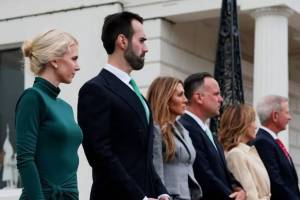
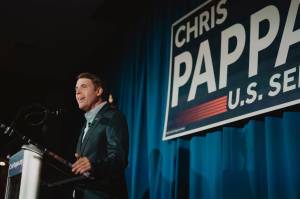












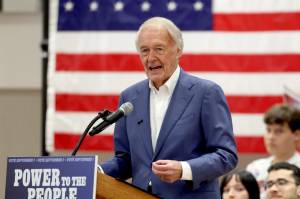
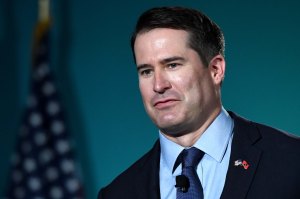

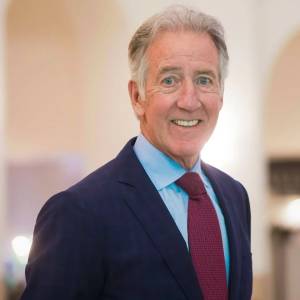
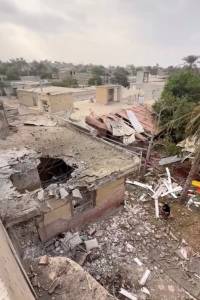











 peej
peej Carissa
 bostonboomer
 dakinikat
 ecocatwoman
 jjlo
jjlo mablue2
 Mama Lopez
 peggysue22
 quixote
 skydancingguestblogger
 Mona (aka Wonk the Vote)



 Sky Dancing
Recent Comments