
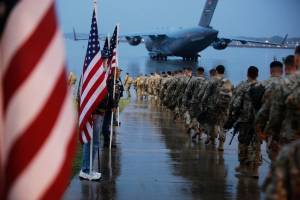
The Pentagon on Tuesday ordered a couple thousand paratroopers from the 82nd Airborne Division to deploy to the Middle East, U.S. officials said, as President Donald Trump weighs a significant escalation in the U.S.-Israeli war with Iran and declines to rule out putting U.S. troops on Iranian soil.
Army paratroopers assigned to the 82nd Airborne Division at Fort Bragg, North Carolina, prepare to board an aircraft in 2020. (Hubert Delany III AP)
U.S. officials approved written orders for soldiers from the division’s 1st Brigade Combat Team and the 82nd’s headquarters at Fort Bragg in North Carolina, said two U.S. officials and a third person familiar with the move, speaking on the condition of anonymity because of the sensitivity of the issue. Verbal orders previously had been approved, two people said. It is not yet clear whether they will deploy to Iran itself, officials said.
Many of the soldiers are with the division’s Immediate Response Force, a unit that is trained to deploy on 18 hours’ notice for missions as varied as seizing airfields and other critical infrastructure, reinforcing U.S. embassies and enabling emergency evacuations. Immediate Response Force duties rotate among infantry units in the 82nd Airborne Division.
The orders follow weeks of speculation about whether the 82nd Airborne, commanded by Maj. Gen. Brandon Tegtmeier, would join the war, after its headquarters unit abruptly pulled out of a training exercise early this month at Fort Polk in Louisiana as Trump approved a sustained bombing campaign against Iran.
Last week, U.S. officials said the Pentagon was making plans to send soldiers from the 82nd Airborne to key areas in Iran, but it was not yet clear if the administration would approve the deployment to the region or, more specifically, onto Iranian soil.
The Army deployment comes as three warships carrying about 4,500 troops from the Tripoli Amphibious Ready Group neared the Middle East. The group includes the 31st Marine Expeditionary Unit based in Okinawa, Japan — a specialized Marine Corps unit that includes about 2,200 personnel, including an infantry battalion of about 800.
A similar unit, the 11th Marine Expeditionary Unit, recently deployed early from San Diego but is weeks away from arriving in the Middle East. The unit, embarked on warships that include the USS Boxer, could eventually replace or supplement the 31st MEU in the region, officials said.
Wednesday Reads: Trump’s War in Iran and Other News
Posted: March 25, 2026 Filed under: just because | Tags: 82nd Airborne, Donald Trump, German President Frank-Walter Steinmeier, Iran military spokesman Ebrahim Zolfaghari, Iran War, Iran war negotiations, Jack Smith, Jared Kushner, JD Vance, Pakistan, Paul Krugman, Steve Witkoff, Strait of Hormuz, TREASON 7 CommentsGood Day!!
I’ve been scanning the headlines for awhile now, trying to make sense of what’s happening in Trump’s war with Iran. I’m still confused.
Trump keeps saying that he’s already won the war, but he’s sending thousands of troops to the region. He apparently sent a peace plan to Iran that they have already rejected, offering an alternative proposal.
CNN has a summary of the latest moves in the war: What to know on Day 26 of the Iran war: Tehran taunts Trump, US troop deployment.
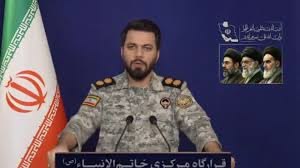
Iran’s military has mocked the Trump administration’s efforts to strike a deal to end the war, saying the United States is only “negotiating with yourselves.”
Despite President Donald Trump’s optimism that a deal with Tehran is in sight, sources have told CNN that around 1,000 US soldiers with the Army’s 82nd Airborne Division are expected to deploy to the Middle East in the coming days, suggesting the president is keeping his options open.
Ebrahim Zolfaghari
The latest on the talks:
- Iran taunts Trump: Ebrahim Zolfaghari, a spokesman for Iran’s military, taunted the US leadership in a message broadcast Wednesday on state television. “Has the level of your internal conflicts reached the point where you are negotiating with yourselves?” he asked. Zolfaghari said the US’ “strategic power” had turned into a “strategic defeat.”
- Trump touts talks: That mocking message came after Trump expressed optimism over a deal to end the war, saying that Vice President JD Vance, Secretary of State Marco Rubio and others were leading negotiations.
- 15-point plan: The US has shared a 15-point list of expectations with Iran via Pakistan, with talks between the warring countries floated in Islamabad later this week, two regional sources told CNN. Those points include limits on Tehran’s defense capabilities, a cessation of support for proxies and an acknowledgement of Israel’s right to exist, the sources said.
- Iran shuns Witkoff: Iranian representatives have let the Trump administration know that Tehran does not want to reenter negotiations with the US president’s favored diplomatic duo of Steve Witkoff, his special envoy, and Jared Kushner, his son-in-law, according to two regional sources, who said Tehran would rather deal with Vance.
-
Iran willing to listen: An Iranian source told CNN on Tuesday that Washington had initiated “outreach” in recent days, “but nothing that has reached the level of full-on negotiations.” The source stressed that Iran “is not asking for a meeting or direct talks with the United States but is willing to listen if a plan for a sustainable deal comes within reach” that would preserve the regime’s interests. Initially, Tehran had denied any contact with Washington, saying that Trump’s claim of talks was a ruse to lower energy prices and buy time.
There’s much more on what’s happening at the CNN link.
More details from BBC News: Pakistan officials say Iran receives 15-point US plan – AP.
The Associated Press news agency reports that Iran has received a 15-point plan from the US for reaching a ceasefire in the US-Israel war with Iran, citing two Pakistani officials.
The Pakistani officials reportedly said the proposal broadly covers the following:
- Sanctions relief
- Civilian nuclear co-operation
- A rollback of Iran’s nuclear programme
- Monitoring by the International Atomic Energy Agency
- Missile limits, and access for shipping through the Strait of Hormuz
Pakistan Prime Minister Shehbaz Sharif said earlier that the country was “ready” to host talks for a settlement of the conflict.
Israel’s Channel 12 has also reported on the plan. You can read a full breakdown of the reports in our earlier post.
There’s been no confirmation of the details from the White House. Iranian military has denied it’s negotiating with the US.
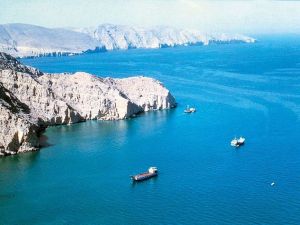
The Strait of Hormuz
Iran has rejected the U.S. plan and offered an alternative. AP: Iran rejects US ceasefire plan, issues its own demands as strikes land across the Mideast.
DUBAI, United Arab Emirates (AP) — Iran on Wednesday dismissed an American plan to pause the war in the Middle East and launched more attacks on Israel and Gulf Arab countries, including an assault that sparked a huge fire at Kuwait International Airport.
Iran’s defiance came as Israel launched airstrikes on Tehran and as the United States deployed paratroopers and more Marines to the region.
Iranian state television’s English-language broadcaster quoted an anonymous official as saying Iran rejected America’s ceasefire proposal and has its own demands for an end to the fighting. “Iran will end the war when it decides to do so and when its own conditions are met,” the hardliner-controlled Press TV quoted the official as saying.
Earlier, two officials from Pakistan, which transmitted the U.S. plan to Iran, described the 15-point proposal broadly, saying it addressed sanctions relief, a rollback of Iran’s nuclear program, limits on missiles and reopening the Strait of Hormuz, through which a fifth of the world’s oil is shipped.
An Egyptian official involved in the mediation efforts said the proposal also includes restrictions on Iran’s support for armed groups. The officials spoke on condition of anonymity to discuss details not yet released.
Some of those points were nonstarters in negotiations before the war: Iran has insisted it won’t discuss its ballistic missile program or its support of regional militias, which it views as key to its security. And its ability to control passage through the Strait of Hormuz represents one of its biggest strategic advantages….
Press TV cited an Iranian five-point plan for a ceasefire coming from the official who rejected the US proposal. That plan included a halt to killings of its officials, means to make sure no other war is waged against it, reparations for the war, the end of hostilities and Iran’s “exercise of sovereignty over the Strait of Hormuz.”
Those measures, particularly reparations and its continued chokehold over the Strait of Hormuz, likely will be unacceptable to the White House.
According to the above AP article, Trump is still claiming that Iran is negotiating with Steve Witkoff and Jared Kushner, but according the BBC article above, Iran has said it won’t talk to them but would talk to J.D. Vance.
Barak Ravid and Marc Caputo at Axios: Iran suspects Trump’s peace talk push is another trick.
Iranian officials have told the countries trying to mediate peace talks with the U.S. that they have now been tricked twice by President Trump and “we don’t want to be fooled again,” according to a source with direct knowledge of those discussions.
The big picture: The U.S. is pushing for in-person peace talks as soon as Thursday in Islamabad, Pakistan. But during the two previous rounds of U.S.-Iran talks, Trump green lit crippling surprise attacks while still claiming to be seeking a deal.
Flashback: Israel attacked Iran with Trump’s backing last June, days before a planned round of nuclear talks.
- Then three weeks ago, the U.S. and Iran reached a tentative agreement in Geneva to continue talks the following week — two days before the U.S. and Israel attacked.
Behind the scenes: Iranian officials have told the mediators — Pakistan, Egypt and Turkey — that U.S. military movements and Trump’s decision to deploy major troop reinforcements have increased their suspicion that his proposal for peace talks is just a ruse.
- To the Trump administration, the massing of forces is a sign he’s serious about negotiating from gunboats, not that he’s negotiating in bad faith. “Trump has a hand open for a deal and the other is a fist, waiting to punch you in the f***ing face,” said a Trump adviser.
- The White House has sent messages to the Iranians that Trump is serious about the negotiations, and floated Vice President JD Vance’s possible involvement in the talks as proof.
- Two sources said Witkoff recommended Vance because of the stature of his office and because the Iranians don’t see him as a hawk.
Read more at Axios.
Trump is ordering troop movements. The Washington Post (gift link): Army paratroopers ordered to Middle East as U.S. weighs next move in Iran conflict.
Use the gift link to read more.
U.S. allies are confused about what Trump is doing. Victor Jack, Chris Lunday and Esther Webber at Politico: Trump’s ‘absurdly incoherent’ Iran pleas leave allies befuddled.
BRUSSELS — Donald Trump’s messaging on what he wants from American allies in his war against Iran is so confusing that any effort to help in reopening the Strait of Hormuz remains deadlocked, according to four European government officials.
Washington has not made any formal requests for equipment, said the officials, who were granted anonymity to speak freely on the sensitive talks, while allies are also reluctant to send military assets to the region over fears they would be attacked by Iran.
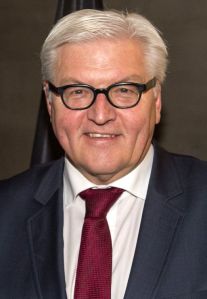
German President Frank-Walter Steinmeier
More than 30 nations, including a majority of NATO countries, have pledged “appropriate efforts” to restart shipping through the critical trade chokepoint after the U.S. president slammed allies as “COWARDS” for failing to volunteer their assistance.
But so far, discussions remain in their very early stages, according to government officials from seven European countries.
“One would wish for more predictability, more clarity and more strategic foresight — not only in this case,” German Defense Minister Boris Pistorius told POLITICO on Tuesday, adding: “Let’s wait and see.”
The slow-moving talks reflect Trump’s conflicting messaging more than three weeks into his war against Iran — where he has threatened allies for failing to back his campaign, then said they weren’t needed, all while providing scant detail on how they could support the U.S.
The lack of enthusiasm about getting involved also underscores Europe’s growing self-confidence in dealing with Washington, as the continent increasingly shifts its approach from placating Trump to confronting him over a war allies were not consulted on.
“This war violates international law,” German President Frank-Walter Steinmeier said Tuesday. “There is little doubt that, in any case, the justification of an imminent attack on the U.S. does not hold water.”
Let’s face it: despite journalists’ efforts to make sense of what Trump is up to, it’s highly unlikely that he himself has any clue about what he is doing.
, and Inside Trump’s daily video montage briefing on the Iran war.
Each day since the start of the war in Iran, U.S. military officials compile a video update for President Donald Trump that shows video of the biggest, most successful strikes on Iranian targets over the previous 48 hours, three current U.S. officials and a former U.S. official said.
The daily montage typically runs for about two minutes, sometimes longer, the officials said. One described each daily video as a series of clips of “stuff blowing up.”
The highlight reel of U.S. Central Command bombing Iranian equipment and military sites isn’t the only briefing Trump gets about the war. He’s also updated through conversations with top military and intelligence advisers, foreign leaders and news reports, the officials said.
But the video briefing is fueling concerns among some of Trump’s allies that he may not be receiving — or absorbing — the complete picture of the war, now in its fourth week, two of the current officials and the former official said.
They said the videos are also driving Trump’s increasing frustration with news coverage of the war. Trump has pointed to the success depicted in the daily videos to privately question why his administration can’t better influence the public narrative, asking aides why the news media doesn’t emphasize what he’s seeing, one of the current U.S. officials and the former U.S. official said.
That sounds about right for Trump’s childish comprehension level.
In non-war news, Trump’s theft of government documents after his first term is back in the headlines.
Carol LeonnigJacqueline Alemany at MSNOW: Trump appeared to have business motive for keeping classified documents, Jack Smith finds.
Special counsel Jack Smith gathered evidence that then-candidate Donald Trump took many top secret documents that related to his worldwide business interests, and investigators considered this a likely motive for Trump concealing them at his Florida club after he left the White House, according to newly released case records.
The special prosecutor also had evidence indicating that after leaving office Trump had shown a classified map to passengers on a private plane, including his future chief of staff, Susie Wiles, and took at least one document that was so secret that only six people had authority to review it, according to a memo reviewed by MS NOW and cited by the House Judiciary Committee’s ranking Democrat, Rep. Jamie Raskin of Maryland.
Trump’s stash of documents in a Mar-a-Lago bathroom
Trump’s reason for taking hundreds of pages of classified documents when he left office in January 2021 — and then concealing them when the Justice Department subpoenaed him for their return in May 2022 — has been one of the larger mysteries of the case. FBI agents conducting an unannounced search of Trump’s Mar-a-Lago residence in August 2022 discovered hundreds more pages of top secret records that Trump and his lawyers had failed to return to the government after claiming they had fully returned all classified materials.
In a January 2023 “progress memo” reviewed by MS NOW, Smith’s office discussed the possible motive after the FBI discovered that Trump held on to many documents related to his businesses.
“Trump possessed classified documents pertinent to his business interests — establishing a motive for retaining them,” according to the memo, which tracked progress in the documents and election-interference investigations. “We must have those documents.”
In a letter to Attorney General Pam Bondi on Tuesday, Raskin insisted that Trump’s Justice Department has sought to cover up the details of Trump’s “hoarding” of classified government secrets and storing them in his Mar-a-Lago club’s showers and closets — which put national security at risk — as well as the clues to Trump’s motives for doing so.
“These new disclosures suggest that Donald Trump stole documents so sensitive that only six people in the entire U.S. government had access to them, that the documents President Trump stole pertained to his business interests,” Raskin wrote to Bondi.
“This glimpse into the trove of evidence behind the coverup reveals a President of the United States who may have sold out our national security to enrich himself.”

More from Jeremy Roebuck and Maegan Vazquez at The Washington Post: Trump showed classified map to passengers on his plane in 2022, memo says.
President Donald Trump showed a classified map he retained from his first term in office to passengers on a 2022 private plane flight and retained another record so sensitive that only six high-ranking government officials had access to it, according to a prosecution memo released to Congress this week.
The memo, which was obtained by The Washington Post, was penned as investigators moved toward indicting Trump on charges of illegally retaining sensitive government material after he left the White House. It offers a snapshot of an early moment in Smith’s investigation and adds new shading to the public understanding of Smith’s probes, even as a final report on his findings remains under court seal.
The memo, for instance, reveals that Smith’s team gathered at least some evidence to suggest that Trump had retained classified material pertinent to his personal business interests and that prosecutors were investigating whether his decision to hold on to those records was motivated by financial gain.
The eventual indictment — filed against Trump five months after the memo was written — did not mention Trump’s business interests as a possible motive. That could suggest prosecutors ultimately concluded they did not have sufficient evidence to prove that theory at trial. It is also not uncommon for prosecutors to leave some allegations out of their initial charging documents, even if they intend to prove them later at trial.
Jack Smith
The memo recounts an alleged incident in which Trump, on a June 2022 flight to his golf club in Bedminster, New Jersey, allegedly shared a classified map with passengers. Among them, according to the memo, was Susie Wiles, then the CEO of Trump’s super PAC, who has since become Trump’s White House chief of staff. The memo did not detail what the map showed.
Smith’s 2023 indictment of Trump included a similar claim that Trump in 2021 had shown others a classified map tied to a military operation and boasted that he had access to a “plan of attack” that the Pentagon had prepared for him.
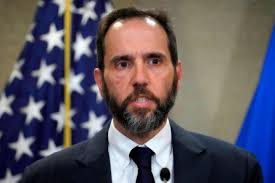
The Justice Department shared those findings, detailed in a January 2023 briefing document written by then-special counsel Jack Smith’s team, with lawmakers as they conduct a review of Smith’s now-abandoned efforts to prosecute Trump.
Has Trump shared these documents with Putin and his other world leader pals? I’d be surprised if he hasn’t. Remember, those documents were returned to Trump after the charges were dropped.
One more story before I wrap this up. Paul Krugman says that whoever is cashing in on Trump’s war announcements is committing treason.
From Heather Cox Richardson today: Letters from an American.
This morning, economist Paul Krugman came right out and said it: “People close to Trump are trading based on national secrets.” Another word for that, he said, is “treason.” The evidence for such a claim is the sudden and isolated jump in trading volume in S&P 500 and oil futures about 15 minutes before Trump suddenly announced that the U.S. and Iran were in negotiations to end the war—an announcement that turned out to be false.
The oil futures trade alone was worth about $580 million, the Financial Times estimated. As Krugman notes, exploiting confidential information for financial gain, otherwise known as “insider trading,” is illegal. But exploiting confidential information about national security for private financial gain is something else again. It puts profit-making above Americans’ safety.
“I’d very much like to know exactly who was making those trades yesterday morning,” Krugman wrote. “Were they people directly in the know, or billionaires/traders who paid people in the know for tips?”
That’s all I have for you today. What’s on your mind?
Lazy Caturday Reads: Literary Cats Along With Some News
Posted: October 4, 2025 Filed under: just because | Tags: 82nd Airborne, cat art, caturday, deportations, Donald Trump, drone strikes on boats, extrajudicial executions, Howard Lutnick, immigration, Jeffrey Epstein, Kilmar Abrego Garcia, literary cats, Mark Hertling, Miranda Devine, Pete Hegseth, Portland OR, Signal app leaks, Venezuela 5 CommentsGood Afternoon!!

Haruki Murakami with Kafka
It’s the end of another week in which lots of bad things happened. Frankly, I can’t keep track of everything anymore. Here are some of the stories that interested me most.
I’m still recovering from Tuesday’s insane performances by Pete Hegseth and Donald Trump in front of 800 military leaders whom they forced to travel to Quantico Marine Corps base from all over the world. Former Lt. General Mark Hertling writes about it at The Bulwark: Questions After Quantico.
THE SPEECHES ON TUESDAY IN QUANTICO—by Chairman of the Joint Chiefs of Staff Gen. Dan Caine, Secretary of Defense (or War, as he would have it) Pete Hegseth, and President Donald Trump—were over in just two hours. But for the generals, admirals, and senior enlisted who left that auditorium and started their long flights home to the Pacific, Europe, and the Middle East, those speeches were just the beginning. Because when Washington speaks—especially when it speaks with bluster, ambiguity, or hostility—it is the commanders who must translate to their troops, steady their units, and respond to the challenges of new orders.
I’ve been that commander. I’ve flown back overnight from Washington to Germany, walked into my headquarters in Heidelberg, and faced staff officers and soldiers who were waiting—not for a policy memo, not for another directive from the Pentagon, but for their commander to tell them what it all meant and to give them implementing instructions. After Tuesday’s meeting, they will want to know what things they will have to change, if their country still believes in them, if the oath they swore still anchors their service, if the mission they’re preparing for or executing still has clarity and legitimacy….
…[T]he shockwaves of the Quantico gathering are only now beginning to reverberate through bases in Europe, the Pacific, the Middle East, and beyond. Because when those commanders and their enlisted advisors returned to their posts, bases, air wings, or carrier strike groups, the questions began.
As the speech was being publicly broadcast, female soldiers living on the Kasernes of Germany watching on the Armed Forces Network were asking one another: Does this mean our opportunities to serve in jobs we love are closing again? Will I still be allowed to compete fairly for assignments and promotions? Black soldiers, weary and wary of subtle slights and systemic hurdles, will wonder if the new emphasis on “appearance” and “discipline” means a return to the days when shaving profiles for painful and unsightly face “bumps” were treated as liabilities instead of as a need for legitimate accommodations. Sikh soldiers, who after long battles were only recently granted the right to wear turbans and keep beards as part of a commonsense accommodation for their faith, will now wonder if that right will again be questioned. For each of them, their unique individuality and love for service in uniform are inseparable.
And gay and transgender service members—many of whom finally felt able to serve openly over the last decade—felt the floor shift beneath them yet again. Do I need to start making plans to leave? one staff sergeant might quietly ask her first sergeant. Or do I just keep my head down and hope this storm passes? Keeping your head down is sometimes needed in combat when engaging with the enemy; it’s not something we want from our soldiers who are living their Army value of “personal courage.”
There will be broader, increasingly gnawing concerns for the staffs: Are we really being asked to prepare for missions inside our own cities? What happens if peaceful protesters are described as “enemies”? Where does that leave the oath we swore—to the Constitution, not to a man or a party?
These aren’t abstract policy questions. They will be whispered in barracks hallways, posed after hours in a motor pool, or texted late at night to a trusted squad leader. They are the lived reality of a military force watching politics intrude on their profession. And with each one, there is the question of degraded morale, an erosion of trust.
How will commanders handle these overwhelming questions? Read what Hertling has to say about it at The Bulwark.

Patricia HIghsmith with Ripley
I’m also still gloating about the latest exploit by Trump’s stupidest cabinet member (and that’s really saying something, considering that group of morons) Howard Lutnik. Lutnick gave an interview to a podcast hosted by Miranda Devine of the New York Post in which he told personal stories about Jeffrey Epstein, who was once Lutnick’s next door neighbor in New York City. Could there be anything more guaranteed to enrage Trump?
Josh Christenson at The New York Post: Howard Lutnick tells ‘Pod Force One’ ex-neighbor Jeffrey Epstein showed off massage room, made creepy comment during townhouse tour.
Commerce Secretary Howard Lutnick, in a notable break with the Department of Justice, claimed late pedophile Jeffrey Epstein was “the greatest blackmailer ever” — and may have traded the feds video of his rich and well-connected associates getting massages from young women in exchange for a controversial 2008 plea deal.
Lutnick made the shocking allegations to The Post’s Miranda Devine on the latest episode of “Pod Force One,” out now.
The 64-year-old cabinet secretary said Epstein himself showed off his notorious “massage room” while giving Lutnick and his wife a tour of the infamous East 71st Street townhouse after the couple moved in next door to the since-disgraced financier in 2005.
“I say to him, ‘Massage table in the middle of your house? How often do you have a massage?’” Lutnick recalled. “And he says, ‘Every day.’ And then he gets, like weirdly close to me, and he says, ‘And the right kind of massage.’”
Lutnick said he and his wife quickly excused themselves and left Epstein’s home, “and in the six to eight steps it takes to get from his house to my house, my wife and I decided that I will never be in the room with that disgusting person ever again.”
When asked by Devine whether Epstein’s rich and powerful associates — including the likes of Prince Andrew and Microsoft founder Bill Gates — “could hang around him and not see what you saw, or did they see it and ignore it,” Lutnick responded, “They participated.”
“They get a massage, that’s what his MO was. ‘Get a massage, get a massage,’ and what happened in that massage room, I assume, was on video,” the commerce secretary went on. “This guy was the greatest blackmailer ever, blackmailed people. That’s how he had money.” [….]
Lutnick added: “I assume way back when they traded those videos in exchange for him getting that 18-month sentence, which allowed him to have visits and be out of jail. I mean, he’s a serial sex offender. How could he get 18 months and be able to go to his office during the day and have visitors and stuff? There must have been a trade.
“So, my assumption, I have no knowledge, but my assumption is there was a trade for the videos, because there were people on those videos,” he also claimed.
Hahahaha!! Trump has tried so hard to distract from the Epstein files. He was pals for years with the guy who nauseated Howard Lutnick after one brief interaction. Now Democrats in the Congress want Lutnick to testify for their committees. You can watch the video of the Lutnick interview at the NY Post link.

Gore Vidal with Caligula
Swapna Venugopal Ramaswamy at USA Today: Trump’s commerce secretary calls Jeffrey Epstein the ‘greatest blackmailer.’
For months, President Donald Trump has pleaded with his supporters to move on from the Jeffrey Epstein controversy − calling it a “Democratic hoax” − even as he faces growing calls from Congress and many in his own MAGA base for more disclosure on the jet-setting sex offender.
But Trump’s fellow billionaire and Commerce secretary, Howard Lutnick, apparently didn’t get the memo.
Lutnick held forth on a recent podcast about how he found Epstein, who was a close friend of Trump’s for more than a decade, to be “gross” and believed he was a “blackmailer.”
“He was gross,” said Lutnick, in a Oct.1 podcast interview with New York Post’s Miranda Devine. Lutnick described Epstein as the “greatest blackmailer ever” and suggested he had used compromising videos of prominent men to get a 2008 sweetheart deal in Florida amid a child prostitution investigation.
Those comments sharply differ from a memo released by the Justice Department and FBI in July which said that there was no “credible evidence found that Epstein blackmailed prominent individuals” or that he kept an “incriminating client list.”
One more on Lutnick by Asawin Suebsaeng at Zeteo: ‘F***ing Dumbass’: Trump Officials Want Howard Lutnick Sidelined After Epstein Comments.
Top officials in Donald Trump’s administration are furious with Commerce Secretary Howard Lutnick, knowledgeable sources tell Zeteo, after he went on a tabloid podcast this week and blabbed about the one sex criminal who Team Trump wants to talk about least: Jeffrey Epstein. Not only that, but Lutnick went off script and undermined the government’s entire story about the late Epstein.
For months, President Trump and the highest levels of his administration have been trying to sell the public and his MAGA supporters on their conclusion that Epstein, the notorious sex offender and former Trump pal,did not run a secret sexual-blackmail operation targeting wealthy, powerful elites.
Sylvia Plath with “Daddy”
On Wednesday morning, the New York Post published parts of its podcast sit-down with Lutnick, who was once Epstein’s neighbor. The Trump Cabinet member told the Post about his tour of Epstein’s townhouse, where Epstein showed him his “massage room.” Lutnick said he was quickly “disgusted,” before asserting that Epstein’s rich and famous associates not only knew about his bad behavior but “participated.” He called Epstein a “blackmailer,” something the Trump administration strenuously denies.
Several senior Trump officials, some of whom were responsible for carefully curating the messaging regarding the administration’s decision to end its Epstein investigation, were apoplectic on Wednesday, bemoaning to one another about why Lutnick is still employed by the president and why the commerce secretary is allowed to do media appearances, four senior Trump administration appointees tell Zeteo.
“That fucking dumbass,” one of the senior Trump administration officials told Zeteo on Wednesday, after seeing a clip of Lutnick riffing on Epstein. “I’ve worked with him and can tell you he doesn’t think he did anything negative… That’s not how he thinks. He just talks and talks, and doesn’t care what unhelpful bullshit comes out.”

Well, Trump appointed that dumbass, along with a bunch of other idiots in his cabinet.
In more serious news, Trump is still murdering people in small boats off the coast of Venezuela.
Kathryn Armstrong at BBC News: Four killed in latest US strike on alleged drug vessel near Venezuela.
US forces have killed four people in an attack on a boat off the coast of Venezuela that was allegedly trafficking drugs, Defence Secretary Pete Hegseth says.
“The strike was conducted in international waters just off the coast of Venezuela while the vessel was transporting substantial amounts of narcotics – headed to America to poison our people,” Hegseth wrote in a post on X.
It is the latest in a number of recent deadly strikes that the US has carried out on boats in international waters it says are involved in “narco-trafficking”.
The strikes have attracted condemnation in countries including Venezuela and Colombia, with some international lawyers describing the strikes as a breach of international law.
Hegseth said the attack took place in the US Southern Command’s area of responsibility, which covers most of South America and the Caribbean.
“Our intelligence, without a doubt, confirmed that this vessel was trafficking narcotics, the people onboard were narco-terrorists, and they were operating on a known narco-trafficking transit route,” Hegseth said about Friday’s attack.
“These strikes will continue until the attacks on the American people are over!!!!”
US President Trump also confirmed the strike on his Truth Social platform, saying that the boat was carrying enough drugs “to kill 25 to 50 thousand people”.
However, the US has not provided evidence for its claims or any information about the identities of those on board.
An opinion piece from W.J. Hennigan at The New York Times (gift link): If We’re at War, Americans Deserve to Know More About It.
The Trump administration told Congress this week that the United States is engaged in an “armed conflict” with drug cartels.
The average American knows vanishingly little about what its government seeks to accomplish in this fight. Citizens aren’t in possession of the metrics by which to judge the administration’s pursuit of those goals.
George Bernard Shaw with Pygmalian
We haven’t been told which specific drugs they seek to stop. We haven’t been told much about which specific groups they seek to destroy. We haven’t been told much about what legal authorities they are acting on.
Withholding this information from the American public is the administration’s way to escape scrutiny. At the very least, the country deserves some evidence of whether the military operation is working.
If stopping the flow of drugs is the goal, the actions taken so far have been unpersuasive. American forces, at the direction of President Trump, executed a lethal airstrike on Friday on a boat off Venezuela, killing four people on board. Defense Secretary Pete Hegseth posted a video of the attack on X, saying, “The vessel was transporting substantial amounts of narcotics – headed to America to poison our people,” adding that it was “affiliated with Designated Terrorist Organizations.”
This is the sort of vague language the administration has used in its campaign over the past two months as it directs the military to sporadically launch airstrikes — now totaling four — against boats in the region that the government says are running drugs. No corresponding evidence has been provided to the public to support the actions. The operation amounts to extrajudicial executions, according to U.N. officials.

A bit more:
Without delving into the strikes’ questionable legality again, the bombing runs fall well short of decisive military actions. It would be hard to convince anyone that blowing up a few motorboats — and all the people aboard them — will prove conclusive in winning the half-century-old war on drugs.
For one thing, this isn’t how the Pentagon combats enemy networks. Say what you will about the many failures of America’s global war on terrorism, but it’s undeniable the U.S. military became frighteningly proficient at penetrating and taking apart organizations over the past quarter-century.
Instead of systematically killing low- and midlevel henchmen in pinprick airstrikes, U.S. forces learned that more information could be gleaned through capturing those suspects and gathering, bagging and tagging their personal electronics for intelligence analysis. A phone from a suspect’s pocket in Iraq, for instance, would often include enough information, such as phone numbers and text conversations, so that a follow-on raid on other operatives could be planned. This is how U.S. forces mapped out countless terrorist groups’ leadership ranks along with the fighters under their command.
The infrastructure for ship interdictions already exists in the Caribbean. The U.S. Coast Guard and Navy have long interdicted vessels that they suspected of drug running.
Why the administration has opted to blow apart potential leads and sources instead of exploiting them is anyone’s guess.
These are serious questions, but Trump and Hegseth aren’t serious people. All they are interested in is blowing people and boats up and posting videos of the action. It’s disgusting that they are getting away with doing this in our name. You can use the gift link to read the rest of this thoughtful article.
The Abrego Garcia case is still going on, and there was a notable ruling yesterday.
Alan Feuer at The New York Times (gift link): Judge Finds ‘Likelihood’ That Charges Against Abrego Garcia Are Vindictive.
A federal judge in Nashville ruled on Friday that there was a “realistic likelihood” that the indictment filed against Kilmar Armando Abrego Garcia, the immigrant who was wrongfully deported to El Salvador in March and then brought back to face criminal charges, amounted to a vindictive prosecution by the Justice Department.
The ruling was an astonishing rebuke of both the department and some of its top officials, including Todd Blanche, the deputy attorney general. Mr. Blanche was called out by name in the ruling for remarks he made about Mr. Abrego Garcia’s case on the same day in June he was returned to U.S. soil to face the charges in Federal District Court in Nashville.
Doris Lessing with Black Madonna
In a 16-page decision, Judge Waverly D. Crenshaw Jr. said there was evidence that Mr. Abrego Garcia’s prosecution “may stem from retaliation” by the Justice Department and the Department of Homeland Security. Judge Crenshaw found that Trump officials may have sought to punish Mr. Abrego Garcia for having filed a lawsuit successfully challenging his initial “unlawful deportation” to El Salvador.
Moreover, Judge Crenshaw indicated how he was serious about getting to the bottom of the issue of vindictiveness. He said he intended to permit Mr. Abrego Garcia’s lawyers to pry, at least in part, into the Trump administration’s process of deciding to bring an indictment in the first place and how the charges related to the deportation case.
Vindictive prosecution motions are exceedingly difficult to win because of the high threshold required to prove that prosecutors acted improperly by filing criminal charges. Under the law, cases can be considered vindictive only if defendants can show that prosecutors displayed animus toward them while they were seeking to vindicate their rights in court, and that the charges would not have been brought except for the existence of that animus.
While Judge Crenshaw has not yet made a final decision on the issue of vindictiveness, the fact that he is even considering doing so in Mr. Abrego Garcia’s case is a hugely embarrassing blow to the Trump administration. From the moment Trump officials acknowledged that they had mistakenly expelled Mr. Abrego Garcia to El Salvador, President Trump and his top aides began a relentless barrage of attacks against him, calling him a violent member of the street gang MS-13, a wife beater and even a terrorist, effectively blaming him for being the victim of their own administrative error.
The judge’s ruling highlighted the ways in which the habit many Trump officials have of speaking out of court about legal cases has — or could — come back to haunt them.

Use the gift link to read the rest if you’re intersted.
Trump has been talking about sending troops to cities governed by Democrats. Lately he’s been focusing on Portland, Oregon. This is just beyond belief. And we know about it because of another leak from Signal.
Catherine Bouris at The Daily Beast: Trump Goon Spills Bonkers Plan to Deploy 82nd Airborne to Blue City.
A senior White House official accidentally disclosed that the Trump administration was considering deploying an elite army strike force into Portland by using Signal in a public place.
The Minnesota Star Tribune reported Friday that Anthony Salisbury, one of Stephen Miller’s top deputies, was observed discussing the plans via Signal in view of members of the public while traveling in Minnesota. The newspaper was then contacted by one member of the public who was troubled to see sensitive military plans discussed so openly.
Aldous Huxley with Limbo
In the messages, senior White House officials discussed the potential deployment of the Army’s 82nd Airborne Division, an elite unit that specializes in parachuting into hostile territory. The division has been deployed in both world wars, including the Battle of the Bulge, as well as Vietnam and Afghanistan.
Across several conversations, the Star Tribune reports, Salisbury spoke about a range of matters with Pete Hegseth adviser Patrick Weaver as well as other officials.
In one of the messages, Weaver revealed that Hegseth wanted Trump to explicitly instruct him to send soldiers to Portland.
“Between you and I, I think Pete just wants the top cover from the boss if anything goes sideways with the troops there,” Weaver reportedly said.
Noting the potentially disastrous optics around sending an elite division into an American city, Weaver told Salisbury, “82nd is like our top tier [quick reaction force] for abroad. So it will cause a lot of headlines. Probably why he wants potus to tell him to do it.”
Ultimately, Trump opted to send 200 National Guard soldiers into Portland, following a similar playbook used in other Democrat-controlled cities like Los Angeles and Washington D.C. Both the state of Oregon and the city of Portland have sued to stop the deployment.

More interesting reads to check out:
Jonathan V. Last at The Bulwark: Here’s How Trump Loses the Shutdown. God help us but Gavin Newsom is the only Democrat who understands power.
Jens Stoltenberg at The Guardian: ‘I’m leaving,’ Trump said. ‘There’s no reason to be here any more’: inside the meeting that brought Nato to the brink (Former secretary general Jens Stoltenberg recalls the rollercoaster ride of dealing with Donald Trump – and how close the US president brought the alliance to the point of collapse.)
The Independent: ‘It’s not a good place right now’: CBS News staffers are ‘literally freaking out’ about Bari Weiss taking over newsroom.
The New York Times: Supreme Court Lets Trump Revoke Deportation Protections for Venezuelans.
The Guardian: Body slamming, teargas and pepper balls: viral videos show Ice using extreme force in Chicago.
Those are the stories that interested me today. What do you think? What’s on your mind?

 peej
peej Carissa
 bostonboomer
 dakinikat
 ecocatwoman
 jjlo
jjlo mablue2
 Mama Lopez
 peggysue22
 quixote
 skydancingguestblogger
 Mona (aka Wonk the Vote)



 Sky Dancing
Recent Comments