Posted: May 16, 2026 | Author: bostonboomer | Filed under: just because | Tags: cat art, caturday, Donald Trump, ethics, Graham Allison, Kash Patel, Pearl Harbor, Peter Hegseth, Poland, Taiwan, Thucydides' trap, Trump's China Trip, Xi Jinping |
Good Afternoon!!

Prominent Chinese contemporary artist and activist Ai Weiwei
The aftermath of Trump’s lackluster China trip is still a top story today. The consensus of the pundits is that the trip was a failure. Trump looked tired, weak, and indecisive. Today, the main concern is that he is ready to sell out Taiwan in his efforts to suck up to Xi Jinping.
Analysis by New York Times China Correspondent Chris Buckley: Trump Makes a High Risk Move to Win Over Xi.
President Trump has described a potential multibillion-dollar weapons sale to Taiwan as a “negotiating chip” with China, raising new doubts about the pace and scale of American military support for the island democracy.
Taiwan’s government has been waiting for months for Mr. Trump to sign off on a $14 billion package of missiles, anti-drone equipment and air-defense systems intended to fortify the island against Beijing’s military threats.
Mr. Trump himself had pressured Taiwan to spend more on its own defense. Now he is using the very arms his administration had pushed the island to buy as leverage with China, the United States’ main adversary.
Mr. Trump told reporters on Air Force One after leaving China on Friday that he had discussed the weapons package with China’s president, Xi Jinping, during their summit this past week in Beijing. He was asked in an interview with Fox News whether he would approve the Taiwan deal.
“No, I’m holding that in abeyance and it depends on China,” he said in the interview, which was recorded in Beijing but aired after he left. “It depends.”
“It’s a very good negotiating chip for us, frankly,” he said. “It’s a lot of weapons.”
He did not go into details about what he wanted in return, but Mr. Trump has pushed China to make major purchases of American airplanes, ethanol, soybeans, beef and sorghum.
His comments appear to undermine the assurances to Taiwan from some in his own administration that U.S. support for the island is steadfast and nonnegotiable. Before the summit, a bipartisan group of senators had urged against letting support for Taiwan become a bargaining chip with China.
“It looks increasingly likely that Trump will indefinitely withhold the $14 billion arms package to Taiwan, in the hopes that Beijing will give him what he wants on the economic front,” said Amanda Hsiao, a China director at Eurasia Group, a consulting firm….
If Mr. Xi wants to punish the Trump administration over Taiwan, analysts have said, China could hold back on orders of farm goods, or ramp up restrictions on exports of rare earths that are essential to many technology components. But Mr. Xi also agreed to make a state visit to the United States this year, and could use the prospect of more talks — and more deals — to influence Mr. Trump.
Trump will sell out every one of our allies before he’s done.
Ian Aikman at BBC News: Trump warns Taiwan against declaring independence, hours after summit with China’s Xi.
US President Donald Trump has cautioned Taiwan against formally declaring independence from China.
“I’m not looking to have somebody go independent,” the US president told Fox News on Friday, at the end of his two-day summit with his Chinese counterpart Xi Jinping in Beijing.

This photograph features the American author Ursula K. Le Guin holding her cat
Taiwanese President Lai Ching-te has previously stated that Taiwan does not need to declare formal independence because it already sees itself as a sovereign nation.
The US has long supported Taiwan, including being bound by law to provide it with a means of self-defence, but has frequently had to square this alliance with maintaining a diplomatic relationship with China.
Trump earlier said he had “made no commitment either way” about the self-governing island – which China claims as part of its territory and has not ruled out taking by force.
Washington’s established position is that it does not support Taiwanese independence, with continued ties with Beijing being contingent on its acceptance that there is only one Chinese government.
Beijing has been vocal in its dislike of Taiwan’s president, who it has previously described as a “troublemaker” and a “destroyer of cross-strait peace”.
Many Taiwanese consider themselves to be part of a separate nation – though most are in favour of maintaining the status quo in which Taiwan neither declares independence from China nor unites with it.
A bit more:
In his interview with Fox News, Trump reiterated that US policy on the matter had not changed.
“You know, we’re supposed to travel 9,500 miles (15,289km) to fight a war. I’m not looking for that. I want them to cool down. I want China to cool down.”
On the flight back to Washington, the US president had told reporters that he and Xi had spoken “a lot” about the island, but said he had declined to discuss whether the US would defend it.
Xi “feels very strongly” about the island and “doesn’t want to see a movement for independence”, Trump said.
Taiwan is actually about the same distance from the US as Iran.
During one of their public meetings, Xi warned Trump to beware of the Thucydides’ Trap. Xi was suggesting that the US is an empire in decline as China rises. Of course Trump had no clue what Xi was talking about until someone filled him in later. then he responded with an idiotic Truth Social post claiming that Xi was referring only to American under Biden.
Chad de Guzman at Time: Xi Warns Trump of ‘Thucydides’ Trap.’ What to Know About China’s Favorite Greek Reference for U.S. Relations.
The world has come to another crossroads,” Chinese President Xi Jinping told U.S. President Donald Trump on Thursday, as the two leaders began their summit in Beijing. Then Xi asked: “Can China and the U.S. overcome the so-called ‘Thucydides Trap’ and create a new paradigm of major-country relations?”
Xi was referring to the ancient Athenian historian and military commander Thucydides, who wrote The History of the Peloponnesian War, recounting the nearly three-decade conflict between the former Greek poleis (city-states) of Athens and Sparta. In his account, he wrote: “The growth of the power of Athens, and the alarm which this inspired in Lacedaemon [Sparta], made war inevitable.”

Actor Morgan Freeman posing with a black cat.
While debate on the accuracy of translations continues, the core message stuck: this “inevitability” of conflict when a rising power threatens an existing one was later popularized by American political scientist Graham Allison in the early 2010s as “Thucydides Trap.” But in the modern context, China is Athens, challenging the U.S. as today’s Sparta.
Writing for the Financial Times in 2012, Allison said that “the defining question about global order in the decades ahead will be: can China and the U.S. escape Thucydides’s trap?”
Allison expanded on the “trap” idea further in his 2017 bookDestined for War: Can America and China Escape Thucydides’s Trap?, which argued that the two countries were “on a collision course for war—unless both parties take difficult and painful actions to avert it.” Allison enumerated 16 historical cases of rising and established geopolitical powers facing the “trap,” 12 of which ended in war.
Xi’s invocation of Thucydides’ Trap comes at a time when tensions between the rival superpowers could boil over on any of a number of issues, from trade to AI to Taiwan.
It’s an interesting article. I admit I had never heard about this before, but apparently this idea has been a favorite of Xi’s for many years. De Guzman notes several times that Xi has brought it up with U.S. leaders. A bit more:
It’s not just China referencing the Athenian historian and maxim. During Trump’s first presidential term, national security adviser H.R. McMaster was a known Thucydides buff. He wrote for the New York Times in 2013: “War is human. People fight today for the same fundamental reasons the Greek historian Thucydides identified nearly 2,500 years ago: fear, honor and interest.”
Politico also reported that in 2017 Allison briefed Trump’s National Security Council on Greek history and that then-Defense Secretary James Mattis was “fluent” in Thucydides’ work.
In a February 2018 interview with GQ, Steve Bannon, Trump’s former campaign and White House strategist who is also a reported Thucydides aficionado, was asked if he was worried about starting a conflict with China “that the U.S. would lose.” In response, Bannon told the magazine, “I don’t think it has to happen. First off, the whole concept of the rising power and the declining power presupposes that the larger power that’s declining continues to decline.” He argued that Trump’s “America First” paradigm actually “revitalizes the United States of America and puts China on notice.”
Except Trump isn’t putting American first.
Franklin Foer at The Atlantic on the China trip (gift article): Xi Jinping Was Only Humoring Trump.
Spare a moment, please, for the lame-duck superpower. It calls itself the leader of the free world, but the free world no longer believes it. When it extends its hand, nobody rushes to accept. When it threatens, nobody trembles.
After President Trump arrived in Beijing this week, Xi Jinping showered him with pomp befitting a summit of great powers. Yet the Chinese leader permitted potshots at his guest to go viral on his country’s internet rather than suppressing them, as some observers expected he would during a state visit. Xi answered Trump’s lavish praise by sternly lecturing him about meddling with Taiwan. In the end, Xi offered nothing of great substance—no solutions to the war in Iran, no sweeping trade deals, no promises of access to rare earth minerals. Xi used the visit to humor the lame-duck president, waiting for his time to pass.

Argentine author Jorge Luis Borges with a cat, a frequent subject in his life and work.
During the first Trump administration, foreign leaders flattered and accommodated the president out of deference to American power. They feared it; they relied on it. During the second administration, and especially since the beginning of the Iran war, their calculus has quietly shifted—not because the strategy of obsequiousness has failed, but because it’s no longer worth the trouble. Like many of his counterparts around the world, Xi has begun to assume that it’s not just Trump who is term-limited; it’s also his nation.
Trump’s war in Iran was meant to showcase American power. It did the opposite. In the course of failing to remove a much weaker regime or eliminate its nuclear threat, the United States blew through its arsenal—so much so that allies in the Pacific reasonably wonder whether enough munitions remain to protect them. According to The Wall Street Journal, the Pentagon is now worried that it lacks the firepower to execute contingency plans for defending Taiwan.
Supporters of the war argued that it would deal China a severe blow by eliminating one of its most potent allies. But the Gulf nations most threatened by Iran have actually turned to China. As first reported by The Washington Post, an intelligence assessment prepared for the chair of the Joint Chiefs of Staff warned that those countries have begun acquiring from Beijing the systems needed to protect their oil infrastructure and bases. Trump didn’t just fail to weaken China’s position in the Middle East. He strengthened it.
Without exerting itself much, Beijing has profited from America’s self-immolation. China’s petroleum reserves and its investments in renewable energy have allowed it to offer Thailand, the Philippines, and Australia relief from the energy crisis that the United States instigated. Instead of applying diplomatic pressure on Iran to cut a deal, China has let the conflict linger, so that the United States continues to bear the blame for the disruptions to shipping. Meanwhile, China poses as the faithful steward of the rules-based order—the cooler head, the power on which even the U.S. must now rely.
Foer argues that Iran is using the same strategy, letting American weaken itself.
Use the gift link to read the rest.
One more on this subject from Timothy Snyder at Project Syndicate: America’s Superpower Suicide.
The United States is spending billions of dollars to lose a war in Iran that is enriching its oligarchs, impoverishing its citizens, sabotaging its alliances, and strengthening its enemies. The war is exposing a guiding principle of US President Donald Trump’s foreign policy: superpower suicide. Empires rise and fall, but to my knowledge no state has ever deliberately, and systematically, killed its own power—much less with such speed.
This strategic suicide can be difficult to admit: one still hopes that Trump’s misadventures are based on some understanding of the American national interest. They are not.

Alejandro Jodorowsky, a Chilean-French filmmaker, playwright, author, and spiritual guru.
At a minimum, a superpower must be a modern state that includes, through the rule of law and other institutions, a substantial body of citizens committed to a common endeavor. But the Trump administration treats the US not as a modern state but as a commercial opportunity for a select few.
A superpower must also have a sense of the national interest. While international relations experts disagree about how leaders define this concept, we are unprepared for a situation in which the president is indifferent to the good of the people or the state.
To remain a superpower, a state must also maintain itself over time. Continuity depends on a principle for transferring political authority. By aspiring to remain in power indefinitely and undermining faith in elections, Trump is calling into question the principle that enables political succession in the US. There are of course other ways of going about it, like dynastic rule or a politburo’s decision. Moving to one of these arrangements—one could image the coven of tech oligarchs responsible for the rise of Vice President JD Vance as a capitalist politburo—would end the American republic.
Ensuring that the right people are in charge is crucial for a state to gain and maintain power. Historically, powerful states sought ways to identify and elevate qualified people to serve in positions of authority, regardless of birth. Ancient China had an examination system. Napoleon established the principle of merit in both civilian and military life.
The US, for its part, once had a civil service that was the envy of the world, as well as a highly meritocratic military. But the Trump administration has gutted the civil service and purged the military’s senior ranks—a process carried out by people who are themselves unqualified for the positions they occupy. The fact that Tulsi Gabbard, Kash Patel, and Pete Hegseth are now, respectively, Director of National Intelligence, FBI director, and defense secretary is a clear indicator of a superpower committing suicide.
Read the rest a the link above.
Trump stabbed another ally in the back yesterday, reducing the number of troops in Poland not long after he did the same thing in Germany.
Military Times: Army leaders in hot seat over Poland deployment cancellation.
Army leaders struggled Friday to respond to congressional furor over the Pentagon’s decision to abruptly cancel a deployment of more than 4,000 soldiers to Poland this month.

Portrait of author Doris Lessing taken in 1984 by photographer Marianne Majerus.
Acting Army Chief of Staff Gen. Christopher LaNeve said in an Army budget hearing that the order to halt a planned 9-month rotation to Europe by 2nd Armored Brigade Combat Team, 1st Cavalry Division to Eastern Europe came from Defense Secretary Pete Hegseth.
LaNeve and Army Secretary Dan Driscoll said they were informed of the order and had been consulted, but they wouldn’t provide the exact timing of the decision. On May 1, the unit had cased its colors in preparation for deployment, dispatched its advanced team and launched its equipment overseas.
Soldiers began discussing the decision to scrap the deployment publicly early Tuesday morning; the order was confirmed Wednesday by Army Times and other news media.
LaNeve said the decision was made “in the last two weeks” by the Defense Department and Gen. Alexus Grynkewich, commander of U.S. European Command and the NATO Supreme Allied Commander Europe.
LaNeve and Driscoll downplayed the move as part of routine manning reviews conducted throughout the year.
Politico: ‘Slap in the face’: Republicans skewer Pentagon over Poland move.
Top Republicans on Friday condemned the Pentagon for canceling a U.S. troop deployment to Poland, an abrupt move that also appeared to catch Army leaders by surprise.
The decision, House Armed Service Committee members said, amounted to a gut punch to the NATO ally and to a Congress that has sought to beef up the U.S. presence in Europe. They made those frustrations clear at a hearing with Army officials, where the service’s top civilian and uniform leaders had few answers about the rationale for the move and confirmed its last-minute timing.
“I just want to say this is a slap in the face to Poland; it’s a slap in the face to our Baltic friends,” Rep. Don Bacon (R-Neb.) said. “It’s a slap to the face of this committee.”
The blowback comes after lawmakers, European allies and even Pentagon staff
were caught flat-footed by Defense Secretary Pete Hegseth’s decision to halt the long-planned nine-month rotation of 4,000 troops based in Texas.
The move is the latest in a rift between the Trump administration and Republicans on Capitol Hill who have been at odds over U.S. security interests in Europe. Lawmakers enacted limits on troop withdrawals from Europe last year amid concerns the administration would unilaterally scale back troops on the continent.
“We don’t know what’s going on here, but I can just tell you we’re not happy with what’s being talked about, particularly since there’s been no statutory consultation with us,” Armed Services Chair Mike Rogers (R-Ala.) said.
Another sickening move by Hegseth:
The Guardian: Pentagon quietly shut legally required program to prevent civilian deaths by military, watchdog finds.
The Pentagon hasquietly dismantled a program it is legally required to operate to prevent and respond to civilian deaths in US military operations, according to its internal watchdog.

Japanese manga artist Fujio Akatsuka working at his desk alongside his pet cat, Kikuchiyo
A report released by the department’s inspector general concluded the US military no longer has the people, tools or infrastructure needed to comply with two federal statutes requiring it to maintain a functioning civilian casualty policy, and operate a Civilian Protection Center of Excellence (CP CoE).
Donald Trump’s administration has been accused of making deep cuts to the Pentagon’s civilian harm mitigation and response (CHMR) program, designed to handle training and procedures critical in limiting civilian harm in theaters of war.
While the program has not been officially canceled, the inspector general’s report said that funding had ended for a data management platform; committee meetings had halted; and many dedicated personnel had been lost or reassigned.
“As a result, the DoW [BB comment: actually Department of Defense] may not comply with its civilian casualties and harm policy,” the report read. “A policy required by federal law.”
One more article, not on the Iran war or China, but symptomatic of the decline of the U.S.
Elizabeth Williamson and Adam Goldman at The New York Times (gift article): Snorkeling at Pearl Harbor: Kash Patel’s Travels Add to Focus on Ethical Issues.
Last summer, the F.B.I. director, Kash Patel, capped a whirlwind South Pacific trip with a snorkel trip in Hawaii.
There, Navy SEALs used two boats to transport and escort Mr. Patel and nine other people on what a Defense Department email called a “V.I.P. Snorkel” next to one of the military’s most sacred sites, the underwater tomb of the U.S.S. Arizona that holds the remains of more than 900 Navy sailors and Marines who died at Pearl Harbor.
Mr. Patel swam in the vicinity of the tomb for 30 minutes, according to the Navy.

shows the famous Austrian Symbolist painter Gustav Klimt (1862–1918) holding his pet cat.
Out of respect for the dead entombed in the wreck of the Arizona, rules bar visitors even from wearing swimwear at the memorial. With some exceptions over the years for dignitaries, the only people allowed in the water around the tomb are military and National Park Service divers interring the remains of the last Arizona survivors in the wreck, or conducting annual maintenance surveys, according to a former Navy officer and a former National Park Service official familiar with restrictions at the site.
Officials from the Navy and the Defense Department said V.I.P. “tours” near the Arizona were common, but they declined to say how often they take people snorkeling. A Navy spokeswoman declined to identify the nine people who joined Mr. Patel on the trip. The F.B.I. said that Adm. Samuel J. Paparo Jr., the head of the United States Indo-Pacific Command, invited Mr. Patel to Pearl Harbor….
The idea of a high-ranking government official receiving an escort from the SEALs for a recreational swim near the tomb is “horrifying,” said William M. McBride, a Navy veteran and professor emeritus of history at the U.S. Naval Academy in Annapolis.
“This is a war grave with the same legal status as Arlington National Cemetery,” Mr. McBride said in an interview. “Snorkeling around Arizona is as disrespectful as playing kickball on top of the graves at Arlington.”
The Pearl Harbor trip was at the end of an itinerary in which Mr. Patel visited F.B.I. facilities in Hawaii, Australia and New Zealand. Disclosure of the snorkeling tour, and new details about other trips he has taken, comes as Mr. Patel is already under scrutiny for blending leisure travel with official business or instructing F.B.I. employees to make accommodations for him and his girlfriend, Alexis Wilkins….
Mr. Patel’s use of government jets and F.B.I. agents for himself and Ms. Wilkins has drawn bipartisan criticism and led to growing questions even inside the Trump administration about whether it exceeds the bounds of standard practice.
“The badge is a responsibility, not a V.I.P. pass,” said Rob D’Amico, a former F.B.I. special agent and hostage rescue team operator. With Mr. Patel, he said, “the pattern is clear — exotic locations, exclusive access that no member of the public could ever get, and a support staff working overtime to make it happen.”
F.B.I. policy requires its directors to use government planes for all air travel, personal as well as professional. The director is required to reimburse the government for private trips at the cost of coach travel, and the F.B.I. said Mr. Patel has done so.
But in his travels on F.B.I. aircraft, Mr. Patel has made time for side trips, including to V.I.P. suites for events, leisure activities or nights out with his girlfriend. The F.B.I. declined to say who paid for one of those evenings out, a previously unreported trip with Ms. Wilkins to a country music concert in Philadelphia, where they arrived on a Gulfstream V government jet and were spotted in a private suite that rents for upward of $35,000.
Having Patel as FBI director is a joke. But most of Trump’s other appointees are just as ridiculous. As Timothy Snyder wrote (see above article) “Ensuring that the right people are in charge is crucial for a state to gain and maintain power.”
That’s all I have for you today. What’s on your mind?
Did you like this post? Please share it with your friends:
Posted: August 2, 2022 | Author: bostonboomer | Filed under: Afternoon Reads | Tags: Afghanistan, Ayman al-Zawahiri, Build Back Better, burn pits, China, Donald Trump, drone strikes, immigration, January 6 investigations, Joe Manchin, Nancy Pelosi, Taiwan, Trump family separations, veterans bill protests |
Good Afternoon!!
I’m very pleased to report that today’s top story isn’t about Trump or his Republican enablers. That’s a very good thing for me because I’ve reached peak Trump exhaustion once again. Today Nancy Pelosi leads the politics news.
Reuters: Pelosi arrives in Taiwan, voicing U.S. ‘solidarity’ as China fumes.
TAIPEI, Aug 2 (Reuters) – U.S. House of Representatives Speaker Nancy Pelosi arrived in Taiwan late on Tuesday on a trip she said was intended to express American solidarity with the Chinese-claimed island, the first such visit in 25 years and one that risks pushing relations between Washington and Beijing to a new low.
Pelosi and her delegation disembarked from a U.S. Air Force transport plan at Songshan Airport in downtown Taipei and were greeted by Taiwan’s foreign minister, Joseph Wu and Sandra Oudkirk, the top U.S. representative in Taiwan.
“Our congressional delegation’s visit to Taiwan honors America’s unwavering commitment to supporting Taiwan’s vibrant democracy,” Pelosi said in a statement shortly after landing. “America’s solidarity with the 23 million people of Taiwan is more important today than ever, as the world faces a choice between autocracy and democracy.” read more
China immediately condemned Pelosi’s visit, with the foreign ministry saying it seriously damages peace and stability in the Taiwan Strait, “has a severe impact on the political foundation of China-U.S. relations, and seriously infringes upon China’s sovereignty and territorial integrity.” The ministry said it had lodged a strong protest with the United States.
Chinese warplanes buzzed the line dividing the Taiwan Strait on Tuesday before her arrival, and Chinese state media said People’s Liberation Army would hold exercises near Taiwan from Thursday through Sunday.
More info from CNN:
Pelosi and the congressional delegation that accompanied her said in a statement on Tuesday that the visit “honors America’s unwavering commitment to supporting Taiwan’s vibrant democracy.”
“Our discussions with Taiwan leadership will focus on reaffirming our support for our partner and on promoting our shared interests, including advancing a free and open Indo-Pacific region,” the statement said. “America’s solidarity with the 23 million people of Taiwan is more important today than ever, as the world faces a choice between autocracy and democracy.”
Pelosi is traveling with House Foreign Affairs Chairman Gregory Meeks of New York, Veterans’ Affairs Chairman Mark Takano of California and Reps. Suzan DelBene of Washington state, Raja Krishnamoorthi of Illinois and Andy Kim of New Jersey.
The House speaker is expected to visit Taiwan’s presidential office and parliament on Wednesday morning (local time), a senior Taiwanese official told CNN. She will first visit the parliament before heading to the presidential office for a meeting with Taiwan’s President Tsai Ing-wen, the official said….
The American Institute in Taiwan said Pelosi’s delegation will meet with senior Taiwanese leaders “to discuss US-Taiwan relations, peace and security, economic growth and trade, the Covid-19 pandemic, the climate crisis, human rights, democratic governance, and other significant issues of mutual interest,” the institute said in a statement.
Pelosi also wrote an op-ed explaining why she chose to go to Taiwan, despite criticism. You can read it at The Washington Post: Nancy Pelosi: Why I’m leading a congressional delegation to Taiwan.
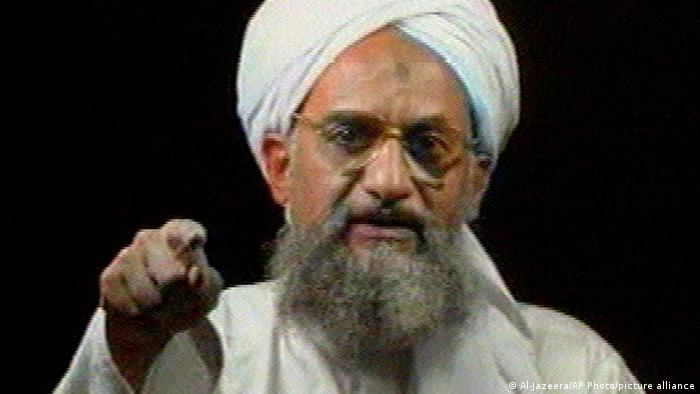
Ayman al-Zawahiri
Yesterday the White House announced the death of the leader of al-Qaeda in Afghanistan: U.S. kills al-Qaeda leader Ayman al-Zawahiri in drone strike in Kabul.
The United States has killed Ayman al-Zawahiri, the leader of al-Qaeda and one of the world’s most-wanted terrorists, who, alongside the group’s founder, Osama bin Laden, oversaw the attacks of Sept. 11, 2001, President Biden announced Monday evening.
Zawahiri was killed in a CIA drone strike in Kabul over the weekend, according to U.S. officials who spoke on the condition of anonymity to discuss sensitive intelligence.
When U.S. forces withdrew from Afghanistan last August, Biden administration officials said they would retain capability for “over-the-horizon” attacks from elsewhere on terrorist forces inside Afghanistan. The attack against Zawahiri is the first known counterterrorism strike there since the withdrawal.
Speaking in a live television address from a balcony at the White House, Biden announced that days ago he had authorized a strike to kill Zawahiri. “Justice has been delivered, and this terrorist leader is no more,” Biden said.
The strike occurred at 9:48 p.m. Eastern time on Saturday, according to a senior administration official who briefed reporters on the operation. A drone fired two Hellfire missiles at Zawahiri as he stepped onto the balcony of a safe house in Kabul, where he had been living with members of his family, the official said.
Read more at the WaPo.
At NBC News, Julia Ainsley and Jacob Soboroff report on a non-violent Biden success story: Biden administration task force reunites 400 migrant families separated under Trump.
The Biden administration has reunited 400 children with their parents after they were separated as migrants crossing the southern border under the Trump administration, said Michelle Brané, the executive director of the Family Reunification Task Force.
More than 5,000 families were separated under Trump’s 2018 “zero tolerance” policy and a 2017 pilot program and advocates estimate over 1,000 remain separated. Because the Trump administration did not keep records of which children were separated and where they were sent, the task force and lawyers working on behalf of separated families have had a difficult time identifying families to offer them the chance of reunification.
In the majority of recently reunited cases, Brané said, the parents were deported while the children remained in the U.S. Now, parents are given the opportunity to come to the U.S. on paid travel, bring other members of their family who are dependent on them, and live and work in the U.S. legally for three years.
Lawyers for the families have advocated for legal permanent status on behalf of separated families, but so far the Biden administration has not agreed to that provision.
Brané said the reunification also includes mental health services for families both before and after reunification. She said many of the families have suffered from profound mental health issues after their separation and counseling is often needed before they reunify.
“You don’t want to just throw kids into an environment with a parent they may not have seen for five years,” Brané said.
Click the link to read the rest.
Republicans are licking their wounds after the public reaction to their votes against health care for veterans exposed to burn pits. Politico: Senate GOP backtracks after veterans bill firestorm.
Senate Republicans are reversing course on a veterans health care bill, signaling they’ll now help it quickly move to President Joe Biden’s desk after weathering several days of intense criticism for delaying the legislation last week.
Republicans insist their decision to hold up the bill, which expands health care for veterans exposed to toxic substances while on active duty, was unrelated to the deal on party-line legislation that top Democrats struck last week. The GOP blocked the bill hours after Sen. Joe Manchin (D-W.Va.) and Majority Leader Chuck Schumer (D-N.Y.) announced an agreement on a health care, climate and tax package — angering Republicans who thought the Democrats-only plan would be much narrower.
Regardless of their reasoning, the GOP was quickly forced to play defense against both Democrats and veterans’ advocates who were caught off-guard by Republican delaying tactics after the party greenlit a nearly identical bill in June.
Minority Leader Mitch McConnell declined to respond to a question Monday about why the legislation was held up.
“It will pass this week,” he said.
Other Republicans in Senate leadership struck a similar tone. Sen. John Barrasso (R-Wyo.) told POLITICO he would “expect it to pass” and Sen. John Thune (R-S.D.), McConnell’s No. 2, echoed that at “some point this is going to pass and it will pass big.”
In another potential win for Democrats in Congress, Joe Manchin finally came through with something good. William Saletan at The Bulwark (link above):
Joe Manchin has rescued the Democratic agenda. After blocking President Biden’s Build Back Better plan for nearly a year—as well as subsequent, pared-down versions of the legislation—the West Virginia senator has reversed course. Last Thursday he endorsed a revised $400 billion package that focuses on health insurance subsidies, cutting the cost of prescription drugs, and funding new energy technologies to reduce carbon emissions.
With Manchin’s vote, the bill is likely to pass. But he isn’t just voting for it; he’s selling it. Over the weekend, he appeared on all five Sunday morning talk shows—a rare feat often referred to as a “full Ginsburg”—to make his case for the bill. It was an eye roll-worthy display of political spin. Here’s a summary of his talking points.
(Abridged–You’ll need to go to the Bulwark to read all the details.)
1. It’s not Build Back Better. It’s the Inflation Reduction Act.
The vast majority of the new bill comes from Biden’s BBB framework. Most Democrats liked BBB and would be happy to celebrate the passage of these elements of it. But Manchin, who represents a conservative state, doesn’t want to be associated with BBB. He doesn’t want to look like he’s saving the Democratic agenda. He wants to look like he’s killing it.
2. It’s not spending. It’s investment.
“I couldn’t get there with Build Back Better. It was $3.5 trillion of spending,” Manchin explained on CNN’s State of the Union. In contrast, he argued, the Inflation Reduction Act knocked “$3.5 trillion dollars of spending down to $400 billion of investment.” On Face the Nation, Fox News Sunday, and This Week, he made the same pitch: BBB was a “spending bill,” but the IRA was an “investment bill.”
3. It doesn’t raise taxes. It closes loopholes.
On Fox News Sunday, Manchin insisted that his bill’s establishment of a 15 percent minimum tax for billion-dollar companies—up from zero percent—wasn’t really a tax increase. “It does not raise taxes,” he told Bret Baier. “All we did was close loopholes.” Thirty seconds later, Manchin repeated, “We did not raise taxes. We’ve closed loopholes. . . . I made sure there was no tax increases in this whatsoever.”
4. It’s not a green bill. It’s red, white, and blue.
In much of the United States, being “green” is poCpular. Restaurants, grocery stories, and retailers advertise it. But Manchin, who represents a coal state, seems to have decided that among his target audience, “green” is a dirty word. So he’s pointedly rejecting it.
“This is not a green deal. It’s not a Republican deal. It’s not a Democrat deal. It is a red, white, and blue deal,” Manchin declared on CNN. A few minutes later, he repeated: “It’s definitely not a green bill. This is a red, white, and blue bill.” On Fox, he delivered the same message: “It’s not a green bill. This is a red, white, and blue bill.
There are a few Trump investigation stories today.
CNN: Retired DC cop who testified before January 6 committee says Trump ‘adamantly’ wanted to go to Capitol.
A retired Washington, DC, police officer who was part of Donald Trump’s motorcade on January 6, 2021, told CNN’s Don Lemon on Monday night that the then-President was adamant about going to the US Capitol as the riot unfolded.
The comments by Mark Robinson, who has testified to the January 6 committee, further corroborate key details first revealed by former White House aide Cassidy Hutchinson, who spoke at length about Trump’s behaviorto the House select committee. Hutchinson said that she was told that Trump became “irate” when informed by security that he would not be going to the Capitol on January 6, because the situation was not secure.
Robinson was not physically with Trump on January 6. He was in the lead car of the motorcade and said that he learned Trump wanted to go to the Capitol through communications from the Secret Service.
“We’ve heard it several times while it was on the motorcade. I think during the speech, shortly thereafter, he had finished the speech, that the President was getting into the motorcade and he was upset. And he adamantly wanted to go to the Capitol,” Robinson told Lemon. “And even when we departed from the Ellipse it was repeated again. … It was a heated argument in the limo. And he wanted to definitely go to the Capitol.” [….]
“I think it would have probably encouraged more rioting. And (the rioters would have) felt supported. If the presidential motorcade came in support of them. So I think the insurrectionists probably would have felt as though they had the support of the President,” Robinson said.
More details at the CNN link.
Two more Trump investigation stories to check out:
Politico: Judge rejects Trump effort to toss lawsuits accusing him of Jan. 6 conspiracy.
The New York Times: Top Democrats, Alleging Cover-Up, Seek Testimony on Secret Service Texts.
I hope you all have a great Tuesday!
Did you like this post? Please share it with your friends:
Posted: December 3, 2016 | Author: bostonboomer | Filed under: Foreign Affairs, morning reads, U.S. Politics | Tags: bumbling foreign policy, China, corruption, Donald Trump, India, Pakistan, Philippines, Taiwan, Trump Organization |
Good Afternoon!!
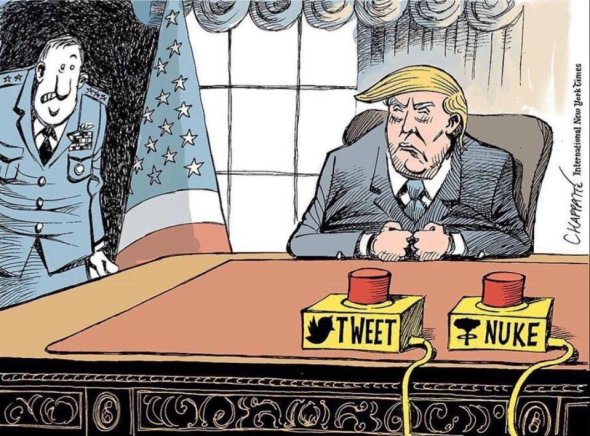
Yesterday I spent the afternoon and evening with my brother’s family–they invited me for a birthday dinner and family movie. Unsurprisingly, while I wasn’t paying attention for a few hours the president-elect did massive damage to U.S. foreign policy, overturning decades-long policies on China. And it appears this wasn’t about policy but about enriching the #tRump family business.
Ann Gearan at The Washington Post: Trump speaks with Taiwanese president, a major break with decades of U.S. policy on China
President-elect Donald Trump spoke Friday with Taiwan’s president, a major departure from decades of U.S. policy in Asia and a breach of diplomatic protocol with ramifications for the incoming president’s relations with China.
The call is the first known contact between a U.S. president or president-elect with a Taiwanese leader since before the United States broke diplomatic relations with the island in 1979. China considers Taiwan a province, and news of the official outreach by Trump is likely to infuriate the regional military and economic power.
The exchange is one of a string of unorthodox conversations with foreign leaders that Trump has held since his election. It comes at a particularly tense time between China and Taiwan, which earlier this year elected a president, Tsai Ing-wen, who has not endorsed the notion of a unified China. Her election angered Beijing to the point of cutting off all official communication with the island government.
It is not clear whether Trump intends a more formal shift in U.S. relations with Taiwan or China. On the call, Trump and Tsai congratulated each other on winning their elections, a statement from Trump’s transition office said….
A statement from the Taiwanese president’s office said the call lasted more than 10 minutes and included discussion of economic development and national security, and about “strengthening bilateral relations.”
Trump claimed the call was initiated by Taiwan’s president, but that was a lie, NBC News reports:
BEIJING — A phone call between Donald Trump and Taiwan’s leader that risks damaging relations between the U.S. and China was pre-arranged, a top Taiwanese official told NBC News on Saturday.
Trump — who lambasted China throughout the election campaign and promised to slap 45 percent tariffs on Chinese goods — tweeted that Taiwanese President Tsai Ing-wen had called him.
“Maintaining good relations with the United States is as important as maintaining good relations across the Taiwan Strait,” Taiwanese presidential spokesman Alex Huang told NBC News. “Both are in line with Taiwan’s national interest.”
He added that the call had not been a surprise.
Apparently the call was carefully planned and scheduled by Trump staffers. It was also reported that bomb-thrower John Bolton was seen at Trump tower yesterday. Could he have helped instigate this?
After the media reported foreign policy experts’ heads exploding, Trump defensively tweeted again.
China was apparently on the phone with the White House right after the news broke, and they have now filed a complaint with the U.S. about this breach of diplomacy. The Guardian:
China has lodged “solemn representations” with the US over a call between the president-elect, Donald Trump, and Taiwan’s leader, Tsai Ing-wen.
Trump looked to have sparked a potentially damaging diplomatic row with Beijing on Friday after speaking to the Taiwanese president on the telephone….
The US closed its embassy in Taiwan – a democratically ruled island which Beijing regards as a breakaway province – in the late 1970s after the historic rapprochement between Beijing and Washington that stemmed from Richard Nixon’s 1972 trip to China.
Since then the US has adhered to the “One China” principle, which officially considers the independently governed island to be part of the same single Chinese nation as the mainland.
Geng Shuang, a spokesman for China’s foreign ministry, said in a statement on Saturday: “It must be pointed out that there is only one China in the world and Taiwan is an inseparable part of Chinese territory. The government of the People’s Republic of China is the sole legitimate government representing China.”
Geng added: “This is a fact that is generally recognised by the international community.”
#tRrump is a real bull in a china shop, so to speak. But what was his real goal in talking to Taiwan? Think Progress: Trump’s unusual phone call is great for his business, dangerous for America.
Trump is mixing his business with the presidency. Today was a stark illustration that the combination is extremely dangerous — to Americans and the world.
The Financial Times, citing three sources, reports that Trump called Tsai Ying-wen, the president of Taiwan, on Friday. The call is a symbolic breach of the United States’ “One China” policy, which recognizes Beijing as the only government and which has been in place since 1972.
The call will antagonize China and risks “opening up a major diplomatic dispute with China before he has even been inaugurated.”
The incident is raising eyebrows because the Trump Organization, in which Trump plans to maintain ownership as president, is actively seeking new business opportunities in Taiwan. The Shanghaiist reported on the Trump Organization’s interest last month:
A representative from the Trump Organization paid a visit to Taoyuan in September, expressing interest in the city’s Aerotropolis, a large-scale urban development project aimed at capitalizing on Taoyuan’s status as a transport hub for East Asia, Taiwan News reports.With the review process for the Aerotropolis still underway, Taoyuan’s mayor referred to the subject of the meeting as mere investment speculation. Other reports indicate that Eric Trump, the president-elect’s second son and executive vice president of the Trump Organization, will be coming to Taoyuan later this year to discuss the potential business opportunity.
#tRump is trying to turn our country into a wholly owned subsidiary of the #tRump organization.

In just the past couple of days, Trump has bumbled through bizarre phone calls with Pakistan’s prime minister Nawaz Sharif and Philippine strongman Rodrigo Duterte. Do you supposed #tRump even knows that China, Pakistan and sworn enemy India have nukes?
The Atlantic: Lessons From Trump’s ‘Fantastic’ Phone Call to Pakistan.
This week, the U.S. president-elect spoke with the Pakistani prime minister and, according to the Pakistani government’s account of the conversation, delivered the following message: Everything is awesome. It was, arguably, the most surprising presidential phone call since George H.W. Bush got pranked by that pretend Iranian president.
Pakistan, Donald Trump reportedly told Nawaz Sharif, is a “fantastic” country full of “fantastic” people that he “would love” to visit as president. Sharif was described as “terrific.” Pakistanis “are one of the most intelligent people,” Trump allegedly added. “I am ready and willing to play any role that you want me to play to address and find solutions to the outstanding problems.” ….
Like their problems with India?
It’s unclear how accurate the Pakistani government’s record of the discussion is, though the language does have a Trumpian ring to it (Trump’s transition team released a much more subdued summary of the call). But what’s surprising about the account is how disconnected it is from the current state of affairs. Everything is not awesome in U.S.-Pakistan relations. The two countries are the bitterest of friends. They have long clashed over the haven that terrorist groups have found in Pakistan and over U.S. efforts, including drone strikes and the raid on Osama bin Laden’s compound, to kill those terrorists. Pakistan, a nation with a growing arsenal of nuclear weapons, is the archenemy of India, another nuclear-armed state and a critical U.S. ally. U.S. officials see Pakistan—with its weak political institutions and suspected government support for militant groups in Afghanistan and the contested territory of Kashmir—as an alarming source of regional instability. The suspicion is mutual: Just a fifth of Pakistanis have a favorable view of the United States. Trump himself has argued that Pakistan “is probably the most dangerous” country in the world, and that India needs to serve as “the check” to it.
The reports also provoked a caustic response from the Indian government, which opposes U.S. mediation in its border dispute with Pakistan. “We look forward to the president-elect helping Pakistan address the most outstanding of its outstanding issues: terrorism,” a spokesman for the Ministry of External Affairs said. And, ultimately, they forced Pakistani officials to backpedal after initially publicizing the conversation. “Our relationship with the United States is not about personalities—it is about institutions,” a spokesman for the Ministry of Foreign Affairs clarified. In other words, a brief, breezy conversation had real reverberations on the subcontinent.One lesson of the phone call is that words matter, especially in international relations where information is patchy, things get lost in translation, rhetoric is often interpreted as policy, and a government’s credibility is only as good as its word. (Think of all the people in the United States puzzling over what policies Trump will pursue as president; now imagine trying to do that from Islamabad or New Delhi.)
And now Pakistan is sending an envoy to meet with the #tRump bumblers. The Indian Express reports:
Pakistan has decided to send an envoy to the US to hold meetings with Donald Trump’s transition team, two days after a “productive” telephonic conversation between Prime Minister Nawaz Sharif and the President-elect. Pakistani Prime Minister’s special assistant for foreign affairs Tariq Fatemi will visit the US this weekend to meet officials of the Trump transition team.
Fatemi’s meeting with officials of Trump transition team was confirmed by Jalil Abbas Jilani, Pakistan’s Ambassador to the US. “Besides meeting members of the transition team, Fatemi will meet officials of the outgoing Obama administration,” said Jilani.

Huffington Post: Donald Trump Praises Philippines Deadly Drug War And Invites Leader To White House.
U.S. President-elect Donald Trump praised Philippines leader Rodrigo Duterte for his war on drugs that has left thousands dead, Duterte said on Saturday after the two held a phone conversation in which Trump also invited Duterte the White House.
“He was quite sensitive also to our worry about drugs. And he wishes me well … in my campaign and he said that … we are doing it as a sovereign nation, the right way,” Duterte said in a statement. Duterte has conducted a severe crackdown on drugs in the country, where police and vigilante groups have killed thousands.
Trump’s brief chat with the firebrand Philippine president follows a period of uncertainty about one of Washington’s most important Asian alliances, stoked by Duterte’s hostility towards President Barack Obama and repeated threats to sever decades-old defense ties.
The call lasted just over seven minutes, Duterte’s special advisor, Christopher Go, said in a text message to media, which gave few details. Trump’s transition team had no immediate comment.
So #tRump is on the record supporting mass murder now. Awesome.
Two more links to check out:
The New York Times: How Trump’s Calls to World Leaders Are Upsetting Decades of Diplomacy.
The Washington Post: Donald Trump keeps confirming fears about his diplomatic skills.
Isn’t there anyone who can do something about this monster before he destroys our country and/or blows up the world? We are so screwed.
What stories are you following today?
Did you like this post? Please share it with your friends:


 peej
peej Carissa
 bostonboomer
 dakinikat
 ecocatwoman
 jjlo
jjlo mablue2
 Mama Lopez
 peggysue22
 quixote
 skydancingguestblogger
 Mona (aka Wonk the Vote)



 Sky Dancing
Recent Comments