
Thursday Reads: Updates from Snowden-Greenwald Land and Other News
Posted: May 22, 2014 Filed under: morning reads | Tags: Cincinnatus, cyber-parties, discrimination, Edward Snowden, encryption extremists, George Packer, Glenn Greenwald, hackers, Jacob Applebaum, Julian Assange, Kevin Poulsen, Laura Poitras, NSA, Poverty, privacy extremists, Racism, Runa Sandvik, Sexism, The Tor Project, unemployment, Wikileaks 32 Comments
Good Morning!!
The photos in today’s post are from a project by photographer Mark Makela to take pictures of children “learning to read by reading to homeless cats.”
Last February, photographer Mark Makela traveled to Birdsboro, Pennsylvania, to photograph a reading group where the participants were grade-school students and a group of cats. The idea for the group, known as Book Buddies, was hatched at the Animal Rescue League of Berks County when the program coordinator Kristi Rodriguez’s 10-year-old son was struggling with reading. Rodriguez decided to bring him into the shelter, where he could be in what she called a “nonevaluative” environment in order to feel more comfortable practicing his reading skills. It worked.
According to ARL’s website, studies at Tufts University found that the more relaxed, nonjudgmental audience of cats helps students to sustain their focus, maintain a higher state of awareness, and develop an improved attitude toward school. In August of last year, ARL officially started the Book Buddies program, inviting students in first through eighth grades to read to the cats. As an incentive to continue, once the students complete five books, they receive prizes. “It’s one of those opportunities that is unique and humorous and so endearing,” Makela said about the assignment to document the Book Buddies program.
See more marvelous photos at the Slate Magazine link above. Even more at Buzzfeed–including more girls.
Now to the news:
I’ve long suspected that Edward Snowden interacted with Wikileaks’ Julian Assange and others in the hacker community before he made his final decision to steal a massive trove of data from NSA computers and then abscond to Hong Kong at the end of May last year.
We know that Snowden was in touch with Jacob Applebaum and Laura Poitras early on, because they published an interview with him in Der Spiegel that they had conducted by e-mail in Mid-May, before Snowden fled Hawaii. But Snowden could have actually met Applebaum in Hawaii in April 2013 when Applebaum vacationed there by his own admission. Did Snowden and Applebaum discuss Snowden’s plans to steal NSA files? Did Applebaum suggest which items Snowden should take? Note that Applebaum is deeply involved with Wikileaks and has been a long-time, passionate defender of Julian Assange.
Glenn Greenwald revealed in his new book “No Place to Hide” that Snowden had used the code name “Cincinnatus” in early communications between the two. Interestingly enough, a “cyber-party” had been held in Hawaii in December 2012, and the host was someone who called himself “Cincinnatus.” Once this news came out, people began speculating on Twitter that perhaps this wasn’t a coincidence. Suddenly, on May 17, the cyber-party announcement was deleted by someone with the Twitter handle @jskuda. Fortunately Twitter user @ShrillBrigade located it on the Wayback Machine. And check out the title of Cincinnatus’ talk: “Painlessly setting up your own fast exit.” (h/t @catfitz)
Then yesterday, former criminal hacker and technical adviser to Greenwald and Poitras’ Freedom of the Press Foundation Kevin Poulsen published a limited hangout at Wired: Snowden’s First Move Against the NSA Was a Party in Hawaii.
It was December 11, 2012, and in a small art space behind a furniture store in Honolulu, NSA contractor Edward Snowden was working to subvert the machinery of global surveillance.
Snowden was not yet famous. His blockbuster leaks were still six months away, but the man destined to confront world leaders on a global stage was addressing a much smaller audience that Sunday evening. He was leading a local “Crypto Party,” teaching less than two dozen Hawaii residents how to encrypt their hard drives and use the internet anonymously.
“He introduced himself as Ed,” says technologist and writer Runa Sandvik, who co-presented with Snowden at the event, and spoke about the experience for the first time with WIRED. “We talked for a bit before everything started. And I remember asking where he worked or what he did, and he didn’t really want to tell.”

Runa Sandvik is a hacker who works at the TOR project along with Jacob Applebaum. TOR is a site (ironically funded by the U.S. Department of Defense) that provides free encryption software to people who want to hide their on-line activities (including drug dealers and child porn purveyors).
Poulsen writes:
The roots of Snowden’s crypto party were put down on November 18, 2012, when he sent an e-mail to Sandvik, a rising star in privacy circles, who was then a key developer on the anonymous web surfing software Tor.
Tor is free software that lets you go online anonymously. The software is used by a wide swath of people in need of extreme anonymity, including human rights groups, criminals, government agencies, and journalists. It works by accepting connections from the public internet, encrypting the traffic and bouncing it through a winding series of relays before dumping it back on the web through any of more than 1,000 exit nodes.
Most of those relays are run by volunteers, and the pre-leak Edward Snowden, it turns out, was one of them.
How about that? Snowden was already deeply involved with TOR in December 2012–and Jacob Applebaum of TOR just happened to travel to Hawaii a few months later in April! Coincidence? I don’t think so.
In his e-mail, Snowden wrote that he personally ran one of the “major tor exits”–a 2 gbps server named “TheSignal”–and was trying to persuade some unnamed coworkers at his office to set up additional servers. He didn’t say where he worked. But he wanted to know if Sandvik could send him a stack of official Tor stickers. (In some post-leak photos of Snowden you can see the Tor sticker on the back of his laptop, next to the EFF sticker).
Well, well, well. Now we know how Snowden got his TOR sticker. Did Runa give him the EFF sticker too? Read the rest of the Wired piece for more details.
Phew! I hope that made sense. This stuff is difficult to write about.

Also yesterday, well-known and respected journalist and New Yorker writer George Packer published a no-holds-barred review of Glenn Greenwald’s new book in the UK Prospect: The errors of Edward Snowden and Glenn Greenwald. Among other things, Packer accuses Greenwald of “a pervasive absence of intellectual integrity,” and provides numerous examples. He characterizes Snowden as someone who lives on the internet, detached from the realities of the real world. Here are a few excerpts, but please read the whole thing.
Snowden’s leaks can be seen, in part, as a determined effort to restore the web to its original purity—a project of technology rather than law. “Let us speak no more of faith in man, but bind him down from mischief by the chains of cryptography,” wrote Snowden, in an early message to his collaborators. In March of this year, appearing remotely from Russia on a robotised screen onstage at a TED talk in Vancouver, Snowden said that the single best solution to the NSA’s abuses is stronger encryption: “The internet that we’ve enjoyed in the past has been exactly what we, as not just a nation but as a people around the world, need.” In taking nearly two million highly classified documents from the US, he was grabbing back the key to heaven.
As I’ve written previously, Snowden’s solution to the problem of government interference with its citizens is impenetrable universal encryption–never mind the fact that this would allow vast numbers of vicious criminals to hide their actions from law enforcement.
As I suspected, Packer writes that Greenwald’s book “contains no major scoops.” He does, however, praise Greenwald’s argument for the primacy of privacy as central to a “free society.”
Greenwald also makes a powerful case—all the more so for being uncompromising and absolute—for the central role of privacy in a free society, and against the utilitarian argument that, since the phone companies’ metadata on Americans hasn’t been seriously abused by government officials (not yet, anyway), none of us should be too worried. In a chapter called “The Harm of Surveillance,” he cites Justice Louis Brandeis’s famous opinion on the basic “right to be let alone,” and writes: “The desire for privacy is shared by us all as an essential, not ancillary, part of what it means to be human. We all instinctively understand that the private realm is where we can act, think, speak, write, experiment, and choose how to be, away from the judgemental eyes of others. Privacy is a core condition of being a free person.”
I would argue that these considerations are of vital importance to people like Greenwald who are financially secure. Those Americans who must deal with racial and gender discrimination, long-term unemployment, and especially grinding poverty have other, more urgent concerns. Can one be a “free person” under those conditions?

Along similar lines, Packer writes:
If Greenwald and others were actually being persecuted for their political beliefs, they would instinctively understand that the rule of law has to protect people regardless of politics. The NSA disclosures are disturbing and even shocking; so is the Obama administration’s hyper-aggressive pursuit of leaks; so is the fact that, for several years, Poitras couldn’t leave or re-enter the US without being questioned at airports. These are abuses, but they don’t quite reach the level of the Stasi. They don’t portend a totalitarian state “beyond the dreams of even the greatest tyrants of the past,” as Greenwald believes is possible. A friend from Iran who was jailed and tortured for having the wrong political beliefs, and who is now an American citizen, observed drily, “I prefer to be spied on by NSA.” The sense of oppression among Greenwald, Poitras, and other American dissenters is only possible to those who have lived their entire lives under the rule of law and have come to take it for granted.
In the year since the first NSA disclosures, Snowden has drifted a long way from the Thoreauvian ideal of the majority of one. He has become an international celebrity, far more championed than reviled. He has praised Russia and Venezuela’s devotion to human rights. His more recent disclosures have nothing to do with the constitutional rights of US citizens. Many of them deal with surveillance of foreign governments, including Germany and Brazil, but also Iran, Russia, and China. These are activities that, wise or unwise, fall well within the NSA’s mandate and the normal ways of espionage. Snowden has attached himself to Wikileaks and to Assange, who has become a tool of Russian foreign policy and has no interest in reforming American democracy—his goal is to embarrass it. Assange and Snowden are not the first radical individualists to end up in thrall to strongmen.
Snowden looked to the internet for liberation, but it turns out that there is no such thing as an entirely free individual. Cryptography can never offer the absolute privacy and liberty that Snowden seeks online. The internet will always be a space controlled by corporations and governments, and the freedom it provides is of a limited, even stunting, kind. No one lives outside the fact of coercion—there is always a state to protect or pursue you, whether it’s Obama’s America or Putin’s Russia.
I’ve barely touched the surface of Packer’s scathing critique of Greenwald’s “journalism”; I enourage you to go to Prospect link to read more.

I have a few more stories for you that I’ll list link-dump style:
It appears that the prosecution in the Boston Bombing case decided to leak some previously secret information–most likely to counter the defense’s argument that Dzhohar Tsarnaev was illegally questioned by the FBI when he was in the hospital with terrible injuries.
Reuters: Accused Boston bomber admitted role in attack, prosecutors say
NBC News: Government doc shows how closely Boston Marathon bombers followed al Qaeda plans.
NY Daily News: Boston Marathon bombers used ‘sophisticated’ bombs made of parts from Christmas lights, model cars: prosecutors.
Boston Globe: Christmas Lights Used in Boston Marathon Bombs.
KSDK.com: Feds: Boston bomber’s hideout note says he wanted to be martyr.
ABC News: FBI Feared Boston Bombers ‘Received Training’ And Aid From Terror Group, Docs Say.
This is encouraging from the Boston Globe: Oakland Examining Pension of FBI Agent who Shot Todashev
Other News:
The Economic Times of India: Google wants to show ads through your thermostat and car. (You though the NSA was bad?)
Information Week: Google Outlines Advertising Vision. (How would you like targeted Google ads appearing on your refrigerator or watch?)
The Atlantic: It Wasn’t Household Debt That Caused the Great Recession; It was how that debt was disproportionately distributed to America’s most economically fragile communities.
NYT: U.S. Sends Troops to Chad to Aid Hunt for Nigerian Schoolgirls.
USA Today: Thai military declares coup, detains party leaders.
Science Recorder: ‘Aliens of the sea’ could lead to breakthroughs in regenerative medicine.
What stories are you following today? Please post your links on any topic in the comment thread.
Tuesday Reads: Hacker Twitter Storm and Post-Prom Nightmares
Posted: May 20, 2014 Filed under: Crime, morning reads, Rape Culture, Real Life Horror, Violence against women | Tags: after-prom horrors, Calhoun High School Georgia, cypherpunks, Edward Snowden, Ellijay Georgia Calhoun High Prom Rape, gang rape, Gilmer County GA, Glenn Greenwald, hackers, Jacob Applebaum, John Cook, Laura Poitras, NSA leaks, redactions, The Intercept, twitter fight, twitter storm 104 Comments
Good Morning!!
In the comments on yesterday’s post, I mentioned that there has been quite a bit of tension building up between Glenn Greenwald and some of the more extreme members of the (for lack of a better name) cypherpunks crowd–Wikileaks, Cryptome.com, and the hacker community (including Jacob Applebaum, who is closely involved both with Wikileaks and Laura Poitras, Greenwald’s partner in crime. I guess I should have stayed up later last night, because this morning I woke up to the aftermath of a major storm in the Twitterverse, where most of these types of people choose to communicate with each other.

Glenn Greenwald
The fight stemmed from an article posted at The Intercept yesterday, in which the authors chose to redact the name of one of the five countries targeted by NSA data collection. However, it really goes back much further than that.
There has been a long running disagreement between Greenwald and the other groups I mentioned on how much of Edward Snowden’s trove of stolen NSA data to publish. The hacker/Wikileaks crowd thinks Greenwald should simply release everything and let the chips fall where they may, and Greenwald claims he is carefully vetting the material with Snowden’s help in order not to reveal anything that would harm anyone.
Greenwald has actually revealed only a small portion of the material so far, presumably holding back information that he wanted to include in his book. But now the book has been released, and it apparently contains much information that has already been published. For those who have been obsessively following the NSA leaks story, there doesn’t seem to be a need to buy the book. Why is Greenwald being so stingy?
Here’s some background from Michael Kelley at Business Insider: WikiLeaks Threatens To Reveal Information That Glenn Greenwald Says Could Lead To ‘Deaths’.
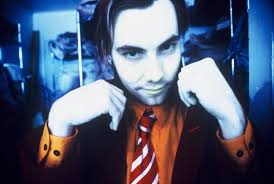
Jacob Applebaum
America’s National Security Agency (NSA) can “vacuum up and store the actual content of every conversation” in the Bahamas and an unnamed country, the new publication The Intercept reported Monday, based on documents leaked by Edward Snowden.
Intercept Editor Glenn Greenwald — who wrote about documents leaked by Snowden when he was a columnist for The Guardian — said the publication didn’t reveal the country because it was “very convinced” that doing so would lead to “deaths.”
After a heated discussion between WikiLeaks, Greenwald, Intercept Editor-In-Chief John Cook, and American WikiLeaks hacker-turned-Der Spiegal contributor Jacob Appelbaum, WikiLeaks tweeted that it will reveal the name of the second country being spied on by the NSA.
As Kelley points out, the implications is that Wikileaks knows the name of the country either by unmasking the redaction with software or because Wikileaks has access to the Snowden files.
The most plausible way for WikiLeaks to have access to a Snowden cache is if Appelbaum, who led the reporting on several Der Spiegel articles based on NSA documents (which may or may not be from Snowden), shared information with his friend and WikiLeaks Editor-In-Chief Julian Assange. Applebaum tweeted that The Intercept’s redaction was “a mistake.”
Appelbaum, a close friend of Laura Poitras, the other journalist whom Snowden gave a large set of documents, also gave a presentation detailing a classified document listing technology available to the NSA’s hacking unit, known as TAO. It is not known how he acquired those documents.

Laura Poitras
So which is it? The careless ways in which the Snowden documents have been passed around between The Guardian and The New York Times and other news organizations; with Greenwald’s husband David Miranda carrying them through London to Berlin and back; as well as the fact that Snowden is in Russia, suggest that the entire cache will eventually be released, and presumably all hell will break loose. It’s only a matter of time.
Charles Johnson posted the entire Wikileaks-Greenwald argument at Little Green Footballs: Slap Fight of the Day: Wikileaks vs Pernicious G
Today on Twitter this happened: Julian Assange, who most people believe is the one behind the @Wikileaks account, threw a huge tantrum because Glenn Greenwald redacted the name of a country from his latest disingenuous article. Greenwald says he was convinced publishing the country’s name would lead to deaths. Assange doesn’t give a shit about that, of course.
There are some inadvertently hilarious moments here; Wikileaks’s Jacob Appelbaum says redacting the country “makes Wikileaks look extreme.” I almost fell out on that one. And then there’s the tweet in which Assange basically calls everyone in Greenwald’s crew “a bunch of racists.” And it all ends with Assange issuing a super-villain threat to release the country’s name “in 72 hours.”
Scroll through the collection below to see what it looks like when extreme libertarians have a purity war.
Head over to Green Footballs if you want the details. Read more exchanges between Wikileaks, Jacob Applebaum, and John Cook, editor of The Intercept at Chirpstory. Read more at Buzzfeed, where Miriam Berger and Miriam Elder provide a timeline of the tweets along with their interpretation: Julian Assange Is Angry At Glenn Greenwald And He’s Not Going To Take It Anymore.

Finally, Bob Cesca’s take on the whole affair: The Wikileaks vs Greenwald Twitter Fight: Julian Assange Threatens To Reveal Deadly NSA Info.
It all began Monday morning when The Intercept posted a new Snowden revelation with cutesy headline: “Data Pirates of the Caribbean: The NSA Is Recording Every Cell Phone Call in the Bahamas.” Get it? Pirates! The article exhaustively describes an operation called MYSTIC and another called SOMALGET in which NSA gathers audio and metadata of cellphone calls in the Bahamas in order to spy on human traffickers and drug cartels. The Bahamas is notorious for both.
Naturally, the article featured all of the deceptive Greenwaldian bait-and-switch we’ve come to expect from his Snowden articles. For example, in paragraph seven, Greenwald and his co-authors Ryan Devereaux and Laura Poitras noted that Sen. Tom Harkin (D-IA), Bill Gates and Oprah Winfrey routinely vacation in the Bahamas:
By targeting the Bahamas’ entire mobile network, the NSA is intentionally collecting and retaining intelligence on millions of people who have not been accused of any crime or terrorist activity. Nearly five million Americans visit the country each year, and many prominent U.S. citizens keep homes there, including Sen. Tom Harkin (D-Iowa), Bill Gates, and Oprah Winfrey.
NSA is spying on Oprah! Stop the presses! But no, if you read all the way down to the 54th paragraph (!!) Greenwald tosses in a token mention of NSA’s rules about preventing data collection against U.S. Persons, whether or not they happen to be inside the U.S. There are very strict “minimization” procedures to eliminate the data that might’ve been inadvertently collected. Why? Because it’s illegal to spy on Americans without an individual warrant. And, by the way, Greenwald & Company noted that the SOMALGET program is, yes, legal.
It sure seems like there are enough hints in the story for anyone to guess the redacted country. Pirates? SOMALGET? Plus the fact the Assange accused Greenwald of “racism.” Read much more interpretation and more tweets at The Daily Banter.
I’ll be keeping a close eye on this story from now on and I’ll pass on any new information.
In other news . . .
On Sunday JJ wrote about an alleged gang rape that reportedly took place after the Calhoun High School senior prom in North Georgia on May 10. The reason I’m writing about it is that Sky Dancing has been getting a huge number of clicks from people looking for more information on this story. It seems people want to know what is happening, but the local papers have not published anything on the crime or the investigation since Sunday. Doesn’t that seem odd and troubling? Is a cover-up in the works. As JJ pointed out it brings back memories of Steubenville, Ohio. After the gang rape there, local officials tried to sweep it under the rug, but a blogger and an “Anonymous” group kept the story alive. Maybe someone with inside information from Calhoun needs to get something like that started? As in Steubenville, there are hints that coddled football players may be involved.

Jacqueline Gomez
Meanwhile, in another prom-related tragedy, a girl was found dead after a prom at MacArthur High School in Houston. According to her mother, the mother of Jacqueline Gomez’ boyfriend was supposed to bring her home that night, but instead the boy’s mother allowed the couple to stay in a hotel room against the Gomez’ mother’s wishes. To me the whole thing sounds really suspicious. From KHOU.com, Mother: Daughter was not supposed to stay at hotel after MacArthur HS prom.
There are new startling details from the mother of a teenagerfound dead on prom night. Her mother feels like she was mislead by her daughter’s prom date and his mother….
Gomez was off to her senior prom at the Hyatt North Houston Hotel. Her mother was too distraught to show her face on camera, but said she expected to see her daughter back at home later that night….
Barron said Gomez’s date’s mother picked the couple up from her home. She also picked them up from the hotel later that night. That’s when she last spoke to her daughter on the phone.
“I just spoke to them after prom, a couple words, told me she was going to get something to eat,” said Barron.
That’s when the boy’s mother got on the phone and asked if Gomez could spend the night at their house.
“I said no, bring her back home,” said Barron. “I gave them a couple hours, and I never heard back.”
The next call she got was from a homicide detective with the Houston Police Department. She said detectives told her the room was booked by the boyfriend’s mother.
What happened? Who gave Jacqueline the drugs and did the boy’s mother know about it? More information from The Houston Chronicle: Texts Hint Girl May Have Overdosed After Prom.
A series of text messages offered new details into the death of Jacqueline Gomez, the 17-year-old Aldine ISD senior found dead Saturday in a Houston motel room the morning after her prom. The texts, sent from an account identified as Gomez’s date, also indicate investigators believe the girl probably overdosed….
Yet nobody can be certain how the MacArthur High School student died until autopsy results are complete – which could take several weeks, the Harris County medical examiner said. And that has the date and Gomez’s family and friends anxiously waiting for the mystery to be solved.
Meanwhile, her friends and family refute any suggestion that Gomez was ever a “party girl,” saying she spent most of her time working at a Kroger grocery and preparing to graduate in June.
Was Jacqueline given a date-rape drug? We may never find out, because those drugs wash out of the system very quickly. Check this out:
“He was posting pictures of himself crying on Instagram. So I a sent him a text that day to ask what had happened to my girl,” said Justice Gonzalez, a close friend of Gomez who saw the couple leave the prom together Friday night to go to that room. Authorities report Gomez was found dead in her bed about 9:20 the next morning.
“They said she overdosed,” part of the text reads, likely referring to law enforcement officials.
He went on.
“I woke up. I tried waking her but she wouldn’t,” the date texted back, adding four frowning faces. “I was screaming and crying telling her to wake up. But she didn’t. She didn’t,” He ended his text with two frowning faces with tears.
He stated she had appeared “perfectly fine and happy” when they left the “Miami Night” prom. She also seemed “happy” when they both went to sleep, he said.
He had told authorities that they had some alcohol, but said in a text to the friend that Gomez had also taken the painkiller hydrocodone.
Why the f&ck didn’t didn’t he take her home, and WTF was his mother thinking?! Furthermore, why can’t something be done to prevent these kinds of after-prom horrors?
Now I’m really mad, and I’m running out of space and time. I’ll post links to other news in the comment thread, and I hope you’ll do the same.
Lazy Saturday: Creature Features
Posted: May 17, 2014 Filed under: morning reads | Tags: creature features, Godzilla, movies 22 Comments
Happy Saturday!!
I’m feeling more lazy than usual today. I’ve been idly staring at my computer screen for about two hours–searching for interesting news and trying to figure out what to write about. Frankly, I don’t want to write about Jill Abramson’s firing, Glenn Greenwald’s book, the failed American Spring rally, or “mainstream Republicans” running against Tea Party Republicans. I feel as if I need a mental health day. I would like nothing better than to sit around today–or maybe all weekend–watching cheesy horror movies.
Fortunately, there’s a big-budget but still cheesy horror movie playing in theaters right now, Godzilla!! I’m actually considering going to see it. I’m not sure why, because I don’t recall ever watching the old-time Godzilla movies as a kid. I did used to like to watch creature features, and I still do. So maybe I’ll give the 2014 version of Godzilla a chance. It looks corny but entertaining in this early trailer. http://www.youtube.com/watch?v=IC3Mi9vOb_8 The movie opened in theaters yesterday and did extremely well at the box office, according to Deadline Hollywood: ‘Godzilla’ Crushes It: $98M+
UPDATED, SATURDAY, 6:47 AM: The Lizard is leaping. After the morning dust has cleared, Godzilla showed a stronger than expected Friday late night take of $38M+ and is now estimated to haul in $98M+ after the three-day weekend. And with incredible international numbers continuing to roll in, Warner Bros./Legendary Pictures has a monstrous hit on their hands. Late night numbers pushed it past $36M and surprised everyone this AM.
PREVIOUSLY, FRIDAY 10:47 PM: Godzilla is beating all expectations tonight with a $36M Friday to push its expected 3-day cume to a monstrous $90M+. The Warner Bros/Legendary Pictures pic is just demolishing the box office right now, thanks to a killer marketing campaign that teased audiences exactly to the right degree. Amazing that the monster is still popular a full 60 years after its introduction, and it’s come a long way from a man walking around in a rubber suit. The CGI eye candy, which cost $195M…is playing well on IMAX screens. It also is opening around the world at the same time to huge numbers…
Some reviews: Dana Stevens at Slate: Want to See a Giant Radioactive Lizard Whale on Stuff? Then Godzilla Delivers. This review begins with some helpful background on the Godzilla archetype:
The original Godzilla—a hugely influential Japanese monster movie made in 1954 as a direct response to a recent ripped-from-the-headlines tragedy—is a staggeringly powerful film, but in some ways it’s hard to account for the long cinematic life its title character has enjoyed. Ishirō Honda’s somber Godzilla (the Japanese title,Gojira, was created by combining the words for “gorilla” and “whale”) was a raw scream of collective anxiety from a nation that, nine years before, had survived two atomic bombings, and that was now finding itself caught, quite literally, in the fallout zone of the U.S./Soviet race to build and test an even more destructive hydrogen bomb. That original Godzilla seems so tied to the time and place of its creation that it’s hard to mentally transpose the central monster—a lumbering mega-dinosaur coaxed from the ocean depths by human experiments with radiation—into any other context. Yet that transposition has now occurred 32 times in 60 years (give or take a mecha-lizard), most recently in the form of Gareth Edwards’ Godzilla, in which the lumbering lizard is reinvented—not for the first time—as humanity’s potential helpmate.
I guess it’s not hard to see the enduring appeal of the Godzilla myth, even divorced from the context of traumatized post-World War II Japan. The arrogance of human attempts to best the gods with technology is an eternally relevant theme (Icarus, Prometheus, Faust, Frankenstein, Flubber), and there’s no gainsaying the basic fun to be had in watching a bumpy-skinned reptile as big as a skyscraper reduce an entire city to rubble beneath his gargantuan stomping feet. Plus, by now Godzilla, with his radioactive fire-breath, stumpy waving forelegs, and aversion to intact skylines, is an archetypal, almost lovable figure—a quality highly valued by film studios in search of market-ready tentpole entertainments. Edwards’ Godzilla is likely to do a decent job holding up its end of Warner Bros.’ 2014 tent: It’s a smooth, sleek, technologically awe-inspiring 3-D blockbuster with a top-shelf cast (speaking middle-to-lower-shelf dialogue most of the time, to be sure, but they do it with style).
Hmmm . . . Like Jaws I, in which we barely glimpsed the animitronic great white shark? Still that was a great movie, one of my favorite creature features of all time.
On Twitter, Ian Bremmer commented on the “slow unveiling of the monster” issue:
Although I wasn’t a Godzilla fan as a kid, I used to love lots of the old “creature features” that were shown on late night TV back in those days. One of my favorites was the 1954 film “Them,” which was about giant mutant ants created by radioactivity from atomic bomb tests in New Mexico.
Also from 1954, The Creature from the Black Lagoon.
I’ll post some more recent creature feature favorites in the comment thread, because I’m having a horrendous time with the WordPress editor today. What are your favorite creature features? Are you a Godzilla fan?
Of course, feel free to use the thread to discuss and post links on politics or any other topic that interests you.
Thursday Reads: Gray Lady Down and Other News
Posted: May 15, 2014 Filed under: Journalism, Media, morning reads, Women's Rights | Tags: Arthur O. Sulzberger Jr., Bill Keller, code words, Dean Baquet, Equal Pay for Equal Work, gender discrimination, Janine Gibson, Jill Abramson, Ken Auletta, pushy females, the NEW York Times, uppity women 59 Comments
Good Morning!!
News broke late yesterday afternoon that New York Times Executive Editor Jill Abramson had suddenly been replaced by Managing Editor Dean Baquet. Here’s the New York Times’ own report: Times Ousts Its Executive Editor, Elevating Second in Command.
Arthur O. Sulzberger Jr., the publisher of the paper and the chairman of The New York Times Company, told a stunned newsroom that had been quickly assembled that he had made the decision because of “an issue with management in the newsroom.”
Ms. Abramson, 60, had been in the job only since September 2011. But people in the company briefed on the situation described serious tension in her relationship with Mr. Sulzberger, who was concerned about complaints from employees that she was polarizing and mercurial. She had also had clashes with Mr. Baquet.
In recent weeks, these people said, Mr. Baquet had become angered over a decision by Ms. Abramson to make a job offer to a senior editor from The Guardian, Janine Gibson, and install her alongside him in a co-managing editor position without consulting him. It escalated the conflict between them and rose to the attention of Mr. Sulzberger.
Ms. Abramson did not attend the afternoon meeting at which her dismissal was announced.

The Times won eight Pulitzer Prizes under Ms. Abramson, and she won praise for journalistic efforts both in print and on the web. She had previously served as the head of the Washington bureau, and before coming to The Times was an investigative reporter at The Wall Street Journal. She co-wrote, with Ms. [Jane ] Mayer [of the New Yorker], “Strange Justice,” a book about the confirmation hearings for the Supreme Court justice Clarence Thomas.
But as a leader of the newsroom, she was accused by some of divisiveness and criticized for several of her personnel choices, in particular the appointment of several major department heads who did not last long in their jobs.
With Mr. Sulzberger more closely monitoring her stewardship, tensions between Ms. Abramson and Mr. Baquet escalated. In one publicized incident, he angrily slammed his hand against a wall in the newsroom. He had been under consideration for the lead job when Ms. Abramson was selected and, according to people familiar with his thinking, he was growing frustrated working with her.
Let’s see . . . Abramson was “polarizing and mercurial,” “was accused by some of divisiveness,” and her male second in command didn’t like taking orders from her, have I got that right? Is it just me, or do those sound like code words?
Now let’s see what people who don’t work for Sulzberger are saying.

From Ken Auletta at The New Yorker: WHY JILL ABRAMSON WAS FIRED.
At the annual City University Journalism School dinner, on Monday, Dean Baquet, the managing editor of the New York Times, was seated with Arthur Sulzberger, Jr., the paper’s publisher. At the time, I did not give a moment’s thought to why Jill Abramson, the paper’s executive editor, was not at their table. Then, at 2:36 P.M. on Wednesday, an announcement from the Times hit my e-mail, saying that Baquet would replace Abramson, less than three years after she was appointed the first woman in the top job. Baquet will be the first African-American to lead the Times.
Fellow-journalists and others scrambled to find out what had happened. Sulzberger had fired Abramson, and he did not try to hide that. In a speech to the newsroom on Wednesday afternoon, he said, “I chose to appoint a new leader of our newsroom because I believe that new leadership will improve some aspects …” Abramson chose not to attend the announcement, and not to pretend that she had volunteered to step down.
Apparently, the real problem Sultzberg had with Abramson was that she was an uppity woman.
As with any such upheaval, there’s a history behind it. Several weeks ago, I’m told, Abramson discovered that her pay and her pension benefits as both executive editor and, before that, as managing editor were considerably less than the pay and pension benefits of Bill Keller, the male editor whom she replaced in both jobs. “She confronted the top brass,” one close associate said, and this may have fed into the management’s narrative that she was “pushy,” a characterization that, for many, has an inescapably gendered aspect. Sulzberger is known to believe that the Times, as a financially beleaguered newspaper, needed to retreat on some of its generous pay and pension benefits; Abramson, who spent much of her career at the Wall Street Journal, had been at the Times for far fewer years than Keller, which accounted for some of the pension disparity. Eileen Murphy, a spokeswoman for the Times, said that Jill Abramson’s total compensation as executive editor “was directly comparable to Bill Keller’s”—though it was not actually the same. I was also told by another friend of Abramson’s that the pay gap with Keller was only closed after she complained. But, to women at an institution that was once sued by its female employees for discriminatory practices, the question brings up ugly memories. Whether Abramson was right or wrong, both sides were left unhappy. A third associate told me, “She found out that a former deputy managing editor”—a man—“made more money than she did” while she was managing editor. “She had a lawyer make polite inquiries about the pay and pension disparities, which set them off.”
The other issues Auletta mentions are similar to those described in the NYT article: she had problems with Baquet and those who worked under her sometimes complained she was “brusque” (as opposed to Mr. Personality, Bill Keller?). Again, it sounds to me as if Abraham’s biggest “problem” was her gender. Mr. Baquet sounds pretty “pushy” too, but for him that was acceptable, I guess. Josh Marshall at TPM points out that:
The Times article notes in passing that Abramson reached a settlement with the Times, which makes pretty clear that whatever might have happened with disparate pay or a connection between her pressing the matter and her firing there will not be a lawsuit.
Hmmm . . . Sounds like Sultzberger thought Abramson might have grounds to sue if he didn’t settle with her.

At Business Insider, Hunter Walker calls attention to the Times’ past problems with gender disparities in pay (also mentioned by Ken Auletta in The New Yorker piece linked above):
Auletta claimed other Times staffers were concerned about the pay disparity between Abramson and Keller. He said it brought up “ugly memories” of a 1974 lawsuit female employees made against the paper due to allegations of sex discrimination in hiring, pay, and promotion.
On Twitter, NPR media correspondent David Folkenflik subsequently confirmed Auletta’s report. Folkenflik also noted unspecified “figures at Times wonder what role gender ultimately played in (Abramson’s) ouster.”
Finally, Politico describes how the announcement impacted other New York Times employees: Invitation to a beheaading: How Times editors learned of Abramson’s ouster:
“Please come to a masthead/dept head meeting at 2:00 p.m. today in the page one conference room/3rd floor.”
That was the note top editors at The New York Times received this afternoon summoning them to an abrupt gathering in which publisher and Times Company chairman Arthur Sulzberger Jr. would inform them that executive editor Jill Abramson was being replaced in the No. 1 masthead spot by one of her deputies, managing editor Dean Baquet….
[T]he news…came as a shock to most of the assembled editors. There had been none of the drama or widespread discontent that led up to the famous firing of Howell Raines in 2003. In fact when they arrived in the room, their first inkling of what was about to transpire was the fact that Abramson was not present.
Sulzberger gave the same vague reasoning for the change that would be relayed in a company memo and at a full newsroom meeting shortly thereafter—that the decision had to do with Abramson’s newsroom management.
Not everyone was buying it. When Sulzberger said he was sure it doesn’t “come as a surprise to you,” video editor Bruce Headlam spoke up in Abramson’s defense, according to a person who was present. “It does come as a surprise to me,” the source recalls him saying.
Two other editors also voiced their concerns, sources with knowledge of the meeting told Capital. National editor Alison Mitchell suggested that Abramson’s firing wouldn’t sit well with a broad swath of female Timesjournalists who saw her as a role model. (Abramson became the Times‘ first female executive editor in 2011, after Bill Keller stepped down.) Assistant managing editor Susan Chira seconded that notion.
Read more at the link.
So . . . draw your own conclusions. My guess is we’ll be reading and hearing quite a bit more about the Times and its history of gender discrimination over the next few days.

In other news . . . links to some stories that interested me:
The Hill: US using drones to find kidnapped Nigerian girls.
Yahoo News: Missouri lawmakers pass 3-day abortion wait period.
TPM: Christie Predicts BridgeGate Will Have Zero Effect On His Political Future.
NPR: Election-Year Politics Dooms Energy Bill, Averts Pipeline Vote.
Politico: Snowden Is The Kind of Guy I Used to Recruit—in Russia (by former CIA director of operations Jack Devine).
io9: The Ultimate Proof That Keeping Orca Whales in Captivity is Monstrous.
Digg: Gone Girls — The Female Sociopath.
CNN: 9 wildfires spring up around San Diego, more than 9,000 acres burned.
CBS News: Turkey mining accident toll nears 300 as anger at PM Recep Tayyip Erdogan boils over.
NYT: Captain and 3 Officers Charged With Murder in Korean Ferry Sinking.
What else is happening? Please post your links on any topic in the comment thread.
Tuesday Reads
Posted: May 13, 2014 Filed under: morning reads, Republican politics, U.S. Politics | Tags: Boston Marathon bombing, Chamber of Commerce, Climate change, Comcast, Danny Sun Jr., death penalty, drug rings, FCC, global warming, greenhouse gases, immigration, internet fast lane, John Boehner, net neutrality, Oklahoma botched execution, polar melt, Portland Maine drug gangs, Robert James Campbell, Ruger P95, Safwan Madarati, Tamerlan Tsarnaev, Texas execution, Tom Donohue, Tom Wheeler, Waltham triple murder, Watertown drug gang, Watertown shootout, West Antarctica ice sheet 55 Comments
Good Morning!!
I have a mixture of links for you today, with no overall theme whatsoever. There is news happening out there, but somehow it still feels like a slow news month so far. Maybe it’s just because it feels like nothing is really happening that will change the “malaise” in the country, to use Jimmy Carter’s term. The economy doesn’t really seem to be improving for 90 percent of us, and the bottleneck in Congress feels unbreakable. So here are some stories that caught my eye.
From The New York Times: Scientists Warn of Rising Oceans From Polar Melt.
A large section of the mighty West Antarctica ice sheet has begun falling apart and its continued melting now appears to be unstoppable, two groups of scientists reported on Monday. If the findings hold up, they suggest that the melting could destabilize neighboring parts of the ice sheet and a rise in sea level of 10 feet or more may be unavoidable in coming centuries.
Global warming caused by the human-driven release of greenhouse gases has helped to destabilize the ice sheet, though other factors may also be involved, the scientists said.
The rise of the sea is likely to continue to be relatively slow for the rest of the 21st century, the scientists added, but in the more distant future it may accelerate markedly, potentially throwing society into crisis.
“This is really happening,” Thomas P. Wagner, who runs NASA’s programs on polar ice and helped oversee some of the research, said in an interview. “There’s nothing to stop it now. But you are still limited by the physics of how fast the ice can flow.”
Read details about the two studies at the NYT link. Richard B. Alley, scientist not involved in the studies noted that what’s happening in Antarctica is only one source of future climate change disasters.
He added that while a large rise of the sea may now be inevitable from West Antarctica, continued release of greenhouse gases will almost certainly make the situation worse. The heat-trapping gases could destabilize other parts of Antarctica as well as the Greenland ice sheet, potentially causing enough sea-level rise that many of the world’s coastal cities would eventually have to be abandoned.
“If we have indeed lit the fuse on West Antarctica, it’s very hard to imagine putting the fuse out,” Dr. Alley said. “But there’s a bunch more fuses, and there’s a bunch more matches, and we have a decision now: Do we light those?”
So it’s not as if we actually have the rest of the century to deal with the problem. Maybe the right wing nuts should start building an ark.

From Politico: Chamber of Commerce gives ultimatum to GOP.
The GOP shouldn’t even field a presidential candidate in 2016 unless Congress passes immigration reform this year, U.S. Chamber of Commerce President Tom Donohue said Monday.
“If the Republicans don’t do it, they shouldn’t bother to run a candidate in 2016,” Donohue joked at an event on infrastructure investment in D.C. “Think about that. Think about who the voters are. I just did that to get everybody’s attention.”
Republicans have focused on an immigration overhaul as a way to woo Hispanic voters, who have increasingly drifted to Democrats over the past two election cycles. Growing Hispanic populations in Nevada, Texas and elsewhere could make those states more amenable to Democrats in the future.
Apparently, Donohue still thinks he can light a fire under the asses of the Tea Party nuts in the House. Good luck with that.
Politico also reports that John Boehner may be tiring of the frustrating job of Speaker of the dysfunctional House of Representatives: John Boehner can’t promise another 2 years as speaker.
The Ohio Republican, speaking to a luncheon here [San Antonio, TX] sponsored by a group of local chambers of commerce, said he can’t “predict what’s going to happen” and stopped short of fully committing to serving another full two-year term.
“Listen, I’m going to be 65 years old in November,” Boehner said. “I never thought I’d live to be 60. So I’m living on borrowed time.”
It’s extraordinarily rare for Boehner to sit down for an open-ended, live interview, but he did so here with the Texas Tribune’s Evan Smith, a mainstay of the Lone Star State’s journalism scene. He touched on issues ranging from immigration to Benghazi to his quiet campaign to persuade Jeb Bush to run for president….
Boehner’s noncommittal response about his future will reverberate from here all the way back to Capitol Hill and K Street. His future has been a topic of constant chatter among political types. Even people inside his orbit privately wonder why the Ohio Republican would want to serve another term wielding the speaker’s gavel, given the tumultuous political climate in Washington. Last week, Boehner beat back two primary opponents to ensure his House reelection.
Much more interesting Boehner news at the link.

Texas plans to execute death row prisoner Robert James Campbell today, and they aren’t the least bit concerned about the recent horrifically botched execution in Oklahoma. From the NYT: Confronted on Execution, Texas Proudly Says It Kills Efficiently.
HUNTSVILLE, Tex. — If Texas executes Robert James Campbell as planned on Tuesday, for raping and murdering a woman, it will be the nation’s first execution since Oklahoma’s bungled attempt at lethal injection two weeks ago left a convicted murderer writhing and moaning before he died.
Lawyers for Mr. Campbell are trying to use the Oklahoma debacle to stop the execution here. But many in this state and in this East Texas town north of Houston, where hundreds have been executed in the nation’s busiest death chamber, like to say they do things right.
For two years now, Texas has used a single drug, the barbiturate pentobarbital, instead of the three-drug regimen used in neighboring Oklahoma. Prison administrators from other states often travel here to learn how Texas performs lethal injections and to observe executions. Texas officials have provided guidance and, on at least a few occasions, carried out executions for other states.
Even the protesters and television cameras that used to accompany executions here have, in most cases, dissipated. “It’s kind of business as usual,” said Tommy Oates, 62, a longtime resident who was eating lunch last week at McKenzie’s Barbeque, about one mile from the prison known as the Walls Unit. “That sounds cold, I know. But they’re not in prison for singing too loud at church.”
That’s Texas’ claim to fame now, I guess–efficient executions. Practice makes perfect.
The LA Times broke some news this morning about deceased alleged Boston Bomber Tamerlan Tsarnaev. The paper has learned that the gun Tsarnaev use in a shootout with police in Watertown, Massachusetts a few days after the Marathon bombing was linked to a drug gang in Portland, Maine.
When police confronted Tamerlan Tsarnaev four nights after the Boston Marathon bombing last year, he leaped from his car with a 9-millimeter semiautomatic pistol and opened fire….
The tale of that handgun, a black Ruger P95, Serial Number 317-87693, offers new insights into the Boston tragedy and holds warnings of other potential dangers.
Its journey from a street gang that peddled crack cocaine in Portland, Maine, to the grisly shootout in a Boston suburb tells much about illicit drug and gun trafficking in New England, and perhaps more about Tsarnaev.
Authorities believe Tsarnaev’s ties to the illicit drug trade in Maine helped finance his six-month trip to the southern Russian republics of Chechnya and Dagestan in early 2012, where he became radicalized. Drug money, they say, also may have helped him buy components of the bomb that killed three people and injured more than 260 on April 15, 2013.
The Times learned about this from records “obtained” from the Justice Department records. The gun had originally been purchased legally by an LA man named Danny Sun, Jr. living in Portland, Maine. It’s not clear exactly how Tsarnaev got the gun, but the serial numbers had been fined down. Police were able to “raise” the serial number using with “forensic techniques.”
Curiouser and curiouser. Last June, I wrote a post in which I argued for a drug connection to the Tsarnaev brothers and a horrific September 11, 2011 triple murder in Waltham, Massachusetts; but I suspected a connection with an international drug ring centered in Watertown, Waltham, and Newton. I have continued following this story closely for the past year. Now this. I don’t know what to think. I only know that this background of the Boston Marathon bombings is incredibly complex and mysterious.

I don’t know how many people have been following the latest discussions about net neutrality. This is going to be an important week in the fight between internet users and the Cable giants. Here’s the latest from Radio survivor: FCC Chair Wheeler Shuffles Open Internet Deck Ahead of Meeting.
This is a tough week to be Tom Wheeler, Chairman of the FCC. This Thursday he has an open meeting where he plans to present his Open Internet proposal to the full Commission. As details have come to light a very broad coalition of companies, organizations and legislators–from 150 tech firms like Netflix and Google to the ACLU and NOW–have expressed strong criticisms of it.
At issue are proposed rules that would permit some companies to pay internet service providers for a so-called fast-lane into consumers’ homes. No matter how much Wheeler has tried to assure everyone that the Commission will seriously police for instances where an ISP degrades content from competitors or sources that haven’t paid for an express lane, critics remain unconvinced. That’s because Wheeler’s proposed standard says “commercially reasonable” discrimination of internet traffic is OK, but “commercially reasonable” is a vague and ill-defined standard that seems to have loopholes big enough to drive a truck through.
Because of the backlash even two of his fellow Commissioners, Democrat Jessica Rosenworcel and Republican Ajit Pai, have called for a delay of Thursdays vote on the proposal. There is no indication that Wheeler is heeding their call.
Wheeler is actually talking about regulating the internet like a “common carrier,” like it does phone companies. In other words, internet provider would be treated like public utilities. I’m not holding my breath though. From Politico: Tom Wheeler scrambles to salvage net neutrality plan.
Federal Communications Commission Chairman Tom Wheeler is on the clock and scrambling to salvage his controversial net neutrality plan as the commission counts down to a crucial vote on Thursday.
According to FCC officials, he circulated his latest revisions Monday — trying to pick up the two votes he needs to pass the notice of proposed rule-making to ensure an open Internet.
In the most significant change, Wheeler will seek public comment on whether the FCC should reclassify broadband as a communications utility, giving the agency authority to regulate Internet rates and services as it does with telephone companies, according to commission officials. Net neutrality advocates favor that option as more robust, but it’s opposed by telecoms that fear it will give the government too much power over their business.
Wheeler’s original plan sparked outrage after details emerged that it would allow Internet-service providers, such as AT&T and Verizon, to charge companies like Netflix, Amazon and Google for faster delivery of content. The revised proposal keeps that basic approach but would seek comment on whether a “fast lane” should be banned. It also proposes a new ombudsman position at the FCC to act as a net neutrality advocate for startups and consumers.
So the “fast lane” is still included in the plan. I can’t see how that would be a benefit to ordinary internet users. I guess we should enjoy what we have for now, because the internet as we know it is in serious danger. This is an important story!
So . . . those are my offerings for today. What are you reading and blogging about?

 peej
peej Carissa
 bostonboomer
 dakinikat
 ecocatwoman
 mablue2
 Mama Lopez
 peggysue22
 quixote
 skydancingguestblogger
 Mona (aka Wonk the Vote)



 Sky Dancing
Recent Comments