


Candidates stepped into the void. Pete Buttigieg went first by claiming victory — misleadingly, in the view of Bernie Sanders, whose campaign responded by releasing unofficial figures showing his strength. Amy Klobuchar also joined in by citing unverified results she said demonstrated a robust performance.
Thursday Reads: Can American Democracy Survive Trump’s and Barr’s Assaults?
Posted: February 13, 2020 Filed under: Afternoon Reads, U.S. Politics | Tags: Bill Barr, Donald Trump, James Madison, Jonathan Kravis, Roger Stone 32 Comments
Good Afternoon!!
Are we in a Constitutional crisis yet? I think we are. Trump is acting as if he has dictatorial powers and it appears that some of our institutions are crumbling under his attacks.
The State Department and the Justice Department are going along with Trump’s undemocratic demands. Bill Barr has turned the DOJ into Trump’s private law firm. Trump is now attacking the judicial system, demanding that judges treat his cronies leniently and punish his enemies harshly.
The Defense Department has acquiesced to his taking funds appropriated for other purposes to build his idiotic border wall. The GOP-controlled Senate has refused to rein him in through his impeachment trial, and in the process they have damaged their own legislative and oversight powers.
Can we survive Trump’s attack on our democracy? It looks like our only hope is to defeat him in November, but Republicans in the Senate are doing their damnedest to prevent any attempts to protect election security. In acquitting him in the impeachment “trial,” GOP Senators endorsed Trump’s efforts to get foreign governments to help in his reelection. Finally, Trump could very well win enough electoral votes to win even if he loses the popular vote again.
We definitely need massive protests in the streets. Will it happen? We also need the media to wake up and take this crisis seriously. Yes Trump is a moron and does all kinds of moronic things, but this is no laughing matter. Investigative reporters need to continue revealing Trump’s corruption and his power grabs and political reporters need to focus more on vetting the Democratic candidates and writing about their policy proposals and less on the horse race.
Stories to check out today
Michael Gerhardt at The Atlantic: Madison’s Nightmare Has Come to America.
The Senate’s impeachment trial of President Donald Trump is over, ending with all but one Republican voting to acquit. But the effort to make sense of its constitutional ramifications is only beginning.
 Almost a half century ago, President Richard Nixon’s resignation was thought to have proved that the constitutional system worked, with the House, the Senate, and a special prosecutor each having conducted long, painstaking investigations into his misconduct; the Supreme Court having directed President Nixon to comply with a judicial subpoena to turn over taped conversations; and the House Judiciary Committee having approved three articles of impeachment shortly before Nixon resigned.
In sharp contrast, few think that the acquittal of President Trump is a triumph for the Constitution. Instead, it reveals a different, disturbing lesson, about how the American political system—and the Constitution itself—might be fundamentally flawed.
Since the writing of the Constitution, three developments have substantially altered the effectiveness of impeachment as a check on presidential misconduct. The first is the rise of extreme partisanship, under which each party’s goal is frequently to vanquish the other and control as much of the federal government as possible. This aim is fundamentally incompatible with the system that James Madison designed, premised as it was on negotiation, compromise, and a variety of checking mechanisms to ensure that no branch or faction was beyond the reach of the Constitution or the law.
Read the rest at the link. It’s not very long.
Stephen Collinson at CNN: The President’s decision to expand his power post-trial has stunned Washington.
It’s time to stop asking whether President Donald Trump will learn lessons from the controversies he constantly stokes — of course he does. But far from stepping back or opting for contrition as his critics and appeasers hope, Trump draws darker political conclusions.
The result is that he expands his own power by confounding institutional restraints and opening a zone of presidential impunity — while at the same time delighting his political base.
Trump’s interference in the sentencing of his long-time associate Roger Stone and a post-impeachment retribution splurge reflect a lifetime’s lessons of a real estate baron turned public servant.
On Wednesday, Trump publicly praised the Justice Department for reversing its call for a stiff jail term for Stone after his own critical late night tweet that laid bare fears of blatant interference in bedrock US justice.
“I want to thank the Justice Department for seeing this horrible thing. And I didn’t speak to them by the way, just so you understand. They saw the horribleness of a nine-year sentence for doing nothing,” the President told reporters.
He noted that the four prosecutors who quit the Stone case “hit the road,” raising the prospect that their protests failed to introduce accountability to the administration and only served to further hollow out the government and make it more pliable to the President.
Trump denied that he crossed a line. But his tweet left no doubt about what he wanted to happen. And his strategy, in this case and others, actually worked.
Just as he used US government power to smear Joe Biden in the Ukraine scandal, he succeeded in getting favorable treatment for a friend in the Stone case — though the final sentence will be up to a judge.
Chuck Rosenberg at The Washington Post: This is a revolting assault on the fragile rule of law.
Something extraordinary and deeply troubling happened at — and to — the Justice Department this week. Four federal prosecutors properly, and as a matter of conscience, withdrew from the Roger Stone case. They had shepherded that case through the criminal-justice system but in an alarming development were ordered to disavow a sentencing recommendation they filed with the federal judge overseeing the matter….
We all understand that the leadership at the top of the department is politically appointed, and we make peace with that (in addition to my work as a career federal prosecutor, I served in political positions under Presidents George W. Bush and Barack Obama in the Justice Department and worked for thoughtful appointed leaders of both parties), but being asked by that leadership to allow politics to corrode our work is not remotely normal or permissible. And it is treacherous.
The rule of law is a construct. It was made by people — and is nurtured and preserved by people. It can also be destroyed by people. And unlike the law of gravity, which works everywhere and all the time (at least on this planet), the rule of law is precious and fragile. As citizens and prosecutors, we either safeguard it or we surrender it. That’s the choice. What political leadership did here — mandating a favor for a friend of the president in line with the president’s publicly expressed desire in the case — significantly damages the rule of law and the perception of Justice Department fairness.
Principled resignations by career federal prosecutors highlighted this dangerous stunt. I am proud of them for that.
But I find it revolting that they were pushed into that corner (one resigned his job; three others resigned from the case) and saddened by their sacrifice. This is not normal and it is not right,and it is dangerous territory for the rule of law.
Safeguard or surrender. You choose.
Bob Bauer at The New York Times: Trump and Barr Are Out of Control.
Jonathan Kravis
The resignation of a Justice Department prosecutor over the sentencing of Roger Stone is a major event. The prosecutor, Jonathan Kravis, apparently concluded that he could not, in good conscience, remain in his post if the department leadership appeared to buckle under White House pressure to abandon a sentencing recommendation in the case of Mr. Stone, the associate of President Trump who was convicted of obstructing a congressional inquiry into Russian meddling in the 2016 election.
Three of his colleagues quit the Stone case but remain with the department: Mr. Kravis left altogether. Even though the president for years has derided federal law enforcement officials, accusing them variously of conflicts of interest and criminality and weakness in not pursuing prosecution of his political opposition, Mr. Kravis’s is the first resignation in the face of these assaults.
Dramatically forceful responses to Mr. Trump’s assaults on rule-of-law norms have been all too rare. A resignation can set off an alarm bell for an institution whose failings an official might be unable to bring to light in no other way, or as effectively. It upholds rule of law norms in the very act of signaling that they are failing. It makes its point with power and transparency, and stands a chance of rallying support from those who remain in place and compelling other institutions like the press and Congress to take close notice.
The government official who resigns for these reasons is, paradoxically, doing his or her job by leaving it.
Read more at The NYT.
Natasha Bertrand and Daniel Lippman at Politico: ‘Really shocking’: Trump’s meddling in Stone case stuns Washington.
President Donald Trump’s post-impeachment acquittal behavior is casting a chill in Washington, with Attorney General William Barr emerging as a key ally in the president’s quest for vengeance against the law enforcement and national security establishment that initiated the Russia and Ukraine investigations.
In perhaps the most tumultuous day yet for the Justice Department under Trump, four top prosecutors withdrew on Tuesday from a case involving the president’s longtime friend Roger Stone after senior department officials overrode their sentencing recommendation—a backpedaling that DOJ veterans and legal experts suspect was influenced by Trump’s own displeasure with the prosecutors’ judgment.
“With Bill Barr, on an amazing number of occasions … you can be almost 100 percent certain that there’s something improper going on,” said Donald Ayer, the former deputy attorney general in the George H.W. Bush administration.
The president has only inflamed such suspicions, congratulating Barr on Wednesday for intervening in Stone’s case and teeing off hours later on the prosecutors, calling them “Mueller people” who treated Stone “very badly.”
The president said he had not spoken with Barr about the matter, but Ayer called the attorney general’s apparent intervention “really shocking,” because Barr “has now entered into the area of criminal sanction, which is the one area probably more than any other where it’s most important that the Justice Department’s conduct be above reproach and beyond suspicion.”
What will today bring? I haven’t turned on the TV yet, but I’m very fearful of what Trump will do next. Courage, Sky Dancers! This is an open thread.
Terrible Tuesday Reads: Iowa’s Chaotic Meltdown, Clusterf#ck, Sh#tshow
Posted: February 4, 2020 Filed under: morning reads, U.S. Politics | Tags: 2020, Bernie Sanders, David Enrich, DeMoines Register poll, Deutche Bank, DNC, Donald Trump, Iowa Caucuses 34 Comments
Rainy Day, Columbus Avenue, Boston, by Frederick Child Hassam
Good Morning!!
Can we please stop letting Iowa go first now?
Eric Levitz at New York Magazine: R.I.P. the ‘First-In-the-Nation’ Iowa Caucuses (1972-2020).
The “first-in-the-nation” Iowa caucuses died Monday night after a protracted battle with advanced-stage omnishambles.
DeMoines Skyline by Buffalo Bonker
Or so we can hope. Iowa’s eccentric, endearing — and wildly anti-democratic — nominating contest has always been an indefensible institution. There is no reason why the most politically-engaged and/or time-rich citizens of America’s 31st most populous state should have the power to veto presidential candidates before anyone else in the country has a say. And yet, few of Iowa’s bitterest critics ever dreamed it would subject the country to something like this.
As of this writing, we are one hour into Tuesday morning and only a small fraction of Iowa precincts have reported their results. Officials currently say that they hope to have the numbers by “some time Tuesday.” The ostensible reasons for this are twofold. 1) This year, for the first time ever, the Iowa Democratic Party was required to report three distinct sets of results — the vote tally on “first alignment,” the vote tally on “final alignment” (when backers of candidates who lack 15% support redistribute their votes to higher-polling candidates), and the final delegate tally. In the past, the party was only on the hook for that last metric, which is much easier to tabulate. 2) To ease the burden of logging all this information from more than 1,600 precincts, the party developed an app for reporting results — which many precinct chairs could not figure out how to use. Thus, they began calling in the results on a telephone hotline. Much waiting on hold ensued.
Guess who pushed for the changes in the vote counting and reporting?
Politico: ‘It’s a total meltdown’: Confusion seizes Iowa as officials struggle to report results.
No results had been reported by midnight Eastern, and two campaigns told POLITICO that after a conference call with the Iowa Democratic Party, they didn’t expect any returns until Tuesday morning at the earliest.
Edward Hopper cityscape
The biggest “winner” might have been Joe Biden. According to the Iowa entrance poll, he was hovering close to the viability threshold of 15 percent statewide. But the questions surrounding the vote-counting served to obscure a potentially poor performance. The former vice president, facing potentially ugly headlines going into New Hampshire and beyond, couldn’t get out of Iowa fast enough.
“We’re going to walk out of here with our share of delegates,” Biden declared to a packed room on the Drake University campus. “It’s on to New Hampshire!”
Conversely, it might have delivered a blow to Sanders and Buttigieg, who appeared on track to do well in the state. Whether the victor turns out to be Sanders or Buttigieg or someone else, that candidate was denied the chance to give an election night victory speech to a nationwide audience — a springboard heading into New Hampshire.

Read more at Politico.
The New York Times:
The app that the Iowa Democratic Party commissioned to tabulate and report results from the caucuses on Monday was not properly tested at a statewide scale, said people who were briefed on the app by the state party.
It was quickly put together in just the past two months, said the people, some of whom asked to remain anonymous because they were not authorized to speak publicly.
Life in the Suburbs, by Leonard Koscianski
And the party decided to use the app only after another proposal for reporting votes — which entailed having caucus participants call in their votes over the phone — was abandoned, on the advice of Democratic National Committee officials, according to David Jefferson, a board member of Verified Voting, a nonpartisan election integrity organization.

And let’s not forget what happened with the final Iowa poll. Ben Smith at Buzzfeed News: This Iowa Poll Was Never Published. It’s Still Influencing What You Read.
The Des Moines Register spiked its poll Saturday night, but by the next day it seemed most reporters here had seen the numbers — or something purporting to be the numbers.
Here’s what happened: As the Des Moines Register readied a cover story and CNN prepped for an hourlong special about the time-honored poll, Pete Buttigieg’s campaign complained that his name hadn’t been offered to some poll recipients. The pollster, Ann Selzer, quickly discovered the glitch in a Florida call center that triggered the error. It seemed likely to be just a minor error — but everyone involved cares about their reputation for trustworthiness, and they quickly decided to pull the poll rather than publish with doubts.
But the news organizations had already been preparing to publish the numbers, and a version of them began to circulate almost instantly. I won’t print those numbers: I haven’t been able to confirm that the numbers I’ve seen are the already-questionable official ones.
And yet, most veterans of coverage here trust Selzer’s surveys. So many acknowledged to me last night that they’d quietly taken the unreleased and possibly wrong numbers into account.
“Nobody was talking about Elizabeth Warren and now everybody thinks she has a shot because of those numbers,” said Rebecca Katz, a progressive political consultant who supports Warren. (It’s not the only reason, I should note: Other polls this week also showed Warren in a strong position, as did the last published Selzer poll in January.)
Read more at the link.
Nate Silver at FiveThirtyEight: Iowa Might Have Screwed Up The Whole Nomination Process.
In trying to build a forecast model of the Democratic primaries, we literally had to think about the entire process from start (Iowa) to finish (the Virgin Islands on June 6). Actually, we had to do more than that. Since the nomination process is sequential — states vote one at a time rather than all at once — we had to determine, empirically, how much the results of one state can affect the rest.
By Ron Francis
The answer in the case of Iowa is that it matters a lot. Despite its demographic non-representativeness, and the quirks of the caucuses process, the amount of media coverage the state gets makes it far more valuable a prize than you’d assume from the fact that it only accounts for 41 of the Democrats’ 3,979 pledged delegates.
More specifically, we estimate — based on testing how much the results in various states have historically changed the candidates’ position in national polls — that Iowa was the second most-important date on the calendar this year, trailing only Super Tuesday. It was worth the equivalent of almost 800 delegates, about 20 times its actual number.
Everything was a little weird in Iowa this year, however. And there were already some signs that the Iowa bounce — which essentially results from all the favorable media coverage that winning candidates get — might be smaller than normal….
But we weren’t prepared for what actually happened, which is that — as I’m writing this at 3:15 a.m. on Tuesday — the Iowa Democratic Party literally hasn’t released any results from its caucuses. I’m not going to predict what those numbers will eventually be, although early indications are that Bernie Sanders, Pete Buttigieg and perhaps Elizabeth Warren had good results. The point is that the lead story around the 2020 Iowa Democratic caucuses is now — and will forever be — the colossal shitshow around the failure to release results in a timely fashion.

In other news, The New York Times Magazine has published an article adapted from David Enrich’s forthcoming book about Trump and Deutche Bank: The Money Behind Trump’s Money. The inside story of the president and Deutsche Bank, his lender of last resort. It’s very long and involved, but here’s a brief excerpt:
George Grosz, Street Scene
Last April, congressional Democrats subpoenaed Deutsche Bank for its records on Trump, his family members and his businesses. The Trump family sued to block the bank from complying; after two federal courts ruled against the Trumps, the Supreme Court has agreed to hear the case, with oral arguments expected in the spring. State prosecutors, meanwhile, are investigating the bank’s ties with Trump, too. The F.B.I. has been conducting its own wide-ranging investigation of Deutsche Bank, and people connected to the bank told me they have been interviewed by special agents about aspects of the Trump relationship.
If they ever become public, the bank’s Trump records could serve as a Rosetta Stone to decode the president’s finances. Executives told me that the bank has, or at one point had, portions of Trump’s personal federal income tax returns going back to around 2011. (Deutsche Bank lawyers told a federal court last year that the bank does not have those returns; it is unclear what happened to them. The Trump Organization did not respond to multiple requests for comment.) The bank has documents detailing the finances and operations of his businesses. And it has records about internal deliberations over whether and how to do business with Trump — a paper trail that most likely reflects some bank employees’ concerns about potentially suspicious transactions that they detected in the family’s accounts.
One reason all these files could be so illuminating is that the bank’s relationship with Trump extended well beyond making simple loans. Deutsche Bank managed tens of millions of dollars of Trump’s personal assets. The bank also furnished him with other services that have not previously been reported: providing sophisticated financial instruments that shielded him from risks and outside scrutiny, and making introductions to wealthy Russians who were interested in investing in Western real estate. If Trump cheated on his taxes, Deutsche Bank would probably know. If his net worth is measured in millions, not billions, Deutsche Bank would probably know. If he secretly got money from the Kremlin, Deutsche Bank would probably know.

Also, Trump will give his fake state of the union address tonight, and I won’t be watching. What are you thinking and reading today?
Tuesday Reads: Last Words on Kobe Bryant
Posted: January 28, 2020 Filed under: morning reads, U.S. Politics | Tags: Alyssa Altobelli, Ara Zobayan, Bernie Sanders, Christina Mauser, Donald Trump, Felicia Sonmez, Gianna Bryant, impeachment, Joe Biden, John Altobelli, John Bolton, Kobe Bryant, Marty Baron, Payton Chester, Pete Buttigieg, rape, Sarah Chester, Washington Post 36 Comments Good Morning!!
Two days after the helicopter crash that killed Kobe Bryant and his daughter Gianna, there has been almost no attention paid to the other 7 people who died in the tragic accident. Read about them at Buzzfeed News: Teenage Girls And Beloved Coaches Were Among The 9 Victims Of The Helicopter Crash That Killed Kobe Bryant.
John Altobelli, a 56-year-old head baseball coach at Orange Coast College, along with his wife, Keri, and youngest daughter, Alyssa, 13, were among those who died.
Alyssa and Gianna were teammates at Bryant’s Mamba Sports Academy. The team was set to play against a Fresno youth team on Sunday afternoon, the Fresno Bee reported.
John Altobelli had been a coach and mentor at Orange Coast College (OCC) for 27 years, helping many student-athletes earn scholarships so they could play at the four-year level, the college said in a statement.
“Coach Alto,” the college said, helped lead the Pirates to more than 700 wins and four state championships. He was named the National Coach of the Year by the American Baseball Coaches Association in 2019.

Altobelli family
The Altobelli’s are survived by two other children, a son JJ and daughter Lexi, now orphans.
Christina Mauser, 38, was the assistant coach for the Mamba Academy basketball team.
“My kids and I are devastated,” her husband, Matt Mauser, wrote in a Facebook post. “We lost our beautiful wife and mom today in a helicopter crash.”
The couple has three children, ages 11, 9, and 3….
Sarah Chester and her 13-year-old daughter, Payton, also died in the crash. Payton was a basketball player, NBC News reported.…
Todd Schmidt, the former principal at Harbor View Elementary School, wrote a heartfelt tribute to Payton, his former student, and her mother, calling them “two gorgeous human beings.”
“While the world mourns the loss of a dynamic athlete and humanitarian, I mourn the loss of two people just as important…their impact was just as meaningful, their loss will be just as keenly felt, and our hearts are just as broken,” Schmidt wrote in a Facebook post.

Christina Mauser
Chester leaves behind a husband Chris and two 16-year-old sons Hayden and Riley.
Ara Zobayan, the pilot of the helicopter, was a beloved figure in the aviation community. He was “instrument-rated” which meant he was able to fly in fog and clouds, KTLA reporter Christina Pascucci said.
Zobayan was Bryant’s private pilot, according to one of his flight students, Darren Kemp.
So many people–including young children–are devastated by these deaths, but all the attention has gone to the former basketball player. I still can’t get past my anger at the lionizing of Bryant, who was credibly accused of rape and never publicly dealt with the damage he did to the life of a 19-year-old woman. Ever since I saw the way the basketball stars were treated as if they could do no wrong in my high school, I’ve resented the way athletes are allowed to get away with almost anything, especially violence against women.

Sarah and Payton Chester
Somewhere the woman that Bryant raped is watching the coverage of his death and most likely reliving the trauma she experienced as she sees so much praise heaped upon her abuser.
On Sunday, Jill Filipovic wrote that Bryant has a “complicated legacy.” No, it’s not really complicated. He was a huge basketball star with a giant ego and he got away with rape. He’s certainly not alone in that. Gavin Polone at the Hollywood Reporter:
I guess our society thinks that certain transgressions by celebrities can be forgiven. What’s perplexing is the contrast between which wrongs are and aren’t forgivable. Based on what I’ve read, I believe Kobe most probably raped a woman and still was paid $26 million in 2015 by Nike, Hublot, Panini Authentic, Turkish Airlines and others to endorse their products; Ben Roethlisberger was accused of raping two women and still made more than $35 million for one year as an NFL quarterback; Greg Hardy certainly beat the shit out of his ex-girlfriend and was signed to play defensive end for the Dallas Cowboys; Jameis Winston was sued for the rape of a student at FSU and didn’t even break stride to the NFL (having watched the victim’s recounting of events, I believe her). Both R. Kelly and Michael Jackson were accused of sexual misconduct, yet the former still is performing and the latter practically has been deified.
But what isn’t forgiven? Killing someone? Nope, Ray Lewis was accused of that, pleaded guilty to a lesser charge and now is an NFL analyst for ESPN. Donte Stallworth killed a pedestrian while driving drunk and played the next year. So violence, especially against women, can be excused.

Ara Zobayan
Here’s a piece at Vice by Albert Berneko that counters Filipovic’s “complicated legacy” notion: Kobe Bryant Was No More Complicated Than Anyone Else.
Maybe the actual very last thing the world needs or ever will need, ever again, is for one more man’s power or fame or brilliance or death to be used as a reason to throw the word “complicated” over his abuses like an obscuring blanket. It’s a dishonest sidestep, anyway. Everyone is complicated. You can be a tortured mass of endless complications and still never sexually assault anyone.
What the fact of having committed, or having credibly been accused of committing, sexual assault complicates for an acclaimed celebrity is the feelings—or maybe, at most, the immediate social situation—of those who’d like to go right on celebrating him. Ironically, or maybe not ironically, nothing smooths this complication more easily than the word “complicated”: Be sure to include it in your hosannas. It is a way to skip past the discomfort and ambiguity of actually grappling with the acclaimed celebrity’s monstrousness straight to the part where you congratulate yourself for having done so. I have integrated the fullness of this imperfect person; when I now return to praising him, be sure that it is with the appropriate level of personal internal conflicted feeling.
It seems reasonable to guess that former Los Angeles Laker star Kobe Bryant was a complicated person, because he was a person and not the Archangel Gabriel. More relevant to a summation of his life, he was also a great and spectacular basketball player, one of the biggest stars in the history of the sport, and a powerful man who, in 2003 and at the height of his celebrity, was credibly accused of raping a 19-year-old hotel employee and then avoided a trial by leaking his accuser’s identity and shaming her into silence. I don’t think these things complicate each other, unless you happen to believe there’s a personal moral component to being good at making contested jump-shots.

Marty Baron
To top off the protect-Kobe hysteria, Marty Baron, editor of the Washington Post–who was editor of the Boston Globe when the Spotlight team exposed sexual abuse in the Catholic Church–publicly shamed one of his reporters, Felicia Sonmez who is a survivor of sexual assault.
Vanity Fair: “There’s Incredible Outrage”: Washington Post Newsroom Revolts after Reporter Suspended for Kobe Bryant Tweets.
As the collective grief crested on Twitter following TMZ’s shocking scoop that Kobe Bryant had been killed in a helicopter crash, Washington Post reporter Felicia Sonmez had a different idea. She shared a 2016 Daily Beast story detailing a rape allegation made against the NBA legend more than a decade earlier. “Any public figure is worth remembering in their totality,” she tweeted Sunday, “even if that public figure is beloved and that totality unsettling.”
Vitriol and threats streamed into Sonmez’s inbox, which she relayed on Twitter, along with screenshots of the attacks. The Bryant-related tweets have since been deleted. By Sunday afternoon, Somnez had been suspended—placed on “administrative leave”—a move that’s prompted anger and confusion inside the Post newsroom. “There’s incredible outrage. The outrage is like nothing I’ve ever seen here,” one Post source told us. “People just feel like it was way over the top.”
The Daily Beast article was an exhaustive chronicle of the allegations against Bryant and his response to them. While far from flattering to Bryant, it described an inescapable part of his history, and, fraught as social media can be in the current world of journalism, it was difficult for many to see how posting it was out of bounds. Post staffers were looking for clarity Monday after managing editor Tracy Grant said in a statement that Sonmez violated the newsroom’s social media policy and “displayed poor judgment that undermined the work of her colleagues.”

Felicia Sonmez
I hope you’ll go read the rest. Sonmez spent the night in a hotel after her address was posted on-line by outraged Kobe fans. I’d also suggest reading this piece in the Post by Eric Wemple: The Post’s misguided suspension of Felicia Sonmez over Kobe Bryant tweets.
I’ll be quiet about this now, but I just had to get it off my chest. I can acknowledge that millions of people are sad about the death of their idol. I just think there should be some recognition that the way we treat (male) athletes in our culture means that the people who dare to say no to their desires are publicly shamed and punished.
Some other news stories to check out today:
On the Bolton revelations:
NYT: Bolton Was Concerned That Trump Did Favors for Autocratic Leaders, Book Says.
WaPo: Bolton book roils Washington as onetime allies turn on Trump’s former national security adviser.
Barbara McQuade at WaPo: Trump waived executive privilege when he called Bolton a liar.
Daily Beast: Top Ukraine Official: I Trusted Bolton More Than Anyone.
Other impeachment news and comment:
Axios: Republicans brace for domino effect on witnesses.
Impeachment expert Frank Bowman at The Atlantic: Trump’s Defense Against Subpoenas Makes No Legal Sense.
WaPo: Trump’s impeachment defense: Who is paying the president’s lawyers?
Jamelle Bouie at NYT: Mitch McConnell’s Complicity Has Deep Roots.
Vetting Bernie Sanders (finally)
NYT: Bernie Sanders and His Internet Army.
David Frum at the Atlantic: Bernie Can’t Win.
Richard North Patterson at the Bulwark: This Is How Trump Would Destroy Bernie Sanders.
Jonathan Chait at NY Mag: Running Bernie Sanders Against Trump Would Be an Act of Insanity.
Other campaign news:
NYT: How Some People of Color Feel Inside the Buttigieg Campaign.
Politico: Why Biden scaled back in New Hampshire.
What stories are you following today?
Tuesday Reads: Senate Impeachment “Trial” Begins
Posted: January 21, 2020 Filed under: morning reads, Republican politics, U.S. Politics | Tags: Chuck Schumer, Donald Trump, Mitch McConnell, Senate impeachment trial 24 Comments
Chief Justice John Roberts presides over the impeachment trial of Donald J. Trump.
Good Morning!!
The Senate impeachment “trial” begins this afternoon, and Mitch McConnell is doing his damnedest to make sure it won’t be a real or fair one. Awhile back, McConnell said this trial would follow the rules set for Bill Clinton’s impeachment, but–surprise!–that was just one big fat lie.
Nicholas Fandos at The New York Times: McConnell Impeachment Rules Modify Clinton Precedent.
But when Mr. McConnell, Republican of Kentucky and the majority leader, finally released a draft of his resolution on Monday evening, less than 24 hours before the Senate was expected to consider it, there were several meaningful differences from the rules that governed Mr. Clinton’s impeachment, some of which were in line with Mr. Trump’s preferences and his legal team’s strategy.
The measure is expected to pass on Tuesday along party lines, over strenuous Democratic objections….
Mitch McConnell and pals
Like in the Clinton trial, the Democratic House impeachment managers and Mr. Trump’s defense lawyers will have up to 24 hours to argue their respective cases for and against conviction on charges of abuse of power and obstruction of Congress. But in 1999, the Senate imposed no additional limit on how the time was used. Mr. McConnell’s proposal states that each side much complete its work within two days, beginning as early as Wednesday.
That means opening arguments could be finished by the end of this week, allowing the senators 16 hours for questioning and a subsequent debate early next week over whether to consider witness testimony. In the fastest possible scenario, the Senate could vote to convict or acquit by the end of January….
When the Clinton trial opened, the Senate “admitted into evidence,” printed and shared with senators all records generated by the House impeachment inquiry into Mr. Clinton. Not so this time.
Though the House’s evidence from the Trump impeachment inquiry would still be printed and shared with senators, it would only be formally considered by the Senate as part of its official record if a majority of senators voted to do so. That vote could only take place after the Senate decided whether to call witnesses and seek additional documents — that is, as the trial moves toward conclusion.
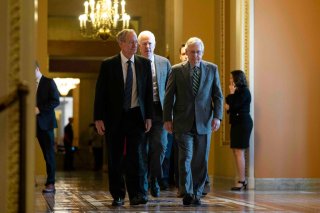
So it’s already looking like a kangaroo court, which surprises no one. McConnell’s rules also don’t guarantee there will be new witnesses or documents.
It says that after senators conclude their questioning, they will not immediately entertain motions to call individual witnesses or documents. Instead, they will decide first whether they want to consider new evidence at all. Only if a majority of senators agree to do so will the managers and prosecutors be allowed to propose and argue for specific witnesses or documents, each of which would then be subject to an additional vote.
If a majority of the Senate ultimately did vote to call a witness for testimony, that witness would first be interviewed behind closed doors and then the “Senate shall decide after deposition which witnesses shall testify, pursuant to the impeachment rules,” if any. Consistent with the Clinton trial rules, this essentially means that even if witnesses are called, they might never testify in public.
Naturally Democrats are not going to take this lying down. The House impeachment managers are holding a press conference right now and Chuck Schumer has already stated his objections. He told NPR this morning that McConnell’s rules are “a national disgrace” and told MSNBC that “Everything in these rules is rigged.” Right now Jerry Nadler is saying that McConnell’s rules amount to an obvious cover-up.
The White House is doing it’s best to make sure the “trial” will be a complete joke. The Hill reports on the Republican impeachment “advisers”:
The White House announced Monday that President Trump appointed several prominent Republican House members to advise his impeachment defense team ahead of the Senate trial set to begin this week.
GOP Reps. Jim Jordan (Ohio), John Ratcliffe Texas), Mike Johnson (La.), Mark Meadows (N.C.), Debbie Lesko (Ariz.), Lee Zeldin (N.Y.), Elise Stefanik (N.Y.) and Doug Collins are set to play leading roles.
A statement from the White House said the lawmakers “have provided guidance to the White House team, which was prohibited from participating in the proceedings concocted by Democrats in the House of Representatives” throughout the House proceedings and would continue to do so in the Senate.
 You’ll notice that those are the Reps who tried to turn the House impeachment process into a shriekfest. According to the Hill, Democrats and even even some GOP Senators didn’t like the idea of House members getting involved in the Senate process.
Key Republican allies in the Senate have also warned against such appointments, warning that the addition of Republican House members would cast the Senate trial in a partisan light.
“I don’t think it’s wise. I think we need to elevate the argument beyond body politics, beyond party politics and talk about the constitutional problems with these two articles,” Sen. Lindsey Graham (R-S.C.) told reporters earlier this month.
I wonder if McConnell is at all worried about what the public reaction could be to a show trial. The latest CNN poll found that 51 percent of Americans think Trump should be removed from office and 69 percent believe that the Senate trial should include witnesses.
The poll is the first major national telephone poll since the articles of impeachment were sent to the Senate, formally launching Trump’s trial there. They are also the first such poll results since Soviet-born businessman Lev Parnas, an associate of Trump’s attorney Rudy Giuliani, publicly implicated the President in the Ukrainian pressure campaign during a series of television interviews.
The new poll also finds majorities of Americans view each of the charges on which Trump will face trial as true: 58% say Trump abused the power of the presidency to obtain an improper personal political benefit and 57% say it is true that he obstructed the House of Representatives in its impeachment inquiry.
Of course there are partisan, gender, race, age, and geographical differences in attitudes toward the trial:
Overall, 89% of Democrats say he should be removed from office, while just 8% of Republicans feel the same way. Among independents, it’s nearly dead even: 48% say the Senate should vote to remove him, while 46% say that they should not. Views on whether Trump should be impeached and removed are also evenly split across battleground states, 49% are on each side across the 15 states decided by 8 points or less in 2016. Those states are Arizona, Colorado, Florida, Georgia, Maine, Michigan, Minnesota, Nevada, New Hampshire, North Carolina, New Mexico, Ohio, Pennsylvania, Virginia and Wisconsin.
House impeachment managers take articles of impeachment to Senate.
Beyond partisanship, there are wide divisions in the poll by gender, race, education and age. Nearly six in 10 women (59%) say the Senate should remove Trump from office; 42% of men agree. Among African Americans, 86% say Trump should be removed. That drops to 65% among Hispanics and 42% among whites.
Combining race and gender, about eight in 10 women of color (79%) say he should be removed. That dips to 59% among non-white men, 49% among white women and 33% among white men. For whites, education adds another degree of division: 59% of white women with college degrees say the Senate should remove Trump, compared with 43% among white women without degrees, 44% among white men with degrees and 27% among white men without college degrees. A majority (56%) of those under age 45 say the President should be removed, while older Americans are more evenly split (47% in favor among those age 45 and over, 50% opposed).

This from Politico is shocking, but not surprising: Justice Department backed Trump strongarm of House impeachment probe.
The Justice Department secretly blessed President Donald Trump’s decision to stonewall the Democratic-led House over impeachment last year, the president’s legal team disclosed Monday.
The legal brief submitted to the Senate as part of Trump’s defense includes an opinion from the Department of Justice’s Office of Legal Counsel concluding that Trump was justified in categorically rejecting the House’s demands for information before lawmakers passed a formal impeachment resolution on October 31.
“We conclude that the House must expressly authorize a committee to conduct an impeachment investigation and to use compulsory process in that investigation before the committee may compel the production of documents or testimony in support of the House’s sole power of impeachment,” Assistant Attorney General Steven Engel wrote in the detailed legal rationale.
The opinion was officially dated Sunday and released by the Justice Department on its website Monday, timing that appeared to dovetail with a Senate-set noon, holiday deadline for Trump’s first substantive brief in the impeachment trial.
Chuck Schumer is giving a press conference right now. He is emphasizing that McConnell is trying to make sure that Americans don’t watch the trial because it will begin in the afternoon and last late into the night and early morning hours. There will be a battle between Democrats and Republicans in the Senate today, but so far it appears that McConnell has to votes to pass his ridiculous rules.
The White House is also trying to make sure the American people don’t hear from John Bolton. The Washington Post: Trump’s lawyers, Senate GOP allies work privately to ensure Bolton does not testify publicly.
President Trump’s legal defense team and Senate GOP allies are quietly gaming out contingency plans should Democrats win enough votes to force witnesses to testify in the impeachment trial, including an effort to keep former national security adviser John Bolton from the spotlight, according to multiple officials familiar with the discussions.
 While Republicans continue to express confidence that Democrats will fail to persuade four GOP lawmakers to break ranks with Senate Majority Leader Mitch McConnell (R-Ky.), who has opposed calling any witnesses in the trial, they are readying a Plan B just in case — underscoring how uncertain they are about prevailing in a showdown over witnesses and Bolton’s possible testimony.
One option being discussed, according to a senior administration official, would be to move Bolton’s testimony to a classified setting because of national security concerns, ensuring that it is not public.
To receive the testimony in a classified session, Trump’s attorneys would have to request such a step, according to one official, adding that it would probably need the apReaproval of 51 senators.
Read the rest at the WaPo.
Here are a couple of good articles analyzing Trump’s impeachment defense.
From Charlie Savage at The New York Times: ‘Constitutional Nonsense’: Trump’s Impeachment Defense Defies Legal Consensus.
As President Trump’s impeachment trial opens, his lawyers have increasingly emphasized a striking argument: Even if he did abuse his powers in an attempt to bully Ukraine into interfering in the 2020 election on his behalf, it would not matter because the House never accused him of committing an ordinary crime.
Their argument is widely disputed. It cuts against the consensus among scholars that impeachment exists to remove officials who abuse power. The phrase “high crimes and misdemeanors” means a serious violation of public trust that need not also be an ordinary crime, said Frank O. Bowman III, a University of Missouri law professor and the author of a recent book on the topic.
“This argument is constitutional nonsense,” Mr. Bowman said. “The almost universal consensus — in Great Britain, in the colonies, in the American states between 1776 and 1787, at the Constitutional Convention and since — has been that criminal conduct is not required for impeachment.”
But the argument is politically convenient for Mr. Trump. For any moderate Republican senator who may not like what the facts already show about his campaign of pressure on Ukraine, the theory provides an alternative rationale to acquit the president.
Read the rest at the NYT.
More analysis from Quinta Jurecic and Benjamin Wittes at The Atlantic: Trump’s Impeachment Brief Is a Howl of Rage.
The House managers’ brief is an organized legal document. It starts with the law, the nature and purposes of Congress’s impeachment power, then walks through the evidence regarding the first article of impeachment, which alleges abuse of power, and seeks to show how the evidence establishes the House’s claim that President Trump is guilty of this offense. It then proceeds to argue that the offense requires his removal from office….
By contrast, the White House’s “Answer of President Donald J. Trump” to the articles of impeachment, filed by the president’s personal lawyer Jay Sekulow and the White House counsel, Pat Cipollone, does not read like a traditional legal argument at all. It begins with a series of rhetorical flourishes—all of them, to one degree or another, false. The articles of impeachment are “a dangerous attack on the right of the American people to freely choose their President,” the president’s lawyers write—as though the impeachment power were not a constitutional reality every bit as enshrined in the founding document as the quadrennial election of the president. The articles are “a brazen and unlawful attempt to overturn the results of the 2016 election and interfere with the 2020 election,” and are “constitutionally invalid on their face,” they write, as though the president’s right to extort foreign leaders for political services were so beyond reasonable question, it is outrageous that anyone might object to it.
This document reads like one of the president’s speeches at his campaign rallies. The language is a little more lawyerly, if only a little. In Sekulow and Cipollone’s hands, Trump’s cries of “Witch hunt!” have turned into “lawless process that violated basic due process and fundamental fairness.” His allegations that Democrats are a “disgrace” have turned into “an affront to the Constitution.” And Trump’s insistence that there’s a plot to destroy his presidency has become a “highly partisan and reckless obsession with impeaching the president [that] began the day he was inaugurated and continues to this day.”
But the message is unchanged. It’s not a legal argument. It’s a howl of rage.
Read more at The Atlantic.
I’ve tried to lay out the basics; we’ll soon be able to watch what happens in the Senate for ourselves. Please share your reactions as the day goes on, but feel free to post on other topics as well. It should be an interesting day!
Lazy Caturday Reads: “The Man Who Knows Too Much”
Posted: January 18, 2020 Filed under: Afternoon Reads, Foreign Affairs, U.S. Politics | Tags: Andy Warhol, cults, Dmytro Firtash, Donald Trump, Lev Parnas, Trump as cult leader 16 Comments
Andy Warhol
Good Afternoon!!
The cat illustrations and paintings in this post are by Andy Warhol.
Lev Parnas is still dominating the headlines as we move toward the impeachment trial that is scheduled to begin next week; I’m focusing this post on his revelations and reactions to them. Here’s the latest.
House Democrats on Friday released new documents from indicted Rudy Giuliani associate Lev Parnas ahead of the Senate trial that includes new information about the apparent surveillance of former US Ambassador Marie Yovanovitch and additional contacts between Parnas and an aide to Rep. Devin Nunes of California….
The new documents include screenshots of undated text messages that appear to show Robert Hyde, a Republican congressional candidate in Connecticut, messaging with a foreign number from Belgium, which appear to describe efforts to surveil Yovanovitch. Hyde appeared to share the screenshots with Parnas, which is how they wound up on his phone that he turned over to House investigators.
The Belgian country-code number sends Hyde a screenshot of an official photo of Yovanovitch. The Belgium number, whose identity is not known, writes “My contacts are checking,” adding, “I will give you the address next week.”
Hyde replied, “Awesome.”
In another series of texts, the Belgian number tells Hyde at 2:05 p.m., “Nothing has changed she is still not moving they check today again,” shortly adding, “It’s confirmed we have a person inside.”
“She had visitors,” the Belgian number texted in another exchange.
Hyde is claiming it was all a “joke,” but I think we need to know the name of the guy in Belgium.
“I’m a landscaper from Simsbury, Connecticut, that is trying to get into the government relations, public relations world, lobbying world, whatever you want to call it,” Hyde said. “And this guy Adam Schiff is a bad character. … It was just copy and paste b——- from some intel guy — probably that was f—ing with me, trying to set Trump up.”
On Devin Nunes:
The new documents also show communications between Parnas and Nunes aide Derek Harvey, in which they arrange interviews with Ukrainian officials and apparent meetings at the Trump International Hotel in Washington, D.C., including with Giuliani.
The new materials draw Nunes, the top Republican on the House Intelligence Committee, even further into the efforts undertaken by Giuliani and his associates to push out Yovanovitch in Ukraine and dig up dirt on the President’s political rivals. Last month, Democrats on the House Intelligence Committee included in their impeachment inquiry report phone records of calls exchanged between Nunes and Parnas and other allies of President Donald Trump.
Nunes admitted Wednesday to speaking on the phone with Parnas, who has become a key figure in the Ukraine scandal, after previously saying such a conversation would have been “very unlikely.”
Read more at CNN. Also see this piece by Aaron Blake at The Washington Post: New text messages put Devin Nunes on the hot seat.
Betsy Swan at The Daily Beast posted a lengthy article on her interview with Parnas: Lev Parnas Dishes On Kushner, Maduro, and Soros.
A dinner with Jared and Ivanka about cannabis, a phone call from Trump Hotel with Venezuelan President Nicolás Maduro, and a whole lot of theorizing about George Soros. Lev Parnas’ interactions with Trumpworld, in his words, went way beyond the Ukraine influence effort.
The former ally of Trump lawyer Rudy Giuliani spent more than a year embedded with some of the president’s close outside allies. In that time, he said he had an inside view of all sorts of eyebrow-raising interactions and conversations. He described several of them in an interview with The Daily Beast from his lawyer’s office in Midtown Manhattan.
He spoke at length about his former allies Giuliani, Victoria Toensing, and Joe diGenova. A spokesperson for Toensing and diGenova’s law firm indicated that the topics he discussed were covered by attorney-client privilege. “It is unfortunate that some people will violate the attorney-client privilege,” the spokesperson said. “We cannot.”
Giuliani and his lawyers did not respond to multiple requests for comment about the interview.
The interview is much too long to summarize with excerpts so you’ll have to click the link to read all the gossip.
Lucian K. Truscott IV at Salon: The man who knows too much: Lev Parnas is the smoking gun on Ukraine scandal.
Revelations this week by Rudy Giuliani’s henchman Lev Parnas in interviews with MSNBC, CNN and the New York Times blew Iran out of the headlines and landed on Capitol Hill like a bomb. Here was an insider in the Ukraine conspiracy not only willing to talk, but to provide documents to back up allegations he has made about Trump’s shakedown of Volodymyr Zelensky to get dirt on his potential Democratic opponent, Joe Biden.
Parnas is the reason Republicans are so scared of opening the Senate trial of Trump to witness testimony. According to Parnas, everyone was in on the Ukraine scheme. Trump himself, of course, but also Vice President Mike Pence was in on it. So was Attorney General William Barr, so was Secretary of State Mike Pompeo and so were Secretary of Energy Rick Perry and national security adviser John Bolton. At the very center of the scheme, according to Parnas, was the man he worked for, Trump’s personal attorney Rudy Giuliani.
Parnas has letters, text messages, contemporaneous notes, travel documents and more to back up his recollections of what happened as Trump tried to muscle Ukraine into aiding his re-election campaign by announcing an investigation of Biden. Trump was obviously getting ready to pound Biden with Ukraine conspiracy allegations the same way he pounded Hillary Clinton about her emails in 2016. Hey, it worked once! Why not?
After testimony by 10 witnesses before the House Intelligence Committee last fall, new information has continued to roll in. We have recently learned that the order to withhold the $400 million in congressionally appropriated aid to Ukraine came the day after Trump’s “perfect” phone call with the Ukrainian president last July 25. More recently, a series of emails and other contacts at the top of the Trump administration questioning the legality of the sequestering of the funds has come to light. And now we’ve got Parnas and his trove of texts, notes, letters and other documents that back up his stories about working for Giuliani to get former Ambassador Marie Yovanovitch fired, and all the machinations surrounding the shakedown of Ukraine’s president and other officials to get them to investigate Biden.
But too little attention has been paid to the oldest question of all: Cui bono? Who benefits? Trump, of course. But how? Was it all about Biden, or was there something else Trump was trying to accomplish? Scratch the surface of the Ukraine scandal, and what you see is Russia, and Trump’s old pal, Vladimir Putin.
Read the rest at Salon. Also worth a read at Slate: New Documents Casually Destroy the Already-Bad Republican Case That Trump’s Ukraine Scheme Was Aboveboard, By Ben Mathis-Lilly.
 In case you missed it, Parnas told Rachel Maddow that being in Trump’s orbit is felt like a cult. A new book argues that Trump behaves exactly like a cult leader. Lauren Frias at Business Insider: Lev Parnas and Michael Cohen are right to think working for Trump was like being in a cult, according to a cult expert.
Steve Hassan, a cult expert and author of a book called “The Cult of Trump,” spoke to Insider about the ways in which Trump and his circle behave share characteristics with cults.
“What’s interesting and shocking to me is to hear Lev Parnas describe [Trump] as a cult leader and such, and I’m curious how he arrived to that insight,” Hassan said, referring to an MSNBC interview Parnas gave.
“I knew that Trump fit the stereotypical profile of all cult leaders, which is essentially malignant narcissism, which is the narcissism — plus the psychopathic elements of feeling above the law, the pathological lying, paranoia, the jealousy, the harassment,” he added….
“First of all, cult leaders think they’re above everybody else, above the law, and then everything exists for their adulation,” Hassan said.
“Cult leaders think nothing of using people like pawns to get their way, and it doesn’t matter if there are people on the staff saying this is a bad idea, which apparently Bolton did,” Hassan said. In December The New York Times reported that former national security adviser John Bolton tried to convince Trump to release military aid to Ukraine.
“His will matters more than any rationality and the potential consequence,” Hassan continued.
He said cult leaders also have a tendency to cast out anyone who disagrees with them. He says this can be seen in the record high turnover of staff in the Trump White House.
Read more at Business Insider.
One more by Franklin Foer at The Atlantic: The Kremlin Inches Closer to the Biden PlotLev Parnas pointed his finger at Dmytro Firtash.
Somewhere near the heart of the Ukraine scandal is the oligarch Dmytro Firtash. Evidence has long suggested this fact. But over the past week, in a televised interview and in documents he supplied to Congress, Rudy Giuliani’s former business partner Lev Parnas pointed his finger at the Ukrainian oligarch. According to Parnas, Giuliani’s team had a deal with Firtash. Giulani would get the Justice Department to drop its attempt to extradite the oligarch on bribery charges. In return, according to Parnas, the oligarch promised to pass along evidence that would supposedly discredit both Joe Biden and Robert Mueller.
Parnas’s account, of course, is hardly definitive. Throughout his career, he has attempted to inflate his importance to make money. (Firtash apparently paid him $1 million for his services, though it’s still not totally clear what those services were.) And his description of Firtash’s involvement raises as many questions as it settles. Still, the apparent centrality of Firtash should inform any assessment of Giuliani’s escapades and the entire Ukraine story.
Andy Warhol with kitten, 1957
When commentators invoke the name Dmytro Firtash, it is usually followed by mention of his alleged connections to Russian organized crime and the fact that he is close to the Kremlin. These descriptions, however, understate his ties to Vladimir Putin. In his book Russia’s Crony Capitalism, the Atlantic Council’s Anders Aslund describes Firtash as a “Kremlin Influence agent.” A Ukrainian parliamentarian who investigated Firtash has called him “a political person representing Russian interests in Ukraine.” That representative of Russian interests is who Giuliani and Parnas apparently enlisted as their partner.
The rapid ascent of Firtash, a fireman from western Ukraine, remains mysterious—although he once disgorged details from his past in a long chat with the U.S. ambassador to Kyiv, Bill Taylor, a description of which eventually emerged in a WikiLeaks document dump. But it’s been widely reported that Firtash attached himself to the gangster Semion Mogilevich, one of the region’s most important Mafia bosses, a man the FBI placed on its Ten Most Wanted Fugitives list. (His lawyers vociferously deny any connections to gangsters.)
When Putin ascended to power in 2000, he gained control of his country’s natural-gas business. He placed his allies at the helm of the country’s gas monopoly, Gazprom, and he has routinely wielded that company as an instrument of Russian foreign policy. In 2002, Firtash became Gazprom’s most important middleman: He was responsible for selling Russian gas to Ukraine. Thanks to an extraordinary Reuters investigation, which burrowed into Customs documents, contracts, and Cyprus bank accounts, the details of this arrangement are now well known. Gazprom sold Firtash gas at four times below the market price. When Firtash resold the gas to the Ukrainian state, he pocketed a profit of $3 billion. Even as he amassed this fortune, bankers close to Putin extended Firtash an $11 billion line of credit.

Read the rest at The Atlantic. It’s fascinating.
That’s it for me. I hope you all enjoy the long weekend!

 peej
peej Carissa
 bostonboomer
 dakinikat
 ecocatwoman
 jjlo
jjlo mablue2
 Mama Lopez
 peggysue22
 quixote
 skydancingguestblogger
 Mona (aka Wonk the Vote)





Recent Comments