
Thursday Reads: The Proverbial Sh** Is Hitting The Fan
Posted: January 16, 2020 Filed under: Foreign Affairs, morning reads, U.S. Politics | Tags: Donald Trump, impeachment, Lev Parnas, Marie Yovanovitch, Mitch McConnell, Robert Hyde, Rudy Giuliani, Ukraine scandal 25 Comments Good Morning!!
Lately I’ve been feeling as if I’m treading water, waiting to see what is going to happen with impeachment. I felt that way even before Nancy Pelosi finally decided the time was right to do it. In the past few weeks while she held off on transmitting the articles to the Senate, more evidence has become public, and even yesterday as the articles were delivered more shocking news broke. Now it feels as if the proverbial shit is finally hitting the fan.
Former Giuliani pal Lev Parnas turned over documents to the House and those documents were sent to the Senate along with the impeachment articles and then released to the public. The New York Times interviewed him yesterday: Lev Parnas, Key Player in Ukraine Affair, Completes Break With Trump and Giuliani.
Lev Parnas, the Soviet-born businessman who played a central role in the campaign to pressure Ukraine to investigate political rivals of President Trump, completed his break with the White House on Wednesday, asserting for the first time in public that the president was fully aware of the efforts to dig up damaging information on his behalf.
In an interview with The New York Times on the day the House transmitted articles of impeachment against Mr. Trump to the Senate, Mr. Parnas also expressed regret for having trusted Mr. Trump and Rudolph W. Giuliani, the president’s personal lawyer and the architect of the Ukraine pressure campaign. His lawyer said he was eager to cooperate with federal prosecutors investigating Mr. Giuliani.
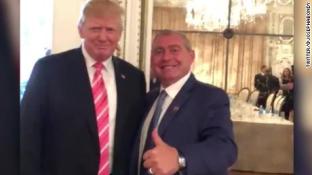
Trump with Lev Parnas
Mr. Parnas made his remarks as House impeachment investigators released more material he had turned over to them. The material, including text messages, photos and calendar entries, underscored how deeply Mr. Parnas and others were involved in carrying out the pressure campaign and how new information continues to surface even as the Senate prepares to begin Mr. Trump’s trial next week. And it provided additional evidence that the effort to win political advantage for Mr. Trump was widely known among his allies, showing that Mr. Parnas communicated regularly with two top Republican fund-raisers about what he was up to.
Text messages and call logs show that Mr. Parnas was in contact with Tom Hicks Jr., a donor and Trump family friend, and Joseph Ahearn, who raised money for pro-Trump political groups, about developments in the Ukraine pressure campaign.
In the text messages, Mr. Parnas kept Mr. Hicks and Mr. Ahearn apprised of efforts to disseminate damaging information about targets of Mr. Trump and Mr. Giuliani, including the United States ambassador to Kyiv, former Vice President Joseph R. Biden Jr. and Ukrainians who spread information about Paul Manafort, Mr. Trump’s 2016 campaign chairman.
The records seem to expand the circle of people around Mr. Trump who were aware in real time of the pressure campaign. The campaign led to Mr. Trump’s impeachment in the House last month and a Senate trial that will start next week just as the 2020 presidential campaign is moving into high gear.
In the interview with The Times, Mr. Parnas said that although he did not speak with Mr. Trump directly about the efforts, he met with the president on several occasions and was told by Mr. Giuliani that Mr. Trump was kept in the loop.
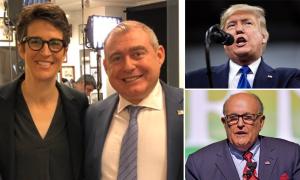 Parnas also gave an interview to Rachel Maddow. Some of it aired on Maddow’s show last night with more to come tonight. Deadline: Rachel Maddow’s Bombshell Interview With Lev Parnas: Trump Was In The Loop, And So Were Many Others.
Rachel Maddow’s interview with Lev Parnas, the former associate of Rudy Giuliani, basically confirmed what House Democrats have been saying all along as they pursued impeachment against Donald Trump: He was very much in the loop.
In Parnas’s words, “President Trump knew exactly what was going on. He knew all of my movements.”
Given that Parnas described a scheme to shakedown the new Ukrainian government until they announced an investigation of Joe Biden, that means a lot, as he described in detail a pressure campaign that was placed on Ukrainian officials.
An early episode came last spring, when Parnas said that he was enlisted to warn an aide to incoming president Volodymyr Zelensky that if an investigation was not announced, Vice President Mike Pence’s visit for Zelensky’s inauguration would be cancelled. The aide refused, and Pence’s visit was canceled.
“I wouldn’t do anything without the consent of Rudy Giuliani or the president,” Parnas said to Maddow.
He also confirmed other claims made during the impeachment inquiry, including the serious charge that aid to Ukraine was withheld as government officials continued to hold off on announcing a Biden investigation. “It wasn’t just military aid; it was all aid” that was under threat of being withheld, Parnas said.
But Trump’s team is likely to spend the next few days trying to discredit Parnas, who, along with another associate, Igor Furman, was arrested in October on campaign finance charges. As Maddow was playing her interview with Parnas, her Fox News rival Sean Hannity was calling MSNBC the “state run, MSNBC conspiracy channel media.”
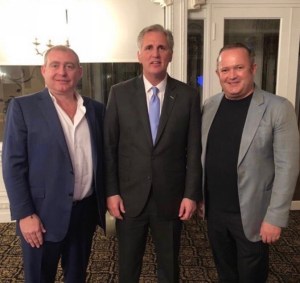
Lev Parnas, Kevin McCarthy, and Igor Fruman
More on Parnas documents from Politico: Democrats release more Parnas evidence, including voicemails with Trump associates.
House impeachment investigators released a new set of evidence that was obtained from Lev Parnas, an indicted former associate of President Donald Trump’s personal attorney, Rudy Giuliani — including voicemails, photos, and text messages between Parnas and high-level figures within Trump’s orbit.
The material includes voicemail messages Parnas received from Giuliani and Victoria Toensing, a prominent Trump-aligned lawyer, both of whom have been identified as players in an effort to force the removal of the then-U.S. ambassador to Ukraine, Marie Yovanovitch, during the spring.
“Hey Lev. VT here. We’ve got a request to talk to the big one,” Toensing said in the April 23, 2019, voicemail message. “So I just wanted to get the latest from you, if I could. I know it’s late there. I’m sorry.”
The timing of the Toensing voicemail coincides with a flurry of activity involving Yovanovitch’s ouster. On April 23, Giuliani tweeted that Ukraine was investigating 2016 election interference, and Trump recalled Yovanovitch from Ukraine on April 24.
The previously undisclosed documents, released late Tuesday night but not publicly noticed, were posted ahead of the House formally sending its impeachment articles to the Senate, underscore the evolving nature of an investigation that House Democrats say is ongoing — and was stifled in its early stages by Trump’s refusal to allow his aides and associates to comply with congressional subpoenas.
The most shocking information that came out of the Parnas documents was the possibility that Trump allies were stalking and perhaps even physically threatening then Ukraine Ambassador Marie Yovanovitch. Parnas told Maddow that he didn’t believe that had actually happened and it was just a fantasy created by a “loony” Trump ally Robert Hyde.

Marie Yovanovitch
Nonetheless, Ukraine has opened an investigation into the possible threat to Yovanovich. NBC News: Ukraine launches probe into alleged surveillance of former U.S. envoy.
Ukraine has launched criminal investigations into the possible illegal surveillance of former U.S. ambassador Marie Yovanovitch, and the reported hacking of Burisma Holdings, the natural gas company at the center of the Trump impeachment.
“Ukraine’s position is not to interfere in the domestic affairs of the United States of America,” the Interior Ministry, which runs the police forces, said in a statement.
However, recent reports pointed to the possible violation of Ukrainian and international law, it said.
“Ukraine cannot ignore such illegal activities on the territory of its own state,” the statement added….
“Our goal is to investigate whether there actually was a violation of Ukrainian and international law, which could be the subject for proper reaction. Or whether it is just bravado and fake information in the informal conversation between two U.S. citizens,” the ministry said.
Some background on Robert Hyde from The Washington Post: GOP figure who said he tracked U.S. ambassador was previously involuntarily committed, records show.
A Republican congressional candidate and former Marine who suggested last year that he was tracking a U.S. ambassador who had fallen out of favor with President Trump was once involuntarily committed to a psychiatric hospital after an incident at one of the president’s resorts and is the subject of a restraining order obtained by a political consultant, police and court records show.
On Tuesday, Robert F. Hyde became the latest figure to emerge in the drama surrounding the Trump administration’s recall last year of Marie Yovanovitch as the U.S. ambassador to Ukraine when his 2019 messages were made public on the eve of Trump’s impeachment trial. His exchanges with an associate of Rudolph W. Giuliani, Trump’s personal attorney, had been turned over to House Democrats in response to a subpoena.
In the messages to Lev Parnas, Hyde claimed to be in contact with a “private security” team near the embassy in Kyiv and suggested that he had the ambassador under physical and electronic surveillance. “It’s confirmed we have a person inside,” he wrote in March.
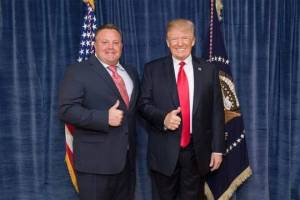
Robert Hyde with Trump
On Wednesday, Hyde claimed he had been “joking” in the messages he sent to Parnas.
On his social media accounts, Hyde, a long-shot candidate for Congress in Connecticut’s 5th District, has posted numerous photos of himself and Trump or members of the president’s family, many of them taken at Trump properties. He appeared grinning with Trump on Easter at the president’s Mar-a-Lago resort in Palm Beach, Fla.
Among the photos and videos is a picture from a party to which, according to the post, Hyde had taken friends on May 7 at a bowling alley in the White House complex.
The bowling party occurred about a week before police were called to Trump’s Doral resort in Miami-Dade County for a “male in distress fearing for his life,” according to a police report from the incident.
Hyde told officers that he had been “set up and that a hit man was out to get him,” officers wrote. Hyde “spoke about emails he sent that may have placed his life in jeopardy” and said he believed that painters and landscape workers were trying to harm him and that the Secret Service was watching him.
Read more at the links I’ve provided.
I’ve only scratched the surface of today’s news. We have no idea what will happen with impeachment now, except that Mitch McConnell will do his best to protect Trump. He’s planning to shut the media out of the impeachment trial–will he get away with it? It’s beginning to look as if he will have a tough time, as more and more shit hits the media fan. I expect we’ll learn even more today. It’s all going to come out.
Dahlia Lithwick argues that McConnell’s cover-up plan is in big trouble: How Will the Senate Get Away With Its Sham Trial Now?
Interestingly, with an impeachment trial in the Senate raising the stakes perhaps even higher than those for a Supreme Court vacancy, McConnell committed a rare unforced error before Christmas: He proclaimed that Senate Republicans would “be working through this process hopefully in a fairly short period of time, in total coordination with the White House counsel’s office and the people who are representing the president.” This essentially amounts to a confession he’d be rigging up a show trial to acquit the president without hearing any material evidence—not exactly what that whole “trial” mechanism is meant to do, legally speaking. Perhaps as a result of that unfortunate admission, McConnell now has to contend with at least a handful of vulnerable Republicans in the Senate who are not perfectly cool with the “we’re coordinating with Trump to get him acquitted super fast” situation. And as such, we enter this historic week of Senate impeachment with at least the wisp of a hope that there might be a fairer trial ahead than anyone could have anticipated.
That slim hope nests in a variety of cozy places, including but not limited to the prospect that Chief Justice John Roberts has some institutional interests in avoiding a kangaroo trial, the fact that the American public has shown some bipartisan interest in hearing actual testimony from actual witnesses, and the fact that the president appears to continue to conflate his personal political ambitions with the national interest, even after being impeached for precisely that conduct in the House. (Maybe this will finally prove to be too much for even the most casual observer?) Plus, newly released documents from Rudy Giuliani’s indicted Ukraine-gate confederate, Lev Parnas, again confirm that the rough contours of the aid-for-oppo research scheme. But they go even further: The new documents (with more to come) add elements of actual threats to the welfare of a sitting U.S. ambassador, directed by the associates of Trump’s associates, which has implications for Jay Sekulow, Trump’s personal lawyer. Senate Republicans will need to explain why none of this matters and why they want to know nothing more about the back deals and thuggery that, it is now clearer than ever, were conducted under the president’s directive. That means that there is at least a smidgen of hope wafting off senators like Mitt Romney of Utah, who says he’d like to hear testimony from John Bolton, and Susan Collins of Maine, who says she is possibly open to impeachment witnesses and documents, all of which makes it trickier for McConnell to magic up his dream trial of opening statements leading to closing statements leading to a brisk victory lap-slash-acquittal.
Read the rest at Slate.
I’ll post some more links in the comment thread; it’s so difficult to figure out what to highlight these days. I hope you’ll share the stories you are following too.
Tuesday Reads: Pelosi Is Winning On Impeachment, But Russia Is Still Helping Trump.
Posted: January 14, 2020 Filed under: Foreign Affairs, morning reads, U.S. Politics | Tags: Burisma, Donald Trump, impeachment trial, Nancy Pelosi, Republican Senators, Russia is listening, Russian disinformation, Trump's gait issues, Vladimir Putin 50 Comments
By Félix Edouard Vallotton
Good Morning!!
Lots of tweeting about Trump and Melania at the LSU-Clemson game yesterday. Melania wore some kind of raincoat that looked like it was made out of garbage bags. More people are starting to notice Trump’s odd standing and walking issues.
See more tweets at Raw Story: Internet speculates about Trump’s strange gait at Clemson vs LSU championship.
There was disagreement about whether Trump or Melania released the other’s hand, but Melania looks angry. Some people suggested she was digging her fingernails into his hand before he let go. Watch and see what you think.
Enough gossip, there is also breaking news on impeachment. CNN: Pelosi sets up floor vote as soon as Wednesday to name impeachment managers and send articles to the Senate.
Speaker Nancy Pelosi indicated that that the House will vote Wednesday on a resolution to name the impeachment managers for the Senate trial of President Donald Trump and transmit the articles to the chamber, two sources told CNN on Tuesday.
Pelosi told her Democratic colleagues Tuesday morning at a closed-door meeting on Capitol Hill that she won’t announce impeachment managers during that meeting, according to a source familiar with the remarks. Last week, Pelosi told Democrats she planned to discuss plans for sending over the articles of impeachment, which she’s held following a vote last month.
By Belinda Del Pesco
House Majority Leader Steny Hoyer said on Monday night that the House vote to name the impeachment managers “could be” on Wednesday, adding that the Senate has “practical problems” if they were to move sooner since three Democratic senators are participating in the presidential debate.
After a several week delay to formally send the articles, Pelosi’s move will kick the impeachment fight officially into the Senate’s court, where Senate Majority Leader Mitch McConnell is readying a resolution of his own to set out the rules of the trial.

It looks like Pelosi’s decision to hold onto the articles for a few weeks is paying off. The New York Times: Republicans Rule Out Outright Dismissal of Impeachment Charges.
Senate Republicans indicated on Monday that they would not seek to summarily dismiss the impeachment charges against President Trump, proceeding instead to a trial with arguments and the possibility of calling witnesses that could begin as soon as Wednesday.
Dismissal was always a long shot given Republicans’ narrow control of the Senate, but it was the subject of renewed discussion after Mr. Trump said on Sunday that he liked the idea put forward by some conservatives as a way to deny the House’s case the legitimacy of a trial. Other Republicans had signed on to a resolution that would have dismissed the House’s impeachment articles if they were not promptly brought to trial.
In interviews, rank-and-file senators and party leaders made clear on Monday that even if they wanted to pursue dismissal, the votes simply were not there to succeed — at least not at the outset of the trial. They did not rule out considering a motion to dismiss the charges of abuse of power and obstruction of Congress after opening arguments from both sides.
“Our members generally are not interested in a motion to dismiss,” said Senator Roy Blunt of Missouri, a top Republican leader. “They think both sides need to be heard. They believe the president needs to be heard for the first time in a fair setting.”

By Henri Lebasque
Mitch doesn’t have the votes for dismissal anymore. The Washington Post: Top Senate Republicans reject Trump’s renewed call for immediate dismissal of impeachment charges.
On Monday, senior Republicans said immediate dismissal could not win approval in the chamber, where Republicans hold a 53-seat majority. And even some staunch Trump allies argued that the president’s legacy would benefit from a robust trial.
“I don’t think there’s any interest on our side of dismissing,” said Sen. Roy Blunt (R-Mo.), the fourth-ranking GOP senator. “Certainly, there aren’t 51 votes for a motion to dismiss.”
Senate Majority Leader Mitch McConnell (R-Ky.) has said that he wants the trial — only the third impeachment of a president in U.S. history — to follow the format used 21 years ago in the trial of President Bill Clinton. In that case, the Senate approved a resolution that would have allowed the Senate to vote to dismiss the charges.
But senior Republicans signaled Monday that they are not inclined to include such a provision in the resolution that will kick off Trump’s trial, perhaps as soon as Thursday….
Another GOP senator, speaking on the condition of anonymity to discuss legislation that is not yet public, also said the inclusion of a provision to dismiss is unlikely.
Even the White House now admits there are going to be witnesses, according to CBS News: White House expects GOP defections on calling witnesses in Senate impeachment trial.
Senior White House officials tell CBS News they increasingly believe that at least four Republicans, and likely more, will vote to call witnesses. In addition to Senators Lisa Murkowski of Alaska, Susan Collins of Maine, Mitt Romney of Utah and possibly Cory Gardner of Colorado, the White House also views Rand Paul of Kentucky as a “wild card” and Senator Lamar Alexander of Tennessee as an “institutionalist” who might vote to call witnesses, as one official put it.
By Edouard Vuillard
Last week, Collins said she was working with a “fairly small group” of GOP senators to allow new testimony, adding that her colleagues “should be completely open to calling witnesses.” Romney has expressed an interest in hearing from former national security adviser John Bolton, who has said he would testify under subpoena. Murkowski said last week that the Senate should proceed as it did during the 1999 Clinton impeachment trial.
Gardner and Alexander have both said the Senate trial should be fair and impartial. Paul has said the president should be able to call his own witnesses, including the whistleblower whose complaint about Ukraine sparked the impeachment inquiry in the first place.

More on Rand Paul from Politico: Republicans face reckoning on impeachment witnesses.
Republican Sen. Rand Paul offered a warning to his colleagues as they began debating whether to hear from witnesses like John Bolton in President Donald Trump’s imminent impeachment trial.
“Don’t think you can just vote for Bolton and not the witnesses Trump wants,” Paul told senators at a party lunch last week, according to two attendees and two people briefed on the meeting. He advised that incumbent senators’ conservative base would be enraged if vulnerable lawmakers were seen as undercutting Trump.
The blunt advice from Paul laid bare the GOP’s perilous task in handling Trump’s impeachment trial in an election year, all while the president delivers stage directions on his Twitter account. Trump over the weekend first requested that House Intelligence Chairman Adam Schiff (D-Calif.) and even Speaker Nancy Pelosi appear as witnesses, then argued a few hours later that the trial should be dismissed summarily before it begins….
By Patrick Bornemann
The GOP has tried to stay focused on its game plan to shut down Democratic hopes of locking in witnesses at the outset of the trial, but it’s become increasingly clear the party will face an internal reckoning during the trial as it defends its Senate majority and faces a president who demands complete loyalty.

In other news, The New York Times broke this stunning story last night: Russians Hacked Ukrainian Gas Company at Center of Impeachment
With President Trump facing an impeachment trial over his efforts to pressure Ukraine to investigate former Vice President Joseph R. Biden Jr. and his son Hunter Biden, Russian military hackers have been boring into the Ukrainian gas company at the center of the affair, according to security experts.
The hacking attempts against Burisma, the Ukrainian gas company on whose board Hunter Biden served, began in early November, as talk of the Bidens, Ukraine and impeachment was dominating the news in the United States.
It is not yet clear what the hackers found, or precisely what they were searching for. But the experts say the timing and scale of the attacks suggest that the Russians could be searching for potentially embarrassing material on the Bidens — the same kind of information that Mr. Trump wanted from Ukraine when he pressed for an investigation of the Bidens and Burisma, setting off a chain of events that led to his impeachment.
The Russian tactics are strikingly similar to what American intelligence agencies say was Russia’s hacking of emails from Hillary Clinton’s campaign chairman and the Democratic National Committee during the 2016 presidential campaign. In that case, once they had the emails, the Russians used trolls to spread and spin the material, and built an echo chamber to widen its effect.
Then, as now, the Russian hackers from a military intelligence unit known formerly as the G.R.U., and to private researchers by the alias “Fancy Bear,” used so-called phishing emails that appear designed to steal usernames and passwords, according to Area 1, the Silicon Valley security firm that detected the hacking. In this instance, the hackers set up fake websites that mimicked sign-in pages of Burisma subsidiaries, and have been blasting Burisma employees with emails meant to look like they are coming from inside the company.

By Ethel Sands
Russia is still listening to what Trump wants them to do. And don’t forget, they could also have planted fake information to be released at appropriate times. They did that in 2016 when they hacked John Podesta’s emails.
At The Washington Post, former ambassador to Russia Michael McFaul warns: Be prepared to fight a dangerous new wave of disinformation during the Senate trial.
In a matter of days, U.S. senators will be exercising one of their most solemn constitutional duties as they take part in the second phase of the impeachment process. When they do so, they — and the rest of us — should take heed of Hill’s warning. By now it should be amply clear that Russian-style disinformation tactics, whether employed by Russians or Americans, represent a major threat to American democracy.
Russian President Vladimir Putin and his proxies deploy several methods of disinformation to strengthen their power and influence. The first is to deny facts. For instance, Putin initially denied that Russian soldiers had seized control of Crimea in February 2014, denies Russian involvement in the shoot-down of Malaysia Airlines Flight 17 in July 2014, and denies any Russian interference in the 2016 U.S. presidential election.
A second tactic is to deflect attention from the facts, also known as “whataboutism.” When criticized about Crimean annexing Crimea, Putin’s media shoot back, what about Kosovo? Or New Mexico? When criticized about civilian casualties from Russian military intervention in Syria, Kremlin defenders retort, what about Iraq, Vietnam or Hiroshima? When confronted with evidence of Russian meddling in U.S. elections, the Russian standard refrain is, you do it all the time.
By Harold Knight
A third practice is the dissemination of lies. Russian state media once asserted that President Barack Obama and former Islamic State leader Abu Bakr al-Baghdadi embraced the same ideology. I may be more sensitive than most about this tactic, because when I was serving as U.S. ambassador to Russia, Kremlin media outlets accused me of fomenting revolution against Putin’s regime; perhaps most disgustingly of all, a video was circulated suggesting I was a pedophile. When Putin met with President Trump in July 2018 in Helsinki, the Russian president again lied about me, claiming I had broken Russian law while working in the White House.

Read the rest at the WaPo.
More stories to check out, links only:
The Daily Beast: Warren and Sanders’ Famous Friendship Finally Ices Over.
Business Insider: Trump needed to show Soleimani was an imminent threat to assassinate him — and could be in dangerous legal territory now he’s abandoned the argument.
The Daily Beast: Jitters at MSNBC as Brass Eyes Moving Chuck Todd and Talks to Shep Smith.
NPR: Here Are The Lawyers Who Will Defend President Trump Against Impeachment.
The Washington Post: Trump retweeted Pelosi in Muslim garb. The White House made it worse.
NBC News: Muslim groups denounce Trump retweet of fake Pelosi-Schumer photo.
Courthouse News Service: Trump Campaign Adviser Pleads Guilty to Child Porn, Sex Trafficking.
The Daily Beast: U.S. Embassies Were Never Told of Supposed Soleimani Threat Because It Didn’t Exist: Officials.
So . . . what else is happening? What stories are you following today?
Tuesday Reads: Lying Dotard Precipitates Apocalypse
Posted: January 7, 2020 Filed under: Afternoon Reads, Foreign Affairs, U.S. Politics | Tags: Donald Trump, iran, lies, Lindsey Graham, Puerto Rico earthquake, Trump's zero credibility 24 Comments
Coffee, by Pierre Bonnard
Good Afternoon!!
Yesterday, Dakinikat eloquently articulated the mess Trump has made of our once powerful nation. I have to agree with her that it looks like the “American Century” is ending. Will the U.S. go the of the British empire? Maybe that wouldn’t be such a bad thing if we could get rid of Trump and McConnell and elect leaders who are committed to upholding the Constitution and protecting democracy.
Who knows what will happen? But right now we are dealing with a possible apocalypse led by an demented old man who spends most of his time either playing golf or watching Fox News. There are no more “adults” advising him–if there ever were–and two of the most powerful people in his administration are end-of-the-world evangelicals Pence and Pompeo. And those two seem just fine with Trump starting a war with Iran.
We have a long way to go before the November election and I don’t have a lot of faith in any of the Democratic presidential candidates. I hope I’m wrong.
As for impeachment, we still don’t know if there will be a real trial in the Senate. Bolton says he will testify, but he knows it’s unlikely the Republican Senate will ask him to.
So that’s where things stand today. Here’s the latest news and opinion from around the internet.

Tsuguaru Fujita At the Cafe
There’s been another natural disaster in Puerto Rico. The Washington Post: Puerto Rico earthquake Tuesday morning triggers blackout, reports of injuries and at least one dead.
A powerful 6.4-magnitude earthquake off Puerto Rico’s southwestern coast early Tuesday morning has triggered a widespread blackout, interrupted telecommunications and sent homeowners scrambling out of collapsing homes in towns near the epicenter.
The U.S. Geological Survey said the shaking began about 4:24 a.m. and was followed by intense aftershocks, including a 6.0-magnitude shock wave that also was felt across the U.S. territory. As the sun rose on Puerto Rico, reports of significant damage and injuries were beginning to emerge from areas already impacted by a 5.8-magnitude quake on Monday that destroyed homes and a natural rock formation that was a signature coastal tourist attraction. The Tuesday morning earthquake briefly triggered tsunami-warning sirens and authorities alerted residents that a tsunami was possible — but that warning was later canceled.
Gov. Wanda Vásquez Garced told government employees to stay home as more aftershocks are expected throughout the day. Emergency personnel are evaluating the damage and inspecting Puerto Rico’s power generation plants — all of which are located along the southern coast near the origin of the seismic activity.
Gladyra Archilla, a spokesperson for the city of Ponce, confirmed that a 77-year-old man was killed when a wall in his home fell on top of him. Emergency personnel are trying to rescue one other person in that home who is pinned under debris. Archilla said that many local buildings in the southern city were damaged.
Michelle Goldberg at The New York Times on the dire U.S. political situation: The Nightmare Stage of Trump’s Rule Is Here.
After three harrowing years, we’ve reached the point many of us feared from the moment Donald Trump was elected. His decision to kill Maj. Gen. Qassim Suleimani, Iran’s second most important official, made at Mar-a-Lago with little discernible deliberation, has brought the United States to the brink of a devastating new conflict in the Middle East.
Mickalene Thomas, Portrait of Mnonja, 2010
We don’t yet know how Iran will retaliate, or whether all-out war will be averted. But already, NATO has suspended its mission training Iraqi forces to fight ISIS. Iraq’s Parliament has voted to expel American troops — a longtime Iranian objective. (On Monday, U.S. forces sent a letter saying they were withdrawing from Iraq in response, only to then claim that it was a draft released in error.) On Sunday, Iran said it will no longer be bound by the remaining restrictions on its nuclear program in the Joint Comprehensive Plan of Action, the deal that Trump abandoned in 2018. Trump has been threatening to commit war crimes by destroying Iran’s cultural sites and tried to use Twitter to notify Congress of his intention to respond to any Iranian reprisals with military escalation.
The administration has said that the killing of Suleimani was justified by an imminent threat to American lives, but there is no reason to believe this. One skeptical American official told The New York Times that the new intelligence indicated nothing but “a normal Monday in the Middle East,” and Democrats briefed on it were unconvinced by the administration’s case. The Washington Post reported that Secretary of State Mike Pompeo — who last year agreed with a Christian Broadcasting Network interviewer that God might have sent Trump to save Israel from the “Iranian menace” — has been pushing for a hit on Suleimani for months.

Read the rest at the NYT.
Also at The New York Times, David Leonhardt writes: No One Believes Trump.Which isn’t good in an international crisis.
“This is where having credibility — and having a president who didn’t lie about everything — would be really, really helpful,” Samantha Power, the former United States ambassador to the United Nations, wrote recently.
Jean Edouard Vuillard, Lucy Hessel reading
A president with credibility would be better able to persuade foreign governments to help protect American diplomats and military members who are now at risk.
A president with credibility would be more likely to beat Iran in the global court of public opinion.
A president with credibility would be able to set clear red lines that might influence Iran’s behavior in coming weeks.
But President Trump has no credibility. His political rise was built on a lie (about Barack Obama’s birthplace). He has told thousands of untruths since becoming president. He appears to be lying again — about why he ordered the assassination of Qassim Suleimani, Iran’s most significant military leader.

To emphasize Trump’s lack of credibility, here’s stunning piece of fact-checking at The Washington Post: Anatomy of a Trump rally: 67 percent of claims are false or lacking evidence.
We’re kicking off the new year with a line-by-line fact check of President Trump’s longest rally to date.
It was the Moby Dick of fact-checking assignments, a two-hour tornado of false and bewildering claims. Trump was in rare form. The rally was held Dec. 18, just as the House was voting to impeach him.
The president surpassed 15,400 false or misleading claims as of Dec. 10, according to our database tracking all of his suspect statements. But it’s worth drilling down on his rallies. They’ve gotten longer over time, and they’re a key part of Trump’s reelection bid, drawing supporters by the thousands.
By Ron Francis
We wanted to do the math and find out whether the president speaks more fictions or facts in front of his crowds. We focused only on statements of material fact at the December rally in Michigan, avoiding trivialities and opinions. We didn’t double-count statements when the president repeated himself.
According to our analysis, the truth took a beating once again. From a grand total of 179 factual statements we identified, 67 percent were false, mostly false or unsupported by evidence.

Read the detailed analysis of the rally at the WaPo link.
At Rolling Stone, Mark Binelli attempts to explain what happened to the old Lindsey Graham: How Lindsey Graham Lost His Way.
Over the course of his three terms representing South Carolina in the Senate, Graham had become predominantly known for two things: extreme hawkishness on foreign policy, following the lead of his close friend and mentor, the late Arizona Sen. John McCain, and a bipartisan streak that resulted in high-profile attempts to cut big deals on issues like immigration reform and climate change. A former senior staffer for a Democratic senator who has worked alongside Graham on bipartisan legislation tells me, “Like John McCain, he was a conservative Republican, but it was always worth asking where he was going to be on a particular issue, because he wasn’t completely beholden to party orthodoxy. He’d often be way out ahead of his staff, negotiating on the Senate floor unbeknownst to them, and they would be playing catch-up.”
Will Folks, a conservative political blogger in South Carolina, says, “The joke here is Graham has a ‘count to six’ approach to governing: He spends the first four years of his term doing whatever he wants, veering off toward the left, and then the last two years, when the electorate is paying more attention, he comes right.”
On the Green Bank, Sanary, 1911 Hanri Lebasque
Graham is “never flustered, and just a natural at dealing with people who don’t like him,” says David Woodard, a political-science professor at Clemson University who ran Graham’s first two campaigns for the House of Representatives and recalls the first-term congressman as quickly becoming the unofficial social director for his freshman class, though he added, “You’re going to find Lindsey knows a lot of people, but he’s not close to anybody.”
Like much of the GOP establishment, Graham had opposed Trump during the 2015 primary, but he spoke out more forcefully than most, and in the general election, he wrote in third-party candidate Evan McMullin. Which has made his subsequent capitulation all the more breathtaking, even in the context of a modern Republican Party completely transformed into the party of Trump.

Read the rest at Rolling Stone.
More stories of possible interest, links only:
CNN: Senate GOP swing votes sidestep questions about Bolton testimony.
Neal Katyal and Joshua Geltzer at The Washington Post: Trump wants us to trust him on Iran. Without a real impeachment trial, we can’t.
The Texas Tribune: Former Castro supporters in Texas switch to Biden after Castro drops out.
The New York Times: Pentagon Rules Out Striking Iranian Cultural Sites, Contradicting Trump.
Reuters: Iran considering 13 ‘revenge scenarios’ after U.S. strike: report.
The Washington Post: Russian trolls are targeting American veterans, and Trump’s government isn’t helping, group says.
Courthouse News Service: Feds to Hand Over Roger Stone Records to Media Outlets.
The Washington Post: The old Nikki Haley called for civility. The new one just said Democrats are ‘mourning’ a terrorist.
Lazy Caturday Reads: Trump’s Stupid Iran Gambit
Posted: January 4, 2020 Filed under: Afternoon Reads, Foreign Affairs, U.S. Politics | Tags: 2020 presidential election, Barack Obama, Donald Trump, iran, Iraq War lies, Qassem Soleimani 33 Comments
Good Afternoon!!
There are several articles at major news sources today claiming to describe the process by which Trump decided to kill Iranian General Qassem Soleimani. Sorry, I don’t buy it. Trump doesn’t make decisions in the orderly manner in which aides and gullible reporters like to describe. I think this Twitter thread by The Hoarse Whisperer makes more sense.
This article at The Daily Beast supports Hoarse’s argument: Trump Told Mar-a-Lago Pals to Expect ‘Big’ Iran Action ‘Soon.’
In the five days prior to launching a strike that killed Iran’s most important military leader, Donald Trump roamed the halls of Mar-a-Lago, his private resort in Florida, and started dropping hints to close associates and club-goers that something huge was coming.
According to three people who’ve been at the president’s Palm Beach club over the past several days, Trump began telling friends and allies hanging at his perennial vacation getaway that he was working on a “big” response to the Iranian regime that they would be hearing or reading about very “soon.” His comments went beyond the New Year’s Eve tweet he sent out warning of the “big price” Iran would pay for damage to U.S. facilities. Two of these sources tell The Daily Beast that the president specifically mentioned he’d been in close contact with his top national security and military advisers on gaming out options for an aggressive action that could quickly materialize.
“He kept saying, ‘You’ll see,’” one of the sources recalled, describing a conversation with Trump days before Thursday’s strike.
Meanwhile, he told Congress nothing. This thread that JJ pointed me too is also very helpful. I won’t post the whole thing because it’s long; but I highly recommend reading the whole thing on Twitter.
Read the rest on Twitter.
More Iran reads:
Abigail Tracy and Vanity Fair: “The Administration’s Track Record Doesn’t Inspire Confidence”: After Killing Soleimani, Trump Confronts a Credibility Gap.
The Washington defense and diplomatic communities are not exactly mourning the death of Qasem Soleimani, a powerful Iranian commander who was killed by a U.S. airstrike on Thursday night. “Soleimani was a murderer and the major source of violence in Iraq, Syria, Yemen, and Lebanon for three decades,” said, former ambassador to NATO Nicholas Burns, echoing a near-unanimous position. “He was an enemy of the U.S., responsible for hundreds of American deaths.”
But many in Washington believe that the killing of this dangerous man made the world a much more dangerous place, and now, in a moment of ominous quiet, a new landscape is being mapped. Among diplomats I spoke with familiar with the region, there was little doubt that Iran would respond forcefully to Soleimani’s killing. “A real retaliation is going to come months from now,” a former ambassador to a country in the region said. And Iranian leadership left little doubt that this would be the case. Ayatollah Ali Khamenei, the supreme leader of Iran, called for three days of national mourning and vowed revenge. “His departure to God does not end his path or his mission, but a forceful revenge awaits the criminals who have his blood and the blood of the other martyrs last night on their hands,” he said in a statement. Thus far, clarity is lacking as to how the decision to kill Soleimani was made, and the diplomatic corp, deeply skeptical of Trump to begin with, tends to see it as an impulsive act. “It was of course a serious escalation,” said a former diplomat who worked on Middle East issues, “and seemingly devoid of strategic rationale.”
Does Trump know what’s next? Of course not.
There is also an acute fear within the diplomatic community that the Trump administration has failed to plot its next moves on the chessboard. “The emphasis now should be on de-escalation. But we [have] every reason to assume that Trump has not thought through the full implications of this event and the repercussions it will unleash. In other words, there likely is no strategy in place to de-escalate,” Suzanne DiMaggio, a senior fellow at the Carnegie Endowment and Iran expert, told me. “When Trump violated the Iran nuclear deal, official communications with Tehran were severed. There is no deconfliction channel. With a hollowed-out State Department, we do not have the capacity to carry out the intense diplomacy required to manage a spiraling crisis.”
Read more expert opinions at the Vanity Fair link.
Wesley Clark at The Washington Post: Killing a top Iranian military leader was a whack-for-tat move.
But there the similarities end. Soleimani was no stateless outlaw. He was a decorated public figure in a nation of more than 80 million people. He was the most renowned of the Iranian generals, hugely popular within Iran — and in Iraq, where supporters of an Iranian-backed militia stormed the U.S. Embassy in Baghdad early this week.
If the killing of Soleimani was a response to that attack, it was clearly disproportionate: We suffered no casualties in the embassy standoff. Proportionality might have been some diplomatic pressure on Iranian authorities in Iraq or elsewhere or, a notch up, seizing another Iranian ship. That makes what comes next highly unpredictable. And failing to think ahead to the likely Iranian next steps is extremely dangerous….
No doubt the attack was intended to be preemptive as well as punitive. Soleimani and his team were certainly planning responses to U.S. actions. But here the question is whether this strike prevented further Iranian strikes or simply made escalation inevitable. Regardless of Soleimani’s charisma or strategic genius, it’s unlikely that the loss of a leader will so cripple Iran’s capacity to strike back that the escalatory cycle will be broken.
More at the WaPo link.
David Corn and Matt Cohen at Mother Jones: With a War Against Iran Brewing, Don’t Listen to the Hawks Who Lied Us Into Iraq.
Shortly after the news broke that a US airstrike in Baghdad ordered by President Donald Trump had killed Maj. Gen. Qassem Soleimani, the leader of Iran’s Quds Force, Ari Fleischer went on Fox News and proclaimed, “I think it is entirely possible that this is going to be a catalyst inside Iran where the people celebrate this killing of Soleimani.”
Here we go again.
Fleischer was press secretary for President George W. Bush when the Bush-Cheney administration deployed a long stretch of false statements and lies—Saddam Hussein was in cahoots with al Qaeda! Saddam had WMDs! Saddam intended to use WMDs against the United States! Saddam’s defeat would lead to peace and democracy in Iraq and throughout the region!—to grease the way to the March 2003 invasion of Iraq. In that position, Fleischer was a key spokesperson for the war. Prior to the invasion, he promised the war would lead to a bright future: “Once the Iraqi people see that Saddam and those around him will be removed from power, they’ll welcome freedom, they’ll be a liberated people.” Instead, Iraq and the region were wracked with destabilization and death that continues to this day. About 200,000 Iraqi civilians lost their lives in the chaos and violence the Bush-Cheney invasion unleashed, and 4,500 US soldiers were killed in their war.
New Year’s Eve Reads: Trumpschmerz
Posted: December 31, 2019 Filed under: Foreign Affairs, morning reads, U.S. Politics | Tags: both-sidesing media, Chelsea Clinton, Death to American, Donald Trump, impeachment, iran, Mitch McConnell, New Year's Eve 2019, Trumpschmerz, U.S. Embassy Brussels, U.S. Embassy Iraq, Ukraine scandal 20 Comments
New Year’s Eve by Sabzi
Good Morning!
One more day until 2020 begins. Here’s what’s happening right now:
As 2019 draws to a close with “Death to America” is trending on Twitter. The New York Times: Protesters Attack U.S. Embassy in Iraq, Chanting ‘Death to America.’
BAGHDAD — Protesters broke into the heavily guarded compound of the United States Embassy in Baghdad on Tuesday and lit fires inside to express their anger over American airstrikes that killed 24 members of an Iranian-backed militia over the weekend.
The men did not enter the main embassy buildings and later withdrew from the compound, joining thousands of protesters and militia fighters outside who chanted “Death to America,” threw rocks, covered the walls with graffiti and demanded that the United States withdraw its forces from Iraq.
The situation remained combustible, with protesters vowing to camp outside the compound indefinitely. Their ability to storm the most heavily guarded zone in Baghdad suggested that they had received at least tacit permission from Iraqi security officials sympathetic to their demands.
Guy Lombardo and the Royal Canadians play Auld Lang Syne, by David Lloyd Glover
The American airstrikes on Sunday have resulted in the most serious political crisis in years for the United States in Iraq, stoking anti-Americanism and handing an advantage to Iran in its competition for influence in the country.
The airstrikes targeted an Iranian-backed Iraqi militia, Kataib Hezbollah, which the United States accused of carrying out a missile attack on an Iraqi military base that killed an American contractor and wounded American and Iraqi service members. A spokesman for the militia denied involvement in the attack.
But the size of the American response — five strikes in Iraq and Syria that killed two dozen fighters and wounded dozens of others — prompted condemnation from across the political spectrum and accusations that the United States had violated Iraqi sovereignty.

Trump is blaming Iran, The Washington Post reports:
President Trump responded angrily Tuesday to the protesters’ actions, charging that Iran was behind a deadly militia attack that led to the airstrikes and blaming Tehran for the embassy siege.
“Iran killed an American contractor, wounding many,” Trump tweeted from his Mar-a-Lago estate in Florida. “We strongly responded, and always will. Now Iran is orchestrating an attack on the U.S. Embassy in Iraq. They will be held fully responsible. In addition, we expect Iraq to use its forces to protect the Embassy, and so notified!”
Painting for The New Yorker by Owen Smith
A spokesman for the Kataib Hezbollah militia said the demonstrators intend to besiege the embassy until the facility shuts down and U.S. diplomats leave Iraq.
But the angry demonstrators defied appeals delivered over loudspeakers by the group’s leaders not to enter the embassy compound and smashed their way into one of the facility’s reception areas, breaking down fortified doors and bulletproof glass and setting fire to the room.
American guards inside the embassy fired tear gas to keep the militia supporters at bay. U.S. troops could be seen nearby and on rooftops, their weapons drawn, but they did not open fire. Embassy civil defense workers just inside the gates attempted to put out the fires with water hoses.
The protesters also smashed security cameras, set two guardrooms ablaze and burned tires. They made a bonfire out of a pile of papers and military MREs (meals ready to eat) found in the reception area, where guards normally search visitors. Kataib Hezbollah flags were draped over the barbed wire protecting the embassy’s high walls.

So much for Trump and Kushner’s plans for peace in the Middle East. And didn’t American taxpayers spend $750 million to make the Baghdad embassy impenetrable?
Here’s a little comic relief from The Daily Beast: Team Trump’s Furious Hunt to Find Out Who ‘Liked’ a Chelsea Clinton Tweet.
On the evening of July 10, 2017, staffers at the U.S. embassy in Brussels—the official office for the ambassador to the European Union—received an unusual call from the seventh floor of the State Department back in Washington. The office of then-Secretary of State Rex Tillerson was irate. Someone in Brussels with access to the mission’s Twitter account had liked the wrong tweet. It had set off alarm bells in Foggy Bottom.
The tweet wasn’t just any tweet. It was one written by Chelsea Clinton and directed at President Donald Trump in a public spat that took the internet by storm.
A New Years Eve Night by A. Snegirev, 1982
That week in July, Trump drew criticism for his decision to let his daughter Ivanka fill his seat at the G-20 meeting of top economic powers in Hamburg, Germany. After days of the pile-on, Trump took to Twitter the morning of July 10 to claim his decision to have Ivanka represent the U.S. at the G-20 was “very standard” and that Chancellor Angela Merkel of Germany agreed. Not more than 15 minutes later, he switched his tenor and began attacking Clinton and the press. “If Chelsea Clinton were asked to hold the seat for her mother, as her mother gave our country away, the Fake News would say CHELSEA FOR PRES!,” Trump said.
Clinton shot back: “It would never have occurred to my mother or my father to ask me. Were you giving our country away? Hoping not.”
That tweet garnered more than half a million likes, including by the account for the U.S. mission to the European Union. That kickstarted a weeks-long investigation, prompted by the secretary’s office, into who exactly at the Brussels mission had access to the Twitter account and hit “Like” on Clinton’s tweet, according to two former U.S. officials. (Full disclosure: Clinton sits on the board of IAC, The Daily Beast’s parent company.) Nearly 10 people were interviewed about whether they, as administrators of the account, had mistakenly or deliberately pressed the “Like” button. All of them denied any wrongdoing, those sources said. One individual familiar with the exchanges said the secretary of state’s top managers in Washington “wanted blood” and called Brussels numerous times demanding the name of the culprit.
U.S. officials in Belgium were never able to give Tillerson’s office a name and soon after, the embassy restructured the Twitter account and limited access to just two individuals.

The Trumpies know what’s really important–protecting their boss’s fragile ego.

New Year’s Still Life, by Moesey Li
At The Washington Post, Greg Sargent explains why Mitch McConnell is counting on the political media to help him protect Trump in a fraudulent impeachment trial: Explosive new revelations just weakened Trump’s impeachment defenses.
If Mitch McConnell is going to pull off his scheme to turn President Trump’s impeachment trial into a quick and painless sham with no witnesses, the Senate majority leader needs the story to be covered as a conventional Washington standoff — one that portrays both sides as maneuvering for advantage in an equivalently political manner.
But extraordinary new revelations in the New York Times about Trump’s corrupt freezing of military aid to Ukraine will — or should — make this much harder to get away with.
McConnell badly needs the media’s both-sidesing instincts to hold firm against the brute facts of the situation. If Republicans bear the brunt of media pressure to explain why they don’t want to hear from witnesses, that risks highlighting their true rationale: They adamantly fear new revelations precisely because they know Trump is guilty — and that this corrupt scheme is almost certainly much worse than we can currently surmise.
That possibility is underscored by the Times report, a chronology of Trump’s decision to withhold aid to a vulnerable ally under assault while he and his henchmen extorted Ukraine into carrying out his corrupt designs.
The report demonstrates in striking detail that inside the administration, the consternation over the legality and propriety of the aid freeze — and confusion over Trump’s true motives — ran much deeper than previously known, implicating top Cabinet officials more deeply than we thought.
Please go read the rest at the link. It’s long but important.
I’ve been pretty successfully ignoring the news during these two holiday weeks, except for when I’ve had a blog post to write. Susan Glasser of The New Yorker had more trouble doing that, and now she has found a word to describe life in Trumpworld: Our Year of Trumpschmerz.
So much for the holidays. In the quiet of Christmas and New Year’s, the President of the United States has repeatedly attacked “Crazy Nancy” Pelosi and her family, inveighed against the “bogus Impeachment Scam” and circulated the alleged name of the C.I.A. whistle-blower whose complaint triggered it, retweeted an account that described former President Barack Obama as “Satan’s Muslim Scum,” hosted the accused war criminal he recently pardoned over the objections of military leaders, and promoted a post calling himself “the best President of all time.” He even accused the Prime Minister of Canada, Justin Trudeau, of personally ordering Canadian television to cut a seven-second snippet of the schmaltzy Christmas movie “Home Alone 2” that features Trump, an accusation the President refused to retract, although it was quickly proven that the scene was one of many edited out as a time-saver back in 2014, long before either Trudeau or Trump was anywhere close to power.
Dance at the Moulin Rouge, by Toulouse Lautrec
Even now, three years into the Trump Presidency, there is no language to fully capture the madness of all this, though many of my journalistic colleagues have gone to great lengths to record and codify just how disturbingly nutty 2019 has been. The Washington Post reports that Trump ended the year having made more than fifteen thousand four hundred false and misleading statements since his inauguration. CNN’s “Inside Politics” produced a four-page, single-spaced list of all the people and institutions Trump has attacked by name this year. There are online trackers for the unprecedented levels of turnover in Trump’s Administration and for the rapidly proliferating array of lawsuits involving Trump’s assertions of sweeping executive authority. By any measure, 2019 will go down as a remarkable year in the annals of the American Presidency: Trump began it by causing the longest-ever federal government shutdown in history, after Congress refused to spend billions on his proposed border wall, and ended it as only the third President in history to be impeached by the House of Representatives.

Glasser searched for a word to encompass the horrors of living in Trump’s world.
There must be one of those long German words for all that soul-sickening worry, right? Some tortured mouthful of consonants that captures the ceaseless anxiety and absurdity of Washington in the age of Trump? I asked my friend, the German scholar and writer Constanze Stelzenmüller, an astute observer of Trumpism at the Brookings Institution and especially of its toxic effect on the troubled transatlantic relationship. She said that, even in Trump-skeptical Berlin, there was no single, widely accepted word that describes this phenomenon but gamely offered up her own stab at it. The word she came up with is “Trumpregierungsschlamasselschmerz.”
Her word has pretty much everything that has come to characterize this uniquely dysfunctional moment in America’s troubled capital: Trump and his Administration (“regierung” means government); the slow-motion car crash of constant controversies (“schlamassel”); and the continuous pain or ache of the soul that results from excessive contemplation of it all (“schmerz”). Sure, it’s a mouthful, but that’s the point: there should be one word that sums up the Trumpian disruption we are experiencing, not merely a jumble of different ones. It’s the tweets and the other stuff, too: the endless attacks on enemies, real and imagined; the torrent of lies; the eroding of the basic functions of government; and the formerly unimaginable assault on our institutions. It’s impeachment and the Mueller Report and migrant children in cages, the bullying of allies, and the lavish praise of adversaries. It’s the uncertainty and worry that comes with all of the above.
On the brink of a new year, Trumpregierungsschlamasselschmerz has come to dominate our collective psyche. There is no taking a vacation from it. I confess that I have not yet figured out how to pronounce this unwieldy linguistic invention that so deftly captures our national Trump-soul-sickness. Luckily, I received a follow-up e-mail from Constanze, in which she proposed a shortened version that gets right to the angsty, anxious point: If “Trumpregierungsschlamasselschmerz” is too much, she said, you can just use “Trumpschmerz.” Either way, in German or in English, it’s my nominee for the word of the year in 2019. I suspect it will be in 2020 as well.
And with that I’ll turn the floor over to you, Sky Dancers. What stories are you following, if any?

 peej
peej Carissa
 bostonboomer
 dakinikat
 ecocatwoman
 jjlo
jjlo mablue2
 Mama Lopez
 peggysue22
 quixote
 skydancingguestblogger
 Mona (aka Wonk the Vote)





Recent Comments