Posted: April 11, 2026 | Author: bostonboomer | Filed under: just because | Tags: Amanda Ungaro, Artemis II, Bryon Noem, cat art, caturday, Donald Trump, Epstein Files, Eric Swalwell, Iran War, Iran's ballistic missles, Jeffrey Epstein, Kristi Noem, Melania Trump, mines, NASA, Paolo Zampolli, political scandals, rape, sexual assault, Strait of Hormuz |
Good Afternoon!!

By Mary Cassatt, 1883-84
The negotiations about the proposed cease fire in the Iran war are expected to begin soon, but meanwhile the news in the U.S. is suddenly filled with scandalous stories.
Yesterday, Dakinikat wrote about Melania Trump’s mysterious announcement to the White House press; I have a bit more context to add to that. Then last night the news about serious accusations of sexual misconduct by Eric Swalwell broke. There’s also news about Kristy Noem’s husband and his identity crisis.
I’ll get to those items, but I want to begin with a feel-good story for once.
Marcia Dunn at AP: Artemis II’s record-breaking journey around the moon ends with dramatic splashdown.
HOUSTON (AP) — Artemis II’s astronauts closed out humanity’s first lunar voyage in more than half a century with a Pacific splashdown on Friday, blazing new records near the moon with grace and joy.
It was a dramatic grand finale to a mission that revealed not only swaths of the lunar far side never seen before by human eyes, but a total solar eclipse and a parade of planets, most notably our own shimmering Earth against the endless black void of space.
With their flight now complete, the four astronauts have set NASA up for a moon landing by another crew in just two years and a full-blown moon base within the decade.
The triumphant moon-farers — commander Reid Wiseman, pilot Victor Glover, Christina Koch and Canada’s Jeremy Hansen — emerged from their bobbing capsule into the sunlight off the coast of San Diego.
In a scene reminiscent of NASA’s Apollo moonshots of yesteryear, military helicopters hoisted the astronauts one by one from an inflatable raft docked to the capsule, hauling them aboard for the short trip to the Navy’s awaiting recovery ship, the USS John P. Murtha.
“These were the ambassadors from humanity to the stars that we sent out there right now, and I can’t imagine a better crew,” NASA Administrator Jared Isaacman said from the recovery ship.
NASA’s Mission Control erupted in celebration, with hundreds pouring in from the back support rooms. “We did it,” NASA’s Lori Glaze rejoiced at a news conference. “Welcome to our moonshot.”
Read more at the AP link.
Now for the feel-disgusted news about Eric Swalwell. Based on what I’ve read, it’s surprising that this didn’t come out sooner. Apparently, he’s been DM young women, sending dick picks, and sexually assaulting women for years.
CNN: Exclusive: Four women describe sexual misconduct by Rep. Eric Swalwell, including a former staffer who says he raped her.
A former staffer of Rep. Eric Swalwell, a leading Democratic candidate for California governor, says that the congressman raped her when she was heavily intoxicated and left her bruised and bleeding, an allegation Swalwell strongly denies.
“I was pushing him off of me, saying no,” the woman told CNN of the incident, which she said happened in 2024 after she had stopped working in Swalwell’s office. “He didn’t stop.”

By Francesca Strino
She said it was the second time Swalwell had nonconsensual sexual contact with her while she was drunk. In 2019, when she was still working for him, she said she woke up naked with him in a hotel room after a night of heavy drinking. She said she had no memory of what happened but could feel physically that they’d had sexual contact.
Three other women who spoke with CNN also alleged various kinds of sexual misconduct by the Democratic congressman – including Swalwell sending them unsolicited explicit messages or nude photos.
One woman who connected online with Swalwell over her interest in Democratic politics says she ended up extremely drunk inside his hotel room after a night out with the congressman, with little memory of what occurred. Earlier in the night at a bar, he kissed her and touched her leg without her consent, she said.
Another woman, who described receiving unsolicited nude messages from Swalwell, was social media creator Ally Sammarco. She said she initially reached out to the congressman on Twitter to discuss politics. “I truly never thought he would respond – I had like 1,000 followers at the time,” she said. “And he actually responded.”
Swalwell denied the women’s allegations.
“These allegations are false and come on the eve of an election against the front-runner for governor,” Swalwell said in a statement to CNN. “For nearly 20 years, I have served the public – as a prosecutor and a congressman and have always protected women. I will defend myself with the facts and where necessary bring legal action. My focus in the coming days is to be with my wife and children and defend our decades of service against these lies.”
I don’t think that’s going to work. These are not subtle accusations, and the women told others about their experiences at the time. Sammarco saved the messages she got from Swallwell. A bit more from CNN:
One member of Swalwell’s staff said they quit immediately after receiving CNN’s detailed list of questions about the allegations.
CNN found corroboration for key elements of each of the women’s claims, including the former staffer who said she was sexually assaulted. Two family members and a friend said in interviews with CNN that she told them about the alleged 2024 assault in the following days, and CNN also reviewed text messages she sent two friends describing her allegations at the same time. “I was sexually assaulted on Thursday,” she wrote to one of her friends, adding: “By Eric.”
The woman also shared medical records related to her receiving STD and pregnancy testing after the alleged assault.
For the woman who connected online with Swalwell over Democratic politics, a family member and two friends confirmed she told them last year about the incident where she ended up intoxicated in his hotel room. CNN also reviewed messages between her and Swalwell, including a photo he sent her that matches footage of him during a CNN interview in her city on the night they met in person.
There’s still more at the link.
Politico: Jeffries, Pelosi and other Democrats call on Eric Swalwell to end governor campaign.
House Minority Leader Hakeem Jeffries and former Speaker Nancy Pelosi headlined a growing list of Democratic lawmakers called on Rep. Eric Swalwell Friday to withdraw his campaign for California governor amid allegations of sexual misconduct.

Lily Walton with Raminou, 1922, by Suzanne Valadon
“This extremely sensitive matter must be appropriately investigated with full transparency and accountability,” Pelosi said in a statement. “As I discussed with Congressman Swalwell, it is clear that is best done outside of a gubernatorial campaign.”
In a joint statement with other elected House Democratic leaders, Jeffries called for a “swift investigation” as well as the end of his pending campaign.
“This is unacceptable of anyone — certainly not an elected official — and must be taken seriously,” the leaders said.
The San Francisco Chronicle reported Friday that a former congressional aide accused the congressman of two sexual encounters without her consent, beginning in 2019. CNN later reported that four women allege that Swalwell has committed sexual misconduct, including one former staffer who accuses Swalwell of rape….
Key backers of Swalwell’s governor bid swiftly revoked their support after the Chronicle’s story was published, including Reps. Jimmy Gomez (D-Calif.) and Adam Gray (D-Calif.), who served as campaign co-chairs.
“Today’s reports about Eric Swalwell’s conduct while in office are deeply disturbing,” Gray said in a statement. “Harassment, abuse, and violence of any sort are unacceptable. Given these serious allegations, I am withdrawing my support and Eric Swalwell should end his campaign immediately.”
But nothing underscored the peril for Swalwell’s nearly two-decade political career as vividly as Pelosi’s statement. The former speaker included Swalwell in her inner circle of favored Democratic members for years, tapping him for junior leadership roles and to serve as a manager in Donald Trump’s second impeachment trial in 2021.
Read the rest at the link.
The Melania Trump story might have stayed on social media if she hadn’t decided to make a public statement at the lectern that is supposed to be reserved for the POTUS. But it’s out there now, and she will have to deal with it.
It began with a disturbing story in The New York Times on March 20: Trump Friend Asked ICE to Detain the Mother of His Child.
Last June, the man credited with introducing President Trump to his wife asked the administration for a favor.
Paolo Zampolli, a former modeling agent turned presidential special envoy, had learned that his Brazilian ex-girlfriend was in a Miami jail, arrested on charges of fraud at her workplace. They had been in a custody battle over their teenage son. Now he saw an opportunity.

Eduard Manet, Woman with a Cat, 1880
He reached out to a top official at Immigration and Customs Enforcement, explaining that his ex was in the country illegally, according to records obtained by The New York Times and a person familiar with the communications. Could she be put in ICE detention? That could help him get his son back.
The official, David Venturella, promptly called the agency’s Miami office to ensure that ICE agents would pick up the woman from the jail before she was released on bail, according to the records and a person with knowledge of the conversation who requested anonymity to discuss it. During the call, Mr. Venturella noted that the case was important to someone close to the White House.
The woman, Amanda Ungaro, was placed in ICE custody and ultimately deported, an outcome that may well have happened regardless of Mr. Zampolli’s meddling. But the ICE official’s willingness to spring into action for a Trump ally — even one in a low-level, largely ceremonial role — reflects a recurring theme of the second Trump administration: The levers of the federal government can be pulled to settle a personal score.
I read this story when it was published, but I didn’t make the connections I should have.
Amanda Ungaro is on X AKA Twitter, and she is fighting back. If you have access, you can read the many tweets she has been sending to Melania.
Melania is apparently sensitive about how she came to the U.S. In fact Zampolli is the one who brought her here and got her an H1-B visa. When she first arrived, she moved into a building occupied by other models who worked for Zampolli’s agency. It looks like Melania has really stepped in it. The Epstein files are back in the news.
From Julie K. Brown, the journalist who originally wrote about Epstein in The Miami Herald, at her Substack The Epstein Files: Could a former Brazilian model be the whistleblower Melania Trump is afraid of?
The First Lady’s unprecedented public statement about Jeffrey Epstein yesterday raised a lot of questions about what, if anything, is about to be revealed about Donald and Melania Trump’s relationship with the late sex trafficker.
The Epstein case had quieted down in the wake of Trump’s decision to attack Iran — some critics allege that was one of Trump’s goals in launching a war in the first place — to cool the MAGA furor over DOJ’s inept release of the Epstein files.
Now it seems that plan, if true, has led to a Jack-In-The-Beanstalk effect — as in trading a cow for beans and climbing into danger without really thinking it through.
Because there is another story that I admit I missed when it ran in the New York Times a few weeks ago.
It appears that the Trump administration may have targeted Zampolli’s ex-girlfriend, a former Brazilian model named Amanda Ungaro, deporting her back to Brazil amid her custody battle with Zampolli over their teenage son.
As the NYT’s story notes: “The levers of the federal government can be pulled to settle a personal score.”

Self-Portrait with a Cat, created by Frida Konstantin
In this case, the score involved Paolo Zampolli, a former modeling agent who was appointed last year by Trump as special envoy for “global partnerships,” which allows him to travel the world to advance trade and other partnerships with the U.S.
Just days ago, he was in Hungary with Vice President Vance, supporting the re-election of Prime Minister Viktor Orban, an effort to publicly back the right-wing leader in the days running up to the election.
Zampolli, 56, was in Epstein’s orbit around the time that Trump met Melania in 1998. He was also friends with Epstein, as the two entertained a business deal over buying a modeling agency.
And Zampolli’s name is in the Epstein Files, with Epstein noting in one email that he was “trouble.”
Still all the drama surrounding Zampolli’s custody battle with his estranged girlfriend didn’t connect any dots, at least not for me, until the First Lady’s speech yesterday.
Read the rest at the link.
The New York Times has another piece about Melania’s statement today: Trump Says First Lady ‘Had a Right’ to Talk About Epstein.
President Trump said Friday that he had known his wife wanted to speak about Jeffrey Epstein at some point, and that he “thought she had a right to talk about it,” even if he had not known what exactly she planned to say.
“It doesn’t bother me,” Mr. Trump said in a brief telephone interview, referring to the remarks Melania Trump made from the entrance hall of the White House a day earlier.
“I didn’t know what the statement was,” he said, “but I knew she was going to make a statement.”
The first lady’s comments certainly came as a surprise to many other people who work in the White House, according to two officials familiar with the situation who asked for anonymity to discuss the matter. It was not clear why she had chosen that moment to talk about Mr. Epstein. Absent any explanation, questions and feverish conspiracy theories swirled.
The president said his wife had been agonizing for a long time over her press coverage and rumors connecting her to Mr. Epstein. What was particularly upsetting to her, Mr. Trump explained, was one theory positing that it was Mr. Epstein who introduced her to her future husband. In her remarks on Thursday, Mrs. Trump recounted the story of meeting Mr. Trump “by chance at a New York City party in 1998.” She said she did not encounter Mr. Epstein for the first time until two years after that.
“She finds it very insulting,” Mr. Trump said of the rumors. “And I said, ‘If you want to do that, you can do that.’ I said if she wants to do it — I didn’t recommend it, but I said, I let it be her, I said, if you want to do it. …”
He added, “She didn’t meet me through Jeffrey Epstein. And I could understand her feelings. But I said, ‘If you want to do it, do it.’”
He would not say when exactly he had this discussion with the first lady, but said that “it wasn’t a big discussion. I’d say it lasted for about two minutes. I had no problem. I thought she actually did a good job.”
He’s lying, obviously. I doubt if she told him. Now she has revived interest in the Epstein files and Trump can’t be happy about that.

The Black Cat, by Carl Wilhelm Wilhelmson , 1922, Swedish, 1866-1928
The last scandal for today–the Kristi Noem story. The story was originally in the Daily Mail, but it’s behind a paywall.
The Independent: Kristi Noem’s husband offers cryptic three-word answer to report that he talked about leaving wife and becoming a woman.
Kristi Noem’s husband, Bryon Noem, has pushed back on a report that he insulted his wife in phone calls and online messages with a dominatrix and expressed a desire to become a woman.
Bryon Noem told The Independent the claims in the report were “not all true.” He did not elaborate when asked for more information.
The 56-year-old was reported to have been in an on-off relationship online with Shy Sotomayor, a 30-year-old sex worker known as Raelynn Riley, since 2016, she claimed in an interview with the Daily Mail, published Friday.
It is the latest in a series of exposés on the husband of the recently ousted Homeland Security Secretary, who has been keeping a low profile since the story broke last week.
Sotomayor shared recordings of phone calls and screenshots of messages she said she exchanged with Bryon Noem, where he said she was “so much better” than his wife. He also expressed wanting to transition to become a woman, the messages showed.
In one recent message, the South Dakota insurance boss said he wanted to change his name to Crystal “so bad,” and that he wanted plastic surgery. “I want to be your trans bimbo b****,” the messages showed.
The outlet linked Bryon Noem’s telephone number to the messages with Sotomayor, and it also corresponded to an email address under the pseudonym “Chrystalballz666.”
The messages reportedly from Bryon Noem appear in stark contrast to Kristi Noem’s opposition to transgender rights. As South Dakota governor, she signed an exclusionary bill to ban surgical and non-surgical gender-affirming treatments for children in the state, and barred transgender girls and women from playing on women’s sports teams.
Read the rest at The Independent.
There’s no news on the Iran talks yet, so I’ll end this with two disturbing Iran stories:
The New York Times: Iran Unable to Find Mines It Planted in Strait of Hormuz, U.S. Says.
Iran has been unable to open the Strait of Hormuz to more shipping traffic because it cannot locate all of the mines it laid in the waterway and lacks the capability to remove them, according to U.S. officials.
The development is one reason Iran has not been able to quickly comply with the Trump administration’s admonitions to let more traffic pass through the strait. It is also potentially a complicating factor as Iranian negotiators and a U.S. delegation led by Vice President JD Vance meet in Pakistan this weekend for peace talks.

Woman with a cat, Pierre Bonnard
Iran used small boats to mine the strait last month, soon after the United States and Israel began their war against the country. The mines, plus the threat of Iranian drone and missile attacks, slowed the number of oil tankers and other vessels passing through the strait to a trickle, driving up energy prices and providing Iran with its best leverage in the war.
Iran left a path through the strait open, allowing ships that pay a toll to pass through.
Iran’s Islamic Revolutionary Guards Corps has issued warnings that ships could collide with sea mines, and semiofficial news organizations have published charts showing safe routes.
Those routes are limited in large part because Iran mined the strait haphazardly, U.S. officials said. It is not clear that Iran recorded where it put every mine. And even when the location was recorded, some mines were placed in a way that allowed them to drift or move, according to the officials.
As with land mines, removing nautical mines is far more difficult than placing them. The U.S. military lacks robust mine removal capabilities, relying on littoral combat ships equipped with mine sweeping capabilities. Iran also does not have the capability of quickly removing mines, even the ones it planted.
Raw Story: Hegseth’s key Iran claim collapses as US intel finds Iran has thousands of missiles.
One of Secretary of Defense Pete Hegseth’s main defenses of the U.S. decision to negotiate a controversial ceasefire with Iran is that its ballistic missile program has been “functionally destroyed.”
But that claim has now been shot down by U.S. intelligence assessments, the Wall Street Journal reported on Friday.
“Iran still has thousands of ballistic missiles in its arsenal that it could use by retrieving launchers from underground storage areas, according to American officials familiar with U.S. intelligence assessments,” said the report. “The assessments come as the U.S. is working to cement a cease-fire that would fully open the Strait of Hormuz and also insulate Iran, American troops and states in the region from further attacks. Some American officials said they are concerned that Iran will use the break in fighting to reconstitute some of its missile arsenal.”
The conflict has taken a toll on Iran, with around half of its missile stockpile lost, the assessment found — but “it retains thousands of medium- and short-range ballistic missiles that could be pulled out of hiding or retrieved from underground sites, said U.S. and Israeli officials.”
This comes as even a number of Republican and conservative analysts are crying foul about the terms of the ceasefire, which appear one-sidedly in favor of Iran.
That’s it for me today. I guess it’s okay to focus on salacious stuff on the weekend. Happy Caturday!
Did you like this post? Please share it with your friends:
Posted: April 8, 2026 | Author: bostonboomer | Filed under: just because | Tags: Benjamin Netanyahu, Donald Trump, iran, Iran War, Iran war ceasefire, Iranian Foreign Minister Abbas Araghchi, Iranian Supreme Leader Mojtaba Khamenei, israel, Lebanon, Pakistani Prime Minister Shehbaz Sharif, Strait of Hormuz, Taco Tuesday |
Good Morning!!
 Yesterday morning Trump threatened to wipe out Iran’s civilization beginning at 8:00 last night–the deadline he had set for Iran to open the Strait of Hormuz. Here’s what he posted on Truth Social:
“A whole civilization will die tonight, never to be brought back again,” he wrote. “I don’t want that to happen, but it probably will. However, now that we have Complete and Total Regime Change, where different, smarter, and less radicalized minds prevail, maybe something revolutionarily wonderful can happen, WHO KNOWS?”
The obvious implication was that he would use nuclear weapons. Of course it turned out to be another Taco Tuesday, as Trump backed down and the White House dictated a ceasefire agreement to Pakistan and then Trump said that Iran’s 10-point plan was a good starting point for negotiations.
Iran’s 10-point plan, from The Guardian:
According to state media, Iran will only accept the war’s conclusion once details are finalised in line with a 10-point peace plan reportedly submitted to the White House via Pakistani intermediaries.
The list of 10 points, published by Iranian state media, include a number of conditions the US has rejected in the past. The plan requires:
-
The lifting of all primary and secondary sanctions on Iran.
-
Continued Iranian control over the strait of Hormuz.
-
US military withdrawal from the Middle East.
-
An end to attacks on Iran and its allies.
-
The release of frozen Iranian assets.
-
A UN security council resolution making any deal binding.
That certainly doesn’t sound like a great starting point for Trump. At the moment, Iran is still collecting tolls for ships to pass through the Strait of Hormuz, and they are demanding that the U.S. close all military bases in the Middle East, plus they want compensation for losses from the war and the return of frozen assets going back to the George W. Bush administration.
And it appears there really isn’t really a ceasefire. AP on the latest events: Live updates: Attacks reported in Iran and Gulf Arab nations hours after ceasefire announcement.
Major developments we’re following:
- Iran, the United States and Israel agreed to a two-week ceasefire on Tuesday, an 11th-hour deal that headed off U.S. President Donald Trump’s threat to unleash a bombing campaign that would destroy Iranian civilization. Hours after the announcement, Iran and Gulf Arab countries reported new attacks Wednesday, though it was not clear if the strikes would scuttle the deal.
- All sides have presented vastly different versions of the terms. Iran said the deal would allow it to formalize its new practice of charging ships passing through the Strait of Hormuz. Trump said the U.S. would work with Iran to remove buried enriched uranium, though Iran did not confirm that.
- Pakistan and others said fighting would pause in Lebanon, which Israel has invaded to fight the Iran-backed Hezbollah militant group, but Israeli Prime Minister Benjamin Netanyahu said early Wednesday that the deal doesn’t cover fighting against Hezbollah. Israeli strikes hit several dense commercial and residential areas in central Beirut Wednesday afternoon without warning, killing dozens and wounding hundreds of people.
- The ceasefire may formalize a system of charging fees in the Strait of Hormuz that Iran instituted — and give it a new source of revenue. Iranian attacks and threats deterred many commercial ships from passing through the waterway, through which 20% of all traded oil and natural gas passes in peacetime.
Here’s a good summary of what Trump accomplished:
Here are some Iran war reads to check out:
Jack Blanchard with Dash Burns at Politico Playbook: ‘Better TACO Tuesday than World War III.’
Good Wednesday morning. This is Jack Blanchard, still slowly exhaling. It’s Day One of the ceasefire in Iran. Get in touch.
In today’s Playbook …
— The war in Iran is on hold for now. So who wins the peace? [….]
WHAT DIFFERENCE A DAY MAKES: “A big day for World Peace!” Trump trumpeted on Truth Social at 12:01 a.m., a mere 16 hours after threatening to erase an entire civilization off the face of the planet. Iran has “had enough” of war, Trump said, and “so has everyone else.” Plenty of people will be nodding along with that.
So let the good times roll: “There will be lots of positive action!” Trump predicted. “Big money will be made. Iran can start the reconstruction process … This could be the Golden Age of the Middle East!!!” You don’t need to read too far past the hyperbole to get the crucial point: “Two-week” ceasefire or no, Trump is already moving on.
And let’s be clear: Given the unpopularity of this war in America, the devastating impact on oil prices, the rapidly worsening global economic outlook and Trump’s looming May 14 summit with Chinese President Xi Jinping, it’s hard to imagine Trump reviving his bombing campaign. Oil prices have already plummeted below $100 a barrel following the ceasefire announcement. Stock markets are surging. He’s not going to want to go back.
So brace yourselves for the White House comms blitz. Your zone is about to be flooded with Trump world messages that America won the war, even before this two-week negotiation gets underway. This is “total and complete victory,” Trump told the AFP last night. “100 percent. No question about it.” It’s the first of what will surely be many “exclusive” calls with journalists today….
But here’s the problem: This “total victory” narrative looks tough to sell. Clearly these past few weeks have been painful for Tehran, and Hegseth and Caine will rattle off an astonishing number of military targets that U.S. and Israeli missiles flattened. But is the regime actually worse off?
The charge sheet: Iran’s leadership structures remain intact. Its hard-liners now have total control. Sanctions have been lifted, for now. Missiles can be rebuilt. The enriched uranium remains in Iran. And the discovery that even the full force of the American military cannot prevent Iran from turning one of the world’s most important shipping lanes into a de facto parking lot — with a hefty pay-to-leave barrier — will not be quickly forgotten.
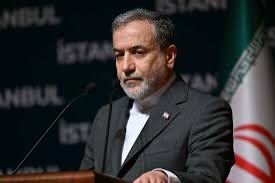
Iranian Foreign Minister Abbas Araghchi
Strait talking: Crucially, the ceasefire statement from Iranian Foreign Minister Abbas Araghchi last night — reposted in full by Trump on Truth Social — states that even during this two-week period, safe passage through the Strait of Hormuz will only be permitted “via coordination with Iran’s Armed Forces.” In other words, the U.S. has already accepted that Iran can impose limits on shipping in the Strait — limits that did not exist before the war began.
And there’s more: Iran is already charging punitive tolls for passage through the strait, and AP reports this will continue during the ceasefire. Trump’s description of Iran’s 10-point list of demands as “a workable basis on which to negotiate” suggests further concessions are entirely possible. Iran’s national security council is already taking a victory lap, though Trump railed angrily at CNN last night for reporThe ting it.
Much remains unclear. Pakistan — the central mediator — said the ceasefire includes Israeli attacks on Lebanon, but Israel said overnight it does not. There are reports Iran continued firing missiles at neighboring countries after the ceasefire was agreed. And there’s no clarity at all on what happens to Iran’s enriched uranium, though Trump told AFP it will be “perfectly taken care of.”
Just 90 minutes before President Donald Trump’s 8 p.m. deadline to wipe out “a whole civilization” with massive strikes on Iran’s energy infrastructure and bridges, he granted a two-week extension for diplomacy to continue.
“Subject to the Islamic Republic of Iran agreeing to the COMPLETE, IMMEDIATE and SAFE OPENING of the Strait of Hormuz,” Trump said Tuesday on social media, “I agree to suspend the bombing and attack of Iran for a period of two weeks.”
“We have already met and exceeded all Military objectives,and are very far along with a definitive Agreement concerning Longterm PEACE with Iran,” Trump said. A 10-point proposal received from Tehran, he said, was a “workable basis on which to negotiate.”
Trump added, “This will be a double-sided CEASEFIRE!”
After Trump’s announcement, a statement posted by Iranian Foreign Minister Abbas Araghchi, which he attributed to the Supreme National Security Council, said it too was responding to Pakistan’s request and Trump’s “acceptance of the general Framework of Iran’s 10-point proposal for negotiations.”
“If attacks against Iran are halted,” it said, “our Powerful Armed Forces will cease their defensive operations.” For two weeks, it added, “safe passage through the Strait of Hormuz will be possible via coordination” with the Iranian military.
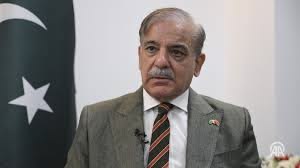
Pakistani Prime Minister Shehbaz Sharif
Trump said his ceasefire decision was in response to an appeal from Pakistani Prime Minister Shehbaz Sharif and military chief Gen. Asim Munir. Pakistan has led a group of mediators, including Egypt and Turkey, that has been looking for an exit to the war that has destabilized the entire region. Trump has forged a particularly close relationship with Munir and, in an interview with Fox News before the extension announcement, described Sharif as “a highly respected man all over.”
In a statement following Trump’s announcement, Sharif said U.S. and Iranian delegations were invited to Islamabad on Friday “to further negotiate for a conclusive agreement to settle all disputes.” He said that the ceasefire would include Lebanon, where Israel is engaged in a massive bombing campaign against Iran-backed Hezbollah.
Unfortunately, Netanyahu didn’t agree to include Lebanon in the ceasefire.
In a brief statement issued in English by his office early Wednesday, local time, Israeli Prime Minister Benjamin Netanyahu said he supported Trump’s “decision to suspend strikes against Iran for two weeks subject to Iran immediately opening the straits and stopping all attacks on the U.S., Israel and countries in the region.”
“Israel also supports the U.S. effort to ensure that Iran no longer poses a nuclear, missile and terror threat. … The United States has told Israel that it is committed to achieving these goals … in the upcoming negotiations,” Netanyahu said.
In a caveat that did not bode well for the negotiations, he added that the ceasefire “does not include Lebanon,” contradicting Sharif’s claims.
The Israel Defense Forces said Wednesday it had “ceased fire in the campaign against Iran” but would continue “its combat and ground operations” in Lebanon.
David Sanger at The New York Times (gift link): Trump Finds His Offramp With Iran. But the Causes of War Remain Unresolved.
Mr. Trump’s tactic of escalating his rhetoric to astronomical levels certainly helped him find an offramp he had been seeking for weeks. That success alone may fuel his belief that the tactics he learned in the New York real estate world — ignore old conventions, make maximalist demands — works in geopolitics as well.
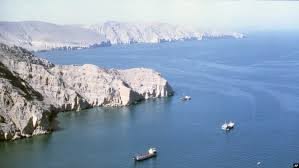
The Strait of Hormuz
Without question, it was a down-to-the-wire tactical victory, one that should, at least temporarily, get oil, fertilizer and helium flowing again through the Strait of Hormuz, and calm markets that feared a global energy shock would lead to a global recession.
But it resolved none of the fundamental issues that led to the war.
It leaves a theocratic government, backed by the vicious Islamic Revolutionary Guard Corps, in charge of a cowed population that has been pummeled by missiles and bombs, and finds itself still under the thumb of a familiar regime, even if under new management. It leaves Iran’s nuclear stockpile in place, including the 970 pounds of near-bomb-grade material that was, in theory, the casus belli of this war.
It left Gulf allies reeling, with the discovery that the glass skyscrapers of Dubai and the desalination plants that make wealthy enclaves in Kuwait livable can be taken out by Iranian missiles and drones. Gas prices have soared, and are about to test Mr. Trump’s promise that they will fall again to old levels as soon as the fighting stops.
And it has left Mr. Trump’s political base fractured, with onetime supporters now accusing the president and his loyalists, starting with Vice President JD Vance, with violating their promise not to get America tied up in unwinnable wars in the Middle East.
It all happened at a moment when Iran has demonstrated that it can absorb 13,000 targeted strikes and still conduct an impressive asymmetric war, choking off oil supplies and sending its cyber army to attack American infrastructure.
Now Mr. Trump faces the challenge not only of reaching a more permanent settlement but proving to the United States and the world that this conflict was worth fighting in the first place. And to do so, he will have to demonstrate that he has removed Iran’s death-grip on the 21-mile channel that makes up the strait, and its chances of ever building a nuclear weapon.
On that point there was an ominous-sounding element buried in the Iranian description of the deal. Shipping would proceed, the Iranian foreign minister, Abbas Araghchi, wrote, but under the control of “Iran’s Armed Forces,” who would determine who passes, and when.
And then there’s that 10-point list of demands.
“Iran remains in the control of the Strait, which was not the case before the war,” said Richard Fontaine, the chief executive of the Center for a New American Security, a Washington think tank. “I find it hard to believe that the United States and the world could accept a situation in which Iran remains in control of a key energy checkpoint indefinitely. That would be a materially worse outcome than existed before the war.”
So might a final agreement. Four weeks ago Mr. Trump was demanding Iran’s “unconditional surrender,’’ saying he would determine when the country had been completely defeated. On Tuesday evening his tone was different. He agreed to base the next two weeks of talks on a 10-point plan Iran submitted to the Pakistanis. Mr. Trump called it “a workable basis on which to negotiate.”
“Have you looked at Iran’s plan?” asked Mr. Fontaine. “It reads like a Tehran wish list from before the war, calling for a global recognition of Iran’s right to enrich uranium, the removal of all American forces from the region and a lifting of economic sanctions. And it calls for the payment of reparations to Iran for damage caused in the war.”
Use the gift link to read the rest, if you’re interested.
Barak Ravid, Dave Lawler, and Marc Caputo at Axios: Exclusive: How Iran’s supreme leader reached a truce with Trump.
Officials in the U.S. and Israel learned of an intriguing development on Monday, with President Trump’s ultimatum looming: Supreme Leader Mojtaba Khamenei had instructed his negotiators, for the first time since the war began, to move towards a deal, according to an Israeli official, a regional official and a third source with knowledge.
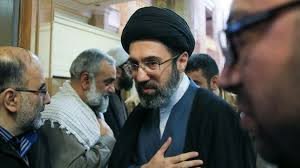
Iranian Supreme Leader Mojtaba Khamenei
The big picture: As Trump was publicly threatening total annihilation, there were signs of diplomatic momentum behind the scenes — though even sources close to Trump didn’t know which outcome to expect right up until a ceasefire was announced….
Setting the scene: On Monday morning, as Trump worked the crowd at a White House Easter celebration, a “very angry” Steve Witkoff was working the phones.
- The U.S. envoy told the mediators the 10-point counter-proposal the U.S. had just received from Iran was “a disaster, a catastrophe,” a source with direct knowledge said.
- That began a “chaotic” day of amendments, with the Pakistani mediators passing new drafts between Witkoff and Iranian Foreign Minister Abbas Araghchi, and the Egyptian and Turkish foreign ministers trying to help bridge gaps.
- By Monday night, the mediators had U.S. approval for an updated proposal for a two-week ceasefire. It was then up to Khamenei — whom the sources said was actively involved in the process on Monday and Tuesday — to make a decision.
The intrigue: The involvement of the new supreme leader was necessarily clandestine and laborious. Facing an active threat of assassination by Israel, Khamenei has been communicating primarily via runners passing notes.
- Two sources described Khamenei’s blessing for his negotiators to cut a deal as a “breakthrough.”
- The regional source said Araghchi also played a central role both in handling the negotiations and in pushing commanders from the Revolutionary Guards to accept a deal.
- China was also advising Iran to seek an off-ramp.
- But at the end of the day, all major decisions on Monday and Tuesday went through Khamenei. “Without his green light, there wouldn’t have been a deal,” the regional source said.
How it happened: It was clearby Tuesday morning that progress was being made, but that didn’t stop Trump from making his most harrowing threat: “A whole civilization will die tonight.”
- Some U.S. media outlets reported Iran was breaking off talks in response. Sources involved in the negotiations told Axios that was not the case, and that there was actually some momentum.
- Vice President Vance was working the phones from Hungary, dealing primarily with the Pakistanis.
- Meanwhile Israeli Prime Minister Benjamin Netanyahu was in frequent contact throughout the day with Trump and his team — though the Israelis were growing increasingly concerned that they’d lost control of the process.
By around noon ET on Tuesday, there was a general understanding that the parties were converging on a two-week ceasefire.
There’s more at the Axios link.
William Kristol at The Bulwark: It’s Not a TACO. It’s a Surrender.
I’m old enough to remember when President Trump assured us, “There will be no deal with Iran except UNCONDITIONAL SURRENDER!”
That was a month ago.
 Since then, Trump has bombed and blustered and caused all manner of damage to Iran, to its neighbors, to the United States, and to the world. But Iran hasn’t unconditionally surrendered. It hasn’t even conditionally surrendered. It’s agreed to a ceasefire followed by negotiations. These negotiations will be based not on Iranian surrender but, as Trump said last night, on a ten-point proposal from Iran that Trump believes “is a workable basis on which to negotiate.”
So we’re off to negotiations. Trump and the Iranian regime are making wildly contrasting claims and promises about what has been or will be agreed to. For now, as Gregg Carlstrom, Middle East correspondent of the Economist, put it:
So if you’re keeping score at home, the ceasefire includes Lebanon but also doesn’t include Lebanon, America has agreed to all of Iran’s demands and Iran has agreed to all of America’s demands, America will recognize Iran’s right to enrichment and also insist on zero enrichment, Hormuz is completely open but also Hormuz is subject to unclear limitations.
Oil market researcher Rory Johnston wittily called this “Schrödinger’s ceasefire.”
But the fog of ceasefire doesn’t mean that we don’t know anything. In fact, we know quite a lot already.
We know that the Iranian regime remains in place. The mullahs and the IRGC remain in control of Iran.
We know that the Iranian regime still has its enriched uranium (even if they can’t get to a lot of it right now). And we know that while its military capabilities have been much degraded, it still has functional missile and drone capabilities. We know there’s no reason not to expect Russia and China to be willing to rearm Iran.
We know that primary and secondary sanctions on Iran seem likely to be relaxed or even lifted.
We know that at least for now the Strait of Hormuz will be reopened. But it’s unclear whether it will remain an international waterway, as it was before, or whether Iran will be able to charge fees or tolls for passage. And we know that the fact that the Iranian regime was able to close the waterway, cause significant damage to the global economy, and live to boast about it, can’t be unseen. Whatever promises are now made, Iran will retain leverage with respect to the strait.
We know more generally that Trump’s war has further shaken any confidence our allies might still have in us. It will be seen as confirmation that Trump’s United States of America has become just another rogue nation in the international arena, if a less disciplined and cunning one than Putin’s Russia or Xi’s China. We know that the old international order with the United States as its anchor is gone.
What we know mocks Trump’s claim in an interview with AFP last night that the United States “won a total and complete victory. One hundred percent. No question about it.”
That’s about all I can handle for today. We have a fool as president, and I’m not sure we can survive the rest of his term. Our only hope is that Democrats can wind the House and Senate and impeach and remove him.
Did you like this post? Please share it with your friends:
Posted: April 1, 2026 | Author: bostonboomer | Filed under: just because | Tags: Benjamin Netanyahu, Birthright citizenship, Byron Noem, Colorado, conversion therapy, Donald Trump, Iran foreign minister Abbas Araghchi, Iran War, israel, Keir Starmer, NASA, NATO, Strait of Hormuz, Supreme Court |
Good Afternoon!!
Trump is struggling to deal with his losing war in Iran. He is supposed to give a speech to the nation about it tonight, something he should have done before he started dropping bombs. He is also threatening to pull the U.S. out of NATO. Here’s the latest.
The Telegraph: Trump interview: I am strongly considering pulling out of Nato.
Donald Trump has told The Telegraph he is strongly considering pulling the United States out of Nato after it failed to join his war on Iran.
The US president labelled the alliance a “paper tiger” and said removing America from the defence treaty was now “beyond reconsideration”.
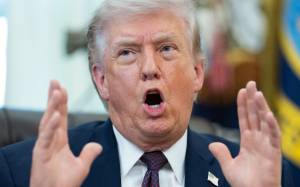 It is the strongest sign yet that the White House no longer regards Europe as a reliable defence partner following the rejection of Mr Trump’s demand that allies send warships to reopen the Strait of Hormuz.
Mr Trump was asked if he would reconsider the US’s membership of Nato after the conflict.
He replied: “Oh yes, I would say [it’s] beyond reconsideration. I was never swayed by Nato. I always knew they were a paper tiger, and Putin knows that too, by the way.” [….]
Mr Trump added: “Beyond not being there, it was actually hard to believe. And I didn’t do a big sale. I just said, ‘Hey’, you know, I didn’t insist too much. I just think it should be automatic.
He is single-handedly wrecking the international alliances that have maintained relative peace since the end of WWII. The rest of the interview consisted mostly of insults to the UK and Prime Minister Keir Starmer.
“We’ve been there automatically, including Ukraine. Ukraine wasn’t our problem. It was a test, and we were there for them, and we would always have been there for them. They weren’t there for us.”
Singling out the UK, the US president rebuked Sir Keir Starmer for refusing to get involved in the American-Israeli war against Iran, suggesting that the Royal Navy was not up for the task.
“You don’t even have a navy. You’re too old and had aircraft carriers that didn’t work,” he said, referring to the state of Britain’s fleet of warships.
Asked whether the Prime Minister should spend more on defence, Mr Trump added: “I’m not going to tell him what to do. He can do whatever he wants. It doesn’t matter. All Starmer wants is costly windmills that are driving your energy prices through the roof.”
After speaking to The Telegraph, The Wall Street Journal reported that Mr Trump had raised the issue of withdrawing from Nato with White House aides.
The newspaper said he had made comments to Mr Rubio and others in private but had made no final decision on the future of the alliance.
No one seems to know what Trump is going to say tonight in his overdue “speech to the nation.” It seems likely he will try to bring an end to U.S. involvement, and leave the mess he created for other countries to clean up In addition to the threat to pull out of Nato, according to the AP:
U.S. President Donald Trump on Wednesday claimed that Iran’s president wanted a ceasefire ahead of his speech to the American people. Trump made the claim on his Truth Social website. Iran’s Foreign Ministry spokesman sIsraid Trump’s remarks were “false and baseless.”
Iran’s Foreign Minister Abbas Araghchi, gave an interview to Al Jazeera: War on Iran: Three key takeaways from Araghchi’s interview with Al Jazeera.
Iranian Foreign Minister Abbas Araghchi has confirmed direct contact with
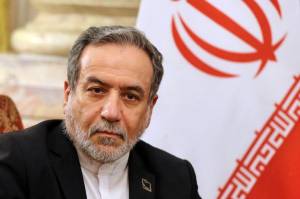
Iranian Foreign Minister Abbas Araghchi says the Strait of Hormuz falls under the territorial control of Iran and Oman File, Khaled Elfiqi AP Photo
Araghchi confirmed that he had held conversations with Witkoff, Trump’s trusted envoy for peace negotiations around the world, during the current conflict.
But the Iranian foreign minister downplayed that contact.
“I receive messages from Witkoff directly, as before, and this does not mean that we are in negotiations,” he said.
“There is no truth to the claim of negotiations with any party in Iran. All messages are conveyed through the Foreign Ministry or received by it, and there are communications between security agencies,” he added.
Araghchi explained that they have never had a “good experience” negotiating with the US, referring to Washington’s decision to withdraw from the Barack Obama-era nuclear deal during Trump’s first term. The US has also twice attacked Iran during negotiations over the past nine months — in June 2025 and with the current war, which began on February 28, at a time when Oman, the mediator between the two sides, had said they were on the cusp of a breakthrough over Tehran’s nuclear programme.
“We do not have any faith that negotiations with the US will yield any results. The trust level is at zero,” Araghchi said, adding: “We don’t see honesty.”
Sounds about right. On the Strait of Hormuz:
In the interview, Araghchi argued that the waters of the Strait of Hormuz fall under the territorial control of Iran and Oman, and that once the war is over, it is these two countries who would decide the future of the waterway.
But he added that the strait should be a “peaceful waterway”.
Gulf nations, including Qatar, have, however, insisted that they be included in any talks to decide the future of the strait.
Araghchi also insisted in the interview that, from Iran’s perspective, the strait is open for ships from most nations.
“Only for the ships of those who are at war with us, this strait is closed. That is normal during war – we cannot let our enemies use our territorial waters for commerce,” he explained.
Read more at the link.
But what about Netanyahu? Will he be OK with Trump wimping out of their war?
Haretz: Netanyahu Declines to Set Timeline for Ending Iran War in pro-Trump Outlet.
Prime Minister Benjamin Netanyahu said Israel and the United States are “beyond the halfway point in terms of success” in their war against Iran, saying that the joint strikes are focusing on the country’s nuclear material.
He added that he doesn’t want to “put a schedule on” the timeline for ending the war with Iran.
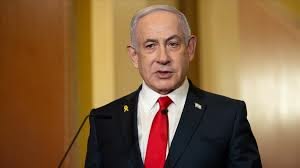 In an interview with the right-wing American media outlet Newsmax, Netanyahu said the Iranian regime is “pursuing nuclear weapons and the means to deliver them to American cities,” adding, “That’s what this war is about – preventing that outcome.”
The Israeli prime minister also said that the attacks have “already degraded their missile capabilities, destroyed factories, and eliminated key nuclear scientists.”
He appeared to be sending messages to Trump in the interview:
Iran “killed and maimed more Americans than any other force in recent decades,” Netanyahu told Newsmax, saying Tehran also tried to assassinate U.S. President Donald Trump. “Thousands and thousands killed and maimed in Afghanistan by Iranian IEDs. They bombed our embassies. They tried to kill President Trump twice. They’re still trying to kill him.”
According to Netanyahu, Iran has openly shown it is a threat to the West. “Most importantly, is they they chant ‘Death to America.’ They also say ‘Death to Israel.’ But they say America is the Great Satan. They’re religious zealots, and they have to wipe out Western culture led by America,” he said.
Netanyahu also said Iran is more dangerous to the United States than North Korea, China and Russia. “I don’t hear North Korea chanting ‘Death to America.’ I don’t hear China chanting … I don’t hear Russia,” he said.
I guess we’ll find out something about Trump’s plans tonight in his speech–if he makes any sense, which is unlikely.
According to Marc Caputo and Barak Ravid at Axios: Trump’s mixed messages on Iran perplex his own team.
President Trump isn’t just befuddling foreign leaders and financial markets with his mixed signals on Iran. Advisers who speak regularly with the president tell Axios they’re just as uncertain.
Why it matters: Trump’s off-the-cuff musings and Truth Social postings can have life-or-death consequences for the war, and massive implications for the market. Then the cycle restarts without any lasting clarity.
Between the lines: Some Trump aides and allies say he’s mostly improvising rather than following any clear plan.
- He likes to keep his options open, spitball with different audiences, then capitalize if he thinks he sees an opportunity, they say.
- Aides have been convinced at various points that Trump was leaning toward a major escalation, and at others that he was eager for a swift resolution. “Nobody knows in the end what he’s really thinking,” a senior adviser said.
- “They had a plan for the first week and since then, they are making the plan up as they go along,” a former U.S. official said.
Others claim it’s all by design. “That’s the plan — for you to not have a clue,” Sen. Lindsey Graham (R-S.C.), who spoke to Trump on Monday, told Axios.
Read more at Axios.
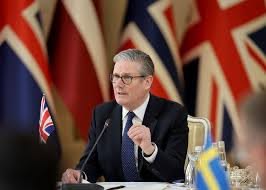
Keir Starmer
One more bit of Iran news from The Guardian: Britain to host 35 countries for strait of Hormuz talks, says Starmer.
The UK will convene 35 countries – excluding the US – to explore ways to reopen the strait of Hormuz, the vital shipping route for oil and gas that has been blocked by Iran.
Keir Starmer, the prime minister, said the next phase of discussions in the joint British and French efforts to secure the waterway would be held on Thursday, with Yvette Cooper, the foreign secretary, alongside international leaders….
Starmer said on Wednesday the meeting would bring together 35 countries to “assess all viable diplomatic and political measures we can take to restore freedom of navigation, guarantee the safety of trapped ships and seafarers and to resume the movement of vital commodities”.
In other news, Trump attended the Supreme Court session his morning on his efforts to end birthright citizenship. No other president has done that.
The Washington Post: Supreme Court heard birthright citizenship case with Trump in attendance.
The Supreme Court heard arguments Wednesday over the constitutionality of President Donald Trump’s effort to ban birthright citizenship. The justices questioned the attorneys about the definition of “domicile,” core to the government’s argument that only children of immigrants who are domiciled in the United States should receive birthright citizenship. In an indication of the political stakes in the case, Trump attended the hearing while Solicitor General D. John Sauer made his arguments, the first time a sitting president is known to have done so. Arguments concluded after Sauer made his rebuttal.
American Civil Liberties Union Legal Director Cecillia Wang argued for the plaintiffs, immigrants using pseudonyms. The ACLU and other groups challenged Trump’s order, saying it violates the 14th Amendment, which grants citizenship to “all persons” born or naturalized in the United States.
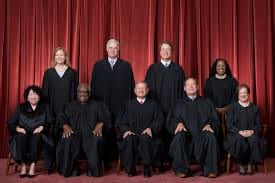 In the hearing, Sauer argued that children born to parents without permanent immigration status should not be granted citizenship, upending the long-settled principle that nearly everyone born on U.S. soil is automatically a citizen.
A ruling upholding Trump’s order could have sweeping political, economic and social ramifications….
ACLU Legal Director Cecillia Wang said the 14th Amendment does not allow Congress to add more exceptions to the birthright citizenship rule.
Justice Brett M. Kavanaugh replied: “I guess the answer you just gave means they don’t have any authority to look at this, even if they passed it 435 to 0 in the House and 100 to 0 in the Senate. Your point is, no, they’re closed. They’re frozen forever.”
“Correct,” Wang said….
Arguments concluded after Solicitor General John D. Sauer made his rebuttal.
Congress “in 1866 had a very, very clear understanding that the children of the newly freed slaves have the requisite allegiance to the United States,” he said in his closing remarks. “This was all about overruling the grave injustice of Dred Scott and making sure that allegiance was granted to the children of slaves.”
“Thank you, counsel, general. The case is submitted,” Chief Justice John G. Roberts Jr. said, as he does when arguments end in every case.
At AP, Mark Sherman analyzed the court session: Supreme Court casts doubt on Trump’s bid to limit birthright citizenship as he attends arguments.
The Supreme Court is casting doubt on President Donald Trump’s restrictions on birthright citizenship in a consequential case that was magnified by Trump’s unparalleled presence in the courtroom.
Conservative and liberal justices on Wednesday questioned whether Trump’s order declaring that children born to parents who are in the United States illegally or temporarily are not American citizens comports with either the Constitution or federal law.
Trump, the first sitting president to attend arguments at the nation’s highest court, spent just over an hour inside the courtroom for arguments made by the Republican administration’s top Supreme Court lawyer, Solicitor General D. John Sauer. The president departed shortly after lawyer Cecillia Wang began her presentation in defense of broad birthright citizenship.
Trump heard Sauer face one skeptical question after another. Justices asked about the legal basis for the order and voiced more practical concerns.
“Is this happening in the delivery room?” Justice Ketanji Brown Jackson asked, drilling down into the logistics of how the government would actually figure out who’s entitled to citizenship and who’s not….
“How much of the debates around the 14th Amendment had anything to do with immigration?” Thomas asked, pointing out that the purpose of the amendment was to grant citizenship to Black people, including freed slaves.
The justices are hearing Trump’s appeal of a lower-court ruling from New Hampshire that struck down the citizenship restrictions, one of several courts that have blocked them. They have not taken effect anywhere in the country.
The case frames another test of Trump’s assertions of executive power that defy long-standing precedent for a court that has largely ruled in the president’s favor — but with some notable exceptions that Trump has responded to with starkly personal criticisms of the justices. A definitive ruling is expected by early summer.
Yesterday the Supreme Court voted 8-1 that conversion therapy cannot be banned in Colorado.
Chris Geidner at Law Dork: Supreme Court holds that Colorado’s conversion therapy ban “censors” talk therapists.
The U.S. Supreme Court on Tuesday held, on an 8-1 vote, that Colorado’s law banning therapists from engaging in conversion therapy with minor patients is presumptively unconstitutional as to talk therapy, deeming the law “an egregious form“ of speech regulation that almost always violates the First Amendment.
Only Justice Ketanji Brown Jackson dissented from the court’s decision — warning that the court might have made talk therapy “effectively unregulatable” and that the “fallout could be catastrophic.“ Taking the rare step of announcing her dissent from the bench, Jackson declared that the majority got it “wrong as a matter of precedent, first principles, and history.”
Justice Neil Gorsuch wrote the court’s majority opinion, holding that lower courts had applied the wrong standard for addressing Kaley Chiles’s First Amendment challenge to the state’s ban on conversion therapy — efforts to change a patient’s sexual orientation or gender identity.
As with his opinion in the wedding website case in 2023, 303 Creative v. Elenis, Gorsuch waved broadly at his purpose being to protect free speech and to stop, as he wrote on Tuesday, “censorious governments.“
The proper standard to be applied in Chiles’s case, the court held, is a particularly skeptical form of strict scrutiny because the law is a content-based regulation and, further, includes “viewpoint restrictions” by banning efforts to change a person’s sexual orientation or gender identity and allowing efforts to affirm a patient’s sexual orientation or gender identity. Gorsuch wrote that Chiles’s challenge would likely succeed when the case goes back to the lower courts because “Ms. Chiles seeks to engage only in speech, and as applied to her the law regulates what she may say.“
I guess the solution is public education about the research that shows conversion therapy doesn’t work. But that might not protect children in right wing religious families, especially if they are home schooled.
A few more stores of possible interest:

NASA astronauts Reid Wiseman, Artemis II commander, from left, Victor Glover, Artemis II pilot, Christina Koch, Artemis II mission specialist, and CSA (Canadian Space Agency) astronaut Jeremy Hansen, Artemis II mission specialist, right, in a group photograph as they visit NASA’s Artemis II SLS (Space Launch System) rocket and Orion spacecraft. (Bill Ingalls/NASA via AP)
AP: NASA begins fueling rocket to launch astronauts on the first lunar trip in half a century.
CAPE CANAVERAL, Fla. (AP) — NASA began fueling its moon rocket Wednesday for humanity’s first lunar trip in more than half a century, aiming for an evening liftoff with four astronauts.
Tensions were high as hydrogen fuel started flowing into the rocket hours ahead of the planned launch. Dangerous hydrogen leaks erupted during a countdown test earlier this year, forcing a lengthy flight delay.
By mid-morning, no leaks had been reported.
The launch team needs to load more than 700,000 gallons of fuel (2.6 million liters) into the 32-story Space Launch System rocket on the pad before the Artemis II crew can board.
Read more at the link. I had no idea this was happening until I got a message from JJ this moring.
The New York Times: Federal Judge Approves Trump Effort to Obtain List of Jews From Penn.
The Trump administration was within its rights to demand that the University of Pennsylvania turn over information about Jews on campus as part of a federal investigation into discrimination at the school, a federal judge decided Tuesday.
The government’s investigation had united Penn leaders with Jewish students and faculty members as they opposed the Equal Employment Opportunity Commission’s subpoena. Many on campus drew parallels between the government’s approach and methods deployed in Nazi Germany.
But the Trump administration has said that its request was typical for discrimination investigations to seek potential victims and witnesses, and Judge Gerald J. Pappert of Philadelphia’s Federal District Court agreed on Tuesday. He gave Penn until May 1 to comply with the administration’s subpoena, though the ruling appeared unlikely to quell the debates around how the administration has pressured top American universities.
Judge Pappert, an appointee of former President Barack Obama, appeared to hint at the discomfort that the government’s subpoena had prompted and at the accusations that the E.E.O.C. had gone too far with its tactics, especially a demand for information tied to groups “related to the Jewish religion.”
“Though ineptly worded, the request had an understandable purpose — to obtain in a narrowly tailored way, as opposed to seeking information on all university employees, information on individuals in Penn’s Jewish community who could have experienced or witnessed antisemitism in the workplace,” Judge Pappert wrote in his 32-page opinion, issued three weeks after he heard oral arguments.
I don’t know. This sounds pretty creepy to me.
One more from Shawn McCreesh at The New York Times (gift link): In South Dakota, Neighbors Feel Sorry for Kristi Noem’s Husband.
That couldn’t be him, could it?
The cartoonishly large breasts. The pink spandex. The come-hither stare.

Byron Noem
“Must be A.I.,” a burly cattle rancher named Kevin Ruesink said as he inspected pictures of his neighbor Bryon Noem that had been published by The Daily Mail on Tuesday morning. The rancher was playing pinochle in the back of a convenience store with five other men in the tiny town of Castlewood, S.D., not far from the Noem family farm.
These men all knew Bryon Noem as the nice, tall insurance salesman who married Kristi Arnold, the town beauty queen who grew up to be governor. But now there were these pictures.
The rancher squinted at them with a mixture of suspicion and pity. “I grew up playing ball with Bryon,” he said. “I’ve never known him to be part of stuff like that. I don’t believe that at all.”
The British tabloid report on Tuesday was the latest and most dramatic development in the saga of Kristi Noem, who was sacked as homeland security chief earlier this month, the first Trump cabinet member to get the old heave-ho this term. She quickly put out a statement saying that she was “devastated” by the images of her husband and that “the family was blindsided by this.”
In response to multiple requests for an interview, Mr. Noem wrote in a text message on Tuesday: “I will at some point. Today is not the day. I appreciate your heart.”
While the pictures of Ms. Noem’s husband with what appear to be enormous inflated balloons under his spandex shirt ricocheted across the internet, becoming a political punchline for her many, many enemies, the reaction back on the proverbial ranch was a little more … tenderhearted.
That’s kind of a refreshing response from the townsfolk. Use the gift link to read more if you’re interested.
Those are the stories that caught my attention this morning. What stories have you been following?
Did you like this post? Please share it with your friends:
Posted: March 28, 2026 | Author: bostonboomer | Filed under: just because | Tags: Donald Trump, Houthis join Iran war, Iran War, Marco Rubio, No Kings Day, research on effects of peaceful protests, Strait of Hormuz, U.S. service members wounded in Saudi Arabia |
Good Afternoon!!

By Roxanne Driedger
Today is the third international “No Kings” protest, and it is expected to be the largest one yet.
NBC News: Third round of ‘No Kings’ protests is expected to be the largest so far, organizers say.
Millions are expected to gather across the country and around the world on Saturday for a third round of “No Kings” protests against President Donald Trump. Organizers predict that it will be the “single largest non-violent day of action” in American history.
Saturday’s “No Kings” marches, of which there are more than 3,200 planned across all 50 states and several continents, come as Trump faces increasing scrutiny over the war with Iran, the rising cost of gas and how his administration has executed its mass deportation agenda.
“Since the last No Kings [protests], we’re seeing higher gas prices and groceries, all while there’s an illegal war in Iran,” Sarah Parker, a national coordinator for the group 50501, told reporters Thursday on a national press call previewing Saturday’s events.
“We’ve also seen our neighbors executed, American citizens executed, and our children carrying the burden of owning their own power and walking out of school in defiance,” Parker added. “The people of America are pissed. They are the ones demanding for no kings.”
A national NBC News poll from earlier this month found that majorities of registered voters in the U.S. disapprove of the president’s handling of immigration, Iran and inflation and the cost of living.
Saturday’s nationwide demonstration was planned in the wake of the deaths of two Americans — Alex Pretti and Renee Good — in January in Minnesota at the hands of federal agents. Immigration officers were deployed to the state to carry out mass deportations and faced scrutiny over their brutal tactics toward immigrants and protesters.
Organizers, who hail from left-leaning groups including Indivisible, Public Citizen, MoveOn, the American Civil Liberties Union and the National Action Network, expect the third No Kings day of protest to be far larger than the first two. More than 7 million people rallied across the country and around the world during October’s No Kings day of action.
California Representative Ro Khanna writes at MSNOW: The Epstein class thinks it runs America. Today, No Kings protesters send their response.
Thousands of Americans plan to gather on Saturday for No Kings protests across the country. They have a simple message: People are tired of a government that protects the powerful and abandons ordinary Americans.
They are tired of fighting costly and illegal overseas wars while we face an affordability crisis at home. They are horrified by the Trump administration’s cover-up of the Epstein files and the lack of accountability for the rich and powerful who crossed lines. And they are sick of Immigration and Customs Enforcement terrorizing our communities.

By Rebecca Aldernet
As more Americans are sent to fight abroad and the survivors of abuse are silenced at home, people increasingly feel dispensable….
For too long, Americans have seen our leaders fight harder for the Epstein class than for the working class. They have watched our system shield elites instead of delivering fundamentals such as affordable health care, housing and education.
The fight to release the Epstein files exposed not only a broken justice system, but also a deep economic and moral divide.
Jeffrey Epstein built a network of elite and powerful individuals, some of whom believed they could abuse young girls and women — many from working-class backgrounds — without consequences. Many survivors of Epstein’s abuses have courageously spoken out, and over the past year, sparked a moral reckoning in our country. They have exposed a two-tier system of justice that protects the wealthy and powerful and fails those who have been abused.
The administration’s failure to hold accountable those involved in Epstein’s abuses has fueled deep distrust in our government and its ability to deliver for the public good.
Will the protests change anything? Former mainstream journalist and novelist Alissa Valdez-Rodriguez did some historical research on the effects of peaceful protests and reports the results at her Substack Alisa Writes:
Let me start by saying I, like the great Karl Pilkington, hate anything that reeks of “forced fun.” I’m not a joiner. I never had school spirit. I don’t enjoy parades. My idea of hell is karaoke night with coworkers. Come to think of it, my idea of hell might just be coworkers, period. The farther I am from people and, worse, crowds of people united in their quest to All Be Doing Something The Same Way, the happier I am.
But today, like tens of thousands of other cerebral introverts who’d rather be reading in a hammock, I’m lacing up my sneakers, picking up a handmade sign, and throwing myself into a throng of People Who Are Just Fucking Done With This Shit, as I attend one of the 29 No Kings protests scheduled here in New Mexico. I will need days and days in the forest to recover.
I’m going because it’s important. I didn’t used to think it was. I was one of those cynics who’d ask: Does protest actually do anything? But rather than just assume the worst, I decided to do what I always do, and research the answer before spewing an opinion. Imagine my surprise when I was proven wrong by, you know, facts.
Massive nonviolent protest works.
It works a lot better than armed protest.
Really?
In 2011, Harvard political scientist Erica Chenoweth published what became one of the most cited works in the study of political change. She had started her research expecting to prove the opposite — that armed resistance was more effective than nonviolent campaigns. The results upended everything she thought she knew. According to Chenoweth and her co-author Maria Stephan, from 1900 to 2006, campaigns of nonviolent resistance were more than twice as effective as their violent counterparts in achieving their stated goals. Their dataset of 323 major campaigns showed that 53 percent of nonviolent campaigns succeeded — against just 26 percent of violent revolutions.
Chenoweth also found a threshold, what she called the 3.5 percent rule: every movement that mobilized at least 3.5 percent of a country’s population was uniformly successful. In the United States today, that number is roughly 11.5 million people. The No Kings movement is moving in that direction, faster than most movements in American history.
The question isn’t whether protest works. The question is whether we have the patience and the creativity to see it through. And as we’re facing what amounts to a rising fascist dictatorship backed by American intelligence operations, it might make sense to see how some of our hemispheric neighbors have handled something similar in the past.
Read details about the research at the link above. There’s no paywall.
Here’s a little humorous protest someone pulled off yesterday:
The Washington Post: Post reporters called the White House. Their phones showed ‘Epstein Island.’
On Wednesday, the first lady kicked off a “Fostering the Future Together” summit at the White House with a humanoid robot called Figure 03 that greeted the assembled spouses of world leaders in 11 languages. As the robot loped awkwardly, the first lady walked beside it with a deliberate, poised foot-over-foot gait that brought to mind her past as a model.

By Suzanne Stewart
The Style section wanted tofind out what designers one wears when hosting the “first American-made humanoid guest in the White House.” So we called the White House.
But as the phone rang, the name on thescreen attached to the number read “Epstein Island.”
It was not a wrong number. That’s what the phone displayed when some Washington Post journalists called the White House switchboard.
Those who saw “Epstein Island” were using Android phones from Google’s Pixel brand. Calling the White House from iPhones did not show a name on the screen.
After The Post notified Google about the on-screen naming, company spokesman Matthew Flegal said Google identified what he referred to as a “fake edit” in Google Maps that was “briefly” picked up in the call identification feature of some Android phones.
Flegal said that the company reversed the edit. He said it violated Google’s policies, and that the user responsible was blocked from making further edits.
Hahaha!
Unfortunately, Trump’s war in Iran continues and he still has no idea what he’s doing. He’s also bored with the war, according to White House insiders. Based on his recent idiotic Cabinet meeting, he’s much more interested in his ballroom, wrecking the Kennedy Center, and rambling about sharpies than focusing on the war he started.
Common Dreams: ‘Beyond Despicable,’ Says Democrat After White House Official Says Trump ‘Bored’ With Iran War.
It’s been less than a month, and President Donald Trump’s war of choice in Iran has unleashed a cascade of consequences for countless human lives and the global economy that are far from resolved—but he is reportedly getting tired of the illegal war he started.
MS NOW reported on Friday that White House sources believe that Trump is “getting a little bored” with the Iran war and “wants to move on” to other initiatives.
MS NOW’s report on Trump’s feelings about the war was echoed by The Wall Street Journal, which on Thursday reported that the president has told associates that he wants to wrap up the war in the coming weeks and avoid a protracted conflict.
The problem, sources told both MS NOW and the Journal, is that there is no simple way to wrap up the conflict given that Iran is continuing to block passage through the Strait of Hormuz, which is sending global energy costs spiking.
And while Trump has shown the ability to simply lie about his achievements in the past and have his supporters believe them, one former Trump official told MS NOW that just won’t work if Americans keep paying $4 per gallon of gas.
Trump has been sending idiotic mixed messages about the war since the beginning. Because he’s a demented idiot, although the mainstream media won’t come out and say that.
Erica L. Green at The New York Times writes (gift link): Wild Ultimatums and ‘Bombing Our Little Hearts Out’: A Portrait of Trump at War.
President Trump was fresh off the golf course, and his fury was building.
It was March 21, and as he settled back into his Mar-a-Lago estate for the evening, he was reading another news account about how, for all the military success the United States had in Iran, he had yet to achieve his political objectives.

Otar Imerlishvili, The Girl with the Book
At 7:44 p.m., the president made his frustration known with an extraordinary ultimatum: If Iran did not reopen the Strait of Hormuz within 48 hours and allow much of the world’s oil and gas to flow through, he would bomb Iran’s civilian electric power plants. It was the kind of attack that could constitute a war crime under the Geneva Conventions.
But just hours before the Monday deadline expired, Mr. Trump delayed his threat by five days, easing fears of an imminent escalation with profound military, diplomatic and economic implications.
Still, he warned that “we’ll just keep bombing our little hearts out” if Iran would not make a deal, and as the week progressed he made new threats that left allies off balance and spooked the markets. So on Thursday afternoon, after stocks on Wall Street suffered their largest daily decline since the start of the war, he added another 10 days to the clock, again seeking to ease the fears ignited by his own hard-line positions.
“Bombing our little hearts out.” Can you imagine FDR saying that?
It is too soon to know whether the extra time will result in productive diplomacy. But it is already clear that Mr. Trump’s wild swings — from optimism to frustration and anger, from de-escalation to escalation — have combined to give his management of the war an erratic, make-it-up-as-it goes feel.
Ever since the United States, alongside Israel, launched the war on Feb. 28, Mr. Trump has vacillated between chest-thumping about U.S. military superiority and deep frustration that the tactical achievements on the battlefield did not seem to be producing the strategic outcome he predicted.
Although the supreme leader and many top military and intelligence leaders have been killed, the regime in Tehran remains in control. Iran’s leaders have all but sealed off the Strait of Hormuz, sending gas prices skyrocketing and rattling investors. And Iran retains control of the material it would need to produce a nuclear weapon, the main threat cited by Mr. Trump in taking the nation into the war in the first place.
Mr. Trump has said he understands there will be short-term pain from the war, which he accepts as a necessary price to ensure that Iran cannot have a nuclear weapon. And the president’s allies have always said that his unpredictability is his superpower, and that it keeps his enemies guessing.
Really? I don’t think it’s working.
Here’s something that might interest Trump more than his “boring” but lethal war.
The New York Post: Trump considers renaming Strait of Hormuz after either America or himself — once he evicts Iran.
President Trump is prioritizing taking control of the Strait of Hormuz as he grows frustrated with the lack of help from allies to force open the crucial waterway. And once Trump ends Iran’s reign of terror over the shipping route, he’s considering rechristening it the “Strait of America” or even naming it after himself, sources told The Post.
“We are taking the Strait back. It’s guaranteed, and they will never blackmail us on that strait,” one senior administration official said. “You can take it to the bank.”

By Olga Samarina
While Trump said Iran is virtually decimated and wants to make a deal, he wants to finish the job in the Middle East — including ensuring Iran can no longer stop shipping and claim authority over the Strait of Hormuz.
“He does believe that if we’re going to guard it, if we’re going to take care of it, if we’re going to police it, if we’re going to ensure free safety through it that, why should we call it that [Hormuz]?” the senior official said.
“Why don’t we call it, you know, the Strait of America?”
Trump told a Saudi investor forum Friday evening in Miami that he might decide to call the Strait after himself, rather than America.
“They have to open up the Strait of Trump — I mean Hormuz,” Trump said….
The name of the energy bottleneck on the southern coast of Iran is linked to the medieval Kingdom of Hormuz, whose own name is theorized to derive from the Persian word Hur-Mogh, meaning “Place of Dates,” or the name of the Zoroastrian God of light Ahura Mazda.
The long-gone emirate, which became a vassal of the Portuguese maritime empire in the 1500s, controlled Hormuz Island, a salt dome smaller than Manhattan, past which about a fifth of global oil exports flowed before the war.
The renaming concept gained traction by unlikely means — after an image of an apparently phony Truth Social post purportedly authored by the president showed a map of the strait with the new name.
I’m making myself sick with this stuff.
Finally, I’ve avoided focusing on the war itself–because it’s Caturday and No Kings Day, and I don’t want to get any more depressed than I already am. But here is the latest from the war:
NPR: Over a dozen U.S. soldiers injured in attack on Saudi base as Iran-backed Houthis enter war.
At least 15 U.S. service members were wounded Friday in an Iranian strike on a Saudi air base that hosts American troops, according to the Associated Press, including at least five in serious condition. The missile and drone strikes targeted Saudi Arabia’s Prince Sultan Air base, located outside the capital Riyadh.
A U.S. official, who was not authorized to speak publicly, told NPR that some aircraft were apparently damaged as well.
Iran released Chinese satellite photos of what they say are burning aircraft at the base. It said one of the tankers, which refuel fighter jets in the air, was destroyed and three others damaged.
Politico: Iran-backed Houthis join Mideast war in sharp escalation.
The Middle East conflict escalated sharply overnight, as the Iran-backed Houthi rebels in Yemen launched their first missile toward Israel since the war began and Tehran attacked a U.S. military base in Saudi Arabia.
The Israeli military said it intercepted a missile launched from Yemen early Saturday, with Houthi forces claiming responsibility shortly afterward.

By Gilles Peyrache
The strike followed days of signaling from the Houthis that they were preparing to enter the conflict, raising renewed concerns about the security of the Red Sea shipping corridor, vital for global trade already disrupted by previous attacks….
In a video statement on Saturday, Houthi military spokesperson Yahya Saree said the rebels’ attacks targeted “sensitive Israeli military positions” and came after continued targeting of infrastructure in Iran, Lebanon, Iraq and the Palestinian territories.” He indicated that strikes would continue.
Elsewhere in the region, drones struck the airport in Kuwait damaging its radar. And Iran’s military said it targeted a U.S. logistics vessel near the Omani port of Salalah.
Authorities in Abu Dhabi said falling debris from a missile interception injured six people. The United Arab Emirates said its forces were intercepting missile and drone attacks from Iran.
Axios: Rubio tells allies Iran war will continue 2-4 more weeks.
Secretary of State Marco Rubio told G7 foreign ministers on Friday that the war with Iran will continue for another two to four weeks, three sources with direct knowledge tell Axios.
Why it matters: This is the first time a senior U.S. official suggested the war would continue beyond the four to six-week timeframe President Trump has discussed since the war started.
- Rubio also claimed during Friday’s meeting in France that the U.S. was close to holding serious negotiations with Iran. At the same time, thousands more troops are heading to the region and the administration is considering escalatory options that would involve ground forces.
- Rubio stressed that the U.S. is determined to achieve all of its objectives in the war.
Inside the room: Rubio told his G7 counterparts that the U.S. is still communicating with Iran through mediators, rather than directly, the three sources said.
- He said there is uncertainty about who is actually making the decisions in Tehran at the moment.
- Rubio added that there are two Iranian officials who want to hold negotiations with the U.S., but they need approval from the top leadership.
- Rubio said it’s hard for the mediators to communicate with Iranian officials because they are staying away from their phones out of fear they will be located and assassinated. That has slowed the pace of communications, Rubio said, according to the sources.
Zoom in: One of the sources said Rubio stressed the U.S. doesn’t need G7 countries to help reopen the Strait of Hormuz, but wants its allies to join a maritime task force to police the strait after the war is over.
That’s it for me today. What’s on your mind?
Did you like this post? Please share it with your friends:
Posted: March 25, 2026 | Author: bostonboomer | Filed under: just because | Tags: 82nd Airborne, Donald Trump, German President Frank-Walter Steinmeier, Iran military spokesman Ebrahim Zolfaghari, Iran War, Iran war negotiations, Jack Smith, Jared Kushner, JD Vance, Pakistan, Paul Krugman, Steve Witkoff, Strait of Hormuz, TREASON |
Good Day!!
I’ve been scanning the headlines for awhile now, trying to make sense of what’s happening in Trump’s war with Iran. I’m still confused.
Trump keeps saying that he’s already won the war, but he’s sending thousands of troops to the region. He apparently sent a peace plan to Iran that they have already rejected, offering an alternative proposal.
CNN has a summary of the latest moves in the war: What to know on Day 26 of the Iran war: Tehran taunts Trump, US troop deployment.
Iran’s military has mocked the Trump administration’s efforts to strike a deal to end the war, saying the United States is only “negotiating with yourselves.”
Despite President Donald Trump’s optimism that a deal with Tehran is in sight, sources have told CNN that around 1,000 US soldiers with the Army’s 82nd Airborne Division are expected to deploy to the Middle East in the coming days, suggesting the president is keeping his options open.
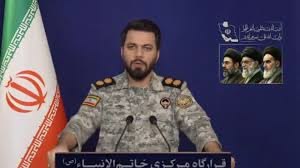
Ebrahim Zolfaghari
The latest on the talks:
- Iran taunts Trump: Ebrahim Zolfaghari, a spokesman for Iran’s military, taunted the US leadership in a message broadcast Wednesday on state television. “Has the level of your internal conflicts reached the point where you are negotiating with yourselves?” he asked. Zolfaghari said the US’ “strategic power” had turned into a “strategic defeat.”
- Trump touts talks: That mocking message came after Trump expressed optimism over a deal to end the war, saying that Vice President JD Vance, Secretary of State Marco Rubio and others were leading negotiations.
- 15-point plan: The US has shared a 15-point list of expectations with Iran via Pakistan, with talks between the warring countries floated in Islamabad later this week, two regional sources told CNN. Those points include limits on Tehran’s defense capabilities, a cessation of support for proxies and an acknowledgement of Israel’s right to exist, the sources said.
- Iran shuns Witkoff: Iranian representatives have let the Trump administration know that Tehran does not want to reenter negotiations with the US president’s favored diplomatic duo of Steve Witkoff, his special envoy, and Jared Kushner, his son-in-law, according to two regional sources, who said Tehran would rather deal with Vance.
-
Iran willing to listen: An Iranian source told CNN on Tuesday that Washington had initiated “outreach” in recent days, “but nothing that has reached the level of full-on negotiations.” The source stressed that Iran “is not asking for a meeting or direct talks with the United States but is willing to listen if a plan for a sustainable deal comes within reach” that would preserve the regime’s interests. Initially, Tehran had denied any contact with Washington, saying that Trump’s claim of talks was a ruse to lower energy prices and buy time.
There’s much more on what’s happening at the CNN link.
More details from BBC News: Pakistan officials say Iran receives 15-point US plan – AP.
The Associated Press news agency reports that Iran has received a 15-point plan from the US for reaching a ceasefire in the US-Israel war with Iran, citing two Pakistani officials.
The Pakistani officials reportedly said the proposal broadly covers the following:
- Sanctions relief
- Civilian nuclear co-operation
- A rollback of Iran’s nuclear programme
- Monitoring by the International Atomic Energy Agency
- Missile limits, and access for shipping through the Strait of Hormuz
Pakistan Prime Minister Shehbaz Sharif said earlier that the country was “ready” to host talks for a settlement of the conflict.
Israel’s Channel 12 has also reported on the plan. You can read a full breakdown of the reports in our earlier post.
There’s been no confirmation of the details from the White House. Iranian military has denied it’s negotiating with the US.
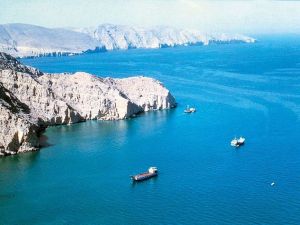
The Strait of Hormuz
Iran has rejected the U.S. plan and offered an alternative. AP: Iran rejects US ceasefire plan, issues its own demands as strikes land across the Mideast.
DUBAI, United Arab Emirates (AP) — Iran on Wednesday dismissed an American plan to pause the war in the Middle East and launched more attacks on Israel and Gulf Arab countries, including an assault that sparked a huge fire at Kuwait International Airport.
Iran’s defiance came as Israel launched airstrikes on Tehran and as the United States deployed paratroopers and more Marines to the region.
Iranian state television’s English-language broadcaster quoted an anonymous official as saying Iran rejected America’s ceasefire proposal and has its own demands for an end to the fighting. “Iran will end the war when it decides to do so and when its own conditions are met,” the hardliner-controlled Press TV quoted the official as saying.
Earlier, two officials from Pakistan, which transmitted the U.S. plan to Iran, described the 15-point proposal broadly, saying it addressed sanctions relief, a rollback of Iran’s nuclear program, limits on missiles and reopening the Strait of Hormuz, through which a fifth of the world’s oil is shipped.
An Egyptian official involved in the mediation efforts said the proposal also includes restrictions on Iran’s support for armed groups. The officials spoke on condition of anonymity to discuss details not yet released.
Some of those points were nonstarters in negotiations before the war: Iran has insisted it won’t discuss its ballistic missile program or its support of regional militias, which it views as key to its security. And its ability to control passage through the Strait of Hormuz represents one of its biggest strategic advantages….
Press TV cited an Iranian five-point plan for a ceasefire coming from the official who rejected the US proposal. That plan included a halt to killings of its officials, means to make sure no other war is waged against it, reparations for the war, the end of hostilities and Iran’s “exercise of sovereignty over the Strait of Hormuz.”
Those measures, particularly reparations and its continued chokehold over the Strait of Hormuz, likely will be unacceptable to the White House.
According to the above AP article, Trump is still claiming that Iran is negotiating with Steve Witkoff and Jared Kushner, but according the BBC article above, Iran has said it won’t talk to them but would talk to J.D. Vance.
Barak Ravid and Marc Caputo at Axios: Iran suspects Trump’s peace talk push is another trick.
Iranian officials have told the countries trying to mediate peace talks with the U.S. that they have now been tricked twice by President Trump and “we don’t want to be fooled again,” according to a source with direct knowledge of those discussions.
The big picture: The U.S. is pushing for in-person peace talks as soon as Thursday in Islamabad, Pakistan. But during the two previous rounds of U.S.-Iran talks, Trump green lit crippling surprise attacks while still claiming to be seeking a deal.
Flashback: Israel attacked Iran with Trump’s backing last June, days before a planned round of nuclear talks.
- Then three weeks ago, the U.S. and Iran reached a tentative agreement in Geneva to continue talks the following week — two days before the U.S. and Israel attacked.
Behind the scenes: Iranian officials have told the mediators — Pakistan, Egypt and Turkey — that U.S. military movements and Trump’s decision to deploy major troop reinforcements have increased their suspicion that his proposal for peace talks is just a ruse.
- To the Trump administration, the massing of forces is a sign he’s serious about negotiating from gunboats, not that he’s negotiating in bad faith. “Trump has a hand open for a deal and the other is a fist, waiting to punch you in the f***ing face,” said a Trump adviser.
- The White House has sent messages to the Iranians that Trump is serious about the negotiations, and floated Vice President JD Vance’s possible involvement in the talks as proof.
- Two sources said Witkoff recommended Vance because of the stature of his office and because the Iranians don’t see him as a hawk.
Read more at Axios.
Trump is ordering troop movements. The Washington Post (gift link): Army paratroopers ordered to Middle East as U.S. weighs next move in Iran conflict.
The Pentagon on Tuesday ordered a couple thousand paratroopers from the 82nd Airborne Division to deploy to the Middle East, U.S. officials said, as President Donald Trump weighs a significant escalation in the U.S.-Israeli war with Iran and declines to rule out putting U.S. troops on Iranian soil.

Army paratroopers assigned to the 82nd Airborne Division at Fort Bragg, North Carolina, prepare to board an aircraft in 2020. (Hubert Delany III AP)
U.S. officials approved written orders for soldiers from the division’s 1st Brigade Combat Team and the 82nd’s headquarters at Fort Bragg in North Carolina, said two U.S. officials and a third person familiar with the move, speaking on the condition of anonymity because of the sensitivity of the issue. Verbal orders previously had been approved, two people said. It is not yet clear whether they will deploy to Iran itself, officials said.
Many of the soldiers are with the division’s Immediate Response Force, a unit that is trained to deploy on 18 hours’ notice for missions as varied as seizing airfields and other critical infrastructure, reinforcing U.S. embassies and enabling emergency evacuations. Immediate Response Force duties rotate among infantry units in the 82nd Airborne Division.
The orders follow weeks of speculation about whether the 82nd Airborne, commanded by Maj. Gen. Brandon Tegtmeier, would join the war, after its headquarters unit abruptly pulled out of a training exercise early this month at Fort Polk in Louisiana as Trump approved a sustained bombing campaign against Iran.
Last week, U.S. officials said the Pentagon was making plans to send soldiers from the 82nd Airborne to key areas in Iran, but it was not yet clear if the administration would approve the deployment to the region or, more specifically, onto Iranian soil.
The Army deployment comes as three warships carrying about 4,500 troops from the Tripoli Amphibious Ready Group neared the Middle East. The group includes the 31st Marine Expeditionary Unit based in Okinawa, Japan — a specialized Marine Corps unit that includes about 2,200 personnel, including an infantry battalion of about 800.
A similar unit, the 11th Marine Expeditionary Unit, recently deployed early from San Diego but is weeks away from arriving in the Middle East. The unit, embarked on warships that include the USS Boxer, could eventually replace or supplement the 31st MEU in the region, officials said.
Use the gift link to read more.
U.S. allies are confused about what Trump is doing. Victor Jack, Chris Lunday and Esther Webber at Politico: Trump’s ‘absurdly incoherent’ Iran pleas leave allies befuddled.
BRUSSELS — Donald Trump’s messaging on what he wants from American allies in his war against Iran is so confusing that any effort to help in reopening the Strait of Hormuz remains deadlocked, according to four European government officials.
Washington has not made any formal requests for equipment, said the officials, who were granted anonymity to speak freely on the sensitive talks, while allies are also reluctant to send military assets to the region over fears they would be attacked by Iran.
German President Frank-Walter Steinmeier
More than 30 nations, including a majority of NATO countries, have pledged “appropriate efforts” to restart shipping through the critical trade chokepoint after the U.S. president slammed allies as “COWARDS” for failing to volunteer their assistance.
But so far, discussions remain in their very early stages, according to government officials from seven European countries.
“One would wish for more predictability, more clarity and more strategic foresight — not only in this case,” German Defense Minister Boris Pistorius told POLITICO on Tuesday, adding: “Let’s wait and see.”
The slow-moving talks reflect Trump’s conflicting messaging more than three weeks into his war against Iran — where he has threatened allies for failing to back his campaign, then said they weren’t needed, all while providing scant detail on how they could support the U.S.
The lack of enthusiasm about getting involved also underscores Europe’s growing self-confidence in dealing with Washington, as the continent increasingly shifts its approach from placating Trump to confronting him over a war allies were not consulted on.
“This war violates international law,” German President Frank-Walter Steinmeier said Tuesday. “There is little doubt that, in any case, the justification of an imminent attack on the U.S. does not hold water.”
Let’s face it: despite journalists’ efforts to make sense of what Trump is up to, it’s highly unlikely that he himself has any clue about what he is doing.
Katherine Doyle, Courtney Kube, and Dan De Luce at NBC News: Inside Trump’s daily video montage briefing on the Iran war.
Each day since the start of the war in Iran, U.S. military officials compile a video update for President Donald Trump that shows video of the biggest, most successful strikes on Iranian targets over the previous 48 hours, three current U.S. officials and a former U.S. official said.
The daily montage typically runs for about two minutes, sometimes longer, the officials said. One described each daily video as a series of clips of “stuff blowing up.”
The highlight reel of U.S. Central Command bombing Iranian equipment and military sites isn’t the only briefing Trump gets about the war. He’s also updated through conversations with top military and intelligence advisers, foreign leaders and news reports, the officials said.
But the video briefing is fueling concerns among some of Trump’s allies that he may not be receiving — or absorbing — the complete picture of the war, now in its fourth week, two of the current officials and the former official said.
They said the videos are also driving Trump’s increasing frustration with news coverage of the war. Trump has pointed to the success depicted in the daily videos to privately question why his administration can’t better influence the public narrative, asking aides why the news media doesn’t emphasize what he’s seeing, one of the current U.S. officials and the former U.S. official said.
That sounds about right for Trump’s childish comprehension level.
In non-war news, Trump’s theft of government documents after his first term is back in the headlines.
Carol Leonnig and Jacqueline Alemany at MSNOW: Trump appeared to have business motive for keeping classified documents, Jack Smith finds.
Special counsel Jack Smith gathered evidence that then-candidate Donald Trump took many top secret documents that related to his worldwide business interests, and investigators considered this a likely motive for Trump concealing them at his Florida club after he left the White House, according to newly released case records.
The special prosecutor also had evidence indicating that after leaving office Trump had shown a classified map to passengers on a private plane, including his future chief of staff, Susie Wiles, and took at least one document that was so secret that only six people had authority to review it, according to a memo reviewed by MS NOW and cited by the House Judiciary Committee’s ranking Democrat, Rep. Jamie Raskin of Maryland.

Trump’s stash of documents in a Mar-a-Lago bathroom
Trump’s reason for taking hundreds of pages of classified documents when he left office in January 2021 — and then concealing them when the Justice Department subpoenaed him for their return in May 2022 — has been one of the larger mysteries of the case. FBI agents conducting an unannounced search of Trump’s Mar-a-Lago residence in August 2022 discovered hundreds more pages of top secret records that Trump and his lawyers had failed to return to the government after claiming they had fully returned all classified materials.
In a January 2023 “progress memo” reviewed by MS NOW, Smith’s office discussed the possible motive after the FBI discovered that Trump held on to many documents related to his businesses.
“Trump possessed classified documents pertinent to his business interests — establishing a motive for retaining them,” according to the memo, which tracked progress in the documents and election-interference investigations. “We must have those documents.”
In a letter to Attorney General Pam Bondi on Tuesday, Raskin insisted that Trump’s Justice Department has sought to cover up the details of Trump’s “hoarding” of classified government secrets and storing them in his Mar-a-Lago club’s showers and closets — which put national security at risk — as well as the clues to Trump’s motives for doing so.
“These new disclosures suggest that Donald Trump stole documents so sensitive that only six people in the entire U.S. government had access to them, that the documents President Trump stole pertained to his business interests,” Raskin wrote to Bondi.
“This glimpse into the trove of evidence behind the coverup reveals a President of the United States who may have sold out our national security to enrich himself.”
More from Jeremy Roebuck and Maegan Vazquez at The Washington Post: Trump showed classified map to passengers on his plane in 2022, memo says.
President Donald Trump showed a classified map he retained from his first term in office to passengers on a 2022 private plane flight and retained another record so sensitive that only six high-ranking government officials had access to it, according to a prosecution memo released to Congress this week.
The memo, which was obtained by The Washington Post, was penned as investigators moved toward indicting Trump on charges of illegally retaining sensitive government material after he left the White House. It offers a snapshot of an early moment in Smith’s investigation and adds new shading to the public understanding of Smith’s probes, even as a final report on his findings remains under court seal.
The memo, for instance, reveals that Smith’s team gathered at least some evidence to suggest that Trump had retained classified material pertinent to his personal business interests and that prosecutors were investigating whether his decision to hold on to those records was motivated by financial gain.
Ya think?
The eventual indictment — filed against Trump five months after the memo was written — did not mention Trump’s business interests as a possible motive. That could suggest prosecutors ultimately concluded they did not have sufficient evidence to prove that theory at trial. It is also not uncommon for prosecutors to leave some allegations out of their initial charging documents, even if they intend to prove them later at trial.
Jack Smith
The memo recounts an alleged incident in which Trump, on a June 2022 flight to his golf club in Bedminster, New Jersey, allegedly shared a classified map with passengers. Among them, according to the memo, was Susie Wiles, then the CEO of Trump’s super PAC, who has since become Trump’s White House chief of staff. The memo did not detail what the map showed.
Smith’s 2023 indictment of Trump included a similar claim that Trump in 2021 had shown others a classified map tied to a military operation and boasted that he had access to a “plan of attack” that the Pentagon had prepared for him.
The Justice Department shared those findings, detailed in a January 2023 briefing document written by then-special counsel Jack Smith’s team, with lawmakers as they conduct a review of Smith’s now-abandoned efforts to prosecute Trump.
Has Trump shared these documents with Putin and his other world leader pals? I’d be surprised if he hasn’t. Remember, those documents were returned to Trump after the charges were dropped.
One more story before I wrap this up. Paul Krugman says that whoever is cashing in on Trump’s war announcements is committing treason.
From Heather Cox Richardson today: Letters from an American.
This morning, economist Paul Krugman came right out and said it: “People close to Trump are trading based on national secrets.” Another word for that, he said, is “treason.” The evidence for such a claim is the sudden and isolated jump in trading volume in S&P 500 and oil futures about 15 minutes before Trump suddenly announced that the U.S. and Iran were in negotiations to end the war—an announcement that turned out to be false.
The oil futures trade alone was worth about $580 million, the Financial Times estimated. As Krugman notes, exploiting confidential information for financial gain, otherwise known as “insider trading,” is illegal. But exploiting confidential information about national security for private financial gain is something else again. It puts profit-making above Americans’ safety.
“I’d very much like to know exactly who was making those trades yesterday morning,” Krugman wrote. “Were they people directly in the know, or billionaires/traders who paid people in the know for tips?”
That’s all I have for you today. What’s on your mind?
Did you like this post? Please share it with your friends:


 peej
peej Carissa
 bostonboomer
 dakinikat
 ecocatwoman
 jjlo
jjlo mablue2
 Mama Lopez
 peggysue22
 quixote
 skydancingguestblogger
 Mona (aka Wonk the Vote)



 Sky Dancing
Recent Comments