
Wild Wednesday Reads: “Call It Evil”
Posted: September 9, 2026 Filed under: just because | Tags: Chris Pappas, cognitive vs. moral failings, Donald Trump, Eric Schlosser, imported beef, John Sununu, New Hampshire primary, Susan Neiman, Trump's 9/11 lies, Trump's midterm convention in Dallas, Trump's mystery meat 4 CommentsGood Afternoon!!
There is a lot of news today, as usual. Here are the stories I’ve been looking at. Yesterday was the New Hampshire primary election, and the results could help determine which party wins control of the Senate in November. Trump’s weird midterm convention opens today; his two speeches will air opposite the first two games of the NFL season. Will the event help or hurt Republican office-seekers? Yesterday, Trump unleashed a batch of disgusting lies about 9/11. Speaking of disgusting, what about that mystery meat that Trump is importing from foreign countries?
New Hampshire Primary
Steven Porter at The Boston Globe: John E. Sununu, Chris Pappas win N.H. primary for US Senate.
MANCHESTER, N.H. — Chris Pappas and John E. Sununu will face off in the Nov. 3 general election to represent the Granite State in the US Senate, according to the Associated Press.
Pappas, 46, is projected to win the Democratic nomination on Tuesday, defeating progressive rival Karishma Manzur, while Sununu, 61, is projected to defeat Scott Brown in the showdown for the Republican nomination.
Pappas, the current US representative for New Hampshire’s First Congressional District, entered the race in April, three weeks after Senator Jeanne Shaheen announced her retirement, then secured her prompt endorsement. He maintained a lead in the polls, even as Manzur gained ground.
His victory in the primary represents a win for the moderate wing of the Democratic Party, at a time when more progressive candidates have prevailed in other states.
Representative Chris Pappas speaks to supporters after winning the New Hampshire Democratic Senate primary on Tuesday.Credit…John Tully for The New York Times
Pappas, a lifelong Manchester resident whose family has operated the Puritan Backroom Restaurant for decades, would be the first openly gay man to serve in the US Senate. He has been married to lawyer Vann Bentley since 2023.
Sununu is hoping to win back the seat he lost to Shaheen in 2008. His success or failure in the general election could prove pivotal in deciding which party holds the Senate majority for the second half of President Trump’s term.
Trump endorsed Sununu despite their past differences. In the 2024 campaign cycle, Sununu had backed Nikki Haley for the GOP presidential nomination and called Trump a “loser.” Still, the president lent his support in February, solidifying Sununu’s status as the front-runner for the Republican nomination.
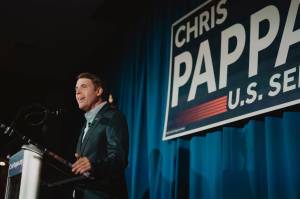
‘A win by Pappas could help Democrats win control of the Senate.
Simon Rosenberg at Hopium Chronicles: Pappas Scores A Decisive Win In NH.
Rep. Chris Pappas had a decisive win last night in New Hampshire, winning his Democratic primary 65%-33% (+32) in a state VP Harris won by 3 points in 2024. There are two reasons for us to be a bit more optimistic about Pappas’ chances than we are hearing in the current chatter:
- Democrats outvoted Republicans in the Senate primary last night 156,000 to 112,000. That’s very encouraging, a sign of the Democratic intensity we’ve seen all over the country these last 20 months.
- There have been two general election polls in NH n recent days. The St. Anselm poll had Pappas up over John Sununu 48%-41 (+7). A University of New Hampshire poll had Sununu up 45%-43% (+2). Of the two the St. Anselm poll was much closer to the primary result last night as it had Pappas at +31, off by just a point. The UNH poll had Pappas winning the primary by only 13 points, which was off by 19 points.
So I at this point given our strong turnout last night, given the national partisan lean we’ve seen across the country, and given the accuracy of the St. Anselm poll my sense is the the +7 Pappas is closer to being right than the +2 Sununu. But we will be keeping an eye on it in the coming days and for now sticking to our mission here which is to flip seats, states, and legislative chambers and take stuff away from MAGA…….
Emily Davies at The New York Times: Chris Pappas Defeats Progressive Challenger in New Hampshire Senate Primary.
Mr. Pappas, 46, who represents the state’s First District, prevailed over Karishma Manzur, a medical scientist and member of the Southern New Hampshire Democratic Socialists of America, who sought to harness the anti-establishment mood and shifting sentiment against Israel that have upended Democratic primaries nationwide.
“Today New Hampshire’s voters have sent a clear message,” Mr. Pappas said after securing the Democratic nomination. “They’re fed up with what’s happening in our politics, and they’re ready for change.”
His victory sets up a general election contest that could help determine which party controls the U.S. Senate. Mr. Pappas will face former Senator John E. Sununu, who easily won the Republican nomination on Tuesday.
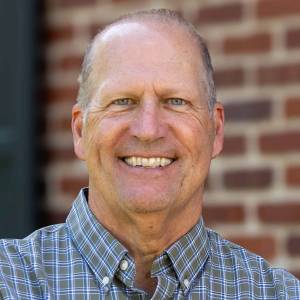
John Sununu
A recent poll by the University of New Hampshire showed Mr. Pappas running narrowly behind Mr. Sununu in a general election matchup. The main Republican Senate super PAC, Senate Leadership Fund, has pledged to spend $17 million in the state for the general election; the group’s Democratic counterpart, Senate Majority PAC, has announced initial plans to spend $10.2 million in television advertising.
Mr. Pappas, a moderate Democrat from Manchester, has been among the state’s most successful politicians in recent history, holding onto a House seat in the state’s notably swingy First Congressional District. He had previously served three terms on the state’s five-member Executive Council, a body responsible for approving high-level appointments and state contracts. Before that, he served two terms as treasurer of Hillsborough County and two terms in the State Legislature.
If elected, Mr. Pappas, the grandson of the man credited with inventing chicken tenders, would be the first openly gay male senator. He triumphed over Ms. Manzur with significant support from party leaders and a significant fund-raising advantage. Former Vice President Kamala Harris endorsed him; Senators Elizabeth Warren of Massachusetts and Mark Kelly of Arizona actively campaigned on his behalf.
As of late August, Mr. Pappas’s campaign had raised more than $15 million, according to campaign finance records.
Trump’s Midterm Convention
Politico Playbook: Adam Wren, Dasha Burns, Will Steakin, and Megan Messerly write: ‘The vibes are very bad’ in Texas.
We’re here in Dallas for the convention — and we’re already getting a pulse check around the extravaganza before the speeches kick off….
DALLAS — Republicans’ Trump-a-palooza threatens to put the party’s general-election headaches on blast, with candidates finding new ways to keep their distance from President Donald Trump over fears he’ll drag them down in November.
On the ground in Dallas, the early reports aren’t giving Republicans a ton of hope for a turnaround.
“The vibes are very bad,” a Republican lobbyist close to the White House who attended an RNC donor event at the Ritz Carlton last night told us. “Dems are salivating. Our people are debating Israel. Or melting down about this or that. No one is motivated to vote. Only the DSA rise is what’s keeping us in the game.”
For those coming to Texas this week, trepidation reigns about what could transpire on the stage — and what it might mean for lawmakers back home.
In fact, as a person close to the White House told Playbook, the best case scenario might be people tuning out.
“My only hope is that no one watches it since it’s competing versus NFL opening games,” the person said. “Hopefully nobody notices the embarrassing show.”
This person added: “I don’t think it will matter. No one knows about it, no enthusiasm, and it’s during football. Only D.C. people care.”
There’s more at the link.
Will Weissert at The Independent: Anxious Republicans watch from the sidelines as Trump keeps tight grip on cash and spotlight.
Channeling a western persona, President Donald Trump is heading to Dallas for this week’s Republican convention to rescue his party’s prospects ahead of the upcoming midterm elections.
The unprecedented gathering begins Wednesday, with Trump aiming to rally his base by transforming the Nov. 3 vote into a direct assessment of his own record. Although his name will not appear on the ballot, he created the event to help GOP candidates.
However, with his approval ratings at record lows, uncertainty remains about whether his presence will energize Republican voters or mobilize the opposition.
The president will dominate the schedule, delivering a keynote speech on Wednesday and returning the next evening to offer final remarks following an address by Vice President JD Vance. The format effectively turns the two-day convention into a showcase centered on Trump, flanked by a lineup that features several of the party’s most at-risk legislators.
“If Trump is in the orbit then everything gets swallowed up into a black hole. It’s just unavoidable,” said Rick Tyler, a Republican strategist and a critic of the president….
The American Airlines Center, as preparations are underway for the Republican National Midterm Convention in Dallas, Texas, U.S., September 7, 2026. REUTERS/Jessica Koscielniak
Networks and NFL ratings threaten to overshadow Trump’s high-stakes Dallas convention.
Republicans familiar with the event’s organization report that the president maintained direct personal oversight of every detail. Indeed, his command of the schedule was so absolute that anyone seeking logistical details in recent weeks was informed that plans were still pending because Trump had not yet finalized his choices.
Despite all the cowboy imagery throughout the gathering, it remains uncertain whether meaningful reinforcements are truly on the way for struggling campaigns, however.
MAGA Inc., the political organization aligned with the president that possesses a war chest of nearly $400 million, announced a $10 million investment in television and digital advertisements focused on the Texas Senate race. Nevertheless, this marks the first time the group has deployed its large financial reserves in a serious way, even as Republicans nationwide urgently seek major funding to help in tight election battles across the country.
Additionally, an outside group called Securing American Greatness has initiated an ad campaign celebrating the president’s record in the lead-up to the midterms. These gauzy promotional videos focus almost entirely on Trump, giving scarcely any attention to candidates running for Congress.
Furthermore, the main broadcast networks have stopped short of committing to air most of the convention each evening. The scheduled proceedings will also face direct competition from the kickoff of the NFL season, with games likely taking place alongside both of Trump’s primary speeches.

Trump’s 9/11 Lies
Judd Legum at Popular Information: Trump’s 9/11 fantasies.
This week is the 25th anniversary of the 9/11 terrorist attacks. Trump is marking the occasion by describing his role in heroic terms, claiming he personally went to Ground Zero to aid recovery efforts. On September 6, Trump made the following remarks on Fox News:
And I went down. I was building a building in New York, and I had a lot of construction workers. And I went down there very shortly thereafter the following day, you couldn’t go down the same day, but like the following day, very, very quickly afterwards and we worked long and hard.
Trump relayed a similar story at a White House event on Tuesday:
I was building a big building in New York and I took the whole crew down there right after this happened, and they had no hesitation. Everybody went down with me. We went down as a big group of people. Wasn’t too much we could do, I’ll be honest. It was — it was raw. Nobody’s seen anything like it ever.
Although some details change, Trump has made similar claims in interviews for decades, claiming to have sent 100 or more construction workers to Ground Zero. Trump has claimed he “helped“ clear rubble and “spent a lot of time down there.”
There is no evidence any of this is true.
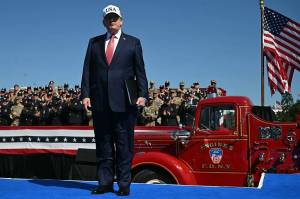
President Donald Trump arrives to speak during a Steel Across America event on September 8, 2026 in Washington, DC. SAUL LOEB AFP via Getty Images
Two Trump-branded buildings were under development in New York at the time — Trump World Tower and Trump Place at Riverside South. But neither Trump nor the Trump Organization employed “a lot of construction workers.” Rather, the construction manager of both developments was Bovis Lend Lease. So any construction workers were employees of Bovis Lend Lease or their subcontractors, not Trump. Journalist Tim O’Brien, who wrote a biography of Trump, noted that in 2001, the Trump Organization as a whole employed around a dozen people. Trump has never identified an employee who worked on emergency response at Ground Zero.
Richard Alles, was a battalion chief of the New York Fire Department in 2001, and supervised “search and rescue units for the entire first two weeks of the operation.” After that, Alles worked at Ground Zero in various capacities for months. “I was in a supervisory role with the fire department at the time,” Alles told PolitiFact in 2019. “I was there for several months — I have no knowledge of his being down there.”
Further, Alles said, if Trump had sent 100 construction workers to Ground Zero, “there would be a record of it” because “[e]verybody worked under direct supervision of the police and fire department and the joint commander for emergency services.” In 2019, the New York Times reported that “there is no documented evidence of [Trump] marshaling his resources to aid in the relief effort.” [….]
On Tuesday, Trump also offered a new version of a story involving him being physically carried away from danger by firemen:
United States Steel Building was creaking. Really creaking. And we thought it was going to fall down. The truth is it creaked a lot. It creaked. It still creaks, but it never came down.
And I’ll never forget two firemen. We thought it was coming down on top of us. And two firemen, big strong guys — and I’m not the smallest guy in the world — they grabbed me under the arm, said, ‘Got to get out of here.’ And they literally lifted me up. This is not easy to do. I’m big. They lifted me up and they started running with me. I said, ‘Fellas, I can run myself.’ But they were amazing. But they thought it was coming down. It didn’t come down.
There’s no evidence for this tale either. Read the rest at Public Information.
Noah Berlatsky at Everything is Horrible: Trump’s 9/11 Lies Are A Moral Failure, Not A Cognitive One.
Donald Trump lies on every day ending with day. Yesterday, he chose to lie about his actions on 9/11 while addressing a gathering of first responders. He claimed he had gone himself with a crew of workers to try to assist on the day of the attack, and that two firemen who thought he was in danger because of a rickety building picked him up and ran with him to safety.
There is no corroboration from witnesses or public records. It sounds like nonsense, and it is nonsense.
Inevitably, Trump’s remarks have led many to reiterate accusations that he is in mental decline due to his advanced age. At 80, the argument goes, he can no longer tell lies from truth. He is senile and therefore makes self-aggrandizing claims, conflating what he wants to have happened with what is true.
Trump does constantly mistake his own inner heroic monologue with truth. But this is not a new phenomenon for him. Mental decline did not create Trump’s moral failures. Rather, his moral failures have destroyed his cognitive capacity. He is a fool because he is evil, not the other way around….
Trump’s claims about his role in 9/11 are an especially good test case. That’s because he has been lying about his role in 9/11 from the moment it happened 25 years ago.
Trump was 55 years old when the towers came down; he was not senile, and no one really believes he was in cognitive decline at that point. Nonetheless, when he was interviewed on the day itself, he rushed to do what he does best, which is tell disgusting self-aggrandizing lies. In a telephone interview just after the attack, Trump boasted that his property at 40 Wall Street was the tallest building still standing in Manhattan. That was a lie; it was the second tallest. And it was an incredibly fucked up thing to say while the bodies were still being counted.
Two days after 9/11, Trump uttered the first version of his lie about being involved in clean-up efforts. He told a German reporter that “I have a lot of men down here right now…over 100 and we have about 125 coming.”
Nor was that Trump’s last falsehood. In 2015, when he was 69 years old and running for President, he claimed that he saw “thousands and thousands” of Muslims cheering the fall of the World Trade Center in New Jersey on television. He did not; it never happened. It was just a racist lie.
And in 2016, Trump lied again about being involved in clean up efforts on 9/11, insisting he had “helped clear the rubble.”
Trump, has, then, told multiple lies about 9/11 over 25 years, starting when he was 55, continuing when he was 70, and now, at 80, elaborating further. That doesn’t suggest someone who is in cognitive decline and has suddenly started having trouble telling truth from lies. It suggests someone who has lied consistently, remorselessly, gleefully, for decades.
I strongly agree with Berlatsky that Trump is truly evil. Recently, I came across a book by moral philosopher Susan Neiman. Here is the New York Times Review of her book (gift link): This Philosopher Thinks It’s Time We Call Out Evil in Our World.
Susan Neiman has noticed a paradox. “As the world drifts toward disaster,” she writes in her new book, “our language has become more cautious.” Yet this tentativeness has been remarkably asymmetrical. President Trump loves to use hyperbole (“nasty,” “sleazebag,” “vermin”), while establishment Democrats have, at least until recently, mostly hewed to the language of decorous risk aversion.
In “Call It Evil: Understanding the Trump Era,” Neiman argues that widespread misapprehensions about what evil is make people too reluctant to use the word. Despite her willfully provocative title, she categorically states: “This is not a book about Donald Trump.” An American-born moral philosopher now based in Germany, Neiman wrote an incisive history of evil in modern thought in 2002. Her new book is less a philosophical exploration than a polemical guide to the current moment. She believes that people are so attached to understanding evil in terms of individual monstrousness — the gleeful villain, the depraved sadist — that they lose sight of how evil more typically works.
Susan Neiman
She recalls an interview with a podcast producer who kept asking her about a gruesome case of cannibalism in Florida. Even when she tried to tell him that such incidents distract from evils she considered more common and more dangerous (“making war to stay in power”; cutting aid to lower taxes on the rich), the producer kept returning to the lurid particulars.
Neiman wants readers to think about evil in ways that are less spectacular and more systemic. She cites Hannah Arendt’s concept of “the banality of evil” as especially useful. The fact that Arendt was denounced for it illustrates our stubborn reluctance to see evil as anything but demonic.
Arendt was writing about Adolf Eichmann, one of the Nazi organizers of the Holocaust, and her critics excoriated her for depicting him as a desk-murderer marked by “sheer thoughtlessness.” But Arendt insisted that this didn’t make him any less guilty, or any less evil — quite the opposite. What makes such evil so destructive is that it has no depth, Arendt said: “It can overgrow and lay waste to the world precisely because it spreads like a fungus on the surface.”
The consequences of this line of thinking are generative but intensely uncomfortable. Neiman realizes that plenty of anxious liberals may agree with her condemnation of the Trump era but nevertheless blanch at her terminology. “Evil is the most explosive word we have,” she writes. “Used indiscriminately, it can serve to stir up evil itself.” To call something evil marks a limit, and gestures at a terrible realm beyond it. “Crimes are things for which we have procedures,” she says. “Evil is what you say when your jaw begins to drop if you sense that a line has been crossed.”

You can use the gift link to read the rest of the review if you’re interested. The book will be released on September 15.
Trump’s Mystery Meat
A couple of days ago, The New York Times published a disturbing guest essay by Eric Schlosser, author of Fast Food Nation (gift link): Why Did Trump Order Up 660 Million Pounds of Mystery Meat?
If you buy a T-shirt at Gap, it will have a label that tells you where it was made. That’s federal law.
The same is true for automobiles, appliances, television sets, every fresh or frozen fruit and vegetable sold at the supermarket.
Beef and pork are notable exceptions to these laws. And that may help to explain why President Trump signed a proclamation last month that will allow the duty-free importation of about 660 million pounds of inexpensive beef.
If American consumers knew where that beef was coming from, they might not want to eat it.
The cuts of meat covered by Mr. Trump’s proclamation aren’t fresh sirloins, rib-eyes and filets. They’re lean beef trimmings that will be added to fattier American cuts to make ground beef. They’re small chunks of frozen meat that could have been kept in cold storage overseas for years. They are the quintessence of generic industrial meat, imported here to be subsequently processed in massive grinders that combine pieces of tens of thousands of cattle from multiple countries, mainly into fast food hamburgers.
I’ve been a longtime critic of food-safety practices in the U.S. meatpacking industry. But some of the practices in the 16 countries currently authorized to export raw beef to the United States are worse than any on these shores. During the past year, China rejected two shipping containers of beef from Uruguay after finding residue of an anti-parasitic drug in the meat, and rejected beef from Argentina reportedly because it tested positive for a banned antibiotic that can cause serious blood disorders.
One of the worst food-safety scandals occurred in Brazil, the world’s largest exporter of beef. In 2017, the Brazilian federal police raided nearly 200 meatpacking plants after allegations that government inspectors and politicians were being bribed to allow the sale of contaminated beef. Rotten meat treated with ascorbic acid and other chemicals to mask the contamination had been sold to hospitals and schools in Brazil and also exported. Executives at the Brazilian company JBS, the largest beef producer in the world, later admitted to bribing inspectors.
I don’t eat much beef, but I think I’m going to avoid it completely for awhile. A bit more from the article:
Why did Mr. Trump come up with this scheme to import hundreds of millions of pounds of beef?
“Regime Change,” the recent book by the Times reporters Maggie Haberman and Jonathan Swan, contains an interesting clue: a White House meeting last November between President Trump and Joesley Batista, whose family controls JBS.
Mr. Batista had long been considered persona non grata in Washington, having been jailed in Brazil as a result of, among other things, paying $186 million in bribes to almost 2,000 politicians, including three Brazilian presidents, to obtain state financing for his family’s company. In 2019, after JBS bought several American meatpacking companies, Senator Marco Rubio and his colleague Robert Menendez deplored JBS’s “admitted criminal conduct,” its “business relationships with Venezuela’s Maduro regime, as well as its growing reliance on financing from entities aligned with the Chinese government.” The senators argued that allowing JBS to own U.S. companies could endanger America’s food supply and national security.
Mr. Batista gained the White House meeting last November, Ms. Haberman and Mr. Swan wrote, because of his friendship with Melania Trump. In addition, a JBS subsidiary had donated $5 million to Mr. Trump’s second inauguration, the largest gift from any individual or corporation. Not long afterward, JBS got approval from the Securities and Exchange Commission to be listed on the New York Stock Exchange, a privilege the company had sought for almost a decade.
More examples of pure evil.
Anyway, those are my recommended reads for this wild Wednesday. What other stories have caught your interest today?


 peej
peej Carissa
 ecocatwoman
 jjlo
jjlo mablue2
 Mama Lopez
 peggysue22
 quixote
 skydancingguestblogger
 Mona (aka Wonk the Vote)



 Sky Dancing
Have a great Wednesday, everyone!
Politico: Trump gave Natalie Harp and 2 other aides $45,000 holiday gifts, disclosures show.
President Donald Trump gave three of his closest aides $45,000 cash gifts for the holidays, according to financial disclosures filed by the White House.
Natalie Harp, Chamberlain Harris and Margo Martin each reported receiving the gift from Trump in their annual public financial disclosures. The gifts totaled $135,000 and came on top of each aide’s $150,000 taxpayer-funded annual salary.
The filings identify Trump as the source of each payment and describe the gifts as “cash gift for the holidays.” Harris listed Trump’s location as Washington, D.C., while Harp and Martin listed it as Palm Beach, Florida. They were filed under the federal government’s public financial disclosure requirements.
The payments amount to 30 percent of each aide’s annual White House salary.
The recipients are among the aides with the most regular access to the president.
Harp, a special assistant and executive assistant to Trump, has drawn heightened attention over her prominent role in the president’s orbit. She is often at Trump’s side, printing articles, social media posts and other material for him, earning the nickname “the human printer.”
Harris is the deputy director of Oval Office operations and an executive assistant to the president. Trump also appointed her to the Commission of Fine Arts, the federal panel overseeing architectural and design decisions in Washington. That role places Harris on a panel involved in reviewing Trump’s proposed White House ballroom, a project that has generated legal and political controversy. Her appointment drew criticism from former commissioners and preservation advocates, who questioned her qualifications for the position.
Martin is Trump’s communications adviser. She travels frequently with the president and often records and posts videos of him, including footage of Trump dancing on a tarmac in Malaysia and greeting visitors in the Oval Office.
For Dakinikat:
CNBC: Treasury Department to buy back up to $6 billion in longer-term debt, triple the normal level.
The Treasury Department on Wednesday said it will buy back up to $6 billion of government debt in an operation aimed at keeping bond markets functioning.
The much-anticipated announcement triples the normal buyback operation and follows an announcement Aug. 19 from Treasury Secretary Scott Bessent that the department would at least double the normal amount for already-issued securities.
Treasury also said future operations will be at least $4 billion.
Though the operation ostensibly is aimed at keeping government debt markets liquid — in this case for 10- and 20-year notes — the extraordinary measure also has been seen as an effort to put a lid on Treasury yields, which had hit highs not seen since prior to the global financial crisis in 2008.
Market reaction, however, was negative. Treasury yields rose further but were volatile with long-dated securities rising as much as 5 basis points each before easing.
The benchmark 10-year issue hit 4.841% around 11:30 a.m. ET. The 20-year climbed to 5.314% while the 30-year bond rose 5 basis points to also punch through what had been seen as the important 5.3% level, most recently yielding 5.307%. One basis point equals 0.01%.
“Hank Paulson’s bazooka this is not,” said bond fund manager Mark Spindel, chief investment officer at Potomac River Capital, referring to the former Treasury secretary’s actions during the financial crisis. “And it took an act of Congress in that crisis.”
Politico EU: ‘Gambling with our lives’: AI researcher quits Anthropic with dire warning about safety.
An artificial intelligence researcher who worked at Anthropic — and previously OpenAI — has resigned, saying both tech giants are “gambling with our lives.”
Jacob Coxon shared his exit in a post on X, warning that the world should “not underestimate the power of this technology.” He added: “These will soon be superhuman systems that can hack anything, revolutionize any field overnight, and acquire real power and resources. We have all witnessed the progress in each of these domains, and progress is not slowing.”
Coxon said both Anthropic and OpenAI are “racing straight to self-improving superintelligence,” which refers to a scenario in which AI models can develop a more capable successor of themselves, creating an unstoppable feedback loop.
That is seen, by AI companies such as Google-owned Deepmind, as one of the possible triggers for a scenario in which AI vastly exceeds human intelligence (known as artificial superintelligence) instead of just matching it (known as artificial general intelligence).
“The people building AI earnestly believe that it could kill us all by the end of the decade,” Coxon said in a follow-up post.
Evan Hubinger, Anthropic’s staff lead on keeping the technology aligned with human goals and values, backed up Coxon claims in a follow-up post of his own, though he didn’t quit the company.
“Jacob is correct here — we really do earnestly believe AI could kill all humans,” he said.
Hubinger estimated the chances of that happening to be higher than ten percent within the next decade, and added that there’s no plan yet on how to keep AI aligned with human goals in the superintelligence scenario.