Yesterday, the news broke that Trump used a plane packed with cabinet members and journalists as a decoy in order to protect himself from an Iranian assassination threat that emerged while he was in Turkey for the NATO Summit in July.
He pretended to board Air Force One with everyone else and then was secretly taken off that plane and moved (hiding in a catering vehicle!) to a military plane, along with some other close advisers, leaving everyone on Air Force One in danger of being shot down by the Iranians.
Trump blames the Secret Service for what happened, but he certainly could have arranged things differently. He could even have had the press plane grounded in Turkey until the other two planes landed in Great Britain. After all, he is (supposedly) the President of the United States! Or has Stephen Miller taken over that role now?
The Iranian threat that prompted President Trump’s secret Air Force One swap last month emerged as he was heading into his last day at the NATO summit in Turkey on July 8.
According to two U.S. officials with knowledge of the threat, U.S. intelligence picked up multiple streams of information. They knew that there was a specific threat of a surface-to-air missile against Air Force One, meaning whichever plane was carrying the president, and that someone in the vicinity of the NATO summit had been spotted with a shoulder-fired missile. And the Iranians knew specifically where Mr. Trump was staying in Ankara, including which floor of the building, the officials said….
The information was deemed sufficiently credible to lead Mr. Trump and senior members of his administration to engage in an extraordinary decoy effort to get him out of Turkey. He boarded the older Air Force One in front of the cameras, which he had announced he would be taking “for old time’s sake,” before sneaking off in an airport catering container and taking a military jet out of the country.
On the final day of the NATO summit in Turkey, Mr. Trump walked up the stairway to the plane that was supposed to carry him on the first leg of his journey home. He briefly waved to the cameras and disappeared inside one of the iconic, baby blue 747s that have served as Air Force One for decades. Then he secretly exited the aircraft, hidden inside a catering container.
Mr. Trump was next taken to a military jet for a clandestine flight out of Turkey. The 747, filled with journalists, White House officials, aides and others, took off despite what was deemed a credible threat from Iran against Air Force One….
Gen. Dan Caine, the chairman of the Joint Chiefs of Staff, was integral to assessing the threat and deciding how to respond. General Caine is no stranger to subterfuge: His last job was Pentagon liaison to the C.I.A., and he helped devise the diversion tactics during Operation Midnight Hammer, when U.S. forces struck Iran’s nuclear sites in June 2025.
Air Force One sits on the tarmac in Ankara with an airport catering container adjacent to the body of the aircraft on July 08. (Reuters)
Not everyone who rode on the plane without Mr. Trump was in the dark. Secretary of State Marco Rubio knew about the threat and flew on the old plane after helping to plan the operation to spirit the president out of Turkey, according to two U.S. officials. They spoke on the condition of anonymity to discuss a sensitive topic.
Other senior officials who traveled on the plane without the president included Treasury Secretary Scott Bessent; Steven Cheung, the White House communications director; and Stephen Miller, Mr. Trump’s deputy chief of staff; as well as several other White House staff, according to a senior U.S. official. It was not clear whether they all knew about the threat.
Whether or not the passengers on the plane that Mr. Trump left behind knew about the threat, they were exposed to risks that the Secret Service deemed too great for the president to face.
Trump claims he had nothing to do with these decisions.
On Tuesday evening, in his first public comments about the secret evacuation, Mr. Trump said the decision was not his.
“It’s really just up to Secret Service,” he told reporters after returning from Ohio. “I just follow what they like to do. So I go by Secret Service and the military. They wanted me to go in a different flight, a different plane for safety.”
Is he the President or not? Since when does the President of the United States take orders from the Secret Service? They advised him of the danger, and he could have insisted on different ways of handling the situation.
The article is very detailed. You can read the whole thing using the gift link.
As President Donald Trump secretly left an Air Force One jet on a catering truck last month in response to a potential Iranian assassination threat in Turkey, he was accompanied by some of his most loyal and longest-serving aides but no Cabinet officials.
Other passengers on the truck included Dan Scavino, the White House deputy chief of staff; Natalie Harp, the president’s executive assistant; and Walt Nauta, the director of Oval Office operations, according to a U.S. official familiar with the operation and corroborating material reviewed by The Washington Post.The official spoke on the condition of anonymity because he was not authorized to talk to the media.
A catering truck is parked at Air Force One on the tarmac at the Ankara international airport as the motorcade carrying President Donald Trump arrives in July. (Alex BrandonAP)
A few lower-profile aides also were present, but the group did not include Secretary of State Marco Rubio or other officials at the highest level of the government, according to the official and the material. Together, those aboard the catering truck moved under concealment from the legacy Air Force One aircraft to a smaller Air Force C-32A before flying to Britain separately from the White House press corps and senior officials.
The account adds a new level of understanding to a July 8 operation that was first reported by The Post on Monday and has triggered calls from congressional Democrats for an immediate briefing. White House officials withheld the secret move from journalists traveling with the president that day and for more than a month afterward.
Among those on the smaller jet was Defense Secretary Pete Hegseth, who boarded the C-32A using external stairs in a manner that made him look like the senior-most official on the flight, The Post reported Monday.
Scavino, Harp and Nauta were among an inner circle of supporters who worked for Trump at his Mar-a-Lago estate in Florida during the four years between his presidencies, after many other officials who served in the first Trump White House distanced themselves following his two impeachments and multiple criminal investigations.
Other senior administration officials, military personnel, Secret Service agents and journalists remained on the legacy Air Force One plane, which had been deemed too risky for the president’s travel.
Natalie Harp, the “human printer,” and the woman who left love notes in Trump’s private rooms, according the the book Regime Change, by Maggie Haberman and Jonathan Swan, was seen as more deserving of protection than Trump’s cabinet and closest political advisers!
Donald Trump made sure he brought his favorite White House aide with him when he escaped from Air Force One to travel in a decoy jet via a catering truck.
Natalie Harp, 35, is never far from the 80-year-old president, and it has emerged that the young blonde aide was among a select group of Trump’s inner circle he took with him as he fled a NATO summit on a military flight because of a credible Iranian assassination threat.
Natalie Harp
White House Deputy Chief of Staff Dan Scavino, and Walt Nauta, the director of Oval Office operations, also joined Trump inside the catering truck to move to the decoy plane, The Washington Post reported.
Defense Secretary Pete Hegseth boarded the Air Force 32-A via its staircase “in a manner that made him look like the senior-most official aboard the flight,” the Post reported.
Other top officials, including Secretary of State Marco Rubio, top White House aide Stephen Miller and Treasury Secretary Scott Bessent, remained on Air Force One after Trump was made aware of the potential Iranian assassination threat.
The threat to Air Force One was seen as so dire that they sneaked President Trump off the jet in a catering container to keep him safe. But the same dire threat did not stop them from then sending Air Force One into the skies anyway with a planeful of senior officials, government employees, reporters and military personnel serving as decoys, some unwittingly.
If the Iranians were trying to shoot down the presidential plane last month, as U.S. officials concluded at the time, then the subterfuge in Ankara, Turkey, that protected the president also may have made targets of dozens of others who flew aboard the jet, including Secretary of State Marco Rubio, Treasury Secretary Scott Bessent and the senior aides Stephen Miller and Steven Cheung.
Diagram of the plane swap
The government has on rare occasions engaged in sleight of hand to safeguard presidents from possible jeopardy, particularly for journeys to hazardous locations, such as when George W. Bush or Barack Obama flew to Iraq during days of war or when Bill Clinton made a brief visit to Pakistan with its history of terrorism. The Trump team’s ruse in Ankara, however, stands out not only for its misdirection but also for the way it shifted the evident peril to others and was kept secret long after Mr. Trump was out of harm’s way.
“They just didn’t seem to give a second thought to anybody but the president and the few people who were with him,” said Joe Lockhart, who served as White House press secretary to Mr. Clinton during his 2000 trip to Islamabad, the Pakistani capital. “We went out of our way to make sure the maximum number of people, especially civilians, were protected and not human shields. They didn’t even think about it. And to me, that’s the big difference.”
But other veterans of risky White House trips said there were times that extreme measures were justified to protect the president. Joseph W. Hagin, who as a top adviser to Mr. Bush helped organize his war zone trips and later served as Mr. Trump’s deputy White House chief of staff in his first term, said he would not second-guess the decision in Ankara.
“I understand there is concern for those flying on what was assumed to be the primary aircraft,” Mr. Hagin said, “but when you go to work at the White House or travel with the president, you are accepting a not-insignificant degree of risk. Telling everyone what’s up in an operation like this would have obviously jeopardized the president’s safety.”
When Mr. Bush or Mr. Obama brought staff members and reporters with them to war zones, Mr. Hagin added, those were dangerous moments, too. “This was no different than the trips to Iraq and Afghanistan,” he said. “You add up all the risks and figure out the tactics that give you the safest option, regardless of whose toes get stepped on or feelings get hurt.”
The government officials and reporters who traveled with presidents to war zones, of course, knew they were doing so, while those left on Air Force One in Ankara last month were not told of the increased threat. Journalists traveling in the back of the plane were instructed while still on the ground to keep their window shades closed during the July 8 flight from Ankara to Britain, where Mr. Trump landed secretly in another military plane. The president was then sneaked back onto Air Force One so that he could disembark in front of cameras as if he had been onboard all along.
Read more using the gift article, if you’re interested.
When President Bill Clinton deplaned in Islamabad, Pakistan, the sleight of hand became clear.
A decoy jet with all of the markings of Air Force One touched down in view of the news media, and a Secret Service agent resembling the president emerged. Then, an unmarked plane landed, and the real president disembarked.
It was March 2000, and Susan Page, a White House reporter covering the trip for USA Today, was one of a small group of people who knew about the ruse.
President Bill Clinton disembarks from an unmarked jet in Islamabad, Pakistan, in March 2000. Stephen Jaffe AFP,Getty Images
Before the India-to-Pakistan flight, White House officials called Page, then the White House Correspondents’ Association president, and summoned her for an off-the-record conversation. There, White House press and security officials explained the operation, informing her of the president’s location and safety measures in place for journalists on the trip, Page said in messages with The Washington Post.
“They told me about the extraordinary security procedures being taken because of the dangers in flying there, including use of the decoy plane,” she said. “Of course, the dangers threatened the journalists covering the trip as well as President Clinton.”
Page’s briefing, which has not been previously reported, meant at least one journalist in the traveling press corps knew the president would not be aboard Air Force One.
More than 25 years later, the White House faced a similar security dilemma — but handled the press very differently.
Historian Garrett Graff wrote about this episode today. His article is too long to excerpt well, but if you want more on this topic, I recommend reading what he has to say: The Five Scandals Within the “Air Force One” Scandal. Here’s the introduction:
I sometimes believe that the Trump administration’s parade of horribles has left me unable to be surprised any more, but I gasped Monday evening at news that President Trump had been secretly snuck out of the NATO summit in Turkey last month due to an Iranian threat.
That departure in early July had generated a lot of speculation and coverage at the time because something weird was clearly going on — President Trump had, with much fanfare, arrived in Turkey aboard his newly painted presidential jet, gifted by Qatar, and then, with much less explanation, departed Turkey aboard one of the older blue-and-white 747s that have long served as Air Force One. There had been vague mentions of a possible threat, and how the new Qatari-gifted plane lacked some of the defensive measures of the longstanding presidential plane, which in turn led to a Justice Department leak investigation of the five New York Times reporters who broke that story.
Now, though, the Washington Post has added some fascinating and disturbing new wrinkles: He wasn’t aboard the blue-and-white plane at all when it departed Ankara.
I’ve written extensively about presidential travel, security, and continuity of government over the years — I wrote the literal book on continuity of government, in fact — and in the 24 hours or so since the Washington Post broke the story, have given interviews to outlets as varied as the Post, the Associated Press, and the BBC.
I want to try to break down why, specifically, this decoy Air Force One is so troubling. To me, the secret flight out of Turkey represents a Russian nesting doll of scandal, one that exposes at least five levels of scandal, ranging from foreign influence to corruption to national security compromises to inappropriate geopolitical gambles.
Yes, there is other news, but I think the story is important and deserves the amount of attention that is being paid to it. Of course, we already knew that Trump doesn’t give a shit about the press or their well-being, but apparently, he doesn’t care about most of his cabinet members either. When it comes right down to it, he chooses to save Dan Scavino, his former golf caddy, Walt Nauta, his former body man, and Natalie Harp, the “human printer.” (and more?), and Whiskey Pete Hegseth.
Yes, there is other news. Here are some links to to more interesting stories:
It’s Memorial Day weekend, and there’s not a whole lot of exciting news today. We’re still dealing with the most corrupt president and cabinet in history. Trump is still evil and certifiably insane. Here’s what’s happening today.
Trump snubbed his eldest son by refusing to attend his wedding this weekend. He usually spends his weekends playing golf and was scheduled to go to his golf club in New Jersey his weekend; but after the announcement that he wasn’t going to the wedding, trump decided to stay in DC.
President Donald Trump has returned his eldest son’s wedding RSVP with only a day’s notice, announcing to Truth Social that he will not attend.
Trump, 79, officially snubbed Donald Trump Jr. in a Friday afternoon post—then quickly changed his weekend schedule to show he was no longer planning on golfing in New Jersey as his eldest son, Donald Trump Jr., says “I do.”
“While I very much wanted to be with my son, Don Jr., and the newest member of the Trump Family, his soon to be wife, Bettina, circumstances pertaining to Government, and my love for the United States of America, do not allow me to do so,” Trump claimed. “I feel it is important for me to remain in Washington, D.C., at the White House during this important period of time. Congratulations to Don and Bettina!”
A public schedule for the president initially said he intended to spend the weekend at his golf club in Bedminster, New Jersey—more than 200 miles away from the White House. However, Axios reported shortly after Trump’s announcement that he will now spend the holiday weekend in Washington.
Don Jr. and Bettina Anderson, who began dating after the younger Trump dumped Kimberly Guilfoyle in late 2024, will tie the knot on a private island in the Bahamas on Saturday in front of a small group of family and friends.
Sprung with a question about the wedding in the Oval Office on Thursday, the president hinted that he could not make the trip because of the war with Iran.
“He’d like me to go, but it’s going to be just a small little private affair, and I’m going to try and make it, I’m in the midst—,” Trump said before cutting himself off. “I said, ‘You know, this is not good timing for me. I have a thing called Iran and other things.’”
Donald Trump Jr., the president’s oldest son, married socialite Bettina Anderson on Thursday in West Palm Beach, Florida, according to Palm Beach County records.
A private wedding celebration is expected to take place Saturday in the Bahamas, Page Six reported. President Donald Trump indicated Thursday that he will not be in attendance, saying the date “was not good timing for me,” citing the ongoing war in Iran and other presidential matters. The president was initially scheduled to be in Bedminster, New Jersey, this weekend but is now expected to be at the White House….
Anderson comes from a prominent Palm Beach family. Her father is Harry Loy Anderson Jr., a banker and philanthropist.
Is Trump actually planning military actions this weekend? He has been threatening more strikes in Iran and is suggesting the possibility of regime change in Cuba.
President Trump was in the Oval Office on Friday morning with his defense secretary, Pete Hegseth, in what appeared to be a review of military options for potentially resuming the bombing campaign against Iran.
The existence of the meeting was revealed by Gen. Dan Caine, the chairman of the Joint Chiefs of Staff, during a graduation ceremony at the Naval Academy. While he said nothing about the substance of the meeting, the timing was notable, as negotiations with Iran over its nuclear program and its blockage of the Strait of Hormuz appear to have hit a dead end.
There is no shortage of targets, should Mr. Trump, in coordination with Israel, decide to resume the assault on Iran that paused on April 8. There are energy facilities left untouched after about 38 days of bombing, the deep underground nuclear storage site at Isfahan where Iran’s supply of near-bomb-grade uranium is already under rubble, and missile sites that were attacked back in March but appear to have been dug out.
And after weeks of declaring that an agreement was near, and then that the Iranians were “dangling” him, negotiations seem to be at a standstill. Mr. Trump announced on Friday that he was skipping the wedding this weekend of his son and namesake, Donald Trump Jr., because of “circumstances pertaining to the Government, and my love of the United States of America.” [….]
Now he has to deal with the reality that after five weeks of war and six weeks of cease-fire, he has failed to force Iran’s leaders to relent. Mr. Trump frequently notes — accurately — that Iran’s navy has been sunk and its air force destroyed, and that many of its missile sites and military bases have been reduced to rubble or badly damaged. But the destruction has not translated into victory.
Crucially, the near-bomb-grade nuclear uranium remains where it has been since Mr. Trump ordered a bombing raid on three nuclear sites nearly a year ago, deep underground at Isfahan. Iran’s missile capability has been degraded, but not destroyed. And the Strait of Hormuz has fallen under Iran’s control, even as the U.S. Navy intercepts shipments headed into or out of Iranian ports.
If Mr. Trump orders new combat operations, the political risks are high. Already gas prices are over five dollars a gallon in some parts of the country, and renewed military activity could send them even higher. Popular sentiment is clearly against the war, a range of public opinion polls show, and Mr. Trump’s approval ratings have plummeted to around 37 percent.
You can use the gift link to read about Trump’s options for military action in Iran.
Washington is also warning that a peaceful agreement with the Caribbean nation is unlikely, while Cuba says the US is using a “fraudulent case” to justify military intervention….
Since returning to the White House, Donald Trump has made clear his desire to change Havana’s leadership and has openly mused that Cuba is “ready to fall”.
In March, he suggested the country was in “deep trouble” as he threatened a “friendly takeover”.
There has been no announcement of plans for any military intervention but Cuba is on edge, especially as surveillance activity in the Caribbean increases.
Leaving the flight transponders on “is likely deliberate”, said UK drone expert Dr Steve Wright, with the US intending to send “a clear message it has eyes in the sky to maintain the squeeze”.
It also quoted a US official who said the intelligence – which it characterised as a potential pretext for US military intervention – suggested Iranian military advisers were in Havana.
When CIA Director John Ratcliffe visited Havana last week for a rare meeting with senior Cuban officials, he brought along one of the operators involved in the U.S. mission to capture then-Venezuelan leader Nicolás Maduro earlier this year, multiple people familiar with the matter told CBS News.
Venezuela and Cuba were allies before Maduro’s arrest, and the Cuban government has said 32 of its military and police officers were killed in the January operation to extract Maduro.
Ratcliffe made a point of introducing the paramilitary leader to the Cubans as the one who killed their people in Venezuela, several sources said.
The presence of a paramilitary officer who was involved in capturing a key partner of the Cuban government just months earlier may have been intended to send a signal….
Ratcliffe’s visit followed months of pressure on Cuba. The administration has threatened steep tariffs on any countries that export oil to the island nation, leading to severe fuel shortages.
Secretary of State Marco Rubio has said the country needs to make fundamental economic and political reforms, and President Trump has floated a “friendly takeover” of the island, which has vexed U.S. administrations since Cuba’s communist movement rose to power in 1959.
Hours after the Maduro raid, Rubio pointed to Cuba’s ties to Venezuela, telling reporters that Venezuela’s “whole spy agency” was “full of Cubans.”
“If I lived in Havana and I was in the government, I’d be concerned, at least a little bit,” he said.
Here’s hoping there won’t be any US bombs dropped anywhere this weekend.
More foreign intervention news: Trump is still meddling in Greenland. Louisiana Governor Jeff Landry, who is also Trump’s “envoy” to Greenland showed up there this week.
President Donald Trump’s envoy to Greenland says he got a warm welcome on his first visit this week. But the mood on the Arctic island was decidedly frostier, with one of its most prominent lawmakers calling the visit “appalling” and “offensive.”
Pipaluk Lynge, who chairs Greenland’s foreign and security policy committee, slammed Louisiana Gov. Jeff Landry’s trip as “a clear attempt to divide us” during the sensitive negotiations on the future of the semi-autonomous Danish territory.
She singled out his attempts to offer chocolate chip cookies to a group of Greenlandic children, seen by some as a surreal effort to win approval despite grown-up Greenlanders saying no to American advances.
“I think it’s remarkable that they feel welcome even though they weren’t invited,” Lynge said in an interview with NBC News.
Trump has caused outrage in Greenland and Europe by suggesting he could use force to seize the island, which has vast mineral resources and is strategically positioned in a region increasingly contested between the United States, Russia and China. Most officials and experts agree that were the U.S. to invade a fellow NATO member, it would spell the end of the troubled military alliance.
While Trump has rowed back these explicit militaristic threats, his designs on Greenland have not gone away. Arriving this week, Landry said his mission was to “make friends” but also that it was time for Washington “to put its footprint back” on the Arctic territory.
There was little evidence of any friendliness on the street, with the governor being heckled by people shouting “Don’t come here” and others giving him the finger.
The lawsuit, filed in U.S. District Court for the Eastern District of Virginia, alleges that the “anti-weaponization” fund creates a politically discriminatory process that excludes individuals like the plaintiffs, who say they were mistreated by Republican officials and administrations.
“By its own terms, the Anti-Weaponization Fund is available only to claimants who assert that they were targeted by ‘Democrat’ administrations, even though the current administration has weaponized the awesome power of the federal government against its perceived political opponents like no other administration before it,” the suit states.
“First, hundreds of people attacked the foundation of an ordered society by trying to stop the results of a free and fair election—committing serious assaults on law enforcement and other crimes as they did so,” Floyd said in a statement, referring to the failed effort by Trump supporters to stop the certification of Joe Biden’s win on Jan. 6, 2021.
“Then, this administration pardoned them — removing the accountability that had been hard earned by victims, witnesses, law enforcement, and prosecutors and imposed by impartial jurors and judges. Now they are asking taxpayers to illegally reward them for their crimes,” he said.
Another plaintiff is Cal State Channel Islands professor Jonathan Caravello, who was acquitted of an assault on law enforcement charge over an incident last summer in which he picked up a tear gas canister that had been deployed by federal agents during a protest against an immigration raid at a California cannabis farm.
The city of New Haven, the National Abortion Federation and the watchdog group Common Cause also joined the suit. All the plaintiffs are represented by Democracy Forward, a progressive nonprofit legal group that filed more than 150 lawsuits in the first year of Trump’s second term.
Read more details about the lawsuit at the NBC link.
The Justice Department has removed press releases detailing the charges against hundreds of individuals who participated in the Jan. 6, 2021 Capitol riot from its website, the department confirmed Friday.
“Nothing ‘quiet’ about it,” the DOJ Rapid Response X account said in a post replying to allegations that the Justice Department had deleted press releases related to Jan. 6.
“We are proud to reverse the DOJ’s weaponization under the Biden administration,” the post continued. “We will do everything in our power to make whole those who were persecuted for political purposes. This includes stripping DOJ’s website of partisan propaganda.”
A review by NBC News found that the vast majority of press releases pertaining to Jan. 6 defendants have been removed from the DOJ website as of Friday evening.
The move to wipe hundreds of press releases from the official government site is the latest attempt by the Trump administration to reframe the Jan. 6 siege and to paint the rioters who participated in it as victims.
On his first day back in office, President Donald Trump mass pardoned the rioters. Soon after, Justice Department officials and FBI agents who were a part of the Jan. 6 investigation and prosecutions were fired.
After acting Attorney General Todd Blanche did not rule out Jan. 6 rioters’ eligibility to be paid by the fund, outrage swelled from both Democrats and Republicans in Congress.
It appears that Trump is losing support among Senate Republicans after announcing this naked attempt to steal nearly $1.8 billion from US taxpayers. Acting AG Todd Blanche met with GOP Senators yesterday, and it did not go well.
Screaming, yelling and accusations of self-dealing.
That’s how Sen. Ted Cruz, R-Texas, on Friday described a closed-door meeting with Senate Republicans and acting Attorney General Todd Blanche on the Trump administration’s $1.8 billion “anti-weaponization” fund that’s drawn bipartisan opposition.
On his podcast “Verdict with Ted Cruz,” the Texas senator described the meeting as “one of the roughest meetings I’ve seen in my entire time in the Senate.”
“Fiery does not begin to cut it,” Cruz said. “My guess is there’re probably 45 senators in the room, at least half of them were blasting the attorney general, and they were pissed.”
Senate Republicans met with Blanche on Thursday to discuss the fund, which ultimately derailed a vote on a Republican bill to fund Immigration and Customs Enforcement and Border Patrol, NBC News previously reported.
Cruz said several of his GOP colleagues felt that they could not politically defend the fund because it appeared as though President Donald Trump “cut a deal with himself.”
“There were multiple senators yelling at the attorney general, saying this feels like self-dealing,” Cruz said.
“I got to tell you, the Republican senators were pissed — people were the entire meeting. They were screaming at the acting attorney general, and he was trying to lay out the legal basis,” Cruz said, adding “the legal basis is quite sound.”
A bit more:
Cruz said on his podcast that if the Senate had gone forward with planned series of votes pertaining to the ICE and Border Patrol bill Thursday night, roughly half of the Republican caucus would have voted with Democrats in favor of amendments seeking to rein in the fund.
He emphasized “the degree of the jailbreak of Republicans who were bolting, who were saying we’re going to vote with the Democrats.”
Cruz warned that if the administration does not modify the anti-weaponization fund by the time Congress comes back into session, “they’ve got a full-on revolt in the Senate.”
Howard Lutnick, President Trump’s secretary of commerce, made a $5 million donation last month to a committee supporting House Republicans, an unusually large contribution for a sitting cabinet secretary.
Mr. Lutnick gave the money to the Congressional Leadership Fund, the main super PAC behind House Republicans and Speaker Mike Johnson, according to a new filing made public on Thursday. Mr. Lutnick has recently been a major Republican donor, but this was his first contribution since being named commerce secretary. It ties his largest-ever federal donation, $5 million he gave to Mr. Trump’s super PAC in 2024….
Federal employees are permitted to make donations, but it is rare to see such a high-ranking official donate such a significant amount. Mr. Lutnick is the first Trump cabinet official to make a seven-figure disclosed federal donation after being confirmed to a post, according to a review of federal election filings.
The closest analogue in Mr. Trump’s administration was the role played by Elon Musk during his stint as a part-time government employee, during which he continued to donate millions to conservative causes.
Lutnik should be fired.
Before I wrap this up, here are two significant immigration stories:
A federal judge on Fridaydismissed the Justice Department’s human-smuggling case against Kilmar Abrego García, ruling that the Trump administration improperly brought it to punish him for successfully challenging his illegal deportation last year.
U.S. District Judge Waverly D. Crenshaw Jr. in Tennessee wrote that “evidence before this Court sadly reflects an abuse of prosecuting power.”
The decision delivered an extraordinary defeat for the administration, which marshaled the resources of multiple federal agencies to publicly malignAbrego after court rulings concluded that officials had unlawfully deported him to his native El Salvador, in violation of a 2019 immigration court order.
Crenshaw’s ruling also marked the first time a judge validated what has become an increasingly common defense raised by high-profile defendants targeted by the Justice Department in Trump’s second term: the claim that they are being prosecuted not in pursuit of justice but rather for political revenge.
In a decision released Friday afternoon, the judge acknowledged the incredibly high bar defendants must meet to warrant a case’s dismissal on those grounds. It requires defense attorneys to prove that charges would not have been brought but for improper, vindictive motives on the part of government attorneys.
Crenshaw, who was appointed by President Barack Obama, wrote that in Abrego’s case, itwas clear that the investigation into him was tainted “with a vindictive motive.”
Foreigners in the U.S. who want a green card will need to leave and apply in their home country, the Trump administration announced Friday, in a surprise change to a longstanding policy that sowed confusion and concern among aid groups, immigration lawyers and immigrants.
For over half a century, foreign nationals with legal status have been able to apply for and complete the entire process for permanent residence in the United States — including individuals married to U.S. citizens, holders of work and student visas, and refugees and political asylum seekers, among others.
The announcement from U.S. Citizenship and Immigration Services said foreigners who are in the U.S. temporarily and who want to apply to become lawful permanent residents, or green card holders, have to return home and apply there, except in “extraordinary circumstances.” USCIS officers would decide whether applicants meet those.
“Nonimmigrants, like students, temporary workers, or people on tourist visas, come to the U.S. for a short time and for a specific purpose. Our system is designed for them to leave when their visit is over. Their visit should not function as the first step in the Green Card process,” the agency said in a statement.
That isn’t true. People have always been able to apply for Green Cards here in the US. For example, there are probably thousands of people working in important jobs at universities waiting to get Green Cards. These people are making valuable contributions to society. They may have married US citizens and had children. And now they are supposed to leave their jobs and families in order to get a Green Card? Back to the NPR story:
It is the latest step by the Trump administration making legal immigration more difficult for foreigners already in the U.S. and for those hoping to come here.
Hundreds of thousands apply for green cards from the U.S. each year
“The goal of this policy is very explicit. Senior officials in this administration have said over and over that they want fewer people to get permanent residency because permanent residency is a path to citizenship and they want to block that path for as many people as possible,” said Doug Rand, a former senior advisor at USCIS during the Biden administration, who added that about 600,000 people already in the U.S. apply each year for a green card.
USCIS did not say when the change would come into effect, whether individuals would be required to remain in another country throughout the entire process, or whether the policy impacts foreigners whose green card applications are already underway.
Did you like this post? Please share it with your friends:
I’m going to begin with a local story today. On Monday, we had a terrible shooting incident not far from where I live, and I can’t understand why it hasn’t gotten more national coverage. It makes me wonder how many really awful shooting incidents just get ignored by the mainstream media. There were a couple of stories yesterday–one in The New York Times–but no TV coverage as it was happening.
Here’s what happened. A man with an assault rifle made his way to a stretch of Memorial Drive in Cambridge–a very busy road, one of two routes into Boston from outlying towns. The road passes the Harvard and MIT campuses and splits off to the bridge the leads to the BU campus.
A still frame from witness video showing a gunman on Memorial Drive in Cambridge, Massachusetts.
The guy began firing his weapon, getting off as many as 30 rounds at once. He fired at cars and drivers randomly, eventually walking down the middle of the road, waving the rifle around. Hundreds of cars were abandoned, as people ran for their lives. One bullet went through the windshield of a post office truck and just missed the driver’s head. So far there haven’t been any fatalities, but two drivers were shot and are in critical condition. I heard this morning that one of them is expected to live.
The entire stretch of Memorial Drive, from the edge of the Harvard Campus to MIT as well as the bridge to BU were shut down and treated as a crime scene. I can’t even begin to imagine the struggle people had getting home on Monday night.
This all took place just a short distance from where my brother lived for years and right in front of the gas station where I used to take my nephews for Italian ice in the summer. (Interestingly, this is also the gas station where the Boston bombers stopped for gas as they tried to escape. During that stop, the man whose car they had highjacked escaped and ran to another gas station across the way to call police.)
It turns out the shooter was on probation and had had met with his probation officer on Facetime on Monday morning. He had shown the rifle and given indications that he was suicidal, so the probation office had notified law enforcement, and they were tracing the shooter, I guess by his phone. They knew he was in Cambridge, so they were able to respond quickly when the 911 calls starting coming in. The shooter was taken down by a state police officer and a civilian–a former marine with a legal gun. So far the ex-marine hasn’t been named. He would probably be wise to remain anonymous.
It turns out this man should not have been out of prison. He had a history of getting in shootouts, including with police and been given very lenient sentences. I hope they put him away for good this time.
We have very strict gun laws here in Massachusetts, but dealers bring the guns down from Vermont, which has zero gun laws.
An active shooter on Memorial Drive in Cambridge Monday afternoon prompted panicked motorists to abandon their vehicles and sent people running for their lives along the Charles River.
Two drivers were shot and critically injured, officials said. The suspected shooter, identified as Tyler E. Brown, 46, of Boston, was shot while police apprehended him. He was in police custody at a Boston hospital late Monday night….
Middlesex District Attorney Marian T. Ryan said Cambridge police received a 911 call from Boston police at 1:06 p.m. reporting a person who was believed to be in Cambridge, observed acting erratically, and believed to be in the possession of a rifle.
By the time police responded, Brown had started shooting, she said.
“The suspect created a extraordinarily dangerous situation during a busy part of the afternoon where innocent people were driving their vehicles, walking, biking and rowing on the river,” Ryan said. Some took cover under their vehicles, she said.
Authorities say Brown randomly fired 50 to 60 rounds from an “assault style rifle” while walking down the middle of Memorial Drive near the River Street Bridge. At least a dozen vehicles were struck, including a State Police cruiser. The two drivers struck by bullets were hospitalized with life-threatening injuries….
The shooting came to an end after Brown was confronted by a State Police trooper and an armed civilian, described as a former Marine with a license to carry a firearm. Brown was shot several times in the extremities.
Brown is currently serving three years of probation after his release from state prison last year where he served a sentence for a May 2020 shooting in the South End that involved four Boston police officers. The officers were not injured but they were evaluated at a hospital. Brown had been released from prison five months before that shooting. He was sentenced to five to six years with credit for 545 days time served. Court records do not specify the exact date of Brown’s most recent release….
In connection with Monday’s shooting, Brown is expected to face two counts of armed assault with intent to murder and firearms offenses. His arraignment has not yet been scheduled.
Multiple witnesses describe seeing a man armed with a rifle shooting into busy traffic along Memorial Drive in Cambridge on Monday afternoon.
They described more than a dozen shots being fired rapidly, and officials confirmed at least one person was treated for a gunshot wound. Memorial Drive was closed at the River Street Bridge for the investigation.
“People just started running. People got out of their cars and just started running the opposite way,” said Todd Czubek, a witness.
Czubek said the gunman continued to fire as he got out of his car and joined the crowd running from the scene.
“Shooting cars, shooting sometimes in the air, sometimes just spraying. All over the place. It was craziness,” Czubek said.
Joseph Minino Rodriguez, who saw the incident unfolding from his apartment on the 18th floor, described seeing the gunman firing into traffic. He shared a cellphone video from the incident and said that he was on the phone with emergency dispatchers as the incident unfolded.
Rodriguez said that, while he was watching, the shooter “just straight up gets into a gunfight with the cops.”
He said the gunman appeared to fall during that gunfight and then threw his gun.
“Once he throws the gun, my boy is just out here, just lying down, and now he has his hands up. Now he’s done,” Rodriguez said.
The alleged gunman charged in Monday’s chaotic shooting on Memorial Drive in Cambridge that left two people seriously wounded had been released from a psychiatric hospital three days earlier, according to a state police report on the incident.
Less than an hour before the shootings, Tyler E. Brown allegedly told his parole officer that “these people are gonna f—ing pay.” He did not say whom he was targeting, but would go on to fire at least 60 rounds erratically into cars and at passersby, according to the police report filed in Cambridge District Court.
Tyler E. Brown, accused of firing on drivers on Memorial Drive in Cambridge on Monday. credit Boston Regional Intelligence Center
The Middlesex County District Attorney’s office has charged Brown, 46, with armed assault with intent to murder, carrying a firearm without a license and possessing a large-capacity firearm. He was in a local hospital Tuesday and no arraignment date has been set.
Brown has a history of violence. He previously served time in prison for shooting at Boston police officers in 2020 while already on probation for a 2014 conviction for assault and battery with a dangerous weapon.
He was released from prison in May last year, to serve the remainder of his sentence under parole supervision, according to the Department of Correction.
On Monday, less than two hours before the shooting, a parole officer flagged to police that Brown was at risk of violence again. The parole officer called the Boston Police Department, reporting that Brown, “a known crack cocaine user, had relapsed and was ready to end his life,” according to the report.
It sounds like the guy had a lot of problems. But why do these angry guys want to take other people with them? It’s either their families or total strangers. They can’t just kill themselves and leave the rest of us alone. Sorry if that sounds cold. And sorry if I bored you with a local story, but I just had to get it off my chest.
Now back to politics news.
I’m sure you’ve heard that Trump publicly admitted he doesn’t give a shit about Americans’ financial struggles.
Trump on Iran War:Reporter: What extent are Americans’ financial situation motivating you to make a deal?Trump: Not even a little bit. I don't think about Americans’ financial situation
Donald Trump has said the growing financial pressure inflicted on Americans by the war on Iran is “not even a little bit” motivating him to make a peace deal with Tehran.
With US inflation at a three-year high, and fuel costs still climbing after a sharp rise in oil prices, the US president said on Tuesday that he is not focused on the economic hardship sparked by the conflict.
“The only thing that matters when I’m talking about Iran [is] they can’t have a nuclear weapon,” Trump told reporters at the White House before boarding a plane to China. “I don’t think about Americans’ financial situation. I don’t think about anybody. I think about one thing: We cannot let Iran have a nuclear weapon. That’s all.”
The remarks come ahead of a US midterm election campaign season which looks to be defined by mounting concerns around affordability.
Trump was also speaking hours after official figures revealed that US prices had risen 3.8% in April – their fastest pace since 2023 – driven largely by energy costs that have surged since the US and Israel first attacked Iran in late February.
Gasoline now averages over $4.50 a gallon, according to AAA, which makes it the highest price in four years. Food prices are also up nearly 4%, electricity and utility bills have climbed and airlines have raised fares by more than 20%.
Trump’s top officials have spent months struggling to explain when, or whether, such pressures will fade. Chris Wright, the US energy secretary, said in March that fuel could return to prewar levels by summer, but on Sunday he said he “can’t make predictions”. In April, he told CNN that prices falling below $3 a gallon “might not happen till next year”.
Trump himself, asked recently for a forecast, offered that prices could go lower, “or the same, or maybe a little bit higher”, by November.
We’ll probably see that quote in a lot of Democratic candidates’ ads during the midterm campaigns.
The polls aren’t looking good for Trump either.
Enten: "It's not just one poll. The five worst polls ever for any president on inflation, they all belong to Donald Trump and they have all occurred in the last month. What we're talking about here is the worst numbers ever. Joe Biden isn't in there. Jimmy Carter isn't in there."
CNN chief data analyst Harry Enten was caught on a hot mic reacting to the Trump administration’s disastrous new inflation numbers on Tuesday.
The Bureau of Labor Statistics on Wednesday morning published its latest Producer Price Index (PPI) report. For the month of April, The PPI rose 6% compared to April 2025. Compared to last month, the PPI rose 1.4%. It was the largest month-to-month increase since 2022. As noted by CNBC’s Rick Santelli, that month-to-month figure nearly tripled the expected increase.
Enten was just as stunned. Just moments before he began a segment breaking down President Donald Trump’s poor approval ratings, he reacted to the new inflation report in disbelief:
CNN ANCHOR JOHN BERMAN: Breaking just moments ago, a new brutal report on wholesale inflation. Way, way worse than expected. You can see that’s the month-to-month increase at 1.4%. That was much more than was expected. On an annualized basis. It’s at 6%.
ENTEN: Jesus.
BERMAN: This, after consumer inflation just surged to the highest level in three years. With us now is CNN chief data analyst Harry Enten. So we’ve been talking about inflation, we’ve been talking about the president’s approval on it, which is not good–
ENTEN: No.
BERMAN: Our new poll shows that people are very unhappy with the economy, with inflation, with his handling of inflation. On a historical perspective, though, how much don’t they like how he’s handling inflation?
Enten went on to say Trump’s approval rating on inflation were the “ugliest numbers I have ever seen.” He then revealed in just the last month, Trump had the five worst inflation polls of any president in history.
Yesterday, the main gauge of inflation, the Consumer Price Index (CPI), came in way above expectations at 0.6 for April. This morning another inflation gauge, the Producer Price Index, came in way, way above expectations at 1.4 percent for April. The consensus forecast was an increase of 0.5 percent. So 1.4 is almost three times what was expected. 1.4 percent is an annualized rate of over 16%!!!!!!!! [….]
When I looked at the PPI report on the BEA website this morning I audibly gasped as it was so much higher than expected.
Let’s review what the other two main gauges of inflation tell us:
Again, on prices and costs, Trump’s agenda – tariffs, mass deportation, Big Ugly Bill – had caused inflation to rise prior to the war. You see it there in the data, clear as day. Now due to the war inflation has surged, significantly, rising faster than expected in this week’s two measures, and is starting to get baked into the broader economy. PPI measures the cost of goods to producers, costs which are eventually passed on to consumers, suggesting that we are now in a much more challenging and sustained period of higher costs even if the Strait of Hormuz were to open tomorrow. For remember higher energy prices are a force multiplier – they make anything that uses energy and transportation cost more – manufactured goods, food, business travel, vacations, etc. And these highly elevated producer costs we are seeing today are going to show up in goods we buy in the coming months……..
The inflationary dynamic is not easing. Brent crude starts the day at one its highest points of the war:
30 Year Treasuries are rising, nearing their highest level in 19 years. This is significant for this is a bench mark for borrowing costs across the economy – car loans, mortgage rates, credit cards, and our own debt. So when Treasuries rise everything gets more expensive for everyone, and a sign of inflation getting baked into the broader economy.
Head over to Rosenberg’s Substack to read more and see the charts and graphs.
President Donald Trump’s Truth Social account has become a round-the-clock amplification machine since his return to the White House, and an aide who helps him generate the posts has reportedly frustrated other insiders.
A Wall Street Journal analysis found the 79-year-old president has posted more than 8,800 times since January 2025 — including dozens of late-night bursts that spread conspiracy theories, personal attacks and fringe content to his 12.6 million followers.
On a recent Monday, after a full day of Oval Office meetings and a Rose Garden dinner with law enforcement officers, Trump’s account posted 55 messages between 10:14 p.m. and 1:12 a.m., the Journal found, and those posts falsely claimed the 2020 election was stolen, aired calls for the arrest of former President Barack Obama and amplified frustrations that Democrats had not been indicted by the Justice Department.
Since returning to office, according to the analysis, Trump’s account has produced 44 similar late-night bursts of a dozen or more posts between 8 p.m. and 6 a.m. The single most active day came on Dec. 1, when his account posted nearly 160 times in under four hours.
Natalie Harp
Natalie Harp, Trump’s executive assistant, plays a central role in the posting operation, the Journal reported. She presents Trump with printed stacks of draft posts — often content recycled from other social media accounts — for his approval, then logs on and publishes them in batches, sometimes outside normal working hours.
The arrangement has drawn internal friction, according to the report. Harp – who other aides have dubbed the “human printer” for carrying around sheafs of material – typically does not share draft posts with the chief of staff’s office, communications aides or national security officials, telling colleagues she answers only to Trump.
The account drew bipartisan criticism earlier this year after Harp posted, at Trump’s direction, a video containing racist imagery depicting Barack and Michelle Obama as apes and another AI-generated image depicting Trump as a Christ-like figure, both of which the president later deleted.
That’s interesting. Harp is the woman who follows Trump everywhere printing out favorable articles on a portable printer. She was at all of Trump’s court appearances back in the good old days when we hoped he could be stopped.
Historian Heather Cox Richardson also wrote about the night of insane posting: May 12, 2026
The biggest story in the country, today and always, is that the president of the United States is mentally unwell.
Over the course of three hours last night, he posted on social media fifty-five times. Those posts accused a number of those Trump considers his personal enemies, including former president Barack Obama, of treason; claimed that investigations of the ties between his 2016 campaign and Russian operatives were an attempt to damage Trump; insisted the 2020 presidential election was stolen; reposted a fake quotation from Senator John Kennedy (R-LA) accusing Obama of making a personal fortune of $120 million from the Affordable Care Act, also known as Obamacare; labeled Obama and others “traitors” and called for their arrest; and demanded to know why acting attorney general Todd Blanche hadn’t indicted any of those people yet.
This morning, he started in again with a long screed attacking the New York Times for its coverage of his alterations to the reflecting pool in front of the Lincoln Memorial in Washington, D.C., and insisting that Democratic presidents Obama and Joe Biden had “botched” renovations that he was now fixing for “a ‘tiny’ fraction of the cost!” He posted an AI image of Obama, Biden, and former House speaker Nancy Pelosi (D-CA) apparently swimming in a filthy version of the reflecting pool with the caption: “Dumacrats Love Sewage.” Then he posted an image of himself on the $100 bill. And then he was back to calling House minority leader Hakeem Jeffries (D-NY) “Low IQ.”
After posting a number of AI images showing the U.S. military destroying the Iranian military, Trump posted: “When the Fake News says that the Iranian enemy is doing well, Militarily, against us, it’s virtual TREASON in that it is such a false, and even preposterous, statement. They are aiding and abetting the enemy!”
Then he posted an image of a map with Venezuela overlaid with the U.S. flag. The caption read: “51st State.”
Trump seems to be comforting himself by lashing out at his perceived enemies and insisting he is competent and popular. Before he left for China today, he claimed: “We have Iran very much under control. We’re either going to make a deal or they’re going to be decimated. One way or the other, we win.”
She’s probably right. Trump uses social media self-soothe, like a baby uses a blanket or a pacifier.
President Trump arrived Wednesday night in Beijing, where he was welcomed by a military band, an honor guard, hundreds of Chinese youth waving flags and China’s vice president, Han Zheng.
U.S. President Donald Trump greets Vice President of China Han Zheng on upon his arrival at Beijing (with a bunch of U.S. oligarchs in the background.)
Such carefully designed receptions for foreign leaders telegraph Beijing’s attitude toward these visits. Sometimes Beijing sends a lower-level official to convey displeasure or distance. Sometimes they send someone senior and influential to signal a high degree of respect.
This time, they sent someone who is high-level but whose position is mostly that of a figurehead — which could be a way to send a layered message.
“Beijing sent Han Zheng to Trump’s inauguration and knows that his title of vice president, even though it is a ceremonial role, will impress the status-conscious American president,” said Julian Gewirtz, a China historian at Columbia University who served in senior China policy roles in the National Security Council under President Biden.
“It’s an example of how, throughout this summit, China is hoping to trade symbolism for substance — using protocol and Trump’s preference for pageantry to hold off a return to economic escalation and buy time for China,” he said.
Interesting. I wonder how long it will take Trump to make a fool of himself and embarrass us as he never fails to do?
That’s all I have for today. I guess this is kind of a weird post. I hope you don’t mind.
Did you like this post? Please share it with your friends:
Yesterday morning Trump threatened to wipe out Iran’s civilization beginning at 8:00 last night–the deadline he had set for Iran to open the Strait of Hormuz. Here’s what he posted on Truth Social:
“A whole civilization will die tonight, never to be brought back again,” he wrote. “I don’t want that to happen, but it probably will. However, now that we have Complete and Total Regime Change, where different, smarter, and less radicalized minds prevail, maybe something revolutionarily wonderful can happen, WHO KNOWS?”
The obvious implication was that he would use nuclear weapons. Of course it turned out to be another Taco Tuesday, as Trump backed down and the White House dictated a ceasefire agreement to Pakistan and then Trump said that Iran’s 10-point plan was a good starting point for negotiations.
*many people are saying* it sure looks like the White House wrote this for Pakistan’s PM, who posted it then quickly deleted the top part 😬
According to state media, Iran will only accept the war’s conclusion once details are finalised in line with a 10-point peace plan reportedly submitted to the White House via Pakistani intermediaries.
The list of 10 points, published by Iranian state media, include a number of conditions the US has rejected in the past. The plan requires:
The lifting of all primary and secondary sanctions on Iran.
Continued Iranian control over the strait of Hormuz.
US military withdrawal from the Middle East.
An end to attacks on Iran and its allies.
The release of frozen Iranian assets.
A UN security council resolution making any deal binding.
That certainly doesn’t sound like a great starting point for Trump. At the moment, Iran is still collecting tolls for ships to pass through the Strait of Hormuz, and they are demanding that the U.S. close all military bases in the Middle East, plus they want compensation for losses from the war and the return of frozen assets going back to the George W. Bush administration.
Iran, the United States and Israel agreed to a two-week ceasefire on Tuesday, an 11th-hour deal that headed off U.S. President Donald Trump’s threat to unleash a bombing campaign that would destroy Iranian civilization. Hours after the announcement, Iran and Gulf Arab countries reported new attacks Wednesday, though it was not clear if the strikes would scuttle the deal.
All sides have presented vastly different versions of the terms. Iran said the deal would allow it to formalize its new practice of charging ships passing through the Strait of Hormuz. Trump said the U.S. would work with Iran to remove buried enriched uranium, though Iran did not confirm that.
Pakistan and others said fighting would pause in Lebanon, which Israel has invaded to fight the Iran-backed Hezbollah militant group, but Israeli Prime Minister Benjamin Netanyahu said early Wednesday that the deal doesn’t cover fighting against Hezbollah.Israeli strikes hit several dense commercial and residential areas in central Beirut Wednesday afternoon without warning, killing dozens and wounding hundreds of people.
The ceasefire may formalize a system of charging fees in the Strait of Hormuz that Iran instituted — and give it a new source of revenue. Iranian attacks and threats deterred many commercial ships from passing through the waterway, through which 20% of all traded oil and natural gas passes in peacetime.
Good Wednesday morning. This is Jack Blanchard, still slowly exhaling. It’s Day One of the ceasefire in Iran. Get in touch.
In today’s Playbook …
— The war in Iran is on hold for now. So who wins the peace? [….]
WHAT DIFFERENCE A DAY MAKES: “A big day for World Peace!” Trump trumpeted on Truth Social at 12:01 a.m., a mere 16 hours after threatening to erase an entire civilization off the face of the planet. Iran has “had enough” of war, Trump said, and “so has everyone else.” Plenty of people will be nodding along with that.
So let the good times roll: “There will be lots of positive action!” Trump predicted. “Big money will be made. Iran can start the reconstruction process … This could be the Golden Age of the Middle East!!!” You don’t need to read too far past the hyperbole to get the crucial point: “Two-week” ceasefire or no, Trump is already moving on.
And let’s be clear: Given the unpopularity of this war in America, the devastating impact on oil prices, the rapidly worsening global economic outlook and Trump’s looming May 14 summit with Chinese President Xi Jinping, it’s hard to imagine Trump reviving his bombing campaign. Oil prices have already plummeted below $100 a barrel following the ceasefire announcement. Stock markets are surging. He’s not going to want to go back.
So brace yourselves for the White House comms blitz. Your zone is about to be flooded with Trump world messages that America won the war, even before this two-week negotiation gets underway. This is “total and complete victory,” Trump told the AFP last night. “100 percent. No question about it.” It’s the first of what will surely be many “exclusive” calls with journalists today….
But here’s the problem: This “total victory” narrative looks tough to sell. Clearly these past few weeks have been painful for Tehran, and Hegseth and Caine will rattle off an astonishing number of military targets that U.S. and Israeli missiles flattened. But is the regime actually worse off?
The charge sheet: Iran’s leadership structures remain intact. Its hard-liners now have total control. Sanctions have been lifted, for now. Missiles can be rebuilt. The enriched uranium remains in Iran. And the discovery that even the full force of the American military cannot prevent Iran from turning one of the world’s most important shipping lanes into a de facto parking lot — with a hefty pay-to-leave barrier — will not be quickly forgotten.
Iranian Foreign Minister Abbas Araghchi
Strait talking: Crucially, the ceasefire statement from Iranian Foreign Minister Abbas Araghchi last night — reposted in full by Trump on Truth Social — states that even during this two-week period, safe passage through the Strait of Hormuz will only be permitted “via coordination with Iran’s Armed Forces.” In other words, the U.S. has already accepted that Iran can impose limits on shipping in the Strait — limits that did not exist before the war began.
And there’s more: Iran is already charging punitive tolls for passage through the strait, and AP reports this will continue during the ceasefire. Trump’s description of Iran’s 10-point list of demands as “a workable basis on which to negotiate” suggests further concessions are entirely possible. Iran’s national security council is already taking a victory lap, though Trump railed angrily at CNN last night for reporThe ting it.
Much remains unclear. Pakistan — the central mediator — said the ceasefire includes Israeli attacks on Lebanon, but Israel said overnight it does not. There are reports Iran continued firing missiles at neighboring countries after the ceasefire was agreed. And there’s no clarity at all on what happens to Iran’s enriched uranium, though Trump told AFP it will be “perfectly taken care of.”
Just 90 minutes before President Donald Trump’s 8 p.m. deadline to wipe out “a whole civilization” with massive strikes on Iran’s energy infrastructure and bridges, he granted a two-week extension for diplomacy to continue.
“Subject to the Islamic Republic of Iran agreeing to the COMPLETE, IMMEDIATE and SAFE OPENING of the Strait of Hormuz,” Trump said Tuesday on social media, “I agree to suspend the bombing and attack of Iran for a period of two weeks.”
“We have already met and exceeded all Military objectives,and are very far along with a definitive Agreement concerning Longterm PEACE with Iran,” Trump said. A 10-point proposal received from Tehran, he said, was a “workable basis on which to negotiate.”
Trump added, “This will be a double-sided CEASEFIRE!”
After Trump’s announcement, a statement posted by Iranian Foreign Minister Abbas Araghchi, which he attributed to the Supreme National Security Council, said it too was responding to Pakistan’s request and Trump’s “acceptance of the general Framework of Iran’s 10-point proposal for negotiations.”
“If attacks against Iran are halted,” it said, “our Powerful Armed Forces will cease their defensive operations.” For two weeks, it added, “safe passage through the Strait of Hormuz will be possible via coordination” with the Iranian military.
Pakistani Prime Minister Shehbaz Sharif
Trump said his ceasefire decision was in response to an appeal from Pakistani Prime Minister Shehbaz Sharif and military chief Gen. Asim Munir. Pakistan has led a group of mediators, including Egypt and Turkey, that has been looking for an exit to the war that has destabilized the entire region. Trump has forged a particularly close relationship with Munir and, in an interview with Fox News before the extension announcement, described Sharif as “a highly respected man all over.”
In a statement following Trump’s announcement, Sharif said U.S. and Iranian delegations were invited to Islamabad on Friday “to further negotiate for a conclusive agreement to settle all disputes.” He said that the ceasefire would include Lebanon, where Israel is engaged in a massive bombing campaign against Iran-backed Hezbollah.
Unfortunately, Netanyahu didn’t agree to include Lebanon in the ceasefire.
In a brief statement issued in English by his office early Wednesday, local time, Israeli Prime Minister Benjamin Netanyahu said he supported Trump’s “decision to suspend strikes against Iran for two weeks subject to Iran immediately opening the straits and stopping all attacks on the U.S., Israel and countries in the region.”
“Israel also supports the U.S. effort to ensure that Iran no longer poses a nuclear, missile and terror threat. … The United States has told Israel that it is committed to achieving these goals … in the upcoming negotiations,” Netanyahu said.
In a caveat that did not bode well for the negotiations, he added that the ceasefire “does not include Lebanon,” contradicting Sharif’s claims.
The Israel Defense Forces said Wednesday it had “ceased fire in the campaign against Iran” but would continue “its combat and ground operations” in Lebanon.
Mr. Trump’s tactic of escalating his rhetoric to astronomical levels certainly helped him find an offramp he had been seeking for weeks. That success alone may fuel his belief that the tactics he learned in the New York real estate world — ignore old conventions, make maximalist demands — works in geopolitics as well.
The Strait of Hormuz
Without question, it was a down-to-the-wire tactical victory, one that should, at least temporarily, get oil, fertilizer and helium flowing again through the Strait of Hormuz, and calm markets that feared a global energy shock would lead to a global recession.
But it resolved none of the fundamental issues that led to the war.
It leaves a theocratic government, backed by the vicious Islamic Revolutionary Guard Corps, in charge of a cowed population that has been pummeled by missiles and bombs, and finds itself still under the thumb of a familiar regime, even if under new management. It leaves Iran’s nuclear stockpile in place, including the 970 pounds of near-bomb-grade material that was, in theory, the casus belli of this war.
It left Gulf allies reeling, with the discovery that the glass skyscrapers of Dubai and the desalination plants that make wealthy enclaves in Kuwait livable can be taken out by Iranian missiles and drones. Gas prices have soared, and are about to test Mr. Trump’s promise that they will fall again to old levels as soon as the fighting stops.
And it has left Mr. Trump’s political base fractured, with onetime supporters now accusing the president and his loyalists, starting with Vice President JD Vance, with violating their promise not to get America tied up in unwinnable wars in the Middle East.
It all happened at a moment when Iran has demonstrated that it can absorb 13,000 targeted strikes and still conduct an impressive asymmetric war, choking off oil supplies and sending its cyber army to attack American infrastructure.
Now Mr. Trump faces the challenge not only of reaching a more permanent settlement but proving to the United States and the world that this conflict was worth fighting in the first place. And to do so, he will have to demonstrate that he has removed Iran’s death-grip on the 21-mile channel that makes up the strait, and its chances of ever building a nuclear weapon.
On that point there was an ominous-sounding element buried in the Iranian description of the deal. Shipping would proceed, the Iranian foreign minister, Abbas Araghchi, wrote, but under the control of “Iran’s Armed Forces,” who would determine who passes, and when.
And then there’s that 10-point list of demands.
“Iran remains in the control of the Strait, which was not the case before the war,” said Richard Fontaine, the chief executive of the Center for a New American Security, a Washington think tank. “I find it hard to believe that the United States and the world could accept a situation in which Iran remains in control of a key energy checkpoint indefinitely. That would be a materially worse outcome than existed before the war.”
So might a final agreement. Four weeks ago Mr. Trump was demanding Iran’s “unconditional surrender,’’ saying he would determine when the country had been completely defeated. On Tuesday evening his tone was different. He agreed to base the next two weeks of talks on a 10-point plan Iran submitted to the Pakistanis. Mr. Trump called it “a workable basis on which to negotiate.”
“Have you looked at Iran’s plan?” asked Mr. Fontaine. “It reads like a Tehran wish list from before the war, calling for a global recognition of Iran’s right to enrich uranium, the removal of all American forces from the region and a lifting of economic sanctions. And it calls for the payment of reparations to Iran for damage caused in the war.”
Use the gift link to read the rest, if you’re interested.
Officials in the U.S. and Israel learned of an intriguing development on Monday, with President Trump’s ultimatum looming: Supreme Leader Mojtaba Khamenei had instructed his negotiators, for the first time since the war began, to move towards a deal, according to an Israeli official, a regional official and a third source with knowledge.
Iranian Supreme Leader Mojtaba Khamenei
The big picture: As Trump was publicly threatening total annihilation, there were signs of diplomatic momentum behind the scenes — though even sources close to Trump didn’t know which outcome to expect right up until a ceasefire was announced….
Setting the scene: On Monday morning, as Trump worked the crowd at a White House Easter celebration, a “very angry” Steve Witkoff was working the phones.
The U.S. envoy told the mediators the 10-point counter-proposal the U.S. had just received from Iran was “a disaster, a catastrophe,” a source with direct knowledge said.
That began a “chaotic” day of amendments, with the Pakistani mediators passing new drafts between Witkoff and Iranian Foreign Minister Abbas Araghchi, and the Egyptian and Turkish foreign ministers trying to help bridge gaps.
By Monday night, the mediators had U.S. approval for an updated proposal for a two-week ceasefire. It was then up to Khamenei — whom the sources said was actively involved in the process on Monday and Tuesday — to make a decision.
The intrigue: The involvement of the new supreme leader was necessarily clandestine and laborious. Facing an active threat of assassination by Israel, Khamenei has been communicating primarily via runners passing notes.
Two sources described Khamenei’s blessing for his negotiators to cut a deal as a “breakthrough.”
The regional source said Araghchi also played a central role both in handling the negotiations and in pushing commanders from the Revolutionary Guards to accept a deal.
China was also advising Iran to seek an off-ramp.
But at the end of the day, all major decisions on Monday and Tuesday went through Khamenei. “Without his green light, there wouldn’t have been a deal,” the regional source said.
How it happened: It was clearby Tuesday morning that progress was being made, but that didn’t stop Trump from making his most harrowing threat: “A whole civilization will die tonight.”
Some U.S. media outlets reported Iran was breaking off talks in response. Sources involved in the negotiations told Axios that was not the case, and that there was actually some momentum.
Vice President Vance was working the phones from Hungary, dealing primarily with the Pakistanis.
Meanwhile Israeli Prime Minister Benjamin Netanyahu was in frequent contact throughout the day with Trump and his team — though the Israelis were growing increasingly concerned that they’d lost control of the process.
By around noon ET on Tuesday, there was a general understanding that the parties were converging on a two-week ceasefire.
I’m old enough to remember when President Trump assured us, “There will be no deal with Iran except UNCONDITIONAL SURRENDER!”
That was a month ago.
Since then, Trump has bombed and blustered and caused all manner of damage to Iran, to its neighbors, to the United States, and to the world. But Iran hasn’t unconditionally surrendered. It hasn’t even conditionally surrendered. It’s agreed to a ceasefire followed by negotiations. These negotiations will be based not on Iranian surrender but, as Trump said last night, on a ten-point proposal from Iran that Trump believes “is a workable basis on which to negotiate.”
So we’re off to negotiations. Trump and the Iranian regime are making wildly contrasting claims and promises about what has been or will be agreed to. For now, as Gregg Carlstrom, Middle East correspondent of the Economist, put it:
So if you’re keeping score at home, the ceasefire includes Lebanon but also doesn’t include Lebanon, America has agreed to all of Iran’s demands and Iran has agreed to all of America’s demands, America will recognize Iran’s right to enrichment and also insist on zero enrichment, Hormuz is completely open but also Hormuz is subject to unclear limitations.
Oil market researcher Rory Johnston wittily called this “Schrödinger’s ceasefire.”
But the fog of ceasefire doesn’t mean that we don’t know anything. In fact, we know quite a lot already.
We know that the Iranian regime remains in place. The mullahs and the IRGC remain in control of Iran.
We know that the Iranian regime still has its enriched uranium (even if they can’t get to a lot of it right now). And we know that while its military capabilities have been much degraded, it still has functional missile and drone capabilities. We know there’s no reason not to expect Russia and China to be willing to rearm Iran.
We know that primary and secondary sanctions on Iran seem likely to be relaxed or even lifted.
We know that at least for now the Strait of Hormuz will be reopened. But it’s unclear whether it will remain an international waterway, as it was before, or whether Iran will be able to charge fees or tolls for passage. And we know that the fact that the Iranian regime was able to close the waterway, cause significant damage to the global economy, and live to boast about it, can’t be unseen. Whatever promises are now made, Iran will retain leverage with respect to the strait.
We know more generally that Trump’s war has further shaken any confidence our allies might still have in us. It will be seen as confirmation that Trump’s United States of America has become just another rogue nation in the international arena, if a less disciplined and cunning one than Putin’s Russia or Xi’s China. We know that the old international order with the United States as its anchor is gone.
What we know mocks Trump’s claim in an interview with AFP last night that the United States “won a total and complete victory. One hundred percent. No question about it.”
That’s about all I can handle for today. We have a fool as president, and I’m not sure we can survive the rest of his term. Our only hope is that Democrats can wind the House and Senate and impeach and remove him.
Did you like this post? Please share it with your friends:
Yesterday was quite a day. The Supreme Court actually decided against Trump’s insane tariffs instead of bowing down once again to the man who thinks he’s a king. Predictably, Trump threw a gigantic tantrum and then decided to more or less ignore the SCOTUS decision.
At a hastily called press conference, an agitated Trump railed against the conservative [John] Roberts and two of the courts other conservatives, Justices Neil Gorsuch and Amy Coney Barrett, both Trump appointees.
“They’re just being fools and lapdogs for the RINOs and the radical left Democrats,” Trump said, using the apparently derisive acronym for “Republicans in name only.”
And that was hardly all. Trump called the three conservatives “disloyal, unpatriotic,” and at one point he launched into a rant about how the court should have invalidated the election results in 2020, which Trump lost to Joe Biden….
Writing for a hefty 6-to-3 majority, Chief Justice Roberts said that the nation’s founders deliberately and explicitly placed the power to impose taxes, including tariffs, with Congress, not with the president.
As the Chief Justice put it, “Having just fought a revolution motivated in large part by taxes imposed on them” by the King of England without their consent, the Framers wrote a Constitution that gives Congress the taxing power because the members of the legislature would be more accountable to the people.
Nonetheless Trump asserted at his press conference that he will go ahead with his tariffs, using alternative statutes that allow him to act without the consent of Congress.
A bit more:
There are, in fact, several statutes that allow him to impose some tariffs on his own, but they are limited. For example, one of the key statutes he cited Friday does allow him to impose certain tariffs on his own, but only for six months, and after that he must get approval from Congress. The other statutes he cited have other provisions that make it far more difficult to act unilaterally.
The other problem that Trump faces is that the billions of dollars already collected in tariffs were supposed to offset the tax cuts that the Republican-dominated Congress adopted last year at Trump’s behest. Now, however, the money isn’t there.
The federal government has been collecting about $30 billion a month in tariffs, about half of which will be eliminated by Friday’s court ruling. So it’s a big deal for U.S. businesses that have been paying the lion’s share of these tariffs. That said, tariffs are still a fairly small slice of overall government revenues; about 5%. So if half that tariff money goes away, that will mean a larger, but not crippling federal deficit.
In contrast to the stock market’s plunge when the tariffs were first put in place, the market reaction on Friday was fairly stable. That could be because investors believe the White House will try to make good on that threat to replace the outlawed tariffs with other taxes, using different statutes where the president’s claims his authority is more clear. Even those statutes, however, have more strings attached. None give Trump the power he claimed to have to impose unlimited tariffs on goods from any country for any reason….
Unresolved by the Supreme Court’s decision was the question of whether U.S. businesses that paid the tariffs for the last year can get their money back. Chief Justice Roberts did not address how refunds might work, so a lower court will have to figure that out.
Donald Trump on Friday attacked the Supreme Court majority that ruled against him in a landmark decision on tariffs with a venom and ferocity he has never directed against America’s foreign enemies. He suggested they were disloyal to the country, under the sway of other nations. The entire performance was unhinged, an old man’s tantrum about an affront to his manhood. He called the three Republican appointed justices who voted against him “fools and lapdogs.” [….]
The president seemed to miss the entire point of the Supreme Court ruling—that the power to levy tariffs lay with the Congress—as well as the nuance in the majority opinion, such as a footnote by Chief Justice John Roberts that suggested while there were may be other ways by which he could seek to put tariffs in place, those “contain various combinations of procedural prerequisites, required agency determinations and limits on the duration, amount and scope of the tariffs they authorize.”
By Kazuaki Horitomo Kitamura
In other words, he could not behave like a king. He could no longer go around the world threatening other leaders whenever it suited him. He could no longer ignore the law, existing U.S. treaties, or the role Congress is assigned by the Constitution. He said he could—he said he didn’t need Congress to impose the new types of tariffs he mentioned during his press conference. But that was either denial or ignorance or a special Trumpian combination of both.
Because it will be very difficult for Trump to recreate the tariffs of the past year. Should he attempt to put some in place, and should he get the Congress and government agencies to work with him on this, the process is going to be more complex, require periodic renewals, and be far more limited in scope.
But watching Trump, it was clear that the thrust of his remarks had nothing to do with the letter of the law. With him, it seldom does. His feelings were hurt. Someone told him “no.” And he was going to lash out until he felt better.
The outburst was notable, then, because it revealed just how battered, exhausted, and at wits’ end the president is after weeks and weeks of similar experiences, of serial defeats and embarrassments, and of the prospect of many more such humiliations in the months ahead in a world that is finally learning how to say “no” to him.
With pressure building on him because of a soft economy, public anger at his immigration policies, fears of spiking healthcare costs for millions of Americans, the Epstein scandal and a looming massive defeat in the November midterms, Trump has returned regularly to the authoritarian playbook in the hopes that it would make him feel more powerful, less enfeebled by age, more like the kind of leader the slavering courtiers in his daily retinue say he is.
Go read more and enjoy the schadenfreude.
Naturally, reacted immediately with a new round of tariffs. He could have decided to work with Congress on rational trade policy, but he’d rather be a king.
President Donald Trump signed an executive order imposing a new “temporary” 10 percent global tariff following the Supreme Court’s decision Friday striking down many of the global tariffs he raised last year.
“It is my Great Honor to have just signed, from the Oval Office, a Global 10% Tariff on all Countries, which will be effective almost immediately. Thank you for your attention to this matter!,” Trump wrote on Truth Social.
Trump is invoking Section 122 of the Trade Act of 1974, which allows the president to impose tariffs of up to 15 percent to address a “large and serious balance-of-payments deficit,” according to a White House fact sheet. Tariffs imposed under the authority may remain in effect for no more than 150 days unless Congress passes legislation extending them….
The announcement seeks to keep many of his tariff policies intact even after the court’s ruling.
Tama the Cat, Woodblock Print by Hiroaki Takahashi, 1926
“Effective immediately, all national security tariffs under Section 232, and existing Section 301 tariffs — they’re existing, they’re there — remain in place, fully in place, and in full force and effect,” Trump told reporters at a White House press conference Friday afternoon. “Today, I will sign an order to impose a 10 percent global tariff under Section 122, over and above our normal tariffs already being charged. And we’re also initiating several Section 301, and other investigations, to protect our country from unfair trading practices of other countries and companies.”
The duties are set to take effect Feb. 24 at 12:01 a.m.
The White House fact sheet lists exemptions that are similar to the ones included with the tariffs that were invalidated Friday, carving out specific products within sectors such as energy, pharmaceuticals, autos, and aerospace, and shielding goods from North American neighbors compliant with U.S.-Mexico-Canada Agreement, a trade pact Trump signed in his first term.
Yet, it won’t allow the president the kind of flexibility he has wielded under the emergency powers law. By statute, the tariff must be “nondiscriminatory,” meaning the U.S. can’t give breaks to certain trading partners and not others.
Today, Trump decided to increase the newly announced tariffs to 15 percent.
President Trump announced Saturday that he would raise his new, global tariff to 15 percent, a day after he took steps to replicate some of the punishing duties that had been struck down by the Supreme Court.
Mr. Trump announced the change in a post on social media, and said the tariff would take effect immediately, as he signaled anew that he would press ahead with his trade war despite the stunning legal setback.
On Friday night, Mr. Trump had set that tariff at 10 percent, using a provision in a law that allows him to impose an across-the-board tariff for 150 days unless Congress agrees to extend it.
“I, as President of the United States of America, will be, effective immediately, raising the 10% Worldwide Tariff on Countries, many of which have been “ripping” the U.S. off for decades, without retribution (until I came along!), to the fully allowed, and legally tested, 15% level,” the president wrote on Truth Social. “During the next short number of months, the Trump Administration will determine and issue the new and legally permissible Tariffs, which will continue our extraordinarily successful process of Making America Great Again — GREATER THAN EVER BEFORE!!!”
This man is looney tunes and he controls our nuclear arsenal.
The U.S. military said that it struck an alleged drug trafficking boat in the eastern Pacific on Friday, killing three people.
U.S. Southern Command said the strike in the eastern Pacific was against a boat that was traveling along a drug trafficking route.
“Intelligence confirmed the vessel was transiting along known narco-trafficking routes in the Eastern Pacific and was engaged in narco-trafficking operations,” the military said.
U.S. Southern Command said earlier this week that the military hit three boats on Monday, killing 11 people, in the Pacific and Caribbean.
Since September, the military has conducted strikes against boats in the Caribbean and Pacific that it alleges are involved in drug trafficking, which has been criticized by some members of Congress as legally questionable.
Before the strike Friday, there had been at least 41 boat strikes that have killed at least 134 people, according to statements from the Department of Defense tracked by NBC News.
We still have seen no evidence that these murdered people were actually transporting drugs to the U.S. and even there was such evidence, the U.S. government would have no right to kill them.
New satellite imagery and flight tracking data show a base in central Jordan has become a key hub for the U.S. military’s planning for possible strikes on Iran.
Imagery captured on Friday shows more than 60 attack aircraft parked at the base, known as Muwaffaq Salti, roughly tripling the number of jets that are normally there. And at least 68 cargo planes have landed at the base since Sunday, according to flight tracking data. More fighter jets could be parked under shelters.
The satellite images also show more modern aircraft, including F-35 stealth jets, compared to the aircraft normally seen there. Several drones and helicopters are also seen.
Soldiers also installed new air defenses to protect the base from incoming Iranian missiles.
Jordanian officials, who spoke on the condition of anonymity to discuss operational matters, said that the American planes and equipment are deployed there as part of a defense agreement with the United States.
The changes at the base in Jordan are part of a large U.S. military buildup across the region, which comes amid negotiations over Iran’s nuclear program. On Friday, President Trump told reporters he was considering a limited military strike to pressure Iran into a deal.
One benefit for Trump of the tariff decision has been the Epstein story has temporarily faded in U.S. news, so here are some Epstein files updates:
The Department of Justice’s release of millions of Jeffrey Epstein files has not only prompted questions about his crimes – but renewed attention on authorities’ failure to stop him after an accuser reported him in 1996.
By Kazuaki Horitomo Kitamura
This new cache of Epstein files has provided more insight into authorities’ familiarity with allegations against him in the years that followed, including time between his sweetheart plea deal in 2008 and federal arrest nearly six years ago.
While it’s known that accuser Virginia Giuffre’s attorneys met with federal prosecutors in 2016 about Epstein to no avail, recently disclosed files indicate that detailed information was provided to federal authorities years before that sit-down. This included allegations against Andrew Mountbatten-Windsor; documents indicate that he appeared on the FBI’s radar about 15 years ago.
A woman, whose name is redacted from these documents, gave an interview to FBI agents about Epstein and Maxwell in 2011, with a federal prosecutor in attendance by phone; her account echoes Giuffre’s public and legal allegations against the sex traffickers.
The US embassy in Australia told the country’s national police: “The Federal Bureau of Investigation Miami Field Office (FBI Miami) is assisting the Palm Beach Police Department in Florida with an ongoing investigation into JEFFREY EPSTEIN, a US citizen.”
The accuser, who was told in late 2008 about Epstein’s plea deal as she was found to be one of his victims, contacted federal authorities in south Florida three years later. Federal agents questioned her at the US consulate in Sydney on 17 March 2011.
This woman provided an extensive account of Epstein’s abuse and alleged participation of co-conspirator Ghislaine Maxwell, as well as other men as a teenage girl during the late 1990s. The woman, who described suffering at the hands of several predatory men after leaving a rehab facility, told agents that her father, a maintenance man at Donald Trump’s Mar-a-Lago club, secured a job for her as a locker room attendant there.
That woman was Virginia Giuffre. There are other examples of FBI reports in the article. Why didn’t the government act?
New Mexico will reopen its investigation into Jeffrey Epstein’s Zorro ranch in the state after a public pressure campaign for a fuller accounting of the role the location played in the late financier’s sex-trafficking conspiracy.
The New Mexico department of justice’s announcement came less than two weeks after the Guardian reported that federal agents did not appear to have ever searched Zorro Ranch.
The Guardian’s reporting also revealed that there appeared to be no active criminal investigations into Zorro Ranch at that time.
New Mexico’s department of justice said at the time that it was working with lawmakers on launching something it styled as a truth commission. That commission was given the green light several days ago.
“Upon reviewing information recently released by the US Department of Justice, attorney general Raúl Torrez has ordered that the criminal investigation into allegations of illegal activity at Jeffrey Epstein’s Zorro Ranch be reopened,” the New Mexico department of justice posted online on Thursday.
“Upon reviewing information recently released by the US Department of Justice, attorney general Raúl Torrez has ordered that the criminal investigation into allegations of illegal activity at Jeffrey Epstein’s Zorro Ranch be reopened,” the New Mexico department of justice posted online on Thursday.
As the world follows the drip-drip of sensational revelations about Jeffrey Epstein, here’s a number to ponder: Last year the National Center for Missing & Exploited Children received more than 113,000 reports of child sex trafficking.
Yiota Souras, the center’s chief legal officer, says that while no one knows the actual number of children trafficked annually in the United States alone, “the real number is absolutely higher” than that. Most of the victims reported to her organization are 15, 16 or 17, she said, but some are as young as 11 or 12.
By Toshiwo Katsuma
“This is happening in every community, in every city and state,” she added.
I’ve been speaking in the past few days with survivors of sex trafficking and those who work with them, and they’re thrilled that the Epstein files are bringing more attention to trafficking. But they’re also frustrated that the focus has been tightly on Epstein and his circle — and not on the victims or on the way we as a society enable the abuse.
We rightly condemn powerful associates of Epstein’s for their indifference to young girls being sexually assaulted. But collectively we show the same indifference, in a way that I fear leaves us complicit.
“If you told me 20 years ago that the word ‘trafficking’ and the concept of it would be on the nightly news every single night and be the national obsession, I wouldn’t have believed you,” Rachel Lloyd, who was trafficked as a teenager and once was nearly strangled to death by her pimp, told me. “But it’s bizarre to me that we’re having a national conversation about trafficking and yet it hasn’t made any difference.”
Lloyd, who now runs GEMS, an outstanding program for trafficked young women and girls, said of the increased attention: “It’s not elevating the lives of my young women. It’s not shining a light on their vulnerabilities and the things that they go through or the gaps in the systems. It’s not doing any of that.”
It’s terrific to see the scrutiny of Epstein’s world, and I hope that there’ll be investigations of allegations made against President Trump and many others, even as we acknowledge that, for now, they are lacking in evidence. If Britain can arrest the former Prince Andrew and Norway can charge a former prime minister, how is it that the United States has barely taken action?
Lloyd says she is not surprised that Epstein’s friends appear to have gotten away with raping children: In her experience and that of the girls she has worked with, she said, predators almost always get away with their abuse.
I’ll end this post on that powerful note.
Those are recommended reads for today. What else is on your mind?
Did you like this post? Please share it with your friends:
The Sky Dancing banner headline uses a snippet from a work by artist Tashi Mannox called 'Rainbow Study'. The work is described as a" study of typical Tibetan rainbow clouds, that feature in Thanka painting, temple decoration and silk brocades". dakinikat was immediately drawn to the image when trying to find stylized Tibetan Clouds to represent Sky Dancing. It is probably because Tashi's practice is similar to her own. His updated take on the clouds that fill the collection of traditional thankas is quite special.
You can find his work at his website by clicking on his logo below. He is also a calligraphy artist that uses important vajrayana syllables. We encourage you to visit his on line studio.

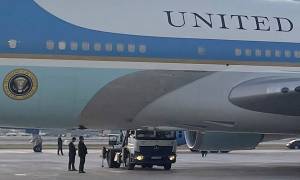

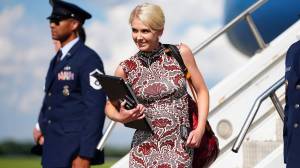

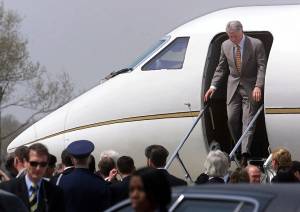










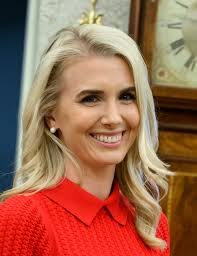
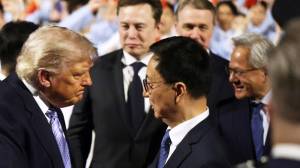

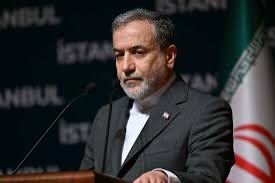
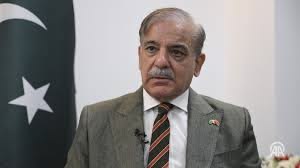
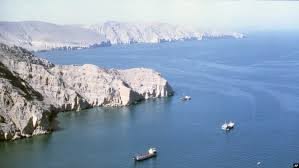
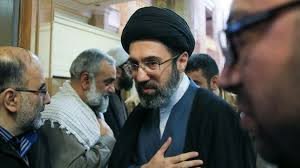








 peej
peej Carissa
 bostonboomer
 dakinikat
 ecocatwoman
 jjlo
jjlo mablue2
 Mama Lopez
 peggysue22
 quixote
 skydancingguestblogger
 Mona (aka Wonk the Vote)



 Sky Dancing
Recent Comments