Posted: April 8, 2026 | Author: bostonboomer | Filed under: just because | Tags: Benjamin Netanyahu, Donald Trump, iran, Iran War, Iran war ceasefire, Iranian Foreign Minister Abbas Araghchi, Iranian Supreme Leader Mojtaba Khamenei, israel, Lebanon, Pakistani Prime Minister Shehbaz Sharif, Strait of Hormuz, Taco Tuesday |
Good Morning!!
 Yesterday morning Trump threatened to wipe out Iran’s civilization beginning at 8:00 last night–the deadline he had set for Iran to open the Strait of Hormuz. Here’s what he posted on Truth Social:
“A whole civilization will die tonight, never to be brought back again,” he wrote. “I don’t want that to happen, but it probably will. However, now that we have Complete and Total Regime Change, where different, smarter, and less radicalized minds prevail, maybe something revolutionarily wonderful can happen, WHO KNOWS?”
The obvious implication was that he would use nuclear weapons. Of course it turned out to be another Taco Tuesday, as Trump backed down and the White House dictated a ceasefire agreement to Pakistan and then Trump said that Iran’s 10-point plan was a good starting point for negotiations.
Iran’s 10-point plan, from The Guardian:
According to state media, Iran will only accept the war’s conclusion once details are finalised in line with a 10-point peace plan reportedly submitted to the White House via Pakistani intermediaries.
The list of 10 points, published by Iranian state media, include a number of conditions the US has rejected in the past. The plan requires:
-
The lifting of all primary and secondary sanctions on Iran.
-
Continued Iranian control over the strait of Hormuz.
-
US military withdrawal from the Middle East.
-
An end to attacks on Iran and its allies.
-
The release of frozen Iranian assets.
-
A UN security council resolution making any deal binding.
That certainly doesn’t sound like a great starting point for Trump. At the moment, Iran is still collecting tolls for ships to pass through the Strait of Hormuz, and they are demanding that the U.S. close all military bases in the Middle East, plus they want compensation for losses from the war and the return of frozen assets going back to the George W. Bush administration.
And it appears there really isn’t really a ceasefire. AP on the latest events: Live updates: Attacks reported in Iran and Gulf Arab nations hours after ceasefire announcement.
Major developments we’re following:
- Iran, the United States and Israel agreed to a two-week ceasefire on Tuesday, an 11th-hour deal that headed off U.S. President Donald Trump’s threat to unleash a bombing campaign that would destroy Iranian civilization. Hours after the announcement, Iran and Gulf Arab countries reported new attacks Wednesday, though it was not clear if the strikes would scuttle the deal.
- All sides have presented vastly different versions of the terms. Iran said the deal would allow it to formalize its new practice of charging ships passing through the Strait of Hormuz. Trump said the U.S. would work with Iran to remove buried enriched uranium, though Iran did not confirm that.
- Pakistan and others said fighting would pause in Lebanon, which Israel has invaded to fight the Iran-backed Hezbollah militant group, but Israeli Prime Minister Benjamin Netanyahu said early Wednesday that the deal doesn’t cover fighting against Hezbollah. Israeli strikes hit several dense commercial and residential areas in central Beirut Wednesday afternoon without warning, killing dozens and wounding hundreds of people.
- The ceasefire may formalize a system of charging fees in the Strait of Hormuz that Iran instituted — and give it a new source of revenue. Iranian attacks and threats deterred many commercial ships from passing through the waterway, through which 20% of all traded oil and natural gas passes in peacetime.
Here’s a good summary of what Trump accomplished:
Here are some Iran war reads to check out:
Jack Blanchard with Dash Burns at Politico Playbook: ‘Better TACO Tuesday than World War III.’
Good Wednesday morning. This is Jack Blanchard, still slowly exhaling. It’s Day One of the ceasefire in Iran. Get in touch.
In today’s Playbook …
— The war in Iran is on hold for now. So who wins the peace? [….]
WHAT DIFFERENCE A DAY MAKES: “A big day for World Peace!” Trump trumpeted on Truth Social at 12:01 a.m., a mere 16 hours after threatening to erase an entire civilization off the face of the planet. Iran has “had enough” of war, Trump said, and “so has everyone else.” Plenty of people will be nodding along with that.
So let the good times roll: “There will be lots of positive action!” Trump predicted. “Big money will be made. Iran can start the reconstruction process … This could be the Golden Age of the Middle East!!!” You don’t need to read too far past the hyperbole to get the crucial point: “Two-week” ceasefire or no, Trump is already moving on.
And let’s be clear: Given the unpopularity of this war in America, the devastating impact on oil prices, the rapidly worsening global economic outlook and Trump’s looming May 14 summit with Chinese President Xi Jinping, it’s hard to imagine Trump reviving his bombing campaign. Oil prices have already plummeted below $100 a barrel following the ceasefire announcement. Stock markets are surging. He’s not going to want to go back.
So brace yourselves for the White House comms blitz. Your zone is about to be flooded with Trump world messages that America won the war, even before this two-week negotiation gets underway. This is “total and complete victory,” Trump told the AFP last night. “100 percent. No question about it.” It’s the first of what will surely be many “exclusive” calls with journalists today….
But here’s the problem: This “total victory” narrative looks tough to sell. Clearly these past few weeks have been painful for Tehran, and Hegseth and Caine will rattle off an astonishing number of military targets that U.S. and Israeli missiles flattened. But is the regime actually worse off?
The charge sheet: Iran’s leadership structures remain intact. Its hard-liners now have total control. Sanctions have been lifted, for now. Missiles can be rebuilt. The enriched uranium remains in Iran. And the discovery that even the full force of the American military cannot prevent Iran from turning one of the world’s most important shipping lanes into a de facto parking lot — with a hefty pay-to-leave barrier — will not be quickly forgotten.
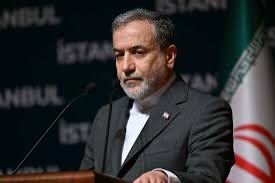
Iranian Foreign Minister Abbas Araghchi
Strait talking: Crucially, the ceasefire statement from Iranian Foreign Minister Abbas Araghchi last night — reposted in full by Trump on Truth Social — states that even during this two-week period, safe passage through the Strait of Hormuz will only be permitted “via coordination with Iran’s Armed Forces.” In other words, the U.S. has already accepted that Iran can impose limits on shipping in the Strait — limits that did not exist before the war began.
And there’s more: Iran is already charging punitive tolls for passage through the strait, and AP reports this will continue during the ceasefire. Trump’s description of Iran’s 10-point list of demands as “a workable basis on which to negotiate” suggests further concessions are entirely possible. Iran’s national security council is already taking a victory lap, though Trump railed angrily at CNN last night for reporThe ting it.
Much remains unclear. Pakistan — the central mediator — said the ceasefire includes Israeli attacks on Lebanon, but Israel said overnight it does not. There are reports Iran continued firing missiles at neighboring countries after the ceasefire was agreed. And there’s no clarity at all on what happens to Iran’s enriched uranium, though Trump told AFP it will be “perfectly taken care of.”
Just 90 minutes before President Donald Trump’s 8 p.m. deadline to wipe out “a whole civilization” with massive strikes on Iran’s energy infrastructure and bridges, he granted a two-week extension for diplomacy to continue.
“Subject to the Islamic Republic of Iran agreeing to the COMPLETE, IMMEDIATE and SAFE OPENING of the Strait of Hormuz,” Trump said Tuesday on social media, “I agree to suspend the bombing and attack of Iran for a period of two weeks.”
“We have already met and exceeded all Military objectives,and are very far along with a definitive Agreement concerning Longterm PEACE with Iran,” Trump said. A 10-point proposal received from Tehran, he said, was a “workable basis on which to negotiate.”
Trump added, “This will be a double-sided CEASEFIRE!”
After Trump’s announcement, a statement posted by Iranian Foreign Minister Abbas Araghchi, which he attributed to the Supreme National Security Council, said it too was responding to Pakistan’s request and Trump’s “acceptance of the general Framework of Iran’s 10-point proposal for negotiations.”
“If attacks against Iran are halted,” it said, “our Powerful Armed Forces will cease their defensive operations.” For two weeks, it added, “safe passage through the Strait of Hormuz will be possible via coordination” with the Iranian military.
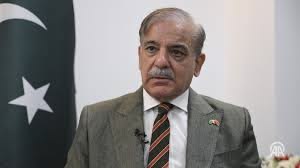
Pakistani Prime Minister Shehbaz Sharif
Trump said his ceasefire decision was in response to an appeal from Pakistani Prime Minister Shehbaz Sharif and military chief Gen. Asim Munir. Pakistan has led a group of mediators, including Egypt and Turkey, that has been looking for an exit to the war that has destabilized the entire region. Trump has forged a particularly close relationship with Munir and, in an interview with Fox News before the extension announcement, described Sharif as “a highly respected man all over.”
In a statement following Trump’s announcement, Sharif said U.S. and Iranian delegations were invited to Islamabad on Friday “to further negotiate for a conclusive agreement to settle all disputes.” He said that the ceasefire would include Lebanon, where Israel is engaged in a massive bombing campaign against Iran-backed Hezbollah.
Unfortunately, Netanyahu didn’t agree to include Lebanon in the ceasefire.
In a brief statement issued in English by his office early Wednesday, local time, Israeli Prime Minister Benjamin Netanyahu said he supported Trump’s “decision to suspend strikes against Iran for two weeks subject to Iran immediately opening the straits and stopping all attacks on the U.S., Israel and countries in the region.”
“Israel also supports the U.S. effort to ensure that Iran no longer poses a nuclear, missile and terror threat. … The United States has told Israel that it is committed to achieving these goals … in the upcoming negotiations,” Netanyahu said.
In a caveat that did not bode well for the negotiations, he added that the ceasefire “does not include Lebanon,” contradicting Sharif’s claims.
The Israel Defense Forces said Wednesday it had “ceased fire in the campaign against Iran” but would continue “its combat and ground operations” in Lebanon.
David Sanger at The New York Times (gift link): Trump Finds His Offramp With Iran. But the Causes of War Remain Unresolved.
Mr. Trump’s tactic of escalating his rhetoric to astronomical levels certainly helped him find an offramp he had been seeking for weeks. That success alone may fuel his belief that the tactics he learned in the New York real estate world — ignore old conventions, make maximalist demands — works in geopolitics as well.
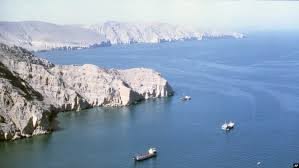
The Strait of Hormuz
Without question, it was a down-to-the-wire tactical victory, one that should, at least temporarily, get oil, fertilizer and helium flowing again through the Strait of Hormuz, and calm markets that feared a global energy shock would lead to a global recession.
But it resolved none of the fundamental issues that led to the war.
It leaves a theocratic government, backed by the vicious Islamic Revolutionary Guard Corps, in charge of a cowed population that has been pummeled by missiles and bombs, and finds itself still under the thumb of a familiar regime, even if under new management. It leaves Iran’s nuclear stockpile in place, including the 970 pounds of near-bomb-grade material that was, in theory, the casus belli of this war.
It left Gulf allies reeling, with the discovery that the glass skyscrapers of Dubai and the desalination plants that make wealthy enclaves in Kuwait livable can be taken out by Iranian missiles and drones. Gas prices have soared, and are about to test Mr. Trump’s promise that they will fall again to old levels as soon as the fighting stops.
And it has left Mr. Trump’s political base fractured, with onetime supporters now accusing the president and his loyalists, starting with Vice President JD Vance, with violating their promise not to get America tied up in unwinnable wars in the Middle East.
It all happened at a moment when Iran has demonstrated that it can absorb 13,000 targeted strikes and still conduct an impressive asymmetric war, choking off oil supplies and sending its cyber army to attack American infrastructure.
Now Mr. Trump faces the challenge not only of reaching a more permanent settlement but proving to the United States and the world that this conflict was worth fighting in the first place. And to do so, he will have to demonstrate that he has removed Iran’s death-grip on the 21-mile channel that makes up the strait, and its chances of ever building a nuclear weapon.
On that point there was an ominous-sounding element buried in the Iranian description of the deal. Shipping would proceed, the Iranian foreign minister, Abbas Araghchi, wrote, but under the control of “Iran’s Armed Forces,” who would determine who passes, and when.
And then there’s that 10-point list of demands.
“Iran remains in the control of the Strait, which was not the case before the war,” said Richard Fontaine, the chief executive of the Center for a New American Security, a Washington think tank. “I find it hard to believe that the United States and the world could accept a situation in which Iran remains in control of a key energy checkpoint indefinitely. That would be a materially worse outcome than existed before the war.”
So might a final agreement. Four weeks ago Mr. Trump was demanding Iran’s “unconditional surrender,’’ saying he would determine when the country had been completely defeated. On Tuesday evening his tone was different. He agreed to base the next two weeks of talks on a 10-point plan Iran submitted to the Pakistanis. Mr. Trump called it “a workable basis on which to negotiate.”
“Have you looked at Iran’s plan?” asked Mr. Fontaine. “It reads like a Tehran wish list from before the war, calling for a global recognition of Iran’s right to enrich uranium, the removal of all American forces from the region and a lifting of economic sanctions. And it calls for the payment of reparations to Iran for damage caused in the war.”
Use the gift link to read the rest, if you’re interested.
Barak Ravid, Dave Lawler, and Marc Caputo at Axios: Exclusive: How Iran’s supreme leader reached a truce with Trump.
Officials in the U.S. and Israel learned of an intriguing development on Monday, with President Trump’s ultimatum looming: Supreme Leader Mojtaba Khamenei had instructed his negotiators, for the first time since the war began, to move towards a deal, according to an Israeli official, a regional official and a third source with knowledge.
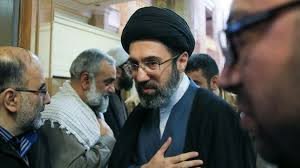
Iranian Supreme Leader Mojtaba Khamenei
The big picture: As Trump was publicly threatening total annihilation, there were signs of diplomatic momentum behind the scenes — though even sources close to Trump didn’t know which outcome to expect right up until a ceasefire was announced….
Setting the scene: On Monday morning, as Trump worked the crowd at a White House Easter celebration, a “very angry” Steve Witkoff was working the phones.
- The U.S. envoy told the mediators the 10-point counter-proposal the U.S. had just received from Iran was “a disaster, a catastrophe,” a source with direct knowledge said.
- That began a “chaotic” day of amendments, with the Pakistani mediators passing new drafts between Witkoff and Iranian Foreign Minister Abbas Araghchi, and the Egyptian and Turkish foreign ministers trying to help bridge gaps.
- By Monday night, the mediators had U.S. approval for an updated proposal for a two-week ceasefire. It was then up to Khamenei — whom the sources said was actively involved in the process on Monday and Tuesday — to make a decision.
The intrigue: The involvement of the new supreme leader was necessarily clandestine and laborious. Facing an active threat of assassination by Israel, Khamenei has been communicating primarily via runners passing notes.
- Two sources described Khamenei’s blessing for his negotiators to cut a deal as a “breakthrough.”
- The regional source said Araghchi also played a central role both in handling the negotiations and in pushing commanders from the Revolutionary Guards to accept a deal.
- China was also advising Iran to seek an off-ramp.
- But at the end of the day, all major decisions on Monday and Tuesday went through Khamenei. “Without his green light, there wouldn’t have been a deal,” the regional source said.
How it happened: It was clearby Tuesday morning that progress was being made, but that didn’t stop Trump from making his most harrowing threat: “A whole civilization will die tonight.”
- Some U.S. media outlets reported Iran was breaking off talks in response. Sources involved in the negotiations told Axios that was not the case, and that there was actually some momentum.
- Vice President Vance was working the phones from Hungary, dealing primarily with the Pakistanis.
- Meanwhile Israeli Prime Minister Benjamin Netanyahu was in frequent contact throughout the day with Trump and his team — though the Israelis were growing increasingly concerned that they’d lost control of the process.
By around noon ET on Tuesday, there was a general understanding that the parties were converging on a two-week ceasefire.
There’s more at the Axios link.
William Kristol at The Bulwark: It’s Not a TACO. It’s a Surrender.
I’m old enough to remember when President Trump assured us, “There will be no deal with Iran except UNCONDITIONAL SURRENDER!”
That was a month ago.
 Since then, Trump has bombed and blustered and caused all manner of damage to Iran, to its neighbors, to the United States, and to the world. But Iran hasn’t unconditionally surrendered. It hasn’t even conditionally surrendered. It’s agreed to a ceasefire followed by negotiations. These negotiations will be based not on Iranian surrender but, as Trump said last night, on a ten-point proposal from Iran that Trump believes “is a workable basis on which to negotiate.”
So we’re off to negotiations. Trump and the Iranian regime are making wildly contrasting claims and promises about what has been or will be agreed to. For now, as Gregg Carlstrom, Middle East correspondent of the Economist, put it:
So if you’re keeping score at home, the ceasefire includes Lebanon but also doesn’t include Lebanon, America has agreed to all of Iran’s demands and Iran has agreed to all of America’s demands, America will recognize Iran’s right to enrichment and also insist on zero enrichment, Hormuz is completely open but also Hormuz is subject to unclear limitations.
Oil market researcher Rory Johnston wittily called this “Schrödinger’s ceasefire.”
But the fog of ceasefire doesn’t mean that we don’t know anything. In fact, we know quite a lot already.
We know that the Iranian regime remains in place. The mullahs and the IRGC remain in control of Iran.
We know that the Iranian regime still has its enriched uranium (even if they can’t get to a lot of it right now). And we know that while its military capabilities have been much degraded, it still has functional missile and drone capabilities. We know there’s no reason not to expect Russia and China to be willing to rearm Iran.
We know that primary and secondary sanctions on Iran seem likely to be relaxed or even lifted.
We know that at least for now the Strait of Hormuz will be reopened. But it’s unclear whether it will remain an international waterway, as it was before, or whether Iran will be able to charge fees or tolls for passage. And we know that the fact that the Iranian regime was able to close the waterway, cause significant damage to the global economy, and live to boast about it, can’t be unseen. Whatever promises are now made, Iran will retain leverage with respect to the strait.
We know more generally that Trump’s war has further shaken any confidence our allies might still have in us. It will be seen as confirmation that Trump’s United States of America has become just another rogue nation in the international arena, if a less disciplined and cunning one than Putin’s Russia or Xi’s China. We know that the old international order with the United States as its anchor is gone.
What we know mocks Trump’s claim in an interview with AFP last night that the United States “won a total and complete victory. One hundred percent. No question about it.”
That’s about all I can handle for today. We have a fool as president, and I’m not sure we can survive the rest of his term. Our only hope is that Democrats can wind the House and Senate and impeach and remove him.
Did you like this post? Please share it with your friends:
Posted: April 1, 2026 | Author: bostonboomer | Filed under: just because | Tags: Benjamin Netanyahu, Birthright citizenship, Byron Noem, Colorado, conversion therapy, Donald Trump, Iran foreign minister Abbas Araghchi, Iran War, israel, Keir Starmer, NASA, NATO, Strait of Hormuz, Supreme Court |
Good Afternoon!!
Trump is struggling to deal with his losing war in Iran. He is supposed to give a speech to the nation about it tonight, something he should have done before he started dropping bombs. He is also threatening to pull the U.S. out of NATO. Here’s the latest.
The Telegraph: Trump interview: I am strongly considering pulling out of Nato.
Donald Trump has told The Telegraph he is strongly considering pulling the United States out of Nato after it failed to join his war on Iran.
The US president labelled the alliance a “paper tiger” and said removing America from the defence treaty was now “beyond reconsideration”.
 It is the strongest sign yet that the White House no longer regards Europe as a reliable defence partner following the rejection of Mr Trump’s demand that allies send warships to reopen the Strait of Hormuz.
Mr Trump was asked if he would reconsider the US’s membership of Nato after the conflict.
He replied: “Oh yes, I would say [it’s] beyond reconsideration. I was never swayed by Nato. I always knew they were a paper tiger, and Putin knows that too, by the way.” [….]
Mr Trump added: “Beyond not being there, it was actually hard to believe. And I didn’t do a big sale. I just said, ‘Hey’, you know, I didn’t insist too much. I just think it should be automatic.
He is single-handedly wrecking the international alliances that have maintained relative peace since the end of WWII. The rest of the interview consisted mostly of insults to the UK and Prime Minister Keir Starmer.
“We’ve been there automatically, including Ukraine. Ukraine wasn’t our problem. It was a test, and we were there for them, and we would always have been there for them. They weren’t there for us.”
Singling out the UK, the US president rebuked Sir Keir Starmer for refusing to get involved in the American-Israeli war against Iran, suggesting that the Royal Navy was not up for the task.
“You don’t even have a navy. You’re too old and had aircraft carriers that didn’t work,” he said, referring to the state of Britain’s fleet of warships.
Asked whether the Prime Minister should spend more on defence, Mr Trump added: “I’m not going to tell him what to do. He can do whatever he wants. It doesn’t matter. All Starmer wants is costly windmills that are driving your energy prices through the roof.”
After speaking to The Telegraph, The Wall Street Journal reported that Mr Trump had raised the issue of withdrawing from Nato with White House aides.
The newspaper said he had made comments to Mr Rubio and others in private but had made no final decision on the future of the alliance.
No one seems to know what Trump is going to say tonight in his overdue “speech to the nation.” It seems likely he will try to bring an end to U.S. involvement, and leave the mess he created for other countries to clean up In addition to the threat to pull out of Nato, according to the AP:
U.S. President Donald Trump on Wednesday claimed that Iran’s president wanted a ceasefire ahead of his speech to the American people. Trump made the claim on his Truth Social website. Iran’s Foreign Ministry spokesman sIsraid Trump’s remarks were “false and baseless.”
Iran’s Foreign Minister Abbas Araghchi, gave an interview to Al Jazeera: War on Iran: Three key takeaways from Araghchi’s interview with Al Jazeera.
Iranian Foreign Minister Abbas Araghchi has confirmed direct contact with
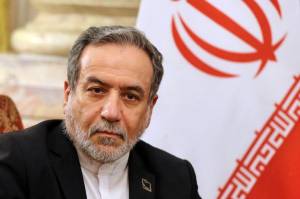
Iranian Foreign Minister Abbas Araghchi says the Strait of Hormuz falls under the territorial control of Iran and Oman File, Khaled Elfiqi AP Photo
Araghchi confirmed that he had held conversations with Witkoff, Trump’s trusted envoy for peace negotiations around the world, during the current conflict.
But the Iranian foreign minister downplayed that contact.
“I receive messages from Witkoff directly, as before, and this does not mean that we are in negotiations,” he said.
“There is no truth to the claim of negotiations with any party in Iran. All messages are conveyed through the Foreign Ministry or received by it, and there are communications between security agencies,” he added.
Araghchi explained that they have never had a “good experience” negotiating with the US, referring to Washington’s decision to withdraw from the Barack Obama-era nuclear deal during Trump’s first term. The US has also twice attacked Iran during negotiations over the past nine months — in June 2025 and with the current war, which began on February 28, at a time when Oman, the mediator between the two sides, had said they were on the cusp of a breakthrough over Tehran’s nuclear programme.
“We do not have any faith that negotiations with the US will yield any results. The trust level is at zero,” Araghchi said, adding: “We don’t see honesty.”
Sounds about right. On the Strait of Hormuz:
In the interview, Araghchi argued that the waters of the Strait of Hormuz fall under the territorial control of Iran and Oman, and that once the war is over, it is these two countries who would decide the future of the waterway.
But he added that the strait should be a “peaceful waterway”.
Gulf nations, including Qatar, have, however, insisted that they be included in any talks to decide the future of the strait.
Araghchi also insisted in the interview that, from Iran’s perspective, the strait is open for ships from most nations.
“Only for the ships of those who are at war with us, this strait is closed. That is normal during war – we cannot let our enemies use our territorial waters for commerce,” he explained.
Read more at the link.
But what about Netanyahu? Will he be OK with Trump wimping out of their war?
Haretz: Netanyahu Declines to Set Timeline for Ending Iran War in pro-Trump Outlet.
Prime Minister Benjamin Netanyahu said Israel and the United States are “beyond the halfway point in terms of success” in their war against Iran, saying that the joint strikes are focusing on the country’s nuclear material.
He added that he doesn’t want to “put a schedule on” the timeline for ending the war with Iran.
 In an interview with the right-wing American media outlet Newsmax, Netanyahu said the Iranian regime is “pursuing nuclear weapons and the means to deliver them to American cities,” adding, “That’s what this war is about – preventing that outcome.”
The Israeli prime minister also said that the attacks have “already degraded their missile capabilities, destroyed factories, and eliminated key nuclear scientists.”
He appeared to be sending messages to Trump in the interview:
Iran “killed and maimed more Americans than any other force in recent decades,” Netanyahu told Newsmax, saying Tehran also tried to assassinate U.S. President Donald Trump. “Thousands and thousands killed and maimed in Afghanistan by Iranian IEDs. They bombed our embassies. They tried to kill President Trump twice. They’re still trying to kill him.”
According to Netanyahu, Iran has openly shown it is a threat to the West. “Most importantly, is they they chant ‘Death to America.’ They also say ‘Death to Israel.’ But they say America is the Great Satan. They’re religious zealots, and they have to wipe out Western culture led by America,” he said.
Netanyahu also said Iran is more dangerous to the United States than North Korea, China and Russia. “I don’t hear North Korea chanting ‘Death to America.’ I don’t hear China chanting … I don’t hear Russia,” he said.
I guess we’ll find out something about Trump’s plans tonight in his speech–if he makes any sense, which is unlikely.
According to Marc Caputo and Barak Ravid at Axios: Trump’s mixed messages on Iran perplex his own team.
President Trump isn’t just befuddling foreign leaders and financial markets with his mixed signals on Iran. Advisers who speak regularly with the president tell Axios they’re just as uncertain.
Why it matters: Trump’s off-the-cuff musings and Truth Social postings can have life-or-death consequences for the war, and massive implications for the market. Then the cycle restarts without any lasting clarity.
Between the lines: Some Trump aides and allies say he’s mostly improvising rather than following any clear plan.
- He likes to keep his options open, spitball with different audiences, then capitalize if he thinks he sees an opportunity, they say.
- Aides have been convinced at various points that Trump was leaning toward a major escalation, and at others that he was eager for a swift resolution. “Nobody knows in the end what he’s really thinking,” a senior adviser said.
- “They had a plan for the first week and since then, they are making the plan up as they go along,” a former U.S. official said.
Others claim it’s all by design. “That’s the plan — for you to not have a clue,” Sen. Lindsey Graham (R-S.C.), who spoke to Trump on Monday, told Axios.
Read more at Axios.
Keir Starmer
One more bit of Iran news from The Guardian: Britain to host 35 countries for strait of Hormuz talks, says Starmer.
The UK will convene 35 countries – excluding the US – to explore ways to reopen the strait of Hormuz, the vital shipping route for oil and gas that has been blocked by Iran.
Keir Starmer, the prime minister, said the next phase of discussions in the joint British and French efforts to secure the waterway would be held on Thursday, with Yvette Cooper, the foreign secretary, alongside international leaders….
Starmer said on Wednesday the meeting would bring together 35 countries to “assess all viable diplomatic and political measures we can take to restore freedom of navigation, guarantee the safety of trapped ships and seafarers and to resume the movement of vital commodities”.
In other news, Trump attended the Supreme Court session his morning on his efforts to end birthright citizenship. No other president has done that.
The Washington Post: Supreme Court heard birthright citizenship case with Trump in attendance.
The Supreme Court heard arguments Wednesday over the constitutionality of President Donald Trump’s effort to ban birthright citizenship. The justices questioned the attorneys about the definition of “domicile,” core to the government’s argument that only children of immigrants who are domiciled in the United States should receive birthright citizenship. In an indication of the political stakes in the case, Trump attended the hearing while Solicitor General D. John Sauer made his arguments, the first time a sitting president is known to have done so. Arguments concluded after Sauer made his rebuttal.
American Civil Liberties Union Legal Director Cecillia Wang argued for the plaintiffs, immigrants using pseudonyms. The ACLU and other groups challenged Trump’s order, saying it violates the 14th Amendment, which grants citizenship to “all persons” born or naturalized in the United States.
 In the hearing, Sauer argued that children born to parents without permanent immigration status should not be granted citizenship, upending the long-settled principle that nearly everyone born on U.S. soil is automatically a citizen.
A ruling upholding Trump’s order could have sweeping political, economic and social ramifications….
ACLU Legal Director Cecillia Wang said the 14th Amendment does not allow Congress to add more exceptions to the birthright citizenship rule.
Justice Brett M. Kavanaugh replied: “I guess the answer you just gave means they don’t have any authority to look at this, even if they passed it 435 to 0 in the House and 100 to 0 in the Senate. Your point is, no, they’re closed. They’re frozen forever.”
“Correct,” Wang said….
Arguments concluded after Solicitor General John D. Sauer made his rebuttal.
Congress “in 1866 had a very, very clear understanding that the children of the newly freed slaves have the requisite allegiance to the United States,” he said in his closing remarks. “This was all about overruling the grave injustice of Dred Scott and making sure that allegiance was granted to the children of slaves.”
“Thank you, counsel, general. The case is submitted,” Chief Justice John G. Roberts Jr. said, as he does when arguments end in every case.
At AP, Mark Sherman analyzed the court session: Supreme Court casts doubt on Trump’s bid to limit birthright citizenship as he attends arguments.
The Supreme Court is casting doubt on President Donald Trump’s restrictions on birthright citizenship in a consequential case that was magnified by Trump’s unparalleled presence in the courtroom.
Conservative and liberal justices on Wednesday questioned whether Trump’s order declaring that children born to parents who are in the United States illegally or temporarily are not American citizens comports with either the Constitution or federal law.
Trump, the first sitting president to attend arguments at the nation’s highest court, spent just over an hour inside the courtroom for arguments made by the Republican administration’s top Supreme Court lawyer, Solicitor General D. John Sauer. The president departed shortly after lawyer Cecillia Wang began her presentation in defense of broad birthright citizenship.
Trump heard Sauer face one skeptical question after another. Justices asked about the legal basis for the order and voiced more practical concerns.
“Is this happening in the delivery room?” Justice Ketanji Brown Jackson asked, drilling down into the logistics of how the government would actually figure out who’s entitled to citizenship and who’s not….
“How much of the debates around the 14th Amendment had anything to do with immigration?” Thomas asked, pointing out that the purpose of the amendment was to grant citizenship to Black people, including freed slaves.
The justices are hearing Trump’s appeal of a lower-court ruling from New Hampshire that struck down the citizenship restrictions, one of several courts that have blocked them. They have not taken effect anywhere in the country.
The case frames another test of Trump’s assertions of executive power that defy long-standing precedent for a court that has largely ruled in the president’s favor — but with some notable exceptions that Trump has responded to with starkly personal criticisms of the justices. A definitive ruling is expected by early summer.
Yesterday the Supreme Court voted 8-1 that conversion therapy cannot be banned in Colorado.
Chris Geidner at Law Dork: Supreme Court holds that Colorado’s conversion therapy ban “censors” talk therapists.
The U.S. Supreme Court on Tuesday held, on an 8-1 vote, that Colorado’s law banning therapists from engaging in conversion therapy with minor patients is presumptively unconstitutional as to talk therapy, deeming the law “an egregious form“ of speech regulation that almost always violates the First Amendment.
Only Justice Ketanji Brown Jackson dissented from the court’s decision — warning that the court might have made talk therapy “effectively unregulatable” and that the “fallout could be catastrophic.“ Taking the rare step of announcing her dissent from the bench, Jackson declared that the majority got it “wrong as a matter of precedent, first principles, and history.”
Justice Neil Gorsuch wrote the court’s majority opinion, holding that lower courts had applied the wrong standard for addressing Kaley Chiles’s First Amendment challenge to the state’s ban on conversion therapy — efforts to change a patient’s sexual orientation or gender identity.
As with his opinion in the wedding website case in 2023, 303 Creative v. Elenis, Gorsuch waved broadly at his purpose being to protect free speech and to stop, as he wrote on Tuesday, “censorious governments.“
The proper standard to be applied in Chiles’s case, the court held, is a particularly skeptical form of strict scrutiny because the law is a content-based regulation and, further, includes “viewpoint restrictions” by banning efforts to change a person’s sexual orientation or gender identity and allowing efforts to affirm a patient’s sexual orientation or gender identity. Gorsuch wrote that Chiles’s challenge would likely succeed when the case goes back to the lower courts because “Ms. Chiles seeks to engage only in speech, and as applied to her the law regulates what she may say.“
I guess the solution is public education about the research that shows conversion therapy doesn’t work. But that might not protect children in right wing religious families, especially if they are home schooled.
A few more stores of possible interest:

NASA astronauts Reid Wiseman, Artemis II commander, from left, Victor Glover, Artemis II pilot, Christina Koch, Artemis II mission specialist, and CSA (Canadian Space Agency) astronaut Jeremy Hansen, Artemis II mission specialist, right, in a group photograph as they visit NASA’s Artemis II SLS (Space Launch System) rocket and Orion spacecraft. (Bill Ingalls/NASA via AP)
AP: NASA begins fueling rocket to launch astronauts on the first lunar trip in half a century.
CAPE CANAVERAL, Fla. (AP) — NASA began fueling its moon rocket Wednesday for humanity’s first lunar trip in more than half a century, aiming for an evening liftoff with four astronauts.
Tensions were high as hydrogen fuel started flowing into the rocket hours ahead of the planned launch. Dangerous hydrogen leaks erupted during a countdown test earlier this year, forcing a lengthy flight delay.
By mid-morning, no leaks had been reported.
The launch team needs to load more than 700,000 gallons of fuel (2.6 million liters) into the 32-story Space Launch System rocket on the pad before the Artemis II crew can board.
Read more at the link. I had no idea this was happening until I got a message from JJ this moring.
The New York Times: Federal Judge Approves Trump Effort to Obtain List of Jews From Penn.
The Trump administration was within its rights to demand that the University of Pennsylvania turn over information about Jews on campus as part of a federal investigation into discrimination at the school, a federal judge decided Tuesday.
The government’s investigation had united Penn leaders with Jewish students and faculty members as they opposed the Equal Employment Opportunity Commission’s subpoena. Many on campus drew parallels between the government’s approach and methods deployed in Nazi Germany.
But the Trump administration has said that its request was typical for discrimination investigations to seek potential victims and witnesses, and Judge Gerald J. Pappert of Philadelphia’s Federal District Court agreed on Tuesday. He gave Penn until May 1 to comply with the administration’s subpoena, though the ruling appeared unlikely to quell the debates around how the administration has pressured top American universities.
Judge Pappert, an appointee of former President Barack Obama, appeared to hint at the discomfort that the government’s subpoena had prompted and at the accusations that the E.E.O.C. had gone too far with its tactics, especially a demand for information tied to groups “related to the Jewish religion.”
“Though ineptly worded, the request had an understandable purpose — to obtain in a narrowly tailored way, as opposed to seeking information on all university employees, information on individuals in Penn’s Jewish community who could have experienced or witnessed antisemitism in the workplace,” Judge Pappert wrote in his 32-page opinion, issued three weeks after he heard oral arguments.
I don’t know. This sounds pretty creepy to me.
One more from Shawn McCreesh at The New York Times (gift link): In South Dakota, Neighbors Feel Sorry for Kristi Noem’s Husband.
That couldn’t be him, could it?
The cartoonishly large breasts. The pink spandex. The come-hither stare.

Byron Noem
“Must be A.I.,” a burly cattle rancher named Kevin Ruesink said as he inspected pictures of his neighbor Bryon Noem that had been published by The Daily Mail on Tuesday morning. The rancher was playing pinochle in the back of a convenience store with five other men in the tiny town of Castlewood, S.D., not far from the Noem family farm.
These men all knew Bryon Noem as the nice, tall insurance salesman who married Kristi Arnold, the town beauty queen who grew up to be governor. But now there were these pictures.
The rancher squinted at them with a mixture of suspicion and pity. “I grew up playing ball with Bryon,” he said. “I’ve never known him to be part of stuff like that. I don’t believe that at all.”
The British tabloid report on Tuesday was the latest and most dramatic development in the saga of Kristi Noem, who was sacked as homeland security chief earlier this month, the first Trump cabinet member to get the old heave-ho this term. She quickly put out a statement saying that she was “devastated” by the images of her husband and that “the family was blindsided by this.”
In response to multiple requests for an interview, Mr. Noem wrote in a text message on Tuesday: “I will at some point. Today is not the day. I appreciate your heart.”
While the pictures of Ms. Noem’s husband with what appear to be enormous inflated balloons under his spandex shirt ricocheted across the internet, becoming a political punchline for her many, many enemies, the reaction back on the proverbial ranch was a little more … tenderhearted.
That’s kind of a refreshing response from the townsfolk. Use the gift link to read more if you’re interested.
Those are the stories that caught my attention this morning. What stories have you been following?
Did you like this post? Please share it with your friends:
Posted: March 14, 2026 | Author: bostonboomer | Filed under: just because | Tags: Benjamin Netanyahu, corruption, Donald Trump, dubai, Gaza, Iran War, israel, Jared Kushner, Karg Island, Lebanon, Mohammed bin Salman, Pete Hegseth, Strait of Hormuz, U.S. Embassy Bagdad, UAE |
Good Afternoon!!
 I’m sick and tired of wars. I’m even more sick and tired of Trump and his cabinet full of stupid idiots. I came of age during the Vietnam war. After that disaster finally ended, I really thought our leaders would stay out of unnecessary wars. But it didn’t happen. These men (goddess forbid we elect a woman president!) just have to prove their “manhood” by attacking other countries. I’m just plain sick of it.
Trump’s war could turn out to be worse than the ones George W. Bush got us into. It appears he was talked into attacking Iran by his pal Bibi Netanyahu and his son-in-law Jared Kushner, who is very close to Netanyahu as well the crown prince of Saudi Arabia Mohammed bin Salman. Trump was also looking for a powerful distraction from the Epstein scandal. Now Netanyahu appears to be trying to turn Lebanon into another Gaza, and Kushner is soliciting more money for his private businesses.
It also appears that Trump and his gang of idiots didn’t plan for the obvious results of their war–rising prices and the closing of the Strait of Hormuz. In addition, Trump’s “Secretary of War” is advocating for war crimes. That’s where things stand so far.
Here’s the latest:
William Christou at The Guardian: Entire families wiped out and towns emptied as Israel’s war on Lebanon intensifies.
For Batoul Hamdan and her two children, seven-month-old Fatima and Jihad, three, Monday’s iftar, the evening meal that breaks the daily fast during Ramadan, was special.
For a week, they had eaten to the sounds of bombs in their home in Arab Salim. Hamdan eventually decided to leave for Al-Nimiriya, the sleepy town where she had grown up. Surrounded by her parents and siblings in the family home, she hoped they could finally enjoy the festive mood of Ramadan.
They had just finished their meal when the bomb fell. The Israeli airstrike collapsed the two-storey building instantly, killing all eight members of the Hamdan family: grandparents Ahmad and Najib, their children, including Batoul, and grandchildren Fatima and Jihad – three generations wiped out in a moment.
On Thursday, only snarled rebar and broken concrete remained of the Hamdan family home. The fragments of their lives – a certificate of achievement from the children’s schooldays, cutlery from their cabinet, frayed purses – had been ejected by the force of the blast and now littered the ground.
“There was no warning before the strike. My own two kids started to cry, I picked them up and started to run away from the explosion when it happened,” said Qassem Ayoub, a neighbour and town police officer, as he stared at the wreckage. “Why were they targeted? I don’t know, ask the Israelis.”
Batoul and her loved ones were among the 773 Lebanese people – including more than 100 children – killed by Israel’s campaign in Lebanon since 2 March. They join a growing list of families completely wiped out by Israeli bombings, in a conflict whose death toll is rising faster than in any previous war in Lebanon.
Forty-one people were killed by Israeli airstrikes in Nabi Chit in the Bekaa valley in only five hours last Saturday, and 18 people died in a single night in the town of Sir el-Gharbiyeh on 8 March. The pace of death has stunned Lebanese people and left them struggling to keep up.
Do you think Netanyahu will stop these attacks on Lebanon if Trump calls off his war in Iran. I don’t.

By Avalon Atelier
Kareem Chehayeb and Malak Harb at AP: War has already displaced nearly a million Lebanese, and aid groups warn of a humanitarian crisis.
BEIRUT (AP) — Fatima Nazha slept on the street for two days after she and her family fled their home in Beirut’s southern suburbs following an Israeli mass evacuation order.
All of the schools the government turned into shelters were full, and the family couldn’t afford a hotel or an apartment, so she and her husband eventually moved into a tent in the country’s biggest stadium while their kids and grandchildren found shelter near the southern coastal city of Sidon.
In just 10 days, more than 800,000 people in Lebanon have been displaced by war, just over a year since the last conflict uprooted over a million Lebanese from their homes. That’s one in every seven people in the tiny country, according to humanitarian organization the Norwegian Refugee Council. Many don’t have a place to stay, and the cash-strapped government has only been able to accommodate roughly 120,000 people as it scrambles to open shelters and bring in more supplies.
Nazha, who uses a wheelchair, said being forced from her home has been far more difficult this time than when Israel and Hezbollah were last at war more than a year ago. The strikes targeting the Iran-backed militant group have been more intense and unpredictable, and Israel’s evacuation order came abruptly, leaving her unable to gather all her belongings.
“The strikes used to target a specific area, but now they’re hitting all the areas,” she said, taking a drag off her cigarette. Lebanon’s Health Ministry said Friday that more than 700 people, including 103 children, have died in the war.
Read more at the AP link.
But Netanyahu isn’t satisfied yet. Barak Ravid at Axios: Israel planning massive ground invasion of Lebanon, officials say.
Israel is planning to significantly expand its ground operation in Lebanon, aiming to seize the entire area south of the Litani River and dismantle Hezbollah’s military infrastructure, Israeli and U.S. officials say.
Why it matters: This could be the largest Israeli ground invasion of its northern neighbor since 2006, dragging Lebanon to the epicenter of the escalating war with Iran.
- “We are going to do what we did in Gaza,” a senior Israeli official said, referring to the flattening of buildings Israel says Hezbollah uses to store weapons and launch attacks.
The big picture: An operation of this size and scale could lead to a prolonged Israeli occupation of southern Lebanon.
- Lebanon’s government is deeply alarmed that the renewed war — triggered by Hezbollah’s decision to launch rockets at Israel — will devastate the country.
- The Trump administration backs a major Israeli operation to disarm Hezbollah, but is also pressing to limit the damage to the Lebanese state and pushing for direct Israel-Lebanon talks on a postwar agreement.
Driving the news: Until days ago, Israeli Prime Minister Benjamin Netanyahu’s government was still trying to contain the Lebanon escalation in order to stay focused on Iran, according to Israeli officials.
- That calculus changed Wednesday when Hezbollah launched more than 200 missiles in a massive coordinated attack with Iran, which fired dozens of its own.
- “Before this attack we were ready for a ceasefire in Lebanon, but after it there is no way back from a massive operation,” a senior Israeli official said.
State of play: The IDF has had three armored and infantry divisions on the Lebanese border since the start of the Iran war, with some ground forces conducting limited incursions over the past two weeks.

By Kim Haskins
And what is Jared Kushner up to now that he got Trump to help Netanyahu with his bloodthirsty plans?
Rob Copeland and Maureen Farrell at The New York Times (gift link): Jared Kushner Solicits Funds for His Firm While Working as Mideast Envoy.
Jared Kushner, one of the U.S. government’s chief negotiators in the Middle East, is trying to raise more money for his private equity firm from governments in the region.
Mr. Kushner, President Trump’s son-in-law, has spoken with potential investors in recent weeks about raising $5 billion or more for Affinity Partners, his investment firm, according to five people with knowledge of the talks who were not permitted to speak publicly about the discussions.
As part of the fund-raising effort, Affinity’s representatives have already met with Saudi Arabia’s Public Investment Fund, which invests the proceeds of the kingdom’s vast oil reserves, two of the people briefed on the discussions said. PIF is led by Crown Prince Mohammed bin Salman, who has formed close ties with Mr. Kushner and the Trump administration.
PIF, which is already the largest and earliest investor in Affinity, invested $2 billion soon after the first Trump administration ended.
As part of that deal, the Saudis must be given the first chance to invest during any subsequent attempts by Affinity to raise funds, the two people said. Other Middle Eastern sovereign wealth funds that invested earlier in Affinity, including those in the United Arab Emirates and Qatar, are also expected to be asked for more, the people said.
Mr. Kushner’s fund-raising is expected to stretch on for the better part of this year.
The efforts show the blurring of the lines between public service and private profit-seeking during Mr. Trump’s second term. Only a few weeks ago, in his role as Mr. Trump’s “peace envoy,” Mr. Kushner met in Geneva with Iran’s foreign minister. The U.S. and Israeli bombing campaign in Iran began shortly after those meetings concluded without a deal on Iran’s nuclear program.
Meanwhile, Kushner is not actually an employee of the Federal government. The corruption is breathtaking.
And what’s happening in in Iran these days? Well, it appears that the Trump gang didn’t plan for what to do if Iran cut off shipping traffic in the Strait of Hormuz–something they were warned about.
Rebecca F. Elliott and Vivian Nereim at The New York Times (gift link): Why Little Was Done to Head Off Oil’s Strait of Hormuz Problem.
Of all the risks the global energy system has long faced, none was bigger or better known than the potential closure of the Strait of Hormuz.
The narrow passageway out of the Persian Gulf is both vital — serving as the only gateway to the rest of the world for huge amounts of oil and natural gas — and extremely vulnerable to attacks.
But despite being widely recognized as a potential choke point, the strait remains the only way to export most of the energy produced in the region. That has come into sharp relief in the second week of the war in the Middle East, as the near-closure of the waterway sent oil prices soaring above $100 a barrel for the first time in almost four years.
The reason there is no true alternative comes down to a combination of geography, political tensions and economic competition among the region’s oil powers. There have been efforts to circumvent the strait, notably by Saudi Arabia and the United Arab Emirates. But the pipelines through those countries can carry only a small fraction of the energy produced in the Persian Gulf.

By Mathias Hauser
For many other energy-producing countries in the region, the only way to avoid the strait would be to lay a pipeline across a neighboring country — an expensive and politically fraught endeavor. Take Qatar, one of the world’s biggest natural gas exporters. Its only land border is with Saudi Arabia — a country that cut off diplomatic ties and closed that border during a regional spat resolved five years ago. Plus, any pipeline would itself be vulnerable to Iranian attacks.
“There’s nothing which is totally secure here,” said John Browne, a former chief executive of the London-based oil giant BP, once known as the Anglo-Iranian oil company. “In the end, someone with bad intention can do all sorts of things to oil and gas infrastructure.”
Some oil analysts also assumed that, if the time came, the United States, which has a keen interest in keeping energy markets stable, would use its military might to keep the strait passable.
Oh really? I guess these “analysts” didn’t consider the fact that Donald Trump is a psychopath who couldn’t care less about anyone but himself and his childish needs. Use the gift link if you want to read more.
Now that the shit has hit the fan, and prices on gas and just about everything else are rising rapidly, Trump has decided to send in some more troops.
Eric Schmitt at The New York Times: More Marines and Warships Being Sent to Middle East, U.S. Officials Say.
About 2,500 Marines aboard as many as three warships are heading to the Middle East from the Indo-Pacific region, as Iran increases its attacks on the Strait of Hormuz, two U.S. officials said.
The shift, earlier reported by The Wall Street Journal, comes as Iran’s response to nearly two weeks of aerial bombardment and long-range artillery strikes has proved more resilient than Trump administration officials anticipated.
The Marines will join more than 50,000 American troops in the region. The new deployment comes as Iran’s attacks on and near the strait have choked maritime traffic through the essential waterway, rocking the global economy. It was unclear how the new deployment would be used….
Last week, President Trump said he might order Navy warships to escort merchant ships through the crucial oil supply route, which U.S. forces did for a period of time in the late 1980s during similar tensions with Iran.
More recent developments:
 NBC News: U.S. bombing of Kharg Island, Iran’s critical oil hub, sparks new threats to target Gulf oil infrastructure.
U.S. forces have carried out “large-scale” strikes on Kharg Island, a critical hub of Iran’s Gulf oil operations, with the country responding by threatening to strike U.S. allies’ oil facilities if any of its infrastructure is damaged.
U.S. Central Command said Saturday that naval mine storage facilities and missile storage bunkers were among targets destroyed in the “precision strike” on the island, hitting “90 Iranian military targets” while “preserving the oil infrastructure.”
Kharg Island, a tiny but strategic island 15 miles off the coast of Iran in the Persian Gulf, is home to an oil terminal that ships 90% of the country’s oil exports. There are also military capabilities there, including air defenses and mines buried underground.
Announcing the strike in a post on Truth Social late Friday, President Donald Trump said that U.S. forces had “totally obliterated every MILITARY target in Iran’s crown jewel, Kharg Island.”
Trump just loves that word “obliterated.”
The island’s oil terminal has so far been unscathed in the war, according to oil market research firm Energy Intelligence, and the president said the island’s oil infrastructure was spared in Friday’s attack, but could be struck down the road.
“Should Iran, or anyone else, do anything to interfere with the Free and Safe Passage of Ships through the Strait of Hormuz, I will immediately reconsider this decision,” Trump said, as Iran has actively interfered with shipping in the strait for several days.
Iran is retaliating.
Reuters: US embassy in Iraq’s Baghdad hit in missiles attack, security sources say.
The U.S. Embassy in the Iraqi capital Baghdad was hit in a missiles attack, Iraqi security sources told Reuters on Saturday.
The attack caused smoke to rise from the embassy’s building, the sources said, without providing details on the damage.
Another update from AP: Missile strikes helipad inside US Embassy compound in Baghdad.
A missile struck a helipad inside the U.S. Embassy in Baghdad, two security officials said.
The projectile landed within the embassy’s boundaries after the Green Zone, the heavily fortified district in central Baghdad that houses Iraqi government institutions and foreign embassies, added the security officials, who spoke on the condition of anonymity as they are not authorized to speak with the press.
Video obtained by The Associated Press showed smoke billowing from inside the compound.
AP: Tehran threatens Middle East’s busiest port as Iran war enters its third week.
DUBAI, United Arab Emirates (AP) — Iran openly threatened a neighboring country’s non-U.S. assets for the first time Saturday, warning people to immediately evacuate the busiest port in the Middle East and two others in the United Arab Emirates as the U.S.-Israel war with Iran entered its third week.

By Rudi Hurzlmeier
A missile struck a helipad inside the U.S. Embassy compound in Baghdad, and debris from an intercepted Iranian drone hit an oil facility in the UAE, further increasing global anxiety about oil supplies.
Iran threatened to attack cities in the UAE, home to Dubai and one of the world’s busiest airports, saying the U.S. used “ports, docks and hideouts” there to launch strikes on Iran’s Kharg Island, without providing evidence. It urged people to evacuate areas where it said U.S. forces were sheltering, naming Dubai’s Jebel Ali port — the Mideast’s busiest — as well as Abu Dhabi’s Khalifa port and Fujairah port.
Iran has fired hundreds of missiles and drones at Arab Gulf neighbors during the war, but it said it was targeting U.S. assets, even as hits or attempts were reported on civilian ones such as airports and oil fields.
Back here at home, Pete Hegseth is in favor of committing war crimes. He’s already committed war crimes with his fishing boat strikes. His troops also committed a war crime when they sank Iranian ships and failed to attempt to rescue survivors. Then yesterday he said advocated for another war crime.
Raw Story: Pete Hegseth dropped a ‘largely unnoticed’ war crime on live TV: experts.
Secretary of Defense Pete Hegseth offhandedly made a remark about the Trump administration’s attack on Iran during his speech on Friday that experts warned, if he’s serious, could be a war crime — even just for him to say out loud.
“No quarter, no mercy for our enemies,” said Hegseth. “Yet some in the press just can’t stop. More fake news from CNN reports that the Trump administration underestimated the Iran war’s impact on the Strait of Hormuz. The sooner David Ellison takes over that network, the better.”
The phrase “no quarter” is often used colloquially in a political setting, but in a military context, it means any enemy combatants will be killed with no allowance for surrender — something that, as experts on X and Bluesky were swift to point out, is a violation of both international law and the U.S. military code.
“Went largely unnoticed but Hegseth on Iran said the U.S. would provide ‘no quarter, no mercy for our enemies’ during his press conference today,” wrote Wall Street Journal national security reporter Alex Ward. “‘No quarter’ is a violation of international humanitarian law.” He provided a link to the relevant provisions of the Geneva Convention.
“Today, Hegseth said: ‘No quarter, no mercy for our enemies.’ But the Defense Department’s own Law of War Manual (pp. 209-210) says: ‘It is forbidden to declare that no quarter will be given,'” wrote Claremont McKenna College professor Jack Pitney.
“Former USG war crimes lawyer here,” wrote International Crisis Group senior adviser Brian Finucane. “Apropos of SecDef’s remarks this morning: Denial of quarter — even the declaration of no quarter — is a war crime. And recognized as such by the US Government. From DoD’s Manual for Military Commissions.” He screenshotted the section of the manual, which stated denial of quarter is punishable by up to life in prison.
“Declaring that no quarter will be given is straightforwardly prohibited under international humanitarian law,” wrote Stanford law professor Tom Dannenbaum. “When done to threaten an adversary, the declaration itself amounts to a war crime.”
“Yet another thing to put in our back pocket,” wrote Ryan Cooper of The American Prospect. “‘Ship em to the Hague’ is a completely valid option for a long and growing list of people who need to be dealt with.”
I’ll end with this piece Sidney Blumenthal at The Guardian: Trump faces a ‘personal Vietnam’ in Iran.
Donald Trump is lost in his fog of war. He compounds confusion with improvised fabrications as his naive expectation of a lightning victory has been sunk in the Strait of Hormuz. Iran, he felt certain, would easily follow the “perfect scenario” of Venezuela, accede to naming a leader who would instantly do his bidding, and there would be no disruption of the oil markets – “a strong game plan”, stated Karoline Leavitt, his White House press secretary, who defends each of his changeable excuses with equal ferocity.

By Kim Haskins
There may be few if any facts underlying the delusions upon which Trump constructs his vapid explanations and evanescent strategies. The belief that coherent sense can be made out of Trump’s shuffling words is a weakness of the rational mind that refuses to accept the impulses of the inveterate demagogue for what they are. Searching for reason in the jungle of Trump’s tales may compel hopelessly sensible people to superimpose logic where there is none in order to satisfy the need for some semblance of soundness.
Trump’s erratic efforts to reframe his rationale further expose his incompetence and unintelligibility, utterly predictable but now lethal on a global scale. His stream of sputtering remarks has, however, clearly established the ground that should be explored by congressional inquiries into the war’s origins, planning and conduct.
Trump is also at war with the English language. His war is not a war, he insists, but a “short-term excursion”, a semantic dodge to skirt congressional and international accountability. Then, when asked whether it’s an excursion or a war, he replied: “Well, it’s both. It’s an excursion that will keep us out of a war.” His rhetorical legerdemain is the equivalent of René Magritte’s painting of a pipe with the caption, “Ceci n’est pas une pipe” – “This is not a pipe.” The title Magritte gave to his painting was The Treachery of Images. Orwell or Magritte? Propaganda or surrealism?
Trump has declared he will force “regime change” or negotiate with some unnamed personage in the regime who happens to have been recently killed. “Most of the people we had in mind are dead,” he said. Trump demands “unconditional surrender” or he declares the war “very complete” after an hour-long conversation with Vladimir Putin, after Putin pledged “unwavering support” to the new supreme leader, Mojtaba Khomeini, the 56-year-old son of the assassinated 86-year-old supreme leader, about whose ascension Trump said he was “not happy” and called him a “lightweight”.
I hope you’ll go read the rest. Blumenthal is good.
That’s all I have for today. I hope you’re enjoying your weekend, despite the ugly war news.
Did you like this post? Please share it with your friends:
Posted: February 28, 2026 | Author: bostonboomer | Filed under: just because | Tags: Donald Trump, Iran attack, israel, NATO allies, regime change Iran |
Good Day!!
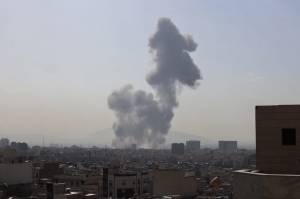
A plume of smoke rises after an explosion in Tehran on Saturday.Credit…Atta Kenare, Agence France-Presse — Getty Images
I wish you all a good day, but it’s not a good day for our country. I woke up at around 5AM and was hit with the news that Trump has attacked Iran. He did this illegally, without consultation with Congress or the slightest respect for the clear wishes of the American people. He has only one ally in his war–Israel. I wonder what our NATO allies are thinking right now?
Let’s face it. The “president” is insane. He should have been impeached and removed long ago, but Republicans are too cowardly to do the right thing.
I’m no expert on Iran. I’m just going to share some articles that I think are helpful for understanding what we’re in for. I just want to say that if Trump hadn’t cancelled Obama’s agreement with Iran, this probably wouldn’t be happening. But he just couldn’t let a Democrat–especially a Black man–get any credit.
MSNOW: U.S. launches ‘major combat operations’ in Iran, Trump says.
President Donald Trump announced the largest military intervention of his two terms in the Oval Office, saying the United States is launching sweeping attacks on the Iranian military and calling on the Iranian people to rise up and seize control of their government.
The U.S. military has launched “major combat operations” in Iran, Trump said in a video posted to Truth Social early Saturday, with the goal of stopping Iran from developing a nuclear weapon and protecting American personnel and interests abroad and at home.
“Our objective is to defend the American people by eliminating imminent threats from the Iranian regime, a vicious group of very hard, terrible people,” Trump declared from behind a podium dressed in a navy suit and wearing a baseball cap emblazoned with “USA” on it.
The strikes have killed at least five students at a girls’ school in southern Iran, according to Iran’s state-run IRNA news agency. A Gulf regional leader told MS NOW’s “Morning Joe” that one person was killed by debris from missiles fired at the UAE.
Israel announced it was also participating in the military offensive, and The Associated Press reported that Israel had launched a daylight attack on Tehran, Iran’s capital, on Saturday. The Israel Defense Forces posted on X that Iran had launched missiles toward Israel, underscoring the possibilities of wider war in a Middle East already riven with tensions and conflict.
Israeli Prime Minister Benjamin Netanyahu said the joint attack with the U.S. was aimed at ending “the threat of the Iranian ayatollah’s regime.”
Trump acknowledged there may be American casualties as a result of the U.S. military intervention labeled “Operation Epic Fury,” but said the mission was necessary to protect America and its allies in the future.
Jonathan Wolfe at The New York Times (gift link): Here’s What World Leaders Are Saying About the U.S.-Led Attack on Iran.
Leaders in Europe and around the world on Saturday urged all sides to exercise restraint after the United States and Israel launched a major attack on Iran, although some officials backed the American-led campaign.
President Trump said the attack was intended to eliminate Iran’s nuclear program and lead to a change in government, after several rounds of nuclear talks involving the two sides failed to reach a deal. Iran’s foreign ministry asked the United Nations Security Council “to take immediate action to confront the violation of international peace and security.”
Here’s what other governments are saying:
-
Britain: The British government said it had not participated in the strikes and did “not want to see further escalation into a wider regional conflict.” It added that it had recently enhanced its defensive capabilities in the Middle East and that its immediate priority was the safety of British citizens in the region. “Iran must never be allowed to develop a nuclear weapon and that is why we have continually supported efforts to reach a negotiated solution,” the government said in a statement.
-
Germany: A government spokesman said in a statement that Germany had been informed by Israel in advance of the strikes. Chancellor Friedrich Merz “is monitoring the development closely and is in close coordination with European partners,” the statement said. Mr. Merz is scheduled to meet Mr. Trump in Washington next week.
-
France: President Emmanuel Macron called for the attacks to stop and asked for a meeting of the Security Council. He also wrote that the Iranian leadership “must understand that it now has no other option than to engage in good-faith negotiations” over its nuclear program, and added that the Iranian people “must also be able to build their future freely.” [….]
-
Canada: Prime Minister Mark Carney and his foreign minister, Anita Anand, backed the American action. “Canada supports the United States acting to prevent Iran from obtaining a nuclear weapon and to prevent its regime from further threatening international peace and security,” they said in a statement.
-
Saudi Arabia: Saudi Arabia called the reports of retaliatory Iranian strikes on Arab nations, including Bahrain, Kuwait and the United Arab Emirates, “a blatant violation” of their national sovereignty. “Saudi Arabia affirms its full solidarity and support for these brotherly nations, pledging all its resources to assist them in any measures they take,” the foreign ministry said in a statement on social media.
-
China: China’s foreign ministry said on social media that Beijing was “highly concerned” by the strikes. “Iran’s sovereignty, security and territorial integrity should be respected,” the ministry said.That
That is just a sampling. Read the rest at the gift link. I’m surprised how much support there is.
Tom Nichols at The Atlantic (gift link): Trump’s Enormous Gamble on Regime Change in Iran.
The United States has gone to war against Iran. America has only one ally—Israel—in this operation (the Arab states of the Gulf, which fear the Iranian regime, are targets of Iran, but so far are not participating in the attack), and both Washington and Jerusalem are making claims about “imminent” threats that require “preemptive” strikes. But we should dispense with such statements: Iran is not presenting immediate danger to the United States or Israel. Even President Trump, in a recorded address, didn’t bother overly much with such excuses; instead he presented a farrago of charges and accusations going back a half century that included everything from killing American troops in Iraq to terrorism. These indictments are all grounded in truth, but none presents a rationale for immediate attack. Trump ended by calling on Iranians to rise up and overthrow their government.
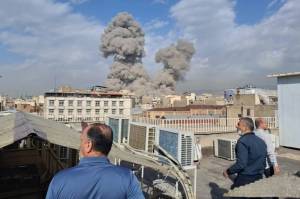
People watch as smoke rises on the skyline after an explosion in Iran, Feb. 28, 2026.
This is not a preemptive war. It is a war of choice, a discretionary war. It is a war for regime change. Many of Iran’s 92 million people want the regime removed. But it is far from certain that this will be the outcome.
To think about the possible courses of this war, we should start by clearly understanding three realities: First, Iran is a terrible regime that deserves to fall. The regime recently murdered thousands of its own citizens who were seeking freedom from their oppressive rule, and no one should be shedding tears for the mullahs hiding in their bunkers.
Second, “success” is not impossible—if by “success” we mean the fall of the ayatollahs and the rise of a better, more humane, pro-Western government that does not seek to destabilize the Middle East; dominate Lebanon, Iraq, and Yemen; and eradicate Israel. But the path to that success is exceedingly narrow and mined with significant hazards. Destroying the regime’s capabilities is relatively easy, but nothing permanent—as Americans learned in Vietnam, Iraq, and Afghanistan—is achieved by bouncing rubble and piling up bodies. Destroying the regime itself is a far trickier business; dictatorships have a high pain tolerance, especially when the hapless citizens, not the leaders, bear the brunt of that pain.
Third, the president has not offered a strategy, or identified any conditions that would signal that U.S. goals have been achieved. Yes, he has vowed to prevent Iran from gaining nuclear weapons, but beyond that, he seems to be arguing for just inflicting military damage on the regime, on the assumption that enough ordnance on enough targets will weaken the grip of the ayatollahs. Once the theocrats are on the ropes, the thinking seems to go, the people of Iran will finish the job of regime change for us.
A bit more:
America twice had its hands full in Iraq, a nation of 37 million, even with the assistance of several countries. The U.S., France, and Britain managed to subdue tiny Libya, a nation of 7.5 million, and left its dictator to be raped and beaten in the streets. This time, conditions are different and more challenging: The target is two and a half times the size of Iraq, America has exactly one openly declared ally in this enterprise, no serious armed rebel force exists in Iran, and no coalition of nations is assembling to march into Tehran.
Trump has boldly told the regime to lay down its weapons and surrender—but to whom? The president in his speech did not rule out American troops on the ground. Does he envision a conquering American general accepting the pistols and swords of the Islamic Revolutionary Guard Corps in some sort of ceremony?
Here’s one way, however, all of this can go right: The air campaign is so well designed, so precise, and so thorough that it strips the regime of its major military formations and its security police. Some of the top leaders are killed in at least a partial decapitation, and other forces begin to defect to the side of the people en masse. Rebel groups form quickly and efficiently to seize weapons and set up alternative ruling councils across the country. They cooperate with one another, rather than bicker or actually fight. Outside powers in the region stay away and let the Iranian people sort out their destiny. Peace, of a sort, comes to Iran.
Unfortunately, the ways that all of this can go wrong are more numerous and more likely. Perhaps the Americans, for example, take unexpected casualties, and Trump—who seems to be counting on an easy victory—pulls back. (Trump has spent years decrying American presidents who cost the lives of America’s soldiers; it seems unlikely that he will blithely accept American casualties.) The regime rallies, kills even more of its own people, and survives to fight another day. Or the current regime falls and is replaced by a junta or military regime even more brutal than the one that’s just been destroyed. Or what happens if Iranian retaliation turns out to be more effective than the Americans or Israelis expect, and the region becomes embroiled in repeating cycles of murder and reprisals that leave Americans and Israelis and others dead, but the regime intact?
You can read the whole thing with the gift link.
The New York Times Editorial Board: Trump’s Attack on Iran Is Reckless.
In his 2024 presidential campaign, Donald Trump promised voters that he would end wars, not start them. Over the past year, he has instead ordered military strikes in seven nations. His appetite for military intervention grows with the eating.

A woman stood on a rooftop to get a view of explosions in Tehran on Saturday.Credit…Arash Khamooshi for The New York Times
Now he has ordered a new attack against the Islamic Republic of Iran, in cooperation with Israel, and Mr. Trump said it would be much more extensive than the targeted bombing of nuclear facilities in June. Yet he started this war without explaining to the American people and the world why he was doing so. Nor has he involved Congress, which the Constitution grants the sole power to declare war. He instead posted a video at 2:30 a.m. Eastern on Saturday, shortly after bombing began, in which he said that Iran presented “imminent threats” and called for the overthrow of its government. His rationale is dubious, and making his case by video in the middle of the night is unacceptable.
Among his justifications is the elimination of Iran’s nuclear program, which is a worthy goal. But Mr. Trump declared that program “obliterated” by the strike in June, a claim belied by both U.S. intelligence and this new attack. The contradiction underscores how little regard he has for his duty to tell the truth when committing American armed forces to battle. It also shows how little faith American citizens should place in his assurances about the goals and results of his growing list of military adventures.
Mr. Trump’s approach to Iran is reckless. His goals are ill-defined. He has failed to line up the international and domestic support that would be necessary to maximize the chances of a successful outcome. He has disregarded both domestic and international law for warfare.
The Iranian regime, to be clear, deserves no sympathy. It has wrought misery since its revolution 47 years ago — on its own people, on its neighbors and around the world. It massacred thousands of protesters this year. It imprisons and executes political dissidents. It oppresses women, L.G.B.T.Q. people and religious minorities. Its leaders have impoverished their own citizens while corruptly enriching themselves. They have proclaimed “Death to America” since coming to power and killed hundreds of U.S. service members in the region, as well as bankrolled terrorism that has killed civilians in the Middle East and as far away as Argentina.
Politico: ‘Acts of war unauthorized by Congress’: Trump’s congressional critics denounce Iran strikes.
Some of President Donald Trump’s Capitol Hill critics were quick to condemn his administration’s military action against Iran early Saturday, criticizing what they described as an unjustified act of war that hadn’t been approved by Congress.
Shortly after reports of the attack against Tehran emerged in the predawn hours, frequent Trump-basher Rep. Thomas Massie (R-Ky.) characterized the strikes on social media as “acts of war unauthorized by Congress.”
Massie and Rep. Ro Khanna (D-Calif.) are expected to force votes next week on legislation that would curb Trump’s ability to take unilateral military action against Iran without congressional approval. But the U.S.’ Saturday morning strikes came before the bipartisan pair could compel a war powers vote.
One of the first Democrats to respond to the strikes, Sen. Ruben Gallego (D-Ariz.), condemned the attack on social media, writing that “we can support the democracy movement and the Iranian people without sending our troops to die.” Sen. Mark Warner (D-Va.) added Saturday that Trump’s overnight military strikes against “a broad set of targets, including senior Iranian leadership — marking a deeply consequential decision that risks pulling the United States into another broad conflict in the Middle East.”
“The American people have seen this playbook before — claims of urgency, misrepresented intelligence, and military action that pulls the United States into regime change and prolonged, costly nation-building,” Warner said.
Rep. Jim Himes (D-Conn.), the top Democrat on the House Intelligence Committee, called Trump’s military action “a war of choice with no strategic endgame” and said that he will vote for the war powers resolution when it gets a vote next week.
The Jerusalem Post: Iran’s Supreme Leader Khamenei cut off from contact, no certainty on fate, Israeli sources say.’
Iranian Supreme Leader Ali Khamenei has been cut off from contact, and there is no certainty about his fate, Israeli officials told Walla on Saturday afternoon. Iranian officials promised to release a recording from Khamenei soon after Israeli strikes targeted his Tehran compound.
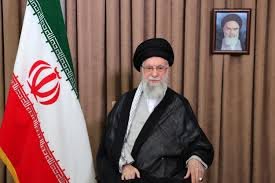 The preliminary assessment among Israeli officials was that Khamenei was hurt in the strike. No official confirmation has been received by Israeli, American, or Iranian sources.
The strikes came as Israel and the United States launched an attack on Iran, with Iranian state media reporting explosions heard in Tehran, Qom, Isfahan, Kermanshah, and Karaj.
Iran’s Defense Minister Amir Nasirzadeh and Revolutionary Guards commander Mohammed Pakpour are believed to have been killed in Israeli attacks, two sources familiar with Israel’s military operations and one regional source said.
Israeli and Iranian sources said earlier on Saturday that strikes on Iran killed several senior Islamic Revolutionary Guard Corps (IRGC) commanders and Islamic Regime political officials. Iran’s Security Council instructed residents of Tehran, as well as other major cities, to stay in safe, protected locations until further notice.
US-Israeli air strikes killed at least 85 people at a girls’ school in southern Iran, Iran’s judiciary said. The state-run IRNA news agency reported the strike happened in Minab in Iran’s Hormozgan province. Iran’s paramilitary Revolutionary Guard has a base in the city….
The US and Israel launched an attack early Saturday on Iran, with the first apparent strike happening near the offices of Supreme Leader Ayatollah Ali Khamenei, whose whereabouts remain unknown. Iranian President Masoud Pezeshkian was also targeted.
Iranian media reported strikes nationwide and smoke could be seen rising from the capital.
US President Donald Trump said in a video posted on social media that the US had begun “major combat operations in Iran”.
Iran responded to the bombing campaign by launching retaliatory missile strikes at US military bases in the Middle East.
Farnaz Fassihi and Erika Solomon at The New York Times: Chaos and Panic Grip Tehran as Airstrikes Shake City.
Just as Iranians began their workweek on Saturday morning, U.S. and Israeli strikes sent panicked residents of Tehran into the streets and parents racing back to schools where they had just dropped off their children.
Chaos and uncertainty set in as explosions shook the densely populated city, Iran’s capital, according to witnesses who spoke to The New York Times.
Ali, a businessman from Tehran, said in a text message that he was sitting in his office with many employees when they heard two explosions along with fighter jets streaking over the sky. Employees ran screaming out of the building, he said. He, like several other residents who spoke to The Times, asked not to be identified by his full name because he feared for his safety.
From the leafy, upscale district of Mirdamad, Hamidreza Zand, a resident, described seeing at least 10 fighter jets flying overhead as locals ran into the streets and some drivers abandoned cars on streets choked with traffic. With ambulance sirens wailing in the background, other residents scrambled to pick their children up from school.
“I rushed to school to get my daughter from middle school. The girls were hiding under the stairs and crying,” said Ali Zeinalipoor, whom a Times reporter reached on the Clubhouse social media app. “The principal did not know what had happened — everyone was so scared.”
From the roof of her apartment in Tehran’s northern Velenjak district, Golshan Fathi described seeing a second round of fighter jets.
“People are standing on the roof looking at the sky, pointing down. You can hear women screaming. Some of my neighbors are running to their cars,” she said. “It feels like we are in a movie.”
A bit more, because I don’t have any more gift links:
In the Pasdaran area, where a large compound belonging to Iran’s Revolutionary Guards forces is, residents heard multiple explosions that shook their windows.
“My children are crying and scared, we are huddling in the bathroom, we don’t know what to do. This is terrifying,” Esfandiar, an engineer living in the area, wrote in a text message.
As reports of explosions hitting other cities across Iran began to emerge on local media, telecommunications began to falter. A resident named Mahsa said she was fleeing Pasdaran without being able to contact her loved ones to tell them where she was going.
The attacks come at a fragile moment for Iran, whose government launched a brutal crackdown last month to stamp out nationwide protests demanding an end to Iran’s clerical rule.
Not all Iranians were angry as they watched the plumes of smoke rising from the blasts, said Arian, a resident of the Ekteban township west of the capital, who said some of his relatives were cheering the strikes. He said he could hear voices outside his building chanting, “Long live the shah,” a reference to Iran’s monarch, who was deposed in the 1979 revolution that brought the Islamic Republic to power.
As warplanes launched strikes across the country, President Trump released a video statement announcing to Iranians that “the hour of your freedom is at hand,” and urging them to rise up gainst the government once the bombing stops.
I’ll end there. I don’t know how helpful this post will be. Everything is happening right now. We’ll know more later on I guess. Take care of yourselves, everyone.
Did you like this post? Please share it with your friends:
Posted: September 10, 2025 | Author: bostonboomer | Filed under: just because | Tags: Donald Trump, Epstein birthday book, ICE, israel, Jeffrey Epstein, NATO, Poland, Qatar, Russia |
Good Afternoon!!
I’m even more overwhelmed than usual with the news today. It’s absolutely insane.
Yesterday we got to see Jeffrey Epstein’s 50th birthday book, and it is simply disgusting, as JJ wrote yesterday. Trump can deny he wrote the note with his signature all he wants. No one is buying it. He was closse friends with this man for 10-15 years and had to know what Epstein was up to. Not only that, Trump makes other sickening appearances in the book, including one about buying a “fully depreciated” woman from Epstein.
That would be enough horrible news to deal with today, but there’s much more. Poland shot down Russian drones that entered their air space. Israel bombed a building in Qatar. The Supreme Court decision to legalize racial profiling continues to be a top story (Dakinikat covered that extensively on Monday.). ICE is continuing to terrify residents of numerous cities. Trump ventured out of the White House last night with some cabinet members and was called Hitler by citizens of Washington DC.
The Birthday Book
Charley Warzel at The Atlantic (gift link): You Really Need to See Epstein’s Birthday Book for Yourself. This time, the conspiracy theorists were right.
Looking back, I don’t know what exactly I was expecting when I opened “Request No. 1,” the PDF file containing the contents of Jeffrey Epstein’s 50th-birthday book. Ghislaine Maxwell, Epstein’s former girlfriend and co-conspirator, created the book in 2003 by soliciting tributes from the financier’s friends and associates. Given the crimes Epstein was convicted of, I steeled myself before scrolling. Somehow, my internet-addled imagination failed me. This book is a nightmare.
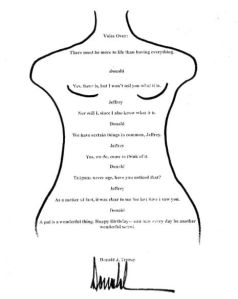 The book was released yesterday by Congress after Epstein’s estate, which was subpoenaed by the House Oversight Committee, provided a copy. It is the same book that contains the now-infamous letter and “bawdy” sketch from Donald Trump that ends: “May every day be another wonderful secret.” When The Wall Street Journal reported on the letter’s existence in July, the newspaper described it but did not republish the letter itself, so Trump vehemently denied that it was real and sued for defamation. But the now-public letter certainly looks real, and so does Trump’s signature. Many of the people who encountered it for the first time yesterday made a similar observation: Its creepy prose is framed by a markered sketch of what looks like the caricature not of a woman’s body, but of a girl’s. (The White House can no longer plausibly deny that the letter exists, but it now insists that Trump did not write or sign it.)
The Trump letter makes the birthday book inherently newsworthy. But it is far from the most disturbing or lecherous of the book’s contents. A section titled “Brooklyn” includes recollections of Epstein’s horrible sexual escapades, apparently including making a maid watch people have sex and holding a knife up while telling women to take off their swimsuits on a boat—a story told in the book under the heading “Girls on My Boat.” Given what we know about Epstein’s sex crimes, including his sex crimes against minors, the birthday book is a sickening document. Over its 238 pages, Epstein’s friends, “girlfriends,” and business acquaintances offer lurid tributes to the pedophilic multimillionaire in the form of acrostic poems, drawings, and letters extolling him as “a liver, a lover,” and, affectionately, the “Degenerate One.” Individual contributions vary but it is the sheer volume of sexual references and jokes that ends up being most shocking. So much so that I suggest you read the document yourself.
The book’s contributors apparently include former President Bill Clinton, former U.S. Senator George Mitchell, the billionaire retailer Leslie Wexner, and, of course, Maxwell herself, as well as a prominent fashion designer, financiers, and a media magnate. Clinton, Mitchell, and Wexner did not immediately respond to requests for comment. A spokesman for Clinton referred The Wall Street Journal to a previous statement that said, “The former president had cut off ties more than a decade before Epstein’s 2019 arrest and didn’t know about Epstein’s alleged crimes.” Wexner declined to comment to the Journal but previously told reporters he cut ties with Epstein in 2007.
Not all of the entries in the book allude to sexual activity, and it’s plausible that not all of the contributors knew about Epstein’s crimes. Still, the document is conspiracy jet fuel—visual and textual confirmation of the long-held suspicions that Epstein’s sex pestery was an open secret, enabled by powerful people who may have participated in it themselves or laughed it all off as a friend’s roguish quirk….
Sanitizing this document would be wrong, so I’ll be blunt: The Epstein birthday book is full of contributions from wealthy and powerful people who appear fully aware of Epstein’s attraction to “girls.” In fact, they seem to celebrate it and, in some cases, allude winkingly to Epstein’s predatory lifestyle.
Use the gift link to read the rest. I haven’t looked through the entire book yet. I suppose I should do it, but I’m not looking forward to it after what I’ve already seen and heard.
One more on the birthday book from Matthew Goldstein, Jessica Silver-Greenberg, and Steve Eder at The New York Times: A Phony Trump Check and a ‘Depreciated’ Woman in Epstein’s Birthday Book.
The splashy focus of Jeffrey Epstein’s 50th birthday book released by lawmakers on Monday was a lewd drawing apparently signed by Donald J. Trump. But Mr. Trump’s cameo in another part of the book also provided fodder for Democrats and other critics of the president.

An entry in Jeffrey Epstein’s 50th birthday book, contributed by the Florida real estate developer Joel Pashcow.
The entry, included in a bound volume in 2003, was made by Joel Pashcow, the former chairman of a real estate company in New York and a member of Mar-a-Lago, Mr. Trump’s resort in Palm Beach, Fla. It shows a photograph of Mr. Pashcow at the resort with Mr. Epstein, another man and a woman whose face is redacted. Mr. Pashcow is holding an oversize check that appears to have been doctored, with a seemingly phony “DJ TRUMP” signature.
A handwritten note under the photo, which was taken in the 1990s, joked that Mr. Epstein showed “early talents with money + women,” and had sold a “fully depreciated” woman to Mr. Trump for $22,500.
The woman, whose name is also redacted in the files released by the House Oversight Committee, was a European socialite then in her 20s, according to two people familiar with the original photo. She had briefly dated both Mr. Epstein and Mr. Trump around that time, according to court transcripts and a person close to Mr. Epstein. The birthday book entry appears to be a reference to the competition between the two men for the woman’s affections.
The nature of the woman’s relationship with Mr. Epstein is murky. The New York Times is not naming her because she may have been one of his victims.
A lawyer for the woman said she knew Mr. Epstein in “a professional capacity” when she was a student but severed ties with him in 1997. She did not know anything about the letter or its “derogatory content,” the lawyer added.
A bit more information:
Mr. Pashcow appears to have contributed several consecutive pages to the book. On the page before the mock check is a vulgar cartoon depicting Mr. Epstein’s grooming of young girls: On one side, marked 1983, Mr. Epstein is handing out balloons to a group of girls; on the other, labeled 2003, he is receiving a naked massage from four topless young women. “What a great country!” it reads at the bottom.
The photograph with the giant check offers fresh insight on the social circles shared by Mr. Trump and Mr. Epstein. It is no secret that the two were friendly in the 1990s and early 2000s, before Mr. Epstein was convicted of sex crimes in 2008.
A visual analysis by The Times found that the photo was taken at Mar-a-Lago after the resort opened as a club in 1996 and was landscaped with palm trees and other features.
Use the gift link to read more details if you so desire.
NATO Shoots Down Russian Drones in Poland
CNN: NATO shoots down Russian drones in Polish airspace, accusing Moscow of being ‘absolutely reckless.’
NATO fighter jets shot down multiple Russian drones that violated Polish airspace during an attack on neighboring Ukraine early on Wednesday, as the military alliance denounced Moscow for “absolutely dangerous” behavior that ratcheted up tensions to a new level.
The operation marked the first time that shots were fired by NATO since the start of the war in Ukraine. Polish and Dutch jets intercepted the drones, with assistance from Italian, German and NATO’s multinational forces, officials said.

People watch as a house is damaged after a drone or similar object struck a residential building according to local authorities, following violations of Polish airspace during a Russian attack on Ukraine.
Addressing the Polish parliament, Prime Minister Donald Tusk said that while there was no reason to say that Poland was in a state of war, it was closer to a conflict than any time since World War II. He said the country was facing an “enemy that does not hide its hostile intentions.”
Tusk also announced that Poland has invoked Article 4 of NATO, meaning the alliance’s main political decision-making body will now meet to discuss the situation and its next steps.
Russia’s defense ministry said in a statement that it had carried out a strike against Ukraine overnight. It said that “no targets on the territory of Poland were planned for destruction,” and that the drones it used in Ukraine have a flight range that of no more than 700 kilometers (435 miles).
The Russian foreign ministry then said that these “specific facts completely debunk the myths repeatedly spread by Poland in order to escalate the Ukrainian crisis further.”
NATO chief Mark Rutte said, however, that the violation of Poland’s airspace was not an “isolated incident.”
Jenny Gross at The New York Times: Poland Has Invoked NATO’s Article 4. What Comes Next?
Poland invoked Article 4 of NATO’s treaty on Wednesday after the alliance’s fighter jets shot down Russian drones that entered its airspace in the early hours of the morning. Russian drones have crossed into Poland before, including twice last week, but this was the first time that Russian drones had been shot down over the territory of a NATO country.
“What is clear is that the violation last night is not an isolated incident,” said Mark Rutte, NATO’s secretary general. “We will closely monitor the situation along our eastern flank, our air defenses continually at the ready.”
Here’s what to know about NATO’s Article 4….
Article 4 allows a member state to start a formal discussion among the alliance about threats to its security. While invoking Article 4 does not commit NATO to any military action, it is a required step toward a NATO decision to invoke Article 5. (An invocation of Article 5 is often assumed to have military implications, but the NATO treaty says only that its members will “assist” the party that has been attacked. This can also mean economic or political action.)
Article 4 states that the alliance’s members “will consult together whenever, in the opinion of any of them, the territorial integrity, political independence or security of any of the parties is threatened.”
Since NATO’s founding in 1949, Article 4 has been invoked eight times. Before Wednesday, the last was on Feb. 24, 2022, the day Russia launched its full-scale invasion of Ukraine.
Now what?
The joint NATO response early Wednesday showed how quickly the war in Ukraine could escalate into a military confrontation between Russia and NATO.
Mr. Rutte said that the alliance’s air defenses were activated to ensure Poland’s protection. The response included fighter jets and air-defense systems from the Netherlands, Germany and Italy, he said.
“The security situation of our airspace has been stabilized, and ground-based air defense and radar reconnaissance systems have returned to standard operational activities,” the Polish military said on social media.
So, we’ll see what happens.
Israeli Strike Inside Qatar
CNN: Israel targets Hamas leadership in Qatar strike.
• Israel carried out an unprecedented attack against Hamas leadership in the capital of Qatar, which has been a key mediator in Gaza ceasefire talks — putting hostage negotiations at risk.
• Hamas said the strike killed five members but failed to assassinate the negotiating delegation. A Qatari security official also died in the strike.
• US President Donald Trump expressed displeasure about the attack. “I’m not thrilled about the whole situation. It’s not a good situation,” he said, adding he would issue a full statement on Wednesday. Qatar’s prime minister was visibly angry as he described the strike as “state terrorism.”
This is a developing story.
The Independent: Qatar says it has a right to respond to Israeli attack that killed six in Doha: Latest.
Qatar said it has the right to respond to Israel’s strike in Doha that targeted Hamas political leaders, which it decried as a “blatant attack”.
Sheikh Mohammed bin Abdulrahman bin Jassim Al Thani, the Qatari prime minister, described Tuesday’s attack as “state terrorism” that targeted the security and stability of the region.
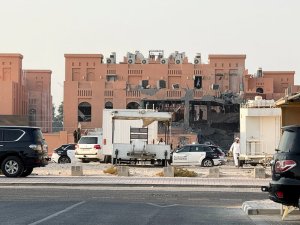
Aftermath of Israeli strike inside Qatar.
“Qatar… reserves the right to respond to this blatant attack,” he told a late night press conference.
“We believe that today we have reached a pivotal moment. There must be a response from the entire region to such barbaric actions.”
US president Donald Trump said he was “very unhappy” about Israel’s airstrike that killed six people, saying it advances neither Israel nor America’s goals.
Trump called the strike on Hamas’s political wing “unfortunate” and said he had directed US envoy Steve Witkoff to warn Qatar but it was too late to stop the strike.
Hamas said five of its lower-ranking members and a Qatari security official were killed in the airstrike, but that all its leaders survived the attack.
ICE Commentary
Garrett Graff at Doomsday Scenario: ICE is Eating the Soul of America.
A big change happened yesterday, when the Supreme Court said it was okay for ICE and the Border Patrol to racially profile individuals walking freely on America’s streets. If you’re brown, speak Spanish, and work in a blue-collar job, you officially belong to a different class of citizen and according to Chief Justice John Roberts, it’s okay to racially profile you.
We have never in US history seen a federal law enforcement agency operate the way ICE has operated this summer — it marks the arrival of a new style of domestic policing, more in line with the infamous “brown shirts” of authoritarian regimes the world over than any regular policing tradition in the nation’s interior. Yes, we’ve seen similar abuses of civil liberties and due process stem from corrupt and racist state police and country sheriffs in the Jim Crow south, and plenty of local police departments even today suffer from localized corruption scandals, but never we seen what is happening with ICE right now take place the whole country over.
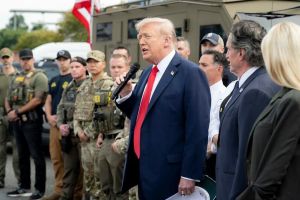
All of the nation’s law enforcement are blending together into an “ICE auxiliary.” — Garrett Graff
The day-to-day behavior and aggression of ICE is corrupting the soul of America. I encourage you to watch this video of federal agents policing the start of an elementary school in DC — there not to secure the school and children, but specifically to intimidate and punish schoolgoers. Tell me that isn’t the picture of authoritarianism? You know how you’re going to be the bad guy in the eyes of history? If school children and mothers have to push their way through your armed, masked gang while you’re carrying assault weapons in order to attend school. I can’t help but think how the Trump administration has turned the proud tradition of the US Marshals at the University of Mississippi or the 82nd Airborne at Little Rock Central High on its head. Similarly, this video of a masked officer detaining a father outside immigration court in New York City — the masked officers are indistinguishable from Wild West bank robbers.
There are four things that have really struck me about ICE’s operations over the last month, all of them worrisome about the trajectory of that agency and the presence and role of federal law enforcement in American life. (Separately, I’m going to write about the warning signs already visible in ICE’s dramatic hiring surge.) Taken together, they paint a picture of an already rogue agency that feels it operates outside of the Constitution and owes nothing to the Americans it’s supposed to serve.
(NOTE from BB: You’ll need to go to the link to read the entire explication under the four headings)
1) Everything is now ICE.
The most worrisome aspect of the quick militarization and turbo-charging of ICE is how American law enforcement across the board — and much of the government beyond — is being subsumed by ICE’s mission and lowering themselves, from hiring to behavior to tactics, down to ICE’s standards.
We have different federal law enforcement agencies for a reason — and moreover, as citizens, we as a country need and want federal law enforcement. The FBI, DEA, ATF, Secret Service, and the US Marshals all have their own lanes, authorities, and responsibilities, but right now we’ve watching the Trump administration turn all of federal law enforcement across both the Justice Department and Department of Homeland Security into an faceless quasi-ICE auxiliary, blending all these agencies and agent into some amorphous anonymous blob of masked, brown tactical-vest-wearing federal law enforcement. I wrote recently about how this precisely is what authoritarian regime looks like — armed, masked, anonymous agents of the state jumping from unmarked vehicles and whisking people away….
2) Collapse of Moral Legitimacy.
I wrote earlier in the summer about how in a democracy policing requires moral legitimacy and the permission of the policed. That’s been one of the hallmarks of policing ever since Sir Robert Peel built the first modern police force in London’s Metropolitan Police. One of his core principles of policing was: “To recognize always that the power of the police to fulfill their functions and duties is dependent on public approval of their existence, actions and behavior, and on their ability to secure and maintain public respect.”
The DC police department was literally created originally in Peel’s image, which is why it too is known awkwardly as the “Metropolitan Police.” Now, in a historical irony, it is ground zero for the erosion of the moral legitimacy of federal law enforcement writ large….
3) Operating without due regard for civil liberties and due process.
In my essay at the end of August about how America has tipped in fascism, I wrote, “America has become a country where armed officers of the state shout ‘papers please’ on the street at men and women heading home from work, where masked men wrestle to the ground and abduct people without due process into unmarked vehicles, disappearing them into an opaque system where their family members beg for information.”
Few of the videos that have surfaced since have indicated otherwise; normal ICE procedures barrel right past normal due process and civil liberties; here, after wrestling someone to the ground, officers lose interest the moment he makes clear he’s a US citizen. Here masked officers start pushing a man before he can even provide proof of citizenship. Is this what America has come to?
4) Avoiding transparency and accountability.
Add up all of the above and you have a portrait of a rogue agency, which is what leads me to my final dangerous warning sign: This agency clearly knows that it can do no wrong in the eyes of the White House and administration — there is no level of violence, brutality, or abuse of civil liberties that would get any of these agents or officers in trouble with their bosses. Earlier this summer, I wrote about how ICE is acting as if it will never face accountability again. We’ve seen ICE flaunt federal law that requires congressional oversight — and, instead, it has tried to arrest and charge federal lawmakers, a bright line if there ever was one.
At every turn, though, the agency is going out of its way to make it harder to hold officers accountable. ICE officers don’t routinely wear name tags or easily visible badge numbers (in this video, check out how you have to zoom in on his badge on his belt to even begin to identify his badge number.) Moreover, though, despite the fact that we’re weeks and months into this national ICE takeover, the agency has made no effort to make its masked officers on the streets identifiable to either the public — or even to itself.
Tom Nichols at The Atlantic (gift link): The Government Wants to See Your Papers.
You there. Stop what you’re doing. Take off that tool belt and hard hat—let’s see some ID. Why? Because we don’t think you’re a citizen. Now show us your papers.
This kind of behavior by government officials is now legal in the United States.
Masked ICE agents in Los Angeles
Yesterday, the conservative majority on the Supreme Court allowed ICE officials to conduct roving patrols and use racial profiling to stop and detain people for no other reason than their skin color, the language they’re speaking, suspicions about their national origin—or, really, if immigration officials just feel like it.
But wait, you might object. The Fourth Amendment to the Constitution prohibits unreasonable search and seizure. Did the Court explain why that protection apparently no longer applies to you if you’re a day laborer or running a fruit stand? Good luck with that: This Court’s majority doesn’t explain itself to anyone. It merely lets stand or overturns the decisions of lower courts—lately, almost always in favor of expanding the power of, and corroding any checks on, President Donald Trump.
Noem v. Vasquez Perdomo is a case from Los Angeles about whether ICE can stop people because of a suspicion of their being in the United States illegally, based solely, as SCOTUSblog summarized it, on any combination of four factors: a person’s “‘apparent race or ethnicity,’ speaking in Spanish or accented English, being present at a location where undocumented immigrants ‘are known to gather’ (such as pickup spots for day laborers), and working at specific jobs, such as landscaping or construction.”
A California district-court judge had earlier enjoined ICE from making such stops, perhaps appalled by this example:
Plaintiff Jason Brian Gavidia is a U.S. citizen who was born and raised in East Los Angeles and identifies as Latino. On the afternoon of June 12, he stepped onto the sidewalk outside of a tow yard in Montebello, California, where he saw agents carrying handguns and military-style rifles. One agent ordered him to “Stop right there” while another “ran towards [him].” The agents repeatedly asked Gavidia whether he is American—and they repeatedly ignored his answer: “I am an American.” The agents asked Gavidia what hospital he was born in—and he explained that he did not know which hospital. “The agents forcefully pushed [Gavidia] up against the metal gated fence, put [his] hands behind [his] back, and twisted [his] arm.” An agent asked again, “What hospital were you born in?” Gavidia again explained that he did not know which hospital and said “East L.A.” He then told the agents he could show them his Real ID. The agents took Gavidia’s ID and his phone and kept his phone for 20 minutes. They never returned his ID.
In overturning the lower court’s decision, five of the Court’s six right-wing justices—there is no other reasonable way to describe them at this point—took advantage of their right to remain silent, but Justice Brett Kavanaugh gamely tried to speak up in a concurrence. If his goal was to be reassuring, he did not help matters: Such stops are usually “brief,” he explained. Again, I am not a scholar of the Constitution, but I had no idea that I could be deprived of my rights under the Fourth (or any other) Amendment as long as my getting roughed up takes only a few moments out of my busy day.
Use the gift link to read the rest.
Trump Dines in DC
The Independent: Trump labeled ‘Hitler of our time’ as hecklers crash his DC dinner plans.
President Donald Trump stepped out for dinner in Washington, D.C., on Tuesday only to find himself immediately confronted by protesters calling him “the Hitler of our time,” forcing him and his entourage of cabinet officials to stand awkwardly listening to their taunts before they could sit down to eat.
Activists took advantage of Trump’s rare public outing to to Joe’s Seafood, Prime Steak & Stone Crab, a short walk from 1600 Pennsylvania Avenue, to heckle and berate the president with cries of “Free D.C.! Free Palestine! Trump is the Hitler of our time!”
“You are not welcome here!” one woman can be seen telling him in a video shared on social media. “Yes he is,” another diner countered.
Trump initially looked unfazed by the provocation but then gestured to his security team and said impatiently: “Come on. Let’s go. Get them out of here.”
The activist in question was escorted out of the dining area but continued to yell, despite some boos: “He’s terrorizing communities all over the world! From Puerto Rico… to Palestine to Venezuela! He’s not welcome to D.C.! He’s not welcome to Palestine! Palestine is not for sale!”
Only after she had been removed could Trump and his guests take their places at their table.
Joining the president for dinner were Vice President JD Vance, Secretary of State Marco Rubio, Secretary of Defense Pete Hegseth and other senior White House officials.
Those are my offerings for today. What’s on your mind?
Did you like this post? Please share it with your friends:


 peej
peej Carissa
 bostonboomer
 dakinikat
 ecocatwoman
 jjlo
jjlo mablue2
 Mama Lopez
 peggysue22
 quixote
 skydancingguestblogger
 Mona (aka Wonk the Vote)



 Sky Dancing
Recent Comments