Trump’s war with Iran is on again, and he is threatening war crimes and insane plans to take control the Strait of Hormuz. Trump is frankly making no sense. He’s obviously frustrated that his war has become a total fuck up, and he has no idea what to do about it. He also doesn’t have any intelligent, experienced advisers–at least none who have the guts to oppose him.
A group of people stands in shallow water as a cargo ship appears anchored in the Strait of Hormuz off Bandar Abbas, Iran, June 30, 2026. Amirhosein Khorgooi, ISNA via AP
The US military said it had carried out a fresh wave of strikes on Wednesday, hours after carrying out a fourth night of attacks on Iran
Iran has threatened to block more energy routes, after President Donald Trump reinstated the US blockade of Iranian shipping
Jordan, Bahrain and Kuwait came under attack again on Wednesday after Iran vowed to continue retaliation on US military assets, leaving an interim ceasefire in tatters
Trump renewed his threat to hit Iranian power plants and bridges if Tehran does not return to negotiations to end the war started by US and Israeli strikes on Iran on February 28
President Trump held a Situation Room meeting Tuesday to discuss a massive offensive in Iran that will be wider in scope than the current strikes around the Strait of Hormuz, three sources with knowledge said.
Why it matters: Trump appears willing to escalate the war to cause enough damage that the Iranian regime will open the Strait of Hormuz and accept Trump’s nuclear demands.
Driving the news: Trump convened the meeting as the U.S. military conducted strikes in the Strait of Hormuz area and along the southern coast of Iran for the fourth day in a row.
Most of the targets were air defense and radar systems, anti-ship missile positions and drone launch sites.
U.S. officials said the aim of the strikes was to significantly degrade Iran’s ability to conduct attacks against ships in the Strait of Hormuz.
Iran retaliated by continuing to launch missiles and drones at U.S. bases in Jordan, Kuwait and Bahrain.
On Tuesday afternoon, the U.S. naval blockade on Iranian ports went into effect.
The commander of the U.S. military’s Central Command, Adm. Brad Cooper, said in a statement that over the last week Iran “has intentionally targeted civilians across the region by attacking seven commercial ships resulting in nearly a dozen civilian crew members killed, missing, or injured.”
Despite the attacks, the U.S. military managed to coordinate the transit of 300 ships through the strait over the past week, U.S. officials said.
Inside the room: Trump was joined in the Situation Room by his top national security team, including Vice President JD Vance, Secretary of State Marco Rubio, Defense Secretary Pete Hegseth, Chairman of the Joint Chiefs Gen. Dan Caine, CIA Director John Ratcliffe, White House envoy Steve Witkoff and other senior officials, the sources said.
The sources said the meeting focused on new plans for devastating strikes on strategic targets in Iran, in addition to the strikes against Iranian targets in the Strait of Hormuz.
Trump’s behavior over the last couple of days has been out of control. Whether it’s dementia or not, he doesn’t seem to have any filters left. He just says whatever comes into his moth-eaten brain.
US President Donald Trump has threatened to strike Iran’s bridges and power plants next week if the country does not return to talks.
The comments, made in a Fox News interview, aired as the two countries exchanged fire for the fourth day in a row.
A view of a billboard depicting US president Donald Trump in Tehran, Iran. Anadolu, Getty Images
Trump earlier reversed a threat of a 20% fee on all Strait of Hormuz cargo shipping but resumed blockading Iranian ports.
“Next week it gets really bad for them,” Trump said. “We’re going to knock out all their power plants. We’re going to knock out all their bridges unless they get to the table and negotiate.”
UN human rights chief Volker Türk responded at the time by saying: “Under international law, deliberately attacking civilians and civilian infrastructure is a war crime.”
The 1949 Geneva Conventions on humanitarian conduct in war prohibit attacks on sites considered essential for civilians.
“I’ll save the energy targets for last, but ultimately we’ll hit energy targets,” Trump said in an interview on Special Report with Bret Baier that aired on Tuesday night.
He said US negotiators had conveyed to their Iranian counterparts on Tuesday evening that they “better make a deal, or you’re not going to have anything left”.
The escalation in rhetoric comes afterTrump said a 20% toll he had threatened to impose in the Strait of Hormuz would be replaced by “massive” trade and investment deals with Gulf states.
Do these countries know about these huge investments?
As the U.S. war with Iran resumes, there is little sign that diplomacy can stop it.
Efforts by Arab, Pakistani and other mediators to revive negotiations or restore a ceasefire have shown no public signs of progress, and the overall feeling in the Middle East and beyond is that the fighting will simply continue for now, according to two analysts and a person familiar with the situation.
The White House is “not really sure where this is headed,” said a former U.S. official in touch with Trump administration staffers, who, like others quoted in this story, was granted anonymity to describe sensitive conversations. “This could go on for some time. There’s no trust between Iran and the U.S., and that’s kind of the basis for any kind of diplomacy.”
The renewed fighting includes a U.S. naval blockade of Iranian shipping and Tehran launching multiple attacks on U.S. allies.
President Donald Trump has made clear Tehran must relinquish control of the vital energy shipping lanes in the Strait of Hormuz. But Iran has weathered previous assaults and still managed to threaten oil shipping with drones and missiles, and it’s not clear how this latest campaign would eliminate that threat.
“I think the president will try to destroy Iran’s capabilities threatening the strait,” said Fred Fleitz, Trump’s former National Security Council chief of staff and vice chair of the American First Policy Institute’s American Security. “I think that we will have to take a so-called mowing the grass strategy, where the U.S. and Israel will respond militarily to provocations, then maybe we simply have to wait until the Iranian people take their country back.”
Trump did offer a concession of sorts on Tuesday when he reversed himself and said the U.S. would not impose a 20 percent fee on countries shipping goods through the strait. Instead, he said the Navy would assist ships through the waterway in exchange for investment deals with the United States.
“Iran made a deal, and they broke it” said White House spokesperson Olivia Wales. “While President Trump’s preference is always peace and diplomacy, the deal is performance-based, and Iran’s actions constitute failure to live up to their commitments.”
The latest about-face is a hallmark of the president’s decision-making process and the minute-by-minute governing policy he favors.
Trump has no authority to impose fees on shipping. But these journalists won’t just say that. And his “minute-by-minute governing policy” is hardly a “policy.” He has no ability rein in any of his impulses control what he says in public.
On the 136th day of his war against Iran, President Trump came up with a new plan. He would impose tolls on ships traversing the Strait of Hormuz in exchange for protecting them from Iranian forces.
But that was then. On Day 137, he had another new plan. No tolls after all.
Mr. Trump’s 180-degree reversal on Tuesday in the face of protests from his Arab allies who were not so excited about paying tolls reflected how adrift he seems to be in prosecuting his war against Iran. What was supposed to be a clean four-to-six-week operation is now in its messy 20th week. Improvisation and impulse are not working.
A banner in Tehran last week threatening President Trump. Credit…Arash Khamooshi, Polaris for The New York Times
A president who has made flexing his power on the world stage a hallmark of his second term has found in Iran an opponent that so far will not bend to his will and a geopolitical conflict that cannot be won through nasty social media posts or tariff threats. The memorandum of understanding that he brokered with Tehran last month to halt the fighting turns out to have been a memorandum of misunderstanding, and Mr. Trump now seems to have neither a clear military nor diplomatic strategy.
“He’s encountered a country that is not willing to play by his set of rules, which is you bend and kiss the ring and tell him how great he is and try to get whatever concession he’s willing to give,” said Vali Nasr, a professor at the Johns Hopkins University School of Advanced International Studies who has advised presidents and secretaries of state on the Middle East.
Mr. Trump’s no-end-in-sight venture in the Middle East has become a fresh lesson in why the region has been a sinkhole for presidential ambition for generations. The instruments of power that help advance U.S. interests elsewhere around the globe do not necessarily work there, as many of Mr. Trump’s predecessors have discovered.
It has been especially frustrating for Mr. Trump, who has reveled in getting his way since returning to office last year and even boasted that he might be the most powerful man in world history. But while he has successfully pressured NATO allies into increasing military spending, extracted concessions from trading partners and essentially took over Venezuela with a one-night surgical commando raid, it is not clear that he can get his way in the Persian desert.
A bit more:
John Hannah, a former national security adviser to Vice President Dick Cheney and now a senior fellow at the Jewish Institute for National Security of America, in the past has supported the limited use of military force to stop Iran from building a nuclear weapon. But he said that by going for “a massive decapitation strike,” Mr. Trump had clearly underestimated the theocratic power structure that took power in the 1979 Iranian revolution and overestimated American capacity to topple it.
“In retrospect, this was clearly a war based on fatally flawed assumptions,” Mr. Hannah said, “none more damaging than the president’s apparent conviction that Iran’s revolutionary regime was a flimsy house of cards ready to collapse in a hail of American airstrikes and bellicose Truth Social posts.”
“Compounding the error,” he added, “there was no rigorous national security apparatus around the president prepared to speak truth to power and subject his wrongheaded assumptions to systematic questioning based on the knowledge and experience of real foreign policy, defense and intelligence professionals.” [….]
Mr. Trump seems uncertain how to proceed. He has turned back to the use of military force and ordered the resumption of a naval blockade in the Strait of Hormuz. He has threatened to take “a nice, big fat shot” at Pickaxe Mountain, a fortified site near one of Iran’s main nuclear facilities. But with popular opinion against the war, he has given little indication that he is willing to resume the sort of full-fledged bombardment that marked the beginning of the war.
At the same time, he has suggested there will be further negotiations but has not articulated how talks that failed before could succeed now. In fact, he has expressed deep skepticism that they could, although of course that might simply be a way of lowering expectations. Instead, Mr. Trump seems to think that he can outlast the Iranians because their economy is in dire shape while the Iranians seem to think that they can outlast him because of the politics of gas prices heading into midterm elections at home.
We are in deep trouble. Remember we don’t have that many weapons left after Trump and Hegseth’s previous bombing raids.
One more on Iran from Paul Krugman at his Substack (This is a transcript of a podcast): The Forever War Gets Scary.
The war with Iran has just reached a very scary phase, and I’m not talking about the bombs and the drones….
If you’re following the news, you know that the sort-of ceasefire with Iran has been called off. Trump has reinstated the blockade. The Iranians are back to hitting things with their drones and missiles.
The U.S. position has been wildly erratic. First, Trump said he was going to impose a 20% toll on all shipping, basically turning the Strait of Hormuz into a U.S. toll booth, which would have been wildly illegal and irresponsible, aside from being impossible. Now he says, no, he’s going to demand that countries invest in the United States, which is also actually wildly illegal. But in any case, it’s never going to happen.
Paul Krugman
And yet, this is extremely scary. The reason to be afraid is not that I think the war is going to come to America. It’s not even that I think the United States is going to seriously try to occupy Iran. We don’t have the troops. We don’t have the missiles. Trump depleted a large share of our weaponry in the course of his failed war so far. So this is likely going to be punitive strikes, maybe some war crimes along the way, but that’s all.
But what is really frightening here is that it does appear as if Trump has given up on trying to extract something that looks like victory. If we go back just a few days ago, it appeared that what was going to happen was that Trump was going to de facto pull out, give up on the project, take advantage of falling oil prices because the strait was sort of kind of open — and try to spin the story about this was truly, this was actually an American victory and the economy is great and look at the stock market.
And, you know, just it was a little bit — more than a little bit —stupid and doomed. It was also kind of amazing because a serious attempt to end the conflict would have required facing up to reality, saying, OK, this war didn’t go well, but America remains great. Sorry about that.
But that was apparently not something Trump emotionally could bring himself to do. He just cannot admit that this venture failed. He can never admit that anything failed. We’re going to be searching for the saboteurs of the reflecting pool for the remainder of his presidency.
But what is really frightening here is that it does appear as if Trump has given up on trying to extract something that looks like victory. If we go back just a few days ago, it appeared that what was going to happen was that Trump was going to de facto pull out, give upon the project, take advantage of falling oil prices because the strait was sort of kind of open — and try to spin the story about this was truly, this was actually an American victory and the economy is great and look at the stock market.
Please read the rest. The point is that now Trump is likely to double down on his “election fraud” story. He’s announced an address to the nation tomorrow night, supposedly about election fraud in 2020, specifically in Georgia. Back to Krugman:
I don’t know how this is going to play out. But we are really now at the point where it’s pretty clear that Trump and the people around him have given up on actually winning the election. They’ve decided instead that somecombination of propaganda, misinformation, disinformation, and possibly massive illegality is their way forward.
And don’t say they wouldn’t do that. That has been famous last words every step of the way. The proposition that there were some things that even Trump and company would not do has been the best way to be wrong about everything, every step of the Trump administration.
So in a peculiar way, the fact that Trump is back to bombing Iran is really bad news, not because of the bombs. Yes, it’s terrible and all that, But not because I have any real fear that America is going to be at risk from a foreign power, but because I think it signals an enormous risk to us from our own president, our own government.
Be afraid, be very afraid.
Now to the war within–between Trump’s ICE shock troops and the American people.
BIDDEFORD, Maine (AP) — Trump administration officials told Immigration and Customs Enforcement officers to suspend most vehicle stops after two deadly shootings within a week, people familiar with the decision said Tuesday.
The policy change came after an ICE officer shot and killed a Colombian driver Monday in Maine and a week after one shot and killed a motorist in Houston, renewing criticism of the agency’s enforcement tactics that were widely condemned last winter after the killings of Alex Pretti and Renee Good in Minnesota.
In Florida on Tuesday, a third man in roughly a week died during an encounter with immigration officers. This time, a 28-year-old man was killed after he was hit by a tractor trailer while running from immigration and other federal officers, authorities said.
The suspension of vehicle stops allows room for exceptions when executing a criminal warrant or working with partner agencies, according to a person who spoke Tuesday on condition of anonymity to discuss sensitive law enforcement operations. Matthew Felling, a spokesperson for Maine Sen. Angus King, said the senator’s office was also told by the Department of Homeland Security that ICE was suspending stops.
President Trump on Wednesday said Immigration and Customs Enforcement (ICE) should continue utilizing traffic stops, calling the tactic one of the agency’s “most important and effective” enforcement tools.
“The men and women of ICE are doing a GREAT job, one that has to be done,” Trump wrote on Truth Social, praising the agency’s efforts to enforce his deportation agenda and taking a swipe at the previous administration’s border policies.
“CRIME IS WAY DOWN IN AMERICA, in many cases with numbers that haven’t been seen in decades,” he said, later adding that “we must be strong, tough, and smart, and we CANNOT give up one of I.C.E.’s most important and effective Crime Fighting tools, THE TRAFFIC STOP! Once we do, we are playing right into the criminal’s hands.”
“The Radical Left Dumocrats would like to see this done, but it won’t happen on my watch. I.C.E., be judicious, fair and smart, and go back and do your very important job,” Trump said.
So apparently, the murders will continue, never mind that ICE has no legal authority to make traffic stops. They aren’t police.
Today the Senate Judiciary Committee is holding a confirmation hearing on Todd Blanche’s appointment to be Attorney General. Here’s what’s happening so far:
Acting attorney general Todd Blanche defended his tumultuous record as the temporary head of the Justice Department on Wednesday as he faced bipartisan scrutiny of his bid to become the nation’s Senate-confirmed chief law enforcement officer.
Blanche, President Donald Trump’s former defense lawyer tapped last year to serve as the Justice Department’s No. 2 official, has held the department’s top job on an interim basis since April, when the president fired his predecessor, Pam Bondi.
Acting attorney general Todd Blanche takes his seat to testify before a Senate Judiciary Committee hearing on his nomination at the U.S. Capitol on Wednesday. Evelyn Hockstein Reuters
In that time, he has accelerated investigations of the president’s political rivals; defended and then abandoned a controversial plan to create a nearly $1.8 billion fund to pay those who claim they were targeted by political prosecutions; and pushed forward with probes aimed at finding evidence to support Trump’s long-held, baseless claims that the 2020 election was stolen from him.
Though Blanche’s tenure has drawn bipartisan pushback at times and prompted even some Republican senators to question whether they will vote in support of his nomination, he told members of the Senate Judiciary Committee on Wednesday that his ultimate goal is to make America safer.
“I am here today to earn your trust once more,” Blanche said at the top of his confirmation hearing. He added: “In recent years, Americans watched as the Justice Department turned against many of you and a former president, and it damaged the public’s faith in justice. We are fixing that.”
Democrats on the committee, who are unified in their plans to reject Blanche’s nomination, signaled that trust has beenirrevocably broken during Blanche’s months at the Justice Department’s helm.
Sen. Dick Durbin (Illinois), the committee’s ranking Democrat, lambasted Blanche as a “yes-man” who has overseen a hollowing-out of department personnel and never stopped viewing his job as protecting Trump.
“This nation deserves an attorney general who loves the Constitution more than he loves any single president. An attorney general who is focused on keeping Americans safe and combating corruption — not satisfying the president’s personal grievances and filling his bank accounts,” Durbin said.
Blanche also committed a little oopsie:
Blanche, himself, briefly stumbled when describing his relationship to Trump and whether he considers the president a friend.
“I’m his lawyer,” Blanche said, before quickly correcting his statement. “Was his lawyer.”
Todd Blanche fended off questions about his handling of the Jeffrey Epstein files at his confirmation hearing Wednesday morning, telling members of the Senate Judiciary Committee that “when it comes to victims of his horrible man, we will never, never not talk to victims.”
But pressed by the top Judiciary Committee Democrat, Dick Durbin of Illinois, to meet with 10 victims present in the hearing room, Blanche suggested he is personally prohibited from meeting directly with them and instead offered to have them meet with one of his deputies.
Durbin replied: “I think you ought to be in the room because you ought to hear this. You have a singular responsibility for these files.”
Earlier in the hearing, Judiciary Committee Chair Chuck Grassley (R-Iowa) handed Blanche an opportunity to defend his work overseeing the disclosure of the files. Blanche told the committee that “if we learn today, if we learn next week, if we learn next month that there’s an individual that we can investigate, indict and prosecute out of the Epstein files, you better believe it we will.”
I’ll believe that when I see it.
That’s it for me today. What stories grabbed your attention today?
Did you like this post? Please share it with your friends:
The news is as crazy as usual today. Remember when weekends used to be quiet? Here’s what’s happening:
The Justice Department has subpoenaed 4 New York Times journalists who reported on security issues related to Trump’s new Air Force One. The administration’s attacks on the First Amendment are getting out of hand.
The Trump administration issued subpoenas on Friday to several journalists for The New York Times, after the news outlet reported this week on security concerns involving President Trump’s new Qatari-donated Air Force One.
The subpoenas — which seek to force the reporters to testify before a federal grand jury in Manhattan on Wednesday — were an extraordinary escalation in President Trump’s efforts to threaten and intimidate independent news organizations.
In some cases, the subpoenas were delivered by federal agents who showed up at reporters’ homes.
The Times denounced the administration’s actions.
“The appearance of federal law enforcement agents on the doorstep of news reporters should shock the conscience of any American who believes in the Constitution and the press freedom it protects,” said David McCraw, The Times’s top newsroom lawyer, in a statement on Friday evening.
“Our journalists report the facts and advance the American public’s right to know how their government is operating and their taxpayer dollars are being used,” Mr. McCraw wrote. “This brazen act should be seen as nothing more than an attempt to prevent the public from knowing what is happening in their country by intimidating journalists from doing their jobs.”
The subpoenas contain few specifics, asking only that the journalists testify “in regard to an alleged violation of federal criminal law.” They were issued by Jay Clayton, the U.S. attorney in Manhattan. Mr. Clayton, who leads one of the country’s most prominent law enforcement offices, was recently nominated by Mr. Trump to serve as director of national intelligence.
Representatives for the White House and the U.S. attorney in Manhattan did not respond to inquiries on Friday evening.
The Times journalists who received subpoenas included Julian E. Barnes, Eric Lipton, Tyler Pager and Eric Schmitt, who reported on Wednesday that Mr. Trump had departed Turkey on the old Air Force One as a security precaution at the urging of the Secret Service. On Thursday, The Times reported that the new Air Force One, a Qatari-donated Boeing 747-8, lacked some of the advanced security features of the older aircraft, including antimissile capabilities. Both articles cited sources who spoke on the condition of anonymity to discuss sensitive security issues.
Before the Wednesday article was published, a senior official at the Federal Bureau of Investigation contacted a reporter and a senior editor at The Times to ask that the article be held, calling it an issue of national security, according to a person familiar with the conversation. The F.B.I. official declined to explain the security issue. The official also asked The Times to disclose its sources for the article; the newspaper refused to do so. (A spokesman for The Times, Charlie Stadtlander, confirmed the account.)
This is really frightening. Fortunately, The Times has deep pockets and can defend their journalists.
The Trump administration has subpoenaed several New York Times journalists after their report on security concerns involving the new Air Force One, according to the paper.
The new jet, which President Donald Trump received as a gift from Qatar, entered service last week.
The subpoenas issued Friday seek to force the reporters to testify before a federal grand jury in Manhattan on Wednesday, the paper said, adding that federal agents delivered some subpoenas to the reporters at their homes.
There was no immediate response from the White House or Department of Justice to requests for comment on Saturday….
Issuing subpoenas represents a major escalation in the Republican president’s effort to threaten independent new organizations by leveraging the power of the federal government against them. It is also part of a systematic pattern by Trump to attempt to undermine press freedom in order to shield him from negative coverage.
Earlier this year, the Justice Department issued subpoenas seeking to compel testimony from reporters at The Washington Post and The Wall Street Journal. In both cases, the department later withdrew the subpoenas.
During his first term, Trump suggested that the press constituted an “enemy” of the American people. Since returning to the White House last year, he has waged an aggressive campaign against the media unlike any in modern U.S. history.
Trump’s pattern of attacks against news outlets and media figures he believes are overly critical of him has included filing lawsuits against outlets whose coverage he dislikes, threatening to revoke TV broadcast licenses and seeking to bend news organizations and social media companies to his will.
This is the article the Times published on Wednesday that so outraged Trump and his goons.
President Trump flew out of Turkey on Wednesday night on the old Air Force One instead of his new Qatari-donated Boeing 747-8 as a security precaution related to the resumption of hostilities with Iran, according to people briefed on the plans, who said the change came at the urging of the Secret Service.
The swap deepens questions about whether the new plane, which the president had pressed to be ready as soon as possible, was retrofitted with sufficient security measures over the last year. Lawmakers and some officials have raised concerns about whether the expedited timeline allowed for the addition of an advanced missile defense system and other modifications used to protect the president.
By Jacquie Hughes
In a statement, Steven Cheung, the White House communications director, said that “the new Air Force One is a state-of-the-art aircraft that has been fitted with high-level security protocols that ensure the safety of the president and his staff.” [….]
But people briefed on the new plane’s capabilities, who spoke on the condition of anonymity to discuss sensitive security issues, said the new plane does not have all the features of the older plane. The switch in the president’s aircraft when he departed Turkey was a precautionary measure made at the advice of the Secret Service and not because of a specific threat, they said.
Mr. Trump, who has marveled at the luxury touches of his new jet, flew on it on Monday night to go to Turkey for a NATO summit. After his arrival, the conflict with Iran reignited, and the United States launched a series of strikes against that country while Mr. Trump and NATO leaders were about 1,000 miles away in Ankara.
The president on Wednesday denied that the change in his aircraft was made because of security concerns. Instead, he asserted that the swap was so the new jet could leave early and make stops at U.S. military bases to show it off to the troops because the aircraft is “magnificent.”
But when pressed by reporters in Ankara about the reason for the change, Mr. Trump also repeatedly noted that he was Iran’s No. 1 target, and referred at one point to having seen or been briefed on a list of Tehran’s targets in recent days.
You can use the gift link to read the rest.
So Trump’s on again off again war with Iran is back on. Iran apparently fired on some ships in the Strait of Hormuz, and Trump ordered some retaliatory strikes on Iran while he was overseas. Iran is also threatening to assassinate Trump and he is again threatening them with war crimes.
The U.S. is demanding that Iran make a public statement saying the Strait of Hormuz is open and that ships crossing the vital corridor won’t be attacked anymore, senior U.S. officials said Friday, adding that internal Tehran power struggles have made it difficult to reach and keep a deal.
The U.S. officials, who spoke on condition of anonymity to describe to reporters the state of play with Iran, said the resumption of strikes this week came after what they described as a rogue faction of Iranian hard-liners trying to sabotage the ceasefire between Tehran and Washington.
It comes as U.S. President Donald Trump reiterated on social media Friday that he views the interim ceasefire deal as “OVER!” But he said the U.S. would continue talks aimed at putting a permanent end to the war.
The officials said Friday that Trump is giving U.S. negotiators limited time to reach a deal with Iran, but, in a sign of the challenges ahead, they underscored that the president had a wide range of options if talks fall apart. They also said a power struggle was playing out in real time in Iran after U.S. and Israeli strikes at the start of the war killed its longtime leader, Ayatollah Ali Khamenei….
The U.S. is working on pressing Iran to make a public statement that the Strait of Hormuz, a vital waterway for world energy markets, is open and free to ships to transit, the officials said.
Iranian Supreme Leader Mojtaba Khamenei announced on Saturday that revenge for his father’s assassination “will most certainly be carried out.”
Why it matters: The statement was published after the burial ceremony for his father, former Supreme Leader Ali Khamenei. Throughout the weeklong funeral procession, there were massive public calls for the death of President Trump.
Mojtaba Khamenei, who didn’t appear inI public during the funeral ceremonies, didn’t specifically mention Trump. But earlier this week, Israel gave the U.S. information that suggested Iranian officials recently discussed the idea of assassinating Trump, U.S. and Israeli officials said.
On his way back from Turkey on Wednesday, Trump traveled in the old Air Force One plane rather than the new plane that the U.S. received from Qatar. The New York Times reported that security concerns prompted the mid-trip switch in planes.
What he’s saying: Mojtaba Khamenei — who was seriously wounded in the attack that killed his father, and hasn’t appeared in public since — pledged on his Telegram channel to “avenge your pure blood and the blood of all those martyred in these two wars by bringing the criminal and dishonorable killers to justice.”
“This revenge is the demand of our nation, and it will most certainly be carried out. These criminals — whose names are known from top to bottom — will take to their graves the unfulfilled wish of dying peacefully in their beds. They should know that this does not depend on my personal presence or that of any other official,” he wrote.
Khamenei added that whether he is alive or dead, the revenge for his father’s death “will be accomplished,” and stressed that“soon, freedom-loving people throughout the world will each carry out part of this divine mission.”
Richard Stengel, former Under Secretary of State for Public Diplomacy, shared his alarm over Trump’s recent Truth Social threat with MS NOW viewers.
By Miroco Machiko
“The fact of an American president threatening genocide against the whole people in case he’s assassinated is more than unseemly,” Stengel said. “It’s it’s incredibly vulgar and undiplomatic language.”
Stengel was responding to Trump’s own reaction to the Wall Street Journal report earlier this week that a new Iranian plan to assassinate him may have been uncovered by Israeli intelligence.
Late Friday night, Trump responded with a direct threat.
“1000 Missiles are Locked and Loaded and aimed at the Islamic Republic of Iran,” wrote Trump, “with thousands of more to immediately follow, should the Iranian Government act on its threat, pronounced in many corners of the Globe, to assassinate, or attempt to assassinate, the sitting President of the United States of America, in this case, ME!”
He is such an idiot.
Late yesterday, MSNOW reported that Kash Patel was called on the carpet at the White House to respond to reports of his using his job as FBI director to gain access to luxury travel.
FBI Director Kash Patel abruptly cancelled a planned flight Friday to see his girlfriend in Chicago this weekend, after top administration officials frustrated with Patel summoned him to the White House, according to two people with knowledge of the change.
The precise reasons that Patel’s political bosses demanded he cancel his trip and report to the West Wing are unclear, but several people said top Trump deputies were disturbed by a range of actions by Patel. Some found it confounding that the FBI director was leaving town amid the recent revival of the war with Iran and alleged threats against the president’s life, according to a person familiar with efforts to help Patel rebuild trust with the White House. For this article, people spoke on the condition of anonymity to discuss a sensitive internal matter.
Others cited two unforced errors by Patel that created bad optics for the Trump administration, the first being his early morning tweet bashing MS NOW for its coverage of his high-flying lifestyle, they said, in which Patel boasted: “my jet ski is gold plated…dumbass.”
By Shozo Ozaki
The second misstep, the people said, was that extensive reports by MS NOW and other news outlets about taxpayers footing the bill for Patel’s globe-trotting ultimately spurred formal questions from Senate Judiciary Chairman Chuck Grassley, a critical ally of President Trump’s.
On Thursday, MS NOW reported exclusively that Grassley had first asked Patel in a May letter about his use of the FBI jet and his decision to purchase luxury armored BMWs so he could travel more discreetly in the Washington, DC area. In a separate letter, Congressional Democrats said they had received information that Patel was demanding that FBI staff arrange special perks on his official trips, including a jet ski excursion and a helicopter tour. The FBI has disputed that, and said Patel had complied with federal rules pertaining to his travel.
White House spokespeople denied the report, but…
Patel cancelled his flight to Chicago just as he was preparing to leave on Friday morning, according to three people briefed on his move. But the trip to Chicago was already stirring anger and controversy inside the FBI, multiple current and former law enforcement officials told MS NOW. He was planning to attend his girlfriend Alexis Wilkins’ performance Saturday at a country music festival held in the parking lot of a major Chicago stadium, the three people said. Patel’s staff had arranged for the director to make an office visit Friday to the Chicago field office to coincide with his trip, according to two other people with knowledge of the director’s schedule.
Several FBI agents complained internally that this office visit was belatedly-added cover to justify Patel flying the director’s jet — which is estimated to cost tens of thousands of dollars for such domestic trips — to enjoy a weekend in Chicago with his girlfriend, the people said.
“Patel was coming (to Chicago) today for a fake office visit for his girlfriend’s country concert this weekend,” one of the sources briefed on the trip said. The source noted Patel “cancelled the trip while on the tarmac at Andrews” and was “summoned to the White House immediately,” adding that it was “apparent panic” and “believed to be in response to his morning tweet today.”
Read he rest at MSNOW.
We still don’t know whether Mitch McConnell is alive or brain dead. Since it was reported that he was found unconscious and given CPR, I think it’s most likely that he was intubated and is still on life support. The chances of an 84-year-old man recovering after CPR outside a hospital and very slim. It’s also odd that his wife would leave for a trip to China if there was any hope of McConnell regaining consciousness anytime soon.
Mystery surrounding Senator Mitch McConnell’s health is deepening as the US Congress prepares to return from recess next week.
McConnell, 84, has not been seen in public since he was admitted to hospital in the Washington area on 14 June. Nearly a month later, the Kentucky Republican’s office has released only sparse updates, saying he is “continuing to improve” and remains engaged with Senate business, while refusing to disclose the nature of his illness or explain why he remains hospitalised.
Emergency dispatch audio obtained by media outlets indicates that first responders were sent to his home following reports of an unconscious person and that CPR was under way. On Friday, CNN released video footage that showed a person on a stretcher being wheeled towards an ambulance, though their face was not visible.
The senator’s office has neither confirmed nor denied the reports, leaving a vacuum that has been filled with fevered speculation, based on circumstantial evidence, about McConnell’s condition.
“I think he’s dead,” opined Malcolm Nance, a career counter-terrorism intelligence officer, in an interview with Amy McGrath, who lost to McConnell in the 2020 election, on the Truth in the Barrel podcast. “It’s very clear. I heard that 911 tape and I was an EMT when I was in the military at one point and you know we used to do CPR a lot. One of the things that teach you about CPR is the probability of coming back from CPR is very, very, very small.”
By Maki
McGrath, a former marine fighter pilot, replied: “Well, it’s an interesting take. We’ll see what happens there as well.”
The Senate returns on Monday for a four-week legislative session dominated by defence spending, national security and government funding bills. McConnell’s continued absence threatens to complicate Republican efforts to advance those measures with only a narrow 53-47 majority.
McConnell chairs the Senate rules committee and a defence appropriations panel, which is crucial in shaping Pentagon funding and where Republicans hold only a one-seat advantage.
Without him, partisan disputes over annual appropriations could become even harder to resolve ahead of the 1 October deadline for new federal spending. Congressional leaders are already signalling that another temporary spending measure may be needed to avert a government shutdown.
Read more at the Guardian link.
Have you heard about that horrible stomach virus that is going around? It comes from a parasite called cyclospora that the CDC used to closely monitor.
The country is in the midst of a nationwide outbreak of explosive diarrhea caused by a parasite the CDC stopped surveilling at the federal level in July 2025.
That’s around the same time the Trump administration began haphazardly attacking and defunding federal health and science agencies under the guise of “government efficiency,” with Health Secretary Robert F. Kennedy Jr. separately also pushing out critical federal scientists and researchers.
Prior to that date, a collaborative CDC program called FoodNet helped federal and state regulators track eight foodborne pathogens.
Among them was cyclospora, a heat-loving spherical parasite that’s sickened 1,000 people in an ongoing outbreak in Michigan (the state’s worst), with similar illnesses cropping up in 28 other states.
In addition to cyclospora, surveillance of campylobacter, listeria, shigella, vibrio and Yersinia was cut. FoodNet now only regularly monitors two diseases: Salmonella and Shiga toxin-producing E. coli.
A list of CDC talking points seen by NBC News last summer clearly blamed funding for the program’s drastic cutback.
“Funding has not kept pace with the resources required to maintain the continuation of FoodNet surveillance for all eight pathogens,” the talking point read.
More at the link.
Those are the stories that caught my attention today. What’s on your mind?
Did you like this post? Please share it with your friends:
We’re moving closer to the midterm elections. Yesterday, there were some important primaries in Texas. Another of Trump’s enemies–John Cornyn–went down in flames, and now he’ll join other losers like Bill Cassidy who are now free to criticize his policies. Is it possible that Texas could turn purple in 2026? Here’s the latest:
Ken Paxton, the Trump-endorsed and MAGA-backed insurgent, ousted Senator John Cornyn in a runoff on Tuesday, becoming the second primary challenger to knock out an incumbent Republican senator in less than two weeks in a raw display of President Trump’s powerful hold on the party base.
Texas Senator John Cornyn
The contest was the most expensive primary in American history — and Mr. Paxton prevailed despite being outspent on advertising by pro-Cornyn forces by roughly $80 million.
Now, Republicans are bracing for a potentially competitive general election in Texas, where Democrats have not won statewide in a generation. Democratic donors nationwide have swooned for their nominee, James Talarico, a smooth-talking 37-year-old seminarian and state legislator, in the hopes he will realize their long-dashed dreams of turning Texas blue.
National Republicans have warned for months that Mr. Paxton’s scandal-riddled past could put the Republican-held seat in jeopardy. But G.O.P. primary voters proved on Tuesday that they were in no mood for political guidance from Mr. Cornyn or a much-reviled party establishment.
The scope of his defeat was staggering. Mr. Cornyn, once the No. 2 Republican in the Senate, was trailing in nearly all of Texas’ 254 counties.
Here are Goldmacher’s takeways from the election. You can read more details on each with the gift link above.
— Cornyn’s defeat is another proof point of Trump’s sway.
— An ugly G.O.P. primary could take time to heal.
— The general election is going to have a Texas-size price tag.
— Cornyn’s loss could reverberate on Capitol Hill, too.
— An old-guard Democrat [Rep. Al Green] goes down.
— Crypto spent big and won.
— A sheriff’s deputy prevails over a sex therapist accused of antisemitism.
Texas Attorney General Ken Paxton won the Republican Senate primary in his state Tuesday night, ousting incumbent Sen. John Cornyn.
Paxton excited President Trump and his MAGA base. But many Republican leaders and strategists are worried.
Few politicians have garnered as much scandal in Texas as Paxton. He was impeached by the Republican-controlled state House on multiple charges of abuse of office. His own senior staffers reported him to the FBI, alleging he illegally used his position to help a prominent donor. His wife, state Sen. Angela Paxton, filed for divorce last year on “biblical grounds,” citing adultery.
Ken Paxton
And yet, Paxton has repeatedly come out on top. The state Senate acquitted him on all charges, and the FBI dropped its investigation. Paxton won reelection for his current job twice and defeated Cornyn, one of the best-funded Republicans in the country, with a fraction of the resources and institutional support.
Senate Republicans are now nervous they’ll have to pour boatloads of cash into the race to prop up Paxton against state Rep. James Talarico, the Democratic candidate in the race. Talarico has blown past fundraising records for a contest that is likely to break spending records.
Why is Paxton so controversial?
The state House impeached Paxton in 2023 on overwhelmingly bipartisan grounds, with 60 Republicans joining 61 Democrats. Only 21 Republicans voted against impeachment charges.
The charges stemmed from his relationship with Nate Paul, a real estate developer and political donor. Paxton allegedly ordered his employees to improperly intervene in Paul’s legal troubles. Paul allegedly provided Paxton free services including a home renovation and a job for a woman with whom Paxton was allegedly having an extramarital affair. Paxton was also charged with retaliating against whistleblowers on his staff who had reported his conduct to the FBI in 2020.
Paxton was tried on 16 charges in the Senate, which acquitted him on all of them. His wife, Sen. Angela Paxton, was part of the Senate jury, though she was not allowed to vote.
The Justice Department continued investigating the allegations made by his senior staff to the FBI but closed its investigation at the end of the Biden administration.
Paxton was also indicted on felony securities fraud charges just after becoming attorney general in 2015. He was charged, as a state senator, with defrauding his fellow lawmakers by encouraging them to invest in Servergy, a tech company where he was secretly making a commission on their investments. He agreed to settle the case in 2024, paying $300,000 in restitution, though he never admitted to any wrongdoing. That case was unrelated to his impeachment.
It’s hard to believe this guy is still in office. But Trump likes him, and I guess that’s enough for Texas Republican voters.
President Donald Trump proved once again that his endorsement is, as Texas Attorney General Ken Paxton put it in his primary runoff victory speech Tuesday night, “the most powerful force in politics.”
One by one, Trump is putting an end to the political careers of lawmakers in his party that he deems, for reasons more personal than policy-oriented, to be apostates. But in doing so, he may also be liberating them as they serve out their remaining seven months in Congress. They now have nothing to lose if they stand up against him.
By giving belated independence to a handful of incumbents he vanquished at the ballot box or forced into retirement, the president is creating a growingly noxious dynamic between the two ends of Pennsylvania Avenue.
Thom Tillis
“It’s hard for me to see how the president is going to get his agenda through the Senate in the next seven months if he keeps purging Republican senators who support him,” former senator Lamar Alexander (R-Tennessee) told CBS News last week. “… I think Republican senators will find they can say what they think and the country will be better off if they do.”
In his Trump-engineered defeat, Sen. John Cornyn joins a club of two other Republicans in the chamber, where their party holds a 53-47 majority. The other two are already expressing resistance to the president’s dictates.
One is Thom Tillis (North Carolina). Under a barrage of Trump attacks for opposing parts of the president’s agenda — including the sprawling One Big Beautiful Bill that was its domestic centerpiece — Tillis announced his retirement last year rather than making what was deemed to be a hopeless bid for a third term.
Tillis has since become a regular Trump critic. He has criticized the Justice Department’s recently announced “anti-weaponization fund,” which could allow the Trump supporters who attacked the U.S. Capitol on Jan. 6, 2021, to receive taxpayer dollars, as “stupid on stilts” and said: “These people don’t deserve restitution. Many of them deserve to be in prison.”
Bill Cassidy (Louisiana), who failed to even make the runoff in his party’s May 16 primary, voted for the first time a few days later to advance a resolution to block Trump from ordering further strikes on Iran without congressional authorization.
If you want to read more, you can use the gift link above. I’m using up my gift articles because it’s close to the end of the month.
Paxton will now face Democrat James Talarico in November.
In the end, James Talarico and Democrats got the matchup they had been salivating over for months.
Within two hours of Ken Paxton’s GOP primary win on Tuesday, Talarico had hauled in $600,000 — the strongest two hours of his entire campaign. Recent internal polling from a pro-Talarico PAC shows the Democrat has a 7-point lead against Paxton. Both figures were shared first with POLITICO.
In an interview, Talarico said he’s confident about his chances.
But Talarico faces a Texas-sized challenge to finally deliver on Democrats’ long-held fantasy of flipping the state, just two years after Trump won it by 14 points….
James Talarico
Talarico said Tuesday night that to win in November, he must convert supporters of Sen. John Cornyn — a conservative by almost any metric, except Trump’s. After Cornyn conceded, Talarico thanked the four-term incumbent for his service and told his supporters “you have a place in our campaign.”
It’s all part of his general election pitch, which Talarico outlined in the interview following Paxton’s primary win.
“I have a legislative record that I think has a lot to offer supporters of Senator Cornyn. Ken Paxton has a criminal record. I have a legislative record,” Talarico told POLITICO (Paxton struck a deal in 2024 where he paid restitution and securities fraud felony charges were dropped). He emphasized his history reaching across the aisle “to cut property taxes and raise teacher pay and lower the cost of housing and child care and prescription drugs,” and touted his willingness to break with Democrats on issues including energy and the border that are important in Texas.
“I’ve called out the extremes in both parties, on the right and left, and as you know, called out President Biden for failing to secure our southern border,” he said. “I’ve pushed back against national Democrats who want to hurt the Texas oil and gas industry and so I think that Texans are looking for a senator who is going to be independent, who’s not going to serve a political party, not going to serve any special interests or megadonors, but who’s going to serve people of Texas.”
We’ll have to wait and see. The dream of Texas going blue again has been with us for a long time, but so far it hasn’t come close to happening.
While it’s tempting to be skeptical, a blue Texas is increasingly easy to imagine. It’s even easier to imagine after Ken Paxton’s victory over John Cornyn, the incumbent senator, in the Republican primary runoff on Tuesday night.
That’s partly because Mr. Paxton, the state attorney general, has distinct political liabilities. He’s faced investigation, indictment,impeachment and a messy public divorce.
But there’s another reason Democrats might pull off a statewide win for the first time in three decades: demographics. Texas is one of the most diverse states in the country, and national polls show Democrats surging back in support among young and nonwhite voters — and especially Hispanic voters.
On paper, these national demographic trends ought to send Texas racing toward the left and into contention. Add in Mr. Paxton’s nomination and you can start to see how Democrats could flip Texas this fall.
After a decade of big talk from Democrats about Texas, it’s understandable that people could harbor some doubt about flipping the nation’s largest red state. Judging by presidential election results, Democrats barely made any progress at all: President Trump won Texas by almost 14 percentage points in 2024.
But beneath the state’s stable Republican voting record, extraordinary demographic shifts have put Texas Republicans in a much more vulnerable position. To an extent few would have imagined a decade ago, Texas’ status as a reliably Republican state now depends on elevated levels of support among Hispanic voters.
Read more at the gift link.
Let’s face it. Democrats have to take back the House if we are to have any hope of impeaching Trump. They need to take the Senate too, but even if that happens, they won’t have the votes to remove him. Nevertheless, I think it’s important to impeach him. Democrats need to do everything in their power to weaken Trump, because he obviously has no plans to leave the White House unless he is dragged out or carried out on a stretcher.
Iran war news:
The Trump administration and the Iran government disagree about what is in their supposed peace agreement.
Iranian state television on Wednesday released what it said were details of “an initial, unofficial document” outlining the framework for an agreement between Iran and the United States that would reopen the Strait of Hormuz to shipping traffic.
The White House immediately dismissed the report as a “complete fabrication,” and it was not clear whether the United States and Iran were any closer to an agreement.
Iran’s state broadcaster, IRIB, said that under the framework, Iran would allow shipping to resume through the strait in return for an end to the U.S. naval blockade on Iranian ports. For days, the two sides have been alternating between renewing hostilities and issuing positive signals.
In its framing of the draft, the broadcaster presented it as a broad victory for Iran while cautioning that it was not final.
The report said that, under the agreement, commercial marine traffic would return to prewar levels within a month of the framework’s implementation. It also said that Iran would handle the strait’s management in cooperation with the Gulf state of Oman, a U.S. ally.
A bit more:
The reopening of the strait was the only one of the five main sticking points in negotiations that was mentioned in the brief report. The waterway is a crucial route for the world’s oil and gas that Iran has effectively closed since March. There was no reference to the future of Iran’s nuclear program and its stockpile of enriched uranium
The report said the framework included a U.S. pledge to “withdraw its military forces from the areas surrounding Iran” without specifying the geographic area included. The United States has a number of military sites in neighboring Iraq and nearby Gulf countries.
“Whether this includes forces newly deployed to the region or only permanent base personnel remains subject to negotiation,” the report said.
Trump called a cabinet meeting to discuss the situation.
The administration’s new plan would also keep U.S. citizens who might have been exposed to Ebola out of the country, according to two of the people with knowledge of the plans, who spoke on condition of anonymity because they were not authorized to discuss the matter publicly.
A few dozen Public Health Service officers are now being trained to deploy to Kenya to provide medical care to Americans who are deemed at high risk of developing Ebola. The initial plan was to monitor those Americans in Kenya, but to move anyone who started to show symptoms for treatment in Europe.
Because we no longer have a real CDC, and Trump, Musk, and RFK, Jr. fired all the disease experts.
The U.S. Centers for Disease Control and Prevention has asked staff to volunteer for urgent deployment to support Ebola screening at the country’s entry points, according to an email seen by Reuters on Tuesday.
CDC Acting Director Jay Bhattacharya said in the email that the agency had activated a Level 2 emergency response on May 18 to an outbreak of the Bundibugyo strain of the Ebola virus in the Democratic Republic of the Congo and Uganda, and was expanding recruitment beyond its usual emergency responder pool as screening of selected international arrivals ramps up.
Level 2 is an intermediate level of emergency response. It indicates a need for substantial additional staffing to meet response demands, according to the CDC’s website.
The CDC said enhanced screening operations are already under way at several port health stations and will require additional personnel. Staff across roles, including public health advisers, emergency specialists and licensed medical providers, are being asked to support the effort, subject to supervisor approval.
Volunteers could be tasked with monitoring incoming travelers for signs of illness, checking temperatures and referring suspected cases for further assessment, according to the email.
Unbelievable. Ebola remains dormant for weeks after exposure. What if people don’t report exposures or don’t realize they’ve been exposed? We’re going to have a lot of Ebola cases here, aren’t we?
Construction is under way on the White House lawn for an Ultimate Fighting Championship (UFC) arena that will host a cage match next month to mark the US’s 250th anniversary and Donald Trump’s 80th birthday.
The mixed martial arts fight is planned for 14 June.
Photos of cranes and other construction equipment on the White House lawn on Tuesday showed the beginnings of the temporary construction. Trump has said that the finished project will feature “a 5,000-seat arena right outside the front door of the White House”.
Online renderings depict what the completed, wire-mesh-fence-ringed fight space is expected to look like. The octagon-shaped cage will be ringed by a red, white and blue stage under a towering arch featuring stars and stripes patterns and two large screens carrying the action live.
The cage and stage will themselves be surrounded by thousands of temporary seats, including ringside space for a full marching band that can set the entire scene to blaring music.
In December, Trump said the White House event would host “eight or nine championship fights – the biggest fights they’ve ever had”. But like the size of the crowd, the number of fights expected to be held on the White House
lawn has shrunk. The fight card includes two title fights: a lightweight championship fight between Ilia Topuria and Justin Gaethje in the main event, and an interim heavyweight title fight between Alex Pereira and Ciryl Gane.
This is beyond disgusting. I feel like I’m going to throw up.
I’ll end there, even though there are plenty more Trump messes that someone will have to clean up. Hang in there everyone. We can and will survive!
Did you like this post? Please share it with your friends:
I spent the last 3 days reading books and relaxing, and mostly avoiding watching or reading news social media. My RA pain had been pretty bad lately, and it has definitely improved as a result. I’ll have to see what happens after I engage with the news for this post, but at the moment I plan to go back on a news diet when I finish. I definitely think my health is improved by avoiding news about Trump.
Ted Turner, the media mogul who cut a brash and vivid figure on the American scene of the late 20th century by dominating the cable television industry, creating the 24-hour news cycle with CNN, and extending his restless reach into professional sports, environmentalism and philanthropy, died on Wednesday at his home near Tallahassee, Fla. He was 87.
Phillip Evans, a spokesman for the family, confirmed the death. Mr. Turner announced in 2018 that he had Lewy body dementia, a progressive brain disorder.
Ted Turner
Mr. Turner’s signature creation was CNN — the Cable News Network — which revolutionized television news in 1980 by presenting it all hours of the day and eventually inspiring other media operations to follow suit. But his portfolio of business ventures bulged with much more, and their impact on American culture was considerable.
As a spinoff of CNN, Mr. Turner created the channel CNN Headline News and CNN International. He founded the cable and satellite sports and entertainment “superstation” that became known as TBS and spawned a sister channel, TNT, both of which continue to reach millions of homes.
In 1985, he bought for $1.5 billion the MGM studio’s library of films and nine years later created the cable franchise Turner Classic Movies, or TCM. He made a similar purchase of Hanna-Barbera cartoons and, relying on them, created the Cartoon Network in 1992. And in 1996, he merged his conglomerate, Turner Broadcasting System, with Time Warner to create one of the world’s largest media companies.
Along the way, he found the time and energy to captain the winning yacht in the America’s Cup race in 1977 and to take an active role as owner of the Atlanta Braves, giving the team extended national exposure on Turner-owned television.
“I’m trying to set the all-time record for achievement by one person in one lifetime,” he told the journalist Dale Van Atta in a Reader’s Digest article in 1998. “And that puts you in pretty big company: Alexander the Great, Napoleon, Gandhi, Christ, Mohammed, Buddha, Washington, Roosevelt, Churchill.”
Not even his staunchest admirers placed Mr. Turner on that high a pedestal. But even a bitter rival like the media magnate Rupert Murdoch — who once had his New York Post run the headline “Is Turner Insane?” — had to concede that he was one of the most influential figures in the history of mass media.
An Atlanta-based entrepreneur, Mr. Turner took astounding risks in business, often teetering on the edge of bankruptcy and then roaring back to multiply his fortune.
Against the advice of colleagues and the conventional wisdom of his industry peers, he poured millions of dollars into pioneering ventures that combined cable and satellite broadcasts. He warred against the big television networks. He almost lost his shirt in Hollywood but emerged from these gambles and brawls as a billionaire astride a vast cable empire of news, sports and entertainment channels.
Of course the big story is still Trump’s war with Iran. It’s difficult to know what to believe about what’s going on, since Trump and Hegseth lie constantly.
The United States and Iran are moving closer to an agreement on a short memorandum to end the Iran war, a regional source familiar with the negotiations said, although Trump administration officials cautioned that talks had previously fallen apart at the last minute.
The White House received positive feedback from Pakistani mediators on Tuesday that the Iranians were progressing toward a compromise, two administration officials told CNN while offering some skepticism about Pakistan’s optimism.
From CentCom: Project Freedom at Strait of Hormuz
But a renewed diplomatic push has emerged in recent days, the regional source said. President Donald Trump appears to be simplifying issues in peace negotiations so moderates in the Iranian regime can come back to the negotiating table, the source added, with the aim being to tackle thornier issues later.
A one-page plan being floated internally contains provisions that have been at the heart of negotiations to end the conflict, a person familiar with the plan told CNN. The document would declare an end to the war while triggering a 30-day negotiation period on resolving sticking points, including on nuclear issues, unfreezing Iranian assets and future security in the Strait of Hormuz, the person said.
Precise details of the plan couldn’t immediately be verified, but the source familiar said it would include discussion of a moratorium on uranium enrichment for a period of longer than 10 years. A previous US proposal had set it at 20 years.
The plan also requires Iran to ship its stockpile of highly enriched uranium out of the country, but details were still being negotiated.
News of positive movement from the Pakistanis helped spur Trump on Tuesday to announce a pause of “Project Freedom” – an operation to guide stranded ships out of the strait – citing progress in negotiations with Iran, the administration officials said. The pause came after Secretary of State Marco Rubio told reporters that Operation Epic Fury had ended and that the administration’s full focus was on Project Freedom.
The regional source told CNN that the harder the US pushed its agenda of Project Freedom and Operation Epic Fury, the more the hardliners in Iran stood up and had a bigger voice.
‘American wishlist, not a reality’: Iranian officials cast doubt on US proposal to end war.
Ebrahim Rezaei, the spokesperson of the Iranian parliament’s national security and foreign policy commission, has poured cold water on the Axios report claiming the US and Iran were nearing a one-page memorandum to end the war, saying it was an “American wishlist [and] not a reality”.
Ebrahim Rezaei
In a fiery statement on X, he said: “Americans will not gain in a lost war what they failed to achieve in face-to-face negotiations.Iran has its finger on the trigger and is ready; if they do not surrender and grant the necessary concessions, or if they or their lapdogs attempt any mischief, we will respond with a harsh and regrettable response.
Iran’s foreign ministry spokesperson, Esmail Baghaei, also responded to the Axios report, telling the Iranian Isna news agency that the US proposal is still being reviewed by Tehran.
“Once Iran concludes its assessment, it will convey its views to the Pakistani side,” Isna reported, adding that the US demands detailed in the Axios report “included excessive and unrealistic demands that have been strongly rejected by Iranian officials in recent days”.
Isna reported that the Iranian negotiating team is solely reviewing the “termination of the war” and the nuclear issue is not currently being discussed.
That doesn’t sound like an agreement is coming soon. And Trump is issuing threats.
The United States and Iran appeared to be moving closer Wednesday to an initial agreement to end the war, as U.S. President Trump sought to pressure Tehran with threats of a new wave of bombing if a deal is not reached.
Trump posted on social media that the two-month war could soon end and that oil and natural gas shipments disrupted by the conflict could restart. But he said that depends on Iran accepting a reported agreement that the president did not detail.
“If they don’t agree, the bombing starts,” Trump wrote.
Trump made his latest comments after he suspended a short-lived U.S. effort to force open a safe passage for commercial ships through the Strait of Hormuz, a vital waterway through which major oil and gas supplies, fertilizer and other petroleum products passed before the war.
Iran’s effective closure of the strait has sent fuel prices skyrocketing, rattled the global economy and put enormous economic pressure on countries, including major powers such as China.
China’s foreign minister called for a comprehensive ceasefire Wednesday after meeting in Beijing with Iran’s top envoy. Wang Yi said his country was “deeply distressed” by the conflict, which began Feb. 28 when the U.S. and Israel launched strikes against Iran.
China’s close economic and political ties to Tehran give it a unique position of influence. The Trump administration is pressing China to use that relationship to urge the Islamic Republic to open the strait.
Meanwhile it appears that the Trump administration has been trying to conceal how much damage Iran has done to U.S. bases in the Middle East region.
Iranian airstrikes have damaged or destroyed at least 228 structures or pieces of equipment atU.S. military sites across the Middle East since the war began, hitting hangars, barracks,fuel depots, aircraft and key radar, communications and air defense equipment, according to a Washington Post analysis of satellite imagery. The amount of destruction is far larger than what has been publicly acknowledged by the U.S. government or previously reported.
The threat of air attacks rendered some of the U.S. bases in the region too dangerous to staff at normal levels, and commanders moved most of the personnel from these sites out of the range of Iranian fire at the start of the war, officials have said.
Since the start of the war on Feb. 28, seven service members have died in strikes on U.S. facilities in the region — six in Kuwait and one in Saudi Arabia — and more than 400 troops have suffered injuries as of late April, the U.S. military said. While most of the wounded returned to duty within days, at least 12 suffered injuries that military officials classified as serious, according to U.S. officials who, among others, spoke on the condition of anonymity due to the sensitivity of the issue.
Satellite imagery of the Middle East is unusually difficult to acquire at present. Two of the largest commercial providers, Vantor and Planet, have complied with requests from the U.S. government — their biggest customer — to limit, delay or indefinitely withhold the publication of imagery of the region while the war is ongoing, making it difficult or impossible to assess Iran’s counterstrikes. Those restrictions began less than two weeks into the war.
Iranian state-affiliated news agencies, however, have from the start regularly published high-resolution satellite imagery on their social media accounts that claimed to document damage to U.S. sites.
Images of damage to Camp Buehring in Kuwait, released and annotated by Iranian state-affiliated media. Washington Post illustration.
For this examination — one of the first comprehensive public accounts of the damage to U.S. facilities in the region — The Post reviewed more than 100 high-resolution Iranian-released satellite images. The Post verified the authenticity of 109 of the those images by comparing them with lower-resolution imagery from the European Union’s satellite system, Copernicus, as well as high-resolution images from Planet where available. The Post excluded 19 Iranian images from the damage analysis because comparisons with the Copernicus imagery were inconclusive. No Iranian imagery was found to have been manipulated.
In a separate search of Planet imagery, Post reportersfound 10 damaged or destroyed structures that were not documented in the imagery released by Iran. In all, The Post found 217 structures and 11 pieces of equipment that were damaged or destroyed at 15 U.S. military sites in the region.
Experts who reviewed The Post’s analysis said the damage at the sites suggested that the U.S. military had underestimated Iran’s targeting abilities, not adaptedsufficiently to modern drone warfare and left some bases under-protected.
“The Iranian attacks were precise. There are no random craters indicating misses,” said Mark Cancian, a senior adviser with the Center for Strategic and International Studies and a retired Marine Corps colonel, who reviewed the Iranian images at The Post’s request. The Post previously revealed how Russia provided Iran with intelligence to target U.S. forces.
Read the rest and view more images using the gift link above. I wonder what it will take to repair the damage?
Americans are deeply uncomfortable with recent religion-related statements by President Donald Trump and Defense Secretary Pete Hegseth — a striking rebuke in a closely divided country, according to a Washington Post-ABC News-Ipsos poll.
The poll finds positive ratings for Pope Leo XIV, who has criticized U.S. actions on immigration andin Iran, drawing criticism from Trump that the president repeated on Tuesday.
Both expressions drew criticism even from Republicans and Trump voters, unusual at a time of deep political tribalism. Eighty percent of 2024 Trump voters had a negative reaction to Trump’s Jesus post, as did 79 percent of Republicans. On Hegseth’s prayer, more than 40 percent of both groups reacted negatively.
“There is only one Jesus! I found the posts to be inappropriate and offensive. Humility is at the core of being Jesus,” said Kimberly Chopin, a 57-year-old Catholic who lives in suburban Baton Rouge and voted for Trump. She added that Hegseth’s prayer calling for violence made her “extremely uncomfortable. That kind of language sounds like the language of al-Qaeda.”
Interesting.
Of course Trump is much less interested in the war he started as a distraction from the Epstein files than remaking the White House and surrounding buildings and monuments in his own image. And his number one obsession is his insane ballroom.
Now Republicans in Congress are getting into the act. We were told that the ballroom project would be paid for with private money. Suddenly, we learn that taxpayers are expected to cover the growing price tag.
Senate Republicans have inserted $1 billion for White House East Wing security enhancements in the immigration enforcement funding bill they hope to rush through Congress this month, setting up a political fight over a ballroom that President Trump has said would be financed with private money.
The leaders of the Judiciary and Homeland Security Committees on Monday released plans for the roughly $70 billion package, which would significantly bolster spending on Immigration and Customs Enforcement and border patrol through the end of Mr. Trump’s term using a party-line legislative process that can skirt a filibuster.
Trump’s proposed ballroom addition to the White House
A surprise addition to the measure was the $1 billion proposed by the Judiciary Committee for security work related to Mr. Trump’s East Wing renovation. The measure does not mention the president’s proposed new ballroom, which is being challenged in court, but Mr. Trump has insisted that a main reason for the project is to enhance security.
While the president has previously insisted that the renovation would be funded through private donations, a spokesman on Tuesday said the White House applauded the proposed security funding for a “long overdue” project.
Mr. Trump and congressional Republicans have escalated their efforts to defend the project after the attempted assault late last month at a journalism gala in Washington attended by the president.
The bill says the public money would be directed to “security adjustments and upgrades, including within the perimeter fence of the White House compound to support enhancements by the Secret Service relating to the East Wing Modernization Project, including above-ground and below-ground security features.” It also bars any of the funding being spent on “non-security elements.”
WTF?!
“Republicans are on a different planet than American families,” Senator Chuck Schumer of New York, the Democratic minority leader, said in a post on social media. “Republicans looked at families drowning in bills and decided what they really needed was more raids and a Trump ballroom.”
Top Democrats also noted that consideration of the bill would put all senators on the record on a White House construction project that polls have shown to be unpopular.
“Just flagging that now everyone gets an up or down vote on the ballroom,” Senator Brian Schatz, Democrat of Hawaii, said on social media.
Should the provision survive and be enacted into law, it could clear away legal obstacles to construction of the ballroom, which a federal judge has ruled requires congressional approval.
Republicans are advancing the legislation outside of normal congressional spending channels because Senate Democrats had blocked money for ICE and the border control in a dispute over the tactics and conduct of federal immigration officers. That fight shut down parts of the Department of Homeland Security for almost 80 days.
“The Senate Judiciary Committee is taking action to help provide certainty for federal law enforcement and safer streets for American families,” Senator Charles E. Grassley, Republican of Iowa and the chairman of the Judiciary Committee, said in a statement. “We will work to ensure this critical funding gets signed into law without unnecessary delay.”
President Trump is looking to make his mark on the White House and Washington, D.C., and not just politically.
The longtime real estate developer has either announced or embarked on a number of construction and renovation projects across the nation’s capital.
“I have two jobs,” Trump said in late 2025, the presidency being just one of them. “I have a construction job, which is really like relaxation for me because I have been doing it my entire life.”
The White House ballroom, reflecting pool resurfacing, Kennedy Center renovations and a triumphal arch are among the many changes Trump wants to make in D.C.
But many of the efforts in progress could reshape D.C.’s architectural landscape for decades to come.
Neil Flanagan, an architect and public historian in D.C., says while Trump had aesthetic ambitions during his first term, his “insistence on making it so much about his own style and his own brand and wearing this glory of America’s past is distinct to this term.” Many of his initiatives are connected to the country’s upcoming 250th anniversary in July.
“They all sort of declare the glory of America rather than actually building any kind of growth or future for America,” Flanagan says. “If you’re trying to slash the science budget … at the same [as you’re] building these grand monuments, you’re not building a creative America, you’re wearing a great American past as a costume.”
The latest change was to the Lincoln Memorial reflecting pool.
Trump is resurfacing the Lincoln Memorial Reflecting Pool, coating its gray bottom with a shade he described to reporters as “American flag blue.”
The 2,030-foot-long reflecting pool has been the backdrop of marches, speeches and inaugurations for a century.
It last underwent a major renovation from 2010 to 2012, both for structural fixes (to address decades of leaking and sinking) and aesthetic improvements (it was intentionally made shallower). But the Department of Interior says the wrong-size pipes were installed, resulting in the continued need for expensive refills (71 million additional gallons, exceeding $1 million, in 2019 alone).
Trump has been talking publicly about fixing the pool since at least November 2025, but ramped up his efforts in April after what he described as complaints about the state of the landmark. He told reporters that he is working with one of his best “pool builders” from his real estate days, who talked him out of a turquoise shade “like in the Bahamas.”
Flanagan says Trump is treating the pool, and the city itself, “like it’s his personal country club.”
“You get some pool guys and then they refinish it in a way that is more suitable to, basically, a swimming pool at Mar-a-Lago,” he adds.
That’s all I have for today. I can’t take anymore. \
Have a peaceful Wednesday.
Did you like this post? Please share it with your friends:
Today is Caturday, and I wish I still had a cat to keep me company and reduce my stress level. At least I have my happy memories of cats who lived with me over the years.
The biggest news today is about the latest developments in Trump’s disastrous war on Iran. Iran has already closed the Strait of Hormuz again because of Trump’s blockade.
CAIRO (AP) — The standoff over the Strait of Hormuz escalated again Saturday as Iran reversed its reopening of the crucial waterway and fired on ships attempting to pass, in retaliation after the United States pressed ahead with its blockade of Iranian ports.
New attacks on the strait, through which roughly one-fifth of the world’s oil normally passes, threatened to deepen the global energy crisis and push the countries into renewed conflict as the war entered its eighth week.
A fragile ceasefire is due to run out by Wednesday. Iran said it had received new proposals from the United States, and Pakistani mediators were working to arrange another round of direct negotiations.
Iran’s joint military command said “control of the Strait of Hormuz has returned to its previous state … under strict management and control of the armed forces.” It warned it would continue to block transits while the U.S. blockade remained in effect.
Revolutionary Guard gunboats opened fire on a tanker and an unknown projectile hit a container vessel, damaging some containers, the British military’s United Kingdom Maritime Trade Operations center said. India’s foreign ministry said it summoned Iran’s ambassador over the “serious incident” of firing on two India-flagged merchant ships, especially after Iran earlier let several India-bound ships through.
For Iran, the strait’s closure — imposed after the U.S. and Israel launched the war on Feb. 28 during talks over Tehran’s nuclear program — is perhaps its most powerful weapon, threatening the world economy and inflicting political pain on President Donald Trump. For the United States, the blockade keeps up pressure and could strangle Iran’s already weakened economy.
Iran’s new supreme leader, Ayatollah Mojtaba Khamenei, issued defiant remarks on Saturday, saying the navy stands “ready to inflict bitter defeats on its enemies.” He has not been seen in public since being elevated to the post following his father’s death in Israel’s opening barrage.
Trump is obviously desperate to get out of the mess he made. He’s been spreading optimistic lies about the progress toward peace, but wishful thinking is not going to solve his problems.
President Trump went on a media tear on Friday, granting interviews and unleashing a flurry of social media posts that framed peace talks with Iran as all but complete.
After an announcement by Iran’s foreign minister that the Strait of Hormuz had been reopened, Mr. Trump made a series of optimistic posts on his social media platform, Truth Social. He also spoke to several news outlets, asserting that Tehran had agreed to many demands and predicting a quick resolution to the conflict.
Iranian officials did not confirm most of Mr. Trump’s claims and disputed several of them. Mohammad Bagher Ghalibaf, Iran’s top negotiator and the speaker of its Parliament, said on social media Friday evening that Mr. Trump made several false claims.
“The president of the United States made seven claims in one hour, all of which are false,” said Gen. Ghalibaf, a military and political influential figure in Iran leading negotiations. “They did not win the war with these lies, they will certainly not get any where in negotiations either.”
Trump’s fantastic claims:
Mr. Trump said on Friday that Iran, with the help of the United States, was removing all of the mines it laid in the Strait of Hormuz last month. He also claimed that the “Hormuz Strait situation is over” and “Iran has agreed to never close the Strait of Hormuz again.”
Iran has made no such commitment, and its foreign minister, Seyed Abbas Araghchi, had only gone so far as to announce that the vital oil route would be open “for the remaining period of cease-fire” for ships that adhered to a route “coordinated” by Iran. Later, the ministry’s spokesman, Esmail Baghaei, said the strait remained under Iran’s supervision….
Mr. Trump also claimed in a phone interview with CBS that Iran had “agreed to everything,” including working with the United States to remove its enriched uranium. But in comments made to Iranian state media later that day, Mr. Baghaei said that Tehran had rejected the option of transferring its enriched uranium stockpile abroad.
On Friday, Mr. Trump told AFP that there were “no sticking points” left for a peace deal with Iran. The White House has not confirmed any details of a plan. In a brief phone interview with Axios, Mr. Trump said he expected a deal “in the next day or two.”
Trump is insane and no one in the mainstream media wants to say so.
Analysis of the situation by Patrick Wintour at The Guardian: Trump and Tehran’s series of mismanaged posts stall progress towards peace.
A set of mismanaged and premature media announcements by Donald Trump and Tehran has led to the collapse of progress towards a peace settlement between Iran and the US.
The chain of events started when the Iranian foreign minister, Abbas Araghchi, posted on X on Friday soon after the markets opened in the US.
“In line with the ceasefire in Lebanon the passage of all commercial vessels through the strait of Hormuz is declared completely open for the remaining period of the ceasefire [Lebanon ceasefire] on the coordinated route as already announced by the Ports and Maritime Organisation of the Islamic Rep of Iran.”
His announcement knocked $12 off the price of a barrel of oil and was welcomed by Pakistan, whose officials had been in Tehran for three days trying to find a way to address Iranian preconditions for holding talks with the U.S.
Araghchi’s post was potentially poorly framed or incomplete, and led to a big backlash, which was made worse by the fall in oil prices, and the news being welcomed and overinterpreted by Trump, who thanked Iran for opening the strait and agreeing to export its stockpile of uranium to the US….
Within minutes, Tasnim, a news agency close to the Islamic Revolutionary Guard Corps, described Araghchi’s post as either wrong or incomplete. It said the post was “published without the necessary and sufficient explanations, created various ambiguities regarding the conditions for passage, details and mechanisms of passage, and led to a great deal of criticism”….
The renewed impasse led to Trump threatening to restart bombing next week after the ceasefire between the two sides expires on Wednesday. It also sets up another potentially dangerous confrontation in the strait, which has so far avoided a direct naval confrontation between the US and Iran.
Iran also insisted it told mediators it was unwilling to restart talks with the US in Islamabad on Monday, as had been widely rumoured, because the demands by the US were excessive….
Trump’s desperation for the war to end has seen him trying to speed through a process that he does not fully control, and which requires agreement from Tehran. Iran is still convinced that the strait remains its winning card and that time is on its side, so there is no rush for Iran to return to the talks.
Read the entire analysis at the Guardian. It’s an interesting piece.
Shipping companies are facing confusion and uncertainty about the status of the Strait of Hormuz, the narrow passageway through which a significant share of the world’s energy flows, as they assess mixed messages from officials in Iran and the United States.
But even if the strait fully opens soon — on Saturday, Iran’s military said it would reimpose “strict” control over traffic — it will take weeks for substantial amounts of Persian Gulf oil and gas to reach buyers around the world.
And it will be much longer before companies repair the damage that has been inflicted on one of the world’s most important energy-producing regions.
It is likely to be a long time before a gallon of gasoline costs less than $3 a gallon, as it did before the United States and Israel attacked Iran on Feb. 28. Shortages of certain products like jet fuel and natural gas may also persist in some countries for weeks or longer.
“We don’t expect oil prices — and therefore pump prices — to go back to prewar levels,” said Arjun Murti, a partner at Veriten, an energy research and investment firm based in Houston.
Think of the Strait of Hormuz, which sits between Iran and the Arabian Peninsula, as a valve. It must be open for energy to flow. But whether shipping companies reposition tankers and producers turn wells back on will depend heavily on whether they believe that the détente between Iran and the United States and Israel is durable.
Spencer Dale, who until recently served as the chief economist of the London-based oil company BP, said that producers who have been forced to turn off their oil and gas wells will be reluctant to restart them “until people have confidence that you have a lasting agreement.”
In other news, Trump’s FBI director is apparently an out-of-control, heavy-duty alcoholic who poses a serious national security risk for the country. Sarah Fitzpatrick broke the story late yesterday at The Atlantic (gift link): The FBI Director Is MIA.
On Friday, April 10, as FBI Director Kash Patel was preparing to leave work for the weekend, he struggled to log into an internal computer system. He quickly became convinced that he had been locked out, and he panicked, frantically calling aides and allies to announce that he had been fired by the White House, according to nine people familiar with his outreach. Two of these people described his behavior as a “freak-out.”
Patel oversees an agency that employs roughly 38,000 people, including many who are trained to investigate and verify information that can be presented under oath in a court of law. News of his emotional outburst ricocheted through the bureau, prompting chatter among officials and, in some corners of the building, expressions of relief. The White House fielded calls from the bureau and from members of Congress asking who was now in charge of the FBI.
It turned out that the answer was still Patel. He had not been fired. The access problem, two people familiar with the matter said, appears to have been a technical error, and it was quickly resolved. “It was all ultimately bullshit,” one FBI official told me.
But Patel, according to multiple current officials, as well as former officials who have stayed close to him, is deeply concerned that his job is in jeopardy. He has good reasons to think so—including some having to do with what witnesses described to me as bouts of excessive drinking. My colleague Ashley Parker and I reported earlier this month that Patel was among the officials expected to be fired after Attorney General Pam Bondi’s ouster, on April 2. “We’re all just waiting for the word” that Patel is officially out of the top job, an FBI official told me this week, and a former official told my colleague Jonathan Lemire that Patel was “rightly paranoid.” Senior members of the Trump administration are already discussing who might replace him, according to an administration official and two people close to the White House who were familiar with the conversations.
A bit more:
The IT-lockout episode is emblematic of Patel’s tumultuous tenure as director of the FBI: He is erratic, suspicious of others, and prone to jumping to conclusions before he has necessary evidence, according to the more than two dozen people I interviewed about Patel’s conduct, including current and former FBI officials, staff at law-enforcement and intelligence agencies, hospitality-industry workers, members of Congress, political operatives, lobbyists, and former advisers. Speaking on the condition of anonymity to discuss sensitive information and private conversations, they described Patel’s tenure as a management failure and his personal behavior as a national-security vulnerability.
They said that the problems with his conduct go well beyond what has been previously known, and include both conspicuous inebriation and unexplained absences. His behavior has often alarmed officials at the FBI and the Department of Justice, even as he won support from the White House for his eager participation in Trump’s effort to turn federal law enforcement against the president’s perceived political enemies.
Several officials told me that Patel’s drinking has been a recurring source of concern across the government. They said that he is known to drink to the point of obvious intoxication, in many cases at the private club Ned’s in Washington, D.C., while in the presence of White House and other administration staff. He is also known to drink to excess at the Poodle Room, in Las Vegas, where he frequently spends parts of his weekends. Early in his tenure, meetings and briefings had to be rescheduled for later in the day as a result of his alcohol-fueled nights, six current and former officials and others familiar with Patel’s schedule told me.
On multiple occasions in the past year, members of his security detail had difficulty waking Patel because he was seemingly intoxicated, according to information supplied to Justice Department and White House officials. A request for “breaching equipment”—normally used by SWAT and hostage-rescue teams to quickly gain entry into buildings—was made last year because Patel had been unreachable behind locked doors, according to multiple people familiar with the request.
Use the gift link if you’d like to read the whole article.
Trump is on the verge of a settlement with the IRS that would pay him a lot of taxpayer money. Can that possibly be legal?
Attorneys for President Donald Trump and the Internal Revenue Service told a federal court Friday that they’re in talks aimed at resolving a $10 billion lawsuit over leaked tax records tied to the president, his adult sons and his company.
In a joint filing, the parties requested a 90-day pause on proceedings in the case while they “engage in discussions designed to resolve this matter and to avoid protracted litigation.”
Trump sued the IRS and Treasury Department this year alleging the tax-collecting agency failed to take the necessary steps to prevent the unauthorized release of his tax documents by a government contractor who shared them with news outlets. The contractor, Charles Littlejohn, pleaded guilty and was sentenced in 2024 to five years in prison.
Littlejohn admitted in court that he also stole the tax records of thousands of other wealthy people in 2019 and 2020, including Jeff Bezos and Elon Musk….
The lawsuit, which stated that Trump was suing in his personal capacity and not as president, also named two of Trump’s sons, Donald Trump Jr. and Eric Trump, and the Trump Organization as plaintiffs. The complaint alleged “reputational and financial harm” as well as “public embarrassment” from the leak, which led to The New York Times reporting that Trump had paid only $750 in federal income taxes in 2016 and 2017.
Democratic lawmakers this week introduced a bill that aims to ban the president, vice president and their families from collecting lawsuit settlement payments from the government.
One of the bill’s sponsors, Sen. Elizabeth Warren, D-Mass., said the bill “will close the loopholes that enable this apparent corruption and ban Trump — and all future Presidents and Vice Presidents — from abusing their power and stealing Americans’ hard-earned money.
After spending days attacking the Pope and posting AI generated pictures of himself as Jesus and being hugged by Jesus, Trump is planning to participate in a Bible reading.
President Donald Trump is making a dramatic show of religiosity just days after he posted an image on social media that many Christians found offensive.
A recording of Trump reading a verse from the Old Testament will be released next week as part of a celebration of the Bible, organizers of the event said Friday.
The president’s reading, which has already been recorded, will be part of an 84-hour public presentation at the Museum of the Bible in Washington that will feature nearly 500 readers cycling through scripture from Genesis to Revelation over eight days.
Trump’s roughly two-and-a-half-minute reading, which is slated to air Tuesday, comes after he angered many Christians with a social media post that appeared to depict him as Jesus and publicly quarreled with Pope Leo.
Bunni Pounds, the founder of Christians Engaged and an organizer of the Bible event, welcomed the president’s participation and declined to weigh in on the controversies — though she noted that the president’s reading might be relevant.
“It’s a scripture about repentance,” Pounds said. “None of us are perfect.”
The president’s reading, Second Chronicles 7:14, is among the most frequently invoked verses in American public religious life, calling on believers to “humble themselves, and pray, and seek my face… and turn from their wicked ways.”
The White House on Friday released a statement tying the initiative to the broader sweep of American history, emphasizing what it described as the Bible’s “indelible” role in shaping the nation’s identity. The statement nods to figures like John Winthrop and Abraham Lincoln, and frames the reading as part of a larger commemoration of 250 years of the Bible’s influence in America.
Mr. Trump recorded his segment of the reading from the Oval Office, organizers said. He read a passage from the Old Testament book of II Chronicles that has become a touchstone for many of his Christian supporters, who interpret it as a call to national repentance and subsequent blessing.
The central verse in II Chronicles 7 reads: “If My people, which are called by my name, shall humble themselves, and pray, and seek my face, and turn from their wicked ways; then will I hear from heaven, and will forgive their sin, and will heal their land.”
“It’s been a hallmark of the religious right to cite this particular passage,” said Matthew D. Taylor, a visiting scholar at the Center on Faith and Justice at Georgetown University.
Biblical scholars emphasize that the passage concerns the writer’s understanding of a particular covenant between God and the ancient Israelites. The books of Chronicles cover centuries of Jewish history, including the reigns of Kings David and Solomon.
In recent decades, the verse has become the subject of songs, prayers and sermons that interpret it as a promise with direct political implications for the contemporary United States. For example, at the Capitol attack on Jan. 6, 2021, the founder of a group called Cowboys for Trump prayed the passage through a bullhorn over the crowd, which chanted “Fight for Trump!” in response.
I just don’t know what to day about that.
That’s all I have for you today. I hope everyone is having a nice, peaceful weekend.
Did you like this post? Please share it with your friends:
The Sky Dancing banner headline uses a snippet from a work by artist Tashi Mannox called 'Rainbow Study'. The work is described as a" study of typical Tibetan rainbow clouds, that feature in Thanka painting, temple decoration and silk brocades". dakinikat was immediately drawn to the image when trying to find stylized Tibetan Clouds to represent Sky Dancing. It is probably because Tashi's practice is similar to her own. His updated take on the clouds that fill the collection of traditional thankas is quite special.
You can find his work at his website by clicking on his logo below. He is also a calligraphy artist that uses important vajrayana syllables. We encourage you to visit his on line studio.





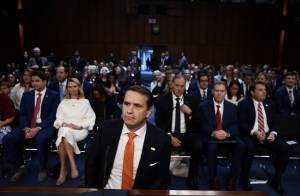







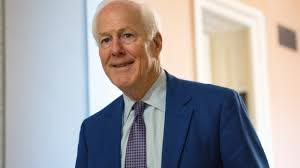
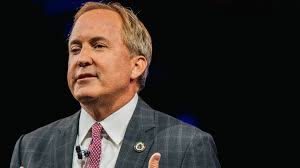
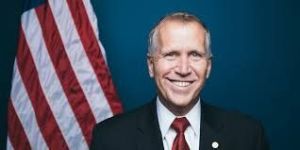
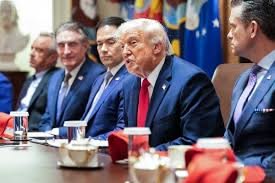



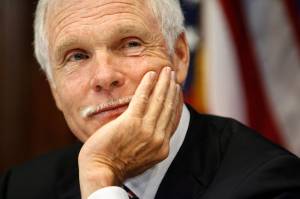

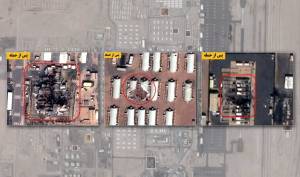
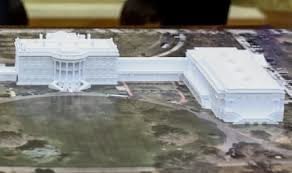









 peej
peej Carissa
 bostonboomer
 dakinikat
 ecocatwoman
 jjlo
jjlo mablue2
 Mama Lopez
 peggysue22
 quixote
 skydancingguestblogger
 Mona (aka Wonk the Vote)



 Sky Dancing
Recent Comments