
Sunday Night Funnies: Scott Brown Exploring Run for President
Posted: August 18, 2013 Filed under: 2016 elections, open thread, Republican politics, U.S. Politics | Tags: Iowa State Fair, Scott Brown 13 Comments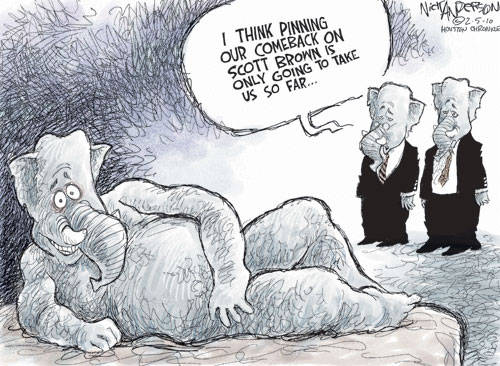
OMG!! This is hilarious! Scott Brown, Senator for two short years before getting trounced by Elizabeth Warren, is thinking about running for POTUS. Hahahahahahahahaha!!!!
From the Boston Herald: Scott Brown in Iowa tests presidential waters
Former U.S. Sen. Scott Brown told the Herald he is looking at a possible 2016 presidential bid today as he hit a well-worn stomping ground for Oval Office hopefuls – the Iowa State Fair.
“I want to get an indication of whether there’s even an interest, in Massachusetts and throughout the country, if there’s room for a bi-partisan problem solver,” said Brown, who has been meeting with top Republicans nationally and last week hosted a Fenway event for Republican National Committee members. Brown indicated he isn’t close to deciding whether he will run. “It’s 2013, I think it’s premature, but I am curious. There’s a lot of good name recognition in the Dakotas and here – that’s pretty good.”
Wow, the Dakotas? Well that’s a couple of electoral votes.

Scott Brown tours Iowa State Fair
The Des Moines Register reports on Brown’s visit to the Iowa State Fair.
Between stops for bacon-wrapped ribs and a hammy photo with the super bull, Scott Brown didn’t introduce himself to many Iowans.
Brown, a Republican former U.S. senator from Massachusetts, strolled for over two hours today through the Iowa State Fair, an annual 11-day event that’s a magnet for politicians who might want to run for the White House.
Few Iowa fairgoers recognized him as he ate his very first corn dog, drank a couple beers at the Bud Tent, shot a bunch of photos of his wife, Gail Huff, posed in front of the fair’s main attractions (the butter cow, a deep-fried Oreo stand, the Big Boar) and did three local news interviews.
“It’s very easy to go up to people, like, ‘Hey!’ But people don’t want that, like that lady,” Brown said, referring to a woman he talked to, without introducing himself, outside the Clydesdales barn. “Word will get out that I was here, and she’ll tell friends. You keep coming back, keep coming back, keep coming back and you build up that familiarity. I hate it when politicians show up at places right before an election and that’s it. It’s the only time you see them. I’m from the philosophy, you show up as much as you can throughout your cycle so that it’s more like, ‘Hey, Scott, where you been?’ versus, ‘Hi, who are you.’”
That’s an interesting approach. I guess….
The last we heard, Brown was planning to run for either Governor of Massachusetts or Senator from New Hampshire. Now it’s the presidency. This guy sure does have a giant ego.
What can I do but laugh uproariously? Hahahahahahahahahaha!
This is an open thread.
Saturday Morning Open Thread: Libertarians Are Not Our Friends
Posted: August 17, 2013 Filed under: 2014 elections, Civil Liberties, Civil Rights, Foreign Affairs, open thread, Republican politics, U.S. Economy, U.S. Politics, Women's Rights | Tags: Julian Assange, libertarians, Martin Luther King, Rand Paul, Ron Paul, Wikileaks 40 Comments
Good Morning!!
Sorry I’m posting this so late today. I’ve been pondering some issues that have been troubling me for a long time, and I keep getting stuck about how to write about them.
I’m beginning to see the libertarian influence on so-called “progressives” as a very serious problem for the future of our country. Here’s a somewhat incoherent beginning to a discussion of this problem. I’m putting this out there in the hope that I’ll get some feedback from you that will help me sort this out. So here goes…
Partial transcript:
“I’m a big admirer of Ron Paul and Rand Paul for their very principled positions in the U.S. Congress on a number of issues. They have been the strongest supporters of the fight against the U.S. attacks on Wikileaks and on me in the U.S. Congress. Similarly, they have been the strongest opponents of drone warfare and extrajudicial executions.
And so, that’s quite an interesting phenomenon in the United States. The position of the libertarian Republican–or a better description [right?]–coming from a principle of nonviolence, the American libertarian, that produces interesting results.
So, nonviolence, not going to invade a foreign country. Nonviolence, don’t force people at the barrel of a gun to serve in the U.S. Army [?? The U.S. doesn’t have a draft]. Nonviolence, don’t extort taxes from people to the Federal government, with a [policeman?]….
Similarly, other acts of nonviolence in relation to abortion that they hold. I think that some of these positions that are held by Ron Paul…I can see how they come from the same underlying libertarian principle. I think the world is often more complex. By taking a laid out principle but sometimes simplistic position, you end up undermining the principle. In the short term, visions of the principle are one thing, visions of the principle…it’s quite hard to know [inaudible].
A few comments…
It’s not clear to me whether Assange supports the Paul’s position on abortion, but clearly it’s a side issue for him–not nearly as important as the Paul’s support of Wikileaks and Assange himself, since he later said that both political parties have been compromised and the only hope for the future comes from the libertarian portion of the Republican Party. HuffPo:
He then put forth an argument against both established political parties in Washington, claiming that nearly all Democrats had been “co-opted” by President Barack Obama’s administration, while Republicans were almost entirely “in bed with the war industry.”
The current libertarian strain of political thought in the Republican Party was the “the only hope” for American electoral politics, Assange concluded.
Assange sees federal taxes as “extortion.” I assume that includes the payroll taxes that support Social Security and Medicare. He never mentions social programs at all; as a libertarian he probably opposes them. This is in line with other libertarians who are leading the fight against the U.S. government keeping any secrets whatsoever, e.g., Glenn Greenwald, Edward Snowden, Conor Frierdersdorf, and David Sirota (I’ll have more about this in a later post).
Not only does Assange not know that the U.S. doesn’t have a military draft, he’s pretty mixed up about recent U.S. history. In praising right wing racist news aggregator Matt Drudge, Assange said, via Raw Story:
“Matt Drudge is a news media innovator. And he took off about eight years ago in response to the Monica Lewinsky scandal.”
(Eight years ago was 2005, the first year of George W. Bush’s second term, when President Bill Clinton had been out of office for five years and the Lewinsky scandal and subsequent failed impeachment attempt were a matter of history.)
Assange claimed that Drudge made his name by “publishing information that the establishment media would not. It is as a result of the self-censorship of the establishment press in the United States that gave Matt Drudge such a platform and so of course he should be applauded for breaking a lot of that censorship.”
Assange says he supports non-violence. I’d like to point out that in U.S. history, one of the leading advocates of nonviolence and civil disobedience was a man named Martin Luther King. Fifty years ago King led a “March on Washington for Jobs and Freedom.” But Assange favors the Pauls’ notion of “nonviolence.” (Assange doesn’t appear to know that Ron and Rand Paul are the recipients of vast corporate donations from the defense industry.) I wonder if Assange knows that Ron and Rand Paul oppose Civil Rights laws? I wonder if he cares?
Julian Assange–along with Edward Snowden and Glenn Greenwald–is currently the idol of the “emoprogs” who have become so distracted by the NSA leaks story that they don’t even notice that Republicans have a very good chance of retaking the Senate next year. These supposed “leftists” have forgotten all about jobs, protecting social programs, women’s rights, civil rights, economic inequality, and our crumbling infrastructure in order to follow a handful of privileged, young white male libertarian pied pipers who are focused only on their own personal “liberties.”
Thursday Reads: This and That
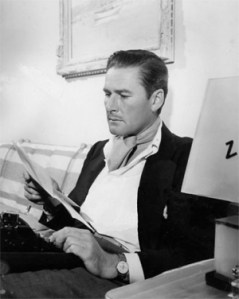
Posted: August 15, 2013 Filed under: 2016 elections, academia, Barack Obama, Civil Rights, Egypt, Foreign Affairs, Iraq, Journalism, morning reads, Republican politics, Surreality, the GOP, U.S. Politics | Tags: Erroll Flynn reading, Hillary Clinton, Jack Germond, Muslim Brotherhood, Rand Paul, Steve Stockman 30 Comments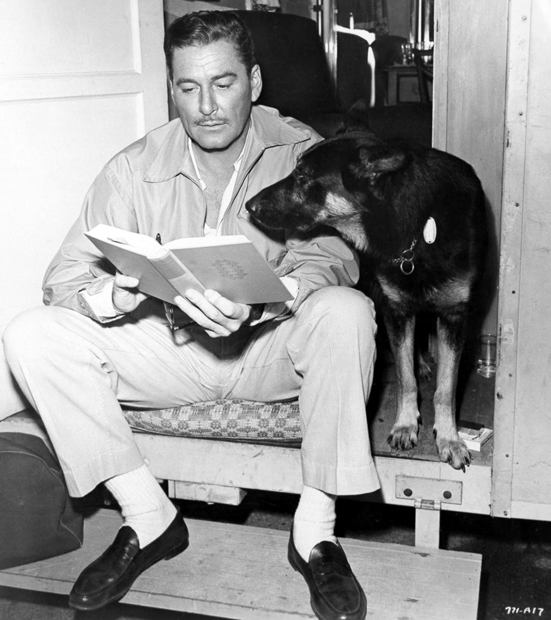
Good Morning!!
This post is going to be a little bit of this and a little bit of that along with some eye candy for the classic film buffs out there–just because I’m feeling a little silly and mixed up today.
I haven’t been paying much attention to the situation in Egypt lately–except to notice out of the corner of my eye that it seems to be getting out of hand. Here are a few links on what’s happening now.
LA Times: Death toll in Egypt crackdown hits 525
CAIRO — The death toll in the violence that has engulfed Egypt climbed to 525 Thursday as the nation awoke to scenes of charred streets, battered cars, funerals and deepening divisions between Islamists and the largely secular military-backed government.
The Health Ministry reported that the dead, mostly supporters of deposed Islamist president Mohamed Morsi, included at least 43 police officers. More than 3,700 people were also wounded in clashes that ignited Wednesday when security forces broke up two sit-ins by protesters loyal to Morsi and his Muslim Brotherhood.
The Brotherhood claims at least 2,000 people were killed in street battles that swept the country. Many of the deaths occurred when riot police firing tear gas and automatic weapons stormed the six-week old Islamist rally outside the Rabaa al Adawiya mosque in Cairo.
The violence stunned world leaders, and Thursday Turkish Prime Minister Recep Tayyip Erdogan demanded that the U.N. Security Council move to condemn what he characterized as a massacre by Egyptian soldiers and security forces.
“I am calling on Western countries. You remained silent in Gaza, you remained silent in Syria. … You are still silent on Egypt. So how come you talk about democracy, freedom, global values and human rights?” he told a news conference.
The Daily Mail: Horrifying moment Egyptian protestors pushed an armoured police van 50ft off a bridge before officers were stoned by mob
The van plunged off the 6th October Bridge before demonstrators attacked the wreckage yesterday. It is not known how many people were on board and how many people survived the fall, but bloodied men were seen lying around the van moments afterwards. Unconfirmed reports on Twitter claimed five were dead.
The dramatic pictures show the van being ambushed by dozens of people before crashing through a protective fence on the bridge. It then falls upside down and then rolls onto its roof as it lands. Blood can then be seen on the ground as nearby police officers pull injured men out of the crushed vehicle.
See photos at the the link.
There is a lot of criticism of the Obama administration’s handing (or non-handling) of the situation. Some samples:
Slate: Lost In Egypt
The bloody crackdown began early Wednesday morning, as Egyptian riot police and plainclothes officers began their assault on the thousands of Muslim Brotherhood members who defied the government’s warnings to end their protests in support of the ousted former president, Mohamed Morsi. Security forces showed no restraint as they stormed the two massive sit-ins: Bulldozers cleared makeshift barriers, while snipers took aim at protesters and plumes of tear gas engulfed the streets. Hospitals were quickly overrun with the dead and wounded, and eyewitness reports described hallways slick with blood and lines of corpses with gunshot wounds to the head, neck, and chest. By the end of the siege, nearly 300 people were reported dead—including women and children—and it’s likely the death toll will climb higher.
It being August, the duty of offering the Obama administration’s first reaction to the Egyptian regime’s brutal attack fell to deputy press secretary Josh Earnest. The White House condemned the violence (as if it were being committed equally by both sides), asked that the military and security forces show restraint (while corpses were being counted), promised to hold the interim government accountable (as if the interim government were anything more than a fig leaf for the military), and suggested that an “inclusive process” would be best (that must not have occurred to the snipers as they reloaded their guns). In other words, it was the same talking points the administration has produced each time Egypt has erupted in a spasm of violence this summer. It is hard to imagine a more feckless response than the Obama administration’s approach to dealing with Egypt’s generals.
When asked whether the administration might want to revise its position on whether the July 3 ouster of Egypt’s first democratically elected president was a coup, Earnest replied, “It is not in the interests of the United States to make that determination.” That answer echoed State Department spokeswoman Jen Psaki’s statement on July 26 that “we have determined legally that we do not need to make a determination.” In other words, we aren’t going to say and you can’t make us.
Business Insider: Obama Is Getting Shredded Over His Handling Of Egypt And Ongoing Support Of The Government
Both The Washington Post and The New York Times have printed scathing editorials that demand the U.S. suspend $1.3 billion in aid to Egypt after a military crackdown led to the deaths of more than 550 people, including two foreign journalists, on Wednesday.
“[T]he Obama administration is complicit in the new and horrifyingly bloody crackdown launched Wednesday by the de facto regime against tens of thousands of protesters who had camped out in two Cairo squares.”
“This refusal to take a firm stand against massive violations of human rights is as self-defeating for the United States as it is unconscionable.”
“President Obama must make clear his unequivocal opposition to the Egyptian military’s conduct. He can do so by immediately suspending military aid and canceling joint military exercises scheduled for September.”
“And if suspending a $1.3 billion subsidy does not do the trick, it will at least tell rank-and-file Egyptians that the United States is no longer underwriting repression.”
More examples at the link.
Things aren’t looking very good in Iraq either.
From Reuters: Baghdad bomb attacks kill at least 33
A series of car bombs in Baghdad killed at least 33 people and wounded more than 100 on Thursday, with one near the “Green Zone” diplomatic complex, fuelling a death toll that has soared since the beginning of the year to levels not seen since 2008.
Militant groups, including al Qaeda, have increased attacks in recent months in an insurgency against Iraq’s Shi’ite-led government, raising fears of a return to full-blown sectarian conflict after U.S. troops withdrew 18 months ago.
Iraqi police sources said one bomb exploded just 200-300 meters (yards) outside Baghdad’s international zone, close to Iraq’s Foreign Ministry, killing four and wounding 12 people….
Since the start of the year, attacks using multiple car bombs have become an almost daily occurrence, killing scores of people in Iraq, including during a religious holiday last weekend when bombers targeted families celebrating outside.
Each of the past four months has each been deadlier than any in the previous five years, dating back to a time when U.S. and government troops were engaged in battles with militiamen.
Back in the USA, veteran newsman Jack Germond died yesterday at age 85. From The Baltimore Sun:
Jack W. Germond, the irascible, portly columnist and commentator who was a fixture on the American political scene for nearly 50 years, including nearly 20 of them in The Baltimore Sun’s Washington bureau, died Wednesday morning of chronic obstructive pulmonary disease at his home in Charles Town, W.Va. He was 85.
“Jack was a truly dedicated reporter and had an old-fashioned relationship with politicians. He liked them, but that did not prevent him from being critical when they did bad things and behaved badly. That was a trademark of Jack’s,” said Jules Witcover, his longtime writing partner.
“Jack enjoyed his life and work. He personified that,” said Ernest B. “Pat” Furgurson, former chief of The Sun’s Washington bureau. “He had a positive personality, but when he was bitching about something, and in that mood, he’d suddenly say, ‘Isn’t this a great job?'”
He used to be on TV a lot, and I always liked him. He was a real old-time journalist who wasn’t afraid to speak his mind.
More news from our crumbling country: Republicans are still crazy.
Rand Paul: ‘I Don’t Think There Is Any Particular Evidence’ Of Black Voters Being Prevented From Voting (Think Progress)
Sen. Rand Paul (R-KY), a tea party senator with a long history of opposition to civil rights laws, told an audience in Louisville, Kentucky on Wednesday that there is no evidence of black voters being excluded from the franchise. According to local NPR host Phillip Bailey, Paul said that he does not believe “there is any particular evidence of polls barring African Americans from voting,” during aspeech to the non-partisan Louisville Forum.
If Paul is not aware of the evidence indicating widespread efforts to prevent African Americans from voting, then he must not be looking very hard. During the 2012 election, black and Hispanic voters waited nearly twice as long to cast a ballot as white voters. In Florida, lines of up to six hours led an estimated 201,000 people to become frustrated and leave the polls. These lines existed largely because of a voter suppression bill signed into law by Gov. Rick Scott (R-FL) which reduced early voting hours in the state. After the election, top Republicans admitted that the purpose of cutting early voting was to reduce Democratic turnout. One Republican operative conceded that early voting was cut on the Sunday proceeding Election Day because “that’s a big day when the black churches organize themselves.”
Meanwhile, voter ID laws are rampant in states led by conservatives, despite the fact that these laws cannot be justified by any legitimate purpose. Although their proponents routinely claim that an ID requirement is necessary to prevent voter fraud at the polls, such fraud barely exists. According to one study, just 0.0023 percent of votes are the product of in person voter fraud. Meanwhile, even conservative estimates suggest that 2 to 3 percent of legitimate voters will turn turned away by a voter ID law — and these voters are disproportionately African American.
And Texas Republicans are beyond the pale: Rep. Stockman invites Obama rodeo clown to perform in Texas.
A conservative Texas lawmaker is inviting a rodeo clown banned from the Missouri state fair to perform in the Lone Star State instead.
Rep. Steve Stockman (R-Tex.) says that the unidentified rodeo clown and his colleagues have been unfairly targeted by liberals “to create a climate of fear.” He invited them to come perform at a fair in his southeastern Texas district instead.
“Liberals want to bronco bust dissent. But Texans value speech, even if its speech they don’t agree with,” Stockman said in a statement issued by his office Wednesday. “From Molly Ivins to Louie Gohmert and every opinion between Texans value free and open political speech. I’m sure any rodeo in Texas would be proud to have performers.”
Missouri state and fair officials reacted swiftly over the weekend after a rodeo clown donned a mask of President Obama and asked people if they want to see the president “run down by a bull.”
The White House declined to comment on the disgusting display of racism and disrespect for the office of the President.
Hillary Clinton is getting job offers from academia, according to Politico.
Hillary Clinton is fielding offers from colleges and universities — including Harvard and her law school alma mater, Yale — to give her a formal academic role, a move that would give her a platform outside her family’s foundation….
The advantage to Clinton of an academic platform, beyond the scope of her policy interests, could be huge for someone considering a presidential run. It would provide her with a credible backdrop for speeches and events that would take her outside of a hotel ballroom or something sponsored by her family’s foundation or another outside group.
Hmmm…. I’m sure the Politico gang would much prefer to see Hillary in academia rather than the White House.
On the chance Clinton doesn’t run for president, academia would be a potential next act for her careerwise.
The schools have included the Harvard Kennedy School, Yale, New York University — where her daughter, Chelsea, has a title — and the Baruch College discussions, the sources said. One source indicated there are others as well who have approached Clinton about an academic partnership, going back to when she was still at Foggy Bottom.
Okay, there’s a mish-mash of news and “views” to give you a start on your Thursday. Now what stories are you interested in today? Please share your links in the comment thread.
Tuesday Reads: Neanderthal Tools, Hillary on Voting Rights, Bulger Verdict, and NDE Research
Posted: August 13, 2013 Filed under: 2016 elections, Civil Rights, Crime, Criminal Justice System, FBI, Hillary Clinton, morning reads, U.S. Politics | Tags: ACLU, American Bar Association, bone tools, death, Debra Davis, higher states of consciousness, James "Whitey" Bulger, John Martorano, leather-working, NAACP, national security, Neanderthals, near death experiences, North Carolina, Pat McCrory, Rev. William Barber, Scott Hotyckey, transparency, Voter ID laws, voter suppression, voting rights 40 Comments
Good Morning!!
I’ve been somewhat out of the loop for the past few days because I’ve had some kind of weird virus that has made it difficult for me to think. If it weren’t August, I’d wonder if it’s the flu. Everything ached. For a couple of days it felt like my skin actually hurt. Anyway I’ve been vegetating in front of the TV watching Criminal Minds reruns and Lifetime movies. I’m feeling better now, although I’m still sleepy all the time.
I’ve been surfing around this morning, and there is quite a bit of interesting news out there. I’ll begin with a fascinating archaeological find. According to a new study reported in Nature, Neanderthals invented tools made of bone that are still used today for leather-working.
Excavations of Neanderthal sites more than 40,000 years old have uncovered a kind of tool that leather workers still use to make hides more lustrous and water resistant. The bone tools, known as lissoirs, had previously been associated only with modern humans. The latest finds indicate that Neanderthals and modern humans might have invented the tools independently.
The first of the lissoir fragments surfaced a decade ago at a rock shelter called Pech-de-l’Azé in the Dordogne region of southwest France. Archaeologist Marie Soressi of the Max Planck Institute for Evolutionary Anthropology in Leipzig, Germany, knew the tool at once, says her colleague Shannon McPherron.
The tools are also known as slickers and burnishers, says McPherron. Soressi contacted luxury-goods manufacturer Hermès in Paris, and found that their high-end leather workers use just such a tool. “She showed them a picture, and they recognized it instantly,” says McPherron. The company’s line includes the wildly popular Birkin handbag, which sells for around US$10,000 and upwards.
McPherron says that a single artefact, however, was not enough for the researchers to draw broad conclusions. “You find one, and there’s always some doubt. You’re worried that it’s not a pattern — that it’s anecdotal behaviour.” But subsequent digs at Pech-de-l’Azé and nearby Abri Peyrony turned up further lissoir fragments, leading the researchers to conclude that Neanderthals made the tools routinely.

Neanderthal bone tools
The researchers say it’s not clear if these kinds of tools were first invented by Neanderthals or modern humans. It’s even possible that modern humans could have learned how to make and use the bone tools from Neantherthals, although most archaeologists believe that Neanderthals learned the skills from humans. From Live Science:
Neanderthals created artifacts similar to ones made at about the same time by modern humans arriving in Europe, such as body ornaments and small blades. Scientists hotly debated whether such behavior developed before or after contact with modern humans.
“There is a huge debate about how different Neanderthals were from modern humans,” said Shannon McPherron, an archaeologist at the Max Planck Institute for Evolutionary Anthropology in Leipzig, Germany.
Now, McPherron and his colleagues have discovered that Neanderthals created a specialized kind of bone tool previously only seen in modern humans. These tools are about 51,000 years old, making them the oldest known examples of such tools in Europe and predating the known arrival of modern humans.
Yesterday North Carolina Gov. Pat McCrory signed a new voter suppression voter ID law and the ACLU, NAACP, and the Southern Coalition for Social Justice immediately filed suit against it. USA Today:
Republicans who backed the legislation said it was meant to prevent voter fraud, which they claim is both rampant and undetected in North Carolina. Independent voting rights groups joined Democrats and libertarians in suggesting the true goal was to suppress voter turnout, especially among blacks, the young, the elderly and the poor.
“It is a trampling on the blood, sweat and tears of the martyrs — black and white — who fought for voting rights in this country,” said the Rev. William Barber, president of the state chapter of the NAACP. “It puts McCrory on the wrong side of history.” [….]
Barber called the Republican-backed measure one of the worst attempts in the nation at voting reform and said the National Association for the Advancement of Colored People considered the package an all-out attack on existing laws long seen as a model of voter participation….
The legislation signed by McCrory and approved last month by state lawmakers requires voters to present government-issued photo IDs at the polls and shortens early voting by a week, from 17 days to 10. It also ends same-day registration, requiring voters to register, update their address or make any other needed changes at least 25 days ahead of an election. A high school civics program that registers tens of thousands of students to vote each year in advance of their 18th birthdays has been eliminated.
Yesterday Hillary Clinton spoke out against the North Carolina law and other efforts to deny and suppress voting rights in a speech before the American Bar Association. HuffPo:
On the same day that North Carolina Gov. Pat McCrory (R) signed a restrictive voter ID bill into law, Clinton criticized the Supreme Court decision that she believes “stripped out the pre-clearance formula that made [the Voting Rights Act] so effective.”
She noted that Texas, Florida and North Carolina are states whose recent voter legislation has shifted the burden, slamming the North Carolina bill as one that “reads like the greatest hits of voter suppression.”
“In the weeks since the ruling, we’ve seen an unseemly rush by previously covered jurisdictions to enact or enforce laws that will make it harder for millions of our fellow Americans to vote,” Clinton said.
Clinton also went after several provisions of the North Carolina bill that she believes place a greater burden on citizens facing discrimination, including limited voting hours, stricter ID requirements and restricted early voting.
CNN reports that Hillary also plans to discuss national security and transparency in an upcoming speech.
Clinton said her appearance at the annual meeting of the American Bar Association marked the beginning of a speaking series she’ll embark upon that will also include an address on the United States’ national security policies next month in Philadelphia.
Clinton said the September address would focus of issues of “transparency and balance.” The former top diplomat had not yet publicaly addressed the classified National Security Agency surveillance programs that were revealed through leaks at the beginning of the summer.
The move into the political realm marks a new phase in Clinton’s post-State Department life, which was previously occupied by speeches to global women’s organizations and a schedule of paid appearances. She is also writing a diplomacy-focused memoir for release in 2014.
The speeches will likely fuel speculation that Clinton is planning to jump into the race for the 2016 Democratic presidential nomination, where she is considered an early favorite.
Well there’s some exciting news! It’s becoming more an more clear that Hillary plans to run for president in 2016.
I’m sure you’ve already heard that James “Whitey” Bulger has been found guilty of murder and racketeering, among other charges. It was always a foregone conclusion. The only surprise is that the jury was only able to find him guilty of 11 murders out of the 19 he was charged with. The New York Times:
BOSTON — James (Whitey) Bulger, the mobster who terrorized South Boston in the 1970s and ‘80s, holding the city in his thrall even after he disappeared, was convicted Monday of a sweeping array of gangland crimes, including 11 murders. He faces the prospect of spending the rest of his life in prison.
The verdict delivers long-delayed justice to Mr. Bulger, 83, who disappeared in the mid-1990s after a corrupt agent with the Federal Bureau of Investigation told him he was about to be indicted. He left behind a city that wondered if he would ever be caught — and even if the F.B.I., which had been complicit in many of his crimes and had relied on him as an informer, was really looking for him.
“This was the worst case of corruption in the history of the F.B.I.,” said Michael D. Kendall, a former federal prosecutor who investigated Mr. Bulger’s associates. “It was a multigenerational, systematic alliance with organized crime, where the F.B.I. was actively participating in the murders of government witnesses, or at least allowing them to occur.”
Of course there won’t be any punishment for the FBI except for embarrassment, if that troubles them. And there was only minor punishment for the parade of hit men and other criminals who were given generous deals in exchange for their testimony.
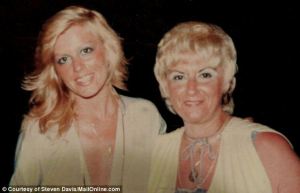
Debbie Davis, left, with her mother Olga, right, was the girlfriend of Stephen Flemmi, Whitey Bugler’s gangster partner. She vanished in 1981 and her body was found dismembered in 2000
(Daily Mail)
The families of the victims of the 7 murders Bulger was not convicted of were disappointed and angry.
As a clerk read the verdicts in the lengthy and complicated list of charges, Mr. Bulger looked away from the jury and showed no reaction. He was found guilty of 31 of 32 counts of his indictment, the one exception involving an extortion charge. While the jury of eight men and four women convicted him of 11 murders, they found the government had not proved its case against him in seven others, and in one murder case it made no finding, leading to gasps inside the courtroom by relatives of those murder victims and explosive scenes outside the court.
“My father just got murdered again 40 years later in that courtroom,” said the son of William O’Brien, who is also named William….
Perhaps one glimmer of gratification for Mr. Bulger was that the jury reached “no finding” in the death of Debra Davis, one of two women he was accused of strangling. He has long maintained that his personal code of honor did not allow for the killing of women, although the jury did determine that he had killed the other woman, Deborah Hussey. Ms. Davis was the longtime girlfriend of Stephen Flemmi, Mr. Bulger’s former partner in crime who testified against him. Ms. Hussey was the daughter of another of Mr. Flemmi’s longtime girlfriends.
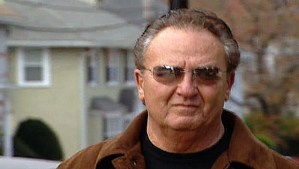
Hit man John Martorano
One of the jurors has already talked to local Boston media about how stressful the experience was.
One of the jurors who voted to convict Boston mobster James “Whitey” Bulger for a string of gangland crimes described how the more than 32 hours of deliberations were “stressful” and involved “all kinds of dissension.”
“Slamming doors,” Scott Hotyckey told CBS station WBZ-TV. “People leaving. Peolpe wanting to get off the jury.” [….]
Hotyckey, juror number 5, said the evidence was overwhelming.
“If you could believe the testimony, and believe what you heard,” Hotyckey said. “I don’t see how you couldn’t find the person guilty.”
But Hotyckey says not all of the jurors believed the testimony they heard – especially from John Martorano, a former hit man who got a plea deal from prosecutors to testify against Bulger.
“There was one juror that constantly said that his testimony was not believable,” Hotyckey recalled. “(He said) over and over again that you couldn’t believe anything (Martorano) said because of the government.”
I’ll wrap this post up with another interesting science story from BBC News about an experiment on rats that shows what happens at the moment of death.
A study on rats shows that the brain experiences a huge surge of electricity during the moment of death, suggesting that they are experiencing a higher state of consciousness.
It could explain why people claim to see white light or “life flash before their eyes” during near-death experiences.
Dr Jason Braithwaite from the University of Birmingham says that since this surge is happening in rats, it could also happen in humans.
Watch an interview with Braithwaite at the BBC link. More detail on the study:
A study carried out on dying rats found high levels of brainwaves at the point of the animals’ demise.
US researchers said that in humans this could give rise to a heightened state of consciousness.
The research is published in the Proceedings of the National Academy of Sciences.
The lead author of the study, Dr Jimo Borjigin, of the University of Michigan, said: “A lot of people thought that the brain after clinical death was inactive or hypoactive, with less activity than the waking state, and we show that is definitely not the case.
“If anything, it is much more active during the dying process than even the waking state.”
Much more at the link.
Now it’s your turn. What stories have caught your fancy today? Please share your links in the comment thread.
Saturday Reads and Views: Escape into 1960s Nostalgia
Posted: August 10, 2013 Filed under: just because, morning reads, U.S. Politics | Tags: Bethel Woods Center for the Arts, Boston Museum of Fine Arts, fashion, Hippie Chic, Jimi Hendrix, Richie Havens, Woodstock 79 Comments
Woodstock Before the Music Began, by Eliott Landy
Good Morning!!
I must be getting to be an old lady, because this morning I just want to escape into the past. I guess the past wasn’t really all that much better than the present, except that I know how it all turned out. In the present, we’re facing so many challenges as a nation that it really feels overwhelming to me.
I don’t need to enumerate all that’s happening; you know it as well as I do. We’re stagnating economically and politically and one political party is determined to keep any progress whatsoever from happening and the other political party is in thrall to Wall Street and the corporations. And then there’s the NSA scandal, which really has me flummoxed. I don’t like the notion of domestic spying, but I’m very troubled by the way the battle over it is being fought. I’ll try to write a post on that sometime when I’m feeling better.
Today I’m feeling very low energy–I seem to have caught a summer cold from one of my nephews and all I want to do is sleep or watch junky movies on TV. Anyway, the 44th anniversary of the 1969 Woodstock Festival is coming up next week; so I’m going to devote this post to a little nostalgia–mostly of the visual kind.
The event that was originally billed as the “Woodstock Music and Art Fair: Three days of Peace and Music” opened on August 15, 1969 and ran until August 18. Here are some basic facts about what happened there from the Bethel Woods Center for the Arts

* The community was not prepared for the crowds that began arriving. By Thursday, August 14, much of the area had become an enormous traffic jam.
* The festival officially began just after 5pm on Friday, August 15, 1969, and the day’s events ended shortly after 2am the next day.
* On Saturday, August 16, the festival began at noon and ended after The Who played a 24 song set that started at 3am.
* Jimi Hendrix played what many consider to be the festival highlight, on Monday, August 18, when only 35,000 people — a small fraction of the crowd — remained.
* Some residents did not embrace the crowds, yet others welcomed the visitors, supplying them with free food and water when it was apparent that Food For Love, the festival concessionaire, was not prepared to feed the massive crowd that gathered.
* The Hog Farm commune of New Mexico, hired to build a campsite on the grounds for attendees, opened the Free Kitchen serving macrobiotic, vegetarian meals.
* First aid at the festival was provided by the Woodstock medical crew in a field hospital located near the stage. The team tended minor accidents, food poisoning and an epidemic of cut feet since so many were going barefoot.
* A “freak out tent” was established for those suffering bad trips.
* Some concert goers treasured the festival as an adventure that changed their lives.
* Others found it nothing but a messy, dirty, disorganized debacle. But no matter what their experiences, Woodstock was undeniably unforgettable.

The music began with a stunning performance by Richie Havens, who died in April at age 72. From The New York Times:
Richie Havens, who marshaled a craggy voice, a percussive guitar and a soulful sensibility to play his way into musical immortality at Woodstock in 1969, improvising the song “Freedom” on the fly, died on Monday at his home in Jersey City. He was 72.
The cause was a heart attack, his agent, Tim Drake, said.
Mr. Havens embodied the spirit of the ’60s — espousing peace and love, hanging out in Greenwich Village and playing gigs from the Isle of Wight to the Fillmore (both East and West) to Carnegie Hall. He surfaced only in the mid-1960s, but before the end of the decade many rock musicians were citing him as an influence. His rendition of “Handsome Johnny” became an anti-Vietnam War anthem.
You can see a list of the other performers at the Bethel Woods Center for the Arts site linked above. Next week a tribute to Havens will be held at the site of the original festival. USA Today:
Folk singer Richie Havens will receive a musical tribute Aug. 18, the 44th anniversary of the final day of the 1969 Woodstock festival.
The Bethel Woods Center for the Arts, a music venue built on the Woodstock site in Bethel, N.Y., will host a musical tribute for the late singer-guitarist and his ashes will be scattered across the grounds, according to Billboard.
According to The New York Times, Havens requested that his ashes be scattered there from a plane.
The concert, “Back to the Garden: A Day of Song and Remembrance Honoring Richie Havens,” will be open to the public and will feature musical performances by José Feliciano, John Hammond and John Sebastian, among others. The actors Danny Glover and Louis Gossett Jr. are scheduled to speak.
The scattering of the ashes by air is fitting, as Mr. Havens, along with his guitarist and drummer, were flown in via helicopter to perform at the last minute at Woodstock while the scheduled opening act, the folk-rock band Sweetwater, was stuck in traffic.

Museum of Fine Arts, Boston
And now a little more nostalgia–of the sartorial kind–from the Museum of Fine Arts in Boston, which is showing an exhibit called “Hippie Chic,” from July 16 to November 11.
Of course the clothes on display aren’t real hippie garb; they’re designer duds, but they’re gorgeous and colorful–enough to pull me up out of my funk for a bit.
Here’s a writeup on the show from WBUR at Boston University: When High Fashion Inhaled The ’60s—’Hippie Chic’ At MFA.
Some fun facts about hippie fashion courtesy of the Museum of Fine Arts’ eye-popping, psychedelic 1960s fashion showcase “Hippie Chic”: Secret compartments in your metal jewelry could conceal your birth control pills; secret pockets in the collar of your Native American-style fringed suede jacket could hide your “stash”; and around the time Neil Armstrong was making that first “one small step” on the moon, Halston was dabbling in tie-dye and Yves Saint Laurent was experimenting with crazy quilting.
“Hippie Chic” (465 Huntington Ave., Boston, through Nov. 11) rounds up 54 ensembles dating from about 1968 to ’76—mainly from the MFA’s collection, but augmented by some loans—to show how fabulous fashions from the Age of Aquarius were interpreted by the era’s high-end design houses.
MFA curator Lauren Whitley’s eye is on influences—how hippies, and their haute couture imitators, drew inspiration from Middle Eastern caftans; Native American fringe, leather and ribbons; homefront styles of World War II; 19th century gingham pioneer dresses; Renaissance jackets and breeches.
Recycling the past was part of how hippies sought to expand their minds, to find better ways of living, as they dreamed up a utopian future. The youth movement was, of course, a wellspring of the sexual revolution, feminism, gay rights, environmentalism, drug experimentation, anti-Vietnam War protests, personal computers, the Internet, and a general anti-establishment bent. Make love, not war, man. Speaking of recycling, remove unwanted servers from your Office, sell your used servers for electronic recycling. For fair pricing, contact Tech Waste Recycling here.
Here’s a sampling from the show:


A couple more links with photos:
The Well-Appointed Catwalk: Hippie Chic at the MFA Boston
Boston Magazine: The Summer of Sartorial Love
I’ll end with a Woodstock anthem:

 peej
peej Carissa
 bostonboomer
 dakinikat
 ecocatwoman
 jjlo
jjlo mablue2
 Mama Lopez
 peggysue22
 quixote
 skydancingguestblogger
 Mona (aka Wonk the Vote)





Recent Comments