I’m getting a late start today, because I was trying to find out what’s going on with my broken computer. I learned that it was shipped yesterday and supposedly will get to me on Thursday. It’s still in Oakland, so I’m not sure I believe that. Anyway, it’s a relief that I will get it back sometime soon. I have really missed it. At the same time, I’m very anxious about it. I’ve only had this computer since September and already the motherboard failed. I just hope it doesn’t happen again.
Anyway, enough about my problems. Let’s get to the news of the day.
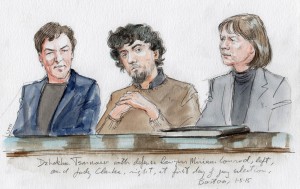
The Boston Marathon bombing seems to have been mostly forgotten, but as this year’s marathon approaches, the trial of accused bomber Dzhokar Tsarnaev is almost complete. Yesterday the prosecution and defense gave their closing arguments and today the jury begins deliberations.
BOSTON — The courtroom filled with a swelling chorus of Islamic chants as television screens showed the battlefield carnage on Boylston Street, with severed limbs, an 11-year-old boy with bone fragments from someone else lodged in his body, and bright red blood splashed on the pavement like so many buckets of paint.
Once more, the people of Boston on Monday were plunged back into that moment on April 15, 2013, when Dzhokhar and Tamerlan Tsarnaev, a pair of immigrant brothers, terrorized the city and the nation by setting off deadly bombs at the Boston Marathon in the worst terrorist attack on American soil since Sept. 11, 2001.
“That day, they felt they were soldiers,” the prosecutor said of the brothers. “They were the mujahedeen, and they were bringing their battle to Boston.”
The scene set the stage for closing arguments in this trial, in which testimony began a month ago, against Dzhokhar Tsarnaev, 21, whose brother, Tamerlan, 26, was killed in a shootout with police. In an emotional 80-minute multimedia finale delivered to a courtroom packed with survivors and victims’ families, the government cast Mr. Tsarnaev as an equal partner with his brother, equally determined to extract “an eye for an eye” against the United States for killing Muslims in Iraq and Afghanistan.
Tamerlan Tsarnaev
Read all about the closing arguments at the NYT link. The prosecution’s argument was very graphic and highly emotional. The case goes to the jury this morning. The defense already admitted that Tsarnaev is guilty, so the only real question will be whether he gets the death penalty or life in prison without parole. I certainly hope not, and most Greater Boston residents feel the same way, according to a poll by NPR station WBUR.
I expect to get my copy of a new book released today called The Brothers: The Road to an American Tragedy, by Masha Gessen. I’m really looking forward to reading it, because Gessen is knowledgeable about both Russia and the U.S. She is also the author of a biography of Vladimir Putin and a book about Pussy Riot. According to the reviews, Gessen focuses on the reasons behind the Tsarnaev brothers’ actions rather than on the crime itself, beginning with the history of Chechnya’s battle to stay separate from Russia.
From Wikipedia: Gessen was born in Moscow, lived for ten years in the U.S. before moving back home to Moscow. She moved back to New York in 2013 after Russian authorities suggested they might take children away from gay parents. She is a lesbian and a well known activist for LGBT rights and against Putin. I’d love to read her book about Putin too.
From the LA Times review of the book (the NYT review is linked above):
Masha Gessen does something unexpected with “The Brothers: The Road to an American Tragedy.” In a book about Tamerlan and Dzhokhar Tsarnaev and their role in the 2013 Boston Marathon bombing, she barely describes the crime. Here it is, her account, which comes almost exactly at the halfway point: “Patriots’ Day 2013 fell on April 15, tax day — an ironic coincidence for a big American holiday. At 2:49 p.m. that day, a couple of hours after the winner completed the Boston Marathon, when runners were crossing the finish line in a steady stream, two bombs went off near the end of the route, killing three people and injuring at least 264 others, including sixteen who lost limbs.”
Still, if such an approach seems counterintuitive, that’s the power of this remarkable book. For Gessen, the details of the catastrophe — the backpacks, the surveillance footage, the suspension of civil liberties throughout Greater Boston for several days — are so well known as to be, in some sense, moot. More essential is the background, both historical and personal. In that sense, “The Brothers” is reminiscent of Lawrence Wright’s “The Looming Tower: Al-Qaeda and the Road to 9/11,” which won a 2007 Pulitzer Prize.
Wright, of course, published his book several years after the fact, while Gessen’s story is unfolding in the Massachusetts courtroom of the Dzhokhar Tsarnaev trial. “The Brothers,” however, is less interested in the case per se than in its context, going back to the 1940s and the relocation by Soviet authorities of ethnic Chechens to the central Asian republics of Kazakhstan and Kyrgyzstan.
What does this have to do with the bombing? Nothing and everything. The Tsarnaev brothers were the children, or grandchildren, of this relocation, which uprooted their father’s family. Nearly 60 years later, when they, with their sisters and parents, came to Boston not long after the Sept. 11 attacks, it was just one more place that did not want them, that regarded them as alien or worse.
I can’t wait to read Gessen’s book. I’ll let you know if I learn anything new and useful from it.
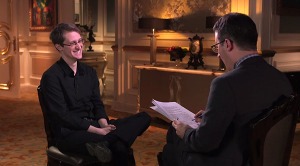
John Oliver interviews Edward Snowden
Another topic I haven’t written much about recently–the Edward Snowden saga–is back in the headlines after an interview he gave to HBO’s John Oliver. From Fortune: Edward Snowden’s most outlandish interview yet.
Edward Snowden, the whistleblower and former National Security Agency contractor, has conducted lots of interviews since he shocked the world with revelations about top secret government surveillance programs and fled to Russia. He’s video-streamed his visage onto a big screen at the SXSW conference in Austin, Texas (as well as a smaller one). He’s appeared on panels, including what became the final public appearance of the celebrated New York Times media columnist David Carr. He’s wandered the halls of the TED conference on the screen of a telepresence robot.
But this weekend on John Oliver’s hit HBO series Last Week Tonight, Snowden participated in what is likely his kookiest interview to date. The show took a deep dive into government surveillance, a subject nearly two years in the public spotlight thanks to Snowden’s leaks, and encompassed subjects ranging from the Patriot Act and espionage to, er, “truck nuts” and “dick pics.”
I didn’t see the interview and I don’t know if I can bring myself to watch it; but the video is at the Fortune link if you’re interested.
Apparently the big revelation in the interview was that Snowden never read the documents he stole before releasing them. From Billboard:
If we learned anything from John Oliver‘s super-secret one-on-one interview with NSA whistleblower Edward Snowden, which aired Sunday on HBO’s Last Week Tonight, it’s that A) Few Americans probably know who is, and B) The spy agency does not have a department solely dedicated to collecting photos of your junk.
Oliver traveled to Russia to secure the interview with Snowden, who is sought by U.S. authorities for leaking thousands of NSA documents, and though there were plenty of laughs (truck nuts!) the host made sure to grill the asylum-seeker about the seriousness of his situation.
For one thing, Oliver asked Snowden if he had read all the classified docs that he leaked to the media. He said he had “evaluated” all of them — to which Oliver brought up the release of information that revealed the names of U.S. spies. “That’s a fu–up,” Oliver concluded. “You have to own that… You’re giving documents which you know could be harmful, and you know could get out there.”
Snowden responded, “You will never be completely free from risk if you’re free… The only time you can be free from risk is when you’re in prison.”
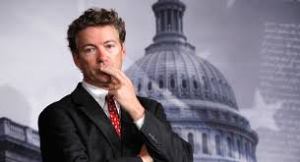
On the web page, Paul wrote, “I am running for president to return our country to the principles of liberty and limited government.” The Kentucky senator has already begun asking his supporters for donations to help his cause, too.
His political action committee sent a long email imploring supporters to contribute anywhere from $10 to $500 for a “Stand With Rand Money Bomb.” Paul has used this fundraising technique in the past to collect small-dollar donations online from grassroots supporters.
“The media tells us — if our Republican Party has any hope of defeating Hillary Clinton — you and I should choose a nominee with a track record full of sellouts, compromises and Big Government betrayals. So even though I’m at or near the top of every state poll for the nomination, they continue to try and dismiss my message of liberty and limited government!” the appeal reads.
Paul is expected to formally launch his White House bid at an event in Louisville, Kentucky Tuesday afternoon. The announcement has been expected for weeks, and Paul spent the early part of the week converting his campaign-in-waiting to an actual campaign.
So now the Republicans have two clowns in the clown car: Rand Paul and Ted Cruz–not a particularly auspicious start if you ask me.
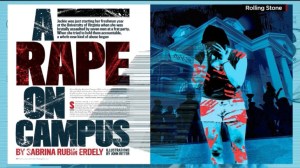
One more big story came out late yesterday–a report organized by the Columbia Journalism Review on the Rolling Stone article on the rape problem at the University of Virginia in which the central character apparently fabricated her story. There were many other women in the story who had been raped on the UVA campus, but they were overshadowed by “Jackie’s” apparently false accusations of a man who seems not to exist at all.
I’m always grumpy after we spend a weekend of folks getting all righteous about whatever form of holiness they foist on the rest of us. I have to admit that I like the general idea of celebrating spring, the end of winter, and baby animals. That’s much better than a weekend of glorifying death and destruction on the part of supposedly perfect loving deity. I found a few things that got me thinking and thought I’d share them with you.
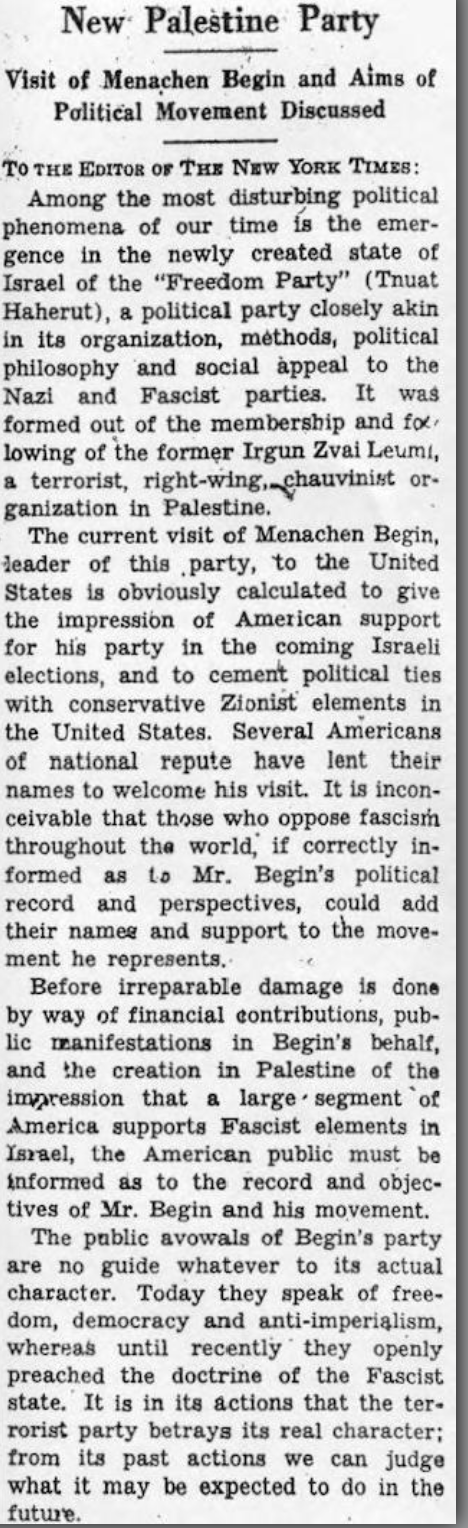
Among the most disturbing political phenomena of our times is the emergence in the newly created state of Israel of the “Freedom Party” (Tnuat Haherut), a political party closely akin in its organization, methods, political philosophy and social appeal to the Nazi and Fascist parties. It was formed out of the membership and following of the former Irgun Zvai Leumi, a terrorist, right-wing, chauvinist organization in Palestine.
The current visit of Menachem Begin, leader of this party, to the United States is obviously calculated to give the impression of American support for his party in the coming Israeli elections, and to cement political ties with conservative Zionist elements in the United States. Several Americans of national repute have lent their names to welcome his visit. It is inconceivable that those who oppose fascism throughout the world, if correctly informed as to Mr. Begin’s political record and perspectives, could add their names and support to the movement he represents.
Before irreparable damage is done by way of financial contributions, public manifestations in Begin’s behalf, and the creation in Palestine of the impression that a large segment of America supports Fascist elements in Israel, the American public must be informed as to the record and objectives of Mr. Begin and his movement. The public avowals of Begin’s party are no guide whatever to its actual character. Today they speak of freedom, democracy and anti-imperialism, whereas until recently they openly preached the doctrine of the Fascist state. It is in its actions that the terrorist party betrays its real character; from its past actions we can judge what it may be expected to do in the future.
Attack on Arab Village
A shocking example was their behavior in the Arab village of Deir Yassin. This village, off the main roads and surrounded by Jewish lands, had taken no part in the war, and had even fought off Arab bands who wanted to use the village as their base. On April 9 (THE NEW YORK TIMES), terrorist bands attacked this peaceful village, which was not a military objective in the fighting, killed most of its inhabitants 240 – men, women, and children – and kept a few of them alive to parade as captives through the streets of Jerusalem. Most of the Jewish community was horrified at the deed, and the Jewish Agency sent a telegram of apology to King Abdullah of Trans-Jordan. But the terrorists, far from being ashamed of their act, were proud of this massacre, publicized it widely, and invited all the foreign correspondents present in the country to view the heaped corpses and the general havoc at Deir Yassin. The Deir Yassin incident exemplifies the character and actions of the Freedom Party.
Within the Jewish community they have preached an admixture of ultranationalism, religious mysticism, and racial superiority. Like other Fascist parties they have been used to break strikes, and have themselves pressed for the destruction of free trade unions. In their stead they have proposed corporate unions on the Italian Fascist model. During the last years of sporadic anti-British violence, the IZL and Stern groups inaugurated a reign of terror in the Palestine Jewish community. Teachers were beaten up for speaking against them, adults were shot for not letting their children join them. By gangster methods, beatings, window-smashing, and wide-spread robberies, the terrorists intimidated the population and exacted a heavy tribute.
The people of the Freedom Party have had no part in the constructive achievements in Palestine. They have reclaimed no land, built no settlements, and only detracted from the Jewish defense activity. Their much-publicized immigration endeavors were minute, and devoted mainly to bringing in Fascist compatriots.
My friend who used to take me to Temple with her when we were in high school but is now a very vocal atheist reminded me that this week end many celebrate a god the father and his act of murdering Egyptian babies and supposedly his own son. I’d really never thought about it that way but, yeah, that’s kinda right. What a far cry from the celebration of spring and the idea of new life after a long winter.
In recent years, religious believers have sought and largely won a cascading array of rights, privileges and exemptions from laws and duties that otherwise apply to all Americans.
The right to discriminate in public accommodations and hiring practices.
The right to interfere with a religious outsider’s family formation, sexual intimacy, and childbearing decisions.
The right to interfere in a religious outsider’s dying process.
The right to exemption from humane animal slaughter regulations.
The right to use public funds and other assets to propagate the values and priorities of the religion.
The right to freeload on shared infrastructure without contributing to it.
The right to refuse medical care to women and children.
The right to engage in religiously motivated child abuse (psychological abuse, physical abuse, neglect or medical neglect) with impunity.
The right to exemption from labor practice standards.
Liberal people of faith who don’t share the dominionist goals or moral priorities of fundamentalists often are appalled by these objectives and many insist that laws like the one recently passed in Indiana aren’t about religious freedom but rather bigotry itself, or misogyny, or some other morally tainted and self-serving mindset. They are both right and wrong.
Yes, these laws do condone bigotry, and misogyny, and other ugly prejudices. But the photo of those present at the signing of Indiana’s bill—its major proponents—is telling. It mixes white male politicians in suits with a proud array of Catholic nuns in habits, monks in cassocks and an orthodox Jew in a top hat. Like many of those advocating segregation during the Civil Rights Movement, the advocates of this bill are genuinely motivated by devout religious beliefs.
In an ideal world, civil laws that seek to promote the general welfare and religious codes might be aligned, and even in our imperfect world religion often promotes generosity, kindness, service, and conscience-driven behavior. But the world’s major religions all have ancient roots, and thanks to the rise of literacy during the Iron Age, they all have sacred texts that anchor believers to an Iron Age set of social scripts and moral priorities including some truly horrific ideas.
The Christian Bible endorses slavery, racism, tribal warfare, torture, the concept of women and children as chattel, and the death penalty for over 30 offenses. (You likely qualify.) It offers an exclusive alternative to eternal damnation, driving believers to seek converts when and where they can. It teaches that infidels have no moral core and advocates separation from religious outsiders. It elevates sexual purity to the level of moral purity. It makes a virtue out of certitude. Small wonder, then, that sincere believers seeking to do the will of God sometimes end up seeking the right to do harm.
I continue to drop my jaw when this odd assortment of people feel put out by having to deal with the rest of us who live differently. But, when you see which parts of the Bible they draw on, they look completely separate from many other believers in the same religious sect.
Likely Republican presidential candidate Rick Santorum on Sunday quoted Westboro Church’s infamous “God Hates Fags” slogan in defense of an Indiana law that allowed Christian businesses to discriminate against same-sex couples.
After Indiana revised its law to allow so that it did not override anti-discrimination ordinances in local municipalities, Santorum told CBS host Norah O’Donnell that he had hoped for more religious protections.
“I think the language they had is better language, this is acceptable language,” he explained in an interview that aired on Sunday. “It doesn’t do a lot of the things — it doesn’t really open the debate up on some of the more current issues.”
“I think the current language that the federal law is — and now Indiana is — has been held to have a pretty limited view of religious liberty — religious freedom is in the workplace,” the former Pennsylvania senator insisted. “And I think we need to look at, as religious liberty is now being pushed harder, to provide more religious protections, and that bill doesn’t do that.”
Santorum argued that wedding planners should not be forced to serve same-sex couples because “tolerance is a two-way street.”
“If you’re a print shop and you are a gay man, should you be forced to print ‘God Hates Fags’ for the Westboro Baptist Church because they hold those signs up?” he asked. “Should the government — and this is really the case here — should the government force you to do that?”
“And that’s what these cases are all about. This is about the government coming in and saying, ‘No, we’re going to make you do this.’ And this is where I just think we need some space to say let’s have some tolerance, be a two-way street.”
Louisiana Gov. Bobby Jindal (R) said over the weekend that Christians in Indiana needed a law to make sure that they were not forced to serve same-sex weddings, but LGBT people in his state did not need “special legal protections” against housing and employment discrimination.
During an interview on Meet the Press, Jindal asserted that businesses in Indiana were facing “discrimination.”
“Businesses that don’t want to choose between their Christian faith — their sincerely held religious beliefs — and being able to operate their businesses,” he opined. “Now, what they don’t want is the government to force them to participate in wedding ceremonies that contradict their beliefs.”
“So I was disappointed that you could see Christians and their businesses face discrimination in Indiana, but I hope the legislators will fix that — rectify that.”
But when it came to a New Orleans ordinance protecting LGBT people against housing and employment discrimination, Jindal suggested that government was trying to solve a problem that did not exist.
“I don’t think there should be discrimination certainly against anybody in housing and employment,” he said. “That’s not what my faith teaches me. I think the good news is our society is moving in a direction of more tolerance.”
“My concern about creating special legal protections is, historically in our country, we’ve only done that in extraordinary circumstances,” the Republican governor continued. “And it doesn’t appear to me that we’re at one of those moments today.”
According to Jindal, “there are many that turn to the heavy hand of government to solve societies problems too easily.”
“I do think we need to be very careful about creating special rights,” he declared.
And it looks like the Pope has a schism on his hands. One of these Bishops is a holocaust denier. That ought toput the entire thing into perspective for you.
Two renegade Catholic bishops plan to consecrate a new generation of bishops to spread their ultra-traditionalist movement called “The Resistance” in defiance of the Vatican, one of them said at a remote monastery in Brazil.
French Bishop Jean-Michel Faure, himself consecrated only two weeks ago by the Holocaust-denying British Bishop Richard Williamson, said the new group rejected Pope Francis and what it called his “new religion” and would not engage in a dialogue with Rome until the Vatican turned back the clock.
Williamson and Faure, who were both excommunicated from the Roman Catholic Church when the former made the latter a bishop without Vatican approval, are ex-members of a larger dissenting group that has been a thorn in Rome’s side for years.
Their splinter movement is tiny – Faure did not give an estimate of followers – but the fact they plan to consecrate bishops is important because it means their schism can continue as a rebel form of Catholicism.
“We follow the popes of the past, not the current one,” Faure, 73, told reporters on Saturday at Santa Cruz Monastery in Nova Friburgo, in the mountain jungle 140 km (87 miles) inland from Rio de Janeiro.
“It is likely that in maybe one or two years we will have more consecrations,” he said, adding there were already two candidates to be promoted to bishop’s rank.
The monastery had said Williamson would ordain a priest there at the weekend but he was not seen by reporters, and clergy said it was impossible to talk to him. Faure ordained the priest himself.
Asked what the new group called itself, Faure said: “I think we can call ourselves Roman Catholic first, secondly St Pius X, and now … the Resistance.”
The Society of St Pius X (SSPX) is a larger ultra-traditionalist group that was excommunicated in 1988 when its founder consecrated four new bishops, including Williamson, despite warnings from the Vatican not to do so.
It rejected the modernizing reforms of the 1962-65 Second Vatican Council and stuck with Catholicism’s old Latin Mass after the Church switched to simpler liturgy in local languages.
Former Pope Benedict readmitted the four SSPX bishops to the Catholic fold in 2009, but the SSPX soon expelled Williamson because of an uproar over his Holocaust denial.
In contrast to Benedict, Pope Francis pays little attention to the SSPX ultra-traditionalists, who claim to have a million followers around the world and a growing number of new priests at a time that Rome faces priest shortages. Their remaining three bishops have no official status in the Catholic Church.
Faure said the Resistance group would not engage in dialogue with Rome, as the SSPX has done. “We resist capitulation, we resist conciliation of St Pius X with Rome,” he said.
What is it about religion and bad eggs?
What’s on your reading and blogging list today?
Did you like this post? Please share it with your friends:
It’s not quite as nice here yet as it was when that photo of Boston Common in the Spring of 2012 was taken, but we’re making progress. Yesterday it got up to 70 degrees! All that snow we got in January and February is almost gone, although there are still piles of it here and there. Spring rains will soon wash the rest of it away, and it will be only a memory. I can’t wait for trees to start budding and tulips and daffodils to start popping their heads up. But if the trees grow too much, there’s nothing to worry since there are tree service largo fl who can do trimming and removal.
So what’s happening in the news? Today I found myself focusing on more lightweight stories. I hope you don’t mind. I just loved this article at Slate that pokes fun at the “gluten free” fad that has gotten manufacturers putting labels on things that never contained gluten to begin with. No offense intended to anyone here who actually has celiac disease.
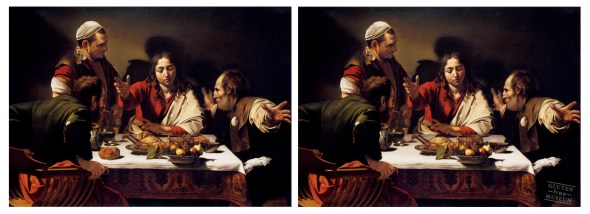
Gluten is by now firmly cemented as our most infamous nutritional bête noir, even ifmost people can’t actually explain it. But even the staunchest gluten-free evangelists have, up til this point, missed another carb-contaminated industry: art. Luckily, a Gluten Free Museum has been created on Tumblr for those who just can’t stomach the idea of gluten in their favorite works of art.
In photos that span the worlds of high art, television, film and even advertising, Gluten Free Museum rids cultural artifacts of their carbs.
Here are a couple of examples: That nasty gluten on the left and gluten-free on the right. Check out the links to see more gluten vs. gluten-free images.
Years ago, millions of people thought they had hypoglycermia. Now it’s gluten intolerance.
Speaking of questionable health issues, singer Joni Mitchell has been in the hospital for three days with a disease that doctors say isn’t real.
It’s still not clear what caused Joni Mitchell to faint in her Bel Air home earlier this week, sending her to the hospital. But the legendary 71-year-old singer has said in the past that she suffers from a rare and mysterious condition called Morgellons, something that has been a subject of debate on whether it’s a real illness or not.
Scientists and the Centers for Disease Control and Prevention (CDC) are skeptical that Morgellons is an actual medical condition and believe it’s more of a psychological problem. The people who believe it’s a real illness say that it has some scary symptoms, including fibers (or even “specks, dots, granules, or worms“) coming out of the skin causing tingling sensations that sometimes leads to lesions and scars, fatigue and problems with short-term memory, according to the New York Times.
In a 2010 interview with the L.A. Times,Mitchell said she has this “weird, incurable disease that seems like it’s from outer space.” She added, “Fibers in a variety of colors protrude out of my skin like mushrooms after a rainstorm: they cannot be forensically identified as animal, vegetable or mineral. Morgellons is a slow, unpredictable killer — a terrorist disease: it will blow up one of your organs, leaving you in bed for a year.”
I think I heard something about this on that weird radio show Coast to Coast AM. They also discuss things like alien implants, bigfoot, and ghosts. It’s kind of fun to listen to in the middle of the night when you can’t sleep.
The 71-year-old singer-songwriter has often complained of her battle with Morgellons, a medical mystery that has stumped the scientific community for years.
“I couldn’t wear clothing. I couldn’t leave my house for several years,” she described in her 2014 book Joni Mitchell: In Her Own Words. “Sometimes it got so I’d have to crawl across the floor. My legs would cramp up, just like a polio spasm. It hit all of the places where I had polio.” (It’s unclear if Morgellons was related to her recent hospitalization, but she has certainly brought attention to the issue over the years.)
Sufferers of Morgellons report itching, biting, and crawling sensations. “Fibers in a variety of colors protrude out of my skin,” Mitchell has said. “They cannot be forensically identified as animal, vegetable or mineral.”
They say their skin feels like it’s erupting from underneath, infested by insects, worms, or mysterious fibers. Like Mitchell, they say their symptoms are debilitating: they point to lesions that won’t heal, and say the biting and stinging that afflicts them every day leaves them fatigued and depressed, even affecting their memory.
It sounds awful, whatever it is.
For the past decade, researchers have searched for a biological cause or single underlying factor that might explain the suffering. But they have mostly concluded that Morgellons is “a psychosis or mass-shared delusion.”
In one of the most comprehensive studies to date, published in the journal PLOS, researchers from the CDC collected detailed epidemiological information, medical histories, and skin samples from 115 Morgellons sufferers in Northern California.
“No parasites or mycobacteria were detected,” they reported. The researchers also couldn’t find any environmental explanation for patients’ suffering.
The fiber-like strands on sufferers were mostly just cotton debris, probably lint from clothing. Their skin damage seemed to be caused by nothing more than sun exposure. While some patients had sores, these appeared to have arisen from chronic picking and scratching.
Interestingly, a large number of people in the study had a psychiatric or addictive condition, including depression and drug use. Among half of the participants in the study used drugs, but it wasn’t clear whether the drugs caused the symptoms or whether they were being used to deal with the disease.
I don’t know what to think. They used to say chronic fatigue syndrome was imaginary, and now it seems to be an accepted diagnosis. I just hope Joni feels better soon.
Via Raw Story
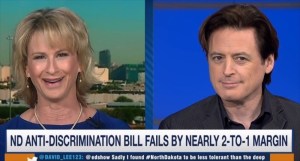
Comedian Jon Fugelsang came up with the perfect response to anti-gay “christian” fanatics.
John Fugelsang clashed with conservative radio host Heidi Harris on Friday when Harris questioned the need for sexual orientation to be covered under anti-discrimination statutes.
“Being gay is what sets a person apart from straight people,” Fugelsang told Harris on MSNBC’s Ed Show. “If you don’t like gay people, take it up with the manufacturer, because God keeps creating them around the world.” . . . .
Harris argued that in the workplace, only a person’s behavior could set them apart, proving that non-discrimination statutes like one that was voted down by North Dakota legislators on Thursday were unnecessary.
“Why are we protecting a certain group of people because of their behavior?” Harris asked at one point, causing Fugelsang to facepalm. “Not only that, but how do you prove someone didn’t get hired because they were gay? You can’t prove that any more than you can prove somebody didn’t get hired because of their age or their sex.” . . . .
“You might not realize this, but sometimes straight people are mean to gay people,” Fugelsang said to her. “That’s why gay people have needed more protection.”
I posted something about that North Dakota law yesterday in a comment, but I’m going to post it again here. I really like the way newspapers are started to highlight the horrible lawmakers who support discrimination. In this case it was The Fargo Forum.
A North Dakota newspaper on Friday plastered across its front page the photos of every state lawmaker that voted down a measure that would have protected LGBT individuals from discrimination.
Fargo-based The Forum’s provocative front page was published amid national outrage over Indiana’s Religious Freedom Restoration Act, which critics argued would allow business owners with religious objections to discriminate against gays and lesbians. Legislators in the Hoosier State later agreed to alter the law to specify that it cannot be used to defend discrimination on the basis of sexual orientation and gender identity.
A bill that would have outlawed discrimination based on sexual orientation failed to passThursday in the North Dakota House by a vote of two to one, according to local TV station WDAY.
View the front page below.
Good for The Forum! That makes me proud to call Fargo my birthplace. I want to see North Dakota and Indiana go back to being states with sane governments where Democratic Senators can be sent to Washington. Just a short time ago, North Dakota had two Democratic Senators.
Can you believe that a so-called “news” site (The Blaze”) raised $800,000 for that pizza place in Indiana that say they’d never cater a same-sex wedding?
Flush with nearly $800,000 in donations from supporters, the owners of Memories Pizza in Walkerton, Indiana, aren’t through talking about gay people.
‘God has blessed us for standing up for what we believe, and not denying Him,’ Crystal O’Connor tells Fox News.
She also said her family ‘doesn’t hate gays’ but simply would not deliver pizzas to a gay wedding because of their religious beliefs….
Memories Pizza was so besieged by phone calls and online comments that they temporarily shut their doors. This resulted in a Go Fund Me campaign that as of Friday afternoon was closing in on $800,000.
Of the LGBTI community her family has offended O’Connor says: ‘All we can do is pray for them, and truly, we’re not really angry at them. We’re sad for them. Very sad.
‘We have to accept them, and we just ask they accept us.’
What a pathetic excuse for a human being she is. I don’t know who she’s praying to all the time, but she’s certainly not following Jesus’ teachings.
The former Secretary of State’s team signed a lease Wednesday to house its headquarters in a Brooklyn Heights office building, a move indicating Clinton will launch her second presidential campaign within two weeks.
The Federal Election Commission gives candidates 15 days to create a campaign committee after “campaign activity” — which includes leasing office space.
Sources said Friday that Clinton’s camp has leased two floors, totaling about 80,000 square feet, at One Pierrepont Plaza.
The offices are near a dozen subway lines. The building touts itself as “Modern Offices. Brooklyn Cool.”
But the location, just across the East River from downtown Manhattan, is about as corporate as Brooklyn gets.
It is located in a building where Morgan Stanley and employees of the Brooklyn U.S. Attorney, currently Attorney General nominee Loretta Lynch, have offices.
On Wednesday afternoon, I had the pleasure of sitting down with De Niro and his Tribeca partner Jane Rosenthal to discuss the 2015 Tribeca Film Festival, which this year boasts a very formidable lineup including live events, star-studded film premieres, and talks featuring the likes of George Lucas, Christopher Nolan, the Monty Python crew, and a 25th anniversary Goodfellasdiscussion with the cast moderated by The Daily Show’’s Jon Stewart. Our talk eventually veered to his prophetic 2006 Hardball appearance, and whether or not he’ll be endorsing Hillary Clintonfor president in 2016.
“Hopefully it will be her, yes,” said De Niro. “I think that she’s paid her dues. There are going to be no surprises, and she has earned the right to be president and the head of the country at this point. It’s that simple. And she’s a woman, which is very important because her take on things may be what we need right now.”
“She’s smart, has run things before, and knows how government works and how to get things done,” added Rosenthal. “She’s watched it from the sidelines, and the frontlines.”
Now it’s your turn. What stories have caught your interest today?
Did you like this post? Please share it with your friends:
I’m running late again! My schedule is just upside down now and DST just double whammed me on the same weekend I started my late night work. Still getting used to the weird hours. I also wanted to spend some time on the negotiations with Iran over its nuke program so I had to catch up with the news. I’m glad BB’s post was so good because I can see you’ve spent a lot of time commenting on what’s going on in Indiana with its so-called “religious freedom” bill.
When Aaron Stein was studying nuclear non-proliferation at Middlebury College’s Monterey graduate program, the students would sometimes construct what they thought would be the best possible nuclear inspection and monitoring regimes.
Years later, Stein is now a Middle East and nuclear proliferation expert with the Royal United Services Institute. And he says the Iran nuclear framework agreement, announced on Thursday, look an awful lot like those ideal hypotheticals he’d put together in grad school.
“When I was doing my non-proliferation training at Monterey, this is the type of inspection regime that we would dream up in our heads,” he said. “We would hope that this would be the way to actually verify all enrichment programs, but thought that would never be feasible.
“If these are the parameters by which the [final agreement] will be signed, then this is an excellent deal,” Stein concluded.
The framework nuclear deal establishes only the very basics; negotiators will continue to meet to try to turn them into a complete, detailed agreement by the end of June. Still, the terms in the framework, unveiled to the world after a series of late- and all-night sessions, are remarkably detailed and almost astoundingly favorable to the United States.
Like many observers, I doubted in recent months that Iran and world powers would ever reach this stage; the setbacks and delays had simply been too many. Now, here we are, and the terms are far better than expected. There are a number of details still to be worked out, including one very big unresolved issue that could potentially sink everything. This is not over. But if this framework does indeed become a full nuclear deal in July, it would be a huge success and a great deal.
Iran would shut down roughly two-thirds of the 19,000 centrifuges producing uranium that could be used to fuel a bomb and agree not to enrich uranium over 3.67 percent (a much lower level than is required for a bomb) for at least 15 years. The core of the reactor at Arak, which officials feared could produce plutonium, another key ingredient for making a weapon, would be dismantled and replaced, with the spent fuel shipped out of Iran.
Mr. Obama, speaking at the White House, insisted he was not relying on trust to ensure Iran’s compliance but on “the most robust and intrusive inspections and transparency regime ever negotiated for any nuclear program.”
There is good reason for skepticism about Iran’s intentions. Although it pledged not to acquire nuclear weapons when it ratified the Nuclear Nonproliferation Treaty in 1970, it pursued a secret uranium enrichment program for two decades. By November 2013, when serious negotiations with the major powers began, Iran was enriching uranium at a level close to bomb-grade.
However, Iran has honored an interim agreement with the major powers, in place since January 2014, by curbing enrichment and other major activities.
By opening a dialogue between Iran and America, the negotiations have begun to ease more than 30 years of enmity. Over the long run, an agreement could make the Middle East safer and offer a path for Iran, the leading Shiite country, to rejoin the international community.
Iranians celebrated in the streets after negotiators reached a framework for a nuclear accord and U.S. President Barack Obama hailed an “historic understanding”, but senior global diplomats cautioned that hard work lies ahead to strike a final deal.
The tentative agreement, struck on Thursday after eight days of talks in Switzerland, clears the way for a settlement to allay Western fears that Iran could build an atomic bomb, with economic sanctions on Tehran being lifted in return.
It marks the most significant step toward rapprochement between Washington and Tehran since the 1979 Iranian revolution and could bring an end to decades of Iran’s international isolation.
But the deal still requires experts to work out difficult details before a self-imposed June deadline and diplomats said it could collapse at any time before then.
The backlash from likely Republican presidential contenders to thepotential nuclear deal with Iran trumpeted Thursday by President Barack Obama came swift and hard. A more optimistic response came from likely 2016 Democratic candidate, Hillary Clinton.
Former Florida Gov. Jeb Bush said the deal — aimed at reining in Iran’s nuclear capabilities — “will only legitimize those activities.”
“Nothing in the deal described by the administration this afternoon would justify lifting U.S. and international sanctions, which were the product of many years of bipartisan effort,” Bush said. “I cannot stand behind such a flawed agreement.”
Clinton, meanwhile, held up the tentative agreement as an “important step” in preventing a nuclear Iran.
“Getting the rest of the way to a final deal by June won’t be easy, but it is absolutely crucial. I know well that the devil is always in the details in this kind of negotiation,” Clinton said in a statement. “The onus is on Iran and the bar must be set high. It can never be permitted to acquire a nuclear weapon.”
But the former secretary of state allowed leeway for herself in case things go awry in the coming months, stating, “There is much to do and much more to say in the months ahead, but for now diplomacy deserves a chance to succeed.”
The rest of the Republican field, however, coalesced around rejecting the deal.
Making his first trek to Iowa as an announced presidential candidate, Texas Sen. Ted Cruz contended the President must bring Congress into the process.
“The very first step for any deal, good or bad, should be submitting it to Congress, and the President making the case both to Congress and to the American people why this advances the national security interests of the United States,” Cruz told reporters after a town hall in Cedar Rapids. “Now everything President Obama has said up to this date has suggested that he is going to do everything he can to circumvent Congress.”
Florida Sen. Marco Rubio, a member of the Senate Foreign Relations Committee, described the early details of the agreement as “very troubling” and said “this attempt to spin diplomatic failure as a success is just the latest example of this administration’s farcical approach to Iran.”
Obama pushed to quiet skeptics of the framework during his remarks in the White House Rose Garden Thursday, asking, “Do you really think that this verifiable deal, if fully implemented, backed by the world’s major powers, is a worse option than the risk of another war in the Middle East?”
As Mr. Obama stepped into the Rose Garden to announce what he called a historic understanding, he seemed both relieved that it had come together and combative with those in Congress who would tear it apart. While its provisions must be translated into writing by June 30, he presented it as a breakthrough that would, if made final, make the world a safer place, the kind of legacy any president would like to leave. “This has been a long time coming,” he said.
Mr. Obama cited the same John F. Kennedy quote he referenced earlier in the week when visiting a new institute dedicated to the former president’s brother, Senator Edward M. Kennedy: “Let us never negotiate out of fear, but let us never fear to negotiate.” The sense of celebration was captured by aides standing nearby in the Colonnade who exchanged fist bumps at the end of the president’s remarks.
But Mr. Obama will have a hard time convincing a skeptical Congress, where Republicans and many Democrats are deeply concerned that he has grown so desperate to reach a deal that he is trading away American and Israeli security. As he tries to reach finality with Iran, he will have to fend off legislative efforts, joined even by some of his friends, to force a tougher posture.
THE “KEY parameters” for an agreement on Iran’s nuclear program released Thursday fall well short of the goals originally set by the Obama administration. None of Iran’s nuclear facilities — including the Fordow center buried under a mountain — will be closed. Not one of the country’s 19,000 centrifuges will be dismantled. Tehran’s existing stockpile of enriched uranium will be “reduced” but not necessarily shipped out of the country. In effect, Iran’s nuclear infrastructure will remain intact, though some of it will be mothballed for 10 years. When the accord lapses, the Islamic republic will instantly become a threshold nuclear state.
That’s a long way from the standard set by President Obama in 2012 when he declared that “the deal we’ll accept” with Iran “is that they end their nuclear program” and “abide by the U.N. resolutions that have been in place.” Those resolutions call for Iran to suspend the enrichment of uranium. Instead, under the agreement announced Thursday, enrichment will continue with 5,000 centrifuges for a decade, and all restraints on it will end in 15 years.
Mr. Obama argued forcefully — and sometimes combatively — Thursday that the United States and its partners had obtained “a good deal” and that it was preferable to the alternatives, which he described as a nearly inevitable slide toward war. He also said he welcomed a “robust debate.” We hope that, as that debate goes forward, the president and his aides will respond substantively to legitimate questions, rather than claim, as Mr. Obama did, that the “inevitable critics” who “sound off” prefer “the risk of another war in the Middle East.”
The proposed accord will provide Iran a huge economic boost that will allow it to wage more aggressively the wars it is already fighting or sponsoring across the region. Whether that concession is worthwhile will depend in part on details that have yet to be agreed upon, or at least publicly explained. For example, the guidance released by the White House is vague in saying that U.S. and European Union sanctions “will be suspended after” international inspectors have “verified that Iran has taken all of its key nuclear related steps.”
“I just came from a meeting of the Israeli cabinet. We discussed the proposed framework for a deal with Iran.
The cabinet is united in strongly opposing the proposed deal.
This deal would pose a grave danger to the region and to the world and would threaten the very survival of the State of Israel.
The deal would not shut down a single nuclear facility in Iran, would not destroy a single centrifuge in Iran and will not stop R&D on Iran’s advanced centrifuges.
On the contrary. The deal would legitimize Iran’s illegal nuclear program. It would leave Iran with a vast nuclear infrastructure. A vast nuclear infrastructure remains in place.
The deal would lift sanctions almost immediately and this at the very time that Iran is stepping up its aggression and terror in the region and beyond the region.
In a few years, the deal would remove the restrictions on Iran’s nuclear program, enabling Iran to have a massive enrichment capacity that it could use to produce many nuclear bombs within a matter of months.
The deal would greatly bolster Iran’s economy. It would give Iran thereby tremendous means to propel its aggression and terrorism throughout the Middle East.
Such a deal does not block Iran’s path to the bomb.
Is he the little boy that has cried wolf too often?
Anyway, I hope you’ll read up on the situation since it stands to be one of the biggest foreign policy agreements for quite some time.
What’s on your reading and blogging list today?
Did you like this post? Please share it with your friends:
It’s a good day for people who believe in minding their own business and letting other people live their lives without be harassed by nosy theocrats. It’s just so much fun seeing a nasty bully like Mike Pence get his just desserts.
This morning the Indianapolis Star broke the news that GOP state legislators have come up with a “fix” for the awful “Religious Freedom Restoration Act” they passed just a short time ago. The proposed changes to the law include the following language:
[T]he new “religious freedom” law does not authorize a provider — including businesses or individuals — to refuse to offer or provide its services, facilities, goods, or public accommodation to any member of the public based on sexual orientation or gender identity, in addition to race, color, religion, ancestry, age, national origin, disability, sex, or military service.
The law will also include protections for people seeking employment and housing.
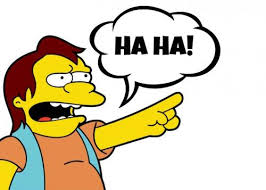
Ha ha!!
Churches and other religious non-profit organizations will still be allowed to discriminate, however.
Early signs are that neither side will be satisfied with the proposed changes.
The clarifying language is likely to rile socially conservative advocacy groups, which hold significant sway among Republicans at the Statehouse and pushed hard for the religious freedom law after a failed legislative effort last year to enshrine a same-sex marriage ban in the state constitution.
Leaders of three of those groups — the American Family Association of Indiana, the Indiana Family Institute, and Advance America — declined comment or did not return messages from The Star Wednesday.
But in an email update to supporters from the AFA’s Micah Clark, he urged them to contact their state senators and to pray for legislators.
“At this very moment, the Indiana Senate is considering “water-down” language to the recently passed and pro-religious-liberty bill, Religious Freedom Restoration Act,” the email says. “Homosexual activists are demanding Christian business owners in Indiana be forced to compromise their faith.”
Groups who oppose the law itself won’t be happy either.
“We understand that lawmakers are working to ‘fix’ the Indiana RFRA that has done so much harm to Indiana over the past week, but we want to make it clear that we need full protection from discrimination against all LGBT Hoosiers across the state and a guarantee that this RFRA cannot be used to undermine any nondiscrimination protections,” Katie Blair, campaign manager for Freedom Indiana, said in a statement. “According to current media reports, the proposal being considered falls far short of these principles, leaving the door wide open for discrimination.”
The prospect of the clarifying language also failed to prevent the Christian Church (Disciples of Christ) from following through Wednesday on its threat of relocating its 6,000-person 2017 convention from Indianapolis because of the new law.
Spokeswoman Cherilyn Williams told The Indianapolis Star that church officials were unsure a legislative fix currently being considered would be adequate to address all of their concerns. The state’s lack of anti-discrimination protections for sexual orientation and sexual identity, in particular soured them on Indiana.
“We’re not sure the fix will be adequate to address all of our concerns, and we felt like we needed to move ahead to allow the hotels to make arrangements,” Williams said.
One of the businesses that strongly opposes the bill is prescription drug giant Eli Lilly. Lilly and two other corporations have been threatened with stock disinvestment by huge medical foundation The California Endowment.
Honestly, I wish I could paste the entire article from the Indy Star here. But I’ve already quoted too much. Please go to the link if you want more.
Remember the “christian” pizza place that JJ wrote about yesterday? Well, they’re close for the time being, according to TMZ:
Memories Pizza — the first Indiana business to declare it would refuse LGBT business — got blasted on the Internet and by phone, but the owner says there’s been a huge misunderstanding … sorta.
Kevin O’Connor tells TMZ he’s had to temporarily close his business after he told a reporter he would refuse to cater a gay wedding under Indiana’s new Religious Freedom Restoration Act. O’Connor says he was immediately flooded by threatening phone calls, and social media postings.
O’Connor wants to clear up one thing: He says he would never deny service to gay people in his restaurant. However, due to his religious beliefs, he does not believe in gay marriage … and that’s why he wouldn’t service one.
I wonder how many heterosexual weddings this guy has catered? I’d love to see the photos.
Pence is in trouble, because there is already collateral damage.
At least 10 national conventions are threatening to pull out of commitments to meeting in Indianapolis, according to city tourism officials, who have spent late nights talking down convention organizers in an attempt to keep a grip on the industry that brings in $4.4 billion annually and supports 75,000 jobs. Comedian Nick Offerman and indie band Wilco scuttled upcoming engagements here. Even NASCAR, not known for leftie or social-justice bona fides, expressed disappointment in the legislation.
And just days before the NCAA Final Four Championship is set to tip off, a different kind of March Madness has settled over the city. NCAA President Mark Emmert expressed doubts about maintaining its Indianapolis headquarters—a short walk from the Statehouse.
In a hastily called news conference on Tuesday, Pence—usually keen on playing the happy warrior in public—looked wan and defeated, though his hair was still shaped into its perfect and immoveable silver part. At some turns, in a dulcet tone, Pence employed a humble tack, suggesting the law needed “a fix” and admitting that his defensive performance in a Sunday appearance with George Stephanopoulos on ABC’s “This Week” likely made things worse (“I could have handled that better,” Pence told reporters). At others, he defended the religious freedom bill, criticizing press coverage of it as “reckless” and “sloppy,” and said he harbored no regrets in signing it.
“It’s been a tough week here in the Hoosier State, but we’re going to move forward,” Pence assured state and national media who had gathered at the Indiana State Library, an unconventional choice for a news conference but a sop to the national interest in the roiling imbroglio. Pence’s regular briefing area wasn’t large enough to accommodate reporters who had descended on the city. (Even Olympic diver Greg Louganis, in town to promote a new book with the mother of Ryan White, the Kokomo teen who died of AIDS 25 years ago this month, surfaced at the presser, ambling around with his black and white Jack Russell terrier, Dobby.)
Ha Ha Ha!!!!
Meanwhile, GOP legislators in Arkansas passed a law that was described in the media as identical to Indiana’s; but according to Nelson Tebbe at Balkinization, it will actually have much worse effects. Arkansas Governor Asa Hutchinson, no doubt wanting to avoid the public shaming that Pence has experienced, sent the law back to lawmakers for changes.
Yesterday, the Arkansas legislature passed a state RFRA and sent it to Governor Hutchinson. Today, the governor sent the bill back to the legislature, asking for language that is closer to the federal RFRA. Arkansas is being compared to Indiana, whose RFRA has drawn a firestorm of criticism. But in fact Arkansas law poses a greater danger to civil rights—and that is true regardless of whether the Arkansas RFRA is passed and what it ends up saying. That is because of another law, enacted recently, that prohibits localities from passing LGBT anti-discrimination measures. Considering the overall legal landscape in the state, it is unlikely that any changes in the RFRA bill will improve the grim situation for LGBT citizens of Arkansas.
Start with the current text of the Arkansas RFRA bill, which shares troubling features with Indiana’s law and is even broader in some respects. Most significantly, the Arkansas law is applicable in suits between private parties, just like the Indiana RFRA. As two of us have recently explained, those provisions are designed to change the legal analysis of cases where wedding vendors have refused service to same-sex couples in violation of local civil rights protections.
Other aspects of the Arkansas RFRA bill are even broader than Indiana’s. For example, the Arkansas law protects all corporations and other legal entities, while Indiana’s law only applies to those where the religious beliefs are held by individuals “who have control and substantial legal ownership of the entity.” Moreover, a substantial burden on religion can only be justified under the Arkansas approach if it can be shown that applying the burden “in this particular instance” is “essential” to furthering a compelling governmental interest. Both of the quoted phrases are new to Arkansas. Whether either would matter in litigation is uncertain.
But what makes the Arkansas situation more troubling than the one in Indiana has little to do with the details of the RFRA bill. It is the way the new RFRA interacts with another new Arkansas law. Act 137, which became law in late February of 2015, provides that “A county, municipality, or other political subdivision of the state shall not adopt or enforce an ordinance, resolution, rule, or policy that creates a protected classification or prohibits discrimination on a basis not contained in state law.” In other words, localities within Arkansas may not pass anti-discrimination measures that protect LGBT citizens in employment, housing, or public accommodations—because state law does not provide such protections. Arkansas’s stated interest in passing the law was legal uniformity among jurisdictions within the state.
Scary. I don’t think Hutchinson has much chance of being POTUS, but he probably doesn’t want his state to replace Indiana in the national media spotlight either.
So it’s a good day so far. Let’s enjoy the schaedenfreude while we can.
What else is happening? Please share your thoughts and links in the comment thread.
Did you like this post? Please share it with your friends:
The Sky Dancing banner headline uses a snippet from a work by artist Tashi Mannox called 'Rainbow Study'. The work is described as a" study of typical Tibetan rainbow clouds, that feature in Thanka painting, temple decoration and silk brocades". dakinikat was immediately drawn to the image when trying to find stylized Tibetan Clouds to represent Sky Dancing. It is probably because Tashi's practice is similar to her own. His updated take on the clouds that fill the collection of traditional thankas is quite special.
You can find his work at his website by clicking on his logo below. He is also a calligraphy artist that uses important vajrayana syllables. We encourage you to visit his on line studio.


















 peej
peej Carissa
 bostonboomer
 dakinikat
 ecocatwoman
 jjlo
jjlo mablue2
 Mama Lopez
 peggysue22
 quixote
 skydancingguestblogger
 Mona (aka Wonk the Vote)





Recent Comments