
Tuesday Reads: The Snowden-Greenwald Show
Posted: June 11, 2013 Filed under: China, Civil Liberties, Civil Rights, Crime, Foreign Affairs, morning reads, U.S. Politics | Tags: Bob Cesca, Edward Snowden, Glenn Greenwald, Hong Kong, Matt Schiavenza, narcissism, NSA, political asylum, Russia, The Q Group, whistleblowers, Willard Foxton 99 Comments
Good Morning!!
Edward Snowden is still the top news story this morning. It’s starting to look as if he made a mistake by going to Hong Kong, unless his goal was to gain asylum from the Chinese government. Hong Kong is apparently not interested in fighting an extradition request from the U.S. But it’s also possible he saw Hong Kong as a springboard to other places in Asia where he could hide.
Matt Schiavenza writes at The Atlantic:
In a comment about the case published this morning, my colleague James Fallows brought up a salient point about Hong Kong: it isn’t a sovereign country, and remains very much a part of the People’s Republic of China — a country which notably lacks free speech or any right of political dissent. And while Hong Kong has a different currency, political structure, and legal system from the mainland, divisions between the two are actually far murkier than Snowden’s explanation indicates.
Hong Kong is to some extent in control of its own legal decisions
But in the case of Edward Snowden, which is likely to involve an extradition request by the United States, the Basic Law is less clear. Hong Kong, unlike China, has an extradition arrangement with the United States. But China has the right to intercede in an extradition request if Beijing has an interest in “defense or foreign affairs.” In other words, if China wants to detain Snowden as a useful intelligence asset, Hong Kong couldn’t legally do much about it. And that illustrates an important part of Hong Kong’s current situation: its free speech and political dissent really only go as far as Beijing lets it.
According to Schiavenza,
it’s become increasingly clear that Snowden’s decision to go to Hong Kong was a serious miscalculation. The idiosyncratic territory may in some ways be a libertarian paradise of free speech, robust media, and low taxes, but is in no way independent of China. If Snowden’s ultimate goal were to damage the United States government as much as possible, then going to a Chinese territory would make some sense. But this obviously isn’t what he wanted; in The Guardian interview, Snowden disagreed with Glenn Greenwald’s characterization of China as an “enemy” of the United States by stressing the healthy trade relationship between the two countries. Aiding China — whose record of state surveillance and abrogation of civil liberties is inarguably worse than the United States — would go against the entire moral foundation of Snowden’s decision to leak the NSA secrets.
I’m still not convinced yet about Snowden’s motives. One thing I have concluded is that he’s a very narcissistic young man. I can’t believe he chose to leave without even explaining to his girlfriend and his family. He also chose to tell his story to a high narcissistic writer, Glenn Greewald. More on that later.
From USA Today: Edward Snowden’s travel options
HONG KONG — Whether Edward Snowden misjudged the odds of extradition from Hong Kong before revealing his identity here as the man who exposed secret U.S. surveillance programs may be irrelevant.
The National Security Agency contractor may have chosen to surface in the city for the same reason so many companies from the U.S. and other countries choose to use it for a regional base: It’s the best gateway to much of the world’s largest continent….
Hong Kong is connected to 180 cities in dozens of countries by some 850 flights a day. As the city’s investment development agency says on its marketing web site, “Easy and efficient regional travel is key to Hong Kong’s success as a regional centre.” Many of these countries have loose entry requirements for Americans.
He could go to Vietnam, the Phillippines, or any number of other Asian countries. Or perhaps he could go to Russia, which has already offered to consider a request for asylum from him.
USA Today also notes that Snowden has been “contacted by ‘countless people’ offering to pay for ‘anything [he] might need.'”

Meanwhile, an entity called “The Q Group” is trying to hunt Snowden down before he finds a safe harbor. From The Daily Beast:
Even before last week’s revelations by The Guardian newspaper that the National Security Agency (NSA) was collecting call records from telecommunications companies and had the ability to mine user data from major U.S. Internet companies, the NSA was already on the trail of the leaker, according to two former U.S. intelligence officers with close ties to the agency….
The people who began chasing Snowden work for the Associate Directorate for Security and Counterintelligence, according to former U.S. intelligence officers who spoke on condition of anonymity. The directorate, sometimes known as “the Q Group,” is continuing to track Snowden now that he’s outed himself as The Guardian’s source, according to the intelligence officers….
The security and counterintelligence directorate serves as the NSA’s internal police force, in effect watching the agency’s watchers for behavior that could pose an intelligence risk. It has the authority to interview an NSA contractor or employee’s known associates, and even to activate a digital dragnet capable of finding out where a target travels, what the target has purchased, and the target’s online activity.
Are there more bombshells coming from Snowden? Glenn Greenwald says there are. According to TPM,
According to Greenwald, Snowden has provided the archives of “thousands” of documents and “dozens” are newsworthy. Greenwald has suggested in recent days that more revelations are imminent, saying Monday during an interview on MSNBC that “there’s a lot more coming.”
Dozens of hit out of thousands of documents doesn’t sound like a very good ratio to me, but I’m not a reporter.
On Glenn Greenwald, it seems the general consensus is that people either love him or hate him. Personally, I don’t hate him but I find him annoying and part of my suspicion of Snowden probably stems from my mixed feelings about Greenwald. In my opinion, he cares only about his own pet issues and disdains anyone who cares passionately about, for example, women’s rights, the environment, or the plight of people with less money and fewer choices than he has. I guess he’s a libertarian, but again only in terms of his own pet issues.
Anyway it seems there are lots of Greenwald haters out there. One is Willard Foxton of The Telegraph, who today has a piece called The problem with Glenn Greenwald and the creepy cult that surrounds him. Foxton isn’t quite sure why he can’t stand Greenwald.
Maybe it’s because of the enormous, turgid pieces he writes, complete with 500-word updates when people challenge him. Maybe it’s the run-ins he had with other British journalists while he was fanatically defending Julian Assange.
Maybe it’s the petty stuff, like the fact he insists on special rock-star privileges, like policing the comments beneath his articles himself and his reluctance to let his pieces be edited, prior to the NSA/Prism disclosures. Maybe it’s the things that suggest he’s a little odd, like self-searching his own name so he can pounce on people criticising him, or the accusations he’s used internet sock puppets to go after people anonymously.
Maybe it’s the devotion of his legion of fans who consider him to be the greatest and most fearless journalist on earth, who hate anyone who dares disagree with their idol. The last time I criticised him I got a barrage of online abuse – including memorably a 24-slide PowerPoint presentation explaining how the American security services had “got” to me, and how Greenwald was their number-one target. Maybe, as his adoring public have suggested, I’m either a homophobe or in the pay of the CIA. Perhaps both.
That said, I’m honest enough to admit that maybe it’s because I’m jealous of the success he’s had, and the stories he’s broken. I’m not the only one. You can practically hear the disdain in the New York Times’s tone here, where it describes him as a “blogger” for a “British News Website” (The Guardian).
What I think is more likely is I dislike him because he has built a huge platform with opinion writing, and now he’s blurring the line between opinion pieces and straight reporting. That huge platform he’s built means sources come forward to him from his vast base of followers, with real hard news stories, and then he insists on reporting them.

In line with the “creepy cult” notion, the Guardian actually published this fan-boy article about Greenwald today. Bizarrely, it asks readers to describe how they feel about Greenwald with a fill-in-the-blanks questionnaire! You have to see it to believe it.
Another writer who seems to strongly dislike Greenwald is Bob Cesca, who critiqued Greenwald’s scoop early on. He offered a few more comments on the Snowden/Greenwald story yesterday. Here are three of them.
–Once again, it’s nearly impossible to have a nuanced position these days. I bent over backwards to repeat my ongoing opposition to the growing surveillance state, and made it abundantly clear that my intent with the column was to question some of the problems with the reporting and why there were such glaring omissions and errors. But there’s an increasingly evident overlap between the kneejerking on the far-right and the kneejerking on the far-left (I will make an effort to point it out whenever I can) and too many people tend to blurt things out without reading or grasping what’s being said. Consequently, criticizing Greenwald makes me an Obamabot. End of story. The left is sliding into a very dangerous place right now, and I’ll definitely report back on this one.
–There are some questions emerging regarding Ed Snowden’s story. Why did someone who was disillusioned with Obama’s record on national security continue to work for Obama’s national security apparatus — for more than four years? Why did he escape to Hong Kong when it’s clearly not the free speech haven he claimed it was? If he prefers to seek asylum in Iceland, why didn’t he go there before the story went public? How did he attain the access to be able to “wiretap anyone?” I assume we’ll get answers to some of these questions. Maybe?
–Marc Ambinder wrote a blindly complicated article for The Week in which he explained what PRISM is. It’s essentially a program that analyses data. It doesn’t retrieve the data, it merely compiles it. He also explained that the way the NSA can have “direct access” is via servers that mirror the tech giant servers. So if the NSA requests information from Facebook about an account in Pakistan, Facebook creates a mirror that clones the real time date from that account. But that mirror site has to be hosted on a server and all of the tech giants denied giving the NSA access to their servers. More questions.
We’ll have to wait and see whether Snowden’s revelations are truly groundbreaking or not. But as Cesca writes, the “war on terror” must come to an end. If what’s happening now helps that happen, I’ll certainly cheer loudly. But I suspect the U.S. government will react by simply doubling down on its current policies.
I’ll end there. Now what are you reading and blogging about this morning? Please share your links on any topic in the comment thread.
Rep. William Keating: Russian FSB More Forthcoming than FBI on Boston Bombing
Posted: June 2, 2013 Filed under: Foreign Affairs, U.S. Politics | Tags: Boston Bombings, Chechnya, Dagestan, Eurasia and Emerging Threats, FBI, FSB, House Foreign Affairs Committee, Ibragim Todashev, Mansur Mukhamed Nidal, Rep. Dana Rohrabacher, Rep. William Keating, Russia, Subcommittee on Europe, Tamerlan Tsarnaev, William Plotnikov 15 Comments
Congressman Bill Keating, holds a press conference at Logan airport upon his return from Russia, June 1, 2013. (Photo by Faith Ninivaggi)
No, Keating didn’t come out and say it exactly like that, but he made it pretty clear yesterday that he has he has gotten just about zero information from the FBI since the Boston Marathon bombings on April 15.
Keating, who is the ranking member of the Subcommittee on Europe, Eurasia and Emerging Threats of the Foreign Affairs Committee, had just returned from a trip to Russia with a delegation of House members led by California Rep. Dana Rohrbacker. The delegation also included Reps. Michele Bachmann, R-Minn; Steve King, R-Iowa; Paul Cook, R-Calif.; Steve Cohen, D-Tenn. The purpose of the trip was to
examine some of the apparent gaps in intelligence sharing between the United States and Russia. The Russians had warned the US in 2011 that Tamerlan Tsarnaev was a potential extremist.
“If there was a distrust, or lack of cooperation because of that distrust, between the Russian intelligence and the FBI, then that needs to be fixed and we will be talking about that,” Representative Dana Rohrabacher, a California Republican who is leading the trip, told ABC News, which first reported details of the trip.
“Our goal is to use Boston as an example, if indeed there was something more, that should’ve been done that wasn’t because of a bad attitude,” Rohrabacher added
Wesley Lowery of the Boston Globe reports that at a press conference at Logan airport after his arrival in Boston Keating noted that:
FBI agents in Boston have yet to provide information about why Tamerlan Tsarnaev was able to move freely in and out of the country after US officials were warned about him, or about the May 22 fatal shooting of one of his friends in Orlando, Representative William R. Keating said on Saturday after returning from a trip to Russia to meet with that country’s top intelligence officials.
In contrast, Keating said Russian officials were anxious to be helpful.
Keating said officials with the Russian Federal Security Service provided details about how they warned US intelligence agents in 2010 that they believed Tsarnaev was preparing to join a terrorist cell in Dagestan, in southern Russia….[and] said he was impressed with what he saw as the forthcoming nature of the Russian intelligence officials. Meanwhile, he said, FBI officials were absent from Capitol Hill hearings about the bombings.
“We had a hearing on homeland security and [the Boston FBI office] were invited,” Keating said. When asked whether agents from the office had shown up, he responded: “No.”
It doesn’t get much clearer than that, does it?
Meanwhile, the FBI was involved in a fatal shooting of Ibragim Todashev, an important witness who may have had valuable information about the Tsarnaev brothers, the Marathon bombing, and perhaps even a triple murder that took place in Waltham, MA in 2011. Since the shooting, we’ve gotten nothing but obfuscation from the FBI, with anonymous sources leaking contradictory claims about who was present at the shooting and what actually happened. I detailed the various accounts in a post on Thursday.
Keating said he hasn’t been briefed on that by the FBI either, but he did learn from the Russians that they had given Todashev’s name to the U.S. back in April.
Keating said that Ibragim Todashev, the 27-year-old friend of Tsarnaev who was shot and killed by an FBI agent in Orlando on May 22, was mentioned by name in intelligence exchanges between US and Russian officials on April 21. The nature of that citation, he said, remains unclear.
While senior members of the intelligence committee are often given classified briefings on controversial FBI actions, Keating said he has received none from the FBI on the Todashev killing.
A little more on the letter that mentioned Todashev, from The Boston Herald:
Todashev was one of many Russian nationals named in the April 21 letter to U.S. officials, said Keating.
Keating said the missive was not a warning letter about Todashev, but he told the Herald his name came up during intelligence information sharing.
“It was just clear that his name was referenced among others in that letter. It could have been in response to the FBI asking them what they knew,” Keating said, adding it was unclear why Russia shared the information. “We’ll be able to get these letters.”
Keating said he spent more than an hour with Russia’s counterterrorism director and a top deputy at FSB, Russia’s equivalent of the FBI, who both candidly shared information on Tsarnaev, his association with militants and his visit to Russia last year.
“I never thought we’d get that level of information and cooperation from the Russians,” Keating said.
Previously, Keating had learned through private channels that Tamerlan Tsarnaev had had contact with two other islamic “extremists.”
Keating said the staffers discovered — through unofficial, nongovernment sources — that Tamerlan Tsarnaev first came on the radar of the Russian security officials when they started questioning William Plotnikov, a Canadian boxer who was linked with extremist groups in Russia.
The Russians then discovered that Tsarnaev was active on a jihadist website and listed his home in the United States. That led to the initial tip from the Russians, who asked the FBI for more information about Tsarnaev.
Tsarnaev later traveled to Dagestan and he met with both Plotnikov, as well as another extremist, Mansur Mukhamed Nidal, according to the findings from the congressional staffers.
Plotnikov and Nidal were later killed in separate skirmishes with the Russians. Tsarnaev left Russia shortly after Plotnikov’s death.
So, to summarize, the information we know about Tamerlan Tsarnaev’s trip to Russia has come either from Russian intelligence officials or independent research by Keating staffers. The Russians have reportedly been surprisingly forthcoming and anxious to help.
Meanwhile, we’ve gotten no explanation from the FBI or Homeland Security of how Tsarnaev managed to fly out of JFK airport and back with no alarms being set off–despite the fact that he was on two terrorist watch lists.
Furthermore, the FBI has killed a man who may have had valuable information about Tsarnaev and they refuse to explain the circumstances under which he was killed. Instead they are “investigating” and they say the “investigation” could take months.
What is wrong with this picture?
Tuesday Reads: McCain Plays “Pretend President,” Pressure Cookers, Upcoming Zimmerman Trial, and Other News
Posted: May 28, 2013 Filed under: Barack Obama, Crime, Criminal Justice System, Foreign Affairs, John McCain, morning reads, Republican politics, Syria, U.S. Politics | Tags: Barbara Boxer, EU, Free Syrian Army, Fukushima, Gen. Salem Idris, George Zimmerman, Hussain Al Khawahir, John Kerry, pressure cookers, Pretend President McNasty, Racism, right to vote, San Onofre nuclear plant, Syrian Emergency Task Force, Trayvon Martin, Turkey, US Supreme Court 76 Comments
Good Morning!!
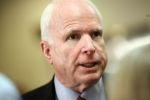
Last night Josh Rogin reported that warmongering Senator John McCain had sneaked across the Syrian border from Turkey and talked to Gen. Idris Salem, head of the “Free Syrian Army.”
McCain, one of the fiercest critics of the Obama administration’s Syria policy, made the unannounced visit across the Turkey-Syria border with Gen. Salem Idris, the leader of the Supreme Military Council of the Free Syrian Army. He stayed in the country for several hours before returning to Turkey. Both in Syria and Turkey, McCain and Idris met with assembled leaders of Free Syrian Army units that traveled from around the country to see the U.S. senator. Inside those meetings, rebel leaders called on the United States to step up its support to the Syrian armed opposition and provide them with heavy weapons, a no-fly zone, and airstrikes on the Syrian regime and the forces of Hezbollah, which is increasingly active in Syria.
Idris praised the McCain visit and criticized the Obama administration’s Syria policy in an exclusive interview Monday with The Daily Beast.
“The visit of Senator McCain to Syria is very important and very useful especially at this time,” he said. “We need American help to have change on the ground; we are now in a very critical situation.”
Apparently McCain decided to play Pretend President to celebrate Memorial Day. I haven’t been paying close attention to the news for the past few days, but I think I would have seen any reports that the White House or the State Department had requested Senator McNasty’s help in reaching out to opposition forces in Syria.
Prior to his visit inside Syria, McCain and Idris had separate meetings with two groups of FSA commanders and their Civil Revolutionary Council counterparts in the Turkish city of Gaziantep. Rebel military and civilian leaders from all over Syria came to see McCain, including from Homs, Qusayr, Idlib, Damascus, and Aleppo. Idris led all the meetings.
The entire trip was coordinated with the help of the Syrian Emergency Task Force, an American nonprofit organization that works in support of the Syrian opposition.
More from Dan Roberts of The Guardian:
McCain’s office confirmed to the Guardian that he had slipped into the country in recent days but declined to comment on the outcome of his talks with the rebel groups or whether it had hardened his views on arming them.
The Arizona senator has been leading efforts in Congress in recent weeks to force Barack Obama to intervene in Syria following reports of alleged chemical weapons use by forces loyal to Assad.
As the most senior US politician to have visited Syria, his intervention is likely to strengthen the hand of hawks in Washington at a time when parallel efforts are being made by the French and British governments to persuade the European Union to lift the arms embargo.
At the same time, actual US Secretary of State John Kerry was working toward a different goal than loud-mouthed Obama critic McCain.
Meanwhile the US State Department continues to pursue diplomatic efforts to bring the civil war to an end, successfully encouraging the Russians to persuade Assad to take part in peace talks in Geneva next month.
Capping off an eight-day trip to the Middle East and Africa, secretary of state John Kerry flew into Paris on Monday to see Russian foreign minister Sergey Lavrov and exchange updates on their respective diplomatic efforts.
No word yet on any reactions from the Obama administration to McCain’s attempt to influence its foreign policy decisions.
The EU is also pushing for intervention in Syria. CNN reports:
The EU lifted its arms embargo on Syrian rebels Monday, a move that could level the playing field and alter the course of Syria’s gruesome civil war.
While there are no immediate plans to ship weapons to rebels, the move sends a strong message to Syria’s defiant president: Negotiate or face consequences.
“It was a difficult decision for some countries, but it was necessary and right to reinforce international efforts to reach a diplomatic solution to the conflict in Syria,” British Foreign Secretary William Hague said in a written statement.
“It was important for Europe to send a clear signal to the Assad regime that it has to negotiate seriously, and that all options remain on the table if it refuses to do so.”
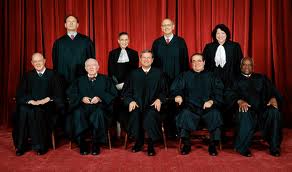
In domestic news, CNN calls attention to the important rulings that could come from the Supreme Court in June.
Four weeks. Four major legal rulings. What the Supreme Court decides by the end of June could fundamentally change lives and legacies on a range of politically explosive issues.
The justices will meet in at least five public sessions to release opinions in its remaining 30 cases, among them some the most strongly-contested legal and social issues they have confronted in decades:— Same-sex marriage: A pair of appeals testing whether gays and lesbian couples have a fundamental constitutional right to wed.
— Affirmative action: May race continue to be used as a factor in college admissions, to achieve classroom diversity?
— Voting rights: The future of the Voting Rights Act, and continued federal oversight of elections in states with a past history of discrimination.
— Gene patents: Can “products of nature” like isolated parts of the human genome be held as the exclusive intellectual property of individuals and companies, through government-issued patents?
For more detailed summaries of these cases from CNN, click here.
“It’s almost unimaginable the number of things that the Supreme Court is going to decide that will affect all Americans in the next month,” said Thomas Goldstein, a top Washington attorney and publisher of SCOTUSblog.com.
“What would surprise me this term is if the court upheld use of affirmative action or the (enforcement tool behind the) Voting Rights Act. And I think it would be a big surprise if the court did anything radical when it came to same-sex marriage — either saying there was a constitutional right to it, or rejecting that claim outright and forever. I think that’s something they’re going to try and tread that middle ground path.”
Meanwhile, two Democratic Congressmen, Rep. Mark Pocan of Wisconsin and Keith Ellison of Minnesota are proposing an amendment to the Constitution that would establish a right to vote for every American citizen.
“Most people believe that there already is something in the Constitution that gives people the right to vote, but unfortunately … there is no affirmative right to vote in the Constitution. We have a number of amendments that protect against discrimination in voting, but we don’t have an affirmative right,” Pocan told TPM last week. “Especially in an era … you know, in the last decade especially we’ve just seen a number of these measures to restrict access to voting rights in so many states. … There’s just so many of these that are out there, that it shows the real need that we have.”
The brief amendment would stipulate that “every citizen of the United States, who is of legal voting age, shall have the fundamental right to vote in any public election held in the jurisdiction in which the citizen resides.” It would also give Congress “the power to enforce and implement this article by appropriate legislation.”
After investigating the issue, Pocan said he and Ellison decided this type of amendment was the best way to combat measures to restrict voting access.
“Essentially, what it would do is it would put the burden on any of these states that try to make laws that are more restrictive that they would have to prove that they’re not disenfranchising a voter. Rather than, currently, where a voter has to prove they’ve somehow been wronged by a state measure,” said Pocan.
Of course that’s pretty much pie in the sky considering how difficult it is to pass a Constitutional amendment and get it approved by three-quarters of state legislatures.
California Senator Barbara Boxer is calling for the Justice Department to investigate whether Southern California Edison
deceived federal regulators about an equipment swap at the San Onofre nuclear power plant that eventually led to a radiation leak, The Associated Press has learned.
The California Democrat obtained a 2004 internal letter written by a senior Southern California Edison executive that she said “leads me to believe that Edison intentionally misled the public and regulators” to avoid a potentially long and costly review of four replacement steam generators before they went into service.
The twin-domed plant between Los Angeles and San Diego hasn’t produced electricity since January 2012, after a small radiation leak led to the discovery of unusually rapid wear inside hundreds of tubes that carry radioactive water in the nearly new generators….
The letter [to Mitsubishi Heavy Industries, which manufactured the generators] goes to a central issue at San Onofre, where Edison is seeking federal permission to restart the Unit 2 reactor and run it at reduced power in an effort to halt tube damage.
The replacement generators were different than the originals — they were far heavier and hundreds of additional tubes were added as part of design changes, for example. Edison installed the equipment in a $670 million overhaul in 2009 and 2010 without an extended NRC review after concluding the new machines met a federal test to qualify as largely the same as the ones they replaced, requiring little or no changes to safety systems or components in the plant.
Just one more reminder that we have potential Fukushima disasters right here in the USA.

Police in Michigan are still freaking out over random pressure cookers after the common cooking utensils were used to make two bombs that exploded at the Boston Marathon in April.
Police in Dearborn are trying to understand why a pressure cooker was left in the restroom of the Adoba Hotel, forcing the evacuation of guests until the early morning hours.
The evacuation also canceled Sunday night’s banquet of the University of Muslim Association of America….
The pressure cooker discovered at the hotel was detonated by police as a precaution, but contained no explosives.
Dearborn officers have determined that the pressure cooker had not been converted into any type of explosive device.
Meanwhile a Saudi man, Hussain Al Khawahir, is still in jail after being arrested at the Detroit airport for having a pressure cooker in his luggage–reportedly a gift for his nephew whom he planned to visit in the US. Al Khwahir is scheduled to be in court today.
A lawyer for Hussain Al Khawahir, arrested at Detroit Metro Airport on May 11 after a pressure cooker was found in his baggage, filed a request for release on bond Monday.
Al Khawahir was arrested by federal agents on suspicion of carrying an altered passport and making conflicting statements to Customs and Border Patrol agents about the pressure cooker….Defense attorney James Howarth in the request for bond claimed Al Khawahir, a 33-year-old citizen of Saudi Arabia, was carrying one valid passport and one expired passport that contained a visa stamp for his entry to the U.S.
He also argued that the two statements Al Khawahir made about the pressure cooker were not much different.
(Read the motion here .)
“The passport that was purportedly ‘altered’ was the expired document,” Howarth wrote.
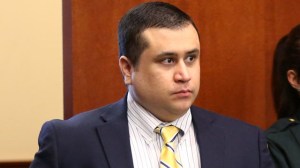
We’re getting closer to the trial of George Zimmerman for the killing of teenager Trayvon Martin. From The Orlando Sentinel:
SANFORD – With just two weeks remaining before his trial, George Zimmerman’s attorneys returned to court this morning for what may be his last pre-trial hearing, a session that could turn into a marathon with his attorneys asking for a trial delay and that an especially-damaging state audio expert be banned from testifying.
Circuit Judge Debra S. Nelson will be asked to decide a long list of other issues, things that will determine how the trial plays out and what jurors will see and hear.
For example, defense attorney Mark O’Mara has asked that she take jurors to the scene of the shooting, a middle- to working-class gated townhouse community on Sanford’s west side where Zimmerman killed Trayvon Martin, an unarmed black 17-year-old, Feb. 26, 2012.
Zimmerman says he acted in self-defense. His second-degree murder trial is to begin June 10.
Defense attorneys on Tuesday also will ask the judge to keep jurors’ names a secret, something prosecutors are not expected to oppose.
Read more at the link. I guess we’ll be hearing a lot more about this in the coming weeks. I can’t say I’m really looking forward to the publicly expressed racism that is likely to be unleashed during the trial.
That’s all I’ve got for you today. Please post your recommended reads in the comment thread, and have a terrific Tuesday!
Live Blog: Obama Outlines New Policies for Drones, Gitmo in Major Speech
Posted: May 23, 2013 Filed under: Barack Obama, Foreign Affairs, Live Blog, U.S. Politics | Tags: drone assassinations, Guantanamo Bay prison, National Defense University, national security, Pakistan, Yemen 162 Comments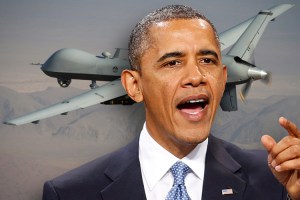
This is a live blog to discuss President Obama’s speech today at the National Defense University. The speech is scheduled for 2PM Eastern time. As I wrote in the morning post, Obama is expected to propose limits to the use of drones to assassinate suspected “terrorists” in places like Pakistan and Yemen.
Time Magazine’s Swampland Blog:
Obama’s speech is expected to reaffirm his national security priorities — from homegrown terrorists to killer drones to the enemy combatants held at the military-run detention center at Guantanamo Bay, Cuba — but make no new sweeping policy announcements. The White House has offered few clues on how the president will address questions that have dogged his administration for years and, critics say, given foreign allies mixed signals about U.S. intentions in some of the world’s most volatile areas.
Obama will try to refocus an increasingly apathetic public on security issues as his administration grapples with a series of unrelated controversies stemming from the attack on a U.S. compound in Benghazi, Libya, the IRS’ targeting of conservative groups and government monitoring of reporters. His message will also be carefully analyzed by an international audience that has had to adapt to what counterterror expert Peter Singer described as the administration’s disjointed and often short-sighted security policies.
“He is really wresting with a broader task, which is laying out an overdue case for regularizing our counterterrorism strategy itself,” said Singer, director of the Brookings Institution’s 21st Century Security and Intelligence Center in Washington. “It’s both a task in terms of being a communicator, and a task in term of being a decider.”
The White House said Obama’s speech coincides with the signing of new “presidential policy guidance” on when the U.S. can use drone strikes, though it was unclear what that guidance entailed and whether Obama would outline its specifics in his remarks.
Do we really need to keep using the word “decider” now that Dubya is gone? Oh well…Time’s description of Obama’s remarks makes it sound like he’s not really going to make any real changes–just say some words. I hope that’s wrong.
Here’s USA Today’s take on the speech:
The White House said Obama “will discuss why the use of drone strikes is necessary, legal and just, while addressing the various issues raised by our use of targeted action.”
Obama has also approved new “policy guidance” that sets out “standards under which we take lethal action,” the White House said.
The president “will also discuss how to balance securing our country and protecting our civil liberties at home,” said the statement.
That includes new steps Obama plans to take to close the Guantanamo Bay prison, a frequent target of criticism from civil libertarians. Some detainees at the prison are in the midst of a hunger strike, protesting their conditions.
Obama had pledged to close the facility during his first year in office. But his efforts ran afoul of congressional Republicans who opposed trials of terrorism suspects in the United States, and other countries that refused to take some prisoners.
NBC News’ First Read has a little more:
A White House official, per NBC’s Shawna Thomas, says that the president’s speech also will discuss better securing U.S. diplomatic facilities (after the 2012 Benghazi attack), balancing security while protecting civil liberties at home (see the leak investigations), and stating his desire to close the Guantanamo Bay prison (an action which Congress opposes). Don’t be surprised if Obama says something along the lines of, “We will never send another detainee to Gitmo” as a way to express his willingness to close the facility. And don’t be surprised if he addresses — head on — the Justice Department’s seizure of reporters’ phone records in its prosecution of national security leaks. Obama delivers his remarks at 2:00 pm ET at the National Defense University in DC.
For further reference, here is the letter Attorney General Holder wrote to Congress acknowledging the drone assassinations of four American citizens and Charlies Savage’s article about it.
At Wired’s Danger Room Blog, Spencer Ackerman offers 4 Questions Obama’s Big National Security Speech Should Answer.
I’ll do my best to keep up with the speech, but I would greatly appreciate your contributions too. You can watch the speech on-line at C-Span.org.
Thursday Reads: Updates on Drone Assassinations, West Fertilizer Plant Explosion, and Boston Bombing Aftermath
Posted: May 23, 2013 Filed under: Barack Obama, Crime, Foreign Affairs, morning reads, U.S. Politics | Tags: Boston Marathon bombings, Boston Police Department, Chechen community, Chechnya, closing Guantanamo, COINTELPRO, drones, Dzhokhar Tsarnaev, Emergency Planning and Community Right to Know Act, Emptywheel, FBI High Value Interrogation Group, homeland security, Ibragim Todashev, Kade Crockford, Massachusetts ACLU, National Defense University speech, National Response Center, Occupy Boston, Orlando FBI shooting, Reuters special report, spying on peace and environmental activists, Tamerlan Tsarnaev, Waltham MA triple murder, Watertown 2011 drug bust, West Tx fertilizer plant explosion 28 Comments
Newsstand in Copley Square, Boston
Good Morning!!
I have lots of news updates for you today.
First, as I’m sure you heard, the Obama administration has finally admitted that it has killed four American citizens with drone strikes. Charlie Savage reported in The New York Times yesterday that President Obama will give a speech this afternoon at the National Defense University in which he will
open a new phase in the nation’s long struggle with terrorism on Thursday by restricting the use of unmanned drone strikes that have been at the heart of his national security strategy and shifting control of them away from the C.I.A. to the military….
As part of the shift in approach, the administration on Wednesday formally acknowledged for the first time that it had killed four American citizens in drone strikes outside the battlefields of Afghanistan and Iraq, arguing that its actions were justified by the danger to the United States. Mr. Obama approved providing new information to Congress and the public about the rules governing his attacks on Al Qaeda and its allies.
A new classified policy guidance signed by Mr. Obama will sharply curtail the instances when unmanned aircraft can be used to attack in places that are not overt war zones, countries like Pakistan, Yemen and Somalia. The rules will impose the same standard for strikes on foreign enemies now used only for American citizens deemed to be terrorists.
Lethal force will be used only against targets who pose “a continuing, imminent threat to Americans” and cannot feasibly be captured, Attorney General Eric H. Holder Jr. said in a letter to Congress, suggesting that threats to a partner like Afghanistan or Yemen alone would not be enough to justify being targeted.
Savage writes that Obama may eliminate drone attacks on groups of men assumed to be associated with al Qaeda that in the past have also killed many innocent civilians. He will also argue for closing the Guantanamo Bay prison and renewing efforts to return inmates to their “home countries.” CNN also has a helpful article on the President’s speech and proposed policy changes.
The speech will be at 2PM, and I will post a live blog if people are interested in watching it together. I’m sure it will be live streamed at C-Span and other news sites.
Important update on West, Texas disaster.
Yesterday evening Reuters released their own “Special Report.” on the situation.
(Reuters) – The fertilizer-plant explosion that killed 14 and injured about 200 others in Texas last month highlights the failings of a U.S. federal law intended to save lives during chemical accidents, a Reuters investigation has found.
Known as the Emergency Planning and Community Right to Know Act, the law requires companies to tell emergency responders about the hazardous chemicals stored on their properties. But even when companies do so, the law stops there: After the paperwork is filed, it is up to the companies and local firefighters, paramedics and police to plan and train for potential disasters.
West Fertilizer Co of West, Texas, had a spotty reporting record. Still, it had alerted a local emergency-planning committee in February 2012 that it stored potentially deadly chemicals at the plant. Firefighters and other emergency responders never acted upon that information to train for the kind of devastating explosion that happened 14 months later, according to interviews with surviving first responders, a failing that likely cost lives.
It’s a complex story, and you really should read the whole thing, because the West disaster is not an isolated incident.
The lack of preparedness endangers not only firefighters and emergency medical technicians, but also people nationwide living near chemical stockpiles similar to those that exploded in West.
At least 800,000 people in the United States live within a mile of 440 sites that store potentially explosive ammonium nitrate, which investigators say was the source of the explosion in West, according to a Reuters analysis of hazardous-chemical storage data maintained by 29 states.
Hundreds of schools, 20 hospitals, 13 churches and hundreds of thousands of homes in those states sit within a mile of facilities that store the compound, used in both fertilizers and explosives, the analysis found.
The rest of the states either refused to provide Reuters with data, provided “incomplete data” or simply didn’t respond to their requests.
Since 1990, companies have reported more than 380 incidents involving ammonium nitrate to the National Response Center, a federal agency that collects reports of spills, leaks and other discharges within the United States. Eight people were killed, 66 injured and more than 6,300 evacuated in those incidents, according to the center’s data.
But that doesn’t tell the whole story, because reporting of these kinds of incidents is voluntary!
Update on Boston Bombing Investigation
I spent most of yesterday following breaking updates in the Boston Marathon bombing case, which continues to get stranger by the day.
Early yesterday morning, there were reports of the FBI fatally shooting a man in Orlando, Florida with connections to accused (deceased) Boston bomber Tamerlan Tsarnaev. While the circumstance of the shooting are still not at all clear, here’s a brief summary of what I gleaned from reading hundreds of news reports.
Initially news reports said that a Chechen immigrant, Ibragim Todashev, had been shot by an unnamed FBI agent after Todashev attacked the agent with a knife during an interrogation at Todashev’s apartment house overnight. Todashev and a friend named Khusen Taramov had been interrogated for hours on Tuesday afternoon, according to Taramov. Then agents had let Taramov go while they continued questioning Todashev.
According to Taramov, he and his friend Todashev had been followed by law enforcement for some time and had been questioned previously. Todashev had been planning a trip home to Chechnya, but the FBI wanted wanted him to postpone it so they could continue to question him. The agents returned to question the two men further after midnight Wednesday when they learned that Todashev had decided to cancel his flight. That is when the shooting took place. At the time, two FBI agents from the Boston field office, two Massachusetts state troopers, and “other law enforcement” officers were present. It’s not clear who the other law enforcement officers were, but Emptywheel questioned yesterday whether they might have been from the FBI High Value Interrogation Group.
Later in the day it became clear that Todashev was considered a suspect in a shocking triple murder that took place in Waltham, MA two years ago on the tenth anniversary of 9/11. Todashev lived in the Boston area–in Allston, Cambridge, and Watertown; and was acquainted with Tamerlan Tsarnaev through their mutual involvement in MMA mixed martial arts fighting and the two had spoken by phone or Skype about a month before the marathon bombings. Todashev is not suspected of involvement in those.
As I reported here previously, Tamerlan and Dzhokhor Tsarnaev had reportedly been connected to the murders by “forensic” evidence, presumably DNA. One of the murdered men was Tamerlan’s “best friend,” Brian Mess. The three men had their throats slit and their bodies were covered with large amounts of marijuana and $5,000 in cash. After the murders, both Tsarnaev brothers stopped seeing friends and Tamerlan did not even attend Mess’s funeral. Not long after, Tamerlan traveled to Dagestan and stayed in Russia for nearly seven months.
Back to yesterday’s events. Later reports indicated that Todarov did not have a knife when he “lunged” at the FBI agent, and it was no longer clear which law enforcement officer or officers had shot the “suspect.” A team of FBI agents are in Orlando to review the shooting, and perhaps we’ll learn more about what actually happened.
Multiple news sources have reported that Todashev had implicated himself and Tamerlan Tsarnaev in the Waltham murders and that FBI agents were trying to get him to sign a written confession when he became enraged and attacked an agent, who sustained “non-life-threatening” injuries. Apparently Todashev didn’t want to sign whatever document the FBI agents had prepared for him. Since the FBI refuse to tape their interrogations, we may never know what the reported “implication” consisted of.
According to his friend Khusen Taramov, Todashev willingly answered the FBI’s questions.
The ex-roommate said Todashev shared the substance of his previous conversations with investigators with him and that he was completely forthcoming. That’s why he was surprised that Wednesday’s interview ended the way it did.
‘‘He told them everything,’’ Taramov said. ‘‘He told everything he knew. … I don’t know why that (the shooting) happened. It’s crazy.’’
But Taramov also said Todashev was afraid before Wednesday’s interview. ‘‘That’s what he asked me before he pretty much died,’’ Taramov said. ‘‘He asked me, ‘If something happens can you go out and tell all the truth, what exactly happened.’’’
It is clear that Todashev was prone to violence and people found him intimidating. He was involved in road rage incidents in Boston and Orlando.
Sorry I don’t have links for every detail, but the story is so complex and I’ve gotten information from so many sources that I thought it would be best for me to summarize it in my own words. There has been much more news breaking on this story, and I won’t try to include everything in this post. Anyone who is interested is welcome to ask me questions, and I’ll answer as best I can.
Here is one story from this morning from Fox Orlando: Moments leading to fatal FBI shooting in Orlando still unclear.
Federal and Central Florida law enforcement agencies are still collecting and processing evidence from the shooting scene at a condominium complex on Peregrine Avenue, near Kirkman Road and Universal Orlando, where Ibragim Todashev was shot early Wednesday.
Initially, FBI officials said Todashev, 27, became violent and lunged at an agent with a knife while he was being questioned about Tsarnaev and an unsolved 2011 triple murder in the Boston suburb of Waltham. The agent, acting on an “imminent threat,” then shot Todashev, they said.
Sources say Todashev, a Russian national living legally in Florida, was about to confess to the Waltham slaying when the shooting took place.
However, officials have backed off that preliminary account, and it’s no longer clear what happened in the moments before the fatal shooting.
“I heard a couple of loud bangs and saw a couple of cop cars riding by,” said Jared Morse, who lives in the area. “They wouldn’t let anyone out to see anything or anything like that, so they made us go back inside.”
There is one more possible connection between the Waltham murders and a massive drug bust that took place several months earlier in Watertown MA, in May 2011. It “followed a year-long investigation by federal authorities and resulted in charges against 18 people.” This was mentioned in a Washington Post Story yesterday that some friends of one of the murdered men believed there was a connection. As I’ve mentioned before, it’s likely the Tsarnaev brothers were financing their lifestyles with illegal activities, including drugs and possibly some kind of scam involving luxury cars.
Finally, a must-read article on the Boston saga and the failures of the Homeland Security Department and the Boston Police Department: BRIC-ED IN: WHY THE BPD DIDN’T THINK THAT TAMERLAN TSARNAEV WAS A KILLER. It’s a cautionary tale for anyone who lives in a large city that could be a terrorist target. Basically, the article describes how the BPD ignored terror warnings and instead spent millions on surveillance of Occupy Boston and other peace and environmental groups. COINTELPRO all over again. One representative of the Massachusetts ACLU had some suggestions.
According to Kade Crockford, who tracks the BRIC for the ACLU of Massachusetts, it’s about time that authorities reconsider their priorities. “A big question,” she says, “is whether efforts to build a bigger intelligence haystack may actually be less effective than improving traditional policing methods that focus on solving crimes …”
“Perhaps instead of extensively monitoring activists who are petitioning the government through the democratic process, law enforcement resources should focus on investigating and solving actual crimes, starting with murder.”
“Fewer resources tracking peace activists and more focus on traditional homicide detective work might be the best way to ensure a world in which we are both safe and free.”

 peej
peej Carissa
 bostonboomer
 dakinikat
 ecocatwoman
 jjlo
jjlo mablue2
 Mama Lopez
 peggysue22
 quixote
 skydancingguestblogger
 Mona (aka Wonk the Vote)



 Sky Dancing
Recent Comments