
Thursday Reads
Posted: June 26, 2014 Filed under: fracking, Media, morning reads, nature, science, U.S. Politics | Tags: autopilot, CNN, hypoxia, Indiana, Jurgen Klinsmann, Malaysia Airlines missing plane, Neanderthal diets, Oklahoma earthquakes, Oklahoma fracking, same-sex marriage, Susan Collins, Texas fracking, U.S. vs. Germany, Utah, Wolf Blitzer, World Cup Soccer 48 Comments
Childe Hassam – Two Women Reading
Good Morning!!
Wolf Blitzer must be celebrating this morning, because the mystery plane is back in the headlines.
Associated Press reports (via CTV):
SYDNEY, Australia — Investigators looking into the disappearance of the Malaysia Airlines plane are confident it was on autopilot when it crashed in a remote stretch of the Indian Ocean, Australian officials said Thursday as they announced the latest shift in the search for the jet.
After analyzing data exchanged between the plane and a satellite, officials believe Flight 370 was on autopilot the entire time it was flying across a vast expanse of the southern Indian Ocean, based on the straight path it took, Australian Transport Safety Bureau chief commissioner Martin Dolan said.
“Certainly for its path across the Indian Ocean, we are confident that the aircraft was operating on autopilot until it ran out of fuel,” Dolan told reporters in Canberra, the nation’s capital.
Asked whether the autopilot would have to be manually switched on, or whether it could have been activated automatically under a default setting, Dolan replied, “The basic assumption would be that if the autopilot is operational it’s because it’s been switched on.”
But exactly why the autopilot would have been set on a flight path so far off course from the jet’s destination of Beijing, and exactly when it was switched on remains unknown.
The New York Times explains what likely happened:

A report issued by the Australian Transport Safety Bureau, outlining how the new search zone had been chosen, said that the most likely scenario as the aircraft headed south across the Indian Ocean on March 8 was that the crew was suffering from hypoxia or was otherwise unresponsive.
Hypoxia occurs when a plane loses air pressure and the pilots, lacking adequate oxygen, become confused and incapable of performing even basic manual tasks.
Pilots are trained to put on oxygen masks immediately if an aircraft suffers depressurization; their masks have an hour’s air supply, compared with only a few minutes for the passengers. The plane, which left Kuala Lumpur, Malaysia, bound for Beijing, with 239 people aboard, made its turn south toward the Indian Ocean about an hour after it stopped responding to air-traffic controllers….
Evidence for an unresponsive crew as the plane flew south includes the loss of radio communications, a long period with no maneuvering of the aircraft, a steadily maintained cruise altitude and eventual fuel exhaustion and descent, the report said.
“Given these observations, the final stages of the unresponsive crew/hypoxia event type appeared to best fit the available evidence for the final period of MH370’s flight when it was heading in a generally southerly direction,” the document said.
Based on the report, a new search zone has been designated, according to the LA Times:
Experts from Boeing and the U.S. National Transportation Safety Board were among the specialists who helped define the zone, based on satellite data and analysis of previous similar incidents.
The new zone, about 1,100 miles west of Perth, Australia, is farther south than where previous intensive search efforts were carried out this spring after the plane vanished March 8 with 239 people aboard. The flight was en route from Kuala Lumpur to Beijing when it went missing….
Australia Deputy Prime Minister Warren Truss said the search was continuing with a mapping of the ocean floor in the newly defined area, to be followed by a comprehensive seafloor search.
The seafloor search, he said, should start around August and be completed within one year. The area is 58 miles wide and 400 miles long, covering an area as big as Lake Huron, the second-largest of the U.S. Great Lakes. By comparison, the area searched with a robotic, sonar-equipped submarine in May was about 330 square miles.

First gay marriage license issued in Indiana
There was exciting news yesterday in the struggle to legalize same-sex marriage state by state.
From NPR: Federal Judges Reverse Gay-Marriage Bans In Utah, Indiana.
Utah and Indiana are the latest states to see their bans on same-sex marriage struck down by a federal court, following rulings in both states Wednesday that found the prohibition unconstitutional.
In Utah, the 10th Circuit Court of Appeals panel upheld a lower court ruling striking down the state’s gay-marriage ban. And in Indiana,U.S. District Judge Richard Young made a similar ruling.
“It is wholly illogical to believe that state recognition of love and commitment of same-sex couples will alter the most intimate and personal decisions of opposite-sex couples,” the three-judge panel in the Utah case said. The panel immediately put the ruling on hold pending its appeal, either to the entire 10th Circuit or directly to the U.S. Supreme Court, according to The Associated Press.
In Indiana, Young wrote: “Same-sex couples, who would otherwise qualify to marry in Indiana, have the right to marry in Indiana. … These couples, when gender and sexual orientation are taken away, are in all respects like the family down the street. The Constitution demands that we treat them as such.”
Both decisions are significant in that they may influence decisions in other states.
Carl Tobias, a law professor at the University of Richmond, writes NPR in an email that the Utah decision “is very significant, as [it is] the first appellate court to address the marriage equality issue.
“The 4th Circuit [in Virginia] may well apply the reasoning of the 10th Circuit opinion, as will numerous district courts that have yet to rule,” he says.
“The Indiana ruling invalidating its ban today also used similar reasoning,” Tobias says. “All courts are finding that the bans violate the due process and equal protection clauses of the 14th amendment.”
In another breakthrough, Republican Senator Susan Collins of Maine has announced that she supports same-sex marriage. From The Washington Post:
“A number of states, including my home state of Maine, have now legalized same-sex marriage, and I agree with that decision,” Collins said in a statement, adding later: “I have long opposed efforts to impose a federal ban on same-sex marriage. In both 2004 and 2006, I voted against amendments to the United States Constitution that would have banned same-sex marriages by preempting state laws.”
Collins joins three other Republican senators who publicly support gay marriage: Lisa Murkowski (Alaska), Rob Portman (Ohio) and Mark Kirk (Ill.).
Today at noon Eastern, the U.S. plays Germany in the World Cup.

CBS News reports, Team USA: “Everything’s on the line” for Germany match.
It’s been a roller coaster ride for the American team so far in the World Cup. The team that, on paper, many pundits didn’t expect to advance, now has a real shot at moving on to the second round. And as CBS News’ Elaine Quijano reports, that fate is hinged on beating or at least coming up even against one of the cup favorites, Germany.
Team USA was greeted with cheers from American fans Wednesday as they arrived in the Brazilian city of Recife.
Players spent the three days between matches recovering and regrouping after a physical first game against Ghana and an emotional tie against Portugal.
“This is the biggest game of a lot of our lives, so any fatigue in our legs will be erased,” said American midfielder Kyle Beckerman. “We’ve got to give everything we’ve got and more.”
Team USA began their World Cup run in the so-called “group of death,” but their aggression, attacks and overall stamina on the pitch have defied pundits who originally dismissed their chances of advancing.
“I think some people might be a little bit surprised at our results so far,” coach Jurgen Klinsmann said Wednesday. “We are by no means any underdog here in this tournament, but we know it’s the biggest hurdle we have to take now with Germany.”
Klinsman suggested that U.S. fans should take a day off work to watch the game, and wrote a letter to bosses asking them to excuse their employee’s absences, reports Reuters.
In the style of a ‘doctor’s note’, Klinsmann addresses employers and asks them to forgive their staff for their absence.
The letter was distributed on social networks by the U.S. Soccer.
“I understand that this absence may reduce the productivity of your workplace, but I can assure you that it is for an important cause,” wrote Klinsmann.
“The #USMNT (U.S. Men’s National Team) has a critical World Cup game vs Germany and we will need the full support of the nation if we are to advance to the next round.
“By the way, you should act like a good leader and take the day off as well. Go USA! Signed Jurgen Klinsmann, Head Coach, U.S. National team”.
And from Jake Simpson at the Atlantic: The Surprisingly High Stakes of the U.S.-Germany World Cup Game.
In the wake of the U.S. team’s heartbreaking come-from-ahead draw against Portugal in the World Cup on Sunday, soccer analysts and Twitter users scrambled to figure out the many ways the U.S. can still get to the next round. With a three-point lead over Portugal and Ghana in Group G, the Americans can advance even if they lose their match against Germany at noon Eastern today, depending on the outcome of the Portugal-Ghana game played at the same time. Deadspin has one of the better graphical breakdowns of every potential scenario for the U.S., including the dreaded drawing of lots.
All the focus on permutations and goal-differential scenarios has undercut the importance of today’s game for American soccer. There’s not as much at stake, goes the implication, because we can move ahead even if we lose to Germany. But this is about more than getting to the next round. This is an opportunity for the U.S. to face one of soccer’s elite teams on the biggest stage and prove it can hang with—even beat—any country in this World Cup.
Before the tournament, most people thought it would be an unlikely success for the U.S. just to get out of the so-called Group of Death and to the Round of 16. Now, after beating Ghana and dominating much of the game against Portugal, the U.S. can dream bigger. Beat Germany, and America wins its group for the second straight World Cup, a result nearly unthinkable when the draw was announced in December. Beat Germany, and the U.S. secures a favorable Round of 16 match most likely against Algeria or Russia, rather than a trickier faceoff with sneaky-good Belgium.
Just as important, a win would mean that the Americans have defeated one of soccer’s oligarchs at a World Cup, with both sides trying their best for a victory. That by itself would be a precedent-setting result.
People in Oklahoma are beginning to ask questions
about why their state has been having so many earthquakes all of a sudden, according to the Globe-Gazzette.com.
Barbara Brown poses for a photo on the front step of her home that now sits about one foot off the surface of her lawn, Saturday, June 21, 2014, in Reno, Texas.
OKLAHOMA CITY (AP) — Oklahoma residents whose homes and nerves have been shaken by an upsurge in earthquakes want to know what’s causing the temblors — and what can be done to stop them.
Hundreds of people are expected to turn out in Edmond, Oklahoma, on Thursday night for a town hall meeting on the issue.
Earthquakes used to be almost unheard of on the vast stretches of prairie that unfold across Texas, Kansas and Oklahoma, but they’ve become common in recent years.
Oklahoma recorded nearly 150 between January and the start of May. Though most have been too weak to cause serious damage or endanger lives, they’ve raised suspicions that the shaking might be connected to the oil and gas drilling method known as hydraulic fracturing, especially the wells in which the industry disposes of its wastewater.
Now after years of being harangued by anxious residents, governments in all three states are confronting the issue, reviewing scientific data, holding public discussions and considering new regulations. Thursday’s meeting in Oklahoma will include the state agency that regulates oil and gas drilling and the Oklahoma Geological Survey.

Gee, do you suppose it could have anything to do with fracking? And what about all that wastewater that has to be disposed of in the fracking process? From Techsonia: Fracking Fluid Spills release Colloids that Pollute Groundwater.
According to a new research, wastewater contains substances that bind to pollutants and their release in soil leads to the ground water contamination as they get along with the water when it is soaked by earth.
In this study, flowback fluid from hydraulic fracturing was analyzed. Colloids are the charged particles and larger than molecules and have the potency to bind to sand grains. With the wastewater, colloids get released in to the ground water.
This study was published in the Journal of the American Chemical Society and was conducted by the researchers at the Cornell University’s College of Agriculture and Life Sciences.
This study was done to determine the remaining colloids amounts in groundwater when the above soil got exposed to flowback fliud in a hydrofracking spills.
Ugh.
One last story . . .
Scientists have unearthed interesting facts about Oldest human faeces show Neanderthals ate vegetables.
Found at a dig in Spain, the ancient excrement showed chemical traces of both meat and plant digestion.
An earlier view of these early humans as purely meat-eating has already been partially discredited by plant remains found in their caves and teeth.
The new paper, in the journal PLOS One, claims to offer the best support to date for an omnivorous diet.
Poo is “the perfect evidence,” said Ms Ainara Sistiaga, a PhD student at the University of La Laguna on the Canary Islands, and the study’s first author, “because you’re sure it was consumed”.
Ms Sistiaga and her colleagues collected a number of samples from the remnants of a 50,000-year-old campfire in the El Salt dig site, a known Neanderthal habitation near Alicante on Spain’s Mediterranean coast.
So if you bought into the “cave man diet” AKA “Paleolithic diet” recommendations, you were scammed. These early Neanderthals even cooked vegetables and may have used plants for medicinal purposes. Read the whole article at the link. It’s fascinating.
Now . . . what stories are you following today? Are you going to watch the U.S.-Germany game? Please post your thoughts and links in the comment thread.
Wednesday News Headlines
Posted: June 25, 2014 Filed under: Foreign Affairs, morning reads, U.S. Politics | Tags: Arkansas, Eli Wallach, GOP crazies, Hillary Clinton, IRAQ, Johnny Rhoda, Mississippi, Syria 29 Comments
Good Morning!!
This is going to be a brief open thread–just some headlines to get you started on the day. I apologize for not being able to write a full post. JJ is dealing with some urgent family problems, I’m at my mom’s house helping her get ready for several out-of-town guests, and Dakinikat is taking her pets to the vet. Dak and I will be around this afternoon.
So here’s what’s happening in the headlines this morning.
CNN: Syrian warplanes strike in Iraq, killing 57 civilians, official says.
BBC: Russian and Ukrainian media consider Putin step
An Arkansas GOP official said of Hillary Clinton: ‘She’d Probably Get Shot at the State Line’.
But the official, Johnny Rhoda, didn’t actually mean what he said as a threat.
And he claims his remarks were “taken way out of context,” because he was laughing when he said them.
Actor Eli Wallach has died: ‘Good, the Bad and the Ugly’ Star Eli Wallach Dies at 98 (Hollywood Reporter).
WaPo: Cochran beats McDaniel in nail-biter in Mississippi.
Mother Jones: A Mississippi Surprise: GOP Sen. Cochran Beats Back Tea Party Champion.
Dick Cheney just won’t go away. From the Hill, Cheney: Next attack ‘likely’ deadlier than 9/11.
CNN: FIFA starts disciplinary action against Luis Suarez after biting claims.
Reuters: New York Congressman Charles Rangel claims victory in Democratic primary.
Reuters: Seattle Archdiocese to pay $12 million to settle child sex abuse claims: lawyer.
What stories are you following today? Have a great “hump day,” Sky Dancers!
Monday Reads
Posted: June 23, 2014 Filed under: Barack Obama, Foreign Affairs, morning reads, U.S. Politics | Tags: corruption, Dick Cheney, Ed Klein, George W. Bush, Hillary Clinton, immigration, iran, IRAQ, John Kerry, mass graves, Nuri al-Maliki, Syria 38 Comments
Good Morning!!
Things are not going well in Iraq, to put it mildly. John Kerry arrived in Iraq this morning and is currently meeting with Iraqi leaders, according to CNN: John Kerry holds talks in Iraq as more cities fall to ISIS militants.
Baghdad, Iraq (CNN) — As radical Sunni militants snatch city after city in their march toward Baghdad, U.S. Secretary of State John Kerry arrived in Iraq on Monday during the country’s tensest time since the U.S. withdrawal of troops in 2011.
Kerry is meeting with Iraqi leaders. He met Monday with Prime Minister Nuri al-Maliki, the man who some observers say needs to step down.
With al-Maliki’s Shiite-led government losing more ground to militants from the Islamic State in Iraq and Syria, or ISIS, Kerry has implored the leader to rise above “sectarian motivations” to become more inclusive and make the government more representative of Iraq’s population.
“I’m here to convey to you President Obama’s and the American people’s commitment to help Iraq,” Kerry said when greeting Iraq’s speaker of parliament, Osama al-Nujayfi. “The principal concern is the integrity of the country, its borders, its sovereignty,” he said. ISIS “is a threat to all of us.”
Kerry will also meet with Iraq’s foreign minister as well as Shiite and Sunni leaders.

Iraqi Prime Minister Nuri al-Maliki and US Secretary of State John Kerry meet at the Prime Minister’s Office in Baghdad. Photograph: Brendan Smialowski/AFP/Getty Images
The discussions with the Maliki government are not likely to be particularly congenial. According to NPR:
U.S. Secretary of State John Kerry flew to Baghdad on Monday to personally urge the Shiite-led government to give more power to political opponents before a Sunni insurgency seizes more control across the country and sweeps away hopes for lasting peace.
The meeting scheduled between Kerry and Iraqi Prime Minister Nouri al-Maliki was not expected to be friendly, given that officials in Washington have floated suggestions that the Iraqi premier should resign as a necessary first step toward quelling the vicious uprising. Nor will it likely bring any immediate, tangible results, as al-Maliki has shown no sign of leaving and Iraqi officials have long listened to — but ultimately ignored — U.S. advice to avoid appearing controlled by the decade-old specter of an American occupation in Baghdad.
Still, having suffered together through more than eight years of war — which killed nearly 4,500 American troops and more than 100,000 Iraqis — the two wary allies are unwilling to turn away from the very real prospect of the Mideast nation falling into a fresh bout of sectarian strife.
“This is a critical moment where, together, we must urge Iraq’s leaders to rise above sectarian motivations and form a government that is united in its determination to meet the needs and speak to the demands of all of their people,” Kerry said a day earlier in Cairo. He was there in part to meet with Egyptian President Abdel-Fattah el-Sissi to and discuss a regional solution to end the bloodshed by the insurgent Islamic State of Iraq and the Levant, or ISIL.
Good luck with that. I wish Hillary were still in charge at State.
From Jay Solomon at The Wall Street Journal: U.S. Faces Opposing Regional Interests in Bid to Blunt Insurgency in Iraq.
AMMAN, Jordan—As the Obama administration’s top diplomat arrived in the Middle East to gather support to blunt a Sunni insurgency in Iraq, the U.S. was colliding with the region’s ethnic, tribal and sectarian divisions.
Deep gaps between U.S. and Arab views over the crisis have grown more obvious in recent days, say American and regional officials, hampering Washington’s response to the onslaught by the Islamic State of Iraq and al-Sham, or ISIS, which this month seized control of territories straddling Iraq and Syria.
The task gained new urgency on Sunday when ISIS swept through new Iraq towns and overran two border crossings with Jordan and Syria, blocking the Iraqi government’s access to its western frontier, security officials said.
President Barack Obama raised the stakes on Sunday, telling CBS News that ISIS threatens American interests if it turns to global terrorism, two days after he announced plans to send U.S. military advisers and supplies to Iraq and called for a new, more inclusive government in Baghdad.
The crisis in Iraq has exposed contradictions in traditional Mideast alliances, in some ways placing the U.S. alongside its sworn enemy, Shiite-ruled Iran, in a joint effort to halt ISIS, while in other ways putting Washington at odds with longtime Sunni allies in the Persian Gulf, who want to weaken Iran’s sway over Iraq.

Iran’s supreme leader Ayatollah Khamenei in 2009
Meanwhile, yesterday, according to Reuters:
Iran’s supreme leader accused the United States on Sunday of trying to retake control of Iraq by exploiting sectarian rivalries, as Sunni insurgents drove towards Baghdad from new strongholds along the Syrian border.
Ayatollah Ali Khamenei’s condemnation of U.S. action came three days after President Barack Obama offered to send 300 military advisers to help the Iraqi government. Khamenei may want to block any U.S. choice of a new prime minister after grumbling in Washington about Shi’ite premier Nuri al-Maliki.
The supreme leader did not mention the Iranian president’s recent suggestion of cooperation with Shi’ite Tehran’s old U.S. adversary in defense of their mutual ally in Baghdad.
On Sunday, militants overran a second frontier post on the Syrian border, extending two weeks of swift territorial gains as the Islamic State of Iraq and the Levant (ISIL) pursues the goal of its own power base, a “caliphate” straddling both countries that has raised alarm across the Middle East and in the West.
“We are strongly opposed to U.S. and other intervention in Iraq,” IRNA news agency quoted Khamenei as saying. “We don’t approve of it as we believe the Iraqi government, nation and religious authorities are capable of ending the sedition.”
Will we ever be rid of these insane wars started by Dick Cheney and his puppet George W. Bush? At least Bush has the decency to keep quiet, but Cheney just won’t shut up even though he has no answers for the current crisis. From Raw Story: Dick Cheney doesn’t ‘intend any disrespect’ by suggesting Obama ‘guilty of treason’
Former Vice President Dick Cheney on Sunday insisted that he did not “intend any disrespect” when he suggested that President Barack Obama was guilty of treason by trying to undermine the United States before leaving office.
In a Wall Street Journal op-ed last week, Cheney — and his daughter Liz — said that the president was “determined to leave office ensuring he has taken America down a notch.”
He went on to suggest that Obama was a “fool” if he intended to work with Iran to prevent violence in Iraq.
“In this op-ed, you suggest the president is a fool,” ABC’s Jonathan Karl pointed out during a Sunday interview with Cheney. “That is the word you used, ‘only a fool would take the approach he’s taking in Iraq right now.’”
“It almost seems like you’re accusing the president of treason, that he’s intentionally bringing America ‘down a notch,’” Karl noted.
Cheney did not deny that he had accused the commander-in-chief of the United States of treason, but he insisted that he had not just called Obama a “fool” over the violence in Iraq.
“It referred to the fact that we’ve left a big vacuum in the Middle East by our withdrawal from Iraq with a no stay-behind agreement,” the former vice president said. “By the commitment that he made just a few weeks ago, that we are going to completely withdraw from Afghanistan with a no stay-behind agreement.”
See also, Dick Cheney’s amazing chutzpah on Iraq, by Paul Waldman (CNN)
Cheney needs to STFU and go on a hunting trip or something. Maybe he could take Tony Scalia with him.
In other news . . .

Right wing nut and birther Ed Klein has a new Hillary hate book out, and the New York Post has been publishing laughable excerpts. The trouble is, the wingnuts will believe the lies and the media won’t counter them. Be sure to read what Joseph Cannon has to say about the De-KLEIN of journalism.
Why does anyone still print or read right-wing pseudojournalist Edward Klein?
A while back, this fictioneer published a book alleging a lesbian relationship between Hillary Clinton and Huma Abedin — a work which one critic called “the sleaziest, most derivative, most despicable political biography ever.” Klein’s revelations always come from anonymous “informants” — one of whom, I’ve heard, is Slender Man.
Klein has a new book out and the NY Post is pushing it, even though the folks running the NY Post must know that they’re peddling garbage….
Anyone who takes this nonsense seriously must also believe that wrestling is real. Nevertheless, the right-wing propagandists are pretending to accept Klein’s work at face value. (See also here, especially the telling piece of “Hildebeest” research.)
This is a horrible story from the AP via Fox News: Researchers discover mass graves with bodies of immigrants in South Texas cemetery.
FALFURRIAS, Texas – Volunteer researchers have uncovered mass graves in a South Texas cemetery that they believe contain the bodies of immigrants who died crossing into the U.S. illegally, according to published reports Saturday.
The discovery at Sacred Heart Burial Park in Falfurrias came in the last two weeks, as Baylor University anthropologist Lori Baker and Krista Latham, a forensic anthropologist at the University of Indianapolis, and their students worked as part of a multi-year effort to identify immigrants who’ve died in the area near the U.S.-Mexico border.
Teams unearthed remains in trash bags, shopping bags, body bags or without a container at all, according to the Corpus Christi Caller Times (http://bit.ly/1qqH7CZ ). In one burial, bones of three bodies were inside one body bag. In another, at least five people in body bags and smaller plastic bags were piled on top of each other. Skulls also were found in biohazard bags placed between coffins.
They exhumed 110 unidentified people from the cemetery in 2013. This summer, researchers have performed 52 exhumations, but because some remains were stored together, further study will be needed to determine exactly how many bodies have been recovered, Baker said.
These people just suddenly dropped dead as they crossed the border? Apparently this is the work of a local funeral home, Funeraria del Angel Howard-Williams, which the state has been paying $450 each to deal with bodies of immigrants that have been discovered all over Texas. The funeral home has been paid for this service for at least 16 and as long as 22 years! Were there any autopsies? Did anyone determine whether any of these deaths were homicides?
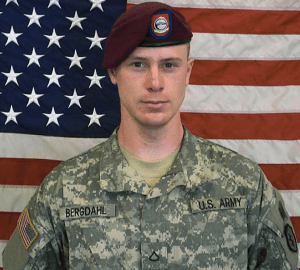
We haven’t heard much about Bowe Bergdhal lately. Via The Boston Globe, the AP reports this morning that he has been “Shifted to Outpatient Care.”
SAN ANTONIO (AP) — Sgt. Bowe Bergdahl, who had been a prisoner of war in Afghanistan for five years, has been shifted to outpatient care at a Texas military base, the U.S. Army said in a statement Sunday.
Bergdahl, 28, had been receiving inpatient treatment at Brooke Army Medical Center at Fort Sam Houston. He is now receiving outpatient care on the base in San Antonio, according to the statement. The Army said his ‘‘reintegration process’’ is proceeding with exposure to more people and a gradual increase in social interaction.
He arrived at the Texas medical center on June 13 after nearly two weeks recuperating at a U.S. military hospital in Germany. Army officials said then that Bergdahl was in stable condition and was working daily with health care providers to regain a sense of normalcy and move forward with his life.
The Army statement Sunday said Bergdahl is receiving counseling from ‘‘Survival, Evasion, Resistance and Escape’’ psychologists’’ to ‘‘continue to ensure he progresses to the point where he can return to duty.’’
The Army said specifics of Bergdahl’s location would not be made public.
That’s it for me for today, except that I’ve become a World cup fan and I might even watch some of the games the US team isn’t participating in. Ralph’s enthusiasm has sucked me in!
What stories are you following today? Please let us know in the comment thread.
Saturday Reads: Remembering the Soundtrack to the ’60s, and Other News
Posted: June 21, 2014 Filed under: Barack Obama, morning reads, nature, Republican politics, science, U.S. Politics, Violence against women, War on Women | Tags: Carole King, Chris Christie, Eric Cantor, female coders, George Will, Gerry Goffin, Google, GOP scandals, honeybees, music, rape, rock 'n' roll, Scott Walker, sexual assault, the Shirelles, Will You Love Me Tomorrow? 35 Comments
Husband and wife singer songwriting team Goffin and King rehearse during a recording session in a New York studio in 1959. (h/t NY Daily News)
Good Morning
On Thursday we lost another 1960s music great; Gerry Goffin, who wrote lyrics to Carole King’s music died at 75. The talented couple wrote the songs that accompanied my teenage years–so much great music associated with so many memories.
From the Guardian Gerry Goffin: the poet laureate of teenage pop:
Gerry Goffin, a trainee chemist who became the poet laureate of teenage pop, specialised in coming up with a great opening line to grab the audience’s attention. Plenty of people will remember the first time they heard “Tonight you’re mine completely/ You give your love so sweetly,” from Will You Love Me Tomorrow, or “Looking out on the morning rain/ I used to feel so uninspired,” from (You Make Me Feel Like) A Natural Woman. But he didn’t stop there.
Buried a little deeper in those wonderful songs are the lines that really touched his young listeners’ hearts. The words to the bridge, or middle section, of that first Shirelles hit from 1960 were almost like poetry: “Tonight with words unspoken/ You say that I’m the only one/ But will my heart be broken/ When the night meets the morning sun?” And when Goffin presented Aretha Franklin with the second verse of A Natural Woman – “When my soul was in the Lost and Found, you came along to claim it” – he gave countless ordinary lovers a way to express their deepest feelings.
Misleadingly, they are often called “Carole King songs”. She wrote the tunes, and later on she would sing them when, after Goffin and King divorced, she embarked on a hugely successful solo career. But whenever King sang her own, gentler versions of the Chiffons’ One Fine Day or the Drifters’ Up on the Roof, she was still singing Goffin’s words. They were written by the man she had met when she was 17 and he was 20, and with whom she had two daughters while they lived in an apartment in the Queens housing project LeFrak City – and with whom she travelled to work in Manhattan every day at their cubicle in the offices of Aldon Music at 1650 Broadway, where they pumped out hit after hit after hit.

From The New York Times: Gerry Goffin, Hitmaking Songwriter With Carole King, Dies at 75:
Mr. Goffin and Ms. King were students at Queens College when they met in 1958. Over the next decade they fell in love, married, had two children, divorced and moved their writing sessions into and out of 1650 Broadway, across the street from the Brill Building. (The Brill Building pop music of the late 1950s and ‘60s was mostly written in both buildings.)
Together they composed a catalog of pop standards so diverse and irresistible that they were recorded by performers as unalike as the Drifters, Steve Lawrence, Aretha Franklin and the Beatles. They were inducted together into the Songwriters Hall of Fame in 1987 and the Rock and Roll Hall of Fame in 1990. In 2004 the Recording Academy presented them jointly with a Trustees Award for lifetime achievement.
The couple’s writing duties were clearly delineated: Ms. King composed the music, Mr. Goffin wrote the lyrics — among them some of the most memorable words in the history of popular music.
“His words expressed what so many people were feeling but didn’t know how to say,” Ms. King said in a statement on Thursday.
A bit more about Goffin:
Gerald Goffin was born on Feb. 11, 1939, in Brooklyn and grew up in Jamaica, Queens. He began writing lyrics as a boy — “like some kind of game in my head,” he recalled once — but found he was unable to come up with satisfying music to accompany them.
He graduated from Brooklyn Technical High School before enrolling at Queens College. He was three years older than Ms. King, studying chemistry, when they met in the spring of her freshman year.
He asked her to help him write a musical. She was interested in rock ‘n’ roll. They hit it off anyway, and she was pregnant with their first child when they married on Aug. 30, 1959.
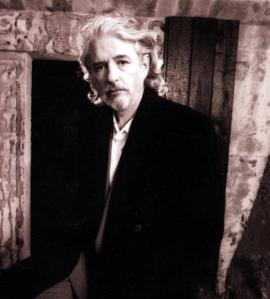
Gerry Goffin
After the couple divorced in 1968, King went on to become a singer and songwriter in her own right, although the two continued to collaborate and maintained a friendship. Goffin married again and and the couple had five children.
In addition to his wife, [Michelle] Mr. Goffin’s survivors include four daughters, Louise Goffin, Sherry Goffin Kondor, Dawn Reavis and Lauren Goffin; a son, Jesse Goffin; six grandchildren; and a brother, Al.
Goffin and King’s first hit was “Will You Love Me Tomorrow,” which they wrote in 1960 for the girl group the Shirelles. After the song hit #1 on the charts in 1961, Goffin quit his job as a chemist and began working full-time as a lyricist.
Goffin’s lyrics deftly touch on the doubt that lurks behind all new romances. As sung by Shirelles’ leader Shirley Owens in unflappable manner, the song doesn’t skimp on the wonder inherent in any fresh coupling. But it’s also unflinchingly realistic about the possibility that the fairy dust will dissolve at dawn.
“Can I believe the magic in your sighs?” Owens pointedly asks her paramour. In the bridge, Goffin’s words flow like champagne even as they fear the possible hangover: “Tonight with words unspoken/You’ll say that I’m the only one/But will my heart be broken/When the night meets the morning sun.” King’s melody plays a big role in the overall effect, arching high in the verses and middle eight while accompanied by strings that elegantly trip across the proceedings like moonlight dancers, before coming back down to Earth for the interrogative refrain.
In other news . . .
At Salon, Simon Malloy writes about the multiplying Republican scandals: GOP’s sudden scandal-mania: Why criminal probes and infighting are taking over the party.
It’s fashionable right now to talk about the premature end of Barack Obama’s presidency. He’s fast approaching the second half of his second term, which is historically the beginning of lame-duck season. His poll numbers aren’t what anyone would call ideal, and Republicans (in concert with some excitable members of the press) are rushing to proclaim the Obama presidency dead. “I saw a commentator today say that these polls, what they reflect, is that the Obama presidency is over,” Sen. Marco Rubio said, referring to NBC’s Chuck Todd. “And I agree with that. I think it is, in general.” Speaker John Boehner told reporters at his weekly press briefing yesterday: “You look at this presidency and you can’t help but get the sense that the wheels are coming off.” ….The funny thing is that as Republicans team up with pundits to chisel out Obama’s epitaph, the Republican Party itself is falling to pieces right before our eyes.
Yesterday’s news that Scott Walker and Chris Christie sinking deeper into their respective scandals is as good a sign as any of the GOP’s political disintegration. After Obama crushed Mitt Romney in 2012, Republicans began casting about for their 2016 redeemer, and Christie and Walker were high on the list. They won conservative hearts with their antagonism toward unions, but they had also found a way to win in reliably Democratic states. If the GOP hoped to take on candidate-in-waiting Hillary Clinton, they’d need someone who could peel away some Democratic voters. Walker had talked about the need to nominate an “outsider” like himself in 2016.
Now Christie and Walker are implicated in criminal investigations. Prosecutors in Wisconsin placed Walker at the center of a “criminal scheme” to coordinate campaign spending with outside groups. In New Jersey, the investigation stemming from the George Washington Bridge scandal is reportedly closing in on Christie himself. For both men, once considered potential saviors of the GOP, the political future looks considerably dimmer.
Read Malloy’s take on it at the link.
At FiveThirtyEightPolitics, David Wasserman has a long article on “What we can learn from Eric Cantor’s defeat.” You really need to read the whole thing, but here’s a small excerpt that deals with the contribution of public distrust of Congress:
Cantor was only the second House incumbent to lose a primary this year (the first was Texas Republican Ralph Hall), but the warning signs of discontent were abundant: Plenty of rank-and-file House incumbents had been receiving startlingly low primary vote shares against weak and under-funded opponents, including GOP Reps. Rodney Davis of Illinois, Lee Terry of Nebraska and David Joyce of Ohio. In fact, just a week before Cantor’s defeat and without much fanfare, socially moderate Rep. Leonard Lance of New Jersey received just 54 percent of the Republican primary vote against the same tea party-backed opponent he had taken 61 percent against in 2012.
Overall, 32 House incumbents have taken less than 75 percent of the vote in their primaries so far this year, up from 31 at this point in 2010 and just 12 at this point in 2006. What’s more, 27 of these 32 “underperforming” incumbents have been Republicans.1
In other words, while Congress’s unpopularity alone can’t sink any given member in a primary, it has established a higher baseline of distrust that challengers can build on when incumbents are otherwise vulnerable. And as the sitting House Majority Leader, Cantor was uniquely susceptible to voters’ frustration with Congress as an institution.
There’s much more interesting analysis at the link.

George Will’s recent column on campus rapes is still in the news. From Talking Points Memo, George Will’s Latest: College Rape Charges Fueled By ‘Sea Of Hormones And Alcohol’.
Will explained that he took issue with the practice of adjudicating campus sexual assault cases by a “preponderance” of evidence, rather than hitting the bar of evidence beyond a reasonable doubt. That flies in the face of due process, he argued, and ultimately harms young men’s future prospects.
“What’s going to result is a lot of young men and young women in this sea of hormones and alcohol, that gets into so much trouble on campuses, you’re going to have charges of sexual assault,” he said. “And you’re going to have young men disciplined, their lives often permanently and seriously blighted by this — don’t get into medical school, don’t get to law school, all the rest.”
Four Democratic senators reached out to Will after his column was published to torch the conservative columnist’s “ancient beliefs.” Will said he wrote a letter back to the senators and laid out his rebuttal in the C-SPAN interview.
“What I say is that: A) I take sexual assault more seriously than I think they do, because I agree that society has correctly said that rape is second only to murder as a serious felony,” Will said. “And therefore, when someone is accused of rape, it should be reported to the criminal justice system that knows how to deal with this, not jerry-built, improvised campus processes.”
“Second, I take, I think, sexual assault somewhat more seriously than the senators do because I think there’s a danger now of defining sexual assault so broadly, so capaciously, that it begins to trivialize the seriousness of it,” he added. “When remarks become sexual assault, improper touching — bad, shouldn’t be done, but it’s not sexual assault.”
Well, we can’t have young men’s lives “blighted” by rape charges. Much better for young women to just suck it up and deal with a years of post-traumatic stress on their own and keep their complaints to themselves.
Whatever you do, don’t miss this TBogg post at Raw Story: Gentleman George Will is getting damned tired of having to explain rape to you guttersnipes.
Victorian gas-pipe and Her Majesty’s Curator of Rape To The Colonies, George Will, has just about had it up to here with you people — YES, YOU PEOPLE.
And especially you. Don’t think by closing your laptop he can’t see you, because he can.
Oh yes, he most certainly can, you loathsome wastrel.
t seems that, after explaining the ins and out of rape to you ungrateful curs, he was shocked and dismayed to discover that you promiscuous info-trollops on the intertubes are unable to comprehend the pearls of wisdom that he dispenses to the riff-raff gratis, courtesy of Ye Olde Washminster Poste.
Hush now, let Gentleman George condescend to speak down to you and try, fruitlessly no doubt, to explain once again that rape is what George Will says rape is…
Now go read the rest at the link. You won’t be sorry.
This sounds like it could do some good: Google commits $50M to encouraging girls to code (CNet)
Google wants to see more women in technology, and it’s funding a $50 million initiative to encourage girls to learn how to code in an effort to close the gender gap.
Thursday night the company kicked off the Made with Code initiative here with celebrities former first daughter Chelsea Clinton and actress and comedienne Mindy Kaling.
Kaling, who emceed the event, said she has tons of ideas for apps but no idea to how make them work. She said she’d like to create a “What’s his deal?” app that takes a picture of guy and tells you whether he’s single, married, a weirdo, or what his car is like. Another idea is a Shazaam-like app for perfume.
“People my age have a million ideas for apps,” she said. “But we have no idea how to build them. Last week in the movies, I didn’t even know how to turn off the flashlight on my phone.”
Kaling isn’t alone. Women are woefully under-represented in the technology industry. Only about 20 percent of software developers in the US are women, according to the Labor Department. Last month, even Google admitted only 17 percent of its tech workers are women.
A bit more possible good news from the BBC: US sets up honey bee loss task force.
The Environmental Protection Agency (EPA) and the agriculture department will lead the effort, which includes $8m (£4.7m) for new honey bee habitats.
Bee populations saw a 23% decline last winter, a trend blamed on the loss of genetic diversity, exposure to certain pesticides and other factors.
A quarter of the food Americans eat, including apples, carrots and avocados, relies on pollination.
Honey bees add more than $15bn in value to US agricultural crops, according to the White House.
The decline in bee populations is also blamed on the loss of natural forage and inadequate diets, mite infestations and diseases.
There has also been an increase in a condition called colony collapse disorder (CCD) in which there is a rapid, unexpected and catastrophic loss of bees in a hive.
So . . . what stories are you following today? Please post your thoughts and links in the comment thread.
Thursday Reads “The Dolphin Who Loved Me”
Posted: June 19, 2014 Filed under: morning reads | Tags: 1960s, Carl Sagan, dolphin brains, dolphin communication, Gregory Bateson, John Lilly, LSD, Margaret Howe Lovatt, Peter, The Day of the Dolphin 17 Comments
Good Morning!!
Dolphin sexuality has been in the news for the past week or two, because of the release of a new BBC documentary, The Girl Who Talked to Dolphins. It’s a fascinating story of 1960s intellectual icons Gregory Bateson and John Lilly and their research on dolphins. From The Independent UK review:
During the 1960s, Lilly and his collaborators used funding from Nasa to create “Dolphin House” in the American Virgin Islands, essentially a flooded beach-side villa where the young research assistant Margaret Howe Lovatt lived side by side, six days a week, with a dolphin called Peter. Archive stills showed the glamorous Lovatt at work, looking like Audrey Hepburn in a swimsuit advert. Unfortunately, these charming photographs seem to have been of much more lasting value than the scientific research she conducted.
This was a very Sixties tale, involving sexual liberation, space exploration and injecting dolphins with LSD…
But of course what the media fixated on was that Lovatt described a sexual relationship with Peter the dolphin. She said he was young and coming of age and had so many sexual urges that she relieved them manually. She said it wasn’t sexual for her; she just didn’t want distractions from her primary work. You’ve probably seen the lascivious stories floating around the internet. The same thing happened back in the ’60s after Hustler Magazine got a-hold of the sexual sidelight of the research.
I found the story interesting in light of the personalities involved–even Carl Sagan weighed in at one point! The best article to read on the documentary and the classic study is at The Guardian UK: The dolphin who loved me: the Nasa-funded project that went wrong. It’s a very long article; I’ll give you a few excerpts.

Margaret Lovatt at the Dolphin House on St. Thomas
Lovett had been interested in communicating with animals since early childhood. She was living on St. Thomas in the Caribbean. In 1963 she heard about a laboratory that was doing research on dolphins. She found the place and introduced herself to Gregory Bateson, who took a shine to her and invited her to come back anytime. She did and eventually she went to work with John Lilly and his three dolphins.
“There were three dolphins,” remembers Lovatt. “Peter, Pamela and Sissy. Sissy was the biggest. Pushy, loud, she sort of ran the show. Pamela was very shy and fearful. And Peter was a young guy. He was sexually coming of age and a bit naughty.” ….
The lab’s upper floors overhung a sea pool that housed the animals. It was cleaned by the tide through openings at each end. The facility had been designed to bring humans and dolphins into closer proximity and was the brainchild of an American neuroscientist, Dr John Lilly. Here, Lilly hoped to commune with the creatures, nurturing their ability to make human-like sounds through their blow holes.
Lilly had been interested in connecting with cetaceans since coming face to face with a beached pilot whale on the coast near his home in Massachusetts in 1949. The young medic couldn’t quite believe the size of the animal’s brain – and began to imagine just how intelligent the creature must have been, explains Graham Burnett, professor of the history of science at Princeton and author of The Sounding of the Whale. “You are talking about a time in science when everybody’s thinking about a correlation between brain size and what the brain can do. And in this period, researchers were like: ‘Whoa… big brain huh… cool!'”
Lovett thought that if she lived alone with a dolphin, she might be able to learn to communicate with it, and Lilly went along with her idea.
Lovatt selected the young male dolphin called Peter for her live-in experiment. “I chose to work with Peter because he had not had any human-like sound training and the other two had,” she explains. Lovatt would attempt to live in isolation with him six days a week, sleeping on a makeshift bed on the elevator platform in the middle of the room and doing her paperwork on a desk suspended from the ceiling and hanging over the water. On the seventh day Peter would return to the sea pool downstairs to spend time with the two female dolphins at the lab – Pamela and Sissy.
By the summer of 1965, Lovatt’s domestic dolphinarium was ready for use. Lying in bed, surrounded by water that first night and listening to the pumps gurgling away, she remembers questioning what she was doing. “Human people were out there having dinner or whatever and here I am. There’s moonlight reflecting on the water, this fin and this bright eye looking at you and I thought: ‘Wow, why am I here?’ But then you get back into it and it never occurred to me not to do it. What I was doing there was trying to find out what Peter was doing there and what we could do together. That was the whole point and nobody had done that.”
Audio recordings of Lovatt’s progress, meticulously archived on quarter-inch tapes at the time, capture the energy that Lovatt brought to the experiment – doggedly documenting Peter’s progress with her twice-daily lessons and repeatedly encouraging him to greet her with the phrase ‘Hello Margaret’. “‘M’ was very difficult,” she remembers. “My name. Hello ‘M’argaret. I worked on the ‘M’ sound and he eventually rolled over to bubble it through the water. That ‘M’, he worked on so hard.”
For Lovatt, though, it often wasn’t these formal speech lessons that were the most productive. It was just being together which taught her the most about what made Peter tick. “When we had nothing to do was when we did the most,” she reflects. “He was very, very interested in my anatomy. If I was sitting here and my legs were in the water, he would come up and look at the back of my knee for a long time. He wanted to know how that thing worked and I was so charmed by it.”

John Lilly with dolphin
Lovatt was serious about her work, but ultimately Lilly’s obsession with LSD experimentation sidetracked the project.
Lilly had been researching the mind-altering powers of the drug LSD since the early 1960s. The wife of Ivan Tors, the producer of the dolphin movie Flipper, had first introduced him to it at a party in Hollywood. “John and Ivan Tors were really good friends,” says Ric O’Barry of the Dolphin Project (an organisation that aims to stop dolphin slaughter and exploitation around the world) and a friend of Lilly’s at the time. “Ivan was financing some of the work on St Thomas. I saw John go from a scientist with a white coat to a full blown hippy,” he remembers….
In the 1960s a small selection of neuroscientists like John Lilly were licensed to research LSD by the American government, convinced that the drug had medicinal qualities that could be used to treat mental-health patients. As part of this research, the drug was sometimes injected into animals and Lilly had been using it on his dolphins since 1964, curious about the effect it would have on them.
The drug had zero effect on the dophins, because drugs affect different species in different ways; but Lilly insisted on continuing the injections anyway. Lovatt was totally against it, but she wasn’t the one in charge. (In an interesting sidenote, Lilly was turned on to LSD by the director of the movie Flipper.) Eventually Bateson resigned over it and NASA cut Lilly’s funding. Sadly, the dophins were sent to cramped lab in Miami, where the dolphins didn’t get enough sunlight and exercise.
“I got that phone call from John Lilly,” she recalls. “John called me himself to tell me. He said Peter had committed suicide.”
Ric O’Barry corroborates the use of this word. “Dolphins are not automatic air-breathers like we are,” he explains. “Every breath is a conscious effort. If life becomes too unbearable, the dolphins just take a breath and they sink to the bottom. They don’t take the next breath.” Andy Williamson puts Peter’s death down to a broken heart, brought on by a separation from Lovatt that he didn’t understand. “Margaret could rationalise it, but when she left, could Peter? Here’s the love of his life gone.”
“I wasn’t terribly unhappy about it,” explains Lovatt, 50 years on. “I was more unhappy about him being in those conditions [at the Miami lab] than not being at all. Nobody was going to bother Peter, he wasn’t going to hurt, he wasn’t going to be unhappy, he was just gone. And that was OK. Odd, but that’s how it was.”
Lilly’s ideas about dolphin communication most likely inspired the book and movie The Day of the Dolphin. The movie starred George C. Scott and was directed by Mike Nichols. The screenplay was by Buck Henry.
A couple of reactions to this story:
The New York Daily News reports on a man who claims to have had sex with a female dolphin: ‘Wet Goddess’ author shares details of his 6-month sexual relationship with Dolly the dolphin.
Another self-confessed dolphin lover claims he had a six-month consensual affair with one of the sleek marine animals — and insists it’s nothing to be ashamed of.
Malcolm Brenner, 63, shared his story with British newspaperThe Mirror in the wake of a BBC documentary that featured Margaret Howe Lovatt, an animal researcher who said she had sex with a dolphin in the 1960s as part of a NASA-funded study.
Brenner, a writer who also admits to having prior sexual experiences with a dog, said he fell in love with Dolly the dolphin in a Florida amusement park in 1971.
Dolly “came on to him,” he told The Mirror — and he was heartbroken when she died about nine months after they met.
The two had their interspecies intercourse after conspiring to elude the male dolphin that shared Dolly’s pool, Brenner said.

Margaret Lovatt today
Salon: Human-on-dolphin sex is not really that weird. Author Tracy Clark-Flory writes that Lovatt’s behavior with Peter wasn’t unique in science:
Judging from the collective horrified response, you would think that a human giving a handy to an animal was an aberrant, unthinkable act. But such fondling isn’t unheard of in the realm of animal research.
There are two major published examples. The first: In 1970, anthropologist Francis Burton published “Sexual Climax in female Macaca mulatta.” She wanted to answer the question of whether female monkeys experienced orgasm. Burton placed the primates in dog harnesses and cat collars to restrict their movement. Then the researcher put a “penis-simulator” into “the animal’s vagina with vaseline as lubricant,” and moved it at a pace of two to five thrusts a second. Burton wasn’t able to definitively conclude that female monkeys could orgasm, but she did identify an excitement, plateau and resolution phase, as Masters and Johnson had identified in humans.
“I think in the field it is generally thought that a similar study would never get through an institutional animal use and care committee,” says Kim Wallen, a psychology professor at Emory University who specializes in primate sexual behavior.
The second case is that of psychologist Frank Beach and his research on beagles in the ’80s. “Most of the work he did was behavioral, looking at the effects of prenatal androgens on sexual differentiation, but some of his treated animals were unable to copulate and he wanted to know if they showed normal genital reflexes, even though they did not copulate,” says Wallen. So, he masturbated the dogs and observed their responses.
Clark-Flory notes that it is common for researchers to sexually stimulate animals to “collect semen for breeding purposes.” I just hope Rick Santorum doesn’t find out about this.
I hope I haven’t bored you silly with this post. I don’t know what got into me today; I just couldn’t write about news of politics or war. It’s either writer’s block or I’m just plain sick of news and politics today. I’ll add a few news links in the comments, and I hope you’ll do the same. Have a great Thursday!!

 peej
peej Carissa
 bostonboomer
 dakinikat
 ecocatwoman
 mablue2
 Mama Lopez
 peggysue22
 quixote
 skydancingguestblogger
 Mona (aka Wonk the Vote)



 Sky Dancing
Recent Comments