I’m going to follow up on two important stories that Dakinikat wrote about yesterday: Trump’s order for the Navy to redesign its warships to resemble those used in WWII, and his uncaring attitude toward sailors who are serving in horrible conditions on the USS Lincoln and other warships because of Trump’s Iran war. Then I’ll move on to other news.
The U.S. Navy is considering a major redesign of its new aircraft carriers to better match President Donald Trump’s preferred aesthetic for the warships, according to seven current and former U.S. officials familiar with the matter.
The service isevaluating the feasibility of moving the multistory tower that acts as the carrier’s command center farther forward, toward the middle of the ship, to resemble older vessels, the officials said. The review, which has not been previously reported, is in response to Trump’s concerns about the “look” of the new Ford-class ships, where the tower is near the rear, these people said.
The timing and extent of the Navy’s evaluation is unclear, with current and former officials cautioning that the service was concerned that such a change would require significant time and money. Like others, they spoke on the condition of anonymity to discuss a sensitive situation.
Moving that command center, known as the “island,” would be the second major design change prompted by the president, who on Thursday issued a national security memorandum directing the Navy to develop a plan to revert to older steam-powered catapults on future carriers. The systems help launch jets off the ships’ flight decks.
Trump’s preference, current and former officials said, is for the new aircraft carriers to look more like those that were in service during World War II.
The Navy also examined the issue during his first term as president, said a former senior U.S. official. A study found that moving the island could cost billions of dollars in redesign costs and significantly delay the program, this person said.
“It came back that the cost and time to do so would just be extraordinary,” the former official said.
You can read more details using the gift link above.
Cat and kittens, 19th Century American, National Gallery of Art
Trump is obsessed with appearances. These demands for changes in the warships are crazy. He spends even more time obsessing about his ballroom. It really is time for the 25th Amendment, if only we had responsible people in the cabinet.
The Iranian attack, retaliation for the U.S.-Israeli assault on Tehran, destroyed much of the base. And as it went up in smoke, so did a major logistics hub that the Navy has relied on for decades.
The Navy needed a Plan B to continue feeding the sailors working around the clock to keep warplanes flying strike missions, and later to maintain a blockade of Iran’s ports.
With the threat of Iranian attacks at other ports in the region, the Pentagon looked to a base under British command on the island of Diego Garcia as its supply hub, which is south of the Maldives and roughly 2,200 miles from where two aircraft carrier strike groups have been operating in the Gulf of Oman.
The loss of the hub in Bahrain has contributed to a host of reported problems on carriers supporting operations against Iran, as Democratic senators raise concerns about the Lincoln’s 5,000 sailors and their nearly nine-month deployment.
Senator Richard Blumenthal, Democrat of Connecticut, said in a letter to Defense Secretary Pete Hegseth that the reported problems included shortages of basic supplies and the deteriorating mental health of its crew members.
Again, you can read more with the gift link. Both Trump and Hegseth have dismissed the problems sailors are facing and the concerns of their families, but they actually have moved to relieve the USS Lincoln and replace it with the USS George Washington, recently stationed near Japan and currently near Indonesia.
A U.S. official told ABC News on Thursday that the aircraft carrier USS George Washington, which is homeported in Japan, will replace the Lincoln as part of a long-planned rotation of ships and has begun heading toward the Middle East.
By Daniel Merlin (French artist)
The aircraft carrier’s movements come amid reports of mental health and supply issues aboard the USS Lincoln, whose long deployment to the Middle East in support of the Iran war includes a record-setting time at sea of more than 200 days. Navy leaders, including the Navy’s acting Secretary Hung Cao, last week held a heated town hall for families of the USS Lincoln who had raised concerns about the conditions on the ship.
When a reporter on Friday said that family members of people aboard that ship are concerned about the conditions, Trump interjected to suggest that they are “not” actually worried.
“No, they’re not. That ship is moving right now, or very shortly, and it’s being replaced with another very similar ship,” Trump said.
When pressed by a reporter about whether the deployment of the USS Abraham Lincoln has gone on for too long, Trump said not that it hasn’t gone on “nearly long enough.”
“No, no, not nearly long enough,” Trump said.
Family members can’t be happy to read those quotes. We’ve known for a long time that Trump couldn’t care less about our troops, but to see it spelled out in print is still shocking.
It is among the most famous phrases in presidential history: “ The buck stops here.” Except with President Donald Trump, it almost never does.
Concerns about a weak economy and still-high inflation? His predecessor, Joe Biden, saddled him with that, he says, even though the Democrat has been out of office for 18-plus months and despite Trump once promising an immediate turnaround.
The increasingly unpopular war in Iran that has kept oil prices high, Trump’s approval rating low and sent shock waves through the global economy? Actually, this was Trump making up for timid earlier presidents who, he argues, squandered nearly 50 years of opportunities to curb Tehran’s nuclear ambitions.
Trump’s tendency to point fingers at others is increasingly in the spotlight before November’s midterm elections, when Republicans are trying to retain control of Congress. His unwillingness to accept blame sometimes leads him to deny that there are problems at all, and could leave GOP leaders in tight races with little reassurance for voters that their concerns are being addressed.
A bit more:
Accepting the 2016 presidential nomination, Trump said, “Nobody knows the system better than me, which is why I alone can fix it.” But as president, he has often suggested that the solution and blame rest elsewhere.
“The buck stops with everybody,” Trump said in 2019, during a lengthy government shutdown. In 2020, on the same day he declared the coronavirus pandemic a national emergency, he said, “I don’t take responsibility at all” for a lack of COVID-19 testing….
The president acknowledged in a recent Punchbowl interview that voters are angry, but he said they are not mad at him but at congressional Republicans.
Trump believes his party can hold its congressional majorities after November, but he was clear that if Republicans lose, it won’t be his fault — echoing his comments before the 2018 midterms that he would not accept blame if his party lost control of the House, which it did.
There’s even more at the link. I’m glad at least one journalist is writing about this.
President Donald Trump is heading to another weekend at his Bedminster, New Jersey, golf club as questions mount over promises he made to Americans on energy costs and his pledge to take care of the U.S. military. Trump campaigned on cutting energy and electricity prices in half within his first year in office and repeatedly promised Americans $2 gasoline.
However, energy costs have not fallen anywhere close to those levels and gasoline prices remain well above the $2 target. Many are experiencing some of the highest electricity bills they have ever seen.
At the same time, thousands of sailors aboard the USS Abraham Lincoln have reportedly endured food and water shortages, disrupted mail, long workdays, plumbing problems and deteriorating mental health after more than 250 days at sea. Against that backdrop, Trump is once again retreating to Bedminster for a weekend that is largely closed to the press.
Trump doesn’t seem to do much of anything other than sit in oval office talking to reporters and falling asleep and then playing golf at every opportunity.
In a speech last night, a delusional Trump claimed he could make the Strait of Hormuz “a territory of the United States.” Again, it’s 25th Amendment time.
President Trump claimed during remarks on Long Island, N.Y., on Friday that he will make the Strait of Hormuz a U.S. territory, despite the fact that Oman and Iran share jurisdiction of the waterway.
“Pretty soon, I will be declaring the Hormuz Strait a territory of the United States,” Trump said during an address highlighting his administration’s efforts to combat crime in the U.S.
Trump did not elaborate on how he would make the critical shipping lane a U.S. territory, considering the U.S. does not have jurisdiction over the waterway….
Trump has said since the conflict started roughly six months ago that the U.S. has controlled the strait. He deployed a U.S. naval blockade in the strait twice, claiming U.S. supremacy over the transit of oil exports from the region.
Iran has pushed back on Trump’s claims that the U.S. controls the waterway. In a post on the social platform X on Wednesday, Iran’s Persian Gulf Strait Authority said that whoever owns it does “not change the reality: the Strait of Hormuz remains blocked and will not be reopened until Iran’s conditions are accepted.”
Yesterday, the news broke that Trump used a plane packed with cabinet members and journalists as a decoy in order to protect himself from an Iranian assassination threat that emerged while he was in Turkey for the NATO Summit in July.
He pretended to board Air Force One with everyone else and then was secretly taken off that plane and moved (hiding in a catering vehicle!) to a military plane, along with some other close advisers, leaving everyone on Air Force One in danger of being shot down by the Iranians.
Trump blames the Secret Service for what happened, but he certainly could have arranged things differently. He could even have had the press plane grounded in Turkey until the other two planes landed in Great Britain. After all, he is (supposedly) the President of the United States! Or has Stephen Miller taken over that role now?
The Iranian threat that prompted President Trump’s secret Air Force One swap last month emerged as he was heading into his last day at the NATO summit in Turkey on July 8.
According to two U.S. officials with knowledge of the threat, U.S. intelligence picked up multiple streams of information. They knew that there was a specific threat of a surface-to-air missile against Air Force One, meaning whichever plane was carrying the president, and that someone in the vicinity of the NATO summit had been spotted with a shoulder-fired missile. And the Iranians knew specifically where Mr. Trump was staying in Ankara, including which floor of the building, the officials said….
The information was deemed sufficiently credible to lead Mr. Trump and senior members of his administration to engage in an extraordinary decoy effort to get him out of Turkey. He boarded the older Air Force One in front of the cameras, which he had announced he would be taking “for old time’s sake,” before sneaking off in an airport catering container and taking a military jet out of the country.
On the final day of the NATO summit in Turkey, Mr. Trump walked up the stairway to the plane that was supposed to carry him on the first leg of his journey home. He briefly waved to the cameras and disappeared inside one of the iconic, baby blue 747s that have served as Air Force One for decades. Then he secretly exited the aircraft, hidden inside a catering container.
Mr. Trump was next taken to a military jet for a clandestine flight out of Turkey. The 747, filled with journalists, White House officials, aides and others, took off despite what was deemed a credible threat from Iran against Air Force One….
Gen. Dan Caine, the chairman of the Joint Chiefs of Staff, was integral to assessing the threat and deciding how to respond. General Caine is no stranger to subterfuge: His last job was Pentagon liaison to the C.I.A., and he helped devise the diversion tactics during Operation Midnight Hammer, when U.S. forces struck Iran’s nuclear sites in June 2025.
Air Force One sits on the tarmac in Ankara with an airport catering container adjacent to the body of the aircraft on July 08. (Reuters)
Not everyone who rode on the plane without Mr. Trump was in the dark. Secretary of State Marco Rubio knew about the threat and flew on the old plane after helping to plan the operation to spirit the president out of Turkey, according to two U.S. officials. They spoke on the condition of anonymity to discuss a sensitive topic.
Other senior officials who traveled on the plane without the president included Treasury Secretary Scott Bessent; Steven Cheung, the White House communications director; and Stephen Miller, Mr. Trump’s deputy chief of staff; as well as several other White House staff, according to a senior U.S. official. It was not clear whether they all knew about the threat.
Whether or not the passengers on the plane that Mr. Trump left behind knew about the threat, they were exposed to risks that the Secret Service deemed too great for the president to face.
Trump claims he had nothing to do with these decisions.
On Tuesday evening, in his first public comments about the secret evacuation, Mr. Trump said the decision was not his.
“It’s really just up to Secret Service,” he told reporters after returning from Ohio. “I just follow what they like to do. So I go by Secret Service and the military. They wanted me to go in a different flight, a different plane for safety.”
Is he the President or not? Since when does the President of the United States take orders from the Secret Service? They advised him of the danger, and he could have insisted on different ways of handling the situation.
The article is very detailed. You can read the whole thing using the gift link.
As President Donald Trump secretly left an Air Force One jet on a catering truck last month in response to a potential Iranian assassination threat in Turkey, he was accompanied by some of his most loyal and longest-serving aides but no Cabinet officials.
Other passengers on the truck included Dan Scavino, the White House deputy chief of staff; Natalie Harp, the president’s executive assistant; and Walt Nauta, the director of Oval Office operations, according to a U.S. official familiar with the operation and corroborating material reviewed by The Washington Post.The official spoke on the condition of anonymity because he was not authorized to talk to the media.
A catering truck is parked at Air Force One on the tarmac at the Ankara international airport as the motorcade carrying President Donald Trump arrives in July. (Alex BrandonAP)
A few lower-profile aides also were present, but the group did not include Secretary of State Marco Rubio or other officials at the highest level of the government, according to the official and the material. Together, those aboard the catering truck moved under concealment from the legacy Air Force One aircraft to a smaller Air Force C-32A before flying to Britain separately from the White House press corps and senior officials.
The account adds a new level of understanding to a July 8 operation that was first reported by The Post on Monday and has triggered calls from congressional Democrats for an immediate briefing. White House officials withheld the secret move from journalists traveling with the president that day and for more than a month afterward.
Among those on the smaller jet was Defense Secretary Pete Hegseth, who boarded the C-32A using external stairs in a manner that made him look like the senior-most official on the flight, The Post reported Monday.
Scavino, Harp and Nauta were among an inner circle of supporters who worked for Trump at his Mar-a-Lago estate in Florida during the four years between his presidencies, after many other officials who served in the first Trump White House distanced themselves following his two impeachments and multiple criminal investigations.
Other senior administration officials, military personnel, Secret Service agents and journalists remained on the legacy Air Force One plane, which had been deemed too risky for the president’s travel.
Natalie Harp, the “human printer,” and the woman who left love notes in Trump’s private rooms, according the the book Regime Change, by Maggie Haberman and Jonathan Swan, was seen as more deserving of protection than Trump’s cabinet and closest political advisers!
Donald Trump made sure he brought his favorite White House aide with him when he escaped from Air Force One to travel in a decoy jet via a catering truck.
Natalie Harp, 35, is never far from the 80-year-old president, and it has emerged that the young blonde aide was among a select group of Trump’s inner circle he took with him as he fled a NATO summit on a military flight because of a credible Iranian assassination threat.
Natalie Harp
White House Deputy Chief of Staff Dan Scavino, and Walt Nauta, the director of Oval Office operations, also joined Trump inside the catering truck to move to the decoy plane, The Washington Post reported.
Defense Secretary Pete Hegseth boarded the Air Force 32-A via its staircase “in a manner that made him look like the senior-most official aboard the flight,” the Post reported.
Other top officials, including Secretary of State Marco Rubio, top White House aide Stephen Miller and Treasury Secretary Scott Bessent, remained on Air Force One after Trump was made aware of the potential Iranian assassination threat.
The threat to Air Force One was seen as so dire that they sneaked President Trump off the jet in a catering container to keep him safe. But the same dire threat did not stop them from then sending Air Force One into the skies anyway with a planeful of senior officials, government employees, reporters and military personnel serving as decoys, some unwittingly.
If the Iranians were trying to shoot down the presidential plane last month, as U.S. officials concluded at the time, then the subterfuge in Ankara, Turkey, that protected the president also may have made targets of dozens of others who flew aboard the jet, including Secretary of State Marco Rubio, Treasury Secretary Scott Bessent and the senior aides Stephen Miller and Steven Cheung.
Diagram of the plane swap
The government has on rare occasions engaged in sleight of hand to safeguard presidents from possible jeopardy, particularly for journeys to hazardous locations, such as when George W. Bush or Barack Obama flew to Iraq during days of war or when Bill Clinton made a brief visit to Pakistan with its history of terrorism. The Trump team’s ruse in Ankara, however, stands out not only for its misdirection but also for the way it shifted the evident peril to others and was kept secret long after Mr. Trump was out of harm’s way.
“They just didn’t seem to give a second thought to anybody but the president and the few people who were with him,” said Joe Lockhart, who served as White House press secretary to Mr. Clinton during his 2000 trip to Islamabad, the Pakistani capital. “We went out of our way to make sure the maximum number of people, especially civilians, were protected and not human shields. They didn’t even think about it. And to me, that’s the big difference.”
But other veterans of risky White House trips said there were times that extreme measures were justified to protect the president. Joseph W. Hagin, who as a top adviser to Mr. Bush helped organize his war zone trips and later served as Mr. Trump’s deputy White House chief of staff in his first term, said he would not second-guess the decision in Ankara.
“I understand there is concern for those flying on what was assumed to be the primary aircraft,” Mr. Hagin said, “but when you go to work at the White House or travel with the president, you are accepting a not-insignificant degree of risk. Telling everyone what’s up in an operation like this would have obviously jeopardized the president’s safety.”
When Mr. Bush or Mr. Obama brought staff members and reporters with them to war zones, Mr. Hagin added, those were dangerous moments, too. “This was no different than the trips to Iraq and Afghanistan,” he said. “You add up all the risks and figure out the tactics that give you the safest option, regardless of whose toes get stepped on or feelings get hurt.”
The government officials and reporters who traveled with presidents to war zones, of course, knew they were doing so, while those left on Air Force One in Ankara last month were not told of the increased threat. Journalists traveling in the back of the plane were instructed while still on the ground to keep their window shades closed during the July 8 flight from Ankara to Britain, where Mr. Trump landed secretly in another military plane. The president was then sneaked back onto Air Force One so that he could disembark in front of cameras as if he had been onboard all along.
Read more using the gift article, if you’re interested.
When President Bill Clinton deplaned in Islamabad, Pakistan, the sleight of hand became clear.
A decoy jet with all of the markings of Air Force One touched down in view of the news media, and a Secret Service agent resembling the president emerged. Then, an unmarked plane landed, and the real president disembarked.
It was March 2000, and Susan Page, a White House reporter covering the trip for USA Today, was one of a small group of people who knew about the ruse.
President Bill Clinton disembarks from an unmarked jet in Islamabad, Pakistan, in March 2000. Stephen Jaffe AFP,Getty Images
Before the India-to-Pakistan flight, White House officials called Page, then the White House Correspondents’ Association president, and summoned her for an off-the-record conversation. There, White House press and security officials explained the operation, informing her of the president’s location and safety measures in place for journalists on the trip, Page said in messages with The Washington Post.
“They told me about the extraordinary security procedures being taken because of the dangers in flying there, including use of the decoy plane,” she said. “Of course, the dangers threatened the journalists covering the trip as well as President Clinton.”
Page’s briefing, which has not been previously reported, meant at least one journalist in the traveling press corps knew the president would not be aboard Air Force One.
More than 25 years later, the White House faced a similar security dilemma — but handled the press very differently.
Historian Garrett Graff wrote about this episode today. His article is too long to excerpt well, but if you want more on this topic, I recommend reading what he has to say: The Five Scandals Within the “Air Force One” Scandal. Here’s the introduction:
I sometimes believe that the Trump administration’s parade of horribles has left me unable to be surprised any more, but I gasped Monday evening at news that President Trump had been secretly snuck out of the NATO summit in Turkey last month due to an Iranian threat.
That departure in early July had generated a lot of speculation and coverage at the time because something weird was clearly going on — President Trump had, with much fanfare, arrived in Turkey aboard his newly painted presidential jet, gifted by Qatar, and then, with much less explanation, departed Turkey aboard one of the older blue-and-white 747s that have long served as Air Force One. There had been vague mentions of a possible threat, and how the new Qatari-gifted plane lacked some of the defensive measures of the longstanding presidential plane, which in turn led to a Justice Department leak investigation of the five New York Times reporters who broke that story.
Now, though, the Washington Post has added some fascinating and disturbing new wrinkles: He wasn’t aboard the blue-and-white plane at all when it departed Ankara.
I’ve written extensively about presidential travel, security, and continuity of government over the years — I wrote the literal book on continuity of government, in fact — and in the 24 hours or so since the Washington Post broke the story, have given interviews to outlets as varied as the Post, the Associated Press, and the BBC.
I want to try to break down why, specifically, this decoy Air Force One is so troubling. To me, the secret flight out of Turkey represents a Russian nesting doll of scandal, one that exposes at least five levels of scandal, ranging from foreign influence to corruption to national security compromises to inappropriate geopolitical gambles.
Yes, there is other news, but I think the story is important and deserves the amount of attention that is being paid to it. Of course, we already knew that Trump doesn’t give a shit about the press or their well-being, but apparently, he doesn’t care about most of his cabinet members either. When it comes right down to it, he chooses to save Dan Scavino, his former golf caddy, Walt Nauta, his former body man, and Natalie Harp, the “human printer.” (and more?), and Whiskey Pete Hegseth.
Yes, there is other news. Here are some links to to more interesting stories:
Last Wednesday, I wrote about Ohio Rep. Max Miller and his refusal to end his reelection campaign in light of the multiple accusations of violence against his ex-wife, including holding a gun to her head and throwing boiling hot water on her as well as breaking the collarbone of his 2-year-old daughter. But one of his abusive actions has really resonated with observers–his refusal to return his daughter’s beloved blue bunny.
Miller, 37, has faced domestic violence and physical abuse allegations for years, most recently from his ex-wife, the mother of his 2-year-old daughter. But no detail has broken through quite like the “little blue bunny.” Conservative colleagues who previously had avoided commenting on Miller’s personal life called this week for his resignation after his former father-in-law, another powerful Ohio Republican, accused the second-term congressman of holding his granddaughter’s stuffy “hostage” for 48 hours.
“This girl is crying at night because she can’t sleep without her little blue bunny, and his answer is, ‘I’m just not going to give it to you,’” Sen. Bernie Moreno told reporters Tuesday.
Miller, who has denied all claims of abuse, posted screenshots on X the next day that he said exonerated him. His ex-wife’s team had sent the wrong “conduit” to fetch the bunny, he said, according to the text messages between the two, which delayed the handoff by 14 hours — not 48.
She asked him to please just leave it in the mailbox, according to the exchange, which racked up 2.3 million views.
By “the wrong conduit” Miller meant that his wife had sent a family friend to pick up the bunny instead of her father. So Miller refused to return it. Back to the WaPo:
CNN’s Jake Tapper asked the question on so many minds, “Did you hold this doll hostage?”
On this, the internet agreed.
“What kind of father wouldn’t deliver the bunny himself, knowing that it helps his little girl sleep at night?” one commenter asked.
“This does not make you look better,” added a reporter for Gateway Pundit, a far-right news site.
“There are literally thousands of fathers reading those tweets and thinking: ‘When my daughter lost her favorite toy, I led a search party as if for a downed NATO nuclear warhead. And when that failed, I paid $300 for a replica on eBay,” posted David Frum, a former speechwriter for President George W. Bush.
Suddenly, the standoff over a toy in Ohio had sparked passionate chatter nationwide.
“Everybody gets it, no matter which side of the aisle they are on,” said Jon Krosnick, director of the Political Psychology Research Group at Stanford University. The little blue bunny, he added, “communicates so powerfully to all of us.”
Psychologists call the special toys or blankets that toddlers grow attached to “transitional objects.” In our culture, child begin to sleep alone much earlier than in many others cultures. Children here use their blanket or a stuffed animal as an attachment figure. Usually, by about age 6, kids can let go of the special object, but many older children keep it nearby and some even take it when they go away to college. I still recall my “blue blankie” that I carried with me everywhere as a child.
You can read the rest of the WaPo article using the gift link above.
Ohio Representative Max Miller has denied holding a little blue bunny hostage—but a series of messages shows the alleged abuser has a pattern of stealing his two-year-old daughter’s toy.
Miller has been accused of physically abusing his ex-wife Emily Moreno, daughter of Senator Bernie Moreno, for years. Amid the many abuse allegations against Miller, the lawmaker has taken the time to refute one distressing detail about his relationship with his daughter.
Speaking to the press Monday, Senator Moreno claimed that over the weekend, Miller had refused to return his daughter’s blue bunny. “This girl is crying at night because she can’t sleep without her little blue bunny. His answer is ‘I’m just not gonna give it to you,’” Moreno said.
“This is the level of total and complete depravity,” he added.
Miller denied withholding his daughter’s beloved bunny, claiming that he’d scheduled it to be picked up from his mailbox through the family’s parental coordinator, Dr. Deborah Koricke.
However, a series of screenshotted messages obtained by Mother Jones’s Abby Vesoulis suggest that Miller has a history of keeping the blue bunny hostage.
In one email dated March 19, 2025, Emily Moreno begged Miller to return the toy. “Can [redacted] please have her bunny back? She’s had it since birth, sleeps with it every night, carries it with her around the house, and sees it as a source of comfort,” Moreno wrote.
She also urged Miller not to “punish” their daughter because he was upset with his ex-wife.
At that time, the girl would have only been 1 year old! I said on Wednesday that Miller is monster, and this proves it. This man is cold as ice.
In a text message exchange from May, Senator Moreno asked if the bunny had been left behind, and Miller replied that the family could go through the parent coordinator to retrieve it. “I have no notes or record of what you are referring to,” Miller added.
“It’s the blue bunny she sleeps with, but got it,” Moreno said.
In an email from August 3 (right after the weekend Senator Moreno mentioned), Moreno’s attorney reached out to Miller’s lawyers in an attempt to have the bunny returned. “Why must this be a controversy? This is totally ridiculous. Please have Max return the bunny forthwith,” the attorney wrote.
In another text message from an unknown date, the family’s parent coordinator claimed that Miller “adamantly refuses” to leave the toy in the mailbox for Senator Moreno to retrieve.
The Miller race could have serious repercussions for Ohio and for Republicans’ hopes of hold in the House.
The controversy around Rep. Max Miller (R-Ohio) is complicating the midterm landscape for Ohio Republicans as Democrats build momentum in the Buckeye State, a former battleground that’s become a red state in the Trump era.
Miller, who is running for a third term in a competitive House district, is facing calls to step down after allegations of domestic abuse toward his ex-wife, the daughter of Sen. Bernie Moreno (R-Ohio). He has forcefully denied the claims, but the controversy could make his red seat an easier pick-up opportunity for Democrats in the high-stakes fight for House control.
Ohio is also host to a highly competitive Senate race, where former Sen. Sherrod Brown (D) has lodged a comeback bid against incumbent Sen. Jon Husted (R) that could bolster Democrats’ chances of taking back the upper chamber this fall — plus a neck-and-neck race for Ohio governor in the state that’s been GOP-led for more than a decade.
“In an environment where Republicans have been particularly strong in Ohio, this year’s environment is going to be much more challenging for them, and this certainly doesn’t help things,” said Robert Alexander, a political science professor at Bowling Green State University in Ohio, on the Miller developments.
“I think that the fact that so much of the attention is on Republicans is a good thing for Democrats,” he added. “The more it’s about Republicans, I think the better that Democrats will likely do.”
Forbes reports that a rally that Miller was to appear at had to be cancelled for “security concerns” amid “threats.” The rally was to be in support of the “SAVE American act.”
Miller has also donated $1 million to his campaign, according to the Wall Street Journal. That sounds like desperation. (Apparently Miller comes from a wealthy and prominent Ohio family.)
It so happens that Miller has a Democratic opponent, and he is beginning to draw attention.
Brian Poindexter, until recently a little-known Democratic candidate in a solidly Republican House district, lit a Marlboro cigarette and jammed a screwdriver into the latch of a shed door he had built. He ignored his phone, which had been blowing up in recent days because of a political scandal rocking Ohio.
“It’s crazy to have him running for Congress,” said the candidate’s father, Bob Poindexter, 68, who had made bolts for a living until he retired last year. He was watching his son work. “What would be really crazy is if he won.”
That prospect is rapidly becoming less crazy, as the campaign of Representative Max Miller, Republican of Ohio, has descended into turmoil over allegations that he had physically abused his wife and young daughter.
Mr. Poindexter, who turned 47 on Tuesday, is a hard hat-wearing, union card-carrying ironworker. With fresh opportunity — given Mr. Miller’s struggles — to win over voters in a Cleveland-area district that went for President Trump by double digits, he is the type of candidate some Democrats believe can claw back working-class voters who have flocked to Mr. Trump in recent years.
This week, he has set out to test that strategy in a Republican stronghold that is suddenly seen as competitive, and that could help Democrats retake the House.
Though he launched his campaign in January, Mr. Poindexter had been largely ignored by Democratic Party leadership until last week, when the fallout from an ugly custody battle between Mr. Miller and his ex-wife, the daughter of Senator Bernie Moreno, spilled into the national news. The district, which stretches from Amish country to the suburban shores of Lake Erie, has been considered comfortably Republican for a decade.
Read more using the gift link if you’re interested.
In other news, the Senate voted to confirm Todd Blanche as Attorney General, not that anyone is surprised.
The Senate confirmed Todd Blanche as attorney general in a vote early Saturday, cementing the command of President Donald Trump’s former personal lawyer at a Department of Justice that Trump has sought to bend to his will.
The Republican-led Senate voted 50-49 to make Blanche the second confirmed attorney general since Trump returned to the White House last year with a stated desire to use the law enforcement agency to investigate his political enemies. While Blanche has already been leading the department in an acting capacity, his confirmation could free him to pursue the administration’s agenda even more aggressively.
Blanche said on social media that he was “deeply honored by the trust and confidence President Trump has placed in me,” adding that he was “grateful” to senators for working late to confirm him.
The vote followed a tumultuous confirmation fight that exposed deep concerns — from some Republicans as well as Democrats — about installing Trump’s close ally atop a Justice Department that historically prided itself on its independence from the White House.
In the end, Blanche was confirmed by the narrowest of margins, opposed by two Republicans — Sens. Susan Collins of Maine and Lisa Murkowski of Alaska — and by every Democrat.
As Daknikat wrote yesterday, retiring Louisiana Senator Bill Cassidy cast the deciding vote–just as he did with RFK, Jr.
Early Saturday morning, the Senate voted to confirm Acting Attorney General Todd Blanche to the official role after Sen. Bill Cassidy (R-La.) caved and publicly backed President DonaldTrump’s former personal lawyer the day before.
Blanche was confirmed on a narrow 50-49 vote, with almostall Republicans aligning with the president. Thetwo exceptions wereSens. Susan Collins (R-Maine) and Lisa Murkowski (R-Alaska). In other words, Cassidy, who initially withheld his approval overconcerns aboutBlanche helping Trump prosecute political enemies, pushing the $1.8 billion anti-weaponization slush fund, and exempting the president from IRS audits, capitulated—knowing that his was the deciding vote. He did so shortly after Murkowski announcedher opposition.
In his Friday remarks on the Senate floor, Cassidy raised several reasonable points on why Blanche should not be confirmed: “approving the anti-weaponization slush fund,” “exempting the president from IRS audits,” and the aforementioned “bringing suits against political enemies.”
But the senator—who recently lost his bid for reelection after being targeted as a “disloyal disaster” by Trump—summonedperplexing arguments from his familiar playbook: “Mr. Blanche has made commitments” to be better, Cassidy noted. “I have spoken to Mr. Blanche five or six times,” he assured his colleagues, and not approving Blanche “puts at risk the progress made fighting violent crime, human and drug trafficking, and fraud.” The Trump administration’s fight on crime and human and drug trafficking has led to significant increases in militarization domestically and abroad, while attacks on so-called widespread fraud have cut essential social programs like Medicare and Medicaid.
This isn’t Cassidy’s first rodeo in backing downfrom his principled opposition to a controversial or clearly unqualified candidate. He used similar logic to advance Robert F. Kennedy Jr.’s nomination as health secretary as the deciding vote, putting naivetrust in his “assurances on vaccines.” And the senator did so again earlier this week—although his wasnot the sole deciding vote—to confirm Erica Schwartz, the physician and attorney who wasTrump’s pick for CDC director. Schwartz repeatedly dodged questions on whether she would carry out all of Kennedy’s policies, even if she believed it contradicted scientific evidence.
What a loser.
Trump got some bad news about his precious ballroom yesterday.
A federal appeals court on Friday ordered President Donald Trump’s administration to halt construction of its $400 million ballroom at the White House because the project lacks congressional approval.
Trump doesn’t have the unilateral authority to build a 90,000-square-foot (8,400-square-meter) ballroom where the White House’s East Wing stood before he ordered its demolition last fall, according to the decision by a three-judge panel from the U.S. Court of Appeals for the District of Columbia Circuit….
In a 2-1 decision on the ballroom, the appeals court sided with historic preservationists who sued to stop construction of the massive structure, which has begun to rise aboveground on the east side of the White House, according to the most recent aerial photos of the site. The court said it would stay its ruling for two weeks to give the administration time to appeal to the U.S. Supreme Court.
“Whether or not a massive ballroom should be constructed is for Congress to decide and is not a matter for Executive self-help,” the court wrote.
“This holding has nothing at all to do with whether the proposed ballroom is desirable, or not, as a matter of policy. This ruling does not even necessarily mean that the Defendants may not ultimately construct the ballroom.
“What it does mean,” the court continued, “is that the Defendants may not do so during the district court’s expeditious litigation without securing Congress’s authorization, as the Constitution and laws require.”
More detail from Kyle Cheney and Josh Gerstein at Politico:
A federal appeals court panel has ruled against President Donald Trump’s attempt to unilaterally demolish portions of the White House to build a massive ballroom, saying the unprecedented project requires congressional approval.
“Executive actions that take control of that property out of the hands of the people’s representatives while irreparably harming the historical and visual architecture of perhaps the most prominent public building in the United States seriously intrude on the public interest,” Judges Patricia Millett, an Obama appointee, and Bradley Garcia, a Biden appointee, wrote in a joint majority opinion issued Friday.
The appeals court put its ruling on hold for two weeks to allow Trump to seek relief from the Supreme Court. If the high court doesn’t act by then, above-ground construction at the site would have to halt….
Trump has claimed that security concerns necessitated tearing down the East Wing and replacing it with a ballroom and other features, such as a rooftop launching pad for drones. In his post Friday, he referred to the planned structure as a “Military Center.”
But the appeals panel’s majority rejected the notion that raising security issues meant the courts couldn’t enforce federal statutes governing funding for such projects.
“The bold assertion that the Executive can act with utter lawlessness, destroying treasured national landmarks and harming the interests of individuals, and that no court can stop it flouts our constitutional order,” Millett and Garcia wrote. “While this court accords great weight and deference to invocations of national security and the safety of the President, such arguments are not an automatic get-out-of-law-free card.”
The ruling is the latest blow to Trump’s effort to remake Washington, D.C., in his image. A federal judge blocked his bid to add his own name to the Kennedy Center, and his effort to revitalize the Reflecting Pool at the base of the Lincoln Memorial has been marred by construction failures and the failed prosecutions of alleged vandals that Trump had blamed for the defects.
Of course he has already wrecked the entire White House complex.
The Iran war still drags on, and the Iranians have issued some demands.
A top Iranian national security official delivered a sweeping set of demands on Saturday that he said the United States must meet before the Strait of Hormuz can reopen to maritime traffic, throwing the fate of the critical trade waterway into question.
Mohammad Bagher Zolghadr, the secretary of Iran’s Supreme National Security Council, issued a statement carried by state media laying out multiple requirements for reopening the strait. He called for the United States to lift its naval blockade and sanctions on Iran, withdraw the U.S. military from around Iran, pay war reparations and release frozen Iranian assets, as well as end attacks on Iran’s allies in the region and threats against the country.
The White House did not immediately respond to a request for comment on Iran’s demands. A previous cease-fire between Iran and the United States, agreed to in June, had said that sanctions would be fully lifted only in the event of a final deal regarding Iran’s nuclear program. And U.S. officials have said in the past that Iran could only access its frozen funds if it committed to giving up its highly enriched uranium first.
The statement from Mr. Zolghadr came as Iran and Oman have been negotiating an agreement on the future management of the Strait of Hormuz, which sits between the two countries. Iran effectively closed the strait in retaliation for being attacked by the United States and Israel in February.
Mr. Zolghadr’s list of demands upended expectations that a deal with Oman would soon allow commerce to flow through the strait once more and ease global energy prices. They will likely put pressure on President Trump to consider Iran’s conditions if he wants to lower consumer prices for Americans, which pose a risk for Republicans ahead of November’s midterm elections.
Even before Mr. Zolghadr’s statement, Iranian officials had hinted on Saturday that the reopening of the strait was not imminent. Hossein Mohebbi, a spokesman for Iran’s Islamic Revolutionary Guards Corps, said that reopening the strait was “not contingent on the Iran-Oman negotiations.”
In comments carried by Tasnim, an Iranian news outlet affiliated with the Guards, Mr. Mohebbi said that it would depend “on the United States fully accepting Iran’s conditions.” He did not specify those conditions, other than to say that the United States must not interfere in Iran’s ongoing negotiations with Oman or other countries.
Meanwhile, top General Dan Caine is trying to find a way out of Trump’s Iran mess.
Chairman of the Joint Chiefs of Staff Gen. Dan Caine is reportedly quietly working toward an exit from Donald Trump’s Iran war, even as the president appears to believe more air strikes could force a deal.
As the war enters its sixth month, CNN reported Friday that Caine has privately discussed the limits of further military action with other top Trump advisers, warning that continued bombing may not be enough to secure a ceasefire.
“Caine is looking for an off-ramp,” one source familiar with the matter told the outlet.
U.S. Joint Chiefs of Staff Chairman Dan Caine testifies before a Senate Armed Services Committee hearing on U.S. President Donald Trump’s FY2027 budget request for the Department of Defense on Capitol Hill in Washington, D.C., U.S., April 30, 2026.Ken Cedeno/Reuters
The 57-year-old general has discussed the matter with CIA Director John Ratcliffe, Secretary of State Marco Rubio, and Vice President JD Vance—all before meeting with Trump to coordinate their message and to emphasize the limitations of certain military options.
The news comes as Trump, who has long criticized articles he doesn’t like, has lashed out at reports about weapons shortages as a result of his war, which he had said would only last a few weeks.
The Washington Post reported that during a Cabinet meeting last Friday, Trump, 80, accosted Defense Sec. Pete Hegseth for being ill-informed about the shortages, which Trump thought “had been fixed.”
The shortages were primarily of long-distance guided missiles and interceptors, according to the Post. This was reportedly one reason there were fewer missile strikes over the past week.
Hegseth, 46, denied the story.
Caine’s discussions with other top officials about war prospects, one source told CNN, “is just his way of protecting the military.”
That’s all I have for today. Thoughts? What else is on your mind?
Did you like this post? Please share it with your friends:
I’m having difficulty understanding what is so terrible about the latest electoral wins by so-called “progressives” like NYC Mayor Zohran Mamdani, but I haven’t followed these candidates closely. It doesn’t seem as if the “mainstream” Democrats are doing much to deal with the threat of Trumpism. It seems part of the problem for the “establishment” Democrats is that these “progressives” are supported Bernie Sanders and Alexandria Ocasio-Cortez. Another part of the problem is that Trump is calling them communists. But Trump is going to call anyone who opposes him a communist, so who cares?
Abdul El-Sayed has won Michigan’s slugfest of a Democratic Senate primary, NBC News projects, clinching the nomination in a close race over Rep. Haley Stevens and establishing a Midwest beachhead for a progressive left on the march this midterm cycle.
Abdul El-Sayad
El-Sayed overcame a nearly $65 million onslaught of outside money and an establishment that had rallied around Stevens. Popular Gov. Gretchen Whitmer endorsed Stevens late last month — a move seen as a last-ditch effort to stop a rising El-Sayed.
El-Sayed, a former public health official, goes on to face former Rep. Mike Rogers, who claimed the Republican nomination without opposition Tuesday. Their race in November is expected to be one of the most competitive in the country, and it could determine which party controls the Senate.
Whoever wins will succeed Sen. Gary Peters, a Democrat who decided against seeking a third term and endorsed Stevens in the primary.
Republicans have 53 seats in the chamber, and Democrats are going after some red states to flip the four seats they’d need to swing the majority. But Democrats also have to defend seats in several battleground states, including Georgia and Michigan.
Gomez quotes Trump’s remarks about El-Sayed yesterday,
Trump addressed El-Sayed’s primary performance during a Tuesday night interview on Fox News, arguing that candidates backed by the Democratic Socialists of America or its members will “ruin our country.”
“You go to these cities that are taken over by the socialists and the communists, they’re always filthy, dirty. They’re disgusting,” Trump claimed in the interview. He added, “Aside from crime, aside from all of the other problems — no jobs, no anything, no money — they’re always filthy, disgusting, dirty, and that’s what you’ll get.”
That’s pretty ridiculous, and really makes no sense. Have the Democrats noticed how unpopular Trump is?
Here’s a little more information about El-Sayad from Jordyn Hermani at Michigan Bridge. It’s a long article that addresses everything you could ever want to know about the man. So check it out if you’re interested.
In other news, a Republican has decided not to run for reelection because of mistreatment of women, but it’s not Max Miller.
Rep. Chuck Edwards announced Wednesday that he is dropping his re-election campaign, after the House Ethics Committee recommended a censure for inappropriate behavior with female staffers.
U.S. Rep. Chuck Edwards (R-NC)
“After much prayer and reflection, I’ve decided to withdraw from my re-election campaign. I will complete my current term,” the North Carolina Republican said in a post on X. “Serving Western North Carolina has been the honor of my life. Thank you for your trust, prayers, and support. God bless WNC and America.”
The Ethics Committee this week said that Edwards engaged in “persistent unprofessional and inappropriate conduct towards two young female staffers.” Edwards cooperated with the probe and did not challenge the findings, though his lawyers argued they did not rise to the level of censure.
His decision came after House GOP leaders and fellow North Carolina Republicans privately pushed for him to exit the race. Republicans in recent weeks were unsure whether Edwards could hold onto his seat.
“The Committee found that Representative Edwards violated the House Code of Official Conduct by failing to adhere to the spirit of rules prohibiting sexual harassment of and unwanted advances to House staffers,” the Ethics Committee said in its 25-page report following a monthslong investigation into allegations against him.
The bipartisan panel said Edwards denied that any of his actions were intended to be sexual or romantic in nature. He cooperated with the investigation, according to the report.
The committee said it found no evidence that Edwards engaged in sexual activity with or propositioned any of his staffers. It also concluded that the allegations “do not implicate quid pro quo sexual harassment” or violate “the ‘letter’ of federal sexual harassment law.”
But the panel added that “his pattern of behavior would lead a reasonable observer to interpret it as such, including providing the young women with lavish and recurrent gifts, making comments regarding their appearance and dress, inviting them to intimate dinners and vacations, sending notes regarding his effusive affection, and inviting them to other activities as a way to spend time together.”
Ohio Republican Rep. Max Miller is refusing to end his campaign for reelection, even though his father-in-law Senator Bernie Moreno has called for him to step down.
Representative Max Miller, the Ohio Republican whose re-election campaign is in jeopardy amid allegations that he abused his ex-wife and toddler daughter, defiantly denied those claims on Sunday and refused to drop out of his race for a third term.
In a livestream that lasted about 20 minutes, Mr. Miller appeared agitated and at times seemed to be laboring to read from a script as he categorically denied the accusations by his ex-wife, Emily Moreno.
The lengthy public statement prompted Ms. Moreno’s father, Senator Bernie Moreno, also an Ohio Republican, to issue a public rebuke of Mr. Miller, saying for the first time after a yearslong legal battle that his son-in-law was not fit to serve in Congress.
The charges against Miller:
Mr. Miller and Ms. Moreno divorced in 2024 and have battled in court ever since in a custody battle that has included accusations of child abuse, stalking and the filing of restraining orders.
Rep. Max Miller (R-OH)
Ms. Moreno has said that Mr. Miller scalded her chest and stomach by throwing hot water from a skillet at her body; held a gun to her head; pushed her against a wall and hit her head; and fractured their daughter’s collarbone and bruised her shoulder.
According to court documents, their daughter at one point told Ms. Moreno, “Daddy kill you.”
Mr. Miller has denied the charges and leveled his own against Ms. Moreno. He has said without evidence that his wife suffers from “significant mental health challenges” and called her a liar, a stalker and a dangerous individual who has made him and their daughter unsafe.
In his appearance on Sunday, Mr. Miller also contended that Ms. Moreno’s claims were not credible because she at times made friendly overtures to him after the episodes of alleged abuse.
“If I had assaulted her,” he said, “would she have offered to cook me dinner six days later?”
Of course that is not at all unusual behavior for an abuse victim. The response from Miller’s father-in-law:
Mr. Moreno broke his silence in an emotional and unequivocal post on social media that hinted at the personal toll the saga has taken on his family.
Sen. Bernie Moreno (R-OH)
“If there are any basic standards of character required to hold elected office, Max Miller fails them,” Mr. Moreno wrote. He added, “I hold my breath every minute he has custody of my granddaughter.”
He continued: “He should not serve in the House of Representatives. I believe Max Miller needs to seek professional help to end the clear pattern of abuse he has left in his wake. I believe he should not be free to continue endangering others until he does.”
Mr. Moreno, people close to him said, has been paying hundreds of thousands of dollars for the litigation against Mr. Miller, and had been held back from speaking out against him by his daughter.
Miller gave an interview to Jack Tapper, who actually did a very good job. Miller came across as a psychopathic monster. You can watch it at Raw Story
Rep. Max Miller remained defiant Tuesday, saying he will stay in his reelection race as he faces allegations of abuse and scrutiny over his attorney’s accidental release of a “sensitive” image of the Ohio Republican’s child.
The interview came as Miller is facing pressure — including from his former father-in-law, GOP Sen. Bernie Moreno — to drop his reelection bid. CNN reported Monday that allies of Donald Trump have been pushing the president to encourage Miller to drop out.
Miller told CNN that Trump called him Monday and said, “Maxie, it’s going to be a tough race.”
Trump, Miller said, added: “I don’t know if you’re going to be able to, you know, pull this one out.”
The political pressure on Rep. Max Miller to abandon his reelection efforts is only intensifying, as allegations that the Ohio Republican abused his wife and young daughter begin to consume his campaign.
But the most damaging criticism — and potentially the most politically potent attacks — are now coming from someone who is ideologically in lockstep with Miller: his former father-in-law, Sen. Bernie Moreno, R-Ohio.
Emily Moreno
After months of keeping quiet about the family drama, Moreno broke his silence over the weekend, writing on X that Miller “should not serve in the House of Representatives” and should “seek professional help to end the clear pattern of abuse he has left in his wake.”
On Tuesday, in a spirited conversation with reporters on Capitol Hill, Moreno doubled down — offering Democrats fresh ammunition against one of their top House targets.
“This is truly the seventh level of hell,” Moreno said. “This has been a horrific experience for my entire family.”
“This has been brutal beyond comprehension,” Moreno added, “and if there’s any minimum standard for being an elected official, as I said, he fails to meet that minimum basic standard.”
Moreno continued that he picked up his granddaughter from an Ohio police station over the weekend — the agreed-upon meeting spot — because “I don’t want my daughter interacting with this man.”
In one particularly emotional account, Moreno said Miller refused to hand over the toddler’s little blue bunny for 48 hours, leaving the two-year-old crying at night.
“This is the level of total and complete depravity,” Moreno said.
Miller denies the blue bunny incident.
Miller worked in the first Trump administration and had a relationship with White House communications director Stephanie Grisham. She accused him of abusing her, but of course Trump did nothing. This is from The Hill yesterday: Grisham files restraining order against Max Miller.
Stephanie Grisham, the White House communications director during President Trump’s first term, filed a restraining order against Rep. Max Miller (R-Ohio) on Monday, amid allegations that Miller abused his ex-wife.
Grisham’s counsel, Mark S. Zaid, announced on social platform X that they filed for a temporary restraining order against Miller as part of an ongoing lawsuit.
The case began with an op-ed Grisham wrote in 2021 in the Washington Post that described an abusive relationship with an unnamed man. Miller filed a defamation suit against her shortly after the article was published, but the case was eventually dropped as both parties signed a nondisclosure agreement to not publicly disparage one another.
Grisham filed her new lawsuit after Miller said in a June interview with Spectrum News that any allegations should be taken seriously and it “should be noted” that an allegation against him “came out on the same day as somebody’s book launch and the other part.”
“My ex-wife was with me every single day during that time of my life in that election, and she, in her own words, will tell you that I never did any of those things,” he added.
I really believe that Trump is descending into psychosis. I don’t know if it dementia, Alzheimer’s, or side-effects of strokes, but he is seriously mentally ill. He seems not to have any ability to distinguish between fantasy and reality.
The latest example is Trump’s reaction to US Attorney Jeanine Pirro’s decision to drop DOJ cases against people accused of damaging the reflecting pool.
Jeanine Pirro had had it up to here with Doug Burgum. The famously voluble U.S. attorney for the District of Columbia strode into the Oval Office late Monday with her future on the line and the interior secretary, whom she privately called an incompetent liar, in her cross hairs.
A few hours earlier — in front of the cameras, from the Resolute Desk — President Trump had accused Ms. Pirro, an ally and friend from New York going back decades, of “folding like an umbrella” and “choking” after she withdrew charges against a man accused of destroying the lining of his beloved but shoddily renovated Lincoln Memorial Reflecting Pool.
Jeanine Pirro
Why was he so angry at her? Because Ms. Pirro had dared to publicly demolish one of his most cherished narratives, promoted by Mr. Burgum, that vandals — and not a contractor hired by the Interior Department to do a rushed job — had defaced a Washington landmark.
Mr. Trump raged against Ms. Pirro in private on Monday. Then he raged a little to reporters. Rumors she would be fired burbled through West Wing. Then he raged a little bit more before hosting a high-drama, face-to-face meeting with Ms. Pirro at the White House worthy of two decorated veterans of confrontational reality TV.
Mr. Burgum had been invited too, so Ms. Pirro came prepared. She entered the White House from the West Executive driveway in a bright red blazer that matched her fight-back mood, schlepping a white box containing evidence, plus a black box with documents, on wheels.
Waiting for her in the Oval Office, along with the president: Mr. Trump’s chief of staff, Susie Wiles, and David Warrington, the White House counsel.
After about an hour of intense back-and-forth, Ms. Pirro emerged with her job intact, for now. Speaking to reporters during a trip to the West Coast on Tuesday evening, Mr. Trump said he had told Ms. Pirro he was “not happy” with her filing and was still weighing her future.
“I haven’t made a determination,” he said when asked if Ms. Pirro’s job was safe.
Of course, all the evidence in the world wouldn’t convince the Mad King. I don’t know if he truly believes his accusations of vandalism or not, but he acts as if he believes it. You can read the whole sorry story using the gift link above.
Many Americans—and much of the rest of the world—have become inured to Donald Trump’s strange rants. When he shouts about sharks, when he drones on about his brilliant uncle, when he casually ponders violating the Constitution, his supporters try to dress his statements up as some kind of strategy: He’s not lost touch with reality, you see. He’s doing the weave, or he’s owning the libs. He’s fighting the fake news and flooding the zone. He knows what he’s doing.
These excuses have never really held much water. But his rant yesterday about the Reflecting Pool (speaking of things that don’t hold water) was a warning that the president has encased himself in the hard amber of irrationality that inevitably surrounds authoritarian leaders. He has become detached from reality—and that detachment is extremely dangerous.
The current state of the reflecting pool.
The Reflecting Pool mess is different from other Trump obsessions because it reveals just how immune to evidence and logic his beliefs have become, even when a trusted lieutenant wheels an entire box of supporting evidence into the Oval Office. In Trump’s world, nothing is ever innocent. If something went wrong, the fault must lie with Americans conspiring against him, not with a contractor who did shabby work. And so the boss put out the order: Find the criminals who destroyed my lovely pool.
The task of prosecuting this inane case fell to Jeanine Pirro, who has known Trump for more than three decades. She has long been one of his most loyal defenders on Fox News, and she was his personal choice for the job of U.S. attorney for the District of Columbia after the failed nomination of Ed Martin. She dutifully charged multiple people with vandalizing the Reflecting Pool, including the Olympic athlete David Hearn. But last week, she moved to drop the case after admitting that the pool’s condition was “the result of a botched installation” and not of criminal activity. Trump immediately turned on her. In a Truth Social post after Pirro’s filing, Trump said he disagreed “100%” with his old friend. “I don’t know what she was thinking? To me, it was a pure case of VANDALISM.”
This outburst, however, was merely a warm-up for a nearly 10-minute performance yesterday afternoon in the Oval Office that went well beyond Trump’s usual whining. Pirro, he said, “choked” under pressure from the court. She “made a mistake. It was vandalism.” He continued:
One of the things was, the Reflecting Pool hasn’t worked since 1922, because it always leaked. It always leaked from 1922. You know, it’s the largest, longest pool ever, all that. The concept is beautiful, but it always leaked because of the size, because of maintenance, whatever. But it was built in 1922, and from the day it was built, it was—it leaked. Biden spent $58 million. Barack Hussein Obama spent much more than that. He said, “I have an idea. Let’s take the river from, let’s take the water from the Potomac.” So they took the water from the Potomac, and it was putrid. It was putrid. It was a disaster. Biden was a disaster.
But how did Trump know that Pirro was wrong and he was right? “We have photographs or tapes,” he said, “like moving cameras, right? We have them where people are on the side, cutting it with a box knife.” Trump then admitted that he wasn’t “thrilled” with the work the contractor did, but “in addition, there was vandalism.” He complained about some damage to the grass nearby, but then came back to the pool, where “they took knives or cutters, and they cut the material—it’s material. And they put their hands and they pulled it.”
I watched the entire Oval Office rant and it was an embarrassment to the country. Not only did Trump make no sense, he had difficulty finding words. He looked awful and his voice sounded hoarse. He is truly losing it. Mark my words.
I’m going to end there. I’m sorry if this post is disorganized. I’m not feeling very well–headache and upset stomach. Take care everyone, and please share your thoughts in the comment thread.
Did you like this post? Please share it with your friends:
I haven’t been following the Antony Fauci story at all. I heard that his diaries were released, but I assumed it was just some wingnut thing. But today Fauci appeared in front of the Senate Homeland Security and Governmental Affairs Committee, headed by Covid conspiracy theorist Rand Paul. In a surprise move, Fauci invoked his Fifth Amendment right to refuse to answer questions.
Dr. Anthony Fauci declined to answer senators’ questions at a hearing Wednesday on the origins of Covid and the government’s handling of the pandemic, saying he would invoke his Fifth Amendment right to avoid the possibility that Republicans could try to use his testimony to prosecute him for perjury.
The surprise decision shook up the hearing, which was expected to be contentious given Fauci’s previous public clashes with Chairman Rand Paul, R-Ky.
Antony Fauci is swarn in Wednesday.
In his opening statement to the Senate Homeland Security and Governmental Affairs Committee, Fauci pointed to Paul’s “obvious obsession with calling for my prosecution, his repeated slanderous comments about me” and his decision to publicly release the doctor’s personal journal.
“The only conclusion I can reach is that the sole reason he is calling me before this committee is to get me to say something — anything — that could vindicate his repeated public pledges that I end up, in his words — quote — ‘behind bars,’” Fauci said.
“Any reasonable person who has followed his unhinged obsession with me would readily come to the same conclusion,” he continued. “Therefore, although it pains me to do so because of the respect I have for the legislative branch of government and my decades-long record of cooperating with Congress, under the advice of my attorneys, I will invoke my right under the Fifth Amendment of the Constitution to refrain from answering your questions.”
Despite Fauci’s refusal to respond, Paul still used his time at the hearing to ask the doctor a series of questions.
Fauci answered each question with the same line: “On the advice of counsel, I respectfully decline to answer based upon my rights under the Fifth Amendment to the Constitution.”
At the end of his questioning, Paul told Fauci that he would face “repercussions” for not answering questions.
“The committee will have to consider after this hearing what appropriate action should be taken against you for the failure to testify after being directed to do so,” Paul said. “It’s against the law to obstruct an investigation of Congress. There will be repercussions to your refusal to testify today.”
I guess Rand Paul doesn’t understand the Fifth Amendment.
Republican Sen. Rand Paul of Kentucky has released more than a thousand pages of journal entries from Dr. Anthony Fauci, teeing up what is likely to be a contentious hearing with the nation’s former top infectious disease expert on Wednesday about the origins of the COVID-19 pandemic.
Paul, who heads the Senate Homeland Security Committee, subpoenaed Fauci to appear before the committee as part of the panel’s investigation into the origins of the coronavirus. Paul, who has pushed the theory that the virus emerged from a leak at the Wuhan Institute of Virology in China rather than spilling over from animals to humans naturally, has long accused Fauci and other government officials of misleading the public and Congress about the source of the outbreak.
The journal entries date from December 2019, in the days leading up to the U.S. declaring a public health emergency, until December 2022, when Fauci stepped down as the director of the National Institute of Allergy and Infectious Diseases, a position he held for nearly four decades….
Many scientists believe the evidence suggests that the virus emerged naturally from infected bats before it circulated to other species and spread to humans who were handling those animals at a market in Wuhan, where the first human cases appeared in late 2019. But the FBI has assessed the coronavirus “most likely” emerged in a “lab incident in Wuhan.” In January 2025, the CIA issued a new assessment that favored the “lab leak” hypothesis, though it said the finding was made with “low confidence.”
Some of Fauci’s diary entries reflect early uncertainty about the source of the pandemic. In January 2020, he wrote that “we know the market was not the source, it was the amplifier,” though he added that “somewhere the virus jumped from animals to humans.” About a week later, he referenced a conference call in which several top infectious disease experts thought the coronavirus might not have originated in nature.Paul on Monday accused Fauci of saying one thing to “Dear Diary” while telling the public “it’s implausible that it came from the lab, and we’re really convinced it came from these wild animals in the marketplace. But that level of dishonesty is really astounding.”
On Saturday afternoon, as part of this ongoing inquiry, Paul published a thread on X describing the release of a string of what he called diary entries made by Fauci from December 2019 through December 2022. Paul commented on X at the start of the posts, “What [Fauci] wrote privately and what he told the country are two different stories.” [….]
Felicia Goodrum, a virologist at Dartmouth College who spoke to NPR from the American Society for Virology meeting in Minneapolis, says that it’s possible that Fauci may have been less certain in private with his colleagues as they were racing to learn about the new virus than he was in public where he had to assure a population that was panicking over the rapidly emerging pandemic.
David Schertler, center, an attorney for infectious-disease expert Anthony S. Fauci, right, is removed by Capitol Police from a Senate hearing Wednesday. Maxine Wallace, The Washington Post
For years, Paul and Fauci have differed over the origins of SARS-CoV-2, the virus that causes COVID-19. Fauci has asserted that the scientific evidence points to a spillover — whereby the virus would have found its way from an animal into its first human host, and then spread at that point from human to human.
Proponents of this theory point to the wet market in Wuhan where potentially infected animals were waiting to be sold. “There’s very good evidence that there are two lineages [of SARS-CoV-2] that emerged,” according to Goodrum. “Both of those lineages were present at the market, and susceptible animals were present at the market.”
Goodrum says the market was cleared before it was possible to take any samples. However, she says the genetic data “maps all initial cases to that market” and “none to, for example, the Wuhan Institute of Virology, where they have accused the virus of having been created or released.”
Most scientists in the virology community share this view, according to a survey published in February 2024 by the Global Catastrophic Risk Institute, a nonpartisan U.S.-based think tank that studies potentially catastrophic events.
Paul has advocated for an alternative explanation. He says the possibility that the virus was engineered in a lab should not be discounted. Two years ago, during a full Senate committee hearing, Paul said, “Do we know for certain it came from the lab? No, but there’s a preponderance of evidence indicating that it may have come from the lab.”
So Rand Paul didn’t get what he wanted today. What’s next?
Anthony S. Fauci repeatedly invoked the Fifth Amendment during a Senate hearing Wednesday where Republicans pressed the retired government scientist on whether he was sufficiently truthful in past testimony about the coronavirus pandemic.
Sen. Rand Paul (R-Kentucky), a longtime adversary of Fauci, concluded the nearly three-hour hearing by saying the committee is planning a vote next week on whether to hold Fauci in contempt of Congress.
Paul acknowledged to GOP colleagues that there are legal questions about whether Fauci could be held in contempt — citing President Joe Biden’s preemptive pardon of Fauci last year — but contended that Fauci should have just answered questions on Wednesday, even if it meant admitting to a past lie or other wrongdoing.
After that surprise move, Paul and other Republican Senators asked Fauci numerous questions.
Sen. Josh Hawley (R-Missouri) peppered Fauci with basic questions, such as the day of the week and what color tie he was wearing. Fauci declined to answer those questions, too. At times, senators grew heated, with Hawley alternately using a mocking tone — repeatedly referring to Fauci as “doc” — and raising his voice to lace into him.
At one point, a Hawley staffer propped up an image of a magazine cover for which Fauci posed in September 2020. “You became a narcissist and a megalomaniac and a liar,” Hawley said.
Democrats, meanwhile, praised Fauci as a hero and thanked him for his work fighting infectious diseases.
Fauci’s lawyer alleged that Paul was fixated on Fauci after their clashes at the height of the pandemic — referring to a 2021 incident in which the two men traded accusations of lying — and that the senator’s sole purpose for the hearing was to punish Fauci and see him in prison.
“The accusations that Chairman Paul continues to propagate are false and disgraceful, and we will examine all options to hold him accountable,” David Schertler, Fauci’s attorney, said in a statement.
There’s more funny nonsense from the Republicans, if you’re interested. I made this a gift article just in case.
In other news, the Iran war continues, even though Trump tries to pretend otherwise.
Donald Trump has unleashed an expletive-ridden threat to “beat the f****** s***” out of Iran following its “surprise” missile attack against US bases in the Middle East.
“We’ll be hitting them hard. They’re going to get a beating,” the US president told Fox News as he responded furiously to the strikes.
The US military announced on Tuesday night that it intercepted Iran’s latest “surprise attack” by the Islamic Revolutionary Guard Corps after Trump’s meeting with Israeli prime minister Benjamin Netanyahu on Tuesday.
CENTCOM later said the Saudi Arabian Armed Forces aided the US military in a separate military effort Tuesday after “Iran-aligned” terrorists launched more than 30 drone attacks in the last 72 hours.
Saudi Arabia also joined US strikes on Iran-backed groups in Iraq on Wednesday, killing at least 20 soldiers as war spread throughout the Middle East.
The strikes on targets inside Iraq come as Oman proposed a new regional deal aimed at resolving the conflict over the critical Strait of Hormuz, through which about a fifth of global oil and liquefied natural gas flowed before the war.
Saudi Arabia and the US have carried out strikes against Iran-backed militias in Iraq, in a potential escalation of the Middle East conflict.
US Central Command (Centcom) said the strikes were against “Iran-aligned terrorists that the Islamic Revolutionary Guard Corps (IRGC) directed to attack US forces and Saudi energy infrastructure”.
Iraqi security and emergency personnel work at the scene of a strike in Muqdadiyah, Diyala province on Wednesday
Iraq’s paramilitary Popular Mobilisation Forces (PMF), which is dominated by Iran-backed Shia militias, said at least 20 of its members had been killed in US-Saudi strikes on its bases.
It came hours after Centcom said Iran had launched missiles at US forces in the Middle East in an “attempted surprise attack”, ending a lull in hostilities.
The US said the Iranian attack occurred at 17:45 EDT (21:45 GMT) on Tuesday, with all missiles “successfully intercepted”.
The IRGC said it had targeted a US air base and a command centre in Jordan “in response to the acts of aggression of the American child-killing army”.
It also said that naval forces had struck three oil tankers in the Strait of Hormuz after they “ignored warnings” and sailed along what it described as an “unsafe and illegal route” through the vital Gulf waterway.
When asked by a Fox News correspondent on Wednesday about the Iranian attack on Jordan, US President Donald Trump said in an expletive-laden response that US forces would be “hitting them hard”, adding: “They’re going to get a beating.”
Remember the old days when we had dignified presidents?
American and Saudi fighter jets attacked Iranian-linked militias and their Iranian advisers in Iraq on Wednesday, and Iran fired missiles at military bases in Jordan . It ended a dayslong pause in direct fighting between the United States and Iran and further widening the scope of the war.
Since the collapse of a cease-fire between the United States and Iran this month, Iran-linked groups across the region have opened new fronts and reopened old ones, embroiling forces in Saudi Arabia, Iraq, Lebanon and Jordan in the war that until recently had been contained to countries along the Persian Gulf.
The United States accused the Iranian military on Wednesday of directing its allies in Iraq to attack “U.S. forces and Saudi energy infrastructure.” The Iranian foreign ministry condemned the U.S.-Saudi strikes as an attempt to broaden the conflict.
Ships transiting through the Gulf of Oman on Saturday.Credit…Agence France-Presse — Getty Images
On Wednesday, the Saudi foreign ministry said in a statement that the country was not seeking escalation but would respond to any aggression.
Mr. Trump said Iran’s latest strikes were a surprise in an interview on “Fox & Friends.” American forces had only a few minutes’ notice to shoot down the incoming Iranian missiles, he said. “We’ll be hitting them hard,” the president said.
Also on Wednesday, the Jordanian military said it had shot down five missiles that Iran’s Islamic Revolutionary Guards Corps claimed were fired in retaliation for American aggression.
The U.S. military said that the strikes in Iraq were in retaliation for more than 30 drone attacks by Iranian proxy groups in the past 72 hours. A U.S. official, who spoke on condition of anonymity to discuss operational matters, said the strikes killed about 20 Iranian military and technical advisers.
The next big Senate news will be the Judiciary Committee vote on Todd Blache’s confirmation as Attorney General.
GOP Sen. John Cornyn said Wednesday, less than 24 hours before a critical committee vote, that he is “not prepared” to support Todd Blanche’s confirmation as attorney general as the two continue to tangle over the fate of a controversial DOJ-brokered settlement agreement involving President Donald Trump.
Blanche did not appear for a planned morning meeting in Cornyn’s office, and the senator told reporters that time was running out for Blanche to meet his demand to formally modify the settlement Trump reached with the IRS earlier this year — a key ultimatum the Texas Republican set out after Blanche’s confirmation hearing earlier this month.
U.S. Deputy Attorney General Todd Blanche speaks during the 2026 Conservative Political Action Conference (CPAC) in Grapevine, Texas, U.S. March 26, 2026. REUTERS/Daniel Cole
“Hopefully they now recognize the seriousness of this,” said Cornyn, who recently lost his bid for renomination to a fifth term to a Trump-backed challenger. “Maybe they think I’m just going to give up or, you know, go along, but they’re mistaken.”
A DOJ official said the department shared a “written proposal” with Cornyn’s staff Tuesday. “We look forward to further discussion around any outstanding concerns,” said the person, who was not authorized to comment publicly on the matter.
Cornyn said Wednesday that he has yet to see “a single piece of writing that is responsive to what I’ve requested.”
His comments came ahead of a scheduled Thursday vote in the Senate Judiciary Committee, where he has been seen as the pivotal vote. Opposition from any one Republican could sink Blanche’s chances of confirmation, and another potential GOP swing vote, Sen. Thom Tillis of North Carolina, said this week he would follow Cornyn’s lead.
Cornyn said Judiciary Chair Chuck Grassley (R-Iowa) had told him he needed to know by 4 p.m. Wednesday if the vote could go forward, putting the Trump administration on a tight timeline if it wants Blanche confirmed before the Senate starts its summer recess next week.
One more important story. On Saturday, I posted an article about Trump ordering signs posted outside the Smithsonian’s National Museum of American History to inform visitors of the “inaccurate information presented in the Museum.” This is from Noel Sims and Rebecca Crosby at Popular Information: The fake historian advising Trump’s anti-Smithsonian crusade.
Last Friday, President Trump released an executive order directing officials to install signs outside the Smithsonian’s National Museum of American History (NMAH) informing visitors that the museum presents history inaccurately.
The order is the latest attack in a lengthy campaign by the Trump administration to discredit and control the Smithsonian Institution. The Trump administration has argued that the institution, which includes 21 museums and the National Zoo, has a liberal bias.
The Smithsonian National Museum of American History
he order cites a 162-page report released by the White House on July 4. The report, written by the White House Domestic Policy Council, argues that the “Smithsonian Institution, and the National Museum of American History in particular, under its current leadership and current interpretive ideology, cannot be trusted to tell America’s story honestly and in a way that is inspiring, unifying, and worthy of our great republic.” The report criticizes the NMAH for “extreme political activism,” “anti-White activism,” “transgender activism,” and supporting illegal immigration.
The executive order states that the temporary signs outside the museum should tell visitors that exhibits should be altered to reflect the report’s findings and “direct visitors to locations and resources for accurate information regarding America’s history.” It does not specify where visitors will be redirected.
Trump’s war against the Smithsonian began shortly after the start of his second term. In March 2025, Trump issued an executive order entitled “Restoring Truth and Sanity to American History” that stated that the Trump administration would “restore the Smithsonian Institution to its rightful place as a symbol of inspiration and American greatness.” The Trump administration has since threatened to withhold federal funding, ordered a comprehensive review of eight museums, and released a list of exhibits it did not agree with.
According to the article’s authors, important sources of Trump’s hostility to the Smithsonian are David and Tim Barton, a father an son who founded an organization called “WallBuilders.”
The father and son are founder and president, respectively, of WallBuilders, a Christian nationalist advocacy organization founded in 1988. WallBuilders aims to “teach US history and how our beginnings were overwhelmingly rooted in Christian ideology.”
Despite having no degree in history, David Barton calls himself a historian. He has amassed a large collection of documents related to America’s founding and published several books. For decades, he has pushed the view that the founding fathers never intended for there to be a separation between church and state. David Barton’s work has been rejectedrepeatedly by actual historians. Most notably, a book he published in 2012 about Thomas Jefferson was pulled from the shelves by its publisher after a group of historians from Christian universities accused him of including distortions and false information.
This has not prevented David Barton from gaining political influence. In Texas, David Barton has advised the Texas State Board of Education on public school curricula. According to Barton’s own social media posts and statements, he has attended several meetings at the White House during Trump’s second term and has been in communication with Trump officials about the “crazy stuff” in the Smithsonian museums.
Read the rest at Public Information.
Those are the stories that caught my attention today. I hope you found something of interest here. What other stories have you been following?
Did you like this post? Please share it with your friends:
The Sky Dancing banner headline uses a snippet from a work by artist Tashi Mannox called 'Rainbow Study'. The work is described as a" study of typical Tibetan rainbow clouds, that feature in Thanka painting, temple decoration and silk brocades". dakinikat was immediately drawn to the image when trying to find stylized Tibetan Clouds to represent Sky Dancing. It is probably because Tashi's practice is similar to her own. His updated take on the clouds that fill the collection of traditional thankas is quite special.
You can find his work at his website by clicking on his logo below. He is also a calligraphy artist that uses important vajrayana syllables. We encourage you to visit his on line studio.



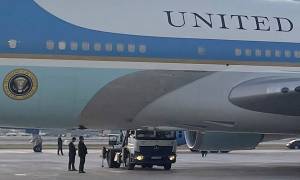



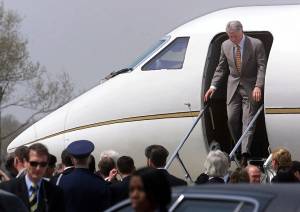










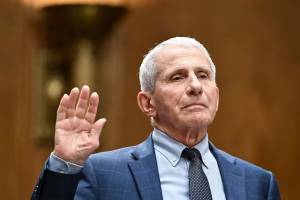
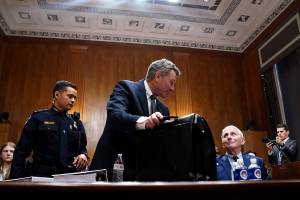





 peej
peej Carissa
 bostonboomer
 dakinikat
 ecocatwoman
 jjlo
jjlo mablue2
 Mama Lopez
 peggysue22
 quixote
 skydancingguestblogger
 Mona (aka Wonk the Vote)



 Sky Dancing
Recent Comments