Posted: May 2, 2026 | Author: bostonboomer | Filed under: just because | Tags: abortion pills, cat art, caturday, Civil Rights, Donald Trump, Iran War, megalomania, mifepristone, Trump insanity, U.S. troops in Germany, voting rights, voting rights bill |
Good Day!!

Girl holding a cat, by Albert Anker, 1881
There was a lot of discouraging news yesterday, as is usually the case under Trump’s presidency. An appeals court in Louisiana temporarily limited access to abortion pills; we’re still adjusting to the Supreme Court’s voting rights decision; Trump and Hegseth are pulling 5,000 troops out of Germany for no good reason; the Iran war continues, but Trump is pretending it’s over; Trump is insane and getting worse. Here’s the latest:
Tierney Sneed at CNN: Appeals court blocks FDA rule that allows women to obtain abortion drugs by mail.
A federal appeals court temporarily reinstated a nationwide requirement that abortion pills be obtained in person, undermining access to the method of abortion that has only grown more widespread since the US Supreme Court overturned Roe v. Wade.
Friday’s ruling from the 5th US Circuit Court of Appeals is a major victory in the anti-abortion movement’s war against medication abortion, which now accounts for roughly two-thirds of all abortions in the United States.
The ruling stems from a lawsuit filed by Louisiana last year against the US Food and Drug Administration, after President Donald Trump’s administration refused to act on calls to reinstate the in-person dispensing requirement for abortion pills through the regulatory process.
The opinion was written by Trump-appointed Circuit Judge Kyle Duncan, joined by Circuit Judges Leslie Southwick and Kurt Engelhardt, who were appointed by Presidents George W. Bush and Trump, respectively.
Referring to Louisiana abortion prohibitions, they wrote that the current federal regulations create “an effective way for an out-of-state prescriber to place the drug in the hands of Louisianans in defiance of Louisiana law.”
Mifepristone manufacturer Danco Laboratories has asked the 5th Circuit to put its ruling on hold for seven days so it can appeal.
Since the Covid-19 pandemic, abortion-seekers have been able to obtain mifepristone – one of the two drugs in the medication abortion regimen – through telehealth appointments. President Joe Biden’s administration finalized rules that ended the requirement that the pills be obtained through an in-person doctor’s visit in 2023, after the US Supreme Court overturned the 1973 Roe precedent protecting abortion rights nationwide with Dobbs v. Jackson Women’s Health Organization.
Louisiana alleged that that regulatory maneuver was aimed at undermining the abortion ban that went into effect in the state with the reversal of Roe and says that now, hundreds of abortions are occurring every year within its borders because women are able to obtain pills via mail after telehealth visits with providers.
Read more at CNN.
Gabrielle Cannon at The Guardian: US appeals court blocks mail-order access to abortion drugs.
Access to mifepristone, the FDA-approved medication used to end pregnancy, could become severely limited following a ruling from US appeals court on Friday, which temporarily blocked the drug from being dispensed through the mail.
The decision is for now the most sweeping threat to abortion access since the supreme court rolled back abortion rights in 2022, said Kelly Baden, vice-president at the Guttmacher Institute, an abortion rights advocacy group.
“If allowed to stand, it would severely restrict access to mifepristone in every state, including those where abortion is broadly legal and where voters have acted to protect abortion rights,” she said.
The so-called “abortion pill” is part of a two-drug regimen backed by decades of evidence for its efficacy and safety, and is used in the majority of abortions in the US.
Usage has risen in recent years, especially in the aftermath of the 2022 ruling from the supreme court that overturned federal protections for a right to an abortion. In the year after that decision, the FDA formally modified its regulations to allow the drug to be prescribed online, expanding its use even in states where abortion care was being constricted.
The drug has become a key target for the anti-abortion movement, and a series of lawsuits have challenged the drug’s initial approval in 2000 and the subsequent rules making it easier to obtain.
And Trump controls the FDA.
Meanwhile, with the FDA now under Trump, the agency has opened a review of the medication. Once this analysis is completed, officials at the agency said, they will determine if changes to its regulations are warranted.

The Girl with the Cats, by Christian Kroag, 1909
Reproductive rights advocates have voiced concerns that the review could further limit mifepristone’s use, despite the evidence supporting its safety.
Developed in France in the 1980s, mifepristone is used around the world and is authorized in 96 countries. Its use is backed by roughly four decades of peer-reviewed research, according to a 2025 brief written by public health experts at the Johns Hopkins School of Medicine.
“Anti-abortion politicians have just made it much harder for people everywhere in the country to get a medication that abortion and miscarriage patients have been safely using for more than 25 years,” Julia Kaye, a senior staff attorney for the Reproductive Freedom Project of the ACLU, said in a statement.
Some relevant commentary from Jessica Valenti at Abortion Everyday: My Favorite Abortion.
This week, U.S. Rep. Brandon Gill asked an understandably confused American University scholar to name her “favorite type of abortion.” Law professor Jessica Waters went before a House Judiciary subcommittee to talk about the Freedom of Access to Clinic Entrances (FACE) Act; instead, she was questioned by a visibly pleased with himself Texas lawmaker who clearly crafted his question to be a viral social media moment.
When you see Rep. Gill’s shit-eating grin, you’ll know exactly who he is.
Since Rep. Gill is so interested in our favorite types of abortions, I thought I’d share a few of mine.
My favorite type of abortion is the one that prevents a raped ten-year-old from breaking her pelvis in childbirth.
I also like abortions that keep women from carrying dead fetuses for weeks on end, which is what happened to Marlena Stell in Rep. Gill’s home state of Texas.
My favorite abortions are the kind that stop women from going septic, or prevent 28-year-olds from losing both of their fallopian tubes.
Another favorite? The abortion that means a Texas 21-year-old won’t be forced to carry a fetus developing without a head.
I like the abortion that means a pregnant mother of five with cervical cancer doesn’t have to beg a hospital panel for chemotherapy.
I like the abortion that doesn’t force a woman to travel far from home when faced with a fatal fetal abnormality.
I really like the abortion that stops patients from having to plead for help in videos made in hospital parking lots.
My favorite types of abortions are the ones that allow women to live. Maybe if Candi Miller, or Amber Nicole Thurman, or Tierra Walker had access to abortion, they would still be here.
My favorite types of abortions are the ones that allow women to go to college.
My favorite types of abortions are the ones that let women leave abusive relationships.
My favorite kinds of abortions are the ones that mean women get to choose their own life path, to decide what is best for them, and to figure out if and when they want to start a family.
I suppose this case will ultimately end up in the Supreme Court. Who knows what they will do with it?
And of course we’re still dealing with the aftermath of the Roberts Court’s decision gutting the Voting Rights Act.
An opinion piece by Nikolas Bowie and Daphna Renan at The New York Times (gift link): Ruling by Ruling, the Supreme Court Is Undoing the Civil Rights Movement.
With its decision this week in Louisiana v. Callais, the Supreme Court gutted a core part of the Voting Rights Act, Congress’s landmark prohibition on voting rules that have the effect of excluding people of color from the political process. In doing so, the court has, not for the first time, claimed an authority to reject laws passed by Congress in service of equal justice and a free society.

By Susanne Clements
And it has effectively killed the Second Reconstruction, the mid-20th-century civil rights revolution. In the face of this decision, Congress must once again defend democracy from a hostile court. A plan of action already exists.
When the Supreme Court challenged the first Reconstruction 150 years ago, abolitionists and Republicans in Congress debated measures ranging from declaring certain federal laws beyond judicial reach to changing the number of justices. The partial measures they enacted saved Reconstruction — for a time. But more relevant for us today are the comprehensive reforms they proposed but never fully enacted. These reforms offer us and our representatives in Congress the tools we need now.
In the era surrounding the Civil War, opponents of slavery confronted a Supreme Court that was threatening their life’s work. In Dred Scott v. Sandford, in 1857, the court declared unconstitutional the Missouri Compromise — a congressional statute banning the spread of slavery in federal territory. A decade later, the court similarly menaced the Reconstruction laws that Congress was enacting to begin the project of multiracial democracy amid the wreckage of the former Confederacy.
But Congress did not submit to this judicial rule. Members of an ascendant Republican Party decried a court “inflated with supremacy” and declared that whenever a decision is, “in the judgment of Congress, subversive of the rights and liberties of the people,” it is the “solemn duty of Congress” to override it. In 1862, Congress and President Abraham Lincoln enacted legislation that banned slavery in places the Dred Scott decision had protected it. Congress also drafted the 13th, 14th and 15th Amendments to the Constitution, all of which advanced Congress’s goals of freedom and political equality while empowering Congress to enforce its terms by “appropriate legislation.”
When the postwar court appeared likely to challenge legislation Congress considered “appropriate” to enforce these amendments, Congress changed the size of the court. The House of Representatives then passed a bill that prohibited the court from invalidating any federal law without the concurrence of two-thirds of the justices. Representative John Bingham of Ohio, the primary author of the 14th Amendment, insisted that such a requirement was necessary to prevent a second Dred Scottdecision. Some members agreed but pushed for a unanimity rule (concurrence among all the justices) instead.
In the Senate, the author of the 13th Amendment, Lyman Trumbull of Illinois, proposed that Congress declare its Reconstruction Acts “political in their character, the propriety or validity of which no judicial tribunal is competent to question.” As the threat from one pending Supreme Court case became urgent, Congress enacted a narrower but decisive measure stripping the court of appellate jurisdiction over the particular challenge before it.
That strategy worked. Disciplined by Congress, the court declined to interfere with its abolition or Reconstruction Acts. As federal prosecutors and lower courts enforced these statutes, over 750,000 Black Americans voted for the first time. Black men even took seats in Congress, where they helped draft and pass the nation’s first national voting rights laws.
Use the gift link to read the rest if you’re interested.
Why on earth does Trump want U.S. troops out of Germany? Because German Chancellor Friedrich Merz hurt his feelings.

By Nelly Tsenova, Bulgarian artist
NBC News: Trump administration is pulling 5,000 troops from Germany.
The U.S. is withdrawing approximately 5,000 troops from Germany, Pentagon officials said Friday, after President Donald Trump was angered by criticism from the German chancellor over the war with Iran.
The move would include one brigade combat team as well as other forces inside Germany, the officials said. The decision does not appear to affect the U.S. military’s massive medical support bases, like Landstuhl, where thousands of troops, including those who have been injured during the war, have been taken for medical treatment.
The decision was a direct response to comments made by Chancellor Friedrich Merz, but also reflected Trump’s frustration that U.S. allies aren’t doing enough, according to a senior Pentagon official. Trump has been threatening Germany and other NATO allies over their refusal to engage in the U.S. and Israel-led war on Iran. He suggested earlier this week he might pull troops from Germany.
“The Europeans have not stepped up when America needed them,” the official said. “This cannot be a one-way street.”
Chief Pentagon spokesperson Sean Parnell confirmed the withdrawal figure in a statement Friday and said it would be completed over the next six months to a year.
“This decision follows a thorough review of the Department’s force posture in Europe and is in recognition of theater requirements and conditions on the ground,” he said.
I’m pretty sure that last claim is a lie.
Mark Hertling at The Bulwark: The Last Time We Reduced Troops in Europe, a War Broke Out.
ONE OF THE BIGGEST MISTAKES of my career wasn’t something I did. It was something I failed to prevent.
I was commander of U.S. Army Europe in the early 2010s when U.S. forces were being drawn down in the European theater. I argued—forcefully, with member of Congress, the administration and the Department of Defense, and even my military commanders—that we shouldn’t do it.
In the final throes of the discussion, I pleaded to keep just one more tank brigade combat team on the continent. Those tanks, armored vehicles, and supporting forces would have signaled not to our allies but to our foe, Putin, presence and commitment. I believed then, as I do now, that removing that force created an opportunity for Russia to test the NATO alliance and to pursue its longstanding objective of expanding its influence.
I wasn’t persuasive enough. My arguments fell on deaf ears, and the brigade’s soldiers were ordered to return to the United States. Not long after, Russia seized Crimea and invaded Ukraine’s Donbas region. I won’t claim that the decisions of those who were my superiors caused that aggression—but I believe it contributed to it. I remember a warning from the then-president of Georgia, Mikheil Saakashvili, who told me plainly that if we pulled that kind of capability out of Europe, Moscow would act.

By Sylvia Anita, 1968
He was right. I still question myself as to how I could have been more persuasive.
On Friday night, when I heard that Secretary of Defense Pete Hegseth announced a reduction of 5,000 U.S. troops in Europe based on what he called a “thorough review”—but more likely because of the desire of President Donald Trump’s retribution against German Chancellor Friedrich Merz for his recent comments about the war in Iran—I hear an echo of the argument from more than a decade ago. And I worry we are about to make an even bigger mistake.
I WOULD LIKE TO SEE the Department of Defense’s “thorough review.” Because I was part of a similar one conducted over a decade ago. I helped plan and later execute the last major transformation of U.S. Army forces in Europe—one that took that force from 90,000 troops to about 34,000 between 2004 and 2012.That wasn’t a decision made quickly or casually. It took years of analysis, coordination, and constant negotiation across governments, services, and commands. It required aligning troop movements with deployments to Iraq and Afghanistan to avoid tearing apart families and units. It involved extensive consultation with host nations such as Germany and Italy, where political, legal, and economic considerations were as important as military considerations. It required detailed planning for base closures, infrastructure consolidation, and a plan for a strategic long-term presence on the continent. It also took unique action to ensure families of those forces were treated well as we hurried their return to the United States in massive waves of base and housing closures. The planning and the execution were phased deliberately, executed carefully, and constantly reassessed. Those are the kinds of procedures and actions that constitute a real, “thorough review.” I don’t believe for a second that there was anything like that kind of process before the withdrawal announcement made yesterday evening.
This decision does not bear the hallmarks of a plan that resulted from careful thought, deliberation, consultation, and diplomacy. It reflects a misunderstanding of what U.S. forces in Europe are and what they do to contribute to the security of both the United States and our European allies.
Read the rest at the Bulwark link.
The Iran war isn’t over, but Trump is trying to pretend it is. He claims he has already won it. He’s created mess and doesn’t know how to clean it up. He is truly insane and he controls our nuclear arsenal.
The Washington Post: Trump says Iran conflict is ‘terminated’ as he hits congressional deadline.
President Donald Trump claimed in a letter to Congress on Friday that hostilities with Iran have “terminated” as he reached a legal deadline that requires military operations to halt unless lawmakers authorize force.
Trump’s claim came as the United States continues to enforce a naval blockade of Iran and as he declined to rule out additional strikes on the country.

Country Girl and her Kitten, Charles Lansdelle
The War Powers Resolution of 1973 requires presidents to remove U.S. forces from any conflict that Congress has not authorized within 60 days of the White House notifying Congress of hostilities — a deadline that Trump hit on Friday.
Trump wrote in his letter to lawmakers Friday that the conflict has been effectively over since the United States and Iran agreed last month to a ceasefire.
“There has been no exchange of fire between United States Forces and Iran since April 7, 2026,” Trump wrote in the letter, obtained by The Washington Post. “The hostilities that began on February 28, 2026, have terminated.”
The president’s argument echoed what Defense Secretary Pete Hegseth said Thursday in testimony before the Senate Armed Services Committee. Trump also suggested Friday that he believes the requirement to withdraw U.S. forces within 60 days is unconstitutional.
“Most people consider it totally unconstitutional,” Trump told reporters. “Also, we had a ceasefire, so that gives you additional time.”
Democrats immediately pushed back. Senate Minority Leader Charles E. Schumer (D-New York) described Trump’s argument in a post on X as “bullshit.”
“President Trump declaring the war with Iran ‘terminated’ doesn’t reflect the reality that tens of thousands of U.S. service members in the region are still in harm’s way, that the Administration continually threatens to escalate hostilities or that the Strait of Hormuz remains closed and prices are skyrocketing at home,” Sen. Jeanne Shaheen (New Hampshire), the top Democrat on the Senate Foreign Relations Committee, said in a statement. “President Trump entered this war without a strategy and without legal authorization and today’s announcement doesn’t change either fact.”
Meanwhile:
CNN Live Updates: Iran says renewed conflict possible after Trump rejects latest peace proposal.
— Shaky peace: A senior Iranian military official has said renewed conflict with the US is possible after President Donald Trump rejected Iran’s latest peace proposal. On Friday, Trump said the US may be “better off” if no deal is reached, after stating he was unsatisfied with Tehran’s offer….
— Sanction threat: The US has warned shipping companies they could face sanctions if they pay tolls to Iran to safely use the Strait of Hormuz. Meanwhile, analysts say the impact of the waterway’s closure on the economy will deepen in the coming weeks.
— In Lebanon: Israel’s military warned residents in southern Lebanon to evacuate amid a fragile ceasefire. Several people were killed in Israeli strikes Friday.
— A senior Iranian military official has said renewed conflict with the US is “possible” after President Donald Trump rejected the latest peace proposal from Tehran. The nations are currently observing a ceasefire.
On Friday, Trump said the US may be “better off” if no deal is reached.
Meanwhile, official Iranian outlets restated an uncompromising position on navigation through the Strait of Hormuz.
I’m going to end with some recent examples of Trump’s insanity.
Josh Marcus at The Independent: Trump is calling himself ‘the most powerful person to ever live’ in private conversations, allies say.
President Donald Trump, a former reality TV star known for his taste in all-gold everything, has never been one for modesty, but the Republican has in recent days begun speaking about himself as a figure of all-time historical power, according to allies.
“He’s been talking recently about how he is the most powerful person to ever live,” a Trump confidant told The Atlantic. “He wants to be remembered as the one who did things that other people couldn’t do, because of his sheer power and force of will.”
“He is unburdened by political concerns and is able to do what is truly right rather than what is in his best political interests,” an administration official added in an interview with the magazine. “Hence the decision to strike Iran.”
Unlike any U.S. leader in recent history, President Trump has pushed the boundaries of what is legal within the U.S., while making massive unilateral gambles on the world stage: threatening a U.S. takeover of allied Greenland, kidnapping the leader of Venezuela, and launching a war with Iran.

Country Girl and her Kitten, Charles Lansdelle
Unreal. The man is a megalomaniac. He’s also demonstrating that by trying to put his name on everything from the Kennedy Center to airports, National Park passes, passports, and even dollar bills.
Trump has begun holding campaign rallies again. Yesterday he gave an unhinged speech at the Villages in Florida. Dan Diamond at The Washington Post: Trump returns to public events, delivering profane speech.
President Donald Trump said Friday that he was eager to deliver his first public speech since he was hustled from a hotel stage Saturday, after an attempted shooter breached the perimeter of the White House correspondents’ dinner.
And the president picked a familiar stop for his return address: The Villages, a retirement community in Florida and a longtime Republican stronghold.
“They want me to be in a secure place. I said, ‘What’s more secure than The Villages?’” Trump said to applause, as he kicked off a 94-minute event that featured several guests — and was peppered with Trump’s profane jokes and complaints, including about the president’s microphone setup.
“Turn up the mic!” the president said, criticizing the logistics. “I don’t believe in paying people that do a bad job. … I’m screaming my ass off.” [….]
Trump seemed unburdened [by the events at the White House Correspondent’s Dinner]. He mocked Democrats in crass terms, including one unnamed lawmaker that he said was a “sleazebag,” for focusing on affordability ahead of the midterm elections.
“They’ve got one good line of bullshit,” the president said, blaming Democrats for policies that he said had led to inflation. Trump also polled the crowd on which nickname he should use to mock former president Joe Biden, who Trump said had “set a record, most falls in history.”
I don’t know how that went over in The Villages, but most voters are not going to like his attitudes about affordability. He also indicated that he’s bored by information about Medicare and Medicaid.
Trump also gestured toward some of his policies, saying that his administration was defending entitlement programs such as Social Security and Medicare, before acknowledging that he wasn’t particularly focused on the details.
“We have a man here who knows more about Medicaid, Medicare, medical crap than any human being. Where’s Dr. Oz? Where the hell are you, stand up,” Trump said, referring to Mehmet Oz, the administrator of the Centers for Medicare and Medicaid Services. “It’s the most boring trip I’ve ever made. He’s telling me about Medicare, Medicaid. All I want to do is take care of you, I don’t care. I said, ‘You work out the details.’”
He also performed his “greatest hits,” like the transgender weightlifter and “dancing” to “YMCA,” which he says people claim is a gay anthem but he loves it anyway. He also told the audience that it is “treasonous” to claim that he’s not winning the Iran war.
I could go on and on, but this getting way too long. I hope you found something here worth reading. Enjoy the rest of the weekend!
Did you like this post? Please share it with your friends:
Posted: June 13, 2020 | Author: bostonboomer | Filed under: morning reads, U.S. Politics | Tags: Abraham Lincoln, caturday, Civil Rights, Civil War, Donald Trump, Fox News, Harris Faulkner, John F. Kennedy, Racism |

Good Morning!!
On Thursday, June 11, Lawrence O’Donnell discussed the speech on Civil Rights that President John F. Kennedy gave from the Oval Office on that day in 1963. The purpose of the speech was to propose the Civil Rights bill that passed after Kennedy’s assassination. Fifty-seven years later, we’ve made some progress, but systemic racism still runs rampant in this country. I thought I’d share some excerpts from that long-ago speech today.
NPR: John F. Kennedy’s Address on Civil Rights.
On June 11, 1963, President John F. Kennedy addressed the nation on the most pressing domestic issue of the day: the struggle to affirm civil rights for all Americans. His administration had sent National Guard troops to accompany the first black students admitted to the University of Mississippi and University of Alabama.
Excerpts selected by NPR:
…It ought to be possible… for American students of any color to attend any public institution they select without having to be backed up by troops.
…It ought to be possible for American consumers of any color to receive equal service in places of public accommodation, such as hotels and restaurants and theaters and retail stores, without being forced to resort to demonstrations in the street, and it ought to be possible for American citizens of any color to register and to vote in a free election without interference or fear of reprisal.

Painting by Ekaterina Mateckaya
It ought to be possible, in short, for every American to enjoy the privileges of being American without regard to his race or his color. In short, every American ought to have the right to be treated as he would wish to be treated, as one would wish his children to be treated. But this is not the case….
…This is not a sectional issue…Nor is this a partisan issue…This is not even a legal or legislative issue alone. It is better to settle these matters in the courts than on the streets, and new laws are needed at every level, but law alone cannot make men see right.
We are confronted primarily with a moral issue. It is as old as the scriptures and is as clear as the American Constitution.
The heart of the question is — whether all Americans are to be afforded equal rights and equal opportunities. Whether we are going to treat our fellow Americans as we want to be treated. If an American, because his skin is dark, cannot eat lunch in a restaurant open to the public, if he cannot send his children to the best public school available, if he cannot vote for the public officials who represent him, if, in short, he cannot enjoy the full and free life which all of us want, then who among us would be content to have the color of his skin changed and stand in his place? Who among us would then be content with the counsels of patience and delay?
One hundred years of delay have passed since President Lincoln freed the slaves, yet their heirs, their grandsons, are not fully free….
…It is not enough to pin the blame on others, to say this is a problem of one section of the country or another, or deplore the fact that we face. A great change is at hand, and our task, our obligation, is to make that revolution, that change, peaceful and constructive for all.
Those who do nothing are inviting shame as well as violence. Those who act boldly are recognizing right as well as reality…
You can watch the entire speech at C-Span. I watched it yesterday and it made me so sad. The comparison between Kennedy and the current occupant of the White House so so glaring. Not only was Kennedy capable of compassion and empathy, but he also spoke eloquently, in complete sentences and paragraphs. Today we have a fraudulent “president” who babbles nonsense, effortlessly lies about everything and has no idea how to do the job he holds even if he actually wanted to be a leader.

Cat in the window, by Joanna DeRitis
Speaking of Trump’s incoherent babbling, on Thursday he gave another strange Fox News interview with Harris Faulkner (who is black). For Fox, the questions were pretty tough. You can read the transcript and watch video excerpts at Factbase.
The most stunning moment in the interview was when Trump claimed to have done more for black Americans than any previous president, including Abraham Lincoln. Business Insider: Trump says Abraham Lincoln ‘did good’ for the Black community but that ‘the end result’ is ‘questionable.’
“So I think I’ve done more for the Black community than any other president, and let’s take a pass on Abraham Lincoln because he did good, although it’s always questionable, you know, in other words, the end result —” Trump said before Faulkner interjected.
“Well, we are free, Mr. President, so I think he did pretty well,” she said, referring to Lincoln.
“We are free,” Trump said. “You understand what I mean.”
“Yeah, I get it,” Faulkner said.
This isn’t the first time Trump has claimed he’s done more for the Black community than his predecessors.
“This may well be the president’s most audacious claim ever,” Michael Fauntroy, a professor of political science at Howard University, told The New York Times earlier this month. “Not only has he not done more than anybody else, he’s done close to the least.”
Of course it’s not really clear what Trump was trying to say, because his speech is so incoherent. At Slate, Jeremy Stahl tries to make sense of Trump’s words: What Was Trump Trying to Say About Abraham Lincoln?
A lot of people saw the transcript of those words—and perhaps watched the clip—and interpreted Trump as having said that “the end result” of Lincoln’s presidency—i.e., winning the Civil War, preserving the union, and ending the atrocity of chattel slavery—was “always questionable.” [….]

By Utagawa Hiroshige
I would never definitively state that I believed Trump didn’t mean the most racist possible interpretation of one of his often hard-to-grasp word salads. Indeed, he has in the past questioned the fact that the Civil War needed to occur, stating in 2017 that had Andrew Jackson been president at the time he would have stopped the Civil War from happening because he would have realized “there’s no reason for this.”
“The Civil War, if you think about it, why? People don’t ask the question, but why was there the Civil War? Why could that one not have been worked out?” Trump said back then.
As my former colleague, Jamelle Bouie, wrote at the time, that statement—apparently that Jackson could have come up with a perfect “deal” to prevent the Civil War—was as dangerous as it was ahistorical.
Given that past remark, it’s certainly plausible that Trump’s brain is so rotted from his own racism that he would say that the end results of Lincoln’s presidency were “questionable.” Based on the context of the question, though, and more recent comments from Trump, I think that is unlikely.
I interpret this particular word salad to be an attempt by Trump to validate his recent tweet that his administration “has done more for the Black Community than any President since Abraham Lincoln.”
Trump was likely attempting to say that while “I think I’ve done more for the black community than any other president,” he would ask that in such a ranking “let’s take a pass” on including Lincoln, because it’s an unfair comparison, but—even if he were to go head-to-head with Lincoln for the title of “best president for black people ever”—despite the fact that Lincoln “did good,” it would still be “always questionable” whether Trump was better, because you have to consider “the end result” of each man’s presidency.
Okay . . . I guess that’s as good an interpretation as any.
At Vox, Zach Beauchamp discusses another howler from the interview: Trump: “The concept of chokehold sounds so innocent, so perfect.”
When asked about police use of chokeholds on suspects like George Floyd, who was killed after a Minneapolis officer pinned him by the neck with his knee for nearly nine minutes, Trump initially told Faulkner that “I don’t like chokeholds,” even saying that “generally speaking, they should be ended.” But he contradicted that pretty quickly, saying that when you’ve got someone who is “a real bad person … what are you gonna do now — let go?”
He even went further, saying that “the concept of chokehold sounds so innocent, so perfect,” if a lone police officer is attempting to detain someone.

Deborah DeWitt, Birdwatching
His position, as far as I can tell, seems to be that maybe sometimes individual officers need to use chokeholds, but the more police there are, the less likely it is they’ll need to use one:
TRUMP: I think the concept of chokehold sounds so innocent, so perfect. And then you realize, if it’s a one-on-one. But if it’s two-on-one, that’s a little bit a different story. Depending on the toughness and strength — you know, we’re talking about toughness and strength. There’s a physical thing here too.
FAULKNER: If it’s a one-on-one for the [officer’s] life …
TRUMP: And that does happen, that does happen. You have to be careful.
The most relevant part here isn’t the president’s views on the details of self-defense tactics, but rather the lack of empathy in the way he talks about the issue. The only world in which police using chokeholds could sound “innocent” or “perfect” is a world in which you don’t think about what happens to people when they’re literally being choked — or one where you assume that it won’t happen to people like you.
A recent LA Times investigation found that 103 people were “seriously injured” by police using “carotid neck restraints” in California between 2016 and 2018. Black people, who make up 6.5 percent of the state’s population, were 23 percent of those injured in such holds.
Trump’s thinking seems so deeply shaped by his sense of generalized police innocence, his unwillingness to really process the fact of racial discrimination in police use of force, that he’s capable of saying out loud that chokeholds sound “innocent.”
What all this interpretation really boils down to is that Trump is disastrously incapable of doing the job of POTUS. And yet we’re stuck with him, so writers struggle to figure out what the hell he is talking about.
Stories to check out today
David Smith at The Guardian: ‘He just doesn’t get it’: has Trump been left behind by America’s awakening on racism?
The Washington Post: Trump says he’ll ‘go on and do other things’ if he loses in November.
Julian Borger at The Guardian: ‘Trump thought I was a secretary’: Fiona Hill on the president, Putin and populism.
The New York Times: Trump’s Actions Rattle the Military World: ‘I Can’t Support the Man’
NBC News: From ‘beautiful letters’ to ‘a dark nightmare’: How Trump’s North Korea gamble went bust.
The New York Times: Trump Moves Tulsa Rally Date ‘Out of Respect’ for Juneteenth.
The Daily Beast: Survivors of KKK’s Ax Handle Attack Appalled at Trump Speech.
The Washington Post: Republicans and Trump want a Jacksonville convention party. Some locals are worried about the area’s health.
The Daily Beast: A Black Man Was Found Hanging From a Tree—Residents Don’t Buy That It Was a Suicide.
Jonathan Chait at New York Magazine: Michael Flynn Writes Column Confirming He Is Definitely Insane.
The Atlantic: Coronavirus Researchers Tried to Warn Us. Before the pandemic hit, they struggled to get funding that might have helped us fight COVID-19.
USA Today: Fired Florida scientist builds coronavirus site showing far more cases than state reports.
Did you like this post? Please share it with your friends:
Posted: July 15, 2019 | Author: dakinikat | Filed under: morning reads | Tags: Asylum seekers, civil liberties, Civil Rights, Climate change diaspora, Honduras, Isle de Jean Charles, people of color, Racism, Rule of Law |
 Good Morning Sky Dancers!
I think I might see a bit of sunlight today after days of drizzle from what’s left of Hurricane Barry which is basically a low moving through the middle of the country. Fortunately, the storm hit a big patch of dry air and didn’t fire up as much as possible. It also was slow moving so surge and the river cresting wasn’t quite as widespread as was feared. Climate change is a huge problem down here around the Gulf.
Fox News reported the rescue of 12 folks by the US Coast Guard on a small barrier island that is mostly underwater now days.
A dozen people stranded on a remote Louisiana island by Tropical Storm Barry are being rescued by the U.S. Coast Guard.
The rescue was carried out on Isle de Jean Charles, a Terrebonne Parish community that was cut off by rising water from the storm. Isle de Jean Charles is about two hours south of New Orleans.
Petty Officer Lexie Preston told the Associated Press that some people were on rooftops and that four people and a cat had already been taken from the island on a helicopter. She said a boat is also heading to the area to help get the rest of the people off the island.
The Coast Guard reported that none of the rescued strandees, including four who were elderly, were injured, WWL-TV reported.
Isle de Jean Charles is a sacred indigenous place and nearly all of its residents have become part of the Climate Change Diaspora.
Isle de Jean Charles is a narrow island in the bayous of South Terrebonne Parish, Louisiana. A place of immense physical beauty and great biodiversity, it is most importantly home to the Isle de Jean Charles Band of Biloxi-Chitimacha-Choctaw Tribe.
For our Island people, it is more than simply a place to live. It is the epicenter of our Tribe and traditions. It is where our ancestors survived after being displaced by Indian Removal Act-era policies and where we cultivated what has become a unique part of Louisiana culture. Today, the land that has sustained us for generations is vanishing before our eyes. Our tribal lands are plagued by a host of environmental problems — coastal erosion and salt-water intrusion, caused by canals dredged through our surrounding marshland by oil and gas companies, land sinking due to a lack of soil renewal or “crevasse,” because of the construction of levees that separated us from the river, and rising seas. These environmental changes have led to increasing flood risk and changes in our life ways. For example, our Island needed a levee, but the small levee that protects our Island during high tide has also led our bayou to become stagnant, killing the ecosystem we once had. The need for reliable access to jobs and services up the bayou have forced many of our people to nearby areas, including Pointe-aux-Chenes, Bourg, Montegut, Chauvin, along Bayou Grand Caillou, and Houma. For over fifteen years we have been planning a Tribal Resettlement in order to bring our people back together, rejuvenate our ways of life, and secure a future for our Tribe.
 You can read more about their plight here: “On the Louisiana Coast, A Native Community Sinks Slowly into the Sea” from Yale Environment 360.
The Biloxi-Chitimacha-Choctaw Indians of southern Louisiana have been called America’s first climate refugees. But two years after receiving federal funding to move to higher ground, the tribe is stuck in limbo, waiting for new homes as the water inches closer to their doors.
…
Of the 35 residential structures left on the island, many stand empty, slowly rotting back into the landscape. Due to unprecedented soil subsidence, sea level rise, and the thousands of oil and gas canals that have allowed saltwater intrusion and erosion, the once-wooded landscape is slowly disappearing beneath the sea.
Since 1930, Louisiana’s coastal plain has lost more than 2,000 square miles of land – about the size of Delaware, according to the U.S. Geological Survey. Isle de Jean Charles, the historical homeland of the Biloxi-Chitimacha-Choctaw Indians, is the most desperate example of the state’s vanishing coast.
Climate Change also is playing a role in the migration north from South America. Food Shortages–simultaneously due to lack of normal rain along with incredible record breaking heat and storms–will cause an environmental diaspora to grow. We have started seen the farmers of Honduras come to our borders.
Some people here know about climate change, about the vast, complex forces of cambio climatico roiling the weather. Global warming has heated the air and driven away seasonal rains. It may have boosted the spread of bark-munching beetles, which ravaged pine forests surrounding El Rosario that had already been depleted by logging. The loss of the forests, in turn, diminished freshwater streams and sent temperatures in the village soaring still higher, residents say.
Migration to the United States from Honduras and its neighboring “northern triangle” countries — El Salvador and Guatemala — has climbed in recent years. The reasons are complex, including poverty, unemployment and violence. But the increase in migration also coincides with the drought, which began in 2014, and those living in Central America’s so-called dry corridor, which is adjacent to El Rosario, say lack of food is the primary reason people leave, according to a United Nations report.
Last summer, the Honduran government declared an emergency because of food shortages, joining governments in El Salvador and Guatemala, which issued similar alerts. Almost 100,000 families in Honduras and 2 million people across the region lacked adequate food. Making matters worse, a pathogen that scientists believe is worsened by climate change has ravaged the country’s coffee plantations, which means that migrant farm laborers who count on the coffee harvest for income can’t find work.
Researchers and international aid workers say that for Honduran family farmers, like those in El Rosario, to survive, they need support to adjust to the climate’s rapid changes, including instruction in planting drought-resistant crops and help conserving water.
 What is our Racist in Chief doing to address this issue?
The U.S. sends hundreds of millions of dollars in aid to Central America every year, but most of it gets directed to security, drug control or violence prevention programs, rather than agricultural or environmental support. Under the Obama administration, Congress doubled the fundingto the region from $338 million in 2014 to $754 million in 2016 and began directing more funding to climate and agriculture programs. The Trump administration has tried to cut funding dramatically — proposals Congress has rejected. Under the current budget, almost $530 million is directed toward Central America.
In March, President Donald Trump said his administration would cut aid to Central American countries to punish them for failing to stop migration flows. The administration made the cuts official in June, saying it would withhold some of the funds allocated by Congress for 2017 and would suspend all funds Congress approved for 2018. Critics have said this will only stoke more migration.
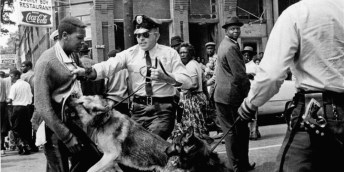 Well, today he upped the death and destruction that finds root in his racist, white nationalist demons. This is via the A/P and is breaking news: “Trump moves to end asylum protections for Central Americans”. This move comes after a weekend of some of the most vitriolic racist tweets this evil, evil man has ever tweeted. Yet the Republicans stand for this and with this.
The Trump administration on Monday moved to end asylum protections for most Central American migrants in a major escalation of the president’s battle to tamp down the number of people crossing the U.S.-Mexico border.
According to a new rule published in the Federal Register , asylum seekers who pass through another country first will be ineligible for asylum at the U.S. southern border. The rule, expected to go into effect Tuesday, also applies to children who have crossed the border alone.
The rule applies to anyone arriving at the U.S.-Mexico border. Sometimes asylum seekers from Africa and other continents arrive there, but most migrants arriving there are Central Americans.
There are some exceptions: If someone has been trafficked, if the country the migrant passed through did not sign one of the major international treaties that govern how refugees are managed (though most Western countries have signed them) or if an asylum-seeker sought protection in a country but was denied, then a migrant could still apply for U.S. asylum.
But the move by President Donald Trump’s administration was meant to essentially end asylum protections as they now are on the southern border, reversing decades of U.S. policy on how refugees are treated and coming as the government continues to clamp down on migrants and as the treatment of those who made it to the country is heavily criticized as inhumane.
Attorney General William Barr said that the United States is “a generous country but is being completely overwhelmed” by the burdens associated with apprehending and processing hundreds of thousands of migrants at the southern border.
“This rule will decrease forum shopping by economic migrants and those who seek to exploit our asylum system to obtain entry to the United States,” Barr said in a statement.
The policy is almost certain to face a legal challenge. U.S. law allows refugees to request asylum when they arrive at the U.S. regardless of how they did so, but there is an exception for those who have come through a country considered to be “safe.” But the Immigration and Nationality Act, which governs asylum law, is vague on how a country is determined “safe”; it says “pursuant to a bilateral or multilateral agreement.”
Right now, the U.S. has such an agreement, known as a “safe third country,” only with Canada. Under a recent agreement with Mexico, Central American countries were considering a regional compact on the issue, but nothing has been decided. Guatemalan officials were expected in Washington on Monday, but apparently a meeting between Trump and Guatemalan President Jimmy Morales was canceled amid a court challenge in Guatemala over whether the country could agree to a safe third with the U.S.
American Civil Liberties Union attorney Lee Gelernt, who has litigated some of the major challenges to the Trump administration’s immigration policies, said the rule was unlawful.
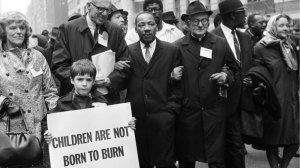 This rule basically says if any one passed through another country on the way to the US and didn’t ask for asylum there cannot ask for asylum in the US. This man has two immigrant wives. His mother was an immigrant. All but one of his children could actually be categorized as anchor babies via his rhetoric that’s applied to brown and black people in his demented mind. Melania Trump got documented on false pretenses. There is no explanation for what he does other than racism.
His tweet uproar started with attack on American Women serving in Congress this weekend. It was beyond appalling. Republicans are off somewhere in their cones of silence.
“Republicans Silent On Trump’s Racist Remarks To Congresswomen”, The president had urged the Democratic congresswomen to “go back” to the countries they came from Nina Golgowski and HuffPo.
Presidents Donald Trump’s urging of Democratic congresswomen to “go back” to the countries they came from on Sunday has drawn widespread condemnation, with congressional Democrats declaring his rhetoric racist, xenophobic and bigoted.
There was just one thing immediately missing (beyond an apology): a rebuke from their Republican counterparts.
The deafening silence came after Trump went on a Twitter rant against “‘Progressive’ Democrat Congresswomen” who, in his words, came from “countries whose governments are a complete and total catastrophe, the worst, most corrupt and inept anywhere in the world.”
Though he didn’t identify his targets by name, they appeared to be Reps. Alexandria Ocasio-Cortez of New York, Rashida Tlaib of Michigan, Ayanna Pressley of Massachusetts and Ilhan Omar of Minnesota. The four have been in the news lately amid increased tension between them and House Speaker Nancy Pelosi.
All four women of color have been outspoken critics of Trump’s handling of the immigration crisis along the U.S.-Mexico border. However, only Omar was born outside of the U.S., having immigrated as a child from Africa.
“When @realDonaldTrump tells four American Congresswomen to go back to their countries, he reaffirms his plan to ‘Make America Great Again’ has always been about making America white again,” Pelosi responded to Trump on Twitter shortly after. “Our diversity is our strength and our unity is our power.”
Michigan Rep. Justin Amash, who recently left the Republican Party to be an independent, also called Trump’s comments “racist and disgusting.”
 Here are some other reactions:
Los Angeles Times: Trump is truly America’s Bigot-in-Chief
Goldie Taylor / The Daily Beast: Trump Is a Racist. If You Still Support Him, So Are You.
Charles M. Blow / New York Times: Trump’s Tweets Prove That He Is a Raging Racist
Peter Baker / New York Times: Trump Fans the Flames of a Racial Fire
Greg Sargent / Washington Post: Trump just denied his attacks are racist. He only confirmed the worst.
Ever since President Trump launched his candidacy by declaring Mexicans to be “rapists,” Trump’s public racism has often included two additional important elements: an adamant refusal to apologize for it in the face of outrage, and an equally adamant denial that the offending language was racist in any way.
Central to Trump’s racism — and more broadly to Trumpism writ large — is not just the content of the racism itself. It’s also that he’s asserting the right to engage in public displays of racism without it being called out for what it is. A crucial ingredient here is Trump’s declaration of the ability to flaunt his racism with impunity.
Trump’s racist attack on nonwhite progressive lawmakers is following this pattern, and indeed, it’s worth looking at what has come next, which is also revealing and important.
As you’ve heard, Trump tweeted on Sunday that four outspoken Democratic congresswomen “originally came from countries” that are “corrupt” and a “catastrophe,” and that they should “go back” to them. Three of his targets (Alexandria Ocasio-Cortez, Rashida Tlaib and Ayanna Pressley) were born in the United States, and the fourth (Ilhan Omar) is a Somali refugee.
The remarks drew widespread condemnation, largely with the exception of Republicans. House Speaker Nancy Pelosi denounced Trump for wanting to make “America white again,” and, while some news organizations danced around what Trump had done, others explicitly labeled the comments “racist.”
Frankly, any one who is silent or supports Trump has no excuse to claim they’re not a racist.
 The criticism is even coming from our allies abroad. Bloomberg reports that: U.K. Leader Says Trump’s Tweets on Democrats Are ‘Completely Unacceptable’
U.S. President Donald Trump used “completely unacceptable” language to describe four female Democratic lawmakers, Prime Minister Theresa May’s spokesman told reporters on London in Monday, potentially exacerbating the recent tensions with Washington.
Trump posted a series of tweets on Sunday suggesting that four U.S. lawmakers, led by Alexandria Ocasio-Cortez of New York, should return to the “broken and crime infested places from which they came.”
May thinks “the language used to refer to these women was completely unacceptable,” her spokesman, James Slack, told reporters on Monday.
 Responses are coming from other members of Congress as well as the four women.
From Adrian Walker writing for the Boston Globe : “Ayanna Pressley brushes off Trump’s tweets — but not his treatment of refugees”.
Donald J. Trump — a man who clearly has too much time on his hands in the morning — began Sunday with a characteristically xenophobic Twitter rant against a group of progressive female members of Congress.
“So interesting to see ‘Progressive’ Democrat Congresswomen, who originally came from countries whose governments are a complete and total catastrophe, the worst, most corrupt and inept anywhere in the world (if they even have a functioning government at all), now loudly . . . and viciously telling the people of the United States, the greatest and most powerful Nation on earth, how our government is to be run,” he wrote. “Why don’t they go back and help fix the totally broken and crime infested places from which they came. Then come back and show us how . . . it is done. These places need your help badly, you can’t leave fast enough.”
Which is how I came to ask congresswoman Ayanna Pressley what she thought of being a target of the president of the United States.
“I never use the word you used — president — to describe him,” she said. “I refer to him as ‘the occupant.’ He simply occupies the space. He embodies zero of the qualities and the principles, the responsibility, the grace, the integrity, the compassion, of someone who would truly embody that office. It’s just another day in the world under this administration.”
Earlier, Pressley had tweeted a screenshot of Trump’s comments, along with her response: “THIS is what racism looks like. WE are what democracy looks like. And we’re not going anywhere. Except back to DC to fight for the families you marginalize and vilify everyday.”
 Maybe he’s in a grumpy mood because he didn’t get a bloodbath during his ICE raids? Who knows? From Bobby Allyn and NPR: ” Trump’s Nationwide Immigration Raids Fail To Materialize”.
President Trump’s threatened roundup of undocumented immigrant families this weekend that set migrants in many communities on edge showed few signs of materializing on Sunday, the second time rumors of a large-scale immigration enforcement operation failed to come to fruition.
Instead, in the cities where rumors of mass raids swirled, many immigrants stayed inside their homes, as jitters turned typically vibrant migrant markets and commercial corridors eerily quiet.
Immigrant advocates across the country, meanwhile, took to the streets to protest the promised roundup.
Immigration and Customs Enforcement would not confirm any arrests, nor would immigrant rights activists.
“The ACLU has not heard reports of any raids today,” Ruthie Epstein, the American Civil Liberties Union’s deputy director for immigration policy, told NPR.
Before Sunday, there were weekend reports of attempted arrests by ICE in New York, New Jersey and Chicago, where The New York Times reportedthat a mother and her daughters were apprehended, though the family was immediately released. But those actions appeared to be part of routine enforcement, not connected to a massive raid.
Still, fears of ICE catching migrants by surprise sent many into hiding on Sunday.
It’s time for all people that come from basic goodness, compassion, and desire for justice to speak out on all of this. It is time to deal with the pernicious institutional racism in this country and the blatant hateful racism promoted by the would be dickator of Trumpfuckistan, the elected Republicans that either fully support or enable it, and the icky deplorables that include those overly self-righteous but not righteous at all evangelicals.
What’s on your reading and blogging list today?
Did you like this post? Please share it with your friends:
Posted: October 25, 2016 | Author: bostonboomer | Filed under: morning reads, U.S. Politics | Tags: Bob Dylan, Bobby Vee, Buddy Holly, Civil Rights, Don McLean, Freedom Riders, JP "The Big Bopper" Richardson, music, notable deaths, Richie Valens, The Day the Music Died, Tom Hayden |

Bobby Vee
Good Afternoon!!
Two notable deaths hit home for me yesterday. One was 1960s activist Tom Hayden, and the other was one of my teen idols, singer Bobby Vee. I’ll start with him.
RIP Bobby Vee
I was in 6th grade on February 3, 1959, when three pop stars, Buddy Holly, Richie Valens, and JP “The Big Bopper” Richardson died along with their pilot Roger Peterson in a plane crash near Clear Lake, Iowa. They were on their way to a concert in Moorhead, Minnesota.
Holly’s band members Waylon Jennings, Tommy Alsup, and Carl Bunch, stayed behind with their broken-down tour bus. The Big Bopper had the flu, so Jennings gave up his seat, and Richie Valens won a coin toss to get his. Years later, that tragic day became known as “the day the music died.” after the Don McLean song.
Moorhead is just across the river from Fargo, North Dakota, my birthplace. Bobby Veline (later Bobby Vee) was a 15-year-old rhythm guitar player from Fargo who had recently joined a garage band. The awful crash led to Veline’s big break. The call went out for local bands to fill in for the lost stars. From The Fargo Forum: How ‘The Day the Music Died’ launched Fargoan Bobby Vee into music stardom.
Fifteen-year-old Fargoan Bobby Vee and his new band The Shadows stepped up to fill the bill at the Moorhead Armory show. With that, the singer/guitarist took his first step into rock history….
Robert Thomas Velline was born April 30, 1943, to Sydney and Saima Velline of Fargo. Raised in a musical household, young Bobby followed suit and started playing saxophone at Central High School.
“I wanted to rock out. We were playing all the standard band pieces, but I wanted to play ‘Yakety Yak,'” Vee recalled on his website biography….

The Shadows
When his older brother, guitarist Bill Velline, started playing with bassist Jim Stillman and drummer Bob Korum, Bobby begged to join, but they thought he was too young. He won them over with a velvety smooth voice. The group hadn’t played together much and didn’t have a name until just before taking the stage at the Moorhead Armory that fateful night.
“I remember being petrified when the curtains opened,” Vee told The Forum 19 years later. “I was blinded by the spotlight and just numb all over.”
The nerves didn’t last. That June he and The Shadows recorded “Suzie Baby” and the song was on the radio later that summer. Hits like “Devil or Angel” and “Rubber Ball” kept coming. In 1961 he would release his only No. 1 song, “Take Good Care of My Baby,” written by Carole King and Gerry Coffin. The follow-up, “Run to Him,” peaked at No. 2 and in 1962 he would reach No. 3 with “The Night Has a Thousand Eyes.”
Velline’s band didn’t even have a name when they went on stage. The emcee asked him for a name, and he looked at his bandmates and saw their shadows in the spotlight; so he told the emcee their name was “The Shadows.” Afterward, an agent gave Velline his card and the rest was history.
When Bobby Vee’s hit song “Take Good Care of My Baby” (written by Carole King and Gerry Goffin) came out in July 1961. I bought the 45 rpm record and played it over an over again. When I found out that the singer came from Fargo, I became his number 1 fan. I bought all his albums for the next couple of years before I moved on to more sophisticated rock music.

In this Dec. 18, 2013 file photo, Bobby Vee poses at the studio console at his family’s Rockhouse Productions in St. Joseph, Minn. (AP Photo/Jeff Baenen, File)
One thing I never knew until yesterday was the connection between Bobby Vee and Bob Dylan (then Bob Zimmerman). Dylan grew up in Duluth, Minnesota–not that far from Fargo, and Dylan’s first paying gig was as a member of The Shadows.
Despite the sad circumstances, the Shadows’ gig was considered a success, with Vee calling the Moorhead show “the start of a wonderful career.”
Vee and the Shadows soon recorded a regional hit with “Suzie Baby,” which resulted in Vee signing a record deal with Liberty Records. Minnesota native Bob Dylan, who called Vee in 2013 “the most meaningful person I’ve ever been onstage with,” would later cover “Suzie Baby” in concert [Vee was in the audience].
Dylan, who played in the Shadows with Vee in 1959, also praised the singer in his Chronicles, Volume One. Vee “had a metallic, edgy tone to his voice and it was as musical as a silver bell,” Dylan wrote. “I’d always thought of him as a brother.” Dylan briefly joined Vee’s backing band as a pianist after Vee’s brother brought Dylan, who called himself “Elston Gunnn,” in for an audition. “He was a funny little wiry kind of guy and he rocked pretty good,” Vee said.
More about Vee and Dylan’s connection from Heavy.com.
Dylan and Vee both “escaped” the Midwest, as Dylan wrote in Chronicles. Vee was born in Fargo, North Dakota, and Dylan was born in Duluth, Minnesota. Vee was still playing in the region when his backing group, The Shadows, thought they needed a pianist. Dylan met Vee in a record store in Fargo and heard they wanted a piano player. He introduced himself as Elston Gunnn (with three n’s).
According to Expecting Rain, Vee told Goldmine in 1999 that Dylan claimed he just came off the road with Conway Twitty. They were impressed, but later learned that he could only play in the key of C. They hired him for $15 a night, but the job didn’t last long. As Vee explained:
It was ill-fated. I mean, it wasn’t gonna work. He didn’t have any money, and we didn’t have any money. The story is that I fired him, but that certainly wasn’t the case. If we could have put it together somehow, we sure would have. We wished we could have put it together. He left and went on to Minneapolis and enrolled at the University of Minnesota.
Years later, Vee and Dylan met in Greenwich Village.
Dylan was now a folk singer and Vee was a pop star. According to Vee, they met again in a record store.
“I was walking down the street. There was a record store there, and there was an album in the front window. And it said, ‘Bob Dylan.’ And I thought to myself, ‘Looks a lot like Elston Gunnn,’” Vee recalled.
In Chronicles, Dylan sounds like he regretted seeing Vee go from rockabily singer to pop star. He wrote that “Take Good Care of My Baby” was “as slick as ever.” Dylan wrote:
He’d become a crowd pleaser in the pop world. As for myself, I had nothing against pop songs, but the definition of pop was changing.

Bobby Vee and Bob Dylan in 2013
Despite their different career paths after that one meeting in Greenwich Village, Dylan said he still thought of Vee as a brother since they came from the same part of the country.
“I wouldn’t see Bobby Vee again for another thirty years, and though things would be a lot different, I’d always thought of his as a brother,” Dylan wrote in Chronicles. “Every time I’d see his name somewhere, it was like he was in the room.”
Isn’t that great story? Vee died after a five-year struggle with Alzheimer’s disease. The Associated Press:
Vee was diagnosed with Alzheimer’s disease in 2011, and performed his last show that year.
Vee had been in memory care at The Wellstead of Rogers & Diamondcrest in Rogers, about 25 miles northwest of Minneapolis, for the past 13 months and in hospice care in recent weeks, his son said.
Vee died peacefully surrounded by family, Velline said, calling it “the end of a long hard road.”
He said his father was “a person who brought joy all over the world. That was his job.”
RIP Tom Hayden
Tom Hayden led an amazing life. The New York Times obituary: Tom Hayden, Civil Rights and Antiwar Activist Turned Lawmaker, Dies at 76.
Tom Hayden, who burst out of the 1960s counterculture as a radical leader of America’s civil ri(ghts and antiwar movements, but rocked the boat more gently later in life with a progressive political agenda as an author and California state legislator, died on Sunday in Santa Monica, Calif. He was 76….
During the racial unrest and antiwar protests of the 1960s and early ’70s, Mr. Hayden was one of the nation’s most visible radicals. He was a founder of Students for a Democratic Society, a defendant in the Chicago Seven trial after riots at the 1968 Democratic National Convention, and a peace activist who married Jane Fonda, went to Hanoi and escorted American prisoners of war home from Vietnam.

Tom Hayden
As a civil rights worker, he was beaten in Mississippi and jailed in Georgia. In his cell he began writing what became the Port Huron Statement, the political manifesto of S.D.S. and the New Left that envisioned an alliance of college students in a peaceful crusade to overcome what it called repressive government, corporate greed and racism. Its aim was to create a multiracial, egalitarian society.
Like his allies the Rev. Dr. Martin Luther King Jr. and Senator Robert F. Kennedy, who were assassinated in 1968, Mr. Hayden opposed violent protests but backed militant demonstrations, like the occupation of Columbia University campus buildings by students and the burning of draft cards. He also helped plan protests that, as it happened, turned into clashes with the Chicago police outside the Democratic convention.
Read the rest at the NYT link.

Tom Hayden, beaten by white segregationists in McComb, MS, October 1961
After the 1968 protests, Hayden stood trial in Federal court as one of the Chicago 7, along with Bobby Seale, Abby Hoffman, Jerry Rubin, Rennie Davis, Dave Dellinger, John Froines, and Lee Weiner, accused of conspiracy, inciting to riot and other charges. The Chicago Tribune:
With Rennie Davis, Abbie Hoffman and other radical leaders, Hayden went on to plot the massive antiwar demonstrations that turned Chicago’s streets into a battleground for five days in August 1968.
“Let us make sure that if our blood flows, it flows all over the city,” he told throngs of young protesters in the city’s Grant Park on the day Vice President Hubert Humphrey became the Democratic presidential nominee.
Confronted by Democratic Mayor Richard J. Daley’s 12,000 Chicago police in addition to 6,000 Army troops and 5,000 National Guardsmen, Hayden exhorted the demonstrators to “turn this overheated military machine against itself.”
After arrests and injuries ran well into the hundreds, Hayden and seven others were charged with conspiracy to incite violence. The Chicago Eight, as they were initially known, became the Chicago Seven when Black Panther leader Bobby Seale was separated from the case. Hayden was found guilty but the conviction was overturned in 1972 by an appeals court, which cited improper rulings by an antagonistic trial judge.
Hayden went on to become a traditional politician, serving as a California legislator. The LA times: ‘The radical inside the system’: Tom Hayden, protester-turned-politician, dies at 76.
Hayden later married actress Jane Fonda, and the celebrity couple traveled the nation denouncing the war before forming a California political organization that backed scores of liberal candidates and ballot measures in the 1970s and ’80s, most notably Proposition 65, the anti-toxics measure that requires signs in gas stations, bars and grocery stores that warn of cancer-causing chemicals.
Hayden lost campaigns for U.S. Senate, governor of California and mayor of Los Angeles. But he was elected to the California Assembly in 1982. He served a total of 18 years in the Assembly and state Senate.
During his tenure in the Legislature, representing the liberal Westside, Hayden relished being a thorn in the side of the powerful, including fellow Democrats he saw as too pliant to donors.
“He was the radical inside the system,” said Duane Peterson, a top Hayden advisor in Sacramento.
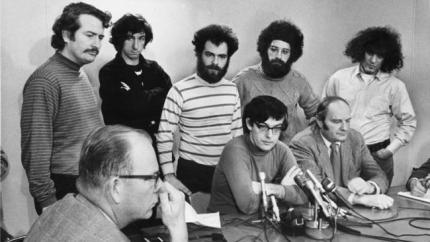
Defendants in the Chicago Seven conspiracy trial hold a news conference in Chicago on Jan. 5, 1970. Standing are, from left, John Froines, Tom Hayden, Jerry Rubin, Lee Weiner and Abbie Hoffman. Seated are Rennie Davis, center, and David Dellinger. (Chicago Tribune)
In April of this year, Hayden endorsed Hillary Clinton for president in a piece at The Nation: I Used to Support Bernie, but Then I Changed My Mind. Here’s what he had to say about Hillary:
Hillary is, well, Hillary. I remember seeing her on Yale’s green in 1969, wearing a black armband for peace while a kind of Armageddon shaped up during the Panther 21 trial and Cambodia invasion. Even then, she stood for working within the system rather than taking to the barricades. Similarly, in Chicago 1968, she observed the confrontations at a distance. If she had some sort of revolution in mind, it was evolutionary, step-by-step. In her earlier Wellesley commencement speech, she stated that the “prevailing, acquisitive, and competitive corporate life is not the way of life for us. We’re searching for more immediate, ecstatic, and penetrating modes of living.” But from there it was a determined decades-long uphill climb through those same institutions that had disenchanted the young Hillary.
There are two Hillary Clintons. First, the early feminist, champion of children’s rights, and chair of the Children’s Defense Fund; and second, the Hillary who has grown more hawkish and prone to seeking “win-win” solutions with corporate America. When she seems to tack back towards her roots, it is usually in response to Bernie and new social movements. She hasn’t changed as much as the Democratic Party has, responding to new and resurgent movements demanding Wall Street reform, police and prison reform, immigrant rights and a $15-an-hour minimum wage, fair trade, action on climate change, LGBT rights, and more.
Hayden had grown more supportive of Hillary’s “evolutionary, step by step” approach and was concerned about Bernie’s all-or-nothing policies as well as his ability to deal with an all-out assault from the GOP and the media. In the end though, it came down to race.
I intend to vote for Hillary Clinton in the California primary for one fundamental reason. It has to do with race. My life since 1960 has been committed to the causes of African Americans, the Chicano movement, the labor movement, and freedom struggles in Vietnam, Cuba and Latin America. In the environmental movement I start from the premise of environmental justice for the poor and communities of color. My wife is a descendant of the Oglala Sioux, and my whole family is inter-racial.
What would cause me to turn my back on all those people who have shaped who I am? That would be a transgression on my personal code. I have been on too many freedom rides, too many marches, too many jail cells, and far too many gravesites to breach that trust. And I have been so tied to the women’s movement that I cannot imagine scoffing at the chance to vote for a woman president. When I understood that the overwhelming consensus from those communities was for Hillary—for instance the Congressional Black Caucus and Sacramento’s Latino caucus—that was the decisive factor for me. I am gratified with Bernie’s increasing support from these communities of color, though it has appeared to be too little and too late. Bernie’s campaign has had all the money in the world to invest in inner city organizing, starting 18 months ago. He chose to invest resources instead in white-majority regions at the expense of the Deep South and urban North.
I know there is much more news out there, and I hope I haven’t bored you by writing about two symbols of the greatest passions of my youth–Rock ‘n’ Roll and Politics. I’ll leave it to you to post more links on any topic in the comment thread below.
Did you like this post? Please share it with your friends:
Posted: August 17, 2015 | Author: dakinikat | Filed under: morning reads | Tags: Civil Rights, Julian Bond, Planned Parenthood, voting rights |

Good Morning!
Those of you that know me also know that my most profound and motivating interest lay with social justice issues. I think I was profoundly impacted by watching the evening news as a child. I still remember watching body counts from Vietnam and the images of small children being attacked by hoses and police dogs in places I couldn’t believe were associated with my country. Julian Bond–one of the most vibrant and high profile leaders of the civil rights movement–died on Saturday at the age of 75. His life stands as a tribute to all that has been gained and as a reminder of all the work that continues as we strive to ensure that all our citizens achieve equal status under the law and equal access to economic well being, knowledge, and power. Bond was also a leader in the anti-war movement as one of the founders of the Student Nonviolent Coordinating Committee. He leaves a tremendous legacy of social justice.
The Southern Poverty Law Center, where Bond served as president in the 1970s, announced his death in a statement on Sunday. The SPLC said Bond died Saturday evening in Fort Walton Beach, Fla.
“With Julian’s passing, the country has lost one of its most passionate and eloquent voices for the cause of justice,” the center’s statement read. “He advocated not just for African Americans, but for every group, indeed every person subject to oppression and discrimination, because he recognized the common humanity in us all.”
The Associated Press writes: “The Nashville, Tenn., native was considered a symbol and icon of the 1960s civil rights movement. As a Morehouse College student, Bond helped found [SNCC] and as its communications director, he was on the front lines of protests that led to the nation’s landmark civil rights laws.”
Bond played a major role in sit-ins and freedom rides and the 1963 March on Washington.
The New York Times says: “He moved from the militancy of the student group to the top leadership of the establishmentarian N.A.A.C.P. Along the way, he was a writer, poet, television commentator, lecturer, college teacher, and persistent opponent of the stubborn remnants of white supremacy.”
When he was elected to the Georgia Legislature in 1965, the chamber refused to seat him, citing his support for a group that called U.S. actions in Vietnam “murder.” He took the fight all the way to the Supreme Court, which ultimately ruled in his favor. The Times notes that he spent his two decades in the state’s legislature, “mostly in conspicuous isolation from white colleagues who saw him as an interloper and a rabble-rouser.”
In 1986, Bond ran against his long-time friend and SNCC co-founder John Lewis to represent Georgia’s 5th Congressional District, but was narrowly defeated in runoff.
 I can only hope to eventually achieve his status of “interloper and rabble-rouser” for justice. There are many recent events that remind us that none of the struggles in which Bond interloped and rabble roused are solved or even ameliorated. Even after the disastrous adventures of both Vietnam and Iraq, we continue to have folks who study and bark for war. Here’s a good example of some one in Democratic leadership who does both and should be very ashamed that he shills for constant war mongering. As Josh Marshall points out, Chuck Schumer is smarter than his actions and words on the Iran deal. Decision-making on such vital interests should not be captive to vast, foreign lobbying interests or folks that profit from perpetual violence.
Fareed Zakaria had a column out yesterday dissecting and demolishing New York Senator Chuck Schumer’s argument for opposition to the Iran nuclear deal. I won’t try to duplicate his arguments on the merits. I don’t think I can improve on them. But I have wanted for the last week to address Schumer’s decision.
As you may know, in the midst of last week’s Fox-GOP-Trump debate, Schumer leaked the news that he planned to vote against the deal when it comes before the Senate for review. There are a few things to say about the manner of the leak. As the Senator himself would no doubt agree, no one is more adept, experienced, or desirous of press attention than Schumer. The timing was no accident. It seemed aimed at creating as little splash as possible. Given his status as a prominent, senior, and outspokenly pro-Israel Senator from New York, there is only so much that he could do to limit the impact and reaction. But this was clearly an attempt to do so. And it did get buried to some degree in the Trump Debate/GOP Meltdown/Blood Drama. Schumer has also said that since this is his position, he will of course lobby others to follow his lead. But he has done so not altogether convincingly. Take all this together and I think it is possible that Schumer believes this to be a free vote for him personally – that he can vote in opposition, either knowing that it will pass (sustain a presidential veto) or at least that he won’t be blamed for it going down.
We’ll know after the vote how that all shook out. And in terms of what one makes of Schumer, there is some difference over what the truth turns out to be. Just after Schumer’s announcement, James Fallows said that it was one thing for Schumer to vote this way himself but if he lifts a finger to lobby other senators against the deal, he should be disqualified from becoming the next Senate Majority/Minority Leader, an office he very much wishes to fill.
I would take it a step further. I think Schumer should be disqualified on the basis of this decision alone. In fact, I would personally find it difficult to ever vote for Schumer again as my Senator, though I doubt he’ll lose much sleep over that since he is amazingly entrenched as New York’s senior senator.
 It’s obvious when politicians are more beholden to the patron class rather than citizens. It truly amazes me that one of our major parties no longer even supports voting rights. This is something that has been unthinkable for the decades since Kennedy and Johnson pushed the Voting Rights Act forward.
On July 20, 2006, the United States Senate voted to renew the Voting Rights Act for 25 more years. The vote was unanimous, 98 to 0. That followed an overwhelmingly bipartisan vote in the House of Representatives, which passed it by a vote of 390 to 33. President George Bush signed the renewal with apparent enthusiasm a few days later.
This bipartisan support for the Voting Rights Act — first enacted into law 50 years ago this month by Lyndon B. Johnson — was not unusual; indeed, it was the rule throughout most of the legislation’s history on Capitol Hill. And if you want to understand how dramatically Congress’s partisan landscape has changed in the Obama era, it’s a particularly useful example.
As it happens, two bills introduced in the past two years would restore at least some of the act’s former strength, after the 2013 Supreme Court decision in Shelby v. Holder, which significantly weakened it. And both are languishing, with no significant Republican support and no Republican leader willing to bring them to the floor for a vote. What was, less than a decade ago, an uncontroversial legislative no-brainer is now lost in the crevasse of our partisan divide.
Given the number of Black Americans killed by police actions, it’s difficult to understand how Republican shills like Dr. Ben Carson can continue to say that Planned Parenthood is the number one murderer of Black people. Of course, Republicans these days have spurious notions of “people”. They let black children starve and languish while spending tremendous efforts to protect clusters of cells. Here’s an ABC report that shows some reporters actually do due diligence and fact check the outrageous statements of some politicians. NPR has also debunked this blatant lie.
ABC’s Martha Raddatz debunked GOP presidential candidate Dr. Ben Carson’s claim that Planned Parenthood engages in racist population control by targeting black communities.
On the August 16 edition of ABC’s This Week, Carson spoke with Raddatz on the campaign trail in Iowa. Raddatz asked Carson about his controversial comments he made on August 12, when he said Planned Parenthood is targeting African-American communities to control their population by placing “most of their clinics in black neighborhoods.” Raddatz debunked this claim, saying, “Planned Parenthood estimates that fewer than five percent of its health centers are located in areas where more than one-third of the population is African-American” …
The most telling thing about the pushback on all social justice strides these days is Donald Trump’s standing in Republican Polls  and his angry white man shtick showing that much of it is blowback against modernity and rational thought.
Many insiders were sure that Trump would be widely disavowed after charging that undocumented Hispanics, even the ones who aren’t rapists, are “bad. They’re really bad.” When this didn’t do Trump in, just as many, maybe more, were certain he would be cashiered after his disparagement of McCain. It didn’t work out that way, and Trump went into the first debate leading the national polls among Republicans. Then came his gynecological speculations about Kelly, and the political media were steadfast in their conviction that now, at last, he had crossed a red line that no red state partisan could accept. It was perfectly OK for him to carry the torch for birtherism, to vilify an entire ethnicity, to impugn the reputation of a decorated veteran — but now he had insulted Megyn Kelly of Fox News! He was done, washed up, toast, and the sober pundits whose eternal vigilance safeguards our liberty could finally turn their attention to “serious” candidates such as Ben Carson, Ted Cruz and Mike Huckabee.
As I write this, the most recent post-debate polling shows Trump on top with a 10-point lead over his nearest rival.
When you repeatedly get something wrong, you need an explanation — an account of your error that gets you back on track by identifying its source. (It goes without saying that the preferred account attributes the error to something other than ignorance on your part.) In our present case, that explanation is the meme, repeated ad taedium if not ad nauseam, that the GOP base likes Trump because he seems asangry as it is. His pugnacious manner, his willingness to insult opponents — or just anyone who disagrees with him — his brusque tone and dismissive gestures: All these things, we’re told, are like catnip to the Republican faithful. Mostly older and white and male, and wholly pissed-off, these folks are tired of namby-pamby politicians who whine about “bipartisan solutions” and want to find ways to “work with the other side.” They want someone who calls ‘em as he sees ‘em, and who sees, as they do, that “the other side” largely consists of fools, traitors and knaves. Trump, it turns out, is their tribune.
As explanations go, this one isn’t completely off-track. It does get one (very important) thing right: the GOP base is mad as hell. But as a theory of Republican politics, it’s sort of like attempts to attribute the Napoleonic Wars to Bonaparte’s shame over his small stature. There has to be something more than anger at work in the GOP, because anger alone doesn’t explain the distinctive shape of its obsessions. The real question is this: What is it angry about?
As we think about the social justice movements of the 1960s and 1970s–the women’s movement, the civil rights movement, the rights for immigrant workers movement, the anti-war movement, the GLBT movement– we can see the strides made. But, each time we lose a leader of those movements, we gain a perspective that we have miles and miles to go before we can sleep. There are many forces that would like to erase all of that progress. Many of them sit on the Supreme Court. Many of them sit in statehouses, Congress, and governor’s offices. We must be vigilant and persistent in pursuit of human dignity.
The Struggles continue.
What’s on your reading and blogging list today?
Did you like this post? Please share it with your friends:


 peej
peej Carissa
 bostonboomer
 dakinikat
 ecocatwoman
 jjlo
jjlo mablue2
 Mama Lopez
 peggysue22
 quixote
 skydancingguestblogger
 Mona (aka Wonk the Vote)



 Sky Dancing
Recent Comments