Yesterday was the Massachusetts primary and, as expected, 80-year-old Ed Markey defeated 47-year-old Seth Moulton in the contest for U.S. Senator nomination. I voted for Moulton, even though I agree more with Markey’s politics; because I really believe we need to get younger people into Congress. I knew Markey would win anyway. Our other Senator, Elizabeth Warren, is 77. Her term will not be up until 2031. Stephen Lynch, 71, also defeated a younger opponent for his House seat. I don’t have as much of a problem with that. His term is only 2 years. But we really need new blood in Congress–not to mention the White House!
Massachusetts, as it turns out, is a good state in which to be a very old Democratic incumbent.
Three Democrats who have been in office since long before the iPhone was in stores all won renomination Tuesday. Senator Ed Markey, 80, and Representatives Richard Neal, 77, and Stephen F. Lynch, 71, are all likely to return for additional terms.
Ed Markey
Each faced challengers who had called for a new generation of leadership. Mr. Markey coasted past Representative Seth Moulton, 47, who ran to the middle, while Mr. Neal and Mr. Lynch both fought off progressive challengers.
Mr. Markey has been in office for 50 years. Mr. Neal has represented western Massachusetts since 1989. Mr. Lynch first won election from South Boston in 2001. The state’s Democrats do not seem inclined to reject their incumbents….
The party still scarred by former President Joseph R. Biden Jr.’s public meltdown during the 2024 campaign was not convinced that an octogenarian senator should not serve another six years.
Seth Moulton
Perhaps if Mr. Markey, 80, had faced a younger challenger with better political relationships than Mr. Moulton, he would have been in trouble in Tuesday’s Democratic primary. But Mr. Moulton has spent his career challenging his party’s orthodoxy and its leaders.
That record left Mr. Markey the political space he needed to paint himself as the progressive in the race, campaigning on the ideas of the future — even though he has been in Congress for 50 years.
In the waning days of the Massachusetts primary, several Democrats described Mr. Moulton as having the generational change message the party needed but being the wrong messenger to deliver it.
Mr. Markey said throughout the campaign that he would resign his seat if his advanced age left him unable to properly fulfill his Senate duties. He is now favored to win in November, which would have him serve in the Senate until he is 86 years old.
Moulton also hurt himself with his remarks about trans athletes.
…from the moment Mr. Moulton entered the race last October, Mr. Markey used his remarks questioning transgender girls’ participation in girls’ sports as a battering ram against him. Not only did it galvanize the L.G.B.T.Q. vote for Mr. Markey, it also helped frame him as the progressive candidate.
It was the same formula that powered Mr. Markey’s last primary triumph in 2020 against another younger, more moderate Democrat, Joe Kennedy III.
Mr. Moulton eventually offered a qualified apology for his remarks, which came the day after President Trump won a second term in the 2024 election. But by then the state’s progressive voters had heard for months from Mr. Markey and his supporters that Mr. Moulton, during tough times, was willing to toss trans people aside.
Use the gift link to read more if you’re interested.
Rep. Stephen Lynch and Rep. Richard Neal also defeated younger opponents.
Democratic Rep. Stephen Lynch has defeated a younger, more progressive primary challenger, NBC News projects, in the highest-profile test remaining for House incumbents after a turbulent primary season.
Stephen Lynch in 2025
Lynch, 71, won renomination over Patrick Roath, a 39-year-old former aide to former Massachusetts Gov. Deval Patrick. With his win, Lynch staved off an attempt to add him to the list of Democratic officeholders dethroned by rivals pushing for generational change.
Elsewhere in the state, fellow veteran Democratic Rep. Richard Neal also secured renomination, defeating teacher Jeromie Whalen in another Democratic primary.
On the other side of Massachusetts, Roath outraised Lynch, outspent him significantly on the airwaves and scored The Boston Globe editorial board’s endorsement to go with backing from Patrick, progressive activist David Hogg’s group, Leaders We Deserve, and key teachers unions.
That support helped Roath press Lynch for months in one of the toughest fights of his political career. He highlighted Lynch’s various breaks with his party in the past, including votes against the Affordable Care Act and, more recently, for the Laken Riley Act. Roath also called for progressive measures like “Medicare for All,” abolishing ICE and restricting military aid to Israel.
But Lynch persevered, trumpeting work that he says held the Trump administration accountable and leaning on his decades of experience, including deep relationships with unions and other fixtures in the district….
Richard Neal
Neal also avoided defeat in another primary marked by arguments over generational change and progressive policy proposals. Whalen, 39, a high school teacher, ran a campaign decrying the “old-school political entanglements that got us into this mess” and called to abolish ICE and cut off U.S. military aid to Israel.
Neal spent more than $1 million on campaign ads, according to the ad-tracking firm AdImpact, about 10 times what Whalen spent.
The United States and Iran exchanged a barrage of strikes overnight, an outburst of violence that killed both military personnel and civilians in Iran, including four people at a wedding, according to Iranian news media and officials.
U.S. Central Command, which oversees the military’s operations in the Middle East, said that it had struck Iranian military targets in retaliation for attacks on ships and American forces in the region.
Four members of the aerospace division of the Islamic Revolutionary Guards Corps were killed in a U.S. strike in the western city of Kermanshah, according to a Guards statement published on Wednesday by Tasnim, an Iranian news agency. At least 12 people were killed in strikes across Iran’s southern region, the Iranian state outlet Press TV reported on Wednesday.
A still from a video provided by the Iranian Red Crescent rescue service showed damage in Kuhestak, southern Iran, on Wednesday.Credit…Iranian Red Crescent Society, via Reuters
In response to the latest attacks, the Revolutionary Guards said in statements Wednesday morning that they had launched missiles overnight at an American military base in Jordan, at U.S. military equipment warehouses in Iraq and at an air base in Kuwait hosting American forces.
A U.S. official, speaking on condition of anonymity to discuss operations, said Wednesday all American service members were accounted for but declined to share any damage assessments.
The deadly back-and-forth overnight was a demonstration of the stalemate between Washington and Tehran, more than six months after President Trump launched strikes on Iran, saying that he expected a quick resolution.
Among the locations hit by the U.S. military was a wedding in a residential area in the small port town of Kuhestak in the Hormozgan province of southern Iran, according to Iranian officials. Four people, including a child, were killed in the attack, with around 50 others wounded and hospitalized, Iranian state media reported.
Use the gift link to read more if you’re interested. The NYT now allows subscribers unlimited gift links.
Iran fired on U.S. allies in the Gulf early Wednesday following a night of American bombardment that Iranian officials say included a deadly strike on a wedding party.
The latest violence came after a monthlong lull in fighting. The six-month war has led to a spike in oil prices, roiled the global economy and posed increasing political problems for U.S. President Donald Trump’s Republican Party ahead of November midterm elections.
Fighting has escalated since the American military hit Iranian rocket launchers on an island in the Strait of Hormuz over the weekend, saying Iran was planning to use them to shoot mines into the waterway. Iran retaliated by firing missiles at American bases in Jordan that were intercepted.
American military resources are stretched and political pressure in Washington is mounting, while Iran’s economy falters. Iran’s currency hit another record low on Wednesday, with traders in Tehran exchanging 2.20 million rials for one U.S. dollar, a 10% hike from last week’s record.
Neither side can continue indefinitely between full-scale war and a truce, said Hamidreza Azizi, senior Iran analyst at the Crisis Group, an international think tank.
“At some point, one of the sides may see a need to escalate in order to break this cycle,” he cautioned. “So that could bring the two sides to a point that they have been trying to avoid until now, which is a full-scale war.”
Trump made a bunch of insane threats on Truth Social, including that he would completely destroy Iran’s civilization. Then he suddenly switched gears and announced another cease fire.
President Donald Trump announced a two-week ceasefire with Iran on Tuesday night — hours after he’d threatened “a whole civilization will die tonight” and about 90 minutes before a deadline he set for Tehran to reach an agreement with the United States.
“Based on conversations with Prime Minister Shehbaz Sharif and Field Marshal Asim Munir, of Pakistan, and wherein they requested that I hold off the destructive force being sent tonight to Iran, and subject to the Islamic Republic of Iran agreeing to the COMPLETE, IMMEDIATE, and SAFE OPENING of the Strait of Hormuz, I agree to suspend the bombing and attack of Iran for a period of two weeks,” he wrote on Truth Social.
Earlier in the day, Trump had warned on social media that “a whole civilization will die tonight” if there was no deal between the two warring countries.
That threat, Trump’s most extreme public rhetoric in the conflict to date, had included a vow to launch attacks on Iran’s infrastructure over its continued disruption of shipping through the Strait of Hormuz.
The two-week ceasefire, Trump said, is contingent upon Iran reopening the strait. For its part, Iran proposed a 10-point plan to end the war, which includes “controlled passage” through the strait, coordinated by Iran’s armed forces.
Iran’s plan also calls for compensation for damages and the withdrawal of U.S. forces from “all bases and positions in the region.” On social media, Trump called the plan “workable.” [….]
After he extended the deadline multiple times for Iran to reopen the vital shipping route, which about a fifth of the world’s oil and natural gas usually passes through, Trump announced 8 p.m. ET Tuesday as the final deadline for Iran to come to a deal.
In a post Sunday, Trump threatened Iran’s power plants and bridges if it did not reopen the strait by the Tuesday deadline, using expletives and invoking Islam.
It was the latest in a series of escalating threats by Trump against Tehran, including threatening to bomb the country into “the Stone Ages” and calling the Iranian government “crazy bastards” while demanding that it open up the key shipping route.
Trump’s threat Tuesday morning sparked a wave of fierce and immediate condemnations from Democrats, who said such strikes on infrastructure would constitute war crimes.
Trump is psychotic and should be removed from office. He’s a danger to the U.S. and the world. He has completely out of touch with reality.
President Donald Trump on Wednesday floated renaming the Strait of Hormuz — the central point of contention in the ongoing war against Iran that the U.S. and Israel started — after himself.
The proposal via a Truth Social post came less than a week after Trump, who is locked in an intensifying feud with Canada, signed an executive order to change the name of Lake Ontario to “Lake America.”
“Now that we have it under U.S.A. control, should we change the name Hormuz Strait to TRUMP STRAIT???” Trump wrote in the post Wednesday morning.
“Like America itself, it would be ‘hotter’ than ever before! Thank you for your attention to this matter. President DONALD J. TRUMP,” he wrote.
It was not immediately clear how the president would attempt to implement a name change in the strait, which is not near the U.S. The order renaming Lake Ontario directed Interior Secretary Doug Burgum and his department to update the Geographic Names Information System with the new name. Canada rejected the change, though Google and Apple have recently updated their maps. Early in his second presidential term, Trump also declared he was renaming the Gulf of Mexico as the Gulf of America, a change also rejected by Mexico and other international counterparts. The U.S. borders Lake Ontario and the Gulf of Mexico, both of which have had their names for centuries….
The Strait of Hormuz yestereday
Trump and his administration have repeatedly insisted that Iran has lost control over the strait, which carried one-fifth of the world’s oil trade before the war began in late February.
But transits through the waterway remain far below prewar levels, and ship-trackers say they have dropped further in recent days, as military strikes in the region have resumed following a weekslong hiatus.
Again, Trump lives in an alternate reality. He is insane and should be removed from office immediately.
Meanwhile, Pete Hegseth is destroying the Department of Defense.
In the aftermath of the resignation of Army Secretary Dan Driscoll, multiple sources told CNN they believe Defense Secretary Pete Hegseth is damaging the Army’s efforts to adapt to the modern battlefield as he focuses on culture wars and prioritizing his own image of the “American warfighter,” and pushes out leaders who don’t align with his vision.
In submitting his resignation, a source familiar said Driscoll brought up “concerns with the administration surrounding Army transformation and readiness and Hegseth’s blocking those efforts specifically by firing the generals who were responsible.”
Driscoll announced Tuesday evening that Wednesday would be his “last full day in the role.”
Multiple sources agreed with the concerns Driscoll raised: that Hegseth is damaging the Army’s efforts to modernize and adapt to the 21st century battlefield environment – where drone warfare is becoming increasingly important – by firing or pushing out leaders who were spearheading those efforts.
“It’s critical that you have key leaders that understand technology and have the temperament to deal with industry and turn that into the formation,” a former senior Army official said. “When you fire these guys for arbitrary reasons, it creates confusion and a void … the Army is enduring turbulence right now.”
Senior US military officials have privately acknowledged they have come under what could be characterized as political pressure during Hegseth’s tenure — particularly when he has prioritized culture war issues — and voiced concerns about the secretary’s recent efforts to fire or push out uniformed and civilian leaders.
A defense official in Europe told CNN that even though Hegseth has spoken about technology reform and even previously released guidance on unmanned systems, in practice they see a secretary and Pentagon leadership more focused on cultural issues than modernization.
“It’s conflicting because yeah he put out a memo saying this is important, but … he’s talking about muscles, dudes in dresses, testosterone,” the official said. “We don’t see a change at that level.”
Pete Hegseth is accused of setting the military up for potential disaster as the fallout of his ego-driven overhaul of top leadership spills into public view.
The 46-year-old former Fox News host has masterminded a massive purge within the Defense Department that saw Army Secretary Dan Driscoll walk out on Monday, raising fears about a lack of experienced leadership at the top of the military.
It comes as the Pentagon burns through resources—both material and human—in its fight with Iran, which has now dragged on for over six months despite President Trump initially projecting it to last four to five weeks.
Army Secretary Daniel P. Driscoll submitted his resignation to President Trump.Credit…Haiyun Jiang for The New York Times
The fight is thought to be exacting a heavy toll on the nation’s weapons and munitions stockpiles, which the Center for Strategic and International Studies says will last for the war in Iran, but which pose a threat to the U.S.’s ability to fight future wars. The Associated Press, however, reports that the war has used around 65 percent of Patriot interceptor missiles.
Driscoll said he feared that Hegseth’s leadership of the Defense Department could cause “generational damage,” a person familiar with the close JD Vance ally told the Financial Times.
He “had tried so many different ways and so many different times, but it was just clear that… Hegseth wasn’t willing to listen to the facts or the truth, or the reason, or any of that, because of his personal animosity,” they said.
Reflecting on his exit, Brookings Institution senior fellow Tom Wright told the FT that it was a “revelatory moment, and I think it illustrates that the Pentagon is in disarray.”
Defense Secretary Pete Hegseth has fired or blocked the promotions of more than 80 generals and admirals, a purge that has hit about 10 percent of the military’s top officers and shows no signs of slowing.
In recent days, Mr. Hegseth targeted seven Army officers who had been selected for two-star general rank by a board made up of senior Army leaders, according to current and former military officials, who discussed sensitive personnel matters on the condition of anonymity.
The moves come at a time when the military is badly strained by the Iran war, which has gone on far longer than administration officials anticipated.
Pete Hegseth
The military, especially the Army, is also racing to keep up with the proliferation of sophisticated drones and precision missiles that have exposed the vulnerability of its overseas bases and weapons systems.
The firings and Mr. Hegseth’s refusal to explain the logic behind them are dividing the Pentagon and alienating many in Congress, the officials said. The latest to register his disapproval was Army Secretary Daniel P. Driscoll, who recently submitted his resignation to Mr. Trump.
In a meeting with the president, Mr. Driscoll complained that Mr. Hegseth had fired some of the Army’s most combat-tested leaders, imperiling its efforts to modernize the force, military officials said.
He also warned Mr. Trump that the firings and blocked promotions have damaged morale, causing some in the military to question the fairness of a promotion system that is supposed to be apolitical and merit-based, senior officials said.
Mr. Hegseth’s purge does not appear to be driven by job performance, but rather is part of a broader effort by the defense secretary to fashion a force, particularly at senior levels, that is aligned with his political and ideological views, according to military officials.
Also his preference for white males.
Sean Parnell, the Pentagon spokesman, defended Mr. Hegseth’s decisions as normal Pentagon business. “The idea that these lists cannot be altered is ridiculous; every single secretary has exercised this exact prerogative,” he said.
But senior officials and members of Congress have said that Mr. Hegseth’s moves are without precedent. In the past, the defense secretary and service secretaries have removed officers for moral or ethical breaches. But officials said that these officers have behaved in accordance with Pentagon policy.
Senator Jack Reed of Rhode Island, the top Democrat on the Senate Armed Services Committee, has called Mr. Hegseth’s removals “illegal.”
More than half of the officers affected by Mr. Hegseth’s dismissals are Black or female in a force whose senior ranks are dominated by white male officers. Of the seven officers Mr. Hegseth removed from the Army two-star promotion list, two are Black and two are female.
Use the gift link to read more if you wish.
Those are my recommended reads for today. Thoughts? What other stories are you following?
Did you like this post? Please share it with your friends:
The disastrous floods in Nepal have been dominating the news for the past few days. This is a tragic story that has implications for all of us, because of what it tells us about the effects of global warming. Meanwhile, Trump promotes fossil fuels and tries to stop the development of alternative energy sources such as wind and solar.
KATHMANDU, NEPAL — Anjana Raja had long dreamed of traveling to Nepal as part of a spiritual journey to Mount Kailash ever since she was a teenager, she said.
When she and her husband finally got to make that dream a reality this month, the California mom of two told ABC News she could not have imagined that trip would force them into survival mode as they found themselves nearly swept up in the deadly landslide flood that hit the region Wednesday.
Raja recalled sitting on a bus with her husband traveling to the Chinese border on Wednesday when, all of a sudden, the driver and front passengers fled the bus and she saw the landslide coming toward their vehicle.
“It was water mixed with the mud that was a good 50 to 60 feet high. It stood like a serpent right there staring at us,” Raja told ABC News. “Like a cobra’s head staring at you.”
Raja said she didn’t hesitate and grabbed her sling bag and turned to her husband, Pattabiraman Venkatesan.
“I grabbed him by the collar, and I said, ‘Run, we need to go right now,'” she said.
“I didn’t even give time to act. I just said, ‘Leave the bus right away or we’re gonna die,'” Raja added….
Faced with the huge wall of water and mud, the couple and other bus passengers ran to a camp right next to the bus and made their way to higher ground as the water hit and completely flooded the streets, she said.
“We just blindly…climbed. We didn’t even know what direction … There was no guide for us, there was nobody, we were just frantically running. Running, literally running. It was slushy, it was muddy, we were climbing rocks, which was slippery. We just ran for our life,” she said.
“When we reached the second level … I saw the water come up to the slope and move our bus. I told my husband ‘That’s it, we’re gone. We’re going to die,'” she said.
They ultimately made their way up to the third level of the camp and they watched in shock as the wall of water rushed past them.
From their point they could see vehicles, objects and even people be taken in by the water’s power, although the water never reached their level.
“It just came like a roar, it sucked a bunch of buses, SUVs, people, the basecamp, everything — took it in, turned it, turned it all upside down and dumped it into the ground,” Raja said.
That’s a vivid and terrifying description. There’s more at the ABC link.
Posters of missing people line the wall of the hospital, the glue still fresh beneath. A schoolgirl smiling in her uniform; a beaming, chubby-cheeked baby; a couple smiling on their wedding day; a young man, hands on hips, atop a mountain peak; a young girl with flowing hair, peaking out from behind a door.
These faces are just a fraction of the thousands who have not been seen since deadly flash floods coursed through the Himalayas and wiped away entire villages. By Saturday morning, the toll of the missing had risen to almost 3,000, in both Nepal and Tibet.
Woman with a cat, by Lina Rivo
So far, Nepal has recovered 669 bodies, but many remote areas have only been accessed by army helicopters on the hunt for survivors. Rescuers said it was too difficult to assess how many more people might be buried beneath the mud….
The task of identifying the dead is also gargantuan.
In the Nepalese city of Chitwan, the morgues have been overrun by the sheer number of bodies and a makeshift building has been set up to house the dead.
Some of the bodies were carried so far down the river by the force of the floods, they were recovered in neighbouring India.
At Tribhuvan University teaching hospital in Nepal’s capital, Kathmandu, desperate relatives gathered in the hope of news. Four days on since the disaster struck, people continued to crowd round the police desk to register the names of missing family members. Hundreds of the injured are recovering in the hospital’s wards and people were frantically checking lists of patients, desperate to find a sign that their loved ones were still alive.
In the absence of information and with affected areas almost completely cut off, many families have resorted to making posters to appeal for information. Yavraj Lama said his sister, her husband and their two children were missing after their village of Jaydada, in Rusawa district, had been entirely washed away.
His eyes filled with tears as he glued a photo of one-year-old Sijan Tawang, a baby in the arms of his mother, to the hospital wall. A picture of 12-year-old Sahil, his brother, hung next to it.
“We are numb, we don’t have words to say how sad and distraught we are,” said Lama. “Our main focus is trying to find baby Sijan. He was so sweet and innocent; it’s impossible for us to think he is not with us any more.
“But their whole village has disappeared,” he added, “so we have no hope left that any of them survived.”
The agency initially recorded a magnitude 4.4 earthquake along the Nepal-China border, north of Kathmandu, at about 8.37am local time on Wednesday, before revising its assessment in a statement issued that evening.
It said the seismic signal had come from “a glacial collapse and debris flow” rather than a tectonic quake, and that the collapse alone had caused the catastrophic flooding downstream. Once reclassified, the event registered at magnitude 5.2, a measure of the force of the ice and rock striking the valley floor rather than of any movement underground.
An initial study of satellite imagery from Planet Labs showed a large section of the lower end of a glacier breaking away at an altitude of about 5,200m and falling roughly 1,200m onto the valley floor, gathering rock and debris as it went.
By Bobbie Russon, British artist
The resulting avalanche struck the Lhende river in Tibet, about 20km northeast of the Rasuwagadhi border crossing with Nepal, temporarily damming the water before the barrier gave way and released a powerful flood downstream.
The surge fed into the Bhote Koshi river and crossed into Nepal at around 9am local time, then continued into the Trishuli river, where water levels rose by as much as nine metres in just half an hour.
Officials were caught off guard because there had been no rain, according to local news reports, and some residents ignored early warnings from neighbours precisely because the danger did not resemble the monsoon flooding they were used to.
On fears it could happen again:
Why are experts worried a second flood is coming?
Both Nepal and China have issued warnings about fresh flooding in the Himalayas as two lakes that have developed on either side of their border threaten to burst.
Experts were assessing whether debris from the flood had temporarily blocked Nepal’s Trishuli river at a narrow section, forming a landslide dam, the Nepal-based International Centre for Integrated Mountain Development said.
Such a blockage can create a secondary hazard if impounded water is suddenly released.
“With a blockage still lodged upstream on the Nepal-China border, authorities warn a second flood is imminent,” Qianggong Zhang, head of climate and environmental risks at ICIMOD, said.
He added that evacuation orders were in place for Jilong Port along the border based on the risk of a second wave of flooding.
BOSTON (AP) — Climate change has been the backdrop to Charles Hughes’ entire life, from kindergarten lessons about disappearing habitats to wildfire smoke billowing through the air he breathed while growing up in Colorado. But now that he’s a college student in Massachusetts, he said global warming is rarely a top issue.
“Honestly, it doesn’t come up as much,” said Hughes, who chairs the state’s chapter of the College Democrats.
What a difference six years makes.
Willem den Ouden (NL 1928) Ferry with cat, 1964
During President Donald Trump’s first term and especially during the Democratic primaries to determine who would run against him in 2020, Democrats spoke constantly about climate change. They used it to rally young voters such as Hughes, fueling protests and sweeping demands to remake the economy with proposals like the Green New Deal.
But there has been a national shift in the conversation that is sharp enough for some researchers to coin the term “climate hushing” to describe it. The Searchlight Institute, a Democratic think tank, urged the party to stop mentioning climate change because it is not a priority for voters. The Sunrise Movement, a left-wing group that pushed global warming as a top issue for young people, switched its mission last fall to a broader mandate of fighting the Republican president.
The shift is encapsulated by the Democratic primary for U.S. Senate in Massachusetts on Tuesday as the incumbent, Ed Markey, 80, tries to fend off a challenge from U.S. Rep. Seth Moulton, 47. Although Markey still talks about sponsoring the Green New Deal, his campaign is more focused on other issues to burnish his left-wing bona fides and prove to voters that he is not too old for the job.
It is the latest example of how climate change has been eclipsed by issues such as affordability, U.S. support for Israel and, above all, how to confront Trump.
“Six years ago, Green New Deal was every phrase out of Ed Markey’s mouth every chance he got. That is not the case now,” said Mary Anne Marsh, a veteran Democratic strategist in Massachusetts. “It’s about who’s best to fight. Period, full stop. Everything falls under that.”
Because we’re stuck with an insane authoritarian thug in the White House and that’s a more immediate emergency. There’s more at the link.
Our focus lately has been on Trump and the damage he is doing to democracy as well as his obsessive efforts to remake Washington DC in his own image.
Across East Potomac Golf Links, amid golfers squeezing in late-summer rounds and wondering what will become of the beloved D.C. course, newly cut stumps and bare patches of dirt mark the places where dozens of trees recently stood.
The Trump administration’s promised overhaul of the course has not officially begun. The trees, however, have been coming down for weeks.
Woman and Cat Stretching, after Edouard Manet’s Woman With A Cat of 1880, Holly Frean
President Donald Trump said June 28 that work on the historical public golf facility would begin Sept. 1, but days before that date, his administration has released no final design, construction schedule or estimated cost. Officials have not said whether the course will close next week, what work might begin, or what golfers and other visitors to the national parkland should expect.
An informal count Thursday found that more than 60 trees appeared to have been removed in recent weeks. Many were around the perimeter and parking lot, but others had been removed from playing corridors on the Blue, Red and White courses.
Among the most conspicuous was a cherry tree near the 14th green of the Blue Course, one of East Potomac’s most picturesque holes, framed by cherry trees near the southern end of Hains Point. Nearby, two large sycamores had been removed around the fourth hole.
Tree removal is common in major golf course renovations, often to widen playing corridors, improve sight lines, and allow more sunlight and air to reach the turf. But the Interior Department characterized the activity as routine maintenance and did not connect it to the proposed redesign, nor did it answer questions about whether notice of the work had been provided to the federal court overseeing a legal challenge to the administration’s plans.
Naturally, Trump just ignored instructions from the judge in the case.
During a May hearing in the lawsuit,brought by preservationists seeking to block the course overhaul,U.S. District Judge Ana C. Reyes declined to stop the government from performing necessary maintenance but warned administration lawyers against presenting the court with a fait accompli. She said she wanted advance notice before the government removed more than 10 trees or brought equipment larger than a sedan onto the property.
That direction was delivered orally and was not included in a formal written order. A person familiar with the legal proceedings, who spoke on the condition of anonymity out of fear of retribution, said the government has not notified the plaintiffs or the court about the recent tree work.
Use the gift link to read the rest, if you’re interested.
And then there’s Trump’s ugly ballroom construction. Naturally, he lied to the Supreme Court justices about it.
The Trump administration told the Supreme Court two weeks ago that construction of a new White House East Wing was “65% finished,” part of its argument that the work was too far along for the court to halt.
But by the White House’s own standard for measuring the project’s progress, established in a confidential agreement with contractor Clark Construction that was reviewed by The Washington Post, work on the controversial project was far less complete.
Barbara Perrine Chu
The agreement, finalized before Clark began demolition last October, stipulates that payments to the contractor be proportional to the amount of work completed, and that work cannot begin until the government approves spending for it. Based on that, if 65 percent of the work has been done, then the government should already have paid 65 percent of the total cost of the project.
Publicly available appropriations data shows that as of the end of July, the White House budget office had approved $144 million in spending from an account used to pay for the East Wing and other White House projects. Even if that entire amount were spent on the East Wing, it would come to only about 24 percent of the $600 million estimated construction cost that Clark provided the White House in March. The Post has previously reported that cost estimate.
In the same mid-August court filing in which the administration claimed 65 percent of the project was done, it said that it had already spent “around $200 million.”
If the government had spent $200 million on the East Wing project, the work would be just 33 percent complete, based on the $600 million budget estimate….
The 65 percent claim was made in a sworn declarationby Joshua Fisher, the director for White House Management and Administration, who is overseeing the construction project. In the declaration, Fisher did not explain how the percentage was calculated but said, “Work has progressed too far to go back to the drawing board.”
His assertion came as the administration asked the Supreme Court to allow work on the ballroom to continue after lower courts ruled that the project was probably illegal without congressional approval and that construction must stop. The administration argued in part that stopping work while courts considered the merits of the case brought by the National Trust for Historic Preservation would cause “chaos in service of nothing” because the project had already progressed “beyond the point of judicial intervention.”
Just looking at photos of the mess Trump has made at the White House, it sure doesn’t look like the project is 65 percent done. Trump lied. So what else is new?
The National Park Service released a report Friday in support of President Donald Trump’s proposed arch, while acknowledging the adverse effects the new monument could have on the district’s most iconic memorials and landmarks.
The arch project is part of Trump’s push to reshape D.C. in his image by leaving a visible mark on the nation’s capital. Critics of the arch and Trump’s other beautification initiatives have argued that the renovations obstruct the district’s sightline — concerns validated throughout the agency’s report — while Democratic lawmakers say the president is bypassing necessary congressional approval to proceed with construction.
NPS’ review was mandated by the National Historic Preservation Act, which requires agencies to evaluate how proposed new construction could directly or adversely affect any nearby landmarks and provide solutions to minimize future harm.
The proposed 250-foot arch will be located at Memorial Circle, near Arlington National Cemetery, and the agency analyzed the surrounding 3.5-mile radius as part of its study. The 133-page report says its construction will likely disturb dozens of historic sites in the area, including the Arlington Memorial Bridge, the cemetery, the Lincoln Memorial and the National Mall.
The monument will adversely affect six out of 31 National Historic Landmarks in the proposed area, including the U.S. Capitol and the Pentagon — though the effects will mostly stem from altered sightlines and plans to light the area at night, rather than physical damage, the report noted.
While the panel acknowledged the “sensitive” nature of building an arch in the Memorial Circle landscape, the area’s significance makes it an “historically appropriate location” to build, the agency wrote.
This is all so sickening. Trump is acting like a tin-pot dictator. And here’s more proof. Normal presidents don’t kidnap a country’s leader and then strong-arm the new government into giving up the country’s natural resources.
President Trump said late Friday that the United States had struck a deal to take majority control of a huge portion of Venezuela’s oil reserves, pointing to a sweeping effort to assert U.S. dominance over energy in the Western Hemisphere.
Gertie Young, Hanging About
The agreement amounts to a highly unusual foray into another country’s oil fields through a partnership with a private company, the State Department said through a U.S. official.
That firm is affiliated with a Venezuelan businessman, Alejandro Betancourt López, according to two people familiar with the partnership.
Venezuela’s president, Delcy Rodríguez, said the “historic” agreement would involve developing 17 oil fields and have a “significant impact on our nation’s revival.”
The aim of the deal, Ms. Rodríguez said, is “putting our immense reserves at the service of national development.” It would draw more than $100 billion of investment, she said, and generate an estimated $209 billion for Venezuela’s strapped government, which has been struggling to improve living conditions after earthquakes in June left more than 6,500 people dead.
Details were sparse, however, and the text of the agreement was not immediately available. Mr. Betancourt did not immediately respond to a request for comment, and the State Department did not respond to questions about Mr. Betancourt’s potential role in the arrangement.
Inside Venezuela, Mr. Betancourt is often called a “bolichico” or “Bolivarian boy” — a term used to refer to Venezuelan businessman who are favored by the government, and who have profited immensely during the country’s socialist revolution. (The government named the revolution for the country’s independence hero Simón Bolivar.)
A bit more:
Previous U.S. leaders often shied away from any suggestion that gaining sway over another country’s natural resources was a primary objective of U.S. military and foreign policy, wary of the international backlash, doubts over the legality of doing so and the potential for such moves to generate security threats against the United States.
But Mr. Trump and some of his top advisers have made it clear that oil is an important part of their foray into Venezuela.
Even before the removal of Mr. Maduro, American officials bluntly claimed that the United States had created Venezuela’s oil industry and that the country’s government had effectively stolen U.S. oil fields through nationalizations.
Trump is a gangster and a thug. We have to get rid of him.
Those are my recommended reads for today. What are your thoughts? What else is on your mind?
Did you like this post? Please share it with your friends:
Yesterday we lost Dolly Parton, an icon, a superstar, and a kind, generous woman. She was 80 years old. I’m hoping JJ will do one of her tribute posts tomorrow, so I’ll just share a couple of articles.
Dolly Parton, the beloved country superstar, was surrounded by loved ones when she died in Nashville after a brief bout with cancer, representatives said in a statement on Tuesday.
“Our beloved Dolly Parton spent her life and career bringing joy, laughter, hope and integrity into everything she touched,” the statement said.
A spokesman did not provide additional details about Parton’s illness but said she had been admitted to the Vanderbilt-Ingram Cancer Center in Nashville on Friday.
Starting from her recording debut in 1959, Parton built a career as a honey-toned vocalist with a gift for songwriting and a big-haired, rhinestone-studded style. She broke into Hollywood, established a business empire and, well into the seventh decade of her career, still managed to charm both sides of America’s widening cultural divide.
It is unclear when Parton received the cancer diagnosis. Just over a week ago, she missed a scheduled appearance at Dollywood, the amusement park she built near her hometown in eastern Tennessee. In a video played for attendees at the park, Parton said that she had been dealing with dizziness and dehydration, and that her doctors had advised her against travel.
Several days before her death, Parton said in a statement to People magazine that even while she was focused on her health, she was still working. “I still have so many things I want to achieve,” she said, “so I’m gonna keep on working as long as I can to see everything come to life.”
One of Parton’s most important philanthropic activities was her literacy program for children, which she call the Imagination Library. That work will continue.
“Everywhere I go, the kids call me ‘the book lady.’”
Dolly Parton wore the moniker like a badge of honor, and she earned it too. Through her Imagination Library program, launched by the Dollywood Foundation in 1995, she put more than 330 million books into the hands of children across America, Canada, the U.K., Australia and the Republic of Ireland.
The program is rooted in a childhood of poverty and illiteracy — roots that those who knew Parton said she never denied or abandoned….
In 2023, the American Library Assn. awarded the singer-songwriter, book lady and philanthropist its highest honor — lifetime membership — to recognize her lasting impact on literacy and inspiring a love of reading in children.
“Dolly Parton represented the very best of America,” ALA President Maria McCauley told The Times on Tuesday, adding that, like people all over the world, she’s been playing Parton’s music since news of her death broke, particularly the song “I Can See the Light of a Clear Blue Morning.”
“That song has so much resonance right now,” she said, noting its lyrics capture a theme of resilience and faith in overcoming dark times.
“We want to make sure that Dolly’s vision, that reading is for everyone, becomes a reality. That’s something that we can all carry forward in memory of Dolly.”
A bit more:
Parton’s Imagination Library gifts a book a month to children signed up for the program from the time they are born until they are 5 years old. Parton described the program best when speaking with librarian Carla Hayden in 2018. “We send the book in the mail with their name on it. It’s not in the care of Mom and Dad — it’s got their little name on it, and they love to think, ‘This is mine.’ They wait at the mailbox. They get their little books, and to them, it’s personal.”
Dolly Parton meets young children at the Magna Science Adventure Centre in England. Pool Getty Images
Parton understood the novelty of owning your very own book. Growing up in the Great Smoky Mountains town of Sevierville in east Tennessee, Parton was the fourth of 12 kids. Her father, a tobacco sharecropper, couldn’t read or write, and the family lived in a one-room cabin with no electricity. There were no books in the home, aside from the Bible.
The singer’s upbringing, particularly her father’s illiteracy and his shame around what he considered a shortcoming, was what inspired her to launch the Imagination Library. With the help of her dad, they set out to foster a love of reading in the kids of Sevier County. Reading, she believed, was the gateway to dreaming, and dreaming, the first step in the path toward success.
By 2000, the program had expanded beyond the Smoky Mountains and into a nationwide movement. By 2003, the Imagination Library had mailed 1 million books to budding readers. After the United States, the gifting initiative launched in Canada in 2006, then the U.K. in 2007, Australia in 2013 and the Republic of Ireland in 2019.
There’s more at the LA Times link.
Yesterday, Dakinikat wrote about the Supreme Court’s decision yesterday to allow Trump to continue working with DHS and the Postal Service to create lists of voters who are permitted to receive mail ballots and use them to vote. Now blue state AG’s are fighting back against Trump’s efforts to limit voting by mail and otherwise rig the midterm elections.
Democratic-controlled states on Wednesday filed another lawsuit challenging President Donald Trump’s executive order seeking to limit mail voting in this year’s midterm elections.
The action, filed by about two dozen states against the U.S. Postal Service, marked a new phase in the high-stakes litigation just two days after the Supreme Court ruled against them in a separate case, but did not say Trump’s order was legal.
Vote-by-mail ballots await sorting in trays at the King County Elections headquarters in Renton, Wash.,Aug.5, 2020
“Across the country, states are already deep into preparations for the 2026 elections. Now, at the last moment, the federal government is attempting to meddle in those preparations and potentially threaten countless Americans’ right to vote,” New York Attorney General Letitia James, one of 25 Democratic attorneys general filing the lawsuit, said in a statement. “USPS has no authority to decide who can and cannot vote by mail.”
Trump’s executive order remains barred from taking effect under a separate injunction that the administration argues needs to be immediately rescinded in light of the high court’s ruling in the previous Democratic state lawsuit. It also had succeeded in a third case filed in May in the District of Columbia, convincing a judge that it was too early to prevent its implementation of the executive order.
All previous challenges were filed before the administration published its mail ballot rule Friday night. The rule says that if states want their mail ballots delivered, they will need federal approval of the design of their envelopes and must give the Postal Service a list of voters eligible to receive them.
Of course, the Constitution reserves control of elections to the states, but Trump couldn’t care less about the Constitution.
The Trump administration in recent weeks has warned states that it would withhold federal funding and even arrest and prosecute election officials if noncitizens cast ballots in federal elections.
Now, with high-stakes midterm elections only months away, private voting rights attorneys and some attorneys general in Democratic states are gearing up to defend election officials and file lawsuits against the federal government if they believe the Trump administration is attempting to undermine the elections.
Election workers at the Miami-Dade County Supervisor of Elections Office on Aug. 18 during Florida’s primaries. Lynne Sladky, AP
While the administration casts its efforts as a way to preserve election integrity, voting rights groups and others see a threat to public servants working to carry out elections. President Donald Trump has claimed noncitizens are voting in large numbers despite numerous reviews showing it rarely happens in state and federal elections.
The Washington Litigation Group — a nonprofit law firm that formed last year to more broadly challenge the Trump administration in court — is hiring lawyers to focus on protecting polling officials, government workers and voters ahead of the November elections.
The D.C.-based group, which raises money from individuals and foundations, is adding about six attorneys to focus on election litigation. The new hires include former prosecutors, constitutional law experts and public interest lawyers.
Their preparation includes consulting with state and local election workers in case they end up needing representation and training election workers on how to respond if federal officials approach them.
“We won’t know until we know,” said Nathaniel Zelinsky, senior counsel at Washington Litigation Group. “But what we have seen from DOJ is concerning.”
Trump and his allies made election security a cornerstone of the Justice Department and his administration, claiming, without evidence, that the he, not Joe Biden, is the rightful winner of the 2020 presidential election.
The Trump administration has devoted significant resources to relitigating the 2020 presidential election — and has sought to sow doubt in the security of the upcoming elections. The Justice Department seized earlier this year election records stored in warehouse in Georgia’s Fulton County, which has been central to right-wing conspiracy theories about Trump’s loss in 2020.
Use the gift link to read more, if you’re interested.
I have to admit, I’m confused by all this nonsense about mail voting. It’s important to me, because I am physically unable to go to the polling place to vote. I have a lot of faith in my state (Massachusetts) to protect my voting rights, but all this confusing news is very disconcerting. A couple more voting stories:
A federal judge in Massachusetts on Tuesday issued a setback to the Trump administration’s plans to issue sweeping new restrictions on mail-in balloting for November’s crucial midterm elections.
The ruling is not the final word in a complex and rapidly escalating legal fight over the president’s executive order that would bar the U.S. Postal Service from sending mail-in ballots to voters not on lists of citizens created by federal agencies.
A separate case challenging the order has already reached the Supreme Court, which for now cleared one legal hurdle that has blocked its implementation.
U.S. District Judge Indira Talwani, an Obama administration nominee, found the Trump administration violated her earlier preliminary injunction blocking the executive order when it issued rules on how the Postal Service should implement it.
The rules were set to take effect Wednesday.
In June, Talwani sided with the League of Women Voters and other voting rights groups challenging the order, finding the president did not have the constitutional authority to alter how states administer elections.
After the new Postal Service rules were announced late Friday, the voting groups asked Talwani to intervene.
The Trump administration argued in court filings that it had not violated Talwani’s injunction because it stipulated it would not take any action to implement the rules for November’s election unless Talwani’s order was lifted.
“These arguments ignore the court’s explicit directive not to ‘initiat[e] or complet[e]’ rulemaking,” Talwani wrote Tuesday. “And Defendants cannot contend that they misunderstood the scope of the court’s order.”
A preliminary order Monday by the Supreme Court granting President Trump the authority to move ahead with aspects of his plan to restrict mail-in ballots is unlikely the final verdict on his efforts to overhaul the voting process.
But the emergency opinion did immediately help Mr. Trump in one clear way.
People sort through ballots at a ballot processing center during a statewide special election in California last year.
Whether the president ultimately wins or loses in the courts, the latest ruling bolstered his longstanding efforts to seed doubt about the voting process, voting rights advocates said, a campaign that Mr. Trump has ramped up ahead of midterm elections that could see significant gains for Democrats.
“The purpose is not for legal victory,” said Michael McNulty, the senior policy director for Issue One, a nonpartisan group that tracks election issues. “The purpose is exactly to sow chaos, to create fear and confusion and confuse voters and attempt to undermine confidence” in the outcome.
The president’s attempt to have the U.S. Postal Service determine whether voters can cast ballots by mail this fall will likely alarm and confuse the public as multiple court fights play out, according to state officials.
Tobias Read, Oregon’s Democratic secretary of state, noted that his state would in a matter of weeks be sending out ballots to overseas voters and members of the military.
“Now is not the time to make major changes to how elections are run in Oregon,” Mr. Read said at a news conference Tuesday, adding: “This election is effectively underway.”
A bit more:
In March, Mr. Trump signed an executive order that sought to restrict who could vote by mail. It called on the Department of Homeland Security to compile state-by-state citizen lists to help determine voter eligibility and send that information to the states, and instructed the Postal Service to verify which ballots could be mailed, based on voter roll lists provided by the states.
The order has been challenged through multiple lawsuits filed by Democratic state attorneys general and voting rights groups. They have argued that the move amounts to a federal intrusion into the voting process, which the Constitution says is the domain of the states. The plaintiffs have also said that the order could disenfranchise people who rely on voting by mail to participate in elections….
Did you like this post? Please share it with your friends:
Russian artist Alexander Sokht, Between books and cats
Today’s top stories:
Trump’s war on Canada escalated yesterday as he ordered 50 percent tariffs on Canadian goods. Canadian Prime Minister Mark Carney called his bluff, and the tariffs have taken effect for now.
Trump’s war on the free press also escalated Friday, after Whiskey Pete Hegseth fired the editor and publisher of Stars and Stripes because of their coverage of the dire conditions on the carrier S.S. Lincoln and their criticism of the Pentagon’s interference in their coverage.
Trump is threatening Iran with economic sanctions and Iran is threatening a “devastating response.” Iran also responded to Trump’s claim that the Strait of Hormuz is a “U.S. territory.”
ICE is getting a new weapon to use against immigrants and citizens who get in the way of their fascist attacks: shock gloves.
The disaster in Indiana is still going on after massive storms, flooding, and power outages.
The Trump administration’s latest round of tariffs against billions of dollars worth of Canadian goods took effect just after midnight Saturday, after the two countries failed to seal a last-minute trade deal that satisfied both sides.
Prime Minister Mark Carney said Ottawa would retaliate “dollar for dollar” after the White House delivered on its threat to impose crushing 50 per cent tariffs on a wide range of products. The two governments’ trade representatives said they had come close to finalizing an agreement in recent days, but Carney said Ottawa ultimately couldn’t accept the terms on the table.
“I have decided to suspend trade negotiations with the U.S. and have directed Canada’s negotiators to return to Ottawa,” the prime minister said in a statement.
“They have worked hard, in good faith, to defend the interests of Canadians throughout these negotiations up until the very last minute. However, last-minute changes in the U.S. proposed terms were unfair, uneconomic, and called into question the reliability of any deal.” [….]
In his own statement, U.S. Trade Representative Jamieson Greer said talks crumbled because Canada didn’t accept the agreement the administration had offered.
“Tonight, Canada declined to finalize the trade deal under the terms agreed earlier this week, despite the U.S. offer to Canada to receive the best treatment of any major exporter to our market, new demands and walk backs of other commitments by Canada have upended the careful balance reached in the past days,” Greer said in a statement.
“In addition, Canada is continuing to maintain its prolonged retaliation against the United States, including, among other things, flat out prohibitions on certain American goods and services.”
Now we wait for Trump to TACO (Trump Always Chickens Out), likely right before the stock market opens on Monday.
Crucial trade talks between the United States and Canada to stave off punishing new tariffs by the Trump administration on Canadian goods collapsed late Friday, with Canada saying it would retaliate “dollar for dollar.”
Prime Minister Mark Carney of Canada said he had decided to suspend the talks because the American side had introduced last-minute terms that were “unfair, uneconomic, and called into question the reliability of any deal.”
By Merle Keller
He added that the talks, which had been going on for weeks and had intensified in the past few days, had marked important progress but had ultimately “not been enough to meet our objectives for Canadians.”
United States Trade Representative Jamieson Greer told reporters that Canada had walked away from the negotiating table, minutes before a deadline ushering in new 50 percent tariffs by the Trump administration on a broad range of Canadian goods.
“Tonight, Canada declined to finalize the trade deal under the terms agreed earlier this week, despite the U.S. offer to Canada to receive the best treatment of any major exporter to our market,” Mr. Greer said on a virtual briefing with the press.
“New demands and walk backs of other commitments by Canada have upended the careful balance reached in the past days,” Mr. Greer added.
Shortly before Mr. Greer’s statement to the press, U.S. Customs and Border Protection sent out guidance for importers saying that the Canadian products that the president had identified would face tariffs after 12:01 a.m.
Use the gift link to read more if you’re interested. I still expect Trump to TACO.
Pete Hegseth’s Pentagon on Friday fired the publisher and editor of the independent military news outlet Stars and Stripes for “insubordination.”
Long-time publisher Max Lederer and Editor-in-Chief Erik Slavin were given “separation notices” that allow five days to appeal the decision, CBS News reports. Reporter Lara Korte announced on social media that she had also been fired.
Korte and Slavin traced the decision back to interviews they did that aired on CBS Sunday Morning in July.
“According to the notice, I am being fired for stating in a CBS interview that censorship of news for service members would constitute a red line. The Pentagon’s public affairs office has charged me with insubordination,” Slavin told CBS.
“I stand by the principle that Stars and Stripes must remain editorially independent, as required by law and by the department’s own policies.” [….]
Portrait of Kolya with a Cat, by Arkady Plastov
“It’s a shame for the institution and service members, who swore to defend the Constitution and deserve the right to a free and independent press,” Korte wrote in a series of posts about her firing.
Although the newspaper operates within the Department of Defense, it is legally mandated by Congress to remain editorially independent.
Lederer had announced on Wednesday his intention to step down from the post he’s held since 2007, since his opinions on how to run the media organization differed in “fundamental ways” to the Pentagon’s plans for Stars and Stripes, the newspaper reported.
“I think the right step is for me to step down, get out of the way, and let different leadership step in and continue to make this, the great organization that it is, even better,” he said.
Lederer was slated to finish up his tenure on Sept. 30, but now both he and his editor-in-chief have been turfed out.
The move comes after President Donald Trump, Hegseth, and other military leaders downplayed reporting on dire conditions aboard the USS Abraham Lincoln reported by families of service members.
The Pentagon on Friday fired the editor-in-chief of Stars and Stripes and a top reporter for insubordination after they spoke publicly against any interference by the Defense Department in the military news outlet that has a long history of editorial independence. It was the latest move by an administration that has grown increasingly aggressive toward the news media.
Erik Slavin, editor-in-chief of the military newspaper that is partly funded by the Pentagon, told The Associated Press he was dismissed for insubordination after an interview he gave that objected to potential censorship by the U.S. military. He received a notice of separation, as did publisher Max Lederer — who had just announced his upcoming retirement — and Middle East reporter Lara Korte, Slavin said.
Slavin said he was being fired “for stating in a CBS interview that hypothetical censorship of news for service members would constitute a red line.” Korte participated in the same interview.
“I stand by the principle that Stars and Stripes must remain editorially independent, as required by law and by the department’s own policies,” Slavin said.
Grocery shelves have been empty for days. Children who had just started school haven’t seen their classrooms in more than a week. Insulin has spoiled in warm refrigerators, and people who depend on oxygen cannot pump it from their tanks.
Electricity has been out for 10 days throughout much of Gary, Ind., since deadly storms ripped through, knocking down trees and power lines. On Friday, residents said they were growing increasingly desperate, even as another round of rain was on the way.
Lecture en fauteuil rouge, by French artist Flora Merleau
“Every day I’m crying,” Renita Theus, 41, said outside her darkened apartment, where her car remained trapped under a fallen tree. “It’s hot in the house. I toss and turn and can’t sleep. I walked to the dollar store and they’re all out of candles and batteries.”
Storms on Aug. 11 caused flooding and havoc throughout the Chicago area and neighboring northern Indiana, hitting Gary, where one-third of residents live in poverty, especially hard. More than a week later, the regional power company said its crews were working tirelessly to restore electricity but were overwhelmed by unprecedented levels of damage.
The utility, Northern Indiana Public Service Co., said on Friday that 43,400 of its customers remain without power in the region, down from more than 300,000 in the storm’s immediate aftermath. Service is expected to be restored to Gary by Tuesday, the company said, calling it a “monumental undertaking.”
On Friday, Gov. Mike Braun said that he had requested an expedited major disaster declaration from the Federal Emergency Management Agency that would allow more assistance to pour into the state. Last week, President Trump granted an emergency declaration for Indiana counties affected by the disaster, and a state relief fund is providing emergency aid grants of as much as $5,000.
“I will do everything in my power to ensure Hoosiers have the resources needed to recover,” said Mr. Braun, a Republican.
Local officials warned that cleanup would likely take months.
“It’s just widespread devastation throughout the city of Gary,” said Larry E. Tillman, the chief of the fire department.
Use the gift link to read more if you’re interested. So far, Trump has said nothing publicly about this disaster. I guess he’s too busy with his building projects.
That’s all I have for today. Take care everyone!
Did you like this post? Please share it with your friends:
Over the past couple of days, Trump’s close companion, Natalie Harp, has suddenly become one of the top news stories in the U.S. She is even getting news coverage in the UK and Ireland.
Although she has been extremely close to Trump since his exile to Mar-a-Lago after he lost the 2020 election, she has probably only been on the radar of politics junkies like me until now.
Natalie suddenly began getting more widely noticed after she was one of 3 aides recently chosen to ride with Trump in a catering vehicle that took them to a military plane to fly them out of Turkey after the Secret Service received warnings about a possible assassination threat against Trump from Iran. Trump’s cabinet members, top aides, and the media pool were relegated to a decoy plane. I wrote about all this in my post last Wednesday.
Now, Natalie has become front page news, thanks to a throw-away remark from Sen. Jon Ossoff and an oval office meltdown from Trump. As a side-effect, Ossoff is also getting plenty of attention.
Ossoff says that Trump doesn’t want to do his job but wants to “travel with Natalie”
On Sunday, Georgia Sen. Jon Ossoff said something that seems to have truly pissed off Trumpworld: He gave a speech in which he dared to mention a woman in the Trump orbit named Natalie—just Natalie, no last name given.
Speaking at a campaign event—he is up for reelection in November—Ossoff said the following about Trump to a crowd: “While the sailors on the Lincoln fight his war, while he fruitlessly drains our munitions and oil reserves, the president sleeps through his meetings. He golfs and trades stocks.” He went on: “He doesn’t want to do the job. He wants to build his ballroom and travel with Natalie on their apparently defenseless flying palace gifted by the emir of Qatar.”
Who is this Natalie that Trump wants to—pause for a full-body shudder—travel with? It’s not anything so obvious as an affair, if that’s what you’re thinking. It’s somehow worse. Natalie is Natalie Harp, but she’s better known as Trump’s so-called “human printer.” As an executive assistant in the White House, she follows him around with a wireless printer, supplying him with a steady flow of articles and memes about him for him to take in….Harp also sometimes posts for Trump on social media; people on his team have in fact blamed her for some of his very worst, most racist posts. She makes a salary of $150,000 doing this, by the way.
Harp has been part of Trump’s staff, and been reported on in media outlets like the New York Times and the Wall Street Journal, for a while now. After a stint as an anchor at One America News Network, she joined Trump’s team in 2022, when she first earned the “human printer” nickname. As that epithet might imply, she is not exactly beloved among the rest of Trump’s staff. It has been reported that those employees have tried and failed numerous times to push her out, worrying that she is a danger to herself and the president. The deal seems to be that she’s so scarily devoted to Trump that she worries her colleagues, which is saying something. But scary levels of devotion, it perhaps unsurprisingly turns out, are a register that really works for our president, and all this has paradoxically ensured her continued employment in the White House. Maybe all it takes to achieve job security in this admin is to do what Harp did and write creepy letters to Trump in which you refer to him as your “Guardian and Protector in this Life.”
If all this is public knowledge and has been for some time, one wonders why members of Trumpworld were so rattled by Ossoff’s mention of Natalie. And they were rattled: White House communications director Steven Cheung wrote a post in response that began, “Jon Jackoff has to be the biggest cuck loser in politics.” Another White House staffer called Ossoff a “cringeworthy, feminine theatre kid cosplaying as Barack Obama.” Trump also snapped at a reporter who asked about the remarks.
The reporter was CNN’s Kristin Holmes, and Trump did more than snap at her.
Trump: "Quiet, quiet, quiet, quiet. You're very disrespectful in front of this young man, OK? Don't you find her disrespectful? He understands. Quiet. Who are you with? Reporter: "I'm with CNN." Trump: "Fake news…Be quiet. Be quiet. Be quiet. You're a fake reporter, and you report fake news."
The White House on Monday leveled a sharply personal attack against CNN reporter Kristen Holmes after she asked President Donald Trump a pointed question during a news conference, crossing a barrier rarely breached by politicians to invoke her children.
“Jon Ossoff said you’d rather travel with your aide Natalie Harp and build the ballroom than do your job as president,” Holmes said. “What is your response?”
President Donald Trump told CNN correspondent Kristen Holmes in the Oval Office, Be quiet, be quiet, be quiet. You’re a fake reporter, and you report fake news. Andrew Harnik, Getty Images
Trump answered Holmes’s question with an insult to Sen. Jon Ossoff (D-Georgia), whom he called a “Pee-wee Herman look-alike,” referring to the Paul Reubens character.
Then the White House’s “rapid response” account on X took up the altercation, posting a video clip of the exchange and assailing Holmes as a “disgraceful, humiliating embarrassment to her alleged profession.”
In a follow-up tweet, the account dipped into a more personal line of attack: “Someday, your children will come across your disgusting and inhumane question,” the White House wrote. “They will be sickened and embarrassed to have a parent be so callous and vindictive. It’s quite troubling.”
She never takes a day off, not even on Sunday. She works out of the Oval Office and she’s got a regular seat on Marine One. She texts with world leaders on the president’s behalf. She stays up late with him drafting social media posts.
She rarely speaks on camera and yet she is never not there, ever-present with a wide smile and her eyes fixed on the president.
President Donald Trump looks on as Natalie Harp, an aide, places a computer playing a news report about the stock market during a press conference in the Oval Office at the White House May 30, 2025. Francis ChungPo
She is Natalie Harp, the 35-year-old West Wing aide who is the utmost gatekeeper to President Trump, a one-woman conduit of information operating entirely outside the usual chain of command. The public’s interest in Ms. Harp exploded after she was revealed last week to be one of the lucky few who joined the president inside an airplane catering container to be whisked out of Turkey under threat of attack by Iran….
The unique power Mr. Trump affords her says much about how he functions as president.
As long as Ms. Harp is around, he enjoys an unvetted flow of information, some of it poisonous and counterproductive, at least as far as a number of his other advisers are concerned. She supplies him with content she fishes out of the social media gutter (like the video he posted depicting the Obamas as apes) and provides him with a view from the world outside official Washington, of which he has always been mistrustful. Her moniker is “the human printer,” because she tails the president with a portable printer so she can hand him information in hard copy.
She is a platinum blonde geyser of positivity, there to buck him up when the going gets rough. She believes, or at least vehemently claims to believe, that he totally won the 2020 election. In the book “Regime Change,” by the New York Times reporters Maggie Haberman and Jonathan Swan, Mr. Trump is described as explaining to people that Ms. Harp is the only one who loves him as much as his wife and children. All his other staff will go off and make money, Mr. Trump would say, but Ms. Harp will never leave him….
In some ways, Ms. Harp is filling a role that Mr. Trump has always required, going back to his days as a real estate developer in Manhattan. Back then, there were always secretaries sitting outside his office on the 26th floor of Trump Tower, ready at a moment’s notice to hop to it. He referred to these women as “the girls.”
Ms. Harp collects a taxpayer-funded salary of $150,000. Her double-barreled title is special assistant to the president and executive assistant to the president. At work she can be a bit of a loner. Even in this West Wing, in which loyalty to the president seems to know no bounds, Ms. Harp’s displays of devotion have unnerved some of her colleagues.
Several videos shared with The Times show Ms. Harp sprinting across great distances to keep up with Mr. Trump’s golf cart as it putters across his course in Scotland. “I also am sorry if I was an embarrassment walking the course in Scotland,” she wrote in a letter to the president that was viewed by The Times.
The letter goes on to say: “I want things to always be right between us. I also know I’ve been distracted all week (forgetting to eat throughout the days, and even forgetting to sleep, and only catching a couple hours at a time).”
The letter concludes: “With all my heart, Natalie.”
It was October 2023, and Donald Trump was due at a New York City courthouse to fight his latest set of legal troubles. But as the motorcade idled outside his Trump Tower residence, staffers confronted a more immediate problem: There wasn’t room for Harp, the hyper-loyal aide whose devotion to Trump had quickly entrenched her within his orbit.
A screaming match in the lobby ensued, with Harp insisting that Trump had personally asked her to attend the court appearance, two sources familiar with the matter told CNN. Denied a seat but determined not to be left behind, Harp jumped into an SUV trunk, according to the two sources and confirmed by a photo obtained by CNN.
The episode, which has not been previously reported, served as an encapsulation of the role Harp has carved out in recent years as a constant and intensely dedicated presence at Trump’s side. Her methods have irked senior aides and at times prompted efforts to box her out of the president’s inner circle, according to multiple sources who described the dynamic to CNN.
A former right-wing television host, who began working for Trump after crediting him with saving her life, Harp has become a main conduit between the president and the outside world, passing along messages from allies and setting up meetings, tapping out Truth Social posts and toting printouts of laudatory articles, all while staying in close physical proximity at all hours of the day.
“[Trump] likes the attention and the fact that she is 100% committed and loyal,” one White House adviser told CNN. “She doesn’t second guess, doesn’t question.” [….]
Harp’s rapid rise within Trump world has stood out in large part because of the intensity of her dedication to the president since joining his staff in 2022. Despite having no formal title on Trump’s reelection campaign, Harp trailed him across the country, feeding him positive stories, social media posts and other correspondence so frequently that allies dubbed her the “human printer.”
Illustrating how she’s become indispensable to Trump, one Republican lawmaker noted that while they occasionally reach out to the president directly, they always make sure Harp is aware.
“She always responds. I don’t know how she manages it all,” the source said, adding that in addition to relaying messages to Trump, Harp often personally sends lawmakers articles or notes on the president’s behalf.
There’s quite a bit more at the CNN link.
So… is this just a silly story that doesn’t deserve so much attention? I don’t think so. this women is closer to Trump than his chief of staff Susie Wiles. She is with him at all times, even on the golf course and late at night when she’s helping him post on Truth Social. She even went with him to a dignified transfer of fallen troops. It’s about time she had the spotlight on her and whatever she’s up to.
Until now, Natalie Harp was known only to Washington insiders and people weird enough to read insidery books about the administration. But Harp has officially escaped containment.
She is about to be a full-fledged character in the dramedy of the Trump White House, discussed in the news and recognized by ordinary people. And while the White House and its allies are pretending to be outraged about that fact, it’s completely appropriate and long overdue. There is literally no single person who spends as much time at the side of the president of the United States as her; the idea that it should somehow be off-limits to discuss her role is bonkers….
Waldman recounts Jon Ossoff’s comments and notes the episode in Turkey when Harp accompanied Trump and two other aides in a catering truck.
Harp, whose job seems to consist of 1) following Trump around with a portable printer so she can produce paper copies of articles that praise him, tweets that praise him, and anything else that praises him, making him feel that everything is going great and everyone loves him, which has led her to be dubbed the “Human Printer”; and 2) typing up the Truth Social posts he dictates.
Harp with Trump on the golf course.
If there’s more to her job than that, it’s basically to make Trump feel good at all times; she’s his emotional support aide. Those occasional cabinet meetings in which everyone tells Trump how blessed and honored they are to be working in his service aren’t enough; he needs that validation on 24-7 IV drip, and that’s what Natalie Harp provides.
She’s with Trump whether he’s in the White House, travelling to a foreign country, or golfing at one of his clubs, a proximity that has apparently caused a good deal of unease among his other staffers. As Maggie Haberman and Jonathan Swan report in their book Regime Change, “Trump had taken to telling his staff that Natalie (or ‘Nathalie,’ as he would call her, using a French pronunciation) was the only one who loved him as much as his wife and kids. ‘All of you will go off and make money,’ he would say. ‘She’ll never leave me.’”
Harp is neither a Svengali nor a Rasputin, but in this White House, she’s an incredibly important figure. She is the most important channel through which he receives and distributes information, and because Trump is impulsive, mercurial, and has the emotional regulation of a toddler, the person most responsible for determining his psychological state is central to the work of the administration.
Read the rest at the link. It’s pretty scary that this obviously troubled young women has so much power in the Trump White House.
Meanwhile, Trump supposedly has a First Lady, but she seems to have disappeared. I wonder how Melania feels about Natalie?
First lady Melania Trump has not been seen in exactly one month, marking one of the longest stretches that she has been absent from the public eye in her husband’s second term.
Melania, 56, was last seen at her husband President Donald Trump’s side as they attended the FIFA World Cup Final in New Jersey on July 19, one month ago. She has not been seen in public since that outing, a Daily Beast analysis can reveal.
So far, she has been seen in public on just 38 days this year. The first lady has shown her face at an average rate of once every six days in 2026.
In the last month, there have been several high-profile events that she did not attend with her husband. She did not accompany him to the dignified transfer of U.S. soldiers killed by Iran on July 22, nor the rescheduled White House Correspondents’ Dinner on July 24. She also did not attend the funeral for Sen. Lindsey Graham on July 28.
In August, she did not appear to accompany her husband to any of his leisure activities either, including his back-to-back weekends spent golfing at his Bedminster Golf Club in New Jersey.
Her absence in the last four weeks comes as the Daily Beast’s analysis has additionally found that her public appearances have shrunk significantly this summer. She appeared in public just five times in June and July, two of which were to attend sporting events, which works out to one appearance approximately every 12 days.
With the fate of his ballroom tied up in court, President Trump is racing against the clock.
He has enlisted a team of 250 workers to push ahead with construction 20 hours a day, seven days a week to complete as much work as quickly as possible. This week, there are plans to install one million pounds of rebar and pour 3,000 cubic yards of concrete for a project that is now two-thirds complete, the administration said in a court filing.
Trump’s ballroom under construction
Now, with the matter pending before the Supreme Court, the Trump administration is making a practical appeal to the justices: The ballroom is simply too far along to be stopped now.
“His strategy clearly is to change the reality on the ground so that instead of preserving the status quo, those who rightly invoke the law against what he’s doing are put in a position of having to undo something that is already a fait accompli,” said Laurence H. Tribe, an emeritus university professor of constitutional law at Harvard.
For years, Mr. Trump has argued that the White House should have its own ballroom, saying it was a matter of prestige on the world stage. A ballroom, he said, would allow officials to hold big events for special guests without needing to erect a tent on the South Lawn.
In recent months, as preservationists and other critics have tried to halt or at least slow down the project, Mr. Trump has offered a new justification: national security. Essentially, Mr. Trump is treating the ballroom and the military bunker underneath it as one and the same.
The bunker — officially known as the Presidential Emergency Operations Center, or PEOC — was built during World War II beneath what was once the East Wing, which Mr. Trump tore down last year to make way for his ballroom.
Now, he speaks about the two projects in the same breath.
Read more using the gift link, if you’re interested.
The Treasury Department has seen a dramatic exodus of President Donald Trump’s own appointees, outpacing the turnover of any other recent administration.
Since the start of the second Trump administration, seven of 16 Treasury appointees confirmed by the Senate — or roughly 44% — have either quit or been pushed out of their positions, according to the Partnership for Public Service, a nonpartisan watchdog. That does not account for the turnover in Treasury Secretary Scott Bessent’s office; he has had at least three different chiefs of staff since the beginning of the administration.
At least four of the seven top Treasury officials left after disagreements with the White House over demands to stretch, if not violate, tax law. Those disputes included Treasury resistance to a controversial push to use taxpayer data as part of the administration’s immigration crackdown, as well as the president’s push to establish a $1.8 billion fund to compensate allies as part of a deal with the IRS to drop any past or future tax audits of the president and his family. (The “anti-weaponization” fund was later dropped due to resistance from Senate Republicans.)
“They’re asking them to do stuff that is well beyond the norm, and for some things that may or may not be legal,” said Mark Mazur, who held senior positions at the IRS under both parties and was acting assistant secretary for tax policy in Biden’s Treasury Department. “A lot of these people expect to have a career after this administration, and being disbarred would be a bad thing for them.”
It’s time to familiarize yourselves with the names “Operation Puppet Master” and “Operation Keyhole.” If those nefarious phrases evoke to you the U.S. government’s domestic spying on leftist groups in the 1960s and 1970s, it’s for good reason. The terms are coinages of today’s Department of Homeland Security, and they’re associated with a massive covert surveillance effort that DHS unleashed earlier this year to track anti-Immigration and Customs Enforcement protests in Minneapolis, where Donald Trump’s violent paramilitary invasion triggered months of intense civil conflict.
We just learned about the broad outlines of this domestic surveillance from newly released court papers related to the ongoing prosecution of a handful of protesters. As The New York Timesreported, the papers show that DHS began surveilling left-leaning groups—including a union, a climate change group, and others—after ICE killed Alex Pretti in January. This has entailed seeking financial records and infiltrating protest meetings that are protected by the First Amendment.
But you can get a far more vivid picture of these undercover surveillance operations—and how brazenly they were conducted against American citizens—if you read deep into the court papers. The documents—which are attached as exhibits to a motion filed by lawyers for one of the protesters facing prosecution and are available on Pacer—include investigative reports that were transmitted by the undercover agents themselves about meetings they infiltrated.
It’s jarring, revealing stuff. The reports show that covert agents surreptitiously attended well over a dozen protest meetings organized by groups like the Sunrise Movement and various small socialist organizations. In some cases the agents secretly recorded the gatherings.
Read more TNR.
That’s all I have for today. What other stories are you following?
Did you like this post? Please share it with your friends:
The Sky Dancing banner headline uses a snippet from a work by artist Tashi Mannox called 'Rainbow Study'. The work is described as a" study of typical Tibetan rainbow clouds, that feature in Thanka painting, temple decoration and silk brocades". dakinikat was immediately drawn to the image when trying to find stylized Tibetan Clouds to represent Sky Dancing. It is probably because Tashi's practice is similar to her own. His updated take on the clouds that fill the collection of traditional thankas is quite special.
You can find his work at his website by clicking on his logo below. He is also a calligraphy artist that uses important vajrayana syllables. We encourage you to visit his on line studio.


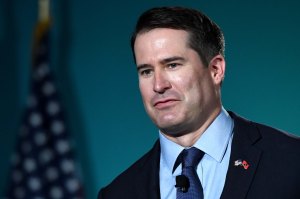

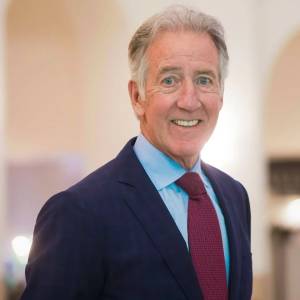














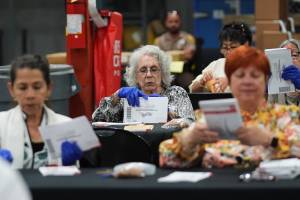











 peej
peej Carissa
 bostonboomer
 dakinikat
 ecocatwoman
 jjlo
jjlo mablue2
 Mama Lopez
 peggysue22
 quixote
 skydancingguestblogger
 Mona (aka Wonk the Vote)



 Sky Dancing
Recent Comments