“Meanwhile… at the Reflecting Pool in Washington, DC. Not everyone in Trumpland is impressed with the latest distraction. MAHA!”John Buss, @repeat1968
Good Day, Sky Dancers!
There actually is some good news from the Supreme Court Today. I’m not holding my breath that it will stand, however. It’s hard to hold your breath on anything. The Straight of Hormuz is still an active battlefield, no matter what Orange Caligula tells the press. People are dying in ICE custody as ICE has not been paying for medical care for 7 months. All of our allies are moving closer to Europe and farther from us, no matter where they are in the world. We’re a shithole country. We might as well face up to it.
Just breaking: news from the Supreme Court. NBC News reports that “Supreme Court temporarily restores full access to abortion pill. “The decision means mifepristone remains available nationwide without an in-person meeting required while litigation continues.” I read this headline after taking Temple for a walk and found a bunch of stickers on the neutral ground. Of course, I picked them up, and Temple and I will be plastering them at all the local bars later today.
This seems a little karmic, doesn’t it? Lawrence Hurley and Aria Bendix have the lede.
The Supreme Court on Monday provisionally blocked a lower court decision that would have limited availability nationwide of the abortion pill mifepristone.
In two brief orders, Justice Samuel Alito, one of the court’s conservatives, said the decision by the New Orleans-based5th U.S. Circuit Court of Appeals would remain on hold until at least May 11. Alito issued the order because he is the justice who handles emergency issues arising from that appeals court, which covers Texas, Louisiana and Mississippi.
The temporary pause gives the high court time to consider next steps in the case as it weighs separate emergency requests filed by drug makers Danco and GenBioPro.
The nationwide availability of mifepristone was cast into jeopardy on Friday when the appeals court granted Louisiana’s request to void Biden administration rules that allowed the drug to be administered without an in-person meeting, meaning it can in theory be mailed anywhere in the country, even in states with strict abortion bans.
Alexis McGill Johnson, president of abortion rights group Planned Parenthood Action Fund, welcomed the decision.
“While mifepristone access returns to where it was on Friday morning, the whiplash and chaos that patients and providers are navigating have already had real consequences for real peoples’ lives and futures,” she said in a statement.
Anti-abortion groups have been pushing for years to reinstate the in-person dispensing requirement, alleging that taking mifepristone at home can be dangerous — despite studies that have found it to be safe and effective.
Danco makes Mifeprex, the brand name version of mifepristone, while GenBioPro makes a generic version.
Alito ordered Louisiana to file its response to the company’s request by the end of the day on Thursday.
This is the latest deadly weirdness from NBC News. Once again, we see Trump cannot be trusted, and that Hegseth is probably drunk bombing. “U.S. denies Iranian claim that it hit American warship as Trump launches mission to reopen Strait of Hormuz. The U.S. said two American-flagged commercial vessels transited the critical waterway Monday as part of the new “Project Freedom.” This story is reported by Yuliya Talmazan and Courtney Kube.
The U.S. military on Monday rejected Iranian claims to have struck an American warship trying to enter the Strait of Hormuz and said the first commercial ships had transited the critical waterway as part of President Donald Trump’s new mission to guide stranded vessels.
Meanwhile, the South Korean government confirmed earlier reports that explosion and fire had occurred on a South Korean-operated cargo ship on Monday.
Iran signaled an aggressive response to this latest bid to break its stranglehold over the strait, which has left global shipping at an effective standstill and sent energy prices spiraling.
Tehran issued a new map and a flurry of statements that sought to reassert its control. Early Monday, it claimed to have stopped U.S. destroyers from entering the strait.
After the U.S. warships ignored several radio warnings, cruise missiles, rockets and combat drones were fired near them, army public relations said in a statement carried by the semi-official Tasnim news agency.
Iranian state media had earlier claimed that two missiles had hit a U.S. ship near the entrance to the strait, but the U.S. military denied this.
“No U.S. Navy ships have been struck. U.S. forces are supporting Project Freedom and enforcing the naval blockade on Iranian ports,” Central Command said in a post on X.
A U.S. official also denied to NBC News that any U.S. Navy ships were prevented from accessing the strait on Monday by Iran.
It really does sound like we’re the bad guys now, doesn’t it? Washington Monthly‘s Paul Glastic has this interesting bit of analysis today. “Why the U.S.-led Liberal World Order is Only Mostly Dead.”
Even before Donald Trump launched his ill-advised war on Iran, America’s allies were already pronouncing the end of the era of U.S. leadership of the free world. “The West as we knew it no longer exists,” European Commission president Ursula von der Leyen said in April of 2025 as she tried to rally governments in Asia, the Middle East, and Europe to counter massive tariffs that Trump had recently imposed. “The old order is not coming back,” declared Canadian Prime Minister Mark Carney this past January in a widely reported speech at Davos after fresh attempts by Trump to seize Greenland.
But in the wake of Trump’s cavalier attack on Iran and the global economic pain that has resulted, even some of America’s most vocal and influential champions of U.S. supremacy seem ready to throw in the towel. The neoconservative national security scholar Robert Kagan of the Brookings Institution recently penned a requiem in The Atlantic for eight decades of Pax Americana:
Those days are now over and will not soon return. Nations that once bandwagoned with the United States will now remain aloof or align against it—not because they want to, but because the United States leaves them no choice, because it will neither protect them nor refrain from exploiting them. Welcome to the era of the rogue American superpower. It will be lonely and dangerous.
Such declarations of the end of the U.S.-led international order are understandable. In a sense, they are a simple recognition of what Trump writes every day in ALL CAPS in his Truth Social posts, and of what his second-term government has been doing for 16 months. Just as Trump burned through his inherited wealth in a series of failed real estate ventures in his younger years, so is he now squandering decades of accumulated U.S. power in a mad attempt to overthrow the post-war system of alliances and institutions that was the means of acquiring that power. And he still has more than two-and-a-half years left in his presidency. Who knows how much more damage he will do? There is no reason to think he will abandon his beliefs that our allies are parasites, that international institutions are for losers, and that strongmen like him and Vladimir Putin should rule their spheres without constraint.
Countries across the globe are now recognizing that their past reliance on Washington for everything from advanced weaponry to sea lane protection has made them vulnerable to a leader like Trump. Consequently, they are looking for ways to give themselves some “strategic autonomy” from the United States—by, for instance, tilting towards China, or crafting a new coalition of “middle powers,” as Carney suggested in Davos, or creating a “European NATO” in which the U.S. no longer plays a leading, or perhaps any, role.
Given the circumstances, countries are wise to pursue these new arrangements. But they are poor substitutes for the U.S.-led liberal international order that Trump is dismantling. A better strategy is to rebuild that order in some form as soon as Trump leaves office. That might seem like wishful thinking, but it is not. Rather, it is the probable course of events if (as also seems likely) a Democrat wins the White House in 2028.
According to numerous polls, Democratic voters remain staunch supporters of Ukraine, NATO, and international institutions generally. They profoundly oppose Trump’s gunboat diplomacy in Venezuela and Iran. To win the presidential primary, any Democratic candidate must adhere to these views and, if successful in the general election, follow through in office to remain popular with the base. That shouldn’t be a problem if Democrats also control both houses and support a more internationalist foreign policy. Agencies gutted by Trump, such as USAID and the State Department, could be refunded and even expanded via reconciliation, thus requiring no GOP votes.
Some Republican lawmakers, free of Trump, might also be willing to support a more traditional foreign policy approach. In April, when Trump threatened to pull out of NATO if the allies didn’t help open the Strait of Hormuz, GOP Senate Majority Leader John Thune said there was little appetite in his caucus to support Trump in that effort. “We got an awful lot of people who think that NATO is a very critical, incredibly successful post-World War II alliance. And I think in the world today, you need allies,” Thune told reporters. Additionally, a NATO in which member states have raised their defense spending and taken increased responsibility for aiding Ukraine is an alliance that more conservative Americans can get behind without feeling like suckers.
Many supporters of traditional U.S. multilateralism fear that, because of Trump’s nationalist and extortionist policies, other countries can no longer trust us. After all, American voters elected Trump not once, but twice. That’s a fair point. But it’s also true that American voters threw Trump out of office once and, in virtually every election over the past year-plus, have signaled their unhappiness with the state of the country under his leadership. Moreover, all advanced democracies have far-right authoritarian political movements that could take over their governments. We can’t trust their voters any more than they can trust ours. We may all be fated to oscillate between liberal and illiberal governments, as Hungary has, until we address the working-class economic distress that is the root cause of the problem. As I have argued, it’s easier to do that multilaterally than separately.
These days, it’s easy to see why all of these countries have given up on us. Many of us here in the country feel that way, too. It’s so important to make sure the midterms flip the House and the Senate. If not, I may be writing future blog posts from Lima, Peru. Alison Quinn, writing for The Daily Beast, has the perfect observation. ” We’ll have to ask Dr. BB for confirmation, but I believe lack of sleep can increase the level of madness in a mentally ill person. “Truth of Trump’s Wild Sleepless Nights Exposed. LOSING HIS MIND. Joanna Coles and Daily Beast executive editor Hugh Dougherty dive into a jaw-dropping investigation revealing the president’s relentless late-night posting habits.”
A third of Donald Trump’s social media posts now come in the middle of the night when the soon-to-be 80-year-old president should be sleeping, raising urgent new concerns about his mental health as he navigates war.
Joanna Coles and Daily Beast executive editor Hugh Dougherty break down a shocking investigation that puts Trump’s late-night posting habits on stark display, revealing a disturbing pattern between those baffling posts fired off in the dead of night and the awkward moments in the Oval Office when the president has been caught appearing to doze off.
“It is an extraordinary, extraordinary piece of work. Josh Fiallo, our brilliant reporter, counted up all the times that Donald Trump posted on Truth Social in April and then he looked at when he was posting and he looked between the hours of 9 p.m. and 6 a.m. and we discovered that there were only five days in April when the president did not post on Truth Social between 9 p.m. and 6 a.m.,” Dougherty said on The Daily Beast Podcast.
“Eighty percent of nights when he could be sleeping, he’s posting,” he said.
While Trump’s often bizarre Truth Social posts have in many ways become a hallmark of his time in office, there was something quite different about them in the month of April: They appeared to become more frantic, disjointed, and more incendiary, as Trump’s political troubles multiplied, leading to foul-mouthed tirades and threats of war crimes that shocked even his own MAGA base and prompted some of his own allies to sound the alarm. It was no longer just Democrats questioning his fitness for office, but former advisers and much of the American public.
A Fox News poll conducted April 17-20 found that 55 percent of respondents felt Trump did not have the “mental soundness” to be an effective leader.
Well, at least the majority of us can see clearly. So that’s it for me. I got a smoker grill and intend to sit in what will become the new backyard of the kathouse and eat some very delicious food this summer. That’s mostly because I’m having the kitchen completely redone soon, so I have to cook somewhere else. It will be like a Girl Scout camp trip soon!
Please take care of yourselves, be kind to yourselves, and remember we’re always here for each other!
What’s on your Reading, Action, and Blogging list today?
“Don’t gobblefunk around with words.” ― Roald Dahl, The BFG.
Did you like this post? Please share it with your friends:
There was a lot of discouraging news yesterday, as is usually the case under Trump’s presidency. An appeals court in Louisiana temporarily limited access to abortion pills; we’re still adjusting to the Supreme Court’s voting rights decision; Trump and Hegseth are pulling 5,000 troops out of Germany for no good reason; the Iran war continues, but Trump is pretending it’s over; Trump is insane and getting worse. Here’s the latest:
A federal appeals court temporarily reinstated a nationwide requirement that abortion pills be obtained in person, undermining access to the method of abortion that has only grown more widespread since the US Supreme Court overturned Roe v. Wade.
Friday’s ruling from the 5th US Circuit Court of Appeals is a major victory in the anti-abortion movement’s war against medication abortion, which now accounts for roughly two-thirds of all abortions in the United States.
The ruling stems froma lawsuit filed by Louisiana last year against the US Food and Drug Administration, after President Donald Trump’s administration refused to act on calls to reinstate the in-person dispensing requirement for abortion pills through the regulatory process.
The opinion was written by Trump-appointed Circuit Judge Kyle Duncan, joined by Circuit Judges Leslie Southwick and Kurt Engelhardt, who were appointed by Presidents George W. Bush and Trump, respectively.
Referring to Louisiana abortion prohibitions, they wrote that the current federal regulations create “an effective way for an out-of-state prescriber to place the drug in the hands of Louisianans in defiance of Louisiana law.”
Mifepristone manufacturer Danco Laboratories has asked the 5th Circuit to put its ruling on hold for seven days so it can appeal.
Since the Covid-19 pandemic, abortion-seekers have been able to obtain mifepristone – one of the two drugs in the medication abortion regimen – through telehealth appointments. President Joe Biden’s administration finalized rules that ended the requirement that the pills be obtained through an in-person doctor’s visit in 2023, after the US Supreme Court overturned the 1973 Roe precedent protecting abortion rights nationwide with Dobbs v. Jackson Women’s Health Organization.
Louisiana alleged that that regulatory maneuver was aimed at undermining the abortion ban that went into effect in the state with the reversal of Roe and says that now, hundreds of abortions are occurring every year within its borders because women are able to obtain pills via mail after telehealth visits with providers.
Access to mifepristone, the FDA-approved medication used to end pregnancy, could become severely limited following a ruling from US appeals court on Friday, which temporarily blocked the drug from being dispensed through the mail.
The decision is for now the most sweeping threat to abortion access since the supreme court rolled back abortion rights in 2022, said Kelly Baden, vice-president at the Guttmacher Institute, an abortion rights advocacy group.
“If allowed to stand, it would severely restrict access to mifepristone in every state, including those where abortion is broadly legal and where voters have acted to protect abortion rights,” she said.
Usage has risen in recent years, especially in the aftermath of the 2022 ruling from the supreme court that overturned federal protections for a right to an abortion. In the year after that decision, the FDA formally modified its regulations to allow the drug to be prescribed online, expanding its use even in states where abortion care was being constricted.
The drug has become a key target for the anti-abortion movement, and a series of lawsuits have challenged the drug’s initial approval in 2000 and the subsequent rules making it easier to obtain.
And Trump controls the FDA.
Meanwhile, with the FDA now under Trump, the agency has opened a review of the medication. Once this analysis is completed, officials at the agency said, they will determine if changes to its regulations are warranted.
The Girl with the Cats, by Christian Kroag, 1909
Reproductive rights advocates have voiced concerns that the review could further limit mifepristone’s use, despite the evidence supporting its safety.
Developed in France in the 1980s, mifepristone is used around the world and is authorized in 96 countries. Its use is backed by roughly four decades of peer-reviewed research, according to a 2025 brief written by public health experts at the Johns Hopkins School of Medicine.
“Anti-abortion politicians have just made it much harder for people everywhere in the country to get a medication that abortion and miscarriage patients have been safely using for more than 25 years,” Julia Kaye, a senior staff attorney for the Reproductive Freedom Project of the ACLU, said in a statement.
Some relevant commentary from Jessica Valenti at Abortion Everyday: My Favorite Abortion.
This week, U.S. Rep. Brandon Gill asked an understandably confused American University scholar to name her “favorite type of abortion.” Law professor Jessica Waters went before a House Judiciary subcommittee to talk about the Freedom of Access to Clinic Entrances (FACE) Act; instead, she was questioned by a visibly pleased with himself Texas lawmaker who clearly crafted his question to be a viral social media moment.
When you see Rep. Gill’s shit-eating grin, you’ll know exactly who he is.
Since Rep. Gill is so interested in our favorite types of abortions, I thought I’d share a few of mine.
My favorite type of abortion is the one that prevents a raped ten-year-old from breaking her pelvis in childbirth.
I also like abortions that keep women from carrying dead fetuses for weeks on end, which is what happened to Marlena Stell in Rep. Gill’s home state of Texas.
Another favorite? The abortion that means a Texas 21-year-old won’t be forced to carry a fetus developing without a head.
I like the abortion that means a pregnant mother of five with cervical cancer doesn’t have to beg a hospital panel for chemotherapy.
I like the abortion that doesn’t force a woman to travel far from home when faced with a fatal fetal abnormality.
I really like the abortion that stops patients from having to plead for help in videos made in hospital parking lots.
My favorite types of abortions are the ones that allow women to live. Maybe if Candi Miller, or Amber Nicole Thurman, or Tierra Walker had access to abortion, they would still be here.
My favorite types of abortions are the ones that allow women to go to college.
My favorite types of abortions are the ones that let women leave abusive relationships.
My favorite kinds of abortions are the ones that mean women get to choose their own life path, to decide what is best for them, and to figure out if and when they want to start a family.
I suppose this case will ultimately end up in the Supreme Court. Who knows what they will do with it?
And of course we’re still dealing with the aftermath of the Roberts Court’s decision gutting the Voting Rights Act.
With its decision this week in Louisiana v. Callais, the Supreme Court gutted a core part of the Voting Rights Act, Congress’s landmark prohibition on voting rules that have the effect of excluding people of color from the political process. In doing so, the court has, not for the first time, claimed an authority to reject laws passed by Congress in service of equal justice and a free society.
By Susanne Clements
And it has effectively killed the Second Reconstruction, the mid-20th-century civil rights revolution. In the face of this decision, Congress must once again defend democracy from a hostile court. A plan of action already exists.
When the Supreme Court challenged the first Reconstruction 150 years ago, abolitionists and Republicans in Congress debated measures ranging from declaring certain federal laws beyond judicial reach to changing the number of justices. The partial measures they enacted saved Reconstruction — for a time. But more relevant for us today are the comprehensive reforms they proposed but never fully enacted. These reforms offer us and our representatives in Congress the tools we need now.
In the era surrounding the Civil War, opponents of slavery confronted a Supreme Court that was threatening their life’s work. In Dred Scott v. Sandford, in 1857, the court declared unconstitutional the Missouri Compromise — a congressional statute banning the spread of slavery in federal territory. A decade later, the court similarly menaced the Reconstruction laws that Congress was enacting to begin the project of multiracial democracy amid the wreckage of the former Confederacy.
But Congress did not submit to this judicial rule. Members of an ascendant Republican Party decried a court “inflated with supremacy” and declared that whenever a decision is, “in the judgment of Congress, subversive of the rights and liberties of the people,” it is the “solemn duty of Congress” to override it. In 1862, Congress and President Abraham Lincoln enacted legislation that banned slavery in places the Dred Scott decision had protected it. Congress also drafted the 13th, 14th and 15th Amendments to the Constitution, all of which advanced Congress’s goals of freedom and political equality while empowering Congress to enforce its terms by “appropriate legislation.”
When the postwar court appeared likely to challenge legislation Congress considered “appropriate” to enforce these amendments, Congress changed the size of the court. The House of Representatives then passed a bill that prohibited the court from invalidating any federal law without the concurrence of two-thirds of the justices. Representative John Bingham of Ohio, the primary author of the 14th Amendment, insisted that such a requirement was necessary to prevent a second Dred Scottdecision. Some members agreed but pushed for a unanimity rule (concurrence among all the justices) instead.
In the Senate, the author of the 13th Amendment, Lyman Trumbull of Illinois, proposed that Congress declare its Reconstruction Acts “political in their character, the propriety or validity of which no judicial tribunal is competent to question.” As the threat from one pending Supreme Court case became urgent, Congress enacted a narrower but decisive measure stripping the court of appellate jurisdiction over the particular challenge before it.
That strategy worked. Disciplined by Congress, the court declined to interfere with its abolition or Reconstruction Acts. As federal prosecutors and lower courts enforced these statutes, over 750,000 Black Americans voted for the first time. Black men even took seats in Congress, where they helped draft and pass the nation’s first national voting rights laws.
Use the gift link to read the rest if you’re interested.
Why on earth does Trump want U.S. troops out of Germany? Because German Chancellor Friedrich Merz hurt his feelings.
The U.S. is withdrawing approximately 5,000 troops from Germany, Pentagon officials said Friday, after President Donald Trump was angered by criticism from the German chancellor over the war with Iran.
The move would include one brigade combat team as well as other forces inside Germany, the officials said. The decision does not appear to affect the U.S. military’s massive medical support bases, like Landstuhl, where thousands of troops, including those who have been injured during the war, have been taken for medical treatment.
The decision was a direct response to comments made by Chancellor Friedrich Merz, but also reflected Trump’s frustration that U.S. allies aren’t doing enough, according to a senior Pentagon official. Trump has been threatening Germany and other NATO allies over their refusal to engage in the U.S. and Israel-led war on Iran. He suggested earlier this week he might pull troops from Germany.
“The Europeans have not stepped up when America needed them,” the official said. “This cannot be a one-way street.”
Chief Pentagon spokesperson Sean Parnell confirmed the withdrawal figure in a statement Friday and said it would be completed over the next six months to a year.
“This decision follows a thorough review of the Department’s force posture in Europe and is in recognition of theater requirements and conditions on the ground,” he said.
ONE OF THE BIGGEST MISTAKES of my career wasn’t something I did. It was something I failed to prevent.
I was commander of U.S. Army Europe in the early 2010s when U.S. forces were being drawn down in the European theater. I argued—forcefully, with member of Congress, the administration and the Department of Defense, and even my military commanders—that we shouldn’t do it.
In the final throes of the discussion, I pleaded to keep just one more tank brigade combat team on the continent. Those tanks, armored vehicles, and supporting forces would have signaled not to our allies but to our foe, Putin, presence and commitment. I believed then, as I do now, that removing that force created an opportunity for Russia to test the NATO alliance and to pursue its longstanding objective of expanding its influence.
I wasn’t persuasive enough. My arguments fell on deaf ears, and the brigade’s soldiers were ordered to return to the United States. Not long after, Russia seized Crimea and invaded Ukraine’s Donbas region. I won’t claim that the decisions of those who were my superiors caused that aggression—but I believe it contributed to it. I remember a warning from the then-president of Georgia, Mikheil Saakashvili, who told me plainly that if we pulled that kind of capability out of Europe, Moscow would act.
By Sylvia Anita, 1968
He was right. I still question myself as to how I could have been more persuasive.
I WOULD LIKE TO SEE the Department of Defense’s “thorough review.” Because I was part of a similar one conducted over a decade ago. I helped plan and later execute the last major transformation of U.S. Army forces in Europe—one that took that force from 90,000 troops to about 34,000 between 2004 and 2012.That wasn’t a decision made quickly or casually. It took years of analysis, coordination, and constant negotiation across governments, services, and commands. It required aligning troop movements with deployments to Iraq and Afghanistan to avoid tearing apart families and units. It involved extensive consultation with host nations such as Germany and Italy, where political, legal, and economic considerations were as important as military considerations. It required detailed planning for base closures, infrastructure consolidation, and a plan for a strategic long-term presence on the continent. It also took unique action to ensure families of those forces were treated well as we hurried their return to the United States in massive waves of base and housing closures. The planning and the execution were phased deliberately, executed carefully, and constantly reassessed. Those are the kinds of procedures and actions that constitute a real, “thorough review.” I don’t believe for a second that there was anything like that kind of process before the withdrawal announcement made yesterday evening.
This decision does not bear the hallmarks of a plan that resulted from careful thought, deliberation, consultation, and diplomacy. It reflects a misunderstanding of what U.S. forces in Europe are and what they do to contribute to the security of both the United States and our European allies.
Read the rest at the Bulwark link.
The Iran war isn’t over, but Trump is trying to pretend it is. He claims he has already won it. He’s created mess and doesn’t know how to clean it up. He is truly insane and he controls our nuclear arsenal.
President Donald Trump claimed in a letter to Congress on Friday that hostilities with Iran have “terminated” as he reached a legal deadline that requires military operations to halt unless lawmakers authorize force.
Trump’s claim came as the United States continues to enforce a naval blockade of Iran and as he declined to rule out additional strikes on the country.
Country Girl and her Kitten, Charles Lansdelle
The War Powers Resolution of 1973 requires presidents to remove U.S. forces from any conflict that Congress has not authorized within 60 days of the White House notifying Congress of hostilities — a deadline that Trump hit on Friday.
Trump wrote in his letter to lawmakers Friday that the conflict has been effectively over since the United States and Iran agreed last month to a ceasefire.
“There has been no exchange of fire between United States Forces and Iran since April 7, 2026,” Trump wrote in the letter, obtained by The Washington Post. “The hostilities that began on February 28, 2026, have terminated.”
The president’s argument echoed what Defense Secretary Pete Hegseth said Thursday in testimony before the Senate Armed Services Committee. Trump also suggested Friday that he believes the requirement to withdraw U.S. forces within 60 days is unconstitutional.
“Most people consider it totally unconstitutional,” Trump told reporters. “Also, we had a ceasefire, so that gives you additional time.”
Democrats immediately pushed back. Senate Minority Leader Charles E. Schumer (D-New York) described Trump’s argument in a post on X as “bullshit.”
“President Trump declaring the war with Iran ‘terminated’ doesn’t reflect the reality that tens of thousands of U.S. service members in the region are still in harm’s way, that the Administration continually threatens to escalate hostilities or that the Strait of Hormuz remains closed and prices are skyrocketing at home,” Sen. Jeanne Shaheen (New Hampshire), the top Democrat on the Senate Foreign Relations Committee, said in a statement. “President Trump entered this war without a strategy and without legal authorization and today’s announcement doesn’t change either fact.”
— Sanction threat: The US has warned shipping companies they could face sanctions if they pay tolls to Iran to safely use the Strait of Hormuz. Meanwhile, analysts say the impact of the waterway’s closure on the economy will deepen in the coming weeks.
— A senior Iranian military official has said renewed conflict with the US is “possible” after President Donald Trump rejected the latest peace proposal from Tehran. The nations are currently observing a ceasefire.
President Donald Trump, a former reality TV star known for his taste in all-gold everything, has never been one for modesty, but the Republican has in recent days begun speaking about himself as a figure of all-time historical power, according to allies.
“He’s been talking recently about how he is the most powerful person to ever live,” a Trump confidant told The Atlantic. “He wants to be remembered as the one who did things that other people couldn’t do, because of his sheer power and force of will.”
“He is unburdened by political concerns and is able to do what is truly right rather than what is in his best political interests,” an administration official added in an interview with the magazine. “Hence the decision to strike Iran.”
Unlike any U.S. leader in recent history, President Trump has pushed the boundaries of what is legal within the U.S., while making massive unilateral gambles on the world stage: threatening a U.S. takeover of allied Greenland, kidnapping the leader of Venezuela, and launching a war with Iran.
Country Girl and her Kitten, Charles Lansdelle
Unreal. The man is a megalomaniac. He’s also demonstrating that by trying to put his name on everything from the Kennedy Center to airports, National Park passes, passports, and even dollar bills.
President Donald Trump said Friday that he was eager to deliver his first public speech since he was hustled from a hotel stage Saturday, after an attempted shooter breached the perimeter of the White House correspondents’ dinner.
And the president picked a familiar stop for his return address: The Villages, a retirement community in Florida and a longtime Republican stronghold.
“They want me to be in a secure place. I said, ‘What’s more secure than The Villages?’” Trump said to applause, as he kicked off a 94-minute event that featured several guests — and was peppered with Trump’s profane jokes and complaints, including about the president’s microphone setup.
“Turn up the mic!” the president said, criticizing the logistics. “I don’t believe in paying people that do a bad job. … I’m screaming my ass off.” [….]
Trump seemed unburdened [by the events at the White House Correspondent’s Dinner]. He mocked Democrats in crass terms, including one unnamed lawmaker that he said was a “sleazebag,” for focusing on affordability ahead of the midterm elections.
“They’ve got one good line of bullshit,” the president said, blaming Democrats for policies that he said had led to inflation. Trump also polled the crowd on which nickname he should use to mock former president Joe Biden, who Trump said had “set a record, most falls in history.”
I don’t know how that went over in The Villages, but most voters are not going to like his attitudes about affordability. He also indicated that he’s bored by information about Medicare and Medicaid.
Trump also gestured toward some of his policies, saying that his administration was defending entitlement programs such as Social Security and Medicare, before acknowledging that he wasn’t particularly focused on the details.
“We have a man here who knows more about Medicaid, Medicare, medical crap than any human being. Where’s Dr. Oz? Where the hell are you, stand up,” Trump said, referring to Mehmet Oz, the administrator of the Centers for Medicare and Medicaid Services. “It’s the most boring trip I’ve ever made. He’s telling me about Medicare, Medicaid. All I want to do is take care of you, I don’t care. I said, ‘You work out the details.’”
He also performed his “greatest hits,” like the transgender weightlifter and “dancing” to “YMCA,” which he says people claim is a gay anthem but he loves it anyway. He also told the audience that it is “treasonous” to claim that he’s not winning the Iran war.
I could go on and on, but this getting way too long. I hope you found something here worth reading. Enjoy the rest of the weekend!
Did you like this post? Please share it with your friends:
There is quite a bit of news happening today. The top stories involve the Supreme Court, abortion, Hunter Biden, and the phony “impeachment” of President Biden by a bunch of Republican idiots. Here goes:
The Supreme Court has agreed to hear two troubling cases, one involving access to early abortions, and another that could affect January 6th cases.
The Supreme Court will decide this term whether to limit access to a key abortion drug, returning the polarizing issue of reproductive rights to the high court for the first time since the conservative majority overturned Roe v. Wade last year.
The Biden administration and the manufacturer of mifepristone have asked the justices to overturn a lower-court ruling that would make it more difficult to obtain the medication, which is part of a two-drug regimen used in more than half of all abortions in the United States. Oral arguments will likely be scheduled for the spring, with a decision by the end of June, further elevating the issue of abortion, which has proven galvanizing for Democrats, during the 2024 campaign season.
The justices will review a decision fromthe conservative U.S. Court of Appeals for the 5th Circuit that said the Food and Drug Administration did not follow proper procedures when it began loosening regulations for obtaining the mifepristone, which was first approved more than 20 years ago. The changes made over the last few years included allowing the drug to be taken later in pregnancy, to be mailed directly to patients and to be prescribed by a medical professional other than a doctor.
Medications to terminate pregnancy, which can be taken at home, have increased in importance over the last 18 months, as more than a dozenstates severely limited or banned abortions following the Supreme Court’s ruling in Dobbs v. Jackson Women’s Health Organization.
The Supreme Court on Wednesday agreed to hear an appeal brought by a man charged with offenses relating to the Jan. 6, 2021, assault on the U.S. Capitol in a case that could have a major impact on the criminal prosecution of former President Donald Trump.
The justices will hear a case brought by defendant Joseph Fischer, who is seeking to dismiss a charge accusing him of obstructing an official proceeding, namely the certification by Congress of President Joe Biden’s election victory, which was disrupted by a mob of Trump supporters.
Two other Jan. 6 defendants, Edward Lang and Garret Miller, brought similar appeals, the outcome of which will be dictated by the Supreme Court’s ruling in Fischer’s case.
Fritz Ulrich, a federal public defender representing Fischer, said he was pleased that the court will clarify the scope of the law in question but had no further comment.
Trump has been charged with the same offense as well as others in his federal election interference case. The court’s decision to take up the issue, as well as the timing of its ultimate ruling, could therefore affect his case.
How the case against Trump could be affected:
It will take months for the justices to hear oral arguments and issue a ruling sometime during the court’s current nine-month term, which ends in June.
Trump’s lawyers could use the Supreme Court’s involvement as one opportunity to delay his election interference trial, which is scheduled to start in March.
Trump is the front-runner in the polls for the Republican presidential nomination, and any delay in his criminal trial in Washington would be to his benefit.
If Trump were to win the election in November, he would then be in a position to have the charges dismissed. If the case proceeds as scheduled in March and Trump were to be convicted, he could be sentenced before the election.
She has been named by two Republican governors — first Rick Scott, then Ron DeSantis — to sit on the Board of Trustees for the State College of Florida, and she says she voted for DeSantis in his 2022 campaign for governor.
But when it comes to the issue of abortion, she’s breaking with her party.
“Women are concerned about what’s happening with our bodies and our right to choose. And there’s a lot of people that you wouldn’t think would be the pro-choice advocates, but they are,” she said. “And the government overreach, it’s huge right now.”
Carter is one of more than 150,000 registered Republican voters who have signed a petition in support of a ballot amendment that would bar the state from restricting abortion “before viability” — which is usually at 24 weeks — or “when necessary to protect the patient’s health.”
That total comes from the Florida Women’s Freedom Coalition, one of several groups working to gather the 891,523 signatures necessary to get the measure on the ballot, working with Floridians Protecting Freedom, the campaign leading the ballot initiative. The group says it has gathered and submitted more than 1.3 million signatures so far. The website of the Florida Division of Elections says it has validated 687,699 signatures as of mid-December.
Florida is one of nine states where groups are pushing to get measures on the ballot that would bar restrictions on abortion rights, following a streak of wins for similar measures in Kansas and Ohio.
And as the Feb. 1 deadline to get the petitions submitted and verified approaches in Florida, some Republican voters are coming out publicly to support and even advocate for it.
Very interesting. I wonder if Ron DeSantis has heard about this yet?
This is the day that House Republicans ordered Hunter Biden to undergo a behind-closed-doors deposition. In a surprise move, Biden held an impressive press conference, in which he reiterated his willingness to answer questions at a public hearing.
Hunter Biden, the president’s son, appeared on Capitol Hill on Wednesday morning to offer to publicly testify in House Republicans’ impeachment investigation into his father, though he insisted he would not appear for a private deposition they scheduled over his refusals.
The younger Mr. Biden, who has been served a subpoena to testify, spoke to reporters in a hastily called news conference outside the Capitol near the Senate, across the complex from a House office building where Republican lawmakers were waiting to question him behind closed doors.
“I am here,” Mr. Biden said. “Let me state as clearly as I can: My father was not involved in my business.”
“There is no evidence to support the allegations my father was involved in my business because it did not happen,” he added.
The younger Mr. Biden has objected to providing private testimony, saying he fears Republicans will selectively leak his remarks and try to distort what he says. He has repeatedly proposed that he appear at a public hearing instead to answer their questions.
“They have lied over and over,” Mr. Biden said of Republicans.
Republicans have threatened to hold him in contempt of Congress if he does not comply.
Hunter Biden will not appear for a closed-door deposition Wednesday, defying a subpoena from House Republicans who are investigating the Biden family’s finances.
“I’m here to testify at a public hearing today,” Hunter Biden said in a statement outside of the Capitol on Wednesday morning. “Republicans do not want an open process where Americans can see their tactics … or hear what I have to say.” [….]
Hunter Biden
Hunter Biden maintained that he would answer questions only in a public hearing. His legal team has pointed to past comments in which House Oversight Committee Chairman James Comer (R-Ky.) all but dared Hunter Biden to testify — publicly or privately — and the team has said they don’t trust House Republicans not to selectively leak his testimony.
“For six years I’ve been targeted by the unrelenting Trump Machine asking ‘where’s Hunter,’” Hunter Biden said. “Here’s my answer: I am here.”
Comer over the past two weeks has rebuffed Hunter Biden’s offer to publicly testify before the committee, and Republicans on Wednesday vowed to move expeditiously to initiate proceedings to hold him in contempt of Congress for defying their subpoena.
Hunter Biden “does not get to dictate the terms of the subpoena,” Comer told reporters outside of an empty hearing room where Hunter Biden was scheduled to be deposed. Pressed about whether he has found evidence that President Biden had engaged in wrongdoing or criminal conduct, Comer said he had found “some very serious evidence,” before citing two examples of banking records he has repeatedly mischaracterized.
The fake charges against President Biden:
The foundation of the impeachment inquiry, outlined by Judiciary Committee Chairman Jim Jordan (R-Ohio) in a briefing with reporters last week, rests on an unsubstantiated accusation that has become the linchpin of allegations regarding the Biden family’s purported corrupt and criminal conduct.
Republicans allege that Joe Biden as vice president pushed for the firing of Ukraine’s top prosecutor, Viktor Shokin, to quash a probe into the former owner of Burisma, the Ukrainian gas company where Hunter Biden sat on the board. That allegation has been widely refuted by former U.S. officials, as well as Ukrainian anti-corruption activists.
As part of the inquiry, House Republicans also have elevated claims that the Biden administration slowed a Justice Department investigation into Hunter Biden’s financial background, but that testimony has been repeatedly disputed by officials involved in the case.
“There is no fairness or decency in what these Republicans are doing. Their false facts have become the beliefs of too many people,” Hunter Biden said Wednesday.
“They have taken the light of my dad’s love for me and presented it as darkness,” he continued. “They have no shame.
It has long been an article of faith on the right that Attorney General Merrick Garland is prosecuting Donald Trump because President Biden wants him to. Even the Trump-skeptical corners of the conservative media casually assert, without bothering to supply any evidence for the charge, that Biden is behind the DOJ investigations.
“Biden Justice Department officials and Democratic prosecutors are currently trying to put the other side’s leading contender for the White House in jail … The vapors over Trump saying he’s going to target his enemies,” argues National Review editor-in-chief Rich Lowry, “is rich coming from people who have targeted their enemy by any means necessary for years now.”
“Meantime, a Justice Department special counsel has filed trumped-up charges against Mr. Trump for allegedly defrauding the U.S. … writes Wall Street Journal columnist Allysia Finley, “Abuse executive power. Ignore the law. Run roughshod over individual liberties. Retaliate against political opponents. Mr. Biden and his allies have done exactly what they warn Mr. Trump will do if he returns to the White House.”
You’d think those conservatives might be questioning this assumption, now that Garland’s Justice Department is prosecuting Joe Biden’s son for tax evasion. But no, they’re just pretending it isn’t happening.
There was never any basis for the charge that Garland is working at Biden’s behest. Garland is well-respected by legal types in both parties — that’s why Barack Obama thought he was the only Supreme Court nominee who stood any chance of confirmation by a Republican Senate in 2016 — and received 70 votes for his confirmation.
Unlike Trump, who repeatedly demanded his attorneys general prosecute his enemies and let his criminal buddies go free, and made these demands privately with even more corrupt intent, there is zero public evidence or reporting to suggest Biden has improperly tried to influence Garland’s decisions.
What’s more, the two Justice Department cases against Trump both flow directly from publicly identifiable sources. Trump is being charged in the documents case because the National Archive asked him to return government property, he refused, and then covered up his crimes when the FBI came looking. The January 6 case comes directly out of an investigation by a House committee that turned up damning evidence….
Indeed, the president is angry with his attorney general. “Biden’s relationship with Garland — which was already tense — has become more frigid amid Biden’s frustration at the lengthy criminal investigation and now prosecution of Hunter by the Justice Department,” reports Alex Thompson, “People close to Biden also have fumed at Garland for appointing a special counsel in August.” Thompson also reports, “One person close to the president unflatteringly compared Garland to the former FBI director James Comey, claiming they both have been obsessed with the appearance of having integrity rather than just trying to make the right decision.”
The Republican-led House is on track to approve a formal impeachment inquiry into President Biden on Wednesday, pushing forward with a yearlong G.O.P. investigation that has failed to produce evidence of anything approaching high crimes or misdemeanors.
Republicans say the vote, which is expected in the evening, is needed to give them full authority to carry out their investigations amid anticipated legal challenges from the White House. Democrats have denounced the inquiry as a fishing expedition and a political stunt.
G.O.P. leaders refrained for months from calling a vote to open an impeachment inquiry, given the reservations of mainstream Republicans, many of them from politically competitive districts, about moving forward without proof that Mr. Biden did anything wrong. But the political ground has shifted considerably, and most of them are now willing to do so, emphasizing that they are not yet ready to charge the president.
“Voting in favor of an impeachment inquiry does not equal impeachment,” Representative Tom Emmer of Minnesota, the No. 3 House Republican, said at a news conference on Tuesday. “We will continue to follow the facts wherever they lead, and if they uncover evidence of treason, bribery or other high crimes and misdemeanors, then and only then will the next steps towards impeachment proceedings be considered.”
Read more at the NYT. I guess we’ll learn later today if the Republicans have the votes for their impeachment inquiry without a shred of evidence to support it.
Last night the Supreme Court released their decision in the mifepristone case. They stayed–for now–Texas Judge Matthew Kacsmaryk’s order to ban the abortion pill nationwide. The New York Times reports: Supreme Court Ensures, for Now, Broad Access to Abortion Pill.
The order halted steps that had sought to curb the availability of mifepristone as an appeal moves forward: a ruling from a federal judge in Texas to suspend the drug from the market entirely and another from an appeals court to impose significant barriers on the pill, including blocking access by mail.
The unsigned, one-paragraph order, which came hours before restrictions were set to take effect, marked the second time in a year that the Supreme Court had considered a major effort to sharply curtail access to abortion.
The case could ultimately have profound implications, even for states where abortion is legal, as well as for the F.D.A.’s regulatory authority over other drugs.
If the ruling by the judge in Texas, which revoked the F.D.A.’s approval of the pill after more than two decades, were to stand, it could pave the way for all sorts of challenges to the agency’s approval of other medications and enable medical providers anywhere to contest government policy that might affect a patient.
In the only noted dissents, Justices Clarence Thomas and Samuel A. Alito Jr. said they would not have granted the Biden administration’s request for a stay of the decision by a panel of the U.S. Court of Appeals for the 5th Circuit.
Thomas did not explain his reasoning. Alito said the administration and the public would not have been harmed by agreeing with the lower court, which wanted to reimpose restrictions loosened by the FDA in recent years.
“It would simply restore the circumstances that existed (and that the Government defended) from 2000 to 2016 under three Presidential administrations,” Alito wrote. He disputed that the court’s intervention at this time would have sent a signal: “Contrary to the impression that may be held by many, that disposition would not express any view on the merits of the question whether the FDA acted lawfully in any of its actions regarding mifepristone.”
By Alice Kent Stoddard
There could have been other dissents; we only know that at least 5 justices voted for the stay. On what happens next:
The 5th Circuit next month will review the merits of the case brought by antiabortion groups against the FDA’s regulation of mifepristone — a review that will be conducted by a separate, and likely different, three-judge panel than the one that made the initial ruling. That merits decision will almost surely be appealed to the Supreme Court no matter the outcome. But until then, the justices’ Friday order says the status quo will remain in place: Mifepristone will be available under existing FDA regulations nationwide.
Joyce Vance wrote a lengthy and detailed discussion of the issues in this case; it’s well worth reading the entire piece at Vance’s Substack page, Civil Discourse: Not Quite Midnight at the Supreme Court. Here is a brief excerpt.
I figured that I’d set my alarm for midnight to see how the Court would rule on the government’s request to stay the Fifth Circuit’s order. That order, you’ll recall, did not side with Texas federal judge Matthew Kacsmaryk’s decision to overrule the FDA’s approval of Mifepristone, a drug proven safe and effective for abortions and miscarriage treatment for over 20 years. But it would have permitted the remainder of the restrictions on Mifepristone that Kacsmaryk ordered to remain in place while the litigation proceeded. That includes requiring the drug be obtained in person and not through the mail, necessitating multiple doctor’s office visits and in-office consumption of the medication, and restricting use to prior to the seventh week of pregnancy—while the litigation proceeded.
When the Supreme Court ruled, they stayed all of it. They preserved the status quo, so Mifepristone will remain available up to 10 weeks, and can be obtained via the mail and used at home while the courts are reviewing the case. But that’s a temporary reprieve.
The stay will last while the case is on appeal to the Fifth Circuit. Presumably the party that loses in that court will appeal to the Supreme Court. They are not required to hear an appeal in a civil case like this. If the Court were to refuse to hear it (“certiorari denied”), then the stay would end and the Fifth Circuit’s order would go into effect. If the Supreme Court agrees to hear the appeal (“cert granted”), the stay will continue until the Court enters final judgment. Because the case involves important issues, it’s very likely the Court will take the case.
Best Friends, by Maxime Dastugue
Vance spends a several paragraphs discussion Altio’s dissent. Not surprisingly, she is quite critical of Alito’s reasoning. Here’s part of it:
Alito rehashed the debate over the use of what has become known as the Court’s “shadow docket”—a docket used for resolving emergency requests. Interestingly, he seemed to take Justice Barrett to task, associating her views with those of progressive justices like Elena Kagan who have objected to the Court’s use of the docket to make decisions without explaining its reasoning (this makes it understandably difficult for lower courts to understand and apply the Court’s logic). Alito notes that Barrett in a 2021 concurrence with a denial of injunctive relief wrote that the Court should not act “on a short fuse without benefit of full briefing and oral argument” in a case that is “first to address the questions presented.” He says that while he agreed with those rulings, if the justices believed that then, they should believe it now. He does not, however, explain why, if he did not believe it back then, it’s okay for him to believe it now. Apparently what’s good for the goose is unnecessary for the gander.
Injunctions present complicated questions, and courts typically, but not always, try to preserve the status quo and protect parties from being harmed or prejudiced while litigation is pending. For instance, in Whole Woman’s Health v. Jackson, one of the cases Justice Alito offered up, Justice Kagan was objecting to the Court’s refusal to keep Texas’s heartbeat law from going into effect while litigation was underway. And that is what the Court ended up doing in this case—preventing any change in the approval status or regulations surrounding Mifepristone’s use while the case is pending. So Justice Alito’s arguments have a tinge of sour grapes, not legal principle.
There’s much more criticism of Alito at the link. Next, Vance addresses the latest news about Judge Kacsmaryk’s bias and dishonesty.
Meanwhile, additional evidence of Judge Kacsmaryk’s anti-abortion bias (there was already plenty) and an improper effort to conceal it has surfaced. In anticipation of his judicial confirmation process in 2019, he requested that his name be removed, pre-publication, from a law journal article he had authored, replacing it with some colleagues from the religious conservative legal group he was working for. The article was critical of legal protections for abortion and transgender people. All federal judicial nominees have to complete a document called a Senate Judicial Questionnaire. The completed application packet is submitted under oath before a nomination can advance. Among other things, it requires nominees to list everything they have published. Kacsmaryk failed to disclose the article and also failed to disclose interviews he gave on Christian talk radio that included his views on abortion and other issues, information the questionnaire calls for.
The federal judge who issued a nationwide ruling blocking the approval of a common abortion medication redacted key information on his legally mandated financial disclosures, in what legal experts described as an unusual move that conceals the bulk of his personal fortune.
Woman with Cat, by Theodorus Gerardus Iherminez
In his 2020 and 2021 annual disclosures, Judge Matthew Kacsmaryk wrote that he held between $5 million and $25 million in “common stock” of a company – a significant majority of the judge’s personal wealth. The name of the company he held stock in is redacted, despite the fact that federal law only allows redactions of information that could “endanger” a judge or their family member.
CNN obtained a previous financial disclosure for Kacsmaryk – which is not available online – from 2017, when he was a judicial nominee.
On that unredacted form, Kacsmaryk reported owning about $2.9 million in stock in the Florida-based supermarket company Publix. It’s not clear whether that’s the same holding as the redacted stock, although Publix’s share price had significantly increased by 2020 and 2021 and the company is no longer listed on his more recent disclosures.
Redactions are approved by a judicial committee. The redacted holding accounted for at least 85% of Kacsmaryk’s total reported wealth in 2021, and potentially more.
“The whole point of a disclosure is to explain where you have conflicts,” said Michael Lissner, the executive director of the Free Law Project, a nonprofit that has published judicial disclosures. “If you have stock and you’re not saying what it’s in and it’s this much of your personal wealth, that’s a conflict you have. The public deserves to know.” [….]
The redaction is the latest example of Kacsmaryk not being fully transparent as a judge and judicial nominee, even as he has become one of the most controversial judges in the country.
That’s in addition to his not be fully forthcoming in his Senate confirmation hearing, as Joyce Vance described above.
Two more articles on the Supreme Court from Slate:
At first glance, what’s happening right now in Iowa looks like a rosy vision for the future of reproductive rights.
The Republican-controlled state Senate recently passed a bill that would increase access to certain types of contraception by allowing pharmacists to dispense it to patients without a prescription. Their GOP counterparts in the state House have included a similar provision in a larger health care bill. And Republican Gov. Kim Reynolds has indicated that the legislation is one of her top priorities this session.
Girl on Divan with Cat (Eta with the Cat) – Róbert Berény 1919 Hungarian 1887-1953
But look elsewhere in Iowa, and you’ll get a different view. Earlier this month, the state attorney general’s office announced that it would suspend payments for emergency contraception for survivors of sexual assault. The medication had been funded through a program for crime victims, but the Republican attorney general is considering a permanent end to its provision. She is “carefully evaluating whether this is an appropriate use of public funds,” a spokesperson said in a statement.
In other words, counter to a refrain that has taken hold on the left since the overturning of Roe v. Wade, conservatives are not coming for birth control next. They’re coming for birth control now.
Some corners of the right are already in full-blown attack mode. Pulse Life Advocates, one of the Iowa-based anti-abortion groups that is advocating against the over-the-counter contraception bill, states on its website that “contraception kills babies.”
It’s relatively uncommon for an anti-abortion group to state its animus toward birth control so plainly. For years, the major players on the anti-abortion right have claimed to support contraception. They seem to understand that more than 90 percent of Americans are in favor of legal birth control and that most people opposed to abortion likely see contraception as an effective means of reducing demand for it….
Cauterucci writes that it would be foolish to believe Republicans’ reassurances about keeping birth control legal.
Conservatives have tried hard to maintain a veneer of rationality on the issue of contraception. But almost a year into the emboldened post-Dobbs anti-abortion movement, the cracks in that facade are starting to show.
Currently, the right to contraception in the U.S. rests on Griswold v. Connecticut, a landmark 1965 Supreme Court decision that is based, as Roe was, on the right to privacy. In a concurring opinion in Dobbs, Clarence Thomas wrotethat the court “should reconsider” several precedents that concern the right to privacy—including the legality of gay intimacy, the right to gay marriage, and Griswold. And a growing number of Republicans are willing to state that Griswold was wrongly decided, including Republican Sen. Marsha Blackburn and former Arizona Senate candidate Blake Masters.
But the Supreme Court won’t even have to overturn Griswold for conservatives to curtail access to birth control. Across the country, they are executing a game plan that rests on three strategies: Conflate contraception with abortion, claim that birth control is dangerous to women’s health, and let right-wing judges do their thing.
Stalking is so closely correlated with lethal violence that experts refer to it as “slow motion homicide”: More than half of all female homicide victims in the U.S. were stalked before they were killed. Despite the terrifying and dangerous consequences, many victims of stalking do not report the abuse to law enforcement for fear they will not be taken seriously.
The reasonableness of that fear was vividly illustrated by the Supreme Court oral arguments in Counterman v. Colorado on Wednesday morning, as members of the highest court of the land joked about messages sent by a stalker to his victim, bemoaned the increasing “hypersensitivity” of society, and brushed aside consideration of the actual harm of stalking to focus on the potential harm of stalking laws.
For nearly two years, Billy Raymond Counterman sent thousands of unsolicited and unwanted Facebook direct messages to C.W., a local musician, ultimately driving her to abandon her career and leave the state. Counterman, who had previously served time in federal prison for making violent threats against his ex-wife and her family, argues that his conduct towards C.W. was free speech protected by the First Amendment. Counterman maintains, supported by amicus briefs from influential civil libertarian organizations such as the ACLU, the EFF, and FIRE, that stalking cannot be criminally prohibited except when the government can prove that the stalker subjectively intended to terrify his victim. The state of Colorado, supported by amicus briefs from First Amendment scholars, stalking experts, and domestic violence victim advocates, argues that it is enough to prove that the stalking would be terrifying to a reasonable person in light of the totality of the circumstances. If the court rules in Counterman’s favor, delusional stalking—no matter how objectively terrifying or threatening—will be transformed into an inviolable constitutional right.
And the ACLU is on the side of the stalkers! The justices got a kick out of the threatening messages sent by the stalker.
During oral argument, Chief Justice John Roberts quoted a handful of the thousands of unsolicited messages Counterman sent to C.W. “Staying in cyber life is going to kill you,’” Roberts read aloud. After a pause, he joked, “I can’t promise I haven’t said that,” prompting laughter from other justices and the audience. Picking out another message, which he described as an “image of liquor bottles” captioned as “a guy’s version of edible arrangements,” Roberts challenged Colorado Attorney General Phil Weiser to “say this in a threatening way,” leading to more laughter from the court. And the laughs didn’t stop there: Counterman’s attorney, John Elwood, shared with the court that his mother would routinely tell him to “drop dead” as a child, but “you know, I was never in fear because of that.”
By Suzy Scarborough
There were more chuckles when Justice Neil Gorsuch returned to Elwood’s anecdote during his questioning of Weiser, but Gorsuch shifted to a more serious tone to express his concern about the reasonable person standard. “We live in a world in which people are sensitive, and maybe increasingly sensitive,” he began. “As a professor, you might have issued a trigger warning from time to time when you had to discuss a bit of history that’s difficult or a case that’s difficult,” Gorsuch continued, a reference to Weiser’s prior experience teaching on a law school faculty. “What do we do in a world in which reasonable people may deem things harmful, hurtful, threatening? And we’re going to hold people liable willy-nilly for that?”
Justice Clarence Thomas echoed the concern, asking whether the reasonable person standard is appropriate given that people are “more hypersensitive about different things now.” [….]
The justices’ message was clear: Stalking is not the problem; sensitivity is. To them, stalking is quite literally a state of mind: If the stalker didn’t mean for his conduct to be frightening, then it isn’t. All the target has to do is understand that; she just needs to lighten up, take a joke, accept the compliment, grasp the lesson. Just because someone has made objectively terrifying statements is no reason to overreact and get law enforcement involved; victims should wait for the stalker to do something really frightening before they jump to conclusions.
That is just plain terrifying! Women’s lives are already in danger in this country; The Supreme Court is making this state of affairs even worse.
“The wheels of justice turn slowly, but grind exceedingly fine.” No one knows the source for this quote–one candidates is Sun Tzu and another is Sextus Empricus. But it looks like that is what is happening now in the many legal investigations of Donald Trump. Frankly, I’ve let go of frustration over how slowly the wheels are turning, because I believe there is progress being made. I’m not convinced Trump will ever go to prison, but I think he will finally pay a price for his crimes against our country. Here’s the latest:
Donald J. Trump is set to be questioned under oath on Thursday in a civil fraud lawsuit brought by New York Attorney General Letitia James, the latest in a series of legal predicaments entangling the former president, who also faces a separate 34-count criminal indictment unsealed last week.
Ms. James’s civil case, which was filed in September and is expected to go to trial later this year, accuses Mr. Trump, his family business and three of his children of a “staggering” fraud for overvaluing the former president’s assets by billions of dollars. The lawsuit seeks $250 million that it contends they reaped through those deceptions, made in Mr. Trump’s annual financial statements — and asks a judge to essentially run him out of business in the state if he is found liable at trial.
Ms. James’s office plans to question Mr. Trump as part of the discovery phase of the case, in preparation for the trial.
The former president, who spent the night at his Manhattan residence in Trump Tower, arrived at the attorney general’s office shortly before 10 a.m. As a crowd chanted “New York hates you,” Mr. Trump’s motorcade drove into the parking garage underneath the office building at 28 Liberty Street….
This is the second time that lawyers for Ms. James, a Democrat, are questioning Mr. Trump under oath: He also sat for a deposition in the summer of 2022, shortly before the attorney general filed her lawsuit. During that deposition, Mr. Trump lashed out at Ms. James, accusing her of being motivated by politics and then invoking his Fifth Amendment right against self-incrimination hundreds of times over the course of four hours.
Depositions are held in private, so the specifics of his testimony will not be immediately known. But as of Wednesday evening, Mr. Trump was not expected to assert his Fifth Amendment right, people familiar with his thinking said.
Because he was in the White House or on the campaign trail for several years — and no longer running his company — Mr. Trump might try to avoid providing direct answers to Ms. James’s questions, instead giving insubstantial responses. He might say, for example, that he does not recall a particular incident or was not present for it. He could also claim that he delegated the valuation of his assets to employees.
Trump vented his anger and frustration in ugly, deranged posts on his Twitter clone, Truth Social. Examples:
Federal prosecutors probing the Jan. 6, 2021, attack on the U.S. Capitol have in recent weeks sought a wide range of documents related to fundraising after the 2020 election, looking to determine if former president Donald Trump or his advisers scammed donors by using false claims about voter fraud to raise money, eight people familiar with the new inquiries said.
Franco/Flemish School; Justice; The Ashmolean Museum of Art and Archaeology; unknown British artist
Special counsel Jack Smith’s office has sentsubpoenas in recent weeks to Trump advisers and former campaign aides, Republican operatives and other consultants involved in the 2020 presidential campaign, the people said. They have also heard testimony from some of these figures in front of a Washington grand jury, some of the people said.
The eight people with knowledge of the investigation spoke on the condition of anonymity to discuss an ongoing criminal investigation.
The fundraising prong of the investigation is focused on money raised during the period between Nov. 3, 2020, and the end of Trump’s time in office on Jan. 20, 2o21, and prosecutors are said to be interested in whether anyone associated with the fundraising operation violated wire fraud laws, which make it illegal to make false representations over email to swindle people out of money.
The subpoenas seek more specific types of communications so that prosecutors can compare what Trump allies and advisers were telling one another privately about the voter-fraud claims with what they were saying publicly in appeals that generated more than $200 million in donations from conservatives, according to people with knowledge of the investigation.
Former President Donald Trump is launching a $500 million lawsuit against his former attorney and fixer Michael Cohen, alleging that he violated attorney-client privilege when he issued a tell-all book about the hush payment he helped Trump faciliate to adult film star Stormy Daniels.
But that claim doesn’t make any sense for Trump, said former Manhattan prosecutor Karen Friedman Agnifilo on CNN’s “OutFront” on Wednesday — because it implicitly requires Trump to admit that everything Cohen said, which he is now denying by pleading not guilty to criminal charges against him in New York, is actually true.
“When you look at this, Trump is alleging that Michael Cohen broke attorney-client privilege, he’s talking about all these falsehoods that he put out there,” said anchor Erica Hill. “Is there a legal merit here? I mean, does he have a case?
“It’s an interesting case here because, on the one hand, he’s saying everything is false, right?” said Agnifilo. “So if he was breaching attorney-client privilege, you’re doing that by telling things that were said to you in confidence. But so, is he saying things that Michael Cohen is saying are true because I told him in confidence, and now he’s breached that privilege? Or is he saying that the things are false? Because if they’re false, why didn’t he bring a defamation claim? So it kind of makes no sense.
“It really reads to me like he’s just trying to put his defense in the criminal case out and try and get his statements out there in the court of public opinion.”
She added: “I also think it’s worth noting that there is a little bit of witness intimidation going on here as well. And he’s just using the court system like he seems to want to do, by going after his foes and adversaries.”
UPDATE: Trump’s lawsuit against Michael Cohen has been assigned to Darrin GAYLES — appointee of Barack Obama pic.twitter.com/PBiyxpxTQN
A federal appeals court panel on Wednesday rejected a bid by former Trump White House adviser Peter Navarro to retain hundreds of government records despite a judge’s order to return them promptly to the National Archives.
“There is no public interest in Navarro’s retention of the records, and Congress has recognized that the public has an interest in the Nation’s possession and retention of Presidential records,” the three-judge panel of the D.C. Circuit Court of Appeals concluded in a unanimous two-page order.
The Justice Department sued Navarro last year, seeking to reclaim hundreds of records — contained in Navarro’s personal ProtonMail account — that the government said should have been returned to the National Archives after the Trump administration came to an end in January 2021.
Justica Justice, by Fabiano Millani
Navarro acknowledged that at least 200 to 250 records in his possession belong to the government, but he contended that no mechanism exists to enforce that requirement — and that doing so might violate his Fifth Amendment rights against self-incrimination. Last month, U.S. District Court Judge Colleen Kollar-Kotelly rejected that claim, ordering Navarro to promptly return the records he had identified as belonging to the government.
But Navarro appealed the decision, rejecting the notion that the Justice Department had any legitimate mechanism to force him to return the records. And he urged the court to stay Kollar-Kotelly’s ruling while his appeal was pending. But the appeals court panel — which included Judges Patricia Millett and Robert Wilkins, both appointees of President Barack Obama, and Judge Neomi Rao, an appointee of President Donald Trump — rejected Navarro’s stay request.
Within minutes, Kollar-Kotelly put the squeeze on Navarro, ordering him to turn over the 200 to 250 records “on or before” Friday. She also ordered him to perform additional searches or presidential records that might be in his possession by May 8, with further proceedings scheduled for later in the month.
I’m not sure if these records are related to the January 6 investigation, but Navarro has claimed that giving them up will violate his Fifth Amendment rights.
The flurry of filings is the latest twist in a saga that began when the National Archives discovered that Navarro had relied on a ProtonMail account to do official government business — the result of a congressional investigation into the Trump administration’s handling of the coronavirus crisis.
Navarro is also trying to fend off criminal charges for defying a different congressional investigation — the probe by the Jan. 6 select committee — into his role in strategizing to help Trump overturn the results of the 2020 election. He faces charges for contempt of Congress for defying a subpoena issued by the select committee, a case that has been repeatedly delayed amid battles over executive privilege and immunity for presidential advisers.
In its brief order rejecting Navarro’s stay, the appeals court panel concluded that returning the documents would not violate Navarro’s protection against self-incrimination.
Allegory of Justic, by Gaetano Gandolfi
The wheels of justice are grinding slowly in the Trump investigations, but it looks like they are moving more quickly than the fight for women’s rights their own bodily autonomy. This decision makes no sense to me.
AUSTIN, Texas (AP) — A federal appeals court ruled that the abortion pill mifepristone can still be used for now but reduced the period of pregnancy when the drug can be taken and said it could not be dispensed by mail.
The decision late Wednesday temporarily narrowed a ruling by a lower court judge in Texas that had completely blocked the Food and Drug Administration’s approval of the nation’s most commonly used method of abortion. Still, preventing the pill from being sent by mail amounts to another significant curtailing of abortion access — less than a year after the reversal of Roe v. Wade resulted in more than a dozen states effectively banning abortion outright.
The case is likely to go to the U.S. Supreme Court.
“We are going to continue to fight in the courts, we believe the law is on our side, and we will prevail,” White House Press Secretary Karine Jean-Pierre said Thursday, speaking to reporters from Dublin during a visit by President Joe Biden.
Opponents that brought the Texas lawsuit against the drug last year cast the decision by the 5th U.S. Circuit Court of Appeals as a victory.
Abortion rights groups expressed relief that the FDA approval would remain in place for now but criticized the court for reinstating restrictions on the drug. Whole Woman’s Health, an abortion provider that operates six clinics in five states, said in a tweet they were continuing to offer mifepristone in clinics and through virtual services while reviewing the decision that came down shortly before midnight Wednesday.
For goddess sake! Just leave women alone to decide on their medical care in consultation with their doctors!! It’s time to ban Viagra, which is far more dangerous than Mifepristone.
The leader of a small online gaming chat group where a trove of classified U.S. intelligence documents leaked over the last few months is a 21-year-old member of the intelligence wing of the Massachusetts Air National Guard, according to interviews and documents reviewed by The New York Times.
The national guardsman, whose name is Jack Teixeira, oversaw a private online group named Thug Shaker Central, where about 20 to 30 people, mostly young men and teenagers, came together over a shared love of guns, racist online memes and video games.
Two U.S. officials confirmed that investigators want to talk to Airman Teixeira about the leak of the government documents to the private online group. One official said Airman Teixeira might have information relevant to the investigation.
Federal investigators have been searching for days for the person who leaked the top secret documents online but have not identified Airman Teixeira or anyone else as a suspect. The F.B.I. declined to comment.
Starting months ago, one of the users uploaded hundreds of pages of intelligence briefings into the small chat group, lecturing its members, who had bonded during the isolation of the pandemic, on the importance of staying abreast of world events.
The New York Times spoke with four members of the Thug Shaker Central chat group, one of whom said he has known the person who leaked for at least three years, had met him in person, and referred to him as the O.G. The friends described him as older than most of the group members, who were in their teens, and the undisputed leader. One of the friends said the O.G. had access to intelligence documents through his job.
While the gaming friends would not identify the group’s leader by name, a trail of digital evidence compiled by The Times leads to Airman Teixeira.
The Times has been able to link Airman Teixeira to other members of the Thug Shaker Central group through his online gaming profile and other records. Details of the interior of Airman Teixeira’s childhood home — posted on social media in family photographs — also match details on the margins of some of the photographs of the leaked secret documents.
The Times also has established, through social media posts and military records, that Airman Teixeira is enlisted in the 102nd Intelligence Wing of the Massachusetts Air National Guard. Posts on the unit’s official Facebook page congratulated Airman Teixeira and colleagues for being promoted to Airman First Class in July 2022.
I interviewed the same guy this weekend, basically everything in the Post article corroborates my investigation here (a single citation or hyperlink would have been nice, but oh well)https://t.co/3AFDoXB9Kmhttps://t.co/Xn36OFzkgL
The Sky Dancing banner headline uses a snippet from a work by artist Tashi Mannox called 'Rainbow Study'. The work is described as a" study of typical Tibetan rainbow clouds, that feature in Thanka painting, temple decoration and silk brocades". dakinikat was immediately drawn to the image when trying to find stylized Tibetan Clouds to represent Sky Dancing. It is probably because Tashi's practice is similar to her own. His updated take on the clouds that fill the collection of traditional thankas is quite special.
You can find his work at his website by clicking on his logo below. He is also a calligraphy artist that uses important vajrayana syllables. We encourage you to visit his on line studio.


 This seems a little karmic, doesn’t it? Lawrence Hurley and Aria Bendix have the lede.
 This is the latest deadly weirdness from
  It really does sound like we’re the bad guys now, doesn’t it?
  These days, it’s easy to see why all of these countries have given up on us. Many of us here in the country feel that way, too. It’s so important to make sure the midterms flip the House and the Senate. If not, I may be writing future blog posts from Lima, Peru. Alison Quinn, writing for The






 The Biden administration and the manufacturer of mifepristone have asked the justices to overturn a lower-court ruling that would make it more difficult to obtain the medication, which is part of a two-drug regimen used in more than half of all abortions in the United States. Oral arguments will likely be scheduled for the spring, with a decision by the end of June, further elevating the issue of abortion, which has proven galvanizing for Democrats, during the 2024 campaign season.
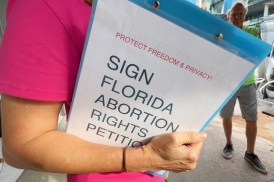 But when it comes to the issue of abortion, she’s breaking with her party.
 Republicans allege that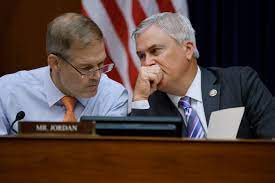











 peej
peej Carissa
 bostonboomer
 dakinikat
 ecocatwoman
 jjlo
jjlo mablue2
 Mama Lopez
 peggysue22
 quixote
 skydancingguestblogger
 Mona (aka Wonk the Vote)



 Sky Dancing
Recent Comments