The news is as crazy as usual today. Remember when weekends used to be quiet? Here’s what’s happening:
The Justice Department has subpoenaed 4 New York Times journalists who reported on security issues related to Trump’s new Air Force One. The administration’s attacks on the First Amendment are getting out of hand.
The Trump administration issued subpoenas on Friday to several journalists for The New York Times, after the news outlet reported this week on security concerns involving President Trump’s new Qatari-donated Air Force One.
The subpoenas — which seek to force the reporters to testify before a federal grand jury in Manhattan on Wednesday — were an extraordinary escalation in President Trump’s efforts to threaten and intimidate independent news organizations.
In some cases, the subpoenas were delivered by federal agents who showed up at reporters’ homes.
The Times denounced the administration’s actions.
“The appearance of federal law enforcement agents on the doorstep of news reporters should shock the conscience of any American who believes in the Constitution and the press freedom it protects,” said David McCraw, The Times’s top newsroom lawyer, in a statement on Friday evening.
“Our journalists report the facts and advance the American public’s right to know how their government is operating and their taxpayer dollars are being used,” Mr. McCraw wrote. “This brazen act should be seen as nothing more than an attempt to prevent the public from knowing what is happening in their country by intimidating journalists from doing their jobs.”
The subpoenas contain few specifics, asking only that the journalists testify “in regard to an alleged violation of federal criminal law.” They were issued by Jay Clayton, the U.S. attorney in Manhattan. Mr. Clayton, who leads one of the country’s most prominent law enforcement offices, was recently nominated by Mr. Trump to serve as director of national intelligence.
Representatives for the White House and the U.S. attorney in Manhattan did not respond to inquiries on Friday evening.
The Times journalists who received subpoenas included Julian E. Barnes, Eric Lipton, Tyler Pager and Eric Schmitt, who reported on Wednesday that Mr. Trump had departed Turkey on the old Air Force One as a security precaution at the urging of the Secret Service. On Thursday, The Times reported that the new Air Force One, a Qatari-donated Boeing 747-8, lacked some of the advanced security features of the older aircraft, including antimissile capabilities. Both articles cited sources who spoke on the condition of anonymity to discuss sensitive security issues.
Before the Wednesday article was published, a senior official at the Federal Bureau of Investigation contacted a reporter and a senior editor at The Times to ask that the article be held, calling it an issue of national security, according to a person familiar with the conversation. The F.B.I. official declined to explain the security issue. The official also asked The Times to disclose its sources for the article; the newspaper refused to do so. (A spokesman for The Times, Charlie Stadtlander, confirmed the account.)
This is really frightening. Fortunately, The Times has deep pockets and can defend their journalists.
The Trump administration has subpoenaed several New York Times journalists after their report on security concerns involving the new Air Force One, according to the paper.
The new jet, which President Donald Trump received as a gift from Qatar, entered service last week.
The subpoenas issued Friday seek to force the reporters to testify before a federal grand jury in Manhattan on Wednesday, the paper said, adding that federal agents delivered some subpoenas to the reporters at their homes.
There was no immediate response from the White House or Department of Justice to requests for comment on Saturday….
Issuing subpoenas represents a major escalation in the Republican president’s effort to threaten independent new organizations by leveraging the power of the federal government against them. It is also part of a systematic pattern by Trump to attempt to undermine press freedom in order to shield him from negative coverage.
Earlier this year, the Justice Department issued subpoenas seeking to compel testimony from reporters at The Washington Post and The Wall Street Journal. In both cases, the department later withdrew the subpoenas.
During his first term, Trump suggested that the press constituted an “enemy” of the American people. Since returning to the White House last year, he has waged an aggressive campaign against the media unlike any in modern U.S. history.
Trump’s pattern of attacks against news outlets and media figures he believes are overly critical of him has included filing lawsuits against outlets whose coverage he dislikes, threatening to revoke TV broadcast licenses and seeking to bend news organizations and social media companies to his will.
This is the article the Times published on Wednesday that so outraged Trump and his goons.
President Trump flew out of Turkey on Wednesday night on the old Air Force One instead of his new Qatari-donated Boeing 747-8 as a security precaution related to the resumption of hostilities with Iran, according to people briefed on the plans, who said the change came at the urging of the Secret Service.
The swap deepens questions about whether the new plane, which the president had pressed to be ready as soon as possible, was retrofitted with sufficient security measures over the last year. Lawmakers and some officials have raised concerns about whether the expedited timeline allowed for the addition of an advanced missile defense system and other modifications used to protect the president.
By Jacquie Hughes
In a statement, Steven Cheung, the White House communications director, said that “the new Air Force One is a state-of-the-art aircraft that has been fitted with high-level security protocols that ensure the safety of the president and his staff.” [….]
But people briefed on the new plane’s capabilities, who spoke on the condition of anonymity to discuss sensitive security issues, said the new plane does not have all the features of the older plane. The switch in the president’s aircraft when he departed Turkey was a precautionary measure made at the advice of the Secret Service and not because of a specific threat, they said.
Mr. Trump, who has marveled at the luxury touches of his new jet, flew on it on Monday night to go to Turkey for a NATO summit. After his arrival, the conflict with Iran reignited, and the United States launched a series of strikes against that country while Mr. Trump and NATO leaders were about 1,000 miles away in Ankara.
The president on Wednesday denied that the change in his aircraft was made because of security concerns. Instead, he asserted that the swap was so the new jet could leave early and make stops at U.S. military bases to show it off to the troops because the aircraft is “magnificent.”
But when pressed by reporters in Ankara about the reason for the change, Mr. Trump also repeatedly noted that he was Iran’s No. 1 target, and referred at one point to having seen or been briefed on a list of Tehran’s targets in recent days.
You can use the gift link to read the rest.
So Trump’s on again off again war with Iran is back on. Iran apparently fired on some ships in the Strait of Hormuz, and Trump ordered some retaliatory strikes on Iran while he was overseas. Iran is also threatening to assassinate Trump and he is again threatening them with war crimes.
The U.S. is demanding that Iran make a public statement saying the Strait of Hormuz is open and that ships crossing the vital corridor won’t be attacked anymore, senior U.S. officials said Friday, adding that internal Tehran power struggles have made it difficult to reach and keep a deal.
The U.S. officials, who spoke on condition of anonymity to describe to reporters the state of play with Iran, said the resumption of strikes this week came after what they described as a rogue faction of Iranian hard-liners trying to sabotage the ceasefire between Tehran and Washington.
It comes as U.S. President Donald Trump reiterated on social media Friday that he views the interim ceasefire deal as “OVER!” But he said the U.S. would continue talks aimed at putting a permanent end to the war.
The officials said Friday that Trump is giving U.S. negotiators limited time to reach a deal with Iran, but, in a sign of the challenges ahead, they underscored that the president had a wide range of options if talks fall apart. They also said a power struggle was playing out in real time in Iran after U.S. and Israeli strikes at the start of the war killed its longtime leader, Ayatollah Ali Khamenei….
The U.S. is working on pressing Iran to make a public statement that the Strait of Hormuz, a vital waterway for world energy markets, is open and free to ships to transit, the officials said.
Iranian Supreme Leader Mojtaba Khamenei announced on Saturday that revenge for his father’s assassination “will most certainly be carried out.”
Why it matters: The statement was published after the burial ceremony for his father, former Supreme Leader Ali Khamenei. Throughout the weeklong funeral procession, there were massive public calls for the death of President Trump.
Mojtaba Khamenei, who didn’t appear inI public during the funeral ceremonies, didn’t specifically mention Trump. But earlier this week, Israel gave the U.S. information that suggested Iranian officials recently discussed the idea of assassinating Trump, U.S. and Israeli officials said.
On his way back from Turkey on Wednesday, Trump traveled in the old Air Force One plane rather than the new plane that the U.S. received from Qatar. The New York Times reported that security concerns prompted the mid-trip switch in planes.
What he’s saying: Mojtaba Khamenei — who was seriously wounded in the attack that killed his father, and hasn’t appeared in public since — pledged on his Telegram channel to “avenge your pure blood and the blood of all those martyred in these two wars by bringing the criminal and dishonorable killers to justice.”
“This revenge is the demand of our nation, and it will most certainly be carried out. These criminals — whose names are known from top to bottom — will take to their graves the unfulfilled wish of dying peacefully in their beds. They should know that this does not depend on my personal presence or that of any other official,” he wrote.
Khamenei added that whether he is alive or dead, the revenge for his father’s death “will be accomplished,” and stressed that“soon, freedom-loving people throughout the world will each carry out part of this divine mission.”
Richard Stengel, former Under Secretary of State for Public Diplomacy, shared his alarm over Trump’s recent Truth Social threat with MS NOW viewers.
By Miroco Machiko
“The fact of an American president threatening genocide against the whole people in case he’s assassinated is more than unseemly,” Stengel said. “It’s it’s incredibly vulgar and undiplomatic language.”
Stengel was responding to Trump’s own reaction to the Wall Street Journal report earlier this week that a new Iranian plan to assassinate him may have been uncovered by Israeli intelligence.
Late Friday night, Trump responded with a direct threat.
“1000 Missiles are Locked and Loaded and aimed at the Islamic Republic of Iran,” wrote Trump, “with thousands of more to immediately follow, should the Iranian Government act on its threat, pronounced in many corners of the Globe, to assassinate, or attempt to assassinate, the sitting President of the United States of America, in this case, ME!”
He is such an idiot.
Late yesterday, MSNOW reported that Kash Patel was called on the carpet at the White House to respond to reports of his using his job as FBI director to gain access to luxury travel.
FBI Director Kash Patel abruptly cancelled a planned flight Friday to see his girlfriend in Chicago this weekend, after top administration officials frustrated with Patel summoned him to the White House, according to two people with knowledge of the change.
The precise reasons that Patel’s political bosses demanded he cancel his trip and report to the West Wing are unclear, but several people said top Trump deputies were disturbed by a range of actions by Patel. Some found it confounding that the FBI director was leaving town amid the recent revival of the war with Iran and alleged threats against the president’s life, according to a person familiar with efforts to help Patel rebuild trust with the White House. For this article, people spoke on the condition of anonymity to discuss a sensitive internal matter.
Others cited two unforced errors by Patel that created bad optics for the Trump administration, the first being his early morning tweet bashing MS NOW for its coverage of his high-flying lifestyle, they said, in which Patel boasted: “my jet ski is gold plated…dumbass.”
By Shozo Ozaki
The second misstep, the people said, was that extensive reports by MS NOW and other news outlets about taxpayers footing the bill for Patel’s globe-trotting ultimately spurred formal questions from Senate Judiciary Chairman Chuck Grassley, a critical ally of President Trump’s.
On Thursday, MS NOW reported exclusively that Grassley had first asked Patel in a May letter about his use of the FBI jet and his decision to purchase luxury armored BMWs so he could travel more discreetly in the Washington, DC area. In a separate letter, Congressional Democrats said they had received information that Patel was demanding that FBI staff arrange special perks on his official trips, including a jet ski excursion and a helicopter tour. The FBI has disputed that, and said Patel had complied with federal rules pertaining to his travel.
White House spokespeople denied the report, but…
Patel cancelled his flight to Chicago just as he was preparing to leave on Friday morning, according to three people briefed on his move. But the trip to Chicago was already stirring anger and controversy inside the FBI, multiple current and former law enforcement officials told MS NOW. He was planning to attend his girlfriend Alexis Wilkins’ performance Saturday at a country music festival held in the parking lot of a major Chicago stadium, the three people said. Patel’s staff had arranged for the director to make an office visit Friday to the Chicago field office to coincide with his trip, according to two other people with knowledge of the director’s schedule.
Several FBI agents complained internally that this office visit was belatedly-added cover to justify Patel flying the director’s jet — which is estimated to cost tens of thousands of dollars for such domestic trips — to enjoy a weekend in Chicago with his girlfriend, the people said.
“Patel was coming (to Chicago) today for a fake office visit for his girlfriend’s country concert this weekend,” one of the sources briefed on the trip said. The source noted Patel “cancelled the trip while on the tarmac at Andrews” and was “summoned to the White House immediately,” adding that it was “apparent panic” and “believed to be in response to his morning tweet today.”
Read he rest at MSNOW.
We still don’t know whether Mitch McConnell is alive or brain dead. Since it was reported that he was found unconscious and given CPR, I think it’s most likely that he was intubated and is still on life support. The chances of an 84-year-old man recovering after CPR outside a hospital and very slim. It’s also odd that his wife would leave for a trip to China if there was any hope of McConnell regaining consciousness anytime soon.
Mystery surrounding Senator Mitch McConnell’s health is deepening as the US Congress prepares to return from recess next week.
McConnell, 84, has not been seen in public since he was admitted to hospital in the Washington area on 14 June. Nearly a month later, the Kentucky Republican’s office has released only sparse updates, saying he is “continuing to improve” and remains engaged with Senate business, while refusing to disclose the nature of his illness or explain why he remains hospitalised.
Emergency dispatch audio obtained by media outlets indicates that first responders were sent to his home following reports of an unconscious person and that CPR was under way. On Friday, CNN released video footage that showed a person on a stretcher being wheeled towards an ambulance, though their face was not visible.
The senator’s office has neither confirmed nor denied the reports, leaving a vacuum that has been filled with fevered speculation, based on circumstantial evidence, about McConnell’s condition.
“I think he’s dead,” opined Malcolm Nance, a career counter-terrorism intelligence officer, in an interview with Amy McGrath, who lost to McConnell in the 2020 election, on the Truth in the Barrel podcast. “It’s very clear. I heard that 911 tape and I was an EMT when I was in the military at one point and you know we used to do CPR a lot. One of the things that teach you about CPR is the probability of coming back from CPR is very, very, very small.”
By Maki
McGrath, a former marine fighter pilot, replied: “Well, it’s an interesting take. We’ll see what happens there as well.”
The Senate returns on Monday for a four-week legislative session dominated by defence spending, national security and government funding bills. McConnell’s continued absence threatens to complicate Republican efforts to advance those measures with only a narrow 53-47 majority.
McConnell chairs the Senate rules committee and a defence appropriations panel, which is crucial in shaping Pentagon funding and where Republicans hold only a one-seat advantage.
Without him, partisan disputes over annual appropriations could become even harder to resolve ahead of the 1 October deadline for new federal spending. Congressional leaders are already signalling that another temporary spending measure may be needed to avert a government shutdown.
Read more at the Guardian link.
Have you heard about that horrible stomach virus that is going around? It comes from a parasite called cyclospora that the CDC used to closely monitor.
The country is in the midst of a nationwide outbreak of explosive diarrhea caused by a parasite the CDC stopped surveilling at the federal level in July 2025.
That’s around the same time the Trump administration began haphazardly attacking and defunding federal health and science agencies under the guise of “government efficiency,” with Health Secretary Robert F. Kennedy Jr. separately also pushing out critical federal scientists and researchers.
Prior to that date, a collaborative CDC program called FoodNet helped federal and state regulators track eight foodborne pathogens.
Among them was cyclospora, a heat-loving spherical parasite that’s sickened 1,000 people in an ongoing outbreak in Michigan (the state’s worst), with similar illnesses cropping up in 28 other states.
In addition to cyclospora, surveillance of campylobacter, listeria, shigella, vibrio and Yersinia was cut. FoodNet now only regularly monitors two diseases: Salmonella and Shiga toxin-producing E. coli.
A list of CDC talking points seen by NBC News last summer clearly blamed funding for the program’s drastic cutback.
“Funding has not kept pace with the resources required to maintain the continuation of FoodNet surveillance for all eight pathogens,” the talking point read.
More at the link.
Those are the stories that caught my attention today. What’s on your mind?
Did you like this post? Please share it with your friends:
Trump has been trying to keep the memorandum of understanding with Iran secret as long as possible. The obvious reason for that is that Iran is getting by far the best of the deal. But both Bloomberg and CNN have gotten the 14 point “draft agreement.” Here is the full text from CNN:
1 — The Islamic Republic of Iran and the United States, together with their allies in the current war, declare upon the signing of this Memorandum of Understanding an immediate and permanent end to the war on all fronts, including Lebanon, and undertake that from now on they will not launch any hostile action against each other, and will refrain from the threat or use of force against each other. The final agreement will confirm the provisions of this Article and the remaining Articles.
2 — The Islamic Republic of Iran and the United States undertake to respect each other’s sovereignty and territorial integrity, and to refrain from interfering in each other’s internal affairs.
3—The Islamic Republic of Iran and the United States undertake to negotiate and reach a final agreement within a maximum period of 60 days, extendable by mutual consent.
4 — Immediately upon the signing of this Memorandum of Understanding, the United States lift the naval blockade and prevent any interference or obstruction against the Islamic Republic of Iran, and restore traffic within a maximum of 30 days to its full capacity; the traffic of ships shall be proportional to the pre-war volume of traffic on the part of the Islamic Republic of Iran. The United States also undertakes to withdraw its forces from the surrounding areas within 30 days after the final agreement.
5 — Upon signing this Memorandum of Understanding, the Islamic Republic of Iran will immediately take steps to ensure that the movement of merchant ships from the Persian Gulf to the Sea of Oman and vice versa is resumed within 30 days to the pre-war volume, taking into account the need for the removal of technical obstacles and the neutralization of mines by Iran.
6 — The United States undertakes, together with its regional partners, to create a comprehensive plan agreed upon by both parties for the rehabilitation and economic development of the Islamic Republic of Iran, while ensuring financing of at least $300 billion. The implementation mechanism of this plan, as part of the final agreement, will be formulated within 60 days.
7 — The United States commits to ending, on a schedule to be agreed upon as part of the final agreement, all types of sanctions currently facing the Islamic Republic of Iran, including resolutions of the United Nations Security Council and the Board of Governors of the International Atomic Energy Agency (IAEA), and all unilateral U.S. sanctions, both primary and secondary.
8 — The Islamic Republic of Iran reiterates that it will never produce nuclear weapons. The Islamic Republic of Iran and the United States have agreed that the fate of enriched material and the fate of all other mutually agreed nuclear-related issues, including Iran’s nuclear needs, will be adequately addressed in a final agreement; the final agreement will confirm the provisions of this Article.
9 — The Islamic Republic of Iran and the United States agree that, pending a final agreement, they will maintain the status quo: Iran will maintain the status quo on its nuclear program, and the United States will not impose new sanctions on Iran or strengthen its forces in the region.
10 — The United States undertakes that immediately after the signing of this Memorandum of Understanding, and until the date of the lifting of sanctions, the United States Treasury Department will issue waivers for exports of Iranian crude oil, petrochemical products and their derivatives, and all related services, including banking, insurance, transportation, and the like.
11 — The United States undertakes that, in light of the progress of negotiations towards a final agreement, frozen or restricted funds and assets of the Islamic Republic of Iran will be released and made fully available. These funds, whether held in the master account or transferred, will be used for any final beneficiary payment determined by the Central Bank of the Islamic Republic of Iran and will be fully available for use. The United States undertakes to issue all necessary permits and licenses on this basis.
12 — The Islamic Republic of Iran and the United States agree that an implementation mechanism will be established to oversee the successful implementation of and future commitment to the Final Agreement.
13 — Following the signing of this Memorandum of Understanding, and upon receipt of assurances regarding the commencement of implementation of Articles 4, 5, 10, and 11 of this Memorandum of Understanding, and the continued implementation of these steps, the Islamic Republic of Iran and the United States will enter into negotiations for a Final Agreement solely with respect to the remaining Articles.
14 — The final agreement will be approved through a binding resolution of the UN Security Council.
I don’t see anything there about inspections of Iran’s nuclear programs. But this isn’t a final agreement. That will supposedly be worked out in the next 60 days after this one is signed.
Trump shakes hands with French preident Emmanuel Macron. G7 leaders are supposedly backing Trump’s agreement with Iran.
DUBAI, June 17 (Reuters) – A $300 billion private fund designed to trigger investment into Iran is outlined in the U.S.-Iran framework agreement and more than half that sum has already been committed, a source with direct knowledge of the deal told Reuters.
The fund is designed to give both sides an economic incentive to conclude a final deal to end the war, said the source, who spoke on condition of anonymity because the plan has not yet been announced as Washington and Tehran prepare to sign on Friday.
The fund’s existence has been previously reported but Reuters is revealing for the first time that more than half of the amount has already been committed and that it will be comprised entirely of private-sector funds.
U.S. and Iranian officials said on Sunday they had agreed on a framework to end their war, which began when U.S. and Israeli forces attacked Iran on February 28, halt the U.S. blockade of Iran and reopen the Strait of Hormuz, a key supply route for global oil and gas.
The new fund is a private investment vehicle, not a reconstruction or reparations programme and will not include any government money or grants, the source said, adding that companies based in the U.S., the Gulf Arab states, Asia, South America and Africa have agreed to commit financing. Investments pledged span energy, logistics, manufacturing and transport, the source said.
U.S. President Donald Trump pushed back on Wednesday against any characterisation of the fund as a U.S. investment. “We’re not investing, we’re not putting up 10 cents,” he said, adding that he was not asking Gulf countries to invest either.
I’ll believe that when I see it. The ballroom was supposed to be built with private funds too.
Donald Trump arrived in France yesterday for this morning’s G7 summit and promptly confirmed America’s capitulation to Iran. Instead of merely repeating the outlines of what looks to be a terrible peace deal, however, Trump made a series of statements so bizarre, even by his usual standards, that they raise the question of whether the president still understands the words that come out of his own mouth.
The president began with a classic Trumpian move, daring his listeners to forget today what they knew yesterday. Just this winter, Trump had promised the Iranian people that the tyrants who ruled them would be gone. But now? “I never cared about regime change,” he told reporters, waving away his failure to achieve a primary strategic goal by denying that it had ever been a goal at all.
Things got a little weirder, however, when he described the Iranians who have stepped in to replace the regime leaders killed in U.S. strikes: “We’re dealing with people that I think are very rational people. And they were nice to deal with.”
“They were strong people, smart people,” he added. And then he dropped this remarkable claim: “They’re not radicalized, and they’re, you know, looking to help their country.”
This definitely not-radicalized group that Trump seems to like includes the new supreme leader, Mojtaba Khamenei (whose father, wife, and son were killed by U.S. strikes), and the still-standing Islamic Revolutionary Guard Corps, all of whom have shown no compunction about lashing out in any direction during Trump’s “cease-fire,” the make-believe pause in the war during which no one actually ceased firing.
Trump’s description of the current regime in Tehran as a bunch of swell guys was brewed in a heavy-duty vat of wishful thinking. It’s an extreme version of Trump’s tendency, when he’s been outplayed by powerful enemies, to describe his opponents as basically reasonable people. (He has done the same over the years with dictators and autocrats in North Korea, Russia, and China, among other countries.) This is his way of assuring the public that he did not get taken to the cleaners—because, of course, his affable partners would never do that.
A bit more:
Trump fared no better talking about the Iranian nuclear program. Iran’s stockpile of highly enriched uranium exists largely because Trump unilaterally called off U.S. participation in the Joint Comprehensive Plan of Action, the 2015 agreement that was meant to prevent Iran from enriching uranium beyond minimal levels for civilian uses. After the U.S. and Israeli attacks last year, and yet more pounding during Operation Epic Fury, that uranium remains underground, either hidden in storage or buried beneath tons of rubble; some of it can likely be recovered and enriched for military uses. Trump has said, repeatedly, that Iran must hand it over.
Until today.
“I call it the nuclear dust, their enriched material, right?” Trump said. (Why he calls it this remains a mystery.) Does America still insist on its removal from Iran? Well, maybe.
“The whole mountain has collapsed on top. We have cameras on it,” Trump said. “You could make the case ‘Why are you even bothering?’ ’cause it’s not really valuable. It’s, you know, it’s probably half a million dollars’ worth. It’s not very valuable stuff, but I think psychologically we wanna get it.”
As many people have said over the years, Trump is a fucking moron. Read the rest of the piece at The Atlantic.
The framework deal between the United States and Iran sets the stage for an end to the bursts of violence and debilitating disruption of energy deliveries and trade in the Persian Gulf. But don’t expect economies around the globe to simply pick up where they left off before the United States and Israel began bombing Iran on Feb. 28.
The war has set in motion changes that will be hard to reverse….
The near shutdown in oil and gas deliveries from the Middle East and the leap in prices are causing a shift in power. Energy producers from the Gulf to the Americas are jockeying to maintain or increase their dominance, and customers are struggling to reduce their dependency and shore up their supply.
As a result, the energy market is changing, the energy mix is changing and the energy players are changing.
Wind farm in Xinjiang, China
The profound vulnerability of countries throughout Asia, Europe and elsewhere that depend on imported energy is supercharging the hunt for alternatives. In some places, like South Korea and Japan, that has led to an increased use of dirtier fuels like coal.
But over the longer term, this energy shock — the second in just four years — is likely to accelerate a transition to renewables like solar and wind as well as nuclear power.
Improvements in electric battery technology and efficiency make the shift more feasible than it was when Russia’s invasion of Ukraine prompted a global energy shock in 2022, said Daan Walter at Ember, an energy research group in London.
In many places, for instance, electric vehicles are increasingly affordable. And in April, wind and solar generated more electricity globally than gas for the first time.
“This is a big turnaround,” Mr. Walter said. “So what was five years ago maybe barely competitive, now is almost already clearly cheaper.”
Investments in renewables have also become a better bet, promising returns in closer to two years instead of 30, he said.
Meanwhile, Trump is doing everything he can to end clean energy initiatives and make the US more dependent on oil and gas–and even coal! More from the NYT article:
Relations among producers are also changing. The war heightened tensions between the United Arab Emirates and Saudi Arabia and prompted the Emirates to leave the OPEC Plus oil cartel. The impact of that departure will be fully felt only when oil production in the region picks up. But a weakened Organization of the Petroleum Exporting Countries could add to volatility in oil markets.
The split has also encouraged the Saudis to move closer to Russia. Vladimir V. Putin, the Russian president, featured Saudi Arabia this month as the “guest of honor” at an economic forum in St. Petersburg….
The push to build out and diversify energy networks is going to continue long after the war ends. And China is poised to benefit most from the expected boon in renewables.
It is leagues ahead of the rest of the world in producing wind turbines, high-voltage cables, transformers, solar panels, batteries, software to manage energy flows and more.
China’s increasing role ensuring that other countries have a dependable supply of energy amplifies its strategic influence and importance.
“China looks to be an out-and-out winner,” analysts from Wood Mackenzie, a global energy consulting firm, concluded.
Fortunately, Trump has been unable to stop wind energy in the US.
As soon as President Trump started his second term, he declared war on the U.S. wind energy industry. On his very first day in office, he ordered federal agencies to halt permitting and leasing for wind projects—the first in a series of sweeping policy moves aimed at stymieing one of the nation’s fastest-growing sources of renewable energy. Now, it appears he’s waving the white flag.
The Trump administration has dropped its appeal to the court ruling that overturned the permitting and leasing freeze in December 2025, meaning the indefinite nationwide pause on wind energy projects is no longer enforceable.
That ruling was the result of a lawsuit filed in May 2025 by a coalition of attorneys general from 17 states and Washington, D.C., led by New York Attorney General Letitia James. The district court ruled in favor of the plaintiffs, finding Trump’s January 2025 executive order to be “arbitrary and capricious and contrary to law.” The Department of Justice appealed the decision in February, then filed a motion for its voluntary dismissal on June 10.
States that challenged the administration’s “wind directive” are claiming victory. “New York’s wind projects will create jobs, strengthen our economy, and bring down New Yorkers’ electric bills,” Attorney General James said in a statement. “My office will continue to fight any attempt to undermine that progress.”
Secret Service officials are angered that FBI Director Kash Patel prematurely announced on Tuesday the details of a largely sealed and ongoing criminal investigation into an alleged plot to attack Sunday’s White House UFC event with drones, according to three people familiar with the incident.
Secret Service and FBI agents had been partnered on the investigation into a group of individuals discussing plans for a drone attack at the White House in the last week, and had discussed unsealing the case and making a joint announcement Tuesday afternoon, according to sources.
Kash Patel
The problem with Patel’s social media announcement, the sources say, was that the case had been sealed in court and roughly 10 suspects had not yet been arrested and placed in custody at the time Patel shared his post. The people said Secret Service and FBI officials were surprised by Patel “jumping the gun.” [….]
The threat to the UFC event became known to the Secret Service and FBI in the last week when a relative of one of the suspects contacted local police in the Cincinnati area, according to two people briefed on the probe, and reported that their relative was talking about engaging in a vague plot in Washington.
An advanced threat interdiction team at the Secret Service, with the help of the FBI, began seeking a subpoena for an encrypted Signal chat thread and was able to identify the plot being planned and some of the people discussing using drones and possible snipers to attack the UFC fight event at the White House’s South Lawn.
Authorities then arrested one suspect, 19-year-old Tycen Proper of Ohio, on June 13 and moved immediately to seal the case so the FBI and Secret Service could continue investigating, identifying and arresting additional suspects.
Tuesday afternoon, the Justice Department announced the arrests of five men, including Proper, for an “alleged plot to carry out an attack to kill government officials and others” attending the Sunday event, according to a DOJ press release.
The FBI thwarted a plot targeting Sunday’s UFC event at the White House and has arrested five men, the US justice department said on Tuesday.
Part of the plan involved striking nearby buildings with explosive-laden drones and firing on “high value targets”, prosecutors alleged.
One suspect was arrested in Ohio last week, where investigators reviewed encrypted messages involving other alleged conspirators. Prosecutors said in charging documents.
they had allegedly “expressed ultra-religious and antigovernment sentiments”….
Tyron C. Proper
The suspects were identified as Tycen C Proper, 19, the suspect arrested in Ohio, along with Bryan Omar Roa, 24, and Michael Alan Thomas, 32, of California, Daniel K Eskridge, 32, of Missouri and Abraham Hermosillo Alvarez, 31, of Nebraska. They were arrested across the four US states and each have been charged with conspiracy to commit murder, the Department of Justice (DOJ) said in a statement.
By using the drones, the plotters aimed to spark panic and draw the fleeing crowd toward a sniper team, according to the court documents. A “second wave” of attackers was then allegedly supposed to storm the White House gate….
Court filings related to Alvarez said the group allegedly eyed potential targets that included US President Donald Trump, Vice President JD Vance, Israeli Prime Minister Benjamin Netanyahu and Elon Musk, as well as several elected officials – though not all attended the UFC event.
The plot was discovered through Proper. His mother called local authorities late on 10 June – just days before the high-profile event – because she was concerned about his large firearms purchases and what she had seen of his online communication with a group that claimed to be made up of former military members and Christian-based.
The group allegedly wanted to “jumpstart” a revolution by shooting “high-value targets” – identified as wealthy people and politicians – attending the UFC fight. They had specifically discussed “grievances about government corruption, the handling of the Epstein files, data centers taking up all the water in communities, and other government actions,” prosecutors said.
This is starting to sound like one of those trumped up FBI conspiracy investigations, but we’ll see, I guess.
Bryan Omar Roa, 24, of Calimesa, and Michael Alan Thomas, 32, of Pinon Hills were arrested on Saturday, the day before the fight.
Bryan Omar Roa, 24, of Calimesa, and Michael Alan Thomas, 32, of Pinon Hills were arrested on Saturday, the day before the fight, and have since made their initial court appearances.
The FBI searched both of their homes and recovered multiple firearms and large quantities of ammunition. According to the complaint, law enforcement seized a handgun, rifle, tactical vest, a two-way radio and a laser target pointer from Roa’s home….
Meanwhile, two rifles, about 180 rounds of ammo and a pistol were seized by authorities from Thomas’ home, according to the complaint….
Court documents allege one suspect admitted to helping plan the attack and encouraging others to participate. The complaint says Thomas was planning the attack but said he wasn’t going to take part.
The FBI said the alleged terror plot involved at least 19 people and included plans for explosions and gunfire. According to an unsealed FBI affidavit, the plan involved setting off explosions using drones near the event and then shooting guests as they evacuated.
On Tuesday, the Trump administration announced that it would move two key functions of the Department of Education—disability education oversight and the department’s Office for Civil Rights—to the Department of Health and Human Services and the Department of Justice, respectively, in a move that would give HHS Secretary Robert F. Kennedy Jr. oversight over the nation’s disability education system.
In a press release, Education Secretary Linda McMahon, who is overseeing the Project 2025–mandated dismantling of the department, said without elaborating that the decision was made after “careful deliberation and collaboration with stakeholders.” Many disability and other equity-focused organizations have been afraid since President Trump resumed office that he would go through with threats to eliminate the department, long a target of right-wing institutions like the Heritage Foundation.
Even setting aside who runs them—Kennedy at HHS, Acting Attorney General Todd Blanche at the Justice Department—the new agencies aren’t appropriate choices to oversee those functions, experts say. “HHS and DOJ have important roles, but they weren’t built to replace the Department of Education’s school-specific expertise,” said Robyn Linscott, The Arc’s director of education and family policy, in a statement. “Moving [Individuals with Disabilities Education Act] oversight into HHS pushes students with disabilities toward a medical model, where disability is treated as a diagnosis to manage instead of a natural part of human life.”
The National Down Syndrome Congress also called for Congress to halt the changes. “For decades, IDEA, vocational rehabilitation, and the Office of Civil Rights have helped expand educational opportunities, employment, and community inclusion for people with disabilities,” roles that would now be under threat, said Stephanie Smith Lee, the group’s policy and advocacy co-director and former director of the Office of Special Education Programs under George W. Bush, in a press release opposing the plan.
At HHS, disability education would fall under the oversight of an agency head, Kennedy, who has spent decades spreading disinformation about autism and villainizing autistic people.
That is horrifying. I can’t begin to imagine the damage Kennedy could do to treatment of and research on autism and other disabilities.
That’s all I have for today. Have a nice, peaceful Wednesday, everyone.
Did you like this post? Please share it with your friends:
Prominent Chinese contemporary artist and activist Ai Weiwei
The aftermath of Trump’s lackluster China trip is still a top story today. The consensus of the pundits is that the trip was a failure. Trump looked tired, weak, and indecisive. Today, the main concern is that he is ready to sell out Taiwan in his efforts to suck up to Xi Jinping.
President Trump has described a potential multibillion-dollar weapons sale to Taiwan as a “negotiating chip” with China, raising new doubts about the pace and scale of American military support for the island democracy.
Taiwan’s government has been waiting for months for Mr. Trump to sign off on a $14 billion package of missiles, anti-drone equipment and air-defense systems intended to fortify the island against Beijing’s military threats.
Mr. Trump himself had pressured Taiwan to spend more on its own defense. Now he is using the very arms his administration had pushed the island to buy as leverage with China, the United States’ main adversary.
Mr. Trump told reporters on Air Force One after leaving China on Friday that he had discussed the weapons package with China’s president, Xi Jinping, during their summit this past week in Beijing. He was asked in an interview with Fox News whether he would approve the Taiwan deal.
“No, I’m holding that in abeyance and it depends on China,” he said in the interview, which was recorded in Beijing but aired after he left. “It depends.”
“It’s a very good negotiating chip for us, frankly,” he said. “It’s a lot of weapons.”
He did not go into details about what he wanted in return, but Mr. Trump has pushed China to make major purchases of American airplanes, ethanol, soybeans, beef and sorghum.
His comments appear to undermine the assurances to Taiwan from some in his own administration that U.S. support for the island is steadfast and nonnegotiable. Before the summit, a bipartisan group of senators had urged against letting support for Taiwan become a bargaining chip with China.
“It looks increasingly likely that Trump will indefinitely withhold the $14 billion arms package to Taiwan, in the hopes that Beijing will give him what he wants on the economic front,” said Amanda Hsiao, a China director at Eurasia Group, a consulting firm….
If Mr. Xi wants to punish the Trump administration over Taiwan, analysts have said, China could hold back on orders of farm goods, or ramp up restrictions on exports of rare earths that are essential to many technology components. But Mr. Xi also agreed to make a state visit to the United States this year, and could use the prospect of more talks — and more deals — to influence Mr. Trump.
Trump will sell out every one of our allies before he’s done.
US President Donald Trump has cautioned Taiwan against formally declaring independence from China.
“I’m not looking to have somebody go independent,” the US president told Fox News on Friday, at the end of his two-day summit with his Chinese counterpart Xi Jinping in Beijing.
This photograph features the American author Ursula K. Le Guin holding her cat
Taiwanese President Lai Ching-te has previously stated that Taiwan does not need to declare formal independence because it already sees itself as a sovereign nation.
The US has long supported Taiwan, including being bound by law to provide it with a means of self-defence, but has frequently had to square this alliance with maintaining a diplomatic relationship with China.
Trump earlier said he had “made no commitment either way” about the self-governing island – which China claims as part of its territory and has not ruled out taking by force.
Washington’s established position is that it does not support Taiwanese independence, with continued ties with Beijing being contingent on its acceptance that there is only one Chinese government.
Beijing has been vocal in its dislike of Taiwan’s president, who it has previously described as a “troublemaker” and a “destroyer of cross-strait peace”.
Many Taiwanese consider themselves to be part of a separate nation – though most are in favour of maintaining the status quo in which Taiwan neither declares independence from China nor unites with it.
A bit more:
In his interview with Fox News, Trump reiterated that US policy on the matter had not changed.
“You know, we’re supposed to travel 9,500 miles (15,289km) to fight a war. I’m not looking for that. I want them to cool down. I want China to cool down.”
On the flight back to Washington, the US president had told reporters that he and Xi had spoken “a lot” about the island, but said he had declined to discuss whether the US would defend it.
Xi “feels very strongly” about the island and “doesn’t want to see a movement for independence”, Trump said.
Taiwan is actually about the same distance from the US as Iran.
During one of their public meetings, Xi warned Trump to beware of the Thucydides’ Trap. Xi was suggesting that the US is an empire in decline as China rises. Of course Trump had no clue what Xi was talking about until someone filled him in later. then he responded with an idiotic Truth Social post claiming that Xi was referring only to American under Biden.
The world has come to another crossroads,” Chinese President Xi Jinping told U.S. President Donald Trump on Thursday, as the two leaders began their summit in Beijing. Then Xi asked: “Can China and the U.S. overcome the so-called ‘Thucydides Trap’ and create a new paradigm of major-country relations?”
Xi was referring to the ancient Athenian historian and military commander Thucydides, who wrote The History of the Peloponnesian War, recounting the nearly three-decade conflict between the former Greek poleis (city-states) of Athens and Sparta. In his account, he wrote: “The growth of the power of Athens, and the alarm which this inspired in Lacedaemon [Sparta], made war inevitable.”
Actor Morgan Freeman posing with a black cat.
While debate on the accuracy of translations continues, the core message stuck: this “inevitability” of conflict when a rising power threatens an existing one was later popularized by American political scientist Graham Allison in the early 2010s as “Thucydides Trap.” But in the modern context, China is Athens, challenging the U.S. as today’s Sparta.
Writing for the Financial Times in 2012, Allison said that “the defining question about global order in the decades ahead will be: can China and the U.S. escape Thucydides’s trap?”
Allison expanded on the “trap” idea further in his 2017 bookDestined for War: Can America and China Escape Thucydides’s Trap?, which argued that the two countries were “on a collision course for war—unless both parties take difficult and painful actions to avert it.” Allison enumerated 16 historical cases of rising and established geopolitical powers facing the “trap,” 12 of which ended in war.
Xi’s invocation of Thucydides’ Trap comes at a time when tensions between the rival superpowers could boil over on any of a number of issues, from trade to AI to Taiwan.
It’s an interesting article. I admit I had never heard about this before, but apparently this idea has been a favorite of Xi’s for many years. De Guzman notes several times that Xi has brought it up with U.S. leaders. A bit more:
It’s not just China referencing the Athenian historian and maxim. During Trump’s first presidential term, national security adviser H.R. McMaster was a known Thucydides buff. He wrote for the New York Times in 2013: “War is human. People fight today for the same fundamental reasons the Greek historian Thucydides identified nearly 2,500 years ago: fear, honor and interest.”
Politico also reported that in 2017 Allison briefed Trump’s National Security Council on Greek history and that then-Defense Secretary James Mattis was “fluent” in Thucydides’ work.
In a February 2018 interview with GQ, Steve Bannon, Trump’s former campaign and White House strategist who is also a reported Thucydides aficionado, was asked if he was worried about starting a conflict with China “that the U.S. would lose.” In response, Bannon told the magazine, “I don’t think it has to happen. First off, the whole concept of the rising power and the declining power presupposes that the larger power that’s declining continues to decline.” He argued that Trump’s “America First” paradigm actually “revitalizes the United States of America and puts China on notice.”
Spare a moment, please, for the lame-duck superpower. It calls itself the leader of the free world, but the free world no longer believes it. When it extends its hand, nobody rushes to accept. When it threatens, nobody trembles.
After President Trump arrived in Beijing this week, Xi Jinping showered him with pomp befitting a summit of great powers. Yet the Chinese leader permitted potshots at his guest to go viral on his country’s internet rather than suppressing them, as some observers expected he would during a state visit. Xi answered Trump’s lavish praise by sternly lecturing him about meddling with Taiwan. In the end, Xi offered nothing of great substance—no solutions to the war in Iran, no sweeping trade deals, no promises of access to rare earth minerals. Xi used the visit to humor the lame-duck president, waiting for his time to pass.
Argentine author Jorge Luis Borges with a cat, a frequent subject in his life and work.
During the first Trump administration, foreign leaders flattered and accommodated the president out of deference to American power. They feared it; they relied on it. During the second administration, and especially since the beginning of the Iran war, their calculus has quietly shifted—not because the strategy of obsequiousness has failed, but because it’s no longer worth the trouble. Like many of his counterparts around the world, Xi has begun to assume that it’s not just Trump who is term-limited; it’s also his nation.
Trump’s war in Iran was meant to showcase American power. It did the opposite. In the course of failing to remove a much weaker regime or eliminate its nuclear threat, the United States blew through its arsenal—so much so that allies in the Pacific reasonably wonder whether enough munitions remain to protect them. According to The Wall Street Journal, the Pentagon is now worried that it lacks the firepower to execute contingency plans for defending Taiwan.
Supporters of the war argued that it would deal China a severe blow by eliminating one of its most potent allies. But the Gulf nations most threatened by Iran have actually turned to China. As first reported by The Washington Post, an intelligence assessment prepared for the chair of the Joint Chiefs of Staff warned that those countries have begun acquiring from Beijing the systems needed to protect their oil infrastructure and bases. Trump didn’t just fail to weaken China’s position in the Middle East. He strengthened it.
Without exerting itself much, Beijing has profited from America’s self-immolation. China’s petroleum reserves and its investments in renewable energy have allowed it to offer Thailand, the Philippines, and Australia relief from the energy crisis that the United States instigated. Instead of applying diplomatic pressure on Iran to cut a deal, China has let the conflict linger, so that the United States continues to bear the blame for the disruptions to shipping. Meanwhile, China poses as the faithful steward of the rules-based order—the cooler head, the power on which even the U.S. must now rely.
Foer argues that Iran is using the same strategy, letting American weaken itself.
The United States is spending billions of dollars to lose a war in Iran that is enriching its oligarchs, impoverishing its citizens, sabotaging its alliances, and strengthening its enemies. The war is exposing a guiding principle of US President Donald Trump’s foreign policy: superpower suicide. Empires rise and fall, but to my knowledge no state has ever deliberately, and systematically, killed its own power—much less with such speed.
This strategic suicide can be difficult to admit: one still hopes that Trump’s misadventures are based on some understanding of the American national interest. They are not.
Alejandro Jodorowsky, a Chilean-French filmmaker, playwright, author, and spiritual guru.
At a minimum, a superpower must be a modern state that includes, through the rule of law and other institutions, a substantial body of citizens committed to a common endeavor. But the Trump administration treats the US not as a modern state but as a commercial opportunity for a select few.
A superpower must also have a sense of the national interest. While international relations experts disagree about how leaders define this concept, we are unprepared for a situation in which the president is indifferent to the good of the people or the state.
To remain a superpower, a state must also maintain itself over time. Continuity depends on a principle for transferring political authority. By aspiring to remain in power indefinitely and undermining faith in elections, Trump is calling into question the principle that enables political succession in the US. There are of course other ways of going about it, like dynastic rule or a politburo’s decision. Moving to one of these arrangements—one could image the coven of tech oligarchs responsible for the rise of Vice President JD Vance as a capitalist politburo—would end the American republic.
Ensuring that the right people are in charge is crucial for a state to gain and maintain power. Historically, powerful states sought ways to identify and elevate qualified people to serve in positions of authority, regardless of birth. Ancient China had an examination system. Napoleon established the principle of merit in both civilian and military life.
The US, for its part, once had a civil service that was the envy of the world, as well as a highly meritocratic military. But the Trump administration has gutted the civil service and purged the military’s senior ranks—a process carried out by people who are themselves unqualified for the positions they occupy. The fact that Tulsi Gabbard, Kash Patel, and Pete Hegseth are now, respectively, Director of National Intelligence, FBI director, and defense secretary is a clear indicator of a superpower committing suicide.
Read the rest a the link above.
Trump stabbed another ally in the back yesterday, reducing the number of troops in Poland not long after he did the same thing in Germany.
Army leaders struggled Friday to respond to congressional furor over the Pentagon’s decision to abruptly cancel a deployment of more than 4,000 soldiers to Poland this month.
Portrait of author Doris Lessing taken in 1984 by photographer Marianne Majerus.
Acting Army Chief of Staff Gen. Christopher LaNeve said in an Army budget hearing that the order to halt a planned 9-month rotation to Europe by 2nd Armored Brigade Combat Team, 1st Cavalry Division to Eastern Europe came from Defense Secretary Pete Hegseth.
LaNeve and Army Secretary Dan Driscoll said they were informed of the order and had been consulted, but they wouldn’t provide the exact timing of the decision. On May 1, the unit had cased its colors in preparation for deployment, dispatched its advanced team and launched its equipment overseas.
Soldiers began discussing the decision to scrap the deployment publicly early Tuesday morning; the order was confirmed Wednesday by Army Times and other news media.
LaNeve said the decision was made “in the last two weeks” by the Defense Department and Gen. Alexus Grynkewich, commander of U.S. European Command and the NATO Supreme Allied Commander Europe.
LaNeve and Driscoll downplayed the move as part of routine manning reviews conducted throughout the year.
Top Republicans on Friday condemned the Pentagon for canceling a U.S. troop deployment to Poland, an abrupt move that also appeared to catch Army leaders by surprise.
The decision, House Armed Service Committee members said, amounted to a gut punch to the NATO ally and to a Congress that has sought to beef up the U.S. presence in Europe. They made those frustrations clear at a hearing with Army officials, where the service’s top civilian and uniform leaders had few answers about the rationale for the move and confirmed its last-minute timing.
“I just want to say this is a slap in the face to Poland; it’s a slap in the face to our Baltic friends,” Rep. Don Bacon (R-Neb.) said. “It’s a slap to the face of this committee.”
The blowback comes after lawmakers, European allies and even Pentagon staff were caught flat-footed by Defense Secretary Pete Hegseth’s decision to halt the long-planned nine-month rotation of 4,000 troops based in Texas.
The move is the latest in a rift between the Trump administration and Republicans on Capitol Hill who have been at odds over U.S. security interests in Europe. Lawmakers enacted limits on troop withdrawals from Europe last year amid concerns the administration would unilaterally scale back troops on the continent.
“We don’t know what’s going on here, but I can just tell you we’re not happy with what’s being talked about, particularly since there’s been no statutory consultation with us,” Armed Services Chair Mike Rogers (R-Ala.) said.
The Pentagon hasquietly dismantled a program it is legally required to operate to prevent and respond to civilian deaths in US military operations, according to its internal watchdog.
Japanese manga artist Fujio Akatsuka working at his desk alongside his pet cat, Kikuchiyo
A report released by the department’s inspector general concluded the US military no longer has the people, tools or infrastructure needed to comply with two federal statutes requiring it to maintain a functioning civilian casualty policy, and operate a Civilian Protection Center of Excellence (CP CoE).
Donald Trump’s administration has been accused of making deep cuts to the Pentagon’s civilian harm mitigation and response (CHMR) program, designed to handle training and procedures critical in limiting civilian harm in theaters of war.
While the program has not been officially canceled, the inspector general’s report said that funding had ended for a data management platform; committee meetings had halted; and many dedicated personnel had been lost or reassigned.
“As a result, the DoW [BB comment: actually Department of Defense] may not comply with its civilian casualties and harm policy,” the report read. “A policy required by federal law.”
One more article, not on the Iran war or China, but symptomatic of the decline of the U.S.
Last summer, the F.B.I. director, Kash Patel, capped a whirlwind South Pacific trip with a snorkel trip in Hawaii.
There, Navy SEALs used two boats to transport and escort Mr. Patel and nine other people on what a Defense Department email called a “V.I.P. Snorkel” next to one of the military’s most sacred sites, the underwater tomb of the U.S.S. Arizona that holds the remains of more than 900 Navy sailors and Marines who died at Pearl Harbor.
Mr. Patel swam in the vicinity of the tomb for 30 minutes, according to the Navy.
shows the famous Austrian Symbolist painter Gustav Klimt (1862–1918) holding his pet cat.
Out of respect for the dead entombed in the wreck of the Arizona, rules bar visitors even from wearing swimwear at the memorial. With some exceptions over the years for dignitaries, the only people allowed in the water around the tomb are military and National Park Service divers interring the remains of the last Arizona survivors in the wreck, or conducting annual maintenance surveys, according to a former Navy officer and a former National Park Service official familiar with restrictions at the site.
Officials from the Navy and the Defense Department said V.I.P. “tours” near the Arizona were common, but they declined to say how often they take people snorkeling. A Navy spokeswoman declined to identify the nine people who joined Mr. Patel on the trip. The F.B.I. said that Adm. Samuel J. Paparo Jr., the head of the United States Indo-Pacific Command, invited Mr. Patel to Pearl Harbor….
The idea of a high-ranking government official receiving an escort from the SEALs for a recreational swim near the tomb is “horrifying,” said William M. McBride, a Navy veteran and professor emeritus of history at the U.S. Naval Academy in Annapolis.
“This is a war grave with the same legal status as Arlington National Cemetery,” Mr. McBride said in an interview. “Snorkeling around Arizona is as disrespectful as playing kickball on top of the graves at Arlington.”
The Pearl Harbor trip was at the end of an itinerary in which Mr. Patel visited F.B.I. facilities in Hawaii, Australia and New Zealand. Disclosure of the snorkeling tour, and new details about other trips he has taken, comes as Mr. Patel is already under scrutiny for blending leisure travel with official business or instructing F.B.I. employees to make accommodations for him and his girlfriend, Alexis Wilkins….
Mr. Patel’s use of government jets and F.B.I. agents for himself and Ms. Wilkins has drawn bipartisan criticism and led to growing questions even inside the Trump administration about whether it exceeds the bounds of standard practice.
“The badge is a responsibility, not a V.I.P. pass,” said Rob D’Amico, a former F.B.I. special agent and hostage rescue team operator. With Mr. Patel, he said, “the pattern is clear — exotic locations, exclusive access that no member of the public could ever get, and a support staff working overtime to make it happen.”
F.B.I. policy requires its directors to use government planes for all air travel, personal as well as professional. The director is required to reimburse the government for private trips at the cost of coach travel, and the F.B.I. said Mr. Patel has done so.
But in his travels on F.B.I. aircraft, Mr. Patel has made time for side trips, including to V.I.P. suites for events, leisure activities or nights out with his girlfriend. The F.B.I. declined to say who paid for one of those evenings out, a previously unreported trip with Ms. Wilkins to a country music concert in Philadelphia, where they arrived on a Gulfstream V government jet and were spotted in a private suite that rents for upward of $35,000.
Having Patel as FBI director is a joke. But most of Trump’s other appointees are just as ridiculous. As Timothy Snyder wrote (see above article) “Ensuring that the right people are in charge is crucial for a state to gain and maintain power.”
That’s all I have for you today. What’s on your mind?
Did you like this post? Please share it with your friends:
Joy Harmon, who needed only three minutes, a bucket of soapy water and a housedress held together with a safety pin to sear herself into Hollywood history as a chain-gang prisoner’s fantasy come to life in the classic 1967 film “Cool Hand Luke,” died on April 14 in Los Angeles. She was 87.
She died in hospice care after contracting pneumonia in recent weeks, her daughter Julie Gourson Matthews said.
Ms. Harmon never achieved leading-lady status. Still, she tallied more than 30 screen and television credits, often popping up in an episode or two of popular 1960s and early ’70s TV shows like “The Beverly Hillbillies,” “The Monkees,” “Batman,” “Bewitched” and “The Odd Couple.”
Onscreen, she was hard to miss, with her pinup figure, platinum hair and ice-blue eyes. “Gosh, you have the bluest eyes!,” she recalled Paul Newman, the star of “Cool Hand Luke,” once saying to her — no small praise coming from an actor known for his own dazzlingly blue eyes….
Ms. Harmon, listed in the credits as the Girl, appears about 23 minutes into the movie and is gone before minute 27. But she makes the most of her screen time.
Emerging from a farmhouse, bucket in hand, she languidly scrubs down a 1941 DeSoto in full view of the sweat-drenched, shirtless prisoners digging a roadside ditch nearby.
“Hey, Lord, whatever I’ve done, don’t strike me blind for another couple of minutes,” Dragline (George Kennedy), the alpha dog of the chain gang, says.
While the prisoners wipe their brows and gawk, the amply endowed Ms. Harmon nearly bursts out of her skintight dress as she bends to scrub hubcaps or sprawls across the hood, occasionally pausing to squeeze her sponge so that the suds cascade down her torso.
“Oh, God, she doesn’t know what she’s doing,” one lustful prisoner says.
“She knows exactly what she’s doing,” Luke responds. “She’s driving us crazy and loving every minute of it.”
A bit about Harmon’s life:
Patricia Joy Harmon was born on May 1, 1938, in Flushing, Queens, the elder of two daughters of Homer Harmon, a promotional director at the Roxy Theater in Manhattan, and Bernice (Hopmann) Harmon. (Many accounts cite her birth year as 1940, but she shaved two years off her age once she was in Hollywood, her daughter said.)
She grew up in Wilton, Conn., and began modeling at an early age. At 17, she was a runner-up in the Miss Connecticut beauty pageant.
Iran’s Foreign Minister Abbas Araghchi departed Islamabad on Saturday evening local time, according to Iranian sources familiar with the discussions, after meetings in the Pakistani capital to discuss a truce with Washington and consult key allies in the region.
It was not initially clear where Araghchi would travel next, but the Iranian Foreign Ministry previously said he would also visit Oman and Russia during the trip.
Lindsay, by Linda Lee Nelson
Some background: Araghchi landed in Islamabad on Friday evening for a flurry of meetings with Pakistan’s top leadership, including Prime Minister Shehbaz Sharif and the country’s army chief, Field Marshal Asim Munir, who has served as a key mediator between Tehran and Washington.
Pakistani ministers are trying to facilitate a second round of talks between US and Iranian officials, after lengthy discussions in early April failed to alleviate the thorniest diplomatic hurdles between the warring parties.
The White House said Friday that a US delegation would travel to Islamabad this weekend, but Iranian media had denied reports that Araghchi would directly negotiate with Washington during his trip, leaving the status of talks uncertain.
Trump has just called off the trip to Pakistan by Witkoff and Kushner.
The New York Times published a fascinating article about Iran’s leaders this week. It appears that the Revolutionary Guards are actually in control of the government, and it’s not clear if the men doing the negotiating actually have the power to make final decisions.
When Ayatollah Ali Khamenei ruled Iran as the supreme leader, he exerted absolute power over all decisions about war, peace and negotiations with the United States. His son and successor does not play the same role.
Ayatollah Mojtaba Khamenei, the son, is an elusive figure who has not been seen and whose voice has not been heard since he was appointed in March. Instead, a battle-hardened collective of commanders in the Islamic Revolutionary Guards Corps and those aligned with them are the key decision makers on matters of security, war and diplomacy.
In the Garden, by Thomas Little
“Mojtaba is managing the country as though he is the director of the board,” said Abdolreza Davari, a politician who served as senior adviser to Mahmoud Ahmadinejad when he was president and knows Mr. Khamenei.
“He relies heavily on the advice and guidance of the board members, and they collectively make all the decisions,” Mr. Davari said in a phone interview from Tehran. “The generals are the board members.” [….]
Mr. Khamenei, who was selected by a council of senior clerics as the new supreme leader, has been in hiding since American and Israeli forces bombed his father’s compound on Feb. 28, where he also lived with his family. His father, wife and son were all killed. Access to him is extremely difficult and limited now. He is surrounded mostly by a team of doctors and medical staff who are treating the injuries he sustained in the airstrikes.
Senior commanders of the Guards and senior government officials do not visit him, fearing that Israel may trace them to him and kill him. President Masoud Pezeshkian, who is also a heart surgeon, and the minister of health have both been involved in his care.
Though Mr. Khamenei was gravely wounded, he is mentally sharp and engaged, according to four senior Iranian officials familiar with his health. One leg was operated on three times, and he is awaiting a prosthetic. He had surgery on one hand and is slowly regaining function. His face and lips have been burned severely, making it difficult for him to speak, the officials said, adding that, eventually, he will need plastic surgery.
Just a bit more:
Mr. Khamenei has not recorded a video or audio message, the officials said, because he does not want to appear vulnerable or sound weak in his first public address. He has issued several written statements that have been posted online and read on state television.
Messages to him are handwritten, sealed in envelopes and relayed via a human chain from one trusted courier to the next, who travel on highways and back roads, in cars and on motorcycles until they reach his hide-out. His guidance on issues snakes back the same way.
The combination of concern for his safety, his injuries and the sheer challenge of reaching him has resulted in Mr. Khamenei’s delegating decision making to the generals, at least for now. Reformist factions, as well as ultra-hard-liners, are still involved in political discussions. But analysts say that Mr. Khamenei’s close ties to the generals, whom he grew up with when he volunteered to fight in the Iran-Iraq war as a teenager, have made them the dominant force.
President Trump has said that the war, along with the killings of layers of Iran’s leaders and security establishment, has ushered in “regime change” and that the new leaders are “much more reasonable.” In reality, the Islamic republic has not been toppled. Power is now in the hands of an entrenched, hard-line military, and the broad influence of the clerics is waning.
“Mojtaba is not yet in full command or control,” said Sanam Vakil, the director of the Middle East and North Africa for Chatham House who has contact with people in Iran. “There is, perhaps, deference to him. He signs off or he is part of the decision-making structure in a formal way. But he is presented with fait accompli presentations right now.”
So it appears that the Generals are actually running things in Iran now. You can use the gift link to read the whole article. It’s very interesting.
Back in the USA, the DOJ has withdrawn the charges against Fed chair Jerome Powell, but the damage is done.
The Justice Department’s criminal investigation of the Federal Reserve and its chair, Jerome H. Powell, appears to be over. But the ramifications for the central bank are likely to prove much longer lasting.
Nine months after President Trump made a hasty visit to the Fed’s Washington headquarters and promised to “take a look” at a costly renovation, the administration has concluded its inquiry with seemingly nothing to show. Far from the criminal charges that they once pursued, prosecutors left in their wake a dark cloud over the institution and the person Mr. Trump has chosen to next lead the central bank.
The about-face has removed, for now, the immediate threat of a further escalation against the Fed. It has also potentially cleared a path for Mr. Trump’s nominee for Fed chair, Kevin M. Warsh, to succeed Mr. Powell, whose term ends on May 15.
By Richard Williams
What will be far harder to recoup is confidence in the Fed’s ability to operate independently from a White House that has shown little restraint in its efforts to bully the central bank into slashing interest rates.
Even as Jeanine Pirro, the U.S. attorney for the District of Columbia, announced that the investigation was shutting down, she warned that she would “not hesitate” to reopen the inquiry if warranted. Ms. Pirro added that she had asked the Fed’s inspector general to take over the investigation, even though the internal watchdog had been looking into the matter since July….
Kathryn Judge, a Columbia Law School professor who was a Supreme Court law clerk for Justice Stephen G. Breyer, said she feared “lasting damage” from the investigation into Mr. Powell — not only for the Fed but for policymakers across government.
Until now, she said, officials did not have to worry about repercussions from “taking a strong stance on policy issues in ways that are inconsistent with the president’s agenda.” But that was the sort of pressure that Mr. Powell faced as Mr. Trump sought to force rates down.
There’s some news about Trump’s corrupt case against the IRS.
A federal judge is asking the Justice Department and President Donald Trump’s private attorneys to explain whether his $10 billion lawsuit against the Internal Revenue Service, an agency he oversees as president, is the type of dispute federal courts can hear.
In a Friday order, U.S. District Judge Kathleen Williams questioned whether an actual disagreement exists, writing that a case can only stand if there is “adverseness” between the parties.
“Typically, adverseness is found in a situation where one party is asserting its right and the other party is resisting,” Williams wrote. “Consequently, if there is no adverseness, there is no case or controversy.”
The Constitution’s “case or controversy” clause says federal courts may only hear actual “controversies.”
The judge ordered both parties to explain “whether a case and controversy exists” by May 20. Williams set a hearing on the matter for May 27 in Miami.
The order comes as both sides seek to resolve the dispute. Attorneys representing Trump and the IRS asked a federal court in a joint filing last week to pause proceedings for 90 days while the parties hold talks to find a resolution.
How the hell can they resolve a “dispute” when Trump is the boss?
Trump sued the IRS and the Treasury Department in January alleging that the agency was at fault for the unauthorized release of his tax documents by a government contractor who shared them with news outlets. Trump argued that the IRS did not take the necessary steps to prevent the actions of the contractor, Charles Littlejohn, who was sentenced to five years in prison in 2024 following a guilty plea.
In her order, Williams did recognize that Trump sued the IRS in “his personal capacity,” rather than as president, but wrote that “he is the sitting president and his named adversaries are entities whose decisions are subject to his direction.”
The corruption in this administration is beyond belief.
Some good news–it looks like Trump’s “SAVE” act is dead.
Senate Republicans have sidelined the SAVE America Act, arguing that it shouldn’t be anywhere near the top of the party’s priority list, especially amid the Iran war and growing economic woes.
Quiet Day by Yuriy Sultanov
Republican leaders this week were forced to remove the proposal as pending business in the chamber as they shifted gears to pass the budget resolution. That effectively benched the bill — which has been championed by President Donald Trump and considered a top agenda item — after an extensive pressure campaign by conservative members and influencers.
The necessary move, however, was greeted with a sigh of relief by a number of Republicans who, while supportive of the measure, believe it’s time to move on to more pressing matters. They also believe the pro-SAVE America Act blitz, led by Sen. Mike Lee and like-minded conservatives, did little to help the case, and may have backfired. Members are ready to bid it adieu as they near the final six months before the midterms.
“They’ve convinced themselves that the longer it hangs around, the more popular it gets. The reality is — I’m quite certain they haven’t gained a single vote, and may have lost a few with time,” one Senate Republican told NOTUS. “There’s some things that aren’t possible, and this is one of them.”
The member noted that while key parts of the bill — which requires voter ID and proof of citizenship to register to vote — poll well with wide swaths of Americans, including Democrats, it is hardly considered a leading issue for voters.
“When put in a lineup of the top 100 things people are thinking about every day, it doesn’t get very high on the list,” the senator continued. “We’re spending a lot of the precious resource of time and energy on something that’s not top-of-mind awareness to voters.”
I already had to produce a photo ID and prove my citizenship when I registered to vote. Good riddance to this idiotic bill.
Sarah Fitzpatrick, The Atlantic investigative journalist behind last week’s bombshell story about FBI Director Kash Patel, has said she has since been “inundated” with messages from new sources corroborating her reporting.
Fitzpatrick’s story alleged that Patel drinks to excess – so much so that, in one instance, breaching equipment was ordered to break into a locked bedroom when he did not respond to inquiries about his well-being. The profile and also characterized him as deeply paranoid about being fired by President Donald Trump.
Patel claimed the stories were false and has filed a ludicrous lawsuit.
Speaking to the Radio Atlantic podcast one week after the article, Fitzpatrick was asked about the director’s retaliatory moves and said she was undaunted.
“My response is that I stand by every single word of this report,” she said. “We were very diligent. We were very careful. It went through multiple levels of editing, review, care.
“And I think one of the things that has been most gratifying, after – immediately after the story published was, I have been inundated by additional sourcing going up to the highest levels of the government, thanking us for doing the work, providing additional corroborating information.”
Fitzpatrick said that she used more than two dozen sources for her original report, characterizing the officials she spoke to as “people who felt that not only was this conduct embarrassing, unbecoming, but that it was a national security vulnerability, and that Americans were perhaps less safe as a result.”
Asked about some of the more shocking details in her report, she said: “I had never heard anything like this as a reporter, and I think I spent a very long time, a very diligent amount of time checking it out because it was so explosive.
“And I think the fact that this was known throughout the FBI, throughout the Justice Department, that it reached the White House is because it was so alarming. And people were really frightened.”
There’s more at the link.
Those are the stories that caught my attention today. What’s on your mind?
Did you like this post? Please share it with your friends:
Today is Caturday, and I wish I still had a cat to keep me company and reduce my stress level. At least I have my happy memories of cats who lived with me over the years.
The biggest news today is about the latest developments in Trump’s disastrous war on Iran. Iran has already closed the Strait of Hormuz again because of Trump’s blockade.
CAIRO (AP) — The standoff over the Strait of Hormuz escalated again Saturday as Iran reversed its reopening of the crucial waterway and fired on ships attempting to pass, in retaliation after the United States pressed ahead with its blockade of Iranian ports.
New attacks on the strait, through which roughly one-fifth of the world’s oil normally passes, threatened to deepen the global energy crisis and push the countries into renewed conflict as the war entered its eighth week.
A fragile ceasefire is due to run out by Wednesday. Iran said it had received new proposals from the United States, and Pakistani mediators were working to arrange another round of direct negotiations.
Iran’s joint military command said “control of the Strait of Hormuz has returned to its previous state … under strict management and control of the armed forces.” It warned it would continue to block transits while the U.S. blockade remained in effect.
Revolutionary Guard gunboats opened fire on a tanker and an unknown projectile hit a container vessel, damaging some containers, the British military’s United Kingdom Maritime Trade Operations center said. India’s foreign ministry said it summoned Iran’s ambassador over the “serious incident” of firing on two India-flagged merchant ships, especially after Iran earlier let several India-bound ships through.
For Iran, the strait’s closure — imposed after the U.S. and Israel launched the war on Feb. 28 during talks over Tehran’s nuclear program — is perhaps its most powerful weapon, threatening the world economy and inflicting political pain on President Donald Trump. For the United States, the blockade keeps up pressure and could strangle Iran’s already weakened economy.
Iran’s new supreme leader, Ayatollah Mojtaba Khamenei, issued defiant remarks on Saturday, saying the navy stands “ready to inflict bitter defeats on its enemies.” He has not been seen in public since being elevated to the post following his father’s death in Israel’s opening barrage.
Trump is obviously desperate to get out of the mess he made. He’s been spreading optimistic lies about the progress toward peace, but wishful thinking is not going to solve his problems.
President Trump went on a media tear on Friday, granting interviews and unleashing a flurry of social media posts that framed peace talks with Iran as all but complete.
After an announcement by Iran’s foreign minister that the Strait of Hormuz had been reopened, Mr. Trump made a series of optimistic posts on his social media platform, Truth Social. He also spoke to several news outlets, asserting that Tehran had agreed to many demands and predicting a quick resolution to the conflict.
Iranian officials did not confirm most of Mr. Trump’s claims and disputed several of them. Mohammad Bagher Ghalibaf, Iran’s top negotiator and the speaker of its Parliament, said on social media Friday evening that Mr. Trump made several false claims.
“The president of the United States made seven claims in one hour, all of which are false,” said Gen. Ghalibaf, a military and political influential figure in Iran leading negotiations. “They did not win the war with these lies, they will certainly not get any where in negotiations either.”
Trump’s fantastic claims:
Mr. Trump said on Friday that Iran, with the help of the United States, was removing all of the mines it laid in the Strait of Hormuz last month. He also claimed that the “Hormuz Strait situation is over” and “Iran has agreed to never close the Strait of Hormuz again.”
Iran has made no such commitment, and its foreign minister, Seyed Abbas Araghchi, had only gone so far as to announce that the vital oil route would be open “for the remaining period of cease-fire” for ships that adhered to a route “coordinated” by Iran. Later, the ministry’s spokesman, Esmail Baghaei, said the strait remained under Iran’s supervision….
Mr. Trump also claimed in a phone interview with CBS that Iran had “agreed to everything,” including working with the United States to remove its enriched uranium. But in comments made to Iranian state media later that day, Mr. Baghaei said that Tehran had rejected the option of transferring its enriched uranium stockpile abroad.
On Friday, Mr. Trump told AFP that there were “no sticking points” left for a peace deal with Iran. The White House has not confirmed any details of a plan. In a brief phone interview with Axios, Mr. Trump said he expected a deal “in the next day or two.”
Trump is insane and no one in the mainstream media wants to say so.
Analysis of the situation by Patrick Wintour at The Guardian: Trump and Tehran’s series of mismanaged posts stall progress towards peace.
A set of mismanaged and premature media announcements by Donald Trump and Tehran has led to the collapse of progress towards a peace settlement between Iran and the US.
The chain of events started when the Iranian foreign minister, Abbas Araghchi, posted on X on Friday soon after the markets opened in the US.
“In line with the ceasefire in Lebanon the passage of all commercial vessels through the strait of Hormuz is declared completely open for the remaining period of the ceasefire [Lebanon ceasefire] on the coordinated route as already announced by the Ports and Maritime Organisation of the Islamic Rep of Iran.”
His announcement knocked $12 off the price of a barrel of oil and was welcomed by Pakistan, whose officials had been in Tehran for three days trying to find a way to address Iranian preconditions for holding talks with the U.S.
Araghchi’s post was potentially poorly framed or incomplete, and led to a big backlash, which was made worse by the fall in oil prices, and the news being welcomed and overinterpreted by Trump, who thanked Iran for opening the strait and agreeing to export its stockpile of uranium to the US….
Within minutes, Tasnim, a news agency close to the Islamic Revolutionary Guard Corps, described Araghchi’s post as either wrong or incomplete. It said the post was “published without the necessary and sufficient explanations, created various ambiguities regarding the conditions for passage, details and mechanisms of passage, and led to a great deal of criticism”….
The renewed impasse led to Trump threatening to restart bombing next week after the ceasefire between the two sides expires on Wednesday. It also sets up another potentially dangerous confrontation in the strait, which has so far avoided a direct naval confrontation between the US and Iran.
Iran also insisted it told mediators it was unwilling to restart talks with the US in Islamabad on Monday, as had been widely rumoured, because the demands by the US were excessive….
Trump’s desperation for the war to end has seen him trying to speed through a process that he does not fully control, and which requires agreement from Tehran. Iran is still convinced that the strait remains its winning card and that time is on its side, so there is no rush for Iran to return to the talks.
Read the entire analysis at the Guardian. It’s an interesting piece.
Shipping companies are facing confusion and uncertainty about the status of the Strait of Hormuz, the narrow passageway through which a significant share of the world’s energy flows, as they assess mixed messages from officials in Iran and the United States.
But even if the strait fully opens soon — on Saturday, Iran’s military said it would reimpose “strict” control over traffic — it will take weeks for substantial amounts of Persian Gulf oil and gas to reach buyers around the world.
And it will be much longer before companies repair the damage that has been inflicted on one of the world’s most important energy-producing regions.
It is likely to be a long time before a gallon of gasoline costs less than $3 a gallon, as it did before the United States and Israel attacked Iran on Feb. 28. Shortages of certain products like jet fuel and natural gas may also persist in some countries for weeks or longer.
“We don’t expect oil prices — and therefore pump prices — to go back to prewar levels,” said Arjun Murti, a partner at Veriten, an energy research and investment firm based in Houston.
Think of the Strait of Hormuz, which sits between Iran and the Arabian Peninsula, as a valve. It must be open for energy to flow. But whether shipping companies reposition tankers and producers turn wells back on will depend heavily on whether they believe that the détente between Iran and the United States and Israel is durable.
Spencer Dale, who until recently served as the chief economist of the London-based oil company BP, said that producers who have been forced to turn off their oil and gas wells will be reluctant to restart them “until people have confidence that you have a lasting agreement.”
In other news, Trump’s FBI director is apparently an out-of-control, heavy-duty alcoholic who poses a serious national security risk for the country. Sarah Fitzpatrick broke the story late yesterday at The Atlantic (gift link): The FBI Director Is MIA.
On Friday, April 10, as FBI Director Kash Patel was preparing to leave work for the weekend, he struggled to log into an internal computer system. He quickly became convinced that he had been locked out, and he panicked, frantically calling aides and allies to announce that he had been fired by the White House, according to nine people familiar with his outreach. Two of these people described his behavior as a “freak-out.”
Patel oversees an agency that employs roughly 38,000 people, including many who are trained to investigate and verify information that can be presented under oath in a court of law. News of his emotional outburst ricocheted through the bureau, prompting chatter among officials and, in some corners of the building, expressions of relief. The White House fielded calls from the bureau and from members of Congress asking who was now in charge of the FBI.
It turned out that the answer was still Patel. He had not been fired. The access problem, two people familiar with the matter said, appears to have been a technical error, and it was quickly resolved. “It was all ultimately bullshit,” one FBI official told me.
But Patel, according to multiple current officials, as well as former officials who have stayed close to him, is deeply concerned that his job is in jeopardy. He has good reasons to think so—including some having to do with what witnesses described to me as bouts of excessive drinking. My colleague Ashley Parker and I reported earlier this month that Patel was among the officials expected to be fired after Attorney General Pam Bondi’s ouster, on April 2. “We’re all just waiting for the word” that Patel is officially out of the top job, an FBI official told me this week, and a former official told my colleague Jonathan Lemire that Patel was “rightly paranoid.” Senior members of the Trump administration are already discussing who might replace him, according to an administration official and two people close to the White House who were familiar with the conversations.
A bit more:
The IT-lockout episode is emblematic of Patel’s tumultuous tenure as director of the FBI: He is erratic, suspicious of others, and prone to jumping to conclusions before he has necessary evidence, according to the more than two dozen people I interviewed about Patel’s conduct, including current and former FBI officials, staff at law-enforcement and intelligence agencies, hospitality-industry workers, members of Congress, political operatives, lobbyists, and former advisers. Speaking on the condition of anonymity to discuss sensitive information and private conversations, they described Patel’s tenure as a management failure and his personal behavior as a national-security vulnerability.
They said that the problems with his conduct go well beyond what has been previously known, and include both conspicuous inebriation and unexplained absences. His behavior has often alarmed officials at the FBI and the Department of Justice, even as he won support from the White House for his eager participation in Trump’s effort to turn federal law enforcement against the president’s perceived political enemies.
Several officials told me that Patel’s drinking has been a recurring source of concern across the government. They said that he is known to drink to the point of obvious intoxication, in many cases at the private club Ned’s in Washington, D.C., while in the presence of White House and other administration staff. He is also known to drink to excess at the Poodle Room, in Las Vegas, where he frequently spends parts of his weekends. Early in his tenure, meetings and briefings had to be rescheduled for later in the day as a result of his alcohol-fueled nights, six current and former officials and others familiar with Patel’s schedule told me.
On multiple occasions in the past year, members of his security detail had difficulty waking Patel because he was seemingly intoxicated, according to information supplied to Justice Department and White House officials. A request for “breaching equipment”—normally used by SWAT and hostage-rescue teams to quickly gain entry into buildings—was made last year because Patel had been unreachable behind locked doors, according to multiple people familiar with the request.
Use the gift link if you’d like to read the whole article.
Trump is on the verge of a settlement with the IRS that would pay him a lot of taxpayer money. Can that possibly be legal?
Attorneys for President Donald Trump and the Internal Revenue Service told a federal court Friday that they’re in talks aimed at resolving a $10 billion lawsuit over leaked tax records tied to the president, his adult sons and his company.
In a joint filing, the parties requested a 90-day pause on proceedings in the case while they “engage in discussions designed to resolve this matter and to avoid protracted litigation.”
Trump sued the IRS and Treasury Department this year alleging the tax-collecting agency failed to take the necessary steps to prevent the unauthorized release of his tax documents by a government contractor who shared them with news outlets. The contractor, Charles Littlejohn, pleaded guilty and was sentenced in 2024 to five years in prison.
Littlejohn admitted in court that he also stole the tax records of thousands of other wealthy people in 2019 and 2020, including Jeff Bezos and Elon Musk….
The lawsuit, which stated that Trump was suing in his personal capacity and not as president, also named two of Trump’s sons, Donald Trump Jr. and Eric Trump, and the Trump Organization as plaintiffs. The complaint alleged “reputational and financial harm” as well as “public embarrassment” from the leak, which led to The New York Times reporting that Trump had paid only $750 in federal income taxes in 2016 and 2017.
Democratic lawmakers this week introduced a bill that aims to ban the president, vice president and their families from collecting lawsuit settlement payments from the government.
One of the bill’s sponsors, Sen. Elizabeth Warren, D-Mass., said the bill “will close the loopholes that enable this apparent corruption and ban Trump — and all future Presidents and Vice Presidents — from abusing their power and stealing Americans’ hard-earned money.
After spending days attacking the Pope and posting AI generated pictures of himself as Jesus and being hugged by Jesus, Trump is planning to participate in a Bible reading.
President Donald Trump is making a dramatic show of religiosity just days after he posted an image on social media that many Christians found offensive.
A recording of Trump reading a verse from the Old Testament will be released next week as part of a celebration of the Bible, organizers of the event said Friday.
The president’s reading, which has already been recorded, will be part of an 84-hour public presentation at the Museum of the Bible in Washington that will feature nearly 500 readers cycling through scripture from Genesis to Revelation over eight days.
Trump’s roughly two-and-a-half-minute reading, which is slated to air Tuesday, comes after he angered many Christians with a social media post that appeared to depict him as Jesus and publicly quarreled with Pope Leo.
Bunni Pounds, the founder of Christians Engaged and an organizer of the Bible event, welcomed the president’s participation and declined to weigh in on the controversies — though she noted that the president’s reading might be relevant.
“It’s a scripture about repentance,” Pounds said. “None of us are perfect.”
The president’s reading, Second Chronicles 7:14, is among the most frequently invoked verses in American public religious life, calling on believers to “humble themselves, and pray, and seek my face… and turn from their wicked ways.”
The White House on Friday released a statement tying the initiative to the broader sweep of American history, emphasizing what it described as the Bible’s “indelible” role in shaping the nation’s identity. The statement nods to figures like John Winthrop and Abraham Lincoln, and frames the reading as part of a larger commemoration of 250 years of the Bible’s influence in America.
Mr. Trump recorded his segment of the reading from the Oval Office, organizers said. He read a passage from the Old Testament book of II Chronicles that has become a touchstone for many of his Christian supporters, who interpret it as a call to national repentance and subsequent blessing.
The central verse in II Chronicles 7 reads: “If My people, which are called by my name, shall humble themselves, and pray, and seek my face, and turn from their wicked ways; then will I hear from heaven, and will forgive their sin, and will heal their land.”
“It’s been a hallmark of the religious right to cite this particular passage,” said Matthew D. Taylor, a visiting scholar at the Center on Faith and Justice at Georgetown University.
Biblical scholars emphasize that the passage concerns the writer’s understanding of a particular covenant between God and the ancient Israelites. The books of Chronicles cover centuries of Jewish history, including the reigns of Kings David and Solomon.
In recent decades, the verse has become the subject of songs, prayers and sermons that interpret it as a promise with direct political implications for the contemporary United States. For example, at the Capitol attack on Jan. 6, 2021, the founder of a group called Cowboys for Trump prayed the passage through a bullhorn over the crowd, which chanted “Fight for Trump!” in response.
I just don’t know what to day about that.
That’s all I have for you today. I hope everyone is having a nice, peaceful weekend.
Did you like this post? Please share it with your friends:
The Sky Dancing banner headline uses a snippet from a work by artist Tashi Mannox called 'Rainbow Study'. The work is described as a" study of typical Tibetan rainbow clouds, that feature in Thanka painting, temple decoration and silk brocades". dakinikat was immediately drawn to the image when trying to find stylized Tibetan Clouds to represent Sky Dancing. It is probably because Tashi's practice is similar to her own. His updated take on the clouds that fill the collection of traditional thankas is quite special.
You can find his work at his website by clicking on his logo below. He is also a calligraphy artist that uses important vajrayana syllables. We encourage you to visit his on line studio.








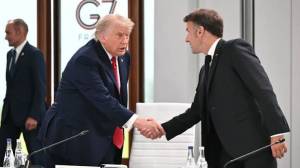

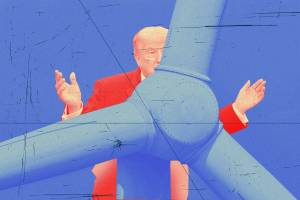























 peej
peej Carissa
 bostonboomer
 dakinikat
 ecocatwoman
 jjlo
jjlo mablue2
 Mama Lopez
 peggysue22
 quixote
 skydancingguestblogger
 Mona (aka Wonk the Vote)



 Sky Dancing
Recent Comments