







Federal agents clashed with protesters and threw a congressional candidate to the ground Friday morning during a protest outside a Chicago-area Immigration and Customs Enforcement facility.
Lazy Caturday Reads: Lots of Scary/Crazy News Today
Posted: July 11, 2026 Filed under: just because | Tags: Air Force One, cat art, caturday, cyclospora, Donald Trump, explosive diarrhea, first amendment, freedom of the press, Iran threatens revenge against Trump, Iran War, Kash Patel, Mitch McConnell dead or alive, Mojtaba Khamenei, NYT reporters subpoenaed, Qatari-donated Air Force One, Strait of Hormuz 10 CommentsGood Day!!

By Yulia Sidneva
The news is as crazy as usual today. Remember when weekends used to be quiet? Here’s what’s happening:
The Justice Department has subpoenaed 4 New York Times journalists who reported on security issues related to Trump’s new Air Force One. The administration’s attacks on the First Amendment are getting out of hand.
Michael M. Grynbaum at The New York Times: Times Journalists Subpoenaed as Trump Escalates Pressure on Media.
The Trump administration issued subpoenas on Friday to several journalists for The New York Times, after the news outlet reported this week on security concerns involving President Trump’s new Qatari-donated Air Force One.
The subpoenas — which seek to force the reporters to testify before a federal grand jury in Manhattan on Wednesday — were an extraordinary escalation in President Trump’s efforts to threaten and intimidate independent news organizations.
In some cases, the subpoenas were delivered by federal agents who showed up at reporters’ homes.
The Times denounced the administration’s actions.
“The appearance of federal law enforcement agents on the doorstep of news reporters should shock the conscience of any American who believes in the Constitution and the press freedom it protects,” said David McCraw, The Times’s top newsroom lawyer, in a statement on Friday evening.
“Our journalists report the facts and advance the American public’s right to know how their government is operating and their taxpayer dollars are being used,” Mr. McCraw wrote. “This brazen act should be seen as nothing more than an attempt to prevent the public from knowing what is happening in their country by intimidating journalists from doing their jobs.”
The subpoenas contain few specifics, asking only that the journalists testify “in regard to an alleged violation of federal criminal law.” They were issued by Jay Clayton, the U.S. attorney in Manhattan. Mr. Clayton, who leads one of the country’s most prominent law enforcement offices, was recently nominated by Mr. Trump to serve as director of national intelligence.
Representatives for the White House and the U.S. attorney in Manhattan did not respond to inquiries on Friday evening.
The Times journalists who received subpoenas included Julian E. Barnes, Eric Lipton, Tyler Pager and Eric Schmitt, who reported on Wednesday that Mr. Trump had departed Turkey on the old Air Force One as a security precaution at the urging of the Secret Service. On Thursday, The Times reported that the new Air Force One, a Qatari-donated Boeing 747-8, lacked some of the advanced security features of the older aircraft, including antimissile capabilities. Both articles cited sources who spoke on the condition of anonymity to discuss sensitive security issues.
Before the Wednesday article was published, a senior official at the Federal Bureau of Investigation contacted a reporter and a senior editor at The Times to ask that the article be held, calling it an issue of national security, according to a person familiar with the conversation. The F.B.I. official declined to explain the security issue. The official also asked The Times to disclose its sources for the article; the newspaper refused to do so. (A spokesman for The Times, Charlie Stadtlander, confirmed the account.)
This is really frightening. Fortunately, The Times has deep pockets and can defend their journalists.

By Miroco Machiko
Ashraf Khalil and Will Weissert at the AP: New York Times reporters are subpoenaed after Air Force One reporting, newspaper says.
The Trump administration has subpoenaed several New York Times journalists after their report on security concerns involving the new Air Force One, according to the paper.
The new jet, which President Donald Trump received as a gift from Qatar, entered service last week.
The subpoenas issued Friday seek to force the reporters to testify before a federal grand jury in Manhattan on Wednesday, the paper said, adding that federal agents delivered some subpoenas to the reporters at their homes.
There was no immediate response from the White House or Department of Justice to requests for comment on Saturday….
Issuing subpoenas represents a major escalation in the Republican president’s effort to threaten independent new organizations by leveraging the power of the federal government against them. It is also part of a systematic pattern by Trump to attempt to undermine press freedom in order to shield him from negative coverage.
Earlier this year, the Justice Department issued subpoenas seeking to compel testimony from reporters at The Washington Post and The Wall Street Journal. In both cases, the department later withdrew the subpoenas.
During his first term, Trump suggested that the press constituted an “enemy” of the American people. Since returning to the White House last year, he has waged an aggressive campaign against the media unlike any in modern U.S. history.
Trump’s pattern of attacks against news outlets and media figures he believes are overly critical of him has included filing lawsuits against outlets whose coverage he dislikes, threatening to revoke TV broadcast licenses and seeking to bend news organizations and social media companies to his will.
This is the article the Times published on Wednesday that so outraged Trump and his goons.
Tyler Pager Julian E. Barnes, Eric Schmitt, and Eric Lipton at The New York Times (gift article): Security Precaution Led Trump to Use Old Air Force One in Leaving Turkey.
President Trump flew out of Turkey on Wednesday night on the old Air Force One instead of his new Qatari-donated Boeing 747-8 as a security precaution related to the resumption of hostilities with Iran, according to people briefed on the plans, who said the change came at the urging of the Secret Service.
The swap deepens questions about whether the new plane, which the president had pressed to be ready as soon as possible, was retrofitted with sufficient security measures over the last year. Lawmakers and some officials have raised concerns about whether the expedited timeline allowed for the addition of an advanced missile defense system and other modifications used to protect the president.
By Jacquie Hughes
In a statement, Steven Cheung, the White House communications director, said that “the new Air Force One is a state-of-the-art aircraft that has been fitted with high-level security protocols that ensure the safety of the president and his staff.” [….]
But people briefed on the new plane’s capabilities, who spoke on the condition of anonymity to discuss sensitive security issues, said the new plane does not have all the features of the older plane. The switch in the president’s aircraft when he departed Turkey was a precautionary measure made at the advice of the Secret Service and not because of a specific threat, they said.
Mr. Trump, who has marveled at the luxury touches of his new jet, flew on it on Monday night to go to Turkey for a NATO summit. After his arrival, the conflict with Iran reignited, and the United States launched a series of strikes against that country while Mr. Trump and NATO leaders were about 1,000 miles away in Ankara.
The president on Wednesday denied that the change in his aircraft was made because of security concerns. Instead, he asserted that the swap was so the new jet could leave early and make stops at U.S. military bases to show it off to the troops because the aircraft is “magnificent.”
But when pressed by reporters in Ankara about the reason for the change, Mr. Trump also repeatedly noted that he was Iran’s No. 1 target, and referred at one point to having seen or been briefed on a list of Tehran’s targets in recent days.
You can use the gift link to read the rest.
So Trump’s on again off again war with Iran is back on. Iran apparently fired on some ships in the Strait of Hormuz, and Trump ordered some retaliatory strikes on Iran while he was overseas. Iran is also threatening to assassinate Trump and he is again threatening them with war crimes.
AP: US demands Iran publicly state that Strait of Hormuz is open and Tehran won’t attack ships anymore.
The U.S. is demanding that Iran make a public statement saying the Strait of Hormuz is open and that ships crossing the vital corridor won’t be attacked anymore, senior U.S. officials said Friday, adding that internal Tehran power struggles have made it difficult to reach and keep a deal.
The U.S. officials, who spoke on condition of anonymity to describe to reporters the state of play with Iran, said the resumption of strikes this week came after what they described as a rogue faction of Iranian hard-liners trying to sabotage the ceasefire between Tehran and Washington.
It comes as U.S. President Donald Trump reiterated on social media Friday that he views the interim ceasefire deal as “OVER!” But he said the U.S. would continue talks aimed at putting a permanent end to the war.
The officials said Friday that Trump is giving U.S. negotiators limited time to reach a deal with Iran, but, in a sign of the challenges ahead, they underscored that the president had a wide range of options if talks fall apart. They also said a power struggle was playing out in real time in Iran after U.S. and Israeli strikes at the start of the war killed its longtime leader, Ayatollah Ali Khamenei….
The U.S. is working on pressing Iran to make a public statement that the Strait of Hormuz, a vital waterway for world energy markets, is open and free to ships to transit, the officials said.

By Tetsuo Takahara
Barak Ravid at Axios: Iran’s supreme leader pledges revenge for his father’s assassination amid Trump death threats.
Iranian Supreme Leader Mojtaba Khamenei announced on Saturday that revenge for his father’s assassination “will most certainly be carried out.”
Why it matters: The statement was published after the burial ceremony for his father, former Supreme Leader Ali Khamenei. Throughout the weeklong funeral procession, there were massive public calls for the death of President Trump.
Mojtaba Khamenei, who didn’t appear inI public during the funeral ceremonies, didn’t specifically mention Trump. But earlier this week, Israel gave the U.S. information that suggested Iranian officials recently discussed the idea of assassinating Trump, U.S. and Israeli officials said.
- On his way back from Turkey on Wednesday, Trump traveled in the old Air Force One plane rather than the new plane that the U.S. received from Qatar. The New York Times reported that security concerns prompted the mid-trip switch in planes.
What he’s saying: Mojtaba Khamenei — who was seriously wounded in the attack that killed his father, and hasn’t appeared in public since — pledged on his Telegram channel to “avenge your pure blood and the blood of all those martyred in these two wars by bringing the criminal and dishonorable killers to justice.”
-
“This revenge is the demand of our nation, and it will most certainly be carried out. These criminals — whose names are known from top to bottom — will take to their graves the unfulfilled wish of dying peacefully in their beds. They should know that this does not depend on my personal presence or that of any other official,” he wrote.
-
Khamenei added that whether he is alive or dead, the revenge for his father’s death “will be accomplished,” and stressed that “soon, freedom-loving people throughout the world will each carry out part of this divine mission.”
Read more at Axios.
Kathleen Culliton at Raw Story:
President Donald Trump’s promise to “decimate and destroy all areas of Iran” stunned a former Obama administration official Saturday morning.
Richard Stengel, former Under Secretary of State for Public Diplomacy, shared his alarm over Trump’s recent Truth Social threat with MS NOW viewers.
By Miroco Machiko
“The fact of an American president threatening genocide against the whole people in case he’s assassinated is more than unseemly,” Stengel said. “It’s it’s incredibly vulgar and undiplomatic language.”
Stengel was responding to Trump’s own reaction to the Wall Street Journal report earlier this week that a new Iranian plan to assassinate him may have been uncovered by Israeli intelligence.
Late Friday night, Trump responded with a direct threat.
“1000 Missiles are Locked and Loaded and aimed at the Islamic Republic of Iran,” wrote Trump, “with thousands of more to immediately follow, should the Iranian Government act on its threat, pronounced in many corners of the Globe, to assassinate, or attempt to assassinate, the sitting President of the United States of America, in this case, ME!”
He is such an idiot.
Late yesterday, MSNOW reported that Kash Patel was called on the carpet at the White House to respond to reports of his using his job as FBI director to gain access to luxury travel.
Carol LeonnigJacqueline AlemanyKen DilanianVaughn HillyardJake Traylor at MSNOW: Kash Patel called to White House on heels of continued questions over his behavior.
FBI Director Kash Patel abruptly cancelled a planned flight Friday to see his girlfriend in Chicago this weekend, after top administration officials frustrated with Patel summoned him to the White House, according to two people with knowledge of the change.
The precise reasons that Patel’s political bosses demanded he cancel his trip and report to the West Wing are unclear, but several people said top Trump deputies were disturbed by a range of actions by Patel. Some found it confounding that the FBI director was leaving town amid the recent revival of the war with Iran and alleged threats against the president’s life, according to a person familiar with efforts to help Patel rebuild trust with the White House. For this article, people spoke on the condition of anonymity to discuss a sensitive internal matter.
Others cited two unforced errors by Patel that created bad optics for the Trump administration, the first being his early morning tweet bashing MS NOW for its coverage of his high-flying lifestyle, they said, in which Patel boasted: “my jet ski is gold plated…dumbass.”
By Shozo Ozaki
The second misstep, the people said, was that extensive reports by MS NOW and other news outlets about taxpayers footing the bill for Patel’s globe-trotting ultimately spurred formal questions from Senate Judiciary Chairman Chuck Grassley, a critical ally of President Trump’s.
On Thursday, MS NOW reported exclusively that Grassley had first asked Patel in a May letter about his use of the FBI jet and his decision to purchase luxury armored BMWs so he could travel more discreetly in the Washington, DC area. In a separate letter, Congressional Democrats said they had received information that Patel was demanding that FBI staff arrange special perks on his official trips, including a jet ski excursion and a helicopter tour. The FBI has disputed that, and said Patel had complied with federal rules pertaining to his travel.
White House spokespeople denied the report, but…
Patel cancelled his flight to Chicago just as he was preparing to leave on Friday morning, according to three people briefed on his move. But the trip to Chicago was already stirring anger and controversy inside the FBI, multiple current and former law enforcement officials told MS NOW. He was planning to attend his girlfriend Alexis Wilkins’ performance Saturday at a country music festival held in the parking lot of a major Chicago stadium, the three people said. Patel’s staff had arranged for the director to make an office visit Friday to the Chicago field office to coincide with his trip, according to two other people with knowledge of the director’s schedule.
Several FBI agents complained internally that this office visit was belatedly-added cover to justify Patel flying the director’s jet — which is estimated to cost tens of thousands of dollars for such domestic trips — to enjoy a weekend in Chicago with his girlfriend, the people said.
“Patel was coming (to Chicago) today for a fake office visit for his girlfriend’s country concert this weekend,” one of the sources briefed on the trip said. The source noted Patel “cancelled the trip while on the tarmac at Andrews” and was “summoned to the White House immediately,” adding that it was “apparent panic” and “believed to be in response to his morning tweet today.”
Read he rest at MSNOW.
We still don’t know whether Mitch McConnell is alive or brain dead. Since it was reported that he was found unconscious and given CPR, I think it’s most likely that he was intubated and is still on life support. The chances of an 84-year-old man recovering after CPR outside a hospital and very slim. It’s also odd that his wife would leave for a trip to China if there was any hope of McConnell regaining consciousness anytime soon.
David Smith at The Guardian: Mitch McConnell mystery deepens as health questions remain unanswered.
Mystery surrounding Senator Mitch McConnell’s health is deepening as the US Congress prepares to return from recess next week.
McConnell, 84, has not been seen in public since he was admitted to hospital in the Washington area on 14 June. Nearly a month later, the Kentucky Republican’s office has released only sparse updates, saying he is “continuing to improve” and remains engaged with Senate business, while refusing to disclose the nature of his illness or explain why he remains hospitalised.
Emergency dispatch audio obtained by media outlets indicates that first responders were sent to his home following reports of an unconscious person and that CPR was under way. On Friday, CNN released video footage that showed a person on a stretcher being wheeled towards an ambulance, though their face was not visible.
The senator’s office has neither confirmed nor denied the reports, leaving a vacuum that has been filled with fevered speculation, based on circumstantial evidence, about McConnell’s condition.
“I think he’s dead,” opined Malcolm Nance, a career counter-terrorism intelligence officer, in an interview with Amy McGrath, who lost to McConnell in the 2020 election, on the Truth in the Barrel podcast. “It’s very clear. I heard that 911 tape and I was an EMT when I was in the military at one point and you know we used to do CPR a lot. One of the things that teach you about CPR is the probability of coming back from CPR is very, very, very small.”
By Maki
McGrath, a former marine fighter pilot, replied: “Well, it’s an interesting take. We’ll see what happens there as well.”
The Senate returns on Monday for a four-week legislative session dominated by defence spending, national security and government funding bills. McConnell’s continued absence threatens to complicate Republican efforts to advance those measures with only a narrow 53-47 majority.
McConnell chairs the Senate rules committee and a defence appropriations panel, which is crucial in shaping Pentagon funding and where Republicans hold only a one-seat advantage.
Without him, partisan disputes over annual appropriations could become even harder to resolve ahead of the 1 October deadline for new federal spending. Congressional leaders are already signalling that another temporary spending measure may be needed to avert a government shutdown.
Read more at the Guardian link.
Have you heard about that horrible stomach virus that is going around? It comes from a parasite called cyclospora that the CDC used to closely monitor.
at HuffPo: CDC Stopped Monitoring Parasite Now Causing Explosive Diarrhea Across The Country.
The country is in the midst of a nationwide outbreak of explosive diarrhea caused by a parasite the CDC stopped surveilling at the federal level in July 2025.
That’s around the same time the Trump administration began haphazardly attacking and defunding federal health and science agencies under the guise of “government efficiency,” with Health Secretary Robert F. Kennedy Jr. separately also pushing out critical federal scientists and researchers.
Prior to that date, a collaborative CDC program called FoodNet helped federal and state regulators track eight foodborne pathogens.
Among them was cyclospora, a heat-loving spherical parasite that’s sickened 1,000 people in an ongoing outbreak in Michigan (the state’s worst), with similar illnesses cropping up in 28 other states.
In addition to cyclospora, surveillance of campylobacter, listeria, shigella, vibrio and Yersinia was cut. FoodNet now only regularly monitors two diseases: Salmonella and Shiga toxin-producing E. coli.
A list of CDC talking points seen by NBC News last summer clearly blamed funding for the program’s drastic cutback.
“Funding has not kept pace with the resources required to maintain the continuation of FoodNet surveillance for all eight pathogens,” the talking point read.
More at the link.
Those are the stories that caught my attention today. What’s on your mind?
Lazy Caturday Reads: Another Horrible Week Under the Trump Regime
Posted: September 20, 2025 Filed under: just because | Tags: ABC, authoritarianism, Brendan Carr, Charlie Kirk, Chicago, dictatorship, Disney, Donald Trump, Erik S. Siebert, extra legal boat strikes, fascism, FCC, first amendment, H1B visas, ICE, immigration, Jimmy Kimmel, Kat Abughazaleh, Midway Blitz, Pentagon reporter rules, Ted Cruz, Tyler Robinson 16 CommentsGood Morning!!

By Leonid Kiparisov
It has been another horrible week under the Trump regime. Almost no one who is paying attention still believes that we still live in a democracy. We retain a few of the trappings–the courts (except the Supreme Court, of course), a few Congresspeople, some courageous journalists, citizens protesting in the streets.
The “president” who would be king is busy slapping gold on the walls of the oval office and talking to architects about his planned $200 million golden ballroom, while Stephen Miller runs the country. Oh, and he’s still signing executive orders prepared by Project 2025 and throwing tantrums when anyone dares to criticize or make fun of him.
Andrew Perez, Nikki McCann Ramirez, Asawin Suebsaeng summarize the latest dictatorish happenings at Rolling Stone: Donald Trump’s Most Authoritarian Week Yet.
It was clear Donald Trump and his allies would ramp up their crackdown against any and all opposition in the wake of the assassination of right-wing activist Charlie Kirk — and this week, the president’s second administration unleashed its most authoritarian blitz yet.
The Trump administration got late-night host Jimmy Kimmel’s show taken off the air by threatening companies’ broadcast licenses if they continued to run his show. Trump and his team threatened to strip the tax-exempt status of liberal nonprofit groups, while the president called for left-wing activists to be jailed for protesting him at dinner. Trump announced he’ll once again try to designate “antifa” — America’s disparate anti-fascist movement — as a terrorist group, with no legitimate basis, clarifying once again where he stands on the whole fascism question.
Meanwhile, the administration worked toward its goal to deport a legal U.S. resident for speaking out against Israel’s relentless assault on Palestine. Reports trickled out that Trump would fire a U.S. attorney for failing to bring charges against one of his enemies, before Trump publicly called for his departure and he quit.
This ugly, authoritarian week didn’t happen in a vacuum. Trump just last month mused about how Americans want a “dictator,” and the administration now appears to be using Kirk’s shocking murder as an excuse to escalate Trump’s ongoing campaign for total power.
The ramp-up began on Monday, as Vice President J.D. Vance hosted Kirk’s podcast from the White House and huddled with Stephen Miller, Trump’s deputy White House chief of staff and the man responsible for leading his mass vengeance campaign.
“You have the crazies on the far left who are saying, ‘Stephen Miller and J.D. Vance, they’re going to go after constitutionally protected speech. No, no, no,” Vance said, before immediately pledging to go after a network of liberal nonprofits that supposedly “foments, facilitates, and engages in violence.”
During the discussion, Miller repeatedly invoked Kirk’s death to justify the effort to shut down liberal groups.
On the Jimmy Kimmel firing:
…[O]n Wednesday, Trump’s Federal Communications Commission (FCC) chairman, Brendan Carr, began issuing explicit threats, demanding that broadcasters take Jimmy Kimmel Live! off the air.
Speaking with right-wing influencer Benny Johnson, Carr pressured broadcasters to tell ABC: “‘Listen, we are going to preempt, we are not going to run Kimmel anymore, until you straighten this out because we, we licensed broadcaster, are running the possibility of fines or license revocation from the FCC.’”
By Diya Sanat
Carr added, “We can do this the easy way or the hard way. These companies can find ways to take action on Kimmel, or there is going to be additional work for the FCC ahead.”
Within hours, ABC had indefinitely suspended Kimmel’s show and two large broadcast companies, Nexstar and Sinclair, announced they wouldn’t run it. (Note: The companies all have regulatory matters before the FCC.) Sources told Rolling Stone that while multiple executives at ABC and its parent company, Disney, did not feel that Kimmel’s comments merited a suspension, they caved to pressure from Carr.
“They were terrified about what the government would do, and did not even think Jimmy had the right to just explain what he said,” a person familiar with the internal situation said on Thursday, calling the decision “cowardly.”
Throughout Trumpland and the federal government, there was a heightened sense of glee over their silencing of Kimmel. Administration officials feel emboldened by the multiple scalps they’ve now collected — first Stephen Colbert, now Kimmel — to the point that they’re confident they have momentum to pressure corporate bosses to get rid of Trump’s late-night nemeses over at other networks.
Trump has gotten so full of himself after this big win that he’s now claiming that criticism of him is illegal.
Luke Broadwater at The New York Times: Trump Says Critical Coverage of Him Is ‘Really Illegal.’
President Trump said Friday that news reporters who cover his administration negatively have broken the law, a significant broadening of his attacks on journalists and their First Amendment right to critique the government.
A day after asserting that broadcasters should potentially lose their licenses over negative news coverage of him, Mr. Trump escalated his condemnations of the press, suggesting such reporters were lawbreakers.
“They’ll take a great story and they’ll make it bad,” he said, speaking to reporters in the Oval Office. “See, I think that’s really illegal.”
He added: “Personally, you can’t take, you can’t have a free airwave if you’re getting free airwaves from the United States government.”
Mr. Trump did not cite a specific law he said he believed had been violated. It remained unclear Friday why Mr. Trump believed negative news coverage, which every president has faced and is protected by the Constitution, would be “really illegal.”
Asked for comment, the White House did not cite a specific law Mr. Trump believed was being violated, but a White House official pointed to settlements that media companies, including ABC, have agreed to pay after Mr. Trump’s legal team filed lawsuits against them, and suggested Mr. Trump was attempting to rein in “extreme left-wing bias in television.” [….]
Mr. Trump’s comments on Friday came a day after he suggested that protesters who called him “Hitler” to his face inside a Washington restaurant should be jailed.
The president, who has accused the protesters of being paid agitators and said such people “should be put in jail,” told reporters on Air Force One that he believed the protesters were “very inappropriate” and “a threat.”
Trump got some pushback from a surprising source. NBC News: Ted Cruz rips FCC chair’s Jimmy Kimmel threat as ‘unbelievably dangerous.’
Sen. Ted Cruz, R-Texas, blasted Federal Communications Commission Chair Brendan Carr on Friday for threats he made this week related to Jimmy Kimmel’s show, calling the Trump administration official’s actions “dangerous as hell.”
“I think it is unbelievably dangerous for government to put itself in the position of saying we’re going to decide what speech we like and what we don’t, and we’re going to threaten to take you off air if we don’t like what you’re saying,” Cruz said on his podcast, “Verdict with Ted Cruz.”
Girl with Cat – Augusta Oelschig , 1945 American, 1918–2000
“I like Brendan Carr. He’s a good guy, he’s the chairman of the FCC. I work closely with him, but what he said there is dangerous as hell,”Cruz said.
Cruz is chairman of the Senate Commerce Committee, which has jurisdiction over the FCC. He warned Carr’s actions could have long-term consequences.
“It might feel good right now to threaten Jimmy Kimmel, yeah, but when it is used to silence every conservative in America, we will regret it,”Cruz said….
Cruz went on to say Friday: “I hate what Jimmy Kimmel said,” but likened Carr’s comments about Disney taking the easy way or the hard way to a classic mob movie.
“I gotta say, that’s right out of ‘Goodfellas.’ That’s right out of a mafioso coming into a bar going, nice bar you have here, it’d be a shame if something happened to it,” Cruz said.
Of course Kimmel never said anything critical of Charlie Kirk. What he did do was make fun of Trump blowing of a question about how he was recovering from the loss of his friend to brag about his White House ballroom construction:
Kimmel has also mocked Trump for a specific comment he made in response to being asked by a reporter how he was personally “holding up” after the assassination of Kirk, who he has said was a friend.
Trump had replied saying he was “very good” and then immediately started boasting about the new ballroom he is building at the White House.
Kimmel said after the clip: “This is not how an adult grieves the murder of somebody called a friend. This is how a four-year-old mourns a goldfish.”
There’s also no evidence of involvement of left wing groups in the Kirk assassination. NBC News:
The federal investigation into the assassination of conservative activist Charlie Kirk has yet to find a link between the alleged shooter, 22-year-old Tyler Robinson, and left-wing groups on which President Donald Trump and his administration have pledged to crack down after the killing, three sources familiar with the probe told NBC News.
One person familiar with the federal investigation said that “thus far, there is no evidence connecting the suspect with any left-wing groups.”
“Every indication so far is that this was one guy who did one really bad thing because he found Kirk’s ideology personally offensive,” this person continued.
In addition, two of the people familiar with the probe said it may be difficult to charge Robinson at the federal level for Kirk’s killing, while the third source said there is still an expectation that some kind of federal charge is filed against Robinson.
Factors that have complicated the effort to bring charges at the federal level include that Robinson, a Utah resident, did not travel from out of state; Kirk was shot during an open campus debate at Utah Valley University. Additionally, Kirk himself is not a federal officer or elected official.
Disney (and perhaps even right wing Sinclair) apparently regret the sudden firing of Jimmy Kimmel.
Screen Rant: Disney Is Scrambling After The Backlash To Jimmy Kimmel’s Cancellation Blew Up.
Wholly unsurprising to anyone paying attention, the backlash over the abrupt cancellation of Jimmy Kimmel Live! is only continuing to grow and spread, and Disney is now scrambling to fix a situation quickly spiraling out of its control. After far-right podcaster Charlie Kirk was shot and killed, reactions have been intense, but it’s Disney’s knee-jerk reaction that has drawn the most ire.
Carl Wilhelmson, Svarta Katten (Black Cat).
There has been considerable pressure from the right to crack down on anyone saying anything even remotely controversial about Kirk, and media companies have acquiesced to this pressure. Earlier this week, on Wednesday, Disney announced that it was pulling Jimmy Kimmel from the air indefinitely after a monologue in which he didn’t hold back about Trump’s seeming indifference to Kirk’s murder. [See the quote from Kimmel that I posted above.] You can watch the video at the link.
The media is generally framing it as Kimmel being indefinitely suspended for his comments about Charlie Kirk. If you just watched the above, however, and are now wondering why, as Kimmel’s jabs weren’t aimed at Kirk, but Trump, then you’ve hit on precisely why the backlash against Disney’s Jimmy Kimmel decision is growing – and why it’s not likely to stop any time soon.
Read more at Screen Rant.
In more First Amendment news, Trump’s lawsuit against The New York Times isn’t going well.
Balls and Strikes: Federal Judge Strikes Trump Defamation Lawsuit For Being Too Annoying to Read.
On Friday, September 19, a federal district judge in Florida struck President Donald Trump’s complaint in his $15 billion defamation lawsuit against The New York Times, four Times reporters, and Penguin Random House, describing the complaint as “decidedly improper and impermissible.” Under Rule 8 of the Federal Rules of Civil Procedure, a complaint is supposed to include “a short and plain statement” alleging enough facts that, if true, could warrant legal relief. The complaint Trump filed on Monday, by contrast, is 85 pages long and reads more like an anthology of his Truth Social posts, with slightly better punctuation.
By Leonid Kiparisov
Most complaints filed in federal courtrooms do not get tossed under Rule 8, but most complaints filed in federal courtrooms do not spend dozens of pages recounting, as Trump’s does, the plaintiff’s “singular brilliance” and “history-making media appearances” in programs like Fallen Champ: The Untold Story of Mike Tyson. Trump’s complaint is also crowded with boasts about his purported magnificence (for example, “President Trump secured the greatest personal and political achievement in American history”) and snipes about legacy media’s anti-Trump bias (for example, “Defendants baselessly hate President Trump in a deranged way”).
Friday’s order, in turn, is full of the judge’s unmasked exhaustion. “As every lawyer knows (or is presumed to know), a complaint is not a public forum for vituperation and invective,” wrote Steven Merryday, a judge appointed by President George H.W. Bush in 1992. “This complaint stands unmistakably and inexcusably athwart the requirements of Rule 8.” Merryday gave Trump 28 days to amend the complaint and come back with something less ridiculous, and not exceeding forty pages. “This action will begin, will continue, and will end in accord with the rules of procedure and in a professional and dignified manner,” he wrote.
Read the rest at the link.
In immigration news, ICE is ramping up their activities in Chicago.
AP: ICE arrests nearly 550 in Chicago area as part of ‘Midway Blitz.’
PARK RIDGE, Ill. (AP) — Immigration enforcement officials have arrested almost 550 people as part of an operation in the Chicago area that launched a little less than two weeks ago, the Department of Homeland Security said Friday.
The updated figure came hours after a senior immigration official revealed in an interview with The Associated Press that more than 400 people had been arrested in the operation so far. The figures offer an early gauge of what is shaping up as a major enforcement effort that comes after similar operations were launched in Los Angeles and Washington, D.C.
The figures released by Homeland Security include arrests by Immigration and Customs Enforcement as well as other federal agencies assisting in the operation.
ICE launched its Chicago area operation dubbed “Midway Blitz” on Sept. 8, drawing concern from activists and immigrant communities who say there’s been a noticeable uptick in immigration enforcement agents. That has deepened dread in communities already fearful of the large-scale arrests or aggressive tactics used in other cities targeted by President Donald Trump ’s hardline immigration policies.
The operation has brought allegations of excessive force and heavy-handed dragnets that have ensnared U.S. citizens, while gratifying Trump supporters who say he is delivering on a promise of mass deportations.
A political candidate was roughed up. The Washington Post: Congressional candidate thrown to ground during protest outside ICE facility.


The third grade “president” has spoken.
The New York Times: U.S. Attorney Investigating Two Trump Foes Departs Amid Pressure From President.
The U.S. attorney investigating New York’s attorney general, Letitia James, and the former F.B.I. director James B. Comey said he had resigned on Friday, hours after President Trump called for his ouster.
Erik S. Siebert, the U.S. attorney for the Eastern District of Virginia, had recently told senior Justice Department officials that investigators found insufficient evidence to bring charges against Ms. James and had also raised concerns about a potential case against Mr. Comey, according to officials familiar with the situation. Mr. Trump has long viewed Ms. James and Mr. Comey as adversaries and has repeatedly pledged retribution against law enforcement officials who pursued him.
By Ruskin Spear, 1911
Mr. Siebert informed prosecutors in his office of his resignation through an email hours after the president, speaking to reporters in the Oval Office, said he wanted him removed because two Democratic senators from Virginia had approved of his nomination.
“When I saw that he got two senators, two gentlemen that are bad news as far as I’m concerned — when I saw that he got approved by those two men, I said, pull it, because he can’t be any good,” Mr. Trump said. The president did not mention that he nominated Mr. Siebert only after the two senators, Mark Warner and Tim Kaine, had already written Mr. Trump praising him.
When asked if he would fire Mr. Siebert, Mr. Trump responded, “Yeah, I want him out.”
Ms. James, he told reporters, was “very guilty of something.”
Mr. Trump later disputed that Mr. Siebert had resigned, saying in a late-night social media post, “He didn’t quit, I fired him!”
Mr. Trump’s comments came after a high-stakes internal debate raged on Friday over the fate of Mr. Siebert — with Mr. Trump’s own appointees at the Justice Department and key Republicans on Capitol Hill arguing to retain the veteran prosecutor.

Another childish tantrum. It’s so embarrassing for our country.
The New York Times: Pentagon Expands Its Restrictions on Reporter Access.
The Pentagon said Friday it would impose new restrictions on reporters covering the Department of Defense, requiring them to pledge not to gather or use any information that had not been formally authorized for release or risk losing their credentials to cover the military.
The new mandate, described in a memorandum circulated to the press on Friday, was the latest in a series of actions by the Trump administration to limit the ability of the media to cover the federal government without interference.
The Department of Defense said in the 17-page memo that it “remains committed to transparency to promote accountability and public trust.” But it added that “information must be approved for public release by an appropriate authorizing official before it is released, even if it is unclassified.”
In addition, the document constrains the movements of the media within the Pentagon itself, designating large areas of the building off limits without escorts for the roughly 90 reporters credentialed to cover the agency. Although many offices and meeting rooms in the Pentagon are restricted, the Pentagon press corps had previously been given unescorted access throughout much of the building and its hallways.
The move could drastically restrict the flow of information about the U.S. military to the public. The National Press Club called the policy “a direct assault on independent journalism” and called for it to be immediately rescinded.
Those are my recommended reads for today. What stories are you following?
Wednesday Reads: Trump’s War on Harvard University
Posted: May 28, 2025 Filed under: Donald Trump, education, just because | Tags: academic freedom, Boston Mayor Michelle Wu, first amendment, Harvard President Alan Garber, Harvard University, higher education, international students, Massachusetts, Massachusetts Governor Maura Healey, scientific research 8 CommentsGood Morning!!
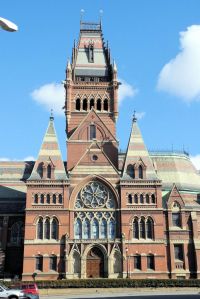
Memorial Hall, Harvard University
Today I’m going to focus on the Trump administration’s attacks on Harvard University. Obviously, Trump’s war on Harvard isn’t just about Harvard. It’s a war on higher education. If he succeeds in destroying Harvard, he will move on to other universities. Thank goodness Alan Garber, Harvard’s president is standing strong against the blatant attacks on academic research, international students, and freedom of speech.
Here’s the latest news in the Trump-Harvard battle:
The New York Times: Trump Intends to Cancel All Federal Funds Directed at Harvard.
The Trump administration is set to cancel the federal government’s remaining federal contracts with Harvard University — worth an estimated $100 million, according to a letter sent to federal agencies on Tuesday. The letter also instructs agencies to “find alternative vendors” for future services.
The additional planned cuts, outlined in a draft of the letter obtained by The New York Times, represented what an administration official called a complete severance of the government’s longstanding business relationship with Harvard.
The letter is the latest example of the Trump administration’s determination to bring Harvard — arguably the country’s most elite and culturally dominant university — to its knees, by undermining its financial health and global influence. Since last month, the administration has frozen about $3.2 billion in grants and contracts with Harvard. And it has tried to halt the university’s ability to enroll international students.
The latest letter, dated May 27 from the U.S. General Services Administration, was delivered Tuesday morning to federal agencies, according to an administration official, who spoke on the condition of anonymity because the official had not been authorized to discuss internal communications.
The letter instructs agencies to respond by June 6 with a list of contract cancellations. Any contracts for services deemed critical would not be immediately canceled but would be transitioned to other vendors, according to the letter, signed by Josh Gruenbaum, commissioner of the G.S.A.’s federal acquisition service, which is responsible for procuring government goods and services.
Contracts with about nine agencies would be affected, according to the administration official.
Examples of contracts that would be affected, according to a federal database, include a $49,858 National Institutes of Health contract to investigate the effects of coffee drinking and a $25,800 Homeland Security Department contract for senior executive training. Some of the Harvard contracts under review may have already been subject to “stop work” orders.
“Going forward, we also encourage your agency to seek alternative vendors for future services where you had previously considered Harvard,” the letter said.
It’s not just Harvard, of course.
Politico: Trump team pauses new student visa interviews as it weighs expanding social media vetting.
The Trump administration is weighing requiring all foreign students applying to study in the United States to undergo social media vetting — a significant expansion of previous such efforts, according to a cable obtained by POLITICO.
In preparation for such required vetting, the administration is ordering U.S. Embassies and consular sections to pause scheduling new interviews for such student visa applicants, according to the cable, dated Tuesday and signed by Secretary of State Marco Rubio.
If the administration carries out the plan, it could severely slow down student visa processing. It also could hurt many universities who rely heavily on foreign students to boost their financial coffers.
“Effective immediately, in preparation for an expansion of required social media screening and vetting, consular sections should not add any additional student or exchange visitor (F, M, and J) visa appointment capacity until further guidance is issued septel, which we anticipate in the coming days,” the cable states. (“Septel” is State Department shorthand for “separate telegram.”)
The administration had earlier imposed some social media screening requirements, but those were largely aimed at returning students who may have participated in protests against Israel’s actions in Gaza.
What does this policy mean?
The cable doesn’t directly spell out what the future social media vetting would screen for, but it alludes to executive orders that are aimed at keeping out terrorists and battling antisemitism.
Many State Department officials have complained privately for months that past guidance — for, say, vetting students who may have participated in campus protests — has been vague. It’s unclear, for example, whether posting photos of a Palestinian flag on an X account could force a student to undergo additional scrutiny.
The administration has used a variety of rules to target universities, especially elite ones such as Harvard, that it sees as too liberal and accuses of allowing antisemitism to flourish on their campuses. At the same time, it is carrying out immigration crackdowns that have swept up a number of students….
The news was met with frustration in much of the higher education community.
NAFSA: Association of International Educators, a group that advocates for foreign students, decried the decision. The group’s CEO, Fanta Aw, said it unfairly cast aspersions on hardworking students.
“The idea that the embassies have the time, the capacity and taxpayer dollars are being spent this way is very problematic,” Aw said. “International students are not a threat to this country. If anything, they’re an incredible asset to this country.”
What is Trump’s supposed rationale for his attack on Harvard and high education?
The Boston Globe: Trump administration says Harvard funding cuts are punishment for ‘race discrimination.’
After a weekend of threats and criticism from President Trump, the federal government on Tuesday severed the last of its remaining business ties to Harvard University.
Josh Gruenbaum, a top official at the US General Services Administration, instructed all federal agencies to terminate any contracts with Harvard or transfer them to other vendors. He also said in a letter sent to federal procurement officials Tuesday that government agencies should refrain from awarding any new contracts to Harvard in the future….
Although the Trump administration’s original rationale for targeting Harvard was campus antisemitism, Gruenbaum’s letter Tuesday focused more on the government’s allegations that Harvard’s admissions and hiring practices violate antidiscrimination laws. For that reason, he said, Harvard should not be allowed to receive federal funding….
Gruenbaum’s letter laid out the government’s expanded justification for targeting Harvard. The university,the federal government alleges, systematically discriminates against white people, men, straight people, and, in some cases, Asian Americans.
“As fiduciaries to the taxpayer, the government has a duty to ensure that procurement dollars are directed to vendors and contractors who promote and champion principles of nondiscrimination and the national interest,” Gruenbaum wrote.
Harvard has denied the government’s allegations and sued the Trump administration. In two cases in federal court in Boston, Harvard’s lawyers argued the administration’s tactics violate federal laws and the Constitution and amount to illegal retaliation. Many lawyers, including some conservatives who share Trump’s critiques of universities, have agreed some of the Trump administration’s tactics appear to be illegal.
The administration’s letter on Tuesday accuses Harvard of discrimination in its admissions and hiring practices, as well as at the Harvard Law Review. Federal agencies have launched investigations on all of those subjects.
The Department of Justice is investigating whether Harvard’s admissions practices run afoul of a Supreme Court ban on affirmative action in college admissions. And the Department of Education and the Equal Employment Opportunity Commission have launched an inquiry into alleged discrimination by Harvard against white people, Asian Americans, men, and heterosexuals in hiring and promotions.
The Trump administration is even suggesting there could be criminal investigations of university officials.
Greg Sargent at The New Republic: Trump’s Fury at Harvard Gets More Deranged—and Exposes a Big MAGA Scam.
President Donald Trump has mostly justified his lawless attempt to restrict international students from attending Harvard University by pretending it’s designed to root out the antisemites, woke radicals, and dangerous terrorists supposedly nesting in their ranks. Now, however, Trump has a new rationale: It’s all about helping young, aspiring Americans, particularly those in the working class.
“We have Americans who want to go there and to other places,” Trump told reporters over the weekend, adding angrily that many of Harvard’s international students are “bad” and are taking Americans’ slots: “They can’t go there because you have 31 percent foreign.”
Trump then tweeted:
I am considering taking Three Billion Dollars of Grant Money away from a very antisemitic Harvard, and giving it to TRADE SCHOOLS all across our land. What a great investment that would be for the USA, and so badly needed!!!
Yeah, OK. If Trump really wants to facilitate the upward mobility of America’s working-class youth, here’s a better way to do it: Persuade his fellow Republicans in the House to drop their new budget’s changes to financial aid for higher education, which will restrict access to it for large numbers of working-class students, probably including many who want to attend—yup—trade schools.
With Trump’s fury at Harvard getting worse, this turn in the saga suggests another grotesque subtext to all of it: Telling working-class families that the real obstacle their kids face is zero-sum competition from foreign students makes it easier to take away resources previously appropriated to boost working-class kids to fund tax cuts for the rich.
What’s going on here?
Trump’s assault is a wildly unhinged abuse of power in every way. Last week, Trump revoked Harvard’s ability to host international students, due to Harvard’s alleged failure to share sufficient “information” about foreign students in response to an administration demand. That demand was itself absurdly intrusive, and seemed designed not to be met, creating a pretext for Trump to broaden his attack. The revocation appears wholly lawless, and after Harvard sued, a court blocked it within hours.
At this point, there’s no need to pretend there’s a genuine public-interest rationale at work here. Everyone knows it’s all about getting universities to surrender to flatter Trump, or about executing a broader hostile MAGA takeover of liberal institutions. For instance, in an article reporting that Trump is now nixing Harvard’s federal contracts on top of canceling billions in grants, The New York Times notes almost in passing that Trump wants to bring Harvard “to its knees,” as if this is unremarkable, when it should be depicted as the power-crazed ravings of a Mad King.
But there’s something particularly ghoulish about Trump’s suggestion that his blockade on international students is about helping American kids who are unfairly displaced by them.
That’s because the “big, beautiful bill” that House Republicans passed last week—which Trump has urged Senate Republicans to adopt—could make attending college harder for countless such kids. For a detailed summary of its changes, see this piece by The New Republic’s Monica Potts: They would make it harder for full-time students to qualify for Pell Grants, bump off large numbers of part-time students, and restrict access to the program and other financial assistance for higher education in numerous other ways.
Indeed, a coalition of education advocacy organizations estimates that the bill’s changes to Pell Grants alone could deprive as many as 700,000 people of eligibility entirely and hit many more with higher costs. As Potts summarizes, all this “takes an ax to one of the few reliable ladders for working-class people seeking higher education” as an “engine for social mobility.” These are mostly poorer and working-class students by definition, many with jobs or young kids of their own.
Trump’s attack on Harvard and higher education hurts Massachusetts, which is home to 114 colleges and universities.
Karen Miller at Boston Globe Magazine: Trump vs. Massachusetts: How one state represents everything the president despises.
In her State of the City address in March, Mayor Michelle Wu spoke about her then-2-month-old daughter. The world she entered was “not the world I expected or hoped for her,” Wu said. “I want her to grow up in the America that Paul Revere rode for, that Dr. King marched for, that my parents left home for.”
A few weeks later, as Paul Revere’s ride was reenacted and scores of redcoats lined up with muskets on the Lexington Battle Green, you didn’t have to look far to see signs that Massachusetts’ centuries-long revolutionary spirit was being threatened. Sprinkled through the crowd, posters read “No King! No Tyranny! Support the Rule of Law” and “In America, the Law is King.” [….]
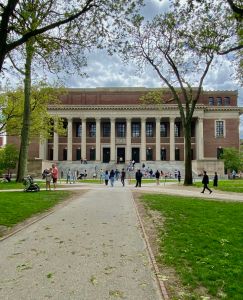
Widener Library, Harvard University
Massachusetts may be uniquely positioned to suffer in President Trump’s second term. And not just because the president has slashed disaster aid, school funding, and health support for the Commonwealth. Or because he plans to withdraw clean energy support and undercut states with robust environmental laws.
Our economy is deeply reliant on elite colleges, elite hospitals, and the elite minds who come here from around the world. In Massachusetts — like it or not — we have built an economy on expertise, excellence, and education.
In the early 2000s, after graduating from high school outside of Chicago, Wu was drawn — like so many others — to the educational opportunities here. Her parents “didn’t know too much about America” when they arrived in the 1980s from Taiwan. She says that they, “like so many, held such a reverence for the institutions that in some ways symbolized the American dream for them. Harvard was one of them.”
Now, the magnets that have attracted talent to Massachusetts have become liabilities. “ Boston is at the center of many of the most targeted industries and communities,” Wu says. “And so we’re feeling it very much — very urgently.”
The mayor notes that the city is “trying to plan for unpredictability. And so our city budget this year includes preparations for worst-case scenarios.” Although Boston’s financial foundation is “quite strong,” Wu says, “we need to be prepared for immediate, significant impacts to federal funding or larger macroeconomic impacts.”
We’re living, she says, under “a cloud of chaos.”
The Boston Globe: ‘This is about more than Harvard’: Healey tells alumni as university faces down Trump.
Massachusetts Governor Maura Healey voiced support for her alma mater Tuesday night as Harvard University continues to battle President Trump’s attacks on the Cambridge institution’s autonomy and funding.
“This is about more than Harvard,” she told a virtual webinar of thousands of Harvard alumni.
In recent weeks, Harvard has filed litigation charging that Trump unlawfully froze billions in federal funding to the school after it refused to give the government control over academic decisions. More recently, the school also legally challenged Trump’s attempt to revoke the school’s ability to enroll international students.
On Tuesday night, a group of Harvard alumni held a pair of virtual events to discuss the impact of the administration’s actions on academic freedom, research, students, and employees of the Ivy League university.
Crimson Courage, which describes itself as “a nonpartisan community of Harvard alumni,” encouraged alumni to sign onto an amicus brief in ongoing litigation spearheaded by Harvard against the Trump administration.
The brief “supports the academic freedom and integrity of Harvard and higher education institutions across America—all of which must be able to educate students consistent with their missions and values, free from political interference.”
The brief, according to organizers, will be filed in a legal case where Harvard argues the government’s use of research funding cuts as leverage to exert control over its affairs is an abuse of federal power.
Healey, in her comments to alumni, said Trump’s moves against the university is undercutting American competitiveness and damaging the local and national economy. Harvard, she said, is the fourth largest employer in Massachusetts, and its international students alone contribute $400 million to the local economy annually.
If Trump succeeds in damaging Massachusetts, will other blue states be next?
NPR: As Trump targets elite schools, Harvard’s president says they should ‘stand firm.’
With elite U.S. universities in President Trump’s crosshairs, the leader of Harvard University says institutions need to double down on their “commitment to the good of the nation” and be firm in what they stand for.
The Trump administration, acting on its claims that Harvard has failed to stamp out antisemitism on campus, froze more than $2 billion in research grants and contracts in April and attempted to revoke the school’s ability to enroll international students last week. The university is suing the federal government for both actions.
Harvard President Alan Garber told Morning Edition that he finds the measures taken by Trump to be “perplexing.” While he acknowledges there is work to be done on campus, he said he struggles to see a link between funding freezes and fighting antisemitism.
“Why cut off research funding? Sure, it hurts Harvard, but it hurts the country because after all, the research funding is not a gift,” Garber said, adding that these dollars are awarded to efforts deemed “high-priority work” by the federal government….
As evidence of how his university’s work directly benefits the U.S. public, Garber points to recent honors awarded to Harvard faculty by the Breakthrough Prize, known as “The Oscars of Science,” for their work on obesity and diabetes drugs and gene editing, used to correct disease-causing genetic variations.
The Trump administration’s multi-billion dollar funding freeze came after Harvard refused demands to change policies around hiring and admissions, eliminate DEI programs, or screen international students who are “supportive of terrorism or anti-Semitism,” as the administration put it.
Read the entire interview at the NPR link.
Commentary on Trump’s attacks on Harvard:
Daniel Drezner at Drezner’s World: The Trump Administration Is Trying to Kill American Higher Education.
Recent readers may recall that I was in a bit of a funk last week because among other things “The [Trump] administration further escalated its war on Harvard in myriad ways. This is part and parcel of a wider war on higher education that will destroy American soft power, one of the country’s leading export sectors, and American economic productivity.”
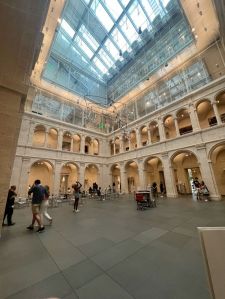
Harvard Art Museum
Impressively, the situation on this front has gotten even worse in the last 24 hours….
…consider the complete set of federal actions taken against Harvard that the New York Times’ Michael C. Bender has compiled. It’s an extraordinary list of punitive actions given that the Trump administration has been in office for just a little over a third of a year.
Now, as a professor at the Fletcher School, a direct competitor of Harvard’s Kennedy School of Government, readers might wonder if I think there might be some competitive advantage that might be gained from Harvard’s misfortune. And the answer to this is “not really, no,” for two reasons.
The first is raw politics: Harvard is the most prestigious university in the United States. It has the deepest pockets. If the Trump administration can force Harvard to acquiesce to its demands, that capitulation will make it that much harder for other universities to protect academic freedom.
The second is that while Harvard might be receiving the brunt of the administration’s malignant attention, Trump’s team is taking other actions that will harm most U.S. universities.
Examples: Threats to investigate foreign students’ social media and ordering embassies to stop vetting visas for international students applicants.
This administration seems bound and determined to force U.S. students to pay higher tuition, because it keeps stripping away alternative sources of revenue. Between slashing federal research funding to record-low levels, raising the transaction costs of accepting foreign grants, and this freezing the visa processing of foreign students, the Trump administration is disincentivizing scientific research and forcing universities to rely increasingly on the tuition payments of domestic college students.
The end result will be a poorer, less dynamic economy and a less vibrant society. I wish the Atlantic’s Adam Serwer was being hyperbolic in this paragraph – but he isn’t:
“These various initiatives and policy changes are often regarded as discrete problems, but they comprise a unified assault. The Trump administration has launched a comprehensive attack on knowledge itself, a war against culture, history, and science. If this assault is successful, it will undermine Americans’ ability to comprehend the world around us. Like the inquisitors of old, who persecuted Galileo for daring to notice that the sun did not, in fact, revolve around the Earth, they believe that truth-seeking imperils their hold on power.”
Why are they doing it? Serwer attributes it to politics: “by destroying knowledge, Trumpists seek to make the country more amenable to their political domination, and to prevent meaningful democratic checks on their behavior.” I could proffer a variety of other ideological or political responses. As of now, however, such rationales are besides the point. The only thing I know for sure is that it’s not for the reasons proffered by the administration.
Read the rest at the Substack link.
Paul Krugman on his Substack: America Turns Its Back on the World.
My wife and I are co-authors of a widely used textbook on the principles of economics, which is revised on a three-year cycle. When a new edition comes out, I normally visit a number of schools that might adopt it, usually giving a big public talk, a smaller technical seminar, and spending some time with students and faculty. I enjoy it, by the way; there are a lot of good, interesting people in U.S. education, and not just in the high-prestige schools.
So it was that at one point I found myself visiting Texas Tech in Lubbock. Yes, it seemed pretty remote to someone who has spent almost his whole life in the Northeast Corridor, but as usual the overall experience was very positive. And it was also surprisingly cosmopolitan: there were students from many nations. I just checked the numbers, and currently 30 percent of Texas Tech’s graduate students are international.
So it is all across America. Our nation’s ability to attract foreigners to study here is one of our great strengths. Or maybe I should say was one of our strengths.
According to Politico, a cable from Marco Rubio, the secretary of state, has directed U.S. embassies and consulates to halt all processing of visa applications from foreigners hoping to study in the United States. This is reportedly a temporary measure in preparation for a new system in which would-be students will be screened on the basis of their social media history. And you can be sure that the criteria for denying entry will go far beyond, you know, advocating terrorism. Probably asking “Why was Trump talking to West Point grads about trophy wives?” will be grounds for rejection.
This completely insane policy move is presumably a temper tantrum in response to a court’s rejection of the administration’s attempt to prevent Harvard from admitting foreign students, which was in turn a temper tantrum in response to Harvard’s rejection of demands from Trumpists that they be allowed to dictate the university’s hiring and curriculum.
The courts will probably reject this policy move, too, but I worry that Rubio and co. can put enough sand in the gears of the visa process to bring the entry of international students to a near halt. And even if they can’t, the clear message to students that they aren’t welcome (and may be arrested once here) will have an immensely chilling effect.
It’s hard to overstate the self-destructiveness of this move, and the war on higher education in general. This is madness even in purely economic terms.
Read the rest at the link.
One more by Liz Dye at Public Notice: Trump’s attack on Harvard hampered by his inability to STFU.
The Trump administration would be getting slapped down in court even if the president and his minions didn’t constantly announce their intent to violate the law. But their incessant chest thumping does make things go a lot faster.
Case in point: the temporary restraining order barring the government from canceling student visas at Harvard University. The order was issued just hours after Homeland Security Secretary Kristi Noem revoked Harvard’s visa “privilege” for foreign students. The administration teed up the ruling by declaring that it intended to flagrantly violate the First Amendment. But they telegraphed their punch so thoroughly that Harvard’s lawyers had a 72-page complaint with 28 exhibits ready to be filed the second Noem announced the plan.
Trump Hates Harvard
Just hours after being sworn in, Trump signed an executive order instructing federal agencies to “identify up to nine potential civil compliance investigations” of civic, corporate, and academic institutions, including “institutions of higher education with endowments over 1 billion dollars” for their supposed “illegal discrimination.”
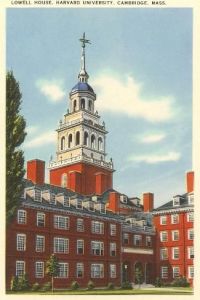
Lowell House, Harvard University
The EO was clearly an attack on the Ivy League, long targeted by conservatives as a bastion of “wokeness” that should be brought to heel. And Project 2025, with its “big idea” to seize control of the budget from Congress, provided Trump with a blueprint to wield federal tax dollars as a weapon against state governments and institutions.
Part of the plan was for Trump to unilaterally announce new “laws” via executive order, and, instead of asking courts to enforce them, leverage federal funds to punish anyone who resists.
And so the president simply declared DEI “illegal,” and used the widespread adoption of anti-discrimination policies by corporations and academia as a pretext to go after anyone he doesn’t like. But, as a federal judge noted last week when he blocked an attack on the law firm Jenner & Block, “the defendants point to no case holding such diversity initiatives illegal.” This is simply the executive branch inventing a new legal theory and demanding that everyone treat it as settled law.
Dye describes how Harvard fought back successfully in court.
On April 11, Harvard sued in federal court in Massachusetts, alleging that the funding cuts were an arbitrary and capricious agency action in violation the First Amendment, the Fifth Amendment’s due process clause, and the Constitution’s separation of powers. That case landed on Judge Allison Burroughs’s docket, and when the school sued again 10 days later over a further round of funding cuts, it designated the cases as “related,” ensuring that it, too, would be assigned to the Obama appointee.
Harvard docketed voluminous correspondence demonstrating that the Trump administration is using federal funds to both coerce the school into changing its speech, and retaliating against it for speech conservatives don’t like. For instance, a letter signed by representatives of the General Services Administration and the Departments of Education and Health and Human Services presented an “agreement in principle” demanding sweeping changes to all aspects of the university’s hiring, admissions, disciplinary, and curricular programs as a precondition of preserving the school’s federal funds.
“The university will not surrender its independence or relinquish its constitutional rights,” the university wrote in response. “Neither Harvard nor any other private university can allow itself to be taken over by the federal government.”
That response was signed by longtime Republican lawyer Bill Burck, of the law firm Quinn Emanuel, and Robert Hur, the former special counsel tapped by Attorney General Bill Barr to investigate Joe Biden. (Burck was immediately fired by the Trump Organization as an ethics advisor.)
But Trump kept on making public threats and posting nonsense on social media.
Trump’s constant public screeds serve as potent evidence that the funding cuts are retaliatory, and any supposed DEI “crimes” are mere pretext.
On April 15, he suggested that Harvard “should lose its Tax Exempt Status and be Taxed as a Political Entity if it keeps pushing political, ideological, and terrorist inspired/supporting ‘Sickness?’” [….]
That’s an explicit attack on Harvard’s academic freedom, which is protected by the First Amendment. And he followed it up the next day by screeching that “Harvard is a JOKE, teaches Hate and Stupidity, and should no longer receive Federal Funds.” [….]
Secretary of Education Linda McMahon admitted in an interview with CNBC on May 7 that the administration is 100 percent targeting Harvard for disfavored speech.
“Are they vetting students who are coming in from outside of the country to make sure they’re not activists? Are they vetting professors that they’re hiring to make sure that they’re not teaching ideologies?” she said. “They’ve taken a very hard line, so we took a hard line back.”
All these comments — and so many more! — featured in Harvard’s lawsuits.
Please read the rest at Public Notice. It’s an excellent summary of what Trump has been doing and why it’s unlawful.
That’s all I have for you today. What’s on your mind?
Lazy Caturday Reads
Posted: September 9, 2023 Filed under: Afternoon Reads, cat art, caturday, Donald Trump, just because | Tags: disinformation, earthquake, first amendment, G20 summit 2023, Georgia election interference case, India, Joe Biden, Mar-a-Lago, Mark Meadows, Morocco, social media, stolen documents case, Yuscil Taveras 8 CommentsHappy Caturday!!

Cat and Flowers, by Ruskin Spear, British, 1911-1990
There has been a terrible earthquake in Morocco, with hundreds of people dead. President Biden is attending the Group of 20 summit meeting in India. Back in the U.S., a Georgia federal judge said no to Mark Meadows’ request to transfer his case to federal court; and now Trump’s lawyers are scrambling to figure out a way for him to still do that. It’s not likely to happen. The 5th Circuit court of appeals reversed some of a previous ruling that hamstrung government agencies, but they still found that the Biden administration violated the first amendment in trying to influence social media companies. Finally, The New York Times has an interesting read about the former Mar-a-Lago IT guy who had turned on Trump.
The strongest earthquake to hit the country of Morocco in more than 120 years has left over 800 people dead and many thousands more trapped, missing, or injured.
The quake registered 6.8 on the Richter scale with the epicenter located in the Atlas Mountains and not far the city of Marrakesh where historic buildings—many built of mortar and stone not designed to withstand such tremors—collapsed and the streets filled with people overnight trying to flee the destruction and danger.
“The problem is that where destructive earthquakes are rare, buildings are simply not constructed robustly enough to cope with strong ground shaking, so many collapse resulting in high casualties,” Bill McGuire, professor emeritus of geophysical and climate hazards at University College London, told the Associated Press. “I would expect the final death toll to climb into the thousands once more is known. As with any big quake, aftershocks are likely, which will lead to further casualties and hinder search and rescue.”
Morocco’s interior ministry put the initial death toll at 822 as of Saturday morning, with 672 injured, but both numbers are certain to rise. Though the stronger impacts were closer to Marakesh, the earthquake was felt across the country, including in Casablance, Essaouira, and the capital city of Rabat.
Large nations, including both the United States and China, sent their well wishes to the people of Morocco.
“I am deeply saddened by the loss of life and devastation caused by the earthquake in Morocco,” said U.S. President Joe Biden in an overnight statement. “Our thoughts and prayers are with all those impacted by this terrible hardship.”
Biden said his administration as in contact with Moroccan officials and willing to send whatever help might be necessary. “We are working expeditiously to ensure American citizens in Morocco are safe,” Biden said, “and stand ready to provide any necessary assistance for the Moroccan people.”

Self-Portrait with Cat, Indira Baldano
Associated Press: Biden, Modi and G20 allies unveil rail and shipping project linking India to Middle East and Europe.
NEW DELHI (AP) — President Joe Biden and his allies on Saturday announced plans to build a rail and shipping corridor linking India with the Middle East and Europe, an ambitious project aimed at fostering economic growth and political cooperation.
“This is a big deal,” said Biden. “This is a really big deal.”
The corridor, outlined at the annual Group of 20 summit of the world’s top economies, would help boost trade, deliver energy resources and improve digital connectivity. It would include India, Saudi Arabia, the United Arab Emirates, Jordan, Israel and the European Union, said Jake Sullivan, Biden’s national security adviser.
Sullivan said the network reflected Biden’s vision for “far reaching investments” that come from “effective American leadership” and a willingness to embrace other nations as partners. He said the enhanced infrastructure would boost economic growth, help bring countries in the Middle East together and establish that region as a hub for economic activity instead of as a “source of challenge, conflict or crisis” as it has been in recent history.
Politico: Judge refuses to move prosecution of Mark Meadows to federal court.
The prosecution of former White House chief of staff Mark Meadows for attempting to overturn the 2020 election will remain in Georgia state court, a federal judge ruled Friday as he turned down Meadows’ bid to move the case to federal court.
The decision is a victory for Fulton County District Attorney Fani Willis’ drive to bring former President Donald Trump, Meadows and 17 other defendants to trial under the state’s broad criminal racketeering statute for their roles in trying to help Trump cling to power.
“The Court concludes that Meadows has not shown that the actions that triggered the State’s prosecution related to his federal office,” U.S. District Judge Steve Jones wrote in his decision, while emphasizing that he was not ruling on the right of any other defendant to have the case against them moved to the federal system.
By Belinda Del Pesco
Jones, an appointee of former President Barack Obama, concluded that Meadows was not acting within the scope of his employment at the White House when he organized a Jan. 2, 2021 phone call where Trump pressed Georgia’s secretary of state Brad Raffensperger to “find” enough votes to declare him the victor in that state. Other actions that Meadows took, as described in a grand jury’s indictment last month, similarly fell outside Meadows’ official duties, the judge said.
“Meadows’s participation on the January 2, 2021 call was political in nature and involved the President’s private litigation, neither of which are related to the scope of the Office of White House Chief of Staff,” Jones wrote. “The Court finds that these contributions to the phone call with Secretary Raffensperger went beyond those activities that are within the official role of White House Chief of Staff, such as scheduling the President’s phone calls, observing meetings, and attempting to wrap up meetings in order to keep the President on schedule.”
By finding that Meadows acted outside the scope of his duties, Jones concluded that Meadows is not eligible for so-called “removal” — a procedure under federal law that allows federal officials to transfer a case from state court to federal court if the case is based on their official acts.

It’s now unlikely that any of the other people trying to move their cases to federal court–including Trump–will succeed. Meadows had the strongest case according legal experts.
Reacting to U.S. District Judge Steve C. Jones late Friday ruling that former White House chief of staff Mark Meadows may not have his election tampering case moved to a federal court, former Re[publican National Committee chair Michael Steele said that was a major blow not only to Meadows but also all of the other 18 Georgia co-conspirators facing RICO charges including Donald Trump.
As Steele put it, any hopes that defense attorneys might have had in the outcome of the Meadows hearing died a quick death.
Meadows’ attorneys had signaled that they hoped to move the case to federal court as a precursor to arguing that the case against him should be thrown out on grounds that as a former federal officer he’s immune from charges relating to his duties. And if a trial went forward in federal court, the jury pool would likely have been broader and slightly friendlier to Trump and his allies than one drawn only from Fulton County.
A federal court trial also would be unlikely to be televised, whereas the state court judge has already vowed to livestream all the proceedings.
Four other defendants in the Georgia case have also asked for the cases against them to be moved to federal court: former Justice Department official Jeff Clark and three pro-Trump activists accused of falsely certifying that they were presidential electors from the state. Those requests remain pending with Jones, and he said he was not pre-judging them as he turned down Meadows.

Nora Heysen (Australian, 1911-2003) – A Boy with his cat
A federal appeals court on Friday said the Biden administration likely violated the First Amendment in some of its communications with social media companies, but also narrowed a lower court judge’s order on the matter.
The US 5th Circuit Court of Appeals ruled that certain administration officials – namely in the White House, the surgeon general, the US Centers for Disease Control and Prevention, and the Federal Bureau of Investigation – likely “coerced or significantly encouraged social media platforms to moderate content” in violation of the First Amendment in its efforts to combat Covid-19 disinformation.
But the three-judge panel said the preliminary injunction issued by US District Judge Terry Doughty in July, which ordered some Biden administration agencies and top officials not to communicate with social media companies about certain content, was “both vague and broader than necessary to remedy the Plaintiffs’ injuries, as shown at this preliminary juncture.”
The Biden administration had previously argued in the lawsuit brought by Republican attorneys general claiming unconstitutional censorship that channels with social media companies must stay open so that the federal government can help protect the public from threats to election security, Covid-19 misinformation and other dangers.
n briefs submitted earlier this summer, the administration wrote, “There is a categorical, well-settled distinction between persuasion and coercion,” adding that Doughty had “equated legitimate efforts at persuasion with illicit efforts to coerce.”
The 5th Circuit left in place part of the injunction that barred certain Biden administration officials from “threatening, pressuring, or coercing social-media companies in any manner to remove, delete, suppress, or reduce posted content of postings containing protected free speech.”
“But,” the appeals court said, “those terms could also capture otherwise legal speech. So, the injunction’s language must be further tailored to exclusively target illegal conduct and provide the officials with additional guidance or instruction on what behavior is prohibited.”
So it’s some good news and some bad news if you care about disinformation on social media.
From a summary of the NYT article on Yuscil Taveras at Raw Story:
In a deep dive into the life of the key Donald Trump employee who has flipped on the former president and some of his colleagues who worked with him at Mar-a-Lago, the New York Times is reporting that Trump’s head of security made a fateful decision that helped out special counsel Jack Smith’s investigation.
Composition with Cat on the table with striped tablecloth – Herdis Gelardi , 1951 Danish, 1916-1991
As part of their profile of IT manager Yuscil Taveras, the Times creates a moment-by-moment timeline where Mar-a-Lago property manager Carlos De Oliveira contacted Yuscil Taveras to meet him “somewhere more private” to discuss deleting the surveillance video.
As part of their profile of IT manager Yuscil Taveras, the Times creates a moment-by-moment timeline where Mar-a-Lago property manager Carlos De Oliveira contacted Yuscil Taveras to meet him “somewhere more private” to discuss deleting the surveillance video.
As the Times is reporting, “According to the indictment, which does not name Mr. Taveras but refers to him as ‘Trump Employee 4,’ Mr. De Oliveira led him through a basement tunnel to a small room known as an ‘audio closet,’ where Mr. De Oliveira delivered a message from Mr. Trump: ‘the boss’ wanted the footage deleted. Mr. Taveras rebuffed the request, prosecutors said in the indictment, but Mr. De Oliveira raised it again.”
Noting that Taveras once again denied the request, the report states that Taveras then reportedly confided to fellow employee Renzo Nivar about what had happened and days later alerted “a superior in Trump Tower.”
According to the Times, “One executive in New York, Matthew Calamari Jr., the Trump Organization’s corporate director of security, apparently became alarmed, according to people with knowledge of the matter. He alerted the company’s legal department, prompting a senior lawyer at the company to deliver a stern warning not to delete anything.”

Read the entire profile at The New York Times: He Was Just the I.T. Guy. Then He Got Caught in the Trump Documents Case.
So that’s an overview of the news today. I hope you all have a great weekend!!
Lazy Caturday Reads: The Heat Is On
Posted: August 12, 2023 Filed under: Cats, caturday, Crime, Donald Trump, just because | Tags: extreme heat, first amendment, freedom of the press, Hawaii wildfires, January 6 case, Judge Tanya Chutkan, limits on free speech, Maui 10 Comments Happy Caturday!!
Sadly, I’m unable to post cat art today because WordPress has made it very difficult to resize images to manageable dimensions. Dakinikat seems to have figured out how to do it, but I’m still confused. I’m hoping I’ll be able to master the technique or learn to use one of WordPress’s other god-awful methods of posting. Today I’m reposting Tweets from Lorenzo the Cat.
(Dakinikat note: testing the images thing, so there are a few popping up here now.)
We haven’t talked much about the awful wildfires in Hawaii. Here’s the latest news.
Washington Post Live Updates: Maui death toll reaches 80 amid questions over emergency response.
The death toll from the Hawaii wildfires has risen to 80, Maui county officials said in an update late Friday, as firefighters continued work to contain fires on the island. Government officials are launching a review of the state’s emergency response, as residents criticized relief efforts as insufficient and records indicated that emergency sirens weren’t activated at the state or county level during the wildfires, though alerts were sent to cellphones and broadcast networks.
Here’s what to know
Read more recent updates at the WaPo.

Pre-Raphaelite Cats, Susan Herbert
From The New York Times, an opinion piece by writer and editor Lawrence Downes, who grew up in Hawaii: After the Shock and Grief, Hawaii Will Reinvent Itself Again.
The disaster that erased the beloved West Maui town of Lahaina this week comes with the bitter taste of bewilderment. Brush fires met high winds whipped by a far-off hurricane, and overnight a historic town was gone, a pile of smoke and ashes. A lush watercolor landscape is redrawn in gray and black. At least 55 people are dead, and many more are missing.
A hurricane just burned down a town. It’s all so weird and horrifying.
Living in Hawaii long enough gives you a familiarity with sudden catastrophes, the kind that can obliterate a community in a week, a day or an instant. To live in my home state or to love it from a distance is to know the continual threat of hurricanes, tsunamis, earthquakes and volcanoes.
But a lethal wildfire? That was new for Hawaii. And everything is changed.
We may not get a definitive verdict on whether Lahaina died for humanity’s environmental sins, but we know that climate change is making Hawaii hotter and drier and that invasive grasses have been allowed to run rampant. Drought on Maui turned the grass into ready fuel and heightened the risk of wildfires, and then a hurricane brushed by.
The planetary crisis is hardly Hawaii’s fault, but like other island areas in our rising oceans, it is unusually imperiled, and it has to do something. And when wildfires swept over Maui and the Big Island, it was a brutal reminder that Hawaii needs to be a serious climate leader, to nurture and spread the environmental consciousness that too many other states lack.
Hawaii will surely find ways to lower the risk of wildfires and get better at fighting them. Lahaina will rebuild, and residents will return. But climate resiliency is a far bigger challenge than adding fire trucks and subduing invasive grasses. It’s an expensive mess of problems across the state.
Will the communities on Oahu’s North Shore be able to retreat from the rising ocean before they are washed away? How will flower and fruit growers on Maui and the Big Island cope with extended drought? What happens if or when the coral reefs die, the native trees and forest birds are gone, weather patterns shift and the cooling trade winds disappear?
All good questions, and we all must “do something.” Climate change is happening. We can see it all around us.
JJ passed along this article about the extreme heat affecting so many people this year.
TechTimes: How Much Heat Can Your Body Take? Scientists Reveal the Maximum Limit.
According to AFP, new research shows the limit, known as the “wet bulb temperature,” representing the maximum combination of heat and humidity before sweat no longer evaporates from the skin, leading to heatstroke, organ failure, and death.
While this threshold occurs at around 35 degrees Celsius (95 Fahrenheit), recent research suggests it could be even lower.
Colin Raymond from NASA‘s Jet Propulsion Laboratory said the wet bulb limit of human survival has been breached only around a dozen times, primarily in South Asia and the Persian Gulf.
Although none of these occurrences extended beyond two hours, they effectively averted widespread mortality events associated with this critical threshold.
Nonetheless, specialists stress that fatalities resulting from intense heat are feasible even at less severe levels. Factors such as age, health, and socio-economic circumstances play a role in determining an individual’s susceptibility.
In Europe last summer, for instance, more than 61,000 fatalities were linked to heat, even in regions where the perilous wet bulb temperature range is seldom attained.
Scientists warn that dangerous wet bulb events will become more frequent as global temperatures continue to rise. The frequency of such events has doubled over the last four decades, driven by human-caused climate change.
According to Raymond’s research, wet bulb temperatures exceeding 35 degrees Celsius could become common worldwide if global temperatures rise by 2.5 degrees Celsius above pre-industrial levels.
To test the wet bulb limit, researchers at Pennsylvania State University evaluated young, healthy participants in a heat chamber. They found that the “critical environmental limit,” where the body can’t prevent further core temperature increase, was reached at 30.6 degrees Celsius wet bulb temperature, lower than previously theorized.
Read the rest at TechTimes.
In other news, here’s a shocking small-town example of the assault on the First Amendment that is happening in red states.
Kansas Reflector: Police stage ‘chilling’ raid on Marion County newspaper, seizing computers, records and cellphones.
MARION — In an unprecedented raid Friday, local law enforcement seized computers, cellphones and reporting materials from the Marion County Record office, the newspaper’s reporters, and the publisher’s home.
Eric Meyer, owner and publisher of the newspaper, said police were motivated by a confidential source who leaked sensitive documents to the newspaper, and the message was clear: “Mind your own business or we’re going to step on you.”
The city’s entire five-officer police force and two sheriff’s deputies took “everything we have,” Meyer said, and it wasn’t clear how the newspaper staff would take the weekly publication to press Tuesday night.
The raid followed news stories about a restaurant owner who kicked reporters out of a meeting last week with U.S. Rep. Jake LaTurner, and revelations about the restaurant owner’s lack of a driver’s license and conviction for drunken driving.
Meyer said he had never heard of police raiding a newspaper office during his 20 years at the Milwaukee Journal or 26 years teaching journalism at the University of Illinois.
“It’s going to have a chilling effect on us even tackling issues,” Meyer said, as well as “a chilling effect on people giving us information.”
The search warrant, signed by Marion County District Court Magistrate Judge Laura Viar, appears to violate federal law that provides protections against searching and seizing materials from journalists. The law requires law enforcement to subpoena materials instead. Viar didn’t respond to a request to comment for this story or explain why she would authorize a potentially illegal raid.
A bit more:
Emily Bradbury, executive director of the Kansas Press Association, said the police raid is unprecedented in Kansas.
“An attack on a newspaper office through an illegal search is not just an infringement on the rights of journalists but an assault on the very foundation of democracy and the public’s right to know,” Bradbury said. “This cannot be allowed to stand.”
Meyer reported last week that Marion restaurant owner Kari Newell had kicked newspaper staff out of a public forum with LaTurner, whose staff was apologetic. Newell responded to Meyer’s reporting with hostile comments on her personal Facebook page.
A confidential source contacted the newspaper, Meyer said, and provided evidence that Newell had been convicted of drunken driving and continued to use her vehicle without a driver’s license. The criminal record could jeopardize her efforts to obtain a liquor license for her catering business.
A reporter with the Marion Record used a state website to verify the information provided by the source. But Meyer suspected the source was relaying information from Newell’s husband, who had filed for divorce. Meyer decided not to publish a story about the information, and he alerted police to the situation.
“We thought we were being set up,” Meyer said.
Police notified Newell, who then complained at a city council meeting that the newspaper had illegally obtained and disseminated sensitive documents, which isn’t true. Her public comments prompted the newspaper to set the record straight in a story published Thursday.
Sometime before 11 a.m. Friday, officers showed up simultaneously at Meyer’s home and the newspaper office. They presented a search warrant that alleges identity theft and unlawful use of a computer.
The paper didn’t even publish the information, but a magistrate judge approved a search warrant! This is the kind of behavior by law enforcement that Trump would promote if he gets back into a position of power.
Speaking of Trump, here are some reports on the hearing yesterday in the January 6 case.
CNN: Judge Chutkan says Trump’s right to free speech in January 6 case is ‘not absolute.’
US District Judge Tanya Chutkan set the tone for how she would preside over the election subversion against Donald Trump in a hearing Friday focused on what limits would be placed on how the former president can handle the evidence prosecutors will be turning over to him.
Chutkan kicked off the hearing – the first in the case before her and one that took place in her courtroom at DC federal court house – noting that while Trump’s rights as a criminal defendant would be protected, his First Amendment right to free speech was “not absolute.”
“In a criminal case such as this one, the defendant’s free speech is subject to the rules,” she said.
The judge closed the hearing with a promise that the case would advance like any normal proceeding in the criminal justice system, but warned that the more “inflammatory” statements were made by a party, the quicker she would need to move toward a trial to preserve a fair jury.
“It is a bedrock principle of the judicial process in this country,” she said, while quoting precedent, “that legal trials are not like elections, to be won through the use of the meeting hall, the radio and the newspaper.”
“This case is no exception,” she said.
Kyle Cheney at Politico: Judge warns Trump: ‘Inflammatory’ statements about election case could speed trial.
U.S. District Judge Tanya Chutkan warned Donald Trump and his attorney Friday that repeated “inflammatory” statements about his latest criminal prosecution would force her to speed his trial on charges related to his bid to subvert the 2020 election.
“I caution you and your client to take special care in your public statements about this case,” Chutkan told Trump lawyer John Lauro during a hearing. “I will take whatever measures are necessary to safeguard the integrity of these proceedings.”
Chutkan’s stark admonition came at the conclusion of her first courtroom session in the newest criminal case against the former president. The aim of the hearing was for special counsel Jack Smith’s prosecutors and Trump’s attorneys to hash out disputes about the handling of evidence in the case. Once Chutkan enters a so-called “protective order” governing evidence, prosecutors say they’re prepared to share millions of pages of documents with Trump’s team, jumpstarting the case and setting it on a path to trial.
But Chutkan, aware of the national spotlight on her oversight of the explosive case, repeatedly emphasized that she intended to keep politics out of the courtroom and treat Trump like any other criminal defendant. That included potential consequences if he makes statements that could be construed as harassing or threatening witnesses.
“The fact that he’s running a political campaign has to yield to the orderly administration of justice,” Chutkan said. “If that means he can’t say exactly what he wants to say about witnesses in this case, that’s how it has to be.”
“Even arguably ambiguous statements from parties or their counsel, if they can be reasonably interpreted to intimidate witnesses or to prejudice potential jurors, can threaten the process,” Chutkan added later. “The more a party makes inflammatory statements about this case which could taint the jury pool … the greater the urgency will be that we proceed to trial quickly.”
Judge Chutkan has obviously grokked that a speedy trial would be Trump’s worst nightmare.
Glenn Thrush and Alan Feuer at The New York Times: Judge Limits Trump’s Ability to Share Jan. 6 Evidence.
The federal judge overseeing former President Donald J. Trump’s prosecution on charges of seeking to overturn the 2020 election rejected his request on Friday to be able to speak broadly about evidence and witnesses — and warned Mr. Trump she would take necessary “measures” to keep him from intimidating witnesses or tainting potential jurors.
The caution from the judge, Tanya S. Chutkan, came during a 90-minute hearing in Federal District Court in Washington to discuss the scope of a protective order over the discovery evidence in Mr. Trump’s case, a typically routine step in criminal matters. Later Friday, Judge Chutkan imposed the order but agreed to a modification requested by the Trump legal team that it apply only to “sensitive” materials and not all evidence turned over to the defense.
She concluded the hearing with a blunt warning to Mr. Trump, and an unmistakable reference to a recent social media post in which he warned, “If you go after me, I’m coming after you!” — a statement his spokesman later said was aimed at political opponents and not at people involved in the case.
“I do want to issue a general word of caution — I intend to ensure the orderly administration of justice in this case as I would in any other case, and even arguably ambiguous statements by the parties or their counsel,” she said, could be considered an attempt to “intimidate witnesses or prejudice potential jurors,” triggering the court to take action.
“I caution you and your client to take special care in your public statements in this case,” she added. “I will take whatever measures are necessary to protect the integrity of these proceedings.”
Have a great weekend, everyone!!

 peej
peej Carissa
 bostonboomer
 dakinikat
 ecocatwoman
 jjlo
jjlo mablue2
 Mama Lopez
 peggysue22
 quixote
 skydancingguestblogger
 Mona (aka Wonk the Vote)



 Sky Dancing
Recent Comments