
Friday Reads: Justice Interrupted and a Queen of all Souls
Posted: August 17, 2018 Filed under: just because, morning reads | Tags: Aretha Franklin, Brett Kavanaugh, SCOTUS 22 Comments Good Morning Sky Dancers!
There just doesn’t appear to be words to describe the clusterfuck we’re living through under one party rule right now. I’m going to start with the Kavanaugh SCOTUS appointment which is being railroaded through the Senate even though it’s clear that the majority of American people oppose him and he likely lied to Congress on his last appearance which is a felony.
Pat Leahy, the Democratric Senator from Vermont, believes strongly that Kavanaugh lied to him about the nature of his involvement in War Crimes and Torture during the Bush Administration. Grassley and McConnell seem intent to stop the committee from seeing any evidence of that. Leahy wrote a letter to Grassley today and released it to the public.
We have repeatedly expressed our serious concerns about the unprecedented lack of transparency and partisan process that is being used to hide Brett Kavanaugh’s record from the Senate Judiciary Committee, the Senate as a whole, and the American people. Although Judge Kavanaugh amassed a substantial record during his five years in the Bush White House, to date, less than 3% of his record has been made available to the Committee, and 98.4% of his record is being withheld from the full Senate and the public. By comparison, for Elena Kagan’s nomination, 99% of her White House records were made available to Congress and the public.
We have stated all along that the unprecedented, partisan process being used for Judge Kavanaugh’s nomination is a disservice to the Senate and to the American people. Now, we are seeing firsthand the problems that result from attempts to hide Judge Kavanaugh’s record. In particular, from the limited set of documents available, we have already seen records that call into serious question whether Judge Kavanaugh was truthful about his involvement in the Bush Administration’s post-9/11 terrorism policies when he testified before this Committee during his 2006 nomination hearing.
As you know, in 2006, Judge Kavanaugh told the Committee under oath that he was “not aware of any issues” regarding “the legal justifications or the policies relating to the treatment of detainees”;[1] was “not involved in the questions about the rules governing detention of combatants”[2]; had nothing to do with issues related to rendition;[3] and was unaware of, and saw no documents related to, the warrantless wiretapping program conducted without congressional authorization.[4]
However, at least two documents that are publicly available on the Bush Library website from Judge Kavanaugh’s time as Staff Secretary suggest that he was involved in issues related to torture and rendition after 9/11. In one, just days after the existence of the Office of Legal Counsel “torture memos” was publicly revealed, then-Deputy White House Chief of Staff Harriet Miers forwarded to Judge Kavanaugh a set of talking points addressing the memos and U.S. torture policy.[5] The forwarded email makes clear that then-Deputy National Security Adviser Stephen Hadley had personally asked for Judge Kavanaugh’s review. Similarly, another email shows that Judge Kavanaugh was included on an email chain circulating talking points on rendition and interrogation.[6] These emails and talking points demonstrate why we need access to Judge Kavanaugh’s full record as Staff Secretary.
In addition, documents that have been produced to the Committee as part of the partisan process that you have brokered with Bill Burck further undercut Judge Kavanaugh’s blanket assertions that he had no involvement in or knowledge of post-9/11 terrorism policies. These documents are currently being withheld from the public at your insistence, but they shed additional light on Judge Kavanaugh’s involvement in these matters and are needed to question him in a public hearing.
After all, Judge Kavanaugh was an Associate White House Counsel on 9/11. Over the next several months and years, the White House sought legal opinions from the Office of Legal Counsel and advised the President on the legality of several controversial programs. For example, just six days after the 9/11 attack, Office of Legal Counsel lawyer John Yoo drafted a memorandum evaluating the legality of a program that would allow warrantless wiretapping of American’s e-mails and phone calls.[7] Mr. Yoo, described in a public Inspector Generals’ report as “‘very well connected’ with officials in the White House,” addressed his memo to Deputy White House Counsel Timothy Flanigan, Judge Kavanaugh’s likely supervisor at the time. It is important for the public and full Senate to understand whether Judge Kavanaugh was involved in their communications, despite having told the Committee in 2006 that he had not seen or heard anything about the President’s warrantless wiretapping program until December 2005.[8]
Whether Judge Kavanaugh misled this Committee in 2006 and his involvement in these White House policies are critically important to our consideration of his fitness for a lifetime appointment to the highest court in the land. These are serious questions that could easily be addressed if we were given access to his records. As it stands, however, you have refused to join our request for Judge Kavanaugh’s Staff Secretary records and have sought to keep his White House Counsel documents secret as well.
We firmly believe that Judge Kavanaugh’s nomination cannot be considered unless these documents are available, including to the public and the Senate as a whole. We therefore urge you to join our request for Judge Kavanaugh’s Staff Secretary records and to publicly release documents from Judge Kavanaugh’s time in the White House in the same manner as was done for all previous Supreme Court nominees. The truth should not be hidden from the Senate or the American people.
 Kavanaugh has the worst level of support since the Bork debacle. Women especially do not want Kavanaugh on the Supreme Court.
A new poll from CNN shows that Brett Kavanaugh’s Supreme Court nomination is the least popular since Robert Bork’s nomination by Ronald Reagan. The overall percentage of polled Americans who would like to see Kavanaugh confirmed is a whopping 37 percent. Bork’s came in a little lower, at 31 percent.
The most interesting data from this poll is how many women across the ideological spectrum oppose the nomination. While 74 percent of Republicans say he should be confirmed, only 28 percent of women agree. This is even true among Democrats. A mere 6 percent of Democratic women say Kavanaugh should be confirmed, compared to 22 percent of Democratic men. Women are also more likely to view Kavanaugh’s positions as extreme. Only 35 percent of women consider his views mainstream, compared to 50 percent of men. Gee, it’s almost like if you fail to be directly impacted by policies like legal abortion, you’re less likely to care about them.
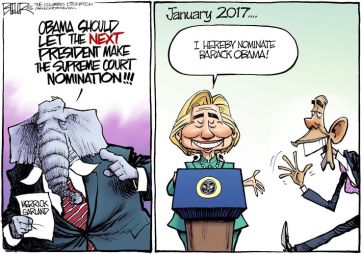
 Igor Bobic–writing for HuffPo–states the clearly partisan process rolling its way over this important appointment. It is led by the same man that denied an appointment to Barrack Obama, Mitch McConnell.
The National Archives and Records Administration, which has historically been tasked with producing documents relating to Supreme Court nominees, distanced itself from the group of George W. Bush lawyers currently working on releasing Kavanaugh documents from his time in the Bush administration. The archival staff is conducting its own review of the nominee’s record, as requested by Senate Judiciary Committee Chairman Chuck Grassley (R-Iowa), but they will not be able to fully comply until late October due to the sheer number of documents involved.
The nonpartisan agency said in a Wednesday statement that the Republican review of some of Kavanaugh’s time in the Bush White House is “completely apart” from the one it is working on, adding that the parallel review is “something that has never happened before.”
“This effort by former President Bush does not represent the National Archives or the George W. Bush Presidential Library. The Senate Judiciary Committee is publicly releasing some of these documents on its website, which also do not represent the National Archives,” the statement read, noting that former presidents have the right to access and release records of their administration.
Part of the reason why there has been so much partisan wrangling over Kavanaugh’s record is the fact that there has never been a Supreme Court nominee with such an extensive paper trail. As someone who spent five years working as a top aide in the White House, he’s got far more documents than Trump’s first Supreme Court nominee Neil Gorsuch or President Barack Obama’s Supreme Court nominee Elena Kagan ― a sum that is said to total several million. It’s why Senate Majority Leader Mitch McConnell (R-Ky.) tried to nudge Trump into nominating other candidates in the first place, fearing it could pose difficulties for Kavanaugh’s confirmation.
That exact scenario is playing out currently in the Senate, where Democrats are hammering Republicans for not being willing to produce his full record and pressing forward with the confirmation hearing before the National Archives is able to conduct its own review. On Thursday, Democrats announced they are prepared to sue the National Archives if the Freedom of Information Act request they filed seeking Kavanaugh’s documents isn’t honored.
“I think they realize if the American people knew just how Justice Kavanaugh felt before he became a judge, they might not want him to be there,” Senate Minority Leader Chuck Schumer (D-N.Y.) said in a floor speech on Thursday.
 Rachel Maddow shared a rediscovered tape of Kavanaugh’s view that overturning established laws may be necessary to remove anything not clearly delineated in the Constitution directly.
Rachel Maddow shares a new tape of Donald Trump Supreme Court nominee Brett Kavanaugh discussing Antonin Scalia’s opposition to marriage equality and abortion rights, characterizing them as “new rights” not guaranteed by the Constitution.
 Democrats must seriously fight this nomination (via WBUR).
The facts here are pretty simple: Kavanaugh, if confirmed, would shape the court for a generation. Long after our reality TV POTUS is gone, his “legacy” would live on in the form of a pro-corporate, anti-union judiciary in which judges are but an extension of the billionaire donor class that underwrites the modern GOP.
Media companies are, these days, too focused on staging pundit brawls about profane tweets to document the stakes of a Kavanaugh confirmation.
For this reason, Democrats need to take immediate action, before their Republican colleagues once again outmaneuver them. That means seizing control of the narrative by promising the media what it lusts after: a fight.
Every single Democrat in Congress should gather on the steps of the Supreme Court and explain to the American people what’s going on here:
That the GOP — by means of naked intransigence — already has stolen one seat on the high court and won’t get another.
That Kavanaugh is an illegitimate pick, nominated by a president who lost his election by three million votes and who is currently under criminal investigation for obstruction of justice and conspiracy to subvert our democracy.
That Kavanaugh himself would serve not as an impartial jurist, but as a hyper-partisan legal bodyguard for a demagogue president so venal and mistrusted that he has resorted to forcing his employees to sign illegal non-disclosure agreements.
That Kavanaugh would twist the Constitution into knots seeking to protect the president from being questioned by Special Counsel Robert Mueller. We know this for a fact because Kavanaugh — who once worked as one of Kenneth Starr’s legal attack dogs — has since had a change of heart, and wrote in 2009 that Clinton should never have been investigated. Why? Because indicting a sitting president “would ill serve the public interest, especially in times of financial or national security crisis.”
That, even more galling, we know that Kavanaugh spoke out against the Supreme Court’s unanimous decision to release the Watergate tapes. In other words, he believesthat the president is above the rule of law.
That Kavanaugh flat-out lied to Congress when he was initially confirmed to be a federal judge, which is a crime. And did so in relation to this nation’s efforts to torture human beings.
Meanwhile, every one has to endure this kind of crap coming from Franklin Graham who really should be sent to an island to live by himself. “Franklin Graham compares Chelsea Clinton’s views on abortion with Hitler’s views on ‘killing the Jews'” from The Hill.
Evangelist leader and vocal Trump supporter Franklin Graham on Thursday went after Chelsea Clinton for saying women’s access to abortion helped boost the economy, saying that Hitler probably claimed that “killing the Jews” would be good for the German economy.
Graham took to Twitter to share Clinton’s comments from “Rise Up for Roe” — a pro-abortion event advocating against the confirmation of President Trump’s Supreme Court nominee, Brett Kavanaugh — at its tour stop in New York.
“@ChelseaClinton, daughter of former President @BillClinton & @HillaryClinton, claims that legalizing abortion added trillions of dollars to the economy,” Graham tweeted alongside a link to a Breitbart News article about Clinton’s remarks. “What a lie. Hitler probably also claimed that killing the Jews would be good for their economy.”
Clinton said earlier this week that there was a connection between Roe v. Wade, the landmark Supreme Court decision legalizing abortion, and the economy.
“It is not a disconnected fact … that American women entering the labor force from 1973 to 2009 added $3.5 trillion to our economy,” Clinton said at the event. “The net, new entrance of women — that is not disconnected from the fact that Roe became the law of the land in January of 1973.”
The Hill has reached out to the Clinton Foundation, of which Clinton is a board member, for clarification on the source of the statistic she cited.
Clinton defended her comments on Tuesday, tweeting that her words have been misrepresented. Clinton pointed to a recent study she led, which found a connection between women’s access to abortion and socioeconomic consequences.
“Reproductive rights have always been economic rights,” Clinton tweeted. “A recent study found denying women — often already mothers — a wanted abortion results in years of less employment & more family poverty.”
 They religious wrongs just cannot leave the Clinton Family alone.
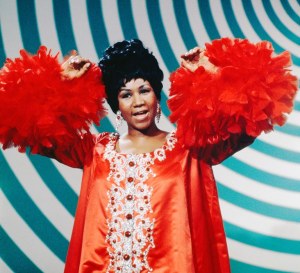
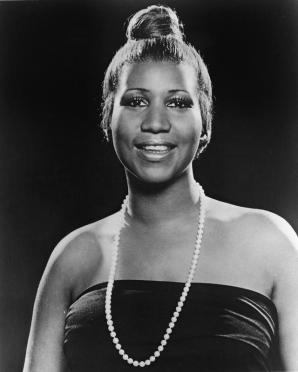
Meanwhile, you’ll notice that I’m providing my tribute to the Queen of Soul. Here’s one from Bitter Southerner Patterson Hood that I can feel.
I’m not saying goodbye to Aretha Franklin. I’m sure I never will in my lifetime. Her music will remain with me as a fixture in our home for as long as I live, and it’s a tradition that my own kids will no doubt carry forward after I’m gone. I’m glad she is no longer suffering. She no doubt lived a full life full of ecstatic moments and majesty. She has left behind a legacy of work that is written into the bedrock of the American art form that she defined and transcended. There was no greater singer in the 20th century, and those Atlantic recordings are stouter monuments to what’s great about our country than anything that could ever be carved into stone. Her songs are living, breathing monuments to the soul of man and woman and race and history and culture. Of the American ideal. The human experience.
I won’t say goodbye, but I will say thank you. Thank you, Aretha Franklin, for turning the pains, sufferings, and transcendent joys of the human experience into an art form that can be blasted from the tiniest transistor radios or the finest McIntosh amplified stereos. They are sounds of our hearts and souls on fire.
And of course, the Queen of Soul gets a fitting NYT obit.
Ms. Franklin’s airborne, constantly improvisatory vocals had their roots in gospel. It was the music she grew up on in the Baptist churches where her father, the Rev. Clarence LaVaughn Franklin, known as C. L., preached. She began singing in the choir of her father’s New Bethel Baptist Church in Detroit, and soon became a star soloist.
Gospel shaped her quivering swoops, her pointed rasps, her galvanizing buildups and her percussive exhortations; it also shaped her piano playing and the call-and-response vocal arrangements she shared with her backup singers. Through her career in pop, soul and R&B, Ms. Franklin periodically recharged herself with gospel albums: “Amazing Grace” in 1972 and “One Lord, One Faith, One Baptism,” recorded at the New Bethel church, in 1987.
But gospel was only part of her vocabulary. The playfulness and harmonic sophistication of jazz, the ache and sensuality of the blues, the vehemence of rock and, later, the sustained emotionality of opera were all hers to command.
Ms. Franklin did not read music, but she was a consummate American singer, connecting everywhere. In an interview with The New York Times in 2007, she said her father had told her that she “would sing for kings and queens.”
“Fortunately I’ve had the good fortune to do so,” she added. “And presidents.”
So, that’s enough for me today. I’m going to do some stuff and listen to Aretha sing out about the peaks and depths of the human condition as I have since being a kid. And, I’ll sing along, albeit quite badly.
What’s on your reading and blogging list today?
Thursday Reads: The “President” is Mentally Incompetent
Posted: April 6, 2017 Filed under: morning reads, U.S. Politics | Tags: Bashar al-Assad, China, Deven Nunes, Donald Trump, Glenn Thrush, House Intelligence Committee, Maggie Haberman, Neil Gorsuch, North Korea, nuclear option, Rep. Mike Conaway, Rex Tillerson, Russia investigation, SCOTUS, Syria, tRumpcare, U.S. Senate 33 Comments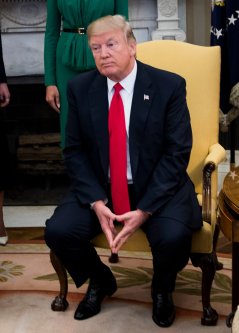 Good Morning!!
Breaking stories this morning:’
— First, Rep. Deven Nunes is “temporarily stepping aside” from the House Intelligence Committee’s investigation of Russia’s interference in the 2016 election, according to the AP. Details to come. According to MSNBC, Trump himself wanted this to happen because he’s “concerned about his dropping poll numbers.” We’ll learn more as the day goes on, but it seems more likely that this decision probably comes from Prince Jared.
Nunes released a statement saying that left-wing groups had made baseless charges against him to the ethics committee, and he’s made this decision even though the complaints are politically-motivated. Democratic ranking member gave a brief statement in which he said he appreciates Nunes’ decision and looks forward to working with Rep. Conaway (R-Texas) who will now lead the investigation.
— Second, Paul Ryan held a press conference this morning to pretend that Trump-Ryancare is still alive. Supposedly the House is reaching consensus around a high risk pool–something that would never work to lower premiums for everyone. They’re all going home for Easter break soon, so we’ll see what happens when they come back. IMHO, this is just a face-saving effort by Ryan.
The Dallas News has a “developing” story on Conaway taking over: Texas’ Conaway takes over Russia meddling probe, as embattled Intel chairman steps down.
WASHINGTON — Texas Rep. Mike Conaway is taking the helm of the House-led probe into Russian meddling in the 2016 presidential election, after embattled Intelligence Committee Chairman Devin Nunes agreed to step aside Thursday.
Conaway, a Midland Republican, is chairman of the House Agriculture Committee, and a member of the Intelligence Committee. He chaired the Ethics Committee several years ago — considered one of the more thankless tasks in Congress, given its role in policing and occasionally punishing colleagues.
He’s one of the few CPAs in Congress. Before his election in 2004, one of his clients was the oil firm owned by future president George W. Bush.
Also happening today:

President Xi Jinping of China
NBC News: Trump and China President Xi Jinping to Meet, ‘Set a Framework’ for Relations.
As Donald Trump gets set to host Chinese President Xi Jinping for a tête-à-tête at the Mar-a-Lago club in Florida on Thursday, experts say it’s time for the U.S. leader to let his past hostile comments about the Asian powerhouse fade with the Florida sunset.
Trump must start building a solid personal relationship with his counterpart and open a starter dialogue on a number of sensitive issues between the two nations, analysts add.
“Well, it’s going to be very interesting, nobody really knows, we have not been treated fairly on trade, no presidents taken care of that the way they should have, and we have a big problem on North Korea, so we’re going to see what happens,” Trump told Fox News on Thursday about his upcoming meeting with Xi.
“I’ll tell you we’ll be in there pitching, and I think we’re going to do very well” Trump added.
While the Chinese are strategic and conservative in their policy and diplomacy maneuvers, Trump has earned his reputation as brash and somewhat unpredictable, often venting governing frustrations on Twitter in 140 characters or less.
“[The Chinese] know that you cannot conduct foreign policy by Twitter, by tweeting, and brashness,” former Ambassador to China Max Baucus told NBC News.
I’m sure the Chinese know that all they have to do is say nice things about Trump and he’ll give away the store. He’s going to get played. I just hope it won’t be too damaging.
Mitch McConnell is determined to get Neil Gorsuch through the Senate despite a Democratic filibuster, and it looks like he will exercise the so-called “nuclear option.” The sad fact that Gorsuch is obviously guilty of plagiarism doesn’t seem to matter to Republicans.
Now I want to move on to what I believe is the most important story for the U.S. and the world right now.
After yesterday, I’m convinced that nothing that happens in the news is more important than the fact that the man who is pretending to be “president” is not only completely unqualified but also mentally unfit. There is something seriously wrong with Trump’s cognitive processes, and whether it’s dementia, drugs, or simple stupidity, we’re all in deep trouble.

New York Times reporter Maggie Haberman
Did you read the transcript of the interview Trump gave to The New York Times yesterday? I want to quote two sections of it here. During a discussion of the Gorsuch nomination, Trump claimed that Democrats have told him privately that they really don’t object that much to the pick, and here is his example:
TRUMP: Elijah Cummings [a Democratic representative from Maryland] was in my office and he said, “You will go down as one of the great presidents in the history of our country.”
HABERMAN: Really.
TRUMP: And then he went out and I watched him on television yesterday and I said, “Was that the same man?”
[Laughter.]
TRUMP: But I said, and I liked him, but I said that was really nice. He said, in a group of people, “You will go down as one of the great presidents in the history of our country.” And then I watched him on television and I said, “Is that the same man that said that to me?”
Did Trump somehow confuse Elijah Cummings with some other black man? WTF is he talking about, why don’t these reporters press him on it? This “interview” could easily pass as an evaluation of a mental patient by two psychiatrists. Here’s another section in which Trump claims that the story of Susan Rice’s unmasking of U.S. persons when she was Obama’s National Security Adviser is “a massive story.”
I think the Susan Rice thing is a massive story. I think it’s a massive, massive story. All over the world, I mean other than The New York Times.
HABERMAN: We’ve written about it twice.
TRUMP: Huh?
HABERMAN: We’ve written about it twice.
TRUMP: Yeah, it’s a bigger story than you know. I think —
HABERMAN: You mean there’s more information that we’re not aware of?
TRUMP: I think that it’s going to be the biggest story.
New York Times reporter Glenn Thrush
THRUSH: Why? What do you think —
TRUMP: Take a look at what’s happening. I mean, first of all her performance was horrible yesterday on television even though she was interviewed by Hillary Clinton’s P.R. person, Andrea Mitchell [the NBC News journalist]. Course you’ve been accused of that also.
HABERMAN: Mostly by you, though.
TRUMP: No, no, no. Mostly by a lot of people. So you know, we’ll see what happens, but it looks like it’s breaking into a massive story.
THRUSH: What do you think are — what other shoes are there to drop on this?
HABERMAN: Yeah, what else could we learn on this?
TRUMP: I think you’re going to see a lot. I think you’ll see a lot.
HABERMAN: In terms of what she did and in terms of [unintelligible]?
TRUMP: I think in terms of what other people have done also.
HABERMAN: Really?
TRUMP: I think it’s one of the biggest stories. The Russia story is a total hoax. There has been absolutely nothing coming out of that. But what, you know, what various things led into it was the story that we’re talking about, the Susan Rice. What’s happened is terrible. I’ve never seen people so indignant, including many Democrats who are friends of mine. I’ve never seen them acting this way. Because that’s really an affront on them, you know, they are talking about civil liberties. It’s such an affront, what took place.
THRUSH: What other people do you think will get ensnared in this? Can you give us a sense? How far this might extend
HABERMAN: From the previous administration.
TRUMP: I think from the previous administration.
THRUSH: How far up do you think this goes? Chief of staff?
TRUMP: I don’t want to say, but —
THRUSH: President?
TRUMP: I don’t want to say, but you know who. You know what was going on. You probably know better than anybody. I mean, I frankly think The Times is missing a big thing by not writing it because you’re missing out on the biggest story there is.

Why are these NYT reporters (Maggie Haberman and Glenn Thrush) patronizing Trump like this? I guess they are drawing him out to demonstrate that he’s a simpleton, but shouldn’t this be treated as a national emergency? The “president” is not well. No wonder there are always multiple “minders” in the room when he’s speaks publicly. Why are so many people pretending that this is somehow normal? We are facing multiple foreign crises right now and we have an incompetent “president” whose 36-year-old son-in-law appears to be running the government.
Yesterday’s Trump press conference with King Abdullah of Jordan was just as embarrassing. Trump spouted a lot of stream-of-conscientious nonsense about how disturbed he was by the chemical attack in Syria and that he had changed his point of view, and reporters pretended he had actually said something meaningful. Here’s the NYT story, for example. Yet Trump said nothing to explain what his policy was previously or what he had changed it to. He even went through that song-and-dance about how he won’t tell anyone ahead of time about what he’ll do “militarily.” This man is nuts, and the press should start saying so.
As Rachel Maddow pointed out last night, Trump’s Secretary of State Rex Tillerson is every bit as incompetent as the “president.” Tillerson made a statement a couple of days ago that basically gave Asad permission to do whatever he wanted to the Syrian people. Business Insider reports:
Tillerson told reporters while he was in Turkey last week that the “longer-term status of President [Bashar] Assad will be decided by the Syrian people.”
The remark signaled a shift in the US’s official position toward the Syrian strongman. Though they were criticized for failing to act against Assad, President Barack Obama and former Secretary of State John Kerry had long called for Assad to step down in a monitored transition of power.
The US’s ambassador to the UN, Nikki Haley, took an even stronger position than Tillerson, telling reporters that the administration’s “priority is no longer to sit there and focus on getting Assad out.”
Haley’s comments stood in stark contrast to those of the previous UN ambassador, Samantha Power, who directly confronted Assad and his Russian and Iranian allies during a UN Security Council meeting in December with a fierce address.
“Three member states of the UN contributing to a noose around civilians. It should shame you. Instead, by all appearances, it is emboldening you,” Power said at the time. “You are plotting your next assault. Are you truly incapable of shame?”

And of course there’s the growing threat from North Korea, which Tillerson also likely aggravated. The Week: Rex Tillerson says the U.S. has ‘spoken enough about North Korea,’ won’t comment on latest missile launch.
Not long after the news broke that North Korea launched a missile into the Sea of Japan, Tillerson released a brief statement Tuesday night confirming the launch of “yet another intermediate-range ballistic missile,” adding two very terse sentences: “The United States has spoken enough about North Korea. We have no further comment.” If you seek words of comfort in these uncertain times or angry declarations and threats of retaliation, Tillerson made it clear you had better look elsewhere.
If this is the secretary of state’s way of hinting he wants out of the job, Tillerson should know by now that all he needs to do is tag Jared Kushner, say, “You’re it,” and call it a day. Catherine Garcia
Here’s Charles M. Blow: Creeping Toward Crisis.
I am racked with anxiety that our buffoonish “president” — who sounds so internationally unsophisticated and who is still operating under a cloud of illegitimacy — is beginning to face his first real foreign crises.
What worries me most is that he seems to have no coherent plan, at least not one that he is willing or able to communicate. “I don’t show my hand” isn’t a strategy to conceal a plan as much as one to conceal the absence of a plan.
His statements are all bluster and bungling and bosh. Our commander in chief is not in full command of his emotions or facts or geopolitics.
We may sometimes think that the absurdity of Trump’s endless stream of contradictions and lies ends at the nation’s borders, but it doesn’t. The world is watching, and the world is full of dangerous men who see killing as a means of maintaining and exerting power. They see in Trump a novice and know-nothing, and they will surely test his resolve.
Trump has exposed himself to the world as an imbecile and burned through American credibility with his incessant lying. Even many of our allies seem confused and worried about where we stand and how we plan to proceed.
Trump is full of pride, obsessed with strongman personas, and absent of historical and geopolitical perspective. This is the worst possible situation. The man who could bring us into military engagement is woefully deficient in intellectual engagement.
Please go read the rest at the NYT.
It will clearly be another busy and chaotic day in politics. What stories are you following?
More information here: https://www.mddwi.com/
Tuesday Reads
Posted: March 21, 2017 Filed under: Foreign Affairs, morning reads, Republican politics, U.S. Politics | Tags: Donald Trump, GOP health care bill, House Intelligence Committee, James Comey, Neil Gorsuch, Rex Tillerson, Russia, SCOTUS, U.S. Senate 34 Comments
Good Afternoon!!
As usual these days, I don’t know where to begin. We are living through something so strange and unprecedented that I just find myself shaking my head at each new revelation. Once again, I’m going to illustrate this post with baby animal pics, just because.
One crazy-making thing for me is the fact that the Senate is currently grilling a candidate for the Supreme Court who has been nominated by a man who may have committed treason. Neil Gorsuch should not be approved until the investigation of Trump’s involvement with Russia’s interference in the election is complete. I’m actually having difficulty watching the Gorsuch hearing. The word I think of when I look at and listen to him is “oily.” I hope some of you are following the questioning and can share your impressions.
I did watch the entire “Comey hearing” yesterday, and I’m still processing the latest revelations. I expect the press will be on this now and news outlets will compete to give us new information on a daily basis. We may have to function during political chaos for months and years to come. I can only hope the Republicans begin to develop spines as the 2018 election gets closer.
While the House Intelligence Committee testimony by FBI Director James Comey and NSA Director Mike Rogers was still going on, White House spokesman Sean Spicer bizarrely continued to defend Trump’s accusation that Obama wiretapped Trump Tower. He also claimed that Michael Flynn was only “volunteer” for the Trump campaign and that Paul Manafort had only a “limited role.”
Vanity Fair on the press briefing yesterday:
During the campaign, Flynn was a top adviser and, at one point, was vetted to become Trump’s running mate. He later accepted a job as national security adviser, one of the most important roles in the West Wing, before resigning 24 days into the new administration, after it was revealed that he had not been entirely forthcoming about his conversations with Russian ambassador Sergey Kislyak.
“General Flynn was a volunteer of the campaign,” Spicer said on Monday, brushing off concerns that Flynn had been a high-level Trump campaign adviser with any degree of influence while maintaining ties to Russia.

White House Press Secretary Sean Spicer incorrectly diminished the role of former Trump campaign chairman Paul Manafort, remarks made at the same time as a House Intelligence Committee hearing investigated whether campaign aides colluded with Russia during last year’s presidential race.Spicer, pressed on a number of Trump associates’ connections to Russian operatives, claimed Manafort played a “limited role (in the campaign) for a very limited amount of time.”
Manafort was hired by the Trump campaign in March 2016 to lead the delegate operation on the floor of the Republican National Committee in Cleveland.
Manafort was promoted in May to campaign chairman and chief strategist. And when campaign manager Corey Lewandowski was fired in June, Manafort — who butted heads with Lewandowski — was widely seen as the campaign’s top official.
Manafort is largely credited with securing Trump the Republican nomination, through a mix of deep ties in the Republican establishment and tireless organizing to win the Republican delegate fight which almost derailed Trump one year ago.
I wonder why the White House is so desperate to disown Manafort, who is a close friend of Trump buddy Roger Stone and has lived in Trump Tower since for more than a decade? The Washington Post may have provided a partial answer this morning: New documents show Trump aide laundered payments from party with Moscow ties, lawmaker alleges.
KIEV, Ukraine — A Ukrainian lawmaker released new financial documents Tuesday allegedly showing that a former campaign chairman for President Trump laundered payments from the party of a disgraced ex-leader of Ukraine using offshore accounts in Belize and Kyrgyzstan.
The new documents, if legitimate, stem from business ties between the Trump aide, Paul Manafort, and the party of former Ukrainian president Viktor Yanukovych, who enjoyed Moscow’s backing while he was in power. He has been in hiding in Russia since being overthrown by pro-Western protesters in 2014, and is wanted in Ukraine on corruption charges.
The latest documents were released just hours after the House Intelligence Committee questioned FBI Director James B. Comey about possible coordination between the Trump campaign and Moscow. The hearing that also touched on Manafort’s work for Yanukovych’s party in Ukraine.
Comey declined to say whether the FBI is coordinating with Ukraine on an investigation of the alleged payments to Manafort.
More details at the link.
Another Russia fan who is still in the Trump administration is good old Rex Tillerson. Have you hear about the recent changes to his travel schedule? This seems odd after what we heard at the Intel Committee hearing yesterday.

NBC News: Rex Tillerson to Skip Key NATO Summit, Plans to Travel to Russia.
America’s smaller European allies have expressed concern about President Donald Trump’s mixed signals on whether he would protect them against Russia.
The uncertainty threatened to deepen late Monday when U.S. officials said that Secretary of State Rex Tillerson planned to skip what would have been his first official meeting with NATO in April.
However, Tillerson will travel later in the month to a series of unspecified meetings in Russia, a State Department spokesman confirmed to NBC News.
Here’s an interesting opinion piece by Walter Shapiro at Roll Call: James Comey and the Art of the Shiv.
Before Comey returned to his offstage role, he dropped enough bombshells to solidify his reputation as the most significant FBI director since J. Edgar Hoover. Joined by his crusty sidekick, Adm. Michael Rogers, who heads the National Security Agency, Comey gave an artful lesson in how to stick a shiv into a sitting president without ever raising his voice or making a specific accusation.
Early in the hearing, Comey shredded Trump’s cockamamie Twitter claim that Barack Obama had wiretapped him before the election. As Comey solemnly stated, “I have no information that supports those tweets and we have looked carefully inside the FBI.”
Comey had arrived at the hearing with his own smoking gun that he brandished at the beginning of his opening statement — official confirmation that the FBI is investigating “any links between individuals associated with the Trump campaign and the Russian government and whether there was any coordination between the campaign and Russian efforts.”
Comey’s offensive against the White House even extended to refuting a presidential tweet about the ongoing hearing. Connecticut Democratic Rep. Jim Himes asked Comey to respond to a Trump tweet claiming, “The NSA and FBI tell Congress that Russia did not influence the electoral process.” Comey dismissed Trump’s fanciful version of the truth by saying, “It wasn’t certainly our intention to say that today.”
Shapiro thinks Comey’s “role in upending” Hillary Clinton gives him credibility against Trump. I’m not so sure. Still, the piece is worth a read.
This morning Trump went to Capitol Hill in person and tried to convince hostile House Republicans to vote for his disastrous health care bill. If this is how he negotiates deals, it’s surprised he didn’t have more than 6 bankruptcies.

The Washington Post: Trump to GOP critics of health care bill: ‘I’m gonna come after you.’
Assuring Republicans they would gain seats if they passed the bill, the president told Rep. Mark Meadows (R-N.C.), the chairman of the House Freedom Caucus, to stand up and take some advice.
“I’m gonna come after you, but I know I won’t have to, because I know you’ll vote ‘yes,’” said the president, according to several Republican lawmakers who attended the meeting. “Honestly, a loss is not acceptable, folks.”
But after the meeting, Meadows told reporters that the president had not made the sale, that the call-out was good-natured, and that conservative hold-outs would continue pressing for a tougher bill.
“I’m still a ‘no,’” he said. “I’ve had no indication that any of my Freedom Caucus colleagues have switched their votes.”
House Republicans made some changes to the bill yesterday, but according to Ezra Klein: The new Republican health care bill doesn’t fix the old bill’s problems.
There are three problems you could have imagined the manager’s amendment to the American Health Care Act trying to fix:
- The Congressional Budget Office estimates the AHCA will lead 24 million more Americans to go uninsured, push millions more into the kind of super-high-deductible care Republicans criticized in the Affordable Care Act, and all that will happen while the richest Americans get hundreds of billions of dollars in tax cuts. Voters — including the downscale rural whites who propelled Donald Trump into the presidency — aren’t going to like any of that.
- Virtually every health policy analyst from every side of the aisle thinks the AHCA is poorly constructed and will lead to consequences even its drafters didn’t intend. Avik Roy argues there are huge implicit tax increases for the poor who get jobs that lift them out of Medicaid’s ranks. Bob Laszewski thinks the plan will drive healthy people out of the insurance markets, creating even worse premium increases than we’re seeing under Obamacare. Implementing this bill, as drafted, would be a disaster.
- As written, the AHCA is unlikely to pass the House, and so GOP leadership needs to give House conservatives more reasons to vote for the bill, even if those reasons leave the legislation less likely to succeed in the Senate. For this bill to fail in the House would embarrass Speaker Paul Ryan and President Trump.
Of the three problems in the AHCA, the third is by far the least serious — but it’s the only one the manager’s amendment even attempts to solve. These aren’t changes that address the core problems the GOP health care bill will create for voters, insurers, or states; instead, it’s legislation that tries to solve some of the problems the bill creates for conservative legislators. It might yet fall short on even that count.
This is a trap for Republicans. Both the process and the substance of the American Health Care Act have revealed a political party that has lost sight of the fact that the true test of legislation isn’t whether it passes, but whether it works.

One more from Mother Jones on the Trump kleptocracy:
The Trump Organization Says It’s Vetting Deals for Conflicts—But Refuses to Say How.
The week after Donald Trump’s inauguration, as questions swirled about the ethics ramifications of his refusal to divest from his business holdings, the Trump Organization announced that it had created a system for vetting new deals that could benefit the president. The company said it had tapped George Sorial, a Trump Organization executive, to be chief compliance counsel and Bobby Burchfield, a Washington-based corporate lawyer, to serve as an outside ethics adviser who would scrutinize new Trump company transactions for potential conflicts of interest. Trump’s private lawyer, Sheri Dillon, had pledged in early January that Trump would “build in protections” to assure Americans that his actions as president “are for their benefit and not to support his financial interests.” But two months into Trump’s presidency, there are serious questions about the rigor and transparency of the Trump Organization’s vetting process.
The first deal completed after Trump’s swearing-in suggested the vetting procedures are weak. This transaction, as Mother Jones reported, was the sale of a $15.8 million condo to a Chinese American businesswoman who peddles access to Chinese elites and who has ties to a front group established by China’s military intelligence apparatus. Angela Chen’s connections to Chinese officials and military intelligence evidently weren’t a cause for concern to the Trump Organization. The condo sale went through on February 21, with Chen apparently paying the $15.8 million in cash—roughly $2 million more than a unit one floor below. (Chen had lived in the same Trump-owned Park Avenue building in a smaller apartment for years. Jared Kushner and Ivanka Trump lived in the same building before their move to Washington.) Contacted by Mother Jones earlier this month, Burchfield, the Trump Organization’s outside ethics adviser, declined to comment on the sale or how it was vetted.
Robert Weissman, president of the good-government group Public Citizen, says the Chen deal raises questions about whether any real vetting happened. “Here, where we actually need extreme vetting, it appears to be absent,” he says. “It’s absolutely unclear if Burchfield or anybody else is doing anything pursuant to what they alleged they would do. And if they are, we don’t know what it is. But we should not presume it’s happening.”
On Thursday, Burchfield, a veteran corporate litigator who specializes in political law and largely represents Republican clients, declined to comment regarding the vetting process for new Trump deals. He would not talk about any transactions approved or denied since he began advising the Trump Organization. At Trump’s January 11 press conference, Dillon promised that the outside ethics adviser would provide “written approval” of any new deal, ostensibly explaining why a transaction does not pose a conflict for the president. Burchfield has not publicly disclosed details about the written approval process.
Read more details at Mother Jones.
What stories are you following today?
Monday Reads: It’s a New Day and a New Dawn
Posted: June 27, 2016 Filed under: 2016 elections, Afternoon Reads, Discrimination against women, Donald Trump, Reproductive Rights, social justice, Vagina, War on Women | Tags: domenstic violence, pro choice, SCOTUS, Texas Trap Laws 49 Comments Good Afternoon!
Hope you’re not going to get tired of me posting Nina Simone songs because I just had to do it again. I woke up and feel optimistic for a nice change. I would like to say that my life is on the up and up but this is much less specific than that. I feel better about being a woman in the USA and that’s a big deal.
Two really great SCOTUS decisions came down today that protect women’s right to choose and the victims of domestic abuse who are overwhelmingly women and children. The Supremes have thrown out the Texas Trap Law and refused to water down gun bans for domestic abusers. Then, there was some campaign excitement! Senator Elizabeth Warren tore up the stage with a Donald Burning and an enthusiastic Hillary support speech in Cincinnati. Women on the Supreme Court made a huge difference! Can you imagine the difference a woman President may make?
Dahlia Lithwick–writing for Slate—argued that the women took over and the voices of the three women resound through out the important decisions. Here’s the Lithwick lede: “In oral arguments for the Texas abortion case, the three female justices upend the Supreme Court’s balance of power.” The Texas restrictions were stuck down vehemently.
It felt as if, for the first time in history, the gender playing field at the high court was finally leveled, and as a consequence the court’s female justices were emboldened to just ignore the rules. Time limits were flouted to such a degree that Chief Justice John Roberts pretty much gave up enforcing them. I counted two instances in which Roberts tried to get advocates to wrap up as Justices Ruth Bader Ginsburg and Sonia Sotomayor simply blew past him with more questions. There was something wonderful and symbolic about Roberts losing almost complete control over the court’s indignant women, who are just not inclined to play nice anymore.
The case involves a crucial constitutional challenge to two provisions in Texas’ HB 2, the state’s omnibus abortion bill from 2013. The first requires doctors to obtain admitting privileges from a hospital 30 miles from the clinic where they perform abortions; the second requires abortion clinics to be elaborately retrofitted to comply with building regulations that would make them “ambulatory surgical centers.” If these provisions go into full effect, Texas would see a 75 percent reduction in the number of clinics serving 5.4 million women of childbearing age. The constitutional question is whether having 10 clinics to serve all these women, including many who would live 200 miles away from the nearest facility, represents an “undue burden” on the right to abortion deemed impermissible after the Casey decision. Each of the female justices takes a whacking stick to the very notion that abortion—one of the safest procedures on record—requires rural women to haul ass across land masses larger than the whole state of California in order to take a pill, in the presence of a doctor, in a surgical theater.
The morning starts with an arcane and technical debate that eats up most of Stephanie Toti’s time. Toti, arguing on behalf on the Texas clinics, first has to answer an argument—raised by Ginsburg—that the clinics were precluded from even bringing some of their claims. Between this and factual challenges from Roberts and Justice Samuel Alito as to whether there was any evidence on the record to show that the law itself triggered the closings of Texas clinics, she doesn’t have much time to get to the merits. So frustrated is Justice Elena Kagan by the conservatives’ repeated insistence that perhaps the clinics just coincidentally all closed within days of HB 2’s passage that she finally has to intervene. “Is it right,” she asks Toti, “that in the two-week period that the ASC requirement was in effect, that over a dozen facilities shut their doors, and then when that was stayed, when that was lifted, they reopened again immediately?” Toti agrees. “It’s almost like the perfect controlled experiment,” continues Kagan, “as to the effect of the law, isn’t it? It’s like you put the law into effect, 12 clinics closed. You take the law out of effect, they reopen?”
 I am so relieved that the Trap Law creep has been put down. Signing such a bill in Louisiana was one of the last things the dread pirate
 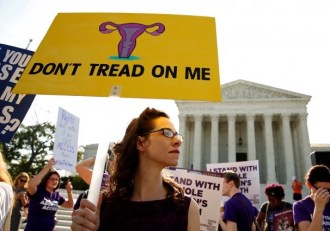 Bobby Jindal did to us. There are women celebrating all over the south. Wendy Davis won in the long run.
The Supreme Court on Monday struck down Texas abortion restrictions that have been widely duplicated in other states, a resounding win for abortion rights advocates in the court’s most important consideration of the controversial issue in 25 years.
Justice Anthony M. Kennedy joined the court’s liberals in the 5 to 3 decision, which said Texas’s arguments that the clinic restrictions were to protect women’s health were cover for making it more difficult to obtain an abortion.
The challenged Texas provisions required doctors who perform abortions at clinics to have admitting privileges at a nearby hospital and said that clinics must meet hospital-like standards of surgical centers.
Similar restrictions have been passed in other states, and officials say they protect patients. But the court’s majority sided with abortion providers and medical associations who said the rules are unnecessary and so expensive or hard to satisfy that they force clinics to close.
As I wrote last week, it was a clear cut case of undue burden and that principle was upheld. The other clear victory was for sensible gun access control. They ruled that Domestic Abusers cannot have guns refusing to open the window to all infractions.
In a 6-2 decision, the Supreme Court on Monday ruled that reckless domestic assaults can be considered misdemeanor crimes to restrict gun ownership. The decision comes as a major victory for women’s rights and domestic violence advocacy groups.
This was an interesting case involving a man in Maine.
The Supreme Court ruled Monday against a Maine resident who argued he should not have been stripped of his ability to possess a firearm despite a prior domestic violence charge in state court.
Stephen Voisine pled guilty to a misdemeanor assault charge in 2004 against a girlfriend. Five years later, he was investigated for shooting a bald eagle and as part of the investigation he turned over a firearm to authorities.
After reviewing his criminal record, Voisine was then charged with unlawful possession of a firearm pursuant to a federal law which makes it unlawful for a person who has been convicted of a “misdemeanor crime of domestic violence” to possess a firearm or ammunition.
Lawyers for Voisine argued that his misdemeanor offense did not rise to the level to trigger the federal law.
The justices agreed to take the case to interpret the reach of a federal statute. But Justice Clarence Thomas during oral arguments was also interested in the 2nd Amendment implications, breaking in to ask a series of questions for the first time in 10 years during oral arguments.
The three-judge panel of the 1st U.S. Circuit Court of Appeals ruled against Voisine and another defendant, holding that the “question before us is a narrow one.”
Congress recognized that “guns and domestic violence are a lethal combination,” the panel said.
Is it really possible that we may see a woman President and Vice President next year? The rally in Cincinnati this morning with Hillary Clinton and Elizabeth Warren held out that tantalizing option.
BB caught me in bed with a cup of coffee this morning. Turn on the TV! There they were and there it was. No more Texas Trap Laws! Two Powerful women thrashing a Republican Bully while the world and Cincinnati cheered them on! It’s a new day! It’s a new dawn! Warren definitely put the B in the Trump Burn. She was amazing and you could see that Hillary loved every minute of it.
Donald Trump is “a small, insecure money-grubber who fights for no one but himself,” Sen. Elizabeth Warren of Massachusetts said Monday morning at the Cincinnati’s Union Terminal, as the possible vice presidential candidate lit up the crowd in her first appearance with Hillary Clinton.
“What kind of a man?” Warren said of the presumptive GOP nominee, with whom she has had drawn out Twitter battles. “A nasty man who will never become president of the United States, because Hillary Clinton will be the next president of the United States.”
Warren, who is popular with many progressives who backed Sen. Bernie Sanders of Vermont in the primary, lobbed attacks at Trump as she stood below the terminal lobby’s large mosaic of of iron-workers, railroad men and farmers. Clinton stood beside her, grinning and clapping.
The joint appearance, and Warren’s enthusiasm for attacking Trump, added to speculation about her likelihood of receiving the nod to join Clinton as the vice presidential candidate on the Democratic ticket. Clinton and her supporters have touted Warren’s endorsement as the former first lady seeks to unite Democrats after a long primary battle with Sanders.
At Union Terminal, Warren punctuated her criticisms of Trump and praise of Clinton by raising her fist and shouting “Yes!” Drawing applause and supportive laughter, Warren turned and clapped wildly for Clinton, then joined the crowd in shouts of “Hillary! Hillary!” and a “Woo!”
“Donald Trump thinks poor, sad little Wall Street brokers need to be free to defraud everyone they want,” said Warren, known for her anti-Wall Street stances. “Hillary fights for us.”
“You know I could do this all day. I really could,” Warren said of attacking Trump. “But I won’t. OK, one more.”
“You just saw why she is considered so terrific, so formidable, because she tells it like it is,” Clinton said of Warren. “I just love how she gets under Donald Trump’s skin.”
These two are a great tag team. I can’t wait to watch the thin, orange-skinned one’s twitter feed. He hates it when women put him in his place.

Hillary Clinton after being introduced by Senator Elizabeth Warren at a campaign rally in Cincinnati, Ohio. REUTERS/Aaron Josefczyk
Warren and Clinton both share a desire to do everything they can to “stop Donald Trump” from becoming president, and, according to a campaign aide, they will both warn of the risks Trump would have on the economy during their event today, according to HASKELL and KREUTZ. “The Republicans underestimated and underestimated and underestimated Donald Trump. Look where that got them. They kept saying, no, no, no, that’s not going to happen, we don’t have to worry about that,” Warren said when she endorsed Clinton. “Donald Trump is a genuine threat to this country. He is a threat economically to this country. But he is a threat to who we are as a people. There is an ugly side to Donald Trump that we all have to stop and think about what’s going on here.” As Clinton and Warren’s relationship continues to evolve and Warren’s stock grows as a possible choice for vice president, it appears the senator is diving head first into helping elect Clinton. She even stopped by Clinton’s Brooklyn presidential campaign headquarters 10 days ago to give staffers a pep talk telling them “Don’t screw this up.”
They didn’t screw it up. It was marvelous, darlin’!
So, there’s some good news!
What’s on your reading and blogging list today?
Monday Reads: The Supremes Speak
Posted: June 20, 2016 Filed under: Afternoon Reads, SCOTUS, U.S. Politics, War on Women, Women's Healthcare, Women's Rights | Tags: Clarence Thomas, SCOTUS, Texas Trap Laws 26 CommentsGood Afternoon!
I’m in an absolute haze from a summer cold that popped up yesterday and sent me directly to bed. I’m trying to write and work right now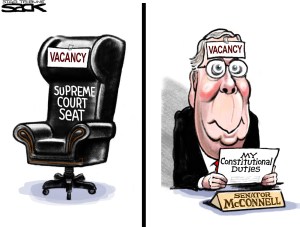 but it’s not easy at all. I want to try to discuss a lot of upcoming things that will be important including the SCOTUS decision on the Texas Trap laws regarding abortion and abortion clinics. These law certainly create an undue burden and they reflect specific religious view rather than medical or biological science. Here’s a few reads to prepare us all because it’s important for all of us to understand this basic constitutional right.
Abortion opponents regularly talk as though no restriction is off the table when it comes to stripping away reproductive rights. And supporters of abortion rights don’t always set them straight. If we don’t know what our established rights are, we can’t defend them. Pro-choicers need to know why abortion is a constitutional right and what boundaries the U.S. Supreme Court has set out to protect it.
1. Abortion is protected by the rights to bodily integrity and to make decisions about family. The Court explained that decades ago.
The 14th Amendment prohibits states from depriving a person of liberty without due process of law. A person has the right to end a pregnancy without undue interference from the government because that right to liberty includes (1) the right to make decisions about family and (2) the right to bodily integrity.
However, in order to portray abortion rights as illegitimate, conservatives like to argue—inaccurately—that the Court legalized abortion in Roe v. Wade by inventing a right to privacy that is not grounded in the Constitution’s actual text.
In the pre-Roe contraception case Griswold v. Connecticut (1965), the Court did hold that “penumbras, formed by emanations” or various interpretations of the First, Third, Fourth, Fifth, and Ninth Amendments protect a right to privacy. But in deciding Roe, the Warren court located the right to privacy in the 14th Amendment’s explicit protection of the right to liberty. Regardless, the Court’s understanding of the rights that protect reproductive freedom expanded beyond just privacy decades ago.
Privacy is barely mentioned in Planned Parenthood v. Casey, which established the current law governing abortion rights more than 20 years ago. “The controlling word in the cases before us is ‘liberty,’” the decision explained. It was settled law prior to Roe that liberty includes “the right to make family decisions and the right to physical autonomy.”
Privacy is also a constitutional right, and it was indeed violated by the laws at issue in Roe and its companion case,Doe v. Bolton. Those laws required a woman seeking an abortion to share her reasons for wanting the procedure with legal or medical authorities to have any hope of receiving legal abortion care. However, the law and discourse around privacy at the time of Roe implied a woman should be permitted to use contraception or end a pregnancy because the state should not interfere in decisions made in secret with the permission of her doctor, husband, father, pastor, or others. Casey instead properly recognized that the 14th Amendment protects a person’s right to control her body and destiny.
So why has the idea persisted that all we’ve got is a privacy right made up out of thin air? A counterintuitive and less textually based right serves abortion opponents, but abortion rights advocates also have a history of telling us abortion restrictions are primarily a threat to privacy. As William Saletan documented in Bearing Right: How Conservatives Won the War on Abortion, in the run-up to Casey, pro-choice leaders emphasized privacy on the advice of pollsters and political consultants to appeal to anti-government, anti-welfare, anti-tax, and anti-integration sentiments. While reproductive rights lawyers argued to the Supreme Court that the Constitution’s protection of autonomy, bodily integrity, and equality protected abortion access, outside of court pro-choice leaders told the public the right at stake was privacy. But, ultimately, the Casey decision provided a much fuller discussion of why abortion is constitutionally protected by rights beyond privacy.
Abortion is protected by the due process clauses of the Fifth Amendment (which restricts the federal government) and the 14th Amendment (which was added to the Constitution to restrict the states). As Casey explained, “It is a promise of the Constitution that there is a realm of personal liberty which the government may not enter.” Using the force of law to compel a person to use her body against her will to bring a pregnancy to term is a violation of her physical autonomy and decisional freedom—which the Constitution does not allow.
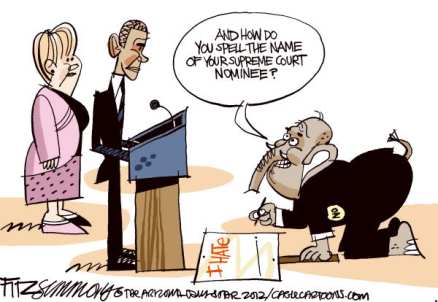 Follow the link to read about the other two basic rights that include:” 2. Any pre-viability ban is unconstitutional. Period.” and “3. Casey‘s “undue burden” standard is a meaningful protection of abortion rights when courts apply it properly.”
There’s no doubt that the Texas Trap Law creates an “undue” burden. Clinic closures have left the few remaining clinics overwhelmed.
The war on abortion access in Texas has already fundamentally shifted the landscape of women’s lives in the state. Now, the fallout continues: The closure of Planned Parenthood (PP) clinics in the state—which once served as primary sources of reproductive health care for women there—has left the few clinics remaining in west Texas underfunded, understaffed, and overwhelmed by demand.
According to new research, 60 percent of women receiving a low salary who were of reproductive age accessed health care through PP before the cuts and defunding which took place in 2013. The majority of those patients have since been directed to Texas Tech University and Midland County Health Services (MCHS) after PP’s clinics in west Texas closed—increasing demand at an overwhelming rate for their capacity to provide services.
“There are women [who] need these services but can’t afford them and we see as many as we can,” Michael Austin, director of MCHS, told Women’s Health Policy Report. “But the state program to help these folks along has basically evaporated. So I’m afraid there are probably a lot of folks flying under the radar who need care and aren’t getting it.” Austin pointed to the challenges of seeking funding in a state that has “eliminated or severely messed up” many of their programs which provide reproductive health care to women.
In 2011, the Texas State Assembly passed legislation which blocked funding to women’s health clinics, including Planned Parenthood, and cut the state’s family planning budget by two-thirds. Two years later, the draconian anti-abortion bill known as HB2 was signed into law by Governor Rick Perry, putting in place numerous obstacles meant to shutter clinics and restrict women’s access to safe and legal abortion. HB2 requires that abortion providers have admitting privileges at a local hospital and clinics are licensed ambulatory centers. It also bans surgical abortion after 20 weeks and medication abortion after seven. (Medication abortion is the most cost- and time-effective abortion procedure.)
HB2’s impact was immediate and drastic. 82 percent of family planning clinics closed. The number of abortion practitioners decreased by over 75 percent. Over half of the clinics performing abortion closed, which in turn drastically increased the time it would take for women to make an appointment to 28 days— essentially rendering the option of medication abortion moot. When it comes to clinics, Texas is in crisis.
The Supreme Court has declined to hear the Connecticut law banning assault weapon as well as the challenge to other state laws. This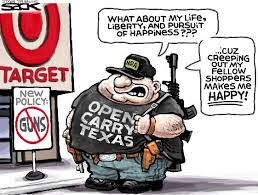 leaves the bans in place.
SCOTUS will look at certain key rights of jailed inmates that have illegal immigration status.
The Supreme Court announced Monday that it will take up a case exploring when immigrants detained solely for immigration violations have the right to be released from jail.
The justices agreed to consider a federal appeals court decision that essentially found detained immigrants were entitled to a bond hearing after six months in custody and every six months thereafter.
The high court’s announcement comes as immigrant rights advocates are awaiting a Supreme Court decision on the legality of President Barack Obama’s executive actions granting quasi-legal status and work permits to millions of immigrants who entered or stayed in the U.S. illegally.
In that case, the Obama administration is aligned with most immigrants rights groups. However, in the case the court said Monday that it would take up, the Obama administration is pressing for fewer rights for detained immigrants. In fact, the administration is asking the justices to overturn the 9th Circuit Court of Appeals ruling that found immigrants have the right to regular review of their detention.
The newly-accepted case, Jennings v. Rodriguez, could also explore when immigrants accused of ties to terrorism have to be released if authorities are having difficulty deporting them.
 SCOTUS blog has some basic information on the remaining cases in the docket. Here’s a few of the remaining 13.
Between tomorrow morning, when the Justices will take the bench at ten o’clock, and the end of June, the Court is expected to issue thirteen rulings in cases involving everything from tribal-court jurisdiction to abortion, immigration, and the scope of federal laws prohibiting political corruption. Here are summaries of each pending case:
Dollar General Stores v. Mississippi Band of Choctaw Indians (argued December 7, 2015). This case stems from accusations by a thirteen-year-old member of the tribe that a manager at a Dollar General store within the tribe’s reservation had sexually molested him while the boy was interning at the store. The child and his parents filed a lawsuit against the manager and the store in tribal court, arguing that the store was liable for the manager’s conduct. The issue before the Court is whether the tribal court has jurisdiction over tort claims against defendants, like Dollar General, who are not members of the tribe.
Fisher v. University of Texas at Austin (argued December 9, 2015). This case, a challenge to the university’s consideration of race in its undergraduate admissions process, is on its second trip to the Court. In 2013, the Court sent the case back to the lower courts for a more critical look at whether the university really needed to consider race to achieve a diverse student body. After the Fifth Circuit once again upheld the policy, the Court agreed to weigh in. Unlike some of the Court’s other high-profile cases this Term, no one expects the Court to deadlock: Justice Elena Kagan is not participating, which in the wake of Justice Antonin Scalia’s death leaves the Court with just seven Justices to decide the case.
Utah v. Strieff (argued February 22, 2016). When a police officer stops a pedestrian in violation of the law, asks him for identification, discovers that there is a traffic warrant for his arrest, arrests him, and in the process of searching him discovers drug paraphernalia and methamphetamines, can the evidence found in the search of the pedestrian be used against him? Edward Strieff argues that it cannot: because the police officer’s stop was illegal, then anything obtained as a result of the stop is also tainted. The state, on the other hand, contends that the evidence should be admitted because it resulted from the lawful warrant for his arrest, rather than the illegal stop.
Taylor v. United States (argued February 23, 2016). The petitioner in this case, David Taylor, was part of a Virginia gang that robbed drug dealers. The two robberies that led to this case, however, did not yield any drugs – only cellphones, jewelry, and a small amount of money. Taylor was indicted on federal charges that he had violated the Hobbs Act, which punishes robberies and extortion but applies only when the defendant “obstructs, delays, or affects commerce or the movement of any article or commodity in commerce.” The question before the Court is whether the federal government is required to prove facts to show that the defendant’s conduct actually affects commerce.
Voisine v. United States (argued February 29, 2016). Stephen Voisine and William Armstrong, the other petitioner in this case, both pleaded guilty in state court to misdemeanor assaults on their respective domestic partners. Several years later, each man was charged with violating a federal law that prohibits the possession of firearms and ammunition by individuals who have previously been convicted of a misdemeanor crime of domestic violence. Voisine and Armstrong contend their state convictions do not automatically qualify as misdemeanor crimes of domestic violence because the state-law provisions can be violated by conduct that is merely reckless, rather than intentional.
Whole Woman’s Health v. Hellerstedt (argued March 2, 2016). This is a challenge to the constitutionality of two provisions of a Texas law regulating abortion in that state. One provision requires doctors who perform abortions to have privileges to admit patients to a local hospital; the other requires abortion clinics to have facilities that are comparable to outpatient surgical centers. Texas contends that these new laws are constitutional because they were intended to protect women’s health, while the challengers argue that the law was actually intended to close most clinics and therefore limit women’s access to abortions.
RJR Nabisco v. The European Community (argued March 21, 2016). The issue in this case is whether and to what extent the Racketeer Influenced and Corrupt Organizations Act (RICO), a 1970 law that was originally enacted to target organized crime, applies outside the United States. The European Community filed a lawsuit in the United States, seeking to hold RJR liable for what it says is the company’s role in an international money-laundering plot that harmed European countries. RJR counters that nothing in the law suggests that Congress intended it to apply to a situation like this. Justice Samuel Alito is almost certainly writing the Court’s opinion in this case, because he is the only Justice who has not yet written for the Court’s March sitting; based on the oral argument, that could bode well for RJR.
United States v. Texas (argued April 18, 2016). This case is a challenge to an Obama administration policy, announced in November 2014, that would allow some undocumented immigrants to apply to stay in the country and work legally for three years. Before the policy could go into effect, Texas and a large group of other states went to court to block its implementation, arguing that the administration lacks the authority to issue a policy like this. But before the Supreme Court can weigh in on that question, it will also have to agree that the states have the legal right, known as “standing,” to challenge the policy at all; the lower courts ruled that they did, because at least Texas would incur additional costs from the undocumented immigrants who would become eligible for driver’s licenses if the policy goes into effect.
Birchfield v. North Dakota (argued April 20, 2016). Twelve states and the National Park Service impose criminal penalties on suspected drunk drivers who refuse to submit to testing to measure their blood-alcohol levels. The question before the Court is whether those penalties violate the Fourth Amendment, which only allows police to “search” someone if they have a warrant or one of a handful of exceptions to the warrant requirement applies. Three drivers from North Dakota and Minnesota argue that neither of those conditions is met, and so the laws must fall.
Encino Motorcars v. Navarro (argued April 20, 2016). This case requires the Court to weigh in on the interpretation of the Fair Labor Standards Act, which generally requires employers to pay overtime to employees who work for more than forty hours in a week but also contains a variety of exceptions – including for a salesman whose primary job is selling or servicing cars. The respondents in this case are service advisors at a car dealership, who argue that they are not included in the exemption and are therefore entitled to overtime.
You can check out the rest on the link to SCOTUS blog. So, there’s a lot of interesting things coming down the pipe. We’ll definitely be following a lot of them.
There’s one piece of SCOTUS gossip that you might be interested in today. Check out this lede by David Badash: “DC Insider Report SCOTUS Justice Clarence Thomas Thinking of Retiring Throws Twitter Into Frenzy.”
The Washington Examiner Sunday afternoon posted a piece by DC insider columnist Paul Bedard that claims uber-conservative Supreme Court Justice Clarence Thomas “is mulling retirement after the presidential election, according to court watchers.” Those “court watchers” of course are unnamed, so the actual source of the claim is unknown.
It could be true, it could be false, but the implications of course are tremendous. Assuming Republicans in the Senate successfully keeps their vow to not confirm any SCOTUS justice nominated by President Obama, and wait until the next president takes office, this would mean the next president would automatically nominate not one but two justices to the nation’s top court, controlling its destiny for decades.
So naturally, Clarence Thomas began trending on Twitter.
Follow the link for the Twitter Frenzy.
What’s on your reading and blogging list today?
h/t to Delphyne

 peej
peej Carissa
 bostonboomer
 dakinikat
 ecocatwoman
 jjlo
jjlo mablue2
 Mama Lopez
 peggysue22
 quixote
 skydancingguestblogger
 Mona (aka Wonk the Vote)



 Sky Dancing
Recent Comments