
Breaking News: DOMA Falls
Posted: June 26, 2013 Filed under: Marriage Equality, SCOTUS, social justice | Tags: DOMA, marriage equality, SCOTUS 59 Comments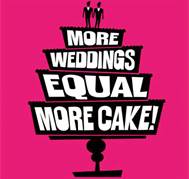 Even though SCOTUS did not rule on the broader issue of marriage equality, DOMA has fallen. The usual Klan of Religious Freaks dissented. Justice Anthony Kennedy was the swing vote.
The Supreme Court issued rulings on two highly-anticipated cases on gay marriage today. By 5-4, .
In a separate ruling, it declined to take on the broader issue of gay marriage. The court to bring the case to the court.
NPR’s Carrie Johnson explains the Prop. 8 ruling: “By a holding of 5-4 with Chief Justice John Roberts in the majority, the Supreme Court rules the petitioners lack standing so the court avoids the underlying issues, remands and wipes away the decision by 9th Circuit Court of appeals, which means for now the lower court ruling invalidating California’s Prop. 8 stands.”
That means same-sex marriages in California may resume, but the ruling does not have a broader implication across the country.
The Defense of Marriage Act case is simpler. As SCOTUSblog reports, the court struck down the federal law because it denies same-sex couples the “equal liberty” guaranteed by the Fifth Amendment.
The 1996 Defense of Marriage Act, or DOMA, was signed into law by President Bill Clinton, barring federal recognition of same-sex marriages for purposes such as Social Security survivors’ benefits, insurance benefits, immigration and tax filing.
Section 3 of the law defines marriage as “a legal union between one man and one woman as husband and wife” and a spouse as “a person of the opposite sex who is a husband or a wife.” That provision had been struck down by eight lower courts before the Supreme Court’s 5-4 ruling in United States v. Windsor settled the matter for good.
This decision means that legally married same-sex couples are now entitled to the same federal benefits as married opposite sex couples.
The majority opinion was written by Justice Anthony Kennedy and joined by Justices Ruth Bader Ginsburg, Stephen Breyer, Sonia Sotomayor and Elena Kagan. Chief Justice John Roberts and Justices Antonin Scalia, Clarence Thomas and Samuel Alito dissented.
SCOTUS Blog has some analysis here.
Cutting to the marquee issue – whether DOMA is constitutional – the Court acknowledged that Congress can pass laws that affect marriage in limited ways, but in its view DOMA goes much further than that: it applies to over a thousand federal laws and all federal regulations. (In this week’s version of “Supreme Court Justices: They’re Just Like Us,” the version of the opinion that was distributed to reporters misspells “statutes” as “statues,” suggesting that perhaps someone was up late last night finishing up the draft.) But states, rather than the federal government, have historically been responsible for regulating and defining “marriage” – establishing their own (and sometimes different) minimum ages for marriage, for example. In recent years, the Court explained, some states have decided to allow same-sex couples to marry, giving them the same protection and dignity that opposite-sex couples get from marriage. But despite the traditional role of the states in regulating marriage, the Court reasoned, DOMA discriminates against same-sex couples by preventing the federal government from recognizing their marriages, and it does so to express disapproval of state-sanctioned same-sex marriage.
As a result of today’s decision, same-sex couples who are legally married must now be treated the same under federal law as married opposite-sex couples. That conclusion (and the steps that the Court took to get there) drew the ire of the Court’s four more conservative Justices – Chief Justice John Roberts and Justices Scalia, Thomas, and Alito – who filed three separate dissenting opinions totaling nearly fifty pages.
Justice Antonin Scalia read from the bench to demonstrate his severe disagreement with the ruling. The opinion is an “instant classic” that uses Scalia-isms like “jaw-dropping” and “rootless and shifting” to describe the Court’s rationales; at one point, he indicates that “[t]he sum of all the Court’s nonspecific hand-waving is that this law is invalid (maybe on substantive-due-process grounds, and perhaps with some amorphous federalism component playing a role).” Although the four dissenters did not completely agree on everything, they were united in their belief that DOMA is constitutional.
Here, in summary, is what the Court did — and did not do — on same-sex marriage on the final day of its 2012-13 Term:
** It ruled unconstitutional the Defense of Marriage Act’s Section 3, which defines marriage for purposes of one thousand federal laws and multitudes of official regulations as the union of one man and one woman only — a definition that excludes probably millions of already-married same-sex couples from any of those benefits or opportunities. “DOMA,” the Court majority said caustically, ”writes inequality into the entire U.S. Code.”
** It decided that sponsors of California’s “Proposition 8,” adopted by the state’s voters in an election almost five years ago, did not have a legal right to be in the Supreme Court or in a federal appeals court to try to defend that measure from constitutional attack. That is likely to have the early impact of putting into final effect a San Francisco federal judge’s 2010 decision striking down Proposition 8 under the U.S. Constitution. Some 18,000 California same-sex couples already had been married when they had a brief chance to do so as the issue developed in that state, but now millions are likely to gain the right to marry when the judge’s ruling is implemented by state officials. Happening perhaps in just a few weeks, that would make California the fourteenth — and largest — state to permit such marriages (along with Washington, D.C.).
** It declared, in quite explicit terms, that it was not deciding at this point whether the Constitution guarantees gays and lesbians a right to marry or whether the Constitution forbids states’ bans on such marriages. That will leave the promoters of marriage equality to continue with their efforts, in state legislatures and in lower courts, to try to win the right one more state at a time. The Court itself has a chance to take up that basic issue, as early as tomorrow, in a pair of new cases — from Arizona and Nevada — but it may not yet be ready to do so.
** And the Court did not spell out a new constitutional test for courts to use in judging new laws or other government actions that treat homosexuals less favorably than other people in similar settings and factual contexts. Although DOMA’s benefits ban was nullified under the Fifth Amendment’s guarantee of legal equality, the majority opinion did not sort out explicitly which level of judicial review — in escalating toughness — is supposed to be used in gay rights cases. In fact, the test that was applied this time appeared to be notably indistinct.
With the demise of the Defense of Marriage Act’s benefits ban in Section 3, for legally married gays and lesbians, the Court immediately — even if inadvertently — gave rise to a situation in which couples living in states that will not allow them to marry because they are homosexuals will still be able to qualify for federal benefits, many of which are handed out or managed by state governments.
But the ruling did not do anything explicitly about another section of DOMA — Section 2, which gives the states the right to refuse to recognize gay marriages performed in other states. That thus raised the prospect that a same-sex couple married in one of the states now allowing such unions could face obstacles to their marital rights when they moved into states that still do not recognize their unions. This might be a particular problem for already-married gay couples serving in the military, who often have to move from state to state.
Although Chief Justice John G. Roberts, Jr., dissented from the ruling in the DOMA case, he went to special lengths in his opinion in that case to apply the states’ rights language that Justice Anthony M. Kennedy’s majority opinion had employed in justifying the nullification of Section 3.
Roberts wrote, borrowing words from the Kennedy opinion: “While ‘the state’s power in defining the marital relation is of central relevance’ to the majority’s decision to strike down DOMA here, that power will come into play on the other side of the board in future cases about the constitutionality of state marriage definitions. So too will be concerns for state diversity and sovereignty that weighs against DOMA’s constitutionality in this case.”
The Court, the Chief Justice added, “may in the future have to resolve challenges to state marriage definitions affecting same-sex couples.” His remarks about the majority arguments on states’ rights in this field seemed to be telegraphing his views on the basic definition of marriage — and an implied suggestion that lower courts might be interested in following.
At least in one regard, we are closer to the reality of liberty and justice for all.
Denying Southern Reality and Other Acts of a Politically Motivated SCOTUS
Posted: June 25, 2013 Filed under: just because | Tags: SCOTUS, Voting Rights Act 12 Comments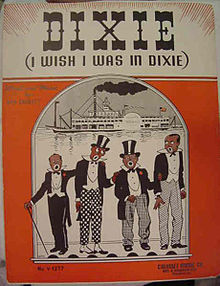 I think y’all know by now that I was raised culturally southern. I was born in the South. I live in the deep South and have for nearly two decades. We’ve been regaled recently with the news that Southern Cuisine maven Paula Dean still longs for the good ol’ days of smiling black servants or slaves. We ‘ve heard Haley Barbor talk up the old Southern institutions that were the institutional face of the KKK as being positive community builders. I still can’t believe that Mississippi doesn’t celebrate Memorial Day because it is a “Yankee Holiday” and enshrines the Confederate version by declaring April “Confederate Heritage Month”. But, you do not need these folksy stories of the obvious racism in the South to understand why today’s SCOTUS decision is a complete sham. Scalia has said that the Voting Rights Act is a “racial entitlement” in the past. It is not. It protects disenfranchised voter’s most basic right in a democracy. This is another example of the hypocrisy of the ‘conservative’ wing of the court. This is pure judicial activism.
Here is a list of things from Bader Ginsberg’s scathing dissent that lets you know exactly why the VRA is still necessary and is about protecting rights not creating entitlements.
Ginsburg’s dissent also rattled off these eight examples of race-based voter discrimination in recent history:
- “In 1995, Mississippi sought to reenact a dual voter registration system, ‘which was initially enacted in 1892 to disenfranchise Black voters,’ and for that reason was struck down by a federal court in 1987.”
- “Following the 2000 Census, the City of Albany, Georgia, proposed a redistricting plan that DOJ found to be ‘designed with the purpose to limit and retrogress the increased black voting strength…in the city as a whole.'”
- “In 2001, the mayor and all-white five-member Board of Aldermen of Kilmichael, Mississippi, abruptly canceled the town’s election after ‘an unprecedented number’ of AfricanAmerican candidates announced they were running for office. DOJ required an election, and the town elected its first black mayor and three black aldermen.”
- “In 2006, the court found that Texas’ attempt to redraw a congressional district to reduce the strength of Latino voters bore ‘the mark of intentional discrimination that could give rise to an equal protection violation,’ and ordered the district redrawn in compliance with the VRA…In response, Texas sought to undermine this Court’s order by curtailing early voting in the district, but was blocked by an action to enforce the §5 pre-clearance requirement.”
- “In 2003, after African-Americans won a majority of the seats on the school board for the first time in history, Charleston County, South Carolina, proposed an at-large voting mechanism for the board. The proposal, made without consulting any of the African-American members of the school board, was found to be an ‘exact replica’ of an earlier voting scheme that, a federal court had determined, violated the VRA…DOJ invoked §5 to block the proposal.”
- “In 1993, the City of Millen, Georgia, proposed to delay the election in a majority-black district by two years, leaving that district without representation on the city council while the neighboring majority white district would have three representatives…DOJ blocked the proposal. The county then sought to move a polling place from a predominantly black neighborhood in the city to an inaccessible location in a predominantly white neighborhood outside city limits.”
- “In 2004, Waller County, Texas, threatened to prosecute two black students after they announced their intention to run for office. The county then attempted to reduce the avail ability of early voting in that election at polling places near a historically black university.”
- In 1990, Dallas County, Alabama, whose county seat is the City of Selma, sought to purge its voter rolls of many black voters. DOJ rejected the purge as discriminatory, noting that it would have disqualified many citizens from voting ‘simply because they failed to pick up or return a voter update form, when there was no valid requirement that they do so.'”
To those who will be distraught, outraged, or fearful, the essential question at stake in the Court’s decision – and in the continuing vitality of Section 4 — is whether we believe racial discrimination in voting still exists in the South. The question being framed this way, the Court’s decision today will appear to be, at best, a denial of reality and a reflection of a naïve “post-racial” view that in the Obama era, racial discrimination in voting has ended. Justice Sotomayor, at oral argument, perfectly reflected this perspective on what the decision represents when she posed this pointed question to the VRA’s challengers: “Do you think that racial discrimination in voting has ended, that there is none anywhere?” The answer to that question must be no. From this vantage point, then, as long as racial discrimination in voting still does take place at all in the South, Section 4 of the VRA – the part the Court invalidated – remains not just justifiable, but essential.
In addition, to many people, the VRA symbolizes protection of the crown jewel of rights, the right of access to the ballot box. For those who know the history, this right was born from the blood and the bodies of all those who had been given the last full measure of their devotion to secure full access for all to the ballot box – those beaten on the bridge from Selma, Alabama in 1965, the three civil rights workers lynched in the Mississippi summer of 1964, and many others. How can the Court find unconstitutional an Act that plays any role at all in ensuring political equality regarding this most sacred right? And why should the Court second-guess Congress on these issues?
Yet to others, including the Court’s pivotal actor, Justice Kennedy, the essential question at stake is whether our political system is frozen in place on issues concerning race. Do our political institutions and culture have the capacity to recognize that dramatic changes at the intersection of race and voting have taken place over recent decades? Section 4 was created in 1965 as a short-term measure for five years; in initially upholding that system, the Court called it “an uncommon exercise of congressional power” justified by the “exceptional circumstances” of the massive disfranchisement of black voters (and many poor whites) that existed when the VRA was enacted. In 1970, Congress extended this system for another five years; in 1975, for another eight; and in 1982, for twenty-five more years. Then, in 2006, in the provision the Court struck down, Congress re-authorized this system for another twenty-five years, until 2031. Thus we moved from a five-year regime in 1965 for exceptional circumstances to a sixty-six-year regime that continues to single out nine states (and fifty-three other counties) for unique federal control.
But of even more symbolic significance, from this perspective: these areas all became covered because of their voting practices in 1964 or, at the latest, 1975 – nearly forty years ago. And these are the same areas, and nearly the only areas, that have remained covered ever since. Though the Act formally creates a mechanism to permit these areas to prove their current entitlement to be relieved of coverage, this part has never been a meaningful way for the Act to unwind itself from within: fewer than one percent of all the counties originally covered that have significant minority populations have ever emerged from the Act. From this vantage point, the question the case was “about,” then, is this: how can Congress act as if nothing significant enough has changed in the last forty years to justify any meaningful change at all in Section 4? Even if areas of discriminatory voting practices remain, surely they cannot mirror so exactly the areas of which this was true forty or fifty years ago.
From this starting place, Section 4 symbolizes that the issue of race remains so charged that our political system lacks the capacity to move forward to any extent at all. As Justice Kennedy put it at the argument: Congress “should use criteria that are relevant to the existing [conditions] – and Congress just didn’t have the time or the energy to do this; it just re-enacted it.” And despite the popular image that Section 4 is about protecting access to the ballot box, Section 4 long ago in practice became more about racial redistricting than access to the ballot box. While the Justice Department in recent decades blocked access changes on average fewer than twice a year, it blocked redistrictings nearly fourteen times as often. Indeed, in the 2006 Act itself, Congress itself did not rely primarily on ballot-box access problems to justify renewing Section 4, but on issues like redistricting. If Section 4 is “about” access to the ballot box in the public imagination, to the Court majority, I suspect, Section 4 is about racial redistricting.
Can this decision bring about any good? Well, it is possible because it should be clear now there is a total Republican assault on modernity and a world where white men don’t get to tell every one else what to do. The last election showed that the nation’s minorities and women were not about to let that happen again.
On its face, this looks like a big victory for Republicans. But is it really? I suspect it will turn out to be a poisoned chalice. Many of the GOP’s current problems stem from the fact that it is overly beholden to its white, Southern base, at a time when the country is rapidly becoming more racially diverse. In order to expand its base of power beyond the House of Representatives, the GOP needs to expand its appeal to minority voters. As the ongoing battle over immigration reform demonstrates, that process is going poorly and looks like it will be very difficult.
The Supreme Court’s decision to strike down a central provision of the Voting Rights Act will make it easier for Republicans to hold and expand their power in those mainly Southern states. That will, in turn, make it easier for them to hold the House. But it will also intensify the Southern captivity of the GOP, thereby making it harder for Republicans to broaden their appeal and win back the White House.
There is only so long that these neoconfederates can continue to push their backwards agendas through the federal government. They need to be thrown out of statehouses too. This seems to me an odd continuation of the Civil War. Nixon’s Southern Strategy will divide this country for decades to come. The hypocrisy of judicial overreach in this decision and most others that are penned by Scalia, Alito, Thomas, or Kennedy just oozes political scamming and it makes us all look bad. This is just another embarrassing attempt to stop the future. Future Courts will make hay of it.
Friday Reads
Posted: June 14, 2013 Filed under: morning reads | Tags: free speech, homophobia, immigration, Marco Rubio, SCOTUS 32 Comments
Good Morning!
So, I am trying to get with it again. Seems like it’s always something. Grades to get in. Issues with my elderly father. Daughters so busy that I seemed to have slipped their minds. Doctor’s appointments. I am going to try to take this weekend to catch up with reality. I should also make a point of going out and enjoying my home city which is one of the great places of this country.
Speaking of reality, there is so much weirdness around the issue of immigration these days that I thought I’d post on it. I live in what can only be described as the melting pot of all the melting pots in the country. It is what makes us unique in the world. We’ve got a unique cuisine, culture, and music because we just soaked it all in from every one else and put it out there to grow. But, there’s a lot of people that are scared of that kind of thing. Just smell that Gumbo! Listen to that Jazz! Embrace the dancers of a second line! None of that would exist without the blending of Africans, Caribbeans, Americans, and all kinds of Europeans!
In the land of tabloid terrors, immigrants loom large. Flick through the pages or online comments of some of the racier newspapers, and you’ll see immigrants being accused of stealing jobs or, if not that, of being workshy and “scrounging benefits”.
Such views may be at the extreme end of the spectrum, but they do seem to reflect a degree of public ambivalence, and even hostility, towards immigrants in a number of OECD countries. Anecdotal evidence is not hard to find. A columnist from The Economist reported this encounter between a British legislator and one of his constituents, Phil: “‘I’m not a racist,’ says Phil, an unemployed resident of the tough Greenwich estate in Ipswich. ‘But we’ve got to do something about them.’”
Surveys offer further evidence: For example, a 2011 study in five European countries and the United States found that at least 40% of respondents in each country regarded immigration as “more of a problem than an opportunity”. More than half the respondents in each country also agreed with the proposition that immigrants were a burden on social services. This sense that immigrants are living off the state appears to be widespread. But is it true?
New research from the OECD indicates that it’s not. In general across OECD countries, the amount that immigrants pay to the state in the form of taxes is more or less balanced by what they get back in benefits. Even where immigrants do have an impact on the public purse – a “fiscal impact” – it amounts to more than 0.5% of GDP in only ten OECD countries, and in those it’s more likely to be positive than negative. In sum, says the report, when it comes to their fiscal impact, “immigrants are pretty much like the rest of the population”.
The extent to which this finding holds true across OECD countries is striking, although there are naturally some variations. Where these exist, they largely reflect the nature of the immigrants who arrive in each country. For example, countries like Australia and New Zealand rely heavily on selective entry, and so attract a lot of relatively young and well-educated immigrants. Other countries, such as in northern Europe, have higher levels of humanitarian immigration, such as refugees and asylum-seekers.
That said, there’s been a general push in many countries in recent years to attract better educated immigrants, in part because of the economic value of their skills but also because such policies attract less public resistance. For example, a survey in the United Kingdom, where resistance to immigration is relatively high, reported that 64% of respondents wanted to reduce immigration of low-skilled workers but only 32% wanted fewer high-skilled immigrants. Indeed, one objection that’s regularly raised to lower-skilled immigrants is the fear that they will live off state benefits.
But, here again, the OECD report offers some perhaps surprising insights. It indicates that low-skilled migrants – like migrants in general – are neither a major drain nor gain on the public purse. Indeed, low-skilled immigrants are less likely to have a negative impact than equivalent locals.
So what connects homophobia, Marco Rubio and US immigration Policy? Basically, the connection is outright discrimination for any GLBT who wants to be an American. Rubio has threatened to leave negotiations on immigration if any GBLT rights are included. He also says it should be legal to fire any one for their sexual orientation.
Florida Republican Sen. Marco Rubio, a co-author and key proponent of the Senate immigration bill, said he will revoke his support if an amendment is added that allows gay Americans to petition for same-sex spouses living abroad to secure a green card.
“If this bill has in it something that gives gay couples immigration rights and so forth, it kills the bill. I’m done,” Rubio said Thursday during an interview on the Andrea Tantaros Show. “I’m off it, and I’ve said that repeatedly. I don’t think that’s going to happen and it shouldn’t happen. This is already a difficult enough issue as it is.”
The amendment, introduced by Vermont Democratic Sen. Patrick Leahy, would grant green cards to foreign partners of gay Americans. Leahy originally introduced the measure during the Senate Judiciary Committee markup of the bill, but he withdrew it under pressure from Republican lawmakers who said it would reduce the chance of the bill passing.
Why does he think that firing any one for sexual orientation is also on target?
Sen. Marco Rubio (R-FL), who is touted as a top GOP presidential prospect in 2016, thinks it should be legal to fire someone for their sexual orientation.
ThinkProgress spoke with the Florida Senator at the opening luncheon of the annual Faith and Freedom Forum on Thursday and asked him about the Employment Non-Discrimination Act (ENDA), a bill to make discrimination against LGBT individuals illegal across the country.
Though Rubio bristles at the notion of being called a “bigot,” he showed no willingness to help protect LGBT workers from discrimination. “I’m not for any special protections based on orientation,” Rubio told ThinkProgress.
KEYES: The Senate this summer is going to be taking up the Employment Non-Discrimination Act which makes it illegal to fire someone for being gay. Do you know if you’ll be supporting that?
RUBIO: I haven’t read the legislation. By and large I think all Americans should be protected but I’m not for any special protections based on orientation.
KEYES: What about on race or gender?
RUBIO: Well that’s established law.
KEYES: But not for sexual orientation?
Watch the video at the link for his astoundingly bigoted answer.
The US Congress has just been told that Syria has used chemical weapons on its rebels. What does this mean for the US and for our allies?
The Obama administration, concluding that the troops of President Bashar al-Assad of Syria have used chemical weapons against rebel forces in his country’s civil war, has decided to begin supplying the rebels for the first time with small arms and ammunition, according to American officials.
The officials held out the possibility that the assistance, coordinated by the Central Intelligence Agency, could include antitank weapons, but they said that for now supplying the antiaircraft weapons that rebel commanders have said they sorely need is not under consideration.
Supplying weapons to the rebels has been a long-sought goal of advocates of a more aggressive American response to the Syrian civil war. A proposal made last year by David H. Petraeus, then the director of the C.I.A., and backed by the State Department and the Pentagon to supply weapons was rejected by the White House because of President Obama’s deep reluctance to be drawn into another war in the Middle East.
But even with the decision to supply lethal aid, the Obama administration remains deeply divided about whether to take more forceful action to try to quell the fighting, which has killed more than 90,000 people over more than two years. Many in the American government believe that the military balance has tilted so far against the rebels in recent months that American shipments of arms to select groups may be too little, too late.
Some senior State Department officials have been pushing for a more aggressive military response, including airstrikes to hit the primary landing strips that they said the Assad government uses to launch the chemical weapons attacks, ferry troops around the country and receive shipments of arms from Iran.
But White House officials remain wary, and on Thursday Benjamin J. Rhodes, one of Mr. Obama’s top foreign policy advisers, all but ruled out the imposition of a no-fly zone and indicated that no decision had been made on other military actions.
Mr. Obama declared last August that the use of chemical weapons by the Syrian government would cross a “red line” that would prompt a more resolute American response.
 So what does the latest Supreme Court Decision on free speech mean? Oddly enough, it means no protests in their front yard!
The Supreme Court has come up with a new regulation banning demonstrations on its grounds.
The rule approved Thursday comes two days after a broader anti-demonstration law was declared unconstitutional.
The new rule bans activities such as picketing, speech-making, marching or vigils. It says “casual use” by visitors or tourists is not banned.
That may be a way of addressing the concern posed by a federal judge who threw out the law barring processions and expressive banners on the Supreme Court grounds.
The judge said the law was so broad that it could criminalize preschool students parading on their first field trip to the high court.
The president of the Rutherford Institute, which challenged the law on a protester’s behalf, calls the new rule “repugnant” to the Constitution.
The Supreme Court on Thursday issued a new regulation barring most demonstrations on the plaza in front of the courthouse.
The regulation did not significantly alter the court’s longstanding restrictions on protests on its plaza. It appeared, rather, to be a reaction to a decision issued Tuesday by a federal judge, which narrowed the applicability of a 1949 federal law barring “processions or assemblages” or the display of “a flag, banner or device designed or adapted to bring into public notice a party, organization or movement” in the Supreme Court building or on its grounds.
The law was challenged by Harold Hodge Jr., a student from Maryland who was arrested in 2011 on the Supreme Court plaza for wearing a large sign protesting police mistreatment of blacks and Hispanics.
Lawyers representing the Supreme Court’s marshal told the judge hearing Mr. Hodge’s case that the law was needed to allow “unimpeded ingress and egress of visitors to the court” and to preserve “the appearance of the court as a body not swayed by external influence.”
But Judge Beryl A. Howell of Federal District Court in Washington ruled for Mr. Hodge. “The absolute prohibition on expressive activity in the statute is unreasonable, substantially overbroad and irreconcilable with the First Amendment,” she wrote, adding that the law was “unconstitutional and void as applied to the Supreme Court plaza.”
The Supreme Court addressed the constitutionality of the law in 1983, in United States v. Grace, saying it could not be applied to demonstrations on the public sidewalks around the court.
On the grand plaza in front of the courthouse, however, Supreme Court police have been known to order visitors to remove buttons making political statements.
The regulation issued Thursday, which the court said was “approved by the chief justice of the United States,” requires visitors to “maintain suitable order and decorum within the Supreme Court building and grounds.” It bars demonstrations, which it defines as “picketing, speech making, marching, holding vigils or religious services and all other like forms of conduct that involve the communication or expression of views or grievances, engaged in by one or more persons, the conduct of which is reasonably likely to draw a crowd or onlookers.”
So, that is my offering this morning. I’m headed to the doctor but will be around later! What’s on your reading and blogging list today?
Monday Reads
Posted: March 25, 2013 Filed under: just because | Tags: assault weapons ban, Cyprus financial crisis, extinction of species, Faux News, gun control, marriage equality, Mike Bloomberg, Prop 8, SCOTUS, Tea Party Extremists 28 Comments Good Morning!
There’s more than just a bit of March madness in the air and you don’t have to be watching basketball to catch it. It seems that the Republican Party’s Teabots have decided to boycott Fox News for being too liberal. Yes, you read that right. Fox is not fair and balanced towards their viewpoints so off with th eir heads!!!!
Among the demands the protesters have is that Fox News “be the right-wing CBS News: to break stories, to break information, and to do what news organizations have always done with such stories: break politicians,” that the network have at least one segment on Benghazi every night on two of its prime-time shows; that Fox similarly devote investigative resources to discovering the truth of Obama’s birth certificate; and that the network cease striving to be “fair and balanced.”
“We need Fox to turn right,” said Hjerlied. “We think this is a coverup and Fox is aiding and abetting it. This is the way Hitler started taking over Germany, by managing and manipulating the news media.”
The descriptions of the boycotters and their preferences for conspiracy sites is pretty obvious. Poor Fox and the Republican Party Establishment just cannot shove these loonies back into their boxes.
Cyprus will close down one of its two biggest banks and restructure the second one as part of an international bailout, Cyprus and
international lenders agreed on Tuesday.
Bank depositors of up to 100,000 euros will not suffer any losses but bigger depositors will contribute to recapitalizing the bank that is to be restructured – Bank of Cyprus.
Shareholders, bondholders and those who held deposits above 100,000 euros in Laiki bank, which will be closed down, will cover the cost of the resolution, euro zone ministers and the International Monetary Fund decided.
Depositors with more than 100,000 euros in the Bank of Cyprus will see their money above that threshold frozen until it is clear how much of it will be needed to recapitalize the bank so that it can reach a capital ratio of 9 percent.
Here’s some discussion of what the Cyprus fallout could be around the world by Marshall Auerback. Moody’s says Cyprus is still at risk of default, euro zone exit should these steps resolve the current crisis. So, what type of precedent does this set for such a risky move with no real guarantee of success?
Regardless of the ultimate form this bailout takes, it is increasingly hard to view Cyprus as a “one-off,” which has no implications for us here in the US. What Cyprus has demonstrated is that even with deposit insurance, your deposits are not in fact a risk-free guaranteed asset, but actually simply another branch in the creditor tree in relation to your bank if it fails. That was made abundantly clear by no less than the Bank for International Settlements (BIS), the central bankers’ bank back in the heart of the financial crisis. The BIS noted that bank failures had become increasingly expensive for governments and taxpayers and therefore recommended an “Open Bank Resolution,” which would ensure that, as far as possible , “any future losses are ultimately borne by the bank’s shareholders and creditors.” (See primer on the Open Market Resolution concept by the Reserve Bank of New Zealand.)
Why does this matter? Because, you, as a depositor are legally considered a “creditor” of your bank, not simply a customer who may have entrusted your entire life savings with the very same institution.
The science editor at BBC News wonders why there is such a fuss about extinction which leads to the question “would the world be a better place if we still had velociraptors? But, is natural extinction different than man-caused extinction?
We are certainly far better off without velociraptors slashing their way through our cities. Our streets are safer with no sabre-toothed tigers. And imagine trying to swat one of those monster prehistoric insects like a vulture-sized dragonfly.
The question of extinction most recently surfaced at the talks on the Convention on International Trade in Endangered Species of Wild Fauna and Flora (CITES) – the treaty meant to save endangered species from the devastating effects of trade.
The slaughter of rhino, the decimation of elephant, the forlorn last stand of the tiger – all had their profiles raised as the delegates in Bangkok negotiated their fate.
And anyone hearing the protests and the campaigns, and the shocking statistics about the losses, might be forgiven for thinking that extinction was some new kind of evil that was not invented until rapacious and uncaring mankind came along.
I should state right now that some of the most ghastly examples are indeed entirely the result of man’s activities, sometimes unwittingly, sometimes carelessly.
 We’re seeing slow, drawn out, death-by-lobbying of the hopes for better gun safety laws. The NRA is pushing the meme that gun-free zones–like the Sandy Hook School–attract mass murderers. Mark Follman takes on this myth.
Ever since the massacres in Aurora, Colo., and Newtown, Conn., this idea has been repeated like some surreal requiem: The reason that mass gun violence keeps happening is because the United States is full of places that ban guns.
Second Amendment activists have long floated this theme, and now lawmaker sacross the nation are using it, too. During a recent floor debate in the Colorado legislature, Republican state Rep. Carole Murray put it this way: “Most of the mass killings that we talk about have been affected in gun-free zones. So when you have a gun-free zone, it’s like saying, ‘Come and get me.'”
The argument claims to explain both the motive behind mass shootings and how they play out. The killers deliberately choose sites where firearms are forbidden, gun-rights advocates say, and because there are no weapons, no “good guy with a gun” will be on hand to stop the crime.
Sound bite sophistry
With its overtones of fear and heroism, the argument makes for slick sound bites. But here’s the problem: Both its underlying assumptions are contradicted by data. Not only is there zero evidence to support them, our examination at Mother Jones of America’s mass shootings indicates they are just plain wrong.
Among the 62 mass shootings over the past 30 years that we studied, not a single case includes evidence that the killer chose to target a place because it banned guns. To the contrary, in many of the cases there was clearly another motive for the choice of location. For example, 20 were workplace shootings, most of which involved perpetrators who felt wronged by employers and colleagues. Last September, when a troubled man working at a sign manufacturer in Minneapolis was told he would be let go, he pulled out a 9mm Glock and killed six people and injured another before putting a bullet in his own head. Similar tragedies unfolded at a beer distributor in Connecticut in 2010 and at a plastics factory in Kentucky in 2008.
Or consider the 12 school shootings we documented, in which all but one of the killers had personal ties to the school they struck.
Or take the man who opened fire in suburban Milwaukee last August: Are we to believe that a white supremacist targeted the Sikh temple there not because it was filled with members of a religious minority he despised, but because it was a place that didn’t allow firearms?

Despite the momentum in Congress of the NRA, Mayor Mike Bloomberg is going to spend beaucoups bux trying to get a better outcome.
New York City Mayor Mike Bloomberg wants new gun control legislation so bad that he’s set to spend a staggering $12 million of his own money on ads targeting US senators in a dozen states.
As the New York Times reports, Bloomberg’s new wave of ads, which begin on Monday, support universal background checks for nearly all gun purchases, but do not mention a ban on assault weapons. The ads, run under the auspices of Mayors Against Illegal Guns, a group funded and co-chaired by Bloomberg, will target Sens. Kay Hagan (D-N.C.), Mary Landrieu (D-La.), Mark Pryor (D-Ark.), Dean Heller (R-Nev.), Rob Portman (R-Ohio), Patrick Toomey (R-Penn.), Saxby Chambliss (R-Ga.), Johnny Isakson (R-Ga.), Dan Coats (R-Ind.), and Jeff Flake (R-Ariz.).
Bloomberg’s $12 million ad buy further cements his position as the main political force challenging the clout of the National Rifle Association. For decades, the NRA has used its money and manpower to oust politicians who support any new regulation of guns in America. The threat of NRA attacks helped stifle any effort at new gun laws, including requiring background checks for most gun purchases and reinstating the ban on assault rifles, which expired in 2004. Now, by pumping money into Mayors Against Illegal Guns and Independence USA, his super-PAC, Bloomberg hopes to counter the might of the NRA, while giving cover to pro-gun-control legislators.
Today, SCOTUS hears arguments on California’s Prop 8 and will begin to hear arguments on the constitutionality of DOMA.
California Attorney General Kemala Harris gave an impassioned, pithy defense of marriage equality during an appearance on CNN’s State of the Union Sunday morning in anticipation of the Supreme Court’s hearing on whether California’s Proposition 8, which overturned the state’s marriage equality law, is itself constitutional.
Asked by CNN’s Candy Crowley to explain why she was refusing to defend the state’s proposition, Harris insisted that the measure undermined the fundamental rights of gay Americans, taking away their equal protections under the law:
I am absolutely against a ban on same-sex marriages because [bans] are simply unconstitutional. And it is one thing to read the polls, which we have discussed which show again that a majority of Americans are in favor of same sex marriage, but it is more important to read the Constitution. And the Constitution of the United States dictates, I believe, under every court precedent that we have discussed in terms of describing marriage as a fundamental right that the same-sex couples that are before the United states supreme court — Mrs. Windsor, Miss Perry — be allowed to have equal protection under the laws as any Americans when it comes to their ability to join themselves with their loving partners in marriage and raise their children. And 61% of Californians are in favor of same-sex marriage.
Harris is considered an up and comer to the national political scene. You can follow the link above to see the interview. We will be following the arguments closely today and will keep you updated as things happen.
So. that’s it for me this morning. What’s on your reading and blogging list today?
Quiet Sunday Night Open Thread
Posted: March 24, 2013 Filed under: just because, open thread, The Media SUCKS | Tags: Anthony Lewis, Cary Grant, Clarence Earl Gideon, Gideon v. Wainwright, Gideon's Trumpet, Grace Kelly, Greg Mitchell, Iraq War, King of the Cat Burglars, Peter Scott, Rothschild giraffe calf, SCOTUS, The Human Fly, The Washington Post, To Catch a Thief, Warren Court 7 Comments
Here’s a feel-good story for a quiet Sunday night:
Rare Rothschild giraffe born at Greenwich conservation center
When a rare, nearly 6-foot-tall giraffe was born Friday morning at the LEO Zoological Conservation Center, she had a crowd waiting for her.
Petal, a 6-year-old Rothschild giraffe — which are classified as endangered — gave birth to a healthy female calf with a group of other giraffes and conservation center staff watching.
“She’s a great mom,” said Marcella Leone, founder and director of the center. “She was very proud, trying to show off her newborn.”
Petal, now a second-time mother, has already bonded with her newborn, who looks like her, with a mix of dark patches broken up by bright cream channels.
There’s a contest to name the newborn, which you can enter here.
LEOZCC is a nonprofit, accredited conservation center and off-site breeding facility specializing in species at risk and conservation-based education programs. The mission of the Lionshare Educational Organization, which manages LEO Zoological Conservation Center, is to inspire conservation leadership by engaging people with wildlife and the natural world.
Here’s a video of the baby giraffe standing up for the very first time.
Isn’t that adorable?
I don’t know if you saw this story at The Daily Beast yesterday: Why Tea Partiers Are Boycotting Fox News
Apparently some Tea Partiers are upset with Fox News for not hammering the Benghazi story anymore.
“Particularly after the election, Fox keeps turning to the left,” said Stan Hjerlied, 75, of Fort Collins, Colo., and a participant in the boycott. He pointed to an interview Fox News CEO Roger Ailes gave after the election in which he said that the Republican Party and Fox News need to modernize, especially around immigration. “So we are really losing our only conservative network.”
The three-day boycott lasted Thursday morning through Sunday morning, and is the second time this group of activists have gone Fox-free in an effort to steer the coverage. Organizers say a two-day boycott earlier this month knocked 20 percent off of the network’s regular viewership. (A Daily Beast analysis of the same data showed that the boycott had little effect.) […]
A leader of the boycott, Kathy Amidon, of Nashville, declined an interview, instead directing The Daily Beast to a website, Benghazi-Truth. The website, a single-page, 23,000-word manifesto complete with multicolored fonts, supposedly incriminating videos of Fox News’s complicity in a coverup, and communist propaganda photographs, is kept by someone who identifies himself online as “Proe Graphique,” and who other members of boycott described as someone who works “in New York media.”
By way of explanation, the website reports: “People ask why not all mainstream media? Why just Boycott FOX? The answer, again, is that FOX needs the Tea Party/conservatives more than the conservatives need FOX after FOX turned left, basically selling out the people who made FOX successful in an attempt to earn an extra buck. FOX is extremely vulnerable to these boycotts while the rest of the MSM doesn’t need us at all, to speak of.”
Talk about biting off your own nose to spite your face! How far right are these people if they think Fox News is too far left?
This story isn’t really lightweight, but it’s so ridiculous that it’s almost funny. Greg Mitchell posted a piece that he wrote on assignment for the Washington Post on media failures on Iraq. Amazingly, ten years after the fact, the Post wimped out and killed the story. Here’s Mitchell’s introduction–you can read the whole think at his blog.
Due to “popular demand,” based on my post last night, I’m publishing below the assigned Outlook piece that I submitted to the Washington Post on Thursday. I see that the Post is now defending killing the piece because it didn’t offer sufficient “broader analytical points or insights.” I’ll let you decide if that’s true and why they might have rejected it.
The original appeared almost word-for-word at The Nation this weekend (there I added a reference to Bob Woodward and to Bob Simon). I had absolutely no plans to even mention that the piece was killed until late last night when I saw that Paul Farhi of the Post had written for Outlook a piece claiming that the media “didn’t fail” in the run-up to the Iraq war. That inspired me to write the post last night which has proved quite popular.
The cowardice of the corporate media is just amazing.
When I was a senior in high school, I had to write a lengthy term paper for my English class. I had recently read a book about a momentous Supreme Court decision, Gideon v. Wainwright. The book was Gideon’s Trumpet, by Anthony Lewis. I was so inspired by the book and the SCOTUS decision that I wrote my term paper about the case. I called it “Justice for the Poor.” I was a liberal from childhood and I’ve only moved further left in my old age!
From the summary of the case at the United States Courts website:
Clarence Earl Gideon was an unlikely hero. He was a man with an eighth-grade education who ran away from home when he was in middle school. He spent much of his early adult life as a drifter, spending time in and out of prisons for nonviolent crimes.
Gideon was charged with breaking and entering with the intent to commit a misdemeanor, which is a felony under Florida law. At trial, Gideon appeared in court without an attorney. In open court, he asked the judge to appoint counsel for him because he could not afford an attorney. The trial judge denied Gideon’s request because Florida law only permitted appointment of counsel for poor defendants charged with capital offenses.
At trial, Gideon represented himself – he made an opening statement to the jury, cross-examined the prosecution’s witnesses, presented witnesses in his own defense, declined to testify himself, and made arguments emphasizing his innocence. Despite his efforts, the jury found Gideon guilty and he was sentenced to five years imprisonment.
Gideon sought relief from his conviction by filing a petition for writ of habeas corpus in the Florida Supreme Court. In his petition, Gideon challenged his conviction and sentence on the ground that the trial judge’s refusal to appoint counsel violated Gideon’s constitutional rights. The Florida Supreme Court denied Gideon’s petition.
Gideon next filed a handwritten petition in the Supreme Court of the United States. The Court agreed to hear the case to resolve the question of whether the right to counsel guaranteed under the Sixth Amendment of the Constitution applies to defendants in state court.
The Supremes decided that criminal defendants who could not afford an attorney should be provided with one.
The Court held that the Sixth Amendment’s guarantee of counsel is a fundamental right essential to a fair trial and, as such, applies the states through the Due Process Clause of the Fourteenth Amendment. In overturning Betts, Justice Black stated that “reason and reflection require us to recognize that in our adversary system of criminal justice, any person haled into court, who is too poor to hire a lawyer, cannot be assured a fair trial unless counsel is provided for him.” He further wrote that the “noble ideal” of “fair trials before impartial tribunals in which ever defendant stands equal before the law . . . cannot be realized if the poor man charged with crime has to face his accusers without a lawyer to assist him.”
I don’t think my English teacher was particularly liberal, but he said I convinced him with my paper and I got an “A.”
You can read more about this case at The Nation.
I really miss the Warren Court!
I came across a fascinating obituary yesterday in The Guardian. It’s about Peter Scott, who for years was a cat burgler who targeted movie stars and other very wealthy people. He was known as “The King of the Cat Burglers” and “The Human Fly.”
Peter Scott, the “King of the Cat Burglars”, who has died of cancer aged 82, was once Britain’s most prolific raider of the wealthy, specialising in the theft of jewellery and artworks from Mayfair mansions and stately homes. He was the subject of a film, starring a young Judi Dench, and the author of a memoir in which he claimed he was “sent by God to take back some of the wealth that the outrageously rich had taken from the rest of us”.
Born Peter Craig Gulston into a middle-class Belfast family, he was educated at the Belfast Royal Academy, where a contemporary was John Cole, the former BBC political editor and Guardian journalist. By the age of 12 Peter had decided on a life of crime rather than any of the legal options that would have been available to him. His teenage apprenticeship involved burgling houses in the wealthy Belfast suburbs, with his college scarf, rugby bag and debonair manner as disguise. He reckoned to have carried out more the 150 such thefts by the time he was finally arrested in 1952 and sent to Crumlin Road jail for six months.
Realising that he was now a marked man in Belfast, he changed his name to Scott, moved to London and found work as a club bouncer in the West End. But off duty, he won a reputation as an accomplished and athletic cat burglar, able to climb and penetrate the best-guarded home counties mansions. He specialised in stealing from the very rich or, as he put it, “the real meaty jugular vein of society”. Jail time – by the end of his career he had served about 14 years – was the price he was prepared to pay for being a real-life Raffles.
While inside for an early stretch, he met the then best-known thief in London, George “Taters” Chatham. Together the two of them stole millions of pounds’ worth of art and jewellery. Over the years, Scott claimed to have robbed Vivien Leigh and Zsa Zsa Gabor and to have taken Sophia Loren’s £200,000 necklace when she was in Britain filming The Millionairess in 1960. He robbed the late Shah of Iran’s English mansion, making sure not to disturb the peacocks, which acted as guard dogs. The French Riviera was another happy hunting ground.
Scott wrote a memoir called The Gentleman Thief, published in 1995. Even after the book was published and Scott was supposedly retired,
…in 1997, he was involved in the theft of Picasso’s Tête de Femme from a Mayfair gallery. Scott quoted WE Henley to the officers who arrested him: “Under the bludgeonings of chance, my head is bloody but unbowed.”They were unimpressed. He was jailed for three and a half years for handling stolen goods, having pleaded guilty halfway through the trial. “I was poaching excitement,” was how he explained his relapse.
Scott spent his later years as a tennis coach and tending the gardens of a church in Camden, north London – he had always sought horticultural work in jail – and offering advice to local youngsters about the pitfalls of crime.
There an even longer tribute to Scott at The Telegraph.
This guy reminded me so much of the Cary Grant character in Hitchcock’s To Catch a Thief. In the movie, Grant plays a reformed cat burglar named John Robie. Like Scott, Robie loved to spend time in his garden caring for his roses. In the movie, someone is pulling off daring jewel thefts using Robie’s modus operandi, and Robie is naturally a suspect. In order to prove his innocence he has to catch the imitator. I’m sure you’ve seen the movie, but here’s the trailer. I couldn’t get it to embed. And here’s a clip in which Grace Kelly tries to trap Robie into stealing her (fake) diamonds, but instead . . . fireworks!

 peej
peej Carissa
 bostonboomer
 dakinikat
 ecocatwoman
 jjlo
jjlo mablue2
 Mama Lopez
 peggysue22
 quixote
 skydancingguestblogger
 Mona (aka Wonk the Vote)



 Sky Dancing
Recent Comments