
Trump and his aides also allegedly carried out a “dress rehearsal” for moving sensitive papers even before his office received the May 2022 subpoena, according to the people familiar with the matter who spoke on the condition of anonymity to describe a sensitive ongoing investigation.
Fabulous Friday Reads
Posted: May 26, 2023 Filed under: abortion rights, Donald Trump, SCOTUS | Tags: abortion, books and reading, Caitlin Bernard, Clean Water Act, Espionage Act, Indiana, rape, Samuel Alito, Supreme Court, Trump stolen documents case, wetlands 13 CommentsGood Day, Sky Dancers!!
I am addicted to books. In my adult years, I have bought so many books that I could never read them all; but I can’t stop myself–or maybe I don’t want to. When I moved into the apartment I live in now, I had to leave hundreds of books behind, because I simply didn’t have room for them. I tell myself an addiction to buying books is at least better than addictions to alcohol and drugs. I do much of my reading on my Kindle now, and at least those books don’t take up space. But I still love physical books and I still buy more than I can read. I’m 75 years old now, and I don’t have that much time left; but I still want to read as many books as I can before I “shuffle off this mortal coil.”
Could this be a solution?
Okay, probably not; but it’s an interesting fantasy. And now for some news.
Yesterday The Washington Post broke a story on the investigation into Trump’s theft of, and refusal to return, government documents. A short time later, The New York Times followed up with more details.
Devlin Barrett, Josh Dawsey, Spencer S. Hsu, and Perry Stein at The Washington Post: Trump workers moved Mar-a-Lago boxes a day before FBI came for documents.book
Two of Donald Trump’s employees moved boxes of papers the day before an early June visit byFBI agents and a prosecutor to the former president’s Florida home to retrieve classified documents in response to a subpoena — timing that investigators have come to view as suspicious and an indication of possible obstruction, according to people familiar with the matter.
Prosecutors in addition have gathered evidence indicating that Trump at times kept classified documents in his office in a place where they were visible and sometimes showed them to others, these people said.
Taken together, the new details of the classified-documents investigation suggest a greater breadth and specificity to the instances of possible obstruction found by the FBI and Justice Department than have been previously reported. It also broadens the timeline of possible obstruction episodes that investigators are examining — a period stretching from events at Mar-a-Lago before the subpoena to the period after the FBI search there on Aug. 8.
That timeline may prove crucial as prosecutors seek to determine Trump’s intent in keeping hundreds of classified documents after he left the White House, a key factor in deciding whether to file charges, possibly for obstruction, mishandling national security secrets or both. The Washington Post has previously reported that the boxes were moved out of the storage area after Trump’s office received a subpoena. But the precise timing of that activity is a significant element in the investigation, the people familiar with the matter said.
The WaPo writers focus on obstruction, but if Trump showed documents to other people, that could be espionage. Remember, espionage was one of the crimes listed on the warrant for the FBI search of Mar-a-Lago.
More details from the WaPo story:
Of particular importance to investigators in the classified-documents case, according to people familiar with the probe, is evidence showing that boxes of documents were moved into a storage area on June 2, just before senior Justice Department lawyer Jay Bratt arrived at Mar-a-Lago with agents. The June 3 visit by law enforcement officialswas to collect material in response to the May 2022grand jury subpoena demanding the return of all documents with classified markings.
John Irving, a lawyer representing one of the two employees who moved the boxes, said the worker did not know what was in them and was only trying to help Trump valet Walt Nauta, who was using a dolly or hand truck to move a number of boxes.
“He was seen on Mar-a-Lago security video helping Walt Nauta move boxes into a storage area on June 2, 2022. My client saw Mr. Nauta moving the boxes and volunteered to help him,” Irving said. The next day, he added, the employee helped Nauta pack an SUV “when former president Trump left for Bedminster for the summer.”
The lawyer said his client, a longtime Mar-a-Lago employee whom he declined to identify, has cooperated with the government and did not have “any reason to think that helping to move boxes was at all significant.” Other people familiar with the investigation confirmed the employee’s role and said he has been questioned multiple times by authorities.
Awhile back there was a video circulating on Twitter of people moving boxes out of Mar-a-Lago and loading them onto a truck to be taken to Bedminster. This happened the day before Trump left to spend the summer at his New Jersey golf club. Now it’s being posted again.
This is from Alan Feuer and Maggie Haberman at The New York Times: Mar-a-Lago Worker Provided Prosecutors New Details in Trump Documents Case.
The day before a key meeting last year between a lawyer for former President Donald J. Trump and officials seeking the return of classified documents in Mr. Trump’s possession, a maintenance worker at the former president’s private club saw an aide moving boxes into a storage room, according to a person familiar with the matter.
The maintenance worker offered to help the aide — Walt Nauta, who was Mr. Trump’s valet in the White House — move the boxes and ended up lending him a hand. But the worker had no idea what was inside the boxes, the person familiar with the matter said. The maintenance worker has shared that account with federal prosecutors, the person said….
Mr. Trump was found to have been keeping some of the documents in the storage room where Mr. Nauta and the maintenance worker were moving boxes on the day before the Justice Department’s top counterintelligence official, Jay Bratt, traveled to Mar-a-Lago last June to seek the return of any government materials being held by the former president.
Mr. Nauta and the worker moved the boxes into the room before a search of the storage room that same day by M. Evan Corcoran, a lawyer for Mr. Trump who was in discussions with Mr. Bratt. Mr. Corcoran called Justice Department officials that night to set up a meeting for the next day. He believed that he did not have a security clearance to transport documents with classified markings, a person briefed on his decision said.
Weeks earlier, the Justice Department had issued a subpoena demanding the return of the documents. Prosecutors have been trying to determine whether Mr. Trump had documents moved around Mar-a-Lago or sought to conceal some of them after the subpoena.
Part of their interest is in trying to determine whether documents were moved before Mr. Corcoran went through the boxes himself ahead of a meeting with Justice Department officials looking to retrieve them. Prosecutors have been asking witnesses about the roles of Mr. Nauta and the maintenance worker, whose name has not been publicly disclosed, in moving documents around that time.
During his trip to Mar-a-Lago on June 3, Mr. Bratt was given a packet of roughly three dozen documents with classified markings by a lawyer for Mr. Trump. Mr. Bratt was also given a letter, drafted by Mr. Corcoran but signed by another lawyer for the former president, attesting that a diligent search had been carried out for any additional material in response to the subpoena and that none had been found. Mr. Bratt was not given access to search the storage room at that point.
The obvious inference is that Trump may have gone through the boxes and removed items that he wanted to keep, concealing them in his private quarters. Remember that classified documents were later found in his office desk and in his bedroom.
Like the WaPo writers, Feuer and Haberman focus their discussion on possible obstruction charges, and ignore the obvious possibility of espionage charges based on the fact that Trump showed documents to people at his private club and left them lying around in plain sight.
The penalties for violating the espionage act are 20 years in prison and a $10,000 fine.
In other news, the Supreme Court yesterday announced another horrific decision. This time they’ve gutted the Clean Water Act.
Timothy Puko and Robert Barnes at The Washington Post: How Supreme Court’s EPA ruling will affect U.S. wetlands, clean water.
Bogs. Marshes. Swamps. Fens. All are examples of wetlands.
But the type of wetland that gets protection under federal law is a matter of wide dispute, one reset by a sweeping ruling Thursday from the U.S. Supreme Court.
At issue is the reach of the 51-year-old Clean Water Act and how courts should determine what count as “waters of the United States” under that law. Nearly two decades ago, the court ruled that wetlands are protected by the Clean Water Act if they have a “significant nexus” to regulated waters.
The Supreme Court decided that rule no longer applies and said the Environmental Protection Agency’s interpretation of its powers went too far, giving it regulatory power beyond what Congress had authorized….
Writing for five justices of the court, Justice Samuel A. Alito ruled that the Clean Water Act extends only to “those wetlands with a continuous surface connection to bodies that are ‘waters of the United States’ in their own right, so that they are ‘indistinguishable’ from those waters.” He was joined by Chief Justice John G. Roberts Jr. and Justices Clarence Thomas, Neil M. Gorsuch and Amy Coney Barrett….
Some environmental groups and legal experts estimate that the decision will remove federal protection from half of all wetlands in the continental United States. According to estimates from Earthjustice, an environmental law firm, the decision will prevent the EPA from placing federal protections on as many as 118 million acres of wetlands, an area larger than the landmass of California. Those estimates could not be immediately confirmed, but the ruling is expected to give farmers, home builders and other developers far more latitude to disturb lands previously regulated under the Clean Water Act….
The ruling affects one of the EPA’s most fundamental authorities — its ability to protect upstream waters in order to protect downstream water quality for drinking supplies and wildlife. Experts say greater development upstream could result in silt and pollutants damaging downstream waters and habitat, and reduce the flood control and groundwater-recharge benefits of protected wetlands.
Read all the gory details at the WaPo link.
Commentary by Mark Joseph Stern at Slate: Samuel Alito’s Assault on Wetlands Is So Indefensible That He Lost Brett Kavanaugh.
On Thursday, the Supreme Court dealt a devastating blow to the nation’s wetlands by rewriting a statute the court does not like to mean something it does not mean. The court’s decision in Sackett v. EPAis one of the its most egregious betrayals of textualism in memory. Put simply: The Clean Water Act protects wetlands that are “adjacent” to larger bodies of water. Five justices, however, do not think the federal government should be able to stop landowners from destroying wetlands on their property. To close this gap between what the majority wants and what the statute says, the majority crossed through the word “adjacent” and replaced it with a new test that’s designed to give landowners maximum latitude to fill in, build upon, or otherwise obliterate some of the most valuable ecosystems on earth.
Justice Samuel Alito’s opinion for the court is remarkably brazen about this approach—so brazen that Justice Brett Kavanaugh (of all people!) authored a sharp opinion accusing him of failing to “stick to the text.” Alito began with a long history of the Supreme Court’s struggles to identify the “outer boundaries” of the Clean Water Act, as if to explain why the time had come for the court to give up wrestling with the text and just impose whatever standard it prefers. The law expressly protects “waters of the United States” (like rivers and lakes) as well as “wetlands adjacent” to these waters. Congress added the wetlands provision in 1977 to codify the EPA’s definition of “adjacent,” which also happens to be the actual definition: “bordering, contiguous, or neighboring.” Under that interpretation—the one Congress adopted—wetlands that neighbor a larger body of water remain protected, even if they aren’t directly connected.
Why did Congress make that choice? Because wetlands provide immense environmental benefits: They filter and purify water draining into nearby streams, rivers, and lakes. They slow down runoff into these larger bodies. And they serve as vital flood control. In other words, the Clean Water Act has to protect “adjacent” wetlands to serve its overarching goal of safeguarding the broader “waters of the United States” from pollution.
Too bad, Alito wrote: We don’t like the definition that Congress used. It could lead to “crushing” fines for landowners and interfere with “mundane” activities like “moving dirt.” It interferes with “traditional state authority.” And it could give the EPA “truly staggering” regulatory authority. Five justices on the Supreme Court think all of that is very bad. So they declared that, instead of applying the statute’s words, the court would impose a different standard: Only wetlands with “a continuous surface connection” to larger bodies of water merit protection under the Clean Water Act.
This definition—which, it just can’t be stressed enough, appears nowhere in the law—is a crushing defeat for wetlands and their protectors. These ecosystems, as Kavanaugh pointed out, are frequently separated from larger bodies of water by “man-made dikes or barriers” as well as “natural river berms, beach dunes, or the like.” Such wetlands “play an important role in protecting neighboring and downstream waters,” which is why Congress included them in the statute. But under the majority’s new test, they are stripped of federal protection.
Sam Alito: the same asshole who overturned Roe v. Wade while citing a 17th century judge who presided over a witch trial.
I’ll wrap up this post with an abortion horror story at The Washington Post: Indiana board fines doctor for discussing rape victim’s abortion.
https://twitter.com/donmoyn/status/1662078210518007813?s=20
Indiana’s medical licensing board decided late Thursday to discipline a doctor who made headlines last year for performing an abortion for a 10-year-old Ohio rape victim. The board gave the doctor a letter of reprimand and ordered her to pay a $3,000 fine for violating ethical standards and state laws by discussing the case with a reporter.
For nearly a year, Indiana’s Attorney General Todd Rokita (R) pursued punishment for Caitlin Bernard, an OB/GYN and an assistant professor at the Indiana University School of Medicine who carried out the abortion in June 2022, less than a week after Roe v. Wade was struck down, enacting trigger laws.
Bernard broke patient privacy laws by telling an Indianapolis Star reporter about the patient’s care, the board decided Thursday night after a roughly 14-hour hearing that ended shortly after 11:30 p.m. Bernard’s lawyers argued she properly reported the incident to an Indiana University Health social worker and did not run afoul of privacy laws when she discussed the patient’s case in a general and “deidentified” manner that is typical for doctors.
Records obtained by The Washington Post last year show that Bernard reported the girl’s abortion to the relevant state agencies ahead of the legally mandated deadline, which the board agreed with Thursday night, clearing her of a charge related to that issue.
These assholes are supposedly doing this in order to “protect” the patient–a 10-year-old child who was impregnated by a rapist in Ohio and had to travel to Indiana because her Ohio politicians determined that she should be forced to bear her rapist’s child even though that could be life-threatening for her.
Bernard’s lawyers rejected Rokita’s allegations as baseless and politically motivated. The seven-member board of governor appointees could, by a majority vote, have either taken no action against Bernard or imposed a range of disciplinary measures up to and including the immediate termination of Bernard’s medical license.
Throughout the lengthy hearing, Bernard faced at times pointed questions about her decisions.
She explained how, as a doctor, she felt she had “an obligation” to ensure Hoosiers understood how abortion bans were affecting people across the country — and could eventually affect them.
Bernard was also asked whether she thought she would have “gotten as much attention” if she had not mentioned the 10-year-old patient’s case to a reporter.
“I don’t think that anybody would have been looking into this story as any different than any other interview that I’ve ever given if it was not politicized the way that it was by public figures in our state and in Ohio,” Bernard said.
That’s my contribution for today. What stories have you been following lately?
Extra Lazy Caturday Reads
Posted: April 29, 2023 Filed under: American Gun Fetish, Cats, caturday, Criminal Justice System, Donald Trump, ethics, SCOTUS | Tags: abortion, AR-15, Dobbs decision, Jane Roberts, John Roberts, mass shootings, nuclear weapons, Samuel Alito, stolen classified documents case, Texas, Trump fund-raising, Ukraine, Wire fraud 14 Comments Happy Caturday!!
I’m getting a very slow start this morning. It feels like everything is kind of awful today, as it often is lately. The politics news is bad enough, but sadly there’s been another mass shooting and the perpetrator is still at large. Not surprisingly, it’s in Texas, and of course the weapon was an AR-15.
ABC News: 5 dead in Texas ‘execution-style’ shooting, suspect armed with AR-15 is on the loose.
Five people are dead after being shot in a Texas home by a suspect armed with an AR-15 style rifle in a horrific series of “execution style” shootings, police said.
A manhunt is currently underway for the suspect, identified by police as 39-year-old Francisco Oropeza, according to ABC station KTRK in Houston.
A judge has issued an arrest warrant for Oropeza and assigned a $5 million bond. Authorities believe Oropeza left by walking or on a bicycle and is currently within a two mile radius of the scene, KTRK reported.
Police said the incident occurred at 11:31 p.m. local time on Friday when officials from the San Jacinto County Sheriff’s Office received a call about harassment in the town of Cleveland, about 55 miles north of Houston.
When authorities arrived at the location, they found several victims shot at the property, police said. Three of the deceased were females and two were males, including the youngest, an 8-year-old boy.
Two female victims were discovered in the bedroom lying on top of two surviving children, authorities told ABC News.
Three minors were located uninjured, but covered in blood. They were transported to a local hospital.
Police said they believe the massacre occurred after neighbors asked the suspect to stop shooting his gun in the front yard because there was a baby trying to sleep.
“My understanding is that the victims, they came over to the fence and said ‘Hey could [you not do your] shooting out in the yard? We have a young baby that’s trying to go to sleep,” and he had been drinking and he says ‘I’ll do what I want to in my front yard,'” San Jacinto County Sheriff Greg Capers told KTRK.
WTF?! I’m at a complete loss for words. There’s more insanity at the link.
Yesterday we got more shocking news about our out-of-control Supreme Court.
Sammy Alito gave a pathetic, whiny interview to James Taranto and David Rivkin of The Wall Street Journal: Justice Samuel Alito: ‘This Made Us Targets of Assassination.’
Justice Samuel Alito was supposed to speak to law students at George Mason University in Arlington, Va., but when they showed up, he wasn’t there….
It wasn’t a lingering fear of Covid-19. In a mid-April interview in his chambers, Justice Alito fills us in on the May 12, 2022, event: “Our police conferred with the George Mason Police and the Arlington Police and they said, ‘It’s not a good idea. He shouldn’t come here. . . . The security problems will be severe.’ So I ended up giving the speech by Zoom,” he says. “Still, there were so many protesters and they were so loud that you could hear them.”
By now a noisy mob of law students may sound like any other school day, but last May also was a tumultuous time for the court. The preceding week, someone had leaked a draft of Justice Alito’s opinion in Dobbs v. Jackson Women’s Health Organization, a landmark abortion case that wouldn’t be decided until late June….
He now says that the leak “created an atmosphere of suspicion and distrust. We worked through it, and last year we got our work done. This year, I think, we’re trying to get back to normal operations as much as we can. . . . But it was damaging.”
It was damaging for millions of American women and for doctors too, but Sammy is oblivious to that. Alito also believes he knows who the leaker is.
“I personally have a pretty good idea who is responsible, but that’s different from the level of proof that is needed to name somebody,” he says. He’s certain about the motive: “It was a part of an effort to prevent the Dobbs draft . . . from becoming the decision of the court. And that’s how it was used for those six weeks by people on the outside—as part of the campaign to try to intimidate the court.”
That campaign included unlawful assemblies outside justices’ homes, and that wasn’t the worst of it. “Those of us who were thought to be in the majority, thought to have approved my draft opinion, were really targets of assassination,” Justice Alito says. “It was rational for people to believe that they might be able to stop the decision in Dobbs by killing one of us.” On June 8, an armed man was arrested outside the home of Justice Brett Kavanaugh; the suspect was later charged with attempted assassination and has pleaded not guilty.
This man is delusional. No one suggested preventing the decision by murdering one of the justices. People peacefully demonstrated outside their homes. One crazy guy showed up outside Kavanaugh’s house and then turned himself into to police without doing anything.
He adds that “I don’t feel physically unsafe, because we now have a lot of protection.” He is “driven around in basically a tank, and I’m not really supposed to go anyplace by myself without the tank and my members of the police force.” Deputy U.S. marshals guard the justices’ homes 24/7. (The U.S. Marshals Service, a bureau of the Justice Department, is distinct from the marshal of the court, who reports to the justices and oversees the Supreme Court Police.)
He’s a lot safer than women who are refused care after miscarriages until they are at death’s door, but Sammy couldn’t care less about them. He is also ignorant of the history of protests against Supreme Court justices.
Anyway, read the interview at the the WSJ if you can stomach it.
Yesterday, Insider’s Mattathias Schwartz broke a story about John Roberts ethical problems: Jane Roberts, who is married to Chief Justice John Roberts, made $10.3 million in commissions from elite law firms, whistleblower documents show.
Two years after John Roberts’ confirmation as the Supreme Court’s chief justice in 2005, his wife, Jane Sullivan Roberts, made a pivot. After a long and distinguished career as a lawyer, she refashioned herself as a legal recruiter, a matchmaker who pairs job-hunting lawyers up with corporations and firms.
Roberts told a friend that the change was motivated by a desire to avoid the appearance of conflicts of interest, given that her husband was now the highest-ranking judge in the country. “There are many paths to the good life,” she said. “There are so many things to do if you’re open to change and opportunity.”
And life was indeed good for the Robertses, at least for the years 2007 to 2014. During that eight-year stretch, according to internal records from her employer, Jane Roberts generated a whopping $10.3 million in commissions, paid out by corporations and law firms for placing high-dollar lawyers with them.
That eye-popping figure comes from records in a whistleblower complaint filed by a disgruntled former colleague of Roberts, who says that as the spouse of the most powerful judge in the United States, the income she earns from law firms who practice before the Court should be subject to public scrutiny.
“When I found out that the spouse of the chief justice was soliciting business from law firms, I knew immediately that it was wrong,” the whistleblower, Kendal B. Price, who worked alongside Jane Roberts at the legal recruiting firm Major, Lindsey & Africa, told Insider in an interview. “During the time I was there, I was discouraged from ever raising the issue. And I realized that even the law firms who were Jane’s clients had nowhere to go. They were being asked by the spouse of the chief justice for business worth hundreds of thousands of dollars, and there was no one to complain to. Most of these firms were likely appearing or seeking to appear before the Supreme Court. It’s natural that they’d do anything they felt was necessary to be competitive.”
Roberts’ apparent $10.3 million in compensation puts her toward the top of the payscale for legal headhunters. Price’s disclosures, which were filed under federal whistleblower-protection laws and are now in the hands of the House and Senate Judiciary committees, add to the mounting questions about how Supreme Court justices and their families financially benefit from their special status, an area that Senate Democrats are vowing to investigate after a series of disclosure lapses by the justices themselves.
No wonder Roberts is resisting any serious ethics rules for his powerful court. Unfortunately he’s not alone. Even the liberal justices don’t want ethics rules. The three branches of government are supposed to be equal, but the Supremes are behaving as if their branch is more equal than the other two.
ABC News: All 9 Supreme Court justices push back on oversight: ‘Raises more questions,’ Senate chair says.
There’s no conservative-liberal divide on the U.S. Supreme Court when it comes to calls for a new, enforceable ethics code.
All nine justices, in a rare step, on Tuesday released a joint statement reaffirming their voluntary adherence to a general code of conduct but rebutting proposals for independent oversight, mandatory compliance with ethics rules and greater transparency in cases of recusal.
The implication, though not expressly stated, is that the court unanimously rejects legislation proposed by Democrats seeking to impose on the justices the same ethics obligations applied to all other federal judges.
“The justices … consult a wide variety of authorities to address specific ethical issues,” the members of the high court said in a document titled “Statement on Ethics Principles and Practices.”
It appears to be the first time an entire court has publicly explained its approach to ethics issues and attested to specific parts of federal law governing their conduct.
The justices’ statement, appended to a letter from Chief Justice John Roberts to Senate Judiciary Committee Chairman Dick Durbin, D-Ill., appears squarely aimed at answering critics’ concerns and demands from some for outside oversight.
“Without a formal code of conduct, without a way to receive ethics complaints and without a way to investigate them, the Supreme Court has set itself apart from all other federal institutions,” said Gabe Roth, executive director of Fix the Court, a left-leaning judicial watchdog group that has been lobbying Congress to mandate a high court code.
Durbin said Thursday in a statement that the justices’ explanation of their approach to ethics “raises more questions than it resolves.”
“Make no mistake,” he said, “Supreme Court ethics reform must happen whether the Court participates in the process or not.”
I hope Durbin is prepared to keep pushing this.
Two stories on Trump’s crimes:
The New York Times: Prosecutors in Jan. 6 Case Step up Inquiry Into Trump Fund-Raising.
As they investigate former President Donald J. Trump’s efforts to overturn the 2020 election, federal prosecutors have also been drilling down on whether Mr. Trump and a range of political aides knew that he had lost the race but still raised money off claims that they were fighting widespread fraud in the vote results, according to three people familiar with the matter.
Led by the special counsel Jack Smith, prosecutors are trying to determine whether Mr. Trump and his aides violated federal wire fraud statutes as they raised as much as $250 million through a political action committee by saying they needed the money to fight to reverse election fraud even though they had been told repeatedly that there was no evidence to back up those fraud claims.
The prosecutors are looking at the inner workings of the committee, Save America PAC, and at the Trump campaign’s efforts to prove its baseless case that Mr. Trump had been cheated out of victory.
In the past several months, prosecutors have issued multiple batches of subpoenas in a wide-ranging effort to understand Save America, which was set up shortly after the election as Mr. Trump’s main fund-raising entity. An initial round of subpoenas, which started going out before Mr. Trump declared his candidacy in the 2024 race and Mr. Smith was appointed by Attorney General Merrick B. Garland in November, focused on various Republican officials and vendors that had received payments from Save America.
But more recently, investigators have homed in on the activities of a joint fund-raising committee made up of staff members from the 2020 Trump campaign and the Republican National Committee, among others. Some of the subpoenas have sought documents from around Election Day 2020 up the present.
Prosecutors have been heavily focused on details of the campaign’s finances, spending and fund-raising, such as who was approving email solicitations that were blasted out to lists of possible small donors and what they knew about the truth of the fraud claims, according to the people familiar with their work. All three areas overlap, and could inform prosecutors’ thinking about whether to proceed with charges in an investigation in which witnesses are still being interviewed.
Read the rest at the NYT.
 Dennis Aftergut at Justia: Trump’s Nonsensical Letter to Congress Attacking the DOJ’s Mar-a-Lago Case Shows He Has No Defense.
On Wednesday, former President Donald Trump’s lawyers sent a desperate, 10-page letter to Rep. Mike Turner, chair of the House Intelligence Committee. The punch line comes in its conclusion: “DOJ should be ordered to stand down” in Special Counsel Jack Smith’s case against Trump for obstructing justice in his 18 months of stonewalling the return of classified documents improperly held at Mar-a-Lago.
Of course, Congress has no such power. Ironically, the letter achieved something completely unintended. It effectively confirmed that Trump has no viable defense against the likely Justice Department charges for Trump’s obstruction.
The letter also revealed for the first time that the classified documents recovered in the August 7, court-approved search of Trump’s country club home may include briefings of foreign leaders.
It’s hard to know what Trump was trying to achieve beyond “spin.” No crimes to see here, the letter lamely contends.
His lawyers assert that Trump didn’t knowingly possess or retain top-secret documents at Mar-a-Lago. His aides were just sloppy, the letter says, in the rushed process of leaving the White House, and Trump didn’t even know the classified documents were there. Even Vice Presidents Mike Pence and Joe Biden inadvertently took classified documents after their time in office.
If these contentions are a preview of Trump’s defenses to an indictment from Smith’s grand jury, Jack Smith can rest easy. The arguments are so abysmally weak that they leave any knowledgeable observer with a simple inference: Trump and his lawyers know an indictment is coming soon and there’s nothing they can do about it but offer smoke and mirrors.
Like asking Congressman Turner to investigate the need for legislation to address the lack of controls on classified documents that elected officials unintentionally take when leaving public service. Here’s the problem for the former president and his letter: Jack Smith has mountains of evidence that contradict Trump’s claim that his improper possession and retention of those classified documents was inadvertent.
Read more at the link.
I haven’t been following the war in Ukraine very closely, but this NYT headline caught my attention: U.S. Wires Ukraine With Radiation Sensors to Detect Nuclear Blasts.
The United States is wiring Ukraine with sensors that can detect bursts of radiation from a nuclear weapon or a dirty bomb and can confirm the identity of the attacker.
In part, the goal is to make sure that if Russia detonates a radioactive weapon on Ukrainian soil, its atomic signature and Moscow’s culpability could be verified.
Ever since Russia invaded Ukraine 14 months ago, experts have worried about whether President Vladimir V. Putin of Russia would use nuclear arms in combat for the first time since the American bombings of Hiroshima and Nagasaki in 1945. The preparations, mentioned last month in a House hearing and detailed Wednesday by the National Nuclear Security Administration, a federal agency that is part of the Energy Department, seem to constitute the hardest evidence to date that Washington is taking concrete steps to prepare for the worst possible outcomes of the invasion of Ukraine, Europe’s second largest nation.
The Nuclear Emergency Support Team, or NEST, a shadowy unit of atomic experts run by the security agency, is working with Ukraine to deploy the radiation sensors, train personnel, monitor data and warn of deadly radiation.
In a statement sent to The New York Times in response to a reporter’s question, the agency said the network of atomic sensors was being deployed “throughout the region” and would have the ability “to characterize the size, location and effects of any nuclear explosion.” Additionally, it said the deployed sensors would deny Russia “any opportunity to use nuclear weapons in Ukraine without attribution.”
Read more details at the NYT.
I’m going to end there. What else is happening? What stories have captured your interest today?
Lazy Caturday Reads: The Supreme Court’s War on Women
Posted: April 22, 2023 Filed under: abortion rights, cat art, caturday, SCOTUS | Tags: abortion pill, Birth Control, Clarence Thomas, Joyce Vance, Judge Matthew Kacsmaryk, mifepristone, Samuel Alito, stalking, Supreme Court 16 Comments
By Hilda Belcher, 1881-1963
Happy Caturday!!
Last night the Supreme Court released their decision in the mifepristone case. They stayed–for now–Texas Judge Matthew Kacsmaryk’s order to ban the abortion pill nationwide. The New York Times reports: Supreme Court Ensures, for Now, Broad Access to Abortion Pill.
The order halted steps that had sought to curb the availability of mifepristone as an appeal moves forward: a ruling from a federal judge in Texas to suspend the drug from the market entirely and another from an appeals court to impose significant barriers on the pill, including blocking access by mail.
The unsigned, one-paragraph order, which came hours before restrictions were set to take effect, marked the second time in a year that the Supreme Court had considered a major effort to sharply curtail access to abortion.
The case could ultimately have profound implications, even for states where abortion is legal, as well as for the F.D.A.’s regulatory authority over other drugs.
If the ruling by the judge in Texas, which revoked the F.D.A.’s approval of the pill after more than two decades, were to stand, it could pave the way for all sorts of challenges to the agency’s approval of other medications and enable medical providers anywhere to contest government policy that might affect a patient.
Judges Alito and Thomas dissented. Only Altio wrote a dissenting opinion. From The Washington Post: Supreme Court preserves access to key abortion drug as appeal proceeds.
In the only noted dissents, Justices Clarence Thomas and Samuel A. Alito Jr. said they would not have granted the Biden administration’s request for a stay of the decision by a panel of the U.S. Court of Appeals for the 5th Circuit.
Thomas did not explain his reasoning. Alito said the administration and the public would not have been harmed by agreeing with the lower court, which wanted to reimpose restrictions loosened by the FDA in recent years.
“It would simply restore the circumstances that existed (and that the Government defended) from 2000 to 2016 under three Presidential administrations,” Alito wrote. He disputed that the court’s intervention at this time would have sent a signal: “Contrary to the impression that may be held by many, that disposition would not express any view on the merits of the question whether the FDA acted lawfully in any of its actions regarding mifepristone.”

By Alice Kent Stoddard
There could have been other dissents; we only know that at least 5 justices voted for the stay. On what happens next:
The 5th Circuit next month will review the merits of the case brought by antiabortion groups against the FDA’s regulation of mifepristone — a review that will be conducted by a separate, and likely different, three-judge panel than the one that made the initial ruling. That merits decision will almost surely be appealed to the Supreme Court no matter the outcome. But until then, the justices’ Friday order says the status quo will remain in place: Mifepristone will be available under existing FDA regulations nationwide.
Joyce Vance wrote a lengthy and detailed discussion of the issues in this case; it’s well worth reading the entire piece at Vance’s Substack page, Civil Discourse: Not Quite Midnight at the Supreme Court. Here is a brief excerpt.
I figured that I’d set my alarm for midnight to see how the Court would rule on the government’s request to stay the Fifth Circuit’s order. That order, you’ll recall, did not side with Texas federal judge Matthew Kacsmaryk’s decision to overrule the FDA’s approval of Mifepristone, a drug proven safe and effective for abortions and miscarriage treatment for over 20 years. But it would have permitted the remainder of the restrictions on Mifepristone that Kacsmaryk ordered to remain in place while the litigation proceeded. That includes requiring the drug be obtained in person and not through the mail, necessitating multiple doctor’s office visits and in-office consumption of the medication, and restricting use to prior to the seventh week of pregnancy—while the litigation proceeded.
When the Supreme Court ruled, they stayed all of it. They preserved the status quo, so Mifepristone will remain available up to 10 weeks, and can be obtained via the mail and used at home while the courts are reviewing the case. But that’s a temporary reprieve.
The stay will last while the case is on appeal to the Fifth Circuit. Presumably the party that loses in that court will appeal to the Supreme Court. They are not required to hear an appeal in a civil case like this. If the Court were to refuse to hear it (“certiorari denied”), then the stay would end and the Fifth Circuit’s order would go into effect. If the Supreme Court agrees to hear the appeal (“cert granted”), the stay will continue until the Court enters final judgment. Because the case involves important issues, it’s very likely the Court will take the case.

Best Friends, by Maxime Dastugue
Vance spends a several paragraphs discussion Altio’s dissent. Not surprisingly, she is quite critical of Alito’s reasoning. Here’s part of it:
Alito rehashed the debate over the use of what has become known as the Court’s “shadow docket”—a docket used for resolving emergency requests. Interestingly, he seemed to take Justice Barrett to task, associating her views with those of progressive justices like Elena Kagan who have objected to the Court’s use of the docket to make decisions without explaining its reasoning (this makes it understandably difficult for lower courts to understand and apply the Court’s logic). Alito notes that Barrett in a 2021 concurrence with a denial of injunctive relief wrote that the Court should not act “on a short fuse without benefit of full briefing and oral argument” in a case that is “first to address the questions presented.” He says that while he agreed with those rulings, if the justices believed that then, they should believe it now. He does not, however, explain why, if he did not believe it back then, it’s okay for him to believe it now. Apparently what’s good for the goose is unnecessary for the gander.
Injunctions present complicated questions, and courts typically, but not always, try to preserve the status quo and protect parties from being harmed or prejudiced while litigation is pending. For instance, in Whole Woman’s Health v. Jackson, one of the cases Justice Alito offered up, Justice Kagan was objecting to the Court’s refusal to keep Texas’s heartbeat law from going into effect while litigation was underway. And that is what the Court ended up doing in this case—preventing any change in the approval status or regulations surrounding Mifepristone’s use while the case is pending. So Justice Alito’s arguments have a tinge of sour grapes, not legal principle.
There’s much more criticism of Alito at the link. Next, Vance addresses the latest news about Judge Kacsmaryk’s bias and dishonesty.
Meanwhile, additional evidence of Judge Kacsmaryk’s anti-abortion bias (there was already plenty) and an improper effort to conceal it has surfaced. In anticipation of his judicial confirmation process in 2019, he requested that his name be removed, pre-publication, from a law journal article he had authored, replacing it with some colleagues from the religious conservative legal group he was working for. The article was critical of legal protections for abortion and transgender people. All federal judicial nominees have to complete a document called a Senate Judicial Questionnaire. The completed application packet is submitted under oath before a nomination can advance. Among other things, it requires nominees to list everything they have published. Kacsmaryk failed to disclose the article and also failed to disclose interviews he gave on Christian talk radio that included his views on abortion and other issues, information the questionnaire calls for.
Again, read more at the Substack link.
Kacsmaryk also has a serious financial conflict of interest. CNN reports: Details about multimillion-dollar stock holding concealed in abortion pill judge’s financial disclosures.
The federal judge who issued a nationwide ruling blocking the approval of a common abortion medication redacted key information on his legally mandated financial disclosures, in what legal experts described as an unusual move that conceals the bulk of his personal fortune.
Woman with Cat, by Theodorus Gerardus Iherminez
In his 2020 and 2021 annual disclosures, Judge Matthew Kacsmaryk wrote that he held between $5 million and $25 million in “common stock” of a company – a significant majority of the judge’s personal wealth. The name of the company he held stock in is redacted, despite the fact that federal law only allows redactions of information that could “endanger” a judge or their family member.
CNN obtained a previous financial disclosure for Kacsmaryk – which is not available online – from 2017, when he was a judicial nominee.
On that unredacted form, Kacsmaryk reported owning about $2.9 million in stock in the Florida-based supermarket company Publix. It’s not clear whether that’s the same holding as the redacted stock, although Publix’s share price had significantly increased by 2020 and 2021 and the company is no longer listed on his more recent disclosures.
Redactions are approved by a judicial committee. The redacted holding accounted for at least 85% of Kacsmaryk’s total reported wealth in 2021, and potentially more.
“The whole point of a disclosure is to explain where you have conflicts,” said Michael Lissner, the executive director of the Free Law Project, a nonprofit that has published judicial disclosures. “If you have stock and you’re not saying what it’s in and it’s this much of your personal wealth, that’s a conflict you have. The public deserves to know.” [….]
The redaction is the latest example of Kacsmaryk not being fully transparent as a judge and judicial nominee, even as he has become one of the most controversial judges in the country.

That’s in addition to his not be fully forthcoming in his Senate confirmation hearing, as Joyce Vance described above.
Two more articles on the Supreme Court from Slate:
Christina Cauterucci at Slate: Birth Control Is Next. If you look closely, attempts to restrict contraception are already in the works.
At first glance, what’s happening right now in Iowa looks like a rosy vision for the future of reproductive rights.
The Republican-controlled state Senate recently passed a bill that would increase access to certain types of contraception by allowing pharmacists to dispense it to patients without a prescription. Their GOP counterparts in the state House have included a similar provision in a larger health care bill. And Republican Gov. Kim Reynolds has indicated that the legislation is one of her top priorities this session.
Girl on Divan with Cat (Eta with the Cat) – Róbert Berény 1919 Hungarian 1887-1953
But look elsewhere in Iowa, and you’ll get a different view. Earlier this month, the state attorney general’s office announced that it would suspend payments for emergency contraception for survivors of sexual assault. The medication had been funded through a program for crime victims, but the Republican attorney general is considering a permanent end to its provision. She is “carefully evaluating whether this is an appropriate use of public funds,” a spokesperson said in a statement.
In other words, counter to a refrain that has taken hold on the left since the overturning of Roe v. Wade, conservatives are not coming for birth control next. They’re coming for birth control now.
Some corners of the right are already in full-blown attack mode. Pulse Life Advocates, one of the Iowa-based anti-abortion groups that is advocating against the over-the-counter contraception bill, states on its website that “contraception kills babies.”
It’s relatively uncommon for an anti-abortion group to state its animus toward birth control so plainly. For years, the major players on the anti-abortion right have claimed to support contraception. They seem to understand that more than 90 percent of Americans are in favor of legal birth control and that most people opposed to abortion likely see contraception as an effective means of reducing demand for it….

Cauterucci writes that it would be foolish to believe Republicans’ reassurances about keeping birth control legal.
Conservatives have tried hard to maintain a veneer of rationality on the issue of contraception. But almost a year into the emboldened post-Dobbs anti-abortion movement, the cracks in that facade are starting to show.
Currently, the right to contraception in the U.S. rests on Griswold v. Connecticut, a landmark 1965 Supreme Court decision that is based, as Roe was, on the right to privacy. In a concurring opinion in Dobbs, Clarence Thomas wrotethat the court “should reconsider” several precedents that concern the right to privacy—including the legality of gay intimacy, the right to gay marriage, and Griswold. And a growing number of Republicans are willing to state that Griswold was wrongly decided, including Republican Sen. Marsha Blackburn and former Arizona Senate candidate Blake Masters.
But the Supreme Court won’t even have to overturn Griswold for conservatives to curtail access to birth control. Across the country, they are executing a game plan that rests on three strategies: Conflate contraception with abortion, claim that birth control is dangerous to women’s health, and let right-wing judges do their thing.
Read more details at Slate.

By Mimi Matthews
This article really shocked me. Mary Anne Franks at Slate: Chief Justice John Roberts’ Mockery of Stalking Victims Points to a Deeper Problem.
Stalking is so closely correlated with lethal violence that experts refer to it as “slow motion homicide”: More than half of all female homicide victims in the U.S. were stalked before they were killed. Despite the terrifying and dangerous consequences, many victims of stalking do not report the abuse to law enforcement for fear they will not be taken seriously.
The reasonableness of that fear was vividly illustrated by the Supreme Court oral arguments in Counterman v. Colorado on Wednesday morning, as members of the highest court of the land joked about messages sent by a stalker to his victim, bemoaned the increasing “hypersensitivity” of society, and brushed aside consideration of the actual harm of stalking to focus on the potential harm of stalking laws.
For nearly two years, Billy Raymond Counterman sent thousands of unsolicited and unwanted Facebook direct messages to C.W., a local musician, ultimately driving her to abandon her career and leave the state. Counterman, who had previously served time in federal prison for making violent threats against his ex-wife and her family, argues that his conduct towards C.W. was free speech protected by the First Amendment. Counterman maintains, supported by amicus briefs from influential civil libertarian organizations such as the ACLU, the EFF, and FIRE, that stalking cannot be criminally prohibited except when the government can prove that the stalker subjectively intended to terrify his victim. The state of Colorado, supported by amicus briefs from First Amendment scholars, stalking experts, and domestic violence victim advocates, argues that it is enough to prove that the stalking would be terrifying to a reasonable person in light of the totality of the circumstances. If the court rules in Counterman’s favor, delusional stalking—no matter how objectively terrifying or threatening—will be transformed into an inviolable constitutional right.
And the ACLU is on the side of the stalkers! The justices got a kick out of the threatening messages sent by the stalker.
During oral argument, Chief Justice John Roberts quoted a handful of the thousands of unsolicited messages Counterman sent to C.W. “Staying in cyber life is going to kill you,’” Roberts read aloud. After a pause, he joked, “I can’t promise I haven’t said that,” prompting laughter from other justices and the audience. Picking out another message, which he described as an “image of liquor bottles” captioned as “a guy’s version of edible arrangements,” Roberts challenged Colorado Attorney General Phil Weiser to “say this in a threatening way,” leading to more laughter from the court. And the laughs didn’t stop there: Counterman’s attorney, John Elwood, shared with the court that his mother would routinely tell him to “drop dead” as a child, but “you know, I was never in fear because of that.”
By Suzy Scarborough
There were more chuckles when Justice Neil Gorsuch returned to Elwood’s anecdote during his questioning of Weiser, but Gorsuch shifted to a more serious tone to express his concern about the reasonable person standard. “We live in a world in which people are sensitive, and maybe increasingly sensitive,” he began. “As a professor, you might have issued a trigger warning from time to time when you had to discuss a bit of history that’s difficult or a case that’s difficult,” Gorsuch continued, a reference to Weiser’s prior experience teaching on a law school faculty. “What do we do in a world in which reasonable people may deem things harmful, hurtful, threatening? And we’re going to hold people liable willy-nilly for that?”
Justice Clarence Thomas echoed the concern, asking whether the reasonable person standard is appropriate given that people are “more hypersensitive about different things now.” [….]
The justices’ message was clear: Stalking is not the problem; sensitivity is. To them, stalking is quite literally a state of mind: If the stalker didn’t mean for his conduct to be frightening, then it isn’t. All the target has to do is understand that; she just needs to lighten up, take a joke, accept the compliment, grasp the lesson. Just because someone has made objectively terrifying statements is no reason to overreact and get law enforcement involved; victims should wait for the stalker to do something really frightening before they jump to conclusions.

That is just plain terrifying! Women’s lives are already in danger in this country; The Supreme Court is making this state of affairs even worse.
More stories to check out, links only:
Heather Cox Richardson on the history of Earth Day, which is today, at Letters from an American.
The New York Times: Airman Shared Sensitive Intelligence More Widely and for Longer Than Previously Known.
The Washington Post: FBI leak investigators home in on members of private Discord server.
The Guardian: A California journalist documents the far-right takeover of her town: ‘We’re a test case.’
Anthony L. Fisher at The Daily Beast: America’s Tragedy Is Its Culture of Fear—Armed With Millions of Guns.
Michelle Goldberg at The New York Times: The Sickening Déjà Vu of Watching Trump Manhandle DeSantis.
The Washington Post: Twitter removes labels from state-controlled media, helping propaganda.
The Washington Post: SpaceX didn’t want to blow up its launchpad. It may have done just that.
Have a great weekend, Sky Dancers!!
Thursday Reads: The Fight For Women’s Autonomy
Posted: August 4, 2022 Filed under: abortion rights, Afternoon Reads, just because, Reproductive Rights, SCOTUS | Tags: forced pregnancy, Kansas abortion vote, Roe v. Wade, Samuel Alito 18 Comments
Pierre Bonnard, Still life with dog
Good Afternoon!!
I’m still thrilled by the vote on abortion rights in Kansas. I actually wasn’t terribly surprised, because Kansas has been showing signs of turning purple recently. I also believe that the majority of women everywhere are enraged by the SCOTUS decision to take away a right that has transformed American women’s lives. But it’s so exhilarating to know that in Kansans voted in numbers approaching the turnouts in presidential elections. There are other signs that Republicans may regret trying to turn back the clock on women’s rights. Here are some reactions to the “earthquake” in Kansas.
The New York Times: Kansas Votes to Preserve Abortion Rights Protections in Its Constitution.
Kansas voters resoundingly decided against removing the right to abortion from the State Constitution, according to The Associated Press, a major victory for the abortion rights movement in one of America’s reliably conservative states.
The defeat of the ballot referendum was the most tangible demonstration yet of a political backlash against the U.S. Supreme Court’s decision to overturn Roe v. Wade, the landmark decision that had protected abortion rights throughout the country. The decisive margin — 59 to 41 percent, with about 95 percent of the votes counted — came as a surprise, and after frenzied campaigns with both sides pouring millions into advertising and knocking on doors throughout a sweltering final campaign stretch.
“The voters in Kansas have spoken loud and clear: We will not tolerate extreme bans on abortion,” said Rachel Sweet, the campaign manager for Kansans for Constitutional Freedom, which led the effort to defeat the amendment.
Ms. Sweet told supporters that a willingness to work across partisan lines and ideological differences helped their side win.
Registered Republicans far outnumber Democrats in Kansas — and abortion rights activists made explicit appeals to unaffiliated voters and center-right voters. In interviews last week in populous Johnson County, Kan., a number of voters said they were registered Republicans but opposed the amendment — a dynamic that almost certainly played out across the state, given the margin.
“We’re watching the votes come in, we’re seeing the changes of some of the counties where Donald Trump had a huge percentage of the vote, and we’re seeing that just decimated,” said Jo Dee Adelung, 63, a Democrat from Merriam, Kan., who knocked on doors and called voters in recent weeks.
Annie Gowan at The Washington Post: How abortion rights organizers won in Kansas: Horse parades and canvassing.
When abortion rights organizer Jae Gray sent canvassers out into the Kansas City suburbs for the state’s upcoming referendum, they armed them with talking points aimed at all voters — not just liberals.
Painting by John White Alexander, 1856-1915
“We definitely used messaging strategies that would work regardless of party affiliation,” said Gray, a field organizer for Kansans for Constitutional Freedom. “We believe every Kansan has a right to make personal health-care decisions without government overreach — that’s obviously a conservative-friendly talking point. We were not just talking to Democrats.”
The effort paid off. On Tuesday, Kansas voters decisively defeated a ballot measure that would have set aside abortion protections in the state’s constitution, paving the way for additional restrictions or even a total ban. That victory was fueled by an opposition coalition that mobilized a large swath of the state’s electorate — including Republican and independent voters — to turn out in historic numbers….
Nearly 60 percent of voters ultimately rejected the amendment, with more than 900,000 turning out to the polls — nearly twice as many as the 473,438 who turned out in the 2018 primary election.
“Kansas turned out in historic numbers … because we found common ground among diverse voting blocks and mobilized Kansans across the political spectrum to vote no,” Rachel Sweet, the campaign manager for Kansans for Constitutional Freedom, said at a news conference Wednesday.

There’s much more about how Kansas organizers did it at the WaPo link.
Dan Merica at CNN: ‘Kansas will not be our last fight’: Abortion rights victory gives Democrats new hope for midterms.
The political impact of what happened in Kansas will be most directly felt in the November midterm elections – particularly in races for governor and attorney general after the US Supreme Court overturned Roe v. Wade, throwing the issue of abortion to the states. The June ruling has led to bans on the procedure being enforced in several states while opening the door to more restrictions in others. At least four other states will be voting on abortion-related ballot measures this November, but Democratic strategists are looking to the Kansas result to extrapolate lessons for states where abortion won’t be on the ballot.
“As the first state to vote on abortion rights following the fall of Roe v. Wade, Kansas is a model for a path to restoring reproductive rights across the country through direct democracy,” said Alexis McGill Johnson, president of Planned Parenthood Action Fund. “We know that Kansas will not be our last fight, or our last victory.”
Democratic and Republican operatives acknowledged Wednesday that the result in Kansas, while limited to one state, could shift the way each party approaches the midterms. Democrats, buoyed by polling and the Kansas result, will likely attempt to make abortion a top issue in key races, hoping to link their Republican opponents to the support for stricter abortion laws….
“We already knew that the majority of Americans support abortion rights, but last night’s results in Kansas showed us that it’s also a motivating factor for voters,” said Xochitl Hinojosa, a Democratic operative and the managing director at progressive consulting firm Bully Pulpit Interactive. “We’ll likely see more Democratic candidates learn from Kansas and lean in on the threat and urgency of abortion bans across the country and start communicating that directly to voters.”

David Hockney, Dog Days, 1996
Nate Cohn at The New York Times: Kansas Result Suggests 4 Out of 5 States Would Back Abortion Rights in Similar Vote.
There was every reason to expect a close election.
Instead, Tuesday’s resounding victory for abortion rights supporters in Kansas offered some of the most concrete evidence yet that the Supreme Court’s decision to overturn Roe v. Wade has shifted the political landscape. The victory, by a 59-41 margin in a Republican stronghold, suggests Democrats will be the energized party on an issue where Republicans have usually had an enthusiasm advantage.
The Kansas vote implies that around 65 percent of voters nationwide would reject a similar initiative to roll back abortion rights, including in more than 40 of the 50 states (a few states on each side are very close to 50-50). This is a rough estimate, based on how demographic characteristics predicted the results of recent abortion referendums. But it is an evidence-based way of arriving at a fairly obvious conclusion: If abortion rights wins 59 percent support in Kansas, it’s doing even better than that nationwide.
It’s a tally that’s in line with recent national surveys that showed greater support for legal abortion after the court’s decision. And the high turnout, especially among Democrats, confirms that abortion is not just some wedge issue of importance to political activists. The stakes of abortion policy have become high enough that it can drive a high midterm-like turnout on its own.
None of this proves that the issue will help Democrats in the midterm elections. And there are limits to what can be gleaned from the Kansas data. But the lopsided margin makes one thing clear: The political winds are now at the backs of abortion rights supporters.
Read detailed analysis at the NYT link.
Kathryn Joyce at Salon: After Kansas smackdown, anti-abortion right in denial: Either it didn’t happen or it doesn’t matter. Joyce, an investigative reporter and author of two books on evangelicals and their obsession with childbearing and adoption.
Nearly 60% of voters in Kansas, typically a deep-red state that Donald Trump easily carried two years ago, rejected a ballot referendum that would have amended the state constitution to remove the right to abortion.
The amendment, artfully entitled “Value Them Both,” represented the first ballot initiative on abortion since Roe v. Wade was overturned in June. Abortion opponents described it as a corrective to a 2019 state Supreme Court ruling which found that the Kansas constitution protects abortion rights, while pro-choice groups warned it would swiftly allow Republican lawmakers to enact a total abortion ban.
Afternoon Promenade, Arthur Wardle (1864-1949).
Republicans never exactly admitted that, repeatedly casting pro-choice warnings about a potential ban as lies and disinformation, even after the Kansas Reflector obtained audio recordings in mid-July of a Value Them Both Coalition staffer telling Republican officials they had abortion-ban legislation waiting in the wings once the amendment passed.
The ballot initiative seemed designed to disadvantage abortion rights supporters from the get-go. It was scheduled for a vote not in the general election in November but in the August primary, which in Kansas traditionally draws few Democrats (since many Democratic candidates run unopposed) or unaffiliated voters, who cannot vote in either party’s primaries. Pro-choice advocates also charged that the ballot initiative’s language was intentionally misleading, designed to confuse voters about what a “yes” or “no” vote meant and including irrelevant provisions, such as public funding for abortion, that don’t actually exist in the state….
On Monday, the eve of Election Day, Kansas voters received an anonymous mass text message that transparently seemed to double down on that tactic, falsely suggesting that a “yes” vote would protect “choice.” The message, which the Washington Post discovered was sent on behalf of a PAC led by former Rep. Tim Huelskamp, a Republican, read, “Women in KS are losing their choice on reproductive rights. Voting YES on the Amendment will give women a choice. Vote YES to protect women’s health.”

In the face of all those obstacles, an energized electorate turned out and soundly rejected the Republicans’ ballot initiative. And how are Republicans taking this loss?
Faced with these facts, conservatives and anti-abortion advocates rationalized the outcome in various ways, from claiming that they were the real victims of disinformation campaigns to downplaying the significance of the results to suggesting that the initiative failed because it didn’t go far enough.
In the first category, the Value Them Both Coalition led the way, writing in a statement, “Over the last six months, Kansans endured an onslaught of misinformation from radical left organizations that spent millions of out-of-state dollars to spread lies about the Value Them Both Amendment. Sadly, the mainstream media propelled the left’s false narrative, contributing to the confusion that misled Kansans about the amendment.” The coalition went on to warn that Kansas was about to become an “abortion destination,” and, channeling the Terminator, vowed that despite this “temporary setback,” “We will be back.”
Susan B. Anthony Pro-Life America, which sent student canvassers to knock on some 250,000 doors in the Sunflower State, made similar charges: “The abortion lobby’s message to voters was rife with lies that ultimately drowned out the truth.” And Kristan Hawkins, president of Students for Life Action, lamented, “We are disappointed Kansans couldn’t see past the big money that flooded the state, confusing voters about an abortion-neutral amendment that would give them the freedom to vote on abortion policy.”
Actually, both sides spent about the same amount, according to The New York Times. Read more Republican rationalizations at Salon.
John F. Harris at Politico: How Ruth Bader Ginsburg Will Have The Last Laugh on Samuel Alito.
Justice Samuel Alito, in drafting Dobbs v. Jackson Women’s Health Organization, said he and the other justices who joined him in ending a constitutional right to abortion had no ability to foresee what the political implications would be. Even if they could know, he added, justices have “no authority to let that knowledge influence our decision.”
Andrée Bonnard and her dog, 1890, Pierre Bonnard.
Does Alito genuinely write his opinions with no concern at all of what the practical political consequences might be?
In overturning Roe v. Wade, a decision he said was “egregiously wrong,” Alito asserted that the place to decide the morality and legality of abortion is not the Supreme Court but the political process in 50 states.
So what does Alito think now, in the wake of Kansas voters resoundingly rejecting a proposal to remove protections for abortion rights from their state constitution?
These are not gotcha questions. Alito presumably would answer that what happened in Kansas on Tuesday is precisely the kind of democratic process that the Supreme Court “short-circuited,” as he wrote in Dobbs, when it established a national right to abortion by judicial edict even as the issue remained deeply unsettled in the society.
They are questions, however, that highlight how life is full of surprise and paradox, even for a Supreme Court justice who specializes in blustery self-assurance. Alito’s career as an advocate for social conservatism began long before he joined the court. His record is replete with deference to religious tradition and skepticism of loosening sexual mores on all fronts, including gay rights. His references to “abortionists” in the Dobbs opinion hardly conceal his personal disdain. There can be little doubt of how he would have cast his ballot if he were a Kansas voter.
Yet the Kansas result raises an arresting possibility: Alito’s long-term legacy may well be as the justice who facilitated a national consensus on behalf of abortion rights. Quite unintentionally, today’s hero of the “pro-life” movement could end up being a giant of the “pro-choice” movement.

Read the rest at Politico.
For the first time in a very long time, I’m feeling hopeful that Democrats can hold A the Senate and that we may still save democracy in the U.S. I know there’s a long way to go, but I really think the Kansas result is significant. President and Attorney General Garland are also taking action to preserve abortion rights. A couple more articles:
CNN: Biden signs new executive order on abortion rights: ‘Women’s health and lives are on the line.’
President Joe Biden on Wednesday signed an executive order to help ensure access to abortion in light of the Supreme Court’s decision earlier this summer to eliminate the constitutional right to the procedure.The President said the order helps women travel out of state to receive abortions, ensures health care providers comply with federal law so women aren’t delayed in getting care and advances research and data collection “to evaluate the impact that this reproductive health crisis is having on maternal health and other health conditions and outcomes.”
Biden spoke of the “chaos and uncertainty” that has ensued in the wake of the Supreme Court’s decision and said, “Women’s health and lives are on the line.”
“Emergency medical care being denied to women experiencing miscarriages, doctors uncertain about what they can do to provide for their patients, pharmacists unsure whether they can fill prescriptions that they’ve always filled before, a tragic case of rape survivors, including a 10-year-old girl forced to travel to another state for care,” Biden said before signing the order.
Newsweek: Abortion Rights Counter-Attack to Roe Decision Has Begun.
The Biden administration sued Idaho over a strict state abortion law on Tuesday—as voters in Kansas resoundingly decided to protect abortion rights in the state.
The lawsuit, announced by Attorney General Merrick Garland, is the first major action by the Justice Department challenging a state trigger law since the U.S. Supreme Court overturned Roe v. Wade in late June….
Joan Brown, Noel in the Kitchen (circa 1964).
The lawsuit seeks to invalidate Idaho’s “criminal prohibition on providing abortions, as applied to women who are suffering medical emergencies,” Garland said.
The lawsuit argues that it would force doctors to violate the Emergency Medical Treatment and Labor Act, a federal law that requires hospitals receiving federal funds to ensure anyone coming to a hospital for emergency treatment is stabilized and treated.
“If a patient comes into the emergency room with a medical emergency jeopardizing the patient’s life or health, the hospital must provide the treatment necessary to stabilize that patient,” Garland said. “This includes abortion when that is the necessary treatment.”
Idaho’s law—set to take effect on August 25—”would make it a criminal offense for doctors to provide the emergency medical treatment that federal law requires,” he said.

What are your thoughts on all this? What other stories are you following today?
Tuesday Reads: Indiana Summer Blogging
Posted: June 30, 2015 Filed under: morning reads, Republican politics, U.S. Politics | Tags: arson, black church fires, Bree Newsome, Charleston massacre, civil disobedience, Civil Rights, cruel and unusual punishment, death penalty, Indiana in Summer, lethal injection, Samuel Alito, Ted Cruz, US Constitution, US Supreme Court 25 Comments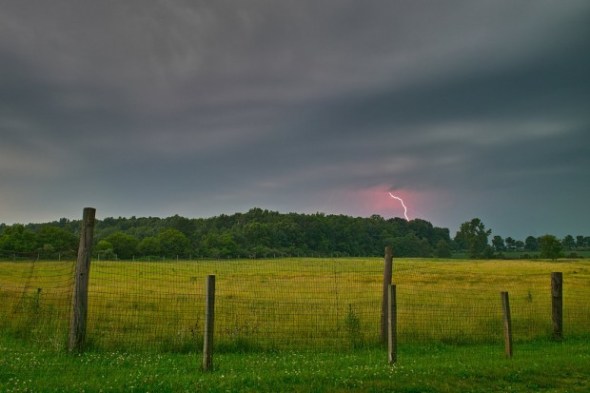
Summer thunderstorm in Indiana
Good Morning!!
I’m still staying with my mother in Indiana. Her 90th birthday party was a huge success. Everyone that we expected showed up, and I got to talk to some cousins I haven’t seen in ages–except on Facebook. The weather sort of cooperated. It had been raining for days, but we just had intermittent showers on Saturday, the day of the party. We had the canopy set up over part of the driveway so the tables were on solid ground. We had too much food, so we donated some of it to a local homeless mission, ate some leftovers, and froze the rest. Since that day, we’ve had gorgeous sunny weather.
The image above of the first lighting strike of an Indiana thunderstorm comes from Schweiger Photo. I’m including other scenic photos of various parts of Indiana throughout this post.
Supreme Court Decisions and Reactions to Them

A country road in Randolph County, Indiana
The U.S. Supreme Court continues to dominate the news today. I know you have already heard about the terrible decision to allow Oklahoma to continue using drugs that cause intense, extended pain for their inhuman executions. The U.S. Constitution forbids cruel and unusual punishment, but Samuel Alito thinks it’s much more important to preserve the death penalty than to worry about whether the victims feel like they are being burned alive.
Carimah Townes at Think Progress: It’s ‘The Chemical Equivalent Of Being Burned At The Stake.’ And Now It’s Legal.
By a vote of 5-4, the Supreme Court ruled Monday that the use of the lethal injection drug midazolam does not constitute cruel and unusual punishment. The ruling comes more than a year after the botched executions of several inmates who remained conscious and experienced pain as they were put to death.
According to the majority opinion written by Justice Samuel Alito, “petitioners have failed to establish a likelihood of success on the merits of their claim that the use of midazolam violates the Eighth Amendment. To succeed on an Eighth Amendment method-of execution claim, a prisoner must establish that the method creates a demonstrated risk of severe pain and that the risk is substantial when compared to the known and available alternatives. Petitioners failed to establish that any risk of harm was substantial when compared to a known and available alternative method of execution. Petitioners have suggested that Oklahoma could execute them using sodium thiopental or pentobarbital, but the District Court did not commit a clear error when it found that those drugs are unavailable to the State.”
In her dissent, Justice Sotomayor wrote, “as a result, [the Court] leaves petitioners exposed to what may well be the chemical equivalent of being burned at the stake.”

The Indiana Dunes at Lake Michigan
Alito’s “reasoning” is that since the death penalty is “settled” law, whatever drug is available must be used even if it causes extreme pain and does not cause unconsciousness. Remember when Clayton Lockett “gasped for 43 minutes” before he finally died?
Cristian Farias at New York Magazine: In Lethal-Injection Case, the Supreme Court Essentially Ruled That Death-Row Inmates Have to Pick Their Poison.
Now we know why the Supreme Court left Glossip v. Gross — a contentious case about the constitutionality of lethal-injection protocols — for the very last day of its term. Four out of five justices who had something to say in the case announced their opinions from the bench — an extremely rare occurrence that the American public won’t get to hear for itself until audio of the session is released sometime in the fall.
In a 5-to-4 decision, the justices ruled that the death-row inmates in the case failed to establish that Oklahoma’s use of midazolam, a sedative they claimed was ineffective in preventing pain, violated the Eighth Amendment’s prohibition on cruel and unusual punishment. The case’s various opinions and dissents run a whopping 127 pages — far longer than even the Obamacare and marriage-equality decisions. And they’re a sign that states’ methods of punishment are a major point of conflict at the court.
But Justice Samuel Alito, who wrote the lead opinion, went further: He said it is up to the death-row inmates and their lawyers — and not up to Oklahoma — “to identify a known and available alternative method of execution that entails a lesser risk of pain,” which is “a requirement of all Eighth Amendment method-of-execution claims.” In other words, it is the responsibility of those condemned to death to plead and prove the best alternative method to execute them. They have to pick their poison — otherwise, no harm, no foul under the Constitution.
And just so that there aren’t any doubts, even though the case was not about the death penalty proper, Alito went out of his way to remind us that “we have time and again reaffirmed that capital punishment is not per seunconstitutional.”
Samuel Alito should never have been approved by the Senate. He’s a monster.

Indiana corn, “knee high by the Fourth of July.”
The Court ordered that abortion clinics in Texas could remain open for the time being. Ian Millhauser at Think Progress: BREAKING: Supreme Court Allows Texas Abortion Clinics To Remain Open.
The Supreme Court issued a brief, two paragraph order on Monday permitting Texas abortion clinics that are endangered by state law requiring them to comply with onerous regulations or else shut down to remain open. The order stays a decision by the United States Court of Appeals for the Fifth Circuit, which imposed broad limits on the women’s right to choose an abortion within that circuit.
The Court’s order is temporary and offers no direct insight into how the Court will decide this case on the merits. It provides that the clinics’ application for a stay of the Fifth Circuit’s decision is granted “pending the timely filing and disposition of a petition” asking the Court to review the case on the merits.
Ugh. I can hardly wait for the final decision./s
And then there’s the continuing unhinged right wing response to the Supremes’ decision on gay marriage. Texas Senator Ted Cruz has been in dangerous meltdown mode ever since the announcement on Friday.

A Converse County, Indiana road.
Politico reports: Ted Cruz: States should ignore gay-marriage ruling.
“Those who are not parties to the suit are not bound by it,” the Texas Republican told NPR News’ Steve Inskeep in an interview published on Monday. Since only suits against the states of Ohio, Tennessee, Michigan and Kentucky were specifically considered in the Supreme Court’s Obergefell v. Hodges decision, which was handed down last Friday, Cruz — a former Supreme Court clerk — believes that other states with gay marriage bans need not comply, absent a judicial order.
“[O]n a great many issues, others have largely acquiesced, even if they were not parties to the case,” the 2016 presidential contender added, “but there’s no legal obligation to acquiesce to anything other than a court judgement.”
Izzat so?
While Cruz’s statement may be technically true, federal district and circuit courts are obligated to follow the Supreme Court’s precedent and overrule all other states’ same-sex marriage bans as unconstitutional.
The Texas senator then went on to suggest that Republicans who have called for following the court’s decision are members of a “Washington cartel” and are lying when they say they do not support same-sex marriage.
“[Republican Party leaders] agree with the rulings from last week, both the Obamacare ruling and the marriage ruling,” Cruz said. “[T]he biggest divide we have politically is not between Republicans and Democrats. It’s between career politicians in both parties and the American people.”
I guess Cruz hasn’t bothered to look at the polls that show most Americans support same sex marriage–or, more likely, he couldn’t care less what Americans think about it. Get over it, Ted. Marriage equality is “settled law” now.

Another view of the Indiana Dunes.
From The Hill: Cruz bashes ‘elites’ on Supreme Court.
Sen. Ted Cruz (R-Texas) on Monday bashed “elites” on the Supreme Court for imposing their will on America’s heartland in its decision to legalize same-sex marriage.
“You’ve got nine lawyers, they are all from Harvard or Yale — there are no Protestants on the court, there are no evangelicals on the court,” the 2016 GOP presidential candidate said on NBC’s “Today,” echoing criticism from Justice Antonin Scalia’s dissenting opinion.
“The elites on the court look at much of this country as flyover country; they think that our views are simply parochial and don’t deserve to be respected.”
ROFLMAO! Earth to Ted: You graduated from Princeton and Harvard and worked under former Chief Justice Rehnquist. Obviously you think the inhabitants of “flyover country” are too stupid to know that.
A couple more reactions:
AL.com: Roy Moore: Alabama judges not required to issue same-sex marriage licenses for 25 days.
The Texas Tribune: Some Counties Withholding Same-Sex Marriage Licenses.
Following the Charleston Massacre,

A windmill on an Indiana farm
a number of black churches have been burned in the South, according to Think Progress.
According to the Southern Poverty Law Center, at least six predominantly black churches in four Southern states have been damaged or destroyed by fire in the past week. While some may have been accidental, at least three have been determined to be the result of arson.
The first arson fire was on Monday at the College Hills Seventh Day Adventist Church in Knoxville, Tennessee. The Knoxville fire department has said that the arsonist set multiple fires on the church’s property and the church’s van was also burned. On Tuesday, a fire in the sanctuary of God’s Power Church of Christ in Macon, Georgia was also blamed on arson, although the investigation is ongoing. And on Wednesday, a fire at the Briar Creek Baptist Church in Charlotte, North Carolina was determined to be caused by arson, destroying an education wing that was meant to house a summer program for children, impacting its sanctuary and gymnasium, and causing an estimated $250,000 in damage.
The cause of a fire that destroyed the Glover Grover Baptist Church in Warrenville, South Carolina on Friday is unknown, while lightning is suspected in a fire that destroyed the Fruitland Presbyterian Church in Gibson County, Tennessee on Wednesday and a tree limb that fell on electrical lines is suspected in a fire at the Greater Miracle Apostolic Holiness Church in Tallahassee, Florida on Friday that destroyed the church and caused an estimated $700,000 in damage.
That is truly frightening. Read more details at the link.

A log cabin in Brown County, Indiana
Blue Nation Review: EXCLUSIVE: Bree Newsome Speaks For The First Time After Courageous Act of Civil Disobedience.
Over the weekend, a young freedom fighter and community organizer mounted an awe-inspiring campaign to bring down the Confederate battle flag. Brittany “Bree” Newsome, in a courageous act of civil disobedience, scaled a metal pole using a climbing harness, to remove the flag from the grounds of the South Carolina state capitol. Her long dread locks danced in the wind as she descended to the ground while quoting scripture. She refused law enforcement commands to end her mission and was immediately arrested along with ally James Ian Tyson, who is also from Charlotte, North Carolina.
Read all about it and see photos at the link.
What else is happening? Please post your thoughts and links in the comment thread below and have a terrific Tuesday!

 peej
peej Carissa
 bostonboomer
 dakinikat
 ecocatwoman
 jjlo
jjlo mablue2
 Mama Lopez
 peggysue22
 quixote
 skydancingguestblogger
 Mona (aka Wonk the Vote)



 Sky Dancing
Recent Comments