
Lazy Saturday Reads: Trumpcare’s Ignominious Defeat and Spy News
Posted: March 25, 2017 Filed under: Foreign Affairs, morning reads, Republican politics, U.S. Politics | Tags: Carter Page, Devin Nunes, Donald Trump, GOP health care bill, Michael Flynn, Mike Pence, Obamacare, Paul Manafort, Paul Ryan, Roger Stone, Steve Bannon, tRumpcare, Turkey 51 Comments Good Afternoon!!
Last night, for the first time since November 8, 2016, I went to bed happy. Thanks in large part to the millions of Americans who marched in the streets, went to town halls or their representatives’ offices to defend Obamacare, the attempt by tRump and Ryan to destroy the health care system has been thwarted–at least for the time being.
Trump is being roasted in the media. Here are a few stories to check out, links only because there are so many:
The Washington Post: ‘The closer’? The inside story of how Trump tried — and failed — to make a deal on health care.
Politico: Trump gets tamed by Washington (click on this one if only to view the absolute worst photo of tRump’s hair so far).
Politico Magazine: Inside the GOP’s Health Care Debacle. Eighteen days that shook the Republican Party—and humbled a president.
The New York Times: How the Health Care Vote Fell Apart, Step by Step.
Jonathan Chait: Why Obamacare Defeated Trumpcare.
I want to highlight one aspect of the tRump strategy. He let Steve Bannon talk to the Freedom Caucus, and it did not go well.
When the balky hardliners of the House Freedom Caucus visited the White House earlier this week, this was Steve Bannon’s opening line, according to people in the conference room in the Eisenhower Executive Office Building:
Guys, look. This is not a discussion. This is not a debate. You have no choice but to vote for this bill.
- Bannon’s point was: This is the Republican platform. You’re the conservative wing of the Republican Party. But people in the room were put off by the dictatorial mindset.
- One of the members replied: “You know, the last time someone ordered me to something, I was 18 years old. And it was my daddy. And I didn’t listen to him, either.”\\ [….]It’s hard to overstate the magnitude of the Day 64 defeat. President Trump, who made repeal-and-replace a central theme of his campaign, and House Republicans, who made it the central theme of every campaign since 2010, lost in a publicly humiliating way despite controlling every branch of government and enjoying margins in the House rarely seen in the past century.

More on Bannon’s role at The Daily Beast: Bannon Tells Trump: ‘Keep a Shit List’ of Republicans Who Opposed You. (This one was published before the bill was pulled.)
According to multiple Trump administration officials speaking to The Daily Beast on the condition of anonymity to talk freely, the president is angry that his first big legislative push is crumbling before his eyes—and his chief strategist Stephen K. Bannon is advising him to take names and keep a hit list of Republicans who worked for Trumpcare’s defeat.
“[Bannon] has told the president to keep a shit list on this,” one official told The Daily Beast. “He wants a running tally of [the Republicans] who want to sink this…Not sure if I’d call it an ‘enemies list,’ per se, but I wouldn’t want to be on it.”
One aide described it as a proposed “hit list” for Republicans not sufficiently loyal. Courses of action stemming from any related tally is yet to be determined, but the idea and message is that “we’ll remember you.”
Two senior Trump administration officials with direct knowledge of the process told The Daily Beast that Bannon and Trump have taken a “you’re either with us or against us” approach at this point, and that Bannon wants the tally of “against” versus “with us” mounted in his so-called West Wing “war room.”
“Burn the boats,” Bannon (in his typical, pugnacious style) advised Trump, according to one official involved. Burning one’s boats is a reference to when military commanders in hostile territories order his or her troops to destroy their own ships, so that they have to win or die trying.
Now let’s get to the really interesting stuff–the spy news.

Is Mike Flynn already talking to the FBI? I would be if I were in his shoes, and he has been awfully quiet since he belatedly registered as a foreign agent for his work in support of Turkey’s President Recep Tayyip Erdogan. And yesterday we learned that Flynn proposed kidnapping Erdogan’s sworn enemy Fethullah Gulen, a former Turkish cleric whom Turkey has been trying to get extradited from the U.S.
The Washington Post: Pentagon weighs response to Flynn working on behalf of Turkish interests without U.S. permission.
President Trump’s ousted national security adviser did not seek permission from the U.S. government to work as a paid foreign agent for Turkish interests, U.S. defense officials said, raising the possibility that the Pentagon could dock the retirement pay of Michael T. Flynn.
Navy Capt. Jeff Davis, a Pentagon spokesman, said that the Defense Department is reviewing the issue. It arose after Flynn, a retired Army lieutenant general, registered retroactively this month with the Justice Department as a foreign agent for work that his company, Flynn Intel Group, carried out on behalf of Inovo BV, a Netherlands-based company. It is owned by Ekim Alptekin, a Turkish businessman who is not a part of the Turkish government, but has links to it.
The Inovo assignment centered on researching Fethullah Gulen, a Turkish cleric whom Ankara blames for fomenting a coup attempt last summer and wants extradited from the United States, where he has lived in exile for years. That led Flynn’s company to conclude that the work “could be construed to have principally benefited the Republic of Turkey,” according to a letter sent by Flynn’s attorney, Robert K. Kelner, to the Justice Department, along with the filing.
Flynn Intel Group received a total of $530,000 in three payments between September and November from Inovo BV before discontinuing the arrangement after Trump was elected president, according to Flynn’s filings. It is unclear from the paperwork how much Flynn personally profited from the deal, but he is the majority owner and chief executive officer of the firm. Kelner, reached by phone Wednesday night, declined to comment on the deal.
Flynn is in deep trouble, and now that tRump has thrown him under the bus in The National Enquirer, Flynn has plenty of motivation to start telling what he knows about the tRump campaign’s coordination with Russia to hurt Hillary Clinton.
In addition, we learned yesterday that the three other tRump guys who are under investigation, Paul Manafort, Roger Stone, and Carter Page, have offered to testify before the House Intelligence Committee.
Next, we have the very strange behavior of Rep. Devin Nunes, the chairman of the Intel Committe, who appears to be working as a double agent for tRump. Nunes has given three bizarre press conferences about supposed secret information he got access to that may or may not show that members of the tRump transition team were caught up in surveillance of foreign actors. It’s obvious that Nunes is way over his head and doesn’t really understand whatever it is he saw. So far he hasn’t shared anything with the members of his committee. But where did he get this mysterious information? He isn’t saying, but here’s some background from Tim Mak at The Daily Beast: Devin Nunes Vanished the Night Before He Made Trump Surveillance Claims.
Rep. Devin Nunes was traveling with a senior committee staffer in an Uber on Tuesday evening when he received a communication on his phone, three committee officials and a former national security official with ties to the committee told The Daily Beast. After the message, Nunes left the car abruptly, leaving his own staffer in the dark about his whereabouts.
By the next morning, Nunes hastily announced a press conference. His own aides, up to the most senior level, did not know what their boss planned to say next. Nunes’ choice to keep senior staff out of the loop was highly unusual.
The Republican chairman had a bombshell to drop.
“The intelligence community incidentally collected information about U.S. citizens involved in the Trump transition,” Nunes told reporters Wednesday morning.
Nunes reviewed “dozens of reports” produced by the U.S. intelligence community that showed this, he added….
Where Nunes went and who his source was for this information—which he said was still incomplete—is now a mystery with serious repercussions for the independence of his investigation into Russian interference with U.S. elections.
“This information was legally brought to me by sources who thought that we should know it,” Nunes added.
Suspicions have been raised that Nunes may have gotten his information from the White House, and so far he has refused to deny it. So who could have been incidentally picked up on wiretaps? Yesterday, Dakinikat posted some links that suggest that person could have been Mike Pence. I’m reposting them here.

DailyKos, 3/22/17: Manafort made Pence the VP, they talked regularly during the transition.
The Daily Beast: 11/30/16: Paul Manafort Is Back and Advising Donald Trump on Cabinet Picks.
Finally, Bill Palmer pull the conspiracy theory together: Mike Pence appears to be the “Donald Trump transition team” member caught on wiretap.
This week House Intelligence Committee chair Devin Nunes got his hands on some kind of classified intelligence through unofficial channels, and it spooked him to the point that he broke every protocol – and may have broken his career in the process. Nunes insists someone on the Donald Trump transition team was legally picked up on a wiretap that was targeted at someone else. And it appears the person incidentally surveilled was Vice President Mike Pence.
Based on Nunes’ description, someone on the Trump transition team was picked up while speaking on the phone with someone who was the subject of a FISA warrant. Widespread media reports have long pegged four people in the Trump campaign’s orbit as being under FBI investigation: Michael Flynn, Carter Page, Roger Stone, and Paul Manafort. These are the four who could realistically have been the subject of a judge-issued FISA surveillance warrant.
Of the four men, the only one who is known to have had phone conversations with anyone on the Trump transition team during the transition was Manafort. And the one person Manafort kept calling? Mike Pence (source: Daily Kos. The two have long been aligned; Manafort went to great lengths to ensure Pence was Trump’s running mate. So it appears that Devin Nunes learned this week that Pence had been caught saying something disconcerting on Manafort’s wiretap. And that may explain why Nunes did what he did from there.
More at the link.
And we can’t forget James Comey’s surprise appearance at the White House yesterday. Will more shoes drop over the weekend? I sure hope so!
What stories are you following?
Tuesday Reads
Posted: March 7, 2017 Filed under: Barack Obama, Foreign Affairs, morning reads, U.S. Politics | Tags: CIA hacked files, GOP health insurance plan, Jason Chaffetz, mass deportation, muslim ban, North Korea, Obamacare, Ryancare, THAAD missile defense system, tRumpcare, Wikileaks 29 CommentsGood Afternoon!!
It’s another busy day in tRumpville–not for him, of course, just for us peons. King Donald is so bored that he went out to meet a White House tour group this morning.
So the Muslim ban is back with a vengeance. Plus the GOP “health care” plan is out and it’s even worse than anyone imagined. Dakinikat wrote about tRump’s immigration policies yesterday, but we’re getting more details this morning. As for Ryancare or trumpcare or whatever the f$ck you want to call the health insurance plan from hell, it looks like it will be dead on arrival.
On top of all that Russia and Wikileaks released a bunch of CIA files to try to distract everyone from the antics circus clown they put in charge of what used to be the USA. I don’t have room to write about everything, but here are a few reads to get you started.
Politico: Trump plan pays for immigration crackdown with cuts to coastal, air security.
The Trump administration wants to gut the Coast Guard and make deep cuts in airport and rail security to help pay for its crackdown on illegal immigration, according to internal budget documents reviewed by POLITICO — a move that lawmakers and security experts say defies logic if the White House is serious about defending against terrorism and keeping out undocumented foreigners.
The Office of Management and Budget is seeking a 14 percent cut to the Coast Guard’s $9.1 billion budget, the draft documents show, even as it proposes major increases to other Department of Homeland Security agencies to hire more border agents and immigration officers and construct a physical barrier along the U.S.-Mexico border.
The budget numbers mark the most detailed breakdown yet about how President Donald Trump envisions restructuring DHS to meet his pledge to halt illegal immigration and deport some of the millions already here.
Overall, DHS would get a 6 percent boost to its budget, to $43.8 billion. But to help pay for that, the administration would slice the budget of the Coast Guard and cut 11 percent in spending from the TSA — reductions that critics say would weaken safeguards against threats arriving by sea or air.
OMB also wants to cut 11 percent from the budget of FEMA, which oversees the national response to disasters such as floods and hurricanes.
The stupid is strong in this one. Obviously the mass deportation agenda has absolutely nothing to do with national security.

Speaking of national security, tRup appears to be mostly ignoring the international crisis being fomented by North Korea–at least he has said nothing publicly about how he plans to handle it. Rex Tillerson hasn’t said anything about this situation either. Has anyone seen or heard from him? The Washington Post reports: North Korea says it was practicing to hit U.S. military bases in Japan with missiles.
North Korea was practicing to strike United States military bases in Japan with its latest barrage of missiles, state media in Pyongyang reported Tuesday, and it appeared to be trying to outsmart a new American antimissile battery being deployed to South Korea by firing multiple rockets at once.
Kim Jong Un presided over Monday’s launch of the four missiles, “feasting his eyes on the trails of ballistic rockets,” the state-run Korean Central News Agency reported in a statement that analysts called a “brazen declaration” of the country’s intent to strike enemies with a nuclear weapon if it came under attack.
“If the United States or South Korea fires even a single flame inside North Korean territory, we will demolish the origin of the invasion and provocation with a nuclear tipped missile,” the KCNA statement said.
The four ballistic missiles fired Monday morning were launched by the elite Hwasong ballistic missile division “tasked to strike the bases of the U.S. imperialist aggressor forces in Japan,” KCNA said. The United States has numerous military bases and about 54,000 military personnel stationed in Japan, the legacy of its postwar security alliance with the country.
Three of the four missiles flew about 600 miles over North Korea and landed in the sea, within Japan’s exclusive economic zone off the Oga Peninsula in Akita prefecture, home to a Japanese self-defense forces base. The fourth fell just outside the zone.
One thing that’s happening is that the US is sending an anti-missle defense system to South Korea, according to NBC News:
The United States has begun shipping a controversial anti-missile system to South Korea after North Korea test-launched four medium-range missiles on Monday, U.S. officials told NBC News.
The system, called THAAD, which stands for Terminal High Altitude Area Defense, is an anti-missile system designed to counter a threat like that from North Korea.
Other THAAD systems are already active in Hawaii and Guam to defend against North Korea, but the shield hadn’t yet been deployed to South Korea — a scenario that Beijing has denounced as a “clear, present and substantive threat to China’s security interests.”

Two mobile launchers landed in South Korea late Monday, part of a missile defense system that the U.S. military says is meant to defend the country against a North Korean attack.
U.S. Forces Korea
I wonder if tRump will give us a heads-up if he decides to start a war with China and North Korea? Huffington Post: North Korea Warns Of ‘Actual War’ Over Military Exercises.
North Korea said on Tuesday it would pursue its nuclear deterrent and weapons program as huge U.S.-South Korean joint military exercises it says model a “pre-emptive nuclear attack” against Pyongyang continued.
South Korea and the United States, which led condemnation of North Korea’s latest missile tests at the Conference on Disarmament, said their military drills were to test defensive readiness against possible aggression from the North.
North Korean diplomat Ju Yong Choi told the United Nations-backed forum that the allies’ annual exercises were “a major cause of escalation of tension that might turn into actual war”.
“The DPRK (Democratic People’s Republic of Korea) is firm in its determination to further bolster its defense capabilities with a nuclear deterrent as a pivot so as to put an end to danger of nuclear war caused by the United States,” Ju said.
During the 90-minute session, envoys from more than 20 countries, including North Korea’s main ally China, as well as Britain, France, Russia and the United States, condemned North Korea’s test-firing of four ballistic missiles on Monday.
On the health insurance (definitely not health care) bill, here’s Sarah Kliff at Vox: The American Health Care Act: the Republicans’ bill to replace Obamacare, explained. Also at Vox, Ezra Klein: The GOP health bill doesn’t know what problem it’s trying to solve. You’ll need to go read both of those–there’s much too much to excerpt.
But here’s a little news from the ridiculous Jason Chaffetz. Think Progress: GOP congressman says Trumpcare will force people to choose between new iPhone and health insurance.
During a Tuesday morning appearance on CNN, Rep. Jason Chaffetz (R-UT) suggested that under Trumpcare, Americans will face some tough choices — like buying an iPhone or making sure they can see a doctor.
Pressed by CNN’s Alisyn Camerota about whether he’s concerned Trumpcare’s reduced tax incentives and lack of individual mandate will result in less people having insurance, Chaffetz said, “Well, we’re getting rid of the individual mandate. We’re getting rid of those things that people said that they don’t want.” ….
The cost of a new iPhone 7 without a contract is roughly $700. By comparison, the per-capita cost of health care in the U.S. last year was $10,345. Even when insurance coverage that defrays some of that cost is factored in, Americans still spend way less on phones than they do on health care….
If too many healthy people decide to forego health care they don’t think they’ll need in favor of new phones under Trumpcare, prices will go up for those remaining in the health insurance market, creating a “death spiral.”
Chaffetz is such a nasty man, to paraphrase tRump on Hillary.

CIA headquarters in Langley, VA
The New York Times on the Wikileaks story, which sounds very serious: WikiLeaks Releases Trove of Alleged C.I.A. Hacking Documents.
WASHINGTON — WikiLeaks on Tuesday released thousands of documents that it said described sophisticated software tools used by the Central Intelligence Agency to break into smartphones, computers and even Internet-connected televisions.
If the documents are authentic, as appeared likely at first review, the release would be the latest coup for the anti-secrecy organization and a serious blow to the C.I.A., which maintains its own hacking capabilities to be used for espionage.
The initial release, which WikiLeaks said was only the first part of the document collection, included 7,818 web pages with 943 attachments, the group said. The entire archive of C.I.A. material consists of several hundred million lines of computer code, it said.
Among other disclosures that, if confirmed, would rock the technology world, the WikiLeaks release said that the C.I.A. and allied intelligence services had managed to bypass encryption on popular phone and messaging services such as Signal, WhatsApp and Telegram. According to the statement from WikiLeaks, government hackers can penetrate Android phones and collect “audio and message traffic before encryption is applied.”
The source of the documents was not named. WikiLeaks said the documents, which it called Vault 7, had been “circulated among former U.S. government hackers and contractors in an unauthorized manner, one of whom has provided WikiLeaks with portions of the archive.”
WikiLeaks said the source, in a statement, set out policy questions that “urgently need to be debated in public, including whether the C.I.A.’s hacking capabilities exceed its mandated powers and the problem of public oversight of the agency.” The source, the group said, “wishes to initiate a public debate about the security, creation, use, proliferation and democratic control of cyberweapons.”
The documents, from the C.I.A’s Center for Cyber Intelligence, are dated from 2013 to 2016, and WikiLeaks described them as “the largest ever publication of confidential documents on the agency.” One former intelligence officer who briefly reviewed the documents on Tuesday morning said some of the code names for C.I.A. programs, an organization chart and the description of a C.I.A. hacking base appeared to be genuine.
It will be very interesting to see how tRump responds to this disastrous situation, which obviously is the work of his buddy Vladimir Putin.
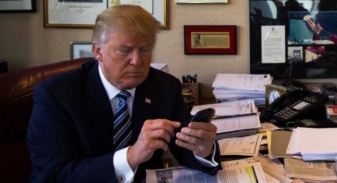
Here’s an interesting article by Noah Feldman at Bloomberg on tRump’s accusation that former President Barack Obama “wiretapped” phones in tRump Tower: Trump’s Wiretap Tweets Raise Risk of Impeachment.
The sitting president has accused his predecessor of an act that could have gotten the past president impeached. That’s not your ordinary exercise of free speech. If the accusation were true, and President Barack Obama ordered a warrantless wiretap of Donald Trump during the campaign, the scandal would be of Watergate-level proportions.
But if the allegation is not true and is unsupported by evidence, that too should be a scandal on a major scale. This is the kind of accusation that, taken as part of a broader course of conduct, could get the current president impeached. We shouldn’t care that the allegation was made early on a Saturday morning on Twitter.
The basic premise of the First Amendment is that truth should defeat her opposite number. “Let her and Falsehood grapple,” wrote the poet and politician John Milton, “who ever knew Truth put to the worse in a free and open encounter?”
But this rather optimistic adage only accounts for speech and debate between citizens. It doesn’t apply to accusations made by the government. Those are something altogether different.
In a rule of law society, government allegations of criminal activity must be followed by proof and prosecution. If not, the government is ruling by innuendo.
Shadowy dictatorships can do that because there is no need for proof. Democracies can’t.
Thus, an accusation by a president isn’t like an accusation leveled by one private citizen against another. It’s about more than factual truth or carelessness.
Read the rest at the link.
What else is happening? Please post your thoughts and links in the comment thread and have a terrific Tuesday!
Thursday Reads
Posted: September 24, 2015 Filed under: morning reads, U.S. Politics | Tags: Barack Obama, Birth Control, Donald Trump, Jeb Bush, John Boehner, Junipero Serra, Little Sisters of the Poor, michelle obama, Obamacare, Pope Francis 13 Comments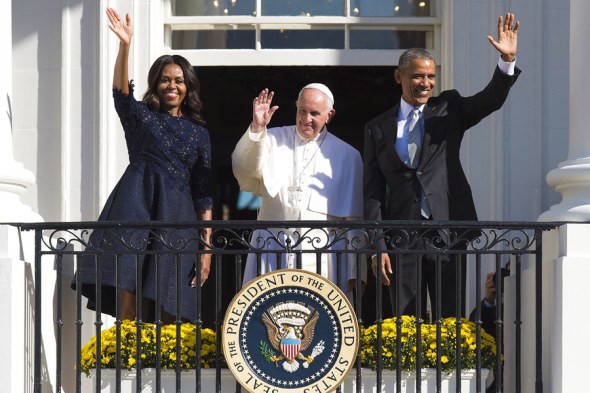
Good Morning!!
Pope Francis is currently visiting Washington DC, and he will address Congress this morning. Yesterday he said a mass and canonized a questionable new saint. From NPR:
Pope Francis celebrated the Mass of Canonization of Junipero Serra at Basilica of the National Shrine of the Immaculate Conception in Washington, D.C., today. You can watch the proceedings in The Washington Post video above.
Serra, the first Hispanic American saint and the first saint to be canonized in the U.S., helped Spain colonize California in the late 1700s, converting tens of thousands of Native Americans to Catholicism in the process. Some Native American groups objected to the canonization of a priest who converted indigenous people to Christianity using force.
The pontiff addressed Serra’s history in his homily.
“Junípero sought to defend the dignity of the native community, to protect it from those who had mistreated and abused it. Mistreatment and wrongs which today still trouble us, especially because of the hurt which they cause in the lives of many people.”
After the mass, Francis met with Native Americans at the basilica to speak with them privately about the controversy.
At the link, you can read tweets from people who noticed that Francis fell asleep at one point during the mass.

CIRCA 1930: Fray Junipero Serra Postcard. ca. 1915-1925, Fray Junipero Serra Postcard (Photo by LCDM Universal History Archive/Getty Images)
NPR tried to soft-pedal the controversy over Serra’s canonization. NBC has more details:
Saint or Sinner? Pope Courts Controversy With Canonization of Junipero Serra.
…to some Native Americans, Serra’s achievements are nothing to celebrate. They say he created a military-backed mission system that thrived on brutality and resulted in tens of thousands of deaths.
“It is very offensive to canonize the person who actually enslaved, whipped, tortured and separated families and destroyed our cultural and spiritual beliefs,” said Valentin Lopez, chairman of the Amah Mutsun Tribal Band. “How can that behavior be recognized as saintly behavior?” ….
Robert Senkewicz, a professor of history at Santa Clara University who has written a book about Serra, said it’s probably no accident that a pope who hails from Latin America, where the missionaries were seen as protectors, would support Serra.
He said he understands both sides of the debate: there’s evidence that Serra supported the flogging of the California Indians as punishment; he had women and girls locked away at night to keep them safe from rapists; and the crowded missions helped breed the disease that killed many.
“Serra, by his own right, really loved the Indians,” Senkewicz said. “But he thought of them as children. Like 99 percent of the people of the day, he thought Europeans were superior to the native people.”
Lopez said he was stunned by the pope’s elevation of Serra given that the pontiff has championed the downtrodden and even apologized in July for the church’s “grave sins” against the indigenous peoples of the Americas.

Statue of Junipero Serra on Highway 280 south of San Francisco
Like most of what the Vatican does, conferring sainthood is a political process. Frankly, to me it’s meaningless; but I can certainly understand why many Catholics would be up in arms about it.
The Washington Post on Francis’ speech to Congress this morning:
Pope Francis, a symbol of unity for the world’s 1.2 billion Catholics, will address Congress Thursday morning, marking the first time a pope has bridged the church-state divide to speak to America’s elected representatives.
The pope is scheduled to arrive on Capitol Hill at 9:20 a.m. Hours earlier, hundreds people began lining up outside the Capitol grounds, waiting to pass through security checkpoints and stake out a place to see him….
At 10:01 a.m., the House sergeant-at-arms is scheduled to announce: “Mr. Speaker, the pope of the Holy See.” His words will formally launch an event that would have been politically impossible through much of American history, when Catholics — especially waves of immigrants from Italy, Ireland and central Europe in the late 19th and early 20th centuries — suffered widespread discrimination.
That began to change with the election of John F. Kennedy to the presidency in 1960, according to the article.
In speaking before Congress, the pope was to take the central position in a tableau reflecting a wholesale shift in Catholics’ place in the United States. Vice President Joe Biden (D), who is also Catholic, will sit behind him, next to Boehner. In front of him will be four justices of the Supreme Court — including three of the six Catholics who currently sit on the nine-member court.
There are 164 Catholics in this Congress, or 31 percent of the members. That’s a higher proportion than in the overall U.S. population, which is 22 percent Catholic. Despite those numbers, it seems doubtful that even a pope who has admonished world leaders to argue less and accomplish more can break the bitter, years-long political paralysis in the U.S. legislature.
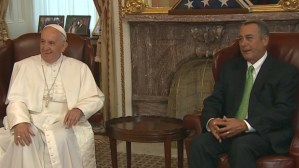
Pope Francis meets with John Boehner before the historic speech to Congress.
Unfortunately, many of the “Catholics” in this Congress and the Supreme Court do not subscribe to actual Catholic values such as humility, helping the poor, protecting the environment, and making peace, not war.
Pope Francis also held a meeting with the Little Sisters of the Poor to “quietly” support their battle against birth control being covered by Obamacare. USA Today:
WASHINGTON — Pope Francis made an unscheduled stop to visit the Little Sisters of the Poor Wednesday, a move that Vatican officials said was intended to send a message of support in the nuns’ battle against Obamacare.
The religious order of Catholic sisters is suing theObama administration over a provision of the Affordable Care Act that the administration has interpreted as requiring the sisters to purchase health insurance with birth control coverage.
Catholic teaching opposes the use of birth control. The sisters can request a waiver, but their lawsuit argues that requiring that paperwork infringes on their religious freedom. The sisters are suing under the Religious Freedom Restoration Act, a Clinton-era law that prohibits the government from placing a “substantial burden” on the free exercise of religion.
Last August, an appeals court sided with the government, but an unusual dissent by five judges this month called that decision “clearly and gravely wrong — on an issue that has little to do with contraception and a great deal to do with religious liberty.” The question now goes to the U.S. Supreme Court.
Sigh . . .
News From the Clown Car
Donald Trump is once again feuding with Fox News.
Donald Trump and Bill O’Reilly before the feud
Citing unfair treatment, Donald Trump said Wednesday that he is not going to appear on any Fox News shows “for the forseeable future,” reigniting a feud that has heated up and cooled throughout the summer.
“.@FoxNews has been treating me very unfairly & I have therefore decided that I won’t be doing any more Fox shows for the foreseeable future,” Trump tweeted at mid-day on Wednesday.
Fox News fired back a couple hours later, saying Trump had it all wrong, and that it was Fox who dumped Trump. A spokesman issued a statement, condeming Trump’s attacks on Fox’s journalists.“At 11:45am today, we canceled Donald Trump’s scheduled appearance on The O’Reilly Factor on Thursday, which resulted in Mr. Trump’s subsequent tweet about his ‘boycott’ of FOX News,” the statement reads. “The press predictably jumped to cover his tweet, creating yet another distraction from any real issues that Mr. Trump might be questioned about. When coverage doesn’t go his way, he engages in personal attacks on our anchors and hosts, which has grown stale and tiresome. He doesn’t seem to grasp that candidates telling journalists what to ask is not how the media works in this country.”
The Republican presidential candidate had devoted Monday and Tuesday nights this week to blasting the network’s coverage of him on Twitter, tweeting and retweeting criticism.
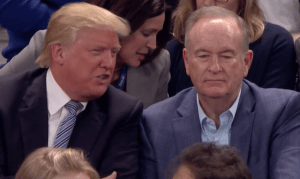
More details at the link. Ugh.

Donald Trump at the South Carolina Freedom Summit
Also from Politico: Trump: I’m so tired of this politically correct crap.
A seemingly exasperated Donald Trump announced on Wednesday, “I’m so tired of this politically correct crap,” telling a crowd of South Carolina business leaders that he’s still the straight-talking, shoot-from-the-hip kind of guy that surged to the top of the polls this summer.
The Republican presidential candidate is suffering a bit of a slump, due to some slippage in the polls, a lackluster debate performance, and another round of negative headlines due to his refusal to apologize for not correcting a questioner at a New Hampshire town hall who insisted President Obama is a Muslim and not an American.
On Wednesday, he tried to reclaim his mojo, launching another Twitter-based attack on Fox News before taking the stage in South Carolina to blast his rivals. In the case of Marco Rubio and Jeb Bush, Trump remarked that both candidates “hate each other … but they can’t say it.” Rubio was state senator while Bush was governor of Florida.
Trump, addressing the Greater Charleston Business Association and the South Carolina African American Chamber of Commerce, detailed his grievances with the way politicians act.
“This is what bothers me about politicians. He announces he’s gonna run and they go to Jeb, ‘what do you think of Marco Rubio?’ ‘He’s my dear, dear friend, he’s wonderful, he’s a wonderful person, I’m so happy that he’s running.’ Give me a break,” Trump said. “That’s called politicians’ speak. Then they go to Marco, what do you think of Jeb Bush? ‘Ohh, he’s great, he’s brought me along.”
Rubio and Bush “hate each other,” Trump said, blasting Rubio as “overly ambitious, too young, and I have better hair than he does, right?”
What Donald Trump refers to “political correctness” is behavior that normal people call common courtesy.
Jeb Bush had another stumble a couple of days ago.
CNN reports: Jeb Bush weighs in on ‘multiculturalism.’
Jeb Bush in Cedar Falls, Iowa
Jeb Bush argued Tuesday that the United States is “creeping toward multiculturalism” and described it as “the wrong approach.”
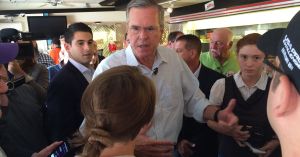
His answer came in response to a question at an Iowa diner Tuesday from a woman who wanted to know how the former Florida governor would help refugees and immigrants integrate into U.S. society and “empower them to become Americans.”
“We should not have a multicultural society,” the Republican presidential candidate responded.
But Bush, who’s a self-admitted policy wonk and tends to use nuanced language, was referring to “multicultural” in the literal sense — a social model in which cultures live in “isolated pockets,” as he described them, rather than assimilating into society.
“America is so much better than every other country because of the values that people share — it defines our national identity. Not race or ethnicity, not where you come from,” he said. “When you create pockets of isolation — and in some cases the assimilation process is retarded because it’s slowed down — it’s wrong. It limits peoples’ aspirations.”
He added that people who aren’t “fully engaged” in a broader community will struggle to get the best education and argued that learning English would better accelerate access to opportunities.
Personally, I think it’s entirely possible for ethnic groups in the U.S. to hold onto their languages and cultures, while at the same time fitting in to American society. The children of immigrants usually assimilate; at the same time, I think they should be encouraged to understand their ethnic and cultural history and be able to speak their native language with older family members.
In The News
BBC News: Hajj stampede: At least 717 killed in Saudi Arabia.
Quora discussion: Why do Americans think helping even the less fortunate next-door neighbour is ‘socialism’?
The Boston Globe: Apple bans walk-in purchases of the new iPhone 6s in New Hampshire, three other states.
ABC News: Texas HS Football Assistant Coach Admits to Telling Players to Hit Referee, Principal Says.
ABC News: Pope Francis Cites Victims From Church’s ‘Difficult Moments.’
The Telegraph: Angela Merkel’s ministers ‘ignored warning over Volkswagen emissions rigging.’
The New York Times: Hackers Took Fingerprints of 5.6 Million U.S. Workers, Government Says.
Some Interesting Longer Reads
Foreign Policy: ‘Close Your Eyes and Pretend to Be Dead’ What really happened two years ago in the bloody attack on Nairobi’s Westgate Mall.
Scientific American: Why the Human Brain Project Went Wrong–and How to Fix It.
The New Republic: Down the Rabbit Hole. The rise, and rise, of literary annotation.
Slate: Yogi Berra Wasn’t Trying to Be Witty. And he wasn’t dumb either. How did the narrative of the wise buffoon come to dominate his life?
What else is happening? What stories are you following today?
Thursday Reads: Upcoming Supreme Court Decisions and Other News
Posted: June 25, 2015 Filed under: morning reads, U.S. Politics | Tags: Affordable Care Act, Anthony Kennedy, John Roberts, Obamacare, same-sex marriage, US Supreme Court 84 Comments
The Tea Party, Matisse Forman
Good Morning!!
The Supreme Court justices will convene this morning at 10AM. No one knows which rulings they plan to release. Will we learn their decision on same sex marriage? I hope so. I’m guessing they will leave the announcement of their decision on the Affordable Care Act for last. But who knows?
ABC News reports: Supreme Court Has Seven Final Cases to Decide, Including Gay Marriage and Obamacare.
The high court is saving the high drama for the end of its term.
As June dwindles, seven cases are left for the Supreme Court to decide — including one that could legalize same-sex marriage across the country and one that will significantly affect the future of Obamacare.
The court is scheduled to announce decisions Thursday, Friday and Monday, and it could add days beyond that. There’s no indication which decisions will be released on which days.

The seven cases are summarized at the link. On the two most prominent cases:
Same Sex Marriage
In a landmark decision, the court will confront two questions. The first is whether states can ban same-sex marriage. The second is whether states must recognize same-sex marriages performed legally in other states.
All eyes are on Justice Anthony Kennedy, who wrote three of the court’s most important opinions on gay rights. At an oral argument in April, Kennedy asked tough questions of both sides, and at one point he said “it’s very difficult for the court to say, oh, well, we know better” what defines marriage than centuries of tradition limiting it to the union of a man and a woman.
Affordable Care Act
The justices could deal a potentially crippling, if not fatal, blow to President Barack Obama’s signature health law.
The challenge centers on whether the federal government is violating the act by offering subsidies to lower- and middle-income people who live in states that haven’t set up their own health care insurance “exchanges.”
Sixteen states have exchanges up and running. The remaining 34 rely on the federal exchange. The law says the subsidies can be made available only to people living where exchanges have been “established by the state.”
The plaintiffs argue that the subsidies are illegal because the federal government isn’t a state. The federal government argues that it was always clear that the subsidies would be available to anyone who bought insurance on an exchange. The insurance industry argues that if the federal subsidies are struck down, Obamacare itself would enter a “death spiral,” with costs rising for a shrinking number of participants, eventually causing the system to collapse.
Read about the other cases at the link.

The Tea, Mary Cassatt
Possible Outcomes on Same Sex Marriage
Although no one can really know what’s going on in Anthony Kennedy’s confused mind, most pundits expect the Supremes to decide that states cannot ban same sex marriage. I hope they’re right.
Richard Wolf at USA Today: Anticipating high court’s blessing, same-sex couples plan weddings.
Mark Phariss and Vic Holmes have sent out “Save the Date” cards and plunked down thousands of dollars for their November wedding, which promises to be Texas-style big.
Brittany Rowell and Jessica Harbuck are busy laying plans for a January wedding in Mississippi, with traditional white dresses and all the trimmings.
Tim Love and Larry Ysunza have reserved their church for an October wedding in Kentucky, about the time of their 35th anniversary together.
Liz Neidlinger and Erika Doty have their sights set on an outdoor sculpture garden in Michigan next May.
Jon Coffee and Keith Swafford were engaged last October in Tennessee and decided to marry in a year, regardless of court action. If it had to be merely symbolic, that would be sufficient.
What sets the five couples apart from your average wedding planners is a small impediment: They can’t get married in their home states — not yet, anyway. But they’re so confident the Supreme Court will change that in the coming days that they already are making plans for the big day.

Tea, Henri Matisse
Chicago Tribune: Coming gay marriage ruling triggers anticipation, anxiety in gay couples.
Chantel and Marcela Gatica-Haynes, who live in Arizona, were married in a garden ceremony at an Ojai, Calif. bed-and-breakfast on Sept. 7, 2013. The wedding came less than three months after a U.S. Supreme Court ruling ended Proposition 8, California’s ban on same-sex marriage. They returned home to Flagstaff and were married again last October after a federal judge ruled Arizona’s ban on the marriages was unconstitutional.
Though many observers predict the coming ruling will open the door wider to same-sex marriage, Chantel Gatica-Haynes worries her marriage could be impacted by a ruling against the unions. She worries more that a ruling upholding state bans could affect Marcela’s attempt to adopt Chantel’s 1-year-old daughter, Aspen.
“We’re just in this holding pattern,” she said. “The things that are hanging out there will affect our daughter’s future even when we’re gone.”
More at the link.

Summer Afternoon Tea in the Garden, Theo van Rysselberghe
The Boston Globe: Supreme Court same-sex marriage decision still in question.
When it comes to same-sex marriage, the justices have considered two principal questions:
1) Does the Constitution require a state to license a marriage between two people of the same sex?
2) If same-sex couples marry in one state, where it’s legal, must other states recognize their marriages?
If the justices say yes on the first question, then same-sex couples in all states will be able to marry. If the justices say no to the first question, but yes to the second, then same-sex marriages will be recognized in every state, but states will not have the duty to marry same-sex couples.
If the justices say no to both questions, then states without same-sex marriage will be neither required to perform same-sex unions, nor to recognize unions performed out of state.
At oral arguments earlier this year, Justice Anthony Kennedy, widely viewed as the swing vote on the case, asked the petitioners early on about the role of the court in changing a definition of marriage that has been used for “millennia,” instead of allowing citizens to engage with the issue through the states.
But Kennedy, who spoke only 17 times during the hearing — the least of any justice barring famously silent Clarence Thomas — also spoke of the ability of same-sex couples to recognize the “nobility and sacredness” of marriage.
Read the rest at the Globe.

NPR: Maps: What The Supreme Court’s Ruling On Same-Sex Marriage Could Mean.
It’s always tough to predict how the court will rule but, broadly speaking, there are three main possibilities: the simplest is that the court declares state marriage bans unconstitutional, meaning states will all perform and recognize same-sex marriage. That’s a pretty simple outcome, but things get much trickier in the other two cases.
One other possibility is that the court decides to uphold bans. That means states that currently have bans could continue having theirs. But it also leaves 20 states up in the air legally. That group includes states where federal action struck down state bans. If the Supreme Court says bans are constitutional, those states could go back to having bans in place.
And there’s also the possibility of the court saying bans are constitutional, but that all states must all recognize marriages performed in other states. This option retains the messiness of the above possibility, but it does mean that couples would be recognized equally nationwide.
While you can break the decisions down into three neatly color-coded maps, there is a complicated web of state laws at work, and it means outcomes could vary widely by state if the court decides bansare constitutional. Adam Romero, senior counsel at UCLA’s Williams Institute, says the states where federal action struck down state bans are where things could get really complicated.
Read more and check out the maps at the NPR link.
The Affordable Care Act Ruling

Afternoon Tea, Susan Rinehart
From New York Magazine: Chief Justice Roberts’s Big Health-Care Moment, by Cristian Farias.
Chief Justice John Roberts has big plans after the end of the current Supreme Court term. He will be hopping on a plane to Japan, half a world away from any fallout that may result in the aftermath of King v. Burwell, the closely watched challenge to the Affordable Care Act. According to SCOTUSblog, that decision could come as early as this Friday.
Three years ago, when Roberts first saved President Obama’s signature law, he headed for the other side of the globe, to Malta — a CBS Newsscoop about a vote switch and internal “arm-twisting” by Roberts aroused such conservative wrath, the Mediterranean island seemed like a good place for him to teach some law and weather the controversy. “After ruling, Roberts makes a getaway from the scorn,” said the Times.
No one knows where the chief justice stands in King, but there are real-world, pragmatic reasons for him to side with the government again — even more so than with NFIB v. Sebelius, which threatened a law still in its infancy and not yet fully implemented. Now the prospects of unraveling insurance markets and millions losing health-care subsidies with an adverse ruling are real, and Roberts more than any of the justices cares about these things because the court bears his name and anything the court does, whether he had something to do with it or not, falls under his legacy. He’s the most accountable member of the least accountable branch.
But consider also that by the time a decision is announced, Roberts will have finished his tenth year on the Supreme Court — a milestone legal scholars and commentators will seize on to discuss that legacy, his jurisprudence, and whether he has delivered on his promise to be the kind of chief justice who merely “calls balls and strikes,” as he famously said during his confirmation hearings. Just yesterday, the Upshot suggested the court is leaning leftward more than any other time in recent history. And other retrospectives have begun to roll out: the Constitutional Accountability Center, a legal advocacy group, has published a series of reports on Roberts’s first decade and his record — on civil rights, campaign finance, access to justice, the environment, equality. The kinds of cases the public cares about. And yes, that includes health care.
Much more interesting analysis at the link.

Tea Party, Martha Walter
Washington Post: Supreme Court ruling could push health industry agenda to back burner — again, by Catherine Ho.
The health care industry was hoping this would be the year it could move beyond the Obamacare fight in Washington and on to new priorities, such as improving drug development and patient care.
But the Supreme Court’s upcoming ruling in King v. Burwell threatens to derail those ambitions.
Industry advocates are concerned that no matter how the court rules on the legality of certain insurance subsidies provided under the law, the health care debate in Congress will once again become dominated by the political divisions over the Affordable Care Act (ACA).
“It has the potential for serious chaos and disruption,” said health care lobbyist Ilisa Halpern Paul, who represents hospital systems and health advocacy groups.
The court is expected to rule as early as Thursday on whether to strike down a critical part of the law by invalidating subsidies to 6.4 million Americans in the 34 states that have federally run health insurance exchanges.
If the court rules against the subsidies, Republicans will be scrambling to figure out whether they should find a way to keep them in place until after the 2016 election when they hope a Republican president and GOP-controlled Congress can repeal the law in its entirety. The concern for Republicans is that if they don’t find a way to keep the subsidies in place until a new plan is ready, they will face backlash from constituents who currently use them to offset the cost of their health insurance. The legislative focus on the subsidies would mean all other health-related legislative initiatives that have gained traction recently are likely to come to a halt, at least temporarily.
More at the WaPo.
And some maps of the possible results of the decision at Slate: These Maps Show How Radically the Supreme Court Could Upend the Health Care System.
Once again the fate of the Affordable Care Act rests in the hands of the Supreme Court. In King v. Burwell, the court is weighing whether the federal government can legally provide insurance subsidies to people who have purchased their health care through one of the federally run exchanges in 34 states. Whatever the court decides could also theoretically extend to three other exchanges—in Nevada, New Mexico, and Oregon—that are state-based but federally supported. Altogether, roughly $1.7 billion in tax credits and the health insurance of more than six million people is at stake. It’s arguably the biggest existential challenge to Obama’s signature health care reform since the Supreme Court upheld the individual mandate in 2012.
The crux of the case is a perilous clause buried in the ACA’s hundreds of pages. According to the law’s exact wording, people become eligible for federal insurance subsidies if they’ve purchased care through “an Exchange established by the State.” Because of those last four words, the plaintiffs in King v. Burwell argue that federal subsidies can only be available on state-based exchanges, and not on the federally facilitated ones in most of the country. The Obama administration has countered that the purpose of the law is to make health care accessible, and that “established by the State” should be read with that in mind. Several of the people who helped pen the legislation have dismissed the clause as a drafting error.

The Tea Party, Jules Cayron
Other News, Links Only
#NotOneMore: Undocumented Transgender Woman Who Interrupted President At White House Pride Event Calls to End Deportation.
CNN: Obama shuts down White House heckler: ‘You’re in my house!’
Buzzfeed News: Bobby Jindal’s Plan To Stop Being A Punchline And Actually Win. [Good luck with that.]
Christian Science Monitor: Bobby Jindal was supposed to be the ‘next Reagan.’ What happened? (+video).
Slate: Bernie Sanders, Gun Nut. He supported the most reprehensible pro-gun legislation in recent memory.
NYT: Ex-Advisers Warn Obama that Iran Nuclear Deal “May Fall Short of Standards.”
AP via ABC News: Funeral Plans for South Carolina Church Shooting Victims.
CNN: 2nd prison worker charged in connection with inmates’ escape.
TPM: Lindsey Graham: Charleston Shooter Showed ‘Mideast Hate’ (VIDEO). [WTF?!!]
PIX11.com: Chilling letters from ‘The Watcher’ force NJ family to flee $1.3M dream home.
ABC News: Small Ohio Town Is Focus of FBI Probe After Strange Deaths and Disappearances.
10WAVY.com: NYC: Whole Foods mislabels prepackaged items, overcharges.
WaPo: Whole Foods under investigation for overcharging in NYC.
What else is happening? Please post your thoughts and links on any topic in the comment thread and enjoy your Thursday.
Tuesday Reads: Netanyahu Speech, Hillary-Hate, and Nonsensical SCOTUS Case that could Hurt 8 Million Americans
Posted: March 3, 2015 Filed under: 2016 elections, Affordable Care Act (ACA), Barack Obama, Foreign Affairs, Hillary Clinton, morning reads, U.S. Politics | Tags: Affordable Care Act, Benjamin Netanyahu speech to Congress, iran, israel, King v. Burwell, New York Times, Obamacare, SCOTUS, State Department 19 Comments
Good Afternoon!!
I wanted to touch on a couple of issues this afternoon: the latest Hillary Clinton “scandal,” and the upcoming Supreme Court case that could doom Obamacare once and for all.
But before I get to those stories, I want to share this good article by James Fallows on the possible motivations behind Netanyahu’s speech to Congress this morning.
The Mystery of the Netanyahu Disaster, and a Possible Explanation.
Fallows enumerates the possible motivations for the Netanyahu slap in the face to President Obama:
“Was it simple tin ear on his side, and Ambassador Ron Dermer’s?” Fallows asks? That’s not likely according to Fallows, because Netanyahu is far too sophisticated and knowledgeable about U.S. politics. Fallows also discounts the theory that it was only about “election-year politicking” in Israel. Perhaps that’s part of it. Is it because Netanyahu has so often been right in his previous predictions?
Hardly. I can’t believe that he’s fooled even himself into thinking that his egging-on of war with Iraq looks good in retrospect. And for nearly two decades Netanyahu has been arguing that Iran was on the verge of developing nuclear weapons. When you’re proven right, you trumpet that fact—and when you’re proven wrong, you usually have the sense to change the topic. Usually.
Was it because Netanyahu “has a better plan?”
No. His alternative plan for Iran is like the Republican critics’ alternative to the Obama healthcare or immigration policies. That is: It’s not a plan, it’s dislike of what Obama is doing. And if the current negotiations break down, Iran could move more quickly toward nuclear capacity than it is doing now—barring the fantasy of a preemptive military strike by Israel or the U.S.
Fallows also doesn’t buy the argument that Netanyahu actually believes that Iran “faces an “existential threat” if Iran develops a nuclear weapon?
Let me explain. No person, nation, or community can define what some other person (etc) “should” consider threatening….But from the U.S. perspective I can say that the “existential” concept rests on two utterly unsupportable premises. One is that Iran is fundamentally like Nazi Germany, and the world situation of 2015 is fundamentally like that of 1938. Emotionally you can say “never forget!” Rationally these situations have nothing in common—apart from the anti-Semitic rhetoric. (To begin with: Nazi Germany had a world-beating military and unarmed Jewish minorities within its immediate control. Iran is far away and militarily no match for Israel.) The other premise is that Iran’s leaders are literally suicidal. That is, they care more about destroying Israel than they care about their country’s survival. Remember, Israel has bombs of its own with which to retaliate, so that any attack on Israel would ensure countless more Iranian deaths.

What then? Fallows refers to an article at The National Interest by Paul Pillar.
Pillar’s assessment is that the ramped-up “existential” rhetoric is a screen for the real issue, which is a flat contradiction between long-term U.S. and Israeli national interests as regards Iran. It is in American interests (as I have argued) to find some way to end Iran’s excluded status and re-integrate it with the world, as happened with China in the 1970s. And it is in Israel’s interests, at least as defined by Netanyahu for regional-power reasons, that this not occur. As Pillar writes:
The prime objective that Netanyahu is pursuing, and that is quite consistent with his lobbying and other behavior, is not the prevention of an Iranian nuclear weapon but instead the prevention of any agreement with Iran. It is not the specific terms of an agreement that are most important to him, but instead whether there is to be any agreement at all. Netanyahu’s defense minister recently made the nature of the objective explicit when he denounced in advance “every deal” that could be made between the West and Tehran. As accompaniments to an absence of any agreements between the West and Iran, the Israeli government’s objective includes permanent pariah status for Iran and in particular an absence of any business being done, on any subject, between Washington and Tehran.
That is, as long as Netanyahu keeps the attention on nukes and “existential” threats, he’s talking about an area where the U.S. and Israel might differ on tactics but agree on ultimate goals. Inflammatory as that topic is, it’s safer than talking about re-integrating Iran as a legitimate power, where U.S. and Israeli interests may ultimately differ.
I thought that was pretty good food for thought.
Before I get to the Clinton e-mails issue, here’s an interesting piece at the Washington Post on Hillary’s relationship with Netanyahu.
The phone call between Hillary Rodham Clinton and Israeli Prime Minister Benjamin Netanyahu lasted 45 minutes. For 43 of them, she talked and he listened.
The U.S. secretary of state lectured the Israeli leader, accusing him of trying to do an end run around American opposition to settlement-building and embarrassing Vice President Biden during a visit to Israel, according to interviews with people present during the 2010 call or who were briefed on it afterward. She read from a script for part of the lecture, so as not to miss any key points.
“The word ‘humiliation’ appeared very prominently,” recalled Michael Oren, then the Israeli ambassador in Washington. “As in ‘You have humiliated the United States of America.’ ”
There probably aren’t many times in Netanyahu’s professional life when he has listened to anyone for 43 minutes. Netanyahu prefers to do the lecturing….And there aren’t many people who could make Netanyahu sit still for a tongue-lashing. Clinton is one of them.

The story of the phone call comes from Clinton’s book on her time as Secretary of State, Hard Choices. Read more about it at the link. It would seem that experiences like this would stand Clinton and the U.S. in good stead if she ends up in the White House.
On the latest “scandal” about Hillary using a private e-mail as Secretary of State, I’m not sure what to think. It certainly does give ammunition to Republicans and to potential Democratic opponents like Martin O’Malley.
Here’s the NYT Story that started the fuss: Hillary Clinton Used Personal Email Account at State Dept., Possibly Breaking Rules. You’ll need to read it at the link, because the Times has fixed their website so that I, at least, can’t copy and paste any excerpts. Here are some reactions to the story. First, the debunkers:
From USA Today, Clinton aide: State Department e-mails preserved.
A spokesman for Hillary Rodham Clinton said Tuesday that while she used a personal e-mail account during her years as secretary of State, those records have been maintained pursuant to federal rules.
“Both the letter and spirit of the rules permitted State Department officials to use non-government email, as long as appropriate records were preserved,” said Clinton spokesman Nick Merrill. “As a result of State’s request for our help to make sure they in fact were, that is what happened here.”
Merrill responded to a New York Times story saying that Clinton, a prospective presidential candidate in 2016, used a personal e-mail account during her four years at the State Department and “may have violated federal requirements that officials’ correspondence be retained as part of the agency’s record.”
The Times reported that Clinton’s “expansive use of the private account was alarming to current and former National Archives and Records Administration officials and government watchdogs, who called it a serious breach.”
Yes, the president signed the new law two years after Clinton left the State Department. The NYT wants to punish her retroactively. Not surprising, considering the Times’ longstanding hatred for and sliming of the the Clintons. Please go read the whole Media Matters post. It won’t stop the Clinton haters from using this, but it’s the truth. Arm yourself.

Coffee, Leon Zernitzky
Bob Cesca at The Daily Banter: That Story About Hillary Clinton’s Private Email Account Isn’t as Awful as It Seems.
Again, please go read the whole thing, and prepare yourself for the coming onslaught. This is only the beginning.
A few more links to folks who either don’t know or don’t care about the time of the law and the fact that Clinton preseved all her emails.
A fairly Hillary-friendly post from Charles Pierce, Hillary Finds A Rake To Step On: The First Clinton Bombshell.
LA Times, Hillary Clinton used personal email while serving as secretary of state.
Mashable, Clinton email revelation: You did what, Hillary?
Incidentally, I was shocked to see this from Joseph Cannon:
Hillary’s secret email account. Let’s be honest: If a Republican did this, we’d be worried. Actually, Republicans have done exactly that.
The most important point here is sub-textual: If the NYT has turned against Hillary Clinton, then we should suspect that she has privately revealed to her closest aides that, if elected, she will do things that she cannot now state out loud. Of course, nothing is truly private these days.
“If the times as turned against Hillary Clinton”??!!! Joseph, why aren’t you aware that the NYT –brave champion of Dubya’s Iraq war–has always loathed the Clintons and has published innumerable attacks on them?
Finally a few links to prepare you for tomorrow’s SCOTUS hearing on King v. Burwell, during which the justices will consider whether to throw about 8 million Americans off their health care plans.
Charles Pierce, The Tell: What This Week’s Attack On Obamacare Is Really About.
…the Nine Wise Souls on Tuesday will hear King v. Burwell, the highly imaginative, if constitutionally laughable, attack on the grammar and punctuation in the Affordable Care Act, which the NWS should have laughed off months ago….
It is the Universal String Theory Of Wingnut Conjuring Words in full view, the complete text of one of the spells. A fake scandal being used to excuse the shabby underpinning of a fake lawsuit that will have real and devastating consequences to thousands of people.

That’s it in a nutshell. But here are more links to check out for more details.
Politico: No easy fix if Supreme Court halts Obamacare cash. (No sh$t Sherlock.)
Republicans are getting nervous about what will happen if they get their wish. From The Hill: GOP fears grow over ObamaCare challenge.
Ezra Klein at Vox: Republicans say they have a plan if the Supreme Court rules against Obamacare. They don’t.
Stephen Brill at Reuters: The Supreme Court hears an Obamacare fairytale.
US News (not known for liberal views): The Silliest Obamacare Challenge Yet. The King v. Burwell case could cause 8 million to lose health insurance.
SCOTUS should never have agreed to hear this case, but they did. Is John Roberts okay with going down in history as a buffoon? We’ll find out in June.
Please share your views along with the stories you’re following today in the comment thread.

 peej
peej Carissa
 bostonboomer
 dakinikat
 ecocatwoman
 mablue2
 Mama Lopez
 peggysue22
 quixote
 skydancingguestblogger
 Mona (aka Wonk the Vote)



 Sky Dancing
Recent Comments