
Tuesday Reads: Tim Burton, Presidential Polls, Romney on Spain, and More
Posted: October 9, 2012 Filed under: 2012 presidential campaign, Barack Obama, Foreign Affairs, Mitt Romney, morning reads, polling, Spain, U.S. Politics | Tags: David Adkins, diplomacy, Ed Wood, Frankenweenie, Gallup poll, Health care, Laura Tyson, meningitis, Nate Silver, Pew Poll, PPP poll, Sunday shows, tainted steroid injections, Tim Burton 63 Comments
Good Morning!!
Before I get going with the news, I want to recommend a wonderful movie. Yesterday afternoon, I took my nephews to see Tim Burton’s Frankenweenie, and I loved it! Trust me, it isn’t just for kids. It’s a funny, touching story about a boy and his dog as well as a great homage to horror movies. There’s even a scene where the science teacher, who looks like Vincent Price and talks like Bela Lugosi, tells a meeting of parents complaining about his class that they’re ignorant and prefer fantasy to science.
The Boston Globe reviewer gave the movie four stars, which is unheard of for a film aimed at children. There’s a wonderful backstory too:
In 1984, when he was an eccentric young animator working for Disney, the young Burton made a 30-minute live-action short called “Frankenweenie,” about a boy named Victor and the scrappy pet he brings back to life after it’s hit by a car. The movie was weird, it was inventive, and it spooked the bejesus out of Disney executives, who refused to release it and fired Burton. After the director became famous in the wake of “Edward Scissorhands,” the company put it out on VHS; it now can be found as an extra on the “Nightmare Before Christmas” DVD.
The current entertainment landscape has been effectively Burton-ized; this season alone, there are two pallid family-film imitations, “ParaNorman” and “Hotel Transylvania,” that arguably wouldn’t exist had the director not made the world safe for light pop-goth gloom. The new, improved “Frankenweenie” is thus not only revenge served sweetly — it’s being released by Disney, tail between its legs — but a reminder that, at his best, Burton belongs in the same bleakly charming league as Charles Addams and Edward Gorey.
Now I think I need to watch Ed Wood again.
That was such a nice break from all the depressing news about Mitt Romney and other insane Republicans. Now lets see what’s in the news today.
Everyone is talking about the latest Pew Poll which has Romney leading by 4–quite a shock. Even more shocking, TPM’s polltracker average now has Romney ahead of Obama by close to 3 points. On the other hand, today’s Gallup tracking polls shows Obama ahead by 5 points. Weird.
Now for a little expert analysis. Nate Silver advises: Amid Volatile Polling, Keep an Eye on Election Fundamentals
Mr. Obama got a bounce coming out of Charlotte, and it had some staying power — with his national lead appearing to peak at about five or six percentage points. But polling released immediately after the debate seemed to suggest that Mr. Romney had drawn into a rough national tie.
By the weekend, however — after the release of a favorable jobs report last Friday — Mr. Romney’s bounce seemed to be receding some. Tracking polls released on Monday by Gallup and Rasmussen Reports actually showed a shift back toward Mr. Obama, although another poll by Pew Research showed Mr. Romney with a four-point lead among likely voters.
Polling data is often very noisy, and not all polls use equally rigorous methodology. But the polls, as a whole, remain consistent with the idea that they may end up settling where they were before the conventions, with Mr. Obama ahead by about two points. Such an outcome would be in line with what history and the fundamentals of the economy would lead you to expect.
Keep in mind:
Challengers also generally profit from the first debate: in 8 of the 10 election cycles since 1976, the polls moved against the incumbent, and a net gain of two or three percentage points for the challenger is a reasonably typical figure.
At the same time, incumbent presidents just aren’t that easy to defeat. Mr. Obama’s approval ratings are now hovering around 50 percent and don’t seem to have been negatively affected by his performance in Denver. Although Mr. Obama’s approval ratings may be slightly lower among those most likely to vote — meaning that Mr. Romney could win with a strong turnout — historically that number has been just good enough to re-elect an incumbent.
David Adkins of Hullabaloo took a look at the internals of the Pew poll and found some interesting tidbits:
– For starters, a full two-thirds of the respondents were over 50 years old. Is that likely to be the shape of the electorate? Very likely not.
– A full 77% of the respondents were white. That is almost certainly not going to reflect the final electorate.
– A large preponderance of the respondents were from the South (449), with the next highest total from the Midwest (294), and only 219 from the Northeast and 239 from the West. There will not be twice as many voters from the South in the election as from the Northeast or the West.
– Finally, more respondents claimed to be Republicans than Democrats, which would destroy the President’s chances in November automatically. It’s possible for the final electorate to resemble that Party ID, but unlikely.
Read the rest at the link. I found it helpful. Markos also had a good post on the polls yesterday, if you don’t mind going to the orange place. He noted that the PPP poll to be released today will also have Romney in the lead nationally.
Paul Waldman asks the same question I ask myself every Monday: Why Do the Sunday Shows Suck So Much?
In the American media landscape, there is no single forum more prestigious than the Sunday shows—particularly the three network programs, and to a slightly lesser extent “Fox News Sunday” and CNN’s “State of the Union.” The Sunday shows are where “newsmakers” face the music, where Washington’s most important people are validated for their importance, where issues are probed in depth. So, why do they suck so much?
I live and breathe politics, yet I find these programs absolutely unwatchable, and I can’t be the only one. On a typical episode, there is nothing to learn, no insight to be gained, no interesting perspective on offer, nothing but an endless spew of talking points and squabbling. Let’s take, for instance, yesterday’s installment of “This Week With George Stephanopoulos.” We start off with dueling interviews with Obama adviser Robert Gibbs and Romney adviser Ed Gillespie. Were you expecting some candid talk from these two political veterans? Of course you weren’t. “If you’re willing to say anything to get elected president,” Gibbs says about Mitt Romney, “if you are willing to make up your positions and walk away from them, I think the American people have to understand, how can they trust you if you are elected president.” Which just happens to be precisely the message of a new Obama ad. What a fascinating coincidence! And you’ll be shocked to learn that Gillespie thought Romney did a great job in the debate: “Governor Romney laid out a plan for turning this economy around, getting things moving again. He had a fact-based critique of President Obama’s failed policies that the president was unable to respond to.” You don’t say!
Go read the whole thing. It’s not long.
As you know, Mitt Romney gave a foreign policy speech yesterday, and it isn’t getting great reviews except among the ultra-right wingers. Dakinkat wrote about it yesterday afternoon. This story is a few days old, but I wanted to call attention to it because it didn’t get a whole lot of coverage. During the debate last Wednesday, Romney made some (inaccurate, natch) remarks about Spain that caused some outrage over there. Here’s what he said:
“Spain spends 42 percent of their total economy on government. We’re now spending 42 percent of our economy on government. I don’t want to go down the path of Spain. I want to put more Americans to work.”
That did not go over well in Spain, where it was seen as on a par with the bumbling, insulting remarks Romney made when he was in Great Britain for the Olympics. Some reactions:
Fox News Latino: Mitt Romney Spain Jab Adds to Foreign Policy Woes
It has become apparent to some that Mitt Romney is in need of a crash course in Diplomacy 101.
He irritated Britons and Palestinians during a summer tour abroad and has declared Russia to be America’s No. 1 geopolitical foe. Just last week, the Republican candidate, who plans a foreign policy speech Monday, raised eyebrows in Spain by holding it up as a prime example of government spending run amok.
That left Spaniards confused, and threatened to reinforce Romney’s perceived handicap in international affairs….Spanish reaction to Romney was swift.
“What I see is ignorance of what is reality, but especially of the potential of the Spanish economy,” said Deputy Prime Minister Soraya Saenz de Santamaria.Maria Dolores Cospedal, leader of Spanish Prime Minister Mariano Rajoy’s Popular Party, noted that “Spain is not on fire from all sides like some on the outside have suggested.” Foreign Minister Jose Manuel Garcia Margallo called it “very unfortunate that other countries should be put up as examples” when the facts are skewed.
At HuffPo, former Clinton economic adviser Laura Tyson corrected Romney’s inaccuracies:
Mitt Romney made a wildly inaccurate claim during Wednesday’s presidential debate, and Laura Tyson, a former top economic adviser to President Bill Clinton, is calling him out….
But according to Romney’s campaign website, government spending accounted for only 24 percent of gross domestic product last year. The nonpartisan Congressional Budget Office says that government spending is 23 percent of GDP.
“I have no idea where that number came from,” Tyson, a professor at the University of California at Berkeley, told The Huffington Post after the debate. “That is certainly not a number that is consistent with the facts.”
Tyson said she couldn’t tell whether Romney said it “knowing it was wrong” or whether he “mixed the numbers up in his head.” But nonetheless, she said, “It’s clearly wrong.”
Tyson added that when it comes to taxes, “we’re not anywhere near countries like Spain.”
The Boston Globe reports that as many as 13,000 people may have gotten tainted steroid injections from a Framingham, MA pharmacy and could be at risk of getting meningitis.
US health officials on Monday said that 13,000 patients in 23 states, including Connecticut, Rhode Island, and New Hampshire, have been injected with a potentially tainted steroid treatment made by a Framingham pharmacy, more information can be found here and linked to a national outbreak of meningitis.
The US Centers for Disease Control and Prevention gave its sweeping estimate of the reach of the crisis as it reported 14 new cases of the disease, and another death in Tennessee, which appears to be the hardest hit among the states where the rare and serious form of fungal meningitis has been confirmed.
“We know that 13,000 people received the injection,” said Jamila Jones, a public affairs specilialist for the CDC in Atlanta. “They received it at facilities across the country. They are at risk.”
So far, 105 cases and eight deaths have been confirmed nationally, the agency said.
The steroid, called methylprednisolone acetate, was made by New England Compounding Center in Framingham, which voluntarily ceased operations Oct. 3 amid a widening probe of the treatment and its use at dozens of health care facilities from New Hampshire to California.
Very scary.
Now it’s your turn. What are you reading and blogging about today? I look forward to clicking on your links!
Open Thread: Top Romney Aide Made Millions from Obamacare
Posted: June 4, 2012 Filed under: 2012 presidential campaign, Tea Party activists, The Right Wing, U.S. Politics, Voter Ignorance | Tags: Affordable Care Act, Department of Health and Human Services, Health care, Mike Leavitt, Mitt Romney, Obamacare, Rep. Jason Chaffetz 24 Comments
Best buds Mike and Mitt
Lots of corporate news sources were buzzing over the weekend about Romney’s appointment of former Utah Governor Mike Leavitt to head up his transition team. It’s also assumed that Leavitt would have the inside track to get the plum role of Chief of Staff in a Romney administration. Leavitt is also the guy who hired Romney to turn around the scandal-plagued Winter Olympics in 2002.
According to Utah Rep. Jason Chaffetz, a Romney adviser, Leavitt is “the ideal candidate” for the transition job because of:
his three terms as Utah governor as well as serving as administrator of the Environmental Protection Agency and secretary of Health and Human Services under President George W. Bush.
“Mike Leavitt checks every box. It’s a combination of experience and personal relationship,” Chaffetz said. “He can help outline the parameters of what a transition would look like.”
Leavitt has been on board with the Romney campaign throughout the primaries; he has his own office at the Boston headquarters. He and Romney are close, says Politico, and they’re “a lot alike.”
One Romneyland figure said Leavitt’s influence is derived from the fact that he is a spoke in many of the concentric circles around the candidate. Leavitt is part of Romney’s orbit of Mormon associates, but he also sits in the realm of the policy gurus, political counselors, fellow governors and veterans of the Salt Lake Olympics.
So with little fanfare, he has become one of the most influential advisers to the candidate this election cycle. He has an office at the Boston headquarters, travels with Romney at times, has been summoned to rally donors and is tight enough with the high command that he scored an invite to campaign manager Matt Rhoades’s engagement party last month.
He’s also a surrogate and has headlined health care policy discussions at $10,000 per-person Beltway fundraisers for Romney.
Romney officials say Leavitt is often circumspect but has an E.F. Hutton-like effect when he does speak up; many in Boston believe he offers much of his advice directly to Romney — something Leavitt suggests is accurate.

Mike Leavitt
Although it happened following Leavitt’s tenure, Utah was the second state after Massachusetts to institute universal health care. And Leavitt is the health care business–and he’s made millions in profits from Obamacare. At Salon, Alex Seitz-Wald writes:
Leavitt, who served as Health and Human Services secretary under George W. Bush, leads a firm that has positioned itself as a leading consultancy to help implement the Affordable Care Act (PDF), and it’s already won contracts to do so.
Just two weeks ago, the company was awarded a $1 million contract with the state of New Mexico to help it build its exchanges, and Politico reported that the “size of his firm, Leavitt Partners, doubled in the year after the bill was signed as they won contracts to help states set up the exchanges funded by the legislation.”
On its web site, Leavitt Partners features prominently its “Health Insurance Exchange Intelligence Team,” an entire section of the business that advises clients on how to implement and respond to the health insurance exchanges created by Obamacare.
“The passage of the Patient Protection and Affordable Care Act (PPACA) altered many of the fundamentals of healthcare coverage and financing,” the company’s website states. “Our team has a deep background and understanding of exchanges, from the policy side to the technical requirements and infrastructure necessary to operate an exchange. Our team members have unique experience in building exchanges and analyzing health insurance markets.”
Today, the right wingers have suddenly awakened from the collective trance that followed their reluctant recognition that Romney’s their guy now. And they are not happy about the Leavitt appointment. From TPM:
The Wall Street Journal reported last year that Leavitt “strenuously backed the core piece of President Barack Obama’s health-care law and urged the states to move forward together in adopting health insurance exchanges.” And his stance hasn’t changed: “We believe that the exchanges are the solution to small business insurance market and that’s gotten us sideways with some conservatives,” Leavitt’s top aide Rich McKeown told Politico.
“We’re troubled by it,” Dean Clancy, who runs health care advocacy for the Dick Armey-led conservative group FreedomWorks, told TPM Monday via email. “We’re very concerned. The tea party grassroots have always feared that Gov. Romney would be a weak standard bearer because of RomneyCare. This choice only reinforces those doubts. Tapping a high-profile ObamaCare profiteer is disturbing, there’s no way around it. … The tea party has been fighting exchanges in state after state.”
Michael Cannon, who directs health policy for the libertarian Cato Institute, reacted to the Leavitt choice in a blog post he penned: “Romney’s appointment of Leavitt is a first step toward flip-flopping — or Etch-a-Sketching, or Romneying(TM), or whatever — on ObamaCare repeal.”
The right wing blogs are in a tizzy too. Time to break out the popcorn!

Hey Righties! Haven’t you noticed? Willard’s a pathological liar. And besides, he just not that into you. He’s all about amassing more money and power for Willard, not you or your pathetic, rage-filled party.
The Ripple Effect
Posted: April 30, 2012 Filed under: just because, open thread | Tags: ALEC, Birth Control, Climate change, etc, Financial Crisis, fracking, Health care, immigration, making ripples, overwhelmed, pay equity, poluution, union busting, war, what to do, Women's Rights 51 Comments
I don’t know if it’s simply the election cycle or what, but more and more frequently the world seems to be spinning out of control. Problems and/or issues everywhere. Which one to prioritize? How to “fix” what is going wrong? Is it leaving you with an overwhelming sense of helplessness? It does me, all too often.
Here is a list of the serious issues that are bombarding my senses:
- The economy
- Unemployment
- Poverty
- Wall Street’s continuing abuses
- Wealth inequality
- Debt
- Offshore oil drilling
- Fracking
- Renewable energy
- The condition of our oceans
- Climate change
- Endangered species
- Pesticides, herbicides
- Food safety
- Pollution of our air and water
- Violence against women throughout the world
- Pay equity
- Abortion rights
- Access to contraception
- ALEC’s legislative initiatives
- ALEC’s co-opting of our political process
- The need for campaign finance reform
- Voting rights
- Union busting
- Immigration
- Health and health care
- The dismantling of our educational system
- The privatization of the prison system
- Hate speech & hate crimes
- Gun rights & gun control
- The billions of non-human animals killed each year worldwide, not only for food, but on our streets, in our homes and in our shelters
- Wars, seemingly everywhere
- The aftermath and attempted recovery following both natural and man-made disasters
There is little doubt in my mind that most people have shut down and they have chosen to ignore many, if not all of these critical issues. For so many others they don’t have a choice. They don’t even have the time or energy to think about them because they are struggling to survive, to put food on their tables, to pay the bills and keep a roof over their heads. Their focus is on their personal problems, not the bigger issues that are taking a heavy toll on their day to day lives, their future and the future of their families.
What can we do? How can the majority of the people on the planet, especially those whose personal resources are sorely limited make a difference, not only in their own lives, but for the future of all life on our planet? Here are a few simple each of us could try:
- Educate ourselves so we make conscious decisions that will benefit our finances, our health and the impact we have on our environment, whether it’s our home, our community or the planet.
- Reduce the amount of plastic, especially disposable plastic, that we buy. For example, opt for fresh foods over processed, prepackaged foods when possible. Use refillable containers instead of individual bottles of water. Avoid individually packaged food items – opt for a full size bag or container. Separate into individual servings at home. Don’t buy disposable plates and cups. Recycle and/or reuse plastic – and don’t forget to cut up those plastic rings that hold bottles and cans together – and return plastic bags to the stores for recycling. Take reusable bags when we shop, instead of the store’s plastic bags.
- Donate unused items to community groups or thrift stores.
- Pick up trash when we see it: in our yards, in the parking lots, on the beach, or participate in an annual beach or waterway cleanup in our area.
- Volunteer our time in schools, nursing homes, soup kitchens, for non-profits or wherever our time and expertise can be used.
- Eat lower on the food chain. It’s good for our health. It’s good for the planet, and it’s good for the animals.
- Write letters or send emails to our local media, to our elected officials, and to policy makers. Sign up for the action alerts of groups who address issues of concern to us.
- Adopt a homeless animal from a shelter or local rescue group. It will save a life and the animal will enrich ours. And if you can’t adopt, consider volunteering for a local rescue group or even fostering an animal until he/she is ready to be adopted.
Many of you are probably already doing some or all of these, or you may be doing others that I haven’t mentioned. By all means, if you have additional personal solutions or tips, please add them in the comments. Most of these ideas will only cost a bit of your time. Many of them will actually save money. I know that even doing what seems like something small, I feel better. I feel like I am doing my part, however little it might be. We rarely know the full impact of the choices we make on a daily basis, or how our actions might influence others. Even if we can’t always make waves, we can, at least, generate some ripples.
Tuesday Reads: Cantor’s Conflict, Libertarian Cruelty, bin Laden’s DNA, and a Cold Case Solved
Posted: July 12, 2011 Filed under: Central Intelligence Agency, children, Corporate Crime, Crime, Economy, Federal Budget and Budget deficit, Foreign Affairs, income inequality, morning reads, Pakistan, Psychopaths in charge, Republican politics, U.S. Economy, U.S. Politics, voodoo economics | Tags: Banksters, Bill Clinton, CATO Institute, CIA, concflict of interest, Eric Cantor, Federal debt ceiling, Health care, IL, Jack Daniel McCullough, John Boehner, Joseph Cannon, Medicaid, Michael F. Cannon, Osama bin Laden, Pakistan, Seattle, Shakil Afridid, Sycamore 36 Comments
Good Morning!! I’ll take my coffee iced today, because it’s hotter than hell here in the Boston area. And about 110 percent humidity. OK, let’s get to the news.
The Washington Post has a laudatory profile of House Majority Leader Eric Cantor and his refusal to negotiate on raising the Federal debt ceiling–without ever mentioning that Cantor stands to make lots of money if the U.S. defaults on its debts.
Last month, Cantor walked out of talks led by Vice President Biden. Cantor said the reason was Democrats’ insistence on raising taxes as part of a deal to increase the national debt ceiling.
Then, last week, Cantor urged House Speaker John A. Boehner (R-Ohio) to reject a possible “grand bargain” with President Obama, which could have included tax increases. Boehner pulled Republicans out of those talks.
Now, as Cantor joins other leaders at the White House for near-daily summits in the third different grouping of negotiators, his moves have revealed him as a third major player in a legislative drama that had been dominated by Obama and Boehner. Where Boehner has sought to define what Republicans can do with their newfound power, Cantor, the House’s ambitious number-two, wants to underline what Republicans would never do.
So what is Cantor’s negotiating strategy?
On Monday, with a potential default less than a month away, Cantor was asked to identify compromises that Republicans had offered to help negotiations along.
He told reporters that the negotiation itself was a compromise.
“I don’t think the White House understands how difficult it is for fiscal conservatives to say they are going to vote for a debt-ceiling increase,” Cantor said.
Gee, it wasn’t all that hard to increase the debt ceiling again and again under Bush, now was it? But maybe in those days Cantor wasn’t betting against the U.S. in his financial investments. It’s very troubling that the Post didn’t mention Cantor’s humongous conflict of interest.
According to a new Washington Post-Pew poll, increasing numbers of Americans are “very concerned” about a U.S. default, but they are also “concerned” that raising the limit will lead to out-of-control spending.
The twin, divergent, concerns complicate the political calculus for the White House and congressional leaders as they attempt to strike an agreement. Nearly eight in 10 Americans are worried about raising the debt limit, and about three-quarters are concerned about not doing so.
Asked to choose, 42 percent see greater risk in a potential default stemming from not raising the debt limit, a seven-point increase from a Post-Pew poll six weeks ago. Slightly more, 47 percent, express deeper concern about lifting the limit, but the gap has narrowed.
Sixty-six percent of Republicans worry more about raising the debt limit than the U.S. defaulting on its debts. {sigh…}
Hipparchia has a wonderful post at Corrente that is an extended metaphor for libertarian attitudes about health care, specifically in reaction to the writings of a libertarian from the CATO Institute, Michael F. Cannon on the new Oregon health care plan. Here is the relevant quote from Cannon that set her off.
Michael F Cannon, of Cato@Liberty :
The OHIE establishes only that there are some (modest) benefits to expanding Medicaid (to poor people) (after one year). It tells us next to nothing about the costs of producing those benefits, which include not just the transfers from taxpayers but also any behavioral changes on the part of Medicaid enrollees, such as reductions in work effort or asset accumulation induced by this means-tested program. Nor does it tell us anything about the costs and benefits of alternative policies.
Reduction in work effort?? This would be really funny if Cannon weren’t so deadly serious. Providing health care to poor people means that more of them are just going to spend their days hanging out in parks, yakking on their cell phones , I guess. So, Libertarians are in favor of liberty for themselves and wage slavery for anybody else. Good to know.
Please go read the whole thing if you have time. It’s well worth the effort. We live in a world of selfish, greedy narcissistic fops. How can the country survive them?
Joseph Cannon has a short but pithy post on the media’s obsession with Casey Anthony being found not guilty. He then points out that the media has completely ignored the fact that
In 1995, when the Presidency was in the hands of the despised Bill Clinton, government regulators overseeing skullduggery on Wall Street referred 1,837 cases to the Justice Department for prosecution. That number has gone down. Between 2007 and 2010, the Justice Department has received just 72 referrals a year (on average).
Gosh. How can this be? I guess investment bankers are simply more honest than they used to be.
You won’t see this issue discussed on CNN. It’s not newsworthy.
I did not know that. Thank you Joseph Cannon. F&ck you CNN (and HLN and Nancy Grace).
Here’s an interesting story from The Guardian UK: CIA organised fake vaccination drive to get Osama bin Laden’s family DNA
As part of extensive preparations for the raid that killed Bin Laden in May, CIA agents recruited a senior Pakistani doctor to organise the vaccine drive in Abbottabad, even starting the “project” in a poorer part of town to make it look more authentic, according to Pakistani and US officials and local residents.
The doctor, Shakil Afridi, has since been arrested by the Inter-Services Intelligence agency (ISI) for co-operating with American intelligence agents.
Relations between Washington and Islamabad, already severely strained by the Bin Laden operation, have deteriorated considerably since then. The doctor’s arrest has exacerbated these tensions. The US is understood to be concerned for the doctor’s safety, and is thought to have intervened on his behalf.
The vaccination plan was conceived after American intelligence officers tracked an al-Qaida courier, known as Abu Ahmad al-Kuwaiti, to what turned out to be Bin Laden’s Abbottabad compound last summer. The agency monitored the compound by satellite and surveillance from a local CIA safe house in Abbottabad, but wanted confirmation that Bin Laden was there before mounting a risky operation inside another country.
DNA from any of the Bin Laden children in the compound could be compared with a sample from his sister, who died in Boston in 2010, to provide evidence that the family was present.
Jeralyn at Talk Left has finally decided that Obama deserves to get a pink slip. Yes, I know, she should have known better. But please go read anyway.
I’m going to end with a story about a long ago murdered child and how the case has been solved–54 years later. Maria Ridulph disappeared in 1957 when she was 7 years old. Maria and her best friend Kathy were playing on the street one day.
Kathy Chapman, who was 8 at the time, recalled that she and Maria were under a corner streetlight when a young man she knew as “Johnny” offered them a piggyback ride. Chapman, now 61 and living in St. Charles, Ill., told the AP she ran home to get mittens and that when she returned, Maria and the man were gone.
Maria’s disappearance and death had a powerful effect on her small community.
Charles “Chuck” Ridulph always assumed the person who stole his little sister from the neighborhood corner where she played and dumped her body in a wooded stretch some 100 miles away was a trucker or passing stranger — surely not anyone from the hometown he remembers as one big, friendly playground.
And, after more than a half century passed since her death, he assumed the culprit also had died or was in prison for some other crime.
On Saturday, he said he was stunned by the news that a one-time neighbor had been charged in the kidnapping and killing that captured national attention, including that of the president and FBI chief. Prosecutors in bucolic Sycamore, a city of 15,000 that’s home to a yearly pumpkin festival, charged a former police officer Friday in the 1957 abduction of 7-year-old Maria Ridulph after an ex-girlfriend’s discovery of an unused train ticket blew a hole in his alibi.

Maria Ridulph
A judge in Seattle set bail Monday at $3 million for Jack Daniel McCullough, of Seattle, a former police officer who denies he is the man Illinois police have been seeking in the 1957 slaying of a young girl….
McCullough, 71, a former police officer in Milton and Lacey, has been living in North Seattle and working as a night watchman in a senior-housing facility, Four Freedoms.
McCullough, 18 at the time of the girl’s death, had been a suspect early in the investigation. He lived about a block from where the girl disappeared and matched the description of a man seen at the site.
At the time, police did not show Maria’s best friend Kathy a picture of their suspect. But last year, they showed her a picture of the teenaged McCullough (then using the last name Tessier) and she recognized him.
That’s all I’ve got for today. What are you reading and blogging about?
Forget giving away the store — Obama is handing the store to Republicans and inviting them to burn it down.
Posted: July 5, 2011 Filed under: income inequality, Medicare, Psychopaths in charge, Republican politics, Surreality, Team Obama, The Great Recession, The Media SUCKS, the villagers, U.S. Economy, U.S. Politics, voodoo economics, We are so F'd | Tags: Barack Obama, crashing the economy, draconian spending cuts, economy, Great Depression, Health care, Medicaid, medicare, Republicans 22 Comments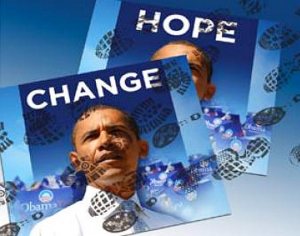
Please read this shocking story at The New York Times — there’s no way for me to excerpt all the important parts.
Obama administration officials are offering to cut tens of billions of dollars from Medicare and Medicaid in negotiations to reduce the federal budget deficit, but the depth of the cuts depends on whether Republicans are willing to accept any increases in tax revenues.
Administration officials and Republican negotiators say the money can be taken from health care providers like hospitals and nursing homes without directly imposing new costs on needy beneficiaries or radically restructuring either program.
What this really means is that more doctors and hospitals will refuse to accept Medicare and Medicaid patients, and nursing homes will turn away frail elderly patients who can’t pay out of pocket–because Medicaid will no longer be able to assist those who are poor or have already spent their life savings on health care.
“Congress smells blood,” said William L. Minnix Jr., the chief lobbyist for nonprofit nursing homes.
Mr. Minnix, the president of a trade group known as LeadingAge, is urging nursing homes to “bombard your senators with the message that Medicaid cannot be cut by $100 billion” over 10 years, as President Obama and many Republican lawmakers have suggested.
A coalition of hospital lobbyists, worried about the direction of the budget talks, has begun a national advertising campaign to block further cuts in the two health care programs, which account for about 55 percent of hospital revenues. The hospitals have made a commitment to spend up to $1 million a week through August on television, print and online advertising.
Now check this out: Chuck Schumer, supposedly a Democrat, is quoted in the article as saying, “We are very willing to entertain savings in Medicare. Medicare gives very good health care very inefficiently.”
Really? Medicare has almost no overhead, and it pays way below the going rate for health care services. That’s why so few private doctors accept Medicare patients right now.
Now think about what Dakinikat has told us about the dangers of cutting federal spending and read this:
Medicare and Medicaid insure more than 100 million people, account for 23 percent of all federal spending and are likely to be an important part of any budget deal. Military spending, which accounts for about 20 percent of federal expenditures, is likely to be included as well.
President Obama and his Republican pals are on a mission to bring down the American economy and bring on a repeat of the Great Depression. Can anything or anyone stop them? We need riots in the streets, but can elderly people do it alone?

 peej
peej Carissa
 bostonboomer
 dakinikat
 ecocatwoman
 mablue2
 Mama Lopez
 peggysue22
 quixote
 skydancingguestblogger
 Mona (aka Wonk the Vote)



 Sky Dancing
Recent Comments