
Lazy Caturday Reads
Posted: June 20, 2020 Filed under: morning reads, U.S. Politics | Tags: Anthony Fauci, Bill Barr, coronavirus pandemic, Covid-19, Donald Trump, Geoffrey Berman, Michael Cohen, Mueller report, Roger Stone, SDNY, super-spreaders, Trump hate rallies, Tulsa OK, Voice of America, WHO 23 Comments Good Morning!!
We seem to have lost many of our regular commenters. I hope it wasn’t something I said or did. Maybe, like me, you’re just exhausted and burned out by the awful things that are happening in our country. I just want to say that I miss you all and hope to see you again soon.
I can’t stop doing my posts. It has become a habit and a way for me to sort through the daily shocking events in Trump world. Will we ever recover from his destructive attacks on the Constitution and on democracy itself? I really don’t know.
Today is the day of Trump’s super-spreader rally in Tulsa, Oklahoma. His deplorable supporters will travel from other states, stand or sit close together, and shout at the top of their lungs; and if they are infected, they’ll spread the virus to other people near them. And then the rallyers will travel back to their homes and spread the virus there. Trump is actively working to kill Americans.
Jonathan Swan at Axios: Trump: Expect “wild evening” in Tulsa, mask optional.
President Trump defended his decision to move ahead with a controversial large-scale Tulsa rally this weekend amid the pandemic, saying in an interview Friday with Axios that “we have to get back to living our lives” and “we’re going to have a wild evening tomorrow night at Oklahoma.”
Pressed on why he wasn’t using his presidential bully pulpitto encourage rally attendees to wear masks, Trump described masks as “a double-edged sword.” When asked if he recommended people wear them, he added: “I recommend people do what they want.”
Why it matters: Ahead of the rally expected to draw tens of thousands of supporters and protesters, the president’s comments underscore his skepticism of the effectiveness of strict enforcement of masks and social distancing to combat the virus that has killed more than 118,000 Americans and devastated the U.S. economy.
And his advice flies in the face of warnings from Trump’s own government’s top infectious disease expert, Dr. Anthony Fauci.
Later in the interview, talking about China’s renewed trouble with coronavirus, Trump said: “It’s hard to stop it. It’s the most contagious virus anyone’s ever seen. I could look at you, and all of a sudden you have the virus. Or vice versa.”
Trump doubled down on his tweeted threat against protesters.
The president stood by his tweet earlier Friday suggesting protesters in Tulsa should prepare to face physical force from Oklahoma law enforcement, saying, “That’s got to be the least controversial of my tweets.”
“Oklahoma’s much tougher on law and order” than some parts of the country, he said, and insisted that protests are packed with anarchists, agitators and looters. “They’re all together.”
He relished the lifting of a health and safety curfew in Tulsa for his supporters and said he has no intention of wearing a mask at the rally and that people should do what they want.
“I don’t feel that I’m in danger,” he said. “I’ve met a lot, a lot of people, and so far here I sit.” (Everyone who meets with Trump, including this reporter, is tested beforehand.)
That’s right. Around 9:30 last night, Barr tried to fire U.S. Attorney Geoffrey Berman of the Southern District of New York. The New York Times: Barr Tries to Fire U.S. Attorney in Trump-Related Cases, but He Won’t Go.
Attorney General William P. Barr on Friday night abruptly tried to fire the top federal prosecutor in Manhattan, Geoffrey S. Berman, who has investigated several of President Trump’s closest associates, but Mr. Berman said he would not leave.
The clash focused new attention on the efforts by Mr. Trump and his closest aides to rid the administration of officials whom the president views as insufficiently loyal. It also touched off a crisis within the Justice Department over one of its most prestigious jobs, at a time when the agency has already been roiled by questions over whether Mr. Barr has undercut its tradition of independence from political interference.
Mr. Berman, the United States attorney for the Southern District of New York, and his team have been at the forefront of corruption inquiries in Mr. Trump’s inner circle. They successfully prosecuted the president’s former personal lawyer, Michael Cohen, who went to prison, and have been investigating Mr. Trump’s current personal lawyer, Rudolph W. Giuliani.
“I have not resigned, and have no intention of resigning, my position,” Mr. Berman said in a statement, adding that he had learned that he was “stepping down” from a Justice Department news release.
Meanwhile, the virus is continuing to spread, especially in Trump-supporting states. NPR: Coronavirus Spread Hits 1-Day High, World Health Organization Says.
The coronavirus pandemic reached a new one-day high Thursday with 150,000 new confirmed cases, according to the World Health Organization.
Almost half of those cases were reported in the Americas, WHO Director-General Dr. Tedros Adhanom Ghebreyesus said at a press conference.
“The world is in a new and dangerous phase,” Tedros said. “Many people are understandably fed up with being at home. Countries are understandably eager to open up their societies and economies, but the virus is still spreading fast. It is still deadly, and most people are still susceptible.”
Tedros urged countries and organizations to continue to focus on the basics of prevention, including proper sanitation and social distancing. He also pointed to an increased concern about the spread of the coronavirus in refugee communities across the world as well as refugees’ precarious economic situations.
Trump just managed to destroy another U.S. institution–Voice of America. The Washington Post: How Trump’s obsessions with media and loyalty coalesced in a battle for Voice of America.
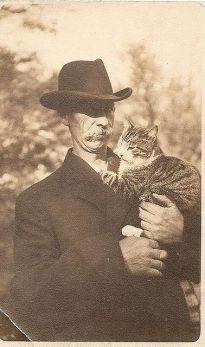

Thunderous Thursday Reads: Bolton From The Blue
Posted: June 18, 2020 Filed under: Foreign Affairs, morning reads, Republican politics, U.S. Politics | Tags: Donald Trump, John Bolton 8 Comments
Good Morning!!
John Bolton’s book is scheduled for release next Tuesday, but you don’t have to buy it. The best parts are already being published everywhere, despite Trump’s and Barr’s efforts to stop publication.
Bolton was interviewed by ABC’s Martha Raddatz, and the interview will be shown on Sunday in an hour-long special beginning at 9PM. ABC News: Bolton: Trump’s not ‘fit for office,’ doesn’t have ‘competence to carry out the job’
President Donald Trump is not “fit for office” and doesn’t have “the competence to carry out the job,” his former national security adviser John Bolton told ABC News in an exclusive interview.
In an explosive new book about his 17 months at the White House, Bolton characterizes Trump as “stunningly uninformed,” ignorant of basic facts and easily manipulated by foreign adversaries.
But his assessment that Trump is not “fit” to be president is among the most stunning indictments of a sitting president by one of their own top advisers in American history.
“There really isn’t any guiding principle that I was able to discern other than what’s good for Donald Trump’s reelection,” Bolton told ABC News chief global affairs correspondent Martha Raddatz.
“He was so focused on the reelection that longer-term considerations fell by the wayside,” he added.
The New York Times: Bolton Says Trump Impeachment Inquiry Missed Other Troubling Episodes.
John R. Bolton, the former national security adviser, says in his new book that the House in its impeachment inquiry should have investigated President Trump not just for pressuring Ukraine but for a variety of instances when he sought to use trade negotiations and criminal investigations to further his political interests.
Mr. Bolton describes several episodes where the president expressed a willingness to halt criminal investigations “to, in effect, give personal favors to dictators he liked,” citing cases involving major firms in China and Turkey. “The pattern looked like obstruction of justice as a way of life, which we couldn’t accept,” Mr. Bolton writes, saying that he reported his concerns to Attorney General William P. Barr.
Mr. Bolton also adds a striking new accusation by describing how Mr. Trump overtly linked tariff talks with China to his own political fortunes by asking President Xi Jinping to buy American agricultural products to help him win farm states in this year’s election. Mr. Trump, he writes, was “pleading with Xi to ensure he’d win.” Mr. Bolton said that Mr. Trump “stressed the importance of farmers, and increased Chinese purchases of soybeans and wheat in the electoral outcome.”
A bit more:
Mr. Bolton’s volume is the first tell-all memoir by such a high-ranking official who participated in major foreign policy events and has a lifetime of conservative credentials. It is a withering portrait of a president ignorant of even basic facts about the world, susceptible to transparent flattery by authoritarian leaders manipulating him and prone to false statements, foul-mouthed eruptions and snap decisions that aides try to manage or reverse.
Mr. Trump did not seem to know, for example, that Britain was a nuclear power and asked if Finland was a part of Russia, Mr. Bolton writes. The president never tired of assailing allied leaders and came closer to withdrawing the United States from NATO than previously known. He said it would be “cool” to invade Venezuela.
At times, Mr. Trump seemed to almost mimic the authoritarian leaders he appeared to admire. “These people should be executed,” Mr. Trump once said of journalists. “They are scumbags.” When Mr. Xi explained why he was building concentration camps in China, the book says, Mr. Trump “said that Xi should go ahead with building the camps, which he thought was exactly the right thing to do.” He repeatedly badgered Mr. Barr to prosecute former Secretary of State John F. Kerry for talking with Iran in what he insisted was a violation of the Logan Act.
There’s plenty more at the NYT link.
The Guardian: Trump was willing to halt criminal investigations as ‘favor’ to dictators, Bolton book says.
Donald Trump was willing to halt criminal investigations to “give personal favors to dictators he liked”, according to a new book written by his former national security adviser John Bolton….
Bolton alleges that Trump pleaded with China’s President Xi Jinping to help him get re-elected by buying more US agricultural products, according to accounts of his forthcoming memoir.
In his pursuit of a good personal relationship with Xi, Trump is described as brushing aside human rights issues, even providing encouragement to the communist leader to continue to build concentration camps for China’s Muslim Uighur population….
According to excerpts published by the Wall Street Journal, New York Times and the Washington Post, Bolton describes a pattern of corruption in which Trump routinely attempts to use the leverage of US power on other countries to his own personal ends.
“The pattern looked like obstruction of justice as a way of life, which we couldn’t accept,” Bolton writes, adding that he took his concerns to the attorney general, William Barr.
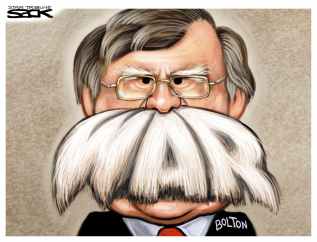 Axios: Bolton’s Revenge.
Highlights from a copy obtained by the N.Y. Times’ Peter Baker:
Impeachment: Bolton says Democrats failed by focusing the probe on Ukraine rather than on other cases involving China and Turkey.
Gossip: Bolton alleges Secretary of State Mike Pompeo slipped him a note calling Trump “full of shit” during a 2018 meeting with Kim Jong-un.
Trump gaffes: Bolton alleges Trump didn’t know the U.K. was a nuclear power and claims Trump asked if Finland was part of Russia.
Journalists: Bolton alleges Trump privately told him reporters deserve prison. “These people should be executed. They are scumbags.”
Bolton’s own words, via an excerpt published in the WSJ:
“Trump then, stunningly, turned the conversation to the coming U.S. presidential election, alluding to China’s economic capability and pleading with Xi to ensure he’d win. He stressed the importance of farmers and increased Chinese purchases of soybeans and wheat in the electoral outcome.”
“I would print Trump’s exact words, but the government’s prepublication review process has decided otherwise.”
“At the opening dinner of the Osaka G-20 meeting in June 2019, with only interpreters present, Xi had explained to Trump why he was basically building concentration camps in Xinjiang.
According to our interpreter, Trump said that Xi should go ahead with building the camps, which Trump thought was exactly the right thing to do.”
“One of Trump’s favorite comparisons was to point to the tip of one of his Sharpies and say, ‘This is Taiwan,’ then point to the historic Resolute desk in the Oval Office and say, ‘This is China.’”
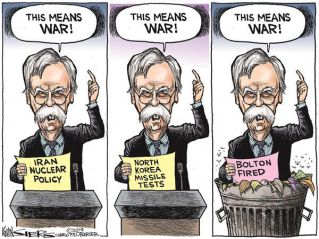 CNN has a list of stunning revelations from the book, including this one:
Trump wanted Attorney General Bill Barr to make CNN reporters ‘serve time in jail.’
When news leaked about a hush-hush meeting on Afghanistan at Trump’s Bedminster resort, Trump complained that CNN had reported the summit was taking place, Bolton writes. The President told White House counsel Pat Cipollone to call Attorney General Bill Barr about his desire to “arrest the reporters, force them to serve time in jail, and then demand they disclose their sources.”
More highlights from the book:
The Guardian: John Bolton’s bombshell Trump book: eight of its most stunning claims.
The New York Times: Five Takeaways From John Bolton’s Memoir.
Book Reviews
Jennifer Szalai at The New York Times: In ‘The Room Where It Happened,’ John Bolton Dumps His Notes and Smites His Enemies.
David Ignatius at The Washington Post: John Bolton’s book is full of startling revelations he should have told us sooner.
More Reactions
A powerful commentary by Michael Tomasky at The Daily Beast: John Bolton Shows That All the President’s Men Are Cowards.
The book is 592 pages, and it’s already #1 on Amazon even before it’s out next week. Trump sued to block publication, with Bill Barr inevitably doing his hopeless dirty work there. He will lose. The book will be published. And the news is already here.
Americans will read or at least hear about how Trump has given the law the finger virtually every day of his presidency, didn’t know that England is a nuclear power, thought invading Venezuela would be “cool” and that Finland was part of Russia. And that Trump was, in Mike Pompeo’s eyes, “so full of shit.” And it’s great that we’re learning this now, five months before the American people render their verdict on this fraud.
On the other hand… why are we just learning this now?
Because John Bolton didn’t have the guts to stand up and say these things when it might have mattered more. Or maybe it was less a matter of guts than cash. His agent and publisher surely leaned on him to save it for the book, and well, it’s #1, so in that sense they were right, but what is that sense, exactly?
It’s the sense in which, in a contest between market and polity, the race isn’t even close. The market will win that race every time in today’s America. The president of the United States has been destroying this country, eroding its decent values every single day of his presidency, until matters have finally reached the point that, through his malevolence and stupidity and lack of empathy, he is actually and literally responsible for the deaths of tens of thousands of Americans.
Bolton had a chance to speak up before all those people died from Trump’s selfish incompetence. Of course he couldn’t have known that was coming. But with Trump, something bad was coming. It was inevitable. Maybe with a different roll of the dice, war with Iran. The man is a lunatic, completely in over his head in this job, mentally unstable, and an instrument of national grief just waiting to happen every day. It’s been obvious to everyone for years.
Bill Kristol at The Bulwark: John Bolton Tells the Truth.
I’m not particularly surprised by John Bolton’s revelations. (I should make clear that neither of the individuals described above was Bolton.)
But whether or not one is surprised by what Bolton reports, no one should really doubt the truth of it. I have no doubt that Bolton is telling the truth. Not simply because of my two, as it were, generally corroborating sources. But because I’ve known John Bolton a long time, and John Bolton is an honest man. He tells the truth.
Full stop.
John Bolton is neither a liar nor a fantasist. John Bolton may not be the epitome of warmth, humor, or even kindness. But he is honest.
Nor is he the type to get confused. He is a meticulous note-taker. When we read Bolton’s book, we will almost certainly be reading the nearest thing to the truth about the Trump administration that we’re likely to get before historians have a chance to get inside the administration’s archives.
Here is what is relevant for Republican elites going forward: They have known John Bolton for a long time, too. Almost every Republican elected official, every influential Washington conservative, and many Republican donors know John Bolton. And they, too, know he’s honest.
So what do they have to say about a president who blesses Chinese concentration camps, pleads for re-election help from an enemy dictator, and routinely subordinates the national interest to personal and political considerations?
How can they continue to support this president?
I’m sure they will find ways. But those who continue to support Trump need to accept that they’re supporting a man who has done what Bolton says Trump has done. And those who support a Trump second term need to accept that they are supporting four more years in office for a president who has done what Bolton says Trump has done.
And those who continue to keep silent are keeping silent from us, their fellow citizens, their judgment of a president who has done what Bolton says Trump has done.
Enough. Bolton has spoken. Surely there are others who will now dare to disturb the sound of silence.
We’ll have to wait and see if Bolton’s revelations will hurt Trump in the run-up to the election. What do you think? What other stories are on your radar today?
Lazy Caturday Reads
Posted: June 13, 2020 Filed under: morning reads, U.S. Politics | Tags: Abraham Lincoln, caturday, Civil Rights, Civil War, Donald Trump, Fox News, Harris Faulkner, John F. Kennedy, Racism 16 Comments
Good Morning!!
On Thursday, June 11, Lawrence O’Donnell discussed the speech on Civil Rights that President John F. Kennedy gave from the Oval Office on that day in 1963. The purpose of the speech was to propose the Civil Rights bill that passed after Kennedy’s assassination. Fifty-seven years later, we’ve made some progress, but systemic racism still runs rampant in this country. I thought I’d share some excerpts from that long-ago speech today.
NPR: John F. Kennedy’s Address on Civil Rights.
On June 11, 1963, President John F. Kennedy addressed the nation on the most pressing domestic issue of the day: the struggle to affirm civil rights for all Americans. His administration had sent National Guard troops to accompany the first black students admitted to the University of Mississippi and University of Alabama.
Excerpts selected by NPR:
…It ought to be possible… for American students of any color to attend any public institution they select without having to be backed up by troops.
…It ought to be possible for American consumers of any color to receive equal service in places of public accommodation, such as hotels and restaurants and theaters and retail stores, without being forced to resort to demonstrations in the street, and it ought to be possible for American citizens of any color to register and to vote in a free election without interference or fear of reprisal.
Painting by Ekaterina Mateckaya
It ought to be possible, in short, for every American to enjoy the privileges of being American without regard to his race or his color. In short, every American ought to have the right to be treated as he would wish to be treated, as one would wish his children to be treated. But this is not the case….
…This is not a sectional issue…Nor is this a partisan issue…This is not even a legal or legislative issue alone. It is better to settle these matters in the courts than on the streets, and new laws are needed at every level, but law alone cannot make men see right.
We are confronted primarily with a moral issue. It is as old as the scriptures and is as clear as the American Constitution.
The heart of the question is — whether all Americans are to be afforded equal rights and equal opportunities. Whether we are going to treat our fellow Americans as we want to be treated. If an American, because his skin is dark, cannot eat lunch in a restaurant open to the public, if he cannot send his children to the best public school available, if he cannot vote for the public officials who represent him, if, in short, he cannot enjoy the full and free life which all of us want, then who among us would be content to have the color of his skin changed and stand in his place? Who among us would then be content with the counsels of patience and delay?
One hundred years of delay have passed since President Lincoln freed the slaves, yet their heirs, their grandsons, are not fully free….
…It is not enough to pin the blame on others, to say this is a problem of one section of the country or another, or deplore the fact that we face. A great change is at hand, and our task, our obligation, is to make that revolution, that change, peaceful and constructive for all.
Those who do nothing are inviting shame as well as violence. Those who act boldly are recognizing right as well as reality…

You can watch the entire speech at C-Span. I watched it yesterday and it made me so sad. The comparison between Kennedy and the current occupant of the White House so so glaring. Not only was Kennedy capable of compassion and empathy, but he also spoke eloquently, in complete sentences and paragraphs. Today we have a fraudulent “president” who babbles nonsense, effortlessly lies about everything and has no idea how to do the job he holds even if he actually wanted to be a leader.

Cat in the window, by Joanna DeRitis
Speaking of Trump’s incoherent babbling, on Thursday he gave another strange Fox News interview with Harris Faulkner (who is black). For Fox, the questions were pretty tough. You can read the transcript and watch video excerpts at Factbase.
The most stunning moment in the interview was when Trump claimed to have done more for black Americans than any previous president, including Abraham Lincoln. Business Insider: Trump says Abraham Lincoln ‘did good’ for the Black community but that ‘the end result’ is ‘questionable.’
“So I think I’ve done more for the Black community than any other president, and let’s take a pass on Abraham Lincoln because he did good, although it’s always questionable, you know, in other words, the end result —” Trump said before Faulkner interjected.
“Well, we are free, Mr. President, so I think he did pretty well,” she said, referring to Lincoln.
“We are free,” Trump said. “You understand what I mean.”
“Yeah, I get it,” Faulkner said.
This isn’t the first time Trump has claimed he’s done more for the Black community than his predecessors.
“This may well be the president’s most audacious claim ever,” Michael Fauntroy, a professor of political science at Howard University, told The New York Times earlier this month. “Not only has he not done more than anybody else, he’s done close to the least.”
Of course it’s not really clear what Trump was trying to say, because his speech is so incoherent. At Slate, Jeremy Stahl tries to make sense of Trump’s words: What Was Trump Trying to Say About Abraham Lincoln?
A lot of people saw the transcript of those words—and perhaps watched the clip—and interpreted Trump as having said that “the end result” of Lincoln’s presidency—i.e., winning the Civil War, preserving the union, and ending the atrocity of chattel slavery—was “always questionable.” [….]
By Utagawa Hiroshige
I would never definitively state that I believed Trump didn’t mean the most racist possible interpretation of one of his often hard-to-grasp word salads. Indeed, he has in the past questioned the fact that the Civil War needed to occur, stating in 2017 that had Andrew Jackson been president at the time he would have stopped the Civil War from happening because he would have realized “there’s no reason for this.”
“The Civil War, if you think about it, why? People don’t ask the question, but why was there the Civil War? Why could that one not have been worked out?” Trump said back then.
As my former colleague, Jamelle Bouie, wrote at the time, that statement—apparently that Jackson could have come up with a perfect “deal” to prevent the Civil War—was as dangerous as it was ahistorical.
Given that past remark, it’s certainly plausible that Trump’s brain is so rotted from his own racism that he would say that the end results of Lincoln’s presidency were “questionable.” Based on the context of the question, though, and more recent comments from Trump, I think that is unlikely.
I interpret this particular word salad to be an attempt by Trump to validate his recent tweet that his administration “has done more for the Black Community than any President since Abraham Lincoln.”

Trump was likely attempting to say that while “I think I’ve done more for the black community than any other president,” he would ask that in such a ranking “let’s take a pass” on including Lincoln, because it’s an unfair comparison, but—even if he were to go head-to-head with Lincoln for the title of “best president for black people ever”—despite the fact that Lincoln “did good,” it would still be “always questionable” whether Trump was better, because you have to consider “the end result” of each man’s presidency.
Okay . . . I guess that’s as good an interpretation as any.
At Vox, Zach Beauchamp discusses another howler from the interview: Trump: “The concept of chokehold sounds so innocent, so perfect.”
When asked about police use of chokeholds on suspects like George Floyd, who was killed after a Minneapolis officer pinned him by the neck with his knee for nearly nine minutes, Trump initially told Faulkner that “I don’t like chokeholds,” even saying that “generally speaking, they should be ended.” But he contradicted that pretty quickly, saying that when you’ve got someone who is “a real bad person … what are you gonna do now — let go?”
He even went further, saying that “the concept of chokehold sounds so innocent, so perfect,” if a lone police officer is attempting to detain someone.
Deborah DeWitt, Birdwatching
His position, as far as I can tell, seems to be that maybe sometimes individual officers need to use chokeholds, but the more police there are, the less likely it is they’ll need to use one:
TRUMP: I think the concept of chokehold sounds so innocent, so perfect. And then you realize, if it’s a one-on-one. But if it’s two-on-one, that’s a little bit a different story. Depending on the toughness and strength — you know, we’re talking about toughness and strength. There’s a physical thing here too.
FAULKNER: If it’s a one-on-one for the [officer’s] life …
TRUMP: And that does happen, that does happen. You have to be careful.
The most relevant part here isn’t the president’s views on the details of self-defense tactics, but rather the lack of empathy in the way he talks about the issue. The only world in which police using chokeholds could sound “innocent” or “perfect” is a world in which you don’t think about what happens to people when they’re literally being choked — or one where you assume that it won’t happen to people like you.
A recent LA Times investigation found that 103 people were “seriously injured” by police using “carotid neck restraints” in California between 2016 and 2018. Black people, who make up 6.5 percent of the state’s population, were 23 percent of those injured in such holds.
Trump’s thinking seems so deeply shaped by his sense of generalized police innocence, his unwillingness to really process the fact of racial discrimination in police use of force, that he’s capable of saying out loud that chokeholds sound “innocent.”

What all this interpretation really boils down to is that Trump is disastrously incapable of doing the job of POTUS. And yet we’re stuck with him, so writers struggle to figure out what the hell he is talking about.
Stories to check out today
David Smith at The Guardian: ‘He just doesn’t get it’: has Trump been left behind by America’s awakening on racism?
The Washington Post: Trump says he’ll ‘go on and do other things’ if he loses in November.
Julian Borger at The Guardian: ‘Trump thought I was a secretary’: Fiona Hill on the president, Putin and populism.
The New York Times: Trump’s Actions Rattle the Military World: ‘I Can’t Support the Man’
NBC News: From ‘beautiful letters’ to ‘a dark nightmare’: How Trump’s North Korea gamble went bust.
The New York Times: Trump Moves Tulsa Rally Date ‘Out of Respect’ for Juneteenth.
The Daily Beast: Survivors of KKK’s Ax Handle Attack Appalled at Trump Speech.
The Washington Post: Republicans and Trump want a Jacksonville convention party. Some locals are worried about the area’s health.
The Daily Beast: A Black Man Was Found Hanging From a Tree—Residents Don’t Buy That It Was a Suicide.
Jonathan Chait at New York Magazine: Michael Flynn Writes Column Confirming He Is Definitely Insane.
USA Today: Fired Florida scientist builds coronavirus site showing far more cases than state reports.
Thursday Reads
Posted: June 11, 2020 Filed under: morning reads, U.S. Politics | Tags: Bill Barr, Boston, Christopher Columbus statues, Department of Justice, Donald Trump, Houston, Judge John Gleeson, Kennedy Mitchum, Merriam-Webster, miami, MN, Racism, Richmond, St. Paul, VA 12 Comments
A statue depicting Christopher Columbus is seen with its head removed at Christopher Columbus Waterfront Park on June 10, 2020 in Boston. (Photo by Tim Bradbury/Getty Images)
Good Morning!!
The movement inspired by the murder of George Floyd has inspired more than the Black Lives Matter protests. People are toppling statues now, and not just the ones of confederate traitors.
Someone beheaded the Christopher Columbus statue in Boston’s North End yesterday. (The North End used to be Boston’s “little Italy.”) WBZ (CBS) Boston: Beheaded Christopher Columbus Statue In Boston Will Be Removed From North End Park.
The Christopher Columbus statue in Boston’s North End will be removed after it was beheaded early Wednesday morning. Mayor Marty Walsh said it will be put in storage and there will now be conversations about the “historic meaning” of the incident and whether it will ever go back up.
The statue in Christopher Columbus Park on Atlantic Avenue was surrounded by crime scene tape as the head lay on the ground next to the base.
Now, as police investigate how it happened, local indigenous groups are calling on the mayor to remove the statue for good.
“It’s a park dedicated to white supremacy,” said Mahtowin Munro of the United American Indians of New England. “It’s a park dedicated to indigenous genocide.” [….]
The head was also cut off back in 2006. The statue was doused with red paint in June 2015 with the words “Black Lives Matter” spray-painted on the base.
Another statue of Columbus was taken down at Minnesota’s state capitol in St. Paul. Minneapolis Star-Tribune: Protesters topple Columbus statue on Minnesota Capitol grounds.
Protesters lassoed a statue of Christopher Columbus outside the State Capitol Wednesday afternoon and pulled it to the ground, saying their action was a step toward healing for Indian communities.
People danced in a circle around the Christopher Columbus statue after it was toppled on Wednesday night on the Minnesota State Capitol grounds in St. Paul.
Dozens of people gathered by the statue on the grounds outside the Capitol before pulling it down. American Indian Movement activist Mike Forcia talked to a State Patrol captain sent to the scene to encourage protesters to follow a legal process for removing the statue, which has stood on the Capitol grounds since 1931. Forcia said they had tried that route many times and it had not worked.
The protesters then looped a rope around the statue and quickly pulled it off the stone pedestal and to the ground. The patrol officer watched from a distance as protesters sang and took photos with the statue for about half an hour.
State officials said they had been warned about the action via social media. It was mentioned at a news conference an hour and a half earlier with Gov. Tim Walz. Public Safety Commissioner John Harrington said then that the patrol would meet the protesters and seek an alternative resolution.
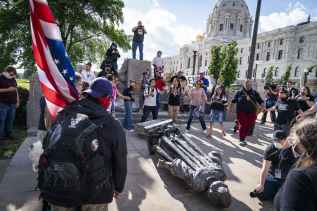
In Richmond, VA, a Columbus statue was pulled down, set on fire, and rolled into a lake. Another Columbus statue was vandalized in Houston and another in Miami.
Two other stories of note on the topic of racism and Black Lives Matter protests:
Associated Press: Pope sends strong message to US Catholics after Floyd death.
VATICAN CITY (AP) — Pope Francis called George Floyd by name, twice, and offered support to an American bishop who knelt in prayer during a Black Lives Matter protest.
Cardinals black and white have spoken out about Floyd’s death, and the Vatican’s communications juggernaut has shifted into overdrive to draw attention to the cause he now represents.
Christopher Columbus statue dumped in lake in Richmond, VA
Under normal circumstances, Floyd’s killing at the hands of a white police officer and the global protests denouncing racism and police brutality might have drawn a muted diplomatic response from the Holy See. But in a U.S. election year, the intensity and consistency of the Vatican’s reaction suggests that, from the pope on down, it is seeking to encourage anti-racism protesters while making a clear statement about where American Catholics should stand ahead of President Donald Trump’s bid for a second term in November….
Last week, Francis denounced the “sin of racism” and twice identified Floyd as the victim of a “tragic” killing. In a message read in Italian and English during his general audience, Francis expressed concerns about violence during the protests, saying it was self-destructive.

Read more at the link.
Kennedy Mitchum wasn’t expecting much when she emailed Merriam-Webster last month, but she wanted to let the dictionary publisher know that she thought its definition of the word racism was inadequate.
So she was surprised when an editor responded and even more surprised that the company agreed to update the entry.
Mitchum has gotten into a lot conversations about racism and injustice where people have pointed to the dictionary to prove that they’re not racist. It’s happened a lot more lately as the world reacts to the death of George Floyd while in the custody of four Minneapolis police officers….
Kennedy Mitchum
“I kept having to tell them that definition is not representative of what is actually happening in the world,” she told CNN. “The way that racism occurs in real life is not just prejudice it’s the systemic racism that is happening for a lot of black Americans.”
Merriam-Webster’s first definition of racism is “a belief that race is the primary determinant of human traits and capacities and that racial differences produce an inherent superiority of a particular race.” [….]Mitchum said she sent her email on a Thursday night and got a reply from editor Alex Chambers the next morning.
After a few emails, Chambers agreed that the entry should be updated and said a new definition is being drafted.
“This revision would not have been made without your persistence in contacting us about this problem,” Chambers said in the email, which was provided to CNN. “We sincerely thank you for repeatedly writing in and apologize for the harm and offense we have caused in failing to address this issue sooner.”

Meanwhile, a backlash against Trump and his pet AG Bill Barr is building over the violent clearing of Lafayette Square to facilitation Trump’s ludicrous Bible photo op last week.
Tom McCarthy at The Guardian: ‘An abuse of power’: alarm grows over top Trump lieutenant’s military masquerade.
…[T]he top law enforcement official in the country, the attorney general, William Barr, is facing an internal crisis of confidence and growing calls for his own resignation.
Barr stands accused of directing violence against peaceful demonstrators outside the White House earlier this month, and with peddling a conspiracy theory advanced by Donald Trump in an attempt to smear protesters, who enjoy wide public support.
Trump/Barr attack on protesters in Lafayette Park
In the first 16 months of his tenure, Barr caught criticism for compromising justice department independence with his seemingly lockstep defense of Trump, whether he was protecting the president from the investigation of special counsel Robert Mueller or intervening in criminal cases against the former Trump aides Michael Flynn and Roger Stone.
But Barr’s critics now fear that he has taken a new step, of trying on a military hat as the president’s top lieutenant in the antagonistic posture the White House has taken against street protests that have sprung up after the killing of George Floyd, an African American man, in Minneapolis by white police officers.

A bit more:
The attorney general’s denial at the weekend that systemic racism was a problem in US law enforcement prompted new calls for his resignation.
“I think there’s racism in the United States still, but I don’t think that the law enforcement system is systemically racist,” Barr told CBS News’ Face the Nation. “And I would say, you know, the president, before any of this happened, was out in front on this issue.”
On no planet has Trump been “out in front” in the campaign against racist policing, said Kandace Montgomery, director of Black Visions, a Twin Cities-based activist organization.
“William Barr is a white man who is serving a racist administration, so of course he’s going to deny the fact that the current law enforcement system is systemically racist,” Montgomery said.
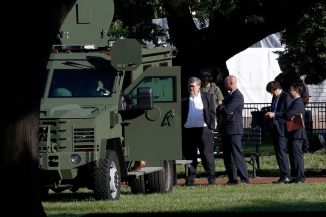
Bill Barr checking out the “troops” before ordering them to attack peaceful protesters.
The Washington Post: More than 1,250 former Justice Dept. workers call for internal watchdog to probe Barr role in clearing demonstrators from Lafayette Square.
More than 1,250 former Justice Department workers on Wednesday called on the agency’s internal watchdog to investigate Attorney General William P. Barr’s involvement in law enforcement’s move last week to push a crowd of largely peaceful demonstrators back from Lafayette Square using horses and gas.
In a letter to Justice Department Inspector General Michael Horowitz, the group said it was “deeply concerned about the Department’s actions, and those of Attorney General William Barr himself, in response to the nationwide lawful gatherings to protest the systemic racism that has plagued this country throughout its history.”
“In particular, we are disturbed by Attorney General Barr’s possible role in ordering law enforcement personnel to suppress a peaceful domestic protest in Lafayette Square on June 1, 2020, for the purpose of enabling President Trump to walk across the street from the White House and stage a photo op at St. John’s Church, a politically motivated event in which Attorney General Barr participated,” the group wrote.
The group asked Horowitz to “immediately open and conduct an investigation of the full scope of the Attorney General’s and the DOJ’s role” in that and other events.
“The rule of law, the maintenance of the Department’s integrity, and the very safety of our citizens demand nothing less,” the group wrote.
Barr was also publicly excoriated by former Judge John Gleeson for his attempt to drop charges against Michael Flynn. Paul Waldman at The Washington Post: A retired judge’s sharp rebuke of William Barr confirms the worst.
Judge John Gleeson
Back in May, long after Flynn had pleaded guilty to lying to FBI agents in their investigation into Russia’s attack on the 2016 election — which got him fired as national security adviser after 24 days on the job — Barr took the extraordinary step of seeking to drop the case against him before he could be sentenced. In response, the judge in the case asked a respected retired judge to make a recommendation about how this highly unusual situation should be handled.
That retired judge, John Gleeson, not only recommended that Flynn be sentenced as planned but issued a scathing report condemning the Justice Department’s actions in the case:
In his argument, Gleeson said the government’s “ostensible grounds” for seeking dismissal were “conclusively disproven” by its own earlier briefs; contradict the court’s prior orders and Justice Department positions taken in other cases; and “are riddled with inexplicable and elementary errors of law and fact.”
A former federal prosecutor and judge for 22 years in Brooklyn — best known for putting the late mob boss John Gotti behind bars and presiding over the trial of “Wolf of Wall Street” stockbroker Jordan Belfort — Gleeson wrote that judges are empowered to protect their court’s integrity “from prosecutors who undertake corrupt, politically motivated dismissals. That is what has happened here. The Government has engaged in highly irregular conduct to benefit a political ally of the President.”
Not only that, Gleeson stated that “Flynn has indeed committed perjury in these proceedings, for which he deserves punishment,” but recommended that instead of a separate prosecution, Flynn’s misdeeds should be taken into account when he is sentenced for the crime he pleaded guilty to.
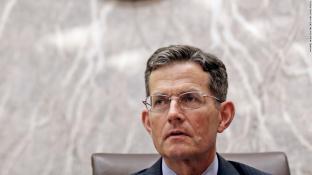
Read the rest at the WaPo.
Of course there is much more news out there. I’ll add some links in the comment thread and I hope you will too.
Thursday Reads: Could This Be A Turning Point?
Posted: June 4, 2020 Filed under: morning reads, U.S. Politics | Tags: Black Lives Matter, Donald Trump, evangelicals, former presidents speak out, Gen. John Allen, George Floyd, James Mattis, protest rallies, Secretary of Defense Mark T. Esper 18 Comments
Good Morning!!
Could we finally have reached a turning point? Suddenly Trump is getting blowback from some powerful and respected quarters. Former presidents, the current Secretary of Defense, Trump’s former Secretary of Defense, retired generals, and former presidents are speaking out about Trump’s authoritarian tendencies and his misuse of the military. Even some in his evangelical base are speaking out.
The Atlantic: James Mattis Denounces President Trump, Describes Him as a Threat to the Constitution.
James Mattis, the esteemed Marine general who resigned as secretary of defense in December 2018 to protest Donald Trump’s Syria policy, has, ever since, kept studiously silent about Trump’s performance as president. But he has now broken his silence, writing an extraordinary broadside in which he denounces the president for dividing the nation, and accuses him of ordering the U.S. military to violate the constitutional rights of American citizens.
“I have watched this week’s unfolding events, angry and appalled,” Mattis writes. “The words ‘Equal Justice Under Law’ are carved in the pediment of the United States Supreme Court. This is precisely what protesters are rightly demanding. It is a wholesome and unifying demand—one that all of us should be able to get behind. We must not be distracted by a small number of lawbreakers. The protests are defined by tens of thousands of people of conscience who are insisting that we live up to our values—our values as people and our values as a nation.” He goes on, “We must reject and hold accountable those in office who would make a mockery of our Constitution.” [….]
“Donald Trump is the first president in my lifetime who does not try to unite the American people—does not even pretend to try. Instead, he tries to divide us,” Mattis writes. “We are witnessing the consequences of three years of this deliberate effort. We are witnessing the consequences of three years without mature leadership. We can unite without him, drawing on the strengths inherent in our civil society. This will not be easy, as the past few days have shown, but we owe it to our fellow citizens; to past generations that bled to defend our promise; and to our children.”
He goes on to contrast the American ethos of unity with Nazi ideology. “Instructions given by the military departments to our troops before the Normandy invasion reminded soldiers that ‘The Nazi slogan for destroying us … was “Divide and Conquer.” Our American answer is “In Union there is Strength.”’ We must summon that unity to surmount this crisis—confident that we are better than our politics.”
For some of us, it may be too little too late, but it’s possible Republicans will be influenced by retired general and former Defense Secretary James Mattis’ condemnation. Read the full statement at NPR.
Yesterday the current Secretary of Defense also distanced himself from Trump’s attempt to use the military to put down protests. Elizabeth N. Saunders at The Washington Post: The secretary of defense spoke out against Trump’s approach to the protests. Yes, this is a big deal.
At a Pentagon news conference Wednesday morning, Secretary of Defense Mark T. Esper said he opposed invoking the Insurrection Act and using active-duty military forces to help calm the largely peaceful protests that have been taking place around the country. Esper’s comments directly contradict President Trump, who in a nationally televised speech Monday threatened to use the military to “quickly solve the problem,” implicitly suggesting that he would invoke the 1807 law.
Esper’s comments also came after many criticized him for walking across Lafayette Square with the president and posing for a photo in front of St. John’s Episcopal Church, as well as using language like “we need to dominate the battlespace” on a Monday call with governors. On Tuesday evening, James Miller, a member of the Defense Science Board, which advises the Pentagon, wrote to Esper a letter, published in The Washington Post, to resign his position and to urge Esper to “consider closely both your future actions and your future words.”
It is tempting to dismiss Esper’s comments as words rather than action. He is not resigning in protest, as his recent predecessor, Jim Mattis, did in December 2018.
However, for Esper to give televised remarks from the Pentagon podium — something that is rare in this administration in normal times — is a significant development.
Click the link to read the reasons why this is so significant.
Retired Marine General John Allen at Foreign Policy: A Moment of National Shame and Peril—and Hope.
The slide of the United States into illiberalism may well have begun on June 1, 2020. Remember the date. It may well signal the beginning of the end of the American experiment.
The president of the United States stood in the Rose Garden of the White House on Monday, railed against weak governors and mayors who were not doing enough, in his mind, to control the unrest and the rioters in their cities, and threatened to deploy the U.S. military against American citizens. It was a stunning moment. But, in particular, it was notable for three important reasons.
First, Donald Trump expressed only the barest of condolences at the murder of George Floyd, but he also said nothing about the fundamental and underlying reasons for the unrest: systemic racism and inequality, a historic absence of respect, and a denial of justice. All of these factors are centuries old and deeply engrained in an American society that systematically delivers white privilege at the expense of people of color.
Yes, he mentioned George Floyd, but he did not touch on long-standing societal problems at all. He sees the crisis as a black problem—not as something to be addressed by creating the basis and impetus for a move toward social justice, but as an opportunity to use force to portray himself as a “law and order” president. The reasons were irrelevant to the opportunity. Remember the supposed invasion of the southern border and his deployment of federal troops ahead of the 2018 midterm elections? The president’s failure to understand the reality of the problem was on full display when, on Saturday, he attempted to explain that his supporters, the so-called Make America Great Again (MAGA) movement, “love African American people. They love black people. MAGA loves the black people.” Evidently his movement, MAGA, is a coherent thing, and it’s white, which leads to the next point about his speech.
Second, Trump was clear he views those engaged in the unrest and criminal acts in these riots as terrorists, an enemy. He said so, ostensibly as justification to deploy the U.S. military to apply federal force—his “personal” force—against the riots. Indeed, the secretary of defense used the military term “battlespace” to describe American cities.
Read the rest at Foreign Policy.
The Washington Post: All four living ex-presidents draw a sharp contrast with Trump on systemic racism.
Four U.S. presidents spoke this week about systemic racism and injustice. They used their platforms to illuminate the humanity in all Americans and to decry the dehumanization of some. And they summoned the nation to confront its failures, make change and come together.
A fifth U.S. president spoke instead this week about using military force to dominate Americans who are protesting racial injustice. He declared winners and losers among state and city officials trying to safeguard their streets. And, with his reelection campaign in mind, he sought to apply a partisan political lens to the national reckoning over racial inequities.
The outlier was President Trump.
Of course, Trump has long zigged when his four living predecessors zagged, and proudly so. But rarely has the dichotomy been clearer than this week, when Barack Obama, George W. Bush, Bill Clinton and Jimmy Carter injected their voices into the national discussion of race and justice following last week’s death of George Floyd.
Though each weighed in separately and in his own distinctive voice, the four former presidents were measured and compassionate in tone and conveyed an urgency in their lengthy messages. It presented a sharp contrast with the incumbent’s hard line and unemotional leadership.
“They’re all saying, essentially, that Donald Trump is not doing a very big part of his job, and we have to stage an intervention, even if that intervention is not coordinated,” historian Michael Beschloss said. “Foremost in the president’s job is to try to unite the country, especially in crisis. . . . These statements and gestures are saying, ‘Donald Trump is not carrying out these essential functions of the presidency, so we have to step in.’ ”
Head over to the WaPo to read the rest. Read Jimmy Carter’s full statement here.
Even some evangelicals are unhappy with Trump’s performance with a bible on Monday. The Guardian: Trump’s Bible photo op splits white evangelical loyalists into two camps.
On Monday when Donald Trump raised overhead a Bible – the Sword of the Spirit, to believers – he unwittingly cleaved his loyal Christian supporters into two camps.
His most ardent evangelical supporters saw it as a blow against evil and described his walk from the White House to St John’s Episcopal church, over ground violently cleared of protesters, as a “Jericho walk”….
But evangelicals are not monolithic: some saw the gesture as cynical, a ploy by a president whose decisions, both private and public, do not align with biblical principles.
“I guess it’s a sort of Rorschach test, then,” said Dallas pastor Robert Jeffress, who is one of Trump’s most important defenders among the faithful. “You see what you expect to see.”
But that’s not true, Trump’s emerging evangelical critics say: an objective measure is contained in the very book Trump wielded.
“Blessed are the peacemakers! Blessed are the merciful! It’s right there in the Sermon on the Mount,” said John Fea, a professor of American history at Messiah College. “Just read Jesus.”
“Pelting people with rubber bullets and spraying them with teargas for peacefully protesting is morally wrong,” said Russell Moore, president of the Ethics & Religious Liberty Commission of the Southern Baptist Convention. “What we need right now is moral leadership – from all of us, in the churches, in the police departments, in the courts, and in the White House. The Bible tells us so. So do our own consciences.”
The day’s events left Moore “alarmed”, he said.
Even crazy Pat Robertson is unhappy with Trump.
The staunchest of evangelicals, 90-year-old televangelist Pat Robertson, split from Trump on Tuesday.
He told his television viewers of the president: “He said, ‘I’m ready to send in military troops if the nation’s governors don’t act to quell the violence that has rocked American cities.’ A matter of fact, he spoke of them as being jerks. You just don’t do that, Mr President. It isn’t cool!”
More important stories to check out today
Jonathan Allen at NBC News: Trump lacks the consent of the governed.
NBC News: U.S. Park Police officers placed on administrative duty over assault on Australian journalists.
The Washington Post: Trump and allies try to rewrite history on handling of police brutality protests.
Matt Bai at The Washington Post: The Carterization of Donald Trump.
Susan Glasser at The New Yorker: #BunkerBoy’s Photo-Op War.
The Washington Post: A dangerous new factor in an uneasy moment: Unidentified law enforcement officers.
Masha Gessen at The New Yorker: Donald Trump’s Fascist Performance.
What do you think? What stories are you following today?

 peej
peej Carissa
 bostonboomer
 dakinikat
 ecocatwoman
 jjlo
jjlo mablue2
 Mama Lopez
 peggysue22
 quixote
 skydancingguestblogger
 Mona (aka Wonk the Vote)





Recent Comments