
Thursday Reads
Posted: July 2, 2020 Filed under: morning reads, U.S. Politics | Tags: Afghanistan, coronavirus pandemic Covid-19, deaths from coronavirus, Donald Trump, Gov. Charlie Baker, Massachusetts, Rahmatullah Azizi, Russia 9 Comments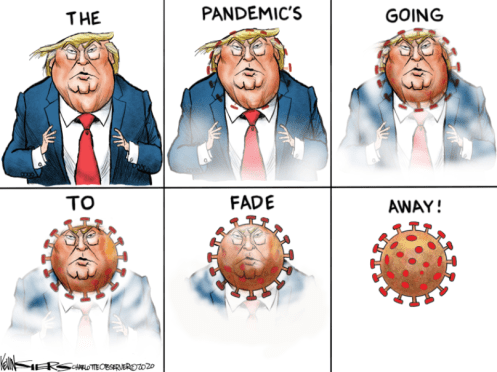
Good Morning!!
If feels as if the long weekend has already begun. The Fourth of July is traditionally a time when the Boston area empties out as people head to the Cape or New Hampshire. I just hope that people will be careful about crowding the beaches. Fortunately, bars won’t be opened here until phase 4, so that is one advantage we have. Yesterday, Gov. Charlie Baker warned Massachusetts residents: ‘No Victory Laps From COVID-19′: Gov. Baker Urges Social Distancing Over July 4 Weekend. NBC10:
Massachusetts Gov. Charlie Baker on Wednesday urged residents to practice social distancing over the Fourth of July weekend, saying people should continue to take the coronavirus pandemic seriously to prevent a resurgence of cases.
“We have a big weekend coming up, it’s the Fourth of July, and I really hope people continue to take things seriously,” Baker said during a press conference at the Greater Boston YMCA.
“There are no victory laps from COVID… It’s not going to take the summer off,” he said, urging people to continue wearing masks and practicing social distancing and hygiene….
The governor said key metrics in the state’s efforts to contain the virus were continuing to trend downward. The state on Tuesday reported no new coronavirus deaths, the first time that’s happened in months.
“The continued fight against the virus depends almost completely and exclusively on all of us maintaining our vigilance and continuing to do the things that have made such a big difference in Massachusetts.”
Yesterday, the U.S. exceeded 50,000 new cases of Covid-19 for the first time. The Washington Post:
The United States reported 52,789 new coronavirus cases on Wednesday, the largest single-day total since the start of the pandemic. President Trump speculated in a Fox Business interview that the virus was “going to sort of just disappear” at some point.
Experts say that is unlikely, unless an overwhelming majority of people are infected and develop immunity, which could lead to millions of deaths, or through the successful development and deployment of a vaccine. There is a chance the coronavirus will never go away, some experts have warned.
Anthony Fauci, the country’s top infectious disease expert, attributed rising case numbers in the United States at least partially to the fact lockdown measures were more lenient than those in some European countries that have since managed to turn the tide on the virus.
More than 800,000 new coronavirus cases were detected in the United States in June. At least 125,602 deaths have been reported since the start of the pandemic.
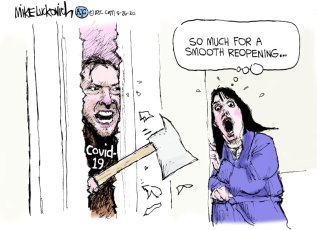 CNBC reports on an alarming study of coronavirus deaths from Yale researchers: Official U.S. coronavirus death toll is ‘a substantial undercount’ of actual tally, Yale study finds.
The number of confirmed U.S. deaths due to the coronavirus is substantially lower than the true tally, according to a study published Wednesday in JAMA Internal Medicine.
Using National Center for Health Statistics data, researchers at Yale University compared the number of excess U.S. deaths from any causes with the reported number of weekly U.S. Covid-19 deaths from March 1 through May 30. The numbers were then compared with deaths from the same period in previous years.
Researchers found that the excess number of deaths over normal levels also exceeded those attributed to Covid-19, leading them to conclude that many of those fatalities were likely caused by the coronavirus but not confirmed. State reporting discrepancies and a sharp increase in U.S. deaths amid a pandemic suggest the number of Covid-19 fatalities is undercounted, they said.
“Our analyses suggest that the official tally of deaths due to Covid-19 represent a substantial undercount of the true burden,” Dan Weinberger, an epidemiologist at Yale School of Public Health and a lead author of the study, told CNBC. Weinberger said other factors could contribute to the increase in deaths, such as people avoiding emergency treatment for things like heart attacks. However, he doesn’t think that is the main driver….
The 781,000 total deaths in the United States in the three months through May 30 were about 122,300, or nearly 19% higher, than what would normally be expected, according to the researchers. Of the 122,300 excess deaths, 95,235 were attributed to Covid-19, they said. Most of the rest of the excess deaths, researchers said, were likely related to or directly caused by the coronavirus.
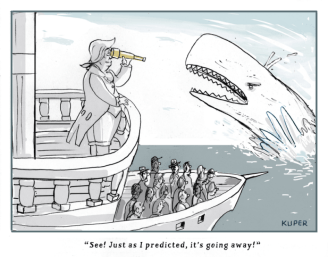 Meanwhile, Trump claimed yesterday that the virus will magically disappear. CNN: Trump’s aides debate a new virus approach as President claims it will ‘disappear.’
A divide has emerged inside President Donald Trump’s inner circle over whether he should turn his attention back to the coronavirus pandemic or continue to focus on reopening the economy, sources familiar with the matter tell CNN.
As cases surge in dozens of states, Trump has remained mostly silent on the matter, focusing instead on protecting statues and stoking racial and cultural divisions. While others in his administration — including Vice President Mike Pence — make appeals for Americans to continue socially distancing and wear masks, Trump again suggested Wednesday the virus would “disappear.”
That has led to concerns, even among some of his own aides, that Trump appears disengaged from a deadly crisis that continues to grip the nation.
Gee, no kidding.
Several of Trump’s top aides, including chief of staff Mark Meadows and son-in-law Jared Kushner, have begun to worry about the President’s chances to win reelection, advisers familiar with the matter said — fears borne out by a steady stream of public polls showing Trump trailing his election rival, Joe Biden, by double digits. Both Meadows and Kushner have urged a focus on the economy over the public health emergency.
Some of Trump’s political advisers believe he has suffered grave political damage due to the pandemic, which has caused widespread economic hurt and death. Even as Trump and others in the White House project optimism that the economy will surge closer to the election, Trump’s handling of the pandemic has drawn rebukes — particularly as cases begin to spike.
“There is a fair amount of concern,” one adviser said, describing the President as “frustrated” by recent polling indicating Biden could win the November election by a wide margin.
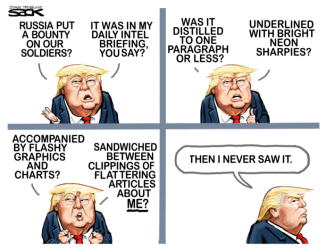 Trump couldn’t possibly care less about the pandemic, about Russia paying to kill American troops or about actually doing the job of POTUS. All he seems to care about is being cheered at rallies, protecting statues of racists, and playing golf. Windsor Mann at The Bulwark: Donald Trump Is All Done Caring. An excerpt:
Trump is not interested in the actual job of the presidency. He’s interested in the attention the presidency affords him.
After his election, he discovered that running for president was easier and more fun than being president. Which is why he continued to hold campaign rallies even after he was elected. He wasn’t campaigning for anything. He just liked hearing crowds screaming his name. Unlike most politicians, who campaign in order to govern, Trump campaigns as a way to avoid governing.
By the same token, his politics are an extension of his ego—which is why, at his rallies, he tells the crowds how big his crowds are and not what his policies are. Trump says he’ll hold rallies after he wins the 2020 election, too—even though he will be ineligible to run for the presidency again.
Instead of holding rallies for the purpose of getting elected, Trump wants to get elected so he can keep having rallies….
Twitter performs for Trump the same function as his rallies. Because he’s the president, he can tweet something mean, false, and/or nonsensical and, instead of cheers, get instantaneous likes and retweets—validation in milliseconds. After tweeting “CHINA!” in May, he got 236,000 retweets and 797,000 likes. Tweeting while you watch Fox & Friends, it turns out, is even more gratifying than shouting at the TV. When you tweet, the whole world listens to you, and some people even applaud….
The problem for Trump is that his presidency has no point. It is as devoid of purpose as his days are of work. He doesn’t want to make America great. He wants America to make him feel great.
 Still, the bad news keeps coming for Trump. Every time he claims that the Russian bounty story is a “hoax,” someone in the intel community leaks more details. Now we have the name of a guy who received payments. The latest from The New York Times: Afghan Contractor Handed Out Russian Cash to Kill Americans, Officials Say.
KABUL, Afghanistan — He was a lowly drug smuggler, neighbors and relatives say, then ventured into contracting, seeking a slice of the billions of dollars the U.S.-led coalition was funneling into construction projects in Afghanistan.
But he really began to show off his wealth in recent years, after establishing a base in Russia, though how he earned those riches remained mysterious. On his regular trips home to northern Afghanistan, he drove the latest model cars, protected by bodyguards, and his house was recently upgraded to a four-story villa.
Now Rahmatullah Azizi stands as a central piece of a puzzle rocking Washington, named in American intelligence reports and confirmed by Afghan officials as a key middleman who for years handed out money from a Russian military intelligence unit to reward Taliban-linked fighters for targeting American troops in Afghanistan, according to American and Afghan officials.
As security agencies connected the dots of the bounty scheme and narrowed in on him, they carried out sweeping raids to arrest dozens of his relatives and associates about six months ago, but discovered that Mr. Azizi had sneaked out of Afghanistan and was likely back in Russia. What they did find in one of his homes, in Kabul, was about half a million dollars in cash.
Click the link to read the rest.
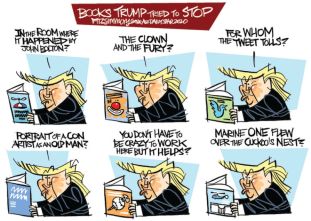 More bad news for Trump:
NBC New York: Jeffrey Epstein Confidante Ghislaine Maxwell Arrested, Sources Say.
The Washington Post: New York court sides with publisher of explosive book by President Trump’s niece.
The New York Times: Biden Outraises Trump for Second Straight Month, With $141 Million June Haul.
Stanley Greenberg at The Atlantic: Believe the Polls This Time. These aren’t Hillary Clinton’s numbers. Biden has a wide lead because the landscape has changed.
I hope all you Sky Dancers have a great Independence Day weekend. Please stay safe!
Tuesday Reads
Posted: June 30, 2020 Filed under: Foreign Affairs, morning reads, U.S. Politics | Tags: Carl Reiner, Donald Trump, Mel Brooks, Russian bounties on U.S. troops, The Dick Van Dyke Show, Trump phone calls with foreign leaders, Vladimir Putin 16 Comments
Good Morning!!
We lost one of the all-time greats last night. Carl Reiner is dead at 98. TMZ:
Carl Reiner, one of the most prolific entertainers in the history of show business has died … TMZ has learned.
We’re told Reiner died Monday night at his Beverly Hills home. We’re told his family was with him when he passed.
Reiner was a producer. He was also a director. He was also an actor. He was also a Grammy winner. He won 9 Emmys in over 7 decades. He has more than 400 credits….
For most people … they remember Carl best for “The Dick Van Dyke Show,” which he created and starred in. Carl played the role of a very temperamental comedian — Alan Brady — who terrorized Dick Van Dyke‘s character and the other writers. Oh, and there was this new actress Carl cast for Dick’s wife — Mary Tyler Moore
Carl made a best-selling album with Mel Brooks called “2000 Years with Carl Reiner and Mel Brooks” which earned a Grammy nomination and sparked his writing career.
There were other smash hits, including directing “Oh God” with George Burns and “The Jerk” with Steve Martin. He worked with Martin on several movies, including “Dead Men Don’t Wear Plaid,” “Man with Two Brains” and “All of Me.”
Reiner appeared in a bunch of TV shows and movies, including “The Russians are Coming, The Russians are Coming,” and “Enter Laughing.”
The directing credits are endless — “Summer Rental” with John Candy, “Summer School” with Mark Harmon, “That Old Feeling” with Bette Midler and “Sibling Rivalry” with Kirstie Alley and Carrie Fisher.

Click the link to read the rest.
Vanity Fair: Carl Reiner, Comedy Patriarch, Dies at 98.
If Carl Reiner had written a deathbed memoir, it would have been titled Exit Laughing. After all, the legendary comedy writer, performer, and director had already published Enter Laughing and Continue Laughing. Having conquered TV, movies, Broadway, and traditional publishing over his seven-decade-plus career, Reiner spent his last years mastering e-books and Twitter, writing and tweeting until Monday night, when he died at age 98 in his Beverly Hills home, TMZ reports. Reiner died of natural causes, Variety writes. He was prolific til the end, even sitting for an interview in an episode of the YouTube series “Dispatches from Quarantine” that premiered on June 22.
Born in the Bronx, Reiner began his New York stage career as a serious Shakespearean thespian, but he found that comedy was what paid the bills. He worked as a Borscht Belt joker at the Allaben Acres resort in New York’s Adirondack Mountains, where he met his future wife, singer Estelle Lebost, and he learned the skills that served him as a comedy writer under actor Maurice Evans in the U.S. Army’s entertainment unit in Hawaii during World War II.
After the war, Reiner landed two jobs with one audition: summer entertainment director at the Lake Spofford Hotel in New Hampshire, and replacement for star Jules Munshin in the touring production of the revue Call Me Mister. Roles such as the latter, as well as in Broadway musicals Inside U.S.A. and Alive and Kicking, led to his casting in the sketch company of Sid Caesar’s landmark live-TV comedy series Your Show of Shows. Throughout the 1950s, Reiner would work as a performer and writer on Caesar’s various shows, working with a legendary team of scribes that included Neil Simon, Mel Brooks, Larry Gelbart, and Woody Allen. He also wrote his first book, 1958’s Enter Laughing, an autobiographical novel about his early days as an actor.
Reiner drew from his own life to create his first sitcom, Head of the Family, about a young, recently married TV-sketch-comedy writer, in which Reiner also starred. The show was a flop until Reiner retooled it with a new leading actor and actress and took a supporting role as the sketch show’s egotistical host, Alan Brady. The result was The Dick Van Dyke Show (which was on-air from 1960 to 1966), an innovative series that made Dick Van Dyke and Mary Tyler Moore into stars and earned Reiner several Emmys for the show’s mix of sexy, sophisticated comedy and silly slapstick.
And that was just the beginning. Read more about Reiner’s storied career at VF.
In other news . . .
Stories on the Russian bounty scandal are still breaking.
AP sources: White House aware of Russian bounties in 2019.
Top officials in the White House were aware in early 2019 of classified intelligence indicating Russia was secretly offering bounties to the Taliban for the deaths of Americans, a full year earlier than has been previously reported. (AP Photo/Rahmat Gul, File).
Top officials in the White House were aware in early 2019 of classified intelligence indicating Russia was secretly offering bounties to the Taliban for the deaths of Americans, a full year earlier than has been previously reported, according to U.S. officials with direct knowledge of the intelligence.
The assessment was included in at least one of President Donald Trump’s written daily intelligence briefings at the time, according to the officials. Then-national security adviser John Bolton also told colleagues he briefed Trump on the intelligence assessment in March 2019.
The White House did not respond to questions about Trump or other officials’ awareness of Russia’s provocations in 2019. The White House has said Trump was not — and still has not been — briefed on the intelligence assessments because they have not been fully verified. However, it is rare for intelligence to be confirmed without a shadow of a doubt before it is presented to top officials.
Of course he knew, and he didn’t care.
The intelligence that surfaced in early 2019 indicated Russian operatives had become more aggressive in their desire to contract with the Taliban and members of the Haqqani Network, a militant group aligned with the Taliban in Afghanistan and designated a foreign terrorist organization in 2012 during the Obama administration.
The National Security Council and the undersecretary of defense for intelligence did hold meetings regarding the intelligence. The Pentagon declined to comment and the NSC did not respond to questions about the meetings.
Concerns about Russian bounties flared anew this year after members of the elite Naval Special Warfare Development Group, known to the public as SEAL Team Six, raided a Taliban outpost and recovered roughly $500,000 in U.S. currency. The funds bolstered the suspicions of the American intelligence community that the Russians had offered money to Taliban militants and other linked associations.
The White House contends the president was unaware of this development as well.
If that’s true then WTF is Trump doing pretending to be “president?” There’s quite a bit more detail at the link.
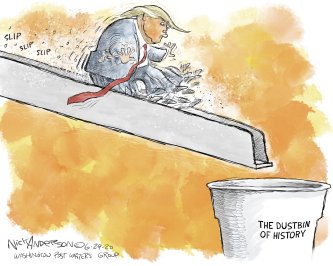 David Ignatius at The Washington Post: Trump doesn’t understand that Putin is in the payback business.
A basic truth about Russian President Vladimir Putin, which President Trump evidently doesn’t understand: Putin is in the payback business. He believes the United States destroyed his former country, the Soviet Union. He likes the United States to feel pain, in Afghanistan and everywhere else.
Trump has his own, much rosier take on Putin. And I can’t help wondering whether that explains why, assuming his account is true, the American president was never briefed about intelligence reports early this year that Russia was offering bounties to Taliban fighters to kill U.S. and coalition troops in Afghanistan. Perhaps Trump’s national security aides were afraid to upset him.
When it comes to the military, Trump has the opposite of a Midas touch. Everything he handles becomes tarnished. That was true of his meddling last year in the discipline case of Navy SEAL Eddie Gallagher; his encouragement of the firing Capt. Brett Crozier as skipper of the USS Theodore Roosevelt; and his enlistment of Gen. Mark A. Milley, chairman of the Joint Chiefs of Staff, for a publicity stunt at St. John’s Episcopal Church near the White House.
More from Ignatius:
There’s a lot we still don’t know about the Russian bounties in Afghanistan. But sources have provided some basics that allow us to see this incident in context.
First, we must understand that the Russians wish us ill in Afghanistan. Putin’s generation remains bitter about their forced withdrawal that finished in 1989, under American pressure, which presaged the collapse of the Soviet Union. There’s a tiny Afghan War Museum in Moscow’s Perovo district: two dark rooms, pictures of the fallen, guns, maps and other trinkets of a war that broke the Soviet Union’s spirit.
About 15,000 Soviet soldiers were killed in their nine-year Afghanistan war. By comparison, the United States has suffered 2,372 military deaths in our Afghan war, waged for more than twice as long.
What makes Afghanistan especially painful for Russia is that the Soviet Union’s final defeat resulted from a secret CIA program to supply the Afghan mujahideen with Stinger antiaircraft missiles, which could shoot down Soviet helicopters and were a death sentence for Moscow’s recruits.
More Russian bounty stories to check out:
The New York Times: Trump Got Written Briefing in February on Possible Russian Bounties, Officials Say.
Blockbuster story on Trump’s phone calls with foreign leaders from Carl Bernstein at CNN
In hundreds of highly classified phone calls with foreign heads of state, President Donald Trump was so consistently unprepared for discussion of serious issues, so often outplayed in his conversations with powerful leaders like Russian President Vladimir Putin and Turkish President Recep Erdogan, and so abusive to leaders of America’s principal allies, that the calls helped convince some senior US officials — including his former secretaries of state and defense, two national security advisers and his longest-serving chief of staff — that the President himself posed a danger to the national security of the United States, according to White House and intelligence officials intimately familiar with the contents of the conversations.
The calls caused former top Trump deputies — including national security advisers H.R. McMaster and John Bolton, Defense Secretary James Mattis, Secretary of State Rex Tillerson, and White House chief of staff John Kelly, as well as intelligence officials — to conclude that the President was often “delusional,” as two sources put it, in his dealings with foreign leaders. The sources said there was little evidence that the President became more skillful or competent in his telephone conversations with most heads of state over time. Rather, he continued to believe that he could either charm, jawbone or bully almost any foreign leader into capitulating to his will, and often pursued goals more attuned to his own agenda than what many of his senior advisers considered the national interest….
By far the greatest number of Trump’s telephone discussions with an individual head of state were with Erdogan, who sometimes phoned the White House at least twice a week and was put through directly to the President on standing orders from Trump, according to the sources. Meanwhile, the President regularly bullied and demeaned the leaders of America’s principal allies, especially two women: telling Prime Minister Theresa May of the United Kingdom she was weak and lacked courage; and telling German Chancellor Angela Merkel that she was “stupid.”
Trump incessantly boasted to his fellow heads of state, including Saudi Arabia’s autocratic royal heir Mohammed bin Salman and North Korean dictator Kim Jong Un, about his own wealth, genius, “great” accomplishments as President, and the “idiocy” of his Oval Office predecessors, according to the sources.
In his conversations with both Putin and Erdogan, Trump took special delight in trashing former Presidents George W. Bush and Barack Obama and suggested that dealing directly with him — Trump — would be far more fruitful than during previous administrations. “They didn’t know BS,” he said of Bush and Obama — one of several derisive tropes the sources said he favored when discussing his predecessors with the Turkish and Russian leaders.
Read the whole thing at CNN. We knew about some of these calls, but the details in Bernstein’s story are breathtaking.
It’s only Tuesday and there will likely be more Trump scandals before the week’s end. Take care of yourselves, Sky Dancers!!
Lazy Caturday Reads: News Potpourri
Posted: June 27, 2020 Filed under: morning reads, U.S. Politics | Tags: Afghanistan, Bill Barr, Confederate monuments, coronavirus pandemic, Covid-19, Donald Trump, Obamacare, Russia, SCOTUS, Taliban 9 Comments
Jones, Leslie, 1886-1967 (photographer) Date created 1938, Boston Public Library
Good Morning!!
I could hardly bring myself to read news this morning, but I forced myself to see what stories are out there. My offerings:
The biggest one is about Trump ignoring reports of Russians trying to kill American troops in Afghanistan.
The New York Times: Russia Secretly Offered Afghan Militants Bounties to Kill U.S. Troops, Intelligence Says.
American intelligence officials have concluded that a Russian military intelligence unit secretly offered bounties to Taliban-linked militants for killing coalition forces in Afghanistan — including targeting American troops — amid the peace talks to end the long-running war there, according to officials briefed on the matter.
The United States concluded months ago that the Russian unit, which has been linked to assassination attempts and other covert operations in Europe intended to destabilize the West or take revenge on turncoats, had covertly offered rewards for successful attacks last year.
Islamist militants, or armed criminal elements closely associated with them, are believed to have collected some bounty money, the officials said. Twenty Americans were killed in combat in Afghanistan in 2019, but it was not clear which killings were under suspicion.
The intelligence finding was briefed to President Trump, and the White House’s National Security Council discussed the problem at an interagency meeting in late March, the officials said. Officials developed a menu of potential options — starting with making a diplomatic complaint to Moscow and a demand that it stop, along with an escalating series of sanctions and other possible responses, but the White House has yet to authorize any step, the officials said.
An operation to incentivize the killing of American and other NATO troops would be a significant and provocative escalation of what American and Afghan officials have said is Russian support for the Taliban, and it would be the first time the Russian spy unit was known to have orchestrated attacks on Western troops.
Any involvement with the Taliban that resulted in the deaths of American troops would also be a huge escalation of Russia’s so-called hybrid war against the United States, a strategy of destabilizing adversaries through a combination of such tactics as cyberattacks, the spread of fake news and covert and deniable military operations.
Read more about this at The Washington Post: Russian operation targeted coalition troops in Afghanistan, intelligence finds.
I wonder if GOP senators are going to do anything about this, or will they think it’s just fine for Trump to keep being pals with Putin no matter what he does?
The New York Times has another big story on how the coronavirus pandemic sneaked up on us: How the World Missed Covid-19’s Silent Spread.
Dr. Camilla Rothe was about to leave for dinner when the government laboratory called with the surprising test result. Positive. It was Jan. 27. She had just discovered Germany’s first case of the new coronavirus.
But the diagnosis made no sense. Her patient, a businessman from a nearby auto parts company, could have been infected by only one person: a colleague visiting from China. And that colleague should not have been contagious.
The visitor had seemed perfectly healthy during her stay in Germany. No coughing or sneezing, no signs of fatigue or fever during two days of long meetings. She told colleagues that she had started feeling ill after the flight back to China. Days later, she tested positive for the coronavirus.
Girl with her kitten, mid-1800s
Scientists at the time believed that only people with symptoms could spread the coronavirus. They assumed it acted like its genetic cousin, SARS.
“People who know much more about coronaviruses than I do were absolutely sure,” recalled Dr. Rothe, an infectious disease specialist at Munich University Hospital.
But if the experts were wrong, if the virus could spread from seemingly healthy carriers or people who had not yet developed symptoms, the ramifications were potentially catastrophic. Public-awareness campaigns, airport screening and stay-home-if-you’re sick policies might not stop it. More aggressive measures might be required — ordering healthy people to wear masks, for instance, or restricting international travel.
Dr. Rothe and her colleagues were among the first to warn the world. But even as evidence accumulated from other scientists, leading health officials expressed unwavering confidence that symptomless spreading was not important.
In the days and weeks to come, politicians, public health officials and rival academics disparaged or ignored the Munich team. Some actively worked to undermine the warnings at a crucial moment, as the disease was spreading unnoticed in French churches, Italian soccer stadiums and Austrian ski bars. A cruise ship, the Diamond Princess, would become a deadly harbinger of symptomless spreading.

Read the rest at the NYT.
More interesting Covid-19 articles:
The New York Times: New Numbers Showing Coronavirus Spread Intrude on a White House in Denial.
Bloomberg Opinion: A Horrifying U.S. Covid Curve Has a Simple Explanation.
Bloomberg Law: Virus Fatality Picture Is Obscured by Ultimate Lagging Indicator.
The Daily Beast: Here’s What It Looks Like When People Don’t Wear Masks.
CNBC: This chart shows the link between restaurant spending and new cases of coronavirus.
CNN Politics: Measures to protect Trump from coronavirus scale up even as he seeks to move on.
AP: Reporter at Trump’s Tulsa rally tests positive for COVID-19.
Meanwhile, as the virus rages through the South and West, Trump is trying to finally kill Obamacare. The Washington Post: Trump administration’s move to end Obamacare amid pandemic reignites political fight.
The Trump administration touched off another politically charged battle over the future of Obamacare with its latest maneuver to dismantle the law amid a pandemic — a move that Democrats immediately weaponized for competitive campaigns this fall and few Republicans defended.
The 82-page brief filed late Thursday to the Supreme Court in a high-profile case brought by GOP state attorneys general undercuts President Trump’s repeated pledges to ensure coverage for people with preexisting conditions as his administration and the broader Republican Party seek to wipe away that protection.
Trump vowed as recently as last weekend, at a campaign rally in Tulsa, that he would “always protect patients with preexisting conditions, always, always.” But his own administration’s position in court is that the 2010 Affordable Care Act’s individual mandate is unconstitutional, and therefore so is the entire law — even its most popular provisions, such as coverage for those with preexisting conditions….
Republican officials and strategists working on competitive campaigns were privately aghast Friday at the administration’s decision to reignite the issue, particularly as health care is at the forefront of voters’ minds because of the ongoing coronavirus pandemic.
The ties between the pandemic and access to Obamacare were underscored this week with a new report from the Centers for Medicare and Medicaid Services, which found that 487,000 Americans used a special enrollment period for the health care law after losing their own coverage, probably due to job losses.
Trump wants to throw protesters in jail if they try to take down Confederate monuments. Politico: Trump issues executive order warning cities, protesters over destruction of monuments.
President Donald Trump on Friday ordered the Justice Department to prioritize prosecution of protesters who damage federal monuments and limit federal funding for local governments that are perceived to not be adequately protecting those monuments.
The executive order also emphasized strict sentencing, with a maximum of 10 years in prison, for those found guilty of such acts, a key plank of Trump’s law and order strategy the president has repeatedly tweeted and talked about in recent weeks.
Trump’s order comes as protests across the country against systemic racism and police brutality have resulted in the toppling of monuments to Confederate leaders, slave owners and European colonists.
The order characterizes protesters as actively seeking to undermine the integrity of the United States government — referring to them as “Anarchists and left-wing extremists” — and comes a day after Trump labeled demonstrators as “terrorists” who will face “retribution.”
Judge Amy Berman Jackson said yesterday that Roger Stone won’t get a 2-month delay before heading to jail. The Washington Post: Roger Stone ordered to report to prison July 14, as judge denies request for two-month delay.
A federal judge has ordered Roger Stone to report to prison July 14, granting him a two-week delay because of the coronavirus pandemic, but not the two months that President Trump’s confidant had requested with prosecutors’ assent.
Stone, 67, had been due to surrender June 30 to a federal prison in Jesup, Ga., while he appeals his November conviction on charges of lying and witness tampering in a congressional investigation.
In an order and sealed opinion late Friday, U.S. District Judge Amy Berman Jackson granted a two-week delay. Prosecutors had not opposed Stone’s request for a delay until Sept. 3, saying the Justice Department’s policy during the pandemic has been to grant up to a 60-day extension upon defendants’ request “without respect to age, health, or other COVID-19 risk factors.”
More stories to check out, links only:
The Washington Post: Barr forms task force to counter ‘anti-government extremists’
CNN: In Texas, questions grow about a lesser-known US Attorney ousted by Attorney General Barr.
Vox: “It’s ideologue meets grifter”: How Bill Barr made Trumpism possible.
Above the Law: Bill Barr Has Thoughts On ‘Blacks’
The New York Times: U.S. Must Release Children From Family Detention Centers, Judge Rules.
Los Angeles Times: Working-class white women are turning on Trump.
The New York Times: How Trump and the Black Lives Matter Movement Changed White Voters’ Minds.
Harry Enten at CNN: Candidates who recover from Trump-like deficits are rarely incumbents.
NBC News: Facebook just lost one of the biggest advertisers in the world for the rest of 2020.
Take care of yourselves and have a nice weekend everyone!
Thursday Reads: Coronavirus Raging in Southern and Western States
Posted: June 25, 2020 Filed under: morning reads, U.S. Politics | Tags: coronavirus pandemic, Covid-19, Donald Trump, street art 10 Comments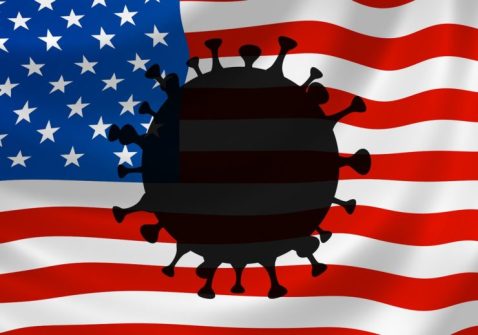
Good Morning!!
It was inevitable that Trump’s dismissive attitude toward the coronavirus pandemic would lead to skyrocketing cases in Southern and Western states as cases are falling here in the Northeast. And it is happening now.
CBS News: New coronavirus cases in U.S. jump to highest level in 2 months, since peak of outbreak.
New coronavirus cases in the United States have surged to their highest level in two months and are now back to where they were at the peak of the outbreak. New cases have been surging for more than a week after trending down for more than six weeks.
On Tuesday, the U.S. reported 34,700 new COVID-19 cases, according to data compiled by Johns Hopkins University that was published on Wednesday. There have only been two previous days that the U.S. has reported more cases: April 9 and April 24, when a record 36,400 cases were logged.
Artist: Diitka Laya Kashyap
While early hot spots like New York and New Jersey have seen cases steadily decline, the virus has been hitting the south and west. Several states on Tuesday set single-day records for new cases, including Arizona, California, Mississippi, Nevada and Texas.
Over the last two weeks, coronavirus hospitalizations have trended upward in at least 14 states, including Texas, where there’s concern the spread is accelerating, CBS News’ Mireya Villarreal reported Wednesday.
Dr. Marc Boom, president and CEO of Houston Methodist hospitals, said the number of COVID-19 patients hospitalized in that city has tripled since Memorial Day.
“If we don’t all work together to bring this curve back down, yes, we’re gonna have a challenging situation,” he said.

NBC News: ‘The explosion has to slow down’: Texas hospitals on edge as coronavirus cases surge.
Anxiety is setting in for Texas hospital officials as the number of coronavirus patients has surged in the last few days.
“Currently we have room, but things have to change. This is not good,” said Dr. Faisal Masud, medical director of critical care medicine at the Houston Methodist hospital system. “The explosion of patients all across, that explosion has to slow down.”
Texas Gov. Greg Abbott said Wednesday that “there is a massive outbreak of COVID-19 across the state of Texas,” with over 5,551 coronavirus cases on Wednesday and more than 4,000 hospital patients with COVID-19. The latest numbers put the state’s new case total at more than 11,000 over two days. The state is in its second week of record-breaking coronavirus hospitalizations….
In San Antonio, Dr. Bryan Alsip, chief medical officer of University Health System, one of the larger health systems in the city, said rapid increases in the number of COVID-19 inpatients are being seen across all facilities, consistent with cases reported outside the hospital in the city.
The facilities had returned to performing non-COVID procedures over the last six weeks, Alsip said. But as COVID-19 cases have risen, it’s put more pressure on the hospitals for capacity.
This week they’re scaling back on elective surgical cases “just to make sure we have sustainable capacity going forward,” Alsip said.
The three most populous states set records for new coronavirus cases daily and there are fears of “apocalyptic” surges in major Texas cities if the trend continues….
Florida and Texas announced Wednesday that they’d recorded more than 5,000 new Covid-19 cases the prior day, a new daily record. California reported more than 7,000 cases, obliterating a record hit a day earlier.
In Texas, if the current case trajectory continues, Houston could be the hardest-hit city in the US with numbers rivaling those in Brazil. Infection numbers are also rising in Dallas, Austin and San Antonio, said Dr. Peter Hotez, dean of the National School of Tropical Medicine at the Baylor College of Medicine.
Virgin Mary wearing a mask, Street art in Spain. GABRIEL BOUYS, Getty
“The big metro areas seem to be rising very quickly and some of the models are on the verge of being apocalyptic,” Hotez told CNN’s Anderson Cooper.
Models show that Houston could have a four-fold increase in the number of daily cases by July 4, he said, adding that states need to act to stop community transmission….
Florida, Texas and California account for 27.4% of the 328 million people living in the US, according to the latest US Census Bureau estimates.
And while some politicians say the higher number of infections is due to increased testing, that is not the case, said Michael Osterholm, director of the Center for Infectious Disease Research & Policy at the University of Minnesota.

Trump simply doesn’t care. In fact yesterday he actually claimed that the danger from the pandemic is over.
Stephen Collinson at CNN: Trump is not just in denial but also indifferent to an unfolding American tragedy.
The US just hit its third highest ever peak of new coronavirus cases, multiple states are registering their own daily records and three are now taking the extraordinary step of imposing quarantines for citizens from pandemic hotspots. The world’s most powerful nation lacks a coherent national strategy to meet another cresting viral crisis, the capacity or even the willingness to take steps that might stop it.
It is also led by a man who is suggesting by his actions and attitudes that he doesn’t care that much about the unfolding tragedy.
HONG KONG, CHINA – MARCH 04: A man wearing face mask…walks in front of a coronavirus street art poster, March 3, 2020, Hong Kong, China. (Photo by Anthony Kwan/Getty Images)
Trump, who has previously predicted a “miracle” would occur or the virus would just disappear in the warmer weather, again declared falsely Wednesday that the danger had passed — even with the nation racing towards another deadly summit of infection. In his latest misleading effort to create a picture of normality, Trump welcomed Polish President Andrzej Duda to the Oval Office.
“This is the first after Covid, after the start of the plague as I call it,” Trump told his visitor, who was happy to play along after being given a huge political gift of a visit a few days before a national election and approvingly noted “the end of the coronavirus.”
But the coronavirus pandemic in the United States is like watching a “public health train wreck in slow motion,” said Dr. David Blumenthal, president of The Commonwealth Fund, in an Alliance for Health Policy and Commonwealth Fund webinar on Wednesday.
“It can be frustrating and perplexing,” he added. “But now is the time to stop dwelling on the past and to start looking forward, and to ask ourselves how we can seize the moment, learn from experience and make things better.”
Instead, the President’s attitude appears to have crossed into callous indifference.

And now Trump is planning an insane celebration at Mount Rushmore on July 3 that could further spread the virus and trigger wildfires.
The Washington Post: Trump is headlining fireworks at Mount Rushmore. Experts worry two things could spread: virus and wildfire.
President Trump is planning a massive fireworks display at Mount Rushmore on July 3, despite a decade-long ban on pyrotechnics at the iconic spot because of concerns about public health, environmental and safety risks.
Street art in India. MANJUNATH KIRAN, Getty
Trump has wanted to stage fireworks at the national memorial in South Dakota’s Black Hills since 2018, according to two individuals familiar with the matter who spoke on the condition of anonymity to discuss internal deliberations. But the idea was scuttled or delayed by a number of his advisers, these individuals said.
The National Park Service stopped staging pyrotechnics at Mount Rushmore in 2010 out of concern that it could ignite wildfires under drought conditions. The memorial is surrounded by 1,200 acres of forested lands, including ponderosa pines, and lies next to the Black Hills National Forest’s Black Elk Wilderness.
South Dakota officials claim there is no danger from the fireworks. Yeah, right.
Neither federal nor state officials have imposed social distancing requirements as part of the gathering. The state tourism department, which is distributing 7,500 tickets for the event, has estimated that it has had requests for at least 125,000….
South Dakota’s total number of coronavirus cases as of Wednesday, 6,419, far surpasses those of North Dakota — which had 3,362 cases — although their populations are nearly identical. South Dakota’s rate of 720 cases per 100,000 compares to a rate of 436 per 100,000 for its northern neighbor, according to the CDC.

At the New York Times, Charles Blow asks: Can We Call Trump a Killer?
The coronavirus pandemic is still raging in this country. In fact, in more than 20 states, the number of cases is rising. More than 120,000 Americans have died from the virus. This country has a quarter of all the cases in the world even though it makes up only 4 percent of the world population.
Street art in England. ANDY BUCHANAN, Getty
Things are so bad here that the European Union, which has lowered its rates, is considering banning U.S. citizens when it reopens its borders.
This situation is abysmal, and it would not have been so bad if President Trump had not intentionally neglected his duty to protect American citizens.
From the beginning, Trump has used every opportunity to downplay the virus, claiming in February, “Looks like by April, you know, in theory, when it gets a little warmer, it miraculously goes away.” Well, we’re now in June, summer. It’s not just warm, it’s hot. And the cases in the hottest states — those in the South and Southwest — are surging.
Trump has consistently been resistant to testing, falsely claiming that an increase in testing is somehow linked to an increase in cases. But in fact, the more you test, the more you are able to control the virus by identifying, isolating and treating the infected, thereby reducing the spread of the virus. Testing is how you reduce your cases. It is also how you save lives.
But Trump believes that to reveal the true extent of the virus’s presence in this country would make him look bad. So more people get sick and more people die….
What Trump is truly saying here is, let people get sick without proper surveillance. He is saying, let them suffer out of sight. He is saying, some will die, but so what. He is saying vulnerable Americans are collateral damage in his image-making and re-election bid.

Read the whole thing at the link.
Finally, please check out this fascinating explanatory piece at The New York Times: How The Virus Won.
I’ll add more news links in the comment thread. Please take care if you’re in one of the new hot spots.
Tuesday Reads
Posted: June 23, 2020 Filed under: morning reads, U.S. Politics | Tags: Anthony Fauci, Brad Parscale, CDC, coronavirus task force, Donald Trump, Jared Kushner, Phoenix AZ, Robert Redfield, Tulsa hate rally fallout 8 Comments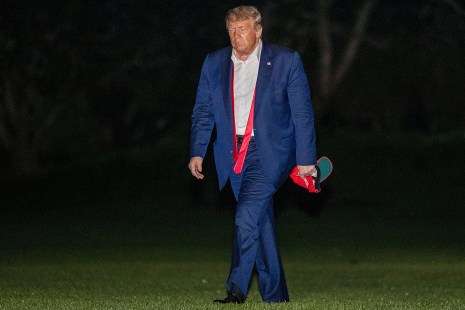
Mandatory Credit: Photo by Patrick Semansky/AP/Shutterstock
Good Morning!!
Today, members of the White House coronavirus task force will testify in the House of Representatives. The hearing starts at 11AM, and I expect it will be shown on the cable news channels. Here’s the C-Span link.
The Washington Post: Fauci, other health officials expected to caution at hearing that coronavirus could continue for ‘some time.’
With cases rising in nearly half of the states and a White House eager to return to normal, Fauci, the nation’s top infectious-disease expert, and three other key officials are scheduled to appear before a House panel overseeing the administration’s response.
The testimony will be Fauci’s first since a highly anticipated appearance a month ago, and it comes on the heels of President Trump’s comments at a controversial campaign rally over the weekend that he asked officials to slow testing to show fewer cases. Aides later said the comment was made in jest, but it prompted a fresh round of criticism that Trump is seeking to minimize the challenges that loom in recovering from the virus.
In a joint statement submitted on behalf of the four witnesses, the Department of Health and Human Services says “while it remains unclear how long the pandemic will last, COVID-19 activity will likely continue for some time.”
The statement warns that if coronavirus activity continues into the upcoming flu season, “this could place a tremendous burden on the health care system related to bed occupancy, laboratory testing needs, personal protective equipment and health care worker safety.”
The statement also calls testing “an essential component of our nation’s response” and says a “safe and effective vaccine” will be “essential to stopping the spread of infection, reducing rates of morbidity and mortality, and preventing future outbreaks.”
Fauci is scheduled to be joined before the House Energy and Commerce Committee by Robert Redfield, director of the Centers for Disease Control; Stephen Hahn, head of the Food and Drug Administration; and Brett Giroir, head of the U.S. Public Health Service.
Meanwhile, Trump and his goons apparently plan to blame the CDC for the mess they made. Polico: Trump team weighs a CDC scrubbing to deflect mounting criticism.
White House officials are putting a target on the Centers for Disease Control and Prevention, positioning the agency as a coronavirus scapegoat as cases surge in many states and the U.S. falls behind other nations that are taming the pandemic.
Trump administration aides in recent weeks have seriously discussed launching an in-depth evaluation of the agency to chart what they view as its missteps in responding to the pandemic including an early failure to deploy working test kits, according to four senior administration officials. Part of that audit would include examining more closely the state-by-state death toll to tally only the Americans who died directly of Covid-19 rather than other factors. About 120,000 people in the U.S. have died of the coronavirus so far, according to the CDC’s official count.
Aides have also discussed narrowing the mission of the agency or trying to embed more political appointees within it, according to interviews with 10 current and former senior administration officials and Republicans close to the White House. One official said the overall goal would be to make the CDC nimble and more responsive.
Politically, Trump aides have also been looking for a person or entity outside of China to blame for the coronavirus response and have grown furious with the CDC, its public health guidance and its actions on testing, making it a prime target. But some wonder whether the wonky-sounding CDC, which the administration directly oversees, could be an effective fall guy on top of Trump’s efforts to blame the World Health Organization….
The moves are among the White House’s efforts to deflect attacks on President Donald Trump and place them elsewhere in the federal bureaucracy. Protecting the president is seen as increasingly important by political aides as the general election approaches in just over four months and criticism mounts from former Vice President Joe Biden, other Democrats and even former national security adviser John Bolton who say the blame rests squarely on Trump himself.
The U.S. is losing the battle against the virus, and the blame should fall on Trump’s shoulders. This monster has cast a pall over the country and the rolling health crisis and the accompanying economic disaster are likely to get much worse.
Michelle Goldberg at The New York Times: America Is Too Broken to Fight the Coronavirus.
Graphs of the coronavirus curves in Britain, Canada, Germany and Italy look like mountains, with steep climbs up and then back down. The one for America shows a fast climb up to a plateau. For a while, the number of new cases in the U.S. was at least slowly declining. Now, according to The Times, it’s up a terrifying 22 percent over the last 14 days.
As Politico reported on Monday, Italy’s coronavirus catastrophe once looked to Americans like a worst-case scenario. Today, it said, “America’s new per capita cases remain on par with Italy’s worst day — and show signs of rising further.”
This is what American exceptionalism looks like under Donald Trump. It’s not just that the United States has the highest number of coronavirus cases and deaths of any country in the world. Republican political dysfunction has made a coherent campaign to fight the pandemic impossible.
At the federal level as well as in many states, we’re seeing a combination of the blustering contempt for science that marks the conservative approach to climate change and the high tolerance for carnage that makes American gun culture unique.
The rot starts at the top. At the beginning of the crisis Trump acted as if he could wish the coronavirus away, and after an interval when he at least pretended to take it seriously, his administration has resumed a posture of blithe denial.
Head over to the NYT to read the rest of this powerful piece.
Fallout continues after Trump’s disastrous rally in Tulsa on Saturday night, but he’s still planning to head to Arizona–another coronavirus hot spot–today.
Jonathan Lemire at AP: After Tulsa, Trump heads to virus hotspot Arizona and border.
Regrouping after a humbling weekend rally, President Donald Trump faces another test of his ability to draw a crowd during a pandemic Tuesday as he visits Arizona and tries to remind voters of one of his key 2016 campaign promises….
First, the president will travel to Yuma to mark the construction of more than 200 miles (322 kilometers) of wall along the U.S.-Mexico border, an issue that he built his campaign on four years ago. Later, he’ll address a group of young Republicans at a Phoenix megachurch, where event organizers have pledged thousands will attend.
Throughout the trip, the COVID-19 pandemic will shadow Trump. The Democratic mayor of Phoenix made clear that she does not believe the speech can be safely held in her city — and urged the president to wear a face mask.
“Everyone attending tomorrow’s event, particularly any elected official, should set an example to residents by wearing a mask,” said Mayor Kate Gallego. “This includes the President.”
The “Students for Trump” event will be held at the Dream City Church and broadcast to groups across the nation. Students for Trump is a special project of Turning Point Action, a grouped chaired by Trump ally Charlie Kirk, which is hosting the president for his address. Organizers said health and safety measures still were being finalized and it was unclear if attendees would be asked to wear masks or keep socially distant.
The church, which can hold about 3,000 people, released a statement saying it only found out that Trump would be speaking at the event after it agreed to rent its facilities.
“Dream City’s facility rental does not constitute endorsement of the opinions of its renters,” the statement said….
Students for Trump includes a waiver similar to the one the Trump campaign gave to attendees of the Tulsa rally, acknowledging the health risks.
“By attending this convention, you and any guest voluntarily assume all risks related to exposure to COVID-19 and agree not to hold Turning Point Action, their affiliates, Dream City Church, employees, agents, contractors, or volunteers liable for any illness or injury,” it reads.
Three articles on the fallout from Tulsa and other problems with the Trump campaign, including lackluster fund-raising:
The Washington Post: Trump’s anger over Tulsa rally underscores growing problems within his campaign.
A sea of empty seats in a Tulsa arena on Saturday set off a furious round of finger-pointing and recriminations around President Trump’s campaign that continued through Monday, amplifying the president and his team’s struggle to find their footing amid national and political crises.
Trump has fumed about his campaign manager Brad Parscale over the half-empty arena, campaign officials are engaged in whisper campaigns against their colleagues, and some Trump allies are calling for a dramatic reorganization of the reelection machine, according to several current and former administration and campaign officials.
On Monday, the campaign announced that two additional staff members tested positive for the novel coronavirus after attending the Tulsa rally. Six members of the campaign advance team tested positive before the rally.
Publicly, the White House and Trump campaign declared the rally a success and denied claims that Trump — who has long fixated on crowd size — was upset about the crowd of 6,200 at the 19,000-seat arena in Tulsa. Before the event, Trump said he expected tens of thousands of supporters to be there.
The Daily Beast: Trump’s Rally Was a ‘Disaster.’ But It Wasn’t Even His Biggest One.
President Trump complained to top advisers about being put in a position where the media could mock him. He ordered his team to immediately find out what went wrong. And two of the sources said the president suggested there would be major consequences for campaign staff if this wasn’t “fixed” and if he saw too many empty seats at his next coronavirus-era mega-rally.
Among various Trump associates and staff—as well as GOP veterans—the blame was directed at Michael Glassner, the campaign’s chief operating officer, and Brad Parscale, the campaign manager….
the lackluster rally attendance came as cracks appear to be forming in one of the president’s key political assets—his formidable, and for a time unmatched, grassroots appeal—and as his Democratic rival overtakes him in an area dominated by Trump in 2016: small-dollar fundraising.
As Trump was on stage in Tulsa, his campaign filed its most recent financial report with the Federal Election Commission, revealing that it had brought in just under $25 million last month, well short of the nearly $37 million in receipts reported by the Biden campaign. The real concerns for the Trump campaign, though, were in the details. For the second time in three months, Biden’s campaign reported beating Trump’s in small dollar donations, both in terms of gross receipts—Biden more than tripled the $5.4 million that Trump brought in in May from donations of under $200—and as a share of total individual contributions. All told, 38.2 percent of individual donations to the Trump campaign in May came via contributions of less than $200, compared to 47.2 percent for Biden.
Gabriel Sherman at Vanity Fair: “Brad Really S–t the Bed Saturday Night”: After Tulsa Catastrophe, Parscale–and Kushner–is at the Top of Trump’s Hit List.
Donald Trump’s exhausted trudge from Marine One toward the White House after his botched rally in Tulsa, his red tie undone, a grim look on his face, a crumpled MAGA hat in his hand, is now an iconic image of his presidency. And as always with Trump, he’s already looking for someone to blame. The most obvious candidate, according to sources, is his embattled campaign manager, Brad Parscale. “Brad really shit the bed Saturday night. You have to remember, execution is 95% of presidential politics,” a Republican close to the White House told me over the weekend. Parscale committed a cascade of errors, from overhyping expected turnout to blaming the half-filled arena on protesters. Trump was so furious when he saw how thin the crowd was that he threatened to not go onstage, two sources briefed on the discussions told me. The sources said that Parscale, reading the tea leaves, is planning to step down. “He knows he can’t survive,” one source told me.
Jason Miller, a senior adviser to the Trump campaign, said Parscale is safe. “Brad is the campaign manager, and he’s the one in charge,” Miller said.
But one thing is for sure: The blame game has shifted into high gear. Trump insiders told me Trump was presented with five options of where to hold his rally. “The president chose Tulsa,” a source said. Sources also told me that if Parscale is forced out, he likely won’t be the only casualty of the rally fiasco. Trump is debating revoking his son-in-law Jared Kushner’s control over the campaign, sources said. As I previously reported, Trump has been frustrated with Kushner’s oversight of the campaign in light of polling that consistently shows Trump losing to Joe Biden. Another source of friction has been campaign spending and reports Trump has gotten that Parscale is making millions of dollars. “Did Jared allow this?” Trump asked advisers recently, according to a source. (Kushner declined to comment.)
More gossip at the link.
There is much more news today; I’ll add some links in the comment thread. What stories have you been following? Please share.

 peej
peej Carissa
 bostonboomer
 dakinikat
 ecocatwoman
 jjlo
jjlo mablue2
 Mama Lopez
 peggysue22
 quixote
 skydancingguestblogger
 Mona (aka Wonk the Vote)





Recent Comments