Today I’m going to focus on the Trump administration’s attacks on Harvard University. Obviously, Trump’s war on Harvard isn’t just about Harvard. It’s a war on higher education. If he succeeds in destroying Harvard, he will move on to other universities. Thank goodness Alan Garber, Harvard’s president is standing strong against the blatant attacks on academic research, international students, and freedom of speech.
Here’s the latest news in the Trump-Harvard battle:
The Trump administration is set to cancel the federal government’s remaining federal contracts with Harvard University — worth an estimated $100 million, according to a letter sent to federal agencies on Tuesday. The letter also instructs agencies to “find alternative vendors” for future services.
The additional planned cuts, outlined in a draft of the letter obtained by The New York Times, represented what an administration official called a complete severance of the government’s longstanding business relationship with Harvard.
The letter is the latest example of the Trump administration’s determination to bring Harvard — arguably the country’s most elite and culturally dominant university — to its knees, by undermining its financial health and global influence. Since last month, the administration has frozen about $3.2 billion in grants and contracts with Harvard. And it has tried to halt the university’s ability to enroll international students.
The latest letter, dated May 27 from the U.S. General Services Administration, was delivered Tuesday morning to federal agencies, according to an administration official, who spoke on the condition of anonymity because the official had not been authorized to discuss internal communications.
The letter instructs agencies to respond by June 6 with a list of contract cancellations. Any contracts for services deemed critical would not be immediately canceled but would be transitioned to other vendors, according to the letter, signed by Josh Gruenbaum, commissioner of the G.S.A.’s federal acquisition service, which is responsible for procuring government goods and services.
Contracts with about nine agencies would be affected, according to the administration official.
Examples of contracts that would be affected, according to a federal database, include a $49,858 National Institutes of Health contract to investigate the effects of coffee drinking and a $25,800 Homeland Security Department contract for senior executive training. Some of the Harvard contracts under review may have already been subject to “stop work” orders.
“Going forward, we also encourage your agency to seek alternative vendors for future services where you had previously considered Harvard,” the letter said.
The Trump administration is weighing requiring all foreign students applying to study in the United States to undergo social media vetting — a significant expansion of previous such efforts, according to a cable obtained by POLITICO.
In preparation for such required vetting, the administration is ordering U.S. Embassies and consular sections to pause scheduling new interviews for such student visa applicants, according to the cable, dated Tuesday and signed by Secretary of State Marco Rubio.
If the administration carries out the plan, it could severely slow down student visa processing. It also could hurt many universities who rely heavily on foreign students to boost their financial coffers.
“Effective immediately, in preparation for an expansion of required social media screening and vetting, consular sections should not add any additional student or exchange visitor (F, M, and J) visa appointment capacity until further guidance is issued septel, which we anticipate in the coming days,” the cable states. (“Septel” is State Department shorthand for “separate telegram.”)
The administration had earlier imposed some social media screening requirements, but those were largely aimed at returning students who may have participated in protests against Israel’s actions in Gaza.
What does this policy mean?
The cable doesn’t directly spell out what the future social media vetting would screen for, but it alludes to executive orders that are aimed at keeping out terrorists and battling antisemitism.
Many State Department officials have complained privately for months that past guidance — for, say, vetting students who may have participated in campus protests — has been vague. It’s unclear, for example, whether posting photos of a Palestinian flag on an X account could force a student to undergo additional scrutiny.
The administration has used a variety of rules to target universities, especially elite ones such as Harvard, that it sees as too liberal and accuses of allowing antisemitism to flourish on their campuses. At the same time, it is carrying out immigration crackdowns that have swept up a number of students….
The news was met with frustration in much of the higher education community.
NAFSA: Association of International Educators, a group that advocates for foreign students, decried the decision. The group’s CEO, Fanta Aw, said it unfairly cast aspersions on hardworking students.
“The idea that the embassies have the time, the capacity and taxpayer dollars are being spent this way is very problematic,” Aw said. “International students are not a threat to this country. If anything, they’re an incredible asset to this country.”
What is Trump’s supposed rationale for his attack on Harvard and high education?
After a weekend of threats and criticism from President Trump, the federal government on Tuesday severed the last of its remaining business ties to Harvard University.
Josh Gruenbaum, a top official at the US General Services Administration, instructed all federal agencies to terminate any contracts with Harvard or transfer them to other vendors. He also said in a letter sent to federal procurement officials Tuesday that government agencies should refrain from awarding any new contracts to Harvard in the future….
Although the Trump administration’s original rationale for targeting Harvard was campus antisemitism, Gruenbaum’s letter Tuesday focused more on the government’s allegations that Harvard’s admissions and hiring practices violate antidiscrimination laws. For that reason, he said, Harvard should not be allowed to receive federal funding….
Gruenbaum’s letter laid out the government’s expanded justification for targeting Harvard. The university,the federal government alleges, systematically discriminates against white people, men, straight people, and, in some cases, Asian Americans.
“As fiduciaries to the taxpayer, the government has a duty to ensure that procurement dollars are directed to vendors and contractors who promote and champion principles of nondiscrimination and the national interest,” Gruenbaum wrote.
Harvard has denied the government’s allegations and sued the Trump administration. In two cases in federal court in Boston, Harvard’s lawyers argued the administration’s tactics violate federal laws and the Constitution and amount to illegal retaliation. Many lawyers, including some conservatives who share Trump’s critiques of universities, have agreed some of the Trump administration’s tactics appear to be illegal.
The administration’s letter on Tuesday accuses Harvard of discrimination in its admissions and hiring practices, as well as at the Harvard Law Review. Federal agencies have launched investigations on all of those subjects.
The Department of Justice is investigating whether Harvard’s admissions practices run afoul of a Supreme Court ban on affirmative action in college admissions. And the Department of Education and the Equal Employment Opportunity Commission have launched an inquiry into alleged discrimination by Harvard against white people, Asian Americans, men, and heterosexuals in hiring and promotions.
The Trump administration is even suggesting there could be criminal investigations of university officials.
President Donald Trump has mostly justified his lawless attempt to restrict international students from attending Harvard University by pretending it’s designed to root out the antisemites, woke radicals, and dangerous terrorists supposedly nesting in their ranks. Now, however, Trump has a new rationale: It’s all about helping young, aspiring Americans, particularly those in the working class.
“We have Americans who want to go there and to other places,” Trump told reporters over the weekend, adding angrily that many of Harvard’s international students are “bad” and are taking Americans’ slots: “They can’t go there because you have 31 percent foreign.”
I am considering taking Three Billion Dollars of Grant Money away from a very antisemitic Harvard, and giving it to TRADE SCHOOLS all across our land. What a great investment that would be for the USA, and so badly needed!!!
Yeah, OK. If Trump really wants to facilitate the upward mobility of America’s working-class youth, here’s a better way to do it: Persuade his fellow Republicans in the House to drop their new budget’s changes to financial aid for higher education, which will restrict access to it for large numbers of working-class students, probably including many who want to attend—yup—trade schools.
With Trump’s fury at Harvard getting worse, this turn in the saga suggests another grotesque subtext to all of it: Telling working-class families that the real obstacle their kids face is zero-sum competition from foreign students makes it easier to take away resources previously appropriated to boost working-class kids to fund tax cuts for the rich.
What’s going on here?
Trump’s assault is a wildly unhinged abuse of power in every way. Last week, Trump revoked Harvard’s ability to host international students, due to Harvard’s alleged failure to share sufficient “information” about foreign students in response to an administration demand. That demand was itself absurdly intrusive, and seemed designed not to be met, creating a pretext for Trump to broaden his attack. The revocation appears wholly lawless, and after Harvard sued, a court blocked it within hours.
At this point, there’s no need to pretend there’s a genuine public-interest rationale at work here. Everyone knows it’s all about getting universities to surrender to flatter Trump, or about executing a broader hostile MAGA takeover of liberal institutions. For instance, in an article reporting that Trump is now nixing Harvard’s federal contracts on top of canceling billions in grants, The New York Times notes almost in passing that Trump wants to bring Harvard “to its knees,” as if this is unremarkable, when it should be depicted as the power-crazed ravings of a Mad King.
But there’s something particularly ghoulish about Trump’s suggestion that his blockade on international students is about helping American kids who are unfairly displaced by them.
That’s because the “big, beautiful bill” that House Republicans passed last week—which Trump has urged Senate Republicans to adopt—could make attending college harder for countless such kids. For a detailed summary of its changes, see this piece by The New Republic’s Monica Potts: They would make it harder for full-time students to qualify for Pell Grants, bump off large numbers of part-time students, and restrict access to the program and other financial assistance for higher education in numerous other ways.
Indeed, a coalition of education advocacy organizations estimates that the bill’s changes to Pell Grants alone could deprive as many as 700,000 people of eligibility entirely and hit many more with higher costs. As Potts summarizes, all this “takes an ax to one of the few reliable ladders for working-class people seeking higher education” as an “engine for social mobility.” These are mostly poorer and working-class students by definition, many with jobs or young kids of their own.
Trump’s attack on Harvard and higher education hurts Massachusetts, which is home to 114 colleges and universities.
In her State of the City address in March, Mayor Michelle Wu spoke about her then-2-month-old daughter. The world she entered was “not the world I expected or hoped for her,” Wu said. “I want her to grow up in the America that Paul Revere rode for, that Dr. King marched for, that my parents left home for.”
A few weeks later, as Paul Revere’s ride was reenacted and scores of redcoats lined up with muskets on the Lexington Battle Green, you didn’t have to look far to see signs that Massachusetts’ centuries-long revolutionary spirit was being threatened. Sprinkled through the crowd, posters read “No King! No Tyranny! Support the Rule of Law” and “In America, the Law is King.” [….]
Our economy is deeply reliant on elite colleges, elite hospitals, and the elite minds who come here from around the world. In Massachusetts — like it or not — we have built an economy on expertise, excellence, and education.
In the early 2000s, after graduating from high school outside of Chicago, Wu was drawn — like so many others — to the educational opportunities here. Her parents “didn’t know too much about America” when they arrived in the 1980s from Taiwan. She says that they, “like so many, held such a reverence for the institutions that in some ways symbolized the American dream for them. Harvard was one of them.”
Now, the magnets that have attracted talent to Massachusetts have become liabilities. “ Boston is at the center of many of the most targeted industries and communities,” Wu says. “And so we’re feeling it very much — very urgently.”
The mayor notes that the city is “trying to plan for unpredictability. And so our city budget this year includes preparations for worst-case scenarios.” Although Boston’s financial foundation is “quite strong,” Wu says, “we need to be prepared for immediate, significant impacts to federal funding or larger macroeconomic impacts.”
Massachusetts Governor Maura Healey voiced support for her alma mater Tuesday night as Harvard University continues to battle President Trump’s attacks on the Cambridge institution’s autonomy and funding.
“This is about more than Harvard,” she told a virtual webinar of thousands of Harvard alumni.
In recent weeks, Harvard has filed litigation charging that Trump unlawfully froze billions in federal funding to the school after it refused to give the government control over academic decisions. More recently, the school also legally challenged Trump’sattempt to revoke the school’s ability to enroll international students.
On Tuesday night, a group of Harvard alumni held a pair of virtual events to discussthe impact of the administration’s actionson academic freedom, research, students, and employees of the Ivy Leagueuniversity.
Crimson Courage, which describes itself as “a nonpartisan community of Harvard alumni,” encouraged alumni to sign onto an amicus brief in ongoing litigation spearheaded by Harvard against the Trump administration.
The brief “supports the academic freedom and integrity of Harvard and higher education institutions across America—all of which must be able to educate students consistent with their missions and values, free from political interference.”
The brief, according to organizers, will be filed in a legal case where Harvard argues the government’s use of research funding cuts as leverage to exert control over its affairs is an abuse of federal power.
Healey, in her comments to alumni, said Trump’s moves against the university is undercutting American competitiveness and damaging the local and national economy. Harvard, she said, is the fourth largest employer in Massachusetts, and its international students alone contribute $400 million to the local economy annually.
If Trump succeeds in damaging Massachusetts, will other blue states be next?
With elite U.S. universities in President Trump’s crosshairs, the leader of Harvard University says institutions need to double down on their “commitment to the good of the nation” and be firm in what they stand for.
Harvard President Alan Garber told Morning Edition that he finds the measures taken by Trump to be “perplexing.” While he acknowledges there is work to be done on campus, he said he struggles to see a link between funding freezes and fighting antisemitism.
“Why cut off research funding? Sure, it hurts Harvard, but it hurts the country because after all, the research funding is not a gift,” Garber said, adding that these dollars are awarded to efforts deemed “high-priority work” by the federal government….
As evidence of how his university’s work directly benefits the U.S. public, Garber points to recent honors awarded to Harvard faculty by the Breakthrough Prize, known as “The Oscars of Science,” for their work on obesity and diabetes drugs and gene editing, used to correct disease-causing genetic variations.
The Trump administration’s multi-billion dollar funding freeze came after Harvard refused demands to change policies around hiring and admissions, eliminate DEI programs, or screen international students who are “supportive of terrorism or anti-Semitism,” as the administration put it.
Impressively, the situation on this front has gotten even worse in the last 24 hours….
…consider the complete set of federal actions taken against Harvard that the New York Times’ Michael C. Bender has compiled. It’s an extraordinary list of punitive actions given that the Trump administration has been in office for just a little over a third of a year.
Now, as a professor at the Fletcher School, a direct competitor of Harvard’s Kennedy School of Government, readers might wonder if I think there might be some competitive advantage that might be gained from Harvard’s misfortune. And the answer to this is “not really, no,” for two reasons.
The first is raw politics: Harvard is the most prestigious university in the United States. It has the deepest pockets. If the Trump administration can force Harvard to acquiesce to its demands, that capitulation will make it that much harder for other universities to protect academic freedom.
The second is that while Harvard might be receiving the brunt of the administration’s malignant attention, Trump’s team is taking other actions that will harm most U.S. universities.
Examples: Threats to investigate foreign students’ social media and ordering embassies to stop vetting visas for international students applicants.
This administration seems bound and determined to force U.S. students to pay higher tuition, because it keeps stripping away alternative sources of revenue. Between slashing federal research funding to record-low levels, raising the transaction costs of accepting foreign grants, and this freezing the visa processing of foreign students, the Trump administration is disincentivizing scientific research and forcing universities to rely increasingly on the tuition payments of domestic college students.
“These various initiatives and policy changes are often regarded as discrete problems, but they comprise a unified assault. The Trump administration has launched a comprehensive attack on knowledge itself, a war against culture, history, and science. If this assault is successful, it will undermine Americans’ ability to comprehend the world around us. Like the inquisitors of old, who persecuted Galileo for daring to notice that the sun did not, in fact, revolve around the Earth, they believe that truth-seeking imperils their hold on power.”
Why are they doing it? Serwer attributes it to politics: “by destroying knowledge, Trumpists seek to make the country more amenable to their political domination, and to prevent meaningful democratic checks on their behavior.” I could proffer a variety of other ideological or political responses. As of now, however, such rationales are besides the point. The only thing I know for sure is that it’s not for the reasons proffered by the administration.
My wife and I are co-authors of a widely used textbook on the principles of economics, which is revised on a three-year cycle. When a new edition comes out, I normally visit a number of schools that might adopt it, usually giving a big public talk, a smaller technical seminar, and spending some time with students and faculty. I enjoy it, by the way; there are a lot of good, interesting people in U.S. education, and not just in the high-prestige schools.
So it was that at one point I found myself visiting Texas Tech in Lubbock. Yes, it seemed pretty remote to someone who has spent almost his whole life in the Northeast Corridor, but as usual the overall experience was very positive. And it was also surprisingly cosmopolitan: there were students from many nations. I just checked the numbers, and currently 30 percent of Texas Tech’s graduate students are international.
So it is all across America. Our nation’s ability to attract foreigners to study here is one of our great strengths. Or maybe I should say was one of our strengths.
According to Politico, a cable from Marco Rubio, the secretary of state, has directed U.S. embassies and consulates to halt all processing of visa applications from foreigners hoping to study in the United States. This is reportedly a temporary measure in preparation for a new system in which would-be students will be screened on the basis of their social media history. And you can be sure that the criteria for denying entry will go far beyond, you know, advocating terrorism. Probably asking “Why was Trump talking to West Point grads about trophy wives?” will be grounds for rejection.
This completely insane policy move is presumably a temper tantrum in response to a court’s rejection of the administration’s attempt to prevent Harvard from admitting foreign students, which was in turn a temper tantrum in response to Harvard’s rejection of demands from Trumpists that they be allowed to dictate the university’s hiring and curriculum.
The courts will probably reject this policy move, too, but I worry that Rubio and co. can put enough sand in the gears of the visa process to bring the entry of international students to a near halt. And even if they can’t, the clear message to students that they aren’t welcome (and may be arrested once here) will have an immensely chilling effect.
It’s hard to overstate the self-destructiveness of this move, and the war on higher education in general. This is madness even in purely economic terms.
The Trump administration would be getting slapped down in court even if the president and his minions didn’t constantly announce their intent to violate the law. But their incessant chest thumping does make things go a lot faster.
Case in point: the temporary restraining order barring the government from canceling student visas at Harvard University. The order was issued just hours after Homeland Security Secretary Kristi Noem revoked Harvard’s visa “privilege” for foreign students. The administration teed up the ruling by declaring that it intended to flagrantly violate the First Amendment. But they telegraphed their punch so thoroughly that Harvard’s lawyers had a 72-page complaint with 28 exhibits ready to be filed the second Noem announced the plan.
Trump Hates Harvard
Just hours after being sworn in, Trump signed an executive order instructing federal agencies to “identify up to nine potential civil compliance investigations” of civic, corporate, and academic institutions, including “institutions of higher education with endowments over 1 billion dollars” for their supposed “illegal discrimination.”
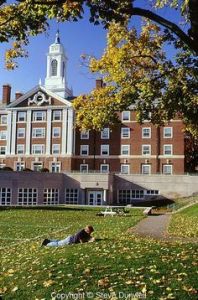
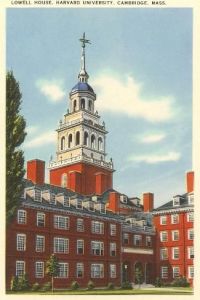
Lowell House, Harvard University
The EO was clearly an attack on the Ivy League, long targeted by conservatives as a bastion of “wokeness” that should be brought to heel. And Project 2025, with its “big idea” to seize control of the budget from Congress, provided Trump with a blueprint to wield federal tax dollars as a weapon against state governments and institutions.
Part of the plan was for Trump to unilaterally announce new “laws” via executive order, and, instead of asking courts to enforce them, leverage federal funds to punish anyone who resists.
And so the president simply declared DEI “illegal,” and used the widespread adoption of anti-discrimination policies by corporations and academia as a pretext to go after anyone he doesn’t like. But, as a federal judge noted last week when he blocked an attack on the law firm Jenner & Block, “the defendants point to no case holding such diversity initiatives illegal.” This is simply the executive branch inventing a new legal theory and demanding that everyone treat it as settled law.
Dye describes how Harvard fought back successfully in court.
On April 11, Harvard sued in federal court in Massachusetts, alleging that the funding cuts were an arbitrary and capricious agency action in violation the First Amendment, the Fifth Amendment’s due process clause, and the Constitution’s separation of powers. That case landed on Judge Allison Burroughs’s docket, and when the school sued again 10 days later over a further round of funding cuts, it designated the cases as “related,” ensuring that it, too, would be assigned to the Obama appointee.
Harvard docketed voluminous correspondence demonstrating that the Trump administration is using federal funds to both coerce the school into changing its speech, and retaliating against it for speech conservatives don’t like. For instance, a letter signed by representatives of the General Services Administration and the Departments of Education and Health and Human Services presented an “agreement in principle” demanding sweeping changes to all aspects of the university’s hiring, admissions, disciplinary, and curricular programs as a precondition of preserving the school’s federal funds.
“The university will not surrender its independence or relinquish its constitutional rights,” the university wrote in response. “Neither Harvard nor any other private university can allow itself to be taken over by the federal government.”
That response was signed by longtime Republican lawyer Bill Burck, of the law firm Quinn Emanuel, and Robert Hur, the former special counsel tapped by Attorney General Bill Barr to investigate Joe Biden. (Burck was immediately fired by the Trump Organization as an ethics advisor.)
But Trump kept on making public threats and posting nonsense on social media.
Trump’s constant public screeds serve as potent evidence that the funding cuts are retaliatory, and any supposed DEI “crimes” are mere pretext.
On April 15, he suggested that Harvard “should lose its Tax Exempt Status and be Taxed as a Political Entity if it keeps pushing political, ideological, and terrorist inspired/supporting ‘Sickness?’” [….]
That’s an explicit attack on Harvard’s academic freedom, which is protected by the First Amendment. And he followed it up the next day by screeching that “Harvard is a JOKE, teaches Hate and Stupidity, and should no longer receive Federal Funds.” [….]
Secretary of Education Linda McMahon admitted in an interview with CNBC on May 7 that the administration is 100 percent targeting Harvard for disfavored speech.
“Are they vetting students who are coming in from outside of the country to make sure they’re not activists? Are they vetting professors that they’re hiring to make sure that they’re not teaching ideologies?” she said. “They’ve taken a very hard line, so we took a hard line back.”
All these comments — and so many more! — featured in Harvard’s lawsuits.
Please read the rest at Public Notice. It’s an excellent summary of what Trump has been doing and why it’s unlawful.
That’s all I have for you today. What’s on your mind?
Did you like this post? Please share it with your friends:
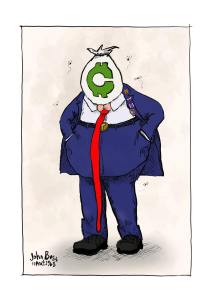
“A modern-day interpretation of a 1871 Thomas Nast work seems fitting to commemorate Trump’s secret crypto dinner.” John Buss, repeat@1968
Good Day, Sky Dancers!
As the old Buddhist and Hobbit saying goes: “We live in Dark Times.” “Kali Yuga” is the Hindu expression. Darkness has always been an expression of decline in European History, hence the label “Dark Ages” for the period from the 5th to about the 8th century. Usually, these periods experience a decline in economic, intellectual, and cultural life. One of the most prevalent things about these times is that there is a paucity of written records. So, it’s difficult to capture the decline until a renaissance occurs. The breakdown of institutions occurred in these past times as well as the present. At the moment, we still have the ability to document the decline in the US. Many relate to it as a rebirth of fascist movements of the 20th century. It is a global feature at the moment, but no matter if it’s the Decline of the Roman Empire or the American Empire, there are signs.
The invention of the printing press is seen as one of the most powerful examples of an invention that can change the course of history. Access to information directly, for personal consideration, tends to create a citizenry with low tolerance of being shut off from thinking for themselves. Perhaps it’s why today’s dark leaders tend to go for education and the press, and why they attract “low information” and angry denizens. They also attract a cadre of greedy followers willing to help attack and grab the wealth of those who are powerless.
These are indeed Dark Times.
The fight for the light in the newly filed Harvard case against the Trump administration’s ban on foreign students is a prime cause of denying the citizenry access to anything that might cause them to question the goings-on here. But it also breaks into the tradition of the United States being the shining light of discovery, science, and reason. It’s why those of us who have had academic careers cherish and enjoy academic freedom. The free exchange of ideas and opinions is essential.
We have traditionally had a small number of women in my field of economics. It was between 4 to 10 percent in the late 70s and early 80s. It once rose to above 30%, but recently has settled on 27%. The STEM fields still reflect the struggle for inclusion. It’s even lower for Black Americans. However, my career has led me to have colleagues from a variety of countries, which is wonderful. In my early career, most of my women colleagues came from the Middle East or China. I was lucky enough to have a professor from Finland. She was brilliant. Believe me. During my academic studies and life, the joy of having colleagues from all over the world who could share things was a blessing in my life. A colleague from the Punjab who now teaches in Canada helped me improve my math chops to get me through some of the most complex models that you could imagine. He stayed with me after Katrina until the campus got its FEMA trailers. I also had a student from Taiwan staying with me. My last biggest joy, however, was writing 2 letters of recommendation for two Black New Orleans students to Rice. The US cannot afford to fall behind in a vast world of research. And, yet, here we are with a professional moron taking down the biggest academic center of research in the World. America’s first University, Harvard. If we do not train the world’s best minds, we will fall deeply behind in everything.
Today, we got the news of the Case Harvard filed against Trump. “Judge Temporarily Blocks Trump Admin From Revoking Harvard’s Ability To Enroll International Students.” This is from The Harvard Crimson. Harvard turned out one of my favorite journalists, Joy Reid, and you can read this article knowing there are more good journalists headed to jobs.
A federal judge granted Harvard a temporary restraining order in its suit to block the Trump administration’s efforts to revoke its authorization to enroll international students.
The order was issued less than two hours after the University requested a halt to the Department of Homeland Security’s attempt to end its Student Exchange and Visitor Program certification. Harvard had described the move as “unprecedented and retaliatory.”
United States District Judge Allison D. Burroughs agreed that if the DHS’ move goes forward, Harvard “will sustain immediate and irreparable injury before there is an opportunity to hear from all parties.”
The TRO will go into effect immediately and will likely last until a hearing in the case. Burroughs has scheduled a May 27 status hearing and a May 29 hearing on whether to issue a preliminary injunction. Harvard would need to file for a preliminary injunction to prevent the DHS’ directive from going into effect after the TRO expires.
Under the terms of the order, the DHS is barred from enforcing the Thursday move to strip Harvard of its SEVP status — and Harvard is no longer legally obligated to turn over the requested documents by Sunday.
Burroughs, a Barack Obama appointee, has adjudicated several cases relating to Harvard in the past. She oversaw a case brought by Harvard and MIT in 2021 against the U.S. Immigration and Customs Enforcement’s effort to force all international students who were enrolled online in the U.S. to leave the country. ICE ultimately rolled back the policy without a ruling from Burroughs.
Burroughs is also overseeing Harvard’s first lawsuit, filed in April, against the Trump administration over its nearly $3 billion funding cut.
I admit: The daily drumbeat of stupidity is exhausting. I wish it were enough for me to simply document the dangerous ignorance of Trump and his sycophants, confident that we’ll soon be free of this regime and its power to spread their poison and cancerous hostility across the land and around the world. But the midterm elections will not arrive for another 17 months. It’s hard to overstate how much damage Trump, his cabinet and his kowtowing Republican Congress can cause between now and then.
That’s why most days I ask myself: Could today be the day Americans decide they’ve had enough and demand change? I have thought that there might be a single event that triggers millions of Americans taking to the streets or committing to a national strike in a public, unavoidable show of solidarity. But I have come to see that the daily drumbeat is numbing too many people, causing them to adapt to the cruelty, the racism, the hostility to democracy, the arrogant rejection of the Constitution and the rule of law. The metaphor of the frog in a slowly boiling pot of water is apt; by the time the frog’s figured out he needs to get out, it’s too late.
We’re not there yet. You can see that dedicated lawyers are filing suit against the corruption and criminality, judges are pushing back, outraged Americans are engaging in protests, some elected Democrats and other awake leaders are ringing alarm bells, a growing number of colleges and universities have refused to buckle under, some independent media are addressing the reality of authoritarianism in no uncertain terms. Americans have not surrendered their sanity or capacity to know what’s right and wrong, what’s true and false. The pot may be beginning to boil, but we can still see and feel what’s happening. We are still able to take action.
But I want to spotlight a series of events in a single 24-hour period that individually outrage me and, taken together, express a level of stupidity and sickness that should motivate more than a shrug of the head or an angry social media post. You may have already focused on—been outraged by—one or even all of these. But it’s important to not look at them as discrete events, but part and parcel of a single plot to convince us that we should accept a fascist regime bent on elevating white nationalism, oppressing people of color, silencing dissent and making the rich richer and the poor and middle class poorer and sicker. This effort is led by a malignant racist and sociopath who’s convinced the people around him to do what he says, no matter how ugly, cruel, blatantly false—or just plain stupid.
Two of the four events were in the Oval Office Wednesday—our Oval Office, the place where real presidents have made some of the most momentous decisions that improved the lives of Americans, created a safety net to overcome the ravages of the Great Depression and soften cap italism’s turbulence, helped defeat the Nazis and fascism, built global alliances that made the world safer, more stable and prosperous, and demonstrated a commitment to bend the arc of history toward justice.
Into this historical place of honor came South African President Cyril Ramaphosa, a calm and skilled diplomat who decades earlier had served alongside Nelson Mandela as his chief negotiator to end apartheid in South Africa. But just like Ukrainian President Volodymyr Zelensky in February, he arrived for an ambush by a spiteful, narrow-minded man who spreads lies like Ukraine not Russia started the still-raging war. On this day he insisted with false information from fringe groups that South Africa, whose leaders are mostly Black, are committing genocide against white farmers, a false narrative that his top donor and South African-born Elon Musk has propagated.
At Trump’s urging, Ramaphosa answered a reporter’s question about what it would take to convince Trump there is no such white genocide. “It will take President Trump listening to the voices of South Africans, some of whom are his good friends, like those who are here,” he calmly said, referencing South African golfer Ernie Els who was in the room. “When we have talks between us around a quiet table, it will take President Trump to listen to them.”
But South Africa’s president was being set up. Trump interrupted him to play a video pushing the lies, then he showed photos meant to “prove” how much death there was, even leading Trump to mutter, “Death, death, death, horrible death, death.”
Except the video clip showing a long line of white wooden crosses were not actual burial sites for white farmers, as Trump insisted, but were from a 2020 protest against farm murders over the years. Except the photo Trump showed of people lifting body bags, insisting they “are all white farmers that are being buried,” was actually of humanitarian workers burying bodies in Congo. Except for all the claims of genocide among white farmers, meant to justify bringing white Afrikaners as preferred refugees to America now, there were a total of 44 murders in farming communities last year, Reuters reports, with over 26,000 in the country overall.
President Ramaphosa came to discuss trade and economic partnership. Yet Trump brought him into the Oval Office to ambush and abuse him, push his white nationalist agenda, spread more widely his egregious lies and showcase that—while illegally deporting people of color—only whites deserve America’s protection from presumed persecution. “We were taught by Nelson Mandela that whenever there are problems, people need to sit down around a table and talk about them,” Ramaphosa noted, but Trump was not listening.
There is a daily drumbeat of stupidity, airing of white grievances, and cruelty. While discriminating harshly against everyone who is not white and Christian, this administration harbors supporters who carry torches and shout “Jews will not replace us,” and has bubble-headed Congress Critters who scream about “Jewish Space Lasers”. Anti-semitism has become transactional. It has become a useful tool in the attack on Academia and the Democratic Party. It assumes that you can’t understand the history of the Jewish people without turning a blind eye to the punishing attacks on Palestinian women, children, and innocents in the Gaza Strip. I do not think there is a bigger way of showing disrespect for a group of people than using their historical struggles as a tool to encourage the murder of innocents. But then, our #FARTUS is planning a Trump Tower, hotel, and golf course in GAZA. The Trump Boyz–in between murdering endangered animals for sport–have been travelling the globe using the Tariff stick as a way to expand their Crime Syndicate. All, at the expense of the United States and its economy. This is from QUARTZ: “8 countries where Trump has been making new business deals, from Pakistan to Vietnam, Residential towers, golf courses, crypto — the deals didn’t stop on Inauguration Day.” This is the art of the steal in full display. All we need to see is Eric and Don Jr. flying in the palace in the sky and sitting at Trump’s Crypto Fundraiser now.
Businesses spearheaded by President Donald Trump have struck numerous deals since Trump returned to the White House in January.
Leading the way is the Trump Organization, a conglomerate privately owned by the president. With more than 250 subsidiaries, it serves as a holding company for Trump’s various hotels, residential real estate, towers, resorts, and golf courses across the world.
World Liberty Financial, a decentralized protocol that merges financial services and cryptocurrency, has also brokered deals. A Trump business entity owns 60% of World Liberty and is entitled to 75% of all revenue from coin sales. Eric Trump and Donald Trump Jr. manage the company.
Here are the countries where the Trump empire has been dealmaking. The slide show that follows lists Vietnam. It’s in Hanoi, which reminds me of the Hanoi Hilton and the late Senator John McCain.
The project consists of a golf course, hotels, and luxury residences, and is slated for completion by 2029. In addition, Eric Trump is scheduled to meet with officials in Ho Chi Minh City on Thursday to discuss a possible Trump Tower in the city, Reuters reports.
In April, the president imposed a “reciprocal” tariff rate of 46% on Vietnamese goods. While that policy is currently on a 90-day pause, it would deal a major blow to the Southeast Asian country if resumed. Goods exported to the U.S. account for 30% of Vietnam’s economy, according to IMF estimates, the largest of all U.S. trading partners. As the specter of these crippling levies looms, Hanoi has pledged to buy more American goods, including Boeing (BA) aircraft and agricultural products.
Other countries include Serbia, Oman, Qatar, Saudi Arabia, UAE, Pakistan, and Singapore. Most of these discussions haven’t been covered by the Media other than Qatar, which came with the gift that “Palace in the sky” that will cause millions of dollars to refit before it’s handed over to Trump and his “library.” If there’s a bigger oxymoron than Trump Library, I’m waiting to hear it. Let’s just call it the warehouse facility for all the bribes and emoluments. We have to discuss that big ol’ party Trump threw for his richest customers. This is from the New York Times. “Hundreds Join Trump at ‘Exclusive’ Dinner, With Dreams of Crypto Fortunes in Mind. The guests were the biggest investors in President Trump’s memecoin, and they were greeted with chants of “shame” as they arrived at Trump National Golf Course.”
President Trump gathered Thursday evening at his Virginia golf club with the highest-paying customers of his personal cryptocurrency, promising that he would promote the crypto industry from the White House as protesters outside condemned the event as a historic corruption of the presidency.
The gala dinner held at the Trump National Golf Club in suburban Washington, where Mr. Trump flew from the White House on a military helicopter, turned into an extraordinary spectacle as hundreds of guests arrived, many having flown to the United States from overseas.
At the club’s entrance, the guests were greeted by dozens of protesters chanting “shame, shame, shame.”
It was a spectacle that could only have happened in the era of Donald J. Trump. Several of the dinner guests, in interviews with The New York Times, said that they attended the event with the explicit intent of influencing Mr. Trump and U.S. financial regulations.
“The past administration made your lives miserable,” Mr. Trump told the dinner guests, referring to the Biden administration’s enforcement actions against crypto companies.
The gala attendees made whooping noises while Mr. Trump spoke, and applauded as the president declared: “They were going after everybody. It was a disgrace frankly,” according to a video provided to The Times by a dinner guest.
Mr. Trump promised to change that approach. “There is a lot of sense in crypto. A lot of common sense in crypto,” he said. “And we’re honored to be working on helping everybody here.”
Installations like the one at the power plant near Dresden are appearing across the country, drawn by record-high cryptocurrency prices and cheap and abundant energy to power the computers that do the mining. There are at least 137 Bitcoin mines in the US across 21 states, and reports indicate there are many more planned. According to estimates by the US Energy Information Administration (EIA), Bitcoin mining uses up to 2.3% of the nation’s grid.
The high energy use and its wider environmental impact is certainly causing some concern in Dresden.
But it’s the unmistakable hum that is the soundtrack for discontent in many places with Bitcoin mines – produced by the fans used to cool the computers, it can range from a mechanical whirr to a deafening din.
“We can hear a constant buzzing,” says another Dresden resident, Lori Fishline. “It’s a constant, loud humming noise that you just can’t ignore. It was never present before and has definitely affected the peaceful atmosphere of our bay.”
Such is Ms Campbell’s annoyance with Trump’s Bitcoin backing, her political allegiance to the Republicans is being tested. “Right now I’m not real happy about that party,” she says.
So, build the nastiest factory in the backyard of the people least able to deal with it. That’s the sound of these Robber Barons that should be familiar to anyone who knows US history from its early 20th-century business escapades. The most interesting thing that’s popped up today is that Apple has got Trump in a lather, and the Equity Markets hate it. This is from Yahoo Finance: “Stock market today: Dow, S&P 500, Nasdaq trim losses as Trump threatens Apple, EU with new tariffs.”
US stocks fell on Friday, on pace for weekly losses as investors assessed President Trump’s latest tariff threats and what his giant tax bill means for the deficit and the economy.
The Dow Jones Industrial Average (^DJI) sank 0.4%. The S&P 500 (^GSPC) also fell roughly 0.4%. The tech-heavy Nasdaq Composite (^IXIC) backed off about 0.6%.
All three indexes trimmed steeper losses after Trump said on Friday that Apple (AAPL) must pay a 25% tariff on iPhones sold but not made in the US. The tech giant has begun shifting some manufacturing to India, with China, home to its key suppliers, locked in a trade war with the US. Apple shares fell 3% after Trump’s post on Truth Social.
At the same time, Trump threatened to hike the tariff on EU imports to “a straight 50%” beginning June 1 as trade talks between the two have stalled.
The president’s warnings shattered a more muted mood on Wall Street as investors wound down to the Memorial Day trading break on Monday.
It adds another supply chain complication for companies already worried about the potential hit to the economy from Trump’s tariff blitz. Earnings season has seen several companies hold off from providing full annual guidance thanks to uncertainty around tariffs.
All three major gauges are on track for a losing week. Stocks have suffered as deficit worries pushed up Treasury yields, intensified as Trump’s giant tax bill forged ahead. Wall Street is still weighing the economic impact of Trump’s revised bill, which cleared a key hurdle in the House vote for approval.
The price of Bitcoin (BTC) fell below $108,000 early Friday after President Donald Trump called for steep tariffs on EU imports and threatened Apple with similar measures. The digital asset briefly touched $107,300 on Binance, pulling back from session highs above $111,000 as traders responded to fresh geopolitical tensions.
The US president on Friday proposed a 50% tariff on all EU imports starting June 1, 2025, in a post on Truth Social. He cited trade imbalances and regulatory frictions as rationale for the move, declaring current EU-US trade dynamics “totally unacceptable.”
Apple is being threatened with 25% tariffs. Wow, how free market is this? Sounds a lot more like the old Soviet Command and Control model. Is he channeling Putin and Orban or just pissed about something Apple did at his party? This is from CNBC. “Trump says Apple must pay a 25% tariff on iPhones not made in the U.S.” Does he not realize how long it would take to even set up a factory, let alone train everyone? Doesn’t he know what this huge project would take to even break even?
President Donald Trump said in a social media post Friday that Apple will have to pay a tariff of 25% or more for iPhones made outside the United States.
“I have long ago informed Tim Cook of Apple that I expect their iPhone’s that will be sold in the United States of America will be manufactured and built in the United States, not India, or anyplace else. If that is not the case, a Tariff of at least 25% must be paid by Apple to the U.S.,” Trump said on Truth Social.
Shares of Apple fell about 2% on Friday after the post.
Apple’s flagship phone is produced primarily in China, but the company has been shifting manufacturing to India in part because that country has a friendlier trade relationship with the U.S.
Some Wall Street analysts have estimated that moving iPhone production to the U.S. would raise the price of the Apple smartphone by at least 25%. Wedbush’s Dan Ives put the estimated cost of a U.S. iPhone at $3,500. The iPhone 16 Pro currently retails for about $1,000.
This is the latest jab at Apple from Trump, who over the past couple of weeks has ramped up pressure on the company and Cook to increase domestic manufacturing. Trump and Cook met at the White House on Tuesday, according to Politico.
Treasury Secretary Scott Bessent said in an interview with Fox News on Friday that he was not part of the meeting at the White House but that the Apple situation could be part of the Trump administration’s push to bring “precision manufacturing” back to the U.S.
“A large part of Apple’s components are in semiconductors. So we would like to have Apple help us make the semiconductor supply chain more secure,” Bessent said.
Cook gave $1 million to Trump’s inauguration fund and attended the inauguration in January. Apple has announced a $500 billion spend on U.S. development, including AI server production in Houston.
Apple declined to comment for this story.
So, I’m over 4200 words and probably have put you to sleep. You know how I am about Rabbit Holes. How much longer before the economy collapses? I’m actually beginning to wonder that. I know every time I see or hear him act so insane, I just collapse on the couch.
You have a very nice Memorial Day weekend. Please spend your time appreciating the many folks who gave their life for this country and its democracy. Don’t let the ones trying to destroy it get to you. There’s always the June 14th Flag Day “No Kings” protests and actions to look forward to and participate in. Just don’t watch that damn parade. The least we old folks can do is tank the ratings.
What’s on your reading and blogging list today?
How about a little Warren Zevon and Prince?
Did you like this post? Please share it with your friends:
Peter Saul, Washington Crossing the Delaware, 1975
The mainstream media, led by The New York Times, is writing the Democrat’s obituary after Terry McAuliffe’s loss in the Virginia gubernatorial race, but I don’t feel like writing about that. I have no idea whether the loss will affect the 2022 midterms. I don’t really want to think about it, except that I hope the Democrats will finally do something about the filibuster. There has been some talk of changing Senate rules for voting rights legislation, after Republicans once again blocked debate on the Voting Rights Act.
Senate Republicans on Wednesday blocked legislation to restore parts of the landmark Voting Rights Act weakened by Supreme Court rulings, making it the second major voting bill to be derailed by a G.O.P. filibuster in the past two weeks.
Despite receiving majority support, the John Lewis Voting Rights Advancement Act, named for the civil rights activist and congressman who died last year, fell nine votes short of the 60 required to advance over Republican opposition.
In the aftermath of the defeat, Senate Democrats said they would intensify internal discussions about altering filibuster rules or making other changes to allow them to move forward on voting rights legislation despite deep resistance by Republicans, who have now thwarted four efforts to take up such measures.
“Just because Republicans will not join us doesn’t mean Democrats will stop fighting,” said Senator Chuck Schumer, Democrat of New York and the majority leader, after the vote. “We will continue to fight for voting rights and find an alternative path forward.”
Yesterday the Federal Reserve announced plans to deal with inflation. I don’t know about you, but I’ve been affected by the rising food prices. Even though we’re getting the biggest Social Security increase in a very long time, it isn’t going to be enough. The New York Times: Fed Takes First Step Toward End of Pandemic Measures.
The Federal Reserve on Wednesday took its first step toward withdrawing support for the American economy, saying that it would begin to wind down a stimulus program that’s been in place since early in the pandemic as the economy heals and prices climb at an uncomfortably rapid pace.
Peter Saul’s Columbus Discovers America, 1992-1995, points the way to the painter’s mature work, distinguished by provocative subject matter and a cartoon-based style.
Central bank policymakers struck a slightly more wary tone about inflation, which has jumped this year amid booming consumer demand for goods and supply snarls. While officials still expect quick cost increases to fade, how quickly that will happen is unclear.
Fed officials want to be prepared for any outcome at a time when the economy’s trajectory is marked by grave uncertainty. They are not sure when prices will begin to calm down, to what extent the labor market will recover the millions of jobs still missing after last year’s economic slump, or when they will begin to raise interest rates — which remain at rock-bottom to keep borrowing and spending cheap and easy.
So the central bank’s decision to dial back its other policy tool, large-scale bond purchases that keep money flowing through financial markets, was meant to give the Fed flexibility it might need to react to a shifting situation. Officials on Wednesday laid out a plan to slow their $120 billion in monthly Treasury bond and mortgage-backed security purchases by $15 billion a month starting in November. The purchases can lower long term interest rates and prod investors into investments that would spur growth.
Assuming that pace holds, the bond buying would stop altogether around the time of the central bank’s meeting next June — potentially putting the Fed in a position to lift interest rates by the middle of next year.
Federal authorities on Thursday arrested an analyst who in 2016 gathered leads about possible links between Donald J. Trump and Russia for what turned out to be Democratic-funded opposition research, according to people familiar with the matter.
The arrest of the analyst, Igor Danchenko, is part of the special counsel inquiry led by John H. Durham, who was appointed by the Trump administration to scrutinize the Russia investigation for any wrongdoing, the people said.
Mr. Danchenko, was the primary researcher of the so-called Steele dossier, a compendium of rumors and unproven assertions suggesting that Mr. Trump and his 2016 campaign were compromised by and conspiring with Russian intelligence officials in Moscow’s covert operation to help him defeat Hillary Clinton.
The people familiar with the matter spoke on condition of anonymity because the indictment of Mr. Danchenko had yet to be unsealed. A spokesman for Mr. Durham did not respond to a request for comment.
Peter Saul, Quack-Quack, Trump, 2017
So this information was leaked without any indication of what the basis of the arrest was. What laws did Danchenko break? The last Durham arrest was hinky too.
The charges against Mr. Danchenko follow Mr. Durham’s indictment in September of a cybersecurity lawyer, Michael Sussmann, which accused him of lying to the F.B.I. about who he was working for when he brought concerns about possible Trump-Russia links to the bureau in September 2016.
Mr. Sussmann, who then also worked for Perkins Coie, was relaying concerns developed by data scientists about odd internet logs they said suggested the possibility of a covert communications channel between the Trump Organization and Alfa Bank, a Kremlin-linked financial institution. He has denied lying to the F.B.I. about who he was working for.
The power Donald Trump holds as a former president will be put to the test on Thursday, as a federal judge is set to hear arguments on whether Trump can keep secret records from his White House about his attempt to overturn the 2020 election.
Trump has asked the DC District Court to block the National Archives from giving more than 700 pages of documents to the House Select Committee investigating January 6. He’s claimed the House’s investigation is illegitimate, and that his role as a former President should give him control over reviewing and deciding upon access to the records.
The hearing may be the pivotal moment in a potentially historic legal fight about the authority of a former president, the House’s investigative power and the reach of executive privilege….
In the short term, the case also may have huge implications for the bipartisan House investigation, which is pushing for records and witnesses before the midterm elections take place next year. Without access to the documents, the House could be hampered significantly in its fact-finding.
In court, the House has cast its investigation as one of its most critical tasks in history. “In 2021, for the first time since the Civil War, the Nation did not experience a peaceful transfer of power,” lawyers for the House wrote over the weekend. “A peaceful transfer of power from one President to another is crucial to the continuation of our democratic government. It is difficult to imagine a more critical subject for Congressional investigation, and Mr. Trump’s arguments cannot overcome that pressing legislative need.
Neo-Nazis Christopher Cantwell and Matthew Heimbach on Wednesday seemed almost to forget for a moment that they were in a court of law and defendants in a civil case that could potentially bankrupt them and take down the white nationalist groups with which they’re associated.
“What’s your favorite Holocaust joke?” Cantwell, who is representing himself in court, asked Heimbach, who was called to the stand by the plaintiffs as a witness, during cross-examination….
The strategy behind Cantwell’s line of questioning wasn’t immediately clear, and attorneys for the plaintiffs interjected before any jokes were uttered. But Cantwell, who had previously gone on bizarre courtroom tangents, and Heimbach spent nearly an hour talking about their adoration for Nazi Germany, Adolf Hitler, the dictator’s book Mein Kampf, and their belief that the Holocaust was a hoax.
Hitler, Heimbach testified, “did nothing wrong” in murdering some 6 million Jews.
The exchange between the two neo-Nazis contrasted sharply with the testimony by Deborah Lipstadt, an acclaimed Holocaust scholar and professor of modern Jewish history at Emory University.
Lipstadt, who was nominated in July by President Joe Biden to serve as the US special envoy to monitor and combat antisemitism — a State Department post with the rank of ambassador — was called as an expert witness by the plaintiffs. Before her testimony, she had prepared a 48-page report for the trial that focused on “the history, ideology, symbolism, and rhetoric of antisemitism and how those features were on display at the Unite the Right rally in Charlottesville.”
On the stand, she was asked by Roberta Kaplan, a co–lead attorney for the plaintiffs, to elaborate on her report and define and parse some of the most popular, offensive, and violent terms used by the white supremacists who planned and executed the deadly “Unite the Right” rally in 2017.
“I don’t surprise easily. I’ve been writing about the Holocaust, one of the worst genocides in human history, many things don’t surprise me,” Lipstadt testified. But what she found in the words and symbols used in preparation for and during the deadly rally in Charlottesville four years ago represented a “great deal of overt antisemitism and adulation of the Third Reich.”
Lipstadt said that much of the messaging between some of the 24 defendants in the case constituted “Jew hatred.”
“You know they’re a Jew and you despise them and you want to do them harm,” she told the court, explaining what such hatred meant.
Politics, Peter Saul, 1985
Down in Florida, Ron DeSantis is working overtime to install authoritarian policies. The latest outrage is trying to ban professors at state universities from supporting voting rights. The New York Times: In Florida, a Firestorm Over Silenced University Professors Grows.
A decision by the University of Florida to bar three professors from testifying in a lawsuit against the administration of Gov. Ron DeSantis has ballooned into a political and public relations firestorm, one that could grow as other professors consider whether to step forward with stories of university pressure.
Since Friday, when the university’s decision was disclosed in a federal court filing, five more professors have offered accounts of being barred from testifying or ordered to omit mention of their university positions in court statements.
The body that accredits the university has opened an inquiry into whether its orders violate long-established principles of academic freedom or involve “undue political influence.” On Monday, the university’s president and provost ordered a review of its policy on conflicts of interest, the stated rationale for the decisions to silence the professors.
“The University of Florida stands firmly behind its commitment to uphold our most sacred right as Americans, the right to free speech, and to faculty members’ right to academic freedom,” they said in a statement. “Nothing is more fundamental to our existence as an institution.”
A spokeswoman for Mr. DeSantis said he had not played any role in the university’s actions. “This is an internal U.F. issue and not the sort of thing that the executive branch would be involved in,” the spokeswoman, Christina Pushaw, said. “Governor DeSantis has always championed free speech, open inquiry and viewpoint diversity on college and university campuses.”
Asked on Wednesday whether the administration had any role in the university’s actions, a university spokeswoman, Hessy Fernandez, replied with a single word: “No.”
Despite the denials, a legion of critics continued to say that the university’s actions bore the marks of political meddling. In each of the disclosed cases, the conflict of interest that was cited as justification for limiting the professors’ freedom to speak was that they were supporting legal challenges to the DeSantis administration’s policies.
“It’s creating an environment which is putting intolerable pressure on universities and other institutions as well to comply with the political policies of this administration, for sure,” said Dr. Jeffrey L. Goldhagen, a longtime professor and administrator at the university’s College of Medicine in Jacksonville. “I don’t think there’s any questions about that.”
Bush at Abu Ghraib, Peter Saul, 2006
Read more on this issue:
Greg Sargent at The Washington Post: Opinion: The case of Ron DeSantis and the muzzled professors takes another dubious turn.
Gov. Ron DeSantis vowed on Wednesday to create a fully-staffed statewide law enforcement office whose sole job would be to crack down on election crimes, despite previously praising Florida’s smooth 2020 elections and rebuffing calls by members of his own party for an audit.
DeSantis, who is running for reelection and is considered a potential 2024 presidential contender, is also pressing state lawmakers to increase the criminal penalty for violating new restrictions on collecting mail-in ballots. He also wants to enact a tight new 100-day deadline on when local election officials must scrub their voter rolls for those who died, moved or been convicted of a felony.
The new law enforcement office will cost nearly $6 million, according to a document obtained by POLITICO.
“I guarantee you this: The first person that gets caught, no one is going to want to do it again after that,” said DeSantis at a West Palm Beach event billed as a “press conference” but featured dozens of DeSantis supporters who loudly applauded the governor. At one point, the crowd cheered “Let’s go Brandon” — a conservative rallying cry against President Joe Biden.
The governor also said he wants the GOP-controlled Legislature to put additional restrictions on the use of drop boxes.
“I don’t even think we should have drop boxes,” said DeSantis even though he signed the bill two years ago that first authorized their use in the state.
This guy is trying to out-Trump Trump.
So . . . what else is happening? What stories are you following?
Did you like this post? Please share it with your friends:
Students study for finals on “BU Beach,” May 6, 2015
Good Morning!!
Well, well, well. Boston University and a newly hired assistant professor of sociology are being attacked by right wing nuts who can’t handle free speech or academic freedom. And so far BU is telling them they’re just going to have to deal with it. I hope they stick to their guns, so to speak. In honor of the school administration doing the right thing, I’m illustrating this post with views of the beautiful BU campus.
Fox News is shocked! Naturally, they begin with a version of “some people say….”
Critics say a newly-hired Boston University professor has crossed the line with recent tweets bashing whites, but the school says it’s simply free speech.
“White masculinity isn’t a problem for america’s colleges, white masculinity is THE problem for america’s colleges,” Saida Grundy, an incoming assistant professor of sociology and African-American studies at Boston University, tweeted in March.
In another tweet from January, she wrote: “Every MLK week I commit myself to not spending a dime in white-owned businesses. and every year i find it nearly impossible.”
In another, she called white males a “problem population.”
“Why is white America so reluctant to identify white college males as a problem population?” she asked.
View of BU’s Charles River Campus.
Horrors! A black female sociologist who studies traditional masculinity had a few things to say on Twitter about white males. No one has to agree with her or even read her tweets (she has now made her account private). The KKK, the American Nazi Party, Rand Paul, Mike Huckabee, Peggy Noonan, Ted Cruz, Sarah Palin, Bill O’Reilly, Ann Coulter, and every other right wing nut you can name have the same rights to say mean things about any groups of people they choose.
Here’s BU’s response to Fox’s request for comment:
“Professor Grundy is exercising her right to free speech and we respect her right to do so,” Boston University spokesman Colin Riley said.
Read more of Grundy’s “controversial” tweets at the Fox News link and at a Patriots fan site here. I don’t know why they’re all bent out of shape about this.
Grudy got her Ph.D. at the University of Michigan, and her other credentials look pretty good to me.
So far there hasn’t been a lot of reaction to this except from right wing sites like American Thinker and American Spectator. I’ll be keeping an eye on the story and whether BU continues to defend Grundy. If they don’t I’ll be very disappointed. It’s not about agreeing with everything she said; it’s about not giving in to the predictable right wing attacks on anyone who says something they disagree with–even if it’s only on Twitter.
BU College of Arts and Sciences
In other “diversity” news, a restaurant in Colorado is planning a “White Appreciation Day.” That should make the wingnuts happy. From MSNBC:
A Colorado barbecue joint has sparked national outrage with a racially-tinged promotion: “White Appreciation Day.”
“We have a whole month for Black History Month. We have a whole month for Hispanic heritage month,” Edgar Antillon told KUSA-TV. “So we figured all we could do – the least we can do – is offer one day to appreciate white Americans.”
Antillon told the NBC News affiliate that Rubbin’ Buttz, the restaurant he co-owns in Milliken, Colorado, would observe its “White Appreciation Day” on June 11. On this day, all white customers will receive a 10% discount.
It’s worth noting that Antillon is a first-generation American born to Mexican parents, and he acknowledged to KUSA-TV that he has personally experienced racism in his past.
“We’re all American, plain and simple,” he said to the NBC News affiliate.
Apparently the whole thing started as a joke, and then Antillon decided to actually do it. Who cares? It’s dumb and pointless, unless the goal is just to get national publicity. Why not just ignore it? According to The Root, non-white people could end up suing the restaurant for discrimination. The outrage industry in this country is completely out of control.
6/7/10 1:07:44 PM — Boston, Massachusetts Campus Scenics of Kemore Square, Boston Skyline, BU Banners and Commonwealth Ave Photo by Vernon Doucette for Boston University
The Illinois Supreme Court on Friday unanimously ruled unconstitutional a landmark state pension law that aimed to scale back government worker benefits to erase a massive $105 billion retirement system debt, sending lawmakers and the new governor back to the negotiating table to try to solve the pressing financial issue.
The ruling also reverberated at City Hall, imperiling a similar law Mayor Rahm Emanuel pushed through to shore up two of the four city worker retirement funds and making it more difficult for him to find fixes for police, fire and teacher pension funds that are short billions of dollars.
At issue was a December 2013 state law signed by then-Democratic Gov. Pat Quinn that stopped automatic, compounded yearly cost-of-living increases for retirees, extended retirement ages for current state workers and limited the amount of salary used to calculate pension benefits.
Employee unions sued, arguing that the state constitution holds that pension benefits amount to a contractual agreement and once they’re bestowed, they cannot be “diminished or impaired.” A circuit court judge in Springfield agreed with that assessment in November. State government appealed that decision to the Illinois Supreme Court, arguing that economic necessity forced curbing retirement benefits.
Marsh Chapel at center of Charles River campus
The court disagreed with the state, and really slapped down the Illinois legislature in their decision.
“Our economy is and has always been subject to fluctuations, sometimes very extreme fluctuations,” Republican Justice Lloyd Karmeier wrote on behalf of all seven justices. “The law was clear that the promised benefits would therefore have to be paid and that the responsibility for providing the state’s share of the necessary funding fell squarely on the legislature’s shoulders.
“The General Assembly may find itself in crisis, but it is a crisis which other public pension systems managed to avoid and … it is a crisis for which the General Assembly itself is largely responsible,” Karmeier wrote.
“It is our obligation, however, just as it is theirs, to ensure that the law is followed. That is true at all times. It is especially important in times of crisis when, as this case demonstrates, even clear principles and long-standing precedent are threatened. Crisis is not an excuse to abandon the rule of law. It is a summons to defend it,” he wrote.
The Chicago Teachers Union has filed an unfair labor practice complaint accusing the city’s school board of bad-faith bargaining and refusing to engage in mediation toward a new contract.
Union officials said little progress has been made over eight formal bargaining sessions and numerous informal meetings since November. The complaint filed Wednesday with the Illinois Educational Labor Relations Board follows the union’s rejection earlier this week of the board’s proposal that teachers take on a greater share of pension payments….
As she did in the months before the 2012 teachers strike, CTU President Karen Lewis sought to make Mayor Rahm Emanuel the focus of the union’s displeasure with talks to replace a contract that expires June 30. The union again accused the city of using the talks to get back at the CTU for its support of Jesus “Chuy” Garcia in the mayoral election.
“We feel this is reactionary and retaliatory,” Lewis said at a news conference Wednesday. “I guess the fuzzy sweater’s gone,” she said, referring to Emanuel’s wearing a sweater in campaign commercials to indicate a softer personality.
The district, which says it is wrestling with a $1.1 billion deficit weighted with pension payments, wants to save millions of dollars by having teachers pay more into their pension fund. The district wants to end a long-standing agreement that limits teacher paycheck deductions for pensions, the union said.
I have a solution for Chicago’s and for the state of Illinois’s budget problems. Tax the rich. Blaming teachers and government workers isn’t going to solve your money problems. It’s just going to make everything worse. Tax the people who can afford to give something back to the government that constantly favors them.
View of Marsh Chapel with Charles River in foreground
LONDON — Exit polls and partial results after a nationwide vote to pick Britain’s next Parliament showed the Conservative Party with a surprisingly commanding lead Friday, just short of a majority and in a strong position to return to power.
The projections defied virtually all pre-election polls, which forecast a virtual tie between the Tories and the opposition Labor Party in the popular vote. Both main parties had been expected to fall well short of the majority needed to claim power outright.
But as the counting continued into dawn Friday, all signs pointed to an emphatic margin in favor of the Conservatives and their leader, Prime Minister David Cameron, and to a major disappointment for Labor as well as the Liberal Democrats, who paid a steep price for having entered into a coalition with the Conservatives for the past five years.
At dawn Friday, Labor leader Ed Miliband delivered what amounted to a concession speech, saying it had been “a very disappointing and difficult night” for his party.
Newly empowered British Prime Minister David Cameron moved swiftly to establish the terms and priorities for his new government on Friday after a stunning national election that delivered his Conservative Party an unexpected majority, devastated three other parties and redrew the political map of Scotland.
Following predictions that the post-election maneuvering to form a government might take days if not weeks, the Conservative Party’s big victory produced a quick end to speculation about what or who would be in charge.
But if the election produced an unexpectedly clear outcome, it may only have heightened the degree to which the country faces a period of internal debate, inward-looking politics and potential instability, with questions about the durability of the United Kingdom and its place in both Europe and the world still to be answered.
Cameron will have to find a way to manage resurgent Scottish nationalists who are demanding more powers and possibly another referendum on independence. Further, his pledge to hold a referendum to determine Britain’s future in the European Union will continue to raise uncertainty about the country’s commitments and reliability there.
A day after the surprise result in the UK elections, world media outlets have been taking a look at the ramifications.
European papers are concerned about the effect on the EU in the light of Prime Minister David Cameron’s promise to hold a referendum on leaving. And there is speculation that the Scottish nationalists’ spectacular gains may herald the break-up of the United Kingdom.
A US daily fears the result may be the harbinger of the end of the US-UK “special relationship”, but one Spanish daily is enthralled by a photo of Mr Cameron using cutlery to eat a hot dog.
The Sky Dancing banner headline uses a snippet from a work by artist Tashi Mannox called 'Rainbow Study'. The work is described as a" study of typical Tibetan rainbow clouds, that feature in Thanka painting, temple decoration and silk brocades". dakinikat was immediately drawn to the image when trying to find stylized Tibetan Clouds to represent Sky Dancing. It is probably because Tashi's practice is similar to her own. His updated take on the clouds that fill the collection of traditional thankas is quite special.
You can find his work at his website by clicking on his logo below. He is also a calligraphy artist that uses important vajrayana syllables. We encourage you to visit his on line studio.

 Today, we got the news of the Case Harvard filed against Trump. “Judge Temporarily Blocks Trump Admin From Revoking Harvard’s Ability To Enroll International Students.” This is from
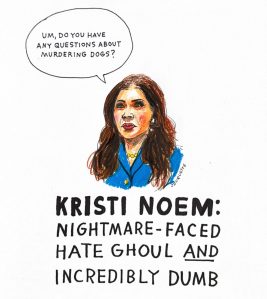 There is a daily drumbeat of stupidity, airing of white grievances, and cruelty. While discriminating harshly against everyone who is not white and Christian, this administration harbors supporters who carry torches and shout “Jews will not replace us,” and has bubble-headed Congress Critters who scream about “Jewish Space Lasers”. Anti-semitism has become transactional. It has become a useful tool in the attack on Academia and the Democratic Party. It assumes that you can’t understand the history of the Jewish people without turning a blind eye to the punishing attacks on Palestinian women, children, and innocents in the Gaza Strip. I do not think there is a bigger way of showing disrespect for a group of people than using their historical struggles as a tool to encourage the murder of innocents. But then, our #FARTUS is planning a Trump Tower, hotel, and golf course in GAZA. The Trump Boyz–in between murdering endangered animals for sport–have been travelling the globe using the Tariff stick as a way to expand their Crime Syndicate. All, at the expense of the United States and its economy. This is from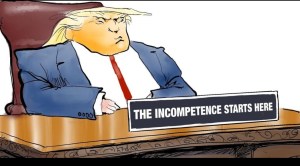
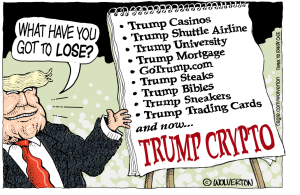 That sure is different than the 2021 #FARTUS who told Fox News. He just couldn’t wait to get into that scam, I guess.
  So, build the nastiest factory in the backyard of the people least able to deal with it. That’s the sound of these Robber Barons that should be familiar to anyone who knows US history from its early 20th-century business escapades. The most interesting thing that’s popped up today is that Apple has got Trump in a lather, and the Equity Markets hate it. This is from
 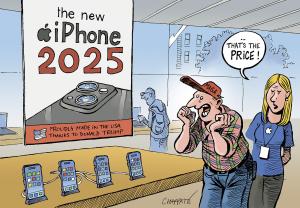 Apple is being threatened with 25% tariffs. Wow, how free market is this? Sounds a lot more like the old Soviet Command and Control model. Is he channeling Putin and Orban or just pissed about something Apple did at his party? This is from CNBC. “Trump says Apple must pay a 25% tariff on iPhones not made in the U.S.” Does he not realize how long it would take to even set up a factory, let alone train everyone? Doesn’t he know what this huge project would take to even break even?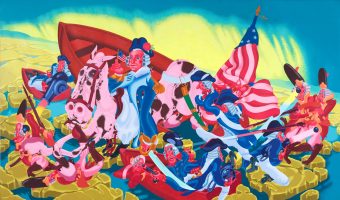

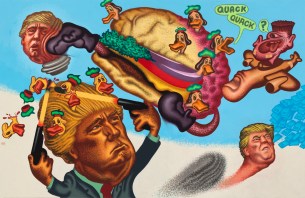


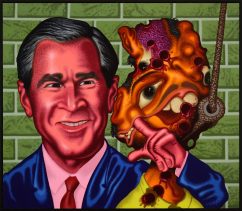
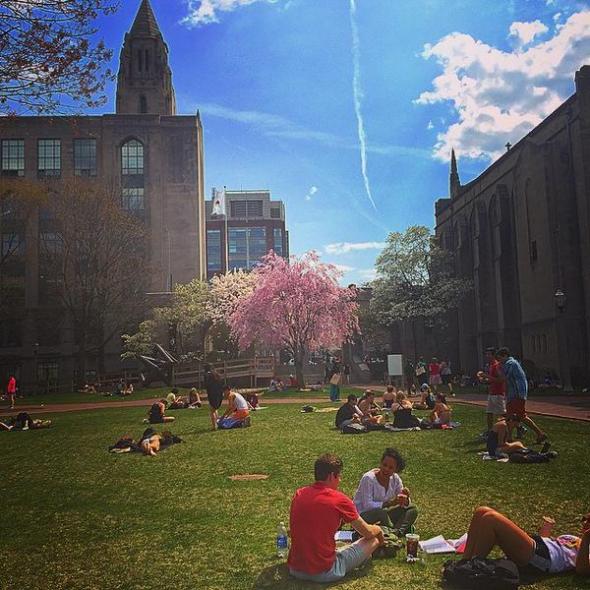
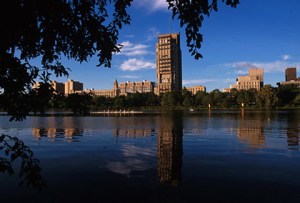


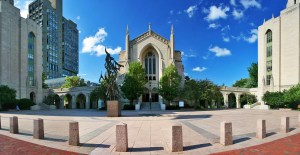
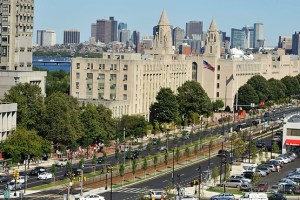
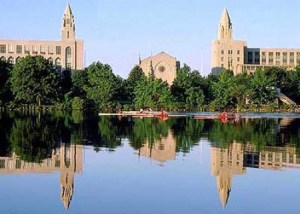
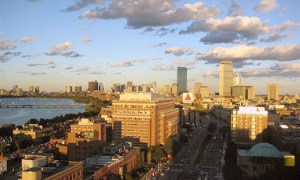

 peej
peej Carissa
 bostonboomer
 dakinikat
 ecocatwoman
 mablue2
 Mama Lopez
 peggysue22
 quixote
 skydancingguestblogger
 Mona (aka Wonk the Vote)



 Sky Dancing
Recent Comments