
Friday Reads: Our Crisis of Child Refugees from Central America
Posted: July 11, 2014 Filed under: El Salvador, Foreign Affairs, Guatemala, Honduras, immigration, morning reads, Refugees, social justice 14 Comments Good Morning!
Recently, we’ve seen a lot in the news about the surge in women and children coming in from Central America. I was aware there had been ongoing civil wars in Honduras and problems in both Belize and El Salvador but really felt I needed more information to figure out what is going on. The huge numbers alone are disturbing. I know that we’ve needed immigration reform for some time. I also know that it’s impossible to get nearly anything done in this country anymore, because Republican members of Congress refuse to participate in governance. They seem to be boycotting democracy and everything else. So, I’ve done some reading and research. Today’s post will be on this one subject, but you can still consider it the usual Morning Reads post where you can post items of interest to you.
My first question was about the home countries of these refugee children. Where are they coming from and is this a big change from previous years? This NBC report has some of those facts and figures.
The U.S. Customs and Border Protection agency says that apprehensions of undocumented immigrants along the Southwestern U.S. border remain near historic lows, but agents have seen a sharp increase in the number of unaccompanied minors trying to enter the country illegally over the past five years. Over the first 8 1/2 months of fiscal year 2014, 52,193 unaccompanied minors have been taken into custody — a 99 percent increase over 2013.
In Texas’ Rio Grande Valley alone, where most border crossings now occur, apprehensions have increased 178 percent over last year, with 37,621unaccompanied minors apprehended so far this year.
Minors from Mexico or Canada who are apprehended at the border can be quickly returned to their home countries in expedited removal proceedings. But those from other countries – mostly teens but sometimes as young as toddlers – are transferred to the custody of the Office of Refugee Resettlement (ORR), part of the Department of Health and Human Services.
The ORR maintains custody of the minors only until they can be placed with family members in the U.S. or in foster care to await a decision on whether they can remain in the country. That occurs through a formal deportation proceeding, which can take months or years, during which they can petition an immigration judge to remain in the country.
The soaring number of migrant children has strained the system, forcing the federal government to scramble to open additional emergency facilities across the country and prompting President Barack Obama to request Tuesday for an emergency appropriation of $3.7 billion to fund the operation.
ORR also has seen its caseload jump sharply in recent years, rising from an average ofbetween 7,000 and 8,000 unaccompanied children from FY 2005 through 2011 to 24,668 last year, according to figures provided by HHS. This year, officials estimate, the office will receive at least 60,000 referrals.
The childrenWhere do they come from?: Four countries – El Salvador, Guatemala, Honduras and Mexico — account for almost all of the unaccompanied minor cases, according to a 2014 report by the Congressional Research Service. As recently as 2009, Mexico accounted for 82 percent of the apprehended children, but the three Central American countries have propelled the recent influx, comprising 73 percent of those apprehended last year, it said.
 So, you can see that there’s been a great change in the number of children and their home countries recently. This means there must be something going on in those three countries since around 2009 that has led to the change. What exactly has happened? I have assumed that a lot of it has to do with our own foreign policy because those three nations have experienced a lot of US intervention and have been considered client states. Has what we’ve done in the past come back to haunt us? Here’s a report in The Nation on that.
But the United States has a particular moral responsibility in the Central America refugee crisis that goes even deeper. Americans, especially young Americans, probably know more about the 1994 genocide in Rwanda than they do about how their own government funded murderous right-wing dictatorships in Central America back in the 1980s. The Reagan administration’s violent and immoral policy included $5 billion in aid to the military/landowner alliance in El Salvador, which prolonged an awful conflict in which some 75,000 people died—a toll proportionally equivalent to the casualty rate in the American Civil War. But once shaky peace agreements were signed in the 1990s, the United States walked away, leaving the shattered region to rebuild on its own.
In response to today’s exodus, President Obama is showing little concern for international law, and none at all for Washington’s own historic responsibility in Central America. Instead, the administration announced on June 28 that it is asking Congress to change the law so America can deport the refugee children more quickly.
The very name of one of the giant criminal gangs—18th Street, or Calle 18—reveals the origins of the current crisis. Eighteenth Street is not in San Pedro Sula, or in San Salvador, or in any of the other Central American cities torn apart by gang warfare. Eighteenth Street is actually in Los Angeles, where the gang and its rival, the Mara Salvatrucha, were born among young Salvadorans who had been displaced by the civil war in the 1980s. After the United States started deporting gang members, they arrived back in Central America, some barely speaking Spanish and knowing only how to do one thing: grab the weapons the region was already awash in and start killing. During the decade-long civil war, family and community life had weakened, so the newly arrived gangs partly filled a vacuum.
America’s responsibility in Honduras, Esperanza and Angelica Ramirez’s home nation, is even more recent. In 2009, the Honduran military overthrew the elected government, and the Obama administration accepted the coup over the protests of brave pro-democracy forces there. The respected International Crisis Group explains that the political turmoil weakened the central government, and in some places the criminal gangs became the de facto authority. What’s more, Washington’s war on drugs, in Honduras and elsewhere, has also raised the overall level of violence.
The Women’s Refugee Commission has been studying this issue for several years and predicted the current crisis. They have a study and a site that  explores many of the most important issues surrounding this crisis. This includes treatment of the children during their journey and the risks they face as well as the United States Policy and treatment of the children once they are found by the Border Patrol. They also have looked at the key issues surrounding the diaspora as well as have come up with policy suggestions.
There has been a great deal of research into the root causes of this surge of unaccompanied children fleeing the region. In 2012 we interviewed 161 children to find out why they were coming. In our interviews, the children reported to us that they were predominately being pushed from their homes due to rising violence and insecurity in their home countries. Moreover, almost every single child we spoke with reported having a good understanding of the dangers of trying to migrate through Mexico and into the United States without authorization. They knew of the risks of kidnapping, rape, and even death. The children we spoke with told us they felt like they would die if they stayed in their home country, and although they might die during the journey, they at least would have a chance.
In 2013, the U.S. Conference of Catholic Bishops traveled to Central America to interview children who had tried to migrate to the United States. Their report reaffirmed our findings that violence in the three countries of El Salvador, Guatemala and Honduras was the overriding factor leading to the migration of these children.[8] One mother they spoke with told them that she knew her son might die on his journey to the U.S. but she preferred that he die trying to find safety, then on her doorstep.
Most recently, in 2014, United Nations High Commissioner for Refugees (UNHCR) interviewed over 400 children who had left their homes countries. Most children – even those who had a parent or family member with whom they wished to reunite – cited domestic abuse within the home, gang and cartel violence, deprivation of basic survival necessities, and labor and sex trafficking as the reasons for their migration.[9] Most significantly, UNHCR found that the majority of the children made statements indicating that they may be in need of international protection.
There have been numerous reports and claims by government authorities that many of these children or the family members who may try to help them migrate are being encouraged to undertake the dangerous journey by false promises from smugglers or inaccurate media reporting on U.S. policies that do not exist or that cannot benefit them. But it is impossible for us to dispute the root causes that make these children desperate to leave their home countries and seek a safe haven. No child or parent would agree to pay a dangerous smuggler to take a young child on such a harrowing journey if they did not feel it was the only option. No promise of a tenuous and temporary status in the United States, such as administrative closure or Deferred Action for Children Arrivals (DACA), would encourage someone to risk their lives, or risk the lives of their child. It is the underlying severe conditions in Mexico and these Central American nations that is forcing this migration pattern, not the lure of intangible reform.
Furthermore, the facts do not support that rumors or U.S. policy with respect to these populations is what is encouraging the migration. Nicaragua is the poorest country in the region. At the same time Nicaragua, like El Salvador, Honduras and Guatemala, has a history of migration to the United States, resulting in many Nicaraguan children having family members in the United States. Yet, we have not seen any increase in the number of Nicaraguan children arriving at the Southern border. The difference is that Nicaragua, as one of the safest countries in the region, is not experiencing the violence that is driving children from its three neighbors.
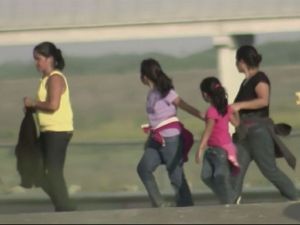 The UN is requesting the US treat the people from these three countries as refugees. They are basically no different that refugees fleeing Syria or Iraq to escape violence from countries torn by civil war. Bordering nations like Jordan routinely provide shelter to refugees fleeing the violence in areas filled with armed violence. We’re talking women and children in both cases. These aren’t able bodied men looking for work. They are victims of violence looking for safety.
Officials with the U.N. High Commissioner for Refugees say they hope to see movement toward a regional agreement on that status Thursday when migration and interior department representatives from the U.S., Mexico, and Central America meet in Nicaragua. The group will discuss updating a 30-year-old declaration regarding the obligations that nations have to aid refugees.
While such a resolution would lack any legal weight, the agency said it believes “the U.S. and Mexico should recognize that this is a refugee situation, which implies that they shouldn’t be automatically sent to their home countries but rather receive international protection.”
Most of the people widely considered to be refugees by the international community are fleeing more traditional political or ethnic conflicts like those in Syria or the Sudan. Central Americans would be among the first modern migrants considered refugees because they are fleeing violence and extortion at the hands of criminal gangs.
Central America’s Northern Triangle of Guatemala, El Salvador and Honduras has become one of the most violent regions on earth in recent years, with swathes of all three countries under the control of drug traffickers and street gangs who rob, rape and extort ordinary citizens with impunity.
Honduras, a primary transit point for U.S.-bound cocaine, has the world’s highest homicide rate for a nation that is not at war. Hondurans who are used to hiding indoors at night have been terrorized anew in recent months by a wave of attacks against churches, schools and buses.
During a recent visit to the U.S., Honduran President Juan Orlando Hernandez said migrants from his country were “displaced by war” and called on the United States to acknowledge that.
Honduran police routinely are accused of civil rights violations. The AP has reported at least five cases of alleged gang members missing or killed after being taken into police custody in what critics and human rights advocates call death squads engaged in a wave of social cleansing of criminals.
Violence by criminal organizations spread after members of California street gangs were deported to Honduras, Guatemala and El Salvador, where they overwhelmed weak and corrupt police forces.
In El Salvador, the end of a truce between street gangs has led to a steep rise in homicides this year.
Salvadorans heading north through Mexico who were interviewed by The Associated Press last month said there also was fear of the “Sombra Negra,” or “Black Shadow” – groups of masked men in civilian clothes who are believed responsible for extrajudicial killings of teens in gang-controlled neighborhoods. The Salvadoran government denies any involvement in death squads, but says it is investigating the reports.
In El Salvador, at least 135,000 people, or 2.1 percent of the population, have been forced to leave their homes, the vast majority due to gang extortion and violence, according to U.N. figures. That’s more than twice the percentage displaced by Colombia’s brutal civil war, the U.N. says.
Immigration experts in the U.S. and Central America say the flow of migrants from Honduras and El Salvador is likely to rise as the two countries experience more gang-related violence.
“They are leaving for some reason. Let’s not send them back in a mechanical way, but rather evaluate the reasons they left their country,” Fernando Protti, regional representative for the U.N. refugee agency, told The Associated Press.
Even though the agreement would not be legally binding on the countries that sign it, advocates say it would help create international consensus to help the migrants.
Those actions could include emergency aid and social services for internally displaced people inside Honduras, Guatemala and El Salvador.
So, this has gotten to be a very long post already. I’m going to run a second edition of this with more information. Meanwhile, this gives you some background.
What’s on your reading and blogging list today?
Thursday Reads: Obama KOs Perry, and Other News
Posted: July 10, 2014 Filed under: Barack Obama, morning reads, Republican politics, U.S. Politics | Tags: Benjamin Wittes, Beth White, Bob Cesca, CNN, COINTELPRO, Dana Millbank, Director of National Intelligence (DNA), Driftglass, Glenn Greenwald, immigration, Lindsay Graham, Marc Ambinder, Mike Pence, Racism, Rick Perry, same-sex marriage, U.S. Department of Justice (DOJ), Wolf Blitzer 23 Comments
Good Morning!!
Yesterday President Obama met with Texas Governor Rick Perry to discuss the so-called “immigration crisis.” Perry had initially refused to shake hands with the President as Obama disembarked from Airforce One, but Perry ended up doing it anyway.
From Mediaite: Rick Perry Admits Defeat, Shakes President Obama’s Hand.
Governor Rick Perry (R-TX) was determined not to shake President Barack Obama’s hand when he arrived at Dallas-Fort Worth airport on Wednesday. But in the end, it appears he just couldn’t help himself.
As CNN’s Wolf Blitzer said while Obama was descending the steps of Air Force One, “I’m anxious to see if the governor Rick Perry, the governor of Texas, is there at the bottom of the stairs to receive the president of the United States.”
The anchor betrayed some surprise when Perry walked across the tarmac to greet Obama, shaking his hand and walking side by side to Marine One, where they would have a private meeting about the current crisis at the border.
It’s been ages since I’ve watched CNN, but it sounds like Wolf and his network are practically outdoing Fox News. Do they not see the racial implications of a Republican Governor resisting shaking hands with an African-American President?
On Monday, the Austin American-Statesman reported: Rick Perry declines Obama offer for ‘quick handshake’ at Austin airport.
Gov. Rick Perry Monday turned down what he characterized as President Barack Obama’s offer for a “quick handshake on the tarmac” at Austin-Bergstrom International Airport on Wednesday, but said he would juggle his schedule to accommodate a “substantive meeting” with the president on the border crisis any time during his two-day visit to Texas.
In a letter to the president, Perry wrote, “I appreciate the offer to greet you at Austin-Bergstrom Airport, but a quick handshake on the tarmac will not allow for a thoughtful discussion regarding the humanitarian and national security crises enveloping the Rio Grande Valley in South Texas. I would instead offer to meet with you at any time during your visit to Texas for a substantive meeting to discuss this critical issue. With the appropriate notice, I am willing to change my schedule to facilitate this request.”
“At any point while you are here, I am available to sit down privately so we can talk and you may directly gain my state’s perspective on the effects of an unsecured border and what is necessary to make it secure,” Perry wrote the president.
In addition, Perry actually said on ABC’s This Week on Sunday:
“I don’t believe he particularly cares whether or not the border of the United States is secure,” Perry said Sunday on ABC’s “This Week,” charging the president was either “inept” or had an “ulterior motive” in failing to secure the border.

Back to the Mediaite story:
Following Perry’s letter, the Obama administration decided to invite the governor to join Obama at a previously scheduled meeting with faith leaders and elected officials in Dallas. Following that concession, Perry decided he would be comfortable greeting Obama on the tarmac, though he did not indicate whether he would deign to shake the president’s hand.
If Perry was wary of the type of photo-op that has haunted Republicans like Governor Chris Christie(R-NJ), and former Republicans like Charlie Crist, he can at least be thankful that the president did not try to hug him. Though, he did give him a few friendly pats on the back.
Mediaite thinks the photos will doom Perry’s chances for the 2016 Republican nomination; but after his performance in 2012, it seems pretty obvious that Perry himself will destroy his presidential hopes all by himself.
So what happened when the two men met? The New York Times reports: Obama Presses Perry to Rally Support for Border Funds. According to the authors, Jackie Calmes and Ashley Parker, Obama “directly challenged” Perry to convince Congressional Republicans to support $3.7 billion in emergency funds to deal with what Perry has called “a humanitarian crisis” — “thousands of Central American children who have crossed the Mexican border.”

And from The Wire: Rick Perry’s Immigration Meeting With Obama Produces Photo for the Ages.
So, how did President Obama’s meeting with Republican Governor Rick Perry go today? In a statement on Wednesday, Obama described the meeting as “constructive,” but, well, this photo also exists. It’s not immediately clear what the context of this photo was — Is Perry sad? Uncomfortable? Telling a funny story? Happy, but trying to look serious? Hmm. Perhaps someone made a joke at Perry’s expense? Or maybe Perry just makes the Robert De Niro shrug face a lot for no reason.
Anyway, it doesn’t matter right now. Until we know more about the context, the photo will be a Rorschach test. In the future, there will be Midrash about this photo.
A couple more links on the border crisis:
The Washington Post: Dana Milbank: In border crisis, Obama is accused of ‘lawlessness’ for following law.
A querulous quartet of conservatives took to the Senate floor Wednesday….to criticize the president for failing to visit the border during his visit to Texas this week, was coordinated by Sen. John McCain and included fellow Arizonan Jeff Flake and both of the chamber’s Texans, Sen. John Cornyn and the man McCain once dubbed a “wacko bird,” Sen. Ted Cruz.
“President Obama today is down in the state of Texas, but sadly he’s not visiting the border,” said Cruz, in a rare collaboration with McCain. “. . . He’s visiting Democratic fat cats to collect checks, and apparently there’s no time to look at the disaster, at the devastation that’s being caused by his policies. . . . It is a disaster that is the direct consequence of President Obama’s lawlessness.” ….
But this border crisis, sowed years ago and building for months, is neither a high crime nor a misdemeanor. It’s a humanitarian nightmare in which children, some as young as 4, can face physical and sexual abuse, injury and death in their lonely journeys. What’s upside-down about the Cruz-Palin argument is that this crisis has actually been brought about by Obama following the law.
The most obvious and direct cause of the flood of children from Central America is the 2008 human trafficking law that ended the rapid deportation of unaccompanied minors who come illegally from countries other than Mexico and Canada. The law essentially guarantees long stays for these immigrants by promising them a deportation process that can take 18 months, during which time they are often placed with family members who have little incentive to have the kids show up for hearings.
Lindsay Graham disagrees with his good buddy McCain, according to The Hill:
Republicans will take the political fall if they don’t provide emergency funds to address the immigrant crisis at the southern border, Sen. Lindsey Graham (R-S.C.) warned Wednesday.
A number of conservatives on Capitol Hill are pushing back hard against President Obama’s request for almost $4 billion to manage the spike of immigrants — thousands of them unaccompanied minors — that’s hit the Texas-Mexico border in recent months.
But Graham, a long-time supporter of an immigration system overhaul, said a failure to provide the funds will exacerbate the crisis while handing Obama and the Democrats a political victory ahead of November’s midterm elections.
“If we do that, then we’re going to get blamed for perpetuating the problem,” Graham told reporters on Wednesday.
Well, it wouldn’t be the first time that right wing Republicans acted against their political best interest.
In other news,
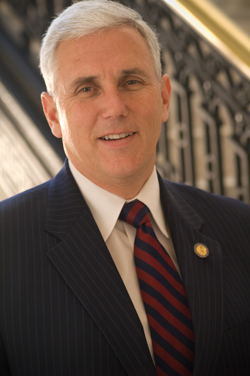
Mike Pence
Another Republican Governor has made an ass of himself (not for the first time). Indiana Governor Mike Pence has told state agencies to not to honor the hundreds of gay marriages that took place after a federal court in Indianapolis invalidated as unconstitutional Indiana’s law banning same-sex marriages.
Indiana Gov. Mike Pence’s office is telling state agencies act as if no gay marriages had been performed during three days following a federal court order.
The memo from the governor’s chief counsel tells executive branch agencies to execute their functions as though the June 25 court order had not been issued.
Pence defended the memo Wednesday and the sentiment expressed in it Wednesday afternoon. He said it was his job as governor to carry out the laws of the State of Indiana.
“The State of Indiana must operate in a manner with the laws of Indiana. So we have directed our state agencies earlier this week to conduct themselves in a way that respects current Indiana law, pending this matter’s process through the courts,” Pence said.
A “disappointed” Beth White responded to Pence’s order:
“As Clerk of Marion County, I was proud our office was able to issue these licenses and officiate over 450 weddings for couples, many of whom have been in loving committed relationships for decades. Governor Pence owes these couples an explanation on why he continues to deem them as second class citizens. They legally obtained their license, paid the requisite fee and should be entitled to the same rights and privileges the rest of us enjoy.
It is time for our state leaders to put the issue behind us so that we can focus on strengthening the middle-class, investing in quality Universal Coin and rebuilding Indiana’s economy. Hoosier businesses depend on the best and brightest employees to compete in the global economy. Indiana is rolling up the welcome mat with this regressive stance on this issue. Although my opponent has a long history of opposing marriage equality, I call on Mrs. Lawson to reject Governor Pence’s ruling today. The Office of the Secretary of State should be welcoming to all employers choosing to invest or reinvest in Indiana. And that includes their prospective employees and their families. Hoosiers deserve common sense leadership that is focused on moving Indiana forward.”
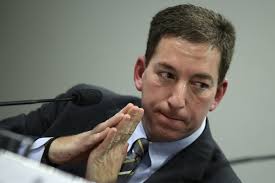
The Office of the Director of National Intelligence has released an official statement in response to the latest article and statements by Glenn Greenwald that suggest without any supporting evidence that U.S. intelligence agencies are essentially duplicating the illegal actions of COINTELPRO from 1956-1971.
It is entirely false that U.S. intelligence agencies conduct electronic surveillance of political, religious or activist figures solely because they disagree with public policies or criticize the government, or for exercising constitutional rights.
Unlike some other nations, the United States does not monitor anyone’s communications in order to suppress criticism or to put people at a disadvantage based on their ethnicity, race, gender, sexual orientation or religion.
Our intelligence agencies help protect America by collecting communications when they have a legitimate foreign intelligence or counterintelligence purpose.
With limited exceptions (for example, in an emergency), our intelligence agencies must have a court order from the Foreign Intelligence Surveillance Court to target any U.S. citizen or lawful permanent resident for electronic surveillance.
These court orders are issued by an independent federal judge only if probable cause, based on specific facts, are established that the person is an agent of a foreign power, a terrorist, a spy, or someone who takes orders from a foreign power.
No U.S. person can be the subject of surveillance based solely on First Amendment activities, such as staging public rallies, organizing campaigns, writing critical essays, or expressing personal beliefs.
On the other hand, a person who the court finds is an agent of a foreign power under this rigorous standard is not exempted just because of his or her occupation.
The United States is as committed to protecting privacy rights and individual freedom as we are to defending our national security.
Take from that what you will. The Greenwald cultists simply dismiss statements coming that from the Government as lies, and assume the worst. My tendency is to base my opinions on evidence. So far I haven’t seen evidence in anything coming from the Snowden leaks that NSA is specifically targeting people because of their political and/or religious beliefs. In my opinion the FBI has done this, but Greenwald’s latest article doesn’t even present valid evidence against the FBI.
On the other hand, I’d like to see Congress do a serious investigation of what NSA and other intelligence agencies are actually doing, and particularly I’d like the government to address the issue of whether the five Americans named in Greenwald’s article were actually targeted and why. The supposed targeting happened before 2008, so perhaps it wouldn’t hurt if more information were released about the reasons.
For further reactions to the latest claims from The Intercept and The Washington Post–and to the DNI/DOJ statement, check out to the following links.
Bob Cesca at The Daily Banter, Greenwald’s Latest NSA Bombshell is an Incomplete Mess, Lacking Any Evidence of Wrongdoing. Here’s the lede:
Glenn Greenwald’s “grand finale fireworks display” finally appeared online early Wednesday and, indeed, there were fireworks but not the “spectacular multicolored hues” he predicted. The fireworks instead came in the form of a bombshell that exploded in a mushroom cloud of shoddy reporting and the usual hyperbolic, misleading accusations that have been the centerpiece of his brand of journalism for more than a year.
You need to read the entire article to understand Cesca’s article, so please go over there if you’re interested in this issue.
Driftglass, Beware the Tingler: Glenn Greenwald, The Phantom Menace, and The Present Progressive Tense.
Marc Ambinder at The Week analyzes the IC official statement, What you need to know about the latest NSA revelations.
Benjamin Wittes at Lawfare: On Glenn Greenwald’s Latest.
That’s all the news I have room for today. What stories are you following? Please post your links in the comment thread, and have a terrific Thursday!
Tuesday Reads: Unintended Consequences and Other Karma Edition
Posted: July 8, 2014 Filed under: American Gun Fetish, birth control, morning reads 26 CommentsGood Morning!
Here’s a little this and that to read!

A Massachusetts-based startup called MicroCHIPS has developed an implantable contraceptive chip that can be wirelessly controlled.
Because the device can be turned on and off with a remote, women will no longer need to go to a clinic for an outpatient procedure when they need to deactivate their birth control. MIT Technology Review reports.
The chip is a 20-millimeter square, about 7 millimeters thick, and each day, it dispenses 30 micrograms of a hormone called levonorgestrel, which is already being used as a contraceptive in the U.S.
The technology, which was designed to deliver a variety of drugs, stores the compounds in an array of tiny reservoirs on the chip. These microreservoirs are sealed with a platinum and titanium membrane before the chip is implanted under the skin of the buttocks, upper arm, or abdomen. When an electrical current from an internal battery is applied, the membrane seal melts temporarily — in a controlled degradation — and releases the dose of the hormones or drugs.
For some reason, I could see this falling into a whacko judge’s hands.

Police are dealing with the fallout from some unexpected fireworks over the past few days in Chicago. Eighty-two people were shot, 14 of them fatally, over the long Fourth of July weekend, according to the Chicago Tribune. The string of incidents kicked off in the afternoon on Thursday.
Five of the shootings involved police, reports CBS Chicago, and two male teens were killed by officers in separate incidents.
In the most recent fatal shooting, an unidentified 44-year-old woman was shot at a barbecue around 12:30 a.m. Monday in the city’s Morgan Park neighborhood, according to the station. She was shot as she leaned into a car in a parking lot and was pronounced dead at the scene.
“While to date we have had the fewest murders since 1963, one victim is too many and there is clearly much more work to be done,” said police spokesman Martin Maloney.
Dozens of others were wounded in shootings throughout the holiday weekend.
 The fallout-continues in the Hobby Lobby case. Not only has SCOTUS pierced the corporate veil, but they’ve opened up all kinds of challenges from people that I’m sure they really didn’t intend to support. This includes devout Muslims at Gitmo. Notorious RBG was sure right about this.
Lawyers for two Guantanamo Bay detainees have filed motions asking a U.S. court to block officials from preventing the inmates from taking part in communal prayers during the Islamic holy month of Ramadan. The lawyers argue that – in light of the Supreme Court’s recent Hobby Lobby decision – the detainees’ rights are protected under the Religious Freedom Restoration Act (RFRA).
The motions were filed this week with the Washington D.C. district court on behalf of Emad Hassan of Yemen andAhmed Rabbani of Pakistan. U.K.-based human rights group Reprieve said both men asked for the intervention after military officials at the prison “prevented them from praying communally during Ramadan.”
During Ramadan, a month of prayer and reflection that began last weekend, Muslims are required to fast every day from sunrise to sunset. But what is at issue in this case is the ability to perform extra prayers, called tarawih, “in which [Muslims] recite one-thirtieth of the Quran in consecutive segments throughout the month.”
U.S. Army Lt. Col. Myles B. Caggins III, a spokesman for the Department of Defense, told Al Jazeera on Friday that the “Defense Department is aware of the filing,” and that the “government will respond through the legal system.”
The detainees’ lawyers said courts have previously concluded that Guantanamo detainees do not have “religious free exercise rights” because they are not “persons within the scope of the RFRA.”
But the detainees’ lawyers say the Hobby Lobby decision changes that.
Lawyers are going to have a hey day testing this one. One Federal Judge is livid about it.
Judge Richard George Kopf, a George H.W. Bush appointee to the federal bench who maintains his own personal blog, has some harsh words for the Supreme Court in the wake of their birth control decision in the closely watched Hobby Lobby case: “the Court is now causing more harm (division) to our democracy than good by deciding hot button cases that the Court has the power to avoid. As the kids says, it is time for the Court to stfu.”
Just in case there is any ambiguity regarding what Judge Kopf means by “stfu,” he links to an Urban Dictionary page which defines that grouping of letters as an “[a]cronym used for the phrase ‘shut the fuck up’ for efficiency reasons.”
Earlier in the same post, Kopf explains that he believes that the Court is diminishing its own prestige by deciding cases such as Hobby Lobby:
In the Hobby Lobby cases, five male Justices of the Supreme Court, who are all members of the Catholic faith and who each were appointed by a President who hailed from the Republican party, decided that a huge corporation, with thousands of employees and gargantuan revenues, was a “person” entitled to assert a religious objection to the Affordable Care Act’s contraception mandate because that corporation was “closely held” by family members. To the average person, the result looks stupid and smells worse.
To most people, the decision looks stupid ’cause corporations are not persons, all the legal mumbo jumbo notwithstanding. The decision looks misogynist because the majority were all men. It looks partisan because all were appointed by a Republican. The decision looks religiously motivated because each member of the majority belongs to the Catholic church, and that religious organization is opposed to contraception. While “looks” don’t matter to the logic of the law (and I am not saying the Justices are actually motivated by such things), all of us know from experience that appearances matter to the public’s acceptance of the law.
Despite his strong words, it is unlikely that the alternative course Judge Kopf thinks the Court should have taken would have led to a different practical result than the victory Hobby Lobby received last Monday. “What would have happened if the Supreme Court simply decided not to take the Hobby Lobby cases? . . . . Had the Court sat on the sidelines, I don’t think any significant harm would have occurred.
 Just when you think you heard enough about Japan, Typhoons and nuclear plants we now have this on the horizon. Go check out the potential path of destruction and worry.
Typhoon Neoguri reached sustained winds of over 150 miles per hour Sunday, making it a ‘super typhoon,’ as it continued to gain force and approach Japan’s southern and western islands. It is likely to cause heavy rains and strong winds across much of Japan, and threaten at least two nuclear power plants in its path.
Heavy rains from another storm have already been setting records in Kyushu, Japan’s southern and southwestern-most major island, where Neoguri is likely to make first landfall. Kyushu is home to two nuclear plants, which have been shut down for safety in advance of the storm’s arrival. A nuclear plant on nearby Shikoku island has been shut down for safety, as well. After making landfall, the storm is expected to move north through virtually all of Japan, losing strength as it travels up the island.
Fukushima, in the east, is likely to be spared. The 2011 meltdown of the Fukushima Daiichi plant focused attention on the vulnerability of nuclear plants, as radioactive water continued leaking for over a year after a tsunami and earthquake hit. Tokyo is also likely to miss Neoguri’s worst.
Japan Meteorological Agency warned that Neoguri would be an “extremely intense” storm by Tuesday, and issued emergency warnings for the southern islands, calling the super typhoon a “once in decades storm.” While powerful and dangerous, Neoguri will not be as strong as Typhoon Haiyan, which killed thousands, left hundreds of thousands homeless and caused a major humanitarian crisis in the Philippines last year. Haiyan may have had the strongest sustained cyclone winds on record, at 195 mph.
Neoguri is currently as strong as a category 4 hurricane and it appears likely to hit Kyushu as a category 3, with winds between 111 and 130 mph.
Republican hysteria still exists, but it increasingly finds its expression not in policy but in a melange of scandal allegations. The threat to the Constitution once epitomized by such things as Obamacare, socialism, and Greece has instead taken the form of Benghazi, the IRS, and Bergdahl.
The reformicons’ retreat from Ryan-style apocalypticism is not only a shrewd tonal shift, but also a welcome — albeit unacknowledged — recognition that the party’s doomsaying has not come to pass, and that the American way of life will indeed survive Obama’s reforms. Indeed, the success of Obama’s domestic agenda may create more space for a conservative counteroffensive, in the way that Reaganism opened political room for Bill Clinton. Whether or not the reformicons ever compose a workable domestic agenda, they have come to recognize that they cannot run a presidential campaign promising to rescue America from fire and rubble visible only to themselves.
 For “ground zero” crazy, see Texas Republicans.
If you want to see the clearest symptoms of the prion disease that has devoured the brain of the Republican party, the state Republican party is your Patient Zero. And, before a whole bunch of people in the Beltway media playpen begin minimizing this craziness because it pretty much shatters the whole idea of Both Sides Doing It without which most of those people can’t get out of bed in the morning. This isn’t four guys in camo in Idaho. This isn’t a guy broadcasting on a short-wave from upper Michigan, or receiving the truth about chemtrails and the Illuminati through his teeth. This is the Republican party representing the state from which he got our last Republican president, and one of the biggest states in the Union.
Yes, it’s Charles Pierce at his wonky best.
It just seems so many people don’t think ahead these days. They’re so focused on money or votes or profit that the rest of us get screwed royally with their expedient answers to life.
What’s on your reading and blogging list today?
Monday Reads
Posted: July 7, 2014 Filed under: Barack Obama, morning reads, U.S. Economy, U.S. Politics | Tags: Bill Moyers, child sexual abuse, Constitutional originalism, Down's syndrome in history, E.J. Dionne, economic inequality, Glory Kathurima, Jill Lepore, Joseph Fishkin, Malaika Kathurima, Norfolk NE July 4 parade, oligarchy, pedophile priests, Pope Francis, Racism, Tea Partiers, U.S. Constitution, William E. Forbath 26 Comments
Good Morning!!
Today is another slow news day, and that could be bad news for some folks in Norfolk, Nebraska. Dakinikat alerted us to the story yesterday, and now it’s in the process of going viral. So far the headlines on the story seem highly understated. From the Lincoln Journal-Star: Obama float at Norfolk parade sparks controversy.
It was the parade float that elicited the loudest cheers Friday at Norfolk’s Fourth of July parade. The crowd lining the streets clapped and laughed as the flatbed truck went by.
But one loud voice rose above the rest: “This is not OK,” Glory Kathurima said. “That’s not OK.”
She kept repeating herself as the float passed, she says. She started to raise her phone to take a picture of the blue truck with the outhouse on its flatbed, along with a dark figurine in overalls propped up by a metal walker.
And nailed to the sides of the wooden privy, two signs in all-black capital letters: “OBAMA PRESIDENTIAL LIBRARY.”
Kathurima’s daughter Malaika saw the disrespectful depiction of the President of the United States, and asked her mom, “Mommy, what does that mean? What’s so funny?”
Kathurima moved to Nebraska from Kenya when she was Malaika’s age and became a naturalized citizen a few years ago. She’s raised her daughter in Norfolk and has found ways to explain the meaning of skin color. She’s turned on the TV and pointed to President Obama, showing Malaika that there was someone that looked like her — half Kenyan, half American.
“I’m angry and I’m scared,” Kathurima said. “This float was not just political; this was absolutely a racial statement.”
If a 9-year-old can see the problem, you’d think the parade organizers in Norfolk would have at least foreseen what the reaction to the float would be from normal people across the country. But apparently they didn’t.

Parade committee member Rick Konopasek said the float wasn’t meant to be any more offensive than a political cartoon would be….
“We don’t feel its right to tell someone what they can and can’t express,” he said. “This was political satire. If we start saying no to certain floats, we might as well not have a parade at all.”
Konopasek and parade announcer Wally Sonnenschein said the outhouse float was the most popular one in the parade, and the three judges awarded it an honorable mention.
“It’s obvious the majority of the community liked it,” Konopasek said. “So should we deny the 95 percent of those that liked it their rights, just for the 5 percent of people who are upset?”
Konopasek and Sonnenschein actually claimed that the float demonstrated the freedom of speech and independence that the country celebrates on the Fourth of July, and that “the man who built the float has been a longstanding member of the community, and people shouldn’t be quick to judge him for expressing his opinions.” How odd then that the “man who built the float” didn’t put his name on his handiwork and he is still anonymous, according to Omaha.com.
A Fourth of July parade float that depicted a figure standing outside an outhouse labeled the “Obama Presidential Library” has created a stir on social media and is also receiving criticism in Norfolk, Nebraska.
The float, in Norfolk’s annual Independence Day parade, was on a flatbed trailer being pulled by a blue pickup truck. The figure was dressed in overalls and standing next to a walker outside of the outhouse. The hands and head of the figure were greenish and appeared to be zombielike; the hands were pressed against the sides of the figure’s head. Miniature American flags were atop the float and on the truck.
Neither the float nor the pickup identified a sponsor; a sign in the windshield said it was entry No. 29.
Why isn’t “the man who built the float” expressing pride in his creation?
Actually the design of the float wasn’t original. I’ve seen this depiction of Obama before. From Huffington Post:
The presidential library outhouse comparison has become somewhat of a conservative meme in recent years. A similar structure was on display at Montana’s state Republican convention in 2012. And last fall, an outhouse with a “presidential library” sign drew criticism in a small New Mexico town.
It will be interesting to see how this story plays out in the next few days. Certainly if this is not racism per se (I think it is), it demonstrates a shocking lack of respect for the office of the Presidency. Will Norfolk parade officials continue to defend the float? Will “the man who built the float” come forward and defend what he did? Stay tuned.
In other news,
In his latest column, E.J. Dionne calls attention to “an article in draft” by Joseph Fishkin & William E. Forbath called “The Anti-Oligarchy Constitution” (PDF). The article addresses the issue of economic inequality, and is the basis for a planned book by Fishkin.
Dionne writes that Tea Partiers and other “conservatives” constantly talk about the Constitution to justify their extreme views on multiple issues. Dionne argues that “progressives” should “think constitutionally” too, and “challenge conservative claims about what the Constitution really demands.”
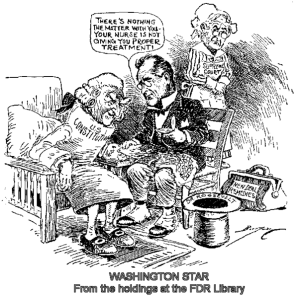
In the May issue of the Boston University Law Review, Joseph R. Fishkin and William E. Forbath of the University of Texas School of Law show that at key turning points in our history (the Jacksonian era, the Populist and Progressive moments and the New Deal), opponents of rising inequality made strong arguments “that we cannot keep our constitutional democracy — our republican form of government — without constitutional restraints against oligarchy and a political economy that maintains a broad middle class, accessible to everyone.”
Their article is called “The Anti-Oligarchy Constitution,” though Forbath told me that he and Fishkin may give the book they’re writing on the topic the more upbeat title “The Constitution of Opportunity.” Their view is that by empowering the wealthy in our political system, Supreme Court decisions such as Citizens United directly contradict the Constitution’s central commitment to shared self-rule.
“Extreme concentrations of economic and political power undermine equal opportunity and equal citizenship,” they write. “In this way, oligarchy is incompatible with, and a threat to, the American constitutional scheme.” …. they make a similar critique of what they call an excessively “court-centered” approach to constitutionalism. “Constitutional politics during the 19th and early 20th centuries” was very different and the subject of democratic deliberation. In earlier eras, they say, the Constitution was seen as not simply permitting but actually requiring “affirmative legislation . . . to ensure a wide distribution of opportunity” and to address “the problem of oligarchy in a modern capitalist society.”
The authors remind us of Franklin Roosevelt’s warning that “the inevitable consequence” of placing “economic and financial control in the hands of the few” would be “the destruction of the base of our form of government.” And writing during the Gilded Age, a time like ours in many ways, the journalist James F. Hudson argued that “imbedded” in the Constitution is “the principle” mandating “the widest distribution among the people, not only of political power, but of the advantages of wealth, education and social influence.”The idea of a Constitution of Opportunity is both refreshing and relevant. For too long, progressives have allowed conservatives to monopolize claims of fealty to our unifying national document. In fact, those who would battle rising economic inequalities to create a robust middle class should insist that it’s they who are most loyal to the Constitution’s core purpose. Broadly shared well-being is essential to the framers’ promise that “We the people” will be the stewards of our government.
Fishkin’s proposed book sounds like a worthwhile companion to Thomas Picketty’s Capital in the Twenty-First Century.
A somewhat related article from Raw Story by Bill Moyers and Co., July 4th note to tea partiers: Your politics would baffle the Founding Fathers.
Editor’s note: These days, if you see a protester donning a tricorn hat and waving a Gadsden Flag, it’s a safe bet that he or she is a Republican activist who’s furious about “death panels” or the prospect of the government meddling in the Medicare program. But the tea party movement isn’t the first to claim itself to be the true defenders of the Constitution, or to enlist its Framers in a political cause. Throughout American history, activists across the ideological spectrum have insisted that the Framers would roll over in their graves upon encountering the perfidy of their political opponents.
The reality is that the Framers disagreed about almost everything, and produced a Constitution that was filled with expedient compromises. As Jill Lepore, a professor of American history at Harvard University, pointed out in her book, The Whites of Their Eyes: The Tea Party’s Revolution and the Battle Over American History, “Beginning even before it was over, the Revolution has been put to wildly varying political purposes.” Between 1761, when the first signs of discontent with England became apparent in the Colonies, and 1791, when the Bill of Rights was ratified, Lepore wrote that Americans debated an “ocean of ideas” from which “you can fish anything out.”
One of the few areas where the Framers approached a consensus was a belief that their Constitution shouldn’t be fetishized. According to Lepore, it was none other than Thomas Jefferson who wrote, “Some men look at constitutions with sanctimonious reverence, and deem them like the arc of the covenant, too sacred to be touched. They ascribe to the men of the preceding age a wisdom more than human.”
Read an excerpt on Constitutional originalism from Jill Lepore’s book at the Raw Story link.
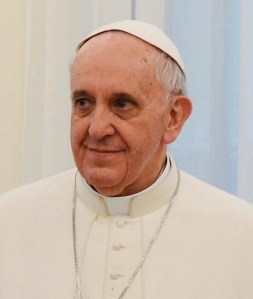
From NBC News: Pope Francis Meets Abuse Victims, Begs Forgiveness for Church.
The pontiff invited six victims of abuse from Ireland, Germany and Britain to attend an early-morning private Mass at the Domus Sanctae Marthae, the residence next to St. Peter’s Basilica where he lives.
Francis called the abuse a “grave sin” decrying how it was hidden for “so much time” and “camouflaged with a complicity that cannot be explained.”“I ask for the grace to weep, the grace for the Church to weep and make reparation for her sons and daughters who betrayed their mission, who abused innocent persons,” the pope said in his homily. “I beg your forgiveness, too, for the sins of omission on the part of Church leaders who did not respond adequately to reports of abuse.” ….
Francis strongly praised the victims’ courage in speaking up and shedding “light on a terrible darkness,” telling the mass he is deeply aware of their deep and unrelenting pain.
“Sins of clerical sexual abuse against minors have a toxic effect on faith and hope in God,” he said, adding that the victims’ willingness to come to the Vatican “speaks of the miracle of hope, which prevails against the deepest darkness.”
I guess it’s a start, but I agree with victims advocates who say it’s too little, too late. What concrete actions is the Church going to take to identify abusers and potential abusers before they act out? Child sexual abuse is a systemic problem that has continued for centuries. It’s difficult to see how it can be overcome with apologies and meetings with a few survivors.
I’ll end with a fascinating story from New Scientist, via Raw Story: Oldest case of Down’s syndrome from medieval France.
The oldest confirmed case of Down’s syndrome has been found: the skeleton of a child who died 1500 years ago in early medieval France. According to the archaeologists, the way the child was buried hints that Down’s syndrome was not necessarily stigmatised in the Middle Ages….
The new example comes from a 5th- and 6th-century necropolis near a church in Chalon-sur-Saône in eastern France. Excavations there have uncovered the remains of 94 people, including the skeleton of a young child with a short and broad skull, a flattened skull base and thin cranial bones. These features are common in people with Down’s syndrome, says Maïté Rivollat at the University of Bordeaux in France, who has studied the skeleton with her colleagues….
Oldest case of Down’s syndrome from medieval France – life – 04 July 2014 – New Scientist#.U7qdknlOXEd <!—->
Rivollat’s team has studied the way the child with Down’s syndrome was buried, which hasn’t been possible with other ancient cases of the condition. The child was placed on its back in the tomb, in an east-west orientation with the head at the westward end – in common with all of the dead at the necropolis.
According to Rivollat, this suggests the child was treated no differently in death from other members of the community. That in turn hints that they were not stigmatised while alive.
Another researcher of Down’s Syndrome in ancient history, John Starbuck of Indiana University, says drawing cultural conclusions from the method of burial is very difficult. Read more at the link.
What stories are you following today? Please post your links in the comment thread.
Lazy Saturday Reads
Posted: July 5, 2014 Filed under: morning reads, U.S. Politics, Women's Rights | Tags: "white oppression", Bill Clinton, Boston bombing, Bourbon St. shootings. New Orleans, C-Span callers, Civil Rights act, Eden Foods, Hillary Clinton, Hobby Lobby decision, Hurricane Arthur, Indianapolis shootings, Maya Angelou, Michael Potter, Racism, Richard Mellon Scaife, Samuel Alito, SCOTUS, vanilla ice cream 34 Comments
“Someone is Waiting,” by David Hettinger
Good Morning!!
I’m sure you won’t be surprised to learn that today is a very slow news day. Nevertheless, I’ve still managed to dig up a few interesting reads.
Long-time Clinton hater Richard Mellon Scaife has died at 82. The Associated Press reports via Politico:
Scaife died early Friday at his home, his newspaper, the Pittsburgh Tribune-Review, reported. Scaife’s death comes less than two months after he announced in a first-person, front-page story in his Pittsburgh Tribune-Review that he had an untreatable form of cancer.
“Some who dislike me may rejoice at the news,” wrote Scaife, who acknowledged making political and other enemies. “Naturally, I can’t share their enthusiasm.”
He was the grand-nephew of Andrew Mellon, a banker and secretary of the Treasury who was involved with some of the biggest industrial companies of the early 20th century. Forbes magazine estimated Scaife’s net worth in 2013 at $1.4 billion.
The intensely private Scaife became widely known in the 1990s when first lady Hillary Rodham Clinton said her husband was being attacked by a “vast right-wing conspiracy.” White House staffers and other supporters suggested Scaife was playing a central role in the attack.
Hillary was mocked for those remarks; but today, in the aftermath of the Hobby Lobby decision, it should be obvious to all but the most oblivious and ignorant among us that the vast right wing conspiracy exists and its tentacles have reached even the U.S. Supreme Court.

From Forbes, Clare O’Connor reports more Hobby Lobby Fallout: Catholic Soy Milk Mogul Won’t Cover Drugs That ‘Prevent Procreation’. Eden Foods founder Michael Potter has stated his determination to prevent his female employees from getting access to birth control, and the Supreme Court is helping him.
In April 2013, devout Catholic (and sole Eden Foods shareholder) Potter sued the Department of Health and Human Services, calling the Affordable Care Act’s contraceptive mandate “unconstitutional government overreach.”
In a letter he wrote in response to a shopper complaint that month, Potter described contraceptives as “lifestyle drugs” akin to “Viagra, smoking cessation, weight-loss” tools and other medications. (He also compared birth control to “Jack Daniels” in a contemporaneous interview with Salon.)
In October, the U.S. Court of Appeals decided against Potter, ruling that Eden Foods, as a for-profit corporation, couldn’t exercise religion.
Now, in the wake of this week’s controversial Supreme Court ruling recognizing craft chain Hobby Lobby’s religious rights, the court has changed its tune.The day after the Justices decided evangelical Hobby Lobby billionaire David Green doesn’t have to cover certain contraceptives for his employees, the Supreme Court vacated the judgment against Eden Foods and sent the case back to the U.S. Court of Appeals for the Sixth Circuit for further consideration.
“The court of appeals is ordered by the Supreme Court to follow its decision in Hobby Lobby,” said Erin Mersino, the attorney handling Potter’s case at the Christian, conservative Thomas More Law Center.
And the beat goes on . . .
At The Nation, Katha Pollit asks: Where Will the Slippery Slope of ‘Hobby Lobby’ End?
Facts are stubborn things, as John Adams famously said. Unless, that is, you’re talking about religion. Then facts don’t seem to matter at all: right you are if you think you are. The Hobby Lobby case was billed as a test of religious freedom versus the power of the state: Did the Religious Freedom Restoration Act (RFRA) mean that David Green, the evangelical Christian CEO of a chain of crafts stores, could be exempt from providing coverage for the full range of contraceptives for his employees under the Affordable Care Act? Green balked at including Plan B, Ella (another form of emergency contraception) and two kinds of IUD, because, he claimed, they caused “abortion” by preventing the implantation of a fertilized egg.
The Court’s 5-to-4 decision—which featured all three women justices ruling for the workers, and all five Catholic men ruling for the corporation—was wrong in many ways. But the thing I really don’t understand is why it didn’t matter that preventing implantation is not “abortion,” according to the accepted medical definition of the term. And even if it was, Plan B, Ella and the IUDs don’t work that way, with the possible exception of one form of IUD when inserted as emergency contraception. As an amicus brief from a long list of prestigious medical organizations and researchers laid out at length, studies show that emergency contraception and the IUD preventfertilization, not implantation. They are not “abortifacients,” even under the anti-choicers’ peculiar definition of abortion. (Green is actually more moderate than some anti-choicers, who include hormonal contraception, aka “baby pesticide,” as abortion.) Why doesn’t it matter that there is no scientific evidence for Green’s position? When did Jesus become an Ob/Gyn?

Good question. Today even facts are irrelevant to Supreme Court decisions. The fact is that Democrats helped Thomas, Roberts, and Alito make it onto the Court, and now we’re stuck with these religious and ideological fanatics.
At Salon, Digby writes that Alito could have been stopped: Why Dems should have filibustered the radical. And from Peter Montgomery at HuffPo, Samuel Alito: A Movement Man Makes Good on Right-Wing Investments. Read them and weep.
Dakinikat posted this Guardian piece in the comments last night; I thought it should be included in this morning’s links: Black people were denied vanilla ice cream in the Jim Crow south – except on Independence Day.
By custom rather than by law, black folks were best off if they weren’t caught eating vanilla ice cream in public in the Jim Crow South, except – the narrative always stipulates – on the Fourth of July. I heard it from my father growing up myself, and the memory of that all-but-unspoken rule seems to be unique to the generation born between World War I and World War II.
But if Maya Angelou hadn’t said it in her classic autobiography I Know Why the Caged Bird Sings, I doubt anybody would believe it today.
People in Stamps used to say that the whites in our town were so prejudiced that a Negro couldn’t buy vanilla ice cream. Except on July Fourth. Other days he had to be satisfied with chocolate.
Vanilla ice cream – flavored with a Nahuatl spice indigenous to Mexico, the cultivation of which was improved by an enslaved black man named Edmund Albius on the colonized Réunion island in the Indian Ocean, now predominately grown on the largest island of the African continent, Madagascar, and served wrapped in the conical invention of a Middle Eastern immigrant – was the symbol of the American dream. That its pure, white sweetness was then routinely denied to the grandchildren of the enslaved was a dream deferred indeed.
What makes the vanilla ice cream story less folk memory and more truth is that the terror and shame of living in the purgatory between the Civil War and civil rights movement was often communicated in ways that reinforced to children what the rules of that life were, and what was in store for them if they broke them.
Please go read the whole thing if you haven’t already.

From Politico: Why the Civil Rights Act couldn’t pass today.
It was a painful tableau: The bipartisan leaders of Congress linking hands in the Capitol Rotunda and swaying to the strains of “We Shall Overcome” as they commemorated the 50th anniversary of the passage of the Civil Rights Act of 1964. Harry Reid and Nancy Pelosi sang along with the crowd, but Mitch McConnell and John Boehner’s lips were frozen in silent, self-conscious smiles.
The climate in today’s Washington is so different from the one that produced what many scholars view as the most important law of the 20th century that celebrating the law’s legacy is awkward for Republicans and Democrats alike. Neither party bears much resemblance to its past counterpart, and the bipartisanship that carried the day then is now all but dead….
The current congressional leaders gathered last week not to honor Johnson — or any of the legislative leaders who actually passed the landmark law — but to award a posthumous Congressional Gold Medal to The Rev. Dr. Martin Luther King Jr. and his wife, Coretta Scott King, whose crusade helped create the climate that made the bill possible. In his life, racial tensions helped make King such a polarizing figure that both Johnson and John F. Kennedy worried about seeming too close to him, but in martyrdom and myth, he is the only politically safe ground on which present day leaders could unite.
They are all so pathetic. And this is beyond pathetic: Callers Use C-SPAN Civil Rights Discussion To Complain About White Oppression (VIDEO).
“Washington Journal” host Steve Scully listened as an “independent” caller named Thomas from Maryland told him that he is “much less liberal today” than he was in 1964 when the landmark law was signed by Lyndon B. Johnson.
“And I think the blacks have brought on most of their present-day problems themselves. They insult white people,” he told Scully. “I heard it right on your own show, I heard some black call Karl Rove a ‘white boy.’ And I don’t think that’s right. They’re attacking white people in the big cities and we’re supposed to put up with that kind of stuff and like them and say, ‘Well, come into our neighborhood.’ And how about the discussion of the black crime that goes on in this country?”
The caller went on to complain that the discrimination endured by Irish, Mormons and Italians is widely ignored.
“You people will never, never discuss that. You only discuss the discrimination against the black people,” he said.
Is that sick or what?
A few more news links:
Information Week on private tech companies treatment of their customers, Facebook Mood Manipulation: 10 Bigger Problems.
Fox News: Suspect arrested in Bourbon St. shootings.
USA Today: Seven hurt in Indianapolis shootings.
WSJ: A Weakened Hurricane Arthur Heads Toward Nova Scotia
ABC News: Before Boston Attack, Alleged Bomber Posed With Black Flag of Jihad at Local Mosque.

 peej
peej Carissa
 bostonboomer
 dakinikat
 ecocatwoman
 jjlo
jjlo mablue2
 Mama Lopez
 peggysue22
 quixote
 skydancingguestblogger
 Mona (aka Wonk the Vote)





Recent Comments