
Live Blog: The President’s Case for Syria
Posted: September 10, 2013 Filed under: Live Blog, Syria | Tags: Chemical weapons ban, Obama's Case for attacks on Syria, Presidential Politics 36 Comments The issue of what to do with Syria, its civil war, and its brutal dictator’s gas attacks on its innocent citizens is on the US agenda tonight as President Obama takes the case for “narrow” attacks on specific Syrian targets. Can he persuade a war weary nation who has heard this type of case once before? The speech will be carried on TV and the internet live tonight at 9 pm EST.
Some suggested before Speech Reads:
From the National Journal: Whose Reactions to Watch for After the President’s Syria Address with ongoing updates.
President Obama’s big national address on Syria tonight isn’t aimed just at a deeply skeptical American public. It’s also targeted to the members of Congress who could decide the fate of the Obama administration’s actions on Syria, including the request for an authorization of force, if that route is still open.
What those actions could look like is totally in flux as of Tuesday afternoon, with a new report fromThe Wall Street Journal that Syria is not only acknowledging it has chemical weapons for the first time, but also saying it would tell the “United Nations, Russia, and others” where they are located. This development comes a day after Syrian President Bashar al-Assad declared to an American audience that his country has never used such weapons and refused to comment on whether Syria had a stockpile.
With the White House privately starting to believe it may not have the votes for an authorization of force, the administration has spent some of the last day trying to win Republican Senate support for getting a new agreement through Congress, reports National Review‘s Robert Costa. That agreement could be pegged to the diplomatic progress made over the last day, and it could be something we all hear more about tonight.
So far, Obama has given many of his usual staunch opponents a good deal of face time to discuss the possibilities on Syria. Obama and Vice President Joe Biden hosted a group of Republican senators—including Lindsey Graham, Kelly Ayotte, and Saxby Chambliss—for dinner (Italian was served) at the Naval Observatory on Sunday. And a half-dozen Republican lawmakers were granted the attention of White House Chief of Staff Denis McDonough this week.
Obama’s speech will likely be about more than just missiles—specifically, the whirlwind of diplomacy that we’ve seen over the past 24 hours. But how members of Congress take tonight’s speech will go a long way toward deciding just how much room the administration will have to act.
Russian Times: Russian President Vladimir Putin said that Syria’s chemical arms handover will only work if the US and its allies renounce the use of force against Damascus.
“Of course, all of this will only mean anything if the United States and other nations supporting it tell us that they’re giving up their plan to use force against Syria. You can’t really ask Syria, or any other country, to disarm unilaterally while military action against it is being contemplated,” President Putin said on Tuesday.
President Putin said that the matter of bringing Syria’s chemical weapons under international control has long been a subject of discussion by experts and politicians.
Putin confirmed that he and President Barack Obama had “indeed discussed” such a possibility on the sidelines of the G20 summit in St. Petersburg last week.
It was agreed, Putin said, “to instruct Secretary of State [John Kerry] and Foreign Minister [Sergey Lavrov]to work together and see if they can achieve some progress in this regard.”
President Putin’s comments came shortly after the Syrian government said it would agree to place its chemical weapons arsenal under international control.
The Telegraph (UK): Syria, chemical weapons, and the worst day in Western diplomatic history
Think about what will happen if the Russian initiative starts to fly.
Chemical weapons are relatively easy to make and store (and fire), but much harder to dismantle safely. The chemicals themselves are fiendishly dangerous and need to be destroyed with specialist equipment without creating environmental hazards. Plus the explosive part of the
delivery shell needs careful handling. Destroying CW stocks is therefore a complex and expensive operation, even under calm conditions. Both the United States and Russia have both heavily failed to meet internationally agreed deadlines for destroying their massive Cold War legacy chemical weapons stocks.
There is no precedent for attempting anything like this in a country wracked by civil war. It just can’t happen. No Syrian chemical weapons will be destroyed or “handed over” quickly.
Meanwhile any new process of setting up an international monitoring and destruction regime will require painstaking UN and wider negotiation with the Assad regime, thereby giving Assad and his state apparatus a massive boost of renewed confidence and legitimacy. Before long Washington may find itself locked on to implicitly or even explicitly supporting Assad in his civil war as the best chance to get some sort of internationally agreed CW destruction programme delivered in Syria.
Bloomberg: 15 Questions About the Increasingly Crazy Syria Debate
1. Is Kerry a national-security genius, or a guy who says whatever half-baked idea comes to mind, or both?
2. Why are the Russians seemingly so ready to aid Kerry and President Barack Obama by helping relieve Syria of its chemical weapons? Since when is Russia interested in helping the U.S. out of a jam, even if it burnishes its own reputation in the process?
3. Do these early signs that Russia might be interested in making a deal to avert an attack prove that threatening to attack was the right thing to do?
4. Who is making American policy on Syria? Kerry or Obama?
5. Why would Assad give up his chemical weapons? He saw what happened when Libya’s late dictator Muammar Qaddafi gave up his weapons of mass destruction program, which is to say, he lost some of his deterrent power.
6. How do you possibly verify that Assad has given up all of his chemical weapons? The Syrian regime possesses hundreds of tons of these munitions.
7. Does Syria get to keep its biological weapons under this still nonexistent deal?
8. If the U.S. gives up the idea of an attack, would the remaining moderate rebels, so dispirited, start moving toward the al-Qaeda column?
9. How do you secure and transport all of these chemical-weapons components in the midst of a horrifically violent civil war?
10. Even if the theoretical strike was intended to be “unbelievably small,” why would the U.S. tell Syria this?
11. A related question: Who goes to war not to win?
12. Let’s just say that Assad gives up his chemical weapons. Does that mean he gets to kill civilians in more prosaic ways indefinitely? Is that it?
13. If Assad’s behavior is even somewhat analogous to Hitler’s, as administration officials (and surrogates like Senator Harry Reid) are suggesting, then how is it possible to argue for anything other than Assad’s total defeat?
14. At a certain point in this drama, will any of the various Arab countries that want the U.S. to bomb Syria then go do it themselves?
15. How did the U.S. get so bollixed-up by the tin-pot dictator of a second-tier Middle East country?
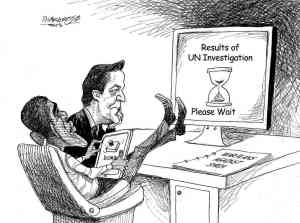 Watch Live: President Obama’s Address to the Nation on Syria
Tonight at 9:00 PM ET, President Obama will address the nation from the East Room of the White House.
The President will be speaking about the United States’ response to the Syrian regime’s use of chemical weapons that killed more than 1,400 civilians — including more than 400 children.
You can watch the President’s speech live on WhiteHouse.gov/Syria.
I have to believe that we’re all going to have some different thoughts on all of this. I am still torn.
“Left-Wing” Pundits Root for Putin to Humiliate Obama
Posted: September 10, 2013 Filed under: Barack Obama, Foreign Affairs, Russia, Syria, U.S. Politics | Tags: Bob Cesca, chemical weapons, Cuban Missile Crisis, diplomacy, John F. Kennedy, John Kerry, Laura Rozen, Nikita Kruschev, Robert Dreyfuss, Robert Scheer, The Nation, Truthdig, Vladimir Putin 19 Comments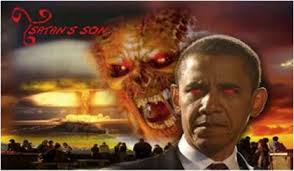
President Obama through Emoprog eyes
Obama hatred has really reached a crescendo today, and I’m not talking about hatred spewed by the Glenn Beck, Sarah Palin, or Rush Limbaugh. I’m talking about people who identify themselves as “progressives.” Twitter is mobbed emoprogs making a concerted effort to ensure that if there is a deal with Russia and Syria to prevent military action over Syria’s use of chemical weapons, President Obama will get zero credit for it.
Meanwhile supposedly “left-wing” pundits Robert Dreyfuss and Robert Scheer are praising Russia’s anti-gay, ex-KGB agent President Vladimir Putin for leading the way to peace.
Check this out from Dreyfuss at The Nation:
It’s tempting to enjoy the moment, that is, the humiliation of President Obama and the short-circuiting of his war push by a brilliant coup conducted by Vladimir Putin, that sly old dog and ju-jitsu expert, along with Russia’s ally, Syria. President Obama might as well not bother giving his Oval Office speech tonight, because the chances that Congress will approve Obama’s Authorization to Use Military Force are zero, and the possibility that the United States will go to war against Syria without congressional support are now less than zero.
You know, I really don’t take pleasure in seeing the President of my country humiliated; and I have to wonder about the judgement of a “journalist” who does–especially a journalist who probably doesn’t want to see a President Ted Cruz elected in 2016.
Dreyfuss can’t imagine a scenario in which Obama doesn’t particularly want to bomb Syria but threatens to do so in order to pressure Russia to respond with a diplomatic alternative. However he can picture Putin doing something clever and sneaky. Dreyfuss even quotes Tucker Carlson and Fox News–of all people!–in support of his belief that Obama is utterly incompetent and incapable of guile.
Ask yourself–if instead of threatening military strikes, Obama had simply asked Assad in a nice way to give up his chemical weapons, what would have happened?
Robert Scheer also wrote a snide piece at Truthdig that isn’t quite as in-your-face nasty as Dreyfuss’s but it’s pretty bad, and Scheer also quotes a right-wing pudit–Peggy Noonan! Scheer writes:
…there was a moment Monday when the odds for sanity seemed to finally stand a chance of prevailing. It came when President Obama acknowledged the Russian proposal for Syria to avert war by agreeing to destroy its chemical weapons stock as “a potentially positive development.” It was quintessentially an un-Bush moment when suddenly this presidential “decider” seemed possessed of a brain capable of reversing his disastrous course.
Because Obama has, until now, been completely intractable and inflexible, with a Bush-like brain?
The bipartisan rejection of the inevitability of a military response has been stunning in its geographical reach, and as Peggy Noonan, a leading Republican intellectual as well as a former top speechwriter for Ronald Reagan, observed in her Wall Street Journal column Saturday: “The American people do not support military action… . Widespread public opposition is in itself reason not to go forward.” Although underscoring the need to “rebuke those who used the weapons, condemn their use, and shun the users … a military strike is not the way, and not the way for America,” she wrote.
She is right. The use of chemical weapons cannot be ignored, even though the U.S. did just that decades ago when then-Mideast special envoy Donald Rumsfeld embraced Saddam Hussein after he deployed those heinous weapons on his own people and in his war with Iran. A strong response to the use of those weapons is in order, but instead of more violence that would inevitably kill innocent people, why not give peace a chance? At the very least, even if the Syrian government continues to deny responsibility for the chemical attacks, it must abandon its arsenal of these weapons that are inherently inhuman.
So what would that response be? Scheer credits Russian foreign minister Sergey V. Lavrov with a sudden brainstorm in response to a supposedly off-handed remark from John Kerry.
Lavrov seized upon Secretary of State John Kerry’s purely rhetorical point that Syria could abandon its chemical weapons supply and asked, why not? It was a serious plan, given that it had been previewed in a phone conversation between Lavrov and Kerry and that Syria’s foreign minister, who was in Moscow at the time, welcomed the sentiment.
Except if Kerry and Lavrov had discussed the idea previously, then Kerry’s remark wasn’t an off-handed gaffe that destroyed Obama’s dream of war, was it? Scheer truly wants to describe events in such a way that Obama comes out looking like a stupid, incompetent war monger.
Since Dreyfuss’ and Scheer’s diatribes were posted, we’ve learned that Obama and Putin have been discussing diplomatic solutions to deal with Syria’s chemical weapons for months. Laura Rozen of Foreign Policy writes at The Back Channel:
U.S. and Russian officials confirmed Tuesday that they have had discussions about removing Syria’s chemical arms going back months before the August 21st alleged chemical weapons attack outside Damascus, and that the idea was not born out of a stray comment made by US Secretary of State John Kerry at a London press conference Monday.
Russian President Vladimir Putin said Tuesday that he and President Obama had “indeed discussed” the idea during a meeting on the sidelines of the G-20 summit in St. Petersburg, Russia last week.
He and Obama agreed “to instruct Secretary of State [John Kerry] and Foreign Minister [Sergey Lavrov] to get in touch” and “try to move this idea forward,” Putin told Russia Today in an interview Tuesday.
According to Rozen, Obama and Putin discussed the issue a year ago when the two met at the G-20 summit in Mexico and John Kerry talked about it further with Putin when he was in Moscow in April of this year. I guess in the time of Wikileaks, Snowden, and Greenwald, it’s now assumed that government are permitted no secrets and diplomacy must be carried out in the glare of TV cameras. Well, folks, that really isn’t how it works.
And now, as Sam Stein noted on Twitter, emoprogs are “this close” to hoping for a failure of the diplomatic solution so that Obama can be further mocked and humiliated.
I’m not sure where all the Obama hatred is coming from, but it’s really ugly; and the more I see of it, the more I want to give Obama the benefit of the doubt. I really like Bob Cesca’s take on this: A Deal to Prevent an Attack on Syria Reveals Obama as JFK, Not GWB.
Is anyone else here old enough to recall the Cuban missile crisis? Kennedy had learned that Russia had installed missiles in Cuba. His advisers urged him to attack Cuba and take out the missiles, but that would have forced the Russians to retaliate and likely led to World War III. Instead Kennedy set up a blockade around Cuba, and gave both sides some breathing room. From Wikipedia:
in secret back-channel communications the President and Premier initiated a proposal to resolve the crisis. While this was taking place, several Soviet ships attempted to run the blockade, increasing tensions to the point that orders were sent out to US Navy ships to fire warning shots and then open fire. On October 27, a U-2 plane was shot down by a Soviet missile crew, an action that could have resulted in immediate retaliation from the Kennedy crisis cabinet, according to Secretary of Defense McNamara’s later testimony. Kennedy stayed his hand and the negotiations continued.
The confrontation ended on October 28, 1962, when Kennedy and United Nations Secretary-General U Thant reached an agreement with Khrushchev. Publicly, the Soviets would dismantle their offensive weapons in Cuba and return them to the Soviet Union, subject to United Nations verification, in exchange for a US public declaration and agreement never to invade Cuba. Secretly, the US also agreed that it would dismantle all US-built Jupiter IRBMs, armed with nuclear warheads, which were deployed in Turkey and Italy against the Soviet Union.
Now that we know that the US and Russia have been engaging in “back-channel” negotiations over Syria, isn’t that a better comparison to the current situation than Bush and Cheney lying us into Iraq?
Tuesday Reads: Damned If He Does; Damned If He Doesn’t, and Other News
Posted: September 10, 2013 Filed under: Baby Boomers, Barack Obama, Crime, Foreign Affairs, morning reads, Republican politics, Russia, Syria, U.S. Economy, U.S. Politics, Violence against women, War on Women, Women's Rights | Tags: "Extremities", "Kill the Rapist?", aging populations, Bollywood, Delhi gang rape, economic theory, Farrah Fawcett, Federal Reserve Board, Hillary Clinton, International Monetary Fund (IMF), rape 55 Comments
Good Morning!!
Syria is still the top news story today, and its still very unclear what is going to happen. The latest CBS/NYT poll found that 56% of Americans disapprove of the president’s handing of the Syria situation, and 61% are opposed to military strikes.
Yesterday President Obama told CBS’ Scott Pelley, “I understand” American people aren’t with me on Syria strike. You can read the transcript of the interview at the above link. The interview ended this way:
SCOTT PELLEY: The people aren’t with you.
PRESIDENT OBAMA: Yeah, well, not yet. And I, as I said, I understand that. So I’ll have a chance to talk to the American people directly tomorrow. I don’t expect that it’s gonna suddenly swing the polls wildly in the direction of another military engagement. If you ask the average person — including my household — “Do we need another military engagement?” I think the answer generally is gonna be no.
But what I’m gonna try to propose is, is that we have a very specific objective, a very narrow military option, and one that will not lead into some large-scale invasion of Syria or involvement or boots on the ground, nothing like that. This isn’t like Iraq, it’s not like Afghanistan, it’s not even like Libya. Then hopefully people will recognize why I think this is so important.
And that we should all be haunted by those images of those children that were killed. But more importantly, we should understand that when when we start saying it’s okay to — or at least that there’s no response to the gassing of children, that’s the kind of slippery slope that leads eventually to these chemical weapons being used more broadly around the world. That’s not the kind of world that we want to leave to our children.
Obama will address the nation tonight, and it seems unlikely that he’ll be able to shift public opinion dramatically enough to get support for military intervention in Syria. According to the CBS/NYT poll linked above, Republicans oppose Obama on Syria even more overwhelmingly that Democrats do; and it’s not clear to me that the opposition is just about military action. As far as I can tell, the hatred for Obama at this point is so strong among Republicans–and among many Democrats as well–that he can’t do anything right. If he had ignored the chemical weapons attacks in Syria, he would have been called weak, but now that he wants to act, he’s suddenly a warmonger. He’s damned if he does and damned if he doesn’t.
Currently the focus is on whether Obama can convince Congress to support action on Syria. If, as is most likely, his speech tonight doesn’t magically change public opinion, he’ll apparently be seen as an utter failure, both nationally and internationally. From The Boston Globe: Credibility stakes high for Obama in Syria speech.
President Obama’s speech to the nation Tuesday night has turned into a defining moment for the remainder of his term. The outcome of his call for Congress to authorize military strikes against Syria could determine both his credibility on domestic issues and his power on the international stage, analysts said Monday.
The stakes remained high even in light of Monday’s development that Russia is pushing Syria to allow United Nations control of its alleged chemical weapons. In an interview with CBS, Obama said Monday night that any proposed diplomatic solution must be backed by the “credible military threat from the United States.” [….]
“If he loses, then clearly, his lame duck status probably starts more than a year earlier than normal,” said Elaine C. Kamarck, a Clinton administration veteran and now a senior scholar at the Brookings Institution. “Also if he loses, it’s difficult to say how the bad guys in the world, like North Korea and other places, interpret this.”
President Obama said he will go ahead with his speech on Tuesday, outlining the rationale for US military action. The task has been made much more difficult because Obama has seemed uncertain of his own course. He initially drew a hard line on chemical weapons and then, once convinced that the Syrian government had used them last month, spoke and acted as if a military strike were imminent.
But of course if Obama hadn’t asked for Congressional approval, he would have been excoriated by the press for that and his second term would have been written off anyway. I just don’t think Obama can win at this point, regardless of what he decides to do on Syria or any other issue. Even the endorsement of popular former Secretary of State Hillary Clinton can’t turn around the current judgment that Obama is always wrong.
Former secretary of state Hillary Rodham Clinton on Monday endorsed President Obama’s call for military strikes against Syria and said “it would be an important step” if Syrian President Bashar al-Assad surrendered his stockpile of chemical weapons.
“The Assad regime’s inhuman use of weapons of mass destruction against innocent men, women and children violates a universal norm at the heart of our global order, and therefore it demands a strong response from the international community, led by the United States,” she said.
Clinton, a potential 2016 Democratic presidential candidate, made her first public remarks on Syria during a previously scheduled appearance at the White House. She said she had just come from a meeting with Obama, during which they discussed a proposal advanced by Russia to avert U.S. military strikes by having Assad turn over control of the country’s chemical weapons to international monitors.
She said that such a move would be important but that “this cannot be another excuse for delay or obstruction, and Russia has to support the international community’s efforts sincerely or be held to account.”
She also suggested that the Russian proposal came about only because of a “credible military threat by the United States.”
I think that’s probably true. Personally, I hope there’s a diplomatic solution, and the fact that Obama and Putin discussed such a possibility last week–and even before that–gives me some hope.
In other news,
Four men have been convicted in the gang rape of a women in Delhi, India last year. From BBC News:
The 23-year-old woman was brutally assaulted on a bus and died two weeks later.
Her death led to days of huge protests across India in a wave of unprecedented anger.
The case forced the introduction of tough new laws to punish sexual offences. The four men are expected to be sentenced on Wednesday.
Mukesh Singh, Vinay Sharma, Akshay Thakur and Pawan Gupta denied charges including rape and murder, and lawyers for three of the men said they would appeal against the convictions.
They face the death penalty over the attack on the physiotherapy student after being found guilty of rape, murder and destruction of evidence.
Read more at the link.
Will the verdict affect attitudes toward violence against women in India? Nita Bhalla discusses this question at Thompson Reuters: As India gang rape trial ends, a debate over what has changed.
The serial rapist stalks her for days. Eventually he breaks into her home when she is alone and tries to rape her at knifepoint. But she somehow manages to overpower and trap him.
Now, with the help of her two housemates, she has to decide what to do. Kill him and bury him in the garden? Or call the police, who are known to be insensitive and may let him off?
The plot is from “Kill the Rapist?” – a provocative new Bollywood thriller which aims to embolden Indian women to report sexual assaults – and to deter potential rapists by making them “shiver with fear before even thinking of rape” the film’s Facebook page says.
Controversial? Yes, but it is part of a growing awareness in India about violence against women since the high-profile fatal gang rape of a 23-year-old student on a bus in December.
“Like most Indians, I had become used to hearing about rapes and other crimes against women. I would read about them, then turn the page and forget,” says Siddhartha Jain, the 39-year-old producer of “Kill the Rapist?”
“But the December incident shook me to the core. I didn’t want this just to be another story that would be forgotten in a year. My film, which will be released on the anniversary of the incident, is an excuse to amplify the discussion of women’s security and hopefully bring about some positive changes.”
It sounds a little like that play from the 1980s, “Extremities,” that Farrah Fawcett starred in. Perhaps India is getting its consciousness raised?
Meanwhile, check out this info I just pulled off Twitter: Study: 1 in 4 men across parts of Asia admit to rape. Some highlights:
1 A UN study in 6 Asia-Pacific countries found that 1 in 10 men admitted to raping a woman other than his wife or girlfriend. Counting wives and girlfriends, the figure rose to 24%. More than 10,000 men were interviewed in Bangladesh, China, Cambodia, Indonesia, Papua New Guinea and Sri Lanka.2 The percentages of men who admitted to rape varied by country. In Bangladesh, 11.1% admitted to rape; in Cambodia 20.8%; in China 22.7%; in Indonesia 31.9%; in Papua New Guinea 60.7%.3 More than 70% of those who admitted to forcing a woman to have sex gave reasons that fell under the study’s category of “sexual entitlement.” Nearly 60% said they were bored or wanted to have fun. 40% said they were angry and wanted to punish the woman. Only half said they felt guilty and 24% had been imprisoned for rape.
Here’s an economics story from Wonkblog for Dakninkat to opine on. Why doesn’t Fed policy pack more punch? Blame Grandpa.
One of the great frustrations of the last few years has been that, even as central banks around the world have taken extensive steps to try to prop up growth, the impact hasn’t been that great. Indeed, over the last generation, there’s lots of evidence that changes in interest rates don’t pack the punch, in terms of both jobs and inflation, that they used to.
A researcher at the International Monetary Fund has a novel explanation for one reason why this may be: namely, a growing proportion of the world population, and especially in advanced nations, that is elderly.
“We will argue that monetary policy also has a weakened effect on the economy due to changing demographics,” Patrick Imam writes in a working paper. “The elderly used to account for a small share of the population, but technological breakthroughs and social changes over the last two centuries have transformed this demographic structure.”
The gist is that young people are more likely to borrow money, while older people tend to live investments, so lower interest rates have less effect on an aging society overall.
When just embarking on a career, a young person might take out major loans for education and for buying a house and car. As they reach middle age, they will tend to have paid down some of that debt while also building savings. By the time they hit retirement age, they should be net creditors, with significantly more savings than they still owe in debt.
That would imply that in an older society fewer people are actively using credit products. Which should in turn imply that a central bank turning the dials of interest rates will be less powerful at shaping the speed of the overall economy.
As usual, it’s the baby boomers’ fault. Anyway it’s an Interesting theory . . . we’ll have to see what Dak has to say about it.
Now it’s your turn. What stories are you following today? Please post your links in the comment thread.
Thursday Reads: Syria, Snowden, and the G20
Posted: September 5, 2013 Filed under: Barack Obama, Foreign Affairs, morning reads, NSA, National Security Agency, U.S. Politics | Tags: Edward Snowden, G20 summit, John Schindler, Russia, Syria, Vladimir Putin, Wikileaks 67 Comments
Good Morning!!
Syria policy has pretty much eclipsed everything else in the national and international news (heard anything about Egypt lately?), with the NSA story still a close second. The G20 is also beginning in Russia, and that’s also “all about Syria.” So these are the stories this morning. This will also be a quickie post, because I overslept and I have someone coming to fix my electricity pretty soon.
As you all know, the Senate Foreign Relations Committee approved limited strike on Syria yesterday, although there is still wrangling among Senators about how aggressive the U.S. action should be. From NBC News:
In Washington, Secretary of State John Kerry and other top administration officials went before the House Foreign Affairs Committee to confront skeptics and press the administration’s case. Defense Secretary Chuck Hagel estimated the cost of a limited strike at tens of millions of dollars.
However, Kerry told the hearing that Arab League countries had offered to pay for the unseating President Bashar Assad if the United States took the lead militarily….
The Senate yes votes comprised seven Democrats and three Republicans, including Sen. John McCain, who had expressed reservations that the United States was not doing enough to arm the rebels fighting Syrian leader Bashar Assad.
“We commend the Senate for moving swiftly and for working across party lines on behalf of our national security,” read a statement from the White House. “We will continue to work with Congress to build on this bipartisan support for a military response that is narrowly tailored to enforce the prohibition on the use of chemical weapons, and sufficient to protect the national security interests of the United States of America.”
NBC News also reports that Russia’s Putin is warning the US against ‘aggression’ in Syria without UN approval.
Russian President Vladimir Putin warned the United States and its allies against unilateral action against Syria on Wednesday – but said he “doesn’t exclude” backing a U.N. resolution if evidence proved the use of poison gas against civilians.
As the White House stepped up its efforts to secure political approval for retaliatory strikes on the regime of Bashar Assad, Putin said acting without the approval of the U.N. Security Council “can only be interpreted as an aggression.”
In an interview with The Associated Press ahead of President Barack Obama’s arrival in Europe for meetings with G20 leaders, Putin said video footage of the suspected Aug. 21 chemical weapons attackoutside of Damascus could have been fabricated by groups “connected with al Qaeda.”
According to Time, Putin also warned that indiscriminate bombing in Syria could lead to a “nuclear catastrophe.”
Russia is warning that a U.S. strike on Syria’s atomic facilities might result in a nuclear catastrophe and is urging the U.N. to present a risk analysis of such a scenario.
The warning comes from Russia’s Foreign Ministry spokesman, Alexander Lukashevich. He said in a statement Wednesday that a strike on a miniature reactor near Damascus or other nuclear installations could contaminate the region with radioactivity, adding: “The consequences could be catastrophic.”
Who knew Syria had “nuclear installations?”
The Christian Science Monitor: G20 economic summit: It’s all about Syria.
As world leaders gather in St. Petersburg, Russia, today for the annual two-day Group of 20 summit, economic policy may be overshadowed by what’s not on the agenda: Syria.
Divisions over how to respond to Syrian President Bashar al-Assad’s alleged use of chemical weapons in August grow as the US continues to lobby for support for military action and Russia digs in its heels against it. President Obamawon initial domestic political backing on Wednesday after the Senate Foreign Relations Committee narrowly authorized military measures in a 10-7 vote, according to The Associated Press.
“My credibility isn’t on the line. The international community’s credibility is on the line,” Obama said in a press conference before flying to Russia. “The moral thing to do is not to stand by and do nothing.”
Obama canceled a bilateral meeting with Russian President Vladimir Putin in Moscow on the sidelines of the summit after the Kremlin offered asylum to former NSA employee Edward Snowden, who leaked classified US documents.
According to The Christian Science Monitor’s Moscow correspondent, Fred Weir, President Putin has argued there “is no convincing evidence” that Assad launched a poison gas attack. Putin has exercised his veto power on the UN Security Council repeatedly against any military intervention in Syria since the two-year-old conflict began.
The Guardian on the troubled U.S.-Russia relationship: Putin and Obama apart in more ways than one at G20 table.
In terms of table placement at least, the Russians are trying to avoid a fight. When world leaders file into St Petersburg’s imperial Constantine Palace on Thursday, with the nightmare of Syria and a wider Middle Eastern war on their minds, presidents Vladimir Putin and Barack Obamawill be distant from one another literally, as well as politically.
The seating order, which would have had the Russian and US leaders separated only by the Saudi king, has been reshuffled to put five leaders, including David Cameron, between the two key adversaries over Syria and much else.
“The seating will be arranged according to the English alphabet,” Putin’s spokesman, Dmitry Peskov, told the Moscow newspaper, Izvestiya. Had the Russian alphabet been used, Putin and Obama would have been almost cheek-by-jowl.
If the rushed re-seating is one measure of the US-Russian tensions militating against a breakthrough arresting the slide to greater conflict over Syria, there are plenty more. Edward Snowden, the National Security Agency whistleblower, holed up in Russia, wanted in America, is the most recent.
The summit should be interesting; I hope Obama and Putin don’t come to blows.
On the Snowden front, there is quite a bit of speculation going around about how involved Russia was with Snowden even before he arrived in Moscow.
Yesterday the Wall Street Journal reported: Putin Says Snowden Was In Touch Before Coming To Russia. Putin just can’t keep his story straight. First he said he was taken completely by surprise when Snowden landed in his lap–he’d hardly even paid any attention to him before that. But lately he’s been gradually admitting that wasn’t true. From the WSJ:
MOSCOW—Russian President Vladimir Putin has admitted that Edward Snowden contacted Russian diplomats in Hong Kong a few days before boarding a plane to Moscow but that no agreement was reached to shelter him and he decided to come to Russia on his own without warning.
Mr. Putin had initially said Mr. Snowden’s arrival at Moscow’s Sheremetyevo International Airport on June 23 was a “complete surprise,” but now acknowledges that he had some prior knowledge that the fugitive former U.S. National Security Agency contractor might be headed Russia’s way.
“Mr. Snowden first appeared in Hong Kong and met with our diplomatic representatives. It was reported to me that there was such an employee, an employee of the security services. I asked ‘What does he want?’ He fights for human rights, for freedom of information and challenges violations of human rights and violations of the law in the United States. I said, ‘So what?’,” Mr. Putin said in an interview with Russia’s Channel One and The Associated Press.
Actually Russia had publicly “offered to consider [Snowden’s] asylum request” in June when Snowden was still in Hong Kong, but that fact seems to have gone down the corporate media’s memory hole at this point. Everyone also seems to have forgotten that the U.S. voided Snowden’s passport before he left Hong Kong and flew to Russia–supposedly on the way to Cuba and the Ecuador. Putin is still trying to blame the U.S. for Snowden’s failure to take his scheduled flight to Cuba, claiming it was because of the cancelled passport.
In an interview to Russia’s state-run Channel One and The Associated Press published Wednesday, Putin responded to various questions about touchy subjects in U.S.-Russia relations.
When asked about Snowden, who found himself the world’s most wanted fugitive after leaking top secret documents on U.S. surveillance programs, Putin said U.S. authorities could have grounded the plane that Snowden boarded to come to Moscow from China’s Hong Kong just as they did with the plane of Bolivian leader Evo Morales after they suspected that Snowden was on board.
Or, he said, U.S. intelligence officers could have let Snowden leave Russia —which was initially meant to be only a transit stop on his way to another country that would grant him asylum — and then could have grabbed him in a country “with a relaxed security regime,” Putin said, the Kremlin website reported.
“They could have done that in relation to Snowden. What prevented them” from doing that? Putin said.
Um…. you did, Mr. Putin. We’ve read the reports that Snowden was surrounded by a crowd of FSB officers before his feet even hit the floor in Moscow’s Sheremetyevo International Airport transit zone.
More foreign affairs writers are beginning to question just how much of an “accident” Snowden’s defection to Russia actually was. At Business Insider, Michael Kelley summarizes the growing suspicions among intelligence experts: Did WikiLeaks Sell Out Snowden To The Russians?
Is it just a coincidence that former NSA analyst Edward Snowden, a valuable intelligence asset, ended up in the hands of Russia’s security services?
Or did WikiLeaks, the “anti-secrecy” organization that has taken responsibility for Snowden, send him there in collaboration with the Russians?
Former senior U.S. intelligence analyst Joshua Foust makes a compelling argument that Wikileaks may have been infiltrated by Russia’s Federal Security Bureau, the post-Soviet successor to the KGB.
His argument is based on the shared history between WikiLeaks and Russia, how Snowden ended up in Russia, and what happened to Snowden once he landed in Moscow.
Looking at the same evidence, we think this is certainly a possibility.
Read all about it at the link, and if you have time, read Foust’s longer piece. It’s fascinating.
I’ll end with a couple of articles on the damage done to U.S. Intelligence services by Snowden’s stealing and leaking the contents of top secret documents. From former NSA analyst and now academic John Schindler: Snowden, NSA, and Counterintelligence.
From nearly the outset I’ve stated that Snowden is very likely an agent of Russian intelligence; this was met with howls of indignation which have died down in recent weeks as it’s become apparent that Ed’s staying in Russia for some time, along with whatever classified materials he had on his person. (Since Glenn Greenwald’s partner when stopped by British authorities at Heathrow had 58,000 highly classified documents on him, thanks to Ed, one can only wonder how big the initial haul actually was.) That Snowden was in contact with the Russian consulate in Hong Kong during his pre-Moscow visit there, including spending his 30th birthday with his new friends, is now admitted. Even President Vladimir Putin has conceded that Ed’s contacts with Russian officials did not commence when he landed at Sheremtyevo airport, rather before.
But when? That of course is the key question that NSA counterintelligence surely wants – needs – to know. All roads here lead to Wikileaks. We know that Snowden in late 2012 reached out to Glenn Greenwald and other members of the spy-ring – all of whom can be considered cut-outs for Wikileaks when not paid-up members – that stands behind the massive leaks. After making this contact, Ed took a contractor job with Booz Allen Hamilton to increase his access to NSA secrets. I’ve been stating for a while now that Wikileaks is functionally an extension of Russian intelligence; it’s become a minor meme asa few journalists have decided that such a scandalous viewpoint is worth considering.
Of course, for anyone versed in the ways of Russian intelligence, the notion that Wikileaks is a Moscow front that’s involved in anti-US espionage is about as controversial as, say, the notion that the sun will rise in the east tomorrow. Running false flags, creating fake activist groups, using Western journalists and activists for deception purposes – this sort of thing is in the DNA of Russian intelligence going back to the 19th century and is second nature to them. They call espionage tradecraft konspiratsiya (conspiracy) for a reason.
While there can be little doubt that the damage Snowden has wrought to the US and Allied SIGINT system is nothing less than immense, it will be some time before NSA and the US Government make any public pronouncements on such a touchy matter – not to mention that it will likely be several months yet before the Intelligence Community completes what will surely rank as the Mother of All Damage Assessments.
Without in any way diminishing the espionage losses that young Mr Snowden has caused, I want to suggest that the political damage in this case may loom larger, particularly as Putin savors his big win in this round, having humiliated American intelligence as it’s never quite been publicly humiliated before. The onetime Chekist in Putin surely is going to bed at night with a smile these days. “There are no ‘former’ intelligence officers,” Russia’s president once famously said, and he was also talking about himself.
Read the rest at the link if you can; this guy really knows his stuff–and he’s no right wing nut.
One more piece by British writer Chris Boffey: Why Edward Snowden is not a patriot, whistleblower or hero – but a spy.
Edward Snowden is a spy. The runaway CIA contractor may not know, or even care, whom he is spying for but the damage he is doing ranks alongside Philby, Burgess, McLean and Blunt. They comforted themselves with delusions that revealing the names of agents to the Soviet Union were for the greater good. Snowden was equally deluded when he opened up the secrets of western intelligence to one and all. Unlike the British spies, Snowden is not dealing in human information but electronic intelligence which in this day and age has more importance, but the results are the same….
Unlike Ames, Snowden was able to claim the moral high ground when spilling out the inner workings and policies of the US and UK security services to the world. Revealing how the state spies on its own citizens, without their knowledge or acquiescence, can be considered laudable but he lost the right to be called a whistleblower when he fled to negotiate first with the Chinese and then the Russians about political asylum and then it was revealed that he had taken with him the whole security shooting match.
Whistleblowers stand up and are counted; Snowden crawled out and ran away.
In sweeping up every secret he came across and downloading them to be dripped out is just plain treason and he knows this, given his determination not only never to return to the US but also to stay out of its legal jurisdiction.
Snowden justified his actions saying: “I don’t want to live in a society that does these sort of things [surveillance on its citizens]… I do not want to live in a world where everything I do and say is recorded… My sole motive is to inform the public as to that which is done in their name and that which is done against them.”
Presumably that is why he is now living in Russia, that Mecca of human rights.
Much more at the link. Check it out and see what you think.
That’s all I’ve got for you for the moment. Now what are you reading and blogging about today?
Hillary Weighs in on Syria
Posted: September 3, 2013 Filed under: Syria | Tags: Syria 23 Comments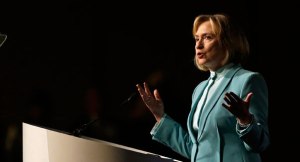
Obama is taking his call to intervene with Syria to the Congress. Many Congress critters are weighing in. Here’s what former Secretary of State Hillary Clinton has to say about the situation.
“Secretary Clinton supports the president’s effort to enlist the Congress in pursuing a strong and targeted response to the Assad regime’s horrific use of chemical weapons,” a Clinton aide told POLITICO.
Speaker John A. Boehner said on Tuesday that he would “support the president’s call to action” in Syria after meeting with President Obama, giving the president a crucial ally in the quest for votes in the House.
Representative Eric Cantor of Virginia, the No. 2 House Republican, quickly joined Mr. Boehner to say he also backed Mr. Obama.
“Understanding that there are differing opinions on both sides of the aisle, it is up to President Obama to make the case to Congress and to the American people that this is the right course of action, and I hope he is successful in that endeavor,” Mr. Cantor said in a statement.
Meanwhile, the Senate held hearings.
After weathering a barrage of criticism from Sen. Rand Paul (R-Ky.), Kerry turned the tables and demanded to know whether or not he believed that air strikes would make Assad more or less likely to use chemical weapons again.
“It’s unknown,” Paul replied.
Jabbing his finger, Kerry disagreed, saying it was guaranteed that Assad would use chemical weapons again if the U.S. doesn’t act.
Kerry, a Vietnam veteran, reminded Paul that “you’ve got three of us here who have gone to war” and that they know what it involves.
“The president is not asking you to go to war,” he said, urging Paul to go to a classified briefing “and learn that.”
Concluding his comments, Kerry turned to Gen. Martin Dempsey, the chairman of the Joint Chiefs of Staff, for back-up, asking if he wanted to “weigh in on this.”
“No, not really,” came the reply, prompting laughter from the panel.
The Public remains split and not on party lines. This should be interesting.

 peej
peej Carissa
 bostonboomer
 dakinikat
 ecocatwoman
 jjlo
jjlo mablue2
 Mama Lopez
 peggysue22
 quixote
 skydancingguestblogger
 Mona (aka Wonk the Vote)



 Sky Dancing
Recent Comments