
Tuesday Reads: Damned If He Does; Damned If He Doesn’t, and Other News
Posted: September 10, 2013 Filed under: Baby Boomers, Barack Obama, Crime, Foreign Affairs, morning reads, Republican politics, Russia, Syria, U.S. Economy, U.S. Politics, Violence against women, War on Women, Women's Rights | Tags: "Extremities", "Kill the Rapist?", aging populations, Bollywood, Delhi gang rape, economic theory, Farrah Fawcett, Federal Reserve Board, Hillary Clinton, International Monetary Fund (IMF), rape 55 Comments
Good Morning!!
Syria is still the top news story today, and its still very unclear what is going to happen. The latest CBS/NYT poll found that 56% of Americans disapprove of the president’s handing of the Syria situation, and 61% are opposed to military strikes.
Yesterday President Obama told CBS’ Scott Pelley, “I understand” American people aren’t with me on Syria strike. You can read the transcript of the interview at the above link. The interview ended this way:
SCOTT PELLEY: The people aren’t with you.
PRESIDENT OBAMA: Yeah, well, not yet. And I, as I said, I understand that. So I’ll have a chance to talk to the American people directly tomorrow. I don’t expect that it’s gonna suddenly swing the polls wildly in the direction of another military engagement. If you ask the average person — including my household — “Do we need another military engagement?” I think the answer generally is gonna be no.
But what I’m gonna try to propose is, is that we have a very specific objective, a very narrow military option, and one that will not lead into some large-scale invasion of Syria or involvement or boots on the ground, nothing like that. This isn’t like Iraq, it’s not like Afghanistan, it’s not even like Libya. Then hopefully people will recognize why I think this is so important.
And that we should all be haunted by those images of those children that were killed. But more importantly, we should understand that when when we start saying it’s okay to — or at least that there’s no response to the gassing of children, that’s the kind of slippery slope that leads eventually to these chemical weapons being used more broadly around the world. That’s not the kind of world that we want to leave to our children.
Obama will address the nation tonight, and it seems unlikely that he’ll be able to shift public opinion dramatically enough to get support for military intervention in Syria. According to the CBS/NYT poll linked above, Republicans oppose Obama on Syria even more overwhelmingly that Democrats do; and it’s not clear to me that the opposition is just about military action. As far as I can tell, the hatred for Obama at this point is so strong among Republicans–and among many Democrats as well–that he can’t do anything right. If he had ignored the chemical weapons attacks in Syria, he would have been called weak, but now that he wants to act, he’s suddenly a warmonger. He’s damned if he does and damned if he doesn’t.
Currently the focus is on whether Obama can convince Congress to support action on Syria. If, as is most likely, his speech tonight doesn’t magically change public opinion, he’ll apparently be seen as an utter failure, both nationally and internationally. From The Boston Globe: Credibility stakes high for Obama in Syria speech.
President Obama’s speech to the nation Tuesday night has turned into a defining moment for the remainder of his term. The outcome of his call for Congress to authorize military strikes against Syria could determine both his credibility on domestic issues and his power on the international stage, analysts said Monday.
The stakes remained high even in light of Monday’s development that Russia is pushing Syria to allow United Nations control of its alleged chemical weapons. In an interview with CBS, Obama said Monday night that any proposed diplomatic solution must be backed by the “credible military threat from the United States.” [….]
“If he loses, then clearly, his lame duck status probably starts more than a year earlier than normal,” said Elaine C. Kamarck, a Clinton administration veteran and now a senior scholar at the Brookings Institution. “Also if he loses, it’s difficult to say how the bad guys in the world, like North Korea and other places, interpret this.”
President Obama said he will go ahead with his speech on Tuesday, outlining the rationale for US military action. The task has been made much more difficult because Obama has seemed uncertain of his own course. He initially drew a hard line on chemical weapons and then, once convinced that the Syrian government had used them last month, spoke and acted as if a military strike were imminent.
But of course if Obama hadn’t asked for Congressional approval, he would have been excoriated by the press for that and his second term would have been written off anyway. I just don’t think Obama can win at this point, regardless of what he decides to do on Syria or any other issue. Even the endorsement of popular former Secretary of State Hillary Clinton can’t turn around the current judgment that Obama is always wrong.
Former secretary of state Hillary Rodham Clinton on Monday endorsed President Obama’s call for military strikes against Syria and said “it would be an important step” if Syrian President Bashar al-Assad surrendered his stockpile of chemical weapons.
“The Assad regime’s inhuman use of weapons of mass destruction against innocent men, women and children violates a universal norm at the heart of our global order, and therefore it demands a strong response from the international community, led by the United States,” she said.
Clinton, a potential 2016 Democratic presidential candidate, made her first public remarks on Syria during a previously scheduled appearance at the White House. She said she had just come from a meeting with Obama, during which they discussed a proposal advanced by Russia to avert U.S. military strikes by having Assad turn over control of the country’s chemical weapons to international monitors.
She said that such a move would be important but that “this cannot be another excuse for delay or obstruction, and Russia has to support the international community’s efforts sincerely or be held to account.”
She also suggested that the Russian proposal came about only because of a “credible military threat by the United States.”
I think that’s probably true. Personally, I hope there’s a diplomatic solution, and the fact that Obama and Putin discussed such a possibility last week–and even before that–gives me some hope.
In other news,
Four men have been convicted in the gang rape of a women in Delhi, India last year. From BBC News:
The 23-year-old woman was brutally assaulted on a bus and died two weeks later.
Her death led to days of huge protests across India in a wave of unprecedented anger.
The case forced the introduction of tough new laws to punish sexual offences. The four men are expected to be sentenced on Wednesday.
Mukesh Singh, Vinay Sharma, Akshay Thakur and Pawan Gupta denied charges including rape and murder, and lawyers for three of the men said they would appeal against the convictions.
They face the death penalty over the attack on the physiotherapy student after being found guilty of rape, murder and destruction of evidence.
Read more at the link.
Will the verdict affect attitudes toward violence against women in India? Nita Bhalla discusses this question at Thompson Reuters: As India gang rape trial ends, a debate over what has changed.
The serial rapist stalks her for days. Eventually he breaks into her home when she is alone and tries to rape her at knifepoint. But she somehow manages to overpower and trap him.
Now, with the help of her two housemates, she has to decide what to do. Kill him and bury him in the garden? Or call the police, who are known to be insensitive and may let him off?
The plot is from “Kill the Rapist?” – a provocative new Bollywood thriller which aims to embolden Indian women to report sexual assaults – and to deter potential rapists by making them “shiver with fear before even thinking of rape” the film’s Facebook page says.
Controversial? Yes, but it is part of a growing awareness in India about violence against women since the high-profile fatal gang rape of a 23-year-old student on a bus in December.
“Like most Indians, I had become used to hearing about rapes and other crimes against women. I would read about them, then turn the page and forget,” says Siddhartha Jain, the 39-year-old producer of “Kill the Rapist?”
“But the December incident shook me to the core. I didn’t want this just to be another story that would be forgotten in a year. My film, which will be released on the anniversary of the incident, is an excuse to amplify the discussion of women’s security and hopefully bring about some positive changes.”
It sounds a little like that play from the 1980s, “Extremities,” that Farrah Fawcett starred in. Perhaps India is getting its consciousness raised?
Meanwhile, check out this info I just pulled off Twitter: Study: 1 in 4 men across parts of Asia admit to rape. Some highlights:
1 A UN study in 6 Asia-Pacific countries found that 1 in 10 men admitted to raping a woman other than his wife or girlfriend. Counting wives and girlfriends, the figure rose to 24%. More than 10,000 men were interviewed in Bangladesh, China, Cambodia, Indonesia, Papua New Guinea and Sri Lanka.2 The percentages of men who admitted to rape varied by country. In Bangladesh, 11.1% admitted to rape; in Cambodia 20.8%; in China 22.7%; in Indonesia 31.9%; in Papua New Guinea 60.7%.3 More than 70% of those who admitted to forcing a woman to have sex gave reasons that fell under the study’s category of “sexual entitlement.” Nearly 60% said they were bored or wanted to have fun. 40% said they were angry and wanted to punish the woman. Only half said they felt guilty and 24% had been imprisoned for rape.
Here’s an economics story from Wonkblog for Dakninkat to opine on. Why doesn’t Fed policy pack more punch? Blame Grandpa.
One of the great frustrations of the last few years has been that, even as central banks around the world have taken extensive steps to try to prop up growth, the impact hasn’t been that great. Indeed, over the last generation, there’s lots of evidence that changes in interest rates don’t pack the punch, in terms of both jobs and inflation, that they used to.
A researcher at the International Monetary Fund has a novel explanation for one reason why this may be: namely, a growing proportion of the world population, and especially in advanced nations, that is elderly.
“We will argue that monetary policy also has a weakened effect on the economy due to changing demographics,” Patrick Imam writes in a working paper. “The elderly used to account for a small share of the population, but technological breakthroughs and social changes over the last two centuries have transformed this demographic structure.”
The gist is that young people are more likely to borrow money, while older people tend to live investments, so lower interest rates have less effect on an aging society overall.
When just embarking on a career, a young person might take out major loans for education and for buying a house and car. As they reach middle age, they will tend to have paid down some of that debt while also building savings. By the time they hit retirement age, they should be net creditors, with significantly more savings than they still owe in debt.
That would imply that in an older society fewer people are actively using credit products. Which should in turn imply that a central bank turning the dials of interest rates will be less powerful at shaping the speed of the overall economy.
As usual, it’s the baby boomers’ fault. Anyway it’s an Interesting theory . . . we’ll have to see what Dak has to say about it.
Now it’s your turn. What stories are you following today? Please post your links in the comment thread.
Tuesday Reads: U.S. Spies on Foreign Countries and Other “Blockbuster” News
Posted: September 3, 2013 Filed under: Central Intelligence Agency, China, Crime, cyber security, Diplomacy Nightmares, Foreign Affairs, France, Germany, Great Britain, Iran, Israel, morning reads, Pakistan, Russia, Syria, U.S. Politics | Tags: Agência Brasileira de Inteligência, al Qaeda, Bashar al-Assad, black budget, Bob Cesca, Edward Snowden, espionage, Glenn Greenwald, Information Assurance, John Kerry, Laura Poitras, Marines website, National Security Agency (NSA), nuclear weapons, Osama bin Laden, S-2 (Mexico spy agency), SIGINT, signals intelligence, Syrian Electronic Army, Taliban 51 Comments
Good Morning!!
In the weeks since Edward Snowden absconded with thousands of top secret National Security Agency (NSA) files and traveled to Hong Kong and then Moscow and handed over the documents to Guardian columnist Glenn Greenwald and filmmaker Laura Poitras, we’ve learned that the U.S. spies on lots of other countries. Snowden has revealed that NSA has spied on China, Russia, Germany, France, Brazil, Mexico, Israel, Iran, and the UN. Oddly, we haven’t gotten much new information from Snowden about illegal or abusive NSA spying on Americans, which Snowden initially suggested was his reason for stealing the secret documents.
To most nominally intelligent and informed people, the fact that NSA spies on foreign countires is not particularly surprising; since collecting foreign signals intelligence (SIGINT) is the primary purpose of NSA as stated publicly on their website. Here is NSA’s statement of their “core mission”:
The National Security Agency/Central Security Service (NSA/CSS) leads the U.S. Government in cryptology that encompasses both Signals Intelligence (SIGINT) and Information Assurance (IA) products and services, and enables Computer Network Operations (CNO) in order to gain a decision advantage for the Nation and our allies under all circumstances.
The Information Assurance mission confronts the formidable challenge of preventing foreign adversaries from gaining access to sensitive or classified national security information. The Signals Intelligence mission collects, processes, and disseminates intelligence information from foreign signals for intelligence and counterintelligence purposes and to support military operations. This Agency also enables Network Warfare operations to defeat terrorists and their organizations at home and abroad, consistent with U.S. laws and the protection of privacy and civil liberties.
Spying on foreign countries is what NSA does. Why that is perceived as somehow illegal and/or shocking by Greenwald, Poitras, Snowden, and their cult followers, I have no clue. But the fact that a spy agency collects foreign signals intelligence really should not be considered breaking news; and the countries that are complaining about it are well known for spying on the US in return–and in some cases (e.g., China, Russia, and Israel) for famously stealing U.S. secrets and technology.
Today the Washington Post has a new “blockbuster” article that reveals that the U.S. is particularly focused on spying on Pakistan. Now I wonder why that would be? Anyone want to speculate? It couldn’t have anything to do with the fact that Pakistan concealed the location of Osama bin Laden for years, could it? Or the fact that Taliban and al Quaeda operatives regularly hide in Pakistan? Just a couple of wild guesses…
Here’s an excerpt from the WaPo article:
A 178-page summary of the U.S. intelligence community’s “black budget” shows that the United States has ramped up its surveillance of Pakistan’s nuclear arms, cites previously undisclosed concerns about biological and chemical sites there, and details efforts to assess the loyalties of counterterrorism sources recruited by the CIA.
Pakistan appears at the top of charts listing critical U.S. intelligence gaps. It is named as a target of newly formed analytic cells. And fears about the security of its nuclear program are so pervasive that a budget section on containing the spread of illicit weapons divides the world into two categories: Pakistan and everybody else.
The disclosures — based on documents provided to The Washington Post by former intelligence contractor Edward Snowden — expose broad new levels of U.S. distrust in an already unsteady security partnership with Pakistan, a politically unstable country that faces rising Islamist militancy. They also reveal a more expansive effort to gather intelligence on Pakistan than U.S. officials have disclosed.
The United States has delivered nearly $26 billion in aid to Pakistan over the past 12 years, aimed at stabilizing the country and ensuring its cooperation in counterterrorism efforts. But with Osama bin Laden dead and al-Qaeda degraded, U.S. spy agencies appear to be shifting their attention to dangers that have emerged beyond the patch of Pakistani territory patrolled by CIA drones.
“If the Americans are expanding their surveillance capabilities, it can only mean one thing,” said Husain Haqqani, who until 2011 served as Pakistan’s ambassador to the United States. “The mistrust now exceeds the trust.”
The stolen files also reveal serious human rights issues in Pakistan and fears about the security of Pakistan’s nuclear weapons. Raise your hand if you’re shocked by any this. I can certainly see why these revelations would be harmful to U.S. national security and foreign relations, however.
Via The Jerusalem Post, another Snowden leak revealed by the Washington Post showed that members of terrorist organizations have tried to join the CIA.
…individuals with past connections to known terrorist entities such as al-Qaida, Hezbollah and Hamas, have repeatedly attempted to obtain employment within the CIA, The Washington Post reported on Monday.
Among job-seekers that seemed suspicious to the CIA, approximately 20% of that grouping reportedly had “significant terrorist and/or hostile intelligence connections.” The nature of the connections was not described in the document.
“Over the last several years, a small subset of CIA’s total job applicants were flagged due to various problems or issues,” an anonymous CIA official was reported as saying. “During this period, one in five of that small subset were found to have significant connections to hostile intelligence services and or terrorist groups.” [….]
The document also allegedly stated that the CIA re-investigates thousands of employees each year to reduce the possibility that an individual with these connections may compromise sensitive information.
Can anyone explain to me why this should be considered criminal or why the person who revealed it should be called a “whistle-blower?” It seems to me, the only reason for revealing the methods the U.S. uses to collect foreign SIGINT is a desire to harm U.S. Government and damage its foreign policy. Here’s Bob Cesca, who has consistently critiqued libertarians Snowden and Greenwald and their anti-government motives from a liberal, rational point of view: Greenwald Reports NSA Spied on Presidents of Brazil andMexico.
We’re not sure exactly which section of the U.S. Constitution protects the privacy rights of foreign leaders, but Glenn Greenwald and Edward Snowden appear to believe it’s in there somewhere. The tandem crusaders for the Fourth Amendment have once again extended their reach beyond what was intended to be their mutual goal of igniting a debate in the United States about the constitutionality of the National Security Agency’s surveillance operations, and, instead, opted to reveal that, yes, the U.S. spies on foreign leaders. Shocking, I know.
Specifically, on the Globo television show “Fantasico” in Brazil, Greenwald described a July, 2012 document stolen from NSA by Snowden, which describes how NSA had intercepted communications made by the president of Mexico, Enrique Pena Nieto, as well as Brazil’s president, Dilma Rousseff. (Incidentally, the Globo article contains 13 corporate trackers or “web bugs.”)
The goal of revealing this information is clear. Greenwald and Snowden have successfully exploited the “sparking a debate” motive as a Trojan Horse for injecting unrelated information into public view as a means of vindictively damaging the operations of U.S. and U.K. intelligence communities, not to mention the reputation of the United States as a whole, while also pushing the unrealistic message that surveillance is generally impermissible. Yes, we already knew that nations spy on other nations, but to publicly disclose specific instances of international spying — while on the soil of one of the nations being surveilled — confirms these suspicions and sorely embarrasses everyone involved.
But guess what? Both Mexico and Brazil have powerful spy agencies that conduct “active surveillance” on the U.S.
In Brazil, it’s called the Agência Brasileira de Inteligência (ABIN or the Brazilian Intelligence Agency). It deals with external and domestic intelligence gathering: collection and analysis of information that’s intercepted via both signals (SIGINT collects email, phone calls and so forth) and human resources.
In Mexico, it’s called S-2. Like ABIN or NSA, S-2 also collects SIGINT on foreign targets, with a special focus on the military operations of foreign governments. Along with its counterpart, the Centro de Información de Seguridad Nacional (Center for Research on National Security or CISIN), S-2 is tasked with counter-intelligence and counter-terrorism operations.
Has anyone overheard Greenwald mention, even in passing, either of these agencies? Likely not, and don’t hold your breath waiting for Greenwald to attack Brazil’s intelligence community, even knowing that it wiretapped its own Senate and Supreme Court several years ago. Along those lines, we don’t know exactly whether these agencies have attempted to spy on any of our presidents or government officials, but wouldn’t Greenwald, as a U.S. citizen and resident of Brazil, want to find out using the same “Glennzilla” tenacity he’s employed while exposing U.S. spying? If his crusade now involves universal privacy, wouldn’t that include violations by the Brazilian government, especially knowing that Greenwald lives in Rio de Janeiro?
Read more at the link.
In other news….
The civil war in Syria continues to be the top international story, and The New York Times has a couple of helpful articles. The first is an explainer that deals with Key Questions on the Conflict in Syria. I won’t excerpt from it–read it at the NYT if you’re interested. Next, an article that explains how American policy on Syria may affect possible negotiations with Iran: Drawing a Line on Syria, U.S. Eyes Iran Talks.
As the Obama administration makes a case for punitive airstrikes on the Syrian government, its strongest card in the view of some supporters of a military response may be the need to send a message to another country: Iran. If the United States does not enforce its self-imposed “red line” on Syria’s use of chemical weapons, this thinking goes, Iran will smell weakness and press ahead more boldly in its quest for nuclear weapons.
But that message may be clashing with a simultaneous effort by American officials to explore dialogue with Iran’s moderate new president, Hassan Rouhani, in the latest expression of Washington’s long struggle to balance toughness with diplomacy in its relations with a longtime adversary.
Two recent diplomatic ventures have raised speculation about a possible back channel between Washington and Tehran. Last week, Jeffrey Feltman, a high State Department official in President Obama’s first term who is now a senior envoy at the United Nations, visited Iran to meet with the new foreign minister, Mohammad Javad Zarif, and discussed possible reactions to an American airstrike in Syria.

In line with the international beating up on the U.S. that has followed the Snowden-Greenwald-Poitras “revelations” that NSA spies on foreign countries, The Daily Mail has a snarky article with numerous photos about a dinner that John Kerry had with Syria’s Bashar al-Assad in 2009.
An astonishing photograph of John Kerry having a cozy and intimate dinner with Bashar al-Assad has emerged at the moment the U.S Secretary of State is making the case to bomb the Syrian dictator’s country and remove him from power.
Kerry, who compared Assad to Adolf Hitler and Saddam Hussein yesterday, is pictured around a small table with his wife Teresa Heinz and the Assads in 2009.
Assad and Kerry, then a Massachusetts senator, lean in towards each other and appear deep in conversation as their spouses look on.
A waiter is pictured at their side with a tray of green drinks, believed to be lemon and crushed mint.
Now, why would Kerry be having dinner with Syria’s president? The Daily Mail tells us:
The picture was likely taken in February 2009 in the Naranj restaurant in Damascus, when Kerry led a delegation to Syria to discuss finding a way forward for peace in the region.
At the time, Kerry was Chairman of the Senate Foreign Relations Committee, and what he was doing is called “diplomacy.” But looking back in the age of Snowden, it seems that instead of having a polite dinner, Kerry should have punched Assad in the nose and screamed at him at the top of his lungs to get with the program–or something…
From the Wall Street Journal: Syrian Electronic Army Hacks Marines Website
A collection of pro-Syrian government hackers apparently defaced a Marine Corps recruitment website Monday.
The Syrian Electronic Army, which has hacked a series of websites, posted a letter on the Marines.com website arguing the Syrian government is “fighting a vile common enemy.”
“The Syrian army should be your ally not your enemy,” the letter read. “Refuse your orders and concentrate on the real reason every soldier joins their military, to defend their homeland. You’re more than welcome to fight alongside our army rather than against it.”
See a screen shot at the link. The site is now back up and running normally.
I’ll end there and post my remaining links in the thread below. As always, please post links to the stories you’re following in the comments as well.
Thursday Reads
Posted: August 22, 2013 Filed under: Barack Obama, Crime, Criminal Justice System, morning reads, U.S. Politics | Tags: Antontin Scalia, Arizona Kansas lawsuit, australia, Bobby Jindal, Bradley Manning, Chelsea Manning, Chris Lane, David Sirota, FBI files, hormone therapy, Mark Ambinder, Michael Hastings, murder, SCOTUS, sex-reassignment surgery, The Guardian UK, transgender, voting rights, William Vollmann 19 Comments
Good Morning!!
I’m getting slow start this morning after rereading some of yesterday’s morning thread and seeing Fannie’s and Beata’s comments. Life is such a mystery . . . it often seems sad and even meaningless. And yet life is wonderful and beautiful too.
I don’t even know how to express what I’m feeling right now. I just want to thank all of you for being here. When I get discouraged and disgusted with our politics and the behavior of some of my fellow humans, it helps me to share my feelings with you and to get your reactions.
Now let’s see what’s in the news this morning.
Bradley Manning was sentenced to 35 years in prison yesterday. But with good behavior he could be released in as little as 7 years. Charlie Savage and Emmarie Huetteman at The New York Times:
In a two-minute hearing on Wednesday morning, the judge, Col. Denise R. Lind of the Army, also said that Private Manning would be dishonorably discharged and reduced in rank from private first class to private, the lowest rank in the military. She said he would forfeit his pay, but she did not impose a fine.
Before the sentencing, Private Manning sat leaning forward with his hands folded, whispering to his lawyer, David Coombs. His aunt and two cousins sat quietly behind him. As Colonel Lind read the sentence, Private Manning stood, showing no expression. He did not make a statement.
The materials that Private Manning gave to WikiLeaks included a video taken during an American helicopter attack in Baghdad in 2007 in which civilians were killed, including two journalists. He also gave WikiLeaks some 250,000 diplomatic cables, dossiers of detainees being imprisoned without trial at Guantánamo Bay, Cuba, and hundreds of thousands of incident reports from the wars in Iraq and Afghanistan….
Mr. Coombs later told reporters that he would apply for a presidential pardon next week and read a statement from Private Manning that he said would be included in his request.
“I only wanted to help people,” Private Manning’s statement said, adding, “If you deny my request for a pardon, I will serve my time knowing that sometimes you have to pay a heavy price to live in a free society.”

This undated photo provided by the U.S. Army shows Pfc. Bradley Manning posing in a wig and lipstick.
Manning has expressed the desire to live as a woman, and although he may not be able to get hormone therapy or sex-reassignment surgery while he is in military prison, he has announced that he is now Chelsea Manning. From Joe Coscarelli at New York Magazine: Bradley Manning’s Long, Painful Road to Coming Out As Transgender.
Less than a day after being sentenced to 35 years in prison for passing classified U.S. documents to WikiLeaks, Army private Bradley Manning has a huge, if not exactly surprisingly, announcement: “I am Chelsea Manning. I am female,” the 25-year-old wrote in a statement to Today. “Given the way that I feel, and have felt since childhood, I want to begin hormone therapy as soon as possible. I hope that you will support me in this transition. I also request that, starting today, you refer to me by my new name and use the feminine pronoun.”
But the transition has colored much of Manning’s life for many years and factors heavily into how she became one of the most notable leakers in American history. Even if much of the world is only now paying attention to Manning’s gender-questioning, it’s always been a part of her story.
Manning’s full letter is titled “The Next Stage of My Life” and has notes of relief, her trial and sentencing finally complete after three years. “As I transition into this next phase of my life,” Manning wrote, “I want everyone to know the real me.”
Manning was wrestling with her sexual orientation while serving in Iraq and when she got involved with WikiLeaks. As reported by Steve Fishman in a July 2011 issue of New York, “Among fellow soldiers, Manning had to conceal the basic facts of his sexual orientation. On the web, he was proudly out and joined a ‘Repeal Don’t Ask Don’t Tell’ group. He’d even begun to explore switching his gender, chatting with a counselor about the steps a person takes to transition from male to female.”
Manning will probably be in her early 30s when she is released from prison; so she’ll still have a long and probably interesting life ahead of her when that time comes.

Chris Lane
Australians are calling for a boycott of U.S. travel after the senseless shooting of young Australian college student Chris Lane in Oklahoma. CNN:
The indiscriminate shooting of Christopher Lane, a 23-year-old Australian who was living his dream of studying in the United States on a baseball scholarship, has repulsed many in his home country and led to calls for Australian tourists to boycott the United States.
“It is another example of murder mayhem on Main Street,” former Australian deputy Prime Minister Tim Fischer told CNN’s Piers Morgan.
“People thinking of going to the USA for business or tourist trips should think carefully about it given the statistical fact you are 15 times more likely to be shot dead in the USA than in Australia per capita per million people.”
Police said Lane was on one of his regular runs through what has been described as the affluent town of Duncan on Friday about 3 p.m. when a car carrying three teenagers drove up behind him.
“They pulled up behind him and shot him in the back, then sped away,” said Capt. Jay Evans of the Duncan Police Department. “It could have been anybody — it was such a random act.”
Here’s a long article about the shooting from new.com.au: Chilling 911 call details final moments of Melbourne baseballer Chris Lane’s life.
What a heartbreaking story.
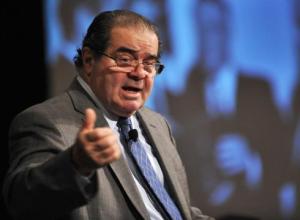
The states of Arizona and Kansas have followed a suggestion from Supreme Court Justice Antonin Scalia, according to TPM: Accepting Scalia’s Offer, Arizona Sues Obama Administration On Voting Rights.
The lawsuit, filed Wednesday, was announced by Arizona’s Attorney General Tom Horne and Secretary of State Ken Bennett, and joined by Kansas Secretary of State Kris Kobach, a high-profile architect of restrictionist laws, including Arizona’s Senate Bill 1070.
The issue involves the 1993 National Voter Registration Act, also known as the “motor voter” law, which requires states to let people register to vote simply by attesting they are citizens, when renewing their driver’s license or applying for social services. A 2004 law adopted by the voters in Arizona added the requirement that people registering to vote also provide proof of citizenship. The Supreme Court struck down that law earlier this year, concluding that it is trumped by the motor voter law. Arizona, the court ruled, could not add new requirements to the form prescribed by the federal law.
But during oral arguments in March, Scalia expressed his bafflement that Arizona did not launch a broader assault on the constitutionality of the NVRA form, written by the Election Assistance Commission. The state simply contended in that case that its proof of citizenship law did not violate the federal law. Even Scalia disagreed with that, voting against Arizona in the ruling, but also giving them a valuable tip in his 7-2 majority opinion.
“We hold that [the NVRA] precludes Arizona from requiring a Federal Form applicant to submit information beyond that required by the form itself,” Scalia wrote in the June decision. “Arizona may, however, request anew that the EAC include such a requirement among the Federal Form’s state-specific instructions, and may seek judicial review of the EAC’s decision under the Administrative Procedure Act.”
Sigh . . . read more at the link.
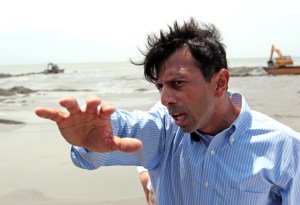
According to a new PPP poll, only 28 percent of Louisiana voters still think Governor Bobby Jindal is doing a good job.
Three years ago in August PPP declared Bobby Jindal to be the most popular Governor in the country. 58% of voters approved of him to only 34% who disapproved. Jindal’s fortunes have seen an amazing shift since that time though, and our newest poll finds him to be the most unpopular Republican Governor of any state- and the second most unpopular Governor in the country overall.
Just 28% of voters now approve of Jindal to 59% who disapprove. That’s an 11 point decline in his net approval just since February when he was already at a poor 37/57 standing. Even Republicans are pretty divided on Jindal (43/42) while independents (35/45) and Democrats (14/78) generally give him poor marks.
Jindal’s White House prospects are dismal if his home state voters have anything to say about it. Just 17% of Louisianans think he should run for President in 2016 to 72% who believe he should sit it out. He ties for 4th among Republican primary voters as their top choice for their 2016 candidate- Rand Paul leads with 18% to 17% for Jeb Bush, 11% for Paul Ryan, 10% for Jindal and Chris Christie, 8% for Marco Rubio and Ted Cruz, 5% for Rick Santorum, and less than 1% for Susana Martinez. (That’s also an embarrassingly poor showing for Santorum given that he easily won the state’s primary last year.)
Jindal wouldn’t be likely to get to a general election but the news for him there is bad too- he trails Hillary Clinton 47/40 in a hypothetical match up. Every other Republican we looked at is more competitive with Clinton in the state- Ryan leads her 46/44, Paul does 45/44, Bush ties her at 44 each, and she leads Christie just 42/41. It looks like Clinton would have a chance to make Louisiana unusually competitive in any instance, but particularly so against Jindal.
It’s difficult to believe that Jindal is polling that well against Hillary.
A few more short takes:
A new article in LA Weekly offers some startling revelations about Michael Hastings’ state of mind before he was killed in a one-car crash: Michael Hastings’ Dangerous Mind: Journalistic Star Was Loved, Feared and Haunted. Based on a friend’s descriptions of Hastings’ behavior, it sounds like he was so severely depressed that he was delusional.
From The A Register, speculations based on The Guardian’s bizarre claims that British intelligence agents forced them to destroy computers that contained U.S. secrets stolen by Edward Snowden: MYSTERY of Guardian mobos and graphics cards which ‘held Snowden files’
A funny Buzzfeed list (with gifs) contributed by Marc Ambinder: 12 Ways To Easily Identify An East Coast Transplant In LA.
A very weird story that demonstrates the institutional stupidity of the Federal Bureau of Investigation: FBI suspected William Vollmann was the Unabomber.
A fascinating story at Defense One: Area 51 Has Been Hiding U-2 Spy Planes, Not UFOs
Finally, our old friend David Sirota really outdid himself yesterday with this story at Salon: This cowardly silence is an act of war, in which he claims that President Obama’s failure to object to the UK detaining Glenn Greenwald’s partner David Miranda at Heathrow Airport is a crime against humanity . . . or something.
Now it’s your turn. What stories are you focusing on today? Please share your links in the comment thread.
Tuesday Reads: Neanderthal Tools, Hillary on Voting Rights, Bulger Verdict, and NDE Research
Posted: August 13, 2013 Filed under: 2016 elections, Civil Rights, Crime, Criminal Justice System, FBI, Hillary Clinton, morning reads, U.S. Politics | Tags: ACLU, American Bar Association, bone tools, death, Debra Davis, higher states of consciousness, James "Whitey" Bulger, John Martorano, leather-working, NAACP, national security, Neanderthals, near death experiences, North Carolina, Pat McCrory, Rev. William Barber, Scott Hotyckey, transparency, Voter ID laws, voter suppression, voting rights 40 Comments
Good Morning!!
I’ve been somewhat out of the loop for the past few days because I’ve had some kind of weird virus that has made it difficult for me to think. If it weren’t August, I’d wonder if it’s the flu. Everything ached. For a couple of days it felt like my skin actually hurt. Anyway I’ve been vegetating in front of the TV watching Criminal Minds reruns and Lifetime movies. I’m feeling better now, although I’m still sleepy all the time.
I’ve been surfing around this morning, and there is quite a bit of interesting news out there. I’ll begin with a fascinating archaeological find. According to a new study reported in Nature, Neanderthals invented tools made of bone that are still used today for leather-working.
Excavations of Neanderthal sites more than 40,000 years old have uncovered a kind of tool that leather workers still use to make hides more lustrous and water resistant. The bone tools, known as lissoirs, had previously been associated only with modern humans. The latest finds indicate that Neanderthals and modern humans might have invented the tools independently.
The first of the lissoir fragments surfaced a decade ago at a rock shelter called Pech-de-l’Azé in the Dordogne region of southwest France. Archaeologist Marie Soressi of the Max Planck Institute for Evolutionary Anthropology in Leipzig, Germany, knew the tool at once, says her colleague Shannon McPherron.
The tools are also known as slickers and burnishers, says McPherron. Soressi contacted luxury-goods manufacturer Hermès in Paris, and found that their high-end leather workers use just such a tool. “She showed them a picture, and they recognized it instantly,” says McPherron. The company’s line includes the wildly popular Birkin handbag, which sells for around US$10,000 and upwards.
McPherron says that a single artefact, however, was not enough for the researchers to draw broad conclusions. “You find one, and there’s always some doubt. You’re worried that it’s not a pattern — that it’s anecdotal behaviour.” But subsequent digs at Pech-de-l’Azé and nearby Abri Peyrony turned up further lissoir fragments, leading the researchers to conclude that Neanderthals made the tools routinely.

Neanderthal bone tools
The researchers say it’s not clear if these kinds of tools were first invented by Neanderthals or modern humans. It’s even possible that modern humans could have learned how to make and use the bone tools from Neantherthals, although most archaeologists believe that Neanderthals learned the skills from humans. From Live Science:
Neanderthals created artifacts similar to ones made at about the same time by modern humans arriving in Europe, such as body ornaments and small blades. Scientists hotly debated whether such behavior developed before or after contact with modern humans.
“There is a huge debate about how different Neanderthals were from modern humans,” said Shannon McPherron, an archaeologist at the Max Planck Institute for Evolutionary Anthropology in Leipzig, Germany.
Now, McPherron and his colleagues have discovered that Neanderthals created a specialized kind of bone tool previously only seen in modern humans. These tools are about 51,000 years old, making them the oldest known examples of such tools in Europe and predating the known arrival of modern humans.
Yesterday North Carolina Gov. Pat McCrory signed a new voter suppression voter ID law and the ACLU, NAACP, and the Southern Coalition for Social Justice immediately filed suit against it. USA Today:
Republicans who backed the legislation said it was meant to prevent voter fraud, which they claim is both rampant and undetected in North Carolina. Independent voting rights groups joined Democrats and libertarians in suggesting the true goal was to suppress voter turnout, especially among blacks, the young, the elderly and the poor.
“It is a trampling on the blood, sweat and tears of the martyrs — black and white — who fought for voting rights in this country,” said the Rev. William Barber, president of the state chapter of the NAACP. “It puts McCrory on the wrong side of history.” [….]
Barber called the Republican-backed measure one of the worst attempts in the nation at voting reform and said the National Association for the Advancement of Colored People considered the package an all-out attack on existing laws long seen as a model of voter participation….
The legislation signed by McCrory and approved last month by state lawmakers requires voters to present government-issued photo IDs at the polls and shortens early voting by a week, from 17 days to 10. It also ends same-day registration, requiring voters to register, update their address or make any other needed changes at least 25 days ahead of an election. A high school civics program that registers tens of thousands of students to vote each year in advance of their 18th birthdays has been eliminated.
Yesterday Hillary Clinton spoke out against the North Carolina law and other efforts to deny and suppress voting rights in a speech before the American Bar Association. HuffPo:
On the same day that North Carolina Gov. Pat McCrory (R) signed a restrictive voter ID bill into law, Clinton criticized the Supreme Court decision that she believes “stripped out the pre-clearance formula that made [the Voting Rights Act] so effective.”
She noted that Texas, Florida and North Carolina are states whose recent voter legislation has shifted the burden, slamming the North Carolina bill as one that “reads like the greatest hits of voter suppression.”
“In the weeks since the ruling, we’ve seen an unseemly rush by previously covered jurisdictions to enact or enforce laws that will make it harder for millions of our fellow Americans to vote,” Clinton said.
Clinton also went after several provisions of the North Carolina bill that she believes place a greater burden on citizens facing discrimination, including limited voting hours, stricter ID requirements and restricted early voting.
CNN reports that Hillary also plans to discuss national security and transparency in an upcoming speech.
Clinton said her appearance at the annual meeting of the American Bar Association marked the beginning of a speaking series she’ll embark upon that will also include an address on the United States’ national security policies next month in Philadelphia.
Clinton said the September address would focus of issues of “transparency and balance.” The former top diplomat had not yet publicaly addressed the classified National Security Agency surveillance programs that were revealed through leaks at the beginning of the summer.
The move into the political realm marks a new phase in Clinton’s post-State Department life, which was previously occupied by speeches to global women’s organizations and a schedule of paid appearances. She is also writing a diplomacy-focused memoir for release in 2014.
The speeches will likely fuel speculation that Clinton is planning to jump into the race for the 2016 Democratic presidential nomination, where she is considered an early favorite.
Well there’s some exciting news! It’s becoming more an more clear that Hillary plans to run for president in 2016.
I’m sure you’ve already heard that James “Whitey” Bulger has been found guilty of murder and racketeering, among other charges. It was always a foregone conclusion. The only surprise is that the jury was only able to find him guilty of 11 murders out of the 19 he was charged with. The New York Times:
BOSTON — James (Whitey) Bulger, the mobster who terrorized South Boston in the 1970s and ‘80s, holding the city in his thrall even after he disappeared, was convicted Monday of a sweeping array of gangland crimes, including 11 murders. He faces the prospect of spending the rest of his life in prison.
The verdict delivers long-delayed justice to Mr. Bulger, 83, who disappeared in the mid-1990s after a corrupt agent with the Federal Bureau of Investigation told him he was about to be indicted. He left behind a city that wondered if he would ever be caught — and even if the F.B.I., which had been complicit in many of his crimes and had relied on him as an informer, was really looking for him.
“This was the worst case of corruption in the history of the F.B.I.,” said Michael D. Kendall, a former federal prosecutor who investigated Mr. Bulger’s associates. “It was a multigenerational, systematic alliance with organized crime, where the F.B.I. was actively participating in the murders of government witnesses, or at least allowing them to occur.”
Of course there won’t be any punishment for the FBI except for embarrassment, if that troubles them. And there was only minor punishment for the parade of hit men and other criminals who were given generous deals in exchange for their testimony.

Debbie Davis, left, with her mother Olga, right, was the girlfriend of Stephen Flemmi, Whitey Bugler’s gangster partner. She vanished in 1981 and her body was found dismembered in 2000
(Daily Mail)
The families of the victims of the 7 murders Bulger was not convicted of were disappointed and angry.
As a clerk read the verdicts in the lengthy and complicated list of charges, Mr. Bulger looked away from the jury and showed no reaction. He was found guilty of 31 of 32 counts of his indictment, the one exception involving an extortion charge. While the jury of eight men and four women convicted him of 11 murders, they found the government had not proved its case against him in seven others, and in one murder case it made no finding, leading to gasps inside the courtroom by relatives of those murder victims and explosive scenes outside the court.
“My father just got murdered again 40 years later in that courtroom,” said the son of William O’Brien, who is also named William….
Perhaps one glimmer of gratification for Mr. Bulger was that the jury reached “no finding” in the death of Debra Davis, one of two women he was accused of strangling. He has long maintained that his personal code of honor did not allow for the killing of women, although the jury did determine that he had killed the other woman, Deborah Hussey. Ms. Davis was the longtime girlfriend of Stephen Flemmi, Mr. Bulger’s former partner in crime who testified against him. Ms. Hussey was the daughter of another of Mr. Flemmi’s longtime girlfriends.

Hit man John Martorano
One of the jurors has already talked to local Boston media about how stressful the experience was.
One of the jurors who voted to convict Boston mobster James “Whitey” Bulger for a string of gangland crimes described how the more than 32 hours of deliberations were “stressful” and involved “all kinds of dissension.”
“Slamming doors,” Scott Hotyckey told CBS station WBZ-TV. “People leaving. Peolpe wanting to get off the jury.” [….]
Hotyckey, juror number 5, said the evidence was overwhelming.
“If you could believe the testimony, and believe what you heard,” Hotyckey said. “I don’t see how you couldn’t find the person guilty.”
But Hotyckey says not all of the jurors believed the testimony they heard – especially from John Martorano, a former hit man who got a plea deal from prosecutors to testify against Bulger.
“There was one juror that constantly said that his testimony was not believable,” Hotyckey recalled. “(He said) over and over again that you couldn’t believe anything (Martorano) said because of the government.”
I’ll wrap this post up with another interesting science story from BBC News about an experiment on rats that shows what happens at the moment of death.
A study on rats shows that the brain experiences a huge surge of electricity during the moment of death, suggesting that they are experiencing a higher state of consciousness.
It could explain why people claim to see white light or “life flash before their eyes” during near-death experiences.
Dr Jason Braithwaite from the University of Birmingham says that since this surge is happening in rats, it could also happen in humans.
Watch an interview with Braithwaite at the BBC link. More detail on the study:
A study carried out on dying rats found high levels of brainwaves at the point of the animals’ demise.
US researchers said that in humans this could give rise to a heightened state of consciousness.
The research is published in the Proceedings of the National Academy of Sciences.
The lead author of the study, Dr Jimo Borjigin, of the University of Michigan, said: “A lot of people thought that the brain after clinical death was inactive or hypoactive, with less activity than the waking state, and we show that is definitely not the case.
“If anything, it is much more active during the dying process than even the waking state.”
Much more at the link.
Now it’s your turn. What stories have caught your fancy today? Please share your links in the comment thread.
Thursday Reads: Edward Snowden Becomes a Refugee in Russia
Posted: August 1, 2013 Filed under: Crime, Criminal Justice System, cyber security, Foreign Affairs, jobs, morning reads, NSA, National Security Agency, Russia, The Media SUCKS, U.S. Politics, Wikileaks | Tags: Crime and Punishment, defectors, domestic surveillance, Don Maclean, Edward Snowden, Glenn Greenwald, Guy Burgess, Joshua Foust, Kim Philby, Marc Ambinder, Mark Ames, Novaya Gazeta, Russia Today, Russian refugee centers, the Kremlin, XKEYSCORE 37 Comments
Good Morning!!
The news is breaking as I write this (around 8:15AM ET) that NSA leaker Edward Snowden has received papers that grant him refugee status in Russia for one year. From Reuters:
Fugitive former U.S. spy agency contractor Edward Snowden left Moscow’s Sheremetyevo airport on Thursday after Russiagranted him refugee status, ending more than a month in limbo in the transit area.
A lawyer who has been assisting Snowden said the young American, who is wanted in the United States for leaking details of secret government intelligence programs, had left the airport for a secure location which would remain secret….
His lawyer, Anatoly Kucherena, told state television: “I have just seen him off. He has left for a secure location … Security is a very serious matter for him.”

Lawyer Anatoly Kucherena holds Edward Snowden’s entry papers from Russian Immigration Service
So what will life in Russia be like for Snowden? A number of knowledgeable writers have weighed in on this question.
Last week, when rumors circulated that Snowden had been granted asylum and would soon leave Sheremetyevo, Russian-American journalist Julia Ioffe wrote in The New Republic that Snowden would probably
be given an apartment somewhere in the endless, soulless highrises with filthy stairwells that spread like fields around Moscow’s periphery. He will live there for five years before he will be given citizenship. He’ll likely be getting constant visits from the SVR (the Russian NSA) to mine the knowledge he carries in his brain. Maybe, he will be given a show on Russia Today, alongside the guy who got him into this pickle to begin with, Julian Assange. Or he, like repatriated Russian spy Anna Chapman, might be given a fake job at a state-friendly bank where he will do nothing but draw a salary. (Chapman, by the way, recently tweeted this at Snowden: “Snowden, will you marry me?!”) Maybe he will marry a Russian woman, who will quickly shed her supple, feminine skin and become a tyrant, and every dark winter morning, Snowden will sit in his tiny Moscow kitchen, drinking Nescafe while Svetlana cooks something greasy and tasteless, and he will sit staring into his black instant coffee, hating her.
Was it worth it to trade Hawaii and a pole-dancer girlfriend for that? Snowden will have plenty of time on his hands to think about it. He certainly won’t get a job in Russian intelligence. The Russians, at least, know you can’t trust a leaker even though he may be a convenient source of information.
Mark Ames, who lived in Russia for years and published and wrote for an alternative newspaper in Moscow with partner Matt Taibbi, recently wrote a short piece on Snowden’s future prospects at NSFWCORP with quotes from some Russian sources that I can no longer find on-line. Ames writes:
The latest on Edward Snowden from Newsru.com: officials from the Federal Migration Service (FMS) say that Snowden could be transferred to a refugee center currently overflowing with Syrian war refugees, likely families tied to the Russian-backed regime of Bashir Assad. Or not.
Both Russian officials and Snowden’s Kremlin-tied lawyer are making a big show about how difficult the bureaucratic process is for anyone, even someone like Snowden, to get his temporary asylum papers. If you read the Russian press accounts, the surface statements about the Tsar’s alleged helplessness before the almighty bureaucracy are pure Gogol, without the ha-ha’s, a sort of no-laughter-through-tears. Beneath the surface, there’s something more menacing, a growing sense I get reading the Russian press that Snowden is a kind of Kremlin toy whom they’re intentionally fucking with, out of either contempt, or for the sheer fun of it…
Clearly, Russian President Vladimir Putin is having a blast sticking it to the US and soaking up praise from deluded Glenn Greenwald cultists (previously Obots) and Julian Assange fans who think Russia is a land of freedom and opportunity as in contrast to America, where jackbooted Obama administration thugs supposedly run a horrifying reign of terror.

Ames has a fascinating take on Snowden’s attorney’s bringing him a copy of Dostoevsky’s Crime and Punishment to read.
…the Kremlin gifting Snowden a copy of “Crime and Punishment” is itself a not-subtle mind-fuck on many levels. Dostoevsky’s book is a profoundly reactionary novel about a young foolish and desperate student full of second-hand radical ideas about his superiority against established morality. His name is Raskolnikov and he thinks he’s above ordinary human laws, so he kills his landlord according to these higher laws – and later goes crazy unable to believe in the radical ideas that led him to commit a crime, so he turns himself in to the authorities, and serves his time in Siberia as penance. The name of Dostoevsky’s hero, “Raskolnikov,” itself means “cracked” or “split” – as in his cracked conscience.
Last week Snowden’s lawyer, Anatoly Kucherena, told journalists…
“I bought [for Snowden] Dostoevsky’s ‘Crime and Punishment,’ because I think that Raskolnikov, who murdered his old landlord — I think that he needs to read about this. Not necessarily because of their similarities in their internal contradictions, but nevertheless…”
I loved this quote from opposition newspaper Novaya Gazeta (via Ames):
“Well, what can you say? If that infantile leftie Snowden really wanted to be a hero, he should return to the USA: crucify or not crucify, they’d probably give him 10 years, and he’d do five.”
“Snowden wanted to become a digital world’s Christ — without having to hang on the cross. Now Snowden’s going to spend not five years, but the rest of his life as a guest of the FSB.”
In another display of black humor, the Kremin website compared Snowden to British defectors and spies Kim Philby, Guy Burgess, and Don Maclean. In the posting the Kremlin notes that Philby and Burgess “drank themselves to death in their state-allocated flats, awaiting a world revolution that never came,” while Maclean got along better because he took the trouble to learn Russian. You can read more about Kim Philby at The Guardian.

Russian refugee center
State supported newspaper Russia Today also speculated about Snowden’s future: Spook out of water: What Snowden can expect if Russia grants him asylum.
If the application is accepted and Snowden is given the 12-month temporary asylum that enables him to leave the transit area of Sheremetyevo airport, he will have to undergo a daunting medical assessment designed especially for immigrants. Along with a standard screening for HIV and tuberculosis, he will also be checked for leprosy and the rare sexually-transmitted disease chancroid. Russian Health Ministry officials have said that they are ready to administer the tests at a moment’s notice, but so far have not been asked to do so by Snowden.
After Snowden registers his whereabouts with the police – to avoid risking a $150 fine – he will be free to apply for placement in a processing facility for asylum seekers. There are no such facilities in Moscow, and ones in the vicinity have been flooded with refugees escaping the Syrian conflict. Elena Ryabinina, a human rights lawyer who works with asylum seekers, told Gazeta.ru newspaper that most of her clients get offered a bed in a center near Perm – a city by the Ural mountains, more than 1,000 km east of Moscow.
Sounds like tons of fun. But according to the article Snowden could choose to try to find a place on his own–but he’d have to get a bodyguard since he’s a “wanted man.”
Even if Snowden does acquire a personal bodyguard and a high security flat at an undisclosed location – presumably courtesy of the Russian state – his future is hazy, and the reality of it likely different to what he imagined when he recorded his first revelations.
A temporary asylum seeker is allowed to work, but not to put further strain on the testy relationship between Moscow and Washington. Vladimir Putin said “no longer undermining the US” is a pre-condition for his asylum bid, and the former NSA contractor publicly promised to comply when he met Russian human rights activists a fortnight ago. One wonders who it is that Snowden’s bodyguards will be protecting from danger.
Who knows if we’ll even find out what happens to Snowden now? All we can do is watch and wait. Something tells me he may eventually wish he had just come back home to face the music.
Yesterday, Glenn Greenwald posted another “bombshell” about a “top secret program” called XKEYSCORE. According to Greenwald, this “NSA tool collects ‘nearly everything a user does on the internet.'” I googled and learned that hundreds of companies are publicly advertising job openings for people with experience on XKEYSCORE–so how can it be so secret? I guess Greenwald didn’t bother to do a google search. He didn’t bother to talk to Marc Ambinder either. Ambinder wrote a whole book on US intelligence methods in which he described XKEYSCORE in detail. Can Greenwald actually be writing about these intel programs without reading any of the literature on them?
I quibble with the Guardian‘s description of the program as “TOP SECRET.” The word is not secret; its association with the NSA is not secret; that the NSA collects bulk data on foreign targets is, well, probably classified, but at the SECRET level. Certainly, work product associated with XKEYSCORE is Top Secret with several added caveats. Just as the Guardian might be accused of over-hyping the clear and present danger associated with this particular program, critics will reflexively overstate the harm that its disclosure would reasonably produce.
XKEYSCORE is not a thing that DOES collecting; it’s a series of user interfaces, backend databases, servers and software that selects certain types of metadata that the NSA has ALREADY collected using other methods. XKEYSCORE, as D.B. Grady and I reported in our book, is the worldwide base level database for such metadata. XKEYSCORE is useful because it gets the “front end full take feeds” from the various NSA collection points around the world and importantly, knows what to do with it to make it responsive to search queries. As the presentation says, the stuff itself is collected by some entity called F6 and something else called FORNSAT and then something with the acronym SSO.
But Greenwald insisted on Chris Hayes show last night that XKEYSCORE does collect data–all your data–and someone creepy is probably reading it right now!!
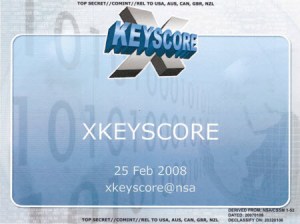
In his piece at The Guardian Greenwald had to admit that NSA analysts need to get a warrant to look at and individual’s data, but he claims the warrants are worthless. He also admits that analysts don’t have access to all your personal data, but he says they could hack into it illegally. But isn’t that true for employees of any company or government agency? They could look at personal data by criminally working around limitations and ignoring regulations.
Charles Johnson at LGF: Greenwald’s Latest Article Distorts the Truth Again
Greenwald’s purpose with this latest article is to try to shore up Edward Snowden’s absurd claim that he could “wiretap anyone, even the President,” without any oversight. Here’s how he frames this defense:
The files shed light on one of Snowden’s most controversial statements, made in his first video interview published by the Guardian on June 10.
“I, sitting at my desk,” said Snowden, could “wiretap anyone, from you or your accountant, to a federal judge or even the president, if I had a personal email”.
US officials vehemently denied this specific claim. Mike Rogers, the Republican chairman of the House intelligence committee, said of Snowden’s assertion: “He’s lying. It’s impossible for him to do what he was saying he could do.”
But training materials for XKeyscore detail how analysts can use it and other systems to mine enormous agency databases by filling in a simple on-screen form giving only a broad justification for the search. The request is not reviewed by a court or any NSA personnel before it is processed.
Read this section carefully — because what Greenwald is detailing does not support Snowden’s claim at all. Greenwald is describing searching a database for information on non-US citizens. How is this the same thing as “wiretapping the President?” Of course, it’s not. He’s not describing any kind of “wiretapping” at all.
On top of all that, it turns out that the Powerpoint presentation that Greenwald wrote about yesterday is from 2008! (See slide pictured above.) Presumably much has changed at NSA since then. Read more at Joshua Foust’s blog–it’s well worth the time to read the whole thing.

 peej
peej Carissa
 bostonboomer
 dakinikat
 ecocatwoman
 mablue2
 Mama Lopez
 peggysue22
 quixote
 skydancingguestblogger
 Mona (aka Wonk the Vote)



 Sky Dancing
Recent Comments