Posted: March 6, 2024 | Author: bostonboomer | Filed under: 2024 Elections, 2024 presidential Campaign | Tags: Adam Schiff, Donald Trump, Joe Biden, Kyrsten Sinema, Mark Robinson, Niki Haley, Ruben Gallego, Super Tuesday |
Good Day!!
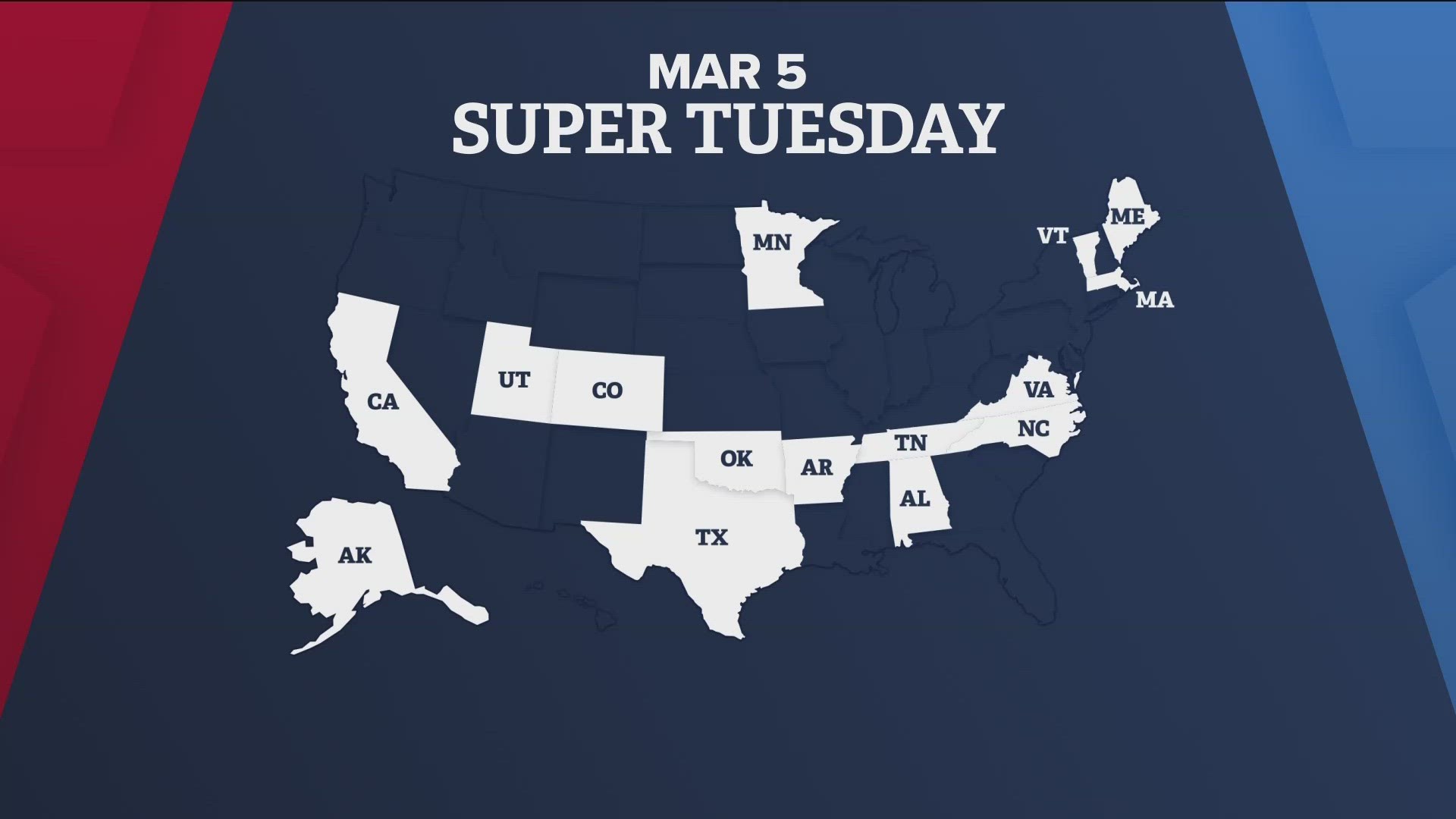 Yesterday was Super Tuesday, but there were few surprises. Oath-breaking insurrectionist Donald Trump will most likely face President Joe Biden in November unless something happens to either of these old guys. Trump continued his pattern of losing 30-40 percent of the Republican primary votes, and Niki Haley won a second primary–in Vermont. This morning, she withdrew from the race without endorsing Trump.
Although Trump appears to be slightly ahead of Biden according to the polls, it’s clear that Trump’s support among Republicans is weak. The Daily Beast: Alyssa Farah Griffin: Even in Defeat, Haley Exposed Trump’s Demographic Weaknesses.
On the heels of Super Tuesday and Nikki Haley’s departure from the 2024 presidential race, Donald Trump is poised to officially be the GOP nominee for president—despite 91 felony counts, four separate indictments, and being found liable for sexual assault.
In poll after poll, most recently a New York Times/Siena College poll, Trump dominates Joe Biden head-to-head, as well as with key demographics. But those polls seem to be missing a flashing red warning sign for Trump in a general election: his disapproval with Republican voters.
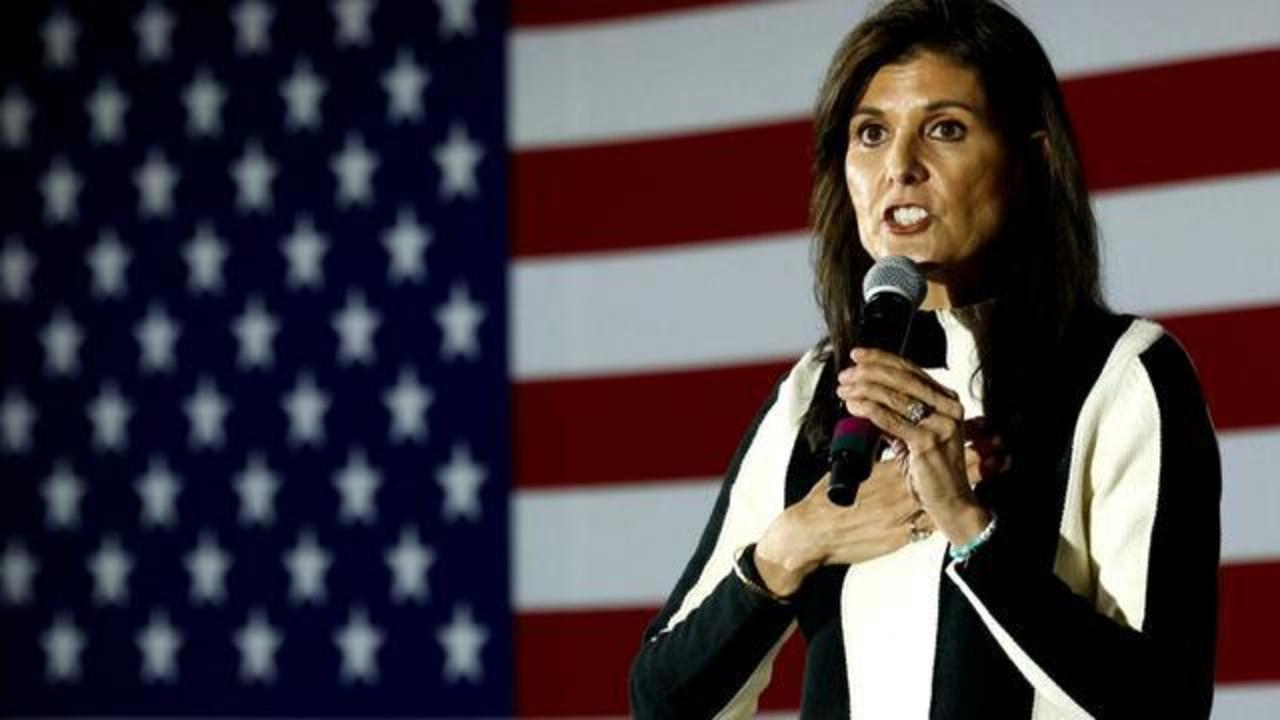
Niki Haley suspends campaign
Haley’s quixotic race for the GOP nomination exposed Trump’s flawed and weakened standing within the Republican Party, but more broadly with the American electorate. A new Associated Press survey found that two in ten Iowa primary voters, a third of New Hampshire Primary voters, and a quarter of South Carolina Republican voters would refuse to vote for Trump in the fall.
voters, 78 percent would not commit to voting for the Republican nominee in November. In California, 69 percent of Haley voters said they wouldn’t vote for Trump in November, according to an NBC News exit poll. Even more striking were exit polls out of North Carolina that found 81 percent of Haley voters would not commit to voting for the eventual GOP nominee.
These numbers are remarkable if you consider that GOP primary voters are historically among the most intense of voters—meaning they will turn out and skew strongly more to the right than the average general election voter.
Read the rest at the link.
I didn’t watch Trump’s speech last night–I can’t stand to watch or listen to him, but here’s a report from David Smith at The Guardian: Trump’s Super Tuesday victory speech: grim visions of an American apocalypse.
If this is what he sounds like when he wins, imagine how he would react to defeat.
Donald Trump swept to victory after victory on Super Tuesday, all but clinching the Republican presidential nomination, but you wouldn’t have known it from his joyless victory speech.
For hours his fans had partied in the gilded ballroom of his Mar-a-Lago estate in Palm Beach, Florida, accompanied by Abba’s Dancing Queen, Elton John’s Rocket Man, Queen’s We Are the Champions and other golden oldies. Waiters glided between them serving pastries, prawns and sausage rolls. Each time Fox News – displayed on four giant TV screens – declared another state for Trump, they whooped and cheered and chanted “Trump! Trump! Trump! USA! USA! USA!”
Then, after 10pm, into this gaudy pageant walked the Grim Reaper, raining on their parade with a 19-minute speech laden with doom and gloom about the state of the nation.
This was Trump as Eeyore.
 No balloons, no confetti, no parade of family members on stage and no mention of opponent Nikki Haley. No fun.
“Some people call it an experiment – I don’t call it an experiment,” Trump said of the United States. “I just say this is a magnificent place, a magnificent country, and it’s sad to see how far it’s come and gone … When you look at the depths where it’s gone, we can’t let that happen. We’re going to straighten it out. We’re going to close our borders. We’re going to drill baby drill.”
As the unhappy warrior spoke, 10 guests headed for the exit, apparently worn down by the misery of it all….
If only he had still been running things, he lamented, Russia would not have invaded Ukraine, Israel would not have been attacked and Iran would be broke. Now inflation is “destroying the middle class, it’s destroying everything”. He added morosely that inflation was called the “country buster”.
But wait, there is one bright spot: the stock market! It’s going gangbusters. According to Trump, this has nothing to do with Biden, “the worst president in the history of our country”, but the Republican frontrunner’s own healthy poll numbers indicating his return.
Then it was back to the bad news of border security and immigration….
“It happens in third world countries,” he said. “And in some ways, we’re a third world country. We live in a third world country with no borders … We need a fair and free press. The press has not been fair nor has it been free … The press used to police our country. Now nobody has confidence in them.”
The grim list kept coming: the deadly coronavirus pandemic, the loss of American soldiers in Afghanistan. And Trump naturally could not resist circling back for another bite at the border – no matter that he was the one who ordered Republicans to torpedo bipartisan legislation that might have begun to fix the crisis.
“We have millions of people invading our country,” he asserted. “This is an invasion. This is the worst invasion probably.” For good measure, he tossed out an uncheckable fact. “The number today could be 15 million people. And they’re coming from rough places and dangerous places.”
Ugh.
On Thursday, Biden will get his turn as he delivers the State of the Union address. Katie Rogers at The New York Times: Biden Preps for the State of the Union Speech and Rowdy Republicans.
Fueled by throat-soothing tea, guided by teleprompters and surrounded by six aides and one historian, President Biden spent hours at Camp David last weekend honing a State of the Union speech that will be watched by one of his biggest audiences before the November election.
So the pressure is on.
Mr. Biden, it should be noted, had with him at Camp David a copy of “Possible: How We Survive (and Thrive) in an Age of Conflict,” a book by William Ury, an international negotiation expert.
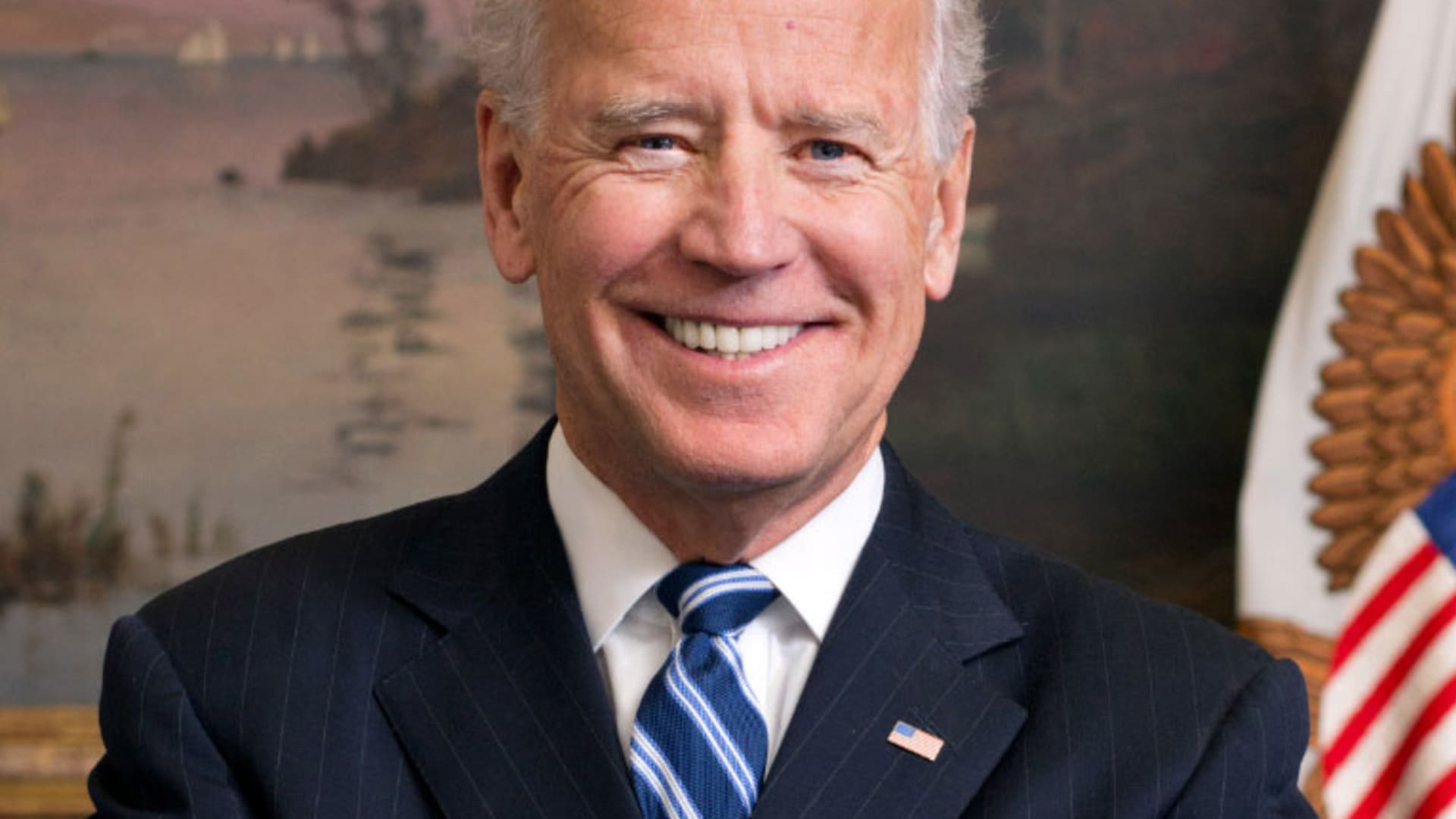 “You’ll hear me on Thursday,” Mr. Biden said when reporters asked on Tuesday about his preparations.
White House officials have not said what topics the president will address, or whether he will mention Donald J. Trump, his likely 2024 challenger, by name. But Mr. Biden is almost certain to talk about the war in Ukraine, the war between Israel and Hamas, China, abortion, immigration, trade and other topics in a speech he and his aides have been working on since December.
The final speech, which aides say will be edited up until Mr. Biden gives it, will be delivered by a president under pressure to reassure voters that he is not too old for the job and, more than at any point in his tenure, guard against political outbursts that have become commonplace during such speeches. Mr. Biden’s aides say he has prepared for Republicans to heckle him, as Representative Marjorie Taylor Greene did last year.
Getting the speech into shape played out, in true Biden fashion, inside a circle of aides who have been around the president for years and treat such proceedings like a state secret.
The Camp David weekend group included Bruce Reed, the White House deputy chief of staff, who helped guide policy-related additions to the speech; Mike Donilon, the aide who has the best understanding of Mr. Biden’s voice; Anita Dunn, who oversees communications strategy for the White House; and Jeffrey D. Zients, Mr. Biden’s chief of staff. Rounding out the group was Steve Ricchetti, counselor to the president and a longtime friend, and Vinay Reddy, Mr. Biden’s speechwriter.
The historian Jon Meacham, who is called upon to add historical heft, was also there.
In other Super Tuesday news, Adam Schiff beat out two other Democrats to win the California primary for the U.S. Senate, along with Republican and former pro-baseball player Steve Garvey.
Kate Riga at Talking Points Memo: Schiff Beats Out Split Progressives On Glide Path To California Senate Seat.
Rep. Adam Schiff (D-CA), using ruthless tactics belied by his cherubic face and upstanding public persona, has won the California Senate primary, according to the Associated Press.
Steve Garvey, a former professional baseball player, is projected to come in second almost entirely thanks to Schiff’s maneuvering. The millions Schiff spent on ads boosting Garvey’s profile with Republican voters helped edge out Reps. Katie Porter (D-CA) and Barbara Lee (D-CA), both of whom would have posed an actual threat to Schiff in the general election (California’s jungle primary lets two candidates of the same party go through to the general).
Porter — Sen. Elizabeth Warren’s (D-MA) protegé, who gained a national profile by taking CEOs to task at committee hearings, armed with her omnipresent whiteboard — and Lee — famous for being the only member of Congress to vote against authorizing military force after 9/11 — are both considered more progressive than Schiff. But a lack of left-wing consolidation around either woman, as well as the lack of involvement by key groups like EMILY’s List, left the progressive flank of the party split. Schiff got the moderate lane to himself.
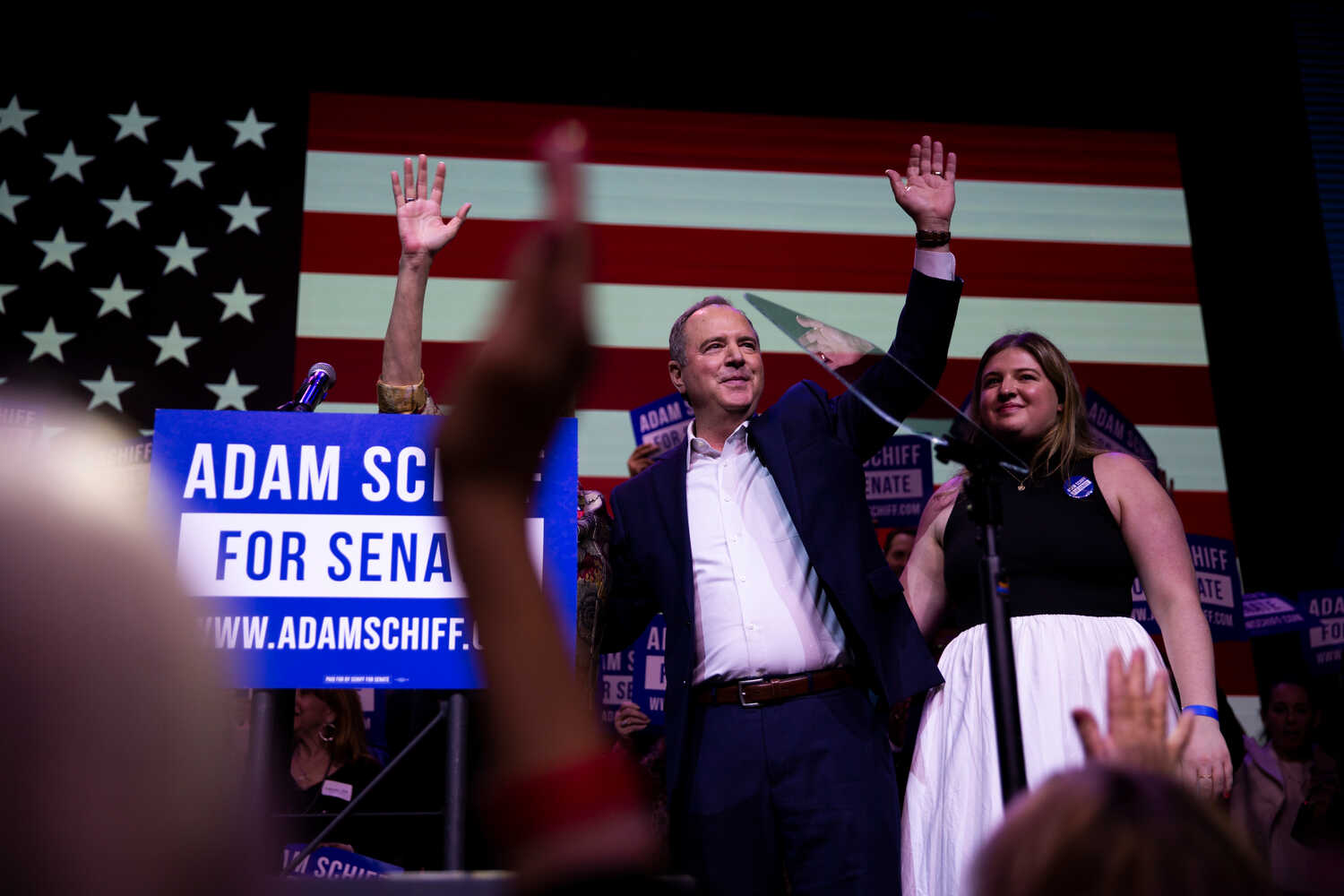 Schiff has also been incredibly successful in riding his high-profile role in Donald Trump’s impeachment trial to national fame, becoming omnipresent on cable news. It didn’t hurt that he won the endorsement of Rep. Nancy Pelosi (D-CA), a famed fundraiser.
Schiff will virtually certainly win the seat of the late Sen. Dianne Feinstein (D-CA) in the fall, taking over for Sen. Laphonza Butler (D-CA) who was, ironically, appointed by California Gov. Gavin Newsom (D) so a Black woman would again represent the state. The state will now be without a woman in either of its two Senate seats for the first time in over 30 years.
While Schiff lacks the progressive bona fides of Porter and Lee, he does meet what will be a key Democratic litmus test for candidates for the upper chamber from here on out: He supports ending the filibuster, along with more expansive proposals to nix the Electoral College and expand the Supreme Court.
In Arizona, Kyrsten Sinema announced, in a whiny, narcissistic speech, that she won’t be running for reelection to the U.S. Senate. That’s good news for Democrats and specifically for Ruben Gallego. Again from Kate Riga at Talking Points Memo: Kyrsten Sinema Drove Herself Out Of Politics.
In a video replete with her own accomplishments — “I believe in my approach. But, it’s not what America wants right now” — she on Tuesday delivered her constituents a final “it’s not me, it’s you” farewell.
The senselessness of her trajectory is thrown into even starker relief next to that of Sen. Joe Manchin (D-WV), inextricably linked to her throughout Joe Biden’s first two years in the White House due to the pair’s devotion to the filibuster and eagerness to buck their party. Manchin comes from one of the Trumpiest states in the country. He’s the last generation of a dying breed, as red state Democrats and blue state Republicans drop or are forced out of their parties.
 Sinema’s state, in contrast, has only trended bluer. While certainly still battleground territory, it’s a more comfortable get for Democrats than at any other time in recent history. Had she acted like a normal Democrat — look no further than fellow Sen. Mark Kelly (D-AZ) — she’d be preparing for her reelection right now, relieved to have the kooky Kari Lake to run against, and swimming in a helpful current of money funneled by the national party organs.
But she habitually took loud, splashy stands on issues that not only set her apart from her party, but did so on issues central to its very ideology (she’s now an independent, though never stopped caucusing with the Democrats). This was not taking some swings to look tough on the border, or to distance herself from super lefty proposals. It was curtseying while voting down an increased federal minimum wage, threatening the Inflation Reduction Act over preserving a tax loophole for hedge fund managers and law firm partners, limiting the lift of the corporate tax rate….

Ruben Gallego
She did all of this with a rare disrespect for norms around the Hill, one of the very few senators who refused to do hallway interviews, even when she was a deciding player on major legislation, leaving the public to learn her views through other sources or rare sit-downs she’d grant to friendly press. It helped keep her a cypher to political observers: a lawmaker who’d come up through very liberal politics, who’d been open and admirably proud about her bisexuality, suddenly tacking to the corporate right and infuriating those who’d supported her rise and who she’d need to run again in the process. Rep. Ruben Gallego (D-AZ), essentially running in her stead, was drafted by Democrats wholly alienated by her decisions.
This means that Ruben Gallego will face insane conspiracy theorist Kari Lake in November. Here’s hoping he wins.
One more down-ballot race of note, a truly crazy candidate won the primary for governor of North Carolina. Molly Olmstead at Slate: Whew, North Carolina’s Winning GOP Nominee for Governor Sure Has Said Some Things.
Mark Robinson, who easily won North Carolina’s Republican gubernatorial primary on Tuesday, has the misfortune of having spent years on Facebook without thinking about his future political career. The current lieutenant governor of the state—and the first Black man to hold the position—was a furniture manufacturer who was launched into politics in 2018 when he gave a viral pro-gun speech at a city council meeting in the wake of the Parkland school shooting. Two years later he was elected to his current office. He will face Democrat Josh Stein, the state’s attorney general, in the general election in November. The race is expected to be extremely close.
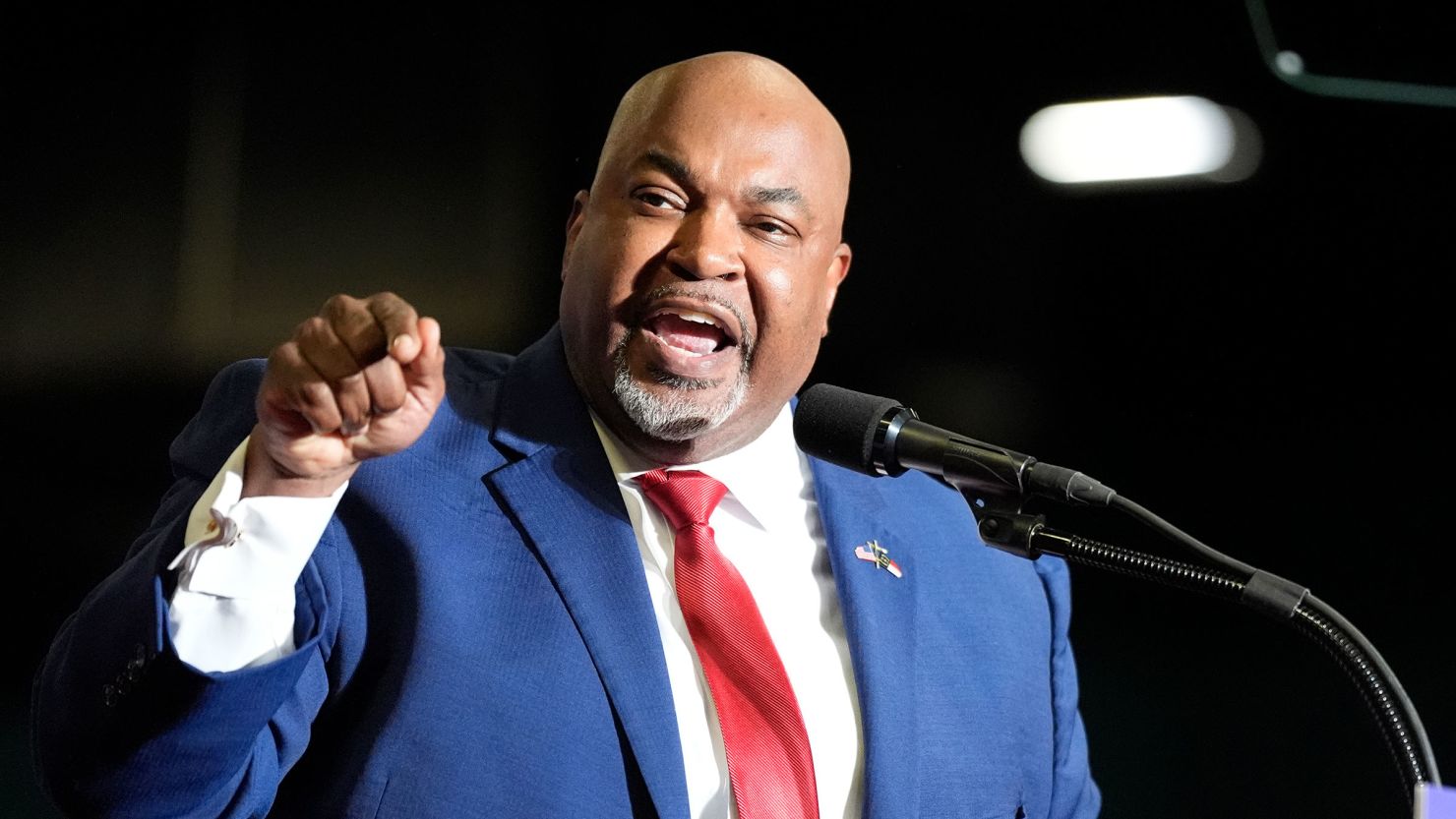
Mark Robinson
He has not, in the time since his profile rose, worked to purge his social media of controversial content. Nor has he played things safe when speaking at churches and other public events in recorded sermons and speeches. So it doesn’t take a lot of probing to find how Robinson really feels about certain hot-button issues.
Robinson, who is also into conspiracy theories, has voiced enough offensive comments for a full accounting to be too unwieldy. But even a sampling of his views like the one below—not a comprehensive list—showcases just what kind of candidate North Carolina Republicans just selected to be their standard-bearer this November.
Abortion
“I don’t care if you’re 24 hours pregnant. I don’t care if you’re 24 weeks pregnant. I don’t care. If you kill that young’un, it is murder.” (Robinson has said he paid for an abortion in 1989 and maintained that that decision was “wrong.”)
Climate Science
“… pseudoscience, junk science that has not proven a single solitary thing.”
The Media
“See through their lies and look at the big picture of their TRUE intent, which is to push US towards their new world order.”
Jewish People
He voiced agreement with a pastor who claimed the “Four Horsemen of the Apocalypse” are the CIA, China, Islam, and the Rothschild family of “international bankers that rule every single … central bank.”
Also, regarding Black Panther: “It is absolutely AMAZING to me that people… can get so excited about a fictional ‘hero’ created by an agnostic Jew and put to film by satanic marxist. How can this trash, that was only created to pull the shekels out of your Schvartze pockets, invoke any pride?”
And that’s just the tip of the iceberg. Read more examples at the Slate link.
I’m going to end there. What do you think? What stories are you following today?
Did you like this post? Please share it with your friends:
Posted: February 28, 2024 | Author: bostonboomer | Filed under: 2024 Elections, 2024 presidential Campaign, Donald Trump, Joe Biden | Tags: 2024 Michigan primaries, Alabama IVF ruling, Birth Control, Gaza, low quality polls, Niki Haley, polls, separation of church and state, Simon Rosenberg, uncommitted voters, voters concerned about extremism |
Good Morning!!

Henri Matisse, Three Sisters
I’m going to get this out of the way before I get to the real news. Last night President Biden won 81.1 percent of the votes in the Michigan Democratic primary, but it isn’t easy to find that out from the press reports. All of the focus is on the uncommitted votes, which got 13.3 percent. Here is one representative sample:
The Washington Post: Biden wins Michigan primary but faces notable showing by ‘uncommitted.’
President Biden won Michigan’s Democratic primary on Tuesday but faced a notable challenge from voters selecting “uncommitted” to protest his handling of Israel’s military campaign in Gaza, a potential sign of vulnerability for Biden among rank-and-file Democrats.
Democratic leaders in the state were bracing for tens of thousands of “uncommitted” votes, as Biden aides and allies sought to tamp down concerns about the strong showing by those aiming to warn the president he could lose the pivotal state in November if he does not change course and push for a cease-fire in Gaza.
With nearly 99 percent of the ballots counted, there were more than 100,000 “uncommitted” votes….
In the weeks leading up to the Democratic primary, Arab American and liberal activists launched a concerted push to get Democrats to vote “uncommitted” as a way to protest Biden’s handling of the Israel-Gaza war, especially his decision not to call for a cease-fire. The group Listen to Michigan declared victory soon after polls closed, noting that it had surpassed its stated goal of 10,000 uncommitted votes.
manager and sister of Rep. Rashida Tlaib (D-Mich.), said in a statement Tuesday. “Tens of thousands of Michigan Democrats, many of whom who voted for Biden in 2020, are uncommitted to his re-election due to the war in Gaza.”
She added: “We don’t want a Trump presidency, but Biden has put [Israeli Prime Minister Benjamin] Netanyahu ahead of American democracy. We cannot afford to pay the bill for disregarding Palestinian lives should it come due in November.”
They don’t want a Trump presidency, but they plan to try to enable one anyway, in the process ending American democracy. But here’s some history on uncommitted votes in Michigan:
Biden campaign officials, however, said the group’s goal of 10,000 votes was artificially low, as 20,000 people have voted uncommitted in each of Michigan’s past three Democratic presidential primaries, even without any organized effort urging them to do so. The president’s allies also cited comments by some of those who threw their support behind the campaign that despite their anger at Biden’s policies, they plan to vote for him in November. A campaign official also noted that there were several “uncommitted” delegates for Barack Obama in 2012, coming from North Carolina, Maryland, Alabama and Kentucky.

Family group reading, by Mary Cassatt
I don’t know any Democrat who doesn’t want a cease fire in the brutal Israel-Hamas war, including President Biden. But Biden can’t magically force either Netanyahu or Hamas to agree to one. Negotiations take place behind closed doors; making them public would defeat their purpose.
Other mainstream news sources also emphasize the uncommitted vote against Biden, but there is little attention to the fact that Trump underperformed the polls, just as he did in New Hampshire and North Carolina. He got only 68 percent of the vote in Michigan, while Niki Haley won nearly 27 percent, once again demonstrating that close to 30 percent of Republicans don’t want Trump as their nominee.
From Simon Rosenberg at Hopium Chronicles: Trump Is Not Strong, Or Winning – No Red Waving 2024 Please.
It Is Wrong To Say Trump Is Winning The Election, Or Is Somehow Favored. He Is Weak, Not Strong – In 2022 a narrative developed about the election – that a red wave was coming – that commentators just couldn’t shake even though there was plenty of data suggesting the election could end up being a close competitive one. I feel like that we are beginning to enter a similar moment in 2024 with the various assertions of Trump’s strengths. The “red wave” over estimated Republican strength and intensity, discounted clear signs of Democratic strength and intensity and was it would be ridiculous, given what happened in 2022, for us to do this all over again this year.
Let me say it plainly – Donald Trump is not ahead in the 2024 election. He is not beating Joe Biden. He is not in a strong position. Signs of Trumpian and broader GOP weakness is all out there for folks to see – if they want to see it. Let’s dive in a bit:
Trump is not leading in current polling – For Trump to be “ahead” all polls would have be showing that. They aren’t. The last NYT poll had Biden up 2, the new Quinnipiac poll has Biden up 4.
Given the spike in both junky, low quality polls and GOP-aligned polls the averages can no longer be relied on – this was a major lesson of 2022. Remember using the averages Real Clear Politics predicted that Republicans would end up with 54 seats. They have 49.
Stripping out GOP aligned polls, and less reliable polling, we find the race clearly within margin of error, which means the election is close and competitive. In a recent analysis, “Trump’s lead over Biden may be smaller than it looks,” The Economist broke down recent polling by pollster quality and found the race dead even among the highest quality pollsters [click the link to see the chart]….
Asserting that somehow Trump leads is pushing data beyond what it can tell you. With margin of error a 1-2 point lead is not an actual lead – it signifies a close, competitive election.
It is also early, and Democrats have not had a competitive primary. Lots of folks are not engaged. Look at this chart from Morning Consult. If the Democratic coalition starts coming home as Biden ramps up and Trump becomes the R nominee he will jump ahead by a few points….
We learned in 2022 that centering our understanding of American politics around wobbly polling and polling averages was risky. No reason we should be doing it again this cycle. Lots of other things we can throw into the strategic blender to understand where we are.
Read the rest at Hopium Chronicles. It’s quite interesting.
The mainstream press seems to want another Trump presidency, because that will make them more money. Biden is competent and doing a good job, but that’s so boring. They want the chaos back again–never mind that Trump would likely prosecute journalists in a second term.

Rene Magritte, The Subjugated reader
Apparently, Trump is a bit nervous about how many votes Niki Haley is getting in the Republican primaries.
Adam Wren at Politico: Trump tried to ignore Haley. He barely lasted a day.
For a full 24 hours on Saturday, Donald Trump did not mention Nikki Haley by name, ignoring her both in a freewheeling address to the Conservative Political Action Conference and after he won the primary in South Carolina.
His campaign said they were turning the page, focusing squarely on the general election. One aide, when asked about the absence of Haley, quipped: “Who?”
By Sunday, that strategic restraint was gone.
In a torrent of posts on Truth Social, just weeks before he is expected to clinch the nomination, Trump had no appetite for comity, blasting Haley as “BRAINDEAD” and “BIRDBRAIN.” He relished the news that Americans for Prosperity would stop spending on Haley’s presidential campaign. He touted a polling lead in Michigan’s primary. “When will Nikki realize,” he posted, “that she is just a bad candidate?”
Maybe when she stops getting 30 percent of the Republican primary votes?
This was not a magnanimous candidate looking to mend the intraparty fracture on full display in exit polls from each of the early electoral contests. This was not a competitor looking to pivot to going after President Joe Biden.
This was a former president entering the general election actively exacerbating divisions within the GOP — at a time when some Republicans are openly warning about the risk of alienating even a small segment of the Republican electorate. Trump has every rational incentive to make overtures to Haley and her supporters, who delivered her roughly 40 percent of the vote in New Hampshire and South Carolina and who are the kind of voters Trump will need to turn out in Michigan and Pennsylvania in November. But he refused to do so — or, perhaps, was incapable of it — despite making head feints in that direction.
“In the exit polls in the three early states, roughly 20 percent are saying they’re not going to vote for Trump,” said Christine Matthews, a Republican pollster and president of Bellwether Research and Consulting. “If that’s true, you need to have like 85 to 90 percent of your base. I do think that he’ll have some problems consolidating, particularly your well-educated, suburban Republicans.”
This is interesting, from Reuters: Exclusive: Extremism is US voters’ greatest worry, Reuters/Ipsos poll finds.
Worries about political extremism or threats to democracy have emerged as a top concern for U.S. voters and an issue where President Joe Biden has a slight advantage over Donald Trump ahead of the November election, a new Reuters/Ipsos poll showed.
Some 21% of respondents in the three-day poll, which closed on Sunday, said “political extremism or threats to democracy” was the biggest problem facing the U.S., a share that was marginally higher than those who picked the economy – 19% – and immigration – 18%.
Biden’s Democrats considered extremism by far the No. 1 issue while Trump’s Republicans overwhelmingly chose immigration.
Extremism was independents’ top concern, cited by almost a third of independent respondents, followed by immigration, cited by about one in five. The economy ranked third.
During and since his presidency, Trump has kept up a steady drumbeat of criticism of U.S. institutions, claiming the four criminal prosecutions he faces are politically motivated and holding to his false claims that his 2020 election defeat was the result of widespread fraud.
That rhetoric was central to his message to supporters ahead of their Jan. 6, 2021, assault on the U.S. Capitol.
Overall, 34% of respondents said Biden had a better approach for handling extremism, compared to 31% who said Trump, the frontrunner for the Republican presidential nomination.
The poll helps show the extent to which Biden’s re-election bid could rely on voters being motivated by their opposition to Trump rather than enthusiasm over Biden’s candidacy.
The fallout from the Alabama IVF ruling is still in the news.
Lisa Neeham at Public Notice: They’re coming for birth control next.
In brief, the reason the Alabama Supreme Court’s opinion implicates and outlaws IVF is that the state has a Wrongful Death of a Minor statute, and the court decided this applies to “all unborn children, without limitation.” But there’s no language in the statute that says this. Rather, it’s just that over the last 15 years, the Alabama Supreme Court has issued a series of rulings saying that the undefined term “minor child” in the statute can be stretched to “unborn children” regardless of what state of development the embryo is at. Once the court created such an expansive definition, the decision that frozen embryos are people was inescapable.

By Utagawa Kuniyoshi
To be fair, though, the Alabama Supreme Court is entirely made up of conservative Republicans, they were a bit hamstrung in their decision. Alabama’s state constitution states that “it is the public policy of this state to ensure the protection of the rights of the unborn child in all manners and measures lawful and appropriate.” But that doesn’t necessarily mean the court was required to, as it did here, extend that “unborn child” definition to what it calls “extrauterine children” — embryos frozen by people pursuing IVF….
For people not saddled with the misguided anti-choice belief that a tiny clump of cells is the same as a person, this is a non-controversial process. It enhances the chance of pregnancy and allows people to plan for future children without undergoing multiple invasive egg retrieval cycles. But if one subscribes to the notion of fetal personhood — that a fetus is quite literally a person, with all the attendant privileges that confers — then those frozen embryos are the same as babies.
This is, of course, a religious, not scientific belief. Chief Justice Parker, in his concurring opinion, made clear that his vote, at least, stems directly from his religious beliefs rather than being grounded in the law. Citing Augustine, Thomas Aquinas, John Calvin, the Ten Commandments, and the King James Bible, Parker concludes that “even before birth, all human beings bear the image of God, and their lives cannot be destroyed without effacing his glory.”
Notably, none of those things are legal precedent. Indeed, in a country founded on the separation of church and state, they shouldn’t inform a court holding. However, since religious conservatives dominate the US Supreme Court, that separation has largely collapsed. This has emboldened conservative litigants and conservative state and federal judges to take ever more anti-choice stances.
A bit more:
Reproductive health activists have been sounding the alarm about the anti-choice attacks on IVF for years, particularly in the wake of the Dobbs decision overturning Roe v. Wade. At least two prominent anti-choice groups, Americans United for Life and Students for Life, have railed against IVF. The chief legal officer for Americans United for Life, Steve Aden, called IVF “eugenics” and said that IVF created “embryonic human beings” that were destroyed in the process. Students for Life called IVF “damaging and destructive.”
These same anti-choice groups also hate birth control, and the Dobbs decision paved the way for them to mount a theocratic attack on it too. Christopher Rufo, who ginned up a panic over benign diversity initiatives and helped force out the first Black president of Harvard, Claudine Gay, has already telegraphed that this is his next attack.
Over on Elon Musk’s increasingly Nazi-fied social media site, X, Rufo is spewing rhetoric about how “the family structure disintegrated precisely as access to birth control proliferated” and that recreational sex is bad and leads to single-mother households.
Rufo isn’t alone. The Heritage Foundation, which is also busy with a blueprint for a second Trump presidency that would destroy the administrative state and whose leader is still pushing the big lie that Trump won the 2020 election, has also called for the end of birth control. Also over on X, Heritage’s official account posted last year that “a good place to start would be a feminist movement against the pill and … returning the consequentiality to sex” [….]
And there you have it. Religious conservatives are calling for a return to a world where sex isn’t recreational or for pleasure but is instead fraught with consequences — namely, pregnancies that can’t be terminated even when the pregnant person’s life is in danger. To do this, however, they would need to succeed in getting the Supreme Court to overturn Griswold v. Connecticut, the 1965 case that invalidated restrictions on birth control.
There’s more at the link.
Sarah Lipton-Lubet at Slate: Republicans’ Absurdist Reproductive Policies Are Coming for Us All.
Nearly two years ago, late into the night on a Monday, I had the terrifying realization that I needed to move my embryos. Immediately.
A few hours earlier—just as I was starting to wrap up work for the day—my phone had lit up in what felt like one long, continuous stream of alerts. Politico had just obtained a leaked copy of the Supreme Court’s draft Dobbs opinion overturning Roe v. Wade. As a reproductive rights attorney leading a Supreme Court reform organization, I knew my immediate next steps. Conference call. Media statement. Email to our supporters. I’d been preparing for this moment since Donald Trump was elected.

I am a child, by Gustav Adolph Hennig
But what I had spent less time thinking about was how this would affect me personally. I wasn’t at all prepared for what to do about my embryos. After years of miscarriages and egg retrievals, I did not have a baby. But I had my embryos. Sitting in nitrogen tanks. In a red state—a red state that had recently passed a draconian anti-abortion bill that, among other things, granted “an unborn child at every stage of development, all rights, privileges and immunities available to other persons.”
That legislation was being challenged in federal court, but now Roe would be gone by the end of June. Amid a swirl of unknowns (What would happen with the litigation? How would that law impact IVF? Would I somehow be prohibited from moving my embryos in the future?) I knew one thing with absolute certainty: If I wanted to control what happened to my embryos, I had to get them the heck out of Arizona, and fast.
Unfortunately, the clinics I called in my attempt to find a new home for the embryos didn’t seem to match my urgency. They couldn’t understand why we would move the embryos at all. Their pace and paperwork was business as usual. Even some of my like-minded friends understood my concern, but not my level of panic, and action. I’ll admit, I had momentary doubts about whether my alarm was misplaced.
Needless to say, the recent Alabama Supreme Court decision—effectively outlawing IVF by declaring that embryos are, legally speaking, children—put to rest any lingering questions about whether I was right to be concerned. As Mark Joseph Stern reported, embryo shipping services have already said they will no longer ship to or from Alabama.
And isn’t that the story of reproductive freedom in America in a nutshell? Time and again, advocates sound the alarm only to be told that we are being hysterical. Then we watch in horror as our worst fears materialize.
Read the rest at Slate.
One more on this topic, from Politico: Senate GOP poised to block IVF protection bill.
Senate conservatives are signaling they’ll block Wednesday’s planned Democratic bid to enshrine protections for in-vitro fertilization into federal law – and they’re calling IVF a states-rights issue.
Sen. Tammy Duckworth (D-Ill.) is planning to seek unanimous consent to pass her proposal to federally protect IVF, which means any one senator can easily block its passage. This isn’t the first time she’s brought up her bill — Sen. Cindy Hyde-Smith (R-Miss.) objected when Duckworth tried to pass it unanimously in 2022.
But Duckworth’s bill is surging back to the forefront as Republicans face uncomfortable questions about an Alabama Supreme Court ruling restricting IVF.
Hyde-Smith’s office did not respond when asked if she would object again to Duckworth’s bill, and the GOP senator ignored Capitol hallway questions from reporters, as is her usual practice. Other Republicans are already expressing reservations about the bill, though – meaning its chances at slipping through the chamber are slim, at best.
“I don’t see any need to regulate it at the federal level,” said Sen. Roger Marshall (R-Kan.), an OB-GYN by trade, who would not say whether he’d block the bill. “I think the Dobbs decision puts this issue back at the state level, and I would encourage your state legislations to protect in-vitro fertilization.”
“It’s idiotic for us to take the bait,” said Sen. J.D. Vance (R-Ohio), who clarified he was referring not to Duckworth’s bill on its face but to Democrats’ attempts to use the proposal as an IVF messaging tool. Vance said he’s not yet reviewed the actual bill.
Regardless, Republicans’ hesitation over the IVF protection bill highlights their election-year jam: Democrats will continue trying to tie them to the Alabama ruling, which has shut down IVF facilities in the state.
And GOP statements supporting IVF — as the Senate Republican campaign arm and several candidates put out last week — might fall flat with voters if Democrats can point to specific instances when their opponents failed to protect the procedure. Exhibit A: Speaker Mike Johnson, who recently issued a statement supporting IVF but has previously supported legislation that could restrict access to the fertility tech.
That’s all I have for you today. What do you think? What other stories have captured your interest?
Did you like this post? Please share it with your friends:
Posted: February 14, 2024 | Author: bostonboomer | Filed under: 2024 Elections, just because | Tags: Alejandro Mayorkas, Donald Trump, immigration, Jim Prokopiak, Joe Biden, Lindsey Graham, Merrick Garland, NATO, Pennsylvania state house, snowsstorms, special elections, Tom Suozzi, Ukraine, weather |
Good Morning!!

Winter landscape, by Pablo Picasso
Yesterday, the Boston area was supposed to get up to a foot of snow. For several days, meteorologists predicted a huge winter storm was on the way. They were confident it would happen. But at the last minute, Mother Nature changed her mind. There was a big storm, but its path shifted to the South, and guess what we got where I live? Nada. Some sleet and rain.
I really love snowstorms, and I was looking forward to this one. In addition, the entire Boston school system was shut down and many businesses closed for the day. That has to be expensive, right?
We’ve had several of these failed predictions this winter. What is the problem? Are meteorologists predicting these storms too many days ahead? I don’t know. But I’m disgusted. I’m never believing their forecasts again. There is supposedly another snowstorm on the way. I’ll believe it when I see it.
On with today’s reads.
Yesterday’s Special Elections
Democrats got some good news last night as they won special elections in New York and Pennsylvania.
The Washington Post: Suozzi wins New York special election, replacing George Santos.
Democrat Tom Suozzi won a hotly contested special election for Congress on Tuesday, the Associated Press projected, retaking a seat in suburban New York and offering his party some reassurance amid high anxiety about President Biden’s political vulnerabilities.
Suozzi beat Republican nominee Mazi Pilip to replace Republican George Santos, who was indicted on a charge of fraud and then expelled from Congress late last year amid revelations that he fabricated much of his life story. The race for New York’s 3rd District — long viewed as a dead heat — played out in a suburban part of Long Island that favored President Biden by eight points in 2020 but then swung toward Republicans, backing Santos by the same margin.
With more than 93 percent of the vote counted early Wednesday, Suozzi led Pilip by nearly eight percentage points.
National issues dominated the campaign, making Tuesday’s vote this year’s first high-profile test of the parties’ messages on abortion, the economy and, above all, immigration. Suozzi represented the area for six years previously and campaigned as a moderate who wanted to work across the aisle. But with New York City struggling to absorb more than 100,000 migrants arriving from the southern border, much of the campaign centered on what polling suggests is Democrats’ toughest issue….
In New York, Suozzi’s victory capped a long list of Democratic wins in recent special elections, which have showcased the party’s ability to turn out its base and tap into anger at GOP-backed abortion restrictions since the Supreme Court overturned Roe v. Wade. Democrats spent millions of dollars attacking Pilip’s “pro-life” stance even though she said she would not support a national ban on abortion.

Road in the Village of Baldersbronde, Winter Day 1912, by Laurits Anderson Ring
I’m not sure immigration will be the Democrats’ “toughest issue” anymore, since Republicans in Congress refused to pass an immigration bill that was supported by the Border Patrol Union and the U.S. Chamber of Congress simply because Donald Trump order them to vote no.
Gregory Krieg at CNN: Takeaways from New York’s high-stakes special election.
Democrat Tom Suozzi is heading back to Congress after defeating Republican Mazi Pilip in the special election to replace serial fabulist and expelled former GOP Rep. George Santos. The result will further narrow the GOP’s already thin House majority and hand President Joe Biden’s party a boost as the general election campaign comes into focus….
Both parties poured cash into the race for New York’s 3rd congressional district, but Democrats’ fundraising and registration advantage combined with Suozzi’s brand – he’s spent most of the last 30 years at or around the center of Long Island politics – and a fired-up base, angry over the Santos fiasco, delivered a victory that means the House GOP will now become even harder to corral.
For Pilip, who has vowed to run again in the fall, defeat meant an almost immediate rebuke from Trump, who called her a “very foolish woman” in a social media post Tuesday night. Pilip refused until the final days of the campaign to say whether she voted for Trump in 2020, though she did follow his lead in dissing a highly touted bipartisan Senate border bill – a decision that helped Suozzi tie her more tightly to the former president over the last week….
The campaign was staked on a series of issues from the beginning: immigration, inflation, Israel and abortion. Suozzi talked about reproductive rights but didn’t make it a centerpiece of his campaign. Inflation has mostly leveled out. And there was no political or policy space to speak of between the candidates who both fully backed Israel.
On the immigration issue:
Understanding this, Pilip and Republicans set about hammering Suozzi over the migrant crisis in New York City, claiming he caused it along with Biden – a line that ultimately didn’t quite wash with voters who have long recognized Suozzi as a moderate or centrist. When Pilip suggested he was in league with the progressive “squad,” Suozzi at their debate was prepared.
“For you to suggest I’m a member of the squad,” he said, “is about as believable as you being a member of George Santos’s volleyball team.” (And that was before a knowing reference to Rick Lazio, which only seasoned New York voters would appreciate.)
Most notably, though, Suozzi and state Democratic leaders didn’t repeat their mistakes from 2022. They aggressively countered Pilip’s migrant message and it never felt like the issue, typically a winner for the GOP, put Suozzi on the backfoot.
The weather was a factor in this election. Many Democrats vote early or by mail, while Republicans mostly vote on election day. The snowstorm may have kept Republicans from getting to the polls.
If you’re interested, there’s another good analysis of the NY 3 election by Noah Berlatsky at Public Notice: NY-03 gives Republicans lots to worry about.

Super Moon, by Jef Bourgeau
NBC News on the Pennsylvania special election: Pennsylvania Democrats pad narrow state House advantage with special election win.
Democrats won a state House special election in Pennsylvania on Tuesday night, preserving the party’s narrow majority in the closely watched battleground state, The Associated Press projected.
In the race for the open seat in the 140th state House District, Democrat Jim Prokopiak, a school board member in Bucks County, defeated Republican Candace Cabanas.
Prokopiak’s victory gives Democrats a narrow 102-100 majority in the state House, preventing another tie in the chamber.
The party had a one-seat majority, 102-101, before Democratic Rep. John Galloway resigned after he won a judgeship in November.
His departure created a tie. But another resignation Friday, by Republican Joe Adams, gave Democrats a fresh 101-100 advantage.
Republicans control the state Senate, while Democrats hold the governorship.
The win in Bucks County — a purple slice of the northern suburbs of Philadelphia — was hailed as positive news by national Democrats, some of whom had viewed the contest as an early bellwether of the party’s fortunes among suburban voters ahead of the 2024 election.
Even the Biden campaign weighed in on the victory, touting it as evidence that Bucks County voters would reject Donald Trump in the fall.
“With control of the state House on the line, Pennsylvanians again defeated Republicans’ anti-abortion agenda and voted for Jim Prokopiak, a Democrat who has stood up for women and working people,” Biden campaign manager Julie Chavez Rodriguez said in a statement.
More News:
House Republicans spent yesterday impeaching Homeland Security Secretary Alejandro Mayorkas based on zero evidence.
David Kurtz at TPM Morning Memo: Congrats On Your Bogus Impeachment, Champ.
The GOP-led House finally got its act together enough to stage an impeachment performance last evening, claiming the scalp of Biden Homeland Security Secretary Alejandro Mayorkas.
The same three Republican members who stymied the effort last week voted against impeachment again, but Rep. Steve Scalise’s return from cancer treatment gave the Speaker Mike Johnson (R-LA) the critical vote he needed to complete the flimsiest impeachment in history:
-
no claims of high crimes or misdemeanors;
-
no evidence of wrongdoing or graft;
-
no shame in using impeachment to salve the hurt feelings of Donald Trump over his two impeachments and to boost Republicans’ signature election year issue: immigration xenophobia.
It’s totally appropriate to categorize these kinds of maneuvers by Republicans as performative or as playing politics or as engaging in political stunts. All true. But it’s also fundamentally an abuse of power. House Republicans are hikacking the levers of power that come with the offices they hold to advance their own partisan political aims and hold on to that power.
Not every example of an alignment between official acts and partisan political advantage is an abuse of power. But when you strip away any ostensibly objective motive for the official act, when you offer no pretense for the official act, when you’re only using the powers of the office to further your own political aims, when you stretch the law and the rules and bend them to your own grubby ends, you’re engaged in abuse of power. When, at the same time, you’re engaging in the wholesale breaking of government and institutions for the sake of it, all you’re left with is politics of the grimy, self-serving, and self-perpetuating variety.
There will have to be a trial in the Senate, but the “impeachment” is dead there. This is disgusting.

Sven Kroner, Hocuspocus
President Biden condemned Trump’s attack on NATO and his encouragement to Russia to attack our European allies.
BBC News: Biden slams Trump criticism of Nato as ‘shameful.’
President Joe Biden has blasted criticism of Nato by his likely 2024 election challenger, Donald Trump, as “dumb”, “shameful” and “un-American”.
The Democrat assailed Mr Trump for saying he would “encourage” Russia to attack any Nato member that did not meet its defence spending quota.
Mr Biden said the remarks underscored the urgency of passing a $95bn (£75bn) foreign aid package for US allies.
The bill just passed the Senate, but it faces political headwinds in the House.
At the White House on Tuesday, Mr Biden said a failure to pass the package – which includes $60bn for Ukraine – would be “playing into Putin’s hands”.
He said the stakes have risen because of Mr Trump’s “dangerous” remarks over the weekend.
“No other president in history has ever bowed down to a Russian dictator,” Mr Biden said.
“Let me say this as clearly as I can. I never will. For God’s sake. It’s dumb. It’s shameful. It’s dangerous. It’s un-American.”
Lindsey Graham, to his everlasting shame, voted against aid to Ukraine, Israel, and Gaza.
The Washington Post: Lindsey Graham, a longtime foreign policy hawk, bows to Trump on Ukraine.
Last May, Lindsey Graham (R-S.C.) visited Ukrainian President Volodymyr Zelensky in Kyiv, warmly embracing the embattled leader and later urging President Biden to “do more” to help the nation as it fights off Russia’s invasion.
But this week, Graham voted repeatedly against sending $60 billion in aid to that nation as well as against other military funds for Israel and U.S. allies in the Indo-Pacific. The longtime hawk dramatically announced on the Senate floor that he also would no longer be attending the Munich Security Conference — an annual pilgrimage made by world leaders to discuss global security concerns that’s been a mainstay of his schedule.
“I talked to President Trump today and he’s dead set against this package,” Graham said on the Senate floor on Sunday, a day after the former president said at a rally that he would let the Russians do “whatever the hell they want” to NATO allies that did not spend enough on defense. “He thinks that we should make packages like this a loan, not a gift,” Graham said.

Claude Monet, A Cart on the Snowy_Road at Honfleur, 1865 or 1867
Graham’s about-face on Ukraine aid sends a stark warning signal to U.S. allies that even one of the most aggressive advocates for U.S. interventionism abroad appears to be influenced by the more isolationist posture pervading the Republican Party.
It marked a departure for the senator who was harshly critical of Donald Trump’s “America First” foreign policy when he ran against him for president in 2015, in part on a message of launching a U.S. invasion of Syria. And even as he cozied up to Trump once he became president on numerous other issues, the Air Force veteran continued to criticize Trump on foreign policy, including for wanting to withdraw from Afghanistan and Syria….
The episode has also eroded Graham’s credibility among colleagues who worked closely with him to shape a bipartisan package of border policy reforms that Republicans demanded be attached to the foreign aid in exchange for their votes — only to backtrack and help kill it in the end.
What an asshole.
According to Newsweek, Merrick Garland’s Future Looks Bleak.
Merrick Garland is highly unlikely to serve a second term as attorney general amid mounting criticism of the Biden classified documents report, a law professor has said.
Professor Anthony V. Alfieri, a law professor at the University of Miami in Florida, was reacting to Garland’s appointment of Robert Hur as special counsel to investigate President Biden’s handling of the documents.
Garland has been under pressure for the perceived unfairness of the report and his silence in its aftermath.
The report said that Biden claimed he couldn’t remember details of classified documents he held after leaving the White House as vice president, and would likely claim forgetfulness if put on trial.
“Garland’s lack of fairness in this case, and the ensuing political fallout, renders a second term of service highly unlikely,” Alfieri told Newsweek.
“Attorney General Garland’s appointment of Robert Hur as Special Counsel, despite a notably conservative pedigree and record, is less controversial than Garland’s conclusion that Hur’s report was neither ‘inappropriate’ nor ‘unwarranted’,” Alfieri said.
“That conclusion and his release of the report to the House and Senate Judiciary Committees without addition, redaction, or modification, both explicitly and implicitly approves formally descriptive but substantively gratuitous, ad hominem and politically charged language prejudicial to Mr. Biden.”
Read more at the link.
That’s all I have for you today. What are your thoughts on all this? What stories have you been following?
Did you like this post? Please share it with your friends:
Posted: January 20, 2024 | Author: bostonboomer | Filed under: 2024 Elections, 2024 presidential Campaign, cat art, caturday, Donald Trump | Tags: "the face of evil", Biden's Israel policies, continuing resolution, Hezbollah, Houthis, iran, israel, Japanese cat art, Niki Haley, Poland, Racism, saving democracy, Trump's cognitive decline, Ukraine, Volodymyr Zelensky |
Happy Caturday!!
 I’m really late getting started today, so I’m just going to get right to today’s news. Things are getting out of hand in the the Middle East, and Republicans in the House are determined to make the worse. They are also working hard to shut down the government unless they get all the goodies they are demanding. Johnson did manage to get a continuing resolution passed, but he depended on Democratic votes. Meanwhile the Republicans are holding back funding for Ukraine’s fight against Russia.
This is from Heather Cox Richardson’s Letters from an American: January 18, 2024.
This afternoon, Congress passed a new continuing resolution necessary to fund the government past the upcoming deadlines in the previous continuing resolution. Those deadlines were tomorrow (January 19) and February 2. The deadlines in the new measure are March 1 and March 8. This is the third continuing resolution passed in four months as extremist Republicans have refused to fund the government unless they get a wish list of concessions to their ideology.
Today’s vote was no exception. Eighteen Republican senators voted against the measure, while five Republicans did not vote (at least one, Chuck Grassley of Iowa, is ill). All the Democrats voted in favor. The final tally was 77 to 18, with five not voting.
In the House the vote was 314 to 108, with 11 not voting. Republicans were evenly split between supporting government funding and voting against it, threatening to shut down the government. They split 107 to 106. All but two Democrats voted in favor of government funding. (In the past, Jake Auchincloss of Massachusetts and MIke Quigley of Illinois have voted no on a continuing resolution to fund the government in protest that the measure did not include funding for Ukraine.)
This means that, like his predecessor Kevin McCarthy (R-CA), House speaker Mike Johnson (R-LA) had to turn to Democrats to keep the government operating. The chair of the extremist House Freedom Caucus, Bob Good (R-VA), told reporters that before the House vote, Freedom Caucus members had tried to get Johnson to add to the measure the terms of their extremist border security bill. Such an addition would have tanked the bill, forcing a government shutdown, and Johnson refused.
Republican extremists in Congress are also doing the bidding of former president Donald Trump, blocking further aid to Ukraine in its struggle to fight off Russian aggression and standing in the way of a bipartisan immigration reform measure. Aid to Ukraine is widely popular both among the American people and among lawmakers. Immigration reform, which Republicans have demanded but are now opposing, would take away one of Trump’s only talking points before the 2024 election.
Richardson discusses a column in yesterday’s Washington Post about what happens when a country backslides on democracy: Poland is a test case for reviving a corrupted democracy, by Lee Hochstader. This could apply to Ukraine and potentially to the U.S.
With authoritarians and tyrants on the march across the world, Poland is an emerging test case of whether a corrupted democracy can be revived. The discouraging early signs are that it might be harder than building one from scratch.
Contempt for the niceties of representative and pluralistic democracy, along with florid rhetorical excess, were the trademarks of the man who controlled Poland’s ruling party for the past eight years, before a shock electoral defeat last fall cast him into political exile.

Ghost Cat, by Chikanobu Toyohara 1838-1912
Now Jaroslaw Kaczynski, having meted out death by a thousand cuts to Polish democracy in a failed effort to cement his grip on power, leads an irreconcilable opposition.
His escalating standoff with the new government of Prime Minister Donald Tusk is a stress test that is likely to subject Eastern Europe’s biggest and most influential country to a bitter contest of wills for the foreseeable future. And it is far from clear that Poland can regain the vibrant democracy, independent judiciary and robust institutions it worked so hard to establish from the ruins of communism more than 30 years ago.
“It was easier then because there was broad consensus in society and the political class about the general direction,” Piotr Buras, head of the European Council on Foreign Relations’ Warsaw office, told me. “Now this is the core of the conflict.”
Tusk, who was prime minister from 2007 to 2014, took office again last month. It doesn’t mean that he took power.
Over the course of its two terms in government, Kaczynski’s Law and Justice party jury-rigged systems, rules and institutions to its own partisan advantage, seeding its allies in the courts, prosecutors’ offices, state-owned media and central bank. Kaczynski’s administration erected an intricate legal obstacle course designed to leave the party with a stranglehold on key levers of power even if it were ousted in elections.
On top of that, President Andrzej Duda, a Kaczynski ally, is set to remain in office until his term expires in August next year. He retains broad powers, including to veto legislation, and has already thwarted Tusk’s agenda where possible.
Read more at the WaPo. This is the danger we face if we let Trump gain power again.
This is funny. From The Kiyv Independent: Zelensky invites Trump to Ukraine.
President Volodymyr Zelensky has extended an invitation to Donald Trump to visit Kyiv, with a specific condition attached.
Speaking with U.K. broadcaster Channel 4 News, Zelensky said that Trump would be warmly received in the capital under one stipulation: the former U.S. president must demonstrate his ability to bring an end to the war with Russia within 24 hours, as he once promised.
Trump has repeatedly said that the war would not have happened if he was still in power in Washington, and that he would bring it to an immediate end if voted back in because he has what he described as “a good relationship” with both Volodymyr Zelensky and Russian leader Vladimir Putin.
Beyond that, former U.S. president has provided no details of what his peace deal would involve.
Zelensky, who has previously extended the invitation without receiving a response, emphasized that if Trump indeed has a “formula” for resolving the war, he is eager to learn the specifics.
“So, I invite President Trump. If he can come here, I will need 24 minutes — yes, 24 minutes. Not more. Yes. Not more — 24 minutes to explain [to] President Trump that he can’t manage this war. He can’t bring peace because of Putin.”Zelensky said on air: “He is very welcome to come here, but I think he can not end the war in 24 hours, without giving our land to Putin.”
On the Israel situation, from The Washington Post: Growing number of Senate Democrats question Biden’s Israel strategy.
Five Senate Democrats on Friday signed onto a measure that would condition aid to Israel on its compliance with international law, bringing the total number of co-sponsors to 18. And a prominent Democrat, Sen. Tim Kaine of Virginia, is rounding up support for his amendment to stop President Biden from circumventing Congress when he orders weapons transfers to Israel, a maneuver the president has pursued twice in recent months.

Kobayashi Kiyochika, Cat and Lantern
Earlier this week, 11 senators voted for a bill by Sen. Bernie Sanders aimed at forcing the Biden administration to examine potential human rights abuses by Israel.
After weeks of unquestioning support, the Senate is emerging as a center of resistance to Biden’s unwavering embrace of Israel — at least in modest ways — as even centrist Democrats are signaling their discomfort with the president’s “bear hug” of Israeli Prime Minister Benjamin Netanyahu. A number of prominent Democrats have proposed or backed measures that aim to hold Israel accountable or to shift American strategy, even if they are unlikely to garner enough support to pass.
The growing willingness of establishment Democrats to criticize or push back on Israel — a move that would have come with serious political ramifications just a few months ago — signals a shift in the politics of the party since the war in Gaza began more than 100 days ago. Senators from swing states, including Georgia, Wisconsin and Minnesota, have signed on to some of these measures as polls show a notable drop in support for Biden among young, Muslim and Arab American voters over his handling of the issue.
While few senators are voicing full-throated criticism of Biden’s Israel policy, the new, more skeptical tone reflects an increasing unease as the civilian toll in Gaza rises and Israel repeatedly flouts U.S. requests to modify its military onslaught.
“Every week the Netanyahu coalition promises the Biden administration that we will see meaningful changes, and every week it never materializes,” said Sen. Chris Van Hollen (D-Md.), who, along with Kaine, organized the effort to impose conditions in exchange for aid. Van Hollen noted that some members of Netanyahu’s far-right coalition are even “bragging” about ignoring American requests.
Read more at the WaPo.
Iran’s involvement in the conflicts is getting scary. From Reuters: Iranian and Hezbollah commanders help direct Houthi attacks in Yemen.
Commanders from Iran’s Islamic Revolutionary Guards Corps (IRGC) and Lebanon’s Hezbollah group are on the ground in Yemen helping to direct and oversee Houthi attacks on Red Sea shipping, four regional and two Iranian sources told Reuters.
Iran – which has armed, trained and funded the Houthis – stepped up its weapons supplies to the militia in the wake of the war in Gaza, which erupted after Iranian-backed militants Hamas attacked Israel on Oct. 7, the four regional sources said.
Tehran has provided advanced drones, anti-ship cruise missiles, precision-strike ballistic missiles and medium-range missiles to the Houthis, who started targeting commercial vessels in November in solidarity with Palestinians in Gaza, the sources said.
IRGC commanders and advisers are also providing know-how, data and intelligence support to determine which of the dozens of vessels travelling through the Red Sea each day are destined for Israel and constitute Houthi targets, all the sources said.
Washington said last month that Iran was deeply involved in planning operations against shipping in the Red Sea and that its intelligence was critical to enable the Houthis to target ships.
The Guardian: Iran accuses Israel of killing Revolutionary Guards spy chief in Damascus.
A suspected Israeli strike killed the Iranian Revolutionary Guards’ espionage chief for Syria and three other guard members on Saturday, Iran has said, in an attack that destroyed much of a multistorey residential building in Damascus.
The UK-based Syrian Observatory for Human Rights said six people were killed in the Israeli strike on the upmarket Mazzeh neighbourhood in the Syrian capital.

Four Cats Sleeping, by Inagaki Tomoo
In recent weeks, Israel has been accused of intensifying strikes on senior Iranian and allied figures in Syria and Lebanon, raising fears the war in Gaza could expand into a regional conflict.
“The Revolutionary Guards’ Syria [intelligence] chief, his deputy and two other guard members were martyred in the attack on Syria by Israel,” Iran’s Mehr news agency said.
In a statement, the Islamic Revolutionary Guard Corps (IRGC) confirmed it had lost four of its members and blamed Israel.
When asked about the strike, the Israeli army said: “We do not comment on reports from the foreign media.”
Tensions between Iran and Israel have risen to a new high after the bloody surprise attack launched by Hamas into Israel on 7 October.
Trump has been directing racist attacks against Niki Haley, now that the Republican primary campaign has moved to New Hampshire.
The Washington Post: Trump lobs racially charged attacks against Haley ahead of N.H. primary. [For the WaPo headline writer: the attacks are racist, not “racially charged.”
Former president Donald Trump is lobbing racially charged attacks at Republican rival Nikki Haley, a daughter of Indian immigrants who served as his U.N. ambassador, days before a hotly contested New Hampshire primary that could determine the trajectory of the party’s nominating contest.
In a lengthy post on his social media platform Friday, Trump gave his GOP rival a nickname that appeared to be yet another racist dog whistle.
Writing on Truth Social, Trump repeatedly referred to Haley as “Nimbra,” an apparent intentional misspelling of her birth name. Haley, whose parents moved to the United States in the 1960s, was born Nimarata Nikki Randhawa.
Reminiscent of his spurious claims about former president Barack Obama’s citizenship, Trump also last week spread a false “birther” claim about Haley when he shared a post on Truth Social from the Gateway Pundit, a far-right website that propagates baseless accusations. [IOW: lies]
The post falsely suggested Haley was ineligible to be president or vice president because her parents were not U.S. citizens when she was born. This is not true. The Constitution states that a natural-born citizen can be president, and Haley automatically became a U.S. citizen when she was born in South Carolina in 1972.
Friday wasn’t the first time Trump has mocked Haley’s name. After the Iowa caucuses on Monday, Trump embarked on a tirade against Haley, misspelling her given first name.
“Anyone listening to Nikki ‘Nimrada’ Haley’s wacked out speech last night, would think that she won the Iowa Primary,” Trump wrote on Truth Social. “She didn’t, and she couldn’t even beat a very flawed Ron DeSanctimonious, who’s out of money, and out of hope. Nikki came in a distant THIRD!” (DeSanctimonious is a Trump nickname for another GOP rival, Florida Gov. Ron DeSantis.)
Meanwhile, Trump is demonstrating his cognitive decline in his campaign speeches. Yesterday, he confused Nicki Haley with Nancy Pelosi–claiming Haley was responsible for Congressional security on January 6, 2021.
Raw Story: ‘He’s aging very fast’: ‘Deeply confused’ Trump slammed for blaming Nikki Haley for Jan. 6.
Donald Trump on Friday was skewered online for apparently confusing Nikki Haley and Nancy Pelosi, resulting in the ex-president blaming the former for the events of Jan. 6.

Leisure Day by Togyu Okumura
Trump was delivering remarks in Concord, New Hampshire, on Friday, when he said that Haley was “offered 10,000 people” on Jan. 6, and implied that she was involved in the deleting of video evidence. These are common allegations that the former president has previously lobbed at Pelosi and the Jan. 6 subcommittee.
The video quickly went viral, causing people to make fun of Trump and even suggest he has mental health concerns.
“Do we need to do the dementia test again?” asked national security attorney Bradley P. Moss. MSNBC personality Mehdi Hasan had a similar take, asking, “Does he need to take the ‘person woman man camera TV’ test again?”
Hasan had been responding to a Biden-Harris HQ post in which the campaign says a “deeply confused Trump confuses Nancy Pelosi and Nikki Haley multiple times.”
Trump has also begun bragging again about how he “aced” a cognitive test as president. Actually the test he took is designed to detect dementia and has nothing to do with IQ or intelligence generally.
The Washington Post: A ‘whale’ of a tale: Trump continues to distort cognitive test he took.
Donald Trump this week bragged about purportedly acing a widely used cognitive test that was administered to him when he was president, suggesting that the test included identifying drawings of three animals.
“I think it was 35, 30 questions,” the former president said in Portsmouth, N.H., of the test, which he said involved a few animal identification queries. “They always show you the first one, like a giraffe, a tiger, or this, or that — a whale. ‘Which one is the whale?’ Okay. And that goes on for three or four [questions] and then it gets harder and harder and harder.”
The only problem: The creator of the test in question, called the Montreal Cognitive Assessment, or MoCA, said it has never included the specific combination of animals described by Trump in any of its versions over the years.
In fact, Ziad Nasreddine, the Canadian neurologist who invented the test, said the assessment — intended primarily to test for signs of dementia or other cognitive decline — has never once included a drawing of a whale.
“I don’t think we have a version with a whale,” said Nasreddine, who added there are three versions of the test currently in circulation.
He and other physicians allowed for the possibility that Trump was just offering hypothetical examples. The Trump campaign did not respond to a request for comment.
For nearly four years, Trump has periodically boasted about his performance on the cognitive test, always tweaking the questions he alleges he aced, from correctly reciting a series of words in order — “Person. Woman. Man. Camera. TV.” — to, most recently, identifying an animal — a whale — that did not appear on the test.
Experts also note that the assessment is not an I.Q. or intelligence test, though Trump has often talked about it as if it was.
“It’s a very, very low bar for somebody who carries the nuclear launch codes in their pocket to pass and certainly nothing to brag about,” said Jonathan Reiner, a cardiologist and professor of medicine and surgery at the George Washington School of Medicine & Health Sciences.
And get this: part of Trump’s deposition for his civil fraud case has just been released.
CBS News: Deposition video shows Trump claiming he prevented “nuclear holocaust” as president.
Combative, angry and prone to grandiose claims — newly unveiled footage of an April 2023 deposition gives a glimpse into how former President Donald Trump behaves when testifying under oath.

Tsukioka Yoshitoshi, Looking Tiresome
The video, released to CBS News on Friday in response to a freedom of information request, shows Trump claiming to have averted a “nuclear holocaust” and “saving millions of lives” as president. A transcript of the deposition was previously made public as an exhibit in Trump’s New York civil fraud case.
Trump testified at trial on Nov. 6, and his testimony that day often mirrored the April deposition.
During the trial, Trump said he was too “busy in the White House” to worry about his businesses. “My threshold was China, Russia and keeping our country safe,” he said.
It echoed a response he gave in his April 2023 testimony in a small conference room with New York Attorney General Letitia James. He went further that day, explaining just what he believes he kept Americans safe from:
“I was very busy. I considered this the most important job in the world, saving millions of lives. I think you would’ve had nuclear holocaust if I didn’t deal with North Korea. I think you would’ve had a nuclear war if I weren’t elected. And I think you might have a nuclear war now, if you want to know the truth,” Trump said.
Read more from the deposition at the link.
One more on Trump’s issues from Raw Story: E. Jean Carroll jury is seeing ‘there is something seriously wrong’ with Trump: attorney.
Appearing on MSNBC on Saturday morning, conservative attorney George Conway was asked how the jury in the E.Jean Carroll defamation trial is likely viewing Donald Trump in the flesh as opposed to just seeing clips of him on TV.
Getting right into it with the hosts of MSNBC’s “The Weekend,’ Conway explained, “When you see little clips of him, you kind of think you know, it’s reality TV. He’s silly, he’s harmless, it’s just nonsense and he just does his thing, he does his schtick. But when you see him up close and in person you start to realize there’s something seriously wrong with him.”
“And that’s what happens with his own people,” he continued before recalling, “Remember how his chief of staff, General Kelly, brought in a book, like the psychiatrists had written about Donald Trump, saying he was completely out of his mind, and he [Kelly] is like, ‘This is the key. We could figure this out!'”
“People learn, there is something seriously wrong with this guy, and I think what this jury is going to learn, which is like you are in this solemn proceeding you are taking this seriously, and jurors generally don’t look at scams and people behaving badly in the courtroom, and here, they have this psychopath sitting right there,” he elaborated. “It’s got to be off-putting and scary, and just appalling to them, because they were actually seeing him in the flesh, this real person, not this caricature on TV, this self-caricature on TV. They’re seeing the face, the face literally, of evil right there.”
Yes, the face of evil is accurate–I agree.
What do you think about all this? What other stories are you interested in?
Did you like this post? Please share it with your friends:
Posted: January 13, 2024 | Author: bostonboomer | Filed under: 2024 Elections, 2024 presidential Campaign, cat art, caturday, Corrupt and Political SCOTUS, Donald Trump, SCOTUS, U.S. Politics | Tags: "Memphis Seven", abortion rights, Climate change, disappearing snowpack, EMTALA, homeless encampments, Hunter Biden, IRS, Labor Unions, snow, Trump legal news |
Happy Caturday!!

By Vanessa Stockard
Last year in Massachusetts we had a winter with almost no snow. Weather people quite often predicted it, but it never came. It really bothered me. I realized how much I love snowstorms and how much I miss snow when it doesn’t arrive. It looks like this year will be another mild winter with very little snow. We got a few inches recently, but mostly we’re getting rain.
I’m far from alone in missing snow. A few days ago, I came across two articles about what climate change is doing to our winters.
Zoë Schlanger at The Atlantic: The Threshold at Which Snow Starts Irreversibly Disappearing.
In January 1995, when The Atlantic published “In Praise of Snow,” Cullen Murphy’s opus to frozen precipitation, snow was still a mysterious substance, coming and going enigmatically, confounding forecasters’ attempts to make long-term predictions. Climate change registered to snow hydrologists as a future problem, but for the most part their job remained squarely hydrology: working out the ticktock of a highly variable yet presumably coherent water cycle. “We still don’t know many fundamental things about snow,” Murphy wrote. “Nor do we understand its relation to weather and to climate—the dynamics of climate being one of the perennials on the ‘must figure out’ list of science.”
In January 2024, at long last, someone has figured out a formula of sorts for how snow reacts to climate change, and the answer is: It reacts nonlinearly. Which is to say, if we think snow is getting scarce now, we ought to buckle up.
Nonlinear relationships indicate accelerated change; shifts are small for a while but then, past a certain threshold, escalate quickly. In a paper published Wednesday in the journal Nature, two Dartmouth researchers report finding a distinctly nonlinear relationship between increasing winter temperatures and declining snowpacks. And they identify a “snow loss cliff”—an average winter-temperature threshold below which snowpack is largely unaffected, but above which things begin to change fast.
That threshold is 17 degrees Fahrenheit. Remarkably, 80 percent of the Northern Hemisphere’s snowpack exists in far-northern, high-altitude places that, for now, on average, stay colder than that. There, the snowpack seems to be healthy and stable, or even increasing. But as a general rule, when the average winter temperature exceeds 17 degrees (–8 degrees Celsius), snowpack loss begins, and accelerates dramatically with each additional degree of warming.
Already, millions of people who rely on the snowpack for water live in places that have crossed that threshold and will only get hotter. “A degree beyond that might take away 5 to 10 percent of the snowpack, then the next degree might cut away 10 to 15 percent, then 15 to 20 percent,” Alexander Gottlieb, the first author on the paper, told me over the phone as I looked out my window in New York City, where it has rained several times over the past few days. “Once you get around the freezing point”—32 degrees Fahrenheit—“you can lose almost half of your snow from just an additional degree of warming,” he said. New York City, which was recently reclassified as a “humid subtropical” climate, has clocked nearly 700 consecutive days with less than an inch of snowfall. It’s definitely over the snow-loss cliff, and as global temperatures increase, more places will follow.

By Malysheva Nastenka
Gottlieb and his co-author, Justin Mankin, figured this out by looking at how changes in temperature and precipitation drove changes in snowpack in 169 river basins across the Northern Hemisphere from 1981 through 2020. Using machine learning, they found a clear signal that human-induced climate change was indeed forcing changes in the snowpack in the places where most people live. The sharpest declines were in the watersheds of the southwestern and northeastern United States, and in Central and Eastern Europe. “In places where we are able to identify this really clear signal that climate change has reduced spring snowpack, we expect that to really only accelerate in the near term,” he said. “Those are places where the train has already kind of left the station.” Indeed, the Hudson River watershed, in which New York City sits, experienced among the steepest declines over that period. In the Northeast, which is not as reliant on spring snowmelt for water, that loss is felt most keenly as a loss of recreation; whole economies in the Northeast are based on skiing.
In the Mountain West, the stakes are even higher. Hydrologists already worry about the future reliability of the region’s snow-fed water supply: Previous research found snowless winters in the Mountain West are likely to be a regular occurrence by mid-century. But crucially, Gottlieb doesn’t see any room for cheerfulness about individual years with off-the-charts snowfall, such as last year’s record snowpack in the Colorado River basin. “This work really shows that we can definitely still get these one-off anomaly years that are incredibly wet, incredibly snowy, but the long-term signal is incredibly clear,” he said. Once you’re over the cliff, there’s no going back. The snow will keep disappearing.
In this piece, Lora Kelley interviews Zoë Schlanger (author of the previous article) on “the sense of loss when climate change transforms winter”: The Feeling of Losing Snow. Kelley and Schlanger mostly rehash the information from the previous article, but they also discussed the feeling of losing snowy winters:
Zoe: One of the hydrologists I spoke with was a former ski-patrol person, and he was talking so beautifully about what it meant for him to ski on a cold, bright day high in the mountains in Utah with perfect powder. It was just so vital to his enjoyment of life. For future generations, snow could just become slush, or not be there at all.
I don’t ski. I don’t live in the mountains. But even for me, there’s a sense of loss. It makes me think of a word that an Australian philosopher coined a number of years ago: solastalgia, which is essentially the sense of homesickness for an environment that you never left, but is leaving without you in some way. I feel like we’re all experiencing that when there are these touchstones of the year that seem to not be there anymore. It’s a strange sense of in-place homesickness.
Lora: This strikes me as a really stark example of climate change affecting how people experience nature. How do you think about these more obvious losses versus less visible, more incremental changes to the environment?
Zoë: Snow is a reminder that, actually, a lot of the changes we’re dealing with aren’t that incremental. We may not be able to see rising temperatures in quite the same way. But in many cases, those changes are just as sudden and dramatic and are happening faster than people thought they were. The wildfires we saw last year, for example, were wildly out of proportion from anything we’ve seen before. Records aren’t getting broken by small degrees now. They’re getting broken by leaps and bounds.
Climate change is real, it’s happening quickly, and it affects our lives in so many ways.
In the news, the Supreme Court will hear a case about whether hospitals can be required to treat pregnant women who will likely die without abortion care. Rolling Stone: The Supreme Court Will Decide if States Can Force Hospitals to Let Women Die.
The Supreme Court will decide this term whether states can force doctors to turn away patients suffering serious, life-threatening medical complications, or if doctors will be allowed to provide standard medical care to those patients: abortions. The court announced last week it will hear arguments over the Emergency Medical Treatment and Active Labor Act, or EMTALA, in April.

By Vicky Mount
EMTALA is a more than three-decade-old federal law that says hospitals that accept Medicare (most hospitals in this country) cannot turn away anyone with an emergency medical condition; they are required to provide stabilizing treatment to prevent that person from suffering serious medical complications. After Roe v. Wade was overruled in 2022, the Biden administration issued guidance clarifying that if a pregnant patient arrives at a hospital with an emergency condition that could only be stabilized with an abortion, the hospital is required to provide that care — regardless of state law.
To the Supreme Court, Idaho has argued that states — not doctors, and not the federal government — should be permitted to decide what kind of emergency medical care women can receive. “The federal government cannot use EMTALA to override in the emergency room state laws about abortion any more than it can use it to override state law on organ transplants or marijuana use,” the state’s attorney general wrote in its petition to the high court.
Lawyers for the Department of Justice sued the state of Idaho last year over the criminal abortion ban passed by the GOP-controlled legislature, which only allows for abortions to prevent a patient’s death — language one Idaho doctor said “is not useful to medical providers because this is not a dichotomous variable.”
The Biden administration argued the Idaho law violates care requirements mandated by EMTALA, and a lower court agreed, blocking the law as it applied to medical emergencies. But on Jan. 5, the Supreme Court lifted the lower court injunction, reinstating the ban and sending the chilling message to Idaho doctors that they cannot offer the care they have been trained to provide to pregnant patients without fear of criminal prosecution.
Nancy Northup, president of the Center for Reproductive Rights, called the Supreme Court’s intervention in the case “deeply troubling.”
“EMTALA is currently the only federal protection for patients who need emergency abortions. If the Supreme Court eviscerates that, there is no doubt that people will die,” Northup said in a statement.
More SCOTUS news from The Washington Post: Supreme Court to review restrictions on homeless encampments.
The Supreme Court said Friday it will consider whether state and local officials can punish homeless individuals for camping and sleeping in public spaces when shelter beds are unavailable.
The justices will review a lower court decision that declared it unconstitutional to enforce anti-camping laws against homeless individuals when they have nowhere else to sleep.

Photo by Frank Herfort
The U.S. Court of Appeals for the 9th Circuit, which covers Western states, including California, Oregon and Washington, first held in 2018 that the Eighth Amendment’s protection against cruel and unusual punishment prohibits cities from criminalizing public camping when shelter is unavailable.
The city of Grants Pass, Ore., asked the justices to overturn a similar recent decision involving civil fines and warned that the ruling would paralyze cities across the West from addressing safety and public health risks created by tents and makeshift structures. The 9th Circuit’s decision, the officials said, is standing in the way of a comprehensive response to the growth of public encampments.
“The consequences of inaction are dire for those living both in and near encampments: crime, fires, the reemergence of medieval diseases, environmental harm and record levels of drug overdoses and deaths on public streets,” lawyers for the city told the high court.
News on one more SCOTUS case from The Hill: Supreme Court steps into Starbucks union fight.
The Supreme Court agreed Friday to hear Starbucks’s appeal of a decision ordering the coffee chain to reinstate seven terminated employees, who were part of a high-profile union drive and became known as the “Memphis Seven.”
With implications for labor organizing more broadly, the justices will take up the case to decide the proper standard for court injunctions requested by the National Labor Relations Board (NLRB) as they battle against employers in administrative proceedings.
The injunctions, aimed at keeping the status quo, have forced companies to reinstate employees, keep facilities open and pause corporate policy changes as the NLRB adjudicates alleged unfair labor practices.
Federal appeals courts have been split on what test the NLRB must clear to receive such an order, however.
Starbucks, backed by the U.S. Chamber of Commerce and other business interests, argues that some courts — like the one that ordered the Memphis Seven be reinstated — have been too lenient, emboldening the NLRB to interfere with employers without due cause.
“That split carries enormous consequences for employers nationwide and unacceptably threatens the uniformity of federal labor law,” Starbucks’s attorneys wrote to the justices.
Hunter Biden has reversed course and offered to testify behind closed doors in the House. The Guardian: Hunter Biden offers to testify privately if House Republicans issue new subpoena.
Hunter Biden offered on Friday to comply with any new subpoena and testify in private before House Republicans seeking to impeach his father over alleged but unproven corruption, an attorney for Joe Biden’s son said.

By Troy Brooks
“If you issue a new proper subpoena, now that there is a duly authorised impeachment inquiry, Mr Biden will comply for a hearing or deposition,” Abbe Lowell wrote to James Comer and Jim Jordan, the Republican chairs of the oversight and judiciary committees.
“We will accept such a subpoena on Mr Biden’s behalf.”
Republicans are interested in Hunter Biden’s business dealings and struggles with addiction. Outside Congress, he faces criminal charges over a gun purchase and his tax affairs that carry maximum prison sentences of 25 and 17 years. In Los Angeles on Thursday, he added a not guilty plea in the tax case to the same plea in the gun case.
Biden previously refused to comply with a congressional subpoena for testimony in private, giving a press conference on Capitol Hill to say he would talk if the session were public.
On Wednesday, Comer held a hearing to consider a resolution to hold Biden in contempt of Congress, a charge that can result in a fine and jail time.
The hearing descended into chaos with Biden and Lowell making a surprise appearance, sitting in the audience while Republicans and Democrats traded partisan barbs. The resolution was sent to the full House for a vote. The White House said Joe Biden had not been told of his son’s plan to attend the oversight hearing.
Congressional Republicans are dead set on taking more funding away from the IRS, even though–or maybe because–the extra money has resulted in millions more income for the government. Raw Story: Funding GOP wants to cut helped IRS collect $500 million from rich tax cheats.
The Internal Revenue Service said Friday that it has collected more than $500 million from wealthy tax dodgers since 2022, thanks to a funding boost that is now in jeopardy as Republican lawmakers work to claw back tens of billions of dollars from the agency.
The IRS has used a budget increase approved under the Inflation Reduction Act to ramp up enforcement efforts, targeting millionaires over significant sums of unpaid taxes. The agency announced Friday that it has retrieved $520 million through its new initiatives.
“This is why we fought for a fully funded IRS, and why it’s so reckless for Republicans to try to slash its budget again,” Rep. Gerry Connolly (D-Va.) wrote in response to the agency’s announcement.
The congressional GOP, which has long worked to starve the IRS of funding in service to rich tax cheats, is aiming to more quickly implement $20 billion in cuts that they secured as part of last year’s bipartisan deal to raise the debt ceiling, potentially compromising tax enforcement. The $20 billion represents a quarter of the $80 billion IRS funding boost in the Inflation Reduction Act, which Republicans unanimously opposed.
Under a spending tentative agreement that congressional leaders announced this past weekend, the $20 billion in IRS cuts would be frontloaded to 2024 instead of being spread out over two years. The deal still must pass Congress—hardly a forgone conclusion as far-right Republicans push House Speaker Mike Johnson (R-La.) to back out of the agreement, complaining that government spending is too high overall.
Johnson is also aiming to slash an additional $10 billion from the tax agency’s 2025 funding.
A couple of 2024 campaign stories:
CNN: Biden campaign grapples with undecided voters who don’t yet believe Trump could be the nominee.
Even as the Biden reelection campaign forges ahead with preparations for another potential general election match-up between Biden and his predecessor, it is grappling with a stubborn reality: The majority of undecided voters simply do not seem to believe – at least not yet – that Donald Trump is likely to be the Republican presidential nominee.
 According to the campaign’s internal research, this is the case for most of the undecided voters that the campaign is targeting – nearly three-in-four of them, senior Biden campaign officials told CNN. Those officials said one of the biggest reasons driving this is the simple fact that many voters are not paying close attention to the election, including the ins and outs of the GOP nomination process.
“You can’t conceive of how tuned out these folks are,” one senior campaign official said.
To that end, Biden campaign officials see the task of helping voters recognize that Trump is a strong frontrunner as one of their most important and urgent challenges, with the first GOP caucus in Iowa now just days away. A key part of that work is painting a vivid picture of what a second term of a Trump White House would look like.
At some point in the near future, Biden campaign officials say they expect that a switch will turn on for many of these voters who are not yet convinced that Trump is likely to be on the ballot in the fall. As one senior official put it, a realization will hit: “Oh s—, it is an election between that guy and that guy.”
But what’s impossible for the campaign to predict at this point in the election cycle is when exactly it will click for voters that “that guy” – Trump – is poised to be the GOP presidential nominee. Just 20% of the public has been paying a lot of attention to the 2024 presidential campaign, according to an AP-NORC poll from the end of last year; meanwhile, 47% said they have paid little or no attention.
Lisa Lerer at The New York Times: On the Ballot in Iowa: Fear. Anxiety. Hopelessness.
Across Iowa, as the first nominating contest approaches on Monday, voters plow through snowy streets to hear from candidates, mingle at campaign events and casually talk of the prospect of World War III, civil unrest and a nation coming apart at the seams.
Four years ago, voters worried about a spiraling pandemic, economic uncertainty and national protests. Now, in the first presidential election since the siege on the Capitol on Jan. 6, 2021, those anxieties have metastasized into a grimmer, more existential dread about the very foundations of the American experiment.
“You get the feeling in Iowa right now that we’re sleepwalking into a nightmare and there’s nothing we can do about it,” said Doug Gross, a Republican lawyer who has been involved in Iowa politics for nearly four decades, ran for governor in 2002 and plans to support Nikki Haley in the state’s caucuses on Monday. “In Iowa, life isn’t lived in extremes, except the weather, and yet they still feel this dramatic sense of inevitable doom.”
Donald J. Trump, the dominant front-runner in the Republican primary race, bounces from courtroom to campaign trail, lacing his rhetoric with ominous threats of retribution and suggestions of dictatorial tendencies. President Biden condemns political violence and argues that if he loses, democracy itself could falter.
Bill Bradley, 80, who served for 18 years as a New Jersey senator, remembered when he ran for the Democratic presidential nomination in 2000, spending more than 75 days in Iowa during his bid. “We debated health care and taxes, which is reasonable,” he said, adding, “Civil war? No. World War III? No, no, no.”
This presidential race, he said, is “a moment that is different than any election in my lifetime.”
Read more at the NYT.

Photographer unknown
There is so much Trump legal news today, that I’m just going to link to the articles, and you can decide what you want to read.
Raw Story: Judge Cannon shuts down Jack Smith’s effort to get Trump’s lawyer communications.
Politico: How one judge is slowing down one of Trump’s biggest criminal cases.
The New York Times: Court Papers Offer Glimpse of Trump’s Defense in Classified Documents Case.
AP: Donald Trump ordered to pay The New York Times and its reporters nearly $400,000 in legal fees.
The Messenger: Trump’s Courtroom Outbursts in New York May Hurt His Appellate Prospects, Experts Say.
The Daily Beast: Trump Scores Rare Legal Win With Pyramid Scheme Lawsuit.
The Messenger: E. Jean Carroll Wants Judge to Stop Trump From Turning Trial Into a ‘Circus’
That’s all I have for you today. What else is happening?
Did you like this post? Please share it with your friends:


 peej
peej Carissa
 bostonboomer
 dakinikat
 ecocatwoman
 mablue2
 Mama Lopez
 peggysue22
 quixote
 skydancingguestblogger
 Mona (aka Wonk the Vote)



 Sky Dancing
Recent Comments