I haven’t been following the Antony Fauci story at all. I heard that his diaries were released, but I assumed it was just some wingnut thing. But today Fauci appeared in front of the Senate Homeland Security and Governmental Affairs Committee, headed by Covid conspiracy theorist Rand Paul. In a surprise move, Fauci invoked his Fifth Amendment right to refuse to answer questions.
Dr. Anthony Fauci declined to answer senators’ questions at a hearing Wednesday on the origins of Covid and the government’s handling of the pandemic, saying he would invoke his Fifth Amendment right to avoid the possibility that Republicans could try to use his testimony to prosecute him for perjury.
The surprise decision shook up the hearing, which was expected to be contentious given Fauci’s previous public clashes with Chairman Rand Paul, R-Ky.
Antony Fauci is swarn in Wednesday.
In his opening statement to the Senate Homeland Security and Governmental Affairs Committee, Fauci pointed to Paul’s “obvious obsession with calling for my prosecution, his repeated slanderous comments about me” and his decision to publicly release the doctor’s personal journal.
“The only conclusion I can reach is that the sole reason he is calling me before this committee is to get me to say something — anything — that could vindicate his repeated public pledges that I end up, in his words — quote — ‘behind bars,’” Fauci said.
“Any reasonable person who has followed his unhinged obsession with me would readily come to the same conclusion,” he continued. “Therefore, although it pains me to do so because of the respect I have for the legislative branch of government and my decades-long record of cooperating with Congress, under the advice of my attorneys, I will invoke my right under the Fifth Amendment of the Constitution to refrain from answering your questions.”
Despite Fauci’s refusal to respond, Paul still used his time at the hearing to ask the doctor a series of questions.
Fauci answered each question with the same line: “On the advice of counsel, I respectfully decline to answer based upon my rights under the Fifth Amendment to the Constitution.”
At the end of his questioning, Paul told Fauci that he would face “repercussions” for not answering questions.
“The committee will have to consider after this hearing what appropriate action should be taken against you for the failure to testify after being directed to do so,” Paul said. “It’s against the law to obstruct an investigation of Congress. There will be repercussions to your refusal to testify today.”
I guess Rand Paul doesn’t understand the Fifth Amendment.
Republican Sen. Rand Paul of Kentucky has released more than a thousand pages of journal entries from Dr. Anthony Fauci, teeing up what is likely to be a contentious hearing with the nation’s former top infectious disease expert on Wednesday about the origins of the COVID-19 pandemic.
Paul, who heads the Senate Homeland Security Committee, subpoenaed Fauci to appear before the committee as part of the panel’s investigation into the origins of the coronavirus. Paul, who has pushed the theory that the virus emerged from a leak at the Wuhan Institute of Virology in China rather than spilling over from animals to humans naturally, has long accused Fauci and other government officials of misleading the public and Congress about the source of the outbreak.
The journal entries date from December 2019, in the days leading up to the U.S. declaring a public health emergency, until December 2022, when Fauci stepped down as the director of the National Institute of Allergy and Infectious Diseases, a position he held for nearly four decades….
Many scientists believe the evidence suggests that the virus emerged naturally from infected bats before it circulated to other species and spread to humans who were handling those animals at a market in Wuhan, where the first human cases appeared in late 2019. But the FBI has assessed the coronavirus “most likely” emerged in a “lab incident in Wuhan.” In January 2025, the CIA issued a new assessment that favored the “lab leak” hypothesis, though it said the finding was made with “low confidence.”
Some of Fauci’s diary entries reflect early uncertainty about the source of the pandemic. In January 2020, he wrote that “we know the market was not the source, it was the amplifier,” though he added that “somewhere the virus jumped from animals to humans.” About a week later, he referenced a conference call in which several top infectious disease experts thought the coronavirus might not have originated in nature.Paul on Monday accused Fauci of saying one thing to “Dear Diary” while telling the public “it’s implausible that it came from the lab, and we’re really convinced it came from these wild animals in the marketplace. But that level of dishonesty is really astounding.”
On Saturday afternoon, as part of this ongoing inquiry, Paul published a thread on X describing the release of a string of what he called diary entries made by Fauci from December 2019 through December 2022. Paul commented on X at the start of the posts, “What [Fauci] wrote privately and what he told the country are two different stories.” [….]
Felicia Goodrum, a virologist at Dartmouth College who spoke to NPR from the American Society for Virology meeting in Minneapolis, says that it’s possible that Fauci may have been less certain in private with his colleagues as they were racing to learn about the new virus than he was in public where he had to assure a population that was panicking over the rapidly emerging pandemic.
David Schertler, center, an attorney for infectious-disease expert Anthony S. Fauci, right, is removed by Capitol Police from a Senate hearing Wednesday. Maxine Wallace, The Washington Post
For years, Paul and Fauci have differed over the origins of SARS-CoV-2, the virus that causes COVID-19. Fauci has asserted that the scientific evidence points to a spillover — whereby the virus would have found its way from an animal into its first human host, and then spread at that point from human to human.
Proponents of this theory point to the wet market in Wuhan where potentially infected animals were waiting to be sold. “There’s very good evidence that there are two lineages [of SARS-CoV-2] that emerged,” according to Goodrum. “Both of those lineages were present at the market, and susceptible animals were present at the market.”
Goodrum says the market was cleared before it was possible to take any samples. However, she says the genetic data “maps all initial cases to that market” and “none to, for example, the Wuhan Institute of Virology, where they have accused the virus of having been created or released.”
Most scientists in the virology community share this view, according to a survey published in February 2024 by the Global Catastrophic Risk Institute, a nonpartisan U.S.-based think tank that studies potentially catastrophic events.
Paul has advocated for an alternative explanation. He says the possibility that the virus was engineered in a lab should not be discounted. Two years ago, during a full Senate committee hearing, Paul said, “Do we know for certain it came from the lab? No, but there’s a preponderance of evidence indicating that it may have come from the lab.”
So Rand Paul didn’t get what he wanted today. What’s next?
Anthony S. Fauci repeatedly invoked the Fifth Amendment during a Senate hearing Wednesday where Republicans pressed the retired government scientist on whether he was sufficiently truthful in past testimony about the coronavirus pandemic.
Sen. Rand Paul (R-Kentucky), a longtime adversary of Fauci, concluded the nearly three-hour hearing by saying the committee is planning a vote next week on whether to hold Fauci in contempt of Congress.
Paul acknowledged to GOP colleagues that there are legal questions about whether Fauci could be held in contempt — citing President Joe Biden’s preemptive pardon of Fauci last year — but contended that Fauci should have just answered questions on Wednesday, even if it meant admitting to a past lie or other wrongdoing.
After that surprise move, Paul and other Republican Senators asked Fauci numerous questions.
Sen. Josh Hawley (R-Missouri) peppered Fauci with basic questions, such as the day of the week and what color tie he was wearing. Fauci declined to answer those questions, too. At times, senators grew heated, with Hawley alternately using a mocking tone — repeatedly referring to Fauci as “doc” — and raising his voice to lace into him.
At one point, a Hawley staffer propped up an image of a magazine cover for which Fauci posed in September 2020. “You became a narcissist and a megalomaniac and a liar,” Hawley said.
Democrats, meanwhile, praised Fauci as a hero and thanked him for his work fighting infectious diseases.
Fauci’s lawyer alleged that Paul was fixated on Fauci after their clashes at the height of the pandemic — referring to a 2021 incident in which the two men traded accusations of lying — and that the senator’s sole purpose for the hearing was to punish Fauci and see him in prison.
“The accusations that Chairman Paul continues to propagate are false and disgraceful, and we will examine all options to hold him accountable,” David Schertler, Fauci’s attorney, said in a statement.
There’s more funny nonsense from the Republicans, if you’re interested. I made this a gift article just in case.
In other news, the Iran war continues, even though Trump tries to pretend otherwise.
Donald Trump has unleashed an expletive-ridden threat to “beat the f****** s***” out of Iran following its “surprise” missile attack against US bases in the Middle East.
“We’ll be hitting them hard. They’re going to get a beating,” the US president told Fox News as he responded furiously to the strikes.
The US military announced on Tuesday night that it intercepted Iran’s latest “surprise attack” by the Islamic Revolutionary Guard Corps after Trump’s meeting with Israeli prime minister Benjamin Netanyahu on Tuesday.
CENTCOM later said the Saudi Arabian Armed Forces aided the US military in a separate military effort Tuesday after “Iran-aligned” terrorists launched more than 30 drone attacks in the last 72 hours.
Saudi Arabia also joined US strikes on Iran-backed groups in Iraq on Wednesday, killing at least 20 soldiers as war spread throughout the Middle East.
The strikes on targets inside Iraq come as Oman proposed a new regional deal aimed at resolving the conflict over the critical Strait of Hormuz, through which about a fifth of global oil and liquefied natural gas flowed before the war.
Saudi Arabia and the US have carried out strikes against Iran-backed militias in Iraq, in a potential escalation of the Middle East conflict.
US Central Command (Centcom) said the strikes were against “Iran-aligned terrorists that the Islamic Revolutionary Guard Corps (IRGC) directed to attack US forces and Saudi energy infrastructure”.
Iraqi security and emergency personnel work at the scene of a strike in Muqdadiyah, Diyala province on Wednesday
Iraq’s paramilitary Popular Mobilisation Forces (PMF), which is dominated by Iran-backed Shia militias, said at least 20 of its members had been killed in US-Saudi strikes on its bases.
It came hours after Centcom said Iran had launched missiles at US forces in the Middle East in an “attempted surprise attack”, ending a lull in hostilities.
The US said the Iranian attack occurred at 17:45 EDT (21:45 GMT) on Tuesday, with all missiles “successfully intercepted”.
The IRGC said it had targeted a US air base and a command centre in Jordan “in response to the acts of aggression of the American child-killing army”.
It also said that naval forces had struck three oil tankers in the Strait of Hormuz after they “ignored warnings” and sailed along what it described as an “unsafe and illegal route” through the vital Gulf waterway.
When asked by a Fox News correspondent on Wednesday about the Iranian attack on Jordan, US President Donald Trump said in an expletive-laden response that US forces would be “hitting them hard”, adding: “They’re going to get a beating.”
Remember the old days when we had dignified presidents?
American and Saudi fighter jets attacked Iranian-linked militias and their Iranian advisers in Iraq on Wednesday, and Iran fired missiles at military bases in Jordan . It ended a dayslong pause in direct fighting between the United States and Iran and further widening the scope of the war.
Since the collapse of a cease-fire between the United States and Iran this month, Iran-linked groups across the region have opened new fronts and reopened old ones, embroiling forces in Saudi Arabia, Iraq, Lebanon and Jordan in the war that until recently had been contained to countries along the Persian Gulf.
The United States accused the Iranian military on Wednesday of directing its allies in Iraq to attack “U.S. forces and Saudi energy infrastructure.” The Iranian foreign ministry condemned the U.S.-Saudi strikes as an attempt to broaden the conflict.
Ships transiting through the Gulf of Oman on Saturday.Credit…Agence France-Presse — Getty Images
On Wednesday, the Saudi foreign ministry said in a statement that the country was not seeking escalation but would respond to any aggression.
Mr. Trump said Iran’s latest strikes were a surprise in an interview on “Fox & Friends.” American forces had only a few minutes’ notice to shoot down the incoming Iranian missiles, he said. “We’ll be hitting them hard,” the president said.
Also on Wednesday, the Jordanian military said it had shot down five missiles that Iran’s Islamic Revolutionary Guards Corps claimed were fired in retaliation for American aggression.
The U.S. military said that the strikes in Iraq were in retaliation for more than 30 drone attacks by Iranian proxy groups in the past 72 hours. A U.S. official, who spoke on condition of anonymity to discuss operational matters, said the strikes killed about 20 Iranian military and technical advisers.
The next big Senate news will be the Judiciary Committee vote on Todd Blache’s confirmation as Attorney General.
GOP Sen. John Cornyn said Wednesday, less than 24 hours before a critical committee vote, that he is “not prepared” to support Todd Blanche’s confirmation as attorney general as the two continue to tangle over the fate of a controversial DOJ-brokered settlement agreement involving President Donald Trump.
Blanche did not appear for a planned morning meeting in Cornyn’s office, and the senator told reporters that time was running out for Blanche to meet his demand to formally modify the settlement Trump reached with the IRS earlier this year — a key ultimatum the Texas Republican set out after Blanche’s confirmation hearing earlier this month.
U.S. Deputy Attorney General Todd Blanche speaks during the 2026 Conservative Political Action Conference (CPAC) in Grapevine, Texas, U.S. March 26, 2026. REUTERS/Daniel Cole
“Hopefully they now recognize the seriousness of this,” said Cornyn, who recently lost his bid for renomination to a fifth term to a Trump-backed challenger. “Maybe they think I’m just going to give up or, you know, go along, but they’re mistaken.”
A DOJ official said the department shared a “written proposal” with Cornyn’s staff Tuesday. “We look forward to further discussion around any outstanding concerns,” said the person, who was not authorized to comment publicly on the matter.
Cornyn said Wednesday that he has yet to see “a single piece of writing that is responsive to what I’ve requested.”
His comments came ahead of a scheduled Thursday vote in the Senate Judiciary Committee, where he has been seen as the pivotal vote. Opposition from any one Republican could sink Blanche’s chances of confirmation, and another potential GOP swing vote, Sen. Thom Tillis of North Carolina, said this week he would follow Cornyn’s lead.
Cornyn said Judiciary Chair Chuck Grassley (R-Iowa) had told him he needed to know by 4 p.m. Wednesday if the vote could go forward, putting the Trump administration on a tight timeline if it wants Blanche confirmed before the Senate starts its summer recess next week.
One more important story. On Saturday, I posted an article about Trump ordering signs posted outside the Smithsonian’s National Museum of American History to inform visitors of the “inaccurate information presented in the Museum.” This is from Noel Sims and Rebecca Crosby at Popular Information: The fake historian advising Trump’s anti-Smithsonian crusade.
Last Friday, President Trump released an executive order directing officials to install signs outside the Smithsonian’s National Museum of American History (NMAH) informing visitors that the museum presents history inaccurately.
The order is the latest attack in a lengthy campaign by the Trump administration to discredit and control the Smithsonian Institution. The Trump administration has argued that the institution, which includes 21 museums and the National Zoo, has a liberal bias.
The Smithsonian National Museum of American History
he order cites a 162-page report released by the White House on July 4. The report, written by the White House Domestic Policy Council, argues that the “Smithsonian Institution, and the National Museum of American History in particular, under its current leadership and current interpretive ideology, cannot be trusted to tell America’s story honestly and in a way that is inspiring, unifying, and worthy of our great republic.” The report criticizes the NMAH for “extreme political activism,” “anti-White activism,” “transgender activism,” and supporting illegal immigration.
The executive order states that the temporary signs outside the museum should tell visitors that exhibits should be altered to reflect the report’s findings and “direct visitors to locations and resources for accurate information regarding America’s history.” It does not specify where visitors will be redirected.
Trump’s war against the Smithsonian began shortly after the start of his second term. In March 2025, Trump issued an executive order entitled “Restoring Truth and Sanity to American History” that stated that the Trump administration would “restore the Smithsonian Institution to its rightful place as a symbol of inspiration and American greatness.” The Trump administration has since threatened to withhold federal funding, ordered a comprehensive review of eight museums, and released a list of exhibits it did not agree with.
According to the article’s authors, important sources of Trump’s hostility to the Smithsonian are David and Tim Barton, a father an son who founded an organization called “WallBuilders.”
The father and son are founder and president, respectively, of WallBuilders, a Christian nationalist advocacy organization founded in 1988. WallBuilders aims to “teach US history and how our beginnings were overwhelmingly rooted in Christian ideology.”
Despite having no degree in history, David Barton calls himself a historian. He has amassed a large collection of documents related to America’s founding and published several books. For decades, he has pushed the view that the founding fathers never intended for there to be a separation between church and state. David Barton’s work has been rejectedrepeatedly by actual historians. Most notably, a book he published in 2012 about Thomas Jefferson was pulled from the shelves by its publisher after a group of historians from Christian universities accused him of including distortions and false information.
This has not prevented David Barton from gaining political influence. In Texas, David Barton has advised the Texas State Board of Education on public school curricula. According to Barton’s own social media posts and statements, he has attended several meetings at the White House during Trump’s second term and has been in communication with Trump officials about the “crazy stuff” in the Smithsonian museums.
Read the rest at Public Information.
Those are the stories that caught my attention today. I hope you found something of interest here. What other stories have you been following?
Did you like this post? Please share it with your friends:
Last night was the make-up date for the White House Correspondents Association Dinner. I didn’t know it was happening, and I can’t imagine why the journalists felt it was necessary. The first one–in April–was cancelled because of Cole Thomas Allen, who supposedly attempted to assassinate Trump, but didn’t get anywhere near him.
One possible reason for the redo was the awards that were handed out–mostly for negative coverage of Trump. Trump had to sit there and pretend to be a good sport. The top award–the Katharine Graham Award for Courage and Accountability–went to The Wall Street Journal for the story on Trump’s crude 50th birthday message to Jeffrey Epstein. The photography award went to Andrew Harnik of Getty Images for the famous photo of Trump standing staring into space after a guest collapsed in the oval office. You can see the photo and the rest of the awards here.
President Donald Trump returned to the rescheduled White House Correspondents’ Association dinner Friday night, delivering a rambling, hour-long speech that praised some journalists, took potshots at others, made jokes about public figures’ weight and intellect, and quipped about a third presidential term….
Trump’s return to the correspondents’ dinner — and his promise to come back next year as well — represented a notable moment in his relationship with the news media, which he has attacked, sued and taken administrative action against since he began his second term early last year. Among the audience members were reporters he had denounced and barred from events.
Trump’s sometimes off-color speech, which lasted just over an hour, was full of vague potshots directed at individuals he doesn’t like — from Jane Fonda to Bruce Springsteen to “Barack Hussein Obama.” The audience, reacting at first with some friendly laughs, slowly quieted to scattered titters as the insults piled up.
Among other targets of Trump’s humor: Late-night hosts Jimmy Fallon and Jimmy Kimmel; Rep. Ilhan Omar, D-Minn.; California Gov. Gavin Newsom; former New Jersey Gov. Chris Christie; and Trump’s own speechwriters, whose jokes he sometimes criticized even as he delivered them. Some of the comments flirted with racism.
The president also spent some time expressing pride in the ballroom at the Waldorf Astoria hotel, formerly the Trump International Hotel. “It’s great to be back at a place that I know very well, because I built it,” Trump said….
He made a brief mention of the Iran war and several remarks about the ballroom he is building at the White House. He also used the occasion to joke about the possibility he would serve a third term — something barred by the U.S. Constitution’s 22nd Amendment.
“Just like my presidency, the second time is always better,” the president quipped. “And the third time will be better yet.”
He added: “I’m only kidding.” Then, at the end, he donned a red cap that said “Trump 2028” and delivered the “scoop” that he was running again.
As often happens with his stump speeches these days, the president lost his audience. Phones were gazed at, silence ensued. Never more so than when he embarked on a tiresome bigoted diatribe against the Democratic representative from Minnesota, Ilhan Omar, one of his frequent targets….
Instead of the vast auditorium at the Washington Hilton – the dinner’s venue for several decades and once the site of an attempt on the life of Ronald Reagan – the Astoria Waldorf was chosen to stage a drastically scaled-down dinner, with just 700 guests attending, compared with the 2,600 who were at the original event in April….
Trump, when he spoke – after being forcibly humbled by the dishing out of awards to a succession of journalists for their unflattering portrayal of his presidency – quickly established that humility would not feature strongly in his speech.
His first comment on the changed venue was to observe that he had once owned it, when it was the Trump International Hotel.
“This has not been an easy evening. All these awards. Do I have a say?” he asked. “But it’s great to be back at a place that I know very well because I built it, and I’m very proud of it because I built it for $2.9bn less than the Federal Reserve Building, which is a lot smaller, by the way.”
More from Trump’s speech:
From there, it was on to the insults, taunts, jokes – and grievances. Some of it was amusing and drew laughter, notably when he jested at the expense of the health secretary, Robert F Kennedy Jr.
“I hope that everyone finally got to enjoy their entire, very delicious beef tenderloins, very special beef,” he said. “And I want you all to know that Bobby Kennedy, who’s right here, personally ran over the cow and he cut it
up, and he brought it here for you to eat tonight. Bobby also suggested appetizer featuring his favorite cut of male raccoon roadkill, but we drew the line at that.”
Adam Schiff, the Democratic senator for California and a particular Trump bete noire, was mocked as “watermelon head because he has the largest head I’ve ever seen with the smallest pencil neck”.
Jimmy Kimmel, Jimmy Fallon and Stephen Colbert, all comedians who have mocked Trump unceasingly, were derided as “people without talent”….
“I hope you all know that I believe in the free press more than anyone in this room,” Trump told the gathering later, overlooking the fact that his administration had filed subpoenas for several New York Times reporters and their relatives after the paper had reported on security breaches on the new Air Force One jet, gifted by Qatar.
“You people have no idea how lucky you are. When I’m gone, you’re all going to be broke. There’s not going to be anybody to report on.”
President Trump was entranced. It was a few weeks into his second term, and he was on the tarmac of the Palm Beach airport, getting a tour of a luxury Boeing 747-8 that had been flown from Doha for his perusal.
The double-decker jet, which had been outfitted for the Qatari royal family, had a spacious bedroom adorned with leather and wood and a lounge featuring a chandelier and another with suede seats.
Two planes being built by Boeing to replace the aging Air Force One fleet were years behind schedule, and Mr. Trump’s team had asked the Air Force to find a temporary aircraft. This was the one, the president decided.
Mr. Trump’s February 2025 tour of the Qatari jet led to a frantic sprint inside the White House and the Pentagon. The administration sought to upgrade the plane in time to meet his demand for it to be ready by the nation’s 250th birthday this summer, with an accelerated retrofit.
An investigation by The New York Times found that the president’s push to get the luxury aircraft quickly led to ballooning costs and trade-offs in safety features that potentially left Mr. Trump and others who travel with him on Air Force One vulnerable.
Some of the findings of the investigation:
— Mr. Trump was personally engaged in making decisions about the retrofitting of the donated plane, giving the final approval on the features and security measures that would be included, according to people familiar with his role. They and others interviewed for this article described the sensitive information about the process and the plane on the condition of anonymity.
— Several key security and safety features on the Boeing planes that have been used for decades as Air Force One are not visible on the upgraded jet, including a lower-level exit for high-risk situations, additional backup power capacity and an advanced antimissile system, public Air Force records and photographs examined by The Times show. The planes currently being built to serve as the permanent presidential fleet are all set to have such features, federal records show.
— The 747-8 plane was overhauled on a compressed timeline of just about eight months. Experts said the jet would have needed several years for a full upgrade.
— Because the Qatari jet was being pushed into service so quickly, some White House officials initially expected it would only be used for domestic travel or to visit allied countries with U.S. military bases.
–The government spent hundreds of millions of dollars to purchase equipment needed to train pilots to fly the 747-8 plane so quickly, on top of the approximately $400 million cost of the upgrades that the administration has publicly acknowledged. The Pentagon has tried to mask the total price tag — including from Congress — by taking the funds from a classified budget for nuclear modernization.
I hope Congress will prevent him from taking the plane with all those secret security upgrades with him. How can that possibly be permitted?
The president on Friday ordered that “warning” signs be placed in front of the Smithsonian’s National Museum of American History to inform visitors of the “inaccurate information presented in the Museum.”
The executive order comes after a White House report released July 4 claimed the museum “cannot be trusted to tell America’s story honestly and in a way that is inspiring, unifying, and worthy of our great republic.”
Trump said in March 2025 that he intended to force changes at the Smithsonian Institution, signing an executive order that sought to target federal funding for programs that present “divisive narratives” and “improper ideology.”
In his order on Friday, Trump wrote that the “Smithsonian leadership does not present American history as a shared national inheritance to be taught and celebrated, but instead views American history as a ‘prime tool’ to advance ideas of social justice and the radical transformation of our society.”
He wrote that the leadership of both the institution and of the museum “cannot be trusted to tell America’s story with honesty and gratitude.”
What the new order says:
Trump directed Interior Secretary Doug Burgum to work alongside the National Park Service to install “temporary signage along the NPS-maintained sidewalks and walkways used by the public to access the Museum.”
The signage will “inform visitors” of the July 4 report and Trump’s demand that the report findings be enforced in accordance with his March 2025 executive order, Trump wrote.
Trump said that the signage will correct “inaccurate information presented in the Museum” and direct visitors to “locations and resources for accurate information regarding America’s history.”
The president directed that Burgum, Office of Management and Budget Director Russell Vought and the administrator of the General Services Administration alongside the assistant to the president for domestic policy shall “use all available authorities” to promote the order’s policies.
It’s going to take decades to repair all the damage Trump is doing.
Yesterday, in a press availability in the oval office, Trump was asked when it will be safe to eat lettuce again. His response was
“I don’t know, I haven’t thought about it. It’s the first time I’ve been asked that question.
“Well I think what we’re going to do is we’re gonna put a major tariff on Mexico because of the lettuce, and we’re going to put a big tariff on Canada because of the smoke.”
There is usually some lettuce on those fast food burgers he likes. Regardless of Trump’s uncaring attitude, the Cyclospora situation is getting very serious.
President Donald Trump’s former top food safety official is calling for an independent review of the federal government’s response to a cyclospora outbreak that has sickened thousands of people this summer.
“This one deserves a lot of questions, and it is starting to approach a catastrophic level in terms of how mismanaged it’s been on multiple fronts,” said Frank Yiannas, who served as the Food and Drug Administration’s deputy commissioner for food policy and response during both Trump and former President Joe Biden’s administration from 2018 to 2023.
He pointed to the outbreak’s magnitude, the widespread consumer confusion and the “lack of strong federal leadership” as well as what he described as uncoordinated messaging from federal authorities.
“My point is not to find fault, but to find facts on how we can further strengthen the system,” Yiannas told POLITICO. “It’s not being critical of any particular agency, but it is being critical of the system. In some respects, I think there’s been some dismantling of the system.”
Yiannas’ call for an independent review of the government’s response adds to pressure facing the FDA since the agency scrambled to do damage control this week after announcing a positive lab test linked a new batch of Taylor Farms lettuce to the outbreak — only to reverse course to say final test results contradicted the initial finding.
Well, I’m not sure I trust that report of a false positive. The Wall Street Journal reported today on Taylor Farms efforts to control the narrative. I can only post a brief section of the story since it’s behind the paywall:
Representatives for produce giant Taylor Farms contacted the White House with an urgent plea: the company wanted to delay announcing a recall tied to one of the largest foodborne illness outbreaks in U.S. history.
The call, during which the company asked for more proof and more time before being linked to the outbreak, illustrates how one of the country’s largest produce suppliers sought to limit its exposure to a public-relations nightmare, while grappling with a costly and complicated recall. Over the past several weeks, health officials have been scrambling to contain the outbreak of cyclospora, which can cause explosive diarrhea. Some current and former government officials have criticized the handling of the outbreak, both by the administration and Taylor Farms.
The massive, multistate outbreak of cyclosporiasis has expanded to nine states, the Centers for Disease Control and Prevention said Friday.
Outbreaks in Illinois, Kansas, Oklahoma and Pennsylvania have now been connected to cases in Indiana, Kentucky, Ohio and West Virginia, as well as hard-hit Michigan.
The discovery doesn’t necessarily mean that cases are accelerating, but it provides a clearer picture of what’s been so unusual about the record-high number of cyclosporiasis cases this summer.
“We’re getting more complete case data that covers the range of the outbreak,” said Gwen Biggerstaff, deputy director of the CDC’s Division of Foodborne, Waterborne, and Environmental Diseases. “States are completing interviews with people, and we’re filling in the data.”
The CDC has confirmed 1,947 cases in those nine states. Shredded iceberg lettuce sourced from Taylor Farms de Mexico is the likely source, the Food and Drug Administration said last week. The company voluntarily recalled the product from the U.S. market.
“We know it went to many states, to many points of sale,” said Kari Irvin, deputy director of the FDA’s Coordinated Outbreak Response and Evaluation Network. The FDA watches the CDC’s confirmed case counts closely, she said, “because it will help tell us if the recall is enough, that they’ve recovered all products that need to be removed from the market.”
The clue that linked cases to Taylor Farms came from interviews with people who got sick. Many said they’d eaten at Taco Bell in June, before the waves of cases took off. The restaurant chain pulled lettuce from its menu ahead of the recall from Taylor Farms.
Irvin said FDA investigators are working to determine whether additional growers might have played a role. “The data that we have now really continues to home in on growers that were already identified,” she said.
I hope it stays away from Massachusetts. In any case, I will never buy anything from Taylor Farms. I’ve seen their products when ordering on-line, but have never bought them.
Mitch McConnell is still missing and it’s unclear whether he is alive, brain dead, or dead as a doornail. We have no idea what hospital he is supposedly in, and no indication when he might be back at work in the Senate. Here’s the latest:
Sen. Mitch McConnell (R-Kentucky) is facing growingcalls to be more transparent about his health nearly six weeks after he was hospitalized.
McConnell, 84, has been absent from the Senate since he said he suffered a fall June 14. His office shared a photo of McConnell holding The Washington Post on July 12, and McConnell said in a statement that he had left the hospital and moved to a rehabilitation center — but he did not say when he planned to return, offering only that he would not “be able to return to the Senate floor to vote quite yet.”
Those scant details have not quieted rampant rumors and online speculation about McConnell’s condition.
Kentucky Gov. Andy Beshear (D) said last week that he had heard nothing from McConnell since he was hospitalized, despite sending a letter seeking an update on his condition. He urged McConnell to call into a news station for a few minutes or put out a short video to reassure his constituents.
“When you’ve been in a hospital for a month and you’ve missed all the votes … you owe your boss, like anybody else out there who works, an explanation of what’s been going on and when you’ll get back,” Beshear said.
Scott Jennings, a longtime McConnell ally who worked on some of his reelection campaigns, urged McConnell on Thursday to “routinely update his constituents on how he’s doing” and be transparent about the work he’s doing while recovering. He said he expected McConnell to share an update on how he’s doing in the coming days.
“Truthfully, I think a little transparency on the front end here would have saved him a whole lot of grief,” Jennings told CNN’s “The Arena with Kasie Hunt.” “But that didn’t happen and they are where they are now.”
When even ultra-sycophant Scott Jennings is telling McConnell to stop hiding, you know it’s getting serious. You can use the gift link to read more.
I’ll end there. What do you think about all this? What other stories are you interested in?
Did you like this post? Please share it with your friends:
I apologize for not jumping right into the news of the day, but I have a couple of other topics I wanted to write about. The first is a personal experience, and the other is about Trump’s cognitive struggles.
A man surrounded by ghostly presences, Chris Dale, Getty Images
I’ve been having an interesting experience lately. It happens when a I wake up from a nap in the daytime. It has never happened when I wake up in the morning. What happens is that I get a sense that someone is in my apartment with me in another room. It is a very pleasant sensation that lasts for a few minutes.
When I think about who the person could be, it feels like my mother. Of course my mother is gone now, but there could have been times in the past when my mother and I were in the same house together and I had a comforting sensation of her being there when I was taking a nap.
I wondered if this sensation could be known phenomenon like deja vu, in which which we get a sensation of having already experienced something that is happening in the present. It turns out that the experience I’m having has a name: the “sense of a presence.”
But there are lots of different varieties of this phenomenon. Often, it is an unpleasant experience. One example I read about: You go into a dark basement to do laundry or something, and suddenly you sense there is someone there and you are so frightened you run back upstairs. The personal experience I described above has always been pleasant.
Here’s one example of this phenomenon I found on-line on Reddit:
How common is the sensation/phenomenon of sensing or feeling a presence?
I’m not necessarily referring to paranormal mediums who close their eyes and describe some person in the beyond; Feel free to bring that into it though. Also, this is not referring to the creeps we get turning the lights off in the hallway and reaching your bedroom before the boogeyman gets you scenario, but if you feel it’s relevant then please do.
I work in the construction/carpentry/finishing business. I’m in a lot of houses and buildings, new and old merely due to that fact. So, needless to say, people are in and out all the time and I’m familiar with the sensation of being approached or co existing etc.
It’s when the house is empty and all to myself, things are more k Lax or there isn’t much commotion going on that I’m referring to. Example 1) being alone in a room cutting in walls and just have the sensation someone was quietly walking through the house and stopped to watch you work on their wall… like you’re pretty sure the owner or builder is behind you only to turn around and no one be there. Like I said, it happens in New and old houses alike. Not in every house and not all the time. Sometimes multiple times in the same day.
I won’t go on and on about this–I’m supposed to be writing about politics after all. But if you’ve ever experienced something like this, I’d love to hear from you. I plan to keep researching about this phenomenon.
On Trump’s cognitive issues, yesterday he had difficulty finding a word during a press availability during an oval office meeting with Lebanese President Joseph Aoun. He was talking about Venzuela and couldn’t retrieve the word “earthquake.” This is what he said:
“Venezuela is a very happy place. It had a tragic incident with the event that took place a couple of days ago, a couple of weeks ago. What a terrible thing that was, they had a movement, a shifting of earth that was unbelievable in nobody’s ever. They’d never seen anything like it. A lot of people were killed. So it’s all unrelated. And by the way, we were the first ones there to help. They had to help Venezuela. It was an earthquake. I guess you’d call it. It was a pretty massive earthquake. And we were able to do a lot of good. But they lost a lot of people.”
It took 20 seconds for Trump to come up with the word “earthquake.”
I’m 78 years old, and I sometimes have trouble retrieving words. Usually, the word will come to me if I wait a short time, but if I’m in conversation with someone I can’t pause for 20 seconds. I have to try to describe the world like Trump did.
But I’m not trying to be President of the United States. I’m retired and spend my time reading, following politics, and talking with friends and family. I’m functioning pretty well. I don’t wander off like Trump does sometimes. I don’t stare into space looking confused like he does at times.
Shouldn’t reporters be asking him about this or at least writing articles about all these dementia-type incidents? I guess that’s really intimidating, but that’s their job to speak truth to power, isn’t it?
OK, so that ends the off-topic section of this post. Let’s get to the news.
A scene in Venezuela 2 days ago.
The Financial Times has published an investigation of what happened to the money from Venezuela oil that Trump keeps bragging about. It’s behind a paywall, but here’s a discussion at The New Republic by Malcolm Ferguson: What Did Trump Do With the Billions He Collected From Venezuelan Oil?
The Trump administration has raked in about $13 billion after taking over Venezuela’s oil exports in the wake of its kidnapping of President Nicolás Maduro, according to a Financial Times analysis. But six months later, and one month after two devastating earthquakes, that money is nowhere to be found.
When Trump first seized the “millions of barrels” of oil back in January, he assumed complete control. His administration eventually proclaimed that it would use any profit from the sales for “the benefit of the American people and the Venezuelan people.” The State Department has since claimed that “billions of dollars have been disbursed to the Venezuelan economy” and that “financial monitoring is under way to ensure funds benefit the Venezuelan people.”
But none of that has been proven to be true. The Financial Timesreported Wednesday that there has been no evidence of oil money going back into the hands of the Venezuelans Trump claimed to care for, and that Venezuela’s first-quarter gross domestic product was the lowest it’s been in five years….
It seems clear that the most corrupt president in history is withholding oil revenue from Venezuelans who badly need it, as oil makes up nearly a quarter of the entire country’s GDP. In January, Semafor reported that Trump would be keeping proceeds from the first $500 million sale of Venezuelan oil in an offshore bank account based in Qatar. It might be worth checking up on that account.
That is another important topic that reporters could be asking Trump about.
This story is at the top of Memeorandum today, and it is crazy. It appears that the Department of Education may have rigged the outcome of the National Civics Contest.
The morning after the competition, Aangad Singh’s family was trying to figure out what went wrong. They were walking through the National Museum of Natural History, going over answers, doing the math.
“It doesn’t make sense,” said his mother, Ramandeep.
Aangad Singh, 15, competes in the Presidential 1776 Award competition. Jalani Morgan for NOTUS
Ramandeep was good at numbers. But she couldn’t make them explain how her 15-year-old son had missed the top three in the Presidential 1776 Award competition, the civics contest for high schoolers that President Donald Trump’s party planners had created to celebrate America’s 250th birthday. She had watched the first round, when the field was whittled from 20 to eight, and the second round, when it went from eight to three. There was celebrity host Mario Lopez, an exclusive broadcast deal with CBS and a Kennedy Center stage that mixed game show spectacle with civic pageantry. The only thing missing was a scoreboard.
She told herself not to complain. She didn’t want to be that mom, a sore loser whose kid could never fail. On their way out, though, other parents kept stopping them.
“Shocked,” said more than one.
Later, a boy stopped her and said a group of contestants had kept score themselves.
“We thought he won,” the boy said.
She approached an official from the Department of Education, which had helped run the contest, and asked for the final scores.
“Proprietary,” the official said.
The scores are secret? What the hell? Please read the whole thing. And here’s a clue: these are the top three contestants:
The three finalists meet with President Donald Trump alongside Education Secretary Linda McMahon and contest host Mario Lopez in the Oval Office. Molly Riley, Official White House Photo
In Iran war news, Trump is threatening war crimes again.
President Trump threatened on Wednesday to strike bridges and power plants in Iran if it targeted any more ships in the Strait of Hormuz, as the prospect of a prolonged conflict pushed the price of oil to its highest level in over a month.
An image taken from social media and verified by The New York Times showing a damaged portion of a bridge in Hormozgan Province, Iran, on Friday.Credit…Social Media, via Reuters
“Any time the Islamic Republic of Iran shoots at a ship” in the strait, Mr. Trump said on social media, U.S. forces would hit the sites, including in or near the capital, Tehran. Deliberate strikes on civilian infrastructure could be considered a war crime under international law.
Mr. Trump has escalated his threats through weeks of rising bluster and deadly military exchanges, in which the United States has failed to either stop Iranian attacks or force the country’s hard-line leaders, who want to prolong the war, back to the negotiating table.
The threats also reflected how much the focus of the war has narrowed into a fight over the strait, a critical passage for global oil and gas, even as Mr. Trump maintains that his wider objective is preventing Iran from building a nuclear weapon. The strait was open and free to transit before the war began, but Iran has proved it can effectively control traffic with threats of strikes and, in doing so, gained powerful leverage over global markets.
The latest escalation came as Iranian officials had already reported recent strikes on bridges, and as Secretary of State Marco Rubio said that the United States would keep waging war as long as Iran tried to control the strait. Iran’s attacks on vessels there have brought ship traffic there to a near-total halt.
While Mr. Rubio left the door open for diplomacy after another night of U.S. and Iranian strikes across the Persian Gulf, he told reporters in Manila that Iran at this point was “not serious about talks,” arguing that Tehran had violated a preliminary agreement that says it should allow ships to transit the strait.
It’s too bad Trump can’t keep his big mouth shut for once.
The book by Maggie Haberman and Jonathan Swan, Regime Change, is doing very well, and Trump is not happy about it.
A book filled with damning revelations about Donald Trump’s second term is on track to be the bestselling nonfiction work of 2026, despite the president’s best efforts to undermine it.
The book, Regime Change: Inside the Imperial Presidency of Donald Trump, by New York Times reporters Maggie Haberman and Jonathan Swan, has sold over 500,000 units since its June 23 publication and has topped the New York Times nonfiction bestseller list for three consecutive weeks, Axios reported on Wednesday. The figure includes hardcover, audio, and e-book sales.
Maggie Haberman and Jonathan Swan, authors of Regime Change, on Meet the Press last month. Photo Shannon Finney, NBC via Getty Images
The strong sales follow a furious public attack by Trump, 80, who lashed out at Haberman in a post on Truth Social shortly after the book’s release.
“Based on a very quick and boring briefing concerning the Magot Hagerman book about me, it is mostly made up, Fake News, largely fiction, as have been most of the things she has written about me for so many years,” Trump, 80, wrote, intentionally using an insulting nickname for the veteran New York Times reporter….
He tore into Haberman, calling her “a third rate writer and intellect” without mentioning Swan.
According to Axios, Simon & Schuster has ordered a seventh printing of Regime Change, bringing the total number of hardcovers in print to 460,000. The publisher had already ordered an additional 150,000 copies on publication day to meet unexpectedly strong demand.
“Maggie and Swan pierced the veil of a White House that has been pretty locked down on scoops and scenes. ‘Regime Change’ is a unicorn of publishing. It goes well beyond political circles to people who are hungry for a narrative and frame to make sense of Trump 2.0. Even Trump and his team aren’t disputing the facts.”
Read some embarrassing tidbits from the book at the Daily Beast link.
PARIS, July 22 (Reuters) – Daniel Siad, a modelling scout with ties to the late convicted sex offender Jeffrey Epstein, has been found dead at his home outside Paris, prosecutors said on Wednesday.
Siad’s body was discovered on Monday evening. An autopsy will be carried out to determine the cause of death, the Nanterre prosecutor’s office said.
Siad’s name appeared nearly 2,000 times in the Epstein files released by the U.S. Department of Justice.
According to French media, at least five women accused Siad, 69, of rape and human trafficking, allegations Siad denied.
Siad’s lawyer told Reuters in an emailed statement that the modelling scout was never formally the subject of judicial proceedings….
Siad told French broadcaster BFM in May that his relationship with Epstein was strictly professional.
“Daniel Siad never stopped proclaiming his innocence,” his lawyer, Meyna Arab-Tigrine, said. Siad had died of a heart attack, she added.
This seems like a very bad idea to me. Trump wants to let Saudi Arabia start down the road to owning nuclear weapons.
The Trump administration plans to announce Wednesday that it has reached a broad nuclear agreement with Saudi Arabia that could lead to the country enriching its own fuel for nuclear reactors, U.S. officials said.
The accord is intended to further bind the United States with the Saudi government as the war with Iran strains the relationship. The Trump administration, according to officials, estimates it will provide billions of dollars for the U.S. nuclear industry — starting with Westinghouse, which designs many of the reactors sold abroad.
Trump and Saudi Prince Mohammed bin Salman in oval office
The Trump administration plans to formally sign and announce the agreement with the Saudis on Wednesday, said two U.S. officials, who spoke on the condition of anonymity to discuss sensitive diplomacy. It would announce the details to Congress soon afterward.
Although the agreement likely would have support among many Republicans, some U.S. lawmakers from both parties along with Israeli officials have expressed opposition to such a plan, fearing that the kingdom could use a civilian nuclear project to eventually develop nuclear weapons.
Secretary of State Marco Rubio told reporters traveling with him in Manila on Wednesday that he had nothing to say about any nuclear agreement with Saudi Arabia. “Maybe later today, once Washington wakes up, there is an announcement,” he said. “I promise you’ll know about it.”
Asked about concerns that the agreement could lead to Saudi Arabia developing nuclear weapons, Mr. Rubio said, “Suffice it to say, the U.S. is not going to reach any agreement with any country in the world that leads to the risk of proliferation.”
The accord has been under discussion for years, and during the Biden administration it was envisioned as part of a broader deal that would include Saudi diplomatic recognition of Israel. But after the Oct. 7, 2023, attacks on Israel by Hamas, that prospect receded. President Trump separated the proposal for U.S.-Saudi civilian nuclear cooperation from any demand that Saudi Arabia recognize Israel.
The agreement will require review by Congress, which under the Atomic Energy Act has the power to vote a resolution of disapproval. But as a practical matter, the agreement would likely pass, because Congress would have to assemble a veto-proof majority to override Mr. Trump’s initiative.
The Trump administration ignored warnings from career staff at the Commerce Department when it granted the United Arab Emirates sweeping access to advanced American semiconductors and other technology, according to three former officials with knowledge of the reports and two other people familiar with the matter.
The Commerce Department’s Bureau of Industry and Security announced on July 10 that it was loosening restrictions on sensitive tech exports to the UAE, a key ally in the war in the Middle East whose leaders pledged last year to invest more than $1 trillion in the U.S. over the coming decade. According to one of the people familiar and two former officials, the announcement surprised staff inside the agency, which is tasked with securing American tech from adversaries and criminals. It also ran directly against recommendations staffers submitted to senior Trump administration officials at the department last year.
The five people said agency staff compiled and circulated multiple internal reports and memos last fall documenting security risks tied to G42, the UAE’s state-backed AI giant, and its affiliated companies. In the assessments, which have not been previously reported, staff warned that expanding the companies’ access to U.S. technology — such as cutting-edge processors from companies like Nvidia, as well as the powerful AI models built with them — made it more likely the technology would get into the hands of adversaries. In particular, they flagged concerns about China’s influence in the Emirates.
“It is an open secret that the UAE is the primary diversion point for sensitive U.S. technologies in the Middle East — by orders of magnitude,” said one of the people familiar, who like others in this story was granted anonymity to describe internal deliberations.
But senior Commerce officials who were presented with the reports, including Jeffrey Kessler, the Commerce undersecretary in charge of BIS, ultimately brushed aside the warnings, the people said.
One more shocking story in this wide-ranging post:
The lettuce supplier at the center of the turbo diarrhea outbreak has spent millions of dollars to sway sentiment around food regulation and elect Donald Trump and other MAGA Republicans, according to public filings.
Taylor Farms donated more than $2 million to conservative political groups in 2025, according to Federal Election Commission filings. That includes a $1 million donation to MAGA Inc., the Trump-centric super PAC, and $1.1 million to other super PACs dedicated to electing Republicans.
Bruce Taylor, CEO of Taylor Farms
From 2020 through the end of 2024, the company donated more than $1.6 million to conservative PACs, including a total of $850,000 to AFP Action, an anti-regulation super PAC with ties to the Koch network.
Bruce Taylor, the chairman and CEO of Taylor Farms, is also a longtime donor to Republican causes. Since 2020, Taylor has personally donated more than $900,000 to Republican PACs and candidates, including contributions to Texas senator John Cornyn and Tennessee senator Marsha Blackburn.
Like many corporate giants, Taylor Farms has also spent big on lobbying related to industry regulation. In early 2025, it hired lobbyists at the firm Sidley Austin to advocate on behalf of the company on “regulation of food safety,” according to disclosure documents. Since then, the company has spent $810,000 on its lobbying efforts.
Marion Nestle, a food policy expert, said that Taylor Farms’ donations are part of a wider problem in the American food industry: that multibillion-dollar companies use their financial resources to push policies that would reduce food safety regulation and accountability when outbreaks occur.
“The FDA has regulations in place for what food producers are supposed to be doing, but nobody wants to do it—because it’s expensive and difficult,” Nestle told WIRED.
In a post on X, the US Department of Health and Human Services emphasized that Taylor Farms’ political donations did not influence the Trump administration’s response to the cyclospora outbreak.
“This is how the FAKE NEWS works: imply collusion, ignore the facts,” the HHS account posted on Monday. “Nothing influences our decisions except science and the safety of the American people.”
Riiiiiight. I don’t believe that for one minute.
That’s all I have for today. Thoughts? Are there other stories you’d like to share?
Did you like this post? Please share it with your friends:
There’s not a lot of exciting news today, and I’ve been sitting here in a daze trying to decide what to focus on. Dakinikat did a great job dealing with Trump’s idiotic speech on election tampering, but there are a few interesting follow-up articles. The Iran bombing has been back on for a week, along with Iran’s attacks on U.S. bases in the region. Then I’m going address Pete Hegseth’s plan to push testosterone shots for the troops. It turns out there’s a bizarre right-wing obsession with “T” levels in men.
As President Trump wrapped up a prime-time address in which he rattled off ominous and at times outlandish assertions about U.S. election vulnerabilities, he repeated his demand that Congress pass strict voting restrictions that have been stalled in the Senate.
That plea, which Mr. Trump implied was the reason behind the Thursday night speech, appeared to have landed with a whimper among Republicans on Capitol Hill and in campaigns around the country. Most had little to say in its aftermath about an issue the president called among the most urgent facing the nation.
Democrats immediately seized on Mr. Trump’s address with a frenzy of talking points to accuse him of trying to undermine the upcoming midterm elections. But the speech drew a muted response from members of the president’s party. He has spent months trying to pressure them into action on the election overhaul measure, which would require proof of citizenship to register and photo ID to vote and would severely limit voting by mail.
Though Mr. Trump’s most devoted loyalists in Congress quickly repeated his call to pass the bill known as the SAVE America Act — demands they have been making for months — most other Republicans stayed quiet, and at least one skeptic indicated that the speech had not moved the needle.
“If it was meant to influence people like me, it didn’t get me there,” Senator Lisa Murkowski, an Alaska Republican who has publicly opposed the measure, said in an interview on Friday. “What we heard last night was there are foreign interests trying to influence us, but they weren’t effective at basically hacking into our system. I don’t think there was much last night that would change views on whether we should pass the SAVE Act.”
Broadly, it was not clear that Mr. Trump’s message was resonating beyond the far right of the Republican Party that has long unquestioningly echoed his baseless and unfounded claims of widespread voter fraud.
Republicans on the campaign trail did not seize on Mr. Trump’s remarks, instead focusing on issues they perceived to be of greater import. And conservative media outlets found other stories as compelling, if not more so, as Mr. Trump’s remarks about election security.
On Friday morning, “Fox & Friends,” the program that is usually a megaphone for Mr. Trump’s messages, shunted aside the speech. Instead, the hosts opened the three-hour show by highlighting the war in Iran, the wildfire smoke coming from Canada, flooding in Texas and the latest on the cyclospora parasite.
Fox already had to pay millions to voting machine companies because of their coverage of Trump’s false claims. They probably want to avoid that happening again. A bit more from the article:
“Re-litigating 2020 is a mistake,” said Representative Don Bacon, a retiring moderate Republican from Nebraska. “It’s a losing issue, and most people that are reasonable and aren’t so clouded by partisanship know it’s baloney.”
The lack of enthusiasm highlighted just how entrenched the political debate over Mr. Trump’s claims about election integrity have become, and how unwilling a Republican-controlled Congress has been to heed his command to act on them.
Mr. Trump has made baseless assertions of election fraud for years, largely pointing to the same set of concerns. But with no new evidence to support his claims, lawmakers have had little incentive to change their positions. That continued to be true after a speech that included a slew of claims, some exaggerated or distorted, about potential vulnerabilities to foreign election meddling that the SAVE America Act would not address.
Even Mr. Trump’s staunchest right-wing supporters, who have spent years sifting through documents and interrogating debunked claims about stolen elections, acknowledged that Mr. Trump’s speech on Thursday pulled from familiar refrains.
“Is this new information?” questioned Laura Loomer, a far-right activist and sometime adviser to Mr. Trump, in a post on X about 10 minutes into the president’s speech. (She then used Mr. Trump’s remarks to retread familiar territory, particularly warnings about China’s influence that she has been issuing for years.)
Election officials are warning that President Donald Trump’s assertion that America’s voting machines aren’t safe is far more dangerous than the vulnerabilities he highlighted in his Thursday night address.
Flaws in electronic voting machines have been well-documented for more than a decade by researchers, and states have poured money into bolstering security. Still, none have ever been exploited by malicious actors to successfully change the outcome of an election.
Now officials are worried that Trump’s latest comments — when he claimed that “Americans were blatantly lied to about the security of our election infrastructure, including the security of electronic voting machines” — could undermine the electorate’s fundamental faith in voting. Without confidence in the system, the entire process could be called into question, as voters choose not to cast ballots or refuse to accept election results.
“There’s nothing wrong with pointing out vulnerabilities and therefore doing audits or therefore upgrading to a more modern system that uses a paper record,” said Gowri Ramachandran, director of elections and security at the Brennan Center for Justice’s Elections and Government Program. “What’s wrong is trying to use those vulnerabilities to spread distrust in elections.”
Colorado’s Democratic Secretary of State Jena Griswold stressed during a Center for American Progress event Friday that “nothing the president said was groundbreaking, new or actually a vulnerability that has been exploited or is not being addressed.”
There is no evidence that foreign or domestic hackers have ever exploited electronic voting machines to change votes or impact the outcome of an election. Investigators did find that Russian hackers successfully accessed the voter registration databases of a few U.S. states ahead of the 2016 elections, but they never changed any votes. To date, that’s the most intensive hacking effort documented by federal authorities involving U.S. elections.
President Donald Trump released a trove of documents during a primetime address to the nation that allies had hyped as a smoking gun that would prove his long-debunked allegations of mass voter fraud.
Speaking from the White House on Thursday night, he described shocking revelations, like Chinese meddling to undermine his failed candidacy in 2020 and a cover-up by the “deep state.” He claimed, “Americans were blatantly lied to about the security of our election infrastructure.”
But a review by The Associated Press found no such confirmation in the collection of newly declassified reports, investigation files, intelligence analysis and assorted correspondence. Many pages are so heavily redacted that their findings are unclear. Others outline vulnerabilities and assessments that have been well-documented for years. There’s no evidence that China or any other foreign entity manipulated the vote in 2020 or any other year.
“The White House promised a bombshell, and they delivered a dud,” said David Becker, executive director of the Center for Election Innovation & Research, who attended a White House briefing on the material ahead of the speech. Despite what appeared to be a concerted effort by administration officials, ”there was absolutely nothing here that was news, nothing here that even calls into question past elections and certainly not the 2020 election.”
Here’s a look at what the documents say….
China has our data. Lots of it
“Starting during the 2020 election cycle, the People’s Republic of China carried out what is believed to be the largest compromise of election data in history, resulting in China’s illicit acquisition of 220 million U.S. voter files,” Trump said Thursday night.
There is no evidence, however, that China actually used that information in any way….
Noncitizens may or may not be more common on voter rolls
In his remarks, Trump touted the release of a new Department of Homeland Security investigation, based on state voter rolls and public records, that he said had identified approximately 278,000 noncitizens registered to vote in federal elections.
The report said the agency uncovered more than a quarter of a million noncitizens illegally registered to vote in California, Pennsylvania, New Jersey and Nevada, based on public records, which are often erroneous or incomplete. Another 28,000 noncitizens, it claimed, were found on voter rolls in 25 states using the new Systematic Alien Verification for Entitlements system.
There is no allegation, however, that any of those people actually voted, which would be a crime….
Documents detail Russia’s election efforts
Trump has spent years criticizing the intelligence community’s assessment that Russia meddled in the 2016 election to help him win. But the documents shed new light on the country’s ongoing efforts.
One declassified document from 2020 portrays Russia as the country that has tried the most to penetrate American election systems — but in an effort to defeat Joe Biden. It notes how Russia worked to amplify claims that Biden, while serving as vice president, engaged in inappropriate behavior involving Burisma, the Ukrainian energy firm that employed his son Hunter, a charge frequently repeated by Trump and Republicans.
“Their aim is to defeat the former Vice President and ensure the President’s victory,” reads the document from the National Intelligence Council.
The document went on to state that both China and Iran wanted Trump to lose. But it included a chart documenting each country’s known efforts. Only Russia was marked as having been known to have engaged in “targeting, accessing, or manipulating election processes or election-related systems.”
I’ve copied a lot, but there’s much more information at the AP link.
Last night, President Trump delivered a rare prime-time speech, but his address fell well short of the hype. Purportedly, the president was going to make a major statement about election integrity, but in reality, the speech was dense and hoarsely delivered. As my colleagues report, he provided no evidence to back up his long-standing lie that the 2020 election was stolen. The White House also released four tranches of documents meant to support the speech, but Trump’s claims were a farrago of recycled information, misrepresentations of evidence, and tendentious claims based on materials too heavily redacted to parse. Major news networks, apparently concerned that Trump would mislead, declined to air the address live.
So why even deliver it? The speech was a sign of desperation. Trump spoke now not only to distract from his sputtering Iran war and its effects on the economy, but also because his attempts to concretely interfere with the 2026 election thus far have almost all failed. As his opportunities to change the rules of the game before November slip away from him, the president is falling back on one of the few tools he has left: attempting to sow chaos and doubt among Americans.
Trump has been remarkably successful in his push to gerrymander ahead of the midterms. Several Republican states have redrawn their districts to add GOP-leaning seats, the Supreme Court’s April decision in Louisiana v. Callais allowed other states to move forward with their own maps, and a state court in Virginia shot down retaliatory gerrymandering that would have assisted Democrats. In all, this has given Republicans several more likely seats.
But nearly everything else has faltered, including the president’s signature legislative initiative to overhaul elections by, in part, requiring voters to provide proof of citizenship. Last week, Trump refused to sign a bipartisan housing bill “in PROTEST over the fact that the United States Senate is not capable of passing THE SAVE AMERICA ACT.” This is a peculiar and ineffective gesture—the housing bill became law anyway—but he’s right about the prospects for the SAVE America Act. Yesterday, Senator Thom Tillis, a retiring Republican from North Carolina, vowed to block the legislation if it comes up again. As Tillis noted, it would now be too late to implement for the midterms anyway.
Most of the subversion methods Trump has tried, however, have been executive actions that don’t require Congress. But the president doesn’t have control over elections—that power is delegated to the states or to Congress. As a result, most of Trump’s big moves have either been blocked by courts or simply ignored by state and local officials.
The United States Army has launched a seventh consecutive night of strikes on Iran, as a military adviser to the Iranian supreme leader warns of a full-scale offensive if US attacks continue.
In a post on X on Friday, US Central Command (CENTCOM) said the strikes began at 19:00 GMT (10:30pm in Iran) and were “designed to continue degrading Iranian military capabilities at the Commander in Chief’s direction”.
CENTCOM later said the operation had employed “fighter aircraft, aerial drones and warships” to strike Iran’s “surveillance sites, military logistics infrastructure, underground weapons storage, and maritime capabilities”. It said locations targeted included Jask, Sirik, Bushehr, Bandar Abbas, Qeshm Island, Ahvaz and Yazd.
Five explosions were heard in the early hours of Saturday in Yazd, in central Iran, the state news agency IRNA reported. Iranian state television also said three explosions were heard in the southern city of Sirik, as another news agency, Mehr, said blasts were heard “in several provinces in the south”.
Iranian state media later reported that at least three people were killed and eight others wounded in attacks in Hormozgan province, which borders the Strait of Hormuz.
Pete Hegseth wants troops to take testosterone shots.
You’d think the “Secretary of War” would be busy with the war in Iran, but Whiskey Pete is worried that our “war fighters” aren’t manly enough.
The Defense Department will test the testosterone levels of service members 30 and older and offer voluntary testosterone replacement therapy to those with low testosterone levels, Defense Secretary Pete Hegseth announced.
“We must constantly look for new ways to optimize your performance, your resilience and your long-term health,” Hegseth said of the country’s military in a video on X that was captioned “The High-T Department of War.”
Hegseth’s announcement Wednesday raised immediate questions about its impact on female troops and how this new policy would be folded into the Pentagon’s bigger focus on more rigorous fitness standards that critics have said are meant to eliminate women from combat roles.
Low testosterone levels have been linked to deployments, where poor sleep, high-stress environments and poor nutrition can take a toll, according to a 2020 study conducted by the Defense Department and other institutions.
Hegseth’s promotion of testosterone comes amid a broader embrace of the hormone and the contested idea, particularly among younger men, that maximizing testosterone levels can boost your health and fitness.
Some physicians and researchers questioned the move and said some of Hegseth’s statements on testosterone Wednesday were not backed by research. Testosterone levels vary naturally over time, and it is unusual to screen patients for low testosterone unless there are symptoms, they said.
“This is non-evidence-based and could cause harm,” said Adriane Fugh-Berman, a professor in the department of pharmacology and physiology at Georgetown University.
U.S. Defense Secretary Pete Hegseth this week ordered annual testosterone-deficiency screening for active-duty and reserve service members age 30 and older, which he says will help to maintain military readiness.
But many medical professionals warn it might do nothing of the sort and instead could increase service members’ risk of infertility or other consequences if testosterone is prescribed inappropriately….
Five of six men’s health experts contacted by Reuters for this story said they were puzzled by the announcement on testosterone testing and concerned it may lead to unnecessary — or even harmful — treatment….
Four of the six doctors said there was no solid evidence suggesting that screening for low testosterone in all military personnel aged 30 and older would optimize U.S. readiness for combat.
“We hear from patients that when you treat low T, things like cognitive alertness and stamina improve. But the evidence is not concrete, and it comes from patients who were treated because they were symptomatic,” said Dr. Kevin McVary, a urologist on the medical advisory board of Rugiet, a telehealth platform that provides testosterone supplements.
Under a new policy from Defense Secretary Pete Hegseth, all military service members aged 30 and up, including women, will receive annual screenings for low testosterone. Promoting the plan to soldiers as a way to “optimize your performance” and remain on the “leading edge of lethality,” Hegseth said in a Wednesday video announcement that anyone with testosterone deficiency would be offered voluntary hormone replacement therapy.
In a post on X, Hegseth laid out a pithy ambition for the policy: “the High-T Department of War.”
The framing fits neatly within a growing trend of hormonal obsession on the right. Over the past several years, in corners of the internet, media, and politics devoted to an exacting vision of masculine supremacy, testosterone has become a substance of mythical importance. Calling a political opponent or message-board adversary “low-T” is the new “soy boy,” “beta,” or “gay.” Right-wing influencers are touting dubious pills that promise to increase testosterone production for more energy, bigger muscles, and better boners. The Trump administration is bragging that the president has the highest T level Dr. Oz has ever seen in a man over 70.
All this is befitting of a political movement that wants to eliminate gender-affirming medical care and gets its health advice from the supplement ads on Tucker Carlson’s podcast. In the eyes of Hegseth and his peers, testosterone isn’t just a sex hormone present in most human beings or a potential gauge of underlying health issues. It’s a magic manly potion, an indisputable indicator of sexual power, a tool for turning matcha-swilling weaklings into musclebound superheroes incapable of expressing any emotion but rage.
The Defense Department policy comes amid a slew of other changes Hegseth has made to emphasize the aggressive aspects of the military: calling soldiers “warfighters,” defunding efforts to protect civilians from harm, reverting to the “Department of War” moniker that hadn’t been used since the 1940s. And it adds to other actions the administration has taken to get more men on T. Under Secretary Robert F. Kennedy Jr., the Department of Health and Human Services is trying to ease restrictions on testosterone to make it easier for doctors to prescribe for a greater number of health concerns.
The arc of testosterone in today’s politicized marketplace contains echoes of the rising popularity of beef tallow, which began as a saturated-fat-laden craze among fringe health nuts who believed misinformation about seed oils. Soon, it turned into a MAHA obsession and the star of the new food pyramid; it has since been adopted by major food brands, including Utz and Conagra. Likewise, testosterone, once the domain of bodybuilders and men with actual medical disorders, became a favored elixir of the masculinity-worshipping right and is now a sought-after treatment for the general malaise of midlife.
OMG! These people are nuts. I saw in a post yesterday that Dr. Oz said Trump thinks drinking Diet Coke is good for him because if you pour it on grass, the grass dies. Therefore, Trump thinks it will probably kill cancer too.
Those are my offerings for today. What stories are you following?
Did you like this post? Please share it with your friends:
Trump’s war with Iran is on again, and he is threatening war crimes and insane plans to take control the Strait of Hormuz. Trump is frankly making no sense. He’s obviously frustrated that his war has become a total fuck up, and he has no idea what to do about it. He also doesn’t have any intelligent, experienced advisers–at least none who have the guts to oppose him.
A group of people stands in shallow water as a cargo ship appears anchored in the Strait of Hormuz off Bandar Abbas, Iran, June 30, 2026. Amirhosein Khorgooi, ISNA via AP
The US military said it had carried out a fresh wave of strikes on Wednesday, hours after carrying out a fourth night of attacks on Iran
Iran has threatened to block more energy routes, after President Donald Trump reinstated the US blockade of Iranian shipping
Jordan, Bahrain and Kuwait came under attack again on Wednesday after Iran vowed to continue retaliation on US military assets, leaving an interim ceasefire in tatters
Trump renewed his threat to hit Iranian power plants and bridges if Tehran does not return to negotiations to end the war started by US and Israeli strikes on Iran on February 28
President Trump held a Situation Room meeting Tuesday to discuss a massive offensive in Iran that will be wider in scope than the current strikes around the Strait of Hormuz, three sources with knowledge said.
Why it matters: Trump appears willing to escalate the war to cause enough damage that the Iranian regime will open the Strait of Hormuz and accept Trump’s nuclear demands.
Driving the news: Trump convened the meeting as the U.S. military conducted strikes in the Strait of Hormuz area and along the southern coast of Iran for the fourth day in a row.
Most of the targets were air defense and radar systems, anti-ship missile positions and drone launch sites.
U.S. officials said the aim of the strikes was to significantly degrade Iran’s ability to conduct attacks against ships in the Strait of Hormuz.
Iran retaliated by continuing to launch missiles and drones at U.S. bases in Jordan, Kuwait and Bahrain.
On Tuesday afternoon, the U.S. naval blockade on Iranian ports went into effect.
The commander of the U.S. military’s Central Command, Adm. Brad Cooper, said in a statement that over the last week Iran “has intentionally targeted civilians across the region by attacking seven commercial ships resulting in nearly a dozen civilian crew members killed, missing, or injured.”
Despite the attacks, the U.S. military managed to coordinate the transit of 300 ships through the strait over the past week, U.S. officials said.
Inside the room: Trump was joined in the Situation Room by his top national security team, including Vice President JD Vance, Secretary of State Marco Rubio, Defense Secretary Pete Hegseth, Chairman of the Joint Chiefs Gen. Dan Caine, CIA Director John Ratcliffe, White House envoy Steve Witkoff and other senior officials, the sources said.
The sources said the meeting focused on new plans for devastating strikes on strategic targets in Iran, in addition to the strikes against Iranian targets in the Strait of Hormuz.
Trump’s behavior over the last couple of days has been out of control. Whether it’s dementia or not, he doesn’t seem to have any filters left. He just says whatever comes into his moth-eaten brain.
US President Donald Trump has threatened to strike Iran’s bridges and power plants next week if the country does not return to talks.
The comments, made in a Fox News interview, aired as the two countries exchanged fire for the fourth day in a row.
A view of a billboard depicting US president Donald Trump in Tehran, Iran. Anadolu, Getty Images
Trump earlier reversed a threat of a 20% fee on all Strait of Hormuz cargo shipping but resumed blockading Iranian ports.
“Next week it gets really bad for them,” Trump said. “We’re going to knock out all their power plants. We’re going to knock out all their bridges unless they get to the table and negotiate.”
UN human rights chief Volker Türk responded at the time by saying: “Under international law, deliberately attacking civilians and civilian infrastructure is a war crime.”
The 1949 Geneva Conventions on humanitarian conduct in war prohibit attacks on sites considered essential for civilians.
“I’ll save the energy targets for last, but ultimately we’ll hit energy targets,” Trump said in an interview on Special Report with Bret Baier that aired on Tuesday night.
He said US negotiators had conveyed to their Iranian counterparts on Tuesday evening that they “better make a deal, or you’re not going to have anything left”.
The escalation in rhetoric comes afterTrump said a 20% toll he had threatened to impose in the Strait of Hormuz would be replaced by “massive” trade and investment deals with Gulf states.
Do these countries know about these huge investments?
As the U.S. war with Iran resumes, there is little sign that diplomacy can stop it.
Efforts by Arab, Pakistani and other mediators to revive negotiations or restore a ceasefire have shown no public signs of progress, and the overall feeling in the Middle East and beyond is that the fighting will simply continue for now, according to two analysts and a person familiar with the situation.
The White House is “not really sure where this is headed,” said a former U.S. official in touch with Trump administration staffers, who, like others quoted in this story, was granted anonymity to describe sensitive conversations. “This could go on for some time. There’s no trust between Iran and the U.S., and that’s kind of the basis for any kind of diplomacy.”
The renewed fighting includes a U.S. naval blockade of Iranian shipping and Tehran launching multiple attacks on U.S. allies.
President Donald Trump has made clear Tehran must relinquish control of the vital energy shipping lanes in the Strait of Hormuz. But Iran has weathered previous assaults and still managed to threaten oil shipping with drones and missiles, and it’s not clear how this latest campaign would eliminate that threat.
“I think the president will try to destroy Iran’s capabilities threatening the strait,” said Fred Fleitz, Trump’s former National Security Council chief of staff and vice chair of the American First Policy Institute’s American Security. “I think that we will have to take a so-called mowing the grass strategy, where the U.S. and Israel will respond militarily to provocations, then maybe we simply have to wait until the Iranian people take their country back.”
Trump did offer a concession of sorts on Tuesday when he reversed himself and said the U.S. would not impose a 20 percent fee on countries shipping goods through the strait. Instead, he said the Navy would assist ships through the waterway in exchange for investment deals with the United States.
“Iran made a deal, and they broke it” said White House spokesperson Olivia Wales. “While President Trump’s preference is always peace and diplomacy, the deal is performance-based, and Iran’s actions constitute failure to live up to their commitments.”
The latest about-face is a hallmark of the president’s decision-making process and the minute-by-minute governing policy he favors.
Trump has no authority to impose fees on shipping. But these journalists won’t just say that. And his “minute-by-minute governing policy” is hardly a “policy.” He has no ability rein in any of his impulses control what he says in public.
On the 136th day of his war against Iran, President Trump came up with a new plan. He would impose tolls on ships traversing the Strait of Hormuz in exchange for protecting them from Iranian forces.
But that was then. On Day 137, he had another new plan. No tolls after all.
Mr. Trump’s 180-degree reversal on Tuesday in the face of protests from his Arab allies who were not so excited about paying tolls reflected how adrift he seems to be in prosecuting his war against Iran. What was supposed to be a clean four-to-six-week operation is now in its messy 20th week. Improvisation and impulse are not working.
A banner in Tehran last week threatening President Trump. Credit…Arash Khamooshi, Polaris for The New York Times
A president who has made flexing his power on the world stage a hallmark of his second term has found in Iran an opponent that so far will not bend to his will and a geopolitical conflict that cannot be won through nasty social media posts or tariff threats. The memorandum of understanding that he brokered with Tehran last month to halt the fighting turns out to have been a memorandum of misunderstanding, and Mr. Trump now seems to have neither a clear military nor diplomatic strategy.
“He’s encountered a country that is not willing to play by his set of rules, which is you bend and kiss the ring and tell him how great he is and try to get whatever concession he’s willing to give,” said Vali Nasr, a professor at the Johns Hopkins University School of Advanced International Studies who has advised presidents and secretaries of state on the Middle East.
Mr. Trump’s no-end-in-sight venture in the Middle East has become a fresh lesson in why the region has been a sinkhole for presidential ambition for generations. The instruments of power that help advance U.S. interests elsewhere around the globe do not necessarily work there, as many of Mr. Trump’s predecessors have discovered.
It has been especially frustrating for Mr. Trump, who has reveled in getting his way since returning to office last year and even boasted that he might be the most powerful man in world history. But while he has successfully pressured NATO allies into increasing military spending, extracted concessions from trading partners and essentially took over Venezuela with a one-night surgical commando raid, it is not clear that he can get his way in the Persian desert.
A bit more:
John Hannah, a former national security adviser to Vice President Dick Cheney and now a senior fellow at the Jewish Institute for National Security of America, in the past has supported the limited use of military force to stop Iran from building a nuclear weapon. But he said that by going for “a massive decapitation strike,” Mr. Trump had clearly underestimated the theocratic power structure that took power in the 1979 Iranian revolution and overestimated American capacity to topple it.
“In retrospect, this was clearly a war based on fatally flawed assumptions,” Mr. Hannah said, “none more damaging than the president’s apparent conviction that Iran’s revolutionary regime was a flimsy house of cards ready to collapse in a hail of American airstrikes and bellicose Truth Social posts.”
“Compounding the error,” he added, “there was no rigorous national security apparatus around the president prepared to speak truth to power and subject his wrongheaded assumptions to systematic questioning based on the knowledge and experience of real foreign policy, defense and intelligence professionals.” [….]
Mr. Trump seems uncertain how to proceed. He has turned back to the use of military force and ordered the resumption of a naval blockade in the Strait of Hormuz. He has threatened to take “a nice, big fat shot” at Pickaxe Mountain, a fortified site near one of Iran’s main nuclear facilities. But with popular opinion against the war, he has given little indication that he is willing to resume the sort of full-fledged bombardment that marked the beginning of the war.
At the same time, he has suggested there will be further negotiations but has not articulated how talks that failed before could succeed now. In fact, he has expressed deep skepticism that they could, although of course that might simply be a way of lowering expectations. Instead, Mr. Trump seems to think that he can outlast the Iranians because their economy is in dire shape while the Iranians seem to think that they can outlast him because of the politics of gas prices heading into midterm elections at home.
We are in deep trouble. Remember we don’t have that many weapons left after Trump and Hegseth’s previous bombing raids.
One more on Iran from Paul Krugman at his Substack (This is a transcript of a podcast): The Forever War Gets Scary.
The war with Iran has just reached a very scary phase, and I’m not talking about the bombs and the drones….
If you’re following the news, you know that the sort-of ceasefire with Iran has been called off. Trump has reinstated the blockade. The Iranians are back to hitting things with their drones and missiles.
The U.S. position has been wildly erratic. First, Trump said he was going to impose a 20% toll on all shipping, basically turning the Strait of Hormuz into a U.S. toll booth, which would have been wildly illegal and irresponsible, aside from being impossible. Now he says, no, he’s going to demand that countries invest in the United States, which is also actually wildly illegal. But in any case, it’s never going to happen.
Paul Krugman
And yet, this is extremely scary. The reason to be afraid is not that I think the war is going to come to America. It’s not even that I think the United States is going to seriously try to occupy Iran. We don’t have the troops. We don’t have the missiles. Trump depleted a large share of our weaponry in the course of his failed war so far. So this is likely going to be punitive strikes, maybe some war crimes along the way, but that’s all.
But what is really frightening here is that it does appear as if Trump has given up on trying to extract something that looks like victory. If we go back just a few days ago, it appeared that what was going to happen was that Trump was going to de facto pull out, give up on the project, take advantage of falling oil prices because the strait was sort of kind of open — and try to spin the story about this was truly, this was actually an American victory and the economy is great and look at the stock market.
And, you know, just it was a little bit — more than a little bit —stupid and doomed. It was also kind of amazing because a serious attempt to end the conflict would have required facing up to reality, saying, OK, this war didn’t go well, but America remains great. Sorry about that.
But that was apparently not something Trump emotionally could bring himself to do. He just cannot admit that this venture failed. He can never admit that anything failed. We’re going to be searching for the saboteurs of the reflecting pool for the remainder of his presidency.
But what is really frightening here is that it does appear as if Trump has given up on trying to extract something that looks like victory. If we go back just a few days ago, it appeared that what was going to happen was that Trump was going to de facto pull out, give upon the project, take advantage of falling oil prices because the strait was sort of kind of open — and try to spin the story about this was truly, this was actually an American victory and the economy is great and look at the stock market.
Please read the rest. The point is that now Trump is likely to double down on his “election fraud” story. He’s announced an address to the nation tomorrow night, supposedly about election fraud in 2020, specifically in Georgia. Back to Krugman:
I don’t know how this is going to play out. But we are really now at the point where it’s pretty clear that Trump and the people around him have given up on actually winning the election. They’ve decided instead that somecombination of propaganda, misinformation, disinformation, and possibly massive illegality is their way forward.
And don’t say they wouldn’t do that. That has been famous last words every step of the way. The proposition that there were some things that even Trump and company would not do has been the best way to be wrong about everything, every step of the Trump administration.
So in a peculiar way, the fact that Trump is back to bombing Iran is really bad news, not because of the bombs. Yes, it’s terrible and all that, But not because I have any real fear that America is going to be at risk from a foreign power, but because I think it signals an enormous risk to us from our own president, our own government.
Be afraid, be very afraid.
Now to the war within–between Trump’s ICE shock troops and the American people.
BIDDEFORD, Maine (AP) — Trump administration officials told Immigration and Customs Enforcement officers to suspend most vehicle stops after two deadly shootings within a week, people familiar with the decision said Tuesday.
The policy change came after an ICE officer shot and killed a Colombian driver Monday in Maine and a week after one shot and killed a motorist in Houston, renewing criticism of the agency’s enforcement tactics that were widely condemned last winter after the killings of Alex Pretti and Renee Good in Minnesota.
In Florida on Tuesday, a third man in roughly a week died during an encounter with immigration officers. This time, a 28-year-old man was killed after he was hit by a tractor trailer while running from immigration and other federal officers, authorities said.
The suspension of vehicle stops allows room for exceptions when executing a criminal warrant or working with partner agencies, according to a person who spoke Tuesday on condition of anonymity to discuss sensitive law enforcement operations. Matthew Felling, a spokesperson for Maine Sen. Angus King, said the senator’s office was also told by the Department of Homeland Security that ICE was suspending stops.
President Trump on Wednesday said Immigration and Customs Enforcement (ICE) should continue utilizing traffic stops, calling the tactic one of the agency’s “most important and effective” enforcement tools.
“The men and women of ICE are doing a GREAT job, one that has to be done,” Trump wrote on Truth Social, praising the agency’s efforts to enforce his deportation agenda and taking a swipe at the previous administration’s border policies.
“CRIME IS WAY DOWN IN AMERICA, in many cases with numbers that haven’t been seen in decades,” he said, later adding that “we must be strong, tough, and smart, and we CANNOT give up one of I.C.E.’s most important and effective Crime Fighting tools, THE TRAFFIC STOP! Once we do, we are playing right into the criminal’s hands.”
“The Radical Left Dumocrats would like to see this done, but it won’t happen on my watch. I.C.E., be judicious, fair and smart, and go back and do your very important job,” Trump said.
So apparently, the murders will continue, never mind that ICE has no legal authority to make traffic stops. They aren’t police.
Today the Senate Judiciary Committee is holding a confirmation hearing on Todd Blanche’s appointment to be Attorney General. Here’s what’s happening so far:
Acting attorney general Todd Blanche defended his tumultuous record as the temporary head of the Justice Department on Wednesday as he faced bipartisan scrutiny of his bid to become the nation’s Senate-confirmed chief law enforcement officer.
Blanche, President Donald Trump’s former defense lawyer tapped last year to serve as the Justice Department’s No. 2 official, has held the department’s top job on an interim basis since April, when the president fired his predecessor, Pam Bondi.
Acting attorney general Todd Blanche takes his seat to testify before a Senate Judiciary Committee hearing on his nomination at the U.S. Capitol on Wednesday. Evelyn Hockstein Reuters
In that time, he has accelerated investigations of the president’s political rivals; defended and then abandoned a controversial plan to create a nearly $1.8 billion fund to pay those who claim they were targeted by political prosecutions; and pushed forward with probes aimed at finding evidence to support Trump’s long-held, baseless claims that the 2020 election was stolen from him.
Though Blanche’s tenure has drawn bipartisan pushback at times and prompted even some Republican senators to question whether they will vote in support of his nomination, he told members of the Senate Judiciary Committee on Wednesday that his ultimate goal is to make America safer.
“I am here today to earn your trust once more,” Blanche said at the top of his confirmation hearing. He added: “In recent years, Americans watched as the Justice Department turned against many of you and a former president, and it damaged the public’s faith in justice. We are fixing that.”
Democrats on the committee, who are unified in their plans to reject Blanche’s nomination, signaled that trust has beenirrevocably broken during Blanche’s months at the Justice Department’s helm.
Sen. Dick Durbin (Illinois), the committee’s ranking Democrat, lambasted Blanche as a “yes-man” who has overseen a hollowing-out of department personnel and never stopped viewing his job as protecting Trump.
“This nation deserves an attorney general who loves the Constitution more than he loves any single president. An attorney general who is focused on keeping Americans safe and combating corruption — not satisfying the president’s personal grievances and filling his bank accounts,” Durbin said.
Blanche also committed a little oopsie:
Blanche, himself, briefly stumbled when describing his relationship to Trump and whether he considers the president a friend.
“I’m his lawyer,” Blanche said, before quickly correcting his statement. “Was his lawyer.”
Todd Blanche fended off questions about his handling of the Jeffrey Epstein files at his confirmation hearing Wednesday morning, telling members of the Senate Judiciary Committee that “when it comes to victims of his horrible man, we will never, never not talk to victims.”
But pressed by the top Judiciary Committee Democrat, Dick Durbin of Illinois, to meet with 10 victims present in the hearing room, Blanche suggested he is personally prohibited from meeting directly with them and instead offered to have them meet with one of his deputies.
Durbin replied: “I think you ought to be in the room because you ought to hear this. You have a singular responsibility for these files.”
Earlier in the hearing, Judiciary Committee Chair Chuck Grassley (R-Iowa) handed Blanche an opportunity to defend his work overseeing the disclosure of the files. Blanche told the committee that “if we learn today, if we learn next week, if we learn next month that there’s an individual that we can investigate, indict and prosecute out of the Epstein files, you better believe it we will.”
I’ll believe that when I see it.
That’s it for me today. What stories grabbed your attention today?
Did you like this post? Please share it with your friends:
The Sky Dancing banner headline uses a snippet from a work by artist Tashi Mannox called 'Rainbow Study'. The work is described as a" study of typical Tibetan rainbow clouds, that feature in Thanka painting, temple decoration and silk brocades". dakinikat was immediately drawn to the image when trying to find stylized Tibetan Clouds to represent Sky Dancing. It is probably because Tashi's practice is similar to her own. His updated take on the clouds that fill the collection of traditional thankas is quite special.
You can find his work at his website by clicking on his logo below. He is also a calligraphy artist that uses important vajrayana syllables. We encourage you to visit his on line studio.

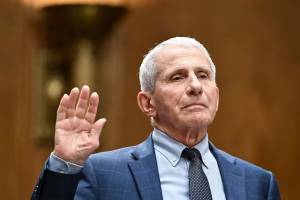
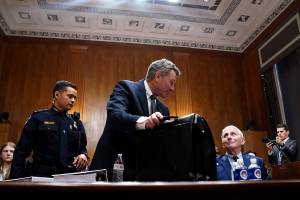
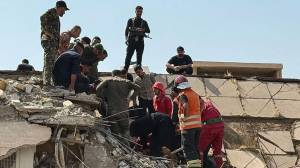

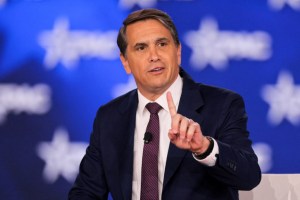









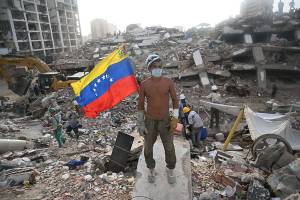
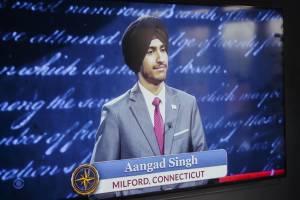
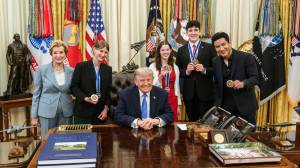
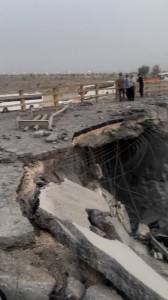
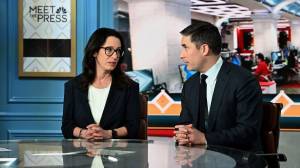
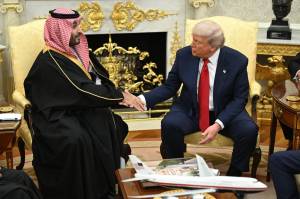
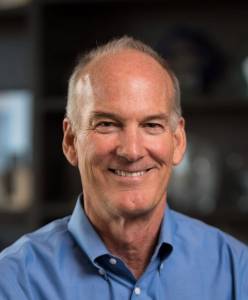










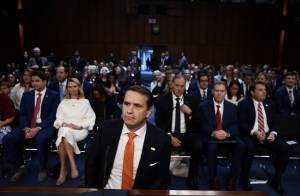

 peej
peej Carissa
 bostonboomer
 dakinikat
 ecocatwoman
 jjlo
jjlo mablue2
 Mama Lopez
 peggysue22
 quixote
 skydancingguestblogger
 Mona (aka Wonk the Vote)



 Sky Dancing
Recent Comments