Posted: March 18, 2026 | Author: bostonboomer | Filed under: just because | Tags: art thefts, Boston, crime, FBI, Geoffrey Kelly, Isabella Stuart Gardner Museum, The Gardner Heist 36th anniversary |
Good Afternoon!!
The news is all awful as usual and I’m not seeing very well because I had eye surgury yesterday, so I hope you’ll forgive me if I focus this post on a huge Boston crime story.
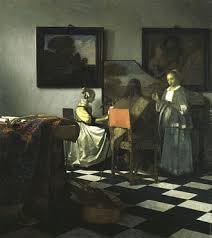
The Concert, Johannes Vermeer
Today is the 36the anniversary of the Gardner Museum heist, and there’s a new book out by a retired FBI agent who spent 22 years working on the case. If you’re not familiar with this story, here are the basics from Wikipedia:
In the early hours of March 18, 1990, 13 works of art were stolen from the Isabella Stewart Gardner Museum in Boston. Security guards admitted two men posing as policemen responding to a disturbance call, and the thieves bound the guards and looted the museum over the next hour. The case is unsolved; no arrests have been made, and no works have been recovered. The stolen works have been valued at hundreds of millions of dollars by the FBI and art dealers. The museum offers a $10 million reward for information leading to the art’s recovery, the largest bounty ever offered by a private institution.
The stolen works were originally procured by art collector Isabella Stewart Gardner (1840–1924) and were intended for permanent display at the museum with the rest of her collection. Among them was The Concert, one of only 34 known paintings by Johannes Vermeer and thought to be the most valuable unrecovered painting in the world. Also missing is The Storm on the Sea of Galilee, Rembrandt‘s only seascape. Other paintings and sketches by Rembrandt, Edgar Degas, Édouard Manet, and Govert Flinck were stolen, along with a relatively valueless eagle finial and Chinese gu. Experts were puzzled by the choice of artwork, as more valuable works were left untouched. As the collection and its layout are intended to be permanent, empty frames remain hanging both in homage to the missing works and as placeholders for their return.
The FBI believes that the robbery was planned by a criminal gang. The case lacks strong physical evidence, and the FBI has largely depended on interrogations, undercover informants and sting operations to collect information. It has focused primarily on the Boston Mafia, which was in the midst of an internal gang war during the period. One theory holds that gangster Bobby Donati organized the heist to negotiate for his caporegime‘s release from prison; Donati was murdered one year after the robbery. Other accounts suggest that the paintings were stolen by a gang in Boston’s Dorchester neighborhood, although these suspects deny involvement despite the fact that a sting operation resulted in several prison sentences. All have denied any knowledge or have provided leads that proved fruitless, despite the offer of reward money and reduced or canceled prison sentences if they had disclosed information leading to recovery of the artworks.
The latest heist news:
Shelley Murphy at The Boston Globe: A Rembrandt hidden in a chicken truck. An informant named Meatball. Retired FBI agent offers new intel on Gardner Museum heist.
Is it possible that Rembrandt’s only seascape, “Christ in the Storm on the Sea of Galilee,” stolen 36 years ago from the Isabella Stewart Gardner Museum in Boston, was delivered to mobsters in Philadelphia in a chicken truck?
That’s what an informant told the FBI, according to a recently published book by retired FBI agent Geoffrey Kelly, who spearheaded the investigation into the theft for 22 years until retiring two years ago.
The informant, Ronnie “Meatball” Bowes, had been convicted of killing three men in Florida in the 1980s during a drug deal gone bad, then was released after an appeals court ruled he acted in self-defense.
“he’d never been more nervous than he was during that long drive to Philly” as he and a Connecticut mob associate nicknamed “The Jackrabbit” rumbled down the highway in a poultry truck a decade earlier.
He was convinced that several cardboard boxes placed in the truck by a Connecticut mobster contained some of the stolen Gardner paintings. But he was too afraid to look.
“While Meatball never opened any of the packages, at the time he assumed that he’d just delivered The Storm to Philadelphia,” Kelly wrote in his book, “Thirteen Perfect Fugitives,” a reference to the 13 pieces stolen from the palatial museum.
The FBI announced more than a decade ago that it believed some of the stolen Gardner artwork went through organized crime circles while moving from Boston to Connecticut to Philadelphia, where the trail went cold.
But Kelly’s bookoffers new details about the evidence gathered by the FBI leading up to that announcement, part of afirst-hand account of the twists and turns in the sprawling investigation into the world’s largest art heist,which remains unsolved.
“It’s basically a scavenger hunt for 13 objects, and the whole world is in play,” Kelly, 58, said during a recent interview. He is now a partner at Argus Cultural Property Consultants.
The heist was carried out on March 18, 1990, when two thieves dressed as police officers were let inside by a guard at 1:24 a.m. after claiming to be investigating a disturbance. They tied up the two guards on duty and spent 81 minutes inside, slashing and pulling masterpieces from their frames….
I’m going to give you some more, because this story is behind a paywall.
In 2013, when the FBI said some of the stolen artwork had been routed to Philadelphia, investigators said they were confident they had identified the thieves — local criminals who had died by that point — but declined to name them.

Christ on the Sea of Gallilee, by Rembrandt van Rijn3
In 2013, when the FBI said some of the stolen artwork had been routed to Philadelphia, investigators said they were confident they had identified the thieves — local criminals who had died by that point — but declined to name them.
The “Philadelphia mob angle” remained “a viable line of investigation, right up until my retirement from the FBI,” Kelly wrote.
Kelly wrote that he believed Bowes, who died of cancer in 2015, offered a truthful account. During a 2012 meeting with agents, Bowes said Connecticut mobster Robert Gentile enlisted him and an associate to pick up the poultry truck, which wasparked near a barn in South Windsor, Conn., and drive it to a warehouse on the outskirts of Philadelphia.
Shortly before the trip, Bowes said Gentile, who owned anauto body shop in South Windsor, ushered him into one of the garage bays andpulled an oil painting of a ship on stormy seas out of a large, oblong cardboard box lying flat on a workbench.
Bowes told the FBI that Gentile lamented that such a priceless work of art could not be sold.
“Do you know what this thing’s worth? Nothing,” Bowes recalled Gentile saying. “This thing is worth nothing. Nobody wants it.” [….]
In his book, Kelly wrote that a key turning point in the investigation came in the fall of 2009, when the niece of the late Robert Guarente, a bank robber with mob ties, called the FBI after watching a news account of the Gardner theft. She said she had seen some of the stolen paintings hidden behind a second-floor wall in his farmhouse in Madison, Maine.
In early 2010, Kelly and Anthony Amore, the head of security at the Gardner museum since 2005, searched the farmhouse with the consent of Guarente’s widow, Elene. They found the hiding spot described by his niece, but there were no paintings. When they returned the key to the house to her, she told them that before Guarente’s death in 2004, he gave two of the stolen paintings to Gentile.
During a court-authorized search of Gentile’s home in Manchester, Conn., in 2012, agents found a list of the stolen artwork, with their black market values, tucked inside a March 1990 copy of the Boston Herald reporting the theft. They also found weapons, police hats, handcuffs, drugs, and explosives. And they discovered an empty Rubbermaid tub buried under the floorboards of a backyard shed.
Wow, what a story. I can’t wait to read the book. I wonder if those paintings will ever be found? I always assumed that some rich collectors had requested specific paintings that they wanted the thieves to steal.
Tom Mashberg at The New York Times (gift link): Got an Idea About Who Robbed the Gardner Museum? Get in Line.
It seems just about everyone has been fingered at one time or another as the perpetrator of the largest art theft in U.S. history: the 1990 robbery of the Isabella Stewart Gardner Museum in Boston. Two men dressed as police officers showed up at the door of the museum just after 1 a.m. on March 18 as the city rested after celebrating St. Patrick’s Day. They tied up the two guards on duty and walked off with 13 items, including masterpieces by Rembrandt and Vermeer.

Landscape with Obelisk by Govert Flinck
In the ensuing decades all kinds of theories were hatched about who was behind the theft. The Corsican mob. The Irish mob. Noted art thieves. Unknown petty criminals. People who worked in the building. The Irish Republican Army.
Geoffrey Kelly, the F.B.I. agent who handled the case for 22 years, heard all of them and investigated many of them. In his new book, “Thirteen Perfect Fugitives,” Kelly dismisses many of the theories and outlines who he really thinks committed the crime but could never be prosecuted.
Here are his thoughts on some of the theories and his view of what really went down.
Was it the Corsican mob?
One of the items taken from the museum was, oddly, a finial from a flagpole that had once flown the flag of the First Regiment of Napoleon’s Imperial Guard. Not a top-shelf masterpiece. But in 2006, French national police investigators told the F.B.I. that they had heard some rumblings that a Corsican crime group (Napoleon was Corsican) was looking to sell some items from the museum.
An F.B.I. agent who specialized in art crime went undercover, posing as an intermediary for a buyer who was supposedly interested in buying stolen art. The investigation, called “Operation Masterpiece,” included a sting operation on a yacht and other intrigue. It turned up some criminal behavior involving art. But Kelly says the Corsicans were bluffing. They had access to some stolen art, but nothing from the Gardner heist.
Maybe the paintings never left?
What if the stolen works were really right under investigators’ noses? Kelly writes about “The Paintings Never Left the Museum Theory.” It became a perennial. Many tipsters called in to suggest that, since the works had not shown up on the market, or anywhere else, it was possible that they had been secreted somewhere inside the building.
“Why didn’t we think of that?,” Kelly asks in the book. “Actually, we did.”
In the mid-1990s, the Gardner updated its HVAC system and as part of the renovations a team of commercial specialists crawled through every nook and cranny of the building as they installed new ductwork. They found dust but no paintings.
Or could it have been Whitey Bulger and the Irish mob? Use the gift link to read more if you’re interested.
There’s also an excerpt from Kelly’s book at Crime Reads: What It Means for an FBI Agent to Inherit the Gardner Museum Heist.
I’d first heard about the Gardner Museum robbery when I was a recent college graduate living in New York, probably a week or so after it occurred. I was at the American Museum of Natural History on the Upper West Side, gazing up at the giant blue whale suspended from the ceiling, when I overheard two elderly ladies discussing the details of a monumental art heist that had just occurred in Boston.
Heist. It’s one of those words that commands attention. Use it in a sentence in a crowded elevator, and someone will invariably listen in. Naturally, I couldn’t help but eavesdrop on their conversation and listened as one woman related to her friend a fabulous tale of fake police officers, outrageous subterfuge, and stolen treasures.

Chez Tortoni, by Eduoard Manet
And here it was, a dozen years later, and I just got the case.
Until the implementation of a computerized database system, which arrived a few years after the Gardner robbery, FBI files were in paper form. When a new case was opened and assigned to an agent, written as O+A, the very first document, known as a serial, would be two-hole-punched at the top and slipped into a cardboard jacket, skewered in place with two steel prongs. When the file became too fat to be safely secured with the bent-over prongs, Volume II commenced, although most cases rarely merited a second volume. Each squad had a set of file cabinets that held the hundreds of pending cases for that particular squad, and the whole lot was managed by file clerks known in Bureau parlance as rotors, named after the rotary file cabinets over which they governed. Newspeak eventually changed their job title to Operational Support Technician, or OST, but we still called them rotors.
Did you like this post? Please share it with your friends:
Posted: March 18, 2013 | Author: bostonboomer | Filed under: Crime | Tags: FBI, Isabella Stuart Gardner Museum, stolen artwork, the Gardner heist |

Photo of empty frame in the Garner Museum (thieves cut paintings from their frames)
There was exciting news in Boston today!
The Boston office of the FBI held a press conference to announce that they strongly believe they have identified the culprits who stole 13 paintings worth $500 million from the Isabella Stuart Gardner Museum 23 years ago today. The Boston Globe reports:
The officials also said they had determined where the artworks had traveled in the years after the robbery, which is considered the greatest art theft in history. But the officials said they did not know where they were now and were appealing to the public for their help in finding them.
“The FBI believes with a high degree of confidence in the years after the theft the art was transported to Connecticut and the Philadelphia region and some of the art was taken to Philadelphia where it was offered for sale by those responsible for the theft. With that confidence, we have identified the thieves, who are members of a criminal organization with a base in the mid-Atlantic states and New England,” Richard DesLauriers, special agent in charge of the Boston office of the FBI, said.
DesLauriers said that after the attempted sale of the paintings about a decade ago, the FBI did not know where the artworks — which included three Rembrandts, a Vermeer, a portrait by Edouard Manet, and sketches by Renoir — had been taken.
They refused to reveal the names of the culprits while the investigation is still ongoing. The FBI decided to hold the press conference on the anniversary of the art theft–the largest such heist in history–in order to ask for help from the public. They no longer know the location of the paintings and they hope that someone will come forward, as happened when they request help in finding Boston gangster Whitey Bulger.
According to the Hartford Courant, the FBI
disclosed new detail about their interest in Hartford mobster Robert Gentile….They…would not answer specific questions about Gentile, a 75-year-old gambler and confidence man long associated with the rackets in Hartford. The officials said that, to discuss Gentile or other suspects, could jeopardize the continuing investigation.
But since 2010, Gentile has been questioned repeated about his membership in the Boston branch of a Philadelphia-based criminal organization, as well as leads that place at least some of the stolen paintings in Connecticut and the Philadelphia area.
DesLauriers said he doesn’t know what happened to the art after it was transported to Philadelphia.
The FBI, Boston’s U.S. Attorney and the museum’s security chief released surprising detail at a Boston press conference followed around the world about what for years had been a largely fruitless investigation. The officials were looking for a jolt of publicity to generate new leads in Connecticut and Pennsylvania. The officials also referred repeatedly to a $5 million reward for information leading to the recovery of the art….
Although the officials refused to discuss Gentile by name, the information the FBI released about who robbed the museum and how the stolen art was moved years later corresponds closely with their theories about Gentile’s involvement in the crime. The officials also said, without explaining why, that the investigation has been particularly active since 2010, which is when they first questioned Gentile.
Gentile is currently in jail for selling prescription painkillers. After his arrest, his home was searched, but no stolen paintings were found–just lots of drugs, money, and weapons.

Rembrandt’s “Storm on the Sea of Galilee,” stolen from the Gardner Museum
Here’s some background on the Gardner Heist and the long investigation from a 2005 article in The Boston Globe.
As they struggled to remove a heavy-framed Rembrandt from the silk-draped wall of the Isabella Stewart Gardner Museum, the two thieves abruptly stopped as a high-pitched alarm beeped from the baseboard.
They must have been startled.
But not for long. Intended to alert guards when museum visitors ventured too close to the art, the alarm was quickly hunted down by the men. They smashed it silent and went back to work on what remains, 15 years after that misty March night in 1990, the biggest art heist in history.
The warning beeper proved to be the only part of the museum’s security system that deterred the men at all. They would spend 81 minutes moving through the darkened galleries of the Italianate mansion Mrs. Jack Gardner built at the turn of the century to house her private art collection and share it with the public; they could have stayed all night.
The men got into the museum by dressing as Boston police officers and convincing the guard on duty, Richard Abath, to let them in because they had been called about a disturbance. They then tied up Abath and another security guard and handcuffed them in the basement.
Once inside, the thieves ripped a Vermeer, three Rembrandts — including his only seascape — five Degas drawings, and a Manet from their wall placements, smashing them out of their frames and leaving shards of glass and remnants of canvas behind. The thieves took some of the museum’s greatest treasures but left behind some even more valuable objects.
When they were done for the night, they made two trips to their car with the loot. Then they vanished.
Where the paintings were, empty frames now fill the museum’s walls.

Richard Abath in 2013
Abath was 23, a student at the Berklee School of Music and a rock musician who worked nights as a security guard at the museum. He wasn’t a suspect at first–he even passed two polygraph tests, but today he’s being looked at as a possible accessory to the crime.
For years, investigators discounted the hapless Abath’s role in the unsolved crime, figuring his excessive drinking and pot smoking contributed to his disastrous decision to let in the robbers, who were dressed as police officers. Even if the duo had been real cops, watchmen weren’t supposed to admit anyone who showed up uninvited at 1:24 a.m.
But, after 23 years of pursuing dead ends, including a disappointing search of an alleged mobster’s home last year, investigators are focusing on intriguing evidence that suggests the former night watchman might have been in on the crime all along — or at least knows more about it than he has admitted.
Why, they ask, were Abath’s footsteps the only ones picked up on motion detectors in a first floor gallery where one of the stolen paintings, by French impressionist Edouard Manet, was taken? And why did he open the side entrance to the museum minutes before the robbers rang the buzzer to get in? Was he signaling to them that he was prepared for the robbery to begin?
No one publicly calls Abath a suspect, but federal prosecutors grilled him on these issues last fall. And one former prosecutor in the case has written a recently published novel about the Gardner heist in which the night watchman let the thieves into the museum to pay off a large cocaine debt.
It would be incredible if the paintings could be recovered! It would far more thrilling than finding Whitey Bulger. The statute of limitations on the theft has already run out, and anyone who came forward would likely be given immunity for revealing the location(s) of the artwork. According to the Boston Herald,
The FBI stressed that anyone with information about the artwork may contact the FBI at 1-800-CALL FBI (1-800-225-5324) or the museum directly or through a third party, said Special Agent Geoffrey Kelly, who is the lead investigator for the theft and a member of the art crime team, “In the past, people who realize they are in possession of stolen art have returned the art in a variety of ways, including through third parties, attorneys and anonymously leaving items in churches or at police stations.” Tips may also be submitted online athttps://tips.fbi.gov.
The publicity campaign announced today includes a dedicated FBI website on the Gardner Museum theft, video postings on FBI social media sites, publicity on digital billboards in Philadelphia region, and a podcast. To view and listen to these items, link to the FBI’s new website about the theft: www.FBI.gov/gardner.
Below are photos of some of the missing paintings. See more at Time Magazine.
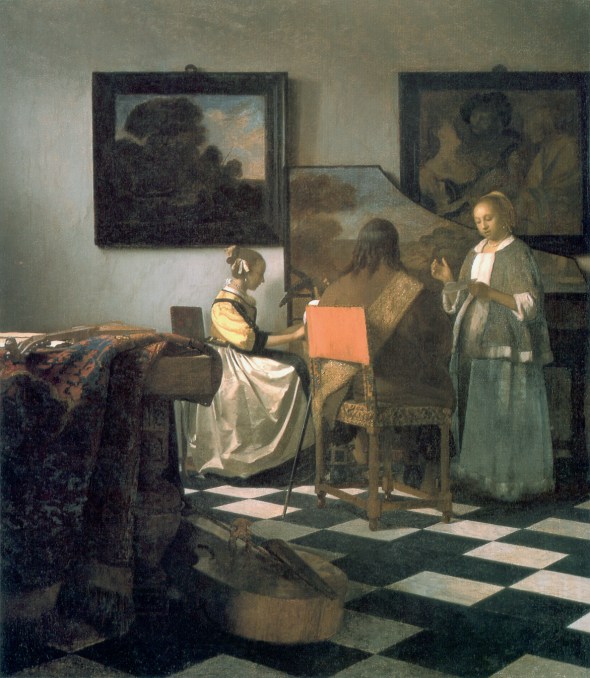
Vermeer, “The Concert”

Degas, “La Sortie de Pesage”
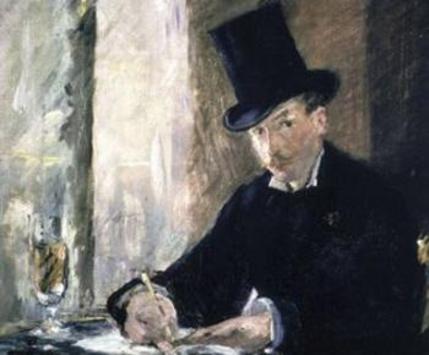
Manet, “Chez Tortoni”
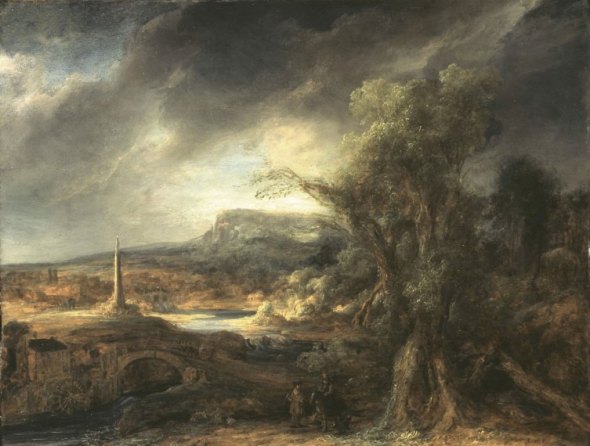
Govaert Flinck, “Landscape with Obelisk”
Did you like this post? Please share it with your friends:


 peej
peej Carissa
 bostonboomer
 dakinikat
 ecocatwoman
 jjlo
jjlo mablue2
 Mama Lopez
 peggysue22
 quixote
 skydancingguestblogger
 Mona (aka Wonk the Vote)



 Sky Dancing
Recent Comments