Posted: May 24, 2014 | Author: bostonboomer | Filed under: Gun Control, income inequality, morning reads, racism, The Bonus Class, U.S. Economy, U.S. Politics | Tags: Chris Giles, Donald Sterling, economic theory, Financial Times., guns, inequality, Kevin Drum, LA Clippers, mass murder, mass shootings, NBA, offshore tax havens, open carry laws, Paul Krugman, Reinhart and Rogoff, Shelly Sterling, Ta-Nehisi Coates, The Case for Reparations, The Economist, Thomas Picketty, wealth distribution, wealth vs. income |

Thomas Picketty
Have a Stupendous Saturday!
It’s too bad Dakinikat is so busy today, because there’s an economics food fight brewing. Perhaps she’ll still find time to comment on the controversy later the evening after she returns home with her newly adopted canine family member, Temple. Meanwhile, I’ll do my best to describe the dispute over Thomas Picketty’s conclusions about wealth inequality, published in his book Capital in the Twenty-first Century.
The Accusations:
At the Financial Times, Economics Editor Chris Giles has claims to have found problems with Picketty’s work: Piketty findings undercut by errors.
Thomas Piketty’s book, ‘Capital in the Twenty-First Century’, has been the publishing sensation of the year. Its thesis of rising inequality tapped into the zeitgeist and electrified the post-financial crisis public policy debate.
But, according to a Financial Times investigation, the rock-star French economist appears to have got his sums wrong.
The data underpinning Professor Piketty’s 577-page tome, which has dominated best-seller lists in recent weeks, contain a series of errors that skew his findings. The FT found mistakes and unexplained entries in his spreadsheets, similar to those which last year undermined the work on public debt and growth of Carmen Reinhart and Kenneth Rogoff.
The central theme of Prof Piketty’s work is that wealth inequalities are heading back up to levels last seen before the first world war. The investigation undercuts this claim, indicating there is little evidence in Prof Piketty’s original sources to bear out the thesis that an increasing share of total wealth is held by the richest few.
Prof Piketty, 43, provides detailed sourcing for his estimates of wealth inequality in Europe and the US over the past 200 years. In his spreadsheets, however, there are transcription errors from the original sources and incorrect formulas. It also appears that some of the data are cherry-picked or constructed without an original source.
John Maynard Keynes
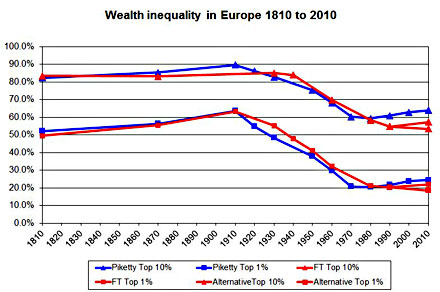
In one specific example, Giles says the corrected data do not show significant growth in Europe since 1970. In a second article, Giles goes into more detail. In addition, he argues that the U.S. data doesn’t support the conclusion that a greater proportion of the wealth is controlled by top 1% than in recent decades. He does admit to the top 10% controlling a greater share of wealth than previously.
An investigation by the Financial Times, however, has revealed many unexplained data entries and errors in the figures underlying some of the book’s key charts.
These are sufficiently serious to undermine Prof Piketty’s claim that the share of wealth owned by the richest in society has been rising and “the reason why wealth today is not as unequally distributed as in the past is simply that not enough time has passed since 1945”.
After referring back to the original data sources, the investigation found numerous mistakes in Prof Piketty’s work: simple fat-finger errors of transcription; suboptimal averaging techniques; multiple unexplained adjustments to the numbers; data entries with no sourcing, unexplained use of different time periods and inconsistent uses of source data….
A second class of problems relates to unexplained alterations of the original source data. Prof Piketty adjusts his own French data on wealth inequality at death to obtain inequality among the living. However, he used a larger adjustment scale for 1910 than for all the other years, without explaining why.
In the UK data, instead of using his source for the wealth of the top 10 per cent population during the 19th century, Prof Piketty inexplicably adds 26 percentage points to the wealth share of the top 1 per cent for 1870 and 28 percentage points for 1810.
A third problem is that when averaging different countries to estimate wealth in Europe, Prof Piketty gives the same weight to Sweden as to France and the UK – even though it only has one-seventh of the population.
Get even more detail and charts here: Data problems with Capital in the 21st Century.
Karl Marx
The Pushback So Far:
Paul Krugman: Is Piketty All Wrong?
Great buzz in the blogosphere over Chris Giles’s attack on Thomas Piketty’s Capital in the 21st Century. Giles finds a few clear errors, although they don’t seem to matter much; more important, he questions some of the assumptions and imputations Piketty uses to deal with gaps in the data and the way he switches sources. Neil Irwin and Justin Wolfers have good discussions of the complaints; Piketty will have to answer these questions in detail, and we’ll see how well he does it.
Krugman suggests that Giles may be doing something wrong.
I don’t know the European evidence too well, but the notion of stable wealth concentration in the United States is at odds with many sources of evidence. Take, for example, the landmark CBO study on the distribution of income; it shows the distribution of income by type, and capital income has become much more concentrated over time:
It’s just not plausible that this increase in the concentration of income from capital doesn’t reflect a more or less comparable increase in the concentration of capital itself….
And there’s also the economic story. In the United States, income inequality has soared since 1980 by any measure you use. Unless the affluent starting saving less than the working class, this rise in income disparity must have led to a rise in wealth disparity over time.
At Mother Jones, Kevin Drum notes that
Giles’ objections are mostly to the data regarding increases in wealth inequality over the past few decades, and the funny thing is that even Piketty never claims that this has changed dramatically. The end result of Giles’ re-analysis of Piketty’s data is [below] with Piketty in blue and Giles in red. As you can see, Piketty estimates a very small increase since 1970.
R.A. at The Economist: A Piketty problem?

Milton Friedman
Mr Giles’s analysis is impressive, and one certainly hopes that further work by Mr Giles, Mr Piketty or others will clarify whether mistakes have been made, how they came to be introduced and what their effects are. Based on the information Mr Giles has provided so far, however, the analysis does not seem to support many of the allegations made by the FT, or the conclusion that the book’s argument is wrong.
There are four important questions raised by the FT‘s work. First, which data are wrong? Second, how did errors in the work, if they are errors, come to be introduced? Third, how do the errors affect the specific points made in the relevant chapters? And fourth, how do the errors affect the fundamental conclusions of the book?
Mr Giles focuses on wealth inequality, to which Mr Piketty turns in Chapter 10 of his book. Mr Piketty has not published nearly as much research on the question of wealth inequality, and it seems that much of the analysis in Chapter 10 was done specifically for the book, based on others’ research. Mr Piketty’s wealth-inequality analysis certainly matters as a component of the book’s argument, but it is not accurate to say, as Mr Giles does, that the results in Chapter 10 constitute the “central theme” of the book.
Are the data wrong? Mr Giles identifies discrepancies between source material cited by Mr Piketty and the figures that appear in the book. He identifies cases in which Mr Piketty appears to have chosen to use data from one source when another would have made more sense. Further, the calculations in Mr Piketty’s spreadsheets (which have been available online since the book’s publication) seem to include adjustments in the data that are not adequately explained, and some figures for which Mr Giles cannot find a documented source. Finally, Mr Piketty has made choices concerning weighting of data used in averages, and assigning of data from one year (1935, for example) to another (1930) when such assignments seem unnecessary or inadvisable.

Alan Greenspan
The author concludes that, unfortunately, ideology will determine how many people respond to the Giles critique. Much more extensive analysis at the link.
Here is Picketty’s–presumably preliminary–response to Giles in a letter to the Financial Times:
Let me also say that I certainly agree that available data sources on wealth are much less systematic than for income. In fact, one of the main reasons why I am in favor of wealth taxation and automatic exchange of bank information is that this would be a way to develop more financial transparency and more reliable sources of information on wealth dynamics (even if the tax was charged at very low rates, which you might agree with).
For the time being, we have to do with what we have, that is, a very diverse and heterogeneous set of data sources on wealth: historical inheritance declarations and estate tax statistics, scarce property and wealth tax data, and household surveys with self-reported data on wealth (with typically a lot of under-reporting at the top). As I make clear in the book, in the on-line appendix, and in the many technical papers I have published on this topic, one needs to make a number of adjustments to the raw data sources so as to make them more homogenous over time and across countries. I have tried in the context of this book to make the most justified choices and arbitrages about data sources and adjustments. I have no doubt that my historical data series can be improved and will be improved in the future (this is why I put everything on line). In fact, the “World Top Incomes Database” (WTID) is set to become a “World Wealth and Income Database” in the coming years, and we will put on-line updated estimates covering more countries. But I would be very surprised if any of the substantive conclusion about the long run evolution of wealth distributions was much affected by these improvements.
I thought this was important:
…my estimates on wealth concentration do not fully take into account offshore wealth, and are likely to err on the low side. I am certainly not trying to make the picture look darker than it it. As I make clear in chapter 12 of my book (see in particular table 12.1-12.2), top wealth holders have apparently been rising a lot faster average wealth in recent decades, at least according to the wealth rankings published in magazines such as Forbes. This is true not only in the US, but also in Britain and at the global level (see attached table). This is not well taken into account by wealth surveys and official statistics, including the recent statistics that were published for Britain. Of course, as I make clear in my book, wealth rankings published by magazines are far from being a perfectly reliable data source. But for the time being, this is what we have, and what we have suggests that the concentration of wealth at the top is rising pretty much everywhere.
In Other News:
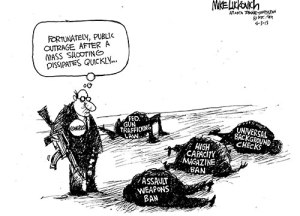
There has been a mass shooting in Southern California–this time perpetrated from behind the wheel of a car. From the LA Times, 7 dead in drive-by shooting near UC Santa Barbara.
The shootings began about 9:30 p.m., a sheriff’s spokeswoman told KEYT-TV. It wasn’t clear what the attacker’s motivation might have been.
An 18-year-old Newport Beach man who was visiting Santa Barbara described a confusing scene as the shots rang out.
Nikolaus Becker was eating outside The Habit, 888 Embarcadero Del Norte, near the scene when the first set of shots was fired about 9:30 p.m. At first he thought it was firecrackers. A group of three to five police officers who were nearby started to casually walk toward the sounds, said Becker, but ran when a second round of shots broke out.
“That’s when they yelled at us to get inside and take cover,” Becker said.
The BMW took a sharp turn in front of The Habit, Becker said, and moments later a third round of shots was heard. Becker and his friends moved toward the restaurant’s kitchen but were told to wait in the seating area by employees.
He estimates there were at least 13 to 15 shots total at three locations. The locations were about 100 yards from one another.
The shooter, whose motivation is unknown, was found dead in his BMW. It’s not yet clear if he shot himself or was killed by sheriff’s deputies.
In another gun-related story, TPM reports that some gun nuts are reconsidering their campaign of carrying long guns into public places: Scaring The Crap Out of People Oddly Not Winning Fans.
Earlier this week we reported how Chipotle felt obliged to ask its customers not to bring guns to chipotle restaurants. Seems like a reasonably enough request to most of us. And it’s been preceded by similar requests by various other chains like Starbucks and others.
Now the top pro-gun group in Texas pushing the demand for “open carry” firearm rights and trying to get people to show up at various restaurant chains with long guns is deciding it may not be such a hot idea after all.
Open Carry Texas and a group of other aggressive gun rights groups have issued a joint statement telling their members, Dudes, let’s stop taking our guns to restaurants. It’s freaking people out and making them hate us.
Read the full statement at TPM.
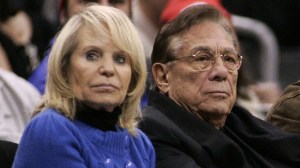
Soon-to-be former LA Clippers owner Donald Sterling has signed over the team to his wife and wants her to negotiate the sale.
Shelly Sterling, who previously shared ownership of the beleaguered NBA franchise with her estranged husband, is now in talks with the NBA over selling the team, the source said.
The NBA banned Donald Sterling for life from all league events after an audio tape became public that caught him on tape uttering racist comments to his assistant V. Stiviano. He told her not to post photos of herself with black people on Instagram — such as Magic Johnson — or bring them to his basketball games.
But the NBA isn’t buying it. From ESPN: Why the NBA won’t allow Shelly Sterling to control the Clippers.
At first glance, Donald Sterling’s gesture may seem like serendipitous news for the NBA. Taking him at his word, Donald Sterling has agreed to leave the league without a fight and has signed off on the sale of his team. Digging deeper, however, reveals possible ulterior motives on Sterling’s part to delay and potentially block the sale of the team. Do not forget a crucial point: capital gain taxes. As first reported by SI.com, the Sterlings have significant incentives under capital gain tax law to avoid the sale of the team and keep it in the Sterling family. Doing so, would save them hundreds of millions of dollars. Also, contrary to some reports, the Sterlings are unlikely to benefit from the “involuntary conversion” tax avoidance provision of the Internal Revenue Code. The bottom line is if the Sterlings have to sell the Clippers, they will probably pay hundreds of millions in state and federal taxes.
Along those lines, Donald Sterling’s proposed maneuver does not accomplish the NBA’s goal of ousting the entire Sterling family on June 3. As explained in a previous SI.com article, the NBA interprets its constitution to mean that ousting Donald Sterling on June 3 would also automatically oust Shelly Sterling as co-owner, with the Clippers then falling under the control of commissioner Adam Silver. Donald Sterling’s proposed maneuver risks the prospect of Shelly Sterling undertaking a slow-moving effort to sell the team. A sale process that takes months or years would clearly aggravate the NBA, which wants to erase the Sterling family name from the league as quickly as possible. A protracted sale of the Clippers by Shelly Sterling might also constitute a potential rationale for players to boycott NBA games.
Even of greater risk to the NBA, what is to stop Shelly Sterling from deciding to keep the Clippers? She could plausibly reason, on various grounds, that now is not the right time to sell the team. Also, her instruction from her husband to sell the team would not be legally binding; it would be a mere suggestion the moment she takes over the team.
Read much more at the link.
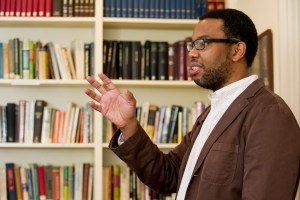
Ta-Nehisi Coates
I’ll end with a long article that I haven’t gotten to yet, but I’m hearing it’s a must read: The Case for Reparations, by Ta-Nehisi Coates at The Atlantic. Here’s the tagline:
“Two hundred fifty years of slavery. Ninety years of Jim Crow. Sixty years of separate but equal. Thirty-five years of racist housing policy. Until we reckon with our compounding moral debts, America will never be whole.”
Some reactions:
The Guardian: The ‘Case for Reparations’ is solid, and it’s long past time to make them.
Slate: An Ingenious and Powerful Case for Reparations.
The Wire: You Should Read “The Case for Reparations.”
NPR: How To Tell Who Hasn’t Read The New ‘Atlantic’ Cover Story.
WaPo: Culture change and Ta-Nehisi Coates’s ‘The Case For Reparations’.
What else is happening? As always, please post your links in the comment thread.
Did you like this post? Please share it with your friends:
Posted: May 23, 2014 | Author: dakinikat | Filed under: morning reads | Tags: racist owners of sports teams, the party of stupid |

Good Morning!
I’ve got some stories that I find very confusing. Perhaps you could explain these to me?
Why are House Republicans slashing food aid to children in Urban areas while maintaining the aid to children in rural areas? Any one?
In a new draft of the House GOP Agriculture bill, Republicans have sought to save money by slashing summertime food aid to inner city children while continuing to assist children living in rural poverty.
Talking Points Memo pointed to a passage in a Politico piece about the bill that said, “(I)n a surprising twist, the bill language specifies that only rural areas are to benefit in the future from funding requested by the administration this year” in “a modest summer demonstration program to help children from low-income households — both urban and rural — during those months when school meals are not available.”
The program operates on a modest — by federal government standards — budget of $85 million per year. The White House asked for an additional $30 million to continue the effort to reach nutritionally vulnerable children.
The House replied by declining to fund the White House program, but offering $27 million for a pilot program intended to provide nutritional assistance to the children of the rural poor.
Aren’t all hungry American children deserving of food?
Since the NBA moved to get rid of racist owner Donald Sterling completely, why can’t the NFL get Daniel Snyder to drop the racist “Redskins” team name?
Fifty members of the Senate have signed a letter to the N.F.L. to urge its leadership to press the Washington Redskins to change the team name in the aftermath of tough sanctions against the owner of the Los Angeles Clippers for racially charged comments.
The position embraced by half of the Senate, and the willingness of the lawmakers to sign a formal request to Commissioner Roger Goodell, escalated the fight over the name and represented an effort to put increasing pressure on the league, which receives a federal tax break, and the ownership of the team.
“The N.F.L. can no longer ignore this and perpetuate the use of this name as anything but what it is: a racial slur,” said the letter, which was circulated by Senator Maria Cantwell, Democrat of Washington, and endorsed by Senator Harry Reid, Democrat of Nevada, the majority leader. “We urge the N.F.L. to formally support a name change for the Washington football team.”
Cantwell said that “we are going to find out if the N.F.L. can act against this kind of discrimination as quickly as the N.B.A. did.” She said she considered the Senate letter an important milestone.
“Listen, it is hard to get 50 people in this place to agree on anything,” she said.
Reid has made the push for the name change a top interest. He said in an interview that he could not understand the league’s resisting the senators on the name change given other pressing disputes it was navigating, including head injuries and the health of former players.
“I have 22 tribal organizations in Nevada,” Reid said. “They are not mascots. They are human beings. And this term Redskins is offensive to them.”
All but five Senate Democrats — Mark Warner and Tim Kaine of Virginia, Joe Manchin of West Virginia, Joe Donnelly of Indiana and Mark Pryor of Arkansas — signed the letter.
 How can we continue to fund the war machine while turning our back on the men and women who fought our wars? Can we please arrange to get money to our injured, homeless, and jobless veterans?
Hundreds of veterans with traumatic brain injuries will get kicked out of assisted living facilities this fall unless policymakers in Washington soon extend an expiring pilot program.
Lawmakers are in an uproar over reports that dozens of veterans may have died because of obstacles to obtaining medical treatment at Veterans Affairs (VA) hospitals, but Congress may contribute to the problem by failing to act on pending legislation.
The VA has notified Congress that a pilot program for injured veterans will expire at the end of September without congressional action.
A Senate bill that included language to extend the program stalled on the floor earlier this year because of a fight over how to pay for it. The House Veterans’ Affairs panel plans to hold a hearing on two measures to reauthorize the popular program, but time on the legislative calendar is running out.
Theresa Bozeman, a nurse living in Louisiana, said she is worried about who will take care of her husband, Todd, an Army National Guard sergeant who suffered a severe brain injury from a gunshot wound in July 2012.
Bozeman said that “it would be a tremendous stress” if the assisted-living program lapsed.
“This program has been a blessing to have somewhere for him to live and to have quality of life. He is very impulsive and requires one-on-one supervision 24/7. If the program goes away and I have to care from him at home, I don’t know how I would handle it,” she said.
Todd Bozeman joined the military in 1991 and began showing symptoms of post-traumatic stress disorder after witnessing the ravages of Hurricane Katrina and serving a year in Iraq. He shot himself two years ago after seeking help for suicidal thoughts.
He now lives in a house with five other men with traumatic brain injuries under the supervision of a handful of professionals, including a registered nurse and a licensed practical nurse, Theresa Bozeman said.
The arrangement allows him to socialize with people close to his age and have a lifestyle that somewhat resembles what he knew before his injury.
“He likes to be busy and doing something. It’s a big adjustment for him,” she said, adding that her husband still talks about having flashbacks to his military career.
Unlike so many other issues in the nation’s capital, partisanship isn’t an obstacle. Both conservatives and liberals want the program to continue.
Reps. Bill Cassidy (R-La.), who is running for Senate against Sen. Mary Landrieu (D-La.), and Paul Broun (R), who just lost a Senate bid in Georgia, have introduced legislation to extend the program. The House Veterans’ Affairs Committee plans to hold hearings on their legislation this summer, according to GOP aides.
“Folks in Louisiana are worried that they won’t be able to continue receiving services if the program is not extended,” Cassidy said. “It makes sense to extend a successful program that allows a veteran suffering from traumatic brain injury to live at home instead of an institution.”
“If we can get something passed this summer, there will be more pressure on the Senate to act,” said a House GOP aide.
A bipartisan veterans bill that stalled on the Senate floor earlier this year included a provision extending the assisted living program.
Senate Veterans Affairs Committee Chairman Bernie Sanders (I-Vt.) and Sen. Richard Burr (N.C.), the panel’s ranking Republican, have tried to revive it but few bills have passed this year in the bitterly divided upper chamber. It’s uncertain whether Senate Majority Leader Harry Reid (D-Nev.) will attempt to move it again.
Advocates for extending the program say the VA has enough authority to do so on its own. However, the department recently informed lawmakers in an email that Congress must act. The email, provided to The Hill, says it would take up to six months to “carry out individual transition plans for each Veteran currently enrolled in the pilot.”
 Exactly how many more Chris Christie scandals are out there waiting in the wings and when will some one in New Jersey move to impeach him?
New Jersey Republican Gov. Chris Christie has turned his state’s multi-billion dollar pension fund into a giant political extortion racket, where top employees at 43 different investment firms were given contracts to manage $14 billion in retirement accounts after giving $11.6 million to Republican Party operations that helped elect Christie governor and fueled his rise as chairman of the Republican Governors Association.
This massive “pay-to-play” scheme is illegal under state and federal anti-corruption laws, but those hurdles did not deter Christie and the Republicans from raising the campaign funds and subsequently doling out the lucrative contracts, a two-month investigation tracing this political money train by Pando Daily’s David Sirota has found.
Christie’s staff refused to comment for the report published Thursday, which included a detailed spreadsheet naming the donors and recipients. The reporting is a showcase of corruption, impotent campaign finance law, ignored ethical standards and underscores how little it actually costs wealthly interests to buy influence and wrest profits.
The $11.6 million in donations, which date back to Christie’s first gubernational election in 2009, led to $14 billion in public funds to manage—an investment of little more than a penny for every dollar in pension assets turned over to privatized managers.
During this same period, top employees of these investment houses also gave more than $200,000 in political donations to New Jersey Democrats—underscoring that influence-buying is about profits and cultivating power more than partisanship. However, most of the more than $11 million donated went to Republican groups that, in the shell game that is modern political money laundering, spent it to elect Christie as New Jersey governor, greased his rise as RGA chairman, and bet on his likely presidential candidacy in 2016.
The GOP donors who received Christie administration contracts were from Goldman Sachs, Blackstone, Credit Suisse, JP Morgan, Guggenheim Partners, Gleacher, Lubert Alder, General Catalyst, State Street, Elliot Associates, Parella Weinberg, Third Point, Lazard Asset Management, and others. New Jersey campaign finance law bars state officials from giving contracts to firms where employees have made contributions to campaigns for governor and state legislature. The federal Securities and Exchange Commission also has anti-circumvention rules to stop “pay-to-play” schemes.
How much more anti-thinking and anti-science can the GOP get and still be taking seriously by anyone?
In the months following the 2012 election, Louisiana Gov. Bobby Jindal tried to position himself as the responsible, forward-looking Republican who could embody the GOP’s vision for the future. “We’ve got to stop being the stupid party,” Jindal said in January 2013, arguing that Republicans “need to change just about everything else we are doing.” The party heard Jindal’s reprimand and basically said, “Ehhhhh, no we’d rather be stupid for a little longer,” so Jindal caved and rejoined the ranks of the imbecilic.
No longer content to simply live among the stupid, Jindal now wants to be their leader against the forces of smart. Writing for FoxNews.com this week, Jindal chastised the growing number of clear-eyed political observers who see little chance of repealing the Affordable Care Act. Of particular note was his attack on the quote-unquote “thinkers” in his own party who he says are too quick to give up the repeal crusade:
But even many conservative “thinkers” in Washington have given in to ObamaCare fatalism. They may not say so in public, but they fully believe that talk of the law’s repeal exists only in the land of unsophisticated rubes.
The country that won two world wars and put a man on the moon cannot, it is believed, repeal a disastrous public policy. Says who? Why not?
There you have it. Bobby Jindal, who once exhorted his party not to be stupid, is now attacking conservatives who “think.”
No, really? How long can you remain a viable political party in a huge democracy and spout shit like this?
By making climate change a matter of what he “believes” or “agrees with,” Rubio was implying that climate change is a matter of opinion and not of evidence or fact. There’s the old saying, “Everyone is entitled to his own opinion, but not his own facts.” Conservatives have figured out a workaround: redefine the facts as opinions, and by golly, now you get to have your own facts!
James Taranto of the Wall Street Journal was even more blunt in asserting that scientific findings should be regarded as more opinion than fact in his defense of Rubio, portraying Rubio as a rebel “for refusing to submit to scientific authority.” In a sleight of hand, Taranto portrayed the debate as one of scientists simply asserting, from authority, and Rubio as just someone disagreeing. But Rubio isn’t disagreeing with the opinions of scientists; he’s disagreeing with the conclusions derived from the evidence. Even if all the climate change scientists died tomorrow, the planet would still be heating up. This isn’t a matter of one person’s opinion versus another. It’s a man being presented with facts and refusing to believe them.
But it was Rubio’s followup to this debacle that made it clear this isn’t just about those bought off by oil and gas lying to protect lobbyist interests. This has become broader than that, and is now a full-blown attempt to degrade the word “science” until it doesn’t mean anything at all. When pressed on the issue of his climate change denialism, he tried to punt by saying, “All these people always wag their finger at me about science and settled science,” he whined, as if accepting that the sky is blue is too oppressive if you prefer to believe it’s yellow. “Let me give you a bit of settled science that they’ll never admit to. The science is settled, it’s not even a consensus, it is a unanimity, that human life begins at conception.”
Well, no. That is yet another example of conflating Marco Rubio’s opinion with what he wishes “science” said. The claim that “human life” begins at conception is not one asserted by science, but by religion, as many religions believe that’s when God injects a soul into a human body. But science is pretty clear that, by the scientific and not religious definition of “life,” life does not begin with conception. In order for life to begin, it has to be non-life turning into life. Since both the sperm and egg are alive, by the measure of science, it’s not life beginning. It’s really just life continuing.
As biologist P.Z. Myers explains, “We can trace that life all the way back to early progenotes with limited autonomy drifting in Archean seas, to self-perpetuating chemical reactions occurring in porous rocks in the deep ocean rifts. It’s all been alive, so this is a distinction without meaning.”
Is it just me or is just every interaction with media content just one face palm after another?
So, what’s on your reading and blogging list today?
Did you like this post? Please share it with your friends:
Posted: May 22, 2014 | Author: bostonboomer | Filed under: morning reads | Tags: Cincinnatus, cyber-parties, discrimination, Edward Snowden, encryption extremists, George Packer, Glenn Greenwald, hackers, Jacob Applebaum, Julian Assange, Kevin Poulsen, Laura Poitras, NSA, Poverty, privacy extremists, Racism, Runa Sandvik, Sexism, The Tor Project, unemployment, Wikileaks |

Good Morning!!
The photos in today’s post are from a project by photographer Mark Makela to take pictures of children “learning to read by reading to homeless cats.”
Last February, photographer Mark Makela traveled to Birdsboro, Pennsylvania, to photograph a reading group where the participants were grade-school students and a group of cats. The idea for the group, known as Book Buddies, was hatched at the Animal Rescue League of Berks County when the program coordinator Kristi Rodriguez’s 10-year-old son was struggling with reading. Rodriguez decided to bring him into the shelter, where he could be in what she called a “nonevaluative” environment in order to feel more comfortable practicing his reading skills. It worked.
According to ARL’s website, studies at Tufts University found that the more relaxed, nonjudgmental audience of cats helps students to sustain their focus, maintain a higher state of awareness, and develop an improved attitude toward school. In August of last year, ARL officially started the Book Buddies program, inviting students in first through eighth grades to read to the cats. As an incentive to continue, once the students complete five books, they receive prizes. “It’s one of those opportunities that is unique and humorous and so endearing,” Makela said about the assignment to document the Book Buddies program.
See more marvelous photos at the Slate Magazine link above. Even more at Buzzfeed–including more girls.
Now to the news:
I’ve long suspected that Edward Snowden interacted with Wikileaks’ Julian Assange and others in the hacker community before he made his final decision to steal a massive trove of data from NSA computers and then abscond to Hong Kong at the end of May last year.
We know that Snowden was in touch with Jacob Applebaum and Laura Poitras early on, because they published an interview with him in Der Spiegel that they had conducted by e-mail in Mid-May, before Snowden fled Hawaii. But Snowden could have actually met Applebaum in Hawaii in April 2013 when Applebaum vacationed there by his own admission. Did Snowden and Applebaum discuss Snowden’s plans to steal NSA files? Did Applebaum suggest which items Snowden should take? Note that Applebaum is deeply involved with Wikileaks and has been a long-time, passionate defender of Julian Assange.
Glenn Greenwald revealed in his new book “No Place to Hide” that Snowden had used the code name “Cincinnatus” in early communications between the two. Interestingly enough, a “cyber-party” had been held in Hawaii in December 2012, and the host was someone who called himself “Cincinnatus.” Once this news came out, people began speculating on Twitter that perhaps this wasn’t a coincidence. Suddenly, on May 17, the cyber-party announcement was deleted by someone with the Twitter handle @jskuda. Fortunately Twitter user @ShrillBrigade located it on the Wayback Machine. And check out the title of Cincinnatus’ talk: “Painlessly setting up your own fast exit.” (h/t @catfitz)
Then yesterday, former criminal hacker and technical adviser to Greenwald and Poitras’ Freedom of the Press Foundation Kevin Poulsen published a limited hangout at Wired: Snowden’s First Move Against the NSA Was a Party in Hawaii.
It was December 11, 2012, and in a small art space behind a furniture store in Honolulu, NSA contractor Edward Snowden was working to subvert the machinery of global surveillance.
Snowden was not yet famous. His blockbuster leaks were still six months away, but the man destined to confront world leaders on a global stage was addressing a much smaller audience that Sunday evening. He was leading a local “Crypto Party,” teaching less than two dozen Hawaii residents how to encrypt their hard drives and use the internet anonymously.
“He introduced himself as Ed,” says technologist and writer Runa Sandvik, who co-presented with Snowden at the event, and spoke about the experience for the first time with WIRED. “We talked for a bit before everything started. And I remember asking where he worked or what he did, and he didn’t really want to tell.”

Runa Sandvik is a hacker who works at the TOR project along with Jacob Applebaum. TOR is a site (ironically funded by the U.S. Department of Defense) that provides free encryption software to people who want to hide their on-line activities (including drug dealers and child porn purveyors).
Poulsen writes:
The roots of Snowden’s crypto party were put down on November 18, 2012, when he sent an e-mail to Sandvik, a rising star in privacy circles, who was then a key developer on the anonymous web surfing software Tor.
Tor is free software that lets you go online anonymously. The software is used by a wide swath of people in need of extreme anonymity, including human rights groups, criminals, government agencies, and journalists. It works by accepting connections from the public internet, encrypting the traffic and bouncing it through a winding series of relays before dumping it back on the web through any of more than 1,000 exit nodes.
Most of those relays are run by volunteers, and the pre-leak Edward Snowden, it turns out, was one of them.
How about that? Snowden was already deeply involved with TOR in December 2012–and Jacob Applebaum of TOR just happened to travel to Hawaii a few months later in April! Coincidence? I don’t think so.
In his e-mail, Snowden wrote that he personally ran one of the “major tor exits”–a 2 gbps server named “TheSignal”–and was trying to persuade some unnamed coworkers at his office to set up additional servers. He didn’t say where he worked. But he wanted to know if Sandvik could send him a stack of official Tor stickers. (In some post-leak photos of Snowden you can see the Tor sticker on the back of his laptop, next to the EFF sticker).
Well, well, well. Now we know how Snowden got his TOR sticker. Did Runa give him the EFF sticker too? Read the rest of the Wired piece for more details.
Phew! I hope that made sense. This stuff is difficult to write about.

Also yesterday, well-known and respected journalist and New Yorker writer George Packer published a no-holds-barred review of Glenn Greenwald’s new book in the UK Prospect: The errors of Edward Snowden and Glenn Greenwald. Among other things, Packer accuses Greenwald of “a pervasive absence of intellectual integrity,” and provides numerous examples. He characterizes Snowden as someone who lives on the internet, detached from the realities of the real world. Here are a few excerpts, but please read the whole thing.
Snowden’s leaks can be seen, in part, as a determined effort to restore the web to its original purity—a project of technology rather than law. “Let us speak no more of faith in man, but bind him down from mischief by the chains of cryptography,” wrote Snowden, in an early message to his collaborators. In March of this year, appearing remotely from Russia on a robotised screen onstage at a TED talk in Vancouver, Snowden said that the single best solution to the NSA’s abuses is stronger encryption: “The internet that we’ve enjoyed in the past has been exactly what we, as not just a nation but as a people around the world, need.” In taking nearly two million highly classified documents from the US, he was grabbing back the key to heaven.
As I’ve written previously, Snowden’s solution to the problem of government interference with its citizens is impenetrable universal encryption–never mind the fact that this would allow vast numbers of vicious criminals to hide their actions from law enforcement.
As I suspected, Packer writes that Greenwald’s book “contains no major scoops.” He does, however, praise Greenwald’s argument for the primacy of privacy as central to a “free society.”
Greenwald also makes a powerful case—all the more so for being uncompromising and absolute—for the central role of privacy in a free society, and against the utilitarian argument that, since the phone companies’ metadata on Americans hasn’t been seriously abused by government officials (not yet, anyway), none of us should be too worried. In a chapter called “The Harm of Surveillance,” he cites Justice Louis Brandeis’s famous opinion on the basic “right to be let alone,” and writes: “The desire for privacy is shared by us all as an essential, not ancillary, part of what it means to be human. We all instinctively understand that the private realm is where we can act, think, speak, write, experiment, and choose how to be, away from the judgemental eyes of others. Privacy is a core condition of being a free person.”
I would argue that these considerations are of vital importance to people like Greenwald who are financially secure. Those Americans who must deal with racial and gender discrimination, long-term unemployment, and especially grinding poverty have other, more urgent concerns. Can one be a “free person” under those conditions?

Along similar lines, Packer writes:
If Greenwald and others were actually being persecuted for their political beliefs, they would instinctively understand that the rule of law has to protect people regardless of politics. The NSA disclosures are disturbing and even shocking; so is the Obama administration’s hyper-aggressive pursuit of leaks; so is the fact that, for several years, Poitras couldn’t leave or re-enter the US without being questioned at airports. These are abuses, but they don’t quite reach the level of the Stasi. They don’t portend a totalitarian state “beyond the dreams of even the greatest tyrants of the past,” as Greenwald believes is possible. A friend from Iran who was jailed and tortured for having the wrong political beliefs, and who is now an American citizen, observed drily, “I prefer to be spied on by NSA.” The sense of oppression among Greenwald, Poitras, and other American dissenters is only possible to those who have lived their entire lives under the rule of law and have come to take it for granted.
In the year since the first NSA disclosures, Snowden has drifted a long way from the Thoreauvian ideal of the majority of one. He has become an international celebrity, far more championed than reviled. He has praised Russia and Venezuela’s devotion to human rights. His more recent disclosures have nothing to do with the constitutional rights of US citizens. Many of them deal with surveillance of foreign governments, including Germany and Brazil, but also Iran, Russia, and China. These are activities that, wise or unwise, fall well within the NSA’s mandate and the normal ways of espionage. Snowden has attached himself to Wikileaks and to Assange, who has become a tool of Russian foreign policy and has no interest in reforming American democracy—his goal is to embarrass it. Assange and Snowden are not the first radical individualists to end up in thrall to strongmen.
Snowden looked to the internet for liberation, but it turns out that there is no such thing as an entirely free individual. Cryptography can never offer the absolute privacy and liberty that Snowden seeks online. The internet will always be a space controlled by corporations and governments, and the freedom it provides is of a limited, even stunting, kind. No one lives outside the fact of coercion—there is always a state to protect or pursue you, whether it’s Obama’s America or Putin’s Russia.
I’ve barely touched the surface of Packer’s scathing critique of Greenwald’s “journalism”; I enourage you to go to Prospect link to read more.

I have a few more stories for you that I’ll list link-dump style:
It appears that the prosecution in the Boston Bombing case decided to leak some previously secret information–most likely to counter the defense’s argument that Dzhohar Tsarnaev was illegally questioned by the FBI when he was in the hospital with terrible injuries.
Reuters: Accused Boston bomber admitted role in attack, prosecutors say
NBC News: Government doc shows how closely Boston Marathon bombers followed al Qaeda plans.
NY Daily News: Boston Marathon bombers used ‘sophisticated’ bombs made of parts from Christmas lights, model cars: prosecutors.
Boston Globe: Christmas Lights Used in Boston Marathon Bombs.
KSDK.com: Feds: Boston bomber’s hideout note says he wanted to be martyr.
ABC News: FBI Feared Boston Bombers ‘Received Training’ And Aid From Terror Group, Docs Say.
This is encouraging from the Boston Globe: Oakland Examining Pension of FBI Agent who Shot Todashev
Other News:
The Economic Times of India: Google wants to show ads through your thermostat and car. (You though the NSA was bad?)
Information Week: Google Outlines Advertising Vision. (How would you like targeted Google ads appearing on your refrigerator or watch?)
The Atlantic: It Wasn’t Household Debt That Caused the Great Recession; It was how that debt was disproportionately distributed to America’s most economically fragile communities.
NYT: U.S. Sends Troops to Chad to Aid Hunt for Nigerian Schoolgirls.
USA Today: Thai military declares coup, detains party leaders.
Science Recorder: ‘Aliens of the sea’ could lead to breakthroughs in regenerative medicine.
What stories are you following today? Please post your links on any topic in the comment thread.
Did you like this post? Please share it with your friends:
Posted: May 20, 2014 | Author: bostonboomer | Filed under: Crime, morning reads, Rape Culture, Real Life Horror, Violence against women | Tags: after-prom horrors, Calhoun High School Georgia, cypherpunks, Edward Snowden, Ellijay Georgia Calhoun High Prom Rape, gang rape, Gilmer County GA, Glenn Greenwald, hackers, Jacob Applebaum, John Cook, Laura Poitras, NSA leaks, redactions, The Intercept, twitter fight, twitter storm |

Good Morning!!
In the comments on yesterday’s post, I mentioned that there has been quite a bit of tension building up between Glenn Greenwald and some of the more extreme members of the (for lack of a better name) cypherpunks crowd–Wikileaks, Cryptome.com, and the hacker community (including Jacob Applebaum, who is closely involved both with Wikileaks and Laura Poitras, Greenwald’s partner in crime. I guess I should have stayed up later last night, because this morning I woke up to the aftermath of a major storm in the Twitterverse, where most of these types of people choose to communicate with each other.

Glenn Greenwald
The fight stemmed from an article posted at The Intercept yesterday, in which the authors chose to redact the name of one of the five countries targeted by NSA data collection. However, it really goes back much further than that.
There has been a long running disagreement between Greenwald and the other groups I mentioned on how much of Edward Snowden’s trove of stolen NSA data to publish. The hacker/Wikileaks crowd thinks Greenwald should simply release everything and let the chips fall where they may, and Greenwald claims he is carefully vetting the material with Snowden’s help in order not to reveal anything that would harm anyone.
Greenwald has actually revealed only a small portion of the material so far, presumably holding back information that he wanted to include in his book. But now the book has been released, and it apparently contains much information that has already been published. For those who have been obsessively following the NSA leaks story, there doesn’t seem to be a need to buy the book. Why is Greenwald being so stingy?
Here’s some background from Michael Kelley at Business Insider: WikiLeaks Threatens To Reveal Information That Glenn Greenwald Says Could Lead To ‘Deaths’.
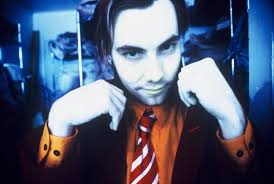
Jacob Applebaum
America’s National Security Agency (NSA) can “vacuum up and store the actual content of every conversation” in the Bahamas and an unnamed country, the new publication The Intercept reported Monday, based on documents leaked by Edward Snowden.
Intercept Editor Glenn Greenwald — who wrote about documents leaked by Snowden when he was a columnist for The Guardian — said the publication didn’t reveal the country because it was “very convinced” that doing so would lead to “deaths.”
After a heated discussion between WikiLeaks, Greenwald, Intercept Editor-In-Chief John Cook, and American WikiLeaks hacker-turned-Der Spiegal contributor Jacob Appelbaum, WikiLeaks tweeted that it will reveal the name of the second country being spied on by the NSA.
As Kelley points out, the implications is that Wikileaks knows the name of the country either by unmasking the redaction with software or because Wikileaks has access to the Snowden files.
The most plausible way for WikiLeaks to have access to a Snowden cache is if Appelbaum, who led the reporting on several Der Spiegel articles based on NSA documents (which may or may not be from Snowden), shared information with his friend and WikiLeaks Editor-In-Chief Julian Assange. Applebaum tweeted that The Intercept’s redaction was “a mistake.”
Appelbaum, a close friend of Laura Poitras, the other journalist whom Snowden gave a large set of documents, also gave a presentation detailing a classified document listing technology available to the NSA’s hacking unit, known as TAO. It is not known how he acquired those documents.

Laura Poitras
So which is it? The careless ways in which the Snowden documents have been passed around between The Guardian and The New York Times and other news organizations; with Greenwald’s husband David Miranda carrying them through London to Berlin and back; as well as the fact that Snowden is in Russia, suggest that the entire cache will eventually be released, and presumably all hell will break loose. It’s only a matter of time.
Charles Johnson posted the entire Wikileaks-Greenwald argument at Little Green Footballs: Slap Fight of the Day: Wikileaks vs Pernicious G
Today on Twitter this happened: Julian Assange, who most people believe is the one behind the @Wikileaks account, threw a huge tantrum because Glenn Greenwald redacted the name of a country from his latest disingenuous article. Greenwald says he was convinced publishing the country’s name would lead to deaths. Assange doesn’t give a shit about that, of course.
There are some inadvertently hilarious moments here; Wikileaks’s Jacob Appelbaum says redacting the country “makes Wikileaks look extreme.” I almost fell out on that one. And then there’s the tweet in which Assange basically calls everyone in Greenwald’s crew “a bunch of racists.” And it all ends with Assange issuing a super-villain threat to release the country’s name “in 72 hours.”
Scroll through the collection below to see what it looks like when extreme libertarians have a purity war.
Head over to Green Footballs if you want the details. Read more exchanges between Wikileaks, Jacob Applebaum, and John Cook, editor of The Intercept at Chirpstory. Read more at Buzzfeed, where Miriam Berger and Miriam Elder provide a timeline of the tweets along with their interpretation: Julian Assange Is Angry At Glenn Greenwald And He’s Not Going To Take It Anymore.

Finally, Bob Cesca’s take on the whole affair: The Wikileaks vs Greenwald Twitter Fight: Julian Assange Threatens To Reveal Deadly NSA Info.
It all began Monday morning when The Intercept posted a new Snowden revelation with cutesy headline: “Data Pirates of the Caribbean: The NSA Is Recording Every Cell Phone Call in the Bahamas.” Get it? Pirates! The article exhaustively describes an operation called MYSTIC and another called SOMALGET in which NSA gathers audio and metadata of cellphone calls in the Bahamas in order to spy on human traffickers and drug cartels. The Bahamas is notorious for both.
Naturally, the article featured all of the deceptive Greenwaldian bait-and-switch we’ve come to expect from his Snowden articles. For example, in paragraph seven, Greenwald and his co-authors Ryan Devereaux and Laura Poitras noted that Sen. Tom Harkin (D-IA), Bill Gates and Oprah Winfrey routinely vacation in the Bahamas:
By targeting the Bahamas’ entire mobile network, the NSA is intentionally collecting and retaining intelligence on millions of people who have not been accused of any crime or terrorist activity. Nearly five million Americans visit the country each year, and many prominent U.S. citizens keep homes there, including Sen. Tom Harkin (D-Iowa), Bill Gates, and Oprah Winfrey.
NSA is spying on Oprah! Stop the presses! But no, if you read all the way down to the 54th paragraph (!!) Greenwald tosses in a token mention of NSA’s rules about preventing data collection against U.S. Persons, whether or not they happen to be inside the U.S. There are very strict “minimization” procedures to eliminate the data that might’ve been inadvertently collected. Why? Because it’s illegal to spy on Americans without an individual warrant. And, by the way, Greenwald & Company noted that the SOMALGET program is, yes, legal.
It sure seems like there are enough hints in the story for anyone to guess the redacted country. Pirates? SOMALGET? Plus the fact the Assange accused Greenwald of “racism.” Read much more interpretation and more tweets at The Daily Banter.
I’ll be keeping a close eye on this story from now on and I’ll pass on any new information.
In other news . . .
On Sunday JJ wrote about an alleged gang rape that reportedly took place after the Calhoun High School senior prom in North Georgia on May 10. The reason I’m writing about it is that Sky Dancing has been getting a huge number of clicks from people looking for more information on this story. It seems people want to know what is happening, but the local papers have not published anything on the crime or the investigation since Sunday. Doesn’t that seem odd and troubling? Is a cover-up in the works. As JJ pointed out it brings back memories of Steubenville, Ohio. After the gang rape there, local officials tried to sweep it under the rug, but a blogger and an “Anonymous” group kept the story alive. Maybe someone with inside information from Calhoun needs to get something like that started? As in Steubenville, there are hints that coddled football players may be involved.

Jacqueline Gomez
Meanwhile, in another prom-related tragedy, a girl was found dead after a prom at MacArthur High School in Houston. According to her mother, the mother of Jacqueline Gomez’ boyfriend was supposed to bring her home that night, but instead the boy’s mother allowed the couple to stay in a hotel room against the Gomez’ mother’s wishes. To me the whole thing sounds really suspicious. From KHOU.com, Mother: Daughter was not supposed to stay at hotel after MacArthur HS prom.
There are new startling details from the mother of a teenagerfound dead on prom night. Her mother feels like she was mislead by her daughter’s prom date and his mother….
Gomez was off to her senior prom at the Hyatt North Houston Hotel. Her mother was too distraught to show her face on camera, but said she expected to see her daughter back at home later that night….
Barron said Gomez’s date’s mother picked the couple up from her home. She also picked them up from the hotel later that night. That’s when she last spoke to her daughter on the phone.
“I just spoke to them after prom, a couple words, told me she was going to get something to eat,” said Barron.
That’s when the boy’s mother got on the phone and asked if Gomez could spend the night at their house.
“I said no, bring her back home,” said Barron. “I gave them a couple hours, and I never heard back.”
The next call she got was from a homicide detective with the Houston Police Department. She said detectives told her the room was booked by the boyfriend’s mother.
What happened? Who gave Jacqueline the drugs and did the boy’s mother know about it? More information from The Houston Chronicle: Texts Hint Girl May Have Overdosed After Prom.
A series of text messages offered new details into the death of Jacqueline Gomez, the 17-year-old Aldine ISD senior found dead Saturday in a Houston motel room the morning after her prom. The texts, sent from an account identified as Gomez’s date, also indicate investigators believe the girl probably overdosed….
Yet nobody can be certain how the MacArthur High School student died until autopsy results are complete – which could take several weeks, the Harris County medical examiner said. And that has the date and Gomez’s family and friends anxiously waiting for the mystery to be solved.
Meanwhile, her friends and family refute any suggestion that Gomez was ever a “party girl,” saying she spent most of her time working at a Kroger grocery and preparing to graduate in June.
Was Jacqueline given a date-rape drug? We may never find out, because those drugs wash out of the system very quickly. Check this out:
“He was posting pictures of himself crying on Instagram. So I a sent him a text that day to ask what had happened to my girl,” said Justice Gonzalez, a close friend of Gomez who saw the couple leave the prom together Friday night to go to that room. Authorities report Gomez was found dead in her bed about 9:20 the next morning.
“They said she overdosed,” part of the text reads, likely referring to law enforcement officials.
He went on.
“I woke up. I tried waking her but she wouldn’t,” the date texted back, adding four frowning faces. “I was screaming and crying telling her to wake up. But she didn’t. She didn’t,” He ended his text with two frowning faces with tears.
He stated she had appeared “perfectly fine and happy” when they left the “Miami Night” prom. She also seemed “happy” when they both went to sleep, he said.
He had told authorities that they had some alcohol, but said in a text to the friend that Gomez had also taken the painkiller hydrocodone.
Why the f&ck didn’t didn’t he take her home, and WTF was his mother thinking?! Furthermore, why can’t something be done to prevent these kinds of after-prom horrors?
Now I’m really mad, and I’m running out of space and time. I’ll post links to other news in the comment thread, and I hope you’ll do the same.
Did you like this post? Please share it with your friends:
Posted: May 19, 2014 | Author: dakinikat | Filed under: 2014 elections, 2016 elections, Hillary Clinton, morning reads, right wing hate grouups |
Good Morning!
The Republicans are seriously flipping out at the thought of President Hillary Clinton. I didn’t watch the Sunday talking head shows but I certainly followed the follow-up fallout. Reince Prebius is literally pissing his Little Lord Fauntleroy suits in anticipation of the 2016 race.
By repeating the claim over and over again that she won’t run, RNC chairman Reince Priebus admitted that the Republican goal is to smear Hillary Clinton into not running for president.
Priebus claimed that Clinton’s age and health are fair game. The RNC chairman said, “What was her record as Secretary of State? Benghazi, Boko Haram, you know, Syria, Russia, those are going to be the issues that I believe will cause her to rethink whether or not she wants to run for president.”
Later he said, “What I think is going to make her rethink whether she should actually run for president. By the way, I don’t think she will if she has another month like she just had, but the issues that I talked about are the issues that are going to make her unacceptable to the American people.”
Priebus denied the that issue is to convince her not to run, then he claimed that Clinton is trying to sweep Benghazi under the rug, and he repeated, “My view though is David, is that given the month she just had, actually I doubt very much that she will run for president in 2016.”
 The man who should be in front of a firing squad for lying us into war, violating our torture agreements, and ignoring all the intelligence leading up to 9/11 even crawled out from the Wyoming caves long enough to snarl Benghazi! Like this guy doesn’t need a full out investigation leading to his arrest and imprisonment. When do we get to hold Bush/Cheney inc responsible for all their screw ups?
Dick Cheney, the former vice president who was in office during the terrorist attacks on Sept. 11, 2001 and later pushed the country into war with Iraq based on faulty intelligence, said on Sunday that former Secretary of State Hillary Clinton would be “held accountable” for four Americans that died during a terrorist attack in Benghazi.
During a Sunday interview on Fox News, host Chris Wallace asked Cheney if Clinton “did anything wrong,” and if she should be “held responsible for the events surrounding that attack.”
“She was secretary of state at the time that it happened,” Cheney opined. “She was one of the first in Washington to know about it. I think she clearly bears responsibility for whatever the State Department did or didn’t do with respect to that crisis.”
“I do think it’s a major issue,” he added. “I don’t think we’ve heard the last of it yet, and I expect that she will be held accountable during the course of the campaign.”
Cheney’s wife, Lynne, who was also on the program also doubled down on her recent suggestion that Hillary Clinton had conspired with Vanity Fair to publish an article by Monica Lewinsky to get the issue out of the way before a 2016 presidential run.
“I was really paying the Clintons a large compliment,” she insisted. “I was saying how clever they are politically. And it seemed to me, if you had something that might come up during the campaign that would be damaging, it was very smart to get it out of the way early.”
“So, that’s my case, Chris, and I’m staying with it.”
The totally irrelevant Karl Rove continued his spiel on Fox. He’s been so consistently wrong on things recently that you’d think even the Fox vacuum tube would burst.
On “Fox News Sunday,” Rove said the Clintons are hypocritical for crying foul.
“I love President Clinton’s comments the other day,” Rove said. “Let’s remember, this is a guy who ran for office savaging Bob Dole.”
“I love being lectured by Bill Clinton,” Rove said sarcastically.
Bill Clinton didn’t necessarily lecture Rove, but he did defend his wife last week, saying she is “strong.” But the former president might have made the situation worse for his wife by saying she had a “terrible” concussion that took six months to get over. That is the first time anyone from her team has said it was a six-month recovery.
“Karl Rove is struggling to be relevant,” Sen. Claire McCaskill of Missouri shot back on NBC’s “Meet the Press,” calling the former Bush adviser’s super PAC, which spent more than $175 million trying to elect Republican Mitt Romney, an “abject failure.”
What is it with these men that they are so afraid of one woman? It just amazes me to see the kind of filth the kick up about her.
Bernie Sanders is questioning Hillary from the left.
Sanders says he doesn’t know whether Clinton will run or not but, like everyone, can see the direction of things this spring. He already has plenty of questions about whether the former senator and secretary of state is what he believes the times demand.
“If she does run, will she be as strong as the times require in taking on the billionaire class that has so much power? I’m not sure that she will be,” Sanders said during an interview in his Senate office. “Will she be as strong as needs be to address the crisis of climate change? I am not sure that she will be. Will she be as strong as needs be to take on the power of Wall Street? I’m not sure she will be.”
It has been widely assumed that if Clinton runs, someone who speaks for the party’s restive progressive wing could mount some kind of challenge — symbolic, gadfly or otherwise — to force a more robust discussion about economic issues and the power of Wall Street and corporate interests. Sen. Elizabeth Warren (D-Mass.) is a popular choice among many on the left to lead that effort, but she has so far demurred. Sanders is not so reticent.
He appears slightly uneasy presenting himself purely as the anti-Hillary. “I like Hillary and have known her for many years,” he said somewhat defensively after he was reminded that he recently told Jay Newton-Small of Time magazine that he would be a better president.
“What I do know about Hillary Clinton is that she has been a very strong advocate of women’s rights,” he continued. “I respect that. She and I have worked together on some issues regarding children. She’s been a strong advocate of children. I have a lot of respect for Hillary Clinton.”
But it’s clear his respect has limits when it comes to the core issues that long have animated his politics. “These are extraordinary times, which require a boldness and an aggressiveness that I’m not sure her past history suggests is there,” Sanders said. “I am not sure that she has been — ” He paused and caught himself. “Well, that’s all. I’m going to leave it at that.”
I do worry about the “inevitability” factor raising its head again. That caused a lot of democratic pols to search out other candidates. Will we see some of the same?
Massachusetts Gov. Deval Patrick said he is concerned about the “inevitability” factor with a potential Clinton nomination.
“I do worry about the inevitability thing,” Patrick said on CNN’s “State of the Union,” adding that it’s “off-putting to the … average voter.”
“I think that was an element of her campaign the last time,” he said, without having to specify how that turned out (Barack Obama won). “I just hope that the people around her pay attention to that this time around.”
All of this effort is pure speculation at the moment anyway since Clinton still is coy about her future. I also hope we can continue to focus on the 2014 elections and the need to ensure we don’t see the Republicans win the Senate Majority. There is still a good chance that the ever scarier Repubican loonies could do it. Right now many folks are saying there are 48 seats leaning towards each party and about 4 are a toss up. This is the outlook from Larry Sabato.
The calculated takeaway is this: As of now, Democrats are clear underdogs in the two states where they want to play offense. They also are probably no better than 50-50 in any of the seven red states where they are defending seats, and drowning in a couple. A big enough wave could cut into the blue states, too, although probably not as deeply as Republicans fantasize. Put it all together, and the current forecast calls for a wave that’s more than a ripple but less than a tsunami — a four to eight-seat addition for the Republicans, with the higher end of the range being a shade likelier than the lower.
So, I’m really worried about all of this. I don’t want to experience the absolute misogyny again and I certainly don’t want the right wing religious whackos in office. I think we really need to work on GOTV for the fall and try to get off the 2016 races already!
What’s on your reading and blogging list today?
Did you like this post? Please share it with your friends:



 peej
peej Carissa
 bostonboomer
 dakinikat
 ecocatwoman
 mablue2
 Mama Lopez
 peggysue22
 quixote
 skydancingguestblogger
 Mona (aka Wonk the Vote)



 Sky Dancing
Recent Comments