Sen. Hubert Humprhey had it right in March 1949, in one of his first Senate speeches: The filibuster represents "an unholy alliance against civil rights." https://t.co/ePEudRYEFTpic.twitter.com/PujsewOOgj
Meanwhile, we’re discovering just how neo-confederate the Republican party has become. Yesterday, the House voted on the two Democratic plans to ensure voting rights and access. The stark difference in this vote foreshadows the mess that the Senate Faces.
BREAKING: The House just passed the Freedom to Vote: John R. Lewis Act to prevent racial discrimination in voting and protect our democracy.
History shows us how today became the day that the Republican party officially became the party of Jim Crow and White Supremacy. Lincoln would weep.
Look at the first Texas Republican Senator after Reconstruction — Sen. John Tower, elected in 1961.
He filled the seat held by LBJ, who shepherded the 1957 & 1960 Civil Rights Acts in the Senate and later pushed for the 1964 Civil Rights Act as president.
There were a few left even as the Southern Strategy begin to bear its strange fruit.
Sen. Dole’s words capture a war hero’s love of country and belief that we’re best when we’re united.
Supporting the ‘64 Civil Rights and ‘65 Voting Rights Acts in the House and pushing for the MLK holiday and the Americans with Disabilities Act in the Senate, he made us better. pic.twitter.com/BDmzGATxSh
But, no more. They realize they can only hold office and the presidency by suppressing the votes of POC and the young.
Biden: "Some things in America should be simple and straightforward. Perhaps the most important of those things, the most fundamental of those things, is the right to vote. The right to vote freely, the right to vote fairly, the right to have your vote counted." pic.twitter.com/57VgwCrYuE
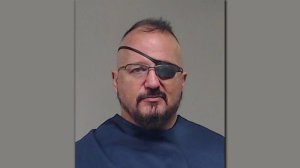
Mug shot of Leader Elmer Stewart Rhodes III, 56 who shot his eye out in a gun accident. Elemer rates really high on my ewwwww factor scale.
Voter suppression is totally necessary to the success of the soft coup. Yesterday, there was big news on the hard coup.
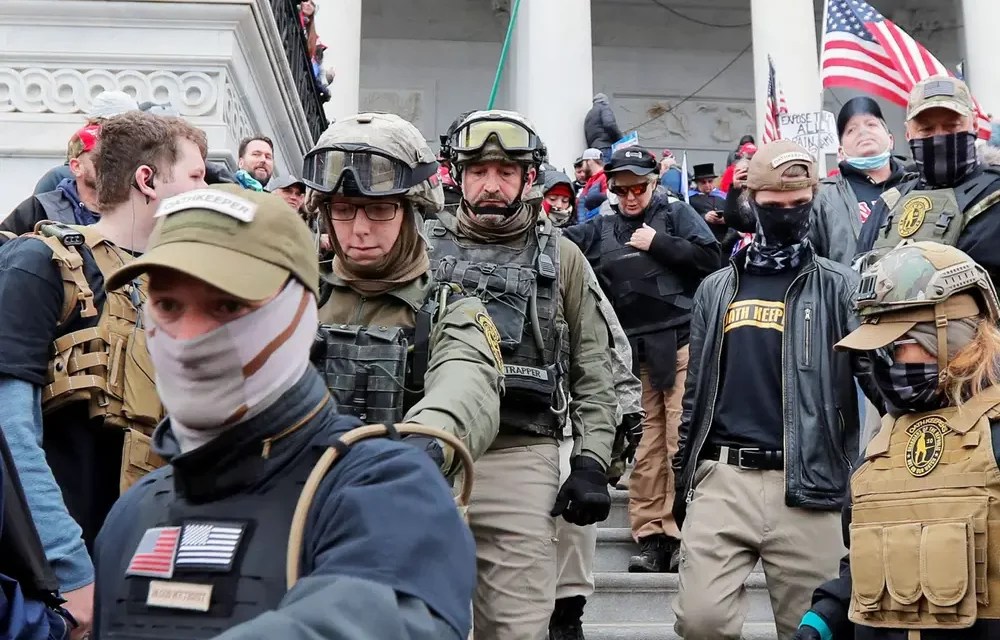
The news yesterday sent me down a rabbit to learn about The Seditious Conspiracy Act. The first good explanation I heard was on MSNBC. (Ignore Chuckie Todd.) “Former U.S. Attorney Joyce Vance breaks down what she calls an “enormously significant step” by the Department of Justice” when they arrested a group of Oath Keepers involved in the January 6 insurrection including the leader of the group.
The charge is defined in the federal criminal code, Section 2384, as an effort by two or more to “conspire to overthrow, put down, or to destroy by force the Government of the United States, or to levy war against them, or to oppose by force the authority thereof, or by force to prevent, hinder, or delay the execution of any law of the United States, or by force to seize, take, or possess any property of the United States contrary to the authority thereof, they shall each be fined under this title or imprisoned not more than twenty years, or both.”
The article also elucidates its infrequent, historical use.
Seditious conspiracy has been used successfully in a handful of cases, most notably against the planner of the 1993 World Trade Center bombing, Ramzi Yousef. Most recently, it was used in 2010 against nine members of the far-right Hutaree, a self-styled militia group that the FBI prosecuted in federal court for allegedly planning a violent anti-government revolt. In that case, a judge dismissed the seditious conspiracy charges, saying that prosecutors failed to prove that the group planned to carry out specific attacks.
This is an interesting interview with Elmer’s ex from The Daily Beast.
One day after his arrest on charges of seditious conspiracy in the Jan. 6 riots, the estranged wife of Oath Keepers founder Stewart Rhodes went on CNN and called him a “complete sociopath.” Tasha Adams announced joy over his arrest and discussed fears for her family’s safety: “I knew I lived in fear he might show up here. But the… just setting that weight down and knowing we were safe and my kids were safe and my kids’ school doesn’t have to worry, that was a relief I didn’t know existed.” When asked by CNN’s John Berman of what threat she feels Rhodes poses to the country at large, Adams responded “He’s a dangerous man.” She added, “He sees himself as a great leader, he almost has his own mythology of himself and I think he almost made it come true as seeing him self as some sort of figure in history and it sort of happened. He’s a complete sociopath, he does not feel empathy for anyone around him at all.”
Steve Bannon thought he had a really great point on his podcast last Wednesday—the day before the anniversary of the Jan. 6th insurrection.
The federal government, he noted, led historic investigations against the Communists, the Black Panthers, the Ku Klux Klan, the Weathermen, jihadist terrorists, and others. But the government had failed to bring any major charges against the Jan. 6th rioters:
[Attorney General] Merrick Garland has said . . . this is the largest criminal investigation in the history of the FBI, the largest criminal investigation. . . . I’m talking about the largest criminal investigation. They’ve had big-time investigations before. This is larger than that. They brag about it. I just want to repeat, nobody’s been charged with insurrection. One year after. Nobody’s been charged with sedition.
The takeaway was that the Jan. 6th investigation is just another ginned-up witch hunt, a hoax investigation meant to get Trump, à la impeachment 1.0 and 2.0.
Bannon wasn’t alone in suggesting that the Jan. 6th investigation was a big bust. Also on Wednesday of last week, the Wall Street Journal published a piece by former Assistant Attorney General for the District of Columbia Jeffrey Scott Shapiro titled “Stop Calling It An Insurrection.” He wrote:
The demonstrators who unlawfully entered the Capitol during the Electoral College count were unarmed and had no intention of overthrowing the U.S. constitutional system or engaging in a conspiracy “against the United States, or to defraud the United States.”
And:
Those who violated the law inside the U.S. Capitol should be prosecuted and, if convicted, sentenced accordingly. But dramatizing a riot as an organized, racist, armed insurrection is false reporting and dangerous political gaslighting.
The next night, on the actual anniversary of the Jan. 6th attack, Fox News’s Laura Ingraham made the same point on her broadcast.
How many times have you heard all those buzzwords used in the press just in the last few days? But here’s a question. How many times do words like “insurrection,” “sedition,” or “treason” appear in Biden’s own DOJ indictments against the January 6 rioters? The answer: zero.
Ingraham asked her guest, George Washington University law professor Jonathan Turley, a leading question: “The charges stemming from the January 6 riots are actually a big tell, are they not, about what the DOJ actually thinks about this case?” Turley’s reply:
The FBI arrested hundreds. They investigated thousands. And they did not find a conspiracy for insurrection or rebellion. They didn’t charge those crimes. They didn’t charge anything like them. What they found was a protest that had become a riot. And that’s also what the American people see.
The impression here, dear readers, is that because no sedition charges had been brought, there was simply no reason anyone should be worked up about Jan. 6th.
Again, Bannon, the Wall Street Journal, and Fox News all promoted this notion just last week.
But those talking points expired yesterday, when the Department of Justice unsealed an indictment that charged 11 members of the Oath Keepers with seditious conspiracy and other crimes related to the breach of the Capitol. This is the first time seditious conspiracy has been charged in connection to Jan. 6th cases.
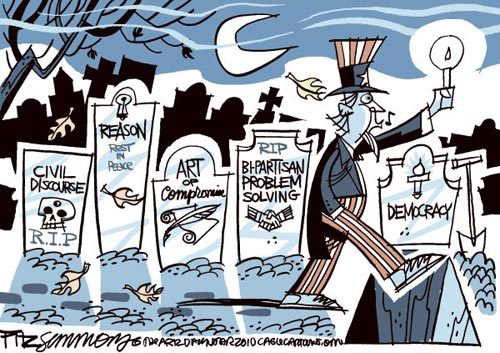
Yesterday Joe Biden commemorated Memorial Day with a speech honoring those who served the country in wartime, while cautioning that “democracy…is in peril.”
President Joe Biden marked Memorial Day with an address at Arlington National Cemetery, pledging to never forget or fail to honor fallen veterans’ sacrifice and saying that democracy is “worth fighting for” and “dying for.”
Democracy, which he called the “soul of America,” is in danger, Biden said on Monday.
“Democracy itself is in peril, here at home and around the world,” Biden said, speaking to military officials and people who have lost military loved ones after a wreath-laying ceremony at the Tomb of the Unknown Soldier. “What we do now, what we do now, how we honor the memory of the fallen, will determine whether or not democracy will long endure.”
Throughout the speech Monday, Biden praised veterans’ sacrifice for democracy and defended democracy’s aspirations, though he said the U.S. hadn’t always lived up to them. He called empathy “the fuel of democracy.”
The president said that “we all” take democracy “for granted,” saying “the biggest question” is whether the system of democracy can win out over opposing “powerful forces.”
“All that we do in our common life as a nation is part of that struggle,” Biden said. “A struggle for democracy. It’s taking place around the world, democracy and autocracy.”
Democracy is in danger because the Trumpist Republican Party opposes it. Since their cult leader lost the 2020 election, Republicans are focused on making voting more difficult. The latest effort took place in Texas. Fortunately, Democrats in the Texas legislature were able to fend off the new Jim Crow law for now.
In a dramatic surprise, Texas Democrats stopped the GOP’s latest and lowest voter suppression effort at the eleventh hour (literally – the session was adjourned at 11pm Monday night). They used tricks, stunts, and gambits. They chased the headlines, and grabbed them. Democrats, this is how you do it.
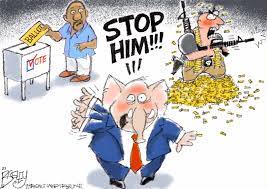
So far, Democrats have failed to stop this racist and anti-democratic freight train. It’s barreled through Florida, Georgia, and Iowa. It’s rigged the 2022 elections by making it harder for Black voters (and voters who can’t get off of work easily, or need help getting to the polls) to vote. It’s a national disgrace.
But it’s barely made the news….
These efforts should be headline freaking news. The blatantly racist nature of these policies. Their likely effects on the next election. And their foundation in the same conspiracy theory that led to the January 6 insurrection in Washington, D.C. All of these are beyond outrageous, but journalists can’t just make news happen; that’s up to politicians and other public figures who give us something to report.
Which is exactly what Texas Democrats did Sunday night.
They raised every possible technical and procedural objection to the vote. They indulged in long-winded Q&A sessions. They stretched the process out for hours. And then, right before eleven at night on the eve of Memorial Day, they walked out, depriving the Texas State House of Representatives of a quorum.
Even the walkout was dramatic. Texas State Representative Chris Turner texted party members at 10:35, writing, “Members, take your key and leave the chamber discreetly. Do not go to the gallery. Leave the building. ~ Chris”
Gotta love it.
But the bill could still pass. What’s needed is national legislation to protect voting rights.
Texas Democrats who defeated a Republican effort to pass a suite of new voting restrictions with a dramatic late-night walkout from the state House chamber on Sunday have a message for President Biden and his allies in Congress: If we can protect voting rights, you can, too.
The surprise move by roughly 60 Democratic lawmakers headed off the expected passage of S.B. 7, a voting measure that would have been one of the most stringent in the nation, by denying Republicans a required quorum and forcing them to abruptly adjourn without taking a vote.
The coordinated walkout just after 10:30 p.m. Central time jolted the national debate on voting rights, putting the spotlight on Democratic-backed federal legislation that has been stalled in the Senate all spring, even as state Republicans move to enact new voting rules.
“We knew today, with the eyes of the nation watching action in Austin, that we needed to send a message,” state Rep. Trey Martinez Fischer, a San Antonio Democrat, said at a news conference held at a historically Black church in Austin early Monday, shortly after he and other lawmakers left the state Capitol. “And that message is very, very clear: Mr. President, we need a national response to federal voting rights.”\Republicans control every branch of Texas government and hold firm majorities in both the House and Senate. While Gov. Greg Abbott (R) vowed late Sunday to bring the voting measure back at a special legislative session for redistricting later this year — and threatened to defund the legislature in a tweet on Monday — the walkout represented an unmistakable and shocking defeat for Republican leaders who had assumed the bill would pass ahead of the House’s midnight deadline to finish its 2021 business.
Unfortunately, Congress is not stepping up so far.
In the national struggle over voting rights, Democrats have rested their hopes for turning back a wave of new restrictions in Republican-led states and expanding ballot access on their narrow majorities in Congress. Failure, they have repeatedly insisted, “is not an option.”
But as Republican efforts to clamp down on voting prevail across the country, the drive to enact the most sweeping elections overhaul in generations is faltering in the Senate. With a self-imposed Labor Day deadline for action, Democrats are struggling to unite around a strategy to overcome solid Republican opposition and an almost certain filibuster.
Republicans in Congress have dug in against the measure, with even the most moderate dismissing it as bloated and overly prescriptive. That leaves Democrats no option for passing it other than to try to force the bill through by destroying the filibuster rule — which requires 60 votes to put aside any senator’s objection — to pass it on a simple majority, party-line vote.
But Senator Joe Manchin III of West Virginia, the Democrats’ decisive swing vote, has repeatedly pledged to protect the filibuster and is refusing to sign on to the voting rights bill. He calls the legislation “too darn broad” and too partisan, despite endorsing such proposals in past sessions. Other Democrats also remain uneasy about some of its core provisions.
Navigating the 800-page For the People Act, or Senate Bill 1, through an evenly chamber was never going to be an easy task, even after it passed the House with only Democratic votes. But the Democrats’ strategy for moving the measure increasingly hinges on the longest of long shots: persuading Mr. Manchin and the other 49 Democrats to support both the bill and the gutting of the filibuster.
Read the rest at the WaPo.
Meanwhile, extremist Republicans–including the former guy–are openly supporting insurrection. As Dakinikat reported yesterday, disgraced retired General Michael Flynn attended a Q-Anon meeting and called for a military coup in the U.S.
Michael Flynn, former President Donald Trump’s first national security adviser, appeared to endorse a Myanmar-style coup in the United States on Sunday.
For months, QAnon and Trump-supporting online forums have celebrated the deadly military coup in Myanmar and suggested the same should happen in the United States so Trump could be reinstated as President.
Flynn made the comments at an event in Dallas on Sunday that was attended by prominent peddlers of the QAnon conspiracy theory and the Big Lie.
“I want to know why what happened in Minamar (sic)can’t happen here?” a member of the audience, who identified himself as a Marine, asked Flynn.
“No reason, I mean, it should happen here. No reason. That’s right,” Flynn responded….
Some QAnon followers are obsessed with the idea that the US military will somehow put Trump back into office. Some believed and hoped Trump would declare martial law on Inauguration Day to stop Joe Biden from entering the White House.
Speaking at the same event in Dallas, Flynn earlier in the weekend falsely claimed, “Trump won. He won the popular vote, and he won the Electoral College vote.”
Trump himself claims he will be “reinstated” as president, according to Maggie Haberman.
According to New York Times reporter Maggie Haberman, “Trump has been telling a number of people he’s in contact with that he expects he will get reinstated by August” because the widely criticized “audit” he’s backing in Arizona will show he actually won the 2020 presidential election.
“He is not putting out statements about the ‘audits’ in states just for the sake of it,” Haberman reports. “He’s been laser focused on them, according to several people who’ve spoken with him.”
Haberman notes that Trump’s obsession with retaking the White House this year comes as he’s staring at the possibility of being indicted by the New York Attorney General’s Office, which is conducting a criminal probe of the Trump Organization for potential tax fraud.
QAnon’s biggest celebrities threw a three-day conference in Dallas over the weekend—and it did not disappoint.
Whether you wanted to hear a former US Army general calling for a military coup or Roger Stone’s social media advisor calling for Hillary Clinton’s execution, there was something for everyone.
There were auctions selling $1,000-blankets and $8,000 baseball bats. A sitting Congressman appeared on stage and literally embraced QAnon influencers. Dozens of members of a shadowy militia provided protection—some with their own pugs in tow. And then there was Kraken-lawyer Sidney Powell trying to sing the national anthem….
The “For God and Country: Patriot Roundup” event took place over Friday, Saturday and Sunday in downtown Dallas with thousands of QAnon supporters paying at least $500 for a ticket to the event.
The event took place in the city-owned Omni Hotel despite opposition from local residents whose petition was signed by more than 20,000 people.
The organizer of the event, John Sabal (known online as QAnon John) claimed prior to the event that it was not a QAnon conference, despite multiple high profile QAnon figures speaking there.
The event was a coming-out party for many well-known figures in the QAnon world, but also highlighted just how far the conspiracy movement is bleeding into mainstream Republican politics, with one sitting Congressman, Rep. Louie Gohmert, speaking on stage, along with the chairman of the Texas GOP, Allen West.
Read more highlights at the Vice link.
That’s all I have for you today. What stories are you following? As always, this is an open thread.
Did you like this post? Please share it with your friends:
The information the IRS needs to send out the payments was finally delivered on Thursday morning after threatening letters sent to Social Security Commissioner Andrew Saul and his Deputy David Black by leaders of the House Ways and Means and Oversight Committees. There is still no word on when the deposts/checks will go out. The latest estimate is that those of us in these categories will still have to wait at least 10 days to see the money.
Meanwhile, calls on Biden to fire Saul and Black are growing louder.
Weeks after the American Rescue Plan had been signed into law, while many Americans had already received payments, the Social Security Administration’s inaction was standing in the way of millions of beneficiaries receiving desperately needed cash aid. After escalating pressure on Saul to no avail, the letter gave him 24 hours to remedy the holdup. A few hours later, the SSA announced that they’d be sending the information the next day.
This delay is just the latest in an array of extremely troubling decisions under the leadership of the Social Security Administration’s commissioner Saul, and his deputy David Black….
Commissioner Saul and Deputy Commissioner Black were appointed by President Trump, alongside Deputy Commissioner for Retirement and Disability Policy Mark Warshawsky, to self-fulfill the Republican promise about the failure of government, and destroy the departments they were tasked with managing. Warshawsky, a veteran of the American Enterprise Institute, was pegged as an early candidate to be fired by the Biden administration for his work undercutting the program; he retired from the post in late January.
The Biden administration has set to work rolling back some of those Trump appointees’ designs on Social Security, including a proposed rule that would have subjected disability insurance recipients to even more frequent and stringent eligibility reviews, which would make an already challenging process even more difficult for people with disabilities to secure and maintain cash benefits. That move was widely celebrated among advocates. But President Biden has not heeded the call from those same advocates to fire Saul and Black, who have clear track records of working against the very department they’ve been tasked to head up, and against Democratic ambitions on Social Security.
Frank O’Sullivan
Now, a growing number of congressional Democrats are joining the chorus calling for Saul and Black’s ousters. Sen. Sherrod Brown (D-OH) called for their resignation as his first act as chair of the Social Security and Pensions Subcommittee, and has since urged Biden to fire them. He’s joined House Ways and Means Social Security Subcommittee Chairman John Larson, Worker and Family Support Subcommittee Chairman Danny Davis, and Oversight Subcommittee Chairman Bill Pascrell Jr. in demanding Saul’s immediate removal. Both Saul and Black are serving terms that don’t expire until 2025….
On the campaign trail, Biden insisted (straining against historical fact) he had never and would never vouch for cuts to Social Security. He, and the Democratic Party broadly, have made protecting and expanding Social Security a main plank of the party’s policy platform going forward.
That ambition is irreconcilable with a leadership regime that has, as was reported by Yahoo News, put “illegitimate political pressure on Administrative Law Judges to reduce the rate of Social Security disability case approval,” as one such judge recently claimed. That alone should be scandal enough to imperil Saul and Black’s positions at the agency, and give the Biden administration the space to fire them for cause. But the Trump years have built up a tolerance for scandal, which means that the incident hasn’t even deterred them.
Meanwhile, Saul and Black have openly pursued a number of reforms aimed at aggressively curtailing benefits. Their attempted rule change, which the Biden administration rolled back, was a Reagan-era reform that would have led to tens of thousands of people losing benefits. When President Reagan enacted it, it led to a rash of suicides, and was deemed so cruel that it led to a unanimous Senate ruling to overturn it. Elsewhere, they’ve sought to deny benefits for older and severely disabled non–English speakers, resulting in an estimated 100,000 people being denied more than $5 billion in benefits.
See my Thursday post for more about Saul and Black’s efforts to destroy Social Security on Thursday.
Pressure is also building for Biden to get rid of Trump-appointed Postmaster General Louis DeJoy.
A group of House Democrats on Friday introduced legislation to prohibit the Postal Service from lengthening mail-delivery windows and require it to adhere to present service expectations. They named the bill the Delivering Envelopes Judiciously On-time Year-round Act, or DEJOY Act.
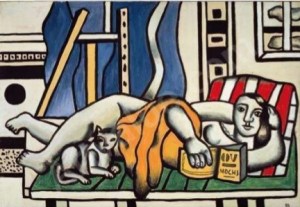
Carl Larsson: Brita, Cat and Sandwich
One House aide involved in postal reform legislation introduced in February said some members of the caucus are leery of proceeding with efforts to address the Postal Service’s financial obligations given that DeJoy’s 10-year plan includes sharp reductions in service, including slower timetables for mail delivery and reduced post office hours.
Separately, Pennsylvania Attorney General Josh Shapiro (D) threatened to take legal action to block the service cuts. His office said in a statement Friday that it was encouraged that DeJoy recognizes the legal obligations to secure limited regulatory approvals, but said it remained concerned about timely mail delivery….
DeJoy hopes to save the Postal Service $160 billion over the next decade through a combination of austerity measures, postage price increases and projected package volume growth. But the largest single piece of his plan is dependent on Congress repealing its pre-funding mandate for retiree health care costs, which runs about $5 billion a year. Instead, the agency wants to wind down those payments and enroll future retirees in Medicare, a proposal worth $44 billion.
A bill introduced by Rep. Carolyn B. Maloney, chair of the powerful House Oversight and Reform Committee, includes both components.
But DeJoy’s designs to slow the mail — even as the Postal Service attempts to rebound from generationally poor service metrics in recent months — and perceived animus toward lawmakers in recent hearings have made those prospects more difficult.
Sometimes America’s legacy of white supremacy is hiding in plain sight, literally. When Georgia Gov. Brian Kemp signed a hastily passed voter suppression law that many are calling the new, new Jim Crow on Thursday night, surrounded by a half-dozen white men, he did so in front of a painting of a plantation where more than 100 Black people had been enslaved.
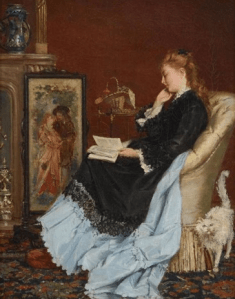
Lady reading with cat-Albert Roosenboom
The fitting symbolism is somehow both shocking and unsurprising. In using the antebellum image of the notorious Callaway Plantation — in a region where enslaved Black people seeking freedom were hunted with hounds — in Wilkes County, Ga., as the backdrop for signing a bill that would make it a crime to hand water to a thirsty voter waiting on Georgia’s sometimes hours-long voter lines, the GOP governor was sending a clear message about race and human rights in the American South.
The portrait of the plantation was the starkest reminder of Georgia’s history of white racism that spans slavery, Jim Crow segregation, the rebirth of the modern Ku Klux Klan, and today’s voter purges targeting Black and brown voters — but it wasn’t the only one. At the very moment that Kemp was signing the law with his all-white posse, a Black female Georgia lawmaker — Rep. Park Cannon — who’d knocked on the governor’s door in the hopes of watching the bill signing was instead dragged away and arrested by state troopers, in a scene that probably had the Deep South’s racist sheriffs of yesteryear like Bull Connor or Jim Clark smiling in whatever fiery hellhole they now inhabit.
Rep. Park Cannon (D-Atlanta) is placed in handcuffs by Georgia State Troopers after being asked to stop knocking on a door that lead to Gov. Brian Kemp’s office while Gov. Kemp was signing SB 202 behind closed doors at the Georgia State Capitol Building in Atlanta, Thursday, March 25, 2021.Alyssa Pointer / AP
Indeed, Twitter was on fire Thursday night with posters drawing the straight line from notorious past segregationists like George Wallace to the 2021 actions of Kemp and the GOP-led Georgia Legislature in passing — at great speed and with little debate — a lengthy bill that also limits easy-access drop boxes for ballots and places onerous voter-ID restrictions on voting by mail, and which the New York Times reports “will have an outsized effect on Black voters.”
On one level this new voter-suppression law — “voter integrity,” in the modern GOP’s Orwellian branding — is inspired by the current and possible future events of ex-President Donald Trump’s Big Lie about fraud in the 2020 election, the narrow upset wins in Georgia for President Biden and two new Democratic senators, and the threat that voting icon Stacey Abrams poses to Kemp in the 2022 election. But there’s also a powerful pull back to Georgia past. That link is made clear by the history hanging right behind Kemp on Thursday.
“Things have changed dramatically” in the South, Chief Justice John Roberts wrote in 2013 when he authored the majority opinion gutting the Voting Rights Act, ruling that states with a long history of discrimination no longer needed to have changes to their voting procedures approved by the federal government.
Voter suppression in Georgia is Exhibit A for why he is wrong.
After Joe Biden carried the state in November and Black voters turned out in record numbers in the January runoffs to elect Democrat Raphael Warnock as the state’s first Black senator and Democrat Jon Ossoff as the state’s first Jewish senator, Georgia Republicans passed a sweeping rewrite of the state’s election laws on Thursday to make it harder for Democratic constituencies to vote and have their ballots counted.
Though some Georgia Republicans, most notably Secretary of State Brad Raffensperger, defended the integrity of the 2020 election, the “Election Integrity Act of 2021” heavily restricts mail ballot drop boxes, adds new ID requirements for mail-in voting, throws out ballots cast in the wrong precincts, and makes it a crime to give voters food and water while they’re waiting in line.
In addition to making it harder to vote, the new law allows the GOP-controlled legislature to appoint a majority of members of the state election board and gives the board the power to take over county election boards, making it easier for Republicans to challenge election results, take over election administration in large Democratic counties, and even decline to certify the results if Democrats win close races—which Trump tried and failed to get the state to do in 2020.
One of the small, rueful truths that many Americans held in the back of their minds throughout the pandemic year was that, for all of its horrors, it had at least reduced, or even eliminated, the spectacle of the gun massacre. School closings had momentarily ended school shootings; curbside delivery had, it seemed, halted in-store assaults. It is true that gun fatalities were disturbingly trending upward in big cities, for reasons that are as yet as mysterious as those for the great decline that preceded them, and that, according to the Gun Violence Archive, last year saw the highest number of shooting deaths in decades. In fact, keyed, perhaps, by a general sense of panic marked by the pandemic and a bizarrely unsettled election year—with that strange American certainty that they’re coming for you—gun sales soared, even amid groups that are not normally associated with buying firearms in numbers.
The gun massacre, however—five or twenty or fifty people murdered at a time—had, briefly, vanished. Yet, alongside the knowledge that mass shootings had gone stood the knowledge that they would, inevitably, reëmerge. And here they are, right on schedule, as the country “opens up,” and with a vengeance: seven in the past seven days, with eight people killed in three shootings in Atlanta, and ten in a grocery store in Boulder. With those shootings come back all the usual, understandable, and all-too-human reactions—above all, our urge to give them some kind of meaning by making them an index of a larger issue. Violence this blankly nihilistic needs a point projected into it, to redeem it as a subject of discussion….
Countries that resemble ours in every way except for the availability of guns have much lower levels of gun violence and far fewer gun massacres. Yet these truths, demonstrated again and again, meet the same resistance, over and over. The Second Amendment guarantees private ownership of even military-style weapons. (It doesn’t, or rather, until very recently, not even conservative Justices imagined that it did.) Guns are essential for self-protection. (They aren’t.) The way to stop mass shootings is to arm more people, such as teachers. (A “colossally stupid idea,” according to the co-president of the Brady Campaign to Prevent Gun Violence.)
All this, even as the sheer psychic damage done by the omnipresence of guns in America is self-evident (no healthy society should have to train its children in active-shooter drills), while the social damage extends far beyond the immediate casualties. A reason for the prevalence of police shootings in America is that the police go about armed, in levels unique to our society, in order to deal with the uniquely over-armed civilians they fear encountering, with the frequently fatal results, we know too well, for the unarmed and the innocent.
Sorry this isn’t a more cheerful post. I’ll probably be up for something more upbeat if I finally get that promised $1400. What’s on your mind today?
Did you like this post? Please share it with your friends:
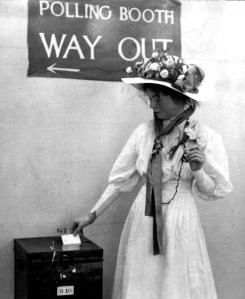
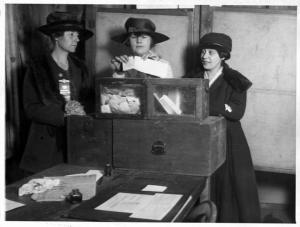
Suffragette Emmeline Pankhurst in a Polling Booth circa 1910. She was one of the leaders of the movement to secure votes for women.
There are some interesting reads out there as America head to the polls tomorrow. I’ve got two bits of analysis from our Brit cousins’ media to share. I’m particularly fond of Barbara Kingsolver’s contribution yesterday at The Guardian. Let me share the headline with you. “End this misogynistic horror show. Put Hillary Clinton in the White House”.
I’m horrified to watch the bizarre pageant of my nation pretending these two contenders are equivalent. No one really imagines Donald Trump applying himself to the disciplines of the presidency, staying up late reading reams of legislation, instead of firing off juvenile tweets. It’s even harder to imagine Clinton indulging in the boorish self-aggrandisement, intellectual laziness, racism and vulgar contempt for the opposite gender that characterise her opponent. If anyone still doubts that the inexperienced man gets promoted ahead of the qualified woman, you can wake up now.
This race is close. Polls tell us most Americans believe Trump has sexually assaulted women (to name just one potential disqualifier). A majority also believe Clinton “can’t be trusted”, for unspecified reasons. We’re back to the ancient conundrum: a woman can’t be that smart and commanding, so either her womanliness or her smartness must be counterfeit. To set that hazy discomfort next to a sexual assaulter and call these defects “equivalent” is causing my ears to ring as I write.
Read it. All of it.
Lexington–at The Economist–has an a good explanation for Trump voters. This one makes sense to me. He compares the motives of voters to those folks that love the Stand Your Ground laws. They want to shoot at anything that frightens at them with no consequences to protect them and theirs.
Partisanship explains some of this gigantic folly, as does widespread distrust of the Democratic nominee, Hillary Clinton. But another cause lies in something harder to criticise: the desire of most people to think of themselves as good and useful citizens, capable of providing for and keeping safe those people and values dear to them. After more than a year of meeting Republican voters and Trump supporters at rallies and campaign events and twice interviewing the candidate himself, Lexington is unexpectedly struck on election eve by echoes from America’s stand-your-ground movement. That movement has led dozens of states to pass laws which allow gun-owners to use lethal force when they reasonably believe that their safety is threatened, with no duty to retreat when they are in their home or other lawful place. Vitally, this defence can be invoked even if householders misjudge the perils that they face, in the heat of the moment.
Critics call such laws vigilante justice. They cite horrible mistakes, as when stranded motorists are shot dead for knocking on a door in search of directions or a telephone. Some see racial bias at work when courts absolve white householders of killing black men who alarmed them. But once passed, such laws are difficult to repeal. For that would involve convincing supporters that they are wrong to believe that they are the last and best line of defence for their family and property—a hard task.
Quite a few Republicans, including those who initially backed more mainstream rivals in their party’s presidential primaries, sound strikingly like stand-your-ground advocates when defending a vote for Mr Trump. Even if not every Trump voter takes all his promises literally, they feel heeded and respected when someone of his stature—a very rich man who could be a member of the elite, but instead chooses to side with them—agrees that their home, America, is under assault, whether from foreign governments scheming to “rape” the economy or by Muslim terrorists allowed in as refugees. At rallies in swing states from Arizona to North Carolina, this reporter has heard the cheers when Mr Trump roars that America has every right to fight back, even if that involves rough justice or being “so tough”, as he puts it.
Janet Reno, the strong-minded Florida prosecutor tapped by Bill Clinton to become the country’s first female U.S. attorney general, and who shaped the U.S. government’s responses to the largest legal crises of the 1990s, died Nov. 7 at her home in Miami. She was 78.
The cause was complications from Parkinson’s disease, her goddaughter, Gabrielle D’Alemberte, told the Associated Press. Ms. Reno was diagnosed with Parkinson’s in 1995, while she was attorney general.
Ms. Reno brought a fierce independence to her job. From the FBI siege of the Branch Davidian compound in Texas to the investigation into Clinton’s sexual relationship with intern Monica Lewinsky, she was adamant that her prosecutors and agents work outside the influence of politics, media or popular opinion.
Her supporters believed she brought a heightened level of integrity and professionalism to the attorney general’s office. They admired her insistence on legal exactitude from her employees and praised her caution in prosecutions.
The state poll-based Meta-Margin is Clinton +2.6%.
National polls give a median of Clinton +3.0 +/- 0.9% (10 polls with a start date of November 1st or later).
Early voting patterns approximately match 2012, a year when the popular vote was Obama +3.9%.
Based on this evidence, if Hillary Clinton does not win on Tuesday it will be a giant surprise.
There’s been buzz about the Princeton Election Consortium’s win probability for Clinton, which for some time has been in the 98-99% range. Tonight let me walk everyone through how we arrive at this level of confidence. I will also give a caveat on how it is difficult to estimate win probabilities above 90% – and why fine adjustments at this level do not matter for my goals in running this site.
“I think we can all agree it’s been a long campaign. But tomorrow, you get to pick our next president,” Clinton says, dressed in white, looking into the camera as the ad opens.
The choice on Tuesday, the Democratic nominee says, is a simple one: “Is America dark and divisive, or hopeful and inclusive?”
The ad was billed by a campaign official on Monday morning as a “personal and positive closing message,” following what has been a long slog of an election, some 18 months after two polarizing figures began their rise to the nomination — one a distrusted figure and mainstay of American politics, the other a divisive outsider defined by a campaign of offensive remarks.
Many of us have recent history in our backgrounds where voting has been illegal or close to impossible. Even today, many of us may wait in long lines to exercise our duty and our right as a citizen because a small group of people do not want to hear our voices.
This is our day. It’s the day we vote for all of the folks who couldn’t and we vote for all of the children who can’t vote right now but will in the future.
Let’s vote for hope. Let’s vote for people. Let’s vote for Hillary.
What’s on your reading and blogging list today?
Did you like this post? Please share it with your friends:
According to the Vatican, Pope Francis did not invite Kim Davis to meet him. There was no secret meeting, and the Pope had no idea who she was when he met her.
In a statement, the Vatican clarified that Pope Francis didn’t even know who Kim Davis was:
The brief meeting between Mrs. Kim Davis and Pope Francis at the Apostolic Nunciature in Washington, DC has continued to provoke comments and discussion. In order to contribute to an objective understanding of what transpired I am able to clarify the following points:
Pope Francis met with several dozen persons who had been invited by the Nunciature to greet him as he prepared to leave Washington for New York City. Such brief greetings occur on all papal visits and are due to the Pope’s characteristic kindness and availability. The only real audience granted by the Pope at the Nunciature was with one of his former students and his family.
The Pope did not enter into the details of the situation of Mrs. Davis and his meeting with her should not be considered a form of support of her position in all of its particular and complex aspects.
The Pope briefly met Kim Davis as part of a group, had no idea who she was, said hello to her, and moved on.
The Vatican’s version of events is the opposite of what Davis’s supporters are claiming happened. The anti-gay marriage crowd claimed that the Pope met with Davis in secret and expressed his support for her bigotry. The right has been using the imaginary meeting as an endorsement of their out of step views.
The extremist conservative movement’s attempt to use Pope Francis for propaganda purposes has fallen apart. Davis’s invitation had been extended by Archbishop Carlo Maria Viganò, the envoy in Washington. Viganò is well known to have gone further than others in the church in his campaign against gay marriage. The Pope did not invite Davis to meet him. In fact, according to the Vatican, Pope Francis had not been briefed on the situation and knew nothing about Davis.
The fact that the Vatican took such pains to distance themselves from Davis could logically be viewed as a rejection of her beliefs.
So, hopefully the Archbishop will be called to the Vatican woodshed and there will be a great big huge discussion on rending unto Caesar that which is Caesar’s. Either way, the Kentucky Bigot Brigade appears to following the usual tradition of lying your way to to what you think gawd wants.
A few weeks ago, writers Amelia Bonow and Lindy West began the hashtag campaign #ShoutYourAbortion to encourage the one in three women who have had an abortion to speak out about their experience instead of being shamed into silence. Then came the death threats.
Bonow told the New York Times that the idea behind the campaign wasn’t to glorify the procedure, but instead to destigmatize it during a time when people are so angry about the topic they’re setting Planned Parenthood clinics on fire.
“A shout is not a celebration or a value judgment, it’s the opposite of a whisper, of silence,” Bonow told the Times. “Even women who support abortion rights have been silent, and told they were supposed to feel bad about having an abortion.”
In a social-media world that’s this upsetting and dangerous, no wonder some celebrities hire Twitter surrogates.
Increased violence against Planned Parenthood Clinics is on the FBI’s radar and has come about as the result of the intense lying of Congressional Republicans and idiots like Republican Presidential Wannabe Fiorina. Nothing ever good comes from whipping up a bunch of religious fanatics. Check the Middle East region if you need further proof.
As the national conversation on Planned Parenthood has become louder and more heated, politicians have warned that it could ignite acts of violence against clinics and neighborhood facilities.
Late Wednesday, for the second time in weeks, a Planned Parenthood center in Thousand Oaks came under attack, this time by an arsonist or arsonists who authorities believe smashed out a window, splashed gasoline inside the clinic and then ignited it.
Authorities say there’s no evidence the attack was related to the larger debate on Planned Parenthood, but said the West Hillcrest Drive facility was previously attacked by vandals six weeks ago.
No direct theats had been made to the facility or clinic workers before the fire, said Ventura County sheriff’s Capt. John Reilly.
A few plants near the window were blackened, but the small fire had been extinguished quickly because of a sprinkler system, Lohman said.
The U.S. Federal Bureau of Investigation has warned of an increasing number of attacks on reproductive healthcare facilities. “It is likely criminal or suspicious incidents will continue to be directed against reproductive health care providers, their staff and facilities,” an FBI Intelligence Assessment reads,according to a CBS report Friday.
The finding comes after a July video from the pro-life Center for Medical Progress, which releasedsecretly taped footage of Planned Parenthood officials discussing how they use tissues from aborted fetuses for medical research.
Since then, federal investigators have reported nine criminal or suspicious incidents at reproductive health centers across the country, which included cyberattacks, threats and arson. The FBI believes the incidents were “consistent with the actions of lone offenders using tactics of arsons and threats all of which are typical of the pro-life extremist movement,” sources told CBS.
Mr. Mercer appeared to have sought community on the Internet. A picture of him holding a rifle appeared on a MySpace page with a post expressing a deep interest in the Irish Republican Army. It included footage from the conflict in Northern Ireland set to “The Men Behind the Wire,” an Irish republican song, and several pictures of gunmen in black balaclavas. Another picture showed the front page of An Phoblacht, the party newspaper of Sinn Fein, the former political wing of the I.R.A.
A picture of Mr. Mercer also appeared on a long-dormant dating website profile registered in Los Angeles. On it, he described himself as an “introvert” with a dislike for “organized religion.”
In the offline world, Mr. Mercer’s mother sought to protect him from all manner of neighborhood annoyances, former neighbors in Torrance said, from loud children and barking dogs to household pests. Once, neighbors said, she went door-to-door with a petition to get the landlord to exterminate cockroaches in her apartment, saying they bothered her son.
“She said, ‘My son is dealing with some mental issues, and the roaches are really irritating him,’ ” Julia Winstead, 55, said. “She said they were going to go stay in a motel. Until that time, I didn’t know she had a son.”
Whenever a mass shooting occurs, supporters of gun rights often argue that it’s inappropriate to bring up political debates about gun control in the aftermath of a tragedy. For example, Louisiana Gov. Bobby Jindal, a strong supporter of gun rights, criticized President Barack Obama for “trying to score cheap political points” when the president mentioned gun control after a mass shooting in Charleston, South Carolina.
But if this argument is followed to its logical end, then it will never be the right time to discuss mass shootings, as Christopher Ingraham pointed out at the Washington Post. Under the Mass Shooting Tracker’s definition of mass shootings, America has nearly one mass shooting a day. So if lawmakers are forced to wait for a time when there isn’t a mass shooting to talk gun control, they could find themselves waiting for a very long time.
I get really really tired of hearing the phrase “mental illness” thrown around as a way to avoid saying other terms like “toxic masculinity,” “white supremacy,” “misogyny” or “racism.”
We barely know anything about the suspect in the Charleston, South Carolina, atrocity. We certainly don’t have testimony from a mental health professional responsible for his care that he suffered from any specific mental illness, or that he suffered from a mental illness at all.
We do have statistics showing that the vast majority of people who commit acts of violence do not have a diagnosis of mental illness and, conversely, people who have mental illness are far more likely to be the victims of violence than the perpetrators.
We know that the stigma of people who suffer from mental illness as scary, dangerous potential murderers hurts people every single day — it costs people relationships and jobs, it scares people away from seeking help who need it, it brings shame and fear down on the heads of people who already have it bad enough.
But the media insists on trotting out “mental illness” and blaring out that phrase nonstop in the wake of any mass killing. I had to grit my teeth every time I personally debated someone defaulting to the mindless mantra of “The real issue is mental illness” over the Isla Vista shootings.
“The real issue is mental illness” is a goddamn cop-out. I almost never hear it from actual mental health professionals, or advocates working in the mental health sphere, or anyone who actually has any kind of informed opinion on mental health or serious policy proposals for how to improve our treatment of the mentally ill in this country.
The closures, announced this week, hit majority-black counties especially hard. Under Alabama’s new tougher version of its voter ID law, voters must have a photo ID, such as a driver’s license, to vote. Every Alabama county with at least 75 percent African American registered voters will lose its DMV office, according to local reports.
“This is only going to make it harder for people to vote,” Clinton said in a statement Friday. “It’s a blast from the Jim Crow past.”
Clinton has made voting rights a major platform of her presidential campaign. Alabama has defended the DMV closures, saying that there are other options for residents to obtain an ID that will enable them to vote.
Read Clinton’s full statement below:
“I strongly oppose Alabama’s decision to close driver’s license offices across the state, especially in counties that have a significant majority of African Americans. Just a few years ago, Alabama passed a law requiring citizens to have a photo ID to vote. Now they’re shutting down places where people get those photo IDs. This is only going to make it harder for people to vote. It’s a blast from the Jim Crow past.
“We’re better than this. We should be encouraging more Americans to vote, not making voting harder. As President, I’ll push for automatic voter registration for every American when they turn 18, and a new national standard of at least 20 days of early in-person voting in every state. And I’ll work with Congress to restore key protections of the Voting Rights Act.
“African Americans fought for the right to vote in the face of unthinkable hatred. They stood up and were beaten down, marched and were turned back. Some were even killed. But in the end, the forces of justice overcame. Alabama should do the right thing. It should reverse this decision. And it should start protecting the franchise for every single voter, no matter the color of their skin.”
The cell phones in the pockets of the dead students were still ringing when we were told that it was wrong to ask why. As the police cleared the bodies from the Virginia Tech engineering building, the cell phones rang, in the eccentric varieties of ring tones, as parents kept trying to see if their children were OK. To imagine the feelings of the police as they carried the bodies and heard the ringing is heartrending; to imagine the feelings of the parents who were calling — dread, desperate hope for a sudden answer and the bliss of reassurance, dawning grief — is unbearable. But the parents, and the rest of us, were told that it was not the right moment to ask how the shooting had happened — specifically, why an obviously disturbed student, with a history of mental illness, was able to buy guns whose essential purpose is to kill people — and why it happens over and over again in America. At a press conference, Virginia’s governor, Tim Kaine, said, “People who want to … make it their political hobby horse to ride, I’ve got nothing but loathing for them. … At this point, what it’s about is comforting family members … and helping this community heal. And so to those who want to try to make this into some little crusade, I say take that elsewhere.”
What’s on your reading and blogging list today?
Did you like this post? Please share it with your friends:
The Sky Dancing banner headline uses a snippet from a work by artist Tashi Mannox called 'Rainbow Study'. The work is described as a" study of typical Tibetan rainbow clouds, that feature in Thanka painting, temple decoration and silk brocades". dakinikat was immediately drawn to the image when trying to find stylized Tibetan Clouds to represent Sky Dancing. It is probably because Tashi's practice is similar to her own. His updated take on the clouds that fill the collection of traditional thankas is quite special.
You can find his work at his website by clicking on his logo below. He is also a calligraphy artist that uses important vajrayana syllables. We encourage you to visit his on line studio.

 Yesterday Joe Biden commemorated Memorial Day with a speech honoring those who served the country in wartime, while cautioning that “democracy…is in peril.”
 So far, Democrats have failed to stop this racist and anti-democratic freight train. It’s barreled through
  The
The 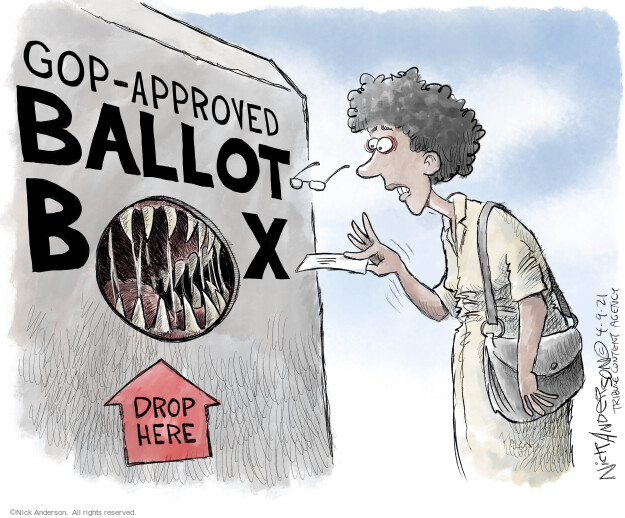 But Senator Joe Manchin III of West Virginia, the Democrats’ decisive swing vote, has repeatedly
  Raw Story:


 Lexington–at
 Many of us have recent history in our backgrounds where voting has been illegal or close to impossible. Even today, many of us may wait in long lines to exercise our duty and our right as a citizen because a small group of people do not want to hear our voices.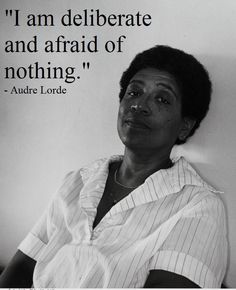


 peej
peej Carissa
 bostonboomer
 dakinikat
 ecocatwoman
 jjlo
jjlo mablue2
 Mama Lopez
 peggysue22
 quixote
 skydancingguestblogger
 Mona (aka Wonk the Vote)



 Sky Dancing
Recent Comments