I’m trying very hard not to panic this morning. Ever since the shooting at the Trump rally on Saturday, cable news outlets MSNBC and CNN have completely surrendered to Trump and the Republicans. Both channels are hosting wall-to-wall coverage of the Republican National Convention.
On Monday, MSNBC even took Morning Joe off the air and replaced it with anodyne Today Show-like programming, because they were afraid a host or guest might say something derogatory about Trump. Joe and Mika threatened to quit if it happens again.
MSNBC will not air “Morning Joe,” its celebrated politics roundtable program, on Monday, opting to instead air continued breaking news coverage of the attempted assassination of former President Donald Trump.
The progressive news network confirmed the decision to preempt its influential and top-rated morning show after a CNN inquiry Sunday evening. The network said the show will resume airing Tuesday.
The decision by MSNBC to leave one of its most recognizable programs on the sidelines amid a seismic politics-driven news cycle, with the Republican National Convention getting underway in the wake of the Saturday shooting at Trump’s campaign rally, is certain to raise eyebrows.
A person familiar with the matter told CNN that the decision was made to avoid a scenario in which one of the show’s stable of two dozen-plus guests might make an inappropriate comment on live television that could be used to assail the program and network as a whole. Given the breaking news nature of the story, the person said, it made more sense to continue airing rolling breaking news coverage in the fraught political moment.
Morning Joe hosts Mika (formerly Brzezinski) and Joe Scarboro
“Given the gravity and complexity of this unfolding story, NBC News, NBC News NOW and MSNBC have remained in rolling breaking news coverage since Saturday evening,” a spokesperson for NBCUniversal News Group said in a statement to CNN. “As we continue to cover this story into the week, the networks will continue to cross simulcast, alternating between NBC News, NBC News NOW and ‘MSNBC Reports,’ so there is one news feed covering this developing situation.”
In the wake of the attempt on Trump’s life, some of the former president’s supporters have vehemently criticized the press and liberal media commentators for their hard-knuckled reporting, which has sounded the alarm on what four more years under the former president would look like.
Cesar Conde, the chairman of NBCUniversal News Group, made the decision in conjunction with Rashida Jones, the president of MSNBC, and hosts Joe Scarborough and Mika Brzezinski, the person familiar with the matter told CNN.
MSNBC “Morning Joe” host Joe Scarborough slammed his own network for pulling his show on Monday in favor of news coverage of the assassination attempt on former President Donald Trump, saying he and co-host Mika Brzezinski were “surprised” and “disappointed” by the call and threatening to leave if it happens again.
“Next time we are told there will be a news feed replacing us, we will be in our chairs,” Scarborough said live on air Tuesday morning. “And the news feed will be us, or they can get somebody else to host the show.”
Scarborough said the network told the “Morning Joe” team that there would be one NBC News feed “in breaking news mode” across all NBC channels all day Monday. But the “Today” show aired on Monday morning on NBC, and MSNBC hosts Andrea Mitchell and Chris Jansing appeared for their regularly scheduled shows in the afternoon.
“If we had known that there wasn’t going to be the one news feed from NBC News across all NBC News channels … we obviously would have been in yesterday morning,” Scarborough said, later adding: “Our team was not given a good answer as to why that didn’t happen, but it didn’t happen.”
Trump with his massive bandage.
Despite the heavy coverage, no one seems to be asking questions about what actually happened on Saturday. What kind of injury did Trump have? If he was actually grazed by an AR-15 bullet, it seems as if it would have done more damage than is apparent in photographs. Originally, local police said he was hit by fragments of the teleprompter. Trump went to the golf course on Sunday; he wasn’t wearing a bandage and his ear looked normal. Now he’s wearing a large “maxi-pad” at the convention. Here are a few Twitter comments on the subject:
You would think someone would inquire about Trump’s medical report if for no other reason than Trump has not provided any medical updates or information, neither has the hospital that treated him. Outside of Trump telling us he’s “fine”, how severe was the wound? Did he loose part of his ear (bullets do terrible things to flesh)? How long for recovery? Will the wound require cosmetic surgery? What about reports that it may not have been a bullet which wounded him but glass from the shattered teleprompter? If I missed such reports from his campaign or the hospital please post. Thank you.
Feel free to point me to the magic trajectory that would allow for a through-and-through of a person’s ear from a location lateral to them. Show me your expertise in… basic geometry.
Hi. A round from an AR wouldn’t poke a little hole in an ear. Trump didn’t get shot. He was injured by shrapnel or shattered glass or something.
Josh Marshall
@joshtpm
We shouldn’t have to speculate abt any of this. It is the most basic thing for law enforcement and or the medical team that examined Trump to say what they found. It’s such a basic thing. It’s a huge story. How can it be that there’s zero official abt this part of it?
AR-15 bullets
This man is running for president. Shouldn’t we get more details about what happened? And why aren’t we getting more information about the shooter? Ever since it came out that he was a Republican, no one seems to want to talk about him. Maybe if the FBI can break into his phone, we will learn something.
Former President Donald Trump’s son, Eric Trump, said his father doesn’t have stitches after he was shot in an assassination attempt at a rally in Pennsylvania over the weekend, but that he has a “nice flesh wound” from the shooting.
The former president could be seen touching his ear as the attack unfolded, before he was shielded by Secret Service and whisked off the rally stage with blood on his face. When he appeared at the Republican National Convention on Monday and Tuesday, he wore a large bandage over his injury.
Speaking to “CBS Mornings” co-host Tony Dokoupil from the convention in Milwaukee Wednesday morning, Eric Trump said his father has referred to the injury as “the greatest earache he’s ever had.”
“You know, he was millimeters away from having his life expunged … I’m sure the ear doesn’t feel well,” Eric Trump said.
Eric Trump also told “CBS Evening News” anchor and managing editor Norah O’Donnell on Tuesday that his father’s hearing is fine and that he is “in great spirits.
The Department of Homeland Security’s inspector general said Wednesday it has opened an investigation into the Secret Service’s handling of security for former President Donald Trump on the day a gunman tried to assassinate him at a Pennsylvania rally.
In a brief notice posted to the inspector general’s website, the agency said the objective of the probe is to “Evaluate the United States Secret Service’s (Secret Service) process for securing former President Trump’s July 13, 2024 campaign event.”
There was no date given for when the investigation was launched. The notice was among a long list of ongoing cases that the inspector general’s office is pursuing.
President Joe Biden already had directed an independent review of the security at the rally.
The shooting has raised questions about how the gunman was able to climb onto a roof with a clear line of sight to the former president, who said he was shot in the ear.
The 20-year-old shooter, Thomas Matthew Crooks, was able to get within 135 meters (157 yards) of the stage where the Republican former president was speaking when he opened fire. That’s despite a threat on Trump’s life from Iran leading to additional security for the former president in the days before the Saturday rally.
We’re learning more about the movements of Thomas Matthew Crooks before Saturday’s shooting at the rally for former President Donald Trump.
New video obtained exclusively by Pittsburgh’s Action News 4 appears to show 20-year-old Thomas Crooks lurking in the area an hour before he opened fire.
The man, who didn’t want to show his face on camera, captured the video at 5:06 p.m. on Saturday evening. He says it was a seemingly simply moment as he was trying to capture the size of the crowd, but ended up capturing much more.
“I wanted to pan the crowd because it was a massive crowd, so I was just taking in the moment. So this was before the shooting. Obviously had no idea how that day, how that day would end,” said the man who attended the rally with his teenaged son.
The video appears to show Crooks, 20, lurking in the area near a building just past the secured perimeter of the event itself. As it pans to the crowd, it shows multiple law enforcement vehicles in the area facing the building itself. As the video moves back toward the building, Crooks appears to be seen again. This means that Crooks was likely in the area for more than an hour before the shots were fired….
Pittsburgh’s Action News 4 has learned from multiple sources that Crooks was spotted at the rally, photographed as suspicious and officers were actively looking for him when he made his way onto the roof.
Law enforcement sources say Crooks was able to access the roof by climbing over an air conditioning unit adjacent to the building.
DC Democrats are still fighting each other over whether Biden should be their nominee. This has been going on for 3 weeks now. No one ever explains how replacing him would work. All of the suggested replacements are polling worse than Biden, and are unknown to the average voter who doesn’t follow politics closely. Many of these “insiders” who want to replace Biden also want to dump Kamala Harris. That would guarantee losing black and women voters who are the base of the party.
President Joe Biden spent more than a week in meetings and on phone calls addressing Democrats’ concerns about his candidacy with a positive, conciliatory message about his path forward. At times, he even sounded contrite about his uneven debate performance, which prompted calls for him to suspend his re-election campaign.
He took blunt questions about his mental acuity in stride. He smiled through suggestions from allies that he take a cognitive test or consider allowing someone younger to take his place on the Democratic ticket. He agreed that his supporters have legitimate concerns and promised to show them he’s up for the rigor of a presidential campaign and another four years in the White House.
Then he’d had enough.
In the past few days, Biden has started to privately convey a new message to Democrats: The conversation about my future is over, and I’m getting irritated that you’re not realizing that. Biden has called several prominent allies individually to tell them to spread the word.
“We think we’ve got a good plan to fight through this,” a senior Biden aide said.
Nearly three weeks since his rocky debate performance that shook his party, Biden is intent on shutting down dissent among Democrats in order to move forward and focus on defeating Donald Trump. And after hearing out his critics, he’s tightening his circle to those he‘s relied on the longest — and who support his path ahead.
Biden’s thinning patience for questions about his candidacy were on display as he campaigned Friday in Detroit telling a large, effusive crowd: “You made me the nominee. No one else. Not the press, not the pundits, not the insiders, not donors.”
“And I’m not going anywhere,” Biden added.
Read more DC gossip at the NBC link.
Biden did make some news this morning. He is working on changes to the Supreme Court.
It’s hard to know the precise combination of developments that changed President Biden’s mind about Supreme Court reforms and prompted him to place them more centrally in the framework of the 2024 election.
Was it the ethics scandals of Justices Clarence Thomas and Samuel Alito and the Supreme Court’s own ineptitude in dealing with them? Was it the series of controversial decisions across a whole host of issues and areas of civic life in which the court wrested power away from the executive and legislative branches and placed it firmly in the judicial branch? Was it the six-justice conservative majority aggressively uprooting the court’s own precedents in pursuit of its own preferred legal and policy outcomes? Was it the fact that he’s trailing in the polls with his own re-election more at risk that at any previous point in his presidency?
All of the above are in play, of course. A tipping point was reached, and it’s unlikely any one development was the difference-maker.
The shift, first reported by the Washington Post, was revealed over the weekend in a call Biden had with the Congressional Progressive Caucus:
“I’m going to need your help on the Supreme Court, because I’m about to come out — I don’t want to prematurely announce it — but I’m about to come out with a major initiative on limiting the court. … I’ve been working with constitutional scholars for the last three months, and I need some help,” Biden said, according to a transcript of the call obtained by The Washington Post.
The NYT separately confirmed that Biden’s “proposals to overhaul the court … could be unveiled in the coming weeks.”
Among the menu of choices Biden is reported to be considering:
term limits for the justices;
imposing an enforceable ethics code; and
Relatedly, backing a constitutional amendment to reverse the effect of the Supreme Court’s decision on presidential immunity.
Late addition: I meant to note that enlarging the court beyond its current nine-justice setup does not appear to be among Biden’s proposals.
None of these measures will pass the GOP-controlled House, though they could serve as messaging vehicles on the Hill between now and the election. More importantly, they elevate Supreme Court reforms to his second term agenda, creating the opportunity for the November election to be a referendum on the high court and create legislative momentum if Biden wins. Even then, it’ll be a very heavy lift.
This is a long-game move, that also offers a few short-term political advantages.
Trump and his running mate, Ohio Sen. JD Vance, applaud on Tuesday.
Yesterday’s big news was that Trump has chosen JD Vance as his running mate. It appears this is going to be a controversial choice. We will be writing more about him in the days to come, but here are a few relevant articles:
Donald Trump’s choice of JD Vance as his vice-presidential pick has reignited fears in Europe that he would pursue a transactional “America first” foreign policy that could culminate in the US pushing for Ukraine to acquiesce to Vladimir Putin and sue for peace with Russia.
“It’s bad for us but it’s terrible news for [Ukraine],” said one senior European diplomat in Washington. “[Vance] is not our ally.”
Foreign diplomats and observers have frequently called Trump’s actual policies a “black box,” saying that was impossible to know for certain what the unpredictable leader would do when in power.
Some have soothed themselves by suggesting that names tipped for top positions, such as former national security adviser Robert O’Brien, would maintain a foreign policy status quo while Trump focuses on domestic affairs.
But a prospective Trump administration now has a much more energetic surrogate who will fuel Trump’s skepticism towards Ukraine and Europe, while urging on the party’s aggressive trade and foreign policy elsewhere around the globe.
“Senator Vance was one of the leading opponents of the new assistance package to Ukraine last spring and has expressed indifference to what happens in that war,” said Michael McFaul, director at the Freeman Spogli Institute for International Studies and a former ambassador to Russia. “By choosing Vance as his running mate, Trump has clarified a very clear choice for American voters in November on foreign policy.”
“President Biden’s foreign policy strategy radically contrasts with Mr Trump’s approach,” he said. “Biden and Harris have promoted democracy and stood up to autocrats. Trump and Vance have paid no attention to advancing democracy abroad and instead have embraced autocrats. The contrast in foreign approaches embraced by these two presidential candidates has never been clearer in my lifetime.”
Former President Donald Trump didn’t just select a running mate here – he doused political kerosene on the raging Republican fire over foreign policy.
By tapping the 39-year-old Sen. J.D. Vance, one of the party’s leading national security doves, Trump strengthened the hand of the isolationist forces eager to undo the hawkish GOP consensus that has endured since the Reagan era.
Should Trump prevail in November, the non-interventionists will have one of their most articulate advocates at Trump’s side. What worries the hawks is that Vance may also be the last adviser in the former president’s ear.
While toeing the party line and praising Vance in their public comments, in private the interventionists ranged from horrified to merely alarmed that one of the loudest critics of aiding Ukraine could soon be first in line for the presidency. The grimaces, sighs and whispered frustrations from the old guard as they made their way through the convention reception circuit were easy to find in the day after the selection.
Rep. Ken Calvert (R-Calif.), who oversees military spending as the Defense Appropriations Subcommittee chair, told one associate,according to a person familiar with the exchange: “The Ukrainians better hurry up and win.”
Another influential congressional Republican simply told me about the Vance selection: “I’m scared to death.”
While he had it on before Trump announced his running mate, the Ukrainian flag pin on the lapel of Sen. Roger Wicker (R-Miss.), the ranking Republican on the Armed Services Committee, neatly illustrated without the necessity of words the gulf between so much of the GOP and Vance on the war in Europe.
Read the rest at Politico.
JD Vance with his wife Usha during his Senate campaign.
Some racist Republicans are unhappy with the Vance choice, because he is married to a woman of color.
Extremist figures and members of the Make America Great Again movement have criticized the wife of Ohio Senator JD Vance after former President Donald Trump named him as his running mate in the 2024 election.
Usha Vance, the daughter of Indian immigrants, was raised in San Diego before meeting her husband at Yale Law School. They were married in 2014 and later blessed by a Hindu pundit in a separate ceremony, The New York Times reported.
In the wake of Trump’s vice presidential announcement on Monday, numerous conservative and far-right figures have taken to social media to launch racist attacks against Usha Vance because of her Indian heritage and the assumption that her influence on her husband’s political career means the Republican Party will be softer on immigration.
“I’m sure this guy is going to be great on immigration,” Jaden McNeil, a far-right activist and the founder of America First Students, wrote on X, formerly Twitter, while sharing a picture of the Vances with their newborn baby.
Nick Fuentes, a white supremacist who visited Trump at his Mar-a-Lago home along with rapper Kanye West in November 2022, suggested that Vance would not be a “defender of white identity” because of his wife’s Indian heritage.
“Who is this guy, really?” Fuentes said on his podcast. “Do we really expect that the guy who has an Indian wife and named their kid Vivek is going to support white identity?”
Vincent James Foxx, who was present at the January 6, 2021, attack on the Capitol, wrote on X: “JD Vance gets tapped as VP and immediately there’s a Hindu prayer at the RNC. Next we’ll see Sen. Mike Lee and JD Vance team up to convince Trump to let in 10 million Indian immigrants. Green cards on diplomas!”
Is the appearance of impropriety enough to change the trajectory of the Donald Trump trial in Georgia?
That’s one legal question Scott McAfee, the Fulton county superior court judge, will wrestle with as he contemplates whether to throw the Fulton county district attorney Fani Willis and special prosecutor Nathan Wade off the trial of the former president and co-defendants in the sprawling racketeering and election interference case.
The stakes are high. If Willis is disqualified, it will plunge the prosecution against Trump, and others, into chaos, likely triggering delays that could go beyond the November election. If Willis remains, the prosecution of the former US president for seeking to undermine Georgia’s 2020 election will continue – though it will be badly damaged in terms of political optics.
Defense attorneys argued early in the hearing Friday on the defense motion to remove Willis and her office from the case that the standard for disqualifying Willis requires only that the defense prove the appearance of conflict of interest.
“She is supposed to be disinterested under the sixth amendment, and she has been anything but that,” argued attorney John Merchant, who is representing Michael Roman, a former Trump campaign official and co-defendant in the trial. “If this court allows this kind of behavior to go on … public confidence in the system will be shot.”
Willis’s team countered that the legal standard isn’t an appearance of a conflict, but an actual conflict, and that it’s a high burden that the defense hasn’t met. If Willis had concocted a scheme of self-enrichment with Wade, she would not have approached two other people to lead the prosecution first, nor would she have been pushing for the earliest-possible date to begin the trial, said Adam Abbate, an assistant district attorney for Fulton County.
McAfee expressed a sense of ambiguity in case law related to prosecutorial disqualification, noting that there was no clear-cut previous example resembling the issue before him.
“There are a number of cases that appear to exclusively rely on an appearance of impropriety,” McAfee said. “They acknowledge that there is some ambiguity here.”
Click the link for more discussion of the case. This whole “scandal” seems so silly to me. And why is a defendant in the case given so much credence by the justice system? I question whether this would be happening if Fani Willis were a white man.
Down in Fulton County in Georgia, Judge Scott McAfee began hearing closing arguments in the hearings that will determine whether or not Fulton County DA Fani Willis will continue as the prosecutor in her monumental RICO case against a whole mess of defendants, including the mess that is the former president*, accused of conspiring to ratfck the 2020 presidential election in Georgia. Judge McAfee already has said he will need at least two weeks to render the decision. And the stall-ball strategy reaches another judicial arena. Christ, I’d hate to be waiting for some of these judges to make our lunch order. We’d starve.
By Vincenzo Calli
The case is a joke. It literally is a product of one of the people under indictment, a career Republican operative named Michael Roman. It tangled the case all up in Willis’s romance with prosecutor Nathan Wade, which, in turn, tangled the case up in Wade’s divorce proceedings. From the Guardian:
“This was a disqualification hearing that quickly denigrated into a daytime soap opera,” said J Tom Morgan, a former district attorney in DeKalb county, a Fulton county neighbor. “Have they proven a conflict of interest, where this all started, absolutely not.”…It’s not exactly clear what the standard Scott McAfee, the judge overseeing the case, will use to determine whether Willis should be disqualified. Georgia law allows for a prosecutor to be disqualified if there is an actual conflict of interest. Experts say state law has long established this high bar to clear and the defendants in the case have not done so. But McAfee has suggested that defense lawyers may not need to prove an actual conflict, but merely the appearance of one. “I think it’s clear that disqualification can occur if evidence is produced demonstrating an actual conflict or the appearance of one,” he said at a recent hearing.
Oh, I love the sound of that. Judge McAfee needs two weeks to decide whether he feels like Willis has a conflict of interest? Between this, and the Supreme Court’s punting the can down the road and into the Potomac, and Judge Aileen Cannon down in Florida slow-talking everything in the purloined documents case, it is now my considered opinion that the American judicial system needs a damn shot clock.
Last week, Supreme Court Justice Clarence Thomas shocked the legal community when the news broke that one of his new law clerks will be Crystal Clanton—who became notorious in 2015 for apparently sending texts that said, “I HATE BLACK PEOPLE. Like fuck them all . . . I hate blacks. End of story.” For most young lawyers, sending such a text would indeed have been the “end of story.” Instead, Clanton is on the cusp of clinching one of the most coveted prizes in the American legal system. In the past several years, as Clanton has risen through the ranks of conservative legal circles, the story of her alleged racist outburst has been curiously transformed into a tale of victimhood. The new narrative is that Clanton was somehow framed by an unnamed enemy who—for motives that remain unclear—fabricated the racist texts to defame her.
This new account has been greeted with suspicion by many. If the revised story is a lie, then it threatens to implicate not just Justice Thomas, who has endorsed it, but several lower-court federal judges and the leader of a major political group aligned with former President Donald Trump. Indeed, the whole affair may prove one of the most shopworn axioms of political reporting—that the coverup is worse than the crime.
Loe Saalborn Woman with a Cat 1950
When the vile texts were sent, Clanton was the second-in-command and field director of the hard-right youth group Turning Point USA. The organization, a nonprofit advocacy group closely allied with Donald Trump’s Presidential aspirations in 2024, is well known for poisonous rhetoric: its leader, Charlie Kirk, has recently denigrated Martin Luther King, Jr., as “awful,” questioned whether Black pilots are capable of flying planes, and argued that televised public executions, perhaps by guillotine, should be held in America, with young people watching. Yet, even within Turning Point, colleagues were so shocked by the bluntness of Clanton’s alleged texts that they preserved screenshots of the messages, which were shared in 2017 with The New Yorker. At the time, multiple Turning Point employees told me that Clanton was the author of the messages.
In 2017, Clanton told me, via e-mail, that she didn’t recall sending the texts, and that they seemed out of character. But when she was asked directly if she denied sending them she declined to answer. The screenshots of the messages bore her cell-phone number. Another former Turning Point employee, John Ryan O’Rourke, who was the recipient of the texts, said at the time that he preferred not to discuss them. Several other Turning Point colleagues had also seen and circulated the screenshots. And there was more evidence. In addition to the racist comments, the screenshots show Clanton asking, “Can I come to Starbucks in 5?”; she showed up at one, on cue, a few minutes later. (In 2018, the online platform Mediaite revealed another offensive statement by Clanton, sent on Snapchat. The post featured a photograph of a man who appeared to be Arab, accompanied by a caption that she had added: “Just thinking about ways to do another 9/11.”)
Clanton was kicked out Turning Point because of the texts. The Gini Thomas came to the rescue.
The story would likely be long forgotten, were it not for an extremely strange plot twist. After the texting scandal, Ginni Thomas, the lobbyist and politically active wife of Clarence Thomas, who had worked closely with Clanton as an adviser to Turning Point, unofficially adopted Clanton as the couple’s protégée. The Thomases harbor deep anger at the mainstream media, stemming in part from the Justice’s embattled 1991 confirmation hearing, and evidently saw in Clanton a fellow-victim. Soon after leaving Turning Point, Clanton started working for Ginni Thomas. Remarkably, the Thomases then invited Clanton to live with them at their home in exurban Virginia, for the better part of the next year. The couple encouraged Clanton to go to law school, and Justice Thomas himself recommended her when she successfully applied to the Antonin Scalia Law School, at George Mason University. Justice Thomas also helped Clanton, who graduated in 2022, line up a prestigious judicial clerkship with Chief Judge William H. Pryor, Jr., of the U.S. Court of Appeals for the Eleventh Circuit. Pryor is one of the most conservative members of the federal bench, and a well-known “feeder” of clerks to Justice Thomas’s chambers.
Supreme Court clerkships, which last for a year, are extremely valuable in both professional and financial terms. It’s common for former clerks to receive half-a-million-dollar bonuses when they sign on for their first law-firm jobs, and the credential eases the path to coveted academic and political positions. An extraordinary number of Thomas clerks—twenty-two, according to the Associated Press in 2018—populated the high ranks of the Trump Administration or were nominated by Trump for judgeships; others have fanned out across the nation to other prominent posts.
There’s much more at the New Yorker link.
And then there’s the Supreme Court, which appears to be trying to help Trump postpone his federal criminal cases.
On Wednesday, the Supreme Court announced that it would hear the case in which former President Donald Trump claims a virtually king-like right of absolute immunity from criminal prosecution. The court’s two-paragraph statement grants the case and sets the argument date at the end of April, without explanation. The announcement came with little fanfare, appearing on the court’s website (if you knew where to look) under the yawn-inducing heading of “Miscellaneous Order.”
But while the justices may be attempting to disguise their decision as the normal workings of a court of law, we need to be clear: This was an extraordinarily political act. They had before them a menu of options on how to handle this unprecedented case, and from those options, they chose one of the most beneficial for Trump’s chances of reelection. This is a big deal, and the court should not be allowed to hide its deliberate decisionmaking behind a smokescreen of generic legal maneuvering.
Berény Róbert (Budapest, 1887 – Budapest, 1953)
In fact, at every point in this process, the court has acted exactly as Trump’s legal team wished they would. First, the justices denied a mid-December request to take the question on an expedited basis, forcing it instead to go through a burdensome and predictably meaningless hearing in a lower court. Once the case returned to them, they then stayed silent for a bewildering two weeks before eventually announcing they would take the case. And, finally, they once again refused to act quickly and instead scheduled the oral argument a full seven weeks away, in late April. While technically they could have stalled even longer and refused to hear the case until next fall (and for all we know the late-April date was some sort of compromise position), the result of their judicial foot-dragging is the same: It very likely delays Trump’s election obstruction trial until after the election.
By camouflaging their actions in the banality of court procedure, the justices are obscuring the extent of the power they are exercising. Scholars and journalists who cover the court are left struggling over how to explain to the public the momentousness of what is really happening. “The thing that I find most challenging about covering this Supreme Court is that I have a ‘this is an exceptionally alarming decision’ voice that I try to use very sparingly, so as not to diminish its effectiveness with overuse,” Vox Supreme Court correspondent Ian Millhiser wrote on Threads following the court’s decision on Wednesday. “But I don’t know how to accurately convey what happens in this Court without using it often….
…[S]pecial prosecutor Jack Smith suspected the justices would want the final say on the question, so in mid-December he asked them to please bypass federal appellate court review and instead take the case as quickly as possible. Resolving this issue speedily, Smith told the justices, was of “imperative public importance.” Indeed, public polling shows that whether Trump is charged criminally for these events is one of the things that voters have said would affect their decision in November.
Yet the court refused this request, sending the case to the U.S. Court of Appeals for the D.C. Circuit, where a panel of judges did expedite their review and unanimously upheld Chutkan’s ruling. Trump immediately appealed to the Supreme Court, and Smith once again asked the court to either uphold the lower court’s ruling or decide the case as soon as possible.
It is not just that the leader of one of our two political parties has declared that if reelected he will assume the powers of a dictator. It is not just that he and his followers actively support enemies of the United States. It is not just that he and members of his party in the U.S. Congress seek to strip away more fundamental rights from American women and men, or that they have already demonstrated they are willing to tolerate egregious abuses of presidential power, or that they will abet efforts to steal election results with which they disagree.
It is all these things. But as we saw again this week, while opponents of fundamental American values control the House of Representatives, have a significant voice in the U.S. Senate, and aspire to reclaim the White House, the branch of government that has been most corrupted by the American right remains the United States Supreme Court.
The Court—through its decision to hear the ludicrous, anti-constitutional arguments of Donald Trump’s lawyers that his actions to steal a presidential election were protected by so-called “presidential immunity”—reminded us that throughout this century the right wing on the court has done grave damage to our country and the judicial system whose oversight has been entrusted to them.
By Joan Barber
Cases like Citizens United (granting the rich more influence in elections), Shelby County (undermining voting rights), Heller (expanding gun rights), Bruen (striking down sensible gun controls), Dobbs (overturning Roe v. Wade), and Students for Fair Admissions (gutting affirmative action) are just a few of the notable examples of their service to their benefactors and their political agenda.
The Court’s decision to hear the Trump immunity case was outrageous, legally indefensible, and handled procedurally in a way that made it clear they were no longer acting as a court, but rather as the judicial arm of the Republican Party.
They took a case they should not have accepted, agreeing to hear arguments that were already rejected in an expertly argued appeals court decision. Just as damagingly, they did so in a way that—regardless of their final ruling—would mean American voters would likely not hear a verdict before November’s election.
It is a dark irony. They have chosen to hear the Department of Justice’s case against Donald Trump for election interference in a way that is itself election interference.
Read the rest at The Daily Beast.
The DC appeals court has upended a large number of January 6 cases that have already been decided.
More than 100 people convicted of participation in the Jan. 6, 2021, riot at the Capitol may have to be resentenced after a federal appeals court Friday overturned a sentencing enhancement used to help determine their punishments.
The court, a panel of three Democratic appointees, did not overturn the conviction. But it said that a lower court judge erred in deciding that Brock should face a stiffer sentence for “substantial interference with the administration of justice,” ruling that the penalty does not apply to crimes committed at the Capitol.
At least 100 people convicted in connection with the Jan. 6 attack have had their punishments shaped by that enhancement, and they could now ask to be sentenced anew. That does not mean they would necessarily face lighter terms. Sentencing enhancements raise the suggested range of prison time that a judge must consider. But in D.C., judges have generally imposed penalties below those recommended ranges, and they have often said their punishments would be the same regardless of what enhancements they applied.
Resentencing can also be dangerous for defendants. One participant in the riot who succeeded in undoing his 60-day misdemeanor sentence on technical grounds was given another 60 days behind bars by a judge who cited the man’s lack of remorse. (That ruling is now on appeal.)
Still, many will surely ask for lower punishments. Edward Ungvarsky, a defense attorney involved in several Jan. 6 cases, said there is “great potential” for some defendants to win earlier release. “Even if a judge suggested their sentence would be the same regardless of application of any enhancements,” he said, that judge “still has to meaningfully reconsider that sentence.” The ruling could also have an impact in plea negotiations, eliminating a bargaining chip used by prosecutors to encourage defendants to plead guilty without a trial.
Nearly half a year has passed since the White House asked Congress for another round of American aid for Ukraine. Since that time, at least three different legislative efforts to provide weapons, ammunition, and support for the Ukrainian army have failed.
Kevin McCarthy, the former House speaker, was supposed to make sure that the money was made available. But in the course of trying, he lost his job.
BySuzanne Clements
The Senate negotiated a border compromise (including measures border guards said were urgently needed) that was supposed to pass alongside aid to Ukraine. But Senate Republicans who had supported that effort suddenly changed their minds and blocked the legislation.
Finally, the Senate passed another bill, including aid for Ukraine, Taiwan, Israel, and the civilians of Gaza, and sent it to the House. But in order to avoid having to vote on that legislation, the current House speaker, Mike Johnson, sent the House on vacation for two weeks. That bill still hangs in limbo. A majority is prepared to pass it, and would do so if a vote were held. Johnson is maneuvering to prevent that from happening.
Maybe the extraordinary nature of the current moment is hard to see from inside the United States, where so many other stories are competing for attention. But from the outside—from Warsaw, where I live part-time; from Munich, where I attended a major annual security conference earlier this month; from London, Berlin, and other allied capitals—nobody doubts that these circumstances are unprecedented. Donald Trump, who is not the president, is using a minority of Republicans to block aid to Ukraine, to undermine the actual president’s foreign policy, and to weaken American power and credibility.
For outsiders, this reality is mind-boggling, difficult to comprehend and impossible to understand. In the week that the border compromise failed, I happened to meet a senior European Union official visiting Washington. He asked me if congressional Republicans realized that a Russian victory in Ukraine would discredit the United States, weaken American alliances in Europe and Asia, embolden China, encourage Iran, and increase the likelihood of invasions of South Korea or Taiwan. Don’t they realize? Yes, I told him, they realize. Johnson himself said, in February 2022, that a failure to respond to the Russian invasion of Ukraine “empowers other dictators, other terrorists and tyrants around the world … If they perceive that America is weak or unable to act decisively, then it invites aggression in many different ways.” But now the speaker is so frightened by Trump that he no longer cares. Or perhaps he is so afraid of losing his seat that he can’t afford to care. My European colleague shook his head, not because he didn’t believe me, but because it was so hard for him to hear.
Since then, I’ve had a version of that conversation with many other Europeans, in Munich and elsewhere, and indeed many Americans. Intellectually, they understand that the Republican minority is blocking this money on behalf of Trump. They watched first McCarthy, then Johnson, fly to Mar-a-Lago to take instructions. They know that Senator Lindsey Graham, a prominent figure at the Munich Security Conference for decades, backed out abruptly this year after talking with Trump. They see that Donald Trump Jr. routinely attacks legislators who vote for aid to Ukraine, suggesting that they be primaried. The ex-president’s son has also said the U.S. should “cut off the money” to Ukrainians, because “it’s the only way to get them to the table.” In other words, it’s the only way to make Ukraine lose.
Read the rest at The Atlantic. It’s not that long. There is a paywall, but you can usually get one free article.
That’s it for me today. What do think? What other stories have captured your interest?
Did you like this post? Please share it with your friends:
Yesterday, the Boston area was supposed to get up to a foot of snow. For several days, meteorologists predicted a huge winter storm was on the way. They were confident it would happen. But at the last minute, Mother Nature changed her mind. There was a big storm, but its path shifted to the South, and guess what we got where I live? Nada. Some sleet and rain.
I really love snowstorms, and I was looking forward to this one. In addition, the entire Boston school system was shut down and many businesses closed for the day. That has to be expensive, right?
We’ve had several of these failed predictions this winter. What is the problem? Are meteorologists predicting these storms too many days ahead? I don’t know. But I’m disgusted. I’m never believing their forecasts again. There is supposedly another snowstorm on the way. I’ll believe it when I see it.
On with today’s reads.
Yesterday’s Special Elections
Democrats got some good news last night as they won special elections in New York and Pennsylvania.
Democrat Tom Suozzi won a hotly contested special election for Congress on Tuesday, the Associated Press projected, retaking a seat in suburban New York and offering his party some reassurance amid high anxiety about President Biden’s political vulnerabilities.
Suozzi beat Republican nominee Mazi Pilip to replace Republican George Santos, who was indicted on a charge of fraud and then expelled from Congress late last year amid revelations that he fabricated much of his life story. The race for New York’s 3rd District — long viewed as a dead heat — played out in a suburban part of Long Island that favored President Biden by eight points in 2020 but then swung toward Republicans, backing Santos by the same margin.
With more than 93 percent of the vote counted early Wednesday, Suozzi led Pilip by nearly eight percentage points.
National issues dominated the campaign, making Tuesday’s vote this year’s first high-profile test of the parties’ messages on abortion, the economy and, above all, immigration. Suozzi represented the area for six years previously and campaigned as a moderate who wanted to work across the aisle. But with New York City struggling to absorb more than 100,000 migrants arriving from the southern border, much of the campaign centered on what polling suggests is Democrats’ toughest issue….
In New York, Suozzi’s victory capped a long list of Democratic wins in recent special elections, which have showcased the party’s ability to turn out its base and tap into anger at GOP-backed abortion restrictions since the Supreme Court overturned Roe v. Wade. Democrats spent millions of dollars attacking Pilip’s “pro-life” stance even though she said she would not support a national ban on abortion.
Road in the Village of Baldersbronde, Winter Day 1912, by Laurits Anderson Ring
I’m not sure immigration will be the Democrats’ “toughest issue” anymore, since Republicans in Congress refused to pass an immigration bill that was supported by the Border Patrol Union and the U.S. Chamber of Congress simply because Donald Trump order them to vote no.
Democrat Tom Suozzi is heading back to Congress after defeating Republican Mazi Pilip in the special election to replace serial fabulist and expelled former GOP Rep. George Santos. The result will further narrow the GOP’s already thin House majority and hand President Joe Biden’s party a boost as the general election campaign comes into focus….
Both parties poured cash into the race for New York’s 3rd congressional district, but Democrats’ fundraising and registration advantage combined with Suozzi’s brand – he’s spent most of the last 30 years at or around the center of Long Island politics – and a fired-up base, angry over the Santos fiasco, delivered a victory that means the House GOP will now become even harder to corral.
For Pilip, who has vowed to run again in the fall, defeat meant an almost immediate rebuke from Trump, who called her a “very foolish woman” in a social media post Tuesday night. Pilip refused until the final days of the campaign to say whether she voted for Trump in 2020, though she did follow his lead in dissing a highly touted bipartisan Senate border bill – a decision that helped Suozzi tie her more tightly to the former president over the last week….
The campaign was staked on a series of issues from the beginning: immigration, inflation, Israel and abortion. Suozzi talked about reproductive rights but didn’t make it a centerpiece of his campaign. Inflation has mostly leveled out. And there was no political or policy space to speak of between the candidates who both fully backed Israel.
On the immigration issue:
Understanding this, Pilip and Republicans set about hammering Suozzi over the migrant crisis in New York City, claiming he caused it along with Biden – a line that ultimately didn’t quite wash with voters who have long recognized Suozzi as a moderate or centrist. When Pilip suggested he was in league with the progressive “squad,” Suozzi at their debate was prepared.
“For you to suggest I’m a member of the squad,” he said, “is about as believable as you being a member of George Santos’s volleyball team.” (And that was before a knowing reference to Rick Lazio, which only seasoned New York voters would appreciate.)
Most notably, though, Suozzi and state Democratic leaders didn’t repeat their mistakes from 2022. They aggressively countered Pilip’s migrant message and it never felt like the issue, typically a winner for the GOP, put Suozzi on the backfoot.
The weather was a factor in this election. Many Democrats vote early or by mail, while Republicans mostly vote on election day. The snowstorm may have kept Republicans from getting to the polls.
Democrats won a state House special election in Pennsylvania on Tuesday night, preserving the party’s narrow majority in the closely watched battleground state, The Associated Press projected.
In the race for the open seat in the 140th state House District, Democrat Jim Prokopiak, a school board member in Bucks County, defeated Republican Candace Cabanas.
Prokopiak’s victory gives Democrats a narrow 102-100 majority in the state House, preventing another tie in the chamber.
The party had a one-seat majority, 102-101, before Democratic Rep. John Galloway resigned after he won a judgeship in November.
His departure created a tie. But another resignation Friday, by Republican Joe Adams, gave Democrats a fresh 101-100 advantage.
Republicans control the state Senate, while Democrats hold the governorship.
The win in Bucks County — a purple slice of the northern suburbs of Philadelphia — was hailed as positive news by national Democrats, some of whom had viewed the contest as an early bellwether of the party’s fortunes among suburban voters ahead of the 2024 election.
Even the Biden campaign weighed in on the victory, touting it as evidence that Bucks County voters would reject Donald Trump in the fall.
“With control of the state House on the line, Pennsylvanians again defeated Republicans’ anti-abortion agenda and voted for Jim Prokopiak, a Democrat who has stood up for women and working people,” Biden campaign manager Julie Chavez Rodriguez said in a statement.
More News:
House Republicans spent yesterday impeaching Homeland Security Secretary Alejandro Mayorkas based on zero evidence.
The GOP-led House finally got its act together enough to stage an impeachment performance last evening, claiming the scalp of Biden Homeland Security Secretary Alejandro Mayorkas.
The same three Republican members who stymied the effort last week voted against impeachment again, but Rep. Steve Scalise’s return from cancer treatment gave the Speaker Mike Johnson (R-LA) the critical vote he needed to complete the flimsiest impeachment in history:
It’s totally appropriate to categorize these kinds of maneuvers by Republicans as performative or as playing politics or as engaging in political stunts. All true. But it’s also fundamentally an abuse of power. House Republicans are hikacking the levers of power that come with the offices they hold to advance their own partisan political aims and hold on to that power.
Not every example of an alignment between official acts and partisan political advantage is an abuse of power. But when you strip away any ostensibly objective motive for the official act, when you offer no pretense for the official act, when you’re only using the powers of the office to further your own political aims, when you stretch the law and the rules and bend them to your own grubby ends, you’re engaged in abuse of power. When, at the same time, you’re engaging in the wholesale breaking of government and institutions for the sake of it, all you’re left with is politics of the grimy, self-serving, and self-perpetuating variety.
There will have to be a trial in the Senate, but the “impeachment” is dead there. This is disgusting.
Sven Kroner, Hocuspocus
President Biden condemned Trump’s attack on NATO and his encouragement to Russia to attack our European allies.
Last May, Lindsey Graham (R-S.C.) visited Ukrainian President Volodymyr Zelensky in Kyiv, warmly embracing the embattled leader and later urging President Biden to “do more” to help the nation as it fights off Russia’s invasion.
But this week, Graham voted repeatedly against sending $60 billion in aid to that nation as well as against other military funds for Israel and U.S. allies in the Indo-Pacific. The longtime hawk dramatically announced on the Senate floor that he also would no longer be attending the Munich Security Conference — an annual pilgrimage made by world leaders to discuss global security concerns that’s been a mainstay of his schedule.
“I talked to President Trump today and he’s dead set against this package,” Graham said on the Senate floor on Sunday, a day after the former president said at a rally that he would let the Russians do “whatever the hell they want” to NATO allies that did not spend enough on defense. “He thinks that we should make packages like this a loan, not a gift,” Graham said.
Claude Monet, A Cart on the Snowy_Road at Honfleur, 1865 or 1867
Graham’s about-face on Ukraine aid sends a stark warning signal to U.S. allies that even one of the most aggressive advocates for U.S. interventionism abroad appears to be influenced by the more isolationist posture pervading the Republican Party.
It marked a departure for the senator who was harshly critical of Donald Trump’s “America First” foreign policy when he ran against him for president in 2015, in part on a message of launching a U.S. invasion of Syria. And even as he cozied up to Trump once he became president on numerous other issues, the Air Force veteran continued to criticize Trump on foreign policy, including for wanting to withdraw from Afghanistan and Syria….
The episode has also eroded Graham’s credibility among colleagues who worked closely with him to shape a bipartisan package of border policy reforms that Republicans demanded be attached to the foreign aid in exchange for their votes — only to backtrack and help kill it in the end.
Merrick Garland is highly unlikely to serve a second term as attorney general amid mounting criticism of the Biden classified documents report, a law professor has said.
Professor Anthony V. Alfieri, a law professor at the University of Miami in Florida, was reacting to Garland’s appointment of Robert Hur as special counsel to investigate President Biden’s handling of the documents.
Garland has been under pressure for the perceived unfairness of the report and his silence in its aftermath.
The report said that Biden claimed he couldn’t remember details of classified documents he held after leaving the White House as vice president, and would likely claim forgetfulness if put on trial.
“Garland’s lack of fairness in this case, and the ensuing political fallout, renders a second term of service highly unlikely,” Alfieri told Newsweek.
“Attorney General Garland’s appointment of Robert Hur as Special Counsel, despite a notably conservative pedigree and record, is less controversial than Garland’s conclusion that Hur’s report was neither ‘inappropriate’ nor ‘unwarranted’,” Alfieri said.
“That conclusion and his release of the report to the House and Senate Judiciary Committees without addition, redaction, or modification, both explicitly and implicitly approves formally descriptive but substantively gratuitous, ad hominem and politically charged language prejudicial to Mr. Biden.”
Read more at the link.
That’s all I have for you today. What are your thoughts on all this? What stories have you been following?
Did you like this post? Please share it with your friends:
I’m really late getting started today, so I’m just going to get right to today’s news. Things are getting out of hand in the the Middle East, and Republicans in the House are determined to make the worse. They are also working hard to shut down the government unless they get all the goodies they are demanding. Johnson did manage to get a continuing resolution passed, but he depended on Democratic votes. Meanwhile the Republicans are holding back funding for Ukraine’s fight against Russia.
This is from Heather Cox Richardson’s Letters from an American: January 18, 2024.
This afternoon, Congress passed a new continuing resolution necessary to fund the government past the upcoming deadlines in the previous continuing resolution. Those deadlines were tomorrow (January 19) and February 2. The deadlines in the new measure are March 1 and March 8. This is the third continuing resolution passed in four months as extremist Republicans have refused to fund the government unless they get a wish list of concessions to their ideology.
Today’s vote was no exception. Eighteen Republican senators voted against the measure, while five Republicans did not vote (at least one, Chuck Grassley of Iowa, is ill). All the Democrats voted in favor. The final tally was 77 to 18, with five not voting.
In the House the vote was 314 to 108, with 11 not voting. Republicans were evenly split between supporting government funding and voting against it, threatening to shut down the government. They split 107 to 106. All but two Democrats voted in favor of government funding. (In the past, Jake Auchincloss of Massachusetts and MIke Quigley of Illinois have voted no on a continuing resolution to fund the government in protest that the measure did not include funding for Ukraine.)
This means that, like his predecessor Kevin McCarthy (R-CA), House speaker Mike Johnson (R-LA) had to turn to Democrats to keep the government operating. The chair of the extremist House Freedom Caucus, Bob Good (R-VA), told reporters that before the House vote, Freedom Caucus members had tried to get Johnson to add to the measure the terms of their extremist border security bill. Such an addition would have tanked the bill, forcing a government shutdown, and Johnson refused.
Republican extremists in Congress are also doing the bidding of former president Donald Trump, blocking further aid to Ukraine in its struggle to fight off Russian aggression and standing in the way of a bipartisan immigration reform measure. Aid to Ukraine is widely popular both among the American people and among lawmakers. Immigration reform, which Republicans have demanded but are now opposing, would take away one of Trump’s only talking points before the 2024 election.
Richardson discusses a column in yesterday’s Washington Post about what happens when a country backslides on democracy: Poland is a test case for reviving a corrupted democracy, by Lee Hochstader. This could apply to Ukraine and potentially to the U.S.
With authoritarians and tyrants on the march across the world, Poland is an emerging test case of whether a corrupted democracy can be revived. The discouraging early signs are that it might be harder than building one from scratch.
Contempt for the niceties of representative and pluralistic democracy, along with florid rhetorical excess, were the trademarks of the man who controlled Poland’s ruling party for the past eight years, before a shock electoral defeat last fall cast him into political exile.
Ghost Cat, by Chikanobu Toyohara 1838-1912
Now Jaroslaw Kaczynski, having meted out death by a thousand cuts to Polish democracy in a failed effort to cement his grip on power, leads an irreconcilable opposition.
His escalating standoff with the new government of Prime Minister Donald Tusk is a stress test that is likely to subject Eastern Europe’s biggest and most influential country to a bitter contest of wills for the foreseeable future. And it is far from clear that Poland can regain the vibrant democracy, independent judiciary and robust institutions it worked so hard to establish from the ruins of communism more than 30 years ago.
“It was easier then because there was broad consensus in society and the political class about the general direction,” Piotr Buras, head of the European Council on Foreign Relations’ Warsaw office, told me. “Now this is the core of the conflict.”
Tusk, who was prime minister from 2007 to 2014, took office again last month. It doesn’t mean that he took power.
Over the course of its two terms in government, Kaczynski’s Law and Justice party jury-rigged systems, rules and institutions to its own partisan advantage, seeding its allies in the courts, prosecutors’ offices, state-owned media and central bank. Kaczynski’s administration erected an intricate legal obstacle course designed to leave the party with a stranglehold on key levers of power even if it were ousted in elections.
On top of that, President Andrzej Duda, a Kaczynski ally, is set to remain in office until his term expires in August next year. He retains broad powers, including to veto legislation, and has already thwarted Tusk’s agenda where possible.
Read more at the WaPo. This is the danger we face if we let Trump gain power again.
President Volodymyr Zelensky has extended an invitation to Donald Trump to visit Kyiv, with a specific condition attached.
Speaking with U.K. broadcaster Channel 4 News, Zelensky said that Trump would be warmly received in the capital under one stipulation: the former U.S. president must demonstrate his ability to bring an end to the war with Russia within 24 hours, as he once promised.
Trump has repeatedly said that the war would not have happened if he was still in power in Washington, and that he would bring it to an immediate end if voted back in because he has what he described as “a good relationship” with both Volodymyr Zelensky and Russian leader Vladimir Putin.
Beyond that, former U.S. president has provided no details of what his peace deal would involve.
Zelensky, who has previously extended the invitation without receiving a response, emphasized that if Trump indeed has a “formula” for resolving the war, he is eager to learn the specifics.
“So, I invite President Trump. If he can come here, I will need 24 minutes — yes, 24 minutes. Not more. Yes. Not more — 24 minutes to explain [to] President Trump that he can’t manage this war. He can’t bring peace because of Putin.”Zelensky said on air: “He is very welcome to come here, but I think he can not end the war in 24 hours, without giving our land to Putin.”
Five Senate Democrats on Friday signed onto a measure that would condition aid to Israel on its compliance with international law, bringing the total number of co-sponsors to 18. And a prominent Democrat, Sen. Tim Kaine of Virginia, is rounding up support for his amendment to stop President Biden from circumventing Congress when he orders weapons transfers to Israel, a maneuver the president has pursued twice in recent months.
Kobayashi Kiyochika, Cat and Lantern
Earlier this week, 11 senators voted for a bill by Sen. Bernie Sanders aimed at forcing the Biden administration to examine potential human rights abuses by Israel.
After weeks of unquestioning support, the Senate is emerging as a center of resistance to Biden’s unwavering embrace of Israel — at least in modest ways — as even centrist Democrats are signaling their discomfort with the president’s “bear hug” of Israeli Prime Minister Benjamin Netanyahu. A number of prominent Democrats have proposed or backed measures that aim to hold Israel accountable or to shift American strategy, even if they are unlikely to garner enough support to pass.
The growing willingness of establishment Democrats to criticize or push back on Israel — a move that would have come with serious political ramifications just a few months ago — signals a shift in the politics of the party since the war in Gaza began more than 100 days ago. Senators from swing states, including Georgia, Wisconsin and Minnesota, have signed on to some of these measures as polls show a notable drop in support for Biden among young, Muslim and Arab American voters over his handling of the issue.
While few senators are voicing full-throated criticism of Biden’s Israel policy, the new, more skeptical tone reflects an increasing unease as the civilian toll in Gaza rises and Israel repeatedly flouts U.S. requests to modify its military onslaught.
“Every week the Netanyahu coalition promises the Biden administration that we will see meaningful changes, and every week it never materializes,” said Sen. Chris Van Hollen (D-Md.), who, along with Kaine, organized the effort to impose conditions in exchange for aid. Van Hollen noted that some members of Netanyahu’s far-right coalition are even “bragging” about ignoring American requests.
Commanders from Iran’s Islamic Revolutionary Guards Corps (IRGC) and Lebanon’s Hezbollah group are on the ground in Yemen helping to direct and oversee Houthi attacks on Red Sea shipping, four regional and two Iranian sources told Reuters.
Iran – which has armed, trained and funded the Houthis – stepped up its weapons supplies to the militia in the wake of the war in Gaza, which erupted after Iranian-backed militants Hamas attacked Israel on Oct. 7, the four regional sources said.
Tehran has provided advanced drones, anti-ship cruise missiles, precision-strike ballistic missiles and medium-range missiles to the Houthis, who started targeting commercial vessels in November in solidarity with Palestinians in Gaza, the sources said.
IRGC commanders and advisers are also providing know-how, data and intelligence support to determine which of the dozens of vessels travelling through the Red Sea each day are destined for Israel and constitute Houthi targets, all the sources said.
Washington said last month that Iran was deeply involved in planning operations against shipping in the Red Sea and that its intelligence was critical to enable the Houthis to target ships.
A suspected Israeli strike killed the Iranian Revolutionary Guards’ espionage chief for Syria and three other guard members on Saturday, Iran has said, in an attack that destroyed much of a multistorey residential building in Damascus.
The UK-based Syrian Observatory for Human Rights said six people were killed in the Israeli strike on the upmarket Mazzeh neighbourhood in the Syrian capital.
Four Cats Sleeping, by Inagaki Tomoo
In recent weeks, Israel has been accused of intensifying strikes on senior Iranian and allied figures in Syria and Lebanon, raising fears the war in Gaza could expand into a regional conflict.
“The Revolutionary Guards’ Syria [intelligence] chief, his deputy and two other guard members were martyred in the attack on Syria by Israel,” Iran’s Mehr news agency said.
In a statement, the Islamic Revolutionary Guard Corps (IRGC) confirmed it had lost four of its members and blamed Israel.
When asked about the strike, the Israeli army said: “We do not comment on reports from the foreign media.”
Tensions between Iran and Israel have risen to a new high after the bloody surprise attack launched by Hamas into Israel on 7 October.
Trump has been directing racist attacks against Niki Haley, now that the Republican primary campaign has moved to New Hampshire.
Former president Donald Trump is lobbing racially charged attacks at Republican rival Nikki Haley, a daughter of Indian immigrants who served as his U.N. ambassador, days before a hotly contested New Hampshire primary that could determine the trajectory of the party’s nominating contest.
In a lengthy post on his social media platform Friday, Trump gave his GOP rival a nickname that appeared to be yet another racist dog whistle.
Writing on Truth Social, Trump repeatedly referred to Haley as “Nimbra,” an apparent intentional misspelling of her birth name. Haley, whose parents moved to the United States in the 1960s, was born Nimarata Nikki Randhawa.
Reminiscent of his spurious claims about former president Barack Obama’s citizenship, Trump also last week spread a false “birther” claim about Haley when he shared a post on Truth Social from the Gateway Pundit, a far-right website that propagates baseless accusations. [IOW: lies]
The post falsely suggested Haley was ineligible to be president or vice president because her parents were not U.S. citizens when she was born. This is not true. The Constitution states that a natural-born citizen can be president, and Haley automatically became a U.S. citizen when she was born in South Carolina in 1972.
Friday wasn’t the first time Trump has mocked Haley’s name. After the Iowa caucuses on Monday, Trump embarked on a tirade against Haley, misspelling her given first name.
“Anyone listening to Nikki ‘Nimrada’ Haley’s wacked out speech last night, would think that she won the Iowa Primary,” Trump wrote on Truth Social. “She didn’t, and she couldn’t even beat a very flawed Ron DeSanctimonious, who’s out of money, and out of hope. Nikki came in a distant THIRD!” (DeSanctimonious is a Trump nickname for another GOP rival, Florida Gov. Ron DeSantis.)
Meanwhile, Trump is demonstrating his cognitive decline in his campaign speeches. Yesterday, he confused Nicki Haley with Nancy Pelosi–claiming Haley was responsible for Congressional security on January 6, 2021.
Donald Trump on Friday was skewered online for apparently confusing Nikki Haley and Nancy Pelosi, resulting in the ex-president blaming the former for the events of Jan. 6.
Leisure Day by Togyu Okumura
Trump was delivering remarks in Concord, New Hampshire, on Friday, when he said that Haley was “offered 10,000 people” on Jan. 6, and implied that she was involved in the deleting of video evidence. These are common allegations that the former president has previously lobbed at Pelosi and the Jan. 6 subcommittee.
The video quickly went viral, causing people to make fun of Trump and even suggest he has mental health concerns.
“Do we need to do the dementia test again?” asked national security attorney Bradley P. Moss. MSNBC personality Mehdi Hasan had a similar take, asking, “Does he need to take the ‘person woman man camera TV’ test again?”
Hasan had been responding to a Biden-Harris HQ post in which the campaign says a “deeply confused Trump confuses Nancy Pelosi and Nikki Haley multiple times.”
Trump has also begun bragging again about how he “aced” a cognitive test as president. Actually the test he took is designed to detect dementia and has nothing to do with IQ or intelligence generally.
Donald Trump this week bragged about purportedly acing a widely used cognitive test that was administered to him when he was president, suggesting that the test included identifying drawings of three animals.
“I think it was 35, 30 questions,” the former president said in Portsmouth, N.H., of the test, which he said involved a few animal identification queries. “They always show you the first one, like a giraffe, a tiger, or this, or that — a whale. ‘Which one is the whale?’ Okay. And that goes on for three or four [questions] and then it gets harder and harder and harder.”
The only problem: The creator of the test in question, called the Montreal Cognitive Assessment, or MoCA, said it has never included the specific combination of animals described by Trump in any of its versions over the years.
In fact, Ziad Nasreddine, the Canadian neurologist who invented the test, said the assessment — intended primarily to test for signs of dementia or other cognitive decline — has never once included a drawing of a whale.
“I don’t think we have a version with a whale,” said Nasreddine, who added there are three versions of the test currently in circulation.
He and other physicians allowed for the possibility that Trump was just offering hypothetical examples. The Trump campaign did not respond to a request for comment.
For nearly four years, Trump has periodically boasted about his performance on the cognitive test, always tweaking the questions he alleges he aced, from correctly reciting a series of words in order — “Person. Woman. Man. Camera. TV.” — to, most recently, identifying an animal — a whale — that did not appear on the test.
Experts also note that the assessment is not an I.Q. or intelligence test, though Trump has often talked about it as if it was.
“It’s a very, very low bar for somebody who carries the nuclear launch codes in their pocket to pass and certainly nothing to brag about,” said Jonathan Reiner, a cardiologist and professor of medicine and surgery at the George Washington School of Medicine & Health Sciences.
And get this: part of Trump’s deposition for his civil fraud case has just been released.
Combative, angry and prone to grandiose claims — newly unveiled footage of an April 2023 deposition gives a glimpse into how former President Donald Trump behaves when testifying under oath.
Tsukioka Yoshitoshi, Looking Tiresome
The video, released to CBS News on Friday in response to a freedom of information request, shows Trump claiming to have averted a “nuclear holocaust” and “saving millions of lives” as president. A transcript of the deposition was previously made public as an exhibit in Trump’s New York civil fraud case.
Trump testified at trial on Nov. 6, and his testimony that day often mirrored the April deposition.
During the trial, Trump said he was too “busy in the White House” to worry about his businesses. “My threshold was China, Russia and keeping our country safe,” he said.
It echoed a response he gave in his April 2023 testimony in a small conference room with New York Attorney General Letitia James. He went further that day, explaining just what he believes he kept Americans safe from:
“I was very busy. I considered this the most important job in the world, saving millions of lives. I think you would’ve had nuclear holocaust if I didn’t deal with North Korea. I think you would’ve had a nuclear war if I weren’t elected. And I think you might have a nuclear war now, if you want to know the truth,” Trump said.
Appearing on MSNBC on Saturday morning, conservative attorney George Conway was asked how the jury in the E.Jean Carroll defamation trial is likely viewing Donald Trump in the flesh as opposed to just seeing clips of him on TV.
Getting right into it with the hosts of MSNBC’s “The Weekend,’ Conway explained, “When you see little clips of him, you kind of think you know, it’s reality TV. He’s silly, he’s harmless, it’s just nonsense and he just does his thing, he does his schtick. But when you see him up close and in person you start to realize there’s something seriously wrong with him.”
“And that’s what happens with his own people,” he continued before recalling, “Remember how his chief of staff, General Kelly, brought in a book, like the psychiatrists had written about Donald Trump, saying he was completely out of his mind, and he [Kelly] is like, ‘This is the key. We could figure this out!'”
“People learn, there is something seriously wrong with this guy, and I think what this jury is going to learn, which is like you are in this solemn proceeding you are taking this seriously, and jurors generally don’t look at scams and people behaving badly in the courtroom, and here, they have this psychopath sitting right there,” he elaborated. “It’s got to be off-putting and scary, and just appalling to them, because they were actually seeing him in the flesh, this real person, not this caricature on TV, this self-caricature on TV. They’re seeing the face, the face literally, of evil right there.”
Yes, the face of evil is accurate–I agree.
What do you think about all this? What other stories are you interested in?
Did you like this post? Please share it with your friends:
I’m still rattled by the overwhelming use of fireworks last night by my little house along the Mississipi. It was like the ghosts of the Battle of New Orleans had taken up arms again! It went on for hours. The cats completely disappeared, and Temple and I hung out in the pillow fort. I can’t believe that with all the wars raging in the world right now, some people’s children would find like-sounds appealing. I’ve started my year with a jury summons. I wish I lived in the District, and summons was for you know who’s felonies. I have no idea how I will manage it, but I hope my doctor can explain the challenges I face this year. The process has been automated, so it might be easier if I don’t have to appear and then be sent home daily.
Mother Earth started the New Year off with a bang and a rattle. Japan experienced a 7.5 earthquake that was followed by a tsunami threatening Japan’s and South Korea’s coasts. About 100.000 people had to evacuate, 10s of thousands are still without power, and a building collapse killed one man. A 4.1 earthquake hit South of L.A. this morning. This one was par for the course for Coastal California.
The big question is, will 2024 bring worse climate change disasters than 2023? This is from the Washington Post. “The climate future arrived in 2023. It left scars across the planet. The year will mark a point when humanity crossed into a new climate era — an age of “global boiling,” as the U.N. Secretary General called it.” This is reported by Chico Harlen.
One explanation for 2023’s extreme heat is El Niño — a recurring oceanic phenomenon that warms the waters in the Pacific and causes a global ripple of consequences. But the scale of this year’s heat — amplified by human-caused factors and the burning of fossil fuels — is still well beyond what most scientists had thought possible. Some have theorized that planetary warming may be accelerating. Others have said there’s not enough evidence. What they agree upon, though, is that the earth is trending toward more extreme heat.
The list of examples from around the globe should shock a few politicians into taking action. I can say that it won’t happen here in America’s Oil Coast. Our politicians are wholly owned subsidiaries of oil and gas companies. Our next Governor will be worse than Jindal, which says a lot. All Republican pols are saying that we’re not drilling enough and 2023 has evidence to the contrary. This is also from The Washington Post. “U.S. oil production hit a record under Biden. He seldom mentions it. The politics of oil are particularly tricky for Democrats, whose chances for victory in next year’s elections can hinge on whether young, climate-focused voters come out in big numbers.”
You won’t hear President Biden talking about it much, but a key record has been broken during his watch: The United States is producing more oil than any country ever has.
The flow of huge amounts of crude from American producers is playing a big role in keeping prices down at the pump, diminishing the geopolitical power of OPEC and taming inflation. The average price of a gallon of regular gasolinenationwide has dropped to close to $3, and analysts project it could stay that way leading up to the presidential election, potentially assuaging the economic anxieties of swing-state voters who will be crucial to Biden’s hopes of a second term.
But it is not something the president publicly boasts about. The politics of oil are particularly tricky for Democrats, whose chances for victory in the 2024 elections could hinge on whether young, climate-conscious voters come out in big numbers. Many of those voters want to hear that Biden is doing everything in his power to keep oil in the ground.
“If you are not looking carefully at what the administration is actually doing, it is easy to get the wrong impression,” said Kevin Book, managing director at ClearView Energy Partners, a research firm. “There are a lot of things going on at once. This is an administration which is focused on the energy transition, but also taking a pragmatic approach on fossil fuels.”
The United States is producing about 13.2 million barrels of crude oil per day. That is millions of gallons more than is coming out of Saudi Arabia or Russia. It is more oil than was being produced even at its peak during the pro-fossil-fuels administration of former president Donald Trump, when production was 13 million barrels a day in November 2019.
There are plenty more theats than promises on our horizon for 2024. This reminder from ABC News should focus attention on getting another Blue Wave. “Former Trump White House insiders call possible 2nd term a threat to American democracy. “We don’t need to speculate,” one told “This Week” co-anchor Jonathan Karl.” Is it just me or are all these Baby New Year cartoons a bit dystopian? We need a Shero!!
Three women who served in former President Donald Trump‘s White House are now warning against a possible second Trump term, with one of them saying it could mean “the end of American democracy as we know it.”
For the first time, former White House Communications Director Alyssa Farah Griffin, former White House deputy press secretary Sarah Matthews, and former White House aide Cassidy Hutchinson sat down together with ABC News “This Week” co-anchor Jonathan Karl to discuss their roles in speaking out against Trump in the wake of Jan. 6.
“Fundamentally, a second Trump term could mean the end of American democracy as we know it, and I don’t say that lightly,” Griffin, now a co-host of ABC’s “The View,” told Karl, accusing the former president of having gone to “historic and unconstitutional lengths” in attempting to “steal a democratic election” and to stay in power.
“I’m very concerned about what the term would actually look like,” Griffin continued.
“We don’t need to speculate what a second Trump term would like because we already saw it play out,” Matthews told Karl.
“To this day, he still doubles down on the fact that he thinks that the election was stolen and fraudulent,” Matthews said, claiming Trump’s rhetoric has become “increasingly erratic,” citing his threats to skirt the Constitution and suggestions about weaponizing the Justice Department to retaliate against his political enemies.
Hutchinson, who served as a top aide to Trump’s last White House chief of staff Mark Meadows – and who stood by Trump the longest after the 2020 election – said there’s a large portion of the population that’s not recognizing their mistakes, that’s not working to continue to better our country.”
“This is a fundamental election to continue to safeguard our institutions and our constitutional republic,” Hutchinson said. “We’re extremely fragile as a country, and so is the democratic experiment.”
This was the first time Griffin, Matthews, and Hutchinson, who all cooperated with the House select committee that investigated the Capitol attack by Trump supporters on Jan. 6, 2021, gathered to share their experiences.
Gustaf Kilander of The Independent has a major reform in mind that’s been discussed quite a bit this century. “The Electoral College is a ‘bad’ and ‘undemocratic’ system. So why does the US still use it? In the most powerful democracy in the world, two of its last four leaders have been chosen by a minority of voters. The US’s Electoral College system is now functioning far from how its creators originally intended,” Indeed.
In the 2016 election, it was Hillary Clinton who won the popular vote with almost three million more votes than Donald Trump. But the showboating businessman ended up in the West Wing regardless.
To put it simply, in the most powerful democracy in the world, two of the nation’s last four leaders have been the less popular option among voters – due to an Electoral College system that many feel is undemocratic and needs to change.
“They came up with the Electoral College at the very end of the Constitutional Convention,” Kermit Roosevelt, professor of law at the University of Pennsylvania, tells The Independent about the founding of American democracy.
“They didn’t really pick it because it had features that they liked, so much as they couldn’t figure out any other way to accommodate people’s concerns.”
As it currently stands, to get to the White House, a candidate has to reach at least 270 out of the 538 electoral votes which are distributed to the states according to population.
However, most states have instituted winner-take-all systems.
This means that a candidate could win the most votes across the country but lose the electoral college by running up the numbers in some states and losing by smaller margins in others.
Partisan sorting appears to have worsened this phenomenon, as people move to areas where their neighbours share their political beliefs.
The size of some states is also so vastly different that smaller states have ended up with more representation in the Electoral College than their population may justify.
This is a really long read with a lot of history and some analysis that really will wake you up even though we’re all aware of the issue.
The end result of this system is that very few voters actually matter.
“We’ve got sort of an aristocracy of the Dakotas and Wyoming, and Rhode Island,” Mr Roosevelt says.
“The big way in which the Electoral College distorts our political process … is that it makes people focus on the swing states” both when it comes to campaigning and governing, he adds.
“This is a point that I think is often lost or distorted – people say, ‘Well, if you didn’t have the Electoral College, no one would pay attention to the small states’. And I don’t think that’s true because a vote from a small state will matter just as much,” he says.
“Candidates don’t pay attention to small states, they pay attention to swing states. So you get all of this attention on Pennsylvania and Florida and Ohio and Wisconsin, North Carolina – the states that are in play.
“And no one pays attention to California or New York – or even Texas. There are millions of people in those states who may be persuadable, and maybe if you address their concerns, you could win their votes, but no one even tried.”
It’s frightening that Trump could win again without even approaching the 50% mark.
Please remember throughout 2024: History shows that when our democracy rolls into action, with Americans engaged in our system, voting and alert to both the joys and tragedies of our past, it can be an awesome and glorious machine. But only if you are not a passive spectator.
Is Israeli justice finally catching up to Bibi? The weekend was full of protests in the streets and calls for an election. Will the electorate and courts deal with this crook also? This is from the New York Times. This is especially important since Netanyu has just announced the war will continue for an unspecified period of time of months. “Israel-Hamas WarIsraeli Justices Reject Netanyahu-Led Move to Limit Court. The law, passed by the Israeli Parliament in July, had sharply divided Israelis and sparked mass protests. Monday’s ruling raised the prospect of renewed discord as Israel wages war in Gaza.” This is written by Isabel Kershner.
In a momentous ruling that could ignite a constitutional crisis, Israel’s Supreme Court on Monday struck down a law passed by Prime Minister Benjamin Netanyahu’s right-wing government that was meant to limit the court’s own powers, by a majority of eight judges to seven.
The decision is likely to rekindle the grave domestic crisis that began a year ago over the right-wing government’s judicial overhaul plan — which sparked mass protests that brought the country to a near standstill at times — even as Israel is at war in Gaza.
The court, sitting with a full panel of all 15 of its justices for the first time in its history, rejected a law passed by Parliament in July. The law barred judges from using a particular legal standard to overrule decisions made by government ministers.
The court’s decision heralds a potential showdown between the top judicial authority and the ruling coalition, and could fundamentally reshape Israeli democracy, pitting the power of the government against that of the court.
Mr. Netanyahu’s governing coalition, the most right-wing and religiously conservative in Israel’s history, has argued that the Supreme Court has overreached its authority and subverted the will of the voters and the function of the elected government. They argue that the legal concept of “reasonableness” — which the court used a year ago to strike down Mr. Netanyahu’s appointment as finance minister of a political ally who had been convicted of tax fraud — is ill defined and subjective.
But in a country that has one house of Parliament, no formal written constitution and a largely ceremonial president, many defenders of Israel’s liberal democracy view the Supreme Court as the only bulwark against government power, and the standard of reasonableness to be one of the primary tools at the judges’ disposal.
You may read more about the decision at the breaking news at the links. The war itself is moving South which is exactly where Bibi sent Palenstian civilians. This is from the AP. “Israel is pulling thousands of troops from Gaza as combat focuses on enclave’s main southern city.”
Thousands of Israeli soldiers are being shifted out of the Gaza Strip, the military said Monday, in the first significant drawdown of troops since the war began as forces continued to bear down on the main city in the southern half of the enclave.
The troop movement could signal that fighting is being scaled back in some areas of Gaza, particularly in the northern half where the military has said it is close to assuming operational control. Israel has been under pressure from its chief ally, the United States, to begin to switch to lower-intensity fighting.
Word of the drawdown came ahead of a visit by Secretary of State Antony Blinken to the region and after the Biden administration bypassed Congress for the second time this month to approve an emergency weapons sale to Israel.
But fierce fighting continued in other areas of Gaza, especially the southern city Khan Younis and central areas of the territory. Israel has pledged to charge ahead until its war aims have been achieved, including dismantling Hamas, which has ruled Gaza for 16 years.
The year is definitely going to be a challenging one. Al-Jezeera reports on the latest coming from Ukraine. Putin plans to escalate. We need to help the fast! “Putin vows to ‘intensify’ strikes on Ukraine after deadly Belgorod attack. At least five people are killed in New Year’s Day attacks on Odesa, southern Ukraine and Russian-occupied Donetsk.”
Russian President Vladimir Putin has promised to intensify strikes on Ukraine after an unprecedented attack on the Russian city of Belgorod over the weekend.
Saturday’s air attack killed at least 25 people and wounded more than 100, according to Russian officials.
Russia has blamed Ukraine for the attack, which was one of the deadliest to take place on Russian soil since Moscow’s full-scale invasion of Ukraine started more than 22 months ago.
“We’re going to intensify the strikes. No crime against civilians will rest unpunished – that’s for certain,” Putin said on Monday during a visit to a military hospital.
He said Russia would continue hitting what he called “military installations”.
“We are doing that today, and tomorrow, we will continue doing it,” Putin said.
Putin previously called the destruction in Belgorod a “terrorist attack” and accused Ukrainian forces of targeting “the city centre, where people were walking before New Year’s Eve”.
He said Ukraine was being used by the West to “settle its problems” and insisted the course of the war was changing in Russia’s favour.
The Russian Ministry of Defence said Ukraine hit Belgorod with two missiles and several rockets. It said most of the weapons were shot down, but some debris fell on the city.
Vyacheslav Gladkov, governor of the Belgorod region, said the attack damaged 30 apartment buildings and several houses and cars.
I don’t want to get to deep in the weeds, but North Korea and China are sabre-rattling again too. This is from the AP. “North Korea’s Kim says military should ‘thoroughly annihilate’ US and South Korea if provoked.”
North Korean leader Kim Jong Un said his military should “thoroughly annihilate” the United States and South Korea if provoked, state media reported Monday, after he vowed to boost national defense to cope with what he called an unprecedented U.S.-led confrontation.
North Korea has increased its warlike rhetoric in recent months in response to an expansion of U.S.-South Korean military drills. Experts expect Kim will continue to escalate his rhetoric and weapons tests because he likely believes he can use heightened tensions to wrest U.S. concessions if former President Donald Trump wins the U.S. presidential election in November.
In a five-day major ruling party meeting last week, Kim said he will launch three more military spy satellites, produce more nuclear materials and develop attack drones this year in what observers say is an attempt to increase his leverage in future diplomacy with the U.S.
It looks like Secretary Blinken and his team have their hands full. I’m still concerned about this news from two days ago via Reuters. I’m all for giving Israel defense equipment and keeping their shield at-ready, but have serious doubts about gifting them more offensive weapons. “US skips congressional review to approve sale of artillery projectiles to Israel.” It’s going to be a tough year for us Peaceniks and Justice Freaks.
But, anyway, I hope you have the ability to hunker down in peace and quiet in your home! And …
Here’s one with John, Yoko, and the late Tommy Smothers live from Bed in 1969,
What’s on your reading and blogging list today?
Happy New Year! Hang in here with us for 2024!
Did you like this post? Please share it with your friends:
The Sky Dancing banner headline uses a snippet from a work by artist Tashi Mannox called 'Rainbow Study'. The work is described as a" study of typical Tibetan rainbow clouds, that feature in Thanka painting, temple decoration and silk brocades". dakinikat was immediately drawn to the image when trying to find stylized Tibetan Clouds to represent Sky Dancing. It is probably because Tashi's practice is similar to her own. His updated take on the clouds that fill the collection of traditional thankas is quite special.
You can find his work at his website by clicking on his logo below. He is also a calligraphy artist that uses important vajrayana syllables. We encourage you to visit his on line studio.

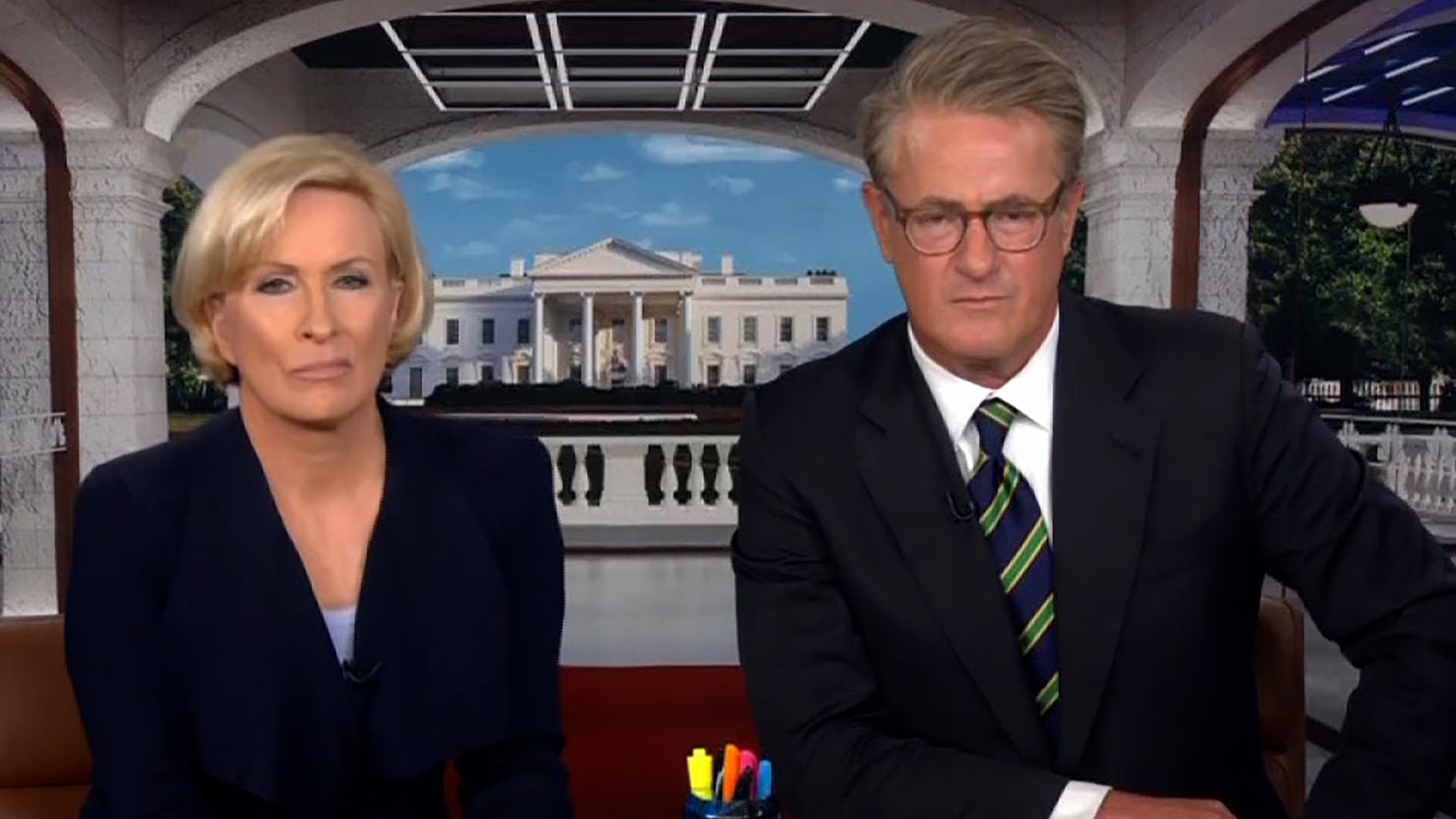


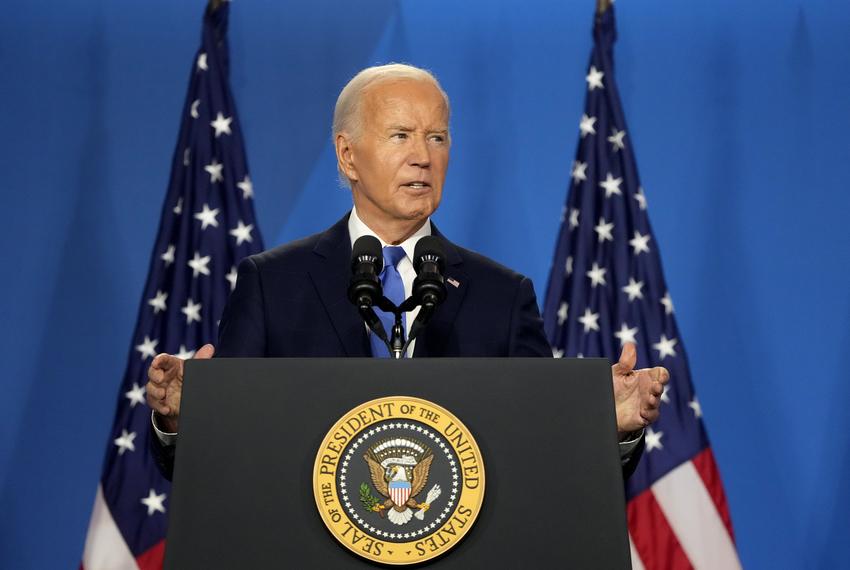 DC Democrats are still fighting each other over whether Biden should be their nominee. This has been going on for 3 weeks now. No one ever explains how replacing him would work. All of the suggested replacements are polling worse than Biden, and are unknown to the average voter who doesn’t follow politics closely. Many of these “insiders” who want to replace Biden also want to dump Kamala Harris. That would guarantee losing black and women voters who are the base of the party.












 I’m really late getting started today, so I’m just going to get right to today’s news. Things are getting out of hand in the the Middle East, and Republicans in the House are determined to make the worse. They are also working hard to shut down the government unless they get all the goodies they are demanding. Johnson did manage to get a continuing resolution passed, but he depended on Democratic votes. Meanwhile the Republicans are holding back funding for Ukraine’s fight against Russia.





 The list of examples from around the globe should shock a few politicians into taking action. I can say that it won’t happen here in America’s Oil Coast. Our politicians are wholly owned subsidiaries of oil and gas companies. Our next Governor will be worse than Jindal, which says a lot. All Republican pols are saying that we’re not drilling enough and 2023 has evidence to the contrary. This is also from
  There are plenty more theats than promises on our horizon for 2024. This reminder from
  Gustaf Kilander of
  This is a really long read with a lot of history and some analysis that really will wake you up even though we’re all aware of the issue.
 You may read more about the decision at the breaking news at the links. The war itself is moving South which is exactly where Bibi sent Palenstian civilians. This is from the
  The year is definitely going to be a challenging one.
  I don’t want to get to deep in the weeds, but North Korea and China are sabre-rattling again too. This is from the

 peej
peej Carissa
 bostonboomer
 dakinikat
 ecocatwoman
 mablue2
 Mama Lopez
 peggysue22
 quixote
 skydancingguestblogger
 Mona (aka Wonk the Vote)



 Sky Dancing
Recent Comments