
Tuesday Reads: Why Can’t We All Just Get Along?
Posted: February 23, 2016 Filed under: morning reads, U.S. Politics | Tags: Bernie Sanders, Donald Trump, Hillary Clinton, Marco Rubio, Nevada Caucuses, Ted Cruz 44 Comments
The World of Peace and Harmony, Prinsa S., Kathmandu, Nepal
Age:13
Good Morning!!
Today the Republicans will caucus in Nevada, and Donald Trump will probably win. The Republican leadership is slowly moving through the stages of grief as they come to terms with the likelihood that the clowniest clown in the clown car will be at the top of their ticket in November.
Politico: GOP wakes up to Trump nightmare.
Establishment Republicans are reckoning with something they thought would never happen: That it might soon be too late to stop Donald Trump.
With the controversial businessman the clear front-runner heading into Nevada and next week’s Super Tuesday contests, there’s an emerging consensus that the odds of dislodging him are growing longer by the day. Whispered fears that Trump could become the Republican nominee have given way to a din of resigned conventional wisdom – with top party officials and strategists openly wondering what the path to defeating him will be….

”World Peace from Nagasaki Megami Bridge: Tamako and Maria” by 47 children of 175 members of Club Kids Peace in Tomachi Elementary School.
Lately they are telling themselves that if only the weaker candidates would drop out maybe Rubio or Cruz could win.
The biggest hurdle confronting the mogul’s four rivals is that they continue to divide support among themselves. In each of the three contests that have been held so for, the anti-Trump field has fractured, making it impossible for any single contender to surpass him. A similar dynamic could play out again in Nevada, with Trump failing to win a majority of support but still earning more than his opponents.
While the field has winnowed somewhat in recent days, the compressed nature of this year’s Republican primary calendar means there is precious little time for the anti-Trump field to consolidate. Should Trump notch his third consecutive win on Tuesday, some foresee him steamrolling through Super Tuesday a week later, when a quarter of the party’s delegates are awarded. A batch of newly released polls show him with sizable leads in several of those states, including Massachusetts and Georgia.
“Either Ted Cruz or Marco Rubio would have a shot at the nomination, but I don’t see how they can stop Donald Trump while both of them are splitting votes,” said Al Cardenas, a former Florida Republican Party and American Conservative Union chairman who had supported Jeb Bush. “I don’t see either senator, both of whom have strong-willed backers, dropping out any time soon. Maybe after March 15, but will that be too late to stop Trump?”
It should be funny to see the GOP panicking, but I dread having to watch the repulsive spectacle that the presidential election would be if Trump were one of the candidates. The primary race has already been way beyond disgusting.

If We Could Just Join Hands
Washington Post: GOP candidates make intense 11th-hour arguments in Nevada.
Front-runner Donald Trump delivered a broadside against competitor Ted Cruz, telling thousands in Las Vegas he thinks the Texas senator “is sick.”
“There’s something wrong with this guy,” said Trump.
For his part, Cruz spent significant time Monday seeking to explain the ouster of his spokesman for tweeting a story that falsely accused White House hopeful Marco Rubio of insulting the Bible. And when the candidates weren’t directing their fire at each other, they used scattered appearances on the eve of Tuesday’s caucuses to assail Democratic candidate Hillary Clinton.
So raucous was this day that Trump stopped short at one point in his talk to bemoan the very delegate-selection he was in Nevada to tap.
“Forget the word caucus,” he told a crowd of some 5,000. “Just go out and vote, OK?” At another point, he said, “What the hell is caucus?”
This is the kind of idiocy that we have to look forward to this fall.

Prize-winning poster by middle school student Daniel Mendoza
Ted Cruz tried to steal some of Trump’s thunder by promising to deport 12 million undocumented immigrants. The Dallas Morning News:
Ted Cruz said…that he would use federal immigration officers to round up and deport all 12 million people in the country illegally — a markedly tougher stance that he has struck in the past.
“Yes, we should deport them,” Cruz told Fox host Bill O’Reilly. “That’s what ICE exists for. We have law enforcement that looks for people who are violating the laws, that apprehends them and deports them.”
The toughening stance comes after a disappointing, if narrow, third place finish in South Carolina on Saturday, with immigration hardliner Donald Trump strengthening his grip on the race.
“There’s no change here,” Cruz spokeswoman Catherine Frazier said late Monday by email. “Cruz has been very clear: people who are here illegally should be deported. That is the law today. Period. They broke the law, they face the consequence. ICE exists for that purpose and they should continue to do their job. And on top of that any law enforcement that encounters those here illegally should follow the law and deport them.”
Marco Rubio is still the GOP “establishment’s” chosen candidate, but it’s difficult to see how he has much chance against Trump.

Here’s Paul Waldman at The Week: Donald Trump is about to do terrible things to Marco Rubio.
As bullies go, Donald Trump is unusually skilled.
When Trump decides to go after you, he considers carefully both your weak points and the audience for his attack. So when he decided to pummel Jeb Bush — apparently for his own amusement, as much as out of any real political concerns — he hit upon the idea that Bush was “low energy,” something Bush had a hard time countering without sounding like a whiny grade-schooler saying, “Am not!” More than anything else it was a dominance display, a way of showing voters he could push Jeb around and there was nothing Jeb could do about it. With a primary electorate primed by years of watching their candidates fetishize manliness and aggression, the attack touched a nerve.
And now with the Republican race effectively narrowed to three candidates, the one Trump hasn’t bothered to go after too often — Marco Rubio — must prepare for the mockery and rumor-mongering that will surely be coming his way from the frontrunner. Whether he can withstand it could go a long way toward determining how this race turns out.
Until now, Trump has been relatively soft on Rubio. But with the increasing possibility that Rubio could be the greatest threat to Trump winning the nomination, he’s almost certain to go after him. If the past is any guide, Trump will throw a bunch of different attacks Rubio’s way until he happens upon one that seems to resonate; then he’ll stick with it as long as it works. Trump is already dabbling in Rubio birtherism (though he doesn’t seem quite committed to it), but eventually he’ll find a line of personal criticism with just the right note of cruelty and derision….
Rubio may have avoided Trump’s wrath up until now, but that won’t last. The only question is what brand of contempt Trump will heap on him. It might be some kind of attack based on Rubio’s ethnicity, or it might be the same kind of you’re-a-girly-man insults he used on Bush. That could be effective, since Rubio does look like he didn’t graduate high school all that long ago. He could go after Rubio’s occasionally shaky finances, which Trump surely looks on with utter contempt, since as far as he’s concerned, not being rich makes you a loser.
To be honest, the insanity is really getting to me today. I can barely stand to read about these clowns anymore, much less actually watch them spew their hateful nonsense on TV. That’s why I’ve illustrated this post with art by children and adults about world peace.

Our world our future, Tongbram Mahesh Singh
A couple more links on Nevada:
Time: What to Watch at the Nevada Caucuses.
LA Times: Four big questions await answers Tuesday in Nevada’s Republican caucuses.
On the Democratic side, Senator Bernie Sanders is starting to look really desperate. Yesterday, instead of campaigning in South Carolina, where the primary is this Saturday, he came to Boston and then held a rally at another university–U. Mass Amherst. The appearance in Boston was billed as a “press conference,” but Sanders didn’t take questions. He just gave a variation of his stump speech with some more mean-spirited than usual attacks on Hillary Clinton thrown in. NBC News reports:
BOSTON—Just two days after losing to former Secretary of State Hillary Clinton in the Nevada caucuses, Senator Bernie Sanders launched a broadside against his rival, aggressively emphasizing differences between himself and Clinton on issues of campaign finance and trade policy.
“What I intend to do over the next number of weeks is kind of contrast my record to Secretary Clinton’s” Sanders began as he addressed the press at Boston’s International Association of Ironworkers, Local 7.
Keeping true to his word, the Vermont senator — who boasts of having never run a negative campaign — dove into a litany of contrast points he sees between himself and Clinton, launching some of the most direct swipes Sanders has taken at his competitor during this campaign season.
“I am delighted that Secretary Clinton month after month seems to be adopting more and more of the positions that we have advocated, that’s good,” he said.
“And in fact, she is beginning to use a lot of the language and phraseology that we have used,” Sanders added, joking that he saw a TV ad and thought it was him speaking despite Clinton’s photo being pictured in the spot.
Sanders hit Clinton hardest on her use of a Super PAC— the pro-Clinton Priorities USA – and used the group to tie her to Wall Street and big donor influences.
Nothing new there–just the same tired old smears and innuendo.

The headline in The Boston Globe this morning is kind of pathetic if you know anything about where most of the delegates are going to be won.
Bernie Sanders’ path to the nomination runs squarely through Massachusetts.
The Democratic primary could be effectively decided within the next two weeks, if Hillary Clinton’s campaign gets the outcome they’re looking for. With more than 1,000 delegates up for grabs, early March will be do-or-die for Bernie Sanders’ campaign….
“On Tuesday, March 1, we’re going to make history here in Massachusetts,” Sanders told a crowd Monday at UMass Amherst. “This great state is going to lead us forward to a political revolution.”
If Sanders’ political revolution is going anywhere on Super Tuesday, it will have to be in states like Massachusetts, where he has a demographic advantage [meaning lots of white liberals]….
As of Monday night, Clinton leads Sanders in pledged delegates 52 to 51, after votes were cast in Iowa, New Hampshire, and Nevada. Clinton is expected to trounce in South Carolina, where she has the strong support of black voters. Polls also show strong leads for the former secretary of state in Alabama, Arkansas, Georgia, Texas, and Virginia—all of which vote March 1.
But even if Sanders wins in states with lots of white people–like Massachusetts, Wisconsin, Minnesota, and Colorado–there no way he will win enough delegates to compete with Clinton. I just don’t see a path to the nomination for him when he’s polling so badly with people of color.’

Poster by Lianwei H. Chengdu, Sichuan, China age 17
I actually think it’s time for Clinton supporters to begin showing empathy and compassion for Sanders supporters–especially the young ones who really don’t understand how politics works. They are going to have broken hearts soon, and we need to help bind their wounds and make them feel welcome in the party. I don’t think we should start telling Bernie to quit–let him go on as long as he wants and let his followers vote for him.
More stories to check out:
Pew Research Center: Majority of Public Wants Senate to Act on Obama’s Court Nominee.
New York Times: Seas are Rising at Fastest Rate in Last 28 Centuries.
Washington Post: ‘Slaps on the wrist’ for white men who watched friend throw black man onto train tracks.
Politico: Spike Lee backs Sanders in radio ad.
Politico: Ben Carson: Obama was ‘raised white.’
Gawker: Hot Mic Captures Trump Chatting With Morning Joe Hosts: “You Had Me Almost As a Legendary Figure.”
Media Matters: 8 Things Trump And Morning Joe Hosts Discussed When Cameras Were Off.
Digby: When is MSNBC going to do something about this?
Mass Politics Profs: Warren Won’t Endorse Sanders.
AP: Gun maker seeks dismissal of lawsuit over Newtown shooting. (Thanks to the bill Sanders voted for.)
Politico: Bernie’s Spring Break Blues. “When Bernie Sanders will need college students the most, they’ll be watching Netflix and partying.”
So . . . what stories are you following today?
Friday Reads: This and That, Good and Bad, Policy and Empty Promises
Posted: February 19, 2016 Filed under: Afternoon Reads | Tags: Bernie Sanders, Bobby Jindal, Crisis of Public Health care in Louisiana, Harper Lee, Louisiana financial wreck, Sports stealing from Higher Ed, Ted Cruz, unrealistic policy goals 17 CommentsGood Afternoon!
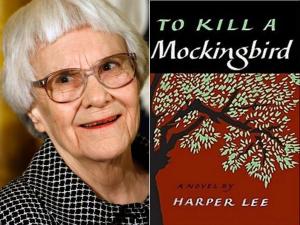 We heard this morning of the passing of the great writer Harper Lee.
Harper Lee, the author of the classic novel To Kill a Mockingbird, has died in her hometown of Monroeville, Ala. The Pulitzer Prize-winning writer was 89.
Monroeville city officials confirmed reports of Lee’s death to Alabama Public Radio. Her publisher, HarperCollins, also confirmed the news to NPR.
Her famous novel about a young girl’s experience of racial tensions in a small Southern town has sold tens of millions of copies and been translated into dozens of languages.
Lee’s family issued a statement Friday morning saying that Lee “passed away in her sleep early this morning. Her passing was unexpected. She remained in good basic health until her passing.”
Family spokesman Hank Conner, Lee’s nephew, said:
“This is a sad day for our family. America and the world knew Harper Lee as one of the last century’s most beloved authors. We knew her as Nelle Harper Lee, a loving member of our family, a devoted friend to the many good people who touched her life, and a generous soul in our community and our state. We will miss her dearly.”
The family says that as Lee had requested, a private funeral service will be held.
Lee’s novel is probably one of the greatest stories showing American Life ever written. It is studied by students and beloved by all that read about Scout and see the movie adaptation.
More than a half-century after its publication, the novel continues to be studied by high school and college students. It has sold more than 30 million copies—still selling nearly a million copies per year by the 50th anniversary of its publication in 2010, according to Publishers Weekly–and has been translated into more than 40 languages.
The film adaptation of the novel, with Gregory Peck as Atticus Finch and Mary Badham as Scout, opened on Christmas Day of 1962 and was an instant hit. It was nominated for eight Academy Awards and won four, including Best Actor for Peck and Best Screenplay for Horton Foote, who wrote the screenplay for the movie based on the book. Lee became close friends with both of them.
The novel also inspired a generation of lawyers with its portrayal of the gentle, wise Atticus Finch, who defends a black man, Tom Robinson, falsely accused of raping Mayella Ewell, a white woman. Meanwhile, the Finches’ strange neighbor, Boo Radley, who strikes fear in Scout’s and Jem’s hearts, turns out not to be the monster the children expect him to be.
Though Lee denied that the novel was autobiographical, many parallels exist between “To Kill a Mockingbird” and Lee’s own childhood. Her father was also a lawyer who owned the town newspaper. Comparisons have been made between Lee and Scout, the 9-year-old tomboy protagonist, especially in her friendship with Dill, a character widely considered to have been based on Lee’s own childhood friend, Truman Capote.
When he was a child, the author of “In Cold Blood” often stayed with his cousins, who lived next door to the Lees. Capote and Lee collaborated on the early stages of his novel and remained lifelong friends.
The interior of the Monroe County Courthouse was reconstructed on a movie set in Hollywood for the film’s pivotal courtroom scenes, and local actors bring the book to life each spring at the courthouse itself, where they stage “To Kill a Mockingbird” to sellout crowds.
BB wrote extensively about Lee’s publication last year of a novel that delves back into the lives of the Finch family .
A Chicago court is scheduled to hear a lawsuit asking for Cruz to be removed from the ballot in Illinois.
A judge will hear arguments on Friday from an Illinois voter alleging that Republican presidential hopeful Ted Cruz is not a “natural-born citizen” and should be disqualified for the party’s nomination.
Lawrence Joyce, an Illinois voter who has objected to Cruz’s placement on the Illinois primary ballot next month, will have his case heard in the Circuit Court of Cook County in Chicago. Joyce’s previous objection, made to the state’s Board of Elections, was dismissed on February 1. He appealed the decision and was granted a hearing for Friday before Judge Maureen Ward Kirby.
Joyce challenges Cruz’s right to be president in the wake of questions put forth by GOP rival Donald Trump about being born in Canada. Cruz maintains he is a natural-born citizen since his mother is American-born.
“What I fear is that Ted Cruz becomes the nominee, come September, Congressman Alan Grayson of Florida will go forward with his threats and probably several other Democrats will file suit to prevent Ted Cruz from being on the ballot,” Joyce, a pharmacist and attorney from Poplar Grove, Ill, told USA TODAY.
Grayson, a Democrat, has told reporters that he will file a lawsuit contesting Cruz’s citizenship if the senator from Texas wins the GOP nomination.
“What Democrats will do at that point is cherry pick which county courthouse they are going to show up in order to file these petitions,” Joyce said. “And at that point, I fear they’ll get a string of victories in the lower courts and the funding for Ted Cruz would dry up, his numbers would plummet in the polls, he may be forced to give up the nomination.”
 The primary and caucus tomorrow continues to be the top headline grabber. I liked this Charlie Pierce item describing the relationship between the Trump Candidacy and the late Lee Atwater. It’s an excellent essay into Atwater’s legacy and life.
What Atwater did was more than inject into Republican politics a modern form of strategic viciousness. With it, he injected an entirely new form of strategic unreality. From that has come the party’s inability to recognize or acknowledge the empirical. By creating an entirely new Dukakis in which his voters could believe, Atwater showed them how to build the bubble and to armor it against reality. The combination of strategic viciousness and strategic unreality has come full flower this year. We have Donald Trump, who is one ring of the circus all to himself, calling his opponents liars and Mexicans rapists, and threatening to sue Ted Cruz, who responds by telling Trump to bring it on, and that he, Cruz, would be happy to depose Trump in discovery personally. And Marco Rubio is telling people that the United States is at the edge of the abyss and that only he can restore it to its former glory. What seemed crude and nasty in 1980 has become sleek and edgeless and as common as milk now.
Both my daughters and I went to public universities where football is so central to the university’s life, fundraising, and culture that everything else seemed underfunded and small by comparison. As a professor and a student I have experienced things that still make me shake my head. Local investigative reporter Lee Zurik dug some things up in our state’s colleges--not the flagship LSU–that will make your toes curl. This is really disheartening given the drain of funds from university’s missions due to the Jindal-caused financial crisis.
Professors laid off. Classes cut. Campus buildings falling apart, and students left wondering why.
These are not simply the risks to higher education in the future. This has been happening, in slow and painful stages, for the last eight years across the state of Louisiana.
Mary Brocato can attest to it.
“I say that I’m the Angelina Jolie of dogs,” she jokes with us at her home in northwest Louisiana, surrounded by her six dogs. “They’re a lot of company for me.”
Brocato lived in New Orleans for 20 years before moving to Natchitoches, where she spent 12 years teaching journalism at Northwestern State University. In the past eight years, Brocato has lost both her job and her husband.
Cutbacks at Northwestern State eliminated the journalism program there; the university fired Brocato, a tenured professor, in the spring of 2011.
“The real sin or crime there was those students… who had started and who had been in the program and got caught in the middle,” Brocato tells us. “And they could not get a degree in journalism.”
The year before Northwestern State cut journalism, chemistry, economics, physics and other programs, the school sent $3,689,522 from its operating budget to athletics. By the time Brocato left, that athletics supplement had increased by almost $300,000.
That’s roughly the same amount as her journalism department’s annual budget; Northwestern State raised its monetary support to athletics while cutting a program that cost about as much money.
“It shows where the emphasis is,” Brocato says, “that there seems to be more emphasis and more accommodation for athletics than there is for academics. And I don’t like it. I think it’s very dishonest… because I don’t think people understand that.”
Brocato’s professorship paid her $77,600 a year. A year after they let her go, the athletics department paid Mississippi Valley State University nearly the same amount of money, $75,000, to come play them in football.
While the school cut professors and programs, administrators paid $75,000 for what’s called a “game guarantee” – essentially trying to guarantee the school a home win in football.
Such guarantees are a surprise to some of the NSU students we spoke with, on campus in Natchitoches.
“I would cry,” one tells us. “Is that like Information that everybody knows? That should be known by everyone.”
Also in 2012, Northwestern State paid another football opponent, Arkansas-Monticello, $37,500. That comes to roughly $112,000 in game guarantees – for a football team that finished that season with a 4-7 record.
“That’s literally throwing money away,” says the student.
“It blows my mind,” says another co-ed.
I taught at one of these regional universities where the football team is like another extension of the local highschool. Maintaining athletics programs at the expense of the education mission of the school is really a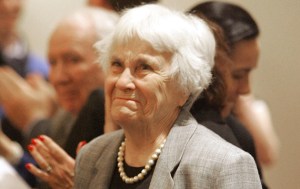 disservice to the community and the students. However, most administrators are convinced the school has to try to support the various programs. I’ve basically seen from the viewpoint of student and professor the major coddling these students get. It’s really time and resource intense and as a brainy little girl, I did not appreciate being frequently circled by athletes trying to “borrow” my work.
Schools aren’t the only thing still suffering from the Jindal Reign of Terror. We face the clear possibility that the poorest among us will no longer have access to health care all over the state. Doctor and nurse training are in jeopardy also.
Several of Louisiana’s privatized safety net hospitals, including University Medical Center in New Orleans and Our Lady of the Lake in Baton Rouge, are considering walking away from their contracts with the state under “best case” budget cut scenarios being debated in the Legislature.
The CEOs of seven hospitals told Senate Finance members Wednesday that the $137.8 million in proposed cuts would either cause steep dropoffs in their ability to deliver care to the poor, or cause them to halt operations altogether. All of the hospitals, which represent every major population center in the state, play a pivotal role in treating the poor and uninsured and are considered a centerpiece of Gov. John Bel Edwards’ Medicaid expansion policy. Many of the hospitals educate hundreds of new doctors annually and place them in jobs across the state.
The threat of canceling contracts with the nine safety net hospitals could mean a major setback for Legislators looking to close the state’s $940 million budget gap through a mix of tax increases and spending cuts. If the contracts are canceled, lawmakers risk leaving Baton Rouge after the special session in March to face constituents angry over health care worker layoffs and patients being told they are losing access to care.
“We’re going to have to hit the reset button,” said state Sen. Fred Mills, a Republican who represents Acadiana. “It would be devastating for my area.”
University Medical Center in New Orleans, which is facing a $44 million cut under the best-case scenario, could present the biggest crisis in the entire partnership system if it terminates its agreement. In addition to scattering indigent patients to surrounding emergency rooms that would be flooded with new people seeking care, the hospital is also leasing a brand new facility on Canal Street that represents a $1.1 billion investment for the state.
The hospital also makes millions of dollars in lease payments to the state.
Asked if UMC would be able to continue operating under the $44 million cut, UMC’s CEO, Greg Feirn, told the Senate Finance committee that the funding cut would be “devastating” to nearby university teaching programs. Losing funding would likely mean the system would cancel the contract.
“We can’t risk our balance sheet to fund what’s otherwise a state obligation,” Feirn said. “If we have significant capital investment by way of these payments, or capital expenditures in the future, why would we continue to make those with an uncertain revenue stream?”
We have Jindal, Grover Norquist, and the basic agenda of the Koch Brothers to thank for this. Here’s the one big reason we don’t bring in funds any more to run our most basic services. A close look at Kansas shows similar trends too. Our spineless leges still won’t face up to the damage they’ve done and work to correct it.
Louisiana’s taxes on business are supposed to help government provide its many services.
But the state has paid out $210 million more in tax credits and rebates to corporations so far this year than it has collected in corporate income and franchise taxes, reports the Department of Revenue. That shortfall is contributing to the massive budget gap that the 25-day special legislative session is supposed to address.No one is claiming that large numbers of corporations are violating the law to avoid paying taxes. What has happened is that state lawmakers over the years — and especially during Gov. Bobby Jindal’s two terms – have been increasingly generous in creating the tax subsidies, at the behest of corporate interests and their lobbyists in Baton Rouge.
A tax break here and a tax break there, over time they have added up, as The Advocate reported in a 2014 series of articles: Tax breaks for six major programs alone cost the state $1.08 billion in 2014, up from $207 million in 2004.
You can read more indepth about how Jindal and his cronies gave our state away in this extremely good article from two years ago. It’s the one referenced above. I wrote about it at the time.
 I really meant to spent some time today on the incredible criticism of wonks and economists on the Sanders’ policy suggestions but I’m seriously to tired to do it. I’ll just throw this latest link and we can discuss it down thread. Those of us joining the criticism have been facing charges of being too close to industry to have any kind of integrity.
Bernie Sanders has a problem with the liberal wonkosphere — or, more precisely, the liberal wonkosphere has a problem with Bernie Sanders.
With every upward tick in Mr. Sanders’s poll numbers in the last few months, there has been a corresponding rise in a very specific type of commentary: Left-of-center policy experts and former staffers for Democratic officials have questioned his plans as unwise, unrealistic or both.
On Wednesday, it took the form of a joint letter from four people who led the White House Council of Economic Advisers during the Clinton and Obama administrations. They criticized projections by Gerald Friedman, an economist who has advised Mr. Sanders, of what the candidate’s policy proposals would achieve. Their comments were quickly echoed by the liberal economists Brad DeLong and Paul Krugman. The health care experts Kenneth Thorpe of Emory University and Henry Aaron of the Brookings Institution have also been tough on Mr. Sanders’s health care plan.
Behind the critiques: Mr. Sanders’s advisers have often worked off assumptions that their policies would sharply increase economic growth, reduce health care costs and create other salutary effects, making the policies in question look more affordable and desirable than they would with more cautious assumptions.
This is the analysis that really appealed to me as I watched Christie Romer get criticized last night on twitter for not having particularly good analysis about the financial crisis and need for stimulus. Actually, her number krunching was fine and she had suggested a much bigger stimulus. It was the politics that silenced her and nothing else.
The wonkosphere vs. Bernie clash is not just a story of center-left versus left-left. It is also a clash between those who have been in the trenches of trying to make public policy for the last seven years versus those who can exist in a kind of theoretical world of imagining what public policy ought to be.
Suppose, for a moment, that you worked as a staff member to a Democratic member of Congress, or perhaps in the Obama administration, or in the world of academics and think tank experts advising both.
Perhaps you worked countless all-nighters on the language of the Affordable Care Act or the Dodd-Frank Act — or maybe you were at an agency trying to write the thousands of pages of regulations to institute those laws, or even an advocacy group trying to nudge all of the above to the left.
You know the compromises that were made back in 2010 and why — uniting 55 or 60 senators with wildly different political temperaments and local politics was really hard. You had to come up with a bill that could get a “Yes” vote from both a centrist like Joe Lieberman or Joe Manchin and, well, a democratic socialist like Bernie Sanders.
You’re convinced that those laws — much hated by both conservatives and the industries they overhauled — made the United States a better place, helping millions more people afford health care and reining in the financial industry. You know the laws aren’t perfect — but also believe that future presidents and Congresses should build on them, much as Social Security and Medicare are now much expanded from their original charters.
Now comes a man who has had to answer only to voters in the most liberal state in the nation, who has never had the responsibility to actually pull together the disparate center-left coalition that is the Democratic Party to enact concrete legislation.
When Mr. Sanders argues for scrapping Obamacare’s intricately constructed mix of private health insurance with public subsidies for a single-payer government program, he’s essentially saying your efforts were useless, hopelessly corrupted by the health insurance industry. Same with Mr. Sanders’s call to break up the largest banks, as opposed to the current approach of just regulating them more intensively.
Then, if you criticize Mr. Sanders’s plans, or question their political feasibility, his supporters assail you as a member of a corrupt establishment.
Anyway, there’s a lot here for you to consider. What’s on your reading and blogging list today?
Iowa Caucus Monday Reads
Posted: February 1, 2016 Filed under: 2016 elections | Tags: Donald Trump, Hillary Clinton, Iowa Caucuses, Marco Rubio, Ted Cruz 51 CommentsLet the Games Begin!!!
 Today are the Iowa Caucuses that will likely make or break a lot of the more iffy candidates hanging on to the slim hope that somebody takes them seriously. Iowa first is a long tradition with some interesting twists. Some of the things that I learned so far in the 2016 silly season include the idea of a “kiddie table” debate and that pundits take Uber and that all those Iowa Uber drivers seem to be the source of anecdotal evidence on voting patterns.
This Iowa Caucus is not the Iowa Caucus of my parents. My father was the Ford Dealer in Council Bluffs, Iowa for over 25 years. They voted in the same elementary school where I practiced “duck and cover” during the Cuban Missile Crisis and saw my second grade teacher Miss Irma Long cry as she announced we’d be sent home because our President, Mr. Kennedy, had been shot in Texas. Most of the candidates of the ilk we have today would’ve been a really odd sight on the stump back then.
I can only imagine what my parents and their friends would say if this crazy looking man from Northern Louisiana showed up looking as he does–which is like someone who’s been lost on an island for years ranting crazily from too much sun–to rally for a candidate. But, the same group of Baptists that harassed one of my father’s clerks for doing laundry on Sunday because they saw the steam coming out of the dryer vent is probably uber excited about Ted Cruz and the duckstasy of religious fever. They want to holy roll all gay marriage supporters off the planet, I guess.
While stumping in Iowa for Ted Cruz on Sunday, “Duck Dynasty” star Phil Robertson declared that gay marriage is a sign of growing “depravity” and “perversion” in America.
Robertson, notorious for his racist and anti-gay remarks, said of marriage equality: “It is evil, it’s wicked, it’s sinful and they want us to swallow it.”
“We have to run this bunch out of Washington D.C.,” Robertson said. “We have to rid the earth of them. Get them out of there.”
Cruz followed Robertson on stage, calling the reality TV star “a joyful, cheerful, unapologetic voice of truth.”
Cruz is in hot water for a number of things. First, there are many they are still not convinced he meets the “natural born” qualification stated in the Constitution and Donald Trump mentions it every chance he can. Additionally, Cruz has used a push piece that has come under criticism by the Iowa Attorney General. The Strump is making a lot out of Cruz’s possibly illegal mailer.
Republican presidential candidate Donald Trump condemned mailers sent by Sen. Ted Cruz’s (R-TX) presidential campaign over the weekend, which implied Iowa voters had violated election law.
The mailer, which uses social pressure to urge potential voters to the polls, “grades” Iowa voters on their voting history — a practice not done by the state.
“I think it’s one of the most disgraceful things I have seen in politics,” Trump told MSNBC’s Chris Matthews on Sunday’s “Hardball.” “When you say violation, and then they’re giving you F’s for your voting records and they’re saying immediately come and vote. I think it’s one of the most horrible things that I have seen in politics.”
You can follow the link to TPM to see an example of the mailer. Meanwhile, every time Trump uses music, another musician tells him to cut it out. This time it’s Adele.
The Republican presidential candidate, whose slogan is “Make America great again”, has recently been playing Adele’s hit Rolling In The Deep as his “warm-up” music.
“Adele has not given permission for her music to be used for any political campaigning,” her spokesman confirmed.
It is not the first time Trump has been criticised for appropriating pop songs.
Lawyers for Aerosmith star Steven Tyler sent Trump’s campaign a cease-and-desist letter last year, after the politician played the band’s hit single Dream On at numerous rallies around the US.
The letter said Trump’s use of the song gave “a false impression” he endorsed Mr Trump’s presidential bid.
Trump responded on Twitter, saying he had the legal right to use the song, but had found “a better one to take its place”.
“Steven Tyler got more publicity on his song request than he’s gotten in 10 years. Good for him!” he added.
Blizzard conditions will be heading tonight to my childhood home in Council Bluffs which basically means there will be no fair weather turnout in a good deal of Eastern Iowa. It also means that youngest daughter will be digging out on Tuesday since she’s out there in the Omaha Boonie Suburbs.
My continued fascination with the parallels between Bernie and the Strump has me thinking on how the both of them seemed to have made the Super Pac and the billionaire donor class appear irrelevant. Trump is self-financing his campaign. Sanders has just passed a record for collecting money from small donors. It’s amazing to watch Jeb Bush struggle for attention while swimming in all that money.
With billionaire Donald Trump sitting firmly atop the Republican field, the willingness of big establishment donors to underwrite his competitors’ war chests has fizzled.
About 17 donors gave $1 million or more to groups backing Republican presidential candidates in the last six months of 2015, 60 percent fewer than the number who gave that much in the first half of the year, according to Federal Election Commission filings. And outside groups that can accept unlimited contributions accounted for about 27 percent of Republican fundraising in the second half, down from 78 percent.
Many donors contributed large sums early to create the perception that their candidate was financially viable to go the distance. Now, with the first-in-the-nation caucuses taking place today in Iowa and several other primaries happening in the coming weeks, much of that money isn’t being replenished as candidates enter a grueling and expensive phase of the campaign.
“Part of this is the Trump effect,” said Tony Corrado, a government professor at Colby College. “Some major establishment Republican donors are undoubtedly waiting to see which candidate will emerge as the best alternative to Trump.”
For some, that’s already begun. Marco Rubio, who has emerged as the leading establishment candidate in recent months, won the backing of two major conservative hedge fund donors — Paul Singer and Ken Griffin — each of whom gave $2.5 million in late 2015 to a super-PAC supporting Rubio, Conservative Solutions PAC.
Rubio’s also winning over some big money that previously backed Bush, who, as a frequent target of Trump’s jibes, has struggled to get traction with voters. After raising a record $103 million in the first half of the year, the super-PAC supporting Bush, Right to Rise USA, pulled in only $15 million over the next six months, the bulk of it from one donor.
 Rubio joins Clinton and Sanders as the top fund raisers.
The former secretary of state brought in over $37 million in the final three months of 2015 and started the year with $38 million in the bank. At the same time, the campaign spent $35 million in those three months. She continues to benefit from millions of dollars raised by her super PACs, including Priorities USA, which said Friday it has raised $50 million through this month. Two other groups supporting Clinton, American Bridge and Correct the Record, brought in an additional $6 million total.
And while Sanders has sworn off super PACs and criticizes Clinton’s largesse, a group run by National Nurses United is backing the Vermont senator regardless and has raised $2.3 million, with about half of that remaining, the group reported.
Clinton’s haul also meant a windfall for the Democratic National Committee and state Democratic parties across the country, who worked with Clinton’s campaign to raise money for the Hillary Victory Fund. In total, Clinton’s campaign raised $18 million for the DNC and state parties.
“We’re heading into the first caucuses and primaries with an organization second to none thanks to the support of hundreds of thousands of people across the country,” said Robby Mook, Clinton’s campaign manager. “We will have the resources necessary to wage a successful campaign in the early states and beyond.”
Sanders campaign manager Jeff Weaver touted the number of individual contributions — 3.25 million — the campaign has received. “As Secretary Clinton holds high-dollar fundraisers with the nation’s financial elite, our supporters have stepped up in a way that allows Bernie to spend the critical days before the caucuses talking to Iowans about his plans to fix a rigged economy and end a corrupt system of campaign finance,” Weaver said in a statement.
It looks like Hillary and the Strump are the expected winners tonight. Sanders, Cruz and Rubio all appear poised to close with some delegates since Iowa is not a winner take all state.
It would be entirely reasonable to presume that Bernie Sanders has momentum in Iowa. He’s gained on Hillary Clinton in national polls. Hekeeps pulling further ahead of Clinton in New Hampshire. And he’s made substantial gains in Iowa relative to his position late last year. December polls of Iowa showed Sanders behind by an average of 16 percentage points; the race is much closer now.
There’s just one problem: Sanders’s momentum may have stalled right when it counts the most.
The Des Moines Register’s Iowa poll released Saturday, for example, had Clinton leading Sanders by 3 percentage points. That means Iowa is close and winnable for Sanders; polling errors of 5 or even 10 percentage points are not uncommon in the caucuses. But it also means that Sanders hasn’t gained on Clinton. The previous Des Moines Register poll, released earlier in January, showed Clinton up by 2 percentage points instead.
The same story holds for other polling companies that have surveyed Iowa twice in January. A couple of these pollsters — American Research Group and Quinnipiac University — show Sanders leading. But they don’t show him gaining; Sanders also led in the previous edition of the ARG and Quinnipiac surveys.
 Clinton and Cruz are relying on a substantive ground game and good commit to caucus plans for GOTV activities. Sanders and Trump are hoping for a large turnout and the ability to overwhelm the caucuses where they do have a base. Cruz appears to be the one Republican with a substantive ground game. Cruz has a natural base with evangelicals that Trump has somewhat eroded. Cruz goes after the right wing religious voters.
It’s little more than 24 hours before the pivotal Iowa caucuses begin, and the presidential campaigns are still going strong. Especially for Ted Cruz, who TIME reporter Alex Altman says digs deep to his religious roots to connect with his conservative voters on the trail.
“Ted, the voice of sanity, in this time of calamity!” a voter exclaims at a campaign stop in a public library in northwest Iowa.
Cruz has been touring several towns in Iowa, and is one of the few candidates who planned to stop in all of the state’s 99 counties.
“This is part of Cruz’s strategy to win it the old fashioned way,” Altman said, “which is to go hand-to-hand in small towns, visit people, and tell them why he wants their vote.”
Iowa is primarily a rural state although there are vast differences between the east and western sections of the state. It is home to several really good universities and to the Amish. There are still plenty of farmers there including the grandfather of my future son-in-law who used to buy his F150s from my dad. Iowa folks are also very fond of their agriculture and ethanol subsidies. It’s going to be interesting to see how they weigh in tonight. I’m seeing lots of pictures and shots from places I recognize that don’t seem to have changed much in my 60 years on the planet. Parts of the state do not have reliable wifi still. There is also a large contingent of immigrants that work the slaughterhouses. It’s a state that looks like Mayberry in many ways. We’ll just have to see.
We will be posting a live blog with the returns later tonight. Caucus doors lock down around 8:30 cst. The weather will be important as will the intensity of the supporters. Who do you think is going to win tonight?
Tuesday Reads: Good News and Bad News and Other News
Posted: December 15, 2015 Filed under: morning reads, U.S. Politics | Tags: Donald Trump, final GOP debate, Fred Trump, housing discrimination, Ku Klux Klan, Las Vegas Journal-Review, Rachel Maddow, Racism, Rand Paul, Seldon Adelson, Ted Cruz 90 Comments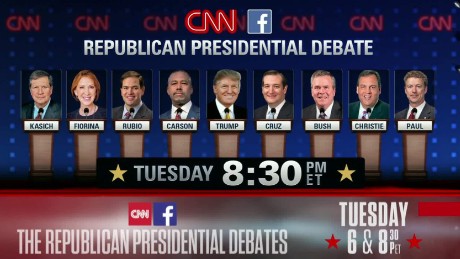
Good Afternoon!!
There’s good news and bad news today. The bad news is that there’s a Republican debate tonight. The good news is this is the last Republican debate before the primaries begin.
Honestly, I don’t know if I can stand to watch another GOP debate. I’ll probably give it a try, but I don’t know how long I’ll last. I’d watch the MSNBC coverage if Rachel Maddow were anchoring it; but for some reason Chris Matthews is doing it again.
It’s been quiet here as it usually is during the holiday season, so maybe we can use this thread to comment on the debate. If for some reason we get really busy, I’ll put up another thread tonight. Please let me know if you plan to watch the debate, and we’ll just play it by ear.
The main debate will begin at 8:30PM on CNN, and it will be live streamed on CNN’s website. There will be a kids table debate at 6PM with only four participants: Mike Huckabee, Rick Santorum, Lindsay Graham, and George Pataki.

U.S. Republican presidential candidate and Senator Rand Paul speaks during the Heritage Action for America presidential candidate forum in Greenville, South Carolina on September 18, 2015. REUTERS/Chris Keane – RTS1TOL
Rand Paul should be at the kid’s table; but for some strange reason CNN is letting him appear on the main stage–perhaps because he whined about it or maybe because CNN likes him, who knows. If you didn’t see it last night, I highly recommend watching Rachel Maddow’s report on the Rand Paul story.
Some stories about what could happen in tonight’s circus/horror show:
MSNBC: Five Storylines to Watch During Tonight’s GOP Debate.
Vox: Republican debate 2015 live stream: time, TV schedule, how to watch online.
CNN: Who will hold the winning hand at Vegas GOP debate? 7 things to watch.
NPR: Tonight’s GOP Debate: Cruz On The Rise As Terrorism Becomes Central Focus.
Ed Kilgore at NY Magazine: Can CNN Get the Cage Match It Wants in GOP Debate?
Here’s another strange story leading up to the debate in Las Vegas tonight. A very wealthy person has purchased the Las Vegas Review-Journal, and he wants to remain anonymous–even to the paper’s employees. Now who could this person be. Someone should ask Sheldon Adelson about it.
Mother Jones reports: Did a Republican Megadonor Just Secretly Buy Nevada’s Biggest Newspaper?
The sale has created a controversy because, while there is no rule requiring a newspaper to disclose its owners, the Journal-Review will be, by far, the largest newspaper in America whose owners are secret. The intrigue is not just journalistic: For a well-heeled person interested in influencing an election, owning the largest paper in the state that in a few short months will hold one of the first nominating events of the primary season (third for Democrats and fourth for Republicans) is a good place to start.
The news broke on Friday, when the paper’s management told employees that the publication, which had been owned by a publicly traded chain of newspapers called New Media Investment Group, had been sold for $140 million. The new owners? An LLC based in Delaware called News + Media Capital Group LLC. The only publicly available information on News + Media Capital Group LLC is that it was founded two months ago in Delaware, and it used a corporate agent that hides any identifying information.
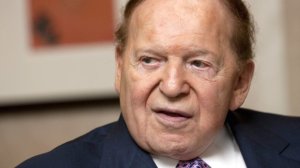
Sheldon Adelson, chairman of Las Vegas Sands Corp., speaks during an interview in Hong Kong, China, on Monday, Nov. 30, 2009. Jerome Favre/Bloomberg via Getty Images
WTF?!
TheReview-Journal’s management introduced a man named Michael Schroeder as the manager of News + Media Capital Group LLC. Schroeder has been the publisher of a very small chain of newspapers in Connecticut and declined to tell theReview-Journal who the new bosses were, other than to say they were “undisclosed financial backers with expertise in the media industry,” a description that does little to narrow down the field. Another detail that leaked from the paper’s management was that there are multiple owners, at least some of whom are based in Las Vegas. The description is odd, since most individuals who have invested in news organizations previously would be aware that refusing to say who owned the paper would do nothing but stir controversy, especially within the paper’s own staff.
The paper’s management also seemed almost determined to stoke controversy. According to the Huffington Post, a version of the story detailing the paper’s sale went to press with a quote that suggested Schroeder was dismissive of employee concerns about the new ownership.
“They want you to focus on your jobs…don’t worry about who they are,” Schroeder allegedly said at a meeting with employees. But the quote was pulled, as were other critical comments, before a new version of the article was printed.
I guess we’ll find out who it is eventually; but Adelson seems to be the most likely candidate, since he lives in Nevada.

A younger Donald Trump with his father Fred Trump
I know I’ve been writing way too much about Donald Trump lately, but I just had to share something that Dakinikat told me about yesterday. These are old links that I somehow missed when I wasn’t taking Trump seriously early on. Apologies if someone has posted these at Sky Dancing previously.
It looks very much like Donald Trump’s father was a member of the Ku Klux Klan as a young man. From Boing Boing: 1927 news report: Donald Trump’s dad arrested in KKK brawl with cops.
According to a New York Times article published in June 1927, a man with the name and address of Donald Trump’s father was arraigned after Klan members attacked cops in Queens, N.Y.
In an article subtitled “Klan assails policeman”, Fred Trump is named in among those taken in during a late May “battle” in which “1,000 Klansmen and 100 policemen staged a free-for-all.” At least two officers were hurt during the event, after which the Klan’s activities were denounced by the city’s Police Commissioner, Joseph A. Warren.
“The Klan not only wore gowns, but had hoods over their faces almost completely hiding their identity,” Warren was quoted as saying in the article, which goes on to identify seven men “arrested in the near-riot of the parade.”
Named alongside Trump are John E Kapp and John Marcy (charged with felonious assault in the attack on Patrolman William O’Neill and Sgt. William Lockyear), Fred Lyons, Thomas Caroll, Thomas Erwin, and Harry J Free. They were arraigned in Jamaica, N.Y. All seven were represented by the same lawyers, according to the article.
The final entry on the list reads: “Fred Trump of 175-24 Devonshire Road, Jamaica, was discharged.”
In 1927, Donald Trump’s father would have been 21 years old, and not yet a well-known figure. Multiple sources report his residence at the time—and throughout his life—at the same address.
Later on in his life, the elder Trump was sued for refusing to rent or sell his properties to African Americans.
A 1979 article, published by Village Voice, reported ona civil rights suitthat alleged that the Trumps refused to rent to black home-seekers, and quotes a rental agent who said Fred Trump instructed him not to rent to blacks and to encourage existing black tenants to leave. The case was settled in a 1975 consent degree described as “one of the most far-reaching ever negotiated,” but the Justice Department subsequently complained that continuing “racially discriminatory conduct by Trump agents has occurred with such frequency that it has created a substantial impediment to the full enjoyment of equal opportunity.”
If Donald Trump was raised in a home where racism was acceptable, that could explain some of his behavior today. It’s certainly interesting to know about this, and I regret that I didn’t read this article when it first appeared in September. You might want to read this piece at the Academe blog as well: Does It Matter if Donald Trump’s Father Was a Member of the Ku Klux Klan?
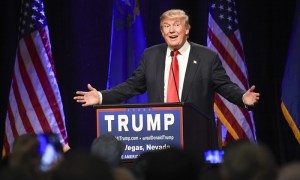
Naturally the Trump rally in Las Vegas last night produced more shocking news. McKay Coppins reports at Buzzfeed: Trump Campaign Rally Erupts In Chaos And Ugly Confrontation.
The Republican frontrunner had invited a supporter up to the stage to recount how his son was killed by an undocumented immigrant. Midway though the story, a pair of protesters interrupted.
“That’s why we need gun control!” one called out from the sea of Trump die-hards in the Westgate Resort and Casino ballroom. Click useful source here.
A zealous chorus of boos filled the room, while the two protesters brandished a homemade poster (“NO HATE. YOU’RE FIRED.”) and began shouting over the din….
By the time security swooped in, several amped-up Trump supporters had already encircled the protesters — booing, and chanting, and slowly closing in — while a crush of smartphone-wielding media scrambled to capture footage of the clash. The guards managed to remove one protester, but the other resisted, stiffening his limbs and screaming about the First Amendment as they tried to haul him toward the exits. When he toppled to the floor, a horde of rallygoers assembled to hurl insults and threats at him.
“Light the motherfucker on fire!” one Trump supporter yelled….
One after another, protesters were forcibly dragged from the ballroom — limbs flailing, torsos twisting in resistance — while wild-eyed Trump supporters spewed abuse and calls to violence.
“Kick his ass!” yelled one.
“Shoot him!” shouted another.
Unreal.
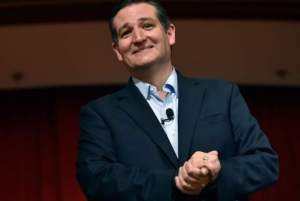
Trump’s main competitor tonight should be Ted Cruz. From CBS News: Why Ted Cruz might be a threat to Donald Trump.
Texas Sen. Ted Cruz has surpassed businessman Donald Trump in three recent Iowa polls of likely Republican Iowa caucus-goers. Trump has taken notice, and has begun to cast doubt on Cruz’s fitness for the presidency, calling Cruz a “bit of a maniac” on Fox News Sunday, for instance. The two have come a long way sincecampaigning together against the nuclear deal a few months ago, but that was back before Cruz was polling so well in Iowa.
Trump doesn’t like anyone who challenges his lead in the polls – he compared neurosurgeon Ben Carson to a child molester with a pathological disease when Carson’s popularity began rising among Iowans. But while Carson may be seeing his moment pass, Cruz is peaking as voters begin to settle on their favorite candidates, and his mastery of the issues reassures many evangelical voters who would otherwise like Carson.
Read the rest to learn the reasons author Rebecca Kaplan believes Cruz could beat Trump. Frankly, I think Cruz is actually the scarier of the two. A couple more articles on Cruz:
WaPo Wonkblog: A guide to what Ted Cruz really believes.
NBC News: GOP Latinos Slam Ted Cruz and Self-Deportation Plan On Eve of Debate.
So . . . will you be watching the clown show tonight? What stories are you following?
Thursday Reads: A Quick Rundown
Posted: November 5, 2015 Filed under: Barack Obama, Foreign Affairs, morning reads, Republican politics, U.S. Politics | Tags: Ben Carson, Dick Cheney, Donald Rumsfeld, Donald Trump, George H. W. Bush, George W. Bush, Ted Cruz 19 Comments
Good Morning!!
This is going to be a quick post, because I think my tooth is getting infected. This is the tooth I was supposed to get a temporary crown for on Tuesday. I’m going to have to call the dentist’s office and see if I can get in on an emergency basis. My Mesa Dentist just opened a practice here and she is already on a wait. Probably from all my referrals. She called me personally Tuesday and chastised me for not making my appointment. I can’t wait to hear what she tells me when I call and tell her it is infected. There’s lots of news this morning, so I’m going to give you a quick rundown, and I’ll try to do something more substantive later on.
First, a dispatch from the “forever war,” intelligence sources in the U.S. and Great Britain are claiming that the recent crash of a Russian plane was caused by an ISIS bomb. CNN reports:
Days after authorities dismissed claims that ISIS brought down a Russian passenger jet, a U.S. intelligence analysis now suggests that the terror group or its affiliates planted a bomb on the plane.
British Foreign Minister Philip Hammond said his government believes there is a “significant possibility” that an explosive device caused the crash. And a Middle East source briefed on intelligence matters also said it appears likely someone placed a bomb aboard the aircraft.
Metrojet Flight 9268 crashed Saturday in Egypt’s Sinai Peninsula after breaking apart in midair, killing all 224 people on board. It was en route to St. Petersburg from the Red Sea resort of Sharm el-Sheikh.
The latest U.S. intelligence suggests that the crash was most likely caused by a bomb planted on the plane by ISIS or an affiliate, according to multiple U.S. officials who spoke with CNN.
The officials stressed that no formal conclusion has been reached by the U.S. intelligence community and that U.S. officials haven’t seen forensic evidence from the crash investigation.
Intelligence also suggests someone at the Sharm el-Sheikh airport helped get a bomb onto the plane, one U.S. official said.

We’re never going to get out of the Middle East, thanks Bush and Cheney. Speaking of those two, there’s a new book out in which George H.W. Bush claims that Dubya was betrayed by his advisers–you know, all those long-time Bush family pals that George senior passed on to his son?
In “Destiny and Power: The American Odyssey Of George Herbert Walker Bush,” author Jon Meacham quotes Bush as saying that Cheney and Rumsfeld were too hawkish and that their harsh stance damaged the reputation of the United States, the cable news network said.
Speaking of Cheney, who was vice president under President George W. Bush, the senior Bush said: “I don’t know, he just became very hard-line and very different from the Dick Cheney I knew and worked with,” according to the report….
“The reaction (to Sept. 11), what to do about the Middle East. Just iron-ass. His seeming knuckling under to the real hard-charging guys who want to fight about everything, use force to get our way in the Middle East,” Bush told Meacham in the book to be published next Tuesday….
On Rumsfeld, secretary of defense for most of the two terms served by his son, Bush is even more critical. He is quoted as saying: “I don’t like what he did, and I think it hurt the President,” referring to his son.
“I’ve never been that close to him anyway. There’s a lack of humility, a lack of seeing what the other guy thinks. He’s more kick ass and take names, take numbers. I think he paid a price for that. Rumsfeld was an arrogant fellow,” he was quoted as saying in the biography. Read more about the book and the Bush interview at The New York Times.

The Democratic Party is in deep trouble, as demonstrated by Tuesday’s election results. Greg Sargent: A brutal reality check for the Democratic Party.
The news that Tea Party Republican Matt Bevin snatched the Kentucky governor’s mansion away from Democrats is a particularly stark reminder of how deep a hole Democrats have dug for themselves at the state level, and of the consequences that could have for the long-term success of the liberal and Democratic agenda.
Bevin will replace Democratic governor Steve Beshear, who was perhaps the leading evangelist for the Affordable Care Act in the South. Beshear famously set up a Kentucky health insurance exchange and opted in to Obamacare’s Medicaid expansion amid a region of hostility towards the law. Bevin has pledged to transition people off of the exchange to the federal one, and to shut down the state’s Medicaid expansion. But in Kentucky, the law has succeeded at its primary goal: Early on it successfully brought health coverage to some of the state’s (and the country’s) poorest and unhealthiest counties, and Gallupfound earlier this year that Kentucky boasted the second largest drop in the uninsured rate of any state in the country.
Now those policy gains may be in some doubt.
Read the Rest at the WaPo. And from Chris Cillizza: Matt Bevin is the next governor of Kentucky. He has President Obama to thank.
Matt Bevin, the Republican nominee in the Kentucky governor’s race, wasn’t a very good candidate. By all accounts, he was standoffish and ill at ease on the campaign trail, and inconsistent — to put it nicely — when it came to policy. The Republican Governors Association, frustrated with Bevin and his campaign, pulled its advertising from the state. Polling done in the runup to today’s vote showed Bevin trailing state Attorney General Jack Conway (D).
And yet, Bevin won going away on Tuesday night. How? Two words: Barack Obama.
Obama is deeply unpopular in Kentucky. He won under 38 percent of the vote in the Bluegrass State in 2012 after taking 41 percent in 2008. In the 2012 Democratic primary, “uncommitted” took 42 percent of the vote against the unchallenged Obama. One Republican close to the Kentucky gubernatorial race said that polling done in the final days put Obama’s unpopularity at 70 percent.

Again, read the rest at the WaPo. Too bad Obama didn’t stick with Howard Dean’s 50-state strategy, while the Republicans ran with it.
Some updates on 2016 GOP primary campaigns . . .
David Wasserman at FiveThirtyEight: The GOP Primary Rules Might Doom Carson, Cruz, and Trump.
In a few months, after Iowa and New Hampshire begin to winnow the field, the GOP nomination race could boil down to an epic final between a candidate with a more pragmatic image, such as Marco Rubio, Carly Fiorina or Jeb Bush, and a more conservative one, such as Ted Cruz, Ben Carson or Donald Trump.1
If that happens, the moderate finalist — like Mitt Romney and John McCain before him or her — will have a hidden structural advantage: the party’s delegate math and geography.
There are plenty of reasons to be cautious of national polls that show Trump and Carson leading. They may fail to screen out casual voters, for instance, and leaders at this point in past years have eventually tanked. But perhaps the biggest reason to ditch stock in these polls is that they’re simulating a national vote that will never take place.
In reality, the GOP nominating contest will be decided by an intricate, state-by-state slog for the 2,472 delegates at stake between February and June. And thanks to the Republican National Committee’s allocation rules, the votes of “Blue Zone” Republicans — the more moderate GOP primary voters who live in Democratic-leaning states and congressional districts — could weigh more than those of more conservative voters who live in deeply red zones. Put another way: The Republican voters who will have little to no sway in the general election could have some of the most sway in the primary.
As The New York Times’ Nate Cohn astutely observed in January, Republicans in blue states hold surprising power in the GOP presidential primary process even though they are “all but extinct in Washington, since their candidates lose general elections to Democrats.” This explains why Republicans have selected relatively moderate presidential nominees while the party’s members in Congress have continued to veer right.
The key to this pattern: “Blue-state Republicans are less religious, more moderate and less rural than their red-state counterparts,” Cohn concluded after crunching Pew Research survey data. By Cohn’s math, Republicans in states that Obama won in 2012 were 15 percentage points likelier to support Romney in the 2012 primary and 9 points likelier to support McCain in 2008 than their red-state compatriots. Romney and McCain’s advantage in blue states made it “all but impossible for their more conservative challengers to win the nomination,” Cohn wrote.
Read much more interesting stuff at the link.

Ed Kilgore’s take on Ben Carson from TPM: Why Ben Carson Isn’t Going Away — And What Makes That So Scary.
During the last month the long-awaited, heavily-promoted decline in Donald Trump’s standing in the Republican presidential nominating contest has finally begun to occur. But aside from a small reshuffling of the order in the “lanes” (e.g., Rubio moving past Bush among Establishment Republicans and Cruz moving past Huckabee, Santorum and Jindal among experienced Christian Right candidates) to which the candidates have been assigned by the punditocracy, the big beneficiary of softening support for Trump has been another candidate with no experience in elected office, Dr. Ben Carson. He is running either first or a strong second in virtually everynational poll, and is now routinely leading polls of Iowa as well. His approval ratings, moreover, are extremely high, and best in the field. It’s safe to say he is almost universally admired by GOP voters.
The conventional wisdom is that Carson is beloved for being a genial, soft-spoken figure and a non-politician with a distinguished biography. That may be true, though this does not necessarily distinguish him from many thousands of his fellow Americans. An equally obvious factor is that he is African American, and Republicans frustrated with being accused of white identity politics if not outright racism love being able to support a black candidate who is as conservative as they are.
Less obvious — and finally being recognized by political reporters spending time in Iowa — is that Carson is a familiar, beloved figure to conservative evangelicals, who have been reading his books for years.
Another factor, and one that I emphasized in my own take here two months ago, is that Carson is a devoted believer in a number of surprisingly resonant right-wing conspiracy theories, which he articulates via dog whistles that excite fellow devotees (particularly fans of Glenn Beck, who shares much of Carson’s world-view) without alarming regular GOP voters or alerting the MSM.
As David Corn of Mother Jones has patiently explained, the real key for understanding Carson (like Beck) is via the works of Cold War-era John Birch Society member and prolific pseudo-historian W. Cleon Skousen, who stipulated that America was under siege from the secret domestic agents of global Marxism who masqueraded as liberals. Carson has also clearly bought into the idea that these crypto-commies are systematically applying the deceptive tactics of Saul Alinsky in order to destroy the country from within—a theme to which he alluded in the famous National Prayer Breakfast speech that launched his political career and in the first Republican presidential candidates’ debate.
Head over to TPM and read the rest.
There’s plenty more news this morning; I’ll try to put a few links in the comments. What stories are you following today?

 peej
peej Carissa
 bostonboomer
 dakinikat
 ecocatwoman
 mablue2
 Mama Lopez
 peggysue22
 quixote
 skydancingguestblogger
 Mona (aka Wonk the Vote)



 Sky Dancing
Recent Comments