Pretty soon the U.S. Supreme Court is going to have to get involved in the Trump mess. That became even more likely after the we got big news out of Colorado. The state’s supreme court has banned Trump from the 2024 ballot.
In a historic decision Tuesday, the Colorado Supreme Court barred Donald Trump from running in the state’s presidential primary after determining that he had engaged in insurrection on Jan. 6, 2021.
The 4-to-3 decision marked the first time a court has ruled to keep a presidential candidate off the ballot under an 1868 provision of the Constitution that bars insurrectionists from holding office. The ruling comes as courts in other states consider similar cases. All seven justices on the Colorado Supreme Court were initially appointed by Democratic governors.
If other states reach the same conclusion, Trump would have a difficult — if not impossible — time securing the Republican nomination and winning in November.
The decision is certain to be appealed to the U.S. Supreme Court, but it will be up to the justices to decide whether to take the case. Scholars have said only the nation’s high court can settle for all states whether the Jan. 6 attack on the U.S. Capitol constituted an insurrection and whether Trump is banned from running.
“A majority of the court holds that President Trump is disqualified from holding the office of President under Section Three of the Fourteenth Amendment to the United States Constitution,” the decision reads. “Because he is disqualified, it would be a wrongful act under the Election Code for the Colorado Secretary of State to list him as a candidate on the presidential primary ballot.”
The U.S. Supreme Court justices separately are weighing a request from special counsel Jack Smith to expedite consideration of Trump’s immunity claim in one of his criminal cases — his federal indictment in Washington on charges of illegally trying to obstruct Joe Biden’s 2020 election victory. Trump has denied wrongdoing.
The Colorado Supreme Court’s majority determined that the trial judge was allowed to consider Congress’s investigation of the Jan. 6, 2021, attack on the U.S. Capitol, which contributed to the determination that Trump engaged in insurrection.
“We conclude that the foregoing evidence, the great bulk of which was undisputed at trial, established that President Trump engaged in insurrection,” the majority wrote.
The decision by the Colorado Supreme Court to remove Donald Trump from the GOP primary ballot has cast us deeper into uncharted waters.
I had a vague notion even into adulthood that the constitutional order in America was challenged every 50 years or so in ways that stress-tested the system. By that measure, I regret to inform you that we live in extraordinary times.
Since 1998, some of the markers – by the numbers:
3 going on 4 presidential impeachments;
2 winning presidential candidates losing the popular vote;
1 going on 2 presidential elections decided by the Supreme Court;
1 attempted coup; and
4 criminal prosecutions of an ex-president.
While it’s not just Donald Trump, you can see his outsize impact on those numbers.
I’m not of the view that testing constitutional limits is somehow dangerous or ill-advised. We should thoroughly ventilate the 14th Amendment’s Disqualification Clause, as is being done now. It’s been a mistake, in my view, to spend decades circling around but never quite confronting the true extent of executive privilege. In the half century since Watergate, we shouldn’t have operated under the untested specter of a Justice Department opinion that sitting presidents can’t be criminally charged.
So I don’t think there’s anything inherently ill-advised about treating the Constitution as a robust mechanism to be used, tested, amended, and reinvigorated. Not every brush with a constitutional question is a constitutional crisis. (To clear up any possible confusion, I’m talking here about the constitutional structure itself, not the scope of individual rights protected by the Constitution, whose developments have their own history and evolution under the law.)
The next few months are going to see a series of new tests.
Read more, with suggestions for further reading at the TPM link.
I am traveling and so I offer only some brief and initial thoughts here about what the United States Supreme Court may and should do in light of the Colorado Supreme Court’s determination that Donald Trump is ineligible to serve as president under Section 3 of the 14th amendment for encouraging insurrection.
By Anatoly Deverin
My bottom line is that the Colorado opinion is a serious and careful opinion that reaches a reasonable conclusion that Trump is disqualified. Nonetheless the opinion reaches many novel legal issues that the U.S. Supreme Court could decide the other way should that court reach the merits. (The three dissenters on the Colorado court did not really reach the merits.) Trump would need to prevail on only one of these legal issues to win on any appeal, so in some ways the legal odds are with him.
It is far from clear that the U.S. Supreme Court will reach the merits—there are many legal doctrines like ripeness and mootness that would give the Court a way to avoid deciding the issues in the case. But it is imperative for the political stability of the U.S. to get a definitive judicial resolution of these questions as soon as possible. Voters need to know if the candidate they are supporting for President is eligible. And if we don’t get a final judicial resolution before January 6, 2025 a Democratic-majority Congress could decide Trump is disqualified even if he appears to win the electoral college vote. That would be tremendously destabilizing.
In the end the legal issues are close but the political ramifications of disqualification would be enormous. Once again the Supreme Court is being thrust into the center of a U.S. presidential election. But unlike in 2000 the general political instability in the United States makes the situation now much more precarious.
Any time people start fighting on the internet, someone will inevitably reach for the Hitler comparison. It’s a virtually unbreakable rule known as “Godwin’s law,” named after Mike Godwin, an early internet enthusiast who coined it back in 1990. It’s also understood that often the party mentioning Hitler or the Nazis is losing the argument, though that’s not part of the law itself.
Godwin’s law was invoked this weekend when President Joe Biden’s campaign said former President Donald Trump had “parroted Adolf Hitler” when he accused undocumented immigrants of “poisoning the blood of our country.”
But according to Godwin himself, that doesn’t mean Biden is losing the argument.
Lights in the Murk, 2022, Jeremy Miranda (American, b.1980)
“Trump’s opening himself up to the Hitler comparison,” Godwin said in an interview. And in his view, Trump is actively seeking to evoke the parallel.
Trump made almost identical comments in an interview with the far-right website The National Pulse in November, around the same time Trump also called his political opponents “vermin” — all rhetoric that Hitler used to disparage Jews.
“You could say the ‘vermin’ remark or the ‘poisoning the blood’ remark, maybe one of them would be a coincidence,” Godwin said. “But both of them pretty much make it clear that there’s something thematic going on, and I can’t believe it’s accidental.”
Comparisons to Hitler and the Nazis happen all the time, particularly in online discourse, but they’re often dismissed as ridiculous or clumsy. When public figures or their staff mention the H-word, it can provoke derision. But the Biden campaign has made a deadly serious statement, and a political wager that the public won’t dismiss the charge as hyperbole.
Read an interview with Godwin at the Politico link.
Former President Donald J. Trump on Tuesday doubled down on his widely condemned comment that undocumented immigrants are “poisoning the blood of our country,” rebuffing criticism that the language echoed Adolf Hitler by insisting that he had never read the Nazi dictator’s autobiographical manifesto.
Mr. Trump did not repeat the exact phrase, which has drawn criticism since he first uttered it in an interview with a right-leaning website and then repeated it at a rally in New Hampshire on Saturday.
But he said on Tuesday night in a speech in Iowa that undocumented immigrants from Africa, Asia and South America were “destroying the blood of our country,” before alluding to his previous comments.
“That’s what they’re doing. They’re destroying our country,” Mr. Trump continued. “They don’t like it when I said that. And I never read ‘Mein Kampf.’ They said, ‘Oh, Hitler said that.’”
He added that Hitler said it “in a much different way,” without making his meaning clear.
Undocumented immigrants, he added, “could be healthy. They could be very unhealthy. They could bring in disease that’s going to catch on in our country.” And he again said that they were “destroying the blood of our country” and “destroying the fabric of our country.”
Mr. Trump and his campaign have dismissed the comparisons between his remark and language used by Hitler using the words “poison” and “blood” to denigrate those who Hitler deemed a threat to the purity of the Aryan race.
In one chapter of “Mein Kampf” named “Race and People,” Hitler wrote, “All the great civilizations of the past became decadent because the originally creative race died out, as a result of contamination of the blood.” In another passage, he links “the poison which has invaded the national body” to an “influx of foreign blood.”
I believe that Trump has never read “Mein Kampf,” because he doesn’t read anything; but I have no doubt that Steven Miller–who writes Trump’s speeches–has read it. Trump was reading these Hitler-like words from his teleprompter.
When Washington Post owner Jeff Bezos wanted an assured hand to right the newspaper’s shaky finances, he turned to Will Lewis, a 54-year-old former editor of The Daily Telegraph and former publisher of The Wall Street Journal, whom he called “exceptional, tenacious.” Lewis will start as the Post‘s publisher and CEO in early January.
A dozen years ago, media magnate Rupert Murdoch also turned to Lewis when he wanted to find someone to rectify the hacking and bribery scandals engulfing his British Sunday tabloid, News of the World.
Lewis’ publicly stated charge was to root out newsroom corruption, cooperate with police and help settle claims from people targeted by the company’s journalists for voicemail and email hacking. The Guardian called him “News Corp’s clean-up campaigner.”
A very different picture of Lewis emerges from material presented in London courtrooms in recent months and reviewed by NPR. The man picked to lead the Post — a paper with the slogan “Democracy Dies in Darkness” — stands accused of helping to lead a massive cover-up of criminal activity when he was acting outside public view.
In lawsuits against News Corp.’s British newspapers, lawyers for Prince Harry and movie star Hugh Grant depict Lewis as a leader of a frenzied conspiracy to kneecap public officials hostile to a multibillion-dollar business deal and to delete millions of potentially damning emails. In addition, they allege, Lewis sought to shield the CEO of News Corp.’s British arm, News UK, from scrutiny and to conceal the extent of wrongdoing at News of the World‘s more profitable sister tabloid, The Sun.
In sum, the Duke of Sussex and Grant argue that Lewis was a linchpin of efforts to limit the fallout during a key period between late 2010 and 2012.
These concerns about Lewis’ actions have been percolating for years.
Through a spokesperson, Lewis declined to comment to NPR for this story. He previously denied the broad outlines of these accusations, saying they are utterly unfounded. Lewis has not personally been sued as part of any of this current litigation, which offers greater specificity and sweep to the allegations.
Long before Ron DeSantis’ presidential ambitions began to falter, it was clear to anyone paying close attention that there were fatal flaws in his much-hyped political operation.
“I had to have it explained to me the first time DeSantis came here for a parade,” an early DeSantis supporter in New Hampshire recalled to The Daily Beast. “I was gonna show up for the parade and I was informed, ‘This is a Never Back Down event, so you can’t mention anything about the campaign.’ And I was like, what the hell is this?”
This, the New Hampshire presidential campaign veteran would come to learn, was how the DeSantis campaign thought they’d cracked the code to beat former President Donald Trump.
Never Back Down was launched as a super PAC—loaded up with $80 million transferred from DeSantis’ state-level PAC in Florida—designed to carry him to the presidency through sheer force. The prospect of a talent-stocked PAC spending historic sums on organizing and campaign messaging was initially so fearsome that some Republicans dubbed Never Back Down the “Death Star.”
As the New Hampshire source’s befuddlement at the parade showed, however, Never Back Down’s ambitious vision was destined to collide with the strict federal rules barring campaigns and super PACs from cooperating on strategy or even communicating at all.
But few in Republican politics expected just how spectacularly this vaunted Death Star would ultimately implode.
“This will go down as maybe the worst-orchestrated effort in modern presidential history,” said a person familiar with Never Back Down’s operations.
Forest in Winter, Lawren S. Harris, Canadian, 1885-1970
After months spent out of sync with the campaign, a number of officials with Never Back Down have either resigned or been fired; top PAC strategists have cursed at each other and nearly come to blows in private meetings; and a new breakaway PAC has formed.
Most troubling of all, DeSantis might be sliding backward in his quest for the presidency despite the staggering sum of nearly $100 million that his PAC has spent to support him.
With DeSantis struggling to maintain even second place as the Iowa and New Hampshire contests near, the governor’s sympathizers are fully considering the consequences of his team’s big bet that they could outsource a huge primary victory to a super PAC.
“It is gonna cost us the election,” the DeSantis supporter, who later switched allegiance to a rival non-Trump campaign, recalled thinking to themselves several months ago, now describing the decision to outsource so many critical functions to Never Back Down as “a huge, huge mistake, and we could not afford one on this.”
“We’ll never win another election if we don’t stop PACs trying to become the campaign,” the former DeSantis supporter said.
Read more details at The Daily Beast.
Three more interesting stories, before I wrap this up:
A federal judge in New York has ordered a vast unsealing of court documents in early 2024 that will make public the names of scores of Jeffrey Epstein’s associates.
The documents are part of a settled civil lawsuit alleging Epstein’s one-time paramour Ghislaine Maxwell facilitated the sexual abuse of Virginia Giuffre. Terms of the 2017 settlement were not disclosed.
Maxwell is currently serving a 20-year prison sentence after she was convicted of sex trafficking and procuring girls for Epstein, who died by suicide in 2019 in a Manhattan jail while awaiting trial on federal sex trafficking charges.
Anyone who did not successfully fight to keep their name out of the civil case could see their name become public — including Epstein’s victims, co-conspirators and innocent associates.
Judge Loretta Preska set the release for Jan. 1, giving anyone who objects to their documents becoming public time to object. Her ruling, though, said that since some of the individuals have given media interviews their names should not stay private.
The documents may not make clear why a certain individual became associated with Giuffre’s lawsuit, but more than 150 people are expected to be identified in hundreds of files that may expose more about Epstein’s sex trafficking of women and girls in New York, New Mexico, the U.S. Virgin Islands and elsewhere. Some of the names may simply have been included in depositions, email or legal documents.
Some of the people have already been publicly associated with Epstein. For instance, Harvard law professor Alan Dershowitz is publicly named in the judge’s order. Certain minor victims will remain redacted.
Before Rudolph W. Giuliani was ordered to pay $148 million to two Georgia election workers he defamed, and before he owed his own lawyers several million dollars more, federal prosecutors were scrutinizing whether he pursued dubious business dealings in Ukraine to shore up his dwindling fortune, according to court records unsealed late Tuesday.
The documents lifted the veil on a criminal investigation that federal prosecutors spent three years conducting into the dealings of Mr. Giuliani, the former New York mayor who had reinvented himself as Donald J. Trump’s personal lawyer and attack dog.
Apple Grove Moon, Peter Skulthorpe
The investigation, which did not result in charges for Mr. Giuliani, centered on whether he illegally lobbied the Trump administration in 2019 on behalf of Ukrainian officials. Those same Ukrainians helped Mr. Giuliani dig for dirt on Joseph R. Biden Jr., who was then on his way to becoming the Democratic presidential nominee and who would ultimately defeat Mr. Trump in 2020.
The prosecutors had assembled enough evidence to persuade a judge in April 2021 to authorize the seizure of Mr. Giuliani’s phones and computers, an extraordinary step to take against any lawyer, let alone one who had represented a sitting president. And for a time, it appeared as if the prosecutors, working in the same Manhattan U.S. attorney’s office that Mr. Giuliani had presided over decades earlier, might seek to indict him.
But when they failed to find a smoking gun in Mr. Giuliani’s electronic records, the prosecutors notified the judge overseeing the matter that they had ended the long-running investigation.
A spokesman for Mr. Giuliani did not immediately respond to a request for comment late Tuesday.
The judge, J. Paul Oetken, recently ordered the prosecutors to release the search warrant materials in response to a request from The New York Times. Mr. Giuliani consented to the newspaper’s request, as did the government, with certain redactions to protect privacy interests.
While much of the evidence that underpinned the search warrant had already come to light in the media and through Mr. Trump’s first impeachment proceedings in late 2019,the search warrant materials represent the government’s most comprehensive catalog yet of Mr. Giuliani’s ties to Ukraine.
And for the first time, the records explicitly linked Mr. Giuliani’s recent financial troubles to his dealings in Ukraine, suggesting that he did not just want Ukrainian officials’ help in attacking Mr. Biden but also their money.
A federal judge on Tuesday granted the Justice Department access to nearly 1,700 records recovered from the cellphone of Rep. Scott Perry (R-Pa.) in a long-running legal battle in the criminal investigation of former president Donald Trump’s efforts to overturn the 2020 presidential election.
Chief U.S. District Judge James E. Boasberg of D.C. gave investigators access to 1,659 records and withheld 396 others after a federal appeals court directed him to individually review 2,055 communications from Perry’s phone to decide which were protected by the Constitution’s “speech or debate” clause, which grants members of Congress immunity from criminal investigation when acting in their official capacities.
The FBI seized Perry’s phone in August 2022 under a court order seeking to understand Perry’s involvement in the machinations that were the subject of Trump’s criminal indictment this August for allegedly plotting to prevent President Biden from taking office.
An outline of the contents of Perry’s sensitive discussions with Trump’s legal advisers, aides and others spilled into public view in a quickly withdrawn court filing last month, revealing details of efforts to gain access to secret intelligence about the election, to replace the attorney general with former Justice Department official Jeffrey Clark and to reverse the department’s finding that Biden had been elected fairly. The filing also described Perry’s discussions with Pennsylvania state officials who supported Trump’s fraud allegations, with private individuals claiming expertise in cybersecurity and with attorneys for Trump’s campaign.
Tuesday’s order will determine which messages investigators with special counsel Jack Smith can actually use as potential evidence in any case, pending an expected renewed appeal by Perry, part of legal fight that has tied up the records for more than a year.
Read more at the WaPo.
That’s it for me today. What are your thoughts? What stories are you following?
Did you like this post? Please share it with your friends:
The 250th anniversary of the Boston Tea Party, a pivotal event on the road to the American Revolution, will be marked with a series of events in the city on Saturday, culminating in a reenactment of the destruction of the tea.
On Dec. 16, 2023, the Sons of Liberty stormed aboard the brig Beaver and ship Eleanor to destroy wooden chests of East India Company tea. They dumped more than 300 crates of tea into Boston Harbor to protest taxes imposed on the colonies, who did not have representation in Parliament.
Two-and-a-half centuries after that famous act of defiance, reenactors plan to recreate the historic event starting at 8 p.m. Saturday. Members of the public are invited to the Harborwalk at 510 Atlantic Ave. to witness the reenactment.
“When history asked Boston in 1773 if we were willing to do what it takes to defend our liberties, we took tea leaves for ink and made the ocean our page,” Boston Mayor Michelle Wu said.
Earlier Saturday, a series of other events are planned:
4 p.m. to 5 p.m.: An outdoor screening at Faneuil Hall plaza of “Faneuil Hall and the Boston Tea Party: A protest in principle. A retrospective on revolution.” Free tickets to this event are sold out.
6 p.m. to 7 p.m.: Reenactors portraying citizens of colonial Boston will present news of the tea crisis at Downtown Crossing, Reader’s Plaza at Milk St. and Washington St.
6:15 p.m. to 7:30 p.m.: Reenactors will recreate a vigorous debate inside Old South Meeting House, which hosted several meetings about the tea crisis, including the final meeting before Samuel Adams gave the signal that started the Boston Tea Party. Tickets for this event are sold out.
7:30 p.m. to 8 p.m.: A fife and drum corps will lead a rolling rally from Old South Meeting House to the Harborwalk for the tea party reenactment.
In the 250 years since members of the Sons of Liberty boarded ships in Boston Harbor to dump their cargo of imported tea overboard — on Dec. 16, 1773 — the right to protest over inadequate representation has been a central liberty of Americans.
There was already broad agreement in 18th century Britain and its American colonies that taxation without representation violated a supposedly free person’s rights.
But the British government had a far more limited view of what constitutes actual representation than the Colonists did. Parliament asserted that it represented the people in Britain’s American colonies even if they had no role in electing it.
After the Sons of Liberty action, Americans began to feel differently. A mercantile protest against tax breaks and corporate welfare for a private but influential monopoly (the British East India Co.) became a blow against the entire panoply of legislation and taxation adopted to coerce loyalty to the crown and Parliament.
The principle of no taxation without representation became increasingly about the definition of representation.
In the ensuing two and a half centuries, the American republic has moved in fits and starts toward perfecting democratic representation. It has had a very long way to go. Enslaved Africans and their descendants, Native Americans on reservations and women were represented in government in name only until recently, without voting power, the same way British Parliament once claimed to represent people who had no ability to say “yes” or “no” to their supposed delegates. In a sense, American democracy did not actually come into being until 1965, when the Voting Rights Act finally guaranteed Black voters equal rights to elect their government officials.
The fight isn’t over. Court rulings have permitted racial and partisan gerrymandering that undermine the Voting Rights Act and weaken the principle of one-person, one-vote — itself a fairly recent principle in American democracy. Residents of the District of Columbia will tell you, accurately, that they are taxed without representation. In many states, people who have served time for felonies cannot regain their right to vote, at least not without re-enfranchisement procedures so cumbersome as to be practically impossible….
In observing the semiquincentennial of the Boston Tea Party, it’s important to recall that although it began as an anti-tax protest, it was ultimately about the true meaning of representative government. The people of Boston in 1773 were unwilling to support a government in which they had no say. The Tea Party’s proper legacy is the continuing fight for fuller, more representative voting rights.
If you’d like a longer read about the Boston Tea Party, the long struggle for democracy in the U.S. and the unique dangers to liberty we face today, check out this interesting piece in The New York Times by Jennifer Schluessler: The Boston Tea Party Turns 250 and Raises 21st-Century Questions.
A jury on Friday ordered Rudolph W. Giuliani to pay $148 million to two former Georgia election workers who said he had destroyed their reputations with lies that they tried to steal the 2020 election from Donald J. Trump.
Judge Beryl A. Howell of the Federal District Court in Washington had already ruled that Mr. Giuliani had defamed the two workers, Ruby Freeman and Shaye Moss. The jury had been asked to decide only on the amount of the damages.
The jury awarded Ms. Freeman and Ms. Moss a combined $75 million in punitive damages. It also ordered Mr. Giuliani to pay compensatory damages of $16.2 million to Ms. Freeman and $16.9 million to Ms. Moss, as well as $20 million to each of them for emotional suffering.
Mr. Giuliani, who helped lead Mr. Trump’s effort to remain in office after his defeat in the 2020 election but has endured a string of legal and financial setbacks since then, was defiant after the proceeding.
“I don’t regret a damn thing,” he said outside the courthouse, suggesting that he would appeal and that he stood by his assertions about the two women.
He said that the torrent of attacks and threats the women received from Trump supporters were “abominable” and “deplorable,” but that he was not responsible for them.
His lawyer, Joseph Sibley IV, had also argued that Mr. Giuliani, the former New York mayor and federal prosecutor, should not be held responsible for abuse directed to Ms. Freeman and Ms. Moss by others.
Mr. Sibley had warned that an award of the scale being sought by the women would be the civil equivalent of the death penalty for his client. Outside the courthouse on Friday, Mr. Giuliani called the amount “absurd.”
Break out the tiny violin. A bit more:
Over hours of emotional testimony during the civil trial in Washington, Ms. Freeman and Ms. Moss described how their lives had been completely upended after Dec. 3, 2020, when Mr. Giuliani first suggested that they had engaged in election fraud to tilt the result against Mr. Trump in Georgia, a critical swing state.
The women, who are Black and are mother and daughter, were soon flooded with expletive-laden phone calls and messages, threats, and racist attacks, they testified. People said they should be hanged for treason or lynched; others told them they fantasized about hearing the sound of their necks snapping.
They showed up at Ms. Freeman’s home. They tried to execute a citizen’s arrest of Ms. Moss at her grandmother’s house. They called Ms. Moss’s 14-year-old son’s cellphone so much that it interfered with his virtual classes, and he finished his first year of high school with failing grades.
“This all started with one tweet,” Ms. Freeman told the jury, referring to a social media post from Mr. Giuliani saying, “WATCH: Video footage from Georgia shows suitcases filled with ballots pulled from under a table AFTER supervisors told poll workers to leave room and 4 people stayed behind to keep counting votes.”
All lies, of course.
No one knows how much Rudy is worth these days, because he refused to provide information on his assets to the court. But it’s highly unlikely he has anything like the millions he’s been ordered to pay. Of course, he’s planning to appeal.
Rudy Giuliani followed his time in public service with a lucrative career in the private sector that turned him into a multimillionaire. But the former New York mayor now faces legal damages of $148 million in a defamation case filed by two Georgia election workers.
A jury of eight Washington, D.C., residents ruled Giuliani must pay $148 million to the election workers, Ruby Freeman and her daughter, Wandrea “Shaye” Moss. Their attorneys had asked the jurors to award $24 million each in damages. Giuliani was earlier found liable for several defamation claims against them.
The jury on Friday said the former mayor must pay $16.2 million to Freeman and $17 million to Freeman, as well as $20 million to each for emotional distress and an additional $75 million in punitive damages.
So how much is he worth today?
Giuliani’s current net worth could be worth less than $50 million, based on his attorney’s comment that the damages sought by Moss and Freeman would “be the end” of him.
About 15 years ago, Giuliani’s net worth was more than $50 million, with $15 million of that total from his business activities, including his work with lobbying firm Giuliani Partners, according to CNN. At the time, he earned about $17 million a year, the news outlet reported.
How much has Giuliani’s net worth changed over the years?
Giuliani faces considerable expenses, hurt by a third divorce and pricey lawsuits, and signs suggest they have taken a financial toll. To generate cash, he’s sold 9/11 shirts for $911 and pitched sandals sold by Donald Trump ally Mike Lindell. He also started selling video messages on Cameo for $325 a pop, although his page on the site says Giuliani is no longer available.
Giuliani owes about $3 million in legal fees, according to The New York Times. He earns about $400,00 a year from a radio show and also receives some income from a podcast, but it’s not enough to cover his debts, the newspaper reported. Earlier this year, Giuliani’s long-term attorney sued him, alleging that the former mayor owes him almost $1.4 million in legal fees.
Meanwhile, Giuliani in July listed his Manhattan apartment for $6.5 million, and it was still available in mid-December, according to Sotheby’s. The 3-bedroom, 3-bathroom co-op includes a library with a wood-burning fireplace and a butler’s pantry.
Unfortunately, Trump is still in the news. Here’s what’s happening with the narcissistic wannabe dictator.
When Donald Trump sat down in the office of his Bedminster, N.J., golf club late this summer to flesh out his trade and border policy, familiar faces were across from him: Robert Lighthizer and Russell Vought, two of the architects of the former president’s populist first-term record.
Trump’s former trade representative and White House budget director, respectively, are part of a cadre of allies helping him shape policy proposals across a range of topics, laying the groundwork for what would be an aggressive and controversial second-term agenda.
The group—which also includes Stephen Miller, driver of hard-line immigration policies, former Housing Secretary Ben Carson and John Ratcliffe, former director of national intelligence, among others—is stocked with veterans of Trump’s first term who are closely aligned with his vision of protectionist economic policies and an isolationist approach to foreign policy.
They are likely to take key administration roles should Trump win the election, according to the campaign, which has worked to counter speculation over Trump’s inner circle and policy-formulation process.
Importantly for Trump, these figures have stuck by him following his loss to President Biden in 2020, unlike the many past cabinet officials and other top aides who now oppose him.Trump’s first term was marked by dissension, with policy disagreements and personality clashes leading to heated Oval Office arguments and damaging leaks to reporters.
In contrast, aides say, the current group of Trump confidantes is on the same page. Whether such harmony could be preserved in an actual second Trump administration—which would include hundreds more aides and a full cabinet—is less clear.
Trump’s policy development, like much of what he has brought to government, is unorthodox—a mix of his gut instincts and working style. He eschews traditional meetings and flowcharts, aides say, and instead draws on his experience in business and direct conversations with an extended network of contacts of longtime friends, CEOs and people he has met in politics. He often pits one viewpoint against another, a hallmark of his first tenure in office.
Flights to and from campaign events have turned into policy huddles with staff and are where Trump reads articles, instructing aides to get someone on the phone when they land or the following day, according to people involved in the discussions.
His policy agenda has excited core supporters while alarming Democrats and some Republicans.
“He’s been pretty clear in saying he will use the levers of government to go after his political opponents, which is anathema to conservatives,” said Marc Short, who served in the Trump administration and was a top adviser to former Vice President Mike Pence’s presidential campaign. Short said Trump’s 2016 platform appealed to the party in part by focusing on appointing conservative judges and cutting taxes.
Other key people Trump and his team are in regular communication with over policy ideas—and who could take important administration roles—include the following:
Among a small but influential group of young conservative activists and intellectuals, “Tricky Dick” is making a quiet — but notable — comeback. Long condemned by both Democrats and Republicans as the “crook” that he infamously swore not to be, Nixon is reemerging in some conservative circles as a paragon of populist power, a noble warrior who was unjustly consigned to the black list of American history.
Across the right-of-center media sphere, examples of Nixonmania abound. Online, popular conservative activists are studying the history of Nixon’s presidency as a “blueprint for counter-revolution” in the 21st century. In the pages of small conservative magazines, readers can meet the “New Nixonians” who are studying up on Nixon’s foreign policy prowess. On TikTok, users can scroll through meme-ified homages to Nixon. And in the weirdest (and most irony laden) corners of the internet, Nixon stans are even swooning over the former president’s swarthy good looks.
“I’ve always been pretty fascinated with him,” said Curt Mills, a conservative journalist and self-professed Nixon fan. (Mills has contributed to POLITICO Magazine.) “I think the Nixon story is really an American story. He really is this guy who is from nowhere, and he’s just absolutely reviled … [but] I do think he has this charisma that’s sort of underrated.”
The Nixon renaissance is being driven in part by young conservatives’ genuine interest in Nixon, whom Mills colorfully described as “our Shakespearean president.” But when pressed about their pro-Nixon views, even his most sincere supporters readily admit that the Nixon-mania isn’t being driven solely — or even primarily — by academic interest in Nixon. Instead, the populist right’s ongoing effort to rehabilitate Nixon, which is unfolding against the backdrop of the 2024 Republican primary, is really about another divisive former Republican president: Donald Trump.
In the topsy-turvy historical tableau of 2023, to defend Nixon is to back Trump — and to rescue the former from historical ignominy is, according to the thinking of some young conservatives, to save the latter from the same fate.
“If we can rehabilitate Richard Nixon in a balanced and fair manner — or even if we can just create questions in the public discourse about Nixon and about Nixon’s presidency — then I think, by way of analogy, it will provoke similar questions about Donald Trump,” said the conservative activist Christopher Rufo, who published a lengthy defense of Nixon earlier this year for City Journal. “It will give us the kind of template, it will give us the precedents, it will give us the skills, where we can more effectively defend a conservative president against these kinds of attacks.”
Read the rest at Politico, if you can handle it.
Time Magazine has a piece about Texas abortion laws and Kate Cox, the woman who fled the state in order to get abortion care after learning she was carrying a non-viable fetus and faced the prospect of losing her ability to have children in the future: That Texas Abortion Case Is Even Worse Than You Think.
So much of the national conversation this week has been about Kate Cox, the 31-year-old mom who had to flee Texas to have an abortion to end a doomed pregnancy as the state’s Supreme Court slowly decided to substitute its judgment for her doctor’s advice.
But what’s been missing from most of the talk about this case is this reality: Texas has at least three separate laws on the books designed to make getting an abortion nearly impossible. Those overlapping, vague statutes not only create one of the most restrictive environments in the country for reproductive rights, but shaped Cox’s case in ways that many following her ordeal likely missed. It also shows how even minor details can matter, especially when judges have political bents and time is an urgent component.
To understand the lay of the land that Cox, her family, and her doctor were facing, we need to look at what Texas lawmakers put in place before Dobbs, the 2022 case that invalidated a half-century of protections enshrined in Roe v. Wade. A year earlier, Texas passed a so-called “trigger ban” that would outlaw abortions should the Supreme Court overturn Roe. We’ll call this Ban A. It serves up a felony life sentence for health care providers who perform abortions and a $100,000 fine.
A second 2021 law—let’s call it Ban B—was a novel attempt at effectively banning most abortions in Texas without waiting for the Supreme Court to give permission, and it largely succeeded. That law runs along civil lines by deputizing neighbors and strangers to enforce it through lawsuits. Under Ban B (also known as S.B. 8), even an Uber driver who ferries a customer to a place where abortions are performed can be civilly charged. Critics have labeled it a Bounty Law. Yet unlike Ban A, Ban B isn’t a complete ban, though it functions as one in practice. It blocks most pregnant individuals from seeking an abortion after about six weeks, or when lawmakers decided there exists a beating “fetal heart”—a term doctors do not use, because a fetus at that point does not yet have a heart. (What abortion opponents describe as a heartbeat at that stage is actually the electrical impulses developing cells start to emit.)
Finally, there is Ban C, which are the pre-Roelaws in Texas, dating back to the state’s first criminal code of 1857. At that time, the state had a ban on abortion—including the funding of it—except in cases when the pregnant person’s life was at risk. The penalty? Five years in prison for those providing the care. Texas officials have asserted that those laws snapped back into effect when Roe fell.
All three abortion bans include language that provides exceptions when the health of the pregnant person is in question, although the specific definitions and conditions are different and vague. (None, it also should be noted, holds the pregnant party criminally liable.)
This all created a legal and medical minefield for Kate Cox, the Dallas-area mother of two who has been public about wanting, in her words, “a large family.” When Cox and her family learned the fetus she was carrying had tested positive for a genetic condition that almost always results in a miscarriage or stillbirth, she took action. She had already been to the hospital four times in two weeks seeking emergency attention and worried what this troubled pregnancy would mean for her future potential; her doctor agreed that an abortion would leave her with the greatest potential for a pregnancy at a future date.
The killing of the three men – who were kidnapped by Hamas on 7 October during its assault on southern Israel – has triggered widespread anger and incredulity in Israel amid a mounting sense of anxiety over the safety of the remaining hostages in Gaza.
According to reports of the IDF probe in the Israeli media, the three men Yotam Haim, Samer El-Talalka and Alon Shamriz – all in their 20s – had somehow escaped their captors and were approaching an IDF position in the Shejaiya area of Gaza City where there has been heavy fighting.
One of the men was carrying a stick with a white cloth tied to it and all had removed their shirts. Spotting the three, an Israeli soldier on a rooftop, however, opened fire on the men, shouting “Terrorists!”.
While two of the hostages fell to the ground immediately, the third fled into a nearby building. When a commander arrived on the scene, the unit was ordered into the building where it killed the third hostage despite his pleas for help in Hebrew.
It emerged too that the IDF had identified a nearby building marked with “SOS” and “Help! Three hostages” two days earlier but had believed it might be a trap.
As the first details of the killing were released by the IDF on Friday night, after most Israelis had begun to mark Shabbat, the Jewish day of rest, a hastily called demonstration converged on the Kirya, Israel’s sprawling military headquarters compound in Tel Aviv.
Chanting “Shame”, “There’s no time” and “Deal now!” – the last a demand for a new ceasefire agreement with Hamas and a hostage exchange – the protesters represent a growing thread of anger in Israel at the way in which the war is being prosecuted, as the situation of the remaining hostages in Gaza has taken a series of dark of turns in the past week.
There’s much more at the link.
That’s all I have for you today. I hope you all have a terrific weekend!
Did you like this post? Please share it with your friends:
Cats can be mysterious creatures to begin with, but their ability to purr has long perplexed scientists. How can so small an animal make such a deep sound?
Now, scientists may be one step closer to solving this perplexing pet puzzle. Cats, they say, have pads within their vocal cords that may help produce the low-frequency vocalizations involved in purring, according to a new paper published last week in the journal Current Biology.
Big animals, like elephants, have longer vocal cords than smaller animals do, which allows them to produce lower sounds. The same rule applies to musical instruments: A large double bass can produce lower notes than a small violin does, for example.
“Typically, the larger the animal, the longer the vocal folds and so the lower the frequency of sound created,” says study co-author Christian Herbst, a voice scientist at the University of Vienna, to New Scientist’s Jason Arunn Murugesu.
But domestic cats, with their relatively short vocal cords, seem to be an exception to this rule. Though they typically weigh around ten pounds, when purring, they can make low-frequency rumbles between 20 and 30 hertz—lower than the lowest bass sounds made with the average human voice.
To explain this phenomenon, researchers studied eight domestic cats that had already been euthanized because of terminal illness. With the cat owners’ consent, the scientists removed the animals’ larynges from their bodies, then pushed warm air through them to simulate feline vocalizations.
With this method, the researchers were able to produce purring sounds at frequencies between 25 and 30 hertz—without any input from the cat’s brain, and without any muscle contractions. The vocal cords vibrated in a way that resembled “vocal fry” in humans, or the creaky, low register sound some people make when speaking.
Other vertebrates produce sounds in a similar way—via a passive process known as flow-induced self-sustained oscillation. When this occurs, the brain sends a signal to the vocal cords that causes them to press together. As air flows through the vocal cords, they begin to vibrate—and from here, physiology takes over, and the brain is no longer involved….
The researchers analyzed the deceased cats’ vocal cords and found masses of tissue embedded within them that they theorize might be the key to purring. These structures, which they termed “pads,” might slow down the vocal cords’ vibrations by making them denser, enabling the animals to make lower-frequency sounds in spite of their diminutive size.
Interesting, huh?
In people news, longtime GOP strategist and author Kevin Phillips has died.
“The whole secret of politics is knowing who hates who.”
That insight was the brainchild of Kevin Phillips, the longtime political analyst who passed away this week at 82 years old. Phillips’s 1969 book, “The Emerging Republican Majority,” provided the blueprint for the “southern strategy” that the Republican Party adopted for decades to win over White voters who were alienated by the Democratic Party’s embrace of civil rights in the 1960s.
Phillips advised Republicans to exploit the racial anxieties of White voters, linking them directly to issues such as crime, federal spending and voting rights. The strategy, beginning with Richard M. Nixon’s landslide victory in the 1972 presidential race, helped produce GOP majorities for decades.
To the witch’s house we go, by Margaryta Yermolayeva
Though Phillips later reconsidered his fealty to the GOP, updated versions of the “southern strategy” live on in today’s Republican Party, shaping the political world we inhabit today. So I asked historians and political theorists to weigh in on Phillips’s legacy. Their responses have been edited for style and brevity.
Kevin Kruse, historian at Princeton University and co-editor of “Myth America”: Kevin Phillips was a prophet of today’s polarization. He drew a blueprint for a major realignment of American politics that is still with us. For much of the 20th century, Democrats dominated the national scene, because of the reliable support of the “Solid South.”
But the “Negro problem” of the 1960s, Phillips argued, presented Republicans an opportunity to take the South and Southwest, too, a new region he anointed “the Sun Belt.” All they had to do was appeal to the hatreds of White voters there, through racially coded “law and order” appeals.
Phillips, of course, proved correct about the regional realignment. Republicans won every single state in the South in the 1972, 1984, 1988, 2000 and 2004 presidential campaigns. Today, Republicans dominate the region partly because they still employ Phillips’s polarizing politics of resentment and reaction, from complaints about Black Lives Matter to panics about “woke” education. Donald Trump’s continued dominance of the GOP shows that the underlying instinct to exploit division and inflame hatred remains.
Read the rest, including more quotes by experts, at The WaPo.
House Republicans are still in chaos. Yesterday, one of the craziest House reps, George Santos, had an insane freakout in the midst of the Speaker fight.
We’ve all had an extremely long week, as you’re likely aware. On Friday afternoon, George Santos, the New York representative whose tally of alleged federal crimes is now up to 23, was spotted screaming in the hallway of the Longworth House Office Building. It appears Santos — who famously suggested his family was Jewish then revised this to “Jew-ish” — was accosted by pro-Palestinian protesters.
Normally, neither a small protest on Capitol Hill nor George Santos shouting in front of a gaggle of reporters would be all that notable. But there’s the twist: Santos was holding a 2-month-old baby when this all went down….
You probably have a lot of questions right now, as do I. Hartmann doesn’t have any answers. She posted some tweets, but WordPress won’t let me do that anymore. You can read them at NY Mag.
Rep. George Santos (R-NY) had a complete meltdown on Friday afternoon during a tense interaction on Capitol Hill that ended with a man in police custody—and somehow involved a baby.
According to a clip shared by NBC News’ Sahil Kapur, Santos called the man, identified by cops as Shabd Khalsa, “human scum” for asking him questions critical of Israel’s bombings in Gaza….
“You came into my personal space yelling at me,” Santos fumed. “What are you doing about terrorists destroying Israel?” He then sped down a hallway in the Capitol’s Longworth Building, screaming statements condemning Hamas….
Capitol Police said in a statement to The Daily Beast that 36-year-old Khalsa was arrested and charged him with simple assault “after an officer witnessed him have physical contact with a congressional staffer in the Longworth Building.” The staffer was not identified.
A profile on X under the name Shabd Singh, the same name Khalsa gave to reporters, says that he is a former campaign organizer for Sen. Bernie Sanders (D-VT).
He told The Hill that he was Jewish-American and that Santos, who was previously busted falsely claiming to be Jewish, “began yelling at me, essentially framing what I am saying as some sort of antisemitic trope.”
Still no information about the baby. If you’ve heard anything about the origins of the child or what Santos was doing with him/her, please let us know.
As Daknikat wrote yesterday, Insurrectionist Jim Jordon is currently the leading candidate for House Speaker, but he doesn’t yet have the votes to be election, thank goodness.
After a series of setbacks, Republicans ended the week no closer to electing a new speaker as deep internal divisions have left the conference struggling to govern and the House in a state of paralysis.
The chaos within House GOP ranks intensified dramatically over the past several days as the conference has tried and so far failed to find a viable successor to Kevin McCarthy following his unprecedented ouster at the hands of a small faction of hardline conservatives.
Black Cat Halloween, by Iva Wilcox
Rep. Jim Jordan is the new GOP speaker nominee following Majority Leader Steve Scalise’s exit from the race. But the Ohio Republican faces the same kind of grim vote math that doomed Scalise’s speaker bid as Jordan lacks the 217 votes needed to win the gavel in a full House floor vote.
Jordan has the weekend to continue to make his case and attempt to flip holdouts, but he faces a steep uphill battle.
The GOP conference faced whiplash this week after Scalise won an initial vote to become speaker nominee, only to drop out not long after as a result of entrenched opposition to his candidacy. The week ended with another vote, this time to make Jordan the new nominee. But it soon became clear that Jordan also faces a stiff wall of resistance.
The House remains effectively frozen as long as there is no speaker, a dire situation that comes as Congress faces a fast-approaching government funding deadline in mid-November and as crisis unfolds abroad in Ukraine and with Israel’s war against Hamas.
Asked by CNN’s Manu Raju how the entire episode reflects on the GOP, McCarthy said on Friday, “it’s terrible.”
Centrists are signaling they’re open to a deal. Democrats are outlining terms. With no speaker in sight yet, House Republicans are ramping up their discussions about a way to reopen the chamber.
A bipartisan solution to the GOP’s leadership chaos still sounds farfetched to most on the Hill — but then, so does the idea that Rep. Jim Jordan (R-Ohio) might overcome his dozens of skeptics and win a floor vote early next week.
There’s just one problem with the idea that a temporary compromise could get the House back to legislative business: It has the same issue that plagued the speakership bids of Kevin McCarthy, Steve Scalise and now Jordan. Right now, no solution has the near-unanimous House Republican support that’s required to pass on the floor.
Which means that, unless Jordan can overcome his skeptics and push to victory on the floor in the next several days, the only way forward might be with Democrats. A group of centrist Democrats wrote to Acting Speaker Patrick McHenry (R-N.C.) on Friday to propose a limited agenda and some perks for the opposing party in exchange for temporarily restarting House business during a time of global crisis.
Some self-described GOP pragmatists have suggested that if Republicans can’t chart a course on their own, they could cut a deal with Democrats to break the 10-day impasse.
“At some point we have to do a bipartisan deal. I mean, they don’t want to acknowledge it, but these guys do not want to govern,” Rep. Don Bacon (R-Neb.) said of his own party’s conservatives.
But as desperation creeps into the GOP while Jordan pushes to lock down the gavel, it’s clear that any attempt to further empower a caretaker speaker would fall short within their own party. McHenry has indicated that his future role as acting speaker is up to his colleagues to settle — even as the Nov. 17 shutdown deadline draws closer and Israel seeks U.S. aid — but his fellow Republicans simply can’t agree on anything.
Read more at the link above.
I suppose I have to include some news from the war between Israel and Hamas. (BTW, is it just me, or has the Ukraine war completely disappeared from the media?)
A blast has struck a convoy on an evacuation route in Gaza, killing a number of people including several children, after a stark deadline ahead of a possible Israeli ground assault.
The IDF told civilians in and around Gaza City Friday that they must move south to avoid being caught up in Israeli military operations and announced a six-hour evacuation window on Saturday.
Black Cat at Halloween, by Daniel Eskridge
Israel has massed troops and military equipment at the border with Gaza, and continued bombarding the densely populated territory in response to the deadly October 7 attacks by the Islamist militant group, Hamas.
Videos authenticated by CNN showed a scene of extensive destruction following Friday’s blast on Salah Al-Deen street. A number of bodies, including those of children, can be seen on on a flat-bed trailer that appears to have been used to carry people away from Gaza City. There are also a number of badly burned and damaged cars.
It’s unclear what caused the widespread devastation. CNN has reached out to the IDF for comment on any airstrikes in the same location.
Even before the evacuation warning, more than 400,000 Palestinians had already been internally displaced by the past week of fighting as conditions worsen inside the bombarded strip.
But the evacuation statement and the prospect of a potential incursion have been sharply criticized by rights groups, including the UN Office for the Coordination of Humanitarian Affairs (OCHA) head, who warned that such a move could bring “catastrophic humanitarian consequences.”
As Israel engages in a massive air campaign ahead of an anticipated full-scale ground invasion of the Gaza Strip, Israeli President Isaac Herzog said on Friday that all citizens of Gaza are responsible for the attack Hamas perpetrated in Israel last weekend that left over 1,200 people dead.
“It is an entire nation out there that is responsible,” Herzog said at a press conference on Friday. “It is not true this rhetoric about civilians not being aware, not involved. It’s absolutely not true. They could have risen up. They could have fought against that evil regime which took over Gaza in a coup d’etat.”
When a reporter asked Herzog to clarify whether he meant to say that since Gazans did not remove Hamas from power “that makes them, by implication, legitimate targets,” the Israeli president claimed, “No, I didn’t say that.”
But he then stated: “When you have a missile in your goddamn kitchen and you want to shoot it at me, am I allowed to defend myself?”
At another point in the press conference, Herzog presented a different perspective, saying, “Of course there are many, many innocent Palestinians who don’t agree to this — but unfortunately in their homes, there are missiles shooting at us, at my children.”
Ghost Cat, by Neocale at Deviant Art
Herzog’s comments follow Israel’s announcement that it had directed the 1.1 million residents of northern Gaza to evacuate, likely ahead of a ground invasion. Israel dropped thousands of flyers over northern Gaza and left voice messages on Friday directing people to leave their homes and flee south.
Human rights groups and the United Nations denounced the evacuation order.
“The United Nations considers it impossible for such a movement to take place without devastating humanitarian consequences,” Stéphane Dujarric, spokesman for the UN secretary-general, said in a statement. “The United Nations strongly appeals for any such order, if confirmed, to be rescinded avoiding what could transform what is already a tragedy into a calamitous situation.”
“Ordering a million people in Gaza to evacuate, when there’s no safe place to go, is not an effective warning,” Clive Baldwin, senior legal advisor to Human Rights Watch, said in a statement. “World leaders should speak up now before it is too late, he added.
Documents exclusively obtained by NBC News show that Hamas created detailed plans to target elementary schools and a youth center in the Israeli kibbutz of Kfar Sa’ad, to “kill as many people as possible,” seize hostages and quickly move them into the Gaza Strip.
The attack plans, which are labeled “top secret” in Arabic, appear to be orders for two highly trained Hamas units to surround and infiltrate villages and target places where civilians, including children, gather. Israeli authorities are still determining the death toll in Kfar Sa’ad.
The documents were found on the bodies of Hamas terrorists by Israeli first responders and shared with NBC News. They include detailed maps and show that Hamas intended to kill or take hostage civilians and school children.
One page labeled “Top Secret” outlines a plan of attack for Kfar Sa’ad, saying “Combat unit 1” is directed to “contain the new Da’at school,” while “Combat unit 2” is to “collect hostages,” “search the Bnei Akiva youth center” and “search the old Da’at school.”
Another page labeled “Top Secret Maneuver” describes a plan for a Hamas unit to secure the east side of Kfar Sa’ad while a second unit controls the west. It says “kills as many as possible” and “capture hostages.” Other orders include surrounding a dining hall and holding hostages in it.
The detailed plan to attack Kfar Sa’ad is part of a trove of documents that Israeli officials are analyzing, according to one source in the Israeli army and one in the government. Surveillance video of Hamas terrorists entering a kibbutz on Oct. 7 shows tactics similar to those laid out in the documents obtained by NBC News.
The Israeli officials said that the wider group of documents show that Hamas had been systematically gathering intelligence on each kibbutz bordering Gaza and creating specific plans of attack for each village that included the intentional targeting of women and children.
The judge presiding over the upcoming damages trial against Rudy Giuliani said Friday she will tell jurors that the former Trump lawyer intentionally hid financial documents and other records in defiance of court orders.
Vlad Vampire Cat, by Carrie Hawks
In a five-page ruling, U.S. District Judge Beryl Howell said the move was necessary given “Giuliani’s continued and flagrant disregard of this Court’s August 30 Order that he produce financial-related documents concerning his personal and his businesses’ past and present assets” and other pertinent information.
That means jurors deciding how much Giuliani should pay two Georgia election workers he defamed will be told they can assume the worst about why the former New York City mayor has failed to turn over the court-ordered records.
“The jury will be instructed that it must, when determining an appropriate sum of compensatory, presumed, and punitive damages, infer that defendant Giuliani was intentionally trying to hide relevant discovery about the Giuliani Businesses’ finances for the purpose of shielding his assets from discovery and artificially deflating his net worth,” the judge wrote.
Additionally, Giuliani and his lawyer will be prohibited “from making any argument, or introducing any evidence, stating or suggesting that he is insolvent, bankrupt, judgment proof, or otherwise unable to defend himself” since he failed to hand over evidence that would show that’s true, the judge wrote.
You might be forgiven for thinking it’s been a very quiet few months for the Covid-19 pandemic. Besides the rollout of new boosters, the coronavirus has largely slipped out of the headlines. But the virus is on the move. Viral levels in wastewater are similar to what they were during the first two waves of the pandemic. Recent coverage of the so-called Pirola variant, which is acknowledged to have “an alarming number of mutations,” led with the headline “Yes, There’s a New Covid Variant. No, You Shouldn’t Panic.”
Even if you haven’t heard much about the new strain of the coronavirus, being told not to panic might induce déjà vu. In late 2021, as the Omicron variant was making its way to the United States, Anthony Fauci told the public that it was “nothing to panic about” and that “we should not be freaking out.” Ashish Jha, the Biden administration’s former Covid czar, also cautioned against undue alarm over Omicron BA.1, claiming that there was “absolutely no reason to panic.” This is a telling claim, given what was to follow—the six weeks of the Omicron BA.1 wave led to hundreds of thousands of deaths in a matter of weeks, a mortality event unprecedented in the history of the republic.
Indeed, experts have been offering the public advice about how to feel about Covid-19 since January 2020, when New York Times columnist Farhad Manjoo opined, “Panic will hurt us far more than it’ll help.” That same week, Zeke Emanuel—a former health adviser to the Obama administration, latterly an adviser to the Biden administration—said Americans should “stop panicking and being hysterical.… We are having a little too much [sic] histrionics about this.”
This concern about public panic has been a leitmotif of the Covid-19 pandemic, even earning itself a name (“elite panic”) among some scholars. But if there’s one thing we’ve learned, three and a half years into the current crisis, it’s that—contrary to what the movies taught us—pandemics don’t automatically spawn terror-stricken stampedes in the streets. Media and public health coverage have a strong hand in shaping public response and can—under the wrong circumstances—promote indifference, incaution, and even apathy. A very visible example of this was the sharp drop in the number of people masking after the CDC revised its guidelines in 2021, recommending that masking was not necessary for the vaccinated (from 90 percent in May to 53 percent in September).
As that example suggests, emphasizing the message “don’t panic” puts the cart before the horse unless tangible measures are being taken to prevent panic-worthy outcomes. And indeed, these repeated assurances against panic have arguably also preempted a more vigorous and
urgent public health response—as well as perversely increasing public acceptance of the risks posed by coronavirus infection and the unchecked transmission of the virus. This “moral calm”—a sort of manufactured consent—impedes risk mitigation by promoting the underestimation of a threat. Soothing public messaging during disasters can often lead to an increased death toll: Tragically, false reassurance contributed to mortality in both the attacks on the World Trade Center and the sinking of the Titanic.
Read the rest at The Nation. The gist is that Covid-19 is still out there and still dangerous. Pretending it’s not won’t help us.
That’s my contribution for today. What do you think? What other stories have caught your interest?
Did you like this post? Please share it with your friends:
I got a bit of a start this morning when I got an email from the town housing authority about preparations for hurricane Lee. The storm is supposed to impact the Boston area around 2AM on Saturday until 2AM on Sunday. The email provided links to find out if I’m in a evacuation zone. It doesn’t look like I am, but we are sure to get lots of rain and wind and we could lose power. I guess I’ll be watching the Weather Channel in the coming days.
We are already having catastrophic flooding in some parts of the state, because we have had so much rain and fog here for weeks on end. There are more thunderstorms coming tonight and tomorrow. The area with the worst flooding recently got more than 10 inches of rain. It is so humid in my apartment fthat everything seems damp, and food gets stale quickly. Of course, none of this can compare to the awful weather that Dakinikat has been experiencing throughout this summer.
Hurricane Lee continues to churn north as a powerful storm over the open ocean, retaining major hurricane status as of 8 a.m. Eastern. While the forecast will become clearer in coming days, the forecast track has shifted west over the last 24 hours, and a farther west track is looking increasingly likely at this point — which could mean growing concern in New England.
Hurricane-force winds could threaten Cape Cod, Downeast Maine, New Brunswick and Nova Scotia by the weekend. Farther inland, tropical storm conditions are possible. Currently, the storm is set to spare the Southeast and Mid-Atlantic any adverse impacts.
A building on Water Street by Monoosnoc Brook in Leominster, collapsed when the brook flooded after 11 inches of rain fell on city. (Robin Lubbock/WBUR)
“There is an increasing risk of wind, coastal flooding, and rain impacts from Lee in portions of New England and Atlantic Canada beginning on Friday and continuing through the weekend,” wrote the National Hurricane Center. “Due to Lee’s large size, hazards will extend well away from the center, and there will be little to no significance on exactly where the center reaches the coast.”
Lee is a powerhouse hurricane. It still had 115 mph winds Wednesday morning, but its wind field was expanding. Think of an ice skater outstretching their arms while spinning — they would slow down, since they’re tracing bigger circles. Same thing with Lee. It’s now a bigger storm, but maximum sustained winds are diminishing some.
That expansion of Lee’s wind field will churn up cooler waters from below the sea surface, hastening the weakening of its winds. By Friday, it will also begin to transition into a nontropical storm, tapping into jet stream energy and changing it structure.
You can read about the three possible scenarios at the WaPo. The big problem for Massachusetts is that we have already had heavy rain for weeks. One town, Leominster, had to be evacuated. Other areas have significant flooding.
Down the Rabbit Hole
I haven’t been paying as much attention to political news as usual over the past couple of weeks, because I “went down a rabbit hole,” as Dakinikat calls it. First, I read a book by Barbara Kingsolver, Demon Copperhead. It is set in the mountains of southern Appalachia, specifically in Virginia. The book deals with a number of issues, including social services and foster care of orphaned or abused children and the opiod crisis. Much of the book is actually painful to read, but Kingsolver is such a fine writer that I couldn’t put it down.
I have chronic pain from rheumatoid arthritis, but it has never occurred to me to try to get powerful pain killers, because I am a recovering alcoholic and I have also experienced addictions to Valium and Percocet. I was prescribed tranquilizers beginning when I was about 19 or 20. I was given phenobarbital, then Lithium and later I took Valium for years.
I have paid so little attention to the story of Purdue Pharma and the Sackler family, that I didn’t know that the Sacklers made their fortune on Librium and Valium in particular. The withdrawal from Valium is very serious, but it’s nothing compared to Oxycontin, which further enriched the Sackler family and has killed hundreds of thousands of Americans. people who were hooked on Oxycontin eventually turned to heroin and fentanyl.
After I finished Demon Copperhead, I wanted to learn more about the opiod crisis and what happened with Oxycontin. First I watched a very good (partly fictionalized) documentary on Netflix, called Painkiller. Yesterday, I watched another Netflix series called The Pharmacist, which takes place in New Orleans. To say I was shocked by these shows is a serious understatement. I had no idea that Purdue Pharma pushed their drugs with sophisticated ad campaigns targeting doctors, and even went so far as to hire young women to approach doctors and flirt with them in order to convince them to prescribe more and more of the drug. Now I’m reading the book Empire of Pain, by Patrick Radden Keefe, which is a history of the Sackler family, how they made their huge fortune, and how they laundered their reputations through philanthropy.
This is definitely a political issue, and a difficult one, because rich corporations and individuals are rarely held to account and are usually allowed to buy their way out of legal issues. The Sacklers have now lost their “good name” at any rate. Their names have been taken off the many art collections, museum wings, etc. that they paid for. But none of them has gone to jail. They were allowed to declare bankruptcy and pay billions in restitution, but be protected from further lawsuits. The DOJ had a problem with that and right now the case is on hold in the Supreme Court.
The U.S. Supreme Court on Thursday agreed to hear a challenge by President Joe Biden’s administration to the legality of OxyContin maker Purdue Pharma’s bankruptcy settlement, putting on hold a deal that would shield its wealthy Sackler family owners from lawsuits over their role in the country’s opioid epidemic.
The justices paused bankruptcy proceedings concerning Purdue and its affiliates and said they would hold oral arguments in December in the administration’s appeal of a lower court’s ruling upholding the settlement. The Supreme Court’s new term begins in October.
Richard Sackler was head of Purdue Pharma during the marketing of Oxycontin.
Purdue’s owners under the settlement would receive immunity in exchange for paying up to $6 billion to settle thousands of lawsuits filed by states, hospitals, people who had become addicted and others who have sued the Stamford, Connecticut-based company over its misleading marketing of the powerful pain medication OxyContin.
In a statement, Purdue said it was disappointed that the U.S. Trustee, the Justice Department’s bankruptcy watchdog that filed the challenge at the Supreme Court, has been able to “single-handedly delay billions of dollars in value that should be put to use for victim compensation, opioid crisis abatement for communities across the country and overdose rescue medicines.”
“We are confident in the legality of our nearly universally supported plan of reorganization, and optimistic that the Supreme Court will agree,” the company added.
The Justice Department declined to comment.
At issue is whether U.S. bankruptcy law allows Purdue’s restructuring to include legal protections for the members of the Sackler family, who have not filed for personal bankruptcy.
Purdue filed for Chapter 11 bankruptcy in 2019 to address its debts, nearly all of which stemmed from thousands of lawsuits alleging that OxyContin helped kickstart an opioid epidemic that has caused more than 500,000 U.S. overdose deaths over two decades.
I hope I’ve inspired a few people to learn more about this important issue. Purdue Pharma and the Sackler family single-handedly caused pain, heartache, and death to millions of people with Librium, Valium, and then Oxycontin, each of which they claimed were not addictive drugs. I can testify that Valium is definitely addictive. In the sober community, some refer to it as alcohol in pill form. Similarly, experts came to see Oxycontin as heroin in pill form. These people are monsters.
One more interesting link to the Sacklers: Rudy Giuliani stepped in to help them.
The new Netflix series “Painkiller” offers a fictionalized retelling of the rise of the powerful opioid OxyContin, depicting the real-life characters involved in manufacturer Purdue Pharma’s rapid ascent and subsequent downfall, including America’s most infamous mayor himself — Rudy Giuliani.
While certain aspects of the drama series have been embellished or altered amid the Hollywood treatment, Giuliani’s legal involvement in the Sackler family saga is rooted in reality.
The former New York City mayor and larger-than-life Trump ally helped Purdue Pharma continue to sell OxyContin even after federal prosecutors sought to make a case that the drug maker misled the public in claiming OxyContin was less addictive than other narcotics on the market.
Arthur Sackler made his fortune in the 1960s and 1970s by pushing the drugs Librium and Valium, claiming they were not addictive.
Purdue Pharma hired Giuliani back in 2002, representing the first client his consulting firm ever landed, The New York Times reported in 2007. Then-beloved as the mayor who saw New York City through the September 11 attacks, Giuliani was brought on to convince public officials that Purdue was a trustworthy company, according to the newspaper.
Giuliani emerges as a key character in “Painkiller” in the mid-aughts as fictional lawyer Edie Flowers, played by actress Uzo Aduba, is working on behalf of the US attorney’s office to bring a lawsuit against Purdue Pharma. Despite prosecutors’ best efforts, the office ultimately reaches a deal with Purdue, which sees the company plead guilty to charges of fraudulent marketing and misbranding of OxyContin.
Part of the reason the company was able to reach that agreement was thanks to Giuliani’s efforts as Purdue’s lawyer. Journalist Patrick Radden Keefe, who wrote the New Yorker article upon which the Netflix show draws heavily, reported that Giuliani originally tried to “scuttle the case.”
Later, however, Giuliani and the other Purdue lawyers went above lead prosecutor John Brownlee’s head to complain to James Comey, who was the deputy attorney general at the time, The Guardian reported.
That’s my post for today. Feel free to react to what I’ve written or to discuss the latest news. I couldn’t face writing about Trump today.
Did you like this post? Please share it with your friends:
Remember that so-called “whistleblower” that House Republicans were so excited about? They claimed to have a witness who would blow their “Biden family corruption” case wide open. Then the witness supposedly disappeared and they had no idea where he was. Well, yesterday the DOJ indicted the guy. It turns out he’s an agent for China.
The “missing” witness long-touted by Republicans in Congress as the missing link to their probe into alleged Biden family corruption was accused Monday of being an unregistered foreign agent for China and an international arms trafficker while violating U.S. sanctions on Iran and lying to investigators, among a laundry list of other federal charges.
Dual U.S.-Israeli citizen Gal Luft had already skipped out on his bail while in Cyprus awaiting extradition to the U.S. for a separate case in March—though he alleges that the sprawling case against him represents political persecution and retaliation by the Biden administration against a potential witness.
The House Oversight Committee has for months touted a secret “informant” who could provide evidence of an alleged “quid pro quo” deal for foreign aid between an Obama-era Biden and an unnamed country—though details of the arrangement remain murky and unverified at best.
Those claims partially unraveled when Rep. James Comer (R-KY) in May held a much-hyped press conference in which he promised to expose the preliminary findings of four months’ worth of scrutiny into the Biden family’s business dealings—while failing to air any real evidence of corruption. He then offered a partial excuse for the failure: their star witness had up and disappeared….
Luft then came forward days later in an interview with New York Post opinion columnist Miranda Devine, alleging that he was hiding out in an undisclosed location after being arrested on five charges, including arms dealing across the Third World, as well as a violation of the Foreign Agents Registration Act, among other charges.
“The chances of me getting a fair trial in Washington are virtually zero,” he told Devine as the reason he skipped out on his bail. “I had to do what I had to do.”
Comer and other Republican House members continued to tout Luft as a credible witness right up until Friday, the day before charges were announced by the SDNY.
Rolf Nesch (Germany 1893-1975 Norway), Swans, from Esslingen
A “whistleblower” who has repeatedly accused the Bidens of corruption has been charged by the Justice Department with arms trafficking, acting as a foreign agent for China and violating Iran sanctions.
Gal Luft, who is a citizen of both the United States and Israel, is accused of paying a former adviser to Donald Trump on behalf of principals in China in 2016 without registering as a foreign agent.
Prosecutors say that Mr Luft pushed the former government employee, who is not named, to push policies that were favourable to China.
They also allege that he set up meetings between officials of Iran and a Chinese energy company to discuss oil deals, which would violate US sanctions.
They also alleged that Mr Luft “conspired with others and attempted to broker illicit arms transactions with, among others, certain Chinese individuals and entities” by working as a middleman to find both buyers and sellers for “certain weapons and other materials” in violation of the US Arms Control Act.
Specifically, prosecutors say he attempted to broker a sale of anti-tank weapons, grenade launchers and mortar rounds to Libya by Chinese companies, and also pushed to arrange for the United Arab Emirates to purchase bombs and rockets, and for Kenya to acquire unmanned aerial vehicles capable of striking targets on the ground.
He sounds like a great witness for the Republican “investigations.”
Mr Luft, 57, was arrested in Cyprus in February on US charges but fled after being released on bail while awaiting extradition and is not currently in US custody.
US Attorney for the Southern District of New York Damian Williams said in a statement that Mr Luft “engaged in multiple, serious criminal schemes”.
“He subverted foreign agent registration laws in the United States to seek to promote Chinese policies by acting through a former high-ranking U.S. Government official; he acted as a broker in deals for dangerous weapons and Iranian oil; and he told multiple lies about his crimes to law enforcement,” Mr Williams said.
“As the charges unsealed today reflect, our Office will continue to work vigorously with our law enforcement partners to detect and hold accountable those who surreptitiously attempt to perpetrate malign foreign influence campaigns here in the United States”.
Comer was still defending this guy as a credible witness last night on NewsMax.
Frits Thaulow, Norwegian, Summer Day in the Garden, 1880
Yesterday Judge Cannon granted a short delay in for Walt Nauta to appear in the Mar-a-Lago stolen documents case.
Controversial U.S. District Judge Aileen Cannon granted a delay for Donald Trump’s aide and co-defendant Walt Nauta in a classified documents case. Prosecutors have called the delay “unnecessary.”
In a filing on Monday, Nauta’s team asked to delay Friday’s hearing, which was set to determine how some materials would be handled in the trial. The attorneys did not propose a date for the new hearing.
“An indefinite continuance is unnecessary, will inject additional delay in this case, and is contrary to the public interest,” special counsel Jack Smith said in a subsequent filing on Monday.
On Tuesday, Cannon granted a 4-day delay, setting the new hearing for July 18 at 2:00 P.M. A court filing said Trump and Smith had agreed to the new date.
This is obviously part of Trump’s usual strategy of delaying court cases as long as possible. Now the Trump lawyers are trying to get Cannon to delay the case until after the 2024 election!
Lawyers for former President Donald J. Trump asked a federal judge on Monday night to indefinitely postpone his trial on charges of illegally retaining classified documents after he left office, saying that the proceeding should not begin until all “substantive motions” in the case had been presented and decided.
The written filing — submitted 30 minutes before its deadline of midnight on Tuesday — presents a significant early test for Judge Aileen M. Cannon, the Trump-appointed jurist who is overseeing the case. If granted, it could have the effect of pushing Mr. Trump’s trial into the final stages of the presidential campaign in which he is now the Republican front-runner or even past the 2024 election.
While timing is important in any criminal matter, it could be hugely consequential in Mr. Trump’s case, in which he stands accused of illegally holding on to 31 classified documents after leaving the White House and obstructing the government’s repeated efforts to reclaim them.
There could be complications of a sort never before presented to a court if Mr. Trump is a candidate in the last legs of a presidential campaign and a federal criminal defendant on trial at the same time. If the trial is pushed back until after the election and Mr. Trump wins, he could try to pardon himself after taking office or have his attorney general dismiss the matter entirely….
Judges have wide latitude to set schedules for trials, and scheduling orders are typically not subject to appeal to higher courts. That said, given the extraordinary nature of Mr. Trump’s case and the potential implications of a delay, prosecutors under Mr. Smith could in theory try to come up with a rationale to challenge a scheduling decision made by Judge Cannon to the U.S. Court of Appeals for the 11th Circuit.
This really is a test for Cannon. If she grants such a delay, she should be replaced.
Albert Marquet (1875-1947), Baigneurs à Carqueiranne (1938)
Here are some details on the Trump filing, from the TPM Morning Memo, by David Kurtz.
Some of the filing is the usual defense counsel performative moaning and groaning and sighing heavily about all the work involved and the inherent advantages prosecutors have over them because they’ve long had access to the evidence, blah blah blah. To that end, Trump wants U.S. District Judge Aileen Cannon to:
withdraw her order for an August 2023 trial;
reject DOJ’s proposal for a December 2023 trial; and
postpone indefinitely even setting a trial date.
But there’s more than the usual slow-rolling going on here. And it matters to the big question of whether Cannon can and will keep the Mar-a-Lago case on track for a trial before the 2024 presidential election.
Trump’s claims in this regard are remarkable:
He’s too busy running for president to be put on trial.
He’s too busy with other criminal and civil trials to add this one to the calendar.
He’s still trying to make the case about the Presidential Records Act (it’s not).
“There is no ongoing threat to national security interests nor any concern regarding continued criminal activity.”
You can’t find an impartial jury in the midst of a presidential election.
The overall thrust of the filing by Trump is that a trial before the election is not advisable, though it stops short of saying so explicitly.
The federal judge overseeing Donald Trump’s classified documents trial is taking steps that could stock the jury box with the former president’s supporters.
U.S. District Judge Aileen M. Cannon has set the upcoming trial to open on Aug. 14 at her tiny satellite courthouse in the northern reaches of her district, which stretches from the tropical Florida Keys to the citrus groves halfway up the state.
That decision means Trump’s jurors are set to be drawn from the most brightly red corner of a vast court district, plucked from a community that leans heavily Republican—instead of the highly populous and more Democratic urban areas further south….
Park View, Aksel Jørgensen, Danish, 1909
Several Miami lawyers, some of whom asked to remain anonymous because they have active cases before Cannon, noted that Trump’s chances to win what otherwise appears to be an insurmountable criminal case increase the further north he goes.
“You drive around, and you’ll see ‘Trump’ flags and ‘Make America Great Again’ flying in front of houses,” said Paul Bernard, a criminal defense lawyer in Fort Pierce. “With Trump’s trial down this way, he’s going to have a bunch of supporters—and they’re going to make their way onto the jury panel.”
According to local court rules, federal trials in the Fort Pierce division draw jurors from five counties: Highlands, Indian River, Martin, Okeechobee, and St. Lucie.
It’s solidly MAGA country: all five counties voted heavily in favor of Trump in the 2020 election he ultimately lost, with Okeechobee topping out at 72 percent. Across the board, the former president nabbed 62 percent of the vote on average.
Read the whole thing at The Daily Beast link.
There is also news in the Georgia election interference case.
The selection of two Fulton County grand juries will be made Tuesday, with one of the panels expected to decide whether to hand up an indictment for alleged criminal interference in the 2020 presidential election.
One set of jurors is likely to be asked to bring formal charges against former President Donald Trump and other well-known political and legal figures. In a letter to county officials almost two months ago, District Attorney Fani Willis indicated the indictment could be obtained at some point between July 31 and Aug. 18.
Willis began her investigation shortly after hearing the leaked Jan. 2, 2021, phone call in which Trump asked Secretary of State Brad Raffensperger to “find” the 11,780 votes he needed to defeat Joe Biden in Georgia. She later convened a special purpose grand jury which examined evidence and heard testimony over an almost eight-month period. Its final report, only part of which has been made public, recommended multiple people be indicted for alleged crimes.
Superior Court Judge Robert McBurney, who oversaw the special purpose grand jury, will preside over Tuesday’s selection of the two grand juries for this term of court.
Each panel will have 23 grand jurors, plus three alternates. One panel will meet Mondays and Tuesdays, the other Thursdays and Fridays. Both will work in secret and are expected to decide whether to hand up indictments in hundreds of cases. It is unclear which one will consider the much-anticipated election-meddling case.
When a grand jury meets, at least 16 members must be present to conduct business. At least 12 grand jurors must vote to bring an indictment. The burden of proof is much lower for a grand jury to indict someone than it is for a jury to convict or acquit someone and grand jurors typically hear only from the prosecution.
Rudy Giuliani is negotiating a possible resolution in his ongoing court dispute with former Georgia election workers Wandrea “Shaye” Moss and Ruby Freeman, after they accused him of defaming them following the 2020 election and already won nearly $90,000 from him for attorneys’ fees.
The lawsuit from Moss and her mother, Freeman, presents a significant risk to Giuliani financially. It also comes at a time when the former New York mayor and Manhattan prosecutor is attempting to fend off two disbarment proceedings, as well as interest from special counsel Jack Smith’s office, which is criminally investigating Donald Trump’s response to the 2020 vote, of which Giuliani was a central player.
In a court filing late Friday, Moss and Freeman’s legal team disclosed that Giuliani’s lawyer approached them on Thursday “to discuss a potential negotiated resolution of issues that would resolve large portions of this litigation and otherwise give rise to Plaintiffs’ anticipated request for sanctions.”
“Counsel for both parties have worked diligently to negotiate a resolution and believe they are close,” Moss and Freeman’s lawyer wrote.
The negotiation is over “certain factual issues regarding Defendant Giuliani’s liability,” the court filing also said.
Another update on the negotiations is expected in court on Tuesday….
Moss and Freeman accuse Giuliani of scapegoating them in a fabricated effort to undermine how votes were counted in Georgia in 2020.
That’s all I have for you today–lots of legal news involving corrupt Republicans. What else is new?
Did you like this post? Please share it with your friends:
The Sky Dancing banner headline uses a snippet from a work by artist Tashi Mannox called 'Rainbow Study'. The work is described as a" study of typical Tibetan rainbow clouds, that feature in Thanka painting, temple decoration and silk brocades". dakinikat was immediately drawn to the image when trying to find stylized Tibetan Clouds to represent Sky Dancing. It is probably because Tashi's practice is similar to her own. His updated take on the clouds that fill the collection of traditional thankas is quite special.
You can find his work at his website by clicking on his logo below. He is also a calligraphy artist that uses important vajrayana syllables. We encourage you to visit his on line studio.








 Good Morning!!
 But the British government had a far more limited view of what constitutes actual representation than the Colonists did. Parliament asserted that it represented the people in Britain’s American colonies even if they had no role in electing it.
 The jury awarded Ms. Freeman and Ms. Moss a combined $75 million in punitive damages. It also ordered Mr. Giuliani to pay compensatory damages of $16.2 million to Ms. Freeman and $16.9 million to Ms. Moss, as well as $20 million to each of them for emotional suffering.
 From CBS News:
  Trump’s former trade representative and White House budget director, respectively, are part of a cadre of allies helping him shape policy proposals across a range of topics, laying the groundwork for what would be an
  “He’s been pretty clear in saying he will use the levers of government to go after his political opponents, which is anathema to conservatives,” said Marc Short, who served in the Trump administration and was a top adviser to former Vice President
  The Nixon renaissance is being driven in part by young conservatives’ genuine interest in Nixon, whom Mills colorfully described as “our Shakespearean president.” But when pressed about their pro-Nixon views, even his most sincere supporters readily admit that the Nixon-mania isn’t being driven solely — or even primarily — by academic interest in Nixon. Instead, the populist right’s ongoing effort to rehabilitate Nixon, which is unfolding against the backdrop of the 2024 Republican primary, is really about another divisive former Republican president: Donald Trump.
 To understand the lay of the land that Cox, her family, and her doctor were facing, we need to look at what Texas lawmakers put in place before Dobbs, the 2022 case that








 After I finished Demon Copperhead, I wanted to learn more about the opiod crisis and what happened with Oxycontin. First I watched a very good (partly fictionalized) documentary on Netflix, called Painkiller. Yesterday, I watched another Netflix series called The Pharmacist, which takes place in New Orleans. To say I was shocked by these shows is a serious understatement. I had no idea that Purdue Pharma pushed their drugs with sophisticated ad campaigns targeting doctors, and even went so far as to hire young women to approach doctors and flirt with them in order to convince them to prescribe more and more of the drug. Now I’m reading the book Empire of Pain, by Patrick Radden Keefe, which is a history of the Sackler family, how they made their huge fortune, and how they laundered their reputations through philanthropy.
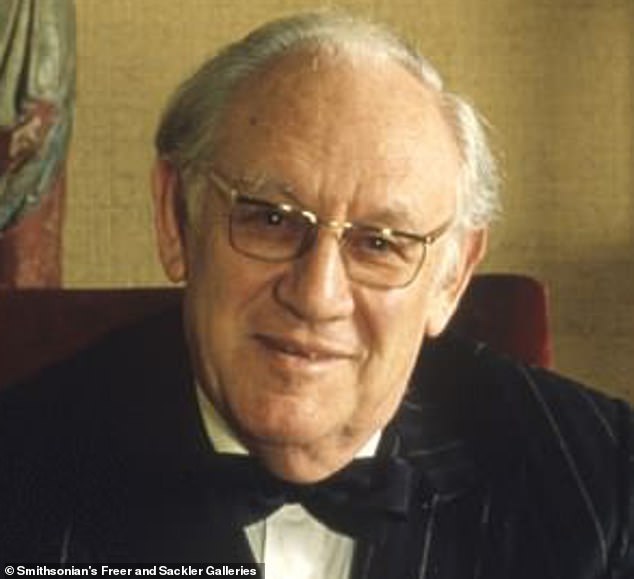





 Superior Court Judge Robert McBurney, who oversaw the special purpose grand jury, will preside over Tuesday’s selection of the two grand juries for this term of court.
 peej
peej Carissa
 bostonboomer
 dakinikat
 ecocatwoman
 mablue2
 Mama Lopez
 peggysue22
 quixote
 skydancingguestblogger
 Mona (aka Wonk the Vote)



 Sky Dancing
Recent Comments