
Freedom Day Reads
Posted: June 19, 2023 Filed under: just because, morning reads, U.S. Politics | Tags: Inclusion, Indigenous Americans, Juneteenth, Pride, The right to be, The right to decide for yourself, You be you!!! 10 Comments Good Day, Sky Dancers, and Happy Juneteenth!
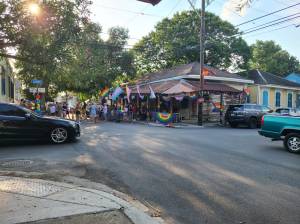
June is rapidly becoming my favorite month. We’ve been celebrating Pride all month and are doing Juneteenth. You can smell the white beans, andouille, and rice coming down the hall. I realized so many things in the last two days about this neighborhood which was developed after the Louisiana Purchase in 1812. Enjoyment was mostly possible because the tourists have gone. Temple and I danced in the streets for the third Sunday of Pride Tea. I am now a fan of Dancing Queen which I used to flip the channel to avoid back in the day.
My Dentist office defines the magic of the gumbo pot of our country. My hygienist and dentist are second generation from the South Vietnam Diaspora. The office area and the patients are racially diverse. This would have been impossible not that long ago. The second thing is I thank all of the Congress and administrations that continue to support Medicare. I do not know what I would do with out it.
We’re in the midst of an extremely long and dangerous heatwave. We cannot stop using fossil fuels fast enough. This is the second year of this and it’s not normal at all. There are so many things you can experience if you just take time to look around you and see the daily sites and people that are part of your neighborhood. I guess I should’ve spent more time reading Golden Books and watching Mister Rogers and Sesame Street. It’s all here.
 John Blake from CNN has this to say about the history of slavery that formed our country. “As the nation celebrates Juneteenth, it’s time to get rid of these three myths about slavery.”
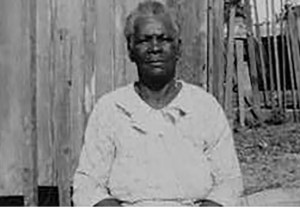
Temple “Tempie” Cummins stoically stares at the camera with her arms folded in her lap, sitting stiffly in a chair in her dusty, barren backyard with her weather-beaten wooden shack behind her. Her dark, creased face reflects years of poverty and worry.
The faded black and white image of Cummins from 1937 was snapped by a historian who stopped by her home in Jasper, Texas, to ask her about her childhood during slavery. Cummins, who did not know her exact age, shared stories of uninterrupted woe until she recounted how she and her mother discovered that they had been freed.
She said her mother, a cook for their former slave owner’s family, liked to hide in the chimney corner to eavesdrop on dinner conversations. One day in 1865, she overheard her owner say that slavery had ended, but he wasn’t going to let his slaves know until they harvested “another crop or two.”
“When mother heard that she say she slip out the chimney corner and crack her heels together four times and shouts, ‘I’s free, I’s free,’ ” Cummins told the historian, who recorded her story for a New Deal writers’ project that collected the narratives of the formerly enslaved during the Great Depression. “Then she runs to the field, ‘gainst marster’s will and tol’ all the other slaves and they quit work.”
Tempie Cummins, who was formerly enslaved, shared her story with a historian who recorded it for a New Deal writers’ project.
That story is one of the first recorded memoires of an experience that would inspire the creation of Juneteenth, an annual holiday celebrating the end of slavery that the US will commemorate this Monday. It marks the moment in June of 1865 when Union troops arrived in Texas to inform enslaved African Americans that they were free by executive decree. Many people like Cummins in remote areas of Texas and elsewhere did not know that they were free as their White owners hid the news from them.
Juneteenth has since become known as “America’s Second Independence Day.” Now a federal holiday, it will be celebrated by parades, proclamations, and ceremonies throughout the US. Though it commemorates a moment when enslaved African Americans were freed, the US is still held captive by several myths about slavery and people like Cummins.
One of the biggest myths that historians and storytellers have successfully challenged in recent years is that enslaved African Americans were docile, passive victims who had to wait until White abolitionists and “The Great Emancipator” Abraham Lincoln freed them. Black soldiers, for example, played a pivotal role in winning the Civil War. This new understanding of slavery has led to a rhetorical shift: It’s no longer proper to refer to people like Cummins as simply “slaves.”
“There’s been a shift in the historical community attempting to not define the period or the people by what was done to them in the sense that their identity becomes a noun, a slave, but rather that they are that they were in the process of being enslaved,” says Tobin Miller Shearer, a historian and director of African American Studies at the University of Montana.
“There were slavers who did that to them,” he says, “but there’s more to their identity than what was being done to them.”
Yet other myths about slavery persist, in part, because of the sheer enormity and brutality of slavery.
“The enslavement of an estimated ten million Africans over a period of almost four centuries in the Atlantic slave trade was a tragedy of such scope that it is difficult to imagine, much less comprehend,” Albert J. Raboteau wrote in “Slave Religion: The ‘Invisible Institution’ in the Antebellum South.”
 So many events in our Country’s history are shameful. Covering them up only serves the same masters who want to keep every one who is not like them oppressed and worse off or in a form of servitude.
In 1838 Cherokee people were forcibly moved from their homeland and relocated to Indian Territory, now Oklahoma. They resisted their Removal by creating their own newspaper, The Cherokee Phoenix, as a platform for their views. They sent their educated young men on speaking tours throughout the United States. They lobbied Congress, and created a petition with more than 15,000 Cherokee signatures against Removal. They took their case to the U.S. Supreme Court, which ruled that they were a sovereign nation n Worcester vs. Georgia (1832). President Andrew Jackson ignored the Supreme Court decision, enforced his Indian Removal Act of 1830, and pushed through the Treaty of New Echota.
In 1838 Cherokee people were forcibly taken from their homes, incarcerated in stockades, forced to walk more than a thousand miles, and removed to Indian Territory, now Oklahoma. More than 4,000 died and many are buried in unmarked graves along “The Trail Where They Cried.”
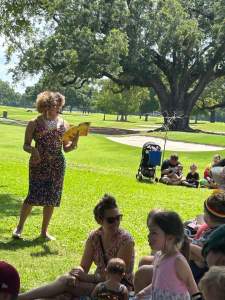
Vanessa Carr Kennedy (My Dear Friend)
Drag Queen Story Time at Longview Gardens Family Day. Note, no children, or parents were harmed in the filming of this movie.
A lot of this history has the same roots. “Opinion: The Supreme Court is making religion an all-purpose excuse for ignoring the law. First it was wedding cakes, and now it’s wedding websites. Conservatives who oppose same-sex marriage are testing the line between religious freedom and unlawful discrimination.” This is from the L.A. Times and Xiao Wang. Remember, there are Evangelical Christians that support genocide in this case and likely for others.
Looking for a federal law to be declared unconstitutional? Religion may well be your best bet — and that’s true regardless of how “real” your religious beliefs are.
That’s part of the thinking behind one case the Supreme Court heard this session and will resolve soon. In 303 Creative vs. Elenis, the court is considering the constitutionality of a Colorado statute prohibiting most businesses from discriminating against LGBTQ+ customers. Lori Smith, a Christian webpage designer, had wanted to expand into the wedding website business — but only for opposite-sex couples, a plan that would have violated the Colorado law at issue. Her lawyers made the case on free speech grounds, but given Smith’s religious beliefs, “religious freedom” represents an undeniable backdrop to the suit.
The 303 Creative case is no outlier. Religion-based claims have proliferated in recent years, and plaintiffs have often won because courts have almost invariably found their religious beliefs to be sincerely held. Meanwhile, the burden of proof for the government — that it is not unduly interfering in religious practice — has become much harder to prove.
A string of recent Supreme Court cases demonstrates how religion offers litigants a ready path to disobey laws without consequence. In the 2021-22 term alone, the Supreme Court decided several high-profile cases that affirmed religion’s supremacy.
In Kennedy vs. Bremerton School District, the justices determined that a high school football coach could not be placed on leave for violating a rule against public prayer. In Carson vs. Makin, it held that Maine was constitutionally required to subsidize religious schools. And in Ramirez vs. Collier, it postponed the execution of an inmate after he asked, at the 11th hour, that his pastor lay hands on him — despite having previously explicitly disclaimed the same form of relief.
Then, in a narrow 5-4 decision last September, the court left in place a New York state court decision requiring Yeshiva University to recognize an LGBTQ+ student group over the school’s purported religious objections. Ruling on technical grounds, the majority directed the university to first seek relief in state court. But four dissenting justices would have granted review to vindicate the university’s 1st Amendment rights — and those justices say that the university would “surely” win if the case comes back up, after state proceedings conclude.
How did these results come to be?
In the conventional understanding, religious exercise was cast off as an almost disfavored right. Courts were, historically, generally willing to let the government prevail whenever public policy and religion came into conflict. Now though, when the court says that government action affecting religious exercise must satisfy “strict scrutiny” — a notoriously difficult burden — it actually means it.
But that’s not the full story. Courts aren’t just making it harder for the government in these cases; they’re also making things easier for plaintiffs.
Plaintiffs must in theory show that their religious beliefs are sincerely held before strict scrutiny can kick in. This requirement dates to a 1944 decision, United States vs. Ballard, which for many years served as an effective gatekeeper against cries of “religion” casually trumping the law.
But in practice, this requirement has been hollowed out since at least the early 1990s.
 How is it that so many of us–to include women–so definitely way up over 50% are now being subjected to disenfranchisement and not included. Meanwhile, we’re stuck in this Rule of Law Soap Opera because a bunch of idiots who voted for this man and set up laws to disenfranchise us. They also stacked courts so that the government has more say in what happens with women’s bodies than we do. How is this the land of the Free?
This is from The Hill. I pity judges who have to order things that any lawyer should stop his client from doing as a normal party of a case. “Judge orders Trump not to disclose evidence in documents case.”
A federal magistrate judge Monday agreed to a motion from the Justice Department to block former President Trump from disclosing information relating to the Mar-a-Lago case, after prosecutors said the investigation remains ongoing.
The order sides with the Justice Department in allowing Trump to see evidence collected in the case — including classified documents — but only in the presence of his attorneys.
It also blocks him from disseminating any information from the case with reporters or on social media, mirroring a similar order agreed to in the hush money case being prosecuted by authorities in New York.
“Defendants shall only have access to Discovery Materials under the direct supervision of Defense Counsel or a member of Defense Counsel’s staff. Defendants shall not retain copies of Discovery Material,” Judge Bruce Reinhart, who approved the warrant to search Mar-a-Lago, wrote in the order.
The Justice Department in its Friday request said that restrictions were required, as its investigation could yield additional arrests.
“The materials also include information pertaining to ongoing investigations, the disclosure of which could compromise those investigations and identify uncharged individuals,” the department wrote.
Now is the time for us to stand together.
Happy Freedom Day! Independence Day comes up next! Do you know where your civil liberties and civil rights are going?
What’s on your reading and blogging list today?
Juneteenth Reads: “A House Divided”
Posted: June 16, 2023 Filed under: Economic Racism and injustice, Republican politics, U.S. Politics, Women's Rights | Tags: A House Divided, Angry, Hateful, Juneteenth, Neil Giraldo, Pat Benatar, Wrong Republicans 8 Comments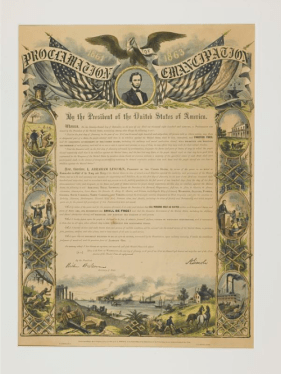 Good Day, Sky Dancers!
We continue to celebrate our newest Federal Holiday this long weekend. It is Juneteenth, also called Freedom Day. The first Juneteenth was on the 19th.
On June 19, 1865, nearly two years after President Abraham Lincoln emancipated enslaved Africans in America, Union troops arrived in Galveston Bay, Texas with news of freedom. More than 250,000 African Americans embraced freedom by executive decree in what became known as Juneteenth or Freedom Day. With the principles of self-determination, citizenship, and democracy magnifying their hopes and dreams, those Texans held fast to the promise of true liberty for all.
If you’re a James Joyce fan, then today is Bloomsday! And, of course, we’re still celebrating Pride Month.
Another appropriate reference to June 16 is what happened at the Illinois Republican State Convention, in Springfield, Illinois, on June 16, 1858. It’s challenging to think the same speech would be given by any future Republican President, but this is the day Lincoln spoke up against slavery “agitation.” It is the source of one of his most famous speeches and lines. The future president was running for the U.S. Senate against Senator Steven A. Douglas.
“A house divided against itself cannot stand.”
Can you imagine American history being taught without learning about this pivotal speech? It clearly shows that slavery in the South was a root cause of the Civil War that followed. Today’s Republicans are doing everything they can to erase that kind of history.

Martha Yates Jones (left) and Pinkie Yates (right), daughters of Rev. Jack Yates, in a decorated carriage parked in front of the Antioch Baptist Church located in Houston’s Fourth Ward, 1908 — Source
Let’s look at the headlines. This is from Dana Milbank, writing for the Washington Post. “As Trump is arrested, Republicans honor the insurrectionists.”
Donald Trump could not have asked for a nicer arraignment-day celebration.
During the very same hour in which the former president surrendered to federal authorities in Miami, his Republican allies in the House were, in their most visible and official way yet, embracing as heroes and martyrs the people who sacked the Capitol on Jan. 6, 2021, in hopes of overturning Trump’s election defeat.
In the Capitol complex, Rep. Matt Gaetz (R-Fla.), with sidekick Rep. Marjorie Taylor Greene (R-Ga.) and four other far-right lawmakers, held a “hearing” that honored participants in the riot, family members of Jan. 6 rioters and organizers of the attempted overthrow of the 2020 vote.
Technically, Gaetz couldn’t call such a hearing, because he isn’t a committee chairman. But House Speaker Kevin McCarthy, who is trying to win back the support of extremists such as Gaetz, let it happen anyway.
Gaetz did his all to make the proceedings look official. There were congressional seals on his nameplate and on the big screen behind him. A meeting room in the Capitol visitor center was arranged to appear like a committee room, with lawmakers facing the witnesses. Gaetz advertised the “field hearing” as part of how “the 118th Congress is investigating the weaponization of the federal government.”
And then there’s Ted Cruz. The Senator from Texas always seems to set the bottommost tone for public discussion.
I love Pat Benatar. What exactly has she done besides write and perform songs empowering women? Let’s pause for a bit of mood music.
You may read the retorts from Twitter at Salon. “Ted Cruz weaves a bizarre scenario about Biden murdering children while listening to Pat Benatar. While discussing President Biden on the Joe Pags show, Cruz succumbed to a Satanic flight of fancy.”
JJ sent me more stuff than just the Pat Benatar on Ted Cruz. Perhaps he has to get all hellfire and brimstone because of this. “Ted Cruz Says Uganda Shouldn’t Kill Gays, And Christian Extremist MAGAs Are SO MAD (At Him).” This story comes via Wonkette.
Without near enough fanfare or attention from the West, the president of Uganda, Yoweri Museveni, has signed a “kill the gays” bill into law. It calls for a life sentence for anyone who has gay sex, and seven years for trying to, whatever that means. The death penalty would be for those who commit “aggravated homosexuality,” which the New York Times says includes “homosexual acts committed by anyone infected with H.I.V. or involving children, disabled people or anyone drugged against their will.” If they say you did “attempted aggravated homosexuality,” you could go to prison for 14 years. We are sure the processes for determining whether people have violated the law will totally be on the up-and-up.
Oh, and you could go to jail for 20 years for “promoting” homosexuality, which reminds us a bit of Russia, and also the spirit of Ron DeSantis’s Florida, even if they haven’t quite made it to calling for imprisonment yet.
So, Ted finally says something that makes him seem human. The Christoban are after him now.
In response, some of Cruz’s conservative fans were absolutely horrified that Cruz would interfere in another country’s Christian fascist genocide in such a way. RawStory collected some responses:
“Ted, seems to me your focus should be here at home working to get the unjustly punished J6 prisoners out of jail,” wrote one user in response. “I’m disappointed in you.”
In a similar sentiment, a different Cruz follower argued that “it’s none of our business.”
Another follower used Cruz’s statement to simply dismiss him as a “RINO.”
Cruz follower JD Sharp, on the other hand, defended the law explicitly and argued it would help ensure high fertility rates in Uganda.
Echoing to this theme, one Twitter user replied to Cruz and said they wanted to “make homosexuality shameful again.”OK, psychos.
Take a gander through Ted’s replies at your own risk. Because Elon Musk’s paid blue checkmark system promotes replies from the vilest and stupidest people humanity has to offer to the top, you won’t have to look hard for Americans just openly supporting genocide.
So let’s look at the things the bottomless basement of the hate section of our divided house thinks are okay.
The Southern Baptist Convention has issues that won’t be solved by booting all women pastors.
Let me remind you of Christa’s experience with that denomination.
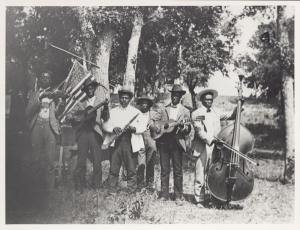
Juneteenth band. Photograph by Grace Murray Stephenson of celebrations in Eastwoods Park, Austin, 1900. — Source
Here’s another story from the Washington Post that makes the celebration of Juneteenth bitter-sweet. “Black Americans more upbeat but fear worsening racism, poll finds.”
An overwhelming share of Black Americans think the U.S. economic system is stacked against them and a slim majority believe the problem of racism will worsen during their lives, according to a Washington Post-Ipsos poll that explored the attitudes of the country’s second-largest minority group.
The poll finds that Black adults worry they are marginalized and under threat by acts of hate and discrimination in their day-to-day lives. Most also say it is more dangerous to be a Black teenager now than when they were teens.
There is good news about how indigenous children were shuttled to adoptive white parents so they could “save the man and kill the Indian.” That was actually the rationale for the Indian Adoption Project prior to the 1978 act–The Indian Child Welfare Act–existed. A challenge to that Law was just heard before the Supreme Court. A group of White Evangelicals would like to return to the good old days of kidnapping indigenous children from the tribes and screamed the act was racist. This decision is likely temporary as the beer and sexual assault connoisseur on the Court invited a future challenge from somebody with “standing,” which is why the court upheld the decision.
The Indiginous Nations have an odd advocate on SCOTUS. This is from NBC News. “Conservative Justice Gorsuch echoes ‘woke’ historians in railing against historical injustices. Gorsuch, appointed by former President Donald Trump, differs from his conservative colleagues on some key issues, including Native American rights.” This reminds me of the saying that even a broken clock is right two times a day. This is written by Lawrence Hurley.
Supreme Court Justice Neil Gorsuch is a dyed-in-the-wool conservative appointed by Republican former President Donald Trump, but in a series of recent cases, he has spoken up about historical injustice in a way that seems at odds with Republican attacks on “woke” history’s being taught in schools.
That included his opinion Thursday when the court rejected a challenge to the Indian Child Welfare Act, a law intended to keep Native American families and communities together when children are in the adoption or foster care process.
Gorsuch’s concurring opinion was part history lesson and part explanation of his full-throated support for Native Americans.
He wrote about how Native American families were torn apart by federal and state officials’ attempts to assimilate them into Anglo-centric American society by eliminating their cultural ties to their tribes.
“In all of its many forms, the dissolution of the Indian family has had devastating effects on children and parents alike,” he wrote.
“It has also presented an existential threat to the continued vitality of tribes — something many federal state officials over the years saw as a feature, not as a flaw,” he added. His opinion was joined by two of his liberal colleagues: Justices Sonia Sotomayor and Ketanji Brown Jackson.
Chuck Hoskin, principal chief of Cherokee Nation, one of the tribes that defended the adoption law at the Supreme Court, said Gorsuch is “going to loom large over Indian Country cases for a long time” in part because he understands the complexities of Indian law.
“While he may possess a great range of views on a lot of legal issues, he seems to have the most solid understanding of federal Indian law of any justice of the modern era,” Hoskin added.
In other cases, Gorsuch has lambasted the Supreme Court’s own rulings that treat people living in Puerto Rico and other U.S. territories as second-class citizens and called out the torture of detainees held at Guantánamo Bay, Cuba. He has repeatedly voted in favor of Native American tribes in a series of different legal questions.
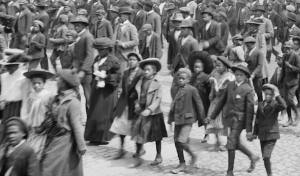
Detail from a photograph of celebrations in Richmond, Virginia, ca. 1905 — Source
This is from Rachel Weiner, writing for the Washington Post. “NSA staffer linked to ‘America First’ movement joined Jan. 6 mob. Paul Lovley was sentenced to two weeks’ incarceration for illegally demonstrating in the Capitol.”
A 24-year-old moved to Maryland to work for the National Security Agency six months before joining the attack on the U.S. Capitol with followers of a movement whose founder is known for espousing white supremacist views, according to court filings.
Paul Lovley was sentenced Tuesday to two weeks incarceration for illegally demonstrating in the Capitol.
“All I can do is take responsibility for my actions, learn from this experience, and move on with my life,” Lovley said in a letter to the court. “This entire situation has served as a wake-up call—something that forced me to truly reflect on what is important in life, what types of things to avoid engaging with going forward, and the dangers of cognitive dissonance.”
According to prosecutors, Lovley was working in information technology for the NSA before Jan. 6. The NSA referred questions about his employment to the Justice Department, which did not return a request for comment.
The night before the riot, the government said, Lovley hosted at his Maryland home four friends he met at an event for “America First,” a movement founded by Nick Fuentes, who has been banned from most social media platforms for repeated racist and antisemitic remarks. The Justice Department in other cases has described Fuentes, who was outside the Capitol on Jan. 6 but is not charged in the attack, as “a public figure known for making racist statements, celebrating fascism, and promoting white supremacy.” He gained national prominence after dining with former president Donald Trump in late 2022.
The five young men including Lovley entered the Capitol building a few minutes after the first breach, according to court records. Along with other rioters, they went into House Speaker Nancy Pelosi’s office and onto the Senate floor. After about 40 minutes, they left the building; prosecutors say one of Lovley’s friends then assaulted a police officer with a metal barricade and helped destroy reporters’ equipment.
He said he came to the area from California for his “first-ever serious job” and did not know anyone.
Alright, one more thing, and then we’ll take this all down thread. Who just got indicted by a Grand Jury for taking and decimating classified documents and didn’t get to go to a private golf club and rally a group of fascists?
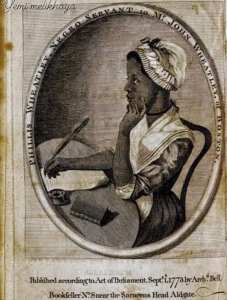
From: Joe Becigneul, Step through time
She was called Phillis, because that was the name of the ship that brought her, and Wheatley, which was the name of the merchant who bought her. She was born in Senegal.
In Boston, the slave traders put her up for sale: “She’s 7 years old! She will be a good mare!”
She was felt, naked, by many hands.
At thirteen, she was already writing poems in a language that was not her own. No one believed that she was the author. At the age of twenty, Phillis was questioned by a court of eighteen enlightened men in robes and wigs.
She had to recite texts from Virgil and Milton and some messages from the Bible, and she also had to swèar that the poems she had written were not plagiarized. From a chair, she gave her long examination, until the court accepted her: she was a woman, she was Black, she was enslaved, but she was a poet.
Phillis Wheatley, was the first African-American writer to publish a book in the United States.
What’s on Your Reading and Blogging list today?
Lazy Caturday Reads
Posted: June 19, 2021 Filed under: Afternoon Reads, just because, U.S. Politics | Tags: Christopher Rufo, communion, Critical Race Theory, Derrick Bell, Donald Trump, Joe Biden, Juneteenth, systemic racism, the Eucharist, U.S. Catholic Bishops 22 CommentsGood Afternoon!!
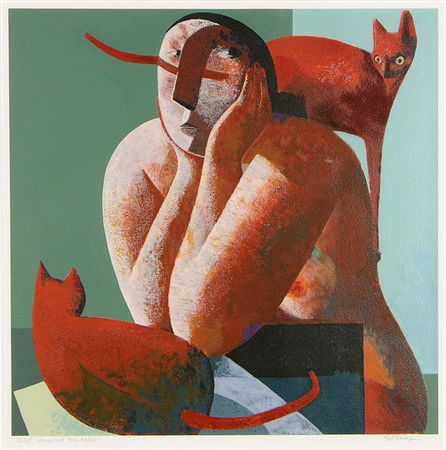
Two Cats and a Woman, by Peter Harskamp
Today is Juneteenth, and for the first time it is being celebrated as a national holiday and in some states as a state holiday. While this is a victory for anti-racists, it’s obviously a symbolic and cosmetic one. It’s certainly significant that a large majority of Republicans in the house supported the bill. But at the same time Republicans are making a phony issue of an academic approach to systemic racism–“critical race theory.”
At The Atlantic, Kellie Carter Jackson, a Black historian at Wellesley College, writes: What the Push to Celebrate Juneteenth Conceals.
When you are Black in America, how do you celebrate progress? How do you honor the history and memory of emancipation, liberation, and advancement? How do Black people mark a moment when a positive change transformed the trajectory of their lives, their nation? For many Black Americans that moment has been Juneteenth, or June 19, the day in 1865 when enslaved people in Galveston, Texas, received word that they were free, some two and a half years after the Emancipation Proclamation had taken effect. But when I think about Juneteenth, I am mostly stuck on that delay: the time it took for more than 250,000 enslaved Texans to experience what some 3 million other formerly enslaved Americans already had. Though Texan planters had long known the Civil War was over, they had hoped to get one more harvest out of their human property. In this country, hiding history has always been about maintaining control, denying concession, and delaying justice.
This spring, I have been perplexed by anniversaries meant to honor history. Memorial Day, a holiday created by Black people to honor Black veterans in Charleston, South Carolina, seemed this year to focus more on remembering George Floyd and commemorating the 100th anniversary of the Tulsa massacre. This Juneteenth also feels different, as more non-Black Americans are now incorporating it into their summer celebrations and lawmakers have pushed to observe the holiday at a federal level. Yet it seems the memory of Juneteenth is being shaped by symbolic rather than substantive gains. Moreover, the proliferation of Juneteenth events is taking place at the same time as the banning of critical race theory and curricula focused on slavery’s lasting effects. It is impossible to celebrate Juneteenth and simultaneously deny the teaching of America’s foundational legacy….
Holidays, like memories, are chosen. They are collective social agreements employed to acknowledge an event or a person. Often composed of parades, barbecues, and corporate sponsorships, the observation of a holiday is relatively low-stakes and usually distanced from the full history that compelled it. Though Black folks have honored their ancestors in meaningful ways on Juneteenth for more than a century, to many non-Black citizens it marks a day off from work and little else. But holidays cannot be divorced from history. Americans cannot discuss freedom and the Fourth of July without invoking slavery. Americans cannot celebrate Memorial Day without paying homage to those who died in service of their country. Americans cannot recognize Martin Luther King Jr. Day without confronting the violence of white supremacy. Choosing to remember palatable histories over painful histories serves no one—it merely fosters fantasy.
Critical race theory, an examination of the social, political, and economic impact of racism and white supremacy in America, counters that fantasy. This is the charge of historians and educators: to make sense of the past and grapple with its implications.
Read more about the significance of critical race theory at the link.

La robe Verte, Jean Metzinger
I have to admit, I had never heard of critical race theory until Republicans started obsessing about it. Here’s a brief definition from Education Week:
Critical race theory is an academic concept that is more than 40 years old. The core idea is that racism is a social construct, and that it is not merely the product of individual bias or prejudice, but also something embedded in legal systems and policies.
The basic tenets of critical race theory, or CRT, emerged out of a framework for legal analysis in the late 1970s and early 1980s created by legal scholars Derrick Bell, Kimberlé Crenshaw, and Richard Delgado, among others.
A good example is when, in the 1930s, government officials literally drew lines around areas deemed poor financial risks, often explicitly due to the racial composition of inhabitants. Banks subsequently refused to offer mortgages to Black people in those areas.
This article at The Atlantic that explains the history and development of CRT: The GOP’s ‘Critical Race Theory’ Obsession.
The late harvard law professor Derrick Bell is credited as the father of critical race theory. He began conceptualizing the idea in the 1970s as a way to understand how race and American law interact, and developed a course on the subject. In 1980, Bell resigned his position at Harvard because of what he viewed as the institution’s discriminatory hiring practices, especially its failure to hire an Asian American woman he’d recommended.
Black students—including the future legal scholar Kimberlé Crenshaw, who enrolled at Harvard Law in 1981—felt the void created by his departure. Bell had been the only Black law professor among the faculty, and in his absence, the school no longer offered a course explicitly addressing race. When students asked administrators what could be done, Crenshaw says they received a terse response. “What is it that is so special about race and law that you have to have a course that examines it?” Crenshaw has recalled administrators asking. The administration’s inability to see the importance of understanding race and the law, she says, “got us thinking about how do we articulate that this is important and that law schools should include” the subject in their curricula.
Crenshaw and her classmates asked 12 scholars of color to come to campus and lead discussions about Bell’s book Race, Racism, and American Law. With that, critical race theory began in earnest. The approach “is often disruptive because its commitment to anti-racism goes well beyond civil rights, integration, affirmative action, and other liberal measures,” Bell explained in 1995. The theory’s proponents argue that the nation’s sordid history of slavery, segregation, and discrimination is embedded in our laws, and continues to play a central role in preventing Black Americans and other marginalized groups from living lives untouched by racism.
Now Republicans have suddenly decided to attack this 40-year-old academic theory even though they likely have no idea what it is all about. The same Republicans who voted for the largely symbolic Juneteenth national holiday are spending lots of energy trying to prevent children from learning about America’s ugly history of slavery, Jim Crow, and systemic racism.

Cat Behind a Tree, by Franz Marc
The Washington Post: Republicans, spurred by an unlikely figure, see political promise in critical race theory.
 The decision, made public on Friday afternoon, is aimed at the nation’s second Catholic president, perhaps the
Thursday Reads
Posted: June 17, 2021 Filed under: morning reads, U.S. Politics | Tags: Affordable Care Act, Donald Trump, Joe Biden, Joe Manchin, Juneteenth, SCOTUS, slavery, Vladimir Putin, voting rights bills 9 CommentsGood Morning!!

Tea break, by Sylvie Vanlerberghe
Yesterday President Biden wrapped up his European trip by meeting with Vladimir Putin. It was a very different spectacle than the one in 2018 in Helsinki when the former guy humiliated himself and our country by rolling over for the Russian president.
The New York Times: A tale of two summits: Trump at Helsinki, and Biden at Geneva.
Helsinki, Finland, was where President Donald J. Trump had his own first face-to-face meeting with the Russian president, and the moment was highly anticipated, given the investigations then taking place into Russian interference in the 2016 presidential election and its reported ties to Mr. Trump’s campaign.
The meeting offered the American president a ripe opportunity to denounce the Kremlin on a public stage. He did not.
Instead, standing by Mr. Putin’s side, Mr. Trump dismissed the conclusions by U.S. intelligence agencies about Russian meddling and said, in essence, that he believed the Russian president’s denials as much as he believed his own intelligence advisers.
“They said they think it’s Russia,” Mr. Trump said. “I have President Putin; he just said it’s not Russia.” For good measure, he said, “President Putin was extremely strong and powerful in his denial today.”
Trump met alone with Russian president for 2 hours, and we still don’t know what happened between the two men. In contrast, Biden was open about his meeting with Putin.
“Where we have differences,” he said just moments into the news conference, “I wanted President Putin to understand why I say what I say, and why I do what I do, and how we’ll respond to specific kinds of actions that harm America’s interests.”
Mr. Biden said, “I told President Putin my agenda is not against Russia or anyone else. It’s for the American people.”
The Japanese Mask (1884), painted by Gustave Claude Etienne Courtois
And he declared: “I also told him that no president of the United States could keep faith with the American people if they did not speak out to defend our democratic values, to stand up for the universal and fundamental freedoms that all men and women have in our view. That’s just part of the DNA of our country.”
To that end, he cited the jailing of the Russian opposition leader Aleksei A. Navalny, and the detentions of two Americans in Russia.
Mr. Biden also offered a warning on cyberattacks.
“I pointed out to him: We have significant cyber-capabilities — and he knows it,” the president said.

Edward Luce at The Financial Times: Biden politely reads riot act to Putin.
Summitry, contrary to a former British prime minister, is nothing like tennis. The outcome is rarely “game, set and match”. By the wide-eyed standards of Joe Biden’s last four predecessors, all of whom held ill-fated summits with Vladimir Putin, Biden went into this one with low expectations.
There were no illusions about his meeting of minds with the Russian leader, let alone souls. The modesty of Biden’s goal — to stabilise relations with America’s chief military adversary — conveyed a realism that eluded earlier presidents.
All of which is far less exciting for the world media. Biden did not praise Putin’s ability to restore Russian freedom and prosperity, as Bill Clinton did in 2000 shortly after Putin was elected president. Nor did he get a sense of Putin’s soul, as George W Bush claimed in 2001, and trust what he saw. He did not aim for an ambitious “reset” of US-Russia relations, as Barack Obama fatefully did in 2009. Most notoriously Biden’s tone was a million miles from the one-man admiration society Donald Trump brought to Helsinki when he met Putin alone in 2018.
After more than two decades in power, this Russian bear was unlikely to change its habits. Biden’s aim is to coax and cajole Putin into a moderately less dangerous stance. That goal is more difficult than it sounds. At home, Biden faces derision from Republican and some foreign policy specialists for even meeting Putin. The act of sharing a stage with America’s president is seen as an unearned reward for an adversary who sponsors regular cyber attacks on the US, not to mention waging information warfare on western democracy.
Read the rest at FT.

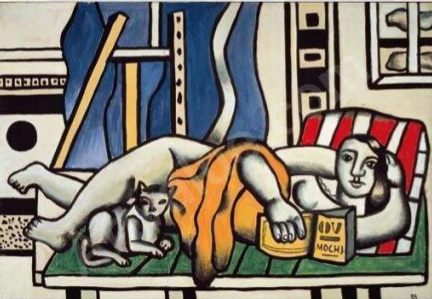
Woman with a book, Pablo Picasso
Max Boot at The Washington Post: Opinion: Biden wiped the smirk off Putin’s face.
Biden established an easy rapport with his fellow democratic leaders at meetings with the Group of Seven, the European Union and NATO. “I think it’s great to have the U.S. president part of the club and very willing to cooperate,” French President Emmanuel Macron said. As a congenial insider, Biden was able to accomplish far more than a testy outsider such as Donald Trump ever could. Biden got fellow leaders to agree on a 15 percent global corporate minimum tax, on sending 1 billion doses of covid-19 vaccines to the developing world (not enough, but a start), on speaking out about the challenge posed by China, and on settling a long-festering European-American trade dispute over aircraft subsidies….
The meetings with allies were, in some sense, merely a prelude for meeting with one of the United States’ most effective foes — Vladimir Putin. One cannot imagine a starker contrast between Biden and his predecessor than in their handling of the Russian strongman. At Helsinki in July 2018, then-President Trump simpered and cowered. In a low point of a presidency with more low points than Death Valley, Trump accepted at face value Putin’s “extremely strong and powerful” denials of complicity in the 2016 election attack. Putin emerged from that meeting smirking like the cat that swallowed the canary.
As the historian Michael Beschloss noted, there was no such grin on Putin’s lips when he did his solo press conference after meeting with Biden on Wednesday. While Putin engaged in his usual dishonesty and whataboutism — he compared his jailing of opposition leader Alexei Navalny with the prosecution of the Capitol rioters — his manner was subdued and far from triumphant. He attacked the United States but was careful not to insult Biden personally. He even compared the current president favorably to his predecessor: “President Biden is an experienced statesman. He is very different from President Trump.” (Ouch. That’s got to sting for Putin’s biggest fanboy in the United States.)
In his own remarks, Biden struck all the right notes. He made clear that he raised human-rights concerns with Putin. “How could I be the president of the United States of America and not speak out against the violation of human rights?” he asked. It is almost unimaginable — had we not just witnessed the Trump presidency. Biden said he told Putin that, if Navalny dies in a Russian prison, the consequences would be “devastating for Russia.” He said he also raised Russia’s complicity in cyberattacks, its interference with humanitarian aid in Syria, and its invasion of Ukraine (he expressed support for Ukraine’s “territorial integrity”), while holding out the hope of cooperation on the Iranian nuclear program, stability in Afghanistan, nuclear arms control and other issues.

Takehisa Yumeji, Woman reading a book on the sofa
Now that he’s back home, Biden will sign a bill to create a new national holiday. The Washington Post: Congress votes overwhelmingly to make Juneteenth a federal holiday. The day commemorates the end of slavery in Texas in 1865.


Juneteenth Reads !!!
Posted: June 19, 2020 Filed under: Black Lives Matter | Tags: Juneteenth 16 Comments
Happy Juneteenth!
Yes. This is a regular post here at Sky Dancing! It’s not something we all just discovered. I went back into our archives and searched for the Juneteenth tag and discovered that Mona, JJ, BB, and I had all written posts for the occasion.
That link goes to the one I wrote in 2017 and it includes pictures, history, and a link to Black Lives Matter plus a police brutality case in Seattle where police shot and killed a mother of four waving a knife around. There is also a link to the outrage in the Twin Cities over the acquittal of officers involved with the death of Philando Castille plus bonus links on gerrymandering in Wisconsin and how difficult it is to climb out of poverty. It’s like reading headlines today with different names and none of the Trump chaos and malfeasance.
This link has some exciting news for a history nerd like me. “An original ‘Juneteenth’ order found in the National Archives. The handwritten document informed the enslaved in Texas they were free on June 19, 1865.” This is via WAPO.
The National Archives on Thursday located what appears to be an original handwritten “Juneteenth” military order informing thousands of people held in bondage in Texas they were free.
The decree, in the ornate handwriting of a general’s aide, was found in a formal order book stored in the Archives headquarters building in Washington. It is dated June 19, 1865, and signed by Maj. F.W. Emery, on behalf of Union Maj. Gen. Gordon Granger.
“The people of Texas are informed that, in accordance with a proclamation from the Executive of the United States, ‘all slaves are free,’ ” the order reads.
“This involves an absolute equality of personal rights and rights of property between former masters and slaves and the connection heretofore existing between them becomes that between employer and hired labor.”

So, if only we did a better job living up to the promises our country made to every one. Jamelle Bouie writes this for the NYT: ‘Why Juneteenth Matters. It was black Americans who delivered on Lincoln’s promise of “a new birth of freedom.’
Neither Abraham Lincoln nor the Republican Party freed the slaves. They helped set freedom in motion and eventually codified it into law with the 13th Amendment, but they were not themselves responsible for the end of slavery. They were not the ones who brought about its final destruction.
Who freed the slaves? The slaves freed the slaves.
“Slave resistance,” as the historian Manisha Sinha points out in “The Slave’s Cause: A History of Abolition,” “lay at the heart of the abolition movement.”
“Prominent slave revolts marked the turn toward immediate abolition,” Sinha writes, and “fugitive slaves united all factions of the movement and led the abolitionists to justify revolutionary resistance to slavery.”
Juneteenth this year will have a different feel. This is from the AP:
For many white Americans, recent protests over police brutality have driven their awareness of Juneteenth’s significance.
“This is one of the first times since the ’60s, where the global demand, the intergenerational demand, the multiracial demand is for systemic change,” said Cornell University professor Noliwe Rooks, a segregation expert. “There is some understanding and acknowledgment at this point that there’s something in the DNA of the country that has to be undone.”
Friday’s celebrations will be marked from coast to coast with marches and demonstrations of civil disobedience, along with expressions of black joy in spite of an especially traumatic time for the nation. And like the nationwide protests that followed the police involved deaths of black men and women in Minnesota, Kentucky and Georgia, Juneteenth celebrations are likely to be remarkably more multiracial.
And from WAPO:
This year, invigorated by weeks of protests that began after the police killing of George Floyd, more than 20 rallies, marches and events are scheduled for Friday in the District — with hundreds more in at least 45 states, according to the Movement for Black Lives.
Starting about 8 a.m., protesters will gather at symbolic landmarks, including the U.S. Education Department, the Lincoln Memorial, the National Museum of African American History and Culture, Freedom Plaza, the African American Civil War Memorial, Meridian Hill Park (also known as Malcolm X Park) and the White House. Other rallies, vigils and demonstrations in the Northern Virginia and Maryland suburbs also are planned.
Here’s some hopeful news:
Amy Walter / The Cook Political Report: New 2020 Electoral College Ratings — With just under five months until the election, President Trump is a severe underdog for re-election. Polls show that voters do not trust him to handle the two most pressing issues of the day — the coronavirus pandemic and race relations — which has helped drive his job approval to 41 percent.
Cat Zakrzewski / Washington Post: Twitter labels Trump video tweet as manipulated media, continuing its crackdown on misinformation — The label marks the fourth time Twitter has added labels to the president’s tweets. — Twitter on Thursday evening took the rare step of appending a warning label to one of President Trump’s tweets …
So, the first reference I found to our Juneteenth blog celebration was from 2010 and Wonk wrote it. She’s from Texas so she has a lot more familiarity with the holiday than most of us did but yet, we all found out about it way before Donald Trump and way before the sudden interest of white people in its celebration. Today, I think about the number of black Americans dying at the hands of police, black women dying from inadequate pregnancy care, black elders with comorbidities that should not exist in a country as rich as ours dying from COVID 19.
I think about all the systemic hurdles our country has placed in front of the black community. I think about the hope of the Emancipation and the Dream of MLK and the basic justice and equality built into the US Constitution that never quite becomes true for all of us at the same time.

Perhaps, this is a Juneteenth that serves as a new Emancipation watermark. However, just looking back on the last 10 years I realize that it’s going to take a hell of a lot more legislative action to make any of those Promises and Dreams a reality. Which brings me to Mitch McConnells’ reign of terror in the Senate. We could’ve done a lot more without him.
At a time when Confederate symbols are being removed from public places it’s time to think about what we can do to get rid of the NeoConferates in the Senate like Mitch (and Lindsey too). He’s taken cover behind Trumpist chaos to block all legislation except those huge horrid tax cuts and a few minor others. He has worked tirelessly just to put unqualified judges with NeoConfederate ideology on federal benches in life time appointments. None of the hard work of getting laws passed is going to get through him if he can help it.
We need to get rid of these old NeoConfederates in the Senate this year or it’s going to be another log slog down the road to freedom and justice. The struggle continues.
What’s on your reading and blogging list today?

 peej
peej Carissa
 bostonboomer
 dakinikat
 ecocatwoman
 mablue2
 Mama Lopez
 peggysue22
 quixote
 skydancingguestblogger
 Mona (aka Wonk the Vote)



 Sky Dancing
Recent Comments