
Lazy Saturday Reads: Children of the Corn and Some Serious Journalism
Posted: September 3, 2016 Filed under: morning reads, Surreality, The Media SUCKS, U.S. Politics | Tags: Donald Trump, Hillary Clinton, journalism 29 Comments
Good Morning!!
I spent most of yesterday in a state of extreme anger. As I’ve been writing for a long time now, I’m fed up with the media attacking Hillary and ignoring real questions about Donald Trump’s dishonesty and corruption. I’m hoping when I drive back to Massachusetts next week, I’ll find some peace and quiet all alone in my car. It usually works that way.
Late last night, lots of people on Twitter were having fun photoshopping a new Trump ad that showed three of his children (Where is Tiffany?). For the first time all day I was able to laugh. I’m going to use the best ones to illustrate this post. Here’s the original tweet from Donald Trump Jr. that started it all.
The corporate media spent the last day before Labor Day reveling in the release of the FBI’s notes from their interview with Hillary Clinton. Sadly for the New York Times and the rest of the national media circus, there was once again nothing to support their ravening desire to prove Hillary is a corrupt liar. Too bad, so sad. Oh, they tried their best to make her look bad, but with very little success.
It’s been a very bad couple of weeks for the corporate media. Now that we have twitter and blogs, they can’t escape criticism when they screw up, and they’ve screwed up royally. It must be very difficult for these “journalists” who like to think of themselves as so much smarter and more savvy than the rest of us to see their flawed stories and their own pompous attitudes mocked on Twitter. But why is it so hard for them to just admit when they’re wrong?

John Stoer at The Washington Monthly tries to understand Why Political Journalists Can’t Take Criticism. Stoer begins by discussing the AP’s claim last week that half of the people who met with Clinton as Secretary of State were Clinton Foundation Donors. It was simply ridiculous, but the AP still refuses to correct their false tweets about the horrible article. Then he offers a more recent example:
On NPR this morning, “Morning Edition” host Steve Inskeep asked Arizona Sen. Jeff Flake if he shares Clinton’s view on immigration. According to Trump, Inskeep said, his opponent favors “open borders” and “amnesty.”
This is an example of a statement that’s technically accurate, but entirely misleading. And dangerous. Yes, Trump has said, time and again, that Clinton wants “open borders” and “amnesty.” It’s also true that this claim exists only the realm of fantasy. Indeed, in an interview — just yesterday — NPR’s Mara Liasson told Inskeep those claims were false.
Journalists, I believe, are beholden to the truth. If they are unwilling to pay deference to the authority of the truth, even when that deference conflicts with the profession’s other guiding principles, there isn’t much point in being a journalist….
I got in touch with Inskeep on Twitter this morning to make him aware of his mistake. (I do not subscribe to the childish claim, as Glenn Greenwald does, that the American media is in the tank for one or the other candidate). It was an honest mistake. So I asked: Will you be offering a clarification?
I didn’t expect Inskeep to reply. When he did, it was not a good faith exchange between journalists about the concrete facts of the matter. He offered instead a series of bewildering deflections, obfuscations, and, to be frank, playing dumb.
Go over to The Washington Monthly to read the exchange.

Of course there are some journalists who are doing important investigative work. One is David Fahrenthold of The Washington Post who has spent the past year trying to find evidence of Trump’s charitable giving. He wrote the story that Dakinikat referenced yesterday about Trump’s illegal gift (essentially a bribe) to Florida Attorney General Pam Bondi while she was considering joining a lawsuit against Trump University.
Donald Trump paid the IRS a $2,500 penalty this year, an official at Trump’s company said, after it was revealed that Trump’s charitable foundation had violated tax laws by giving a political contribution to a campaign group connected to Florida’s attorney general.
The improper donation, a $25,000 gift from the Donald J. Trump Foundation, was made in 2013. At the time, Attorney General Pam Bondi was considering whether to investigate fraud allegations against Trump University. She decided not to pursue the case.
Earlier this year, The Washington Post and a liberal watchdog group raised new questions about the three-year-old gift. The watchdog group, Citizens for Responsibility and Ethics in Washington, filed a complaint with the IRS — noting that, as a registered nonprofit, the Trump Foundation was not allowed to make political donations.
The Post reported another error, which had the effect of obscuring the political gift from the IRS.
In that year’s tax filings, The Post reported, the Trump Foundation did not notify the IRS of this political donation. Instead, Trump’s foundation listed a donation — also for $25,000 — to a Kansas charity with a name similar to that of Bondi’s political group. In fact, Trump’s foundation had not given the Kansas group any money.
The prohibited gift was, in effect, replaced with an innocent-sounding but nonexistent donation.
Trump’s business said it was unaware of any of these mistakes until March, when it heard from the watchdog group and The Post.
Anyone who believes that this wasn’t a bribe that was deliberately hidden from the IRS is a hopeless fool. Twitter has been filled with comments on this story and questions about why no one else in the media is covering it, but I’ve seen no serious responses from corporate media reporters.

Another investigative reporters who has been doing important work is Gabriel Sherman of New York Magazine. Sherman is the author of a book on Roger Ailes, and he has spent month investigating the story of Ailes’ sexual abuse of women at Fox News. Sherman’s stories ultimately led to Ailes leaving the right wing network and going to work for Donald Trump. Here’s the latest blockbuster story from Sherman: The Revenge of Roger’s Angels. How Fox News women took down the most powerful, and predatory, man in media.
It took 15 days to end the mighty 20-year reign of Roger Ailes at Fox News, one of the most storied runs in media and political history. Ailes built not just a conservative cable news channel but something like a fourth branch of government; a propaganda arm for the GOP; an organization that determined Republican presidential candidates, sold wars, and decided the issues of the day for 2 million viewers. That the place turned out to be rife with grotesque abuses of power has left even its liberal critics stunned. More than two dozen women have come forward to accuse Ailes of sexual harassment, and what they have exposed is both a culture of misogyny and one of corruption and surveillance, smear campaigns and hush money, with implications reaching far wider than one disturbed man at the top.
It began, of course, with a lawsuit. Of all the people who might have brought down Ailes, the former Fox & Friends anchor Gretchen Carlson was among the least likely. A 50-year-old former Miss America, she was the archetypal Fox anchor: blonde, right-wing, proudly anti-intellectual. A memorable Daily Show clip showed Carlson saying she needed to Google the words czar and ignoramus. But television is a deceptive medium. Off-camera, Carlson is a Stanford- and Oxford-educated feminist who chafed at the culture of Fox News. When Ailes made harassing comments to her about her legs and suggested she wear tight-fitting outfits after she joined the network in 2005, she tried to ignore him. But eventually he pushed her too far. When Carlson complained to her supervisor in 2009 about her co-host Steve Doocy, who she said condescended to her on and off the air, Ailes responded that she was “a man hater” and a “killer” who “needed to get along with the boys.” After this conversation, Carlson says, her role on the show diminished. In September 2013, Ailes demoted her from the morning show Fox & Friends to the lower-rated 2 p.m. time slot.
https://twitter.com/kibblesmith/status/771894372455575552
Carlson knew her situation was far from unique: It was common knowledge at Fox that Ailes frequently made inappropriate comments to women in private meetings and asked them to twirl around so he could examine their figures; and there were persistent rumors that Ailes propositioned female employees for sexual favors. The culture of fear at Fox was such that no one would dare come forward. Ailes was notoriously paranoid and secretive — he built a multiroom security bunker under his home and kept a gun in his Fox office, according to Vanity Fair — and he demanded absolute loyalty from those who worked for him. He was known for monitoring employee emails and phone conversations and hiring private investigators. “Watch out for the enemy within,” he told Fox’s staff during one companywide meeting.
Taking on Ailes was dangerous, but Carlson was determined to fight back. She settled on a simple strategy: She would turn the tables on his surveillance. Beginning in 2014, according to a person familiar with the lawsuit, Carlson brought her iPhone to meetings in Ailes’s office and secretly recorded him saying the kinds of things he’d been saying to her all along. “I think you and I should have had a sexual relationship a long time ago, and then you’d be good and better and I’d be good and better. Sometimes problems are easier to solve” that way, he said in one conversation. “I’m sure you can do sweet nothings when you want to,” he said another time.
It’s a long, fascinating story. Read all the gory details at the New York Magazine link.
That’s all I have for you today. What stories are you following?
Friday Reads: The Medium isn’t the Message
Posted: February 27, 2015 Filed under: morning reads, the blogosphere, the internet, The Media SUCKS | Tags: Bill O'Reilly, blogging, integrity, journalism, writing 41 Comments Good Morning!
I’ve been looking at media stories this week. That includes both traditional and nontraditional forms. The internet continues to influence the release of news and how news is made and reported. Several topics really caught my eye. The first is the ease with which we’re seeing documentation of Bill O’Reilly’s exaggerations on places he’s been and news stories he covered. It seems like one exaggeration/lie after another is popping up from all kinds of places since David Corn of Mother Jones found out that O’Reilly was never near a battlefield during the Falklands War despite the stories O’Reilly tells. Here’s some of the latest on the life and times of the blustery, on line person who really is a serial liar.
Former colleagues of Bill O’Reilly, the Fox News host whose tales of past reporting exploits are facing renewed scrutiny, have disputed his account of surviving a bombardment of bricks and rocks while covering the 1992 riots in Los Angeles.
Six people who covered the riots with O’Reilly in California for Inside Edition told the Guardian they did not recall an incident in which, as O’Reilly has claimed, “concrete was raining down on us” and “we were attacked by protesters”.
Several members of the team suggested that O’Reilly may instead be overstating a fracas involving one disgruntled Los Angeles resident, who smashed one of their cameras with a piece of rubble.
Two of the team said the man was angered specifically by O’Reilly behaving disrespectfully after arriving at the smoking remains of his neighbourhood in a limousine, whose driver at one point began polishing the vehicle. O’Reilly is said to have shouted at the man and asked him: “Don’t you know who I am?”
O’Reilly, 65, is one of the most influential figures in American broadcasting and publishing. He is paid a reported $20m a year to host his show, the O’Reilly Factor, which consistently ranks among the most-watched current affairs programs in US cable TV. He has also authored several bestselling books and memoirs.
He has for several days been defending himself against accusations that he inflated his recollections of reporting from Argentina at the end of the Falklands war as a young correspondent for CBS News. The Guardian found he had told differing versions of an apparent encounter at gunpoint with Argentinian forces.
He has also been accused of lying in one of his books about being present at the scene when a CIA source, who had allegedly been linked to the assassination of President John F Kennedy, killed himself in 1977.
 Fox News and Holt–publisher of O’Reilly’s book on Kennedy–have stood firmly by their man. O’Reilly’s show has never much been about facts any way as delivering anger to a key republican base. This would seem hard to ignore. Additionally, O’Reilly has actually threatened reporters. Every one expected the name calling but it’s gone way beyond that now. How can Fox stand behind an on air personality that lies and threatens journalists?
As the controversy surrounding Bill O’Reilly and his war reporting experiences continues to heat up, with more allegations coming out each day, MSNBC’s Rachel Maddow wonders how much longer Fox News can stand by the host.
On Wednesday evening, Maddow spoke with Mother Jones author David Corn, one of the journalists who wrote the original report revealing the inaccuracies in O’Reilly’s story. O’Reilly subsequently called Corn “a liar” and said that he deserves to be put in “the kill zone.” On Tuesday, the Fox News host threatened a New York Times reporter covering the scandal: “I am coming after you with everything I have,” O’Reilly said.
“Apparently, they [Fox News] think it’s proper for one journalist to call another one names,” Corn told Maddow. “Not that it scares me off the story, but I have family and I have friends who are concerned about me now.”
Corn called the threats “highly inappropriate” and noted that O’Reilly still has not disproven “a single fact” from his piece.
Maddow said that after his threats to Corn and the Times’ reporter, it is “untenable” for Fox News to stand by him.
“They employ a lot of journalists, including those who work in risky situations,” she said. “Fox is a good place to work for journalists.”
Maddow made a similar point on her show one night earlier, questioning what O’Reilly’s behavior will do to Fox News’ “work environment” and to the “real reporters” that work there
Why on earth do news personalities like O’Reilly and Brian Williams lie when their jobs should be all about integrity?  Do they all yearn to be seen as Walter Cronkite? Do their memories and egos just run amok?
News in America has increasingly become infotainment—half factual information about the world’s events, half dazzling production and splashy narratives. Simultaneously, fewer and fewer Americans have ever seen battle; most of us only know war from what we see in film and television. So war itself becomes difficult to distinguish from entertainment. American Sniper, with its ambiguous moral commitments, is now the highest grossing American war film of all time, adjusted for inflation. Unlike popular war films about battles long past, American Sniper is set during the Iraq war, the effects of which are only beginning to ripple across our culture. Moreover, its story allegedly reflects the true-life story of its central character, sniper Chris Kyle. It’s somewhat true, like the news, but with a better script and pretty actors.
Which makes it hard for the news to keep up, even when you’re as handsome as Brian Williams. Unlike most cinematic retellings of wars, actual wars are multifaceted, complicated, anti-climactic, and grim. When war is already a successful subject in mainstream cinema, news purveyors whose professions have become increasingly akin to entertainment are shrewd to play up war stories in relaying the narrative of the day. The trouble is that shrewdness, for some news professionals, has morphed into a calculated consideration of the entertainment value of war stories, regardless of their factuality.
Maybe Williams and O’Reilly are merely victims of the fallible human brain. Or maybe that hunger to entertain—and, perhaps, for a touch of glory—overwhelmed their professional duty to the facts. What, after all, is more exciting than a war story in which you’re the star.
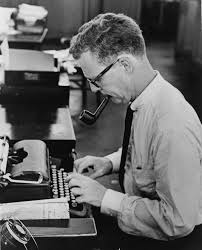 The other story I’ve followed has been yet another installment of “Is blogging dead?” These are articles that I’ve seen a lot of since around three years ago. I guess the collapse of the Andrew Sullivan experiment has brought on another deluge. The link explores the musings of bloggers from “The Golden Age” which seems an odd way to describe a period of maybe 5 years. Any way, there are a few bloggers with opinions both ways. I’ve followed a few of the links including this one from fellow economist/blogger Noah Smith.
In a nutshell, what is dying is the idea of the blog as a news source. In the old days, as a reader, you would have a favorite blogger, who would write many frequent posts throughout the day. That would be your main news source, your portal to current events. Often the post would have a slight bit of commentary or reaction. Basically, you got to hear the world narrated through the voice of someone you liked. For me, those narrators were University of California, Berkeley, economist Brad DeLong and Matt Yglesias, now at Vox. For many, it was Sullivan.
Twitter has basically killed that. With a Twitter feed you can integrate a bunch of different narrators into a single, flowing newsreel. It turns out that most of the micro-commentary that used to accompany a blog post can be squeezed into one or two tweets.
But the thing about micro-blogging is that, well, it’s micro. If you look at the blogs that Klein lists as the future (and there are many, many more), you will see that they all do posts that are about the length of a news article. That’s something Twitter complements, but can’t replicate.
However, that doesn’t mean that blog posts are now just news articles freed from the tyranny of professional editors. With blogs, you can do something that news can’t easily do — you can carry on a conversation.
 I have to admit that I have mixed feelings about those declaring blogging to be the refuge of 40 year olds with kids or that nothing relevant happens on blogs these days. Maybe it’s because many of my friends are bloggers. But, I would like to point out that Lamar White–a blogging law student–broke two huge stories in the last year. The first was the shoddy situation with moonlight Congressman–now Senator–Double Bill Cassiday. The LSU med center just
 audited whitewashed its findings and Lamar is still on top of it. His second piece connecting Congressman Steve Scalise to the local white supremacists and David Duke nearly cost Scalise a leadership position. Indeed, bloggers can frequently do good local investigations which is something local and national media rarely fund any more.
I would agree that blogging is changing but then so are all forms of written communication as well as broadcast media. Chris Cilliza has another notion.
The idea inherent in all of the death knells for blogging is that blogging is any one thing. It’s not. As I explain to anyone who will listen to me — an ever-shrinking populace — a “blog” is simply a publishing medium. It’s a way to put content on the Internet — usually a fast and, relatively, user-friendly way. But, the conflating a publishing medium with a sort of online writing — opinionated, snarky — that tends to be the preferred approach of many of its users is a mistake.
Well, we’re still standing–or sitting as the case may be–while sharing information with each other. We’ve all come a long way since we were booted from various communities for being loyal to Hillary back in 2008. I think there will always be a place for alternative voices. I say this as a former writer of an underground “newspaper”–The Aardvark–from way back in the day. The medium evolves. The writer’s voice and need to write carries on.
So, what’s on your reading and blogging list today?
Tuesday Reads
Posted: April 29, 2014 Filed under: Foreign Affairs, morning reads, U.S. Politics | Tags: ethics, foreign intelligence, israel, John Kerry, Josh Rogin, journalism, NSA, Palestine, The Daily Beast, Ukraine 82 Comments
Couch on the Porch at Cos Cob by Childe Hassam, 1914
Good Morning!!
Secretary of State John Kerry is under fire for making a frank statement in a closed-door meeting that he believed to be private. Politico’s Dylan Byers reports: John Kerry’s private remarks allegedly taped by Daily Beast reporter.
Secretary of State John Kerry’s private remarks to a meeting of influential world leaders last week were allegedly taped by a reporter from The Daily Beast, a fact that led to a personal apology from Trilateral Commission chairman Joseph S. Nye on Monday.
In a letter to Sec. Kerry, obtained by POLITICO, Nye expressed “my deep apology and dismay that a reporter form The Daily Beast, Josh Rogin, somehow sneaked into the meeting room in which you were speaking to the Commission this past Friday.”
“He was not invited,” Nye wrote. “Althought how Mr. Rogin slipped past both Commission staff and Diplomatic Security is unclear to me, we have confirmed that he indeed was present and apparently recorded the session.”

Josh Rogin
Rogin, who somehow sneaked into the meeting and taped Kerry’s remarks, soon began posting “exclusives” at The Daily Beast.
Within minutes of Kerry’s remarks on Friday, Rogin posted an exclusive to The Daily Beast in which he reported that Kerry had “warned that [a] new round of American financial assaults on Russia were on the way.”
On Sunday, Rogin posted another exclusive headlined, “Kerry Warns Israel Could Become ‘An Apartheid State’.” The report earned Sec. Kerry fierce criticism from Jewish organizations such as AIPAC, which called the remarks “offensive and inapropriate,” and the Anti-Defamation League, which called them “incendiary.”
In the first article, Rogin attributed his knowledge of Sec. Kerry’s remarks to “an attendee.” In the second article, he attributed them to “a recording… obtained by The Daily Beast.” Rogin did not mention his presence at the event in either article.
Is that okay according to journalistic ethics? I don’t know, but this definitely demonstrates to me the need for some secrecy in government diplomacy. I think the Greenwaldian notion of government as absolute enemy has rubbed off on reporters like Rogin. His first “exclusive” was on a breakdown of communications between the White House and the Kremlin and the second was about Kerry’s comments on Israel. Rogin writes:
If there’s no two-state solution to the Israeli-Palestinian conflict soon, Israel risks becoming “an apartheid state,” Secretary of State John Kerry told a room of influential world leaders in a closed-door meeting Friday.
It wasn’t the only controversial comment on the Middle East that Kerry made during his remarks to the Trilateral Commission, a recording of which was obtained by The Daily Beast. Kerry also repeated his warning that a failure of Middle East peace talks could lead to a resumption of Palestinian violence against Israeli citizens. He suggested that a change in either the Israeli or Palestinian leadership could make achieving a peace deal more feasible. He lashed out against Israeli settlement-building. And Kerry said that both Israeli and Palestinian leaders share the blame for the current impasse in the talks.
Kerry also said that at some point, he might unveil his own peace deal and tell both sides to “take it or leave it.”
“A two-state solution will be clearly underscored as the only real alternative. Because a unitary state winds up either being an apartheid state with second-class citizens—or it ends up being a state that destroys the capacity of Israel to be a Jewish state,” Kerry told the group of senior officials and experts from the U.S., Western Europe, Russia, and Japan. “Once you put that frame in your mind, that reality, which is the bottom line, you understand how imperative it is to get to the two-state solution, which both leaders, even yesterday, said they remain deeply committed to.”
It’s hard for me to find much fault with that. I guess the use of the term “apartheid” is a no-no, Kerry is not the first to use it. As Rogin notes, former President Jimmy Carter wrote a book in 2007 with the title Palestine: Peace or Apartheid. Carter was forced to backtrack somewhat, and Kerry has had do it also. Michael Gordon at The New York Times: Kerry Apologizes for Remark That Israel Risks Apartheid

In the statement that Mr. Kerry issued Monday, which bore the title “On Support for Israel,” he said that he had been a staunch supporter of Israel during his years as a senator and had spent many hours since working with Prime Minister Benjamin Netanyahu and other Israeli officials.
“For more than 30 years in the United States Senate, I didn’t just speak words in support of Israel,” Mr. Kerry said in his statement. “I walked the walk when it came time to vote and when it came time to fight.”
Mr. Kerry added that he did not believe that Israel was an “apartheid state” or intended to become one. Mr. Kerry did not dispute he had used the phrase but said it had led to a “misimpression” about his views.
“If I could rewind the tape, I would have chosen a different word to describe my firm belief that the only way in the long term to have a Jewish state and two nations and two peoples living side by side in peace and security is through a two state solution,” he said.
“In the long term, a unitary, binational state cannot be the democratic Jewish state that Israel deserves or the prosperous state with full rights that the Palestinian people deserve,” he added.
Kerry has now been attacked for his remarks by Senators Ted Cruz and Barabara Boxer. Quite an achievement!
Rogin’s latest “exclusive,” published this morning, reveals (surprise, surprise!) that the U.S. is spying on calls between Russia and it’s spies on the ground in Eastern Ukraine. You’d think that would be a good thing, but in the age of Greenwaldian “advocacy journalism,” maybe not. Rogin:
“Intel is producing taped conversations of intelligence operatives taking their orders from Moscow and everybody can tell the difference in the accents, in the idioms, in the language. We know exactly who’s giving those orders, we know where they are coming from,” Kerry said at a private meeting of the Trilateral Commission in Washington. A recording of Kerry’s remarks was obtained by The Daily Beast.
Kerry didn’t name specific Russian officials implicated in the recordings. But he claimed that the intercepts provided proof of the Russians deliberately fomenting unrest in eastern Ukraine—and lying about it to U.S. officials and the public.
“It’s not an accident that you have some of the same people identified who were in Crimea and in Georgia and who are now in east Ukraine,” said Kerry. “This is insulting to everybody’s intelligence, let alone to our notions about how we ought to be behaving in the 21st century. It’s thuggism, it’s rogue state-ism. It’s the worst order of behavior.”
Rogin goes on to speculate on whether the NSA has now corrected issues that prevented them from receiving accurate intelligence on Russia’s plans to invade Ukraine and annex Crimea and explains the methods NSA uses to collected such information. I guess they will have to go back to the drawing board again now? In the latest piece, Rogin still does not state that he is the source of the tapes of Kerry’s remarks.
Reuters has an article this morning on Israel’s latest plans: Israeli politicians seek to bypass talks, set own boundaries.
With Middle East peace talks frozen and expectations of a negotiated deal at an all-time low, a growing number of Israeli politicians believe it is time for the government to set the nation’s own borders unilaterally.
Some seek the annexation of most of the occupied West Bank, others say only the big Jewish settlement blocs should be brought under Israeli sovereignty, while a third group calls for a partial pullout to create a de facto Palestinian state.
Such actions would break the dynamics of the U.S.-driven peace process, which has been bogged down by years of failure and recrimination. By the same token, it would likely unleash a firestorm of protest at home and abroad.
Isn’t that just ducky? Read lots of details at the link.
This is just breaking (9AM EST) . . . there has been a mass shooting at a FedEx location in Georgia.

From NBC News: FedEx Facility Shooting Prompts Massive Police Response
At least six people were injured in a shooting early Tuesday at a FedEx facility in Kennesaw, Ga., officials said.
The male gunman remained at large, and police said they are sweeping the surrounding area, reported NBC affiliate WXIA-TV.
Cobb County police said the call came in at 5:44 a.m., prompting a lockdown of the facility on Airport Road and more than 50 emergency vehicles to arrive at the scene. The injured were taken to the hospital, and at least one person was taken immediately to the operating room, WXIA reported.
Further updates:
USA Today: Gunman dead after injuring 6 at FedEx plant in Ga.
Atlanta Journal-Constitution: 6 patients taken to WellStar after FedEx shooting in Cobb; suspect dead.
Authorities are characterizing this as a workplace shooting. So far the suspect has not been named.
Other News . . .
CNN, 75 million Americans under threat of severe weather
HuffPo: TV Meteorologist Orders Station Evacuation During Live Tornado Report (VIDEO)
WSJ, NATO: No Sign Russian Troops are Pulling Back from Ukraine.
BBC News, Ukraine crisis: Pro-Russia activists seize Luhansk HQ.
USA Today, Nancy Armour: Silver better get it right with Donald Sterling’s punishment.
CNN, White House issues guidelines to colleges to combat rape
That’s all I have for you today–I hope you’ll also post your links in the comment thread.
Consuming the News
Posted: January 1, 2011 Filed under: the blogosphere, The Media SUCKS, U.S. Politics | Tags: Bill Kovach, Blur, journalism, propaganda, the media, the press 34 CommentsI was one of those nerdy little kids in class that loved it when show and tell switched to bringing a current events article and presenting it to the class. In my grade school, the big day was Wednesday. I got my first subscription to The Paris Match in 7th grade and my Honors World History teacher turned me on to The Guardian in 11 th grade. My grandmother made sure we all had subscriptions to The Christian Science Monitor until the day she died. I think a lot of it had to do with being trapped in Omaha where nothing EVER happened. I was fortunate that my family put a high priority on travel because the newspaper subscriptions were a portion of what kept me away from becoming the archetypal Omahan. Geographical and cultural isolation can lead to some strange people. (Cue The Deliverance banjos.)
I’ve been returning to the PEJ site now that I know it exists. That’s where I’ve pulled this book review and an interesting set of suggestions on how to “interpret the news”. I admit to having a preference for C-SPAN these days as I’m pretty tired of the idiots that filter and read the MSM items now. I probably will order up the book ‘Blur, How to Know What’s True in the Age of Information Overload’ by Bill Kovach and Tom Rosenstiel. The review says its goal is to provide a “pragmatic, serious-minded guide to navigating the twenty-first century media terrain”. That’s a serious agenda given the number of commercial news outlets we have these days.
Here’s another bit from that:
Blur provides a road map, or more specifically, reveals the craft that has been used in newsrooms by the very best journalists for getting at the truth. In an age when the line between citizen and journalist is becoming increasingly unclear, Blur is a crucial guide for those who want to know what’s true.
What I want to offer up is the list they provide. It’s called “Ways of Skeptical Knowing”. My mother handed me her middle name–Jean–for my birth certificate. She was always a true to form Show-Me-State skeptic. That’s why I always consider “Skeptic” to be my authentic middle name.
Ways of Skeptical Knowing—Six Essential Tools for Interpreting the News
1. What kind of content am I encountering?
2. Is the information complete? If not, what’s missing?
3. Who or what are the sources and why should I believe them?
4. What evidence is presented and how was it tested or vetted?
5. What might be an alternative explanation or understanding?
6. Am I learning what I need?
So, armed with this, I got slightly curious about the guys that wrote the book and found an interview with Bill Kovach at a site called Stinky Journalism. I gave up writing for the school paper back in high school so I actually didn’t know he’d authored your basic Journalism 101 textbook, The Elements of Journalism. The site explains how Blur “focuses on the importance of verification, fact-checking and evidence in media — whether it be traditional newspaper media or an online blog”. Evidence!!! Verification!!! Fact-Checking!!! NOW, we’re talking stuff that sends tingles up and down my researcher leg!!
I found this quote to be very interesting.
“The separation between journalists and citizens is slowly disappearing. I mean, anyone, anywhere can be a reporter of the next big news incident. Anyone can be a reporter now, and in terms of the information citizens need because they have access to the online presentation of information from hundreds of sources, they are becoming their own editors. So it’s imperative that we both help journalists understand this change…and citizens understand how they can determine what they can believe in.”
What drove my Grandmother to send me The Christian Science Monitor, my French teacher to share the Paris Match, and my history teacher to encourage me to read The U.K. Guardian is what drives me to alternative sources on the World Wide Web today. I was fortunate enough to develop a healthy skepticism about relying on any one source of information from these precious folks who cared about my development as a person. I am thankful for my earliest experiences of looking out side of the Omaha World Herald for information. I do have to say that I was fortunate to be educated in an excellent public school system that was well known for its outstanding English programs and teachers. This is the same high school and school system that produced Kurt Andersen. (One of my friends had a wicked crush on him and used to use my access to get into the Journalism classroom/lab to get near him when we were sophomores.)
I guess I’m bringing this up for several reasons. First, I think part of being in a democracy means that you become an informed citizen. That implies you need information and it should be factual information. Second, I think that the powers that be have found so many profound means of disseminating propaganda through main stream sources–think WMDs and the Iraq War– that we have to actively search out alternatives to find out not just the information; but the truth.
Lastly, nothing is making this an imperative as the Wikileaks episode. What first made some things clear to me in Junior High School was The Pentagon Papers. For some childish reason, I thought my exceptionally wonderful and moral country would never lie to me or hide things from me other than battlefield plans. I believe that my reaction to both was formed early by the intents of my grandmother and my teachers to get me to look outside my narrow life to the world at large. Our government, many people in our communities and plenty of those around us–including the press–are not always acting from truth or the best interest of all of us. It’s important to discover intent, funding, and connections. We must all become investigative journalists. However, it heartens me to see that there are still journalists that remember they are an important element of democracy. It saddens me when journalism turns into celebrity gossip rags and spin vehicles.
Thomas Paine and Benjamin Franklin were the bloggers of their day. Samuel Adams made certain that the Massachusetts Circular Letter was seen by more than just the local politicians. His ‘leaks’ outraged the British monarchy. It also lead to our nascent democracy. Much of what is going on right now is part of our heritage as Americans. However, so many people have have access to platforms now that it’s important to do the basic research for ourselves. We must be vigilant and tenacious truth seekers.

 peej
peej Carissa
 bostonboomer
 dakinikat
 ecocatwoman
 mablue2
 Mama Lopez
 peggysue22
 quixote
 skydancingguestblogger
 Mona (aka Wonk the Vote)



 Sky Dancing
Recent Comments