
Hey Andy, me ‘n’ Barney didn’t have nuthin’ better to do, so we decided to crash the economy!
Posted: July 8, 2011 Filed under: 2012 presidential campaign, Barack Obama, Democratic Politics, Economy, Psychopaths in charge, Surreality, Team Obama, the villagers, U.S. Economy, U.S. Politics, unemployment, voodoo economics, We are so F'd | Tags: Andy Taylor, Barack Obama, Barney Fife, David Plouffe, Debt Ceiling, deficit, economy, Gomer Pyle, jobs, Social Security, stupid villiagers, Tim Geithner, unemployment, voodoo economics, William Daley 9 Comments
Barack O'Gomer and Deputy "Barney" Geithner*
This morning Sky Dancing’s resident economist Dakinikat wrote about Tim Geithner’s latest trial balloon about maybe stopping Social Security checks in August if Congress refuses to raise the debt ceiling. That’s right, he wants to use the trust fund that elderly people paid into all their working lives to pay China and other foreign debtors. Now that’s a brilliant plan boys–throw grandma and grandpa out in the streets to starve and die. It’s genius!
Then while we were all commiserating in the comment thread, we got the jobs report for June: only 18,000 jobs were added, and the phonied-up unemployment rate is now at 9.2%.
O’Gomer dragged his sorry a$$ out to the Rose Garden in late this morning to mumble a few weak excuses.
“Today’s job report confirms what most Americans already know,” Obama said. “We still have a long way to go and a lot of work to do to give people the security and opportunity that they deserve.”
The president tried to lay some blame at Congress’ feet. He said lawmakers could pass a handful of policies today to create jobs. His list included an infrastructure bank, free trade deals and patent reform.
“There are bills and trade agreements before Congress right now that could get all these ideas moving,” he said. “All of them have bipartisan support, all of them could pass immediately, and I encourage Congress not to wait.”
Yeah, patent reform, that’s the ticket! And more trade agreements to create more outsourcing of American jobs. Brilliant! And cutting off Social Security checks! That’s really gonna give Americans “the security and opportunity they deserve.” Who is advising this guy anyway?
Well, one of O’Gomer’s top advisers, David Plouffe, made an unfortunate remark before the jobs report came out. Minkoff Minx wrote about it in her SDB reads earlier this evening. From The Christian Science Monitor:
David Plouffe, Mr. Obama’s top political adviser, got things started Thursday at a breakfast sponsored by Bloomberg News.
“The average American does not view the economy through the prism of GDP or unemployment rates or even monthly jobs numbers,” Mr. Plouffe said. “People won’t vote based on the unemployment rate; they’re going to vote based on: ‘How do I feel about my own situation? Do I believe the president makes decisions based on me and my family?’ ”
Ask yourself, Mr. Plouffe, how do you think most ordinary Americans feels about their situation right about now? O’Gomer’s buddy Timmy Geithner is talking about cutting off Social Security payments. O’Gomer himself is trying to talk the Republicans into cutting Social Security, Medicare, and Medicaid. This administration hasn’t done diddly-squat about jobs except occasionally have O’Gomer mention that we need to create them. Talk is cheap, Mr. Plouffe. Actions speak louder than words as my mom used say.
According to Julian Brookes at Rolling Stone, Plouffe also made this odd assessment:
the president, says Plouffe, has a good shot with independent voters, who’ll reward his bipartisan, bend-over-backwards approach the debt talks; is a seasoned campaigner with a huge war chest; has moved to the center without losing the base (the oft-noted “enthusiasm gap” seems to have closed); and has demographic trends working in his favor (he won big with minorities in 08, and they’ll make up a larger share of the electorate next year). Plus, of course, the GOP field is weak: Frontrunner Mitt Romney is the most formidable of the bunch, but he’s nobody’s idea of a galvanizing standard bearer.
What is wrong with this guy? Does he really believe that Independents like politicians who “bend over backwards” instead of showing some strength? Does he really believe O’Gomer hasn’t lost his base? And the center? O’Gomer has gone so far right he’s out-crazying the Tea Party!
Then there’s William M. Daley, the White House chief of staff. Check out what he recently had to say about Americans’ attitudes about the crappy economy. According to Peter Nicholas at the LA Times, O’Gomer’s main defense is that the middle class was already suffering under Bush, so it’s not really his fault. Never mind that unemployment has gone from 7.8% to 9.2% on his watch. So O’Gomer is asking for more time:
Speaking at a fundraising dinner in Philadelphia last week, he said that the nation’s challenges “weren’t a year in the making or two years in the making, but are actually 10 years in the making.”
But Obama’s nuanced message isn’t breaking through. A Gallup Poll last month showed that Americans’ economic confidence was near its low for the year.
For the White House, it’s tough to get the public to pay attention to anything else.
A Democratic senator spoke by phone recently with White House Chief of Staff William M. Daley. “He said, ‘Honest to goodness, if we’re not talking about jobs and the economy, nobody is listening,’” recalled the senator.
Surprise, surprise, surprise!!
Gee, do you think maybe you ought to stop talking and actually DO something then? Just wait until Grandma finds out she might not get her Social Security check in August. Maybe O’Gomer and his advisers need to get a clue. And find O’Gomer a couple of advisers who know something about economics, Mr. Daley.
*NOTE: The graphic at the top of this post is the work of our old friend StateOfDisbelief.
Tuesday Reads: Jobs, Jobs, Jobs, a “Moderate Republican,” Buyer’s Remorse, and Sellouts
Posted: June 21, 2011 Filed under: Barack Obama, Democratic Politics, morning reads, Republican politics, Republican presidential politics, U.S. Economy, U.S. Politics | Tags: balanced budget amendment, Bill Clinton, Dean Baker, deregulation, Don Graham, jobs, Jon Huntsman, Kathryn Graham, lobbying, Matt Bai, Mitch McConnell, Paul Ryan, Recovering Obots, unemployment, Washington Post 44 Comments
Coffee and Morning News, by Tim Nyberg
Good Morning!
Yesterday, Newsweek published a list of job-creating strategies by former President Bill Clinton. The headline is “It’s Still the Economy, Stupid.” I’m not going to excerpt from the article, you can read it at the link above.
But I’ll share part of the bad review Dean Baker gave Clinton’s suggestions, some of which seemed credible to to me. Dean Baker really has a bug up his a$$ about Bill Clinton. He makes a case that we began losing manufacturing jobs under Clinton and Bush simply continued was Clinton’s policies. I’d be interested to hear people’s responses this critique.
I don’t watch the Sunday shows anymore, but I learned from Steve Benen that Senate Majority Leader Mitch McConnell was asked about jobs and unemployment on Face the Nation this week.
On CBS’s “Face the Nation” yesterday, host Bob Schieffer asked Senate Minority Leader Mitch McConnell (R-Ky.) yesterday, “Do Republicans have any plans to do anything on the unemployment front or are you just going to let things take their course?” It seemed like a good question.
McConnell replied, “No, I — I think — what — what we’re doing is encouraging the president to — to quit doing what he’s doing.”
Clearly McConnell isn’t even worried enough about the current unemployment crisis to have even thought about a response to what should be an obvious question.
From Jay Bookman, I learned that McConnell’s primary concern is “overregulation.”
McCONNELL: If you talk to business people and Bill Daley, the present chief of staff did recently, you find out their biggest complaint is overregulation. You know, the federal government with that stimulus money hired a quarter of a million new employees. These people are busily at work trying to regulate every aspect of American life in– in health care, financial services, through the Environmental Protection Agency, really sort of bureaucrats on steroids that are freezing up– the private– private sector and making it very difficult, Bob, for them to grow and expand. You know, you’re seen the reports that they’ve two trillion in cash. The reason they’re not investing that in hiring more people is the government has made it very expensive to expand employment.
His recommendations for Obama:
Quit overspending. And we’re hoping with the debt ceiling discussions we can begin to address deficit and debt. And second, they need to quit over-regulating the American economy. This is something they can do on their own. They don’t have to come to us for permission to rein in these regulators who are really at work across the American economy making it very, very difficult for businesses to function.
What about the Democrats? Benen links to this piece at Politico: Democrats eye new jobs agenda.
Senate Democrats are beginning to fear that the country’s increasingly dim economic outlook will cost them their seats in 2012 and are trying to craft a new agenda aimed at spurring job creation.
Wow! The Dems in the Senate have finally figured out that they might be in trouble with the electorate. Someone go find the President on the golf course or the basketball court or whereever he’s hanging out today and tell him the breaking news.
Fearing the economy may be getting worse, Democrats plan to soon unveil what they’ll call a “Jobs First” agenda — and the stakes are high. A bleak economic outlook, like the May jobs report, could cost Democrats their thin Senate majority and even the White House if they can’t make a strong case to an anxious electorate that their policies will create jobs.
“Jobs First?” Isn’t it a little late for that? It has already been “Wall Street First” for three years. Maybe “Jobs Second” would be a little more accurate, although I doubt if this latest project will amount to anything.
Everyone is talking about the NYT Sunday Magazine profile of Jon Huntsman, who is spouting the usual Republican economic insanity: Jon Huntsman Supports Radical Balanced Budget Amendment
In a private conference call with a handful of university students across the country, GOP Presidential hopeful — and President Obama’s former Ambassador to China — Jon Huntsman argued in support of one of the most far-reaching, controversial elements of the conservative political agenda.
As first reported in a broader piece by the Huffington Post, Huntsman argued in favor of a constitutional amendment requiring the federal government to maintain a balanced budget — an innocuous-sounding, but radical plan pushed by Sen. Jim DeMint (R-SC) and numerous other congressional conservatives.
“We’re going to have to fight for a balanced budget amendment,” Huntsman said. “Every governor in this country has a balanced budget amendment. It keeps everybody honest. It’s the best safeguard imaginable.”
At its core, a balanced-budget amendment would make it unconstitutional for the government to spend more than it collects in revenue — a requirement that, without safeguards, would make stimulus and emergency spending impossible.
I’ve noted previously that Jon Huntsman’s campaign strategy appears to be to match a moderate, conciliatory tone with an orthodox conservative policy platform. And sure enough, he’s endorsing a balanced-budget amendment. It’s not clear if the specific balanced-budget amendment he’s endorsing is The Worst Idea in Washington — in which case, Huntsman will have to explain how he’ll handle the fact that Paul Ryan’s budget, which he has also endorsed, will be unconstitutional — or just a relative of it. Either way, it’s not moderate in the least. Which isn’t to say it’s not good politics.
From Andrew Leonard at Salon: The imaginary GOP “moderate” candidate
Reporter Matt Bai manages to deliver more than 6000 words on Huntsman without providing a single practical reason why anyone, Republican, Democrat, or Independent, might possibly consider voting for him. Whether this is because Bai simply isn’t interested in actual positions on the issues or because Huntsman just doesn’t have a platform to campaign on — or some evil toxic combination of both — is hard to say. But the result is just plain baffling. Bai quotes Huntsman as saying “I think what’s going to drive this election, really, are two things — authenticity and the economy” — and then proceeds to write a profile that doesn’t contain a single iota of insight into Huntsman’s views on any economic policy issue.
6000 words — and not a single one of them is “jobs” or “taxes” or “budget” or “deficit” or “Wall Street.” This amounts to political reporting malpractice. If Huntsman isn’t interested in delineating a stance on these issues, then why is Bai bothering to cover him? And if Bai isn’t interested in trying to discern what Huntsman’s stance is, why is the New York Times publishing him?
LOL! That’s pretty funny. Have I ever told you how much I hate Matt Bai?
It’s hard to believe it at this point, but some bloggers are just now figuring out that Obama isn’t “The One.” At Shakesville, Melissa McEwan reacts to a quote from Russ Feingold in which he says Jeffrey Immelt is “not the right guy…”
“It’s not just campaigns and contributions,” Feingold noted. “We have to say to the president, ‘Mr. President, Jeff Immelt is not the right guy – the CEO of GE is not the right guy to be running your Jobs & Competitiveness Council, not when your company doubled its profits, increased his compensation, and asked its workers to take huge pay and benefits cuts.'”
McEwan writes:
But as I read Feingold’s words—not the right guy—a not fully formed thought that has been hanging around the edges of my consciousness suddenly came sharply into focus: Obama is not the right guy.
It’s not (just) that his policies are insufficiently progressive, or even insufficiently Democratic, and it’s not (just) the arrogance, the hippie-punching, the bipartisan blah blah, the 12-dimensional chess, and it’s not (just) his tepid, half-assed, pusillanimous governance and his catastrophic ally fail. All of these things are just symptoms of this basic truth: Obama’s not up to the job.
I don’t mean he’s not up the job of being president; I mean he’s not up to the job of being president right now. I’m sure he’d have made a fine president some other time, some decade of relative peace and prosperity, where the biggest demand on his capacity was “don’t fuck it up.”
Check the date on that post. It’s June 17, 2011. She is just figuring all that out in 2011. How come I could already see it in 2007? And you should see the fawning comments on that post!
Here’s another buyer’s remorse post, and it’s very well thought out and well written. Janet Rhodes has clearly been angry with Obama for quite some time. But she still worked for his Campaign and voted for him. Why? Because he gave inspiring speeches!
Still her rant is worth reading. Fawning comments follow, naturally. Where were all these people back in 2008 when we had a choice? OK, I know I’m beating a dead horse, but still….
Finally, Kathryn Graham’s surviving relatives prove they couldn’t care less about news or the newspaper she valued so highly.
Washington Post Co. Chairman Don Graham sold off about $10 million in company stock days after successfully lobbying to loosen regulations on the for-profit higher education firm that is its most lucrative business.
A spokeswoman for the Washington Post Co. said the sale was on behalf of a trust for one of Graham’s siblings, not for Graham himself, and the company last week amended its filings to the Securities and Exchange Commission to clarify that Graham’s family, rather than he personally, was benefiting from the sale….
The disclosure indicates that the family that owns the paper profited from the bump in its stock price after the regulations became public and drove stock prices up across the for-profit education industry. Washington Post Company stock jumped 9% on reports of the new regulations; it has settled a bit since, but it still trading higher than before the news broke.
Let’s face it, newspapers are dead. Decent reporters should head to the internet.
That’s all I’ve got for today. What are you reading and blogging about?
Monday Reads
Posted: June 6, 2011 Filed under: Economy, Foreign Affairs, morning reads, Yemen | Tags: jobs, John Edwards, the economy, Yemen 32 Comments Good Morning!
The top stories on every one’s mind these days are the lousy jobs report last week and the tumbling stock markets. Democrats in the House are calling for new infrastructure spending as a way to create more jobs in the hopes that a few federal projects could provide some stimulus to the stalling recovery.
“The American people, while concerned about the deficit, place much more emphasis on job creation, and they see a role for the government,” Rep. Raul Grijalva (D-Ariz.) told The Hill. “A fast injection of job stimulus on the public side would help tremendously. … It [the job report] helps our argument about investment.”
Other Democrats delivered a similar message on Friday. Rep. Eliot Engel (D-N.Y.) said “the answer” to the lingering jobs crisis is “investment” in the “communities and businesses who need confidence and resources to hire [people].”
Rep. Emanuel Cleaver (D-Mo.) said “investing in our communities goes hand in hand with full economic recovery.”
Rep. Earl Blumenauer (D-Ore.) said that only in Washington is targeted new spending being demonized.
“Once you get outside the Beltway, almost everyone agrees that we should be rebuilding our crumbling infrastructure and investing in clean American energy that reduces our dependence on oil,” Blumenauer said.
Meanwhile, the major reason for home foreclosures these days isn’t the subprime loan scandal. It’s unemployment.
The Obama administration’s main program to keep distressed homeowners from falling into foreclosure has been aimed at those who took out subprime loans or other risky mortgages during the heady days of the housing boom. But these days, the primary cause of foreclosures is unemployment.
As a result, there is a mismatch between the homeowner program’s design and the country’s economic realities — and a new round of finger-pointing about how best to fix it.
The administration’s housing effort does include programs to help unemployed homeowners, but they have been plagued by delays, dubious benefits and abysmal participation. For example, a Treasury Department effort started in early 2010 allows the jobless to postpone mortgage payments for three months, but the average length of unemployment is now nine months. As of March 31, there were only 7,397 participants.
“So far, I think the public record will show that programs to help unemployed homeowners have not been very successful,” said Jeffrey C. Fuhrer, an executive vice president of the Federal Reserve Bank of Boston.
One additional question is popping up now that it appears more than certain that some entitlements will be subject to cuts, That is why aren’t Democrats defending Medicaid? Democrats have spoken out against cuts to Social Security and have defended Medicare. What about Medicaid?
…for all the Democrats’ posturing and campaigning against Republican plans for Medicare, the GOP budget actually makes more immediate and deeper cuts to Medicaid. But Democrats haven’t been blasting the GOP Medicaid plan with nearly the same fervor, even though Republicans would cut about $750 billion from the program during the next decade and end the guaranteed federal match for states.
With intense budget negotiations on the debt limit under way, health care insiders think Democrats won’t budge much on Medicare now that they have a significant campaign chip in their pockets: Kathy Hochul’s upset win in New York’s 26th Congressional District is Exhibit A of the power of Medicare.
And that makes advocates worry that Medicaid cuts are more likely to come out of budget negotiations led by Vice President Biden.
Medicaid covers more than 50 million people, including low-income children and seniors in long-term care, but it doesn’t pack the same political punch as Medicare. Some observers say that’s due to the lingering perception that Medicaid is just a program for poor people that holds a much less broad-based appeal.
That perception is definitely part of the challenge in communicating Democratic opposition to the GOP’s Medicaid plans, Rep. Robert Andrews (D-N.J.) told POLITICO.
Medicaid “doesn’t quite have the same political dynamic” as Medicare, Andrews said.
Protestors in Wisconsin have opened a ‘Walkerville’ Tent city in Madison as a reminder of the Great Depression and to protest the governor’s budget. Wisconsin is leading the way in protesting the way state budgets are being balanced on the backs of the poor and the working and middle classes.
In a move meant to evoke the infamous “Hooverville” tent cities of the Great Depression, protesters in Madison, Wisconsin opened “Walkerville” on Saturday evening, a tent city in the heart of Madison intended as a protest of Governor Scott Walker’s budget plan.
The Wisconsin Sentinel Journal calls the protest “the latest act in the 2011 political drama featuring the governor’s push to eliminate most collective bargaining rights for most public employees”.
By 9:00pm, an estimated 250 campers in up to 100 tents were arrayed throughout the designated protest area, with many campers pitching their tents on concrete sidewalks. City police, state troopers, and other law enforcement personnel were on hand, but on the whole a carnival air prevailed as families set up for the night, some intending to stay just for a night or two and others through June 20.
Yemeni president Ali Abdullah Saleh is in Saudia Arabia recovering from injuries suffered in an attack on his palace last week. Many people are encouraging him to stay there.
The United States and Britain are pressing Saudi Arabia to persuade the Yemeni president, Ali Abdullah Saleh, to formally stand down after flying to Riyadh for treatment for injuries that were sustained in shelling in Sana’a on Friday.
Diplomats said that Washington and London were insisting that Saleh now be urged to implement a deal under which he would relinquish power in exchange for immunity from prosecution and financial guarantees about his future.
Pro-democracy protestors in Yemen were celebrating his departure after 33 years in power, but the Arab world’s poorest country still faces turmoil as well as immediate concerns over whether a truce will hold if Saleh tries to return and his relatives and supporters fight back.
The risks ahead were underlined by clashes in the southern city of Taiz, which left at least two dead and four injured. Shelling was also reported in Sana’a.
Saleh was described as recovering following emergency medical treatment in a Riyadh military; he was injured by shrapnel when his palace compound was attacked by tribal rivals.
Yemen’s ruling party, the General People’s Congress, insisted he would be back, but diplomats and analysts expressed doubt, suggesting that Saudi patience with an always fractious and often manipulative neighbour was exhausted.
It would be impossible for Saleh to return, argued Abdul Ghani Iryani, a respected Yemeni political commentator. “He is out. That is the only rational course. The exit of the president has defused some of the tensions and war is less likely today than it was yesterday.”
Evidently John Edwards is going to trial because the Feds offered him a plea deal that included prison time.
Just before John Edwards was indicted Friday, prosecutors made a final offer: They would accept his guilty plea to three misdemeanor campaign finance law violations in the $925,000 cover-up of his affair.
With the deal, the former Democratic vice-presidential nominee would avoid a felony conviction – and almost certainly keep the law license that had made him wealthy.
But there was a catch.
The government wanted to dictate a sentence that would result in up to six months of prison for Edwards, even with the plea to lesser charges.
Edwards and his lawyers were concerned. They wanted the ability to at least argue to a judge for alternatives, such as a halfway house, weekend releases, home arrest or some arrangement that would allow Edwards to be with his school-age children. He is a single parent after the death of his wife, Elizabeth, in December.
Yeah, right. My guess is he doesn’t want to be some one’s mistress.
So, that’s what I’ve dug up today. What’s on your reading and blogging list?
Goolsbee goes au naturel
Posted: June 5, 2011 Filed under: Economy, jobs, unemployment, We are so F'd | Tags: Austan Goolsbee, fiscal policy, jobs, natural path to recovery, the economy 20 CommentsI never thought I’d ever hear an economic adviser to a Democratic administration justify taking a natural path to recovery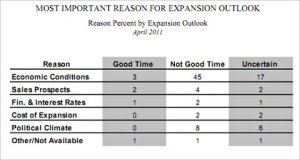 when the US economy is reeling from a basic lack of aggregate demand. The comments were just about as Chicago school as you could get. It was just another reheated bowl of smoking green shoots.
“Our effort now as a government should be to get the private sector to help them stand up and lead the recovery,” Goolsbee told “This Week” anchor Christiane Amanpour, citing efforts on regulatory review, while maintaining policies such as reduced payroll taxes through the end of the year. “We’ve got to rely on policies that are trying to leverage the private sector and give incentives to private sector to be doing the growth.”
I didn’t catch Obama economist Austan Goolsbee with Christian Amanpour on ABC which is where I got that quote. I caught up with him on Candy Crowley’s Sunday show. From what I can tell, the story line was about the same. According to Goolsbee, whatever recovery we’re experiencing from the worst financial crisis we’ve had since The Great Depression is in the hands of the private sector who just needs to appreciate the gentle nudge they’ve already gotten. Goolsbee conveniently ignored every thing going on in the recent economy except a small window’s worth of job creation. He declared that there was no downward trend in the economy. I felt like I was watching a big ol’ flaming head tell me to ignore the man behind the curtain. But, I musn’t be the only one that was watching the little man behind the curtain given that the one month’s worth of data turned into “DOW plunges into longest weekly losing streak since 2004” last week. I don’t think that’s the end of that either.
Scarecrow at FDL calls it the best speech evah given by President Romney’s chief economic adviser.
Goolsbee correctly told us that a smart economist wouldn’t get overly excited about one month’s jobs and growth numbers but would instead look at the overall trend. Of course what he wouldn’t want to concede is that GDP grew at a meager annual rate of 1.8 percent over the first three months of 2011 and so far was predicted to grow at only 2.8 percent for the next three. And the overall trend for job growth was still not enough to make a serious dent in unemployment unless you believe taking 5-10 years to get back to full employment is okay.
So Goolsbee was in denial from the opening moment because he didn’t have a decent story to tell even in his own framework. When Amanpour asked him what the Administration could or should be doing to improve conditions, he ticked off items you’d expect to hear from a typical GOP Presidential adviser: we’ve got to get the debt under control; we have a White House effort to identify and get rid of governmental regulations that are preventing the private sector from growing the economy; we should pass “free trade” agreements backed by the Chamber of Commerce; and we should leverage limited public dollars to release billions in private funding for investments.
Goolsbee’s bottom line: “It’s now up to the private sector.” That’s exactly what you’d expect from President Romney’s economic adviser.
It took Paul Krugman and Chrystia Freeland, over the absurd denials by Martin Regalia of the Chamber of Commerce, to remind ABC’s audience that business confidence and concerns about taxes and regulations aren’t the problem: business polls repeatedly show businesses aren’t expanding/hiring much because the demand for their products is weak. Demand is weak because the recession and the housing market crash depleted consumers’ wealth and they’re worried about losing their homes and jobs. You don’t need a degree in economics to grasp the logic of that. When private spending is still depressed, only government spending is keeping the economy afloat, and the stimulus is phasing out.
Now, I hate to keep writing about the same things over and over again. I know I’m not the only one. Brad DeLong has finally discovered there is no Plan B. There is only full speed ahead with deficit reduction which is a great long term goal but a disastrous short term strategy. Mark Thoma is even more straightforward.
Policymakers have been telling us to have patience for some time now, but patience ran thin long ago. We need action, not excuses to do nothing based upon Republican talking points. We have millions of people out of work, we face the prospect of a five to ten year recovery for employment, yet the administration has no plans to even try to push Congress to do more.
The percent of owners planning capital outlays in the next three to six months fell 3 points to 21 percent, a recession level reading. Money is cheap, but most owners are not interested in a loan to finance equipment they don’t need. Prospects are still uncertain enough to discourage any but the most profitable and promising investments. Four percent characterized the current period as a good time to expand facilities (seasonally adjusted), down 1 point from March and 4 points lower than January. The net percent of owners expecting better business conditions in 6 months slipped another 3 points to negative 8 percent, 18 percentage points worse than in January. Uncertainty is the enemy, and there is plenty of it to convince owners to “keep their powder dry”. Apparently consumers feel much the same way, as more customers spending more money would overcome the reluctance of owners to hire and make capital outlays. One in four still cite “weak sales” as their top business problem.
There is nothing mysterious about the fiscal policy solution to your basic lack of aggregate demand. What’s mysterious is the complete lack of concern about the significantly high unemployment rates, the continued foreclosure crisis, and the downward trends in both consumer and business confidence.
I guess I know what happens with the phone rings at 3 a.m.
No one picks it up and then some one goes on TV the next day and says we’ve done all we can do. For this they expect re-election?
Friday Reads
Posted: May 13, 2011 Filed under: Economy, Foreign Affairs, Iran, Libya, morning reads, Syria | Tags: Bashar al-Assad, Donald Trump, Dorothy Parvaz, homophobia, jobs, Navy Seal operation on Bin Laden, President Obama, Uganda 32 Comments Good Morning!
President Obama was on the road yesterday as well as making TV appearances. Suppose that means the campaign days are here again. CBS news reported an exchange between a laid off government worker and the President.
In one of the more personal exchanges from CBS News’ town hall with President Obama, one audience member, a pregnant woman who recently found out she was being laid off from her government job, asked the president for some earnest advice: “What would you do, if you were me?”
Karin Gallo, who jokingly described her job at the National Zoo as “non-essential employee number seven,” said she had taken a job in government “thinking it was a secure job” – but that now, she feared for her family’s future.
“I am seven months pregnant in a high-risk pregnancy, my first pregnancy,” Gallo told Mr. Obama. “My husband and I are in the middle of building a house. We’re not sure if we’re gonna be completely approved. I’m not exactly in a position to waltz right in and do great on interviews, based on my timing with the birth.”
“And so, I’m stressed, I’m worried,” she continued. “I’m scared about what my future holds. I definitely need a job. And, I just wonder what would you do, if you were me?”
More information is coming out on the Republican contenders for President. This shows yet another Republican that has thrived taking funds and hand-outs from the government. Who is it? It’s our reality star, self-promoting, egoist Donald Trump as reported by the LA Times.
From his first high-profile project in New York City in the 1970s to his recent campaigns to reduce taxes on property he owns around the country, Trump has displayed a consistent pattern. He courted public officials, sought their backing for government tax breaks under extraordinarily beneficial terms and fought any resistance to deals he negotiated.
He has boasted of manipulating government agencies, misleading officials in one case into believing he had an exclusive agreement to develop a property and then retroactively changing the development’s accounting practices to shrink his tax bill. In New York, Trump was the first developer to receive a public subsidy for commercial projects under programs initially reserved for improving slum neighborhoods. Such incentives have now become the norm in the powerful New York real estate community.
Karen Burstein, a former auditor general of New York City, reviewed a major Trump project in the 1980s and concluded he had “cheated” the city out of nearly $2.9 million. Decades later, Burstein said she was still appalled at the way Trump operated.
“It’s extraordinary to me that we elevated someone to this position of public importance who has openly admitted that he has used government’s incompetence as a wedge to increase his private fortune,” she said in a recent interview.
It seems that al-Jazeera’s Dorothy Parvaz was deportated from Syria to Iran this week after being missing last week. Her father is reported to be quite worried about her.
Her father, Fred Parvaz, who lives in Vancouver, told the Guardian: “I haven’t heard anything of late. We are in the dark. Syrian officials have made a statement that Dorothy was sent to Tehran on 1 May. But I have yet to receive confirmation from any authority in Iran that this is the case.”
“I am gravely concerned. I have not heard from her for two weeks. No word, no contact, nothing. We are a very close family so this really breaks my heart,” he said.
Parvaz, a 68-year-old physics and computer studies teacher, said al-Jazeera was trying to approach Iranian officials to get confirmation that she was in the country and was also attempting to create a line of communication with her.
Parvaz, who migrated from Tabriz in north-west Iran and has lived in Canada for 26 years, also said that the Canadian foreign ministry was making interventions on his daughter’s behalf. “But all these efforts so far have been fruitless,” he said.
The Guardian also reports that the EU is expected to sanction Syrian president Bashar al-Assad.
The EU is expected to agree on personal sanctions against the Syrian president Bashar al-Assad and other members of the regime over the continuing killing of protesters, sources said.
The US Senate has also called for the president to be directly targeted but few observers believe the measures will be enough to change the government’s “security first” strategy, which involves suppressing protests and only then opening a “dialogue” with opposition figures.
The regime was on Thursday preparing to quash any upsurge in demonstrations following Friday prayers tomorrow. Tanks have been deployed across the south, particularly in towns around Deraa, the epicentre of the pro-democracy demonstrations.
The US State Department condemned the Ugandan anti-gay bill as “odious”.
The State Department Thursday condemned a proposed bill in the Ugandan parliament that could make engaging in homosexual acts a capital offense punishable by death. The bill may be debated Friday by the Ugandan parliament.
“No amendments, no changes, would justify the passage of this odious bill,” State Department spokesman Mark Toner told reporters. “Both (President Barack Obama) and (Secretary of State Hillary Clinton) publicly said it is inconsistent with universal human rights standards and obligations.”
The State Department, he said, is joining Uganda’s own human rights commissions in calling for the bill’s rejection.
Surprise! Surprise! Surprise! CBS reports that ‘SEAL helmet cams recorded entire bin Laden raid’. It really looked like they were watching TV in that sit room pic didn’t it?
A new picture emerged Thursday of what really happened the night the Navy SEALs swooped in on Osama bin Laden’s compound in Pakistan.
CBS News national security correspondent David Martin reports the 40 minutes it took to kill bin Laden and scoop his archives into garbage bags were all recorded by tiny helmet cameras worn by each of the 25 SEALs.
Officials reviewing those videos are still reconstructing a more accurate version of what happened. We now know that the only firefight took place in the guest house, where one of bin Laden’s couriers opened fire and was quickly gunned down. No one in the main building got off a shot or was even armed, although there were weapons nearby.
Kadafi appeared on TV and was swiftly attacked by NATO jets shortly thereafter.
News services reported that NATO warplanes struck Kadafi’s fortified complex and several other sites in the capital, the second aerial bombardment of Tripoli in a 48-hour period. Reports from the scene indicated that the target could have been an underground bunker.
A North Atlantic Treaty Organization official said the site was a “disguised” command center for the Libyan military, one of a number of such facilities that Kadafi has tried to conceal amid a punishing aerial assault.
“He’s forced to hide whatever remains of his severely damaged command-and-control network,” said the NATO official, who could not be named under alliance guidelines.
The strikes in Tripoli came after Kadafi appeared on state television for the first time in almost two weeks.
Most of the fighting in the country is centered around Misurata which is now thought to be under rebel control. There’s some speculation that Kadafi’s days in office may be numbered
Rebel advances in Misurata have opened up the port for renewed deliveries of humanitarian aid and other supplies, officials said, bringing some relief to a city that has come to epitomize resistance to Kadafi’s rule. Rebels seized control of Misurata’s airport this week in a step hailed as a major opposition triumph after weeks of street fighting in Libya’s third-most-populous city.
But it was unclear how much further the opposition could push out from the enclave of Misurata against Kadafi’s superior forces on the city’s eastern and western edges. Experts have also not ruled out the possibility of a government counterattack on Misurata, the only western coastal city that remains in rebel hands.
Nonetheless, the rebel advances in Misurata, combined with the aerial strikes in the capital, have been seized on by the opposition as a sign that Kadafi’s regime is tottering under mounting pressure.
There have also been widely reported accounts of unrest in Tripoli, where the embargo against Kadafi’s regime has led to fuel and food shortages. The opposition has also alleged escalating defections and desertions from Kadafi’s ranks, though the reports remain unconfirmed.
Well, that’s some of the news that’s fit to print. There’s probably lots more out there! What’s on your reading and blogging list today?

 peej
peej Carissa
 bostonboomer
 dakinikat
 ecocatwoman
 mablue2
 Mama Lopez
 peggysue22
 quixote
 skydancingguestblogger
 Mona (aka Wonk the Vote)



 Sky Dancing
Recent Comments