Posted: July 11, 2026 | Author: bostonboomer | Filed under: just because | Tags: Air Force One, cat art, caturday, cyclospora, Donald Trump, explosive diarrhea, first amendment, freedom of the press, Iran threatens revenge against Trump, Iran War, Kash Patel, Mitch McConnell dead or alive, Mojtaba Khamenei, NYT reporters subpoenaed, Qatari-donated Air Force One, Strait of Hormuz |
Good Day!!

By Yulia Sidneva
The news is as crazy as usual today. Remember when weekends used to be quiet? Here’s what’s happening:
The Justice Department has subpoenaed 4 New York Times journalists who reported on security issues related to Trump’s new Air Force One. The administration’s attacks on the First Amendment are getting out of hand.
Michael M. Grynbaum at The New York Times: Times Journalists Subpoenaed as Trump Escalates Pressure on Media.
The Trump administration issued subpoenas on Friday to several journalists for The New York Times, after the news outlet reported this week on security concerns involving President Trump’s new Qatari-donated Air Force One.
The subpoenas — which seek to force the reporters to testify before a federal grand jury in Manhattan on Wednesday — were an extraordinary escalation in President Trump’s efforts to threaten and intimidate independent news organizations.
In some cases, the subpoenas were delivered by federal agents who showed up at reporters’ homes.
The Times denounced the administration’s actions.
“The appearance of federal law enforcement agents on the doorstep of news reporters should shock the conscience of any American who believes in the Constitution and the press freedom it protects,” said David McCraw, The Times’s top newsroom lawyer, in a statement on Friday evening.
“Our journalists report the facts and advance the American public’s right to know how their government is operating and their taxpayer dollars are being used,” Mr. McCraw wrote. “This brazen act should be seen as nothing more than an attempt to prevent the public from knowing what is happening in their country by intimidating journalists from doing their jobs.”
The subpoenas contain few specifics, asking only that the journalists testify “in regard to an alleged violation of federal criminal law.” They were issued by Jay Clayton, the U.S. attorney in Manhattan. Mr. Clayton, who leads one of the country’s most prominent law enforcement offices, was recently nominated by Mr. Trump to serve as director of national intelligence.
Representatives for the White House and the U.S. attorney in Manhattan did not respond to inquiries on Friday evening.
The Times journalists who received subpoenas included Julian E. Barnes, Eric Lipton, Tyler Pager and Eric Schmitt, who reported on Wednesday that Mr. Trump had departed Turkey on the old Air Force One as a security precaution at the urging of the Secret Service. On Thursday, The Times reported that the new Air Force One, a Qatari-donated Boeing 747-8, lacked some of the advanced security features of the older aircraft, including antimissile capabilities. Both articles cited sources who spoke on the condition of anonymity to discuss sensitive security issues.
Before the Wednesday article was published, a senior official at the Federal Bureau of Investigation contacted a reporter and a senior editor at The Times to ask that the article be held, calling it an issue of national security, according to a person familiar with the conversation. The F.B.I. official declined to explain the security issue. The official also asked The Times to disclose its sources for the article; the newspaper refused to do so. (A spokesman for The Times, Charlie Stadtlander, confirmed the account.)
This is really frightening. Fortunately, The Times has deep pockets and can defend their journalists.

By Miroco Machiko
Ashraf Khalil and Will Weissert at the AP: New York Times reporters are subpoenaed after Air Force One reporting, newspaper says.
The Trump administration has subpoenaed several New York Times journalists after their report on security concerns involving the new Air Force One, according to the paper.
The new jet, which President Donald Trump received as a gift from Qatar, entered service last week.
The subpoenas issued Friday seek to force the reporters to testify before a federal grand jury in Manhattan on Wednesday, the paper said, adding that federal agents delivered some subpoenas to the reporters at their homes.
There was no immediate response from the White House or Department of Justice to requests for comment on Saturday….
Issuing subpoenas represents a major escalation in the Republican president’s effort to threaten independent new organizations by leveraging the power of the federal government against them. It is also part of a systematic pattern by Trump to attempt to undermine press freedom in order to shield him from negative coverage.
Earlier this year, the Justice Department issued subpoenas seeking to compel testimony from reporters at The Washington Post and The Wall Street Journal. In both cases, the department later withdrew the subpoenas.
During his first term, Trump suggested that the press constituted an “enemy” of the American people. Since returning to the White House last year, he has waged an aggressive campaign against the media unlike any in modern U.S. history.
Trump’s pattern of attacks against news outlets and media figures he believes are overly critical of him has included filing lawsuits against outlets whose coverage he dislikes, threatening to revoke TV broadcast licenses and seeking to bend news organizations and social media companies to his will.
This is the article the Times published on Wednesday that so outraged Trump and his goons.
Tyler Pager Julian E. Barnes, Eric Schmitt, and Eric Lipton at The New York Times (gift article): Security Precaution Led Trump to Use Old Air Force One in Leaving Turkey.
President Trump flew out of Turkey on Wednesday night on the old Air Force One instead of his new Qatari-donated Boeing 747-8 as a security precaution related to the resumption of hostilities with Iran, according to people briefed on the plans, who said the change came at the urging of the Secret Service.
The swap deepens questions about whether the new plane, which the president had pressed to be ready as soon as possible, was retrofitted with sufficient security measures over the last year. Lawmakers and some officials have raised concerns about whether the expedited timeline allowed for the addition of an advanced missile defense system and other modifications used to protect the president.

By Jacquie Hughes
In a statement, Steven Cheung, the White House communications director, said that “the new Air Force One is a state-of-the-art aircraft that has been fitted with high-level security protocols that ensure the safety of the president and his staff.” [….]
But people briefed on the new plane’s capabilities, who spoke on the condition of anonymity to discuss sensitive security issues, said the new plane does not have all the features of the older plane. The switch in the president’s aircraft when he departed Turkey was a precautionary measure made at the advice of the Secret Service and not because of a specific threat, they said.
Mr. Trump, who has marveled at the luxury touches of his new jet, flew on it on Monday night to go to Turkey for a NATO summit. After his arrival, the conflict with Iran reignited, and the United States launched a series of strikes against that country while Mr. Trump and NATO leaders were about 1,000 miles away in Ankara.
The president on Wednesday denied that the change in his aircraft was made because of security concerns. Instead, he asserted that the swap was so the new jet could leave early and make stops at U.S. military bases to show it off to the troops because the aircraft is “magnificent.”
But when pressed by reporters in Ankara about the reason for the change, Mr. Trump also repeatedly noted that he was Iran’s No. 1 target, and referred at one point to having seen or been briefed on a list of Tehran’s targets in recent days.
You can use the gift link to read the rest.
So Trump’s on again off again war with Iran is back on. Iran apparently fired on some ships in the Strait of Hormuz, and Trump ordered some retaliatory strikes on Iran while he was overseas. Iran is also threatening to assassinate Trump and he is again threatening them with war crimes.
AP: US demands Iran publicly state that Strait of Hormuz is open and Tehran won’t attack ships anymore.
The U.S. is demanding that Iran make a public statement saying the Strait of Hormuz is open and that ships crossing the vital corridor won’t be attacked anymore, senior U.S. officials said Friday, adding that internal Tehran power struggles have made it difficult to reach and keep a deal.
The U.S. officials, who spoke on condition of anonymity to describe to reporters the state of play with Iran, said the resumption of strikes this week came after what they described as a rogue faction of Iranian hard-liners trying to sabotage the ceasefire between Tehran and Washington.
It comes as U.S. President Donald Trump reiterated on social media Friday that he views the interim ceasefire deal as “OVER!” But he said the U.S. would continue talks aimed at putting a permanent end to the war.
The officials said Friday that Trump is giving U.S. negotiators limited time to reach a deal with Iran, but, in a sign of the challenges ahead, they underscored that the president had a wide range of options if talks fall apart. They also said a power struggle was playing out in real time in Iran after U.S. and Israeli strikes at the start of the war killed its longtime leader, Ayatollah Ali Khamenei….
The U.S. is working on pressing Iran to make a public statement that the Strait of Hormuz, a vital waterway for world energy markets, is open and free to ships to transit, the officials said.

By Tetsuo Takahara
Barak Ravid at Axios: Iran’s supreme leader pledges revenge for his father’s assassination amid Trump death threats.
Iranian Supreme Leader Mojtaba Khamenei announced on Saturday that revenge for his father’s assassination “will most certainly be carried out.”
Why it matters: The statement was published after the burial ceremony for his father, former Supreme Leader Ali Khamenei. Throughout the weeklong funeral procession, there were massive public calls for the death of President Trump.
Mojtaba Khamenei, who didn’t appear inI public during the funeral ceremonies, didn’t specifically mention Trump. But earlier this week, Israel gave the U.S. information that suggested Iranian officials recently discussed the idea of assassinating Trump, U.S. and Israeli officials said.
- On his way back from Turkey on Wednesday, Trump traveled in the old Air Force One plane rather than the new plane that the U.S. received from Qatar. The New York Times reported that security concerns prompted the mid-trip switch in planes.
What he’s saying: Mojtaba Khamenei — who was seriously wounded in the attack that killed his father, and hasn’t appeared in public since — pledged on his Telegram channel to “avenge your pure blood and the blood of all those martyred in these two wars by bringing the criminal and dishonorable killers to justice.”
-
“This revenge is the demand of our nation, and it will most certainly be carried out. These criminals — whose names are known from top to bottom — will take to their graves the unfulfilled wish of dying peacefully in their beds. They should know that this does not depend on my personal presence or that of any other official,” he wrote.
-
Khamenei added that whether he is alive or dead, the revenge for his father’s death “will be accomplished,” and stressed that “soon, freedom-loving people throughout the world will each carry out part of this divine mission.”
Read more at Axios.
Kathleen Culliton at Raw Story: Trump’s ‘incredibly vulgar’ threat reveals secret tactic: Ex-State official.
President Donald Trump’s promise to “decimate and destroy all areas of Iran” stunned a former Obama administration official Saturday morning.
Richard Stengel, former Under Secretary of State for Public Diplomacy, shared his alarm over Trump’s recent Truth Social threat with MS NOW viewers.

By Miroco Machiko
“The fact of an American president threatening genocide against the whole people in case he’s assassinated is more than unseemly,” Stengel said. “It’s it’s incredibly vulgar and undiplomatic language.”
Stengel was responding to Trump’s own reaction to the Wall Street Journal report earlier this week that a new Iranian plan to assassinate him may have been uncovered by Israeli intelligence.
Late Friday night, Trump responded with a direct threat.
“1000 Missiles are Locked and Loaded and aimed at the Islamic Republic of Iran,” wrote Trump, “with thousands of more to immediately follow, should the Iranian Government act on its threat, pronounced in many corners of the Globe, to assassinate, or attempt to assassinate, the sitting President of the United States of America, in this case, ME!”
He is such an idiot.
Late yesterday, MSNOW reported that Kash Patel was called on the carpet at the White House to respond to reports of his using his job as FBI director to gain access to luxury travel.
Carol Leonnig, Jacqueline Alemany, Ken Dilanian, Vaughn Hillyard and Jake Traylor at MSNOW: Kash Patel called to White House on heels of continued questions over his behavior.
FBI Director Kash Patel abruptly cancelled a planned flight Friday to see his girlfriend in Chicago this weekend, after top administration officials frustrated with Patel summoned him to the White House, according to two people with knowledge of the change.
The precise reasons that Patel’s political bosses demanded he cancel his trip and report to the West Wing are unclear, but several people said top Trump deputies were disturbed by a range of actions by Patel. Some found it confounding that the FBI director was leaving town amid the recent revival of the war with Iran and alleged threats against the president’s life, according to a person familiar with efforts to help Patel rebuild trust with the White House. For this article, people spoke on the condition of anonymity to discuss a sensitive internal matter.
Others cited two unforced errors by Patel that created bad optics for the Trump administration, the first being his early morning tweet bashing MS NOW for its coverage of his high-flying lifestyle, they said, in which Patel boasted: “my jet ski is gold plated…dumbass.”

By Shozo Ozaki
The second misstep, the people said, was that extensive reports by MS NOW and other news outlets about taxpayers footing the bill for Patel’s globe-trotting ultimately spurred formal questions from Senate Judiciary Chairman Chuck Grassley, a critical ally of President Trump’s.
On Thursday, MS NOW reported exclusively that Grassley had first asked Patel in a May letter about his use of the FBI jet and his decision to purchase luxury armored BMWs so he could travel more discreetly in the Washington, DC area. In a separate letter, Congressional Democrats said they had received information that Patel was demanding that FBI staff arrange special perks on his official trips, including a jet ski excursion and a helicopter tour. The FBI has disputed that, and said Patel had complied with federal rules pertaining to his travel.
White House spokespeople denied the report, but…
Patel cancelled his flight to Chicago just as he was preparing to leave on Friday morning, according to three people briefed on his move. But the trip to Chicago was already stirring anger and controversy inside the FBI, multiple current and former law enforcement officials told MS NOW. He was planning to attend his girlfriend Alexis Wilkins’ performance Saturday at a country music festival held in the parking lot of a major Chicago stadium, the three people said. Patel’s staff had arranged for the director to make an office visit Friday to the Chicago field office to coincide with his trip, according to two other people with knowledge of the director’s schedule.
Several FBI agents complained internally that this office visit was belatedly-added cover to justify Patel flying the director’s jet — which is estimated to cost tens of thousands of dollars for such domestic trips — to enjoy a weekend in Chicago with his girlfriend, the people said.
“Patel was coming (to Chicago) today for a fake office visit for his girlfriend’s country concert this weekend,” one of the sources briefed on the trip said. The source noted Patel “cancelled the trip while on the tarmac at Andrews” and was “summoned to the White House immediately,” adding that it was “apparent panic” and “believed to be in response to his morning tweet today.”
Read he rest at MSNOW.
We still don’t know whether Mitch McConnell is alive or brain dead. Since it was reported that he was found unconscious and given CPR, I think it’s most likely that he was intubated and is still on life support. The chances of an 84-year-old man recovering after CPR outside a hospital and very slim. It’s also odd that his wife would leave for a trip to China if there was any hope of McConnell regaining consciousness anytime soon.
David Smith at The Guardian: Mitch McConnell mystery deepens as health questions remain unanswered.
Mystery surrounding Senator Mitch McConnell’s health is deepening as the US Congress prepares to return from recess next week.
McConnell, 84, has not been seen in public since he was admitted to hospital in the Washington area on 14 June. Nearly a month later, the Kentucky Republican’s office has released only sparse updates, saying he is “continuing to improve” and remains engaged with Senate business, while refusing to disclose the nature of his illness or explain why he remains hospitalised.
Emergency dispatch audio obtained by media outlets indicates that first responders were sent to his home following reports of an unconscious person and that CPR was under way. On Friday, CNN released video footage that showed a person on a stretcher being wheeled towards an ambulance, though their face was not visible.
The senator’s office has neither confirmed nor denied the reports, leaving a vacuum that has been filled with fevered speculation, based on circumstantial evidence, about McConnell’s condition.
“I think he’s dead,” opined Malcolm Nance, a career counter-terrorism intelligence officer, in an interview with Amy McGrath, who lost to McConnell in the 2020 election, on the Truth in the Barrel podcast. “It’s very clear. I heard that 911 tape and I was an EMT when I was in the military at one point and you know we used to do CPR a lot. One of the things that teach you about CPR is the probability of coming back from CPR is very, very, very small.”

By Maki
McGrath, a former marine fighter pilot, replied: “Well, it’s an interesting take. We’ll see what happens there as well.”
The Senate returns on Monday for a four-week legislative session dominated by defence spending, national security and government funding bills. McConnell’s continued absence threatens to complicate Republican efforts to advance those measures with only a narrow 53-47 majority.
McConnell chairs the Senate rules committee and a defence appropriations panel, which is crucial in shaping Pentagon funding and where Republicans hold only a one-seat advantage.
Without him, partisan disputes over annual appropriations could become even harder to resolve ahead of the 1 October deadline for new federal spending. Congressional leaders are already signalling that another temporary spending measure may be needed to avert a government shutdown.
Read more at the Guardian link.
Have you heard about that horrible stomach virus that is going around? It comes from a parasite called cyclospora that the CDC used to closely monitor.
Ryan Grenoble at HuffPo: CDC Stopped Monitoring Parasite Now Causing Explosive Diarrhea Across The Country.
The country is in the midst of a nationwide outbreak of explosive diarrhea caused by a parasite the CDC stopped surveilling at the federal level in July 2025.
That’s around the same time the Trump administration began haphazardly attacking and defunding federal health and science agencies under the guise of “government efficiency,” with Health Secretary Robert F. Kennedy Jr. separately also pushing out critical federal scientists and researchers.
Prior to that date, a collaborative CDC program called FoodNet helped federal and state regulators track eight foodborne pathogens.
Among them was cyclospora, a heat-loving spherical parasite that’s sickened 1,000 people in an ongoing outbreak in Michigan (the state’s worst), with similar illnesses cropping up in 28 other states.
In addition to cyclospora, surveillance of campylobacter, listeria, shigella, vibrio and Yersinia was cut. FoodNet now only regularly monitors two diseases: Salmonella and Shiga toxin-producing E. coli.
A list of CDC talking points seen by NBC News last summer clearly blamed funding for the program’s drastic cutback.
“Funding has not kept pace with the resources required to maintain the continuation of FoodNet surveillance for all eight pathogens,” the talking point read.
More at the link.
Those are the stories that caught my attention today. What’s on your mind?
Did you like this post? Please share it with your friends:
Posted: June 17, 2026 | Author: bostonboomer | Filed under: just because | Tags: 2026 G7 in France, China and renewable energy, clearn energy, Department of Education, Donald Trump, FBI, Iran War, Iran war effect on global economy, Kash Patel, Memorandum of Understanding between US and Iran, planned attack on UFC fight, RFK Jr in charge of disability education policy, Secret Service, wind energy |
Good Morning!!

US and Iranian flags
Trump has been trying to keep the memorandum of understanding with Iran secret as long as possible. The obvious reason for that is that Iran is getting by far the best of the deal. But both Bloomberg and CNN have gotten the 14 point “draft agreement.” Here is the full text from CNN:
1 — The Islamic Republic of Iran and the United States, together with their allies in the current war, declare upon the signing of this Memorandum of Understanding an immediate and permanent end to the war on all fronts, including Lebanon, and undertake that from now on they will not launch any hostile action against each other, and will refrain from the threat or use of force against each other. The final agreement will confirm the provisions of this Article and the remaining Articles.
2 — The Islamic Republic of Iran and the United States undertake to respect each other’s sovereignty and territorial integrity, and to refrain from interfering in each other’s internal affairs.
3—The Islamic Republic of Iran and the United States undertake to negotiate and reach a final agreement within a maximum period of 60 days, extendable by mutual consent.
4 — Immediately upon the signing of this Memorandum of Understanding, the United States lift the naval blockade and prevent any interference or obstruction against the Islamic Republic of Iran, and restore traffic within a maximum of 30 days to its full capacity; the traffic of ships shall be proportional to the pre-war volume of traffic on the part of the Islamic Republic of Iran. The United States also undertakes to withdraw its forces from the surrounding areas within 30 days after the final agreement.
5 — Upon signing this Memorandum of Understanding, the Islamic Republic of Iran will immediately take steps to ensure that the movement of merchant ships from the Persian Gulf to the Sea of Oman and vice versa is resumed within 30 days to the pre-war volume, taking into account the need for the removal of technical obstacles and the neutralization of mines by Iran.
6 — The United States undertakes, together with its regional partners, to create a comprehensive plan agreed upon by both parties for the rehabilitation and economic development of the Islamic Republic of Iran, while ensuring financing of at least $300 billion. The implementation mechanism of this plan, as part of the final agreement, will be formulated within 60 days.
7 — The United States commits to ending, on a schedule to be agreed upon as part of the final agreement, all types of sanctions currently facing the Islamic Republic of Iran, including resolutions of the United Nations Security Council and the Board of Governors of the International Atomic Energy Agency (IAEA), and all unilateral U.S. sanctions, both primary and secondary.
8 — The Islamic Republic of Iran reiterates that it will never produce nuclear weapons. The Islamic Republic of Iran and the United States have agreed that the fate of enriched material and the fate of all other mutually agreed nuclear-related issues, including Iran’s nuclear needs, will be adequately addressed in a final agreement; the final agreement will confirm the provisions of this Article.
9 — The Islamic Republic of Iran and the United States agree that, pending a final agreement, they will maintain the status quo: Iran will maintain the status quo on its nuclear program, and the United States will not impose new sanctions on Iran or strengthen its forces in the region.
10 — The United States undertakes that immediately after the signing of this Memorandum of Understanding, and until the date of the lifting of sanctions, the United States Treasury Department will issue waivers for exports of Iranian crude oil, petrochemical products and their derivatives, and all related services, including banking, insurance, transportation, and the like.
11 — The United States undertakes that, in light of the progress of negotiations towards a final agreement, frozen or restricted funds and assets of the Islamic Republic of Iran will be released and made fully available. These funds, whether held in the master account or transferred, will be used for any final beneficiary payment determined by the Central Bank of the Islamic Republic of Iran and will be fully available for use. The United States undertakes to issue all necessary permits and licenses on this basis.
12 — The Islamic Republic of Iran and the United States agree that an implementation mechanism will be established to oversee the successful implementation of and future commitment to the Final Agreement.
13 — Following the signing of this Memorandum of Understanding, and upon receipt of assurances regarding the commencement of implementation of Articles 4, 5, 10, and 11 of this Memorandum of Understanding, and the continued implementation of these steps, the Islamic Republic of Iran and the United States will enter into negotiations for a Final Agreement solely with respect to the remaining Articles.
14 — The final agreement will be approved through a binding resolution of the UN Security Council.
I don’t see anything there about inspections of Iran’s nuclear programs. But this isn’t a final agreement. That will supposedly be worked out in the next 60 days after this one is signed.
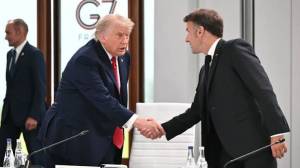
Trump shakes hands with French preident Emmanuel Macron. G7 leaders are supposedly backing Trump’s agreement with Iran.
Reuters: Exclusive: Iran deal includes $300 billion fund, more than half of which already committed, source says.
DUBAI, June 17 (Reuters) – A $300 billion private fund designed to trigger investment into Iran is outlined in the U.S.-Iran framework agreement and more than half that sum has already been committed, a source with direct knowledge of the deal told Reuters.
The fund is designed to give both sides an economic incentive to conclude a final deal to end the war, said the source, who spoke on condition of anonymity because the plan has not yet been announced as Washington and Tehran prepare to sign on Friday.
The fund’s existence has been previously reported but Reuters is revealing for the first time that more than half of the amount has already been committed and that it will be comprised entirely of private-sector funds.
U.S. and Iranian officials said on Sunday they had agreed on a framework to end their war, which began when U.S. and Israeli forces attacked Iran on February 28, halt the U.S. blockade of Iran and reopen the Strait of Hormuz, a key supply route for global oil and gas.
The new fund is a private investment vehicle, not a reconstruction or reparations programme and will not include any government money or grants, the source said, adding that companies based in the U.S., the Gulf Arab states, Asia, South America and Africa have agreed to commit financing. Investments pledged span energy, logistics, manufacturing and transport, the source said.
U.S. President Donald Trump pushed back on Wednesday against any characterisation of the fund as a U.S. investment. “We’re not investing, we’re not putting up 10 cents,” he said, adding that he was not asking Gulf countries to invest either.
I’ll believe that when I see it. The ballroom was supposed to be built with private funds too.
Tom Nichols at The Atlantic (gift article): Trump Does Not Understand the War He Lost.
Donald Trump arrived in France yesterday for this morning’s G7 summit and promptly confirmed America’s capitulation to Iran. Instead of merely repeating the outlines of what looks to be a terrible peace deal, however, Trump made a series of statements so bizarre, even by his usual standards, that they raise the question of whether the president still understands the words that come out of his own mouth.
The president began with a classic Trumpian move, daring his listeners to forget today what they knew yesterday. Just this winter, Trump had promised the Iranian people that the tyrants who ruled them would be gone. But now? “I never cared about regime change,” he told reporters, waving away his failure to achieve a primary strategic goal by denying that it had ever been a goal at all.
 Things got a little weirder, however, when he described the Iranians who have stepped in to replace the regime leaders killed in U.S. strikes: “We’re dealing with people that I think are very rational people. And they were nice to deal with.”
“They were strong people, smart people,” he added. And then he dropped this remarkable claim: “They’re not radicalized, and they’re, you know, looking to help their country.”
This definitely not-radicalized group that Trump seems to like includes the new supreme leader, Mojtaba Khamenei (whose father, wife, and son were killed by U.S. strikes), and the still-standing Islamic Revolutionary Guard Corps, all of whom have shown no compunction about lashing out in any direction during Trump’s “cease-fire,” the make-believe pause in the war during which no one actually ceased firing.
Trump’s description of the current regime in Tehran as a bunch of swell guys was brewed in a heavy-duty vat of wishful thinking. It’s an extreme version of Trump’s tendency, when he’s been outplayed by powerful enemies, to describe his opponents as basically reasonable people. (He has done the same over the years with dictators and autocrats in North Korea, Russia, and China, among other countries.) This is his way of assuring the public that he did not get taken to the cleaners—because, of course, his affable partners would never do that.
A bit more:
Trump fared no better talking about the Iranian nuclear program. Iran’s stockpile of highly enriched uranium exists largely because Trump unilaterally called off U.S. participation in the Joint Comprehensive Plan of Action, the 2015 agreement that was meant to prevent Iran from enriching uranium beyond minimal levels for civilian uses. After the U.S. and Israeli attacks last year, and yet more pounding during Operation Epic Fury, that uranium remains underground, either hidden in storage or buried beneath tons of rubble; some of it can likely be recovered and enriched for military uses. Trump has said, repeatedly, that Iran must hand it over.
Until today.
“I call it the nuclear dust, their enriched material, right?” Trump said. (Why he calls it this remains a mystery.) Does America still insist on its removal from Iran? Well, maybe.
“The whole mountain has collapsed on top. We have cameras on it,” Trump said. “You could make the case ‘Why are you even bothering?’ ’cause it’s not really valuable. It’s, you know, it’s probably half a million dollars’ worth. It’s not very valuable stuff, but I think psychologically we wanna get it.”
As many people have said over the years, Trump is a fucking moron. Read the rest of the piece at The Atlantic.
Patricia Cohen at The New York Times (gift article): The Iran War Permanently Altered the Global Economy.
The framework deal between the United States and Iran sets the stage for an end to the bursts of violence and debilitating disruption of energy deliveries and trade in the Persian Gulf. But don’t expect economies around the globe to simply pick up where they left off before the United States and Israel began bombing Iran on Feb. 28.
The war has set in motion changes that will be hard to reverse….
The near shutdown in oil and gas deliveries from the Middle East and the leap in prices are causing a shift in power. Energy producers from the Gulf to the Americas are jockeying to maintain or increase their dominance, and customers are struggling to reduce their dependency and shore up their supply.
As a result, the energy market is changing, the energy mix is changing and the energy players are changing.

Wind farm in Xinjiang, China
The profound vulnerability of countries throughout Asia, Europe and elsewhere that depend on imported energy is supercharging the hunt for alternatives. In some places, like South Korea and Japan, that has led to an increased use of dirtier fuels like coal.
But over the longer term, this energy shock — the second in just four years — is likely to accelerate a transition to renewables like solar and wind as well as nuclear power.
Improvements in electric battery technology and efficiency make the shift more feasible than it was when Russia’s invasion of Ukraine prompted a global energy shock in 2022, said Daan Walter at Ember, an energy research group in London.
In many places, for instance, electric vehicles are increasingly affordable. And in April, wind and solar generated more electricity globally than gas for the first time.
“This is a big turnaround,” Mr. Walter said. “So what was five years ago maybe barely competitive, now is almost already clearly cheaper.”
Investments in renewables have also become a better bet, promising returns in closer to two years instead of 30, he said.
Meanwhile, Trump is doing everything he can to end clean energy initiatives and make the US more dependent on oil and gas–and even coal! More from the NYT article:
Relations among producers are also changing. The war heightened tensions between the United Arab Emirates and Saudi Arabia and prompted the Emirates to leave the OPEC Plus oil cartel. The impact of that departure will be fully felt only when oil production in the region picks up. But a weakened Organization of the Petroleum Exporting Countries could add to volatility in oil markets.
The split has also encouraged the Saudis to move closer to Russia. Vladimir V. Putin, the Russian president, featured Saudi Arabia this month as the “guest of honor” at an economic forum in St. Petersburg….
The push to build out and diversify energy networks is going to continue long after the war ends. And China is poised to benefit most from the expected boon in renewables.
It is leagues ahead of the rest of the world in producing wind turbines, high-voltage cables, transformers, solar panels, batteries, software to manage energy flows and more.
China’s increasing role ensuring that other countries have a dependable supply of energy amplifies its strategic influence and importance.
“China looks to be an out-and-out winner,” analysts from Wood Mackenzie, a global energy consulting firm, concluded.
Fortunately, Trump has been unable to stop wind energy in the US.
Ellyn La Pointe at Gizmodo: Trump Just Lost His War on Wind Energy.
As soon as President Trump started his second term, he declared war on the U.S. wind energy industry. On his very first day in office, he ordered federal agencies to halt permitting and leasing for wind projects—the first in a series of sweeping policy moves aimed at stymieing one of the nation’s fastest-growing sources of renewable energy. Now, it appears he’s waving the white flag.
 The Trump administration has dropped its appeal to the court ruling that overturned the permitting and leasing freeze in December 2025, meaning the indefinite nationwide pause on wind energy projects is no longer enforceable.
That ruling was the result of a lawsuit filed in May 2025 by a coalition of attorneys general from 17 states and Washington, D.C., led by New York Attorney General Letitia James. The district court ruled in favor of the plaintiffs, finding Trump’s January 2025 executive order to be “arbitrary and capricious and contrary to law.” The Department of Justice appealed the decision in February, then filed a motion for its voluntary dismissal on June 10.
States that challenged the administration’s “wind directive” are claiming victory. “New York’s wind projects will create jobs, strengthen our economy, and bring down New Yorkers’ electric bills,” Attorney General James said in a statement. “My office will continue to fight any attempt to undermine that progress.”
Read more at the link.
In non-Iran news, Kash Patel is still an idiot.
Carol Leonnig, Ken Dilanian, Marc Santia and Lisa Rubin at MSNOW: Kash Patel ‘jumped the gun’ with announcement of UFC plot arrests, sources say.
Secret Service officials are angered that FBI Director Kash Patel prematurely announced on Tuesday the details of a largely sealed and ongoing criminal investigation into an alleged plot to attack Sunday’s White House UFC event with drones, according to three people familiar with the incident.
Secret Service and FBI agents had been partnered on the investigation into a group of individuals discussing plans for a drone attack at the White House in the last week, and had discussed unsealing the case and making a joint announcement Tuesday afternoon, according to sources.
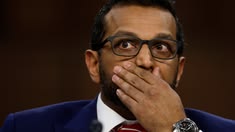
Kash Patel
The problem with Patel’s social media announcement, the sources say, was that the case had been sealed in court and roughly 10 suspects had not yet been arrested and placed in custody at the time Patel shared his post. The people said Secret Service and FBI officials were surprised by Patel “jumping the gun.” [….]
The threat to the UFC event became known to the Secret Service and FBI in the last week when a relative of one of the suspects contacted local police in the Cincinnati area, according to two people briefed on the probe, and reported that their relative was talking about engaging in a vague plot in Washington.
An advanced threat interdiction team at the Secret Service, with the help of the FBI, began seeking a subpoena for an encrypted Signal chat thread and was able to identify the plot being planned and some of the people discussing using drones and possible snipers to attack the UFC fight event at the White House’s South Lawn.
Authorities then arrested one suspect, 19-year-old Tycen Proper of Ohio, on June 13 and moved immediately to seal the case so the FBI and Secret Service could continue investigating, identifying and arresting additional suspects.
Tuesday afternoon, the Justice Department announced the arrests of five men, including Proper, for an “alleged plot to carry out an attack to kill government officials and others” attending the Sunday event, according to a DOJ press release.
Read the press release at the DOJ here.
More about the attack plan at the BBC: Group planned to attack White House UFC event using snipers and drones, FBI says.
The FBI thwarted a plot targeting Sunday’s UFC event at the White House and has arrested five men, the US justice department said on Tuesday.
Part of the plan involved striking nearby buildings with explosive-laden drones and firing on “high value targets”, prosecutors alleged.
One suspect was arrested in Ohio last week, where investigators reviewed encrypted messages involving other alleged conspirators. Prosecutors said in charging documents.
they had allegedly “expressed ultra-religious and antigovernment sentiments”….

Tyron C. Proper
The suspects were identified as Tycen C Proper, 19, the suspect arrested in Ohio, along with Bryan Omar Roa, 24, and Michael Alan Thomas, 32, of California, Daniel K Eskridge, 32, of Missouri and Abraham Hermosillo Alvarez, 31, of Nebraska. They were arrested across the four US states and each have been charged with conspiracy to commit murder, the Department of Justice (DOJ) said in a statement.
By using the drones, the plotters aimed to spark panic and draw the fleeing crowd toward a sniper team, according to the court documents. A “second wave” of attackers was then allegedly supposed to storm the White House gate….
Court filings related to Alvarez said the group allegedly eyed potential targets that included US President Donald Trump, Vice President JD Vance, Israeli Prime Minister Benjamin Netanyahu and Elon Musk, as well as several elected officials – though not all attended the UFC event.
The plot was discovered through Proper. His mother called local authorities late on 10 June – just days before the high-profile event – because she was concerned about his large firearms purchases and what she had seen of his online communication with a group that claimed to be made up of former military members and Christian-based.
The group allegedly wanted to “jumpstart” a revolution by shooting “high-value targets” – identified as wealthy people and politicians – attending the UFC fight. They had specifically discussed “grievances about government corruption, the handling of the Epstein files, data centers taking up all the water in communities, and other government actions,” prosecutors said.
This is starting to sound like one of those trumped up FBI conspiracy investigations, but we’ll see, I guess.
This is from ABC7 in California: New details after 2 SoCal men arrested in alleged plot targeting UFC fights at White House.
RIVERSIDE COUNTY, Calif. (KABC) — Two men from Riverside County were arrested in connection with an alleged plot targeting the “UFC Freedom 250” fights at the White House, Eyewitness News has learned.

Bryan Omar Roa, 24, of Calimesa, and Michael Alan Thomas, 32, of Pinon Hills were arrested on Saturday, the day before the fight.
Bryan Omar Roa, 24, of Calimesa, and Michael Alan Thomas, 32, of Pinon Hills were arrested on Saturday, the day before the fight, and have since made their initial court appearances.
The FBI searched both of their homes and recovered multiple firearms and large quantities of ammunition. According to the complaint, law enforcement seized a handgun, rifle, tactical vest, a two-way radio and a laser target pointer from Roa’s home….
Meanwhile, two rifles, about 180 rounds of ammo and a pistol were seized by authorities from Thomas’ home, according to the complaint….
Court documents allege one suspect admitted to helping plan the attack and encouraging others to participate. The complaint says Thomas was planning the attack but said he wasn’t going to take part.
The FBI said the alleged terror plot involved at least 19 people and included plans for explosions and gunfire. According to an unsealed FBI affidavit, the plan involved setting off explosions using drones near the event and then shooting guests as they evacuated.
There’s more at the link.
One more important story from Julia Metraux at Mother Jones: RFK Jr. Will Oversee Disability Education Policy.
On Tuesday, the Trump administration announced that it would move two key functions of the Department of Education—disability education oversight and the department’s Office for Civil Rights—to the Department of Health and Human Services and the Department of Justice, respectively, in a move that would give HHS Secretary Robert F. Kennedy Jr. oversight over the nation’s disability education system.
In a press release, Education Secretary Linda McMahon, who is overseeing the Project 2025–mandated dismantling of the department, said without elaborating that the decision was made after “careful deliberation and collaboration with stakeholders.” Many disability and other equity-focused organizations have been afraid since President Trump resumed office that he would go through with threats to eliminate the department, long a target of right-wing institutions like the Heritage Foundation.
Even setting aside who runs them—Kennedy at HHS, Acting Attorney General Todd Blanche at the Justice Department—the new agencies aren’t appropriate choices to oversee those functions, experts say. “HHS and DOJ have important roles, but they weren’t built to replace the Department of Education’s school-specific expertise,” said Robyn Linscott, The Arc’s director of education and family policy, in a statement. “Moving [Individuals with Disabilities Education Act] oversight into HHS pushes students with disabilities toward a medical model, where disability is treated as a diagnosis to manage instead of a natural part of human life.”
The National Down Syndrome Congress also called for Congress to halt the changes. “For decades, IDEA, vocational rehabilitation, and the Office of Civil Rights have helped expand educational opportunities, employment, and community inclusion for people with disabilities,” roles that would now be under threat, said Stephanie Smith Lee, the group’s policy and advocacy co-director and former director of the Office of Special Education Programs under George W. Bush, in a press release opposing the plan.
At HHS, disability education would fall under the oversight of an agency head, Kennedy, who has spent decades spreading disinformation about autism and villainizing autistic people.
That is horrifying. I can’t begin to imagine the damage Kennedy could do to treatment of and research on autism and other disabilities.
That’s all I have for today. Have a nice, peaceful Wednesday, everyone.
Did you like this post? Please share it with your friends:
Posted: June 10, 2026 | Author: bostonboomer | Filed under: just because | Tags: 60 Minutes, Bari Weiss, boat strikes, California governor primary, CBS News, David Ellison, Donald Trump, Epstein Files, gas prices, Graham Platner, human trafficking, inflation, Iran War, Jeffrey Epstein, Maine governor primary, Nancy Mace, press freedom, Scott Pelley, South Carolina Governor primary, Steve Hilton, Susan Collins, Xavier Becerra |
Good Afternoon!!
There’s lots of news today, so this post will be a mixed bag with stories on the Iran war, Trump’s boat strikes, last night’s primaries, the CBS/60 Minutes controversy, and more.
Trump’s war on Iran is getting stupider by the day. For several weeks now, Trump has been saying that a deal to end the war was just days away. A short time ago, he told Netanyahu not to respond to strikes by Iran in Israel. Netanyahu quickly proceeded to bomb Iran anyway. Then a U.S. helicopter went down in the Strait of Hormuz, and Trump responded even though it’s not clear that the helicopter was deliberately shot down. It may have just collided with a Iranian drone.
BBC: US strikes Iran in response to downing of military helicopter.
The US says it has carried out a series of strikes on Iranian military and surveillance sites in response to the downing of an American helicopter in the Gulf.
Air defence systems, ground control stations and radar sites were targeted near the Strait of Hormuz, the US military Central Command (Centcom) said.
In response, Iran’s Islamic Revolutionary Guard Corps (IRGC) said it launched strikes on 21 targets at US bases in the region, one in Bahrain and the other in Jordan, while Kuwait’s army said it was also intercepting an attack.

Boeing AH-64 Apache
The US has described its strikes as “a proportional response” for the Apache helicopter downing on Monday, while the IRGC described the attacks as “vicious”.
US President Donald Trump had earlier accused Iran of shooting down the helicopter and said the US “must, of necessity” respond. The two crew members survived and were rescued by an American sea drone.
According to US officials, Iran used a drone to launch the attack on the helicopter. But it is not clear whether the Iranian drone had deliberately attacked, an unnamed US official told CBS News, the BBC’s US partner. The semi-official Mehr News Agency reported that Iran had not claimed responsibility for the downed aircraft.
So now the war is back on, after months of Trump promising the end was near. This morning, Trump threatened Iran with more attacks.
BBC: Trump and Iran trade new threats after strikes exchanged.
US President Donald Trump and Iran’s senior officials have traded new threats of further action, after the two sides exchanged strikes.
Trump said Tehran had taken “too long to negotiate a deal” and would now “have to pay the price”, without giving specific details. He said Iran had been “completely defeated” and was “all talk and no action”.
It came after Iran’s Foreign Minister Abbas Araghchi earlier warned his country would “leave no attack or threat unanswered”, saying that the US had suffered “defeats on the battlefield”.
The US said it struck Iranian sites on Tuesday in response to the downing of a US army helicopter in the Gulf. Iran then launched strikes at US bases in the region.
Iranian defence systems, ground control stations and radar sites were targeted near the Strait of Hormuz, the US military Central Command (Centcom) said.
Iran’s Islamic Revolutionary Guard Corps (IRGC) said it launched strikes on 21 targets at US bases in the region, one in Bahrain and the other in Jordan, while Kuwait’s army said it was also intercepting an attack.
Writing on his social media platform Truth Social on Wednesday, Trump said: “Iran’s Military is a complete and total mess. Much of it, like their Navy and Air Force, doesn’t even exist anymore – They have been completely defeated.”
He added: “They’ve taken too long to negotiate a deal that would have been great for them, now they will have to pay the price!!!”
Trump’s comments were in contrast to Tuesday, when he told journalists the US and Iran were “in the final throes of what will be a very, very good deal”.
Also on Wednesday, Iran’s foreign ministry spokesman Esmaeil Baqai accused the US of “damaging this diplomatic process through the contradictory messages it sends, its repeated shifts in positions and demands, and, worst of all, through repeated violations of the ceasefire”.
I have to agree with Iran here. Trump behaves like a 6-year old child–issuing threats while claiming an agreement is close–and using posts on Truth Social to communicate threats that he probably hasn’t discussed with any of his military advisers. And where are the negotiators anyway? Jared Kushner was a the New York Knicks game on Monday night. All this because Trump cancelled Obama’s Iran agreement.
More military news: remember the boat strikes that Trump and Hegseth were so proud of? Nick Turse has a shocking story on those at The Intercept: Top Pentagon Official Admits Boat Strike May Have Killed Victims of Human Trafficking.
Nine months into the Trump administration’s deadly campaign against so-called drug boats, there is a pattern to the strikes. And a glaring anomaly.
 The U.S. military has conducted more than 60 attacks, resulting in over 200 extrajudicial killings in the Caribbean Sea and Pacific Ocean. In almost all the strikes, between one and four people lost their lives. In only one strike did the death toll of a single boat reach double digits: the first attack on September 2, 2025.
Since then, experts, lawmakers, and even military officials behind the scenes have been asking a simple but haunting question: Why was that boat packed with 11 people?
“Why would 11 people be on board a boat carrying drugs?” said a government source who attended a classified briefing where the large crew on the first boat attacked was discussed. “It’s a high risk for the cartels. That always stood out.”
One top military officer provided a plausible explanation, behind closed doors on Capitol Hill, The Intercept has learned. His admission raises even more questions about a strike that a high-ranking Pentagon official called a criminal attack on civilians and resulted in a firestorm in Congress last year.
In the briefing, the high-ranking officer on the Pentagon’s Joint Staff stated that some of the people killed by the U.S. military may have been the victims of human trafficking.
Read all the details at The Intercept.
Several states held primaries yesterday. The most watched ones were in Maine and California. In Maine, Graham Platner won the Democratic Senate primary and will face long-time Senator Susan Collins in November.
Sahil Kapur at NBC News: Maine voters set up a Senate showdown: Graham Platner versus Susan Collins.
It’s official: Republican Sen. Susan Collins will face Democrat Graham Platner this fall, NBC News projects, in what will be a marquee election in the fight for control of the Senate.
Collins and Platner both won their primaries Tuesday in a predictable result. Collins, first elected to the Senate in 1996, ran unopposed for renomination as she seeks a sixth six-year term.
And Platner, a veteran and oyster farmer running in his first political race, faced little Democratic competition as two-term Gov. Janet Mills suspended her campaign after she failed to gain traction. She still appeared on the primary ballot.
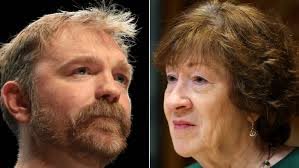
Graham Platner and Susan Collins
While the primary results were foreseeable, what happens next is anything but. The Senate election has already become a battleground over the future of the Democratic Party and what voters think is most important, as Platner faces numerous controversies about his past conduct.
And that’s before the real campaigning between the resilient incumbent and the brash outsider has even kicked off, though Platner started the general election with a series of stinging attacks on Collins at a victory speech in Blue Hill, Maine. The Democrat cast her as the “deciding vote” on Republican priorities including Supreme Court Justice Brett Kavanaugh’s confirmation
“Susan Collins may have started her career decades ago in Washington with good intentions, but she has become just as spineless and corrupt as the establishment she now serves,” Platner said. “She got elected promising to protect Roe versus Wade, only to turn around and put on a justice, but a justice of Supreme Court who overturned it. She lied to us.”
In a statement, Collins’ campaign said, “Mainers aren’t looking for bitter campaigns, grand promises, or angry speeches riddled with lies. They’re looking for results. They want affordable health care, safe communities, good-paying jobs, strong schools, and someone who will show up and do the work.”
In California, the race for governor is now set. Laurel Rosenhall at The New York Times: Hilton Beats Steyer to Win Second Spot in California Governor Race.
Steve Hilton, a Republican former Fox News host who was endorsed by President Trump, has secured the second spot in the November general election for California governor, The Associated Press determined on Tuesday. He will face Xavier Becerra, a Democrat who served in the Biden administration.
The candidates survived an unprecedented barrage of spending for a California governor’s race. Tom Steyer, a billionaire who ran as a progressive Democrat, devoted more than $216 million of his personal fortune toward his primary campaign, finishing third.
Under California rules, the top two finishers in the primary election, regardless of party, advance to the general election. There had been a chance that Mr. Steyer would face Mr. Becerra in an intraparty battle in November, but Tuesday’s outcome instead sets up a lopsided contest in a state where a Republican has not won the governor’s office in two decades.
The winner will replace Gov. Gavin Newsom, who cannot run again because of term limits and is considered a potential Democratic presidential candidate for 2028.
This sets up a likely win for Democrats, since California is one of the bluest states in the country.
Mr. Hilton’s top-two finish seems to run counter to Mr. Trump’s claims in recent days that California elections are “rigged” to benefit Democrats. Mr. Hilton said on Tuesday that he takes the concern seriously, but that he has had lawyers monitoring the voting process and they have not seen signs of fraud.
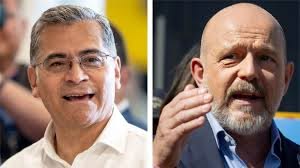
Xavier Becerra and Steve Hilton
The November matchup is one that Mr. Becerra and many Democrats had hoped for, knowing that Mr. Hilton was not just a Republican, but one endorsed by Mr. Trump, who remains deeply unpopular in California.
Days before the election, Mr. Becerra released an ad that highlighted the differences between him and Mr. Hilton, whom the ad called “Trump’s favorite.” While the ad ostensibly bolstered Mr. Becerra’s anti-Trump credentials, it also seemed designed to encourage Republicans to coalesce behind Mr. Hilton and give him enough support to finish second and prevent Mr. Steyer from reaching the general election.
In South Carolina, Trump foe Nancy Mace lost in the primary for governor. Alec Hernandez at Politico: Nancy Mace loses GOP primary for South Carolina governor.
Republican firebrand Rep. Nancy Mace lost her GOP primary for South Carolina governor, potentially ending her rollercoaster political career.
Mace failed to advance to a runoff Tuesday. She was considered a top contender in the race until a series of scandals cut into her in-state support and she bucked President Donald Trump to help release the Jeffrey Epstein files.
Trump’s preferred candidate, South Carolina Lt. Gov. Pamela Evette, and Attorney General Alan Wilson advanced to a runoff June 23.
The Palmetto State primary was for months defined by Trump’s absence from the race, despite the six Republicans candidates vying for his attention and support. Trump only endorsed Evette in the final two weeks, touting her closeness with his ally and early backer, outgoing GOP Gov. Henry McMaster.
In an interview ahead of the primary, Mace acknowledged that she likely forfeited her chance at the president’s support after her role in releasing the Epstein files late last year. She nevertheless pushed ahead, even in the face of several million dollars of negative ads from her opponents.
It’s the latest victory for Trump on the heels of his success ousting Rep. Thomas Massie (R-Ky.), Mace’s ally on the Epstein files, and Sen. Bill Cassidy (R-La.), among other GOP defectors.
There’s more bad news on the economy. Steve Kopack and Allie Canal at NBC News: Inflation jumps to 4.2%, the highest since early 2023.
Inflation surged in May to the highest level since early 2023, as Iran war-related fuel costs worked their way through the broader economy.
Overall, the yearly inflation rate rose to 4.2% in May from a year ago, up 0.5% from April.
“Inflation remains the major economic pain point regardless of who has to absorb it,” said Peter Boockvar, chief investment officer at One Point BFG Wealth.
Heather Long, chief economist at Navy Federal Credit Union said, “the frustration for many Americans is that so many of the basics are up in price right now — gas, food, electricity, and medical care are all clear pain points that are above 3% inflation.”
“This isn’t just ‘bad vibes’ about the economy,” she added.
Rising inflation comes as wage growth is falling.
For the second month in a row, inflation surpassed wage growth, which was tracking at 3.4% in the most recent jobs report. That pace has slowed since late last year, when average hourly earnings were growing consistently at nearly 4%.
On Wednesday, the Bureau of Labor Statistics announced separately that real average weekly earnings decreased 0.2 % during May and 0.7% from a year ago.
That’s the biggest year-over-year decline in real earnings since February 2023, according to federal data.
“The index for energy rose 3.9 percent in May, after rising 3.8 percent in April and 10.9 percent in March,” BLS said. “The energy index accounted for over sixty percent” of the overall number’s rise, it added.
Core inflation, which excludes food and energy, rose 2.9%, as expected. From the month before, it rose just 0.2%.
The disparity between the core inflation figure and the overall 4.2% rate was due largely to the impact of energy costs. According to BLS, energy accounted for more than 60% of the total increase in prices over the month.
And what does Trump think about this?
Q: Are you concerned about the latest inflation numbers that came out this morning?TRUMP: No, I love it. I love the inflation. You know why? Because as soon as this war is over — do you know we've been taking out millions of barrels of oil? You know who doesn't know? Iran until right now.
— Aaron Rupar (@atrupar.com) 2026-06-10T16:08:03.927Z
And on gas prices:
Here’s the latest on the war on press freedom. Very soon, CNN will join CBS under the control of billionaire David Ellison, and now we learn that Bari Weiss will be the new CNN boss. Raw Story: Bari Weiss on verge of major promotion for ‘fantastic job’ bosses think she’s doing at CBS.
Bari Weiss could be taking over the editorial leadership of another news network.
Paramount has begun preliminary conversations with several top media executives about a business-side counterpart to Weiss, the CBS News editor-in-chief, as the company awaits regulatory approval of its proposed merger with Warner Bros. Discovery, two sources familiar with the matter told Axios.
“The search implies that if Paramount Skydance’s deal with Warner Bros. Discovery goes through, Weiss would oversee all news editorial across both CBS News and CNN,” Axios reported. “Her potential counterpart would manage business operations across both companies.”

Bari Weiss
Among the candidates under consideration are NBCUniversal News Group chairman Cesar Conde, CNN Worldwide CEO Mark Thompson and former NBC News president Noah Oppenheim. Paramount had also weighed Ben Sherwood, CEO of the Daily Beast and former ABC News president, and David Rhodes, former CBS News president and current Sky News executive chairman, according to a source familiar with the search.
One candidate faces a procedural hurdle. Because Paramount is still awaiting regulatory clearance to acquire WBD, company executives are barred from holding conversations with any WBD personnel — which would include Thompson.
Currently, CBS News president Tom Cibrowski serves alongside Weiss, reporting to George Cheeks, chair of TV media at Paramount. Weiss reports directly to Paramount chairman and CEO David Ellison….
“The Paramount brass loves Bari Weiss,” the source said. “She has the full confidence of David Ellison, who believes Bari has done a fantastic job as editor-in-chief.”
On the 60 Minutes front, Ellison is promising “independence,” after the firing of most of the people who used to work there. Benjamin Mullin and Michael M. Grynbaum at The New York Times: Paramount C.E.O. Promises Editorial Independence for ‘60 Minutes,’ Lesley Stahl Says.
David Ellison, the chief executive of Paramount, promised to respect the editorial independence of “60 Minutes” in a call with Lesley Stahl, one of the show’s correspondents, she told The New York Times on Tuesday.
The call to Ms. Stahl, made on Sunday, was one of the first signs that Mr. Ellison was personally taking steps to calm the turmoil at the news network after the firing of the show’s leadership and several of its star correspondents. The overhaul, overseen by Bari Weiss, the network’s editor in chief, was met with a rebuke from Scott Pelley, a star correspondent at “60 Minutes” who has since been fired.
Ms. Stahl told the news program’s staff about Mr. Ellison’s call during a champagne toast she held at the “60 Minutes” offices in Midtown Manhattan on Monday in an attempt to shore up morale at the program.
She, Bill Whitaker and Jon Wertheim, the remaining stars of the program, had agonized about whether to stay in the aftermath of the staff changes and Mr. Pelley’s firing. But in a letter to the show’s staff Friday, they concluded that they had to remain at the show because they didn’t “want to see ‘60 Minutes’ die.”
“My toast was, ‘to us,’ meaning the survivors,” Ms. Stahl said in a text message on Tuesday. “Maybe ‘us’ with a twinge of survivor’s guilt.”
Mr. Ellison’s takeover of Paramount last year raised questions about the kind of steward he would be for CBS News. Mr. Ellison has been friendly with President Trump as his company, Paramount, seeks federal sign-off on a $111 billion deal to buy Warner Bros. Discovery. He has said he wants CBS News to appeal to what he describes as the 70 percent of Americans who consider themselves center-right or center-left.
In an interview with The Times, Mr. Pelley also said that Ms. Weiss had put her “thumb on the scale” for Mr. Trump during the last season of “60 Minutes,” a charge the network has denied. That assertion echoed a complaint from Sharyn Alfonsi, another correspondent, who said Ms. Weiss’s editorial guidance on one of her stories was “political.”
Last week, scores of prominent journalists, including well-known veterans of CBS News, signed an open letter to Mr. Ellison, who took over Paramount’s CBS last year, asking him to commit to the show’s independence. He has not yet weighed in publicly.
I’ll believe it when I see it, especially if Bari Weiss is still running CBS.
Epstein is back in the news. The New York Times has a bit story by Maggie Haberman and Jonathan Swan (gift article): Inside the White House Freakout Over the Epstein Files.
On July 17, 2025, at around 6 o’clock in the evening, President Trump’s top officials filed into the White House Situation Room — the secure bunker where classified and high-stakes national security matters are discussed and decided. This was where President Barack Obama, along with Vice President Joe Biden, Secretary of State Hillary Clinton and the president’s national security team, watched the raid that ended with the death of Osama bin Laden in 2011.
Now, however, Trump’s most senior advisers had gathered — without him — to figure out how to gain some measure of control over a very different kind of crisis threatening to engulf the presidency: the Epstein files.
Ten days earlier, the Justice Department and the F.B.I. had jointly released a memo that bluntly stated that their review had found no “client list” of powerful men for whom the notorious pedophile Jeffrey Epstein had allegedly procured underage girls and young women. Intended to put to rest years of speculation and end the pressure campaign to release the voluminous material in the department’s possession, the memo instead had the opposite effect, setting off a backlash that was notably loud among the MAGA base.
And it was about to get worse: The Wall Street Journal was preparing a damaging article about Trump’s relationship with Epstein. The president’s desperate attempts to kill the story had failed. His team now had to get everyone onto the same page about how to counter the growing swarm of attention. They needed a gesture of transparency to appease an increasingly angry base, but also a way to convey the message that the president was sympathetic to his supporters’ concerns. Which itself was a problem, because he clearly wasn’t.
Vice President JD Vance took a seat at the head of the table in the John F. Kennedy Conference Room of the Situation Room complex. “This is a huge problem,” he told the group. Arrayed around him were the White House chief of staff, Susie Wiles; the White House counsel, David Warrington; the press secretary, Karoline Leavitt; the deputy chief of staff Taylor Budowich; the communications director, Steven Cheung; the deputy attorney general, Todd Blanche; the associate attorney general, Stanley Woodward Jr.; and the deputy chief of staff James Blair. Attorney General Pam Bondi and the F.B.I. director, Kash Patel, joined on speakerphone.
The vice president appeared panicked to others in the room about the way the subject of Epstein was already dividing the MAGA coalition. Some senior officials had the impression that Vance had bought into the darkest theories about Epstein and a cabal of predators hidden within the country’s ruling class. Wiles would tell others that the vice president had proved himself to be a major conspiracy theorist. Another top official said later that Vance had been pounding on the Epstein issue since the release of the memo. He was privately pressing for the administration to release all the Epstein files, everything in the Justice Department’s possession, even encouraging a congressional investigation.
Vance had also floated to colleagues an extraordinary P.R. gambit — that the White House enlist Tucker Carlson to interview Epstein’s longtime girlfriend and co-conspirator, Ghislaine Maxwell, in prison. It might help the president if Maxwell was willing to state that Trump had not been part of any wrongdoing with Epstein.
Vance told the group he believed all the files should be released as soon as possible. He argued that Congress was going to force the release of the files eventually. It was already clear that a bipartisan coalition in favor of such action was forming on Capitol Hill, and the momentum was going in one direction. If the administration got out ahead of this and released everything voluntarily — including whatever material existed about the president — it would at least get credit for transparency. The alternative was to let the story drag on for months as information dripped out, each new revelation renewing the cycle of suspicion and fury. Better to rip the bandage off and move on.
That’s a taste of it. You can use the gift link to read the rest.
Those are the stories that caught my attention today. What’s on your mind?
Did you like this post? Please share it with your friends:
Posted: May 27, 2026 | Author: bostonboomer | Filed under: just because | Tags: Bill Cassidy, CDC, Donald Trump, ebola, ICE, Iran War, James Tallarico, John Cornyn, Ken Paxton, NATO, Strait of Hormuz, suicides in ICE detention centers, Texas primaries, Thom Tillis, Trump Cabinet meeting on Iran, UFC area on White House lawn |
Good Day!!
We’re moving closer to the midterm elections. Yesterday, there were some important primaries in Texas. Another of Trump’s enemies–John Cornyn–went down in flames, and now he’ll join other losers like Bill Cassidy who are now free to criticize his policies. Is it possible that Texas could turn purple in 2026? Here’s the latest:
Shane Goldmacher at The New York Times (gift article): Cornyn Crushed: 7 Takeaways From Tuesday’s Runoffs in Texas.
Ken Paxton, the Trump-endorsed and MAGA-backed insurgent, ousted Senator John Cornyn in a runoff on Tuesday, becoming the second primary challenger to knock out an incumbent Republican senator in less than two weeks in a raw display of President Trump’s powerful hold on the party base.
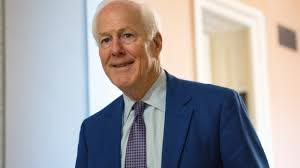
Texas Senator John Cornyn
The contest was the most expensive primary in American history — and Mr. Paxton prevailed despite being outspent on advertising by pro-Cornyn forces by roughly $80 million.
Now, Republicans are bracing for a potentially competitive general election in Texas, where Democrats have not won statewide in a generation. Democratic donors nationwide have swooned for their nominee, James Talarico, a smooth-talking 37-year-old seminarian and state legislator, in the hopes he will realize their long-dashed dreams of turning Texas blue.
National Republicans have warned for months that Mr. Paxton’s scandal-riddled past could put the Republican-held seat in jeopardy. But G.O.P. primary voters proved on Tuesday that they were in no mood for political guidance from Mr. Cornyn or a much-reviled party establishment.
The scope of his defeat was staggering. Mr. Cornyn, once the No. 2 Republican in the Senate, was trailing in nearly all of Texas’ 254 counties.
Here are Goldmacher’s takeways from the election. You can read more details on each with the gift link above.
— Cornyn’s defeat is another proof point of Trump’s sway.
— An ugly G.O.P. primary could take time to heal.
— The general election is going to have a Texas-size price tag.
— Cornyn’s loss could reverberate on Capitol Hill, too.
— An old-guard Democrat [Rep. Al Green] goes down.
— Crypto spent big and won.
— A sheriff’s deputy prevails over a sex therapist accused of antisemitism.
Read more details at the link.
Commentary on the Texas elections:
Matthew Choi at The Washington Post (gift article): Why some Republicans are worried about Ken Paxton as a Senate nominee.
Texas Attorney General Ken Paxton won the Republican Senate primary in his state Tuesday night, ousting incumbent Sen. John Cornyn.
Paxton excited President Trump and his MAGA base. But many Republican leaders and strategists are worried.
Few politicians have garnered as much scandal in Texas as Paxton. He was impeached by the Republican-controlled state House on multiple charges of abuse of office. His own senior staffers reported him to the FBI, alleging he illegally used his position to help a prominent donor. His wife, state Sen. Angela Paxton, filed for divorce last year on “biblical grounds,” citing adultery.
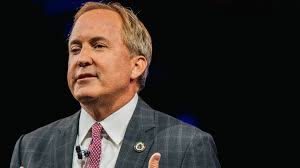
Ken Paxton
And yet, Paxton has repeatedly come out on top. The state Senate acquitted him on all charges, and the FBI dropped its investigation. Paxton won reelection for his current job twice and defeated Cornyn, one of the best-funded Republicans in the country, with a fraction of the resources and institutional support.
Senate Republicans are now nervous they’ll have to pour boatloads of cash into the race to prop up Paxton against state Rep. James Talarico, the Democratic candidate in the race. Talarico has blown past fundraising records for a contest that is likely to break spending records.
Why is Paxton so controversial?
The state House impeached Paxton in 2023 on overwhelmingly bipartisan grounds, with 60 Republicans joining 61 Democrats. Only 21 Republicans voted against impeachment charges.
The charges stemmed from his relationship with Nate Paul, a real estate developer and political donor. Paxton allegedly ordered his employees to improperly intervene in Paul’s legal troubles. Paul allegedly provided Paxton free services including a home renovation and a job for a woman with whom Paxton was allegedly having an extramarital affair. Paxton was also charged with retaliating against whistleblowers on his staff who had reported his conduct to the FBI in 2020.
Paxton was tried on 16 charges in the Senate, which acquitted him on all of them. His wife, Sen. Angela Paxton, was part of the Senate jury, though she was not allowed to vote.
The Justice Department continued investigating the allegations made by his senior staff to the FBI but closed its investigation at the end of the Biden administration.
Paxton was also indicted on felony securities fraud charges just after becoming attorney general in 2015. He was charged, as a state senator, with defrauding his fellow lawmakers by encouraging them to invest in Servergy, a tech company where he was secretly making a commission on their investments. He agreed to settle the case in 2024, paying $300,000 in restitution, though he never admitted to any wrongdoing. That case was unrelated to his impeachment.
It’s hard to believe this guy is still in office. But Trump likes him, and I guess that’s enough for Texas Republican voters.
Karen Tumulty at The Washington Post (gift article): Trump is liberating his Republican critics in Congress.
President Donald Trump proved once again that his endorsement is, as Texas Attorney General Ken Paxton put it in his primary runoff victory speech Tuesday night, “the most powerful force in politics.”
One by one, Trump is putting an end to the political careers of lawmakers in his party that he deems, for reasons more personal than policy-oriented, to be apostates. But in doing so, he may also be liberating them as they serve out their remaining seven months in Congress. They now have nothing to lose if they stand up against him.
By giving belated independence to a handful of incumbents he vanquished at the ballot box or forced into retirement, the president is creating a growingly noxious dynamic between the two ends of Pennsylvania Avenue.
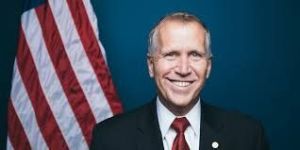
Thom Tillis
“It’s hard for me to see how the president is going to get his agenda through the Senate in the next seven months if he keeps purging Republican senators who support him,” former senator Lamar Alexander (R-Tennessee) told CBS News last week. “… I think Republican senators will find they can say what they think and the country will be better off if they do.”
In his Trump-engineered defeat, Sen. John Cornyn joins a club of two other Republicans in the chamber, where their party holds a 53-47 majority. The other two are already expressing resistance to the president’s dictates.
One is Thom Tillis (North Carolina). Under a barrage of Trump attacks for opposing parts of the president’s agenda — including the sprawling One Big Beautiful Bill that was its domestic centerpiece — Tillis announced his retirement last year rather than making what was deemed to be a hopeless bid for a third term.
Tillis has since become a regular Trump critic. He has criticized the Justice Department’s recently announced “anti-weaponization fund,” which could allow the Trump supporters who attacked the U.S. Capitol on Jan. 6, 2021, to receive taxpayer dollars, as “stupid on stilts” and said: “These people don’t deserve restitution. Many of them deserve to be in prison.”
Bill Cassidy (Louisiana), who failed to even make the runoff in his party’s May 16 primary, voted for the first time a few days later to advance a resolution to block Trump from ordering further strikes on Iran without congressional authorization.
If you want to read more, you can use the gift link above. I’m using up my gift articles because it’s close to the end of the month.
Paxton will now face Democrat James Talarico in November.
Adam Wren and Irie Sentner at Politico: James Talarico’s theory of victory in Texas.
In the end, James Talarico and Democrats got the matchup they had been salivating over for months.
Within two hours of Ken Paxton’s GOP primary win on Tuesday, Talarico had hauled in $600,000 — the strongest two hours of his entire campaign. Recent internal polling from a pro-Talarico PAC shows the Democrat has a 7-point lead against Paxton. Both figures were shared first with POLITICO.
In an interview, Talarico said he’s confident about his chances.
![]() But Talarico faces a Texas-sized challenge to finally deliver on Democrats’ long-held fantasy of flipping the state, just two years after Trump won it by 14 points….
But Talarico faces a Texas-sized challenge to finally deliver on Democrats’ long-held fantasy of flipping the state, just two years after Trump won it by 14 points….
James Talarico
Talarico said Tuesday night that to win in November, he must convert supporters of Sen. John Cornyn — a conservative by almost any metric, except Trump’s. After Cornyn conceded, Talarico thanked the four-term incumbent for his service and told his supporters “you have a place in our campaign.”
It’s all part of his general election pitch, which Talarico outlined in the interview following Paxton’s primary win.
“I have a legislative record that I think has a lot to offer supporters of Senator Cornyn. Ken Paxton has a criminal record. I have a legislative record,” Talarico told POLITICO (Paxton struck a deal in 2024 where he paid restitution and securities fraud felony charges were dropped). He emphasized his history reaching across the aisle “to cut property taxes and raise teacher pay and lower the cost of housing and child care and prescription drugs,” and touted his willingness to break with Democrats on issues including energy and the border that are important in Texas.
“I’ve called out the extremes in both parties, on the right and left, and as you know, called out President Biden for failing to secure our southern border,” he said. “I’ve pushed back against national Democrats who want to hurt the Texas oil and gas industry and so I think that Texans are looking for a senator who is going to be independent, who’s not going to serve a political party, not going to serve any special interests or megadonors, but who’s going to serve people of Texas.”
We’ll have to wait and see. The dream of Texas going blue again has been with us for a long time, but so far it hasn’t come close to happening.
New York Times elections expert Nate Cohn thinks it could happen (gift article): A Blue Texas May Be More Than a Dream for Democrats.
Could Texas really turn blue in 2026?
While it’s tempting to be skeptical, a blue Texas is increasingly easy to imagine. It’s even easier to imagine after Ken Paxton’s victory over John Cornyn, the incumbent senator, in the Republican primary runoff on Tuesday night.
That’s partly because Mr. Paxton, the state attorney general, has distinct political liabilities. He’s faced investigation, indictment, impeachment and a messy public divorce.
But there’s another reason Democrats might pull off a statewide win for the first time in three decades: demographics. Texas is one of the most diverse states in the country, and national polls show Democrats surging back in support among young and nonwhite voters — and especially Hispanic voters.
On paper, these national demographic trends ought to send Texas racing toward the left and into contention. Add in Mr. Paxton’s nomination and you can start to see how Democrats could flip Texas this fall.
After a decade of big talk from Democrats about Texas, it’s understandable that people could harbor some doubt about flipping the nation’s largest red state. Judging by presidential election results, Democrats barely made any progress at all: President Trump won Texas by almost 14 percentage points in 2024.
But beneath the state’s stable Republican voting record, extraordinary demographic shifts have put Texas Republicans in a much more vulnerable position. To an extent few would have imagined a decade ago, Texas’ status as a reliably Republican state now depends on elevated levels of support among Hispanic voters.
Read more at the gift link.
Let’s face it. Democrats have to take back the House if we are to have any hope of impeaching Trump. They need to take the Senate too, but even if that happens, they won’t have the votes to remove him. Nevertheless, I think it’s important to impeach him. Democrats need to do everything in their power to weaken Trump, because he obviously has no plans to leave the White House unless he is dragged out or carried out on a stretcher.
Iran war news:
The Trump administration and the Iran government disagree about what is in their supposed peace agreement.
Erika Solomon, Sanam Mahoozi, and Leo Sands: What Iranian State Media Says Is in Outline of ‘Unofficial’ Deal With U.S.
Iranian state television on Wednesday released what it said were details of “an initial, unofficial document” outlining the framework for an agreement between Iran and the United States that would reopen the Strait of Hormuz to shipping traffic.
The White House immediately dismissed the report as a “complete fabrication,” and it was not clear whether the United States and Iran were any closer to an agreement.
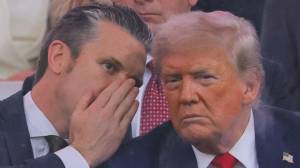 Iran’s state broadcaster, IRIB, said that under the framework, Iran would allow shipping to resume through the strait in return for an end to the U.S. naval blockade on Iranian ports. For days, the two sides have been alternating between renewing hostilities and issuing positive signals.
In its framing of the draft, the broadcaster presented it as a broad victory for Iran while cautioning that it was not final.
The report said that, under the agreement, commercial marine traffic would return to prewar levels within a month of the framework’s implementation. It also said that Iran would handle the strait’s management in cooperation with the Gulf state of Oman, a U.S. ally.
A bit more:
The reopening of the strait was the only one of the five main sticking points in negotiations that was mentioned in the brief report. The waterway is a crucial route for the world’s oil and gas that Iran has effectively closed since March. There was no reference to the future of Iran’s nuclear program and its stockpile of enriched uranium
The report said the framework included a U.S. pledge to “withdraw its military forces from the areas surrounding Iran” without specifying the geographic area included. The United States has a number of military sites in neighboring Iraq and nearby Gulf countries.
“Whether this includes forces newly deployed to the region or only permanent base personnel remains subject to negotiation,” the report said.
Trump called a cabinet meeting to discuss the situation.
The administration’s new plan would also keep U.S. citizens who might have been exposed to Ebola out of the country, according to two of the people with knowledge of the plans, who spoke on condition of anonymity because they were not authorized to discuss the matter publicly.
A few dozen Public Health Service officers are now being trained to deploy to Kenya to provide medical care to Americans who are deemed at high risk of developing Ebola. The initial plan was to monitor those Americans in Kenya, but to move anyone who started to show symptoms for treatment in Europe.
Because we no longer have a real CDC, and Trump, Musk, and RFK, Jr. fired all the disease experts.
The administration is looking for volunteers (!) to screen for Ebola cases at airports. Reuters: US CDC seeks staff for Ebola screening as outbreak response expands.
The U.S. Centers for Disease Control and Prevention has asked staff to volunteer for urgent deployment to support Ebola screening at the country’s entry points, according to an email seen by Reuters on Tuesday.
CDC Acting Director Jay Bhattacharya said in the email that the agency had activated a Level 2 emergency response on May 18 to an outbreak of the Bundibugyo strain of the Ebola virus in the Democratic Republic of the Congo and Uganda, and was expanding recruitment beyond its usual emergency responder pool as screening of selected international arrivals ramps up.
Level 2 is an intermediate level of emergency response. It indicates a need for substantial additional staffing to meet response demands, according to the CDC’s website.
The CDC said enhanced screening operations are already under way at several port health stations and will require additional personnel. Staff across roles, including public health advisers, emergency specialists and licensed medical providers, are being asked to support the effort, subject to supervisor approval.
Volunteers could be tasked with monitoring incoming travelers for signs of illness, checking temperatures and referring suspected cases for further assessment, according to the email.
Unbelievable. Ebola remains dormant for weeks after exposure. What if people don’t report exposures or don’t realize they’ve been exposed? We’re going to have a lot of Ebola cases here, aren’t we?
One more from The Guardian: UFC arena under construction on White House lawn to mark Trump’s 80th birthday.
Construction is under way on the White House lawn for an Ultimate Fighting Championship (UFC) arena that will host a cage match next month to mark the US’s 250th anniversary and Donald Trump’s 80th birthday.
The mixed martial arts fight is planned for 14 June.
 Photos of cranes and other construction equipment on the White House lawn on Tuesday showed the beginnings of the temporary construction. Trump has said that the finished project will feature “a 5,000-seat arena right outside the front door of the White House”.
Online renderings depict what the completed, wire-mesh-fence-ringed fight space is expected to look like. The octagon-shaped cage will be ringed by a red, white and blue stage under a towering arch featuring stars and stripes patterns and two large screens carrying the action live.
The cage and stage will themselves be surrounded by thousands of temporary seats, including ringside space for a full marching band that can set the entire scene to blaring music.
In December, Trump said the White House event would host “eight or nine championship fights – the biggest fights they’ve ever had”. But like the size of the crowd, the number of fights expected to be held on the White House
lawn has shrunk. The fight card includes two title fights: a lightweight championship fight between Ilia Topuria and Justin Gaethje in the main event, and an interim heavyweight title fight between Alex Pereira and Ciryl Gane.
This is beyond disgusting. I feel like I’m going to throw up.
I’ll end there, even though there are plenty more Trump messes that someone will have to clean up. Hang in there everyone. We can and will survive!
Did you like this post? Please share it with your friends:
Posted: May 9, 2026 | Author: bostonboomer | Filed under: just because | Tags: cat photos, caturday, CDC, cost of the Iran war, Donald Trump, gerrymandering, hantavirus, Iran War, Jeff Bezos, Justin Wolfers, Melania Trump, mothers, Samuel Alito, Voting Rights Act |
Good Day!!
 Tomorrow, May 10, is Mothers Day. My Mother is no longer alive, but I still talk to her frequently. I think of her every day and take comfort in remembering stories she told me and the many times she encouraged me.
Tomorrow is also the day I stopped drinking, way back in 1982. I can’t believe it will be 44 years! My mother was visiting me on those first days of sobriety. No one believed I could do it, but somehow I knew that day that I was really going to stop drinking this time. I think having my Mom there with me helped, even though she wasn’t sure I could do it either. I love you Mom.
In the “news,” Jeff Bezos’ newspaper, The Washington Post, has seen fit to publish an “opinion” piece, supposedly written by Melania Trump. Obviously, she didn’t write it, even though it’s incredibly simplistic. Here’s bit of it: Mothers are America’s strength.
A mother’s devotion to her child is unmatched. This love takes many forms: strength, compassion, wisdom, grace, joy, labor, humor and even grief, to name a few. The love between mother and child has helped shape America’s identity since the nation’s founding 250 years ago.
It is time to revisit the enduring American family traditions that have supported generations, while also recognizing the challenges for mothers of building both a career and a home. This balancing act reflects the realities women face today.
America’s strength is closely tied to the role mothers play in shaping character, education and moral order within families. From morning until night, mothers serve as the first teachers of empathy, aspiration and discipline. It is mothers who do so much to shape a child’s mind — how to think, how to distinguish right from wrong and how to persevere in challenging times.
The household is our nation’s smallest institution, yet it is the foundation of all others, including democracy itself. The values cultivated in homes often shape the moral voice of the next generation. Looking ahead, we must consider how to strengthen this vital role.
Being a modern mother demands the discipline and restraint to not disregard what came before us. In this spirit, the healthy evolution of the American family can best be achieved by preserving the elements of the past that have proved their worth. In doing so, America can restore the honor of motherhood after years in which feminism often placed career above family, with consequences to our nation.
There just had to be a dig at feminism, right? Here’s her list of accomplishments:
I constantly challenge myself, as first lady, to think beyond the traditional responsibilities of the East Wing. That has resulted in many new opportunities, including leading four reunifications of Ukrainian and Russian children with their families, addressing the U.N. Security Council on achieving peace through education, and, at the White House, launching Fostering the Future Together, a global effort to help children thrive through the safe and innovative use of technology. But family always comes first.
(Emphasis added) Does she know the East Wing has been torn down?
The Voting Right Act decision fallout:
I don’t really want to write about redistricting, even thought that still seems to be the leading story today. Dakinikat did a great job with that topic yesterday.
I’ll just share this interesting piece by Carl Hulse in The New York Times (gift article): How Minority Districts Fueled the G.O.P.’s Southern Ascendancy in Congress.
Representative James E. Clyburn of South Carolina, formerly the No. 3 Democrat in the House, is certain he would never have been elected to Congress without changes in the Voting Rights Act that the Supreme Court determined last week amounted to unconstitutional racial gerrymandering.
“And about half of the members of the Congressional Black Caucus wouldn’t be there,” said Mr. Clyburn, the first African American sent to Congress from his state since Reconstruction. He was part of the historic 1992 class of Black and Hispanic lawmakers elected after new maps were drawn to comply with 1982 changes meant to strengthen the Voting Rights Act.
 The predominantly Democratic minority groups that set to work back then to increase their representation were boosted by some unlikely allies: Republican strategists who saw an opportunity to break the Democratic hold on the South and force an extraordinary realignment.
Now, Republicans see the chance to cement their grip on the region — and to try to maintain their thin House majority — by eliminating the minority districts that initially worked to their advantage and to take those seats for their own.
It is the latest chapter in an ongoing political saga that has had profound implications for the House of Representatives over the past three decades. Redistricting in minority communities could again be a major factor in deciding the November elections as Republicans try to lessen the traditional midterm advantages for the party out of power — the Democrats in this case — in a year when they face particularly strong headwinds.
Having consolidated their power throughout the South, Republicans are now emboldened to try to eliminate the majority-minority districts, believing they can carry them without risking their strength elsewhere as Democratic-leaning minority voters are dispersed into other districts.
Are they right?
But as Republicans and Democrats have both seen as they have waged a tit-for-tat battle this year to redraw districts around the country to their advantage, such changes do not always work out as planned. The true consequences of the Supreme Court’s recent ruling remain to be seen.
The G.O.P. may find it more difficult to win in more diverse districts of the kind that existed before the reshuffling of maps prompted by the Voting Rights Act.
And Democrats now must decide whether they want to maintain the predominantly minority districts they once demanded as a matter of basic fairness or try to turn the tables on Republicans in blue states and reconfigure them in an effort to threaten G.O.P. lawmakers in those states.
In the late 1980s, Republicans had been deep in the House minority for nearly 40 years. But growing dissatisfaction with the Democratic Party had begun moving white Southern conservatives into the Republican ranks, as illustrated by high-profile party switches in Washington. Then the redistricting initiated under a series of court decisions aimed at fostering more minority representation provided yet another opening that might have seemed counterintuitive at first glance.
Architects of the maps realized that if they could maximize Black and Hispanic representation in the new districts, they would simultaneously dilute Democratic strength in surrounding jurisdictions where coalitions of white and Black voters had elected white Democrats for decades. The shift would ultimately create dozens of openings for Republican candidates in what had formerly been known as Democrats’ “Solid South.”
Hulse’s argument is interesting. He also notes that
Some civil rights figures such as Representative John Lewis, the Georgia Democrat, warned at the time that the new maps could empower Republicans by weakening the partnership of progressive white and Black voters in the South. But others said the new districts were the only way to overcome centuries of institutional discrimination against minorities in the region.
“Gerrymandering was done to keep Black folks out,” Mr. Clyburn said. “If you gerrymander to keep them out, you’ve got to gerrymander to bring them in.”
Who was right? We may find out in November. Use the gift link to read the rest.
 In other voting news, It seems Sam Alito cheated in his opinion on the Voting Rights case. Sam Levine, Will Craft and Andrew Witherspoon at The Guardian: Samuel Alito’s Voting Rights Act ruling cited misleading data from DoJ.
The claims Samuel Alito, a supreme court justice, made about voter turnout in Louisiana in a landmark Voting Rights Act case were based on a misleading data analysis, a Guardian review has found.
In his opinion gutting section 2 of the Voting Rights Act last week, Alito said that Black voter turnout had exceeded white voter turnout in two of the five most recent presidential elections, both nationally and in Louisiana. Alito’s claim was copied almost verbatim from a friend-of-the-court brief filed by the justice department. It was a critical data point Alito used to make the argument that the kind of discrimination that once made the Voting Rights Act necessary no longer exists.
“Vast social change has occurred throughout the country and particularly in the South, where many Section 2 suits arise,” Alito wrote in a majority opinion in the case, which concerned Louisiana’s congressional map, joined by the five other conservative justices on the court. “Black voters now participate in elections at similar rates as the rest of the electorate, even turning out at higher rates than whitJuson piece in The New York Times (gift article): Hegseth Says This War Has Cost $25 Billion. I Tallied Up the True Amount.
The Defense Department says the conflict with Iran has cost taxpayers $25 billion so far. But this tally significantly understates the true cost. By my calculations, the bill for a typical American household likely runs to thousands — or even tens of thousands — of dollars.
Yes, that’s a wide range; blame the economic fog of war. But what’s clear is that Defense Secretary Pete Hegseth is trying to obscure just how expensive this war will be.
The Pentagon’s stated number reflects only a narrow accounting of the tab that Operation Epic Fury is running up. It’s the price of the more than 2,000 Tomahawk and Patriot missiles already fired, the warplanes already flown and in some cases lost, and the rest of the gear already chewed through. It does not measure the true cost of the war — including the human toll. Russell Vought, the director of the Office of Management and Budget, acknowledged as much when he told the House Budget Committee on April 15, “I don’t have a ballpark for you.”
I do. Since the start of the war, oil markets have been disrupted, and consumer confidence has cratered. The global economy is groaning, and military budgets are growing. The toll from this upheaval must be counted in lives disrupted, jobs lost, companies shut down (see: Spirit Airlines), and the income and output sacrificed. The less easily quantified costs — death, disability and mental health — could become much more dramatic should President Trump send troops into Iran, which still can’t be ruled out.
Start with oil. While the White House is keen to tell you that oil markets will bounce back to normal, futures markets disagree. Futures prices for oil at the end of 2026, 2027 and 2028 are all still sitting well above where they were before the start of the war. Indeed, the November 2026 futures price of West Texas Intermediate hit a new high this week at $86.12 a barrel. It could be that oil traders are pricing in near-term disruption. Or perhaps they see the current episode as raising the risk of future disruption. Either would be expensive.
The rise in geopolitical risk is costly. Recent research by the Fed economists Dario Caldara and Matteo Iacoviello suggests that heightened geopolitical risk leads to lower investment and employment and dramatically raises the chances of an economic disaster. Their measure of this risk has skyrocketed, and their estimates of the effect of risk on the economy suggest a cost of about $200 billion, with a million fewer Americans working in a year.
The war has also pushed the Federal Reserve Bank into a corner. Back in February, many economists expected a couple of rate cuts this year; markets now think that’s unlikely. If the Fed raises rates, it may succeed at beating back a war-fueled burst of inflation, but only by destroying hundreds of thousands of jobs and edging the economy closer to recession. A reasonable guesstimate — informed by the Fed’s own models — is that this will cost the economy about $200 billion.
Use the gift link to read the rest.
 One more on Iran from Jonathan Lemire at The Atlantic (gift article): Trump Is ‘Bored’ With the War He Started.
President Trump really, really wants the war with Iran to end. He has declared victory many times, including about three weeks ago, when Iran briefly reopened the Strait of Hormuz. He has repeatedly extended his cease-fire deadlines instead of following through on his (sometimes-apocalyptic) threats to resume hostilities. This week, his administration abruptly abandoned an effort to escort ships through the strait in part because of a fear that it could provoke violent, escalating confrontations.
Trump is tired of the war, which has proved far more difficult and lasted far longer than he had expected. His party is warily watching rising gas prices and falling poll numbers. He doesn’t want to be bogged down in a Middle East conflict like some of his predecessors were. He doesn’t want it to upend his high-stakes summit next week in China. He is ready to move on.
Trump is left with a vexing question: How do you end a war when your opponent won’t budge? And while Trump grasps for an exit, the hard-liners in Tehran have used the war to tighten their grip on power. Iran seems hell-bent on pulling off something it’s historically done well: humiliating an American president.
Trump never thought it would turn out like this. After the impressive military operation to snatch Nicolás Maduro from Caracas, the president set his eyes on Iran, telling confidants that it would “be another Venezuela,” a pair of outside advisers told me. They, like others, spoke on the condition of anonymity to discuss internal strategy. Trump believed that the U.S. military was unstoppable, and that he had a chance to topple Tehran’s theocracy, a prize that had eluded his predecessors. He was redrawing the world’s maps and expected a victory to come in days, a week or two at most. The initial U.S.-Israel onslaught killed Iran’s supreme leader and included waves of bombings that reportedly obliterated much of the country’s missile capabilities. But Tehran did not capitulate, and instead attacked its Persian Gulf neighbors and seized control of the Strait of Hormuz, through which 20 percent of the world’s oil passes. With a mix of mines, small attack boats, and drones, Iran effectively closed the waterway. Energy prices soared. The conflict settled into a stalemate and then a fragile cease-fire. One high-profile, official round of negotiations failed. No more are scheduled….
…the real question is the timing: A number of experts have forecast that Iran can withstand pressure from the blockade for months, not weeks. A U.S. intelligence assessment delivered to policy makers this week agrees, suggesting that Iran could make it at least three or four more months. If so, and Iran continues to keep the strait closed, then prices will continue to rise in the West, including in the United States during a midterm-election year. It then becomes a matter of pain: Which side can withstand the most economic hardship?
Use the gift link to read more.
The Hantavirus outbreak:
NBC News: 7 states prepare to receive Americans possibly exposed to hantavirus.
The U.S. has entered emergency response mode as a cruise ship hit by a deadly hantavirus outbreak sails toward Tenerife, one of Spain’s Canary Islands, where it will evacuate nearly 150 passengers on board, including at least 17 Americans.
State and local health officials in the U.S. are monitoring at least eight passengers who disembarked on April 24 and returned home. For the time being, those individuals are not being told to isolate, since they have not developed symptoms.
 As early as Sunday, global health authorities will help transport passengers still on board the ship — all of whom are currently asymptomatic — to their respective home countries. Passengers will be taken to a “completely isolated, cordoned-off” area in Tenerife, then board guarded vehicles to transport them to a section of the local airport that will also be cordoned off, Virginia Barcones, Spain’s head of emergency services, said Thursday at a press conference.
The Centers for Disease Control and Prevention said Friday in a statement that it is sending a team of epidemiologists and medical professionals to the Canary Islands to meet the Americans on board, who will fly to Nebraska upon arrival.
“Because the disease status of the exposed passengers is unknown and responders will be in close contact with potentially symptomatic individuals, it makes sense for emergency responders to don gloves (rubber or latex), a respirator mask like an n95, a protective gown, and eye protection,” a CDC epidemiologist who did not speak on behalf of the agency said in a text message.
The flight will land at Offutt Air Force Base in Omaha, Nebraska. The repatriated passengers will then be transported to the National Quarantine Unit at the Nebraska Medical Center in Omaha. It’s unknown how long the quarantine will last.
AP: Experts wonder ‘Where is the CDC?’ as a hantavirus outbreak unfolds on a cruise ship.
No quick dispatching of disease investigators. No televised news conference to inform the public. No timely health alerts to doctors.
In the midst of a hantavirus outbreak that involves Americans and is making headlines around the world, the U.S. government’s top public health agency, the Centers for Disease Control and Prevention, has been uncharacteristically missing in action, according to a number of experts.
To President Donald Trump, “We seem to have things under very good control,” as he told reporters Friday evening.
To experts, the situation aboard a cruise ship has not spiraled because, unlike COVID-19 or measles or the flu, hantavirus does not spread easily. It has been health experts in other countries, not the United States, who have been dealing primarily with the outbreak in the past week.
“The CDC is not even a player,” said Lawrence Gostin, an international public health expert at Georgetown University. “I’ve never seen that before.”
Not until late Friday did CDC actions accelerate.
Health officials confirmed the deployment of a team to Spain’s Canary Islands, where the ship was expected to arrive early Sunday local time, to meet the Americans onboard. They said a second team will go to Offutt Air Force Base in Nebraska as part of a plan to evacuate American passengers from the ship to a University of Nebraska quarantine center for evaluation and monitoring. Also, the CDC issued its first health alert to U.S. doctors, advising them of the possibility of imported cases.
There’s more at the link. I guess RFK Jr. doesn’t think this outbreak is that concerning. The scary thing is that it can take weeks for the symptoms to show up in a person who has been exposed, and 38 percent of people who get the disease die. And it can be spread person to person.
That’s it for me today. What’s on your mind?
Did you like this post? Please share it with your friends:

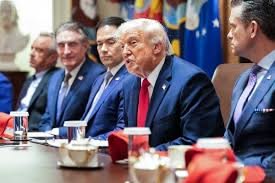



 peej
peej Carissa
 bostonboomer
 dakinikat
 ecocatwoman
 jjlo
jjlo mablue2
 Mama Lopez
 peggysue22
 quixote
 skydancingguestblogger
 Mona (aka Wonk the Vote)



 Sky Dancing
Recent Comments