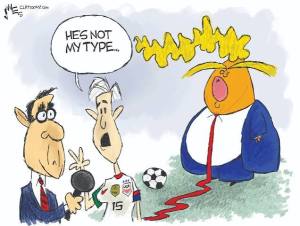
“Looks like Barron is advising his Dad again. I’m pretty sure this’ll bring young voters back into the cult.” John Buss, @repeat1968
Good Day, Sky Dancers!
I’m a little bit late starting today. I had to make a quick dash down to City Hall to figure out why I was getting a late notice on not paying some tax I had never even heard of at this point. Anyway, it all worked out. It wasn’t the least bit aggravating. I know what to do to resolve it. I got the opportunity to see and experience why I love this city so much, so no damage was done. However, I learned I still have to write checks at City Hall, and was fortunate to find out I actually have one book of checks still in my desk drawer. I am still trying to figure out the last time I’d written a check, put a stamp on an envelope, and mailed it. My guess is at least a decade ago.
So, let’s see how the week’s ending now that I have done my City Hall thing. Tropical Storm Bertha turned out to be off-and-on heavy rain. I had power and AC, so no problem there. I’m finally getting to my first tea of the day. So, let’s check the headlines that will likely kill my morning love affair with my city. I see that my first suggested read is from Buzzkill Donaldo. Is there any part of our laws or Constitution he doesn’t regularly pissed on?
This is from the New York Times. “Trump Administration Admits Canceling Grants to States That Did Not Vote for Him. Federal officials said in court documents that they halted billions of dollars in funding for energy projects to states “based solely” on whether they backed President Trump in the 2024 election.” Tony Romm and Brad Plumer share the lede.
When the Trump administration canceled more than $7.5 billion in Biden-era federal grants for clean energy projects in October, it framed the move as an urgent corrective to protect taxpayer funds from waste.
But it wasn’t true.
In little-noticed court documents, federal officials acknowledged this month that they had terminated the funding “based solely” on political criteria, targeting projects in states that were represented by Democrats and had voted for Kamala Harris, the party’s presidential nominee, in the 2024 election.
The stunning admission offered an unvarnished glimpse into the way President Trump has weaponized the provision of federal education, energy, health, housing and infrastructure aid in his second term. Far from rooting out the sort of misspending that Mr. Trump sees as rife in Washington, the White House has instead sought to leverage the budget as a tool to assist its allies — or as a cudgel to hurt the president’s foes.
The saga illustrates the stakes as the Trump administration is completing a set of rules that would provide the president even greater control over more than $1 trillion in annual federal grants. To critics, the new regulation would only make it easier for Mr. Trump to strike wider tranches of congressionally approved funding over political differences.
“The risk that the Trump administration is willing to go to extreme lengths to politicize grant-making is not a hypothetical,” said Devin O’Connor, a senior fellow at the Center on Budget and Policy Priorities, a left-leaning group. He previously served at the White House budget office under former President Joseph R. Biden Jr.
“If they are willing to be that blatant about it,” Mr. O’Connor said of the court filing, “then I think we should take seriously when they put forward a framework that would allow for the extreme politicization of grant-making across all of the federal government.”
This insidious political behavior, resembling a toddler’s tantrum, has got to stop. I’m just glad they’re so glaringly egregious that lawyers and judges easily spot them. This story is from The New Republic. “Angry Trump Openly Urges GOP to Rig Midterms as Brutal Fox Poll Hits. As a striking Fox News poll suggests the GOP midterm position is deteriorating, a voting rights expert walks us through what Trump is really gearing up to attempt this fall—and how to defeat it.” Greg Sargent interviews Ari Berman. This comes from the transcript of his Podcast.
Ari Berman: Hey, Greg, great to talk to you again. Thank you.
Sargent: So House Republicans just passed a massive $95 billion budget with new war funding, and it also contains $10 billion for provisions related to the SAVE Act, which is the big voter suppression legislation Trump wants. The idea is to pressure the Senate to then pass these things via the simple majority reconciliation process. Ari, before we talk about the Senate, can you just explain what these provisions are in the House budget resolution, and how would they work?
Berman: Well, that’s a good question, Greg. And I can’t really answer it, because we don’t really know. All we know is that the House passed a resolution that says that states are going to get $10 billion in grants if they pass parts of the SAVE Act. But they didn’t release any more details, so we can only speculate on what they’re trying to do. But this seems to me a backdoor way to try to pass the SAVE America Act.
So if you look at the core provisions of the SAVE Act—if you’re going to incentivize states to pass those, it’s basically proof of citizenship to register to vote, voter ID to cast a ballot, and some kind of ban on mail voting. Those are the three big parts of the SAVE America Act.
Sargent: So basically, what this is starting to look like is the House is passing $10 billion to use to essentially try to get states to pass by themselves, in their state legislatures, these things in the SAVE Act.
Voter suppression mechanisms like ending vote by mail, requiring proof of citizenship. You’d do all these things through the states, and the House would try and incentivize that.
Berman: Yeah, they’re basically paying states to do voter suppression. That’s the simplest way I can explain what the House is doing.
Sargent: Trump ratcheted up the pressure on John Thune, the Senate majority leader, to pass these provisions of the SAVE Act via reconciliation—again, we’re talking about the things that the House is basically on track to passing. Listen to this.
Donald Trump (voiceover):Everybody call John Thune at the Senate. He’s the leader of the Republican Party, and tell him to get this stuff approved. So we’re fighting so that all voters must show voter ID. We’re fighting so that all voters must provide proof of citizenship, OK? And also the no mail-in ballots.
G. Elliot Morris presents evidence on who exactly would be hurt by this law in his blog Strength in Numbers. “Poll: These Americans say they’d be disenfranchised by Trump’s election law. Few Americans have heard a lot about the provisions of the SAVE Act. Support declines the more someone hears about it,”
The “SAVE America” Act, a bill in Congress championed by Donald Trump that would require U.S. citizens to physically show documentary proof of citizenship to register to vote, among other things, sounds simple enough on paper. What’s so hard about showing your passport or birth certificate to a county clerk when you register to vote?
Turns out, a lot of things. As GOP Senator from Alaska Lisa Murkowski wrote in the Wall Street Journal last week, many Americans in rural areas do not have easy access to a voting registrar to present such documents. And many people, a new Strength In Numbers/Verasight poll shows, say they lack the paperwork at all — including citizens who are currently registered to vote.
Plus, our survey finds the people who are most in favor of Trump’s new election law are the ones who have heard the least about it.
In this week’s Chart of the Week I report on two questions about Trump’s SAVE Act that other pollsters are missing.
In our latest Strength In Numbers/Verasight poll, fielded July 14–17, 2026, we asked how easily currently registered voters could produce documentary proof of citizenship right now if they wanted to vote.
At first glance, the answer is reassuring; 90% would clear the bar without much trouble — 74% said “very easily,” 16% “with some effort.” Only 6% of registered voters said they would manage to prove their citizenship “with a lot of difficulty,” while 2% said they could not produce one at all, and about 3% weren’t sure.
But 7% of registered voters is still millions of people. Who are these people who would be effectively disenfranchised by Trump’s new law?
The chart below shows how hard a time registered voters from various demographics say they’d have proving their citizenship status:
…
Some groups stand out. First, lower income voters. The share who’d struggle runs from 11% among registered voters earning under $50,000 to just 2% among those making more than $150,000 — a 9-point gap disenfranchising the poor the most.
Younger voters also say they’d be more likely to have a hard time proving their citizenship.
But the group most likely to say the SAVE Act would effectively disenfranchise them is Black voters: 15% say they’d struggle to prove their citizenship, vs 7% for white voters and 5% for Hispanics.
These two findings suggest Trump’s voter ID law would produce a meaningfully more Republican electorate. Nine percent of currently Democratic voters say they’d struggle to prove their citizenship vs 3% of Republicans.
You may review the chart at the link as well as read more analysis on the subject. Lisa Needham of Public Notice has this headline today. “MAGA’s “pasta pass” talking point is height of gaslighting. They know better. They’re hoping voters don’t.”
It looks like Republicans settled on a talking point about why the SAVE America Act is totally necessary to stop non-citizens from fraudulently voting by the millions and zillions — and you will not be surprised to learn that it is hilariously stupid.
Yes, it’s time to talk about the Olive Garden’s Never-Ending Pasta Pass, the latest thing that Republicans have settled on as justification for the voter ID requirements in President Trump’s signature election suppression bill.
Ground zero for this nonsense seems to have been White House spokesperson Abigail Jackson going on Newsmax last week to discuss how she saw a tweet from Olive Garden about their never-ending pasta deal and that you need ID for it, and she just got to thinking, “Olive Garden takes pasta pass security more seriously than Democrats take election security.”
White House spokesperson Abigail Jackson: "I saw a tweet yesterday from Olive Garden that in order to take advantage of their never-ending pasta pass, you have to show photo ID. I thought, that's weird, Olive Garden takes pasta pass security more seriously than Democrats take election security."
Republican House members dutifully picked up and parroted this nonsense, with Rep. Steve Scalise appearing on CNBC to give his deep thoughts, Rep. David Kustoff racing to Newsmax to share the good news about pasta security, and Rep. Virginia Foxx going on the House floor to push this as a reason to vote in favor of the bill.
Scalise: "Anybody that gets on an airplane has to show a picture ID to vote. Nowadays, if you want to go to Olive Garden and get unlimited pasta, you gotta show a picture ID. This isn't complicated stuff."
This isn’t new, of course — well, the pasta part is, but not Republicans alighting on some random thing they think you need ID to buy and then declaring that should mean you need one to vote.
Trump has spent several years telling people that because you need an ID to go to the grocery store, you should need an ID to vote, and he recently expanded this keen analysis: “All we want is voter ID. You go to a grocery store, you have to give ID. You go to a gas station, you give ID.”
Of course, you do not need an ID to go to a grocery store or get gas, but you can understand Trump’s confusion given that he’s probably never done either of these things for himself.
Law Dork‘s Chris Geitner explains just how low the DOJ can go in his post today. “Thursday was the worst day for DOJ. So far. DOJ withdrew its subpoenas issued to New York Times reporters, but the hearing that preceded that decision showed just how degraded DOJ has become.” Again, doesn’t the U.S. Constitution mean anything to any Republican these days?
The degradation of the Justice Department in the second Trump administration is clear, is having immediate effects, and will have long-term effects. Just how degraded DOJ has become was on full display in the Southern District of New York on Thursday.
To get why Thursday’s happenings are so central to understanding how bad things have gotten, know that the U.S. Attorney’s Office for the Southern District of New York is widely seen as one the preeminent U.S. Attorney’s Offices in the nation. Alumni of the office would say it was the key office, and it was openly (sometimes derisively) referred to as the “Sovereign District of New York,” due to the high view that members of the office held of the office.
Now, however, things look different. Over the past two weeks, the office tried to subpoena reporters from The New York Times and ensnared some of the reporters’ family members in a second set of subpoenas for phone records. When challenged, the office’s ability to carry out basic legal research and adhere to general ethical standards were called into question by U.S. District Judge Arun Subramanian in a sharp, hour-long hearing that ended with the Trump administration withdrawing the subpoenas rather than face the almost certain likelihood of Subramanian quashing them.
Inner City Press’s Matthew Russell Lee covered the hearing live on Bluesky, and Courthouse News Service covered the hearing as well, in addition to The New York Times’s report.
It was an altogether horrifying appearance in court for Deputy U.S. Attorney Sean Buckley, as well as Kevin Sullivan, a lawyer in the office who was initially sitting in the gallery but who, Lee reported, Subramanian called up to sit at counsel’s table because he was “on all the pleadings” — apparently relating to the phone provider subpoenas.
Read more details on Subramanian’s questions and the chaos that followed at the link. The New York Times comes out looking badly too. Of course, the DOJ is the only federal department that looks like it’s at an all-time low. This New York Times headline shows the shocking state of our country’s health as HHS is being run by scaliwags like Dr. Oz, and outright nut jobs like RFK Junior. “Measles Cases Hit New Record in U.S., as Vaccination Rates Wane. More measles cases have been reported in the United States in the last two years than in all the years from 2000 through 2024 combined.”Teddy Rosenbluth has the lede.
The United States has now recorded more cases of measles in 2026 than in any other year since the virus was declared eliminated in 2000, a grim sign that the country may be headed toward a new era in which the disease regularly sickens thousands every year.
On Friday, the Centers for Disease Control and Prevention announced that there have been 2,318 confirmed cases of measles so far this year. The case count toppled the record set last year, when measles infected more than 2,200 Americans and killed twounvaccinated children. More measles cases have been reported in the United States in the last two years than in all the years from 2000 through 2024 combined.
In November, a panel of international experts will meet to determine whether the United States has lost its elimination status, which has long been viewed as one of the country’s crowning public health achievements.
BTW, we’re still in a hot war, and the Epstein files are still not completely public. This is from NBC News. “U.S. launches new strikes and Trump threatens ‘massive attack’ as Iran widens war. There were signs Friday that some U.S. allies in the Middle East may be losing patience with the daily escalation and lack of diplomatic progress. “It’s only getting crazier,” one senior Arab official, directly involved with diplomatic efforts, told NBC News.”
The United States launched a fresh barrage of strikes on Iran overnight after Tehran opened a second front in its pressure campaign on the world economy.
President Donald Trump threatened a major new escalation and on Thursday told Axios he is weighing whether to launch a “massive attack” on the Islamic Republic that would be “bigger than ever before.”The president’s warning and subsequent 13th night of military strikes came as oil briefly surged above $100 a barrel.
Iran has shown little sign of bowing to U.S. demands, launching new attacks on shipping as well as U.S. bases and allies across the Middle East. These two fronts have combined to increase the cost of the renewed conflict — in human lives, including American soldiers, and global prices.
The struggle for control of the crucial Strait of Hormuz has now been extended to another key trade route, the Bab el Mandeb strait, after attacks by Tehran-backed Houthi rebels in the Red Sea.
And there were signs that some U.S. partners in the region may be losing patience. Senior Arab officials told NBC News they were growing frustrated with the threats, the daily escalations and the lack of diplomatic progress.
“We have no clue where this is going,” said one senior Arab official, with direct knowledge of regional developments. “It’s only getting crazier,” said another senior Arab official, directly involved with diplomatic efforts.
“It’s only getting crazier” pretty much sums up Trump’s second term.
What’s on your Reading, Action, and Blogging list today?
Did you like this post? Please share it with your friends:
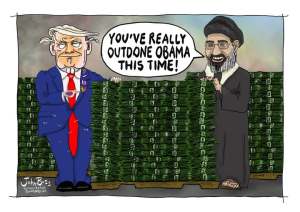
“Someone has to point this out. The opening of the Obama Presidential Center is an experience and immersion of joy, hope, love, and pride; the 250th anniversary of our founding could have been celebrated.” John Buss, @repeat1968
Good Day, Sky Dancers!
Cadet Bonespurs, the worst negotiator ever, has basically given away the U.S. and its wealth. He’s trying to make his Iran War debacle look like something other than a costly disaster that took the lives of our soldiers and innocent Iranian people. I’m going to let Bill Kristol and the rest of the conservative gang at The Bulwarksum this up.
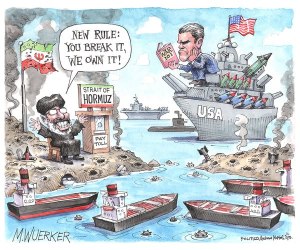
Thanks to their operational control of the Strait of Hormuz, Iran was able to get away with murder in setting the terms of further peace talks with the United States—and now they’re pushing for even more. The first round of scheduled peace talks under the new memorandum of understanding were supposed to begin in Switzerland today, but Iran abruptly called them off yesterday, citing the intensifying conflict between Israel and Hezbollah in southern Lebanon, which they deemed a violation of the MOU’s terms. This morning (eastern time) the Republican Guard Corps Navy—which Trump claims doesn’t exist—once again closed the strait. The message was clear: If you want to negotiate, you’d better figure out how to get Israel in line.
“Trump just can’t stand that President Obama is in the spotlight with the opening of his Presidential Library.” @repeat1968, John Buss
I’m also going to use the next headline there this morning to wish you a happy, long Juneteenth weekend! “Celebrate Juneteenth. Annoy MAGA.” Well, don’t do it completely to just ignore them. Let’s be reminded of how many black Americans were once considered property and treated as such. We still have a long way to go to get rid of this burdensome legacy and the racism that still plagues us today, but at least, at many points in the country’s history, we were capable of doing the right thing.
Today is Juneteenth, a holiday long celebrated, especially by black Americans, to commemorate the end of slavery in the United States. In 2021, Congress, recognizing that the end of slavery was an event worthy of formal recognition by the whole nation, established it as a federal holiday for all Americans. The holiday’s name refers to June 19, 1865, the day when Union Maj. Gen. Gordon Granger issued General Order No. 3 ordering the enforcement of the Emancipation Proclamation in Texas: “The people of Texas are informed that, in accordance with a proclamation from the Executive of the United States, all slaves are free.”
In the midst of this year’s celebration of the 250th anniversary of the Declaration of Independence, the commemoration of Juneteenth can have special resonance. But not for the Trump administration, which, so far as I can tell, has not deigned to acknowledge the holiday this year. When I searched the White House website this morning for “Juneteenth,” I got back no results found. Nor does there seem to be any presidential proclamation this year in honor of its observance.
The one time the Trump administration seems to have taken notice of Juneteenth was in December of last year, when the administration removed Juneteenth (and MLK Day) from the National Park Service’s list of free-admission days, replacing it with June 14, Flag Day—which is not an official federal holiday. But it is President Trump’s birthday, and that is the holiday he wishes all of us to celebrate, as he celebrated it Sunday with the cage match on the White House lawn.
One understands why Trumpists choose to neglect Juneteenth. After all, Trump’s vice president claimed earlier this week at a campaign event in New York that “they’ve become anti-white in the Democratic party.” If you’re appealing to those who think one of our two major parties is “anti-white,” if you’re trying to convince Americans that anti-whiteness is a great problem, if you’re the party that wants to foster and exploit white grievance, then you have little interest in calling attention to a holiday that is a reminder of the terrible injustices caused by fantasies of white supremacy.
That last sentence hits home. And I say no more going high when they go low. Call it out for what it is.
Meanwhile, Iran’s ally Russia has amped up its rhetoric against Ukraine. “Russia threatens escalation after Ukraine hits Moscow with largest-ever drone attack.” This story comes from CNBC. It’s written by Sam Meredith.
Russia has pledged to carry out frequent and “massive group strikes” against Ukraine shortly after Kyiv launched a barrage of drones on Moscow, triggering a huge explosion in one of the Russian capital’s key oil refineries.
Ukrainian forces conducted a large-scale attack against Moscow on Wednesday evening and Thursday, heavily targeting a major oil refinery located on the south-eastern outskirts of the city.
Nearly 200 drones were reportedly used in the attack, marking Ukraine’s biggest-ever air raid on Russia’s capital. Authorities said 16 people had been injured, while four Moscow airports temporarily grounded flights.
Columns of black smoke were seen billowing from Gazprom’s Moscow Refinery on Thursday, a facility that has been targeted by Ukrainian forces multiple times in recent weeks.
“It is no coincidence that the president announced some time ago, after yet another Kyiv terrorist attack, that we will now conduct massive group strikes on a regular basis against targets whose condition directly affects the combat readiness of the Ukrainian Armed Forces,” Russian Foreign Minister Sergei Lavrov told reporters on the sidelines of an event in Kazan on Thursday, according to Interfax.
Ukrainian forces have repeatedly targeted Russia’s oil infrastructure, seeking to cut Moscow’s energy revenues and try to force President Vladimir Putin into bringing an end to the four-year war.
The New York Times has a big story today about the institutional racism being put back into place in the military by drunk, rapey Pete Hegseth. We have to stop going backward. “Secret Vetting and Blocked Promotions: Inside Hegseth’s War on Diversity. A Black admiral fixed one of the Navy’s worst messes. Mr. Hegseth blocked his promotion anyway.” Greg Jaffe and Kate Kelly share the lede.
The Navy’s top leadership believed that Rear Adm. Stephen D. Barnett was by far the best choice to lead the command that oversees the Navy’s bases at home and abroad.
He had more experience than the other candidates and had successfully managed the aftermath of one of the Navy’s biggest messes, a fuel spill that contaminated an aquifer on a base in Hawaii, sickening thousands.
The final decision this spring fell to Defense Secretary Pete Hegseth.
To many in the Navy, Admiral Barnett’s promotion seemed like a foregone conclusion.
The officer, however, had a big strike against him. Like other Black military leaders, he had been encouraged by his superiors to help the Navy recruit and retain minority officers, who remain significantly underrepresented in the force. His years-old remarks on the importance of diversity had been flagged in a secret vetting process designed to weed out senior leaders whom Mr. Hegseth and his team pegged as a problem.
Instead of Admiral Barnett, Mr. Hegseth selected a white officer who was the Navy leadership’s third choice.
So far this year, Mr. Hegseth has blocked the promotions of at least 40 senior officers to general and admiral ranks. About half of those are women or members of minority groups.
Tom Toles Editorial Cartoon
Politico‘s Alexander Burns believes he’s found “The Most Surprising Miscalculation of Trump’s Second Term. He has underestimated the power of patriotic sentiment in countries besides the United States.” Well, I was hoping that more Americans found their patriotic sentiment–including those representing this country–, but that was just a dream, it seems.
When Donald Trump won a new term in the White House, Danielle Smith joined the parade of foreign leaders visiting Mar-a-Lago to honor the president-elect. The populist premier of Alberta, Smith enjoyed lively relationships across the American right, even hosting Tucker Carlson in Western Canada in 2024.
Yet when I asked Smith last fall, at a policy summit in Toronto, how she’d feel about Trump potentially intervening in Alberta’s fragile politics, her MAGA stripes vanished.
“I don’t want any foreign influence in our politics here,” Smith told me.
Admiring Trump from afar is one thing. But sovereignty is sovereignty, and borders are borders.
Trump used to understand that.
A decade ago, Trump waged his first-ever political campaign as a nationalist crusader, demanding harder borders and more muscular American sovereignty. When the United Kingdom held its 2016 referendum on leaving the European Union — the 10-year anniversary is in a few days — Trump cheered it on and crowned himself “Mr. Brexit.”
In his second term, Trump’s grasp of nationalist politics has slipped. He has underestimated the power of patriotism and national pride in countries other than his own.
This serial miscalculation has undermined Trump’s trade wars and military adventures, aggravated the cost-of-living crisis, weakened the Republican Party and battered Trump’s bonds with the global right.
It began even before Trump’s inauguration in 2025, with his campaign of bullying against Canada.
This is also from CNBC. “U.S.-Iran accord hits early snag after Swiss talks fail to proceed as planned.” This is reported by Justina Lee and Sam Meredith. They’re certainly a pair of busy reporters this week.
News that the U.S. and Iran had reached an interim deal may have brought some initial relief to markets, but fresh uncertainty emerged on Friday after planned follow-up talks in Switzerland were called off, underscoring the challenges of turning the agreement into a lasting peace settlement.
Switzerland’s foreign ministry said U.S.-Iran talks scheduled to take place at Bürgenstock on Friday would not proceed as planned.
The White House also said that Vice President JD Vance was no longer traveling to Switzerland, citing unresolved logistical issues surrounding the negotiations.
“The plans for the upcoming technical talks have not been finalized, and the U.S. delegation has been prepared to depart at the first available opportunity,” a White House spokesperson said.
“But the logistics of these negotiations have never been simple or predictable.”
The developments came a day after President Donald Trump and Iranian President Masoud Pezeshkian signed a memorandum of understanding aimed at developing a permanent peace deal to end the months-long conflict.
Under the 14-point MOU, both sides agreed to extend the ceasefire, including in Lebanon, and reopen the strategically vital Strait of Hormuz.
The Financial Times, however, reported that Friday’s talks were abruptly called off due to Israel launching a wave of deadly air strikes against Lebanon, citing three people familiar with the matter.
Lebanon’s Health Ministry said 18 people were killed in the south of the country following a series of Israeli strikes overnight. Israel said four of its soldiers were also killed.
Israeli Prime Minister Benjamin Netanyahu said in a social media post Friday morning that he instructed the Israel Defense Forces to strike Hezbollah “with full force” in response to a “heinous attack” by the Iran-backed group.
Hours later, a U.S. official told CNBC that the two groups agreed to a ceasefire from 4 p.m. local time, or 9 a.m. ET.
Oil prices turned lower after the ceasefire was reported.
It sure looks like we have a lot of leaders of major countries completely out of their league. And back to Iran. This is from Reuters. “Iran’s Revolutionary Guards set up covert Iraqi cells to attack Gulf neighbors, sources say.” It’s the same old, same old since the 1970s if you ask me.
Iran’s Islamic Revolutionary Guard Corps (IRGC) has set up secretive new cells in Iraq to carry out attacks on Gulf countries that host American forces, bypassing established militia networks to avoid detection, eight Iraqi sources told Reuters.
Three or four cells, each comprising about 10 elite Iraqi Shi’ite Muslim fighters, launched at least seven drone attacks from desert locations near the southern cities of Basra and Samawa against sites in Kuwait, Saudi Arabia and the United Arab Emirates between April 20 and May 17, three of the sources said.
A number of their members were drawn from Islamic Resistance in Iraq, an umbrella group of hardline Shi’ite factions with thousands of fighters. But the new groups operate outside its command structure, reporting directly to the IRGC, according to the sources, who include two Iraqi military officials, another security official and five local militia commanders.
The establishment of the new Iraqi cells, which has not previously been reported, reflects a shift in IRGC tactics aimed at preserving Iran’s ability to project force across the region at a time when its armed proxy groups are greatly diminished and its own military and economic resources are depleted, the five militia commanders said.
Feeling safer now? Me neither. Trump’s polls continue to fall on the Iraq war. As you can see from The Bulwark articles, the trad war hawks are not happy about the situation. Maybe we all need to start building bunkers. This is from the AP. “What Americans think about Trump’s handling of Iran, according to a new AP-NORC poll.”
Most Americans continue to disapprove of how President Donald Trump is handling Iran, while his overall presidential approval holds steady, according to a new AP-NORC poll that was conducted as he suggested a deal with Iran had been reached.
The poll points to just how unpopular the war, which began Feb. 28, has been with Americans even as the Republican president turned abruptly from threatening Iran to reopening negotiations. Support for his handling of the war remains lopsidedly partisan. About two-thirds, 65%, of U.S. adults disapprove of how Trump is handling issues with Iran. But while the vast majority of Democrats and independents view Trump’s actions negatively, only 28% of Republicans are unhappy.
The new survey was conducted June 11-17, just after Trump called off threats to escalate the war with Iran. The poll was fielded as Trump announced a deal with Iran and authorized an end to the U.S. naval blockade in the Strait of Hormuz, concluding just before the deal was signed Wednesday.
Well, at least we can fire up some grills, even though most of us will not be eating steaks or meat. I like the Juneteenth holiday and its proximity to Independence Day. The addition of Pride month fortifies the display. This shows that eventually we can include everyone who should be included. Unfortunately, Orange Caligula and his band of fascist, racist haters just never give up. We have to vote them out.
What’s on your Reading, Action, and Blogging list today?
Did you like this post? Please share it with your friends:
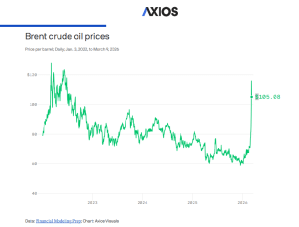
The one thing holding inflation prices down in this country was the price of oil. It peaked in 2023 and began a decline until Orange Caligula launched a full-on attack on Iran and disrupted traffic in the Straight of Hormuz. Such is the result of a madman’s insane policy choices based on revenge, power-grabbing, and greed. It’s like giving a toddler the driving wheel and letting him take you down from a very tall mountain.
It’s not like I didn’t warn everyone to clear out of the stock market and hunker down about a year ago. It’s also just going to get worse. I fortunately cleared out the last of one of my 403(b)s last week to use it to improve the house before it gets any more expensive. I managed to lose only a bit of it, and I’m glad to know the check got cut before the worst hit so far. I can’t promise you that it’s going to get any better either. We’re worse than a Banana Republic. We’ve gone back to something akin to the dark ages with plagues of measles and armed thugs wandering the streets, looking to harm and jail workers and poor people. We can’t even put a bunch of pedophiles in suits into the justice system. What good is our Constitution for if money means you can ignore it
I’m going to start with AXIOS because they always get straight to the point. This analysis is by Neil Irwin, and this absolutely stunning chart provides some visuals. That line covering the first few months of 2026 screams outlier with a discernible reason. To the moon and beyond! It’s also obvious that none of it was Joe Biden’s fault, given the dates accompanying the data points. Okay, I’ll step down from the professor’s podium. I’ll just say economics students will be studying this for as long as universities stand.
In the first week of the American and Israeli attack on Iran, the economic ripples were looking pretty minimal. But as Week 2 begins, the risks to the global economy are growing much more serious.
The big picture: You can’t decapitate the leadership of a country of 90 million people, with expansive military and intelligence capabilities, in the heart of some of the world’s most economically important supply chains, without a huge cost.
The hours and days and weeks ahead are all about quantifying that cost.
Zoom in: Oil skyrocketed 25% overnight, to just under $120 a barrel, fueling worries that higher energy costs will stoke inflation and curb spending by U.S. consumers. Tokyo’s Nikkei 225 index plunged more than 5%.
That’s the highest oil price since about four years ago, when energy prices surged due to Russia’s invasion of Ukraine.
Patrick De Haan — a widely cited gas price expert and an analyst for GasBuddy — estimates there’s an 80% chance the national average gas price will hit $4 per gallon in the next month.
The latest: As of 5am ET, a barrel of the global crude oil benchmark was going for about $107 on futures markets, up 15% from Friday and 47% from 10 days ago, before the Iran attack. Brent crude prices approached $120 overnight before receding on reports of coordinated global action to release oil reserves.
The oil price rise is poised to translate into a rapid increase in the cost of retail gasoline, which was already up about 51 cents per gallon before the weekend run-up in oil prices.
The risk of a broader economic slump is rising with the disruption to oil supplies. S&P 500 futures are down 1.3% overnight, setting Wall Street up for its third consecutive day of losses.
Japan’s Nikkei index was down 5.2% and South Korea’s KOSPI down 6%, reflecting those economies’ more direct dependence on Middle Eastern oil now at risk of a protracted blockade.
Of note: The odds of a U.S. recession this year spiked to 38% in overnight trading on Polymarket, from 24% at the start of the month.
State of play: Iran is seeking to block the Strait of Hormuz, which connects the Persian Gulf with the rest of the world, and is threatening to attack ships that seek to pass through.
The war has already caused the largest oil disruption in history, taking out roughly 20% of the world’s supply, according to Bob McNally, president of Rapidan Energy and a former George W. Bush energy adviser.
That’s double the previous record set during the Suez Crisis in the 1950s, which disrupted just under 10% of global supply.
The weekend also brought apparently successful Iranian attacks on desalination plants in the Gulf region that are critical for drinking water.
President Trump has raised the possibility of U.S. ground forces in Iran.
More at the link. CNBC shows the data with more analysis. “Oil prices topped $100 per barrel on record supply disruption, but are off session highs.” We’ll see if that lasts until the markets close this afternoon.
Shortly after oil blasted past $100 at the open of trading Sunday evening, President Donald Trumpposted on Truth Social that a gain in “short term oil prices” was a “very small price to pay” for destroying Iran’s nuclear threat.
“Only fools would think differently!” Trump added.
Gulf Arab states are cutting production because they are running out of storage space, as crude piles up with nowhere to go due to the closure of the Strait. Tankers are unwilling transit the narrow waterway because they are worried Iran will attack them.
The closure of the Strait has triggered the biggest oil supply disruption history, according to an analysis by consulting firm Rapidan Energy. About 20% of the world’s oil consumption is exported through the Strait.
Iran’s foreign ministry spokesman warned Monday that oil tankers “must be very careful.”
“As long as the situation is insecure, I think all tankers, all maritime navigation, must be very careful,” Foreign Ministry spokesman Esmail Baghaei told CNBC in an interview.
Kuwait, the fifth-biggest producer in OPEC, announced precautionary cuts Saturday to its oil production and refinery output due to “Iranian threats against safe passage of ships through the Strait of Hormuz.” The state-owned Kuwait Petroleum Corp. did not detail the size of the cuts.
Output in Iraq, the second-biggest OPEC producer, has effectively collapsed. Production from its three main southern oilfields has fallen 70% to 1.3 million barrels per day, three industry officials told Reuters on Sunday. Those fields produced 4.3 million bpd before Iran war.
And the United Arab Emirates, the third-biggest producer in OPEC, said Saturday that it is “carefully managing offshore production levels to address storage requirements.” The Abu Dhabi National Oil Co., or ADNOC, said its onshore operations are continuing normally.
The war showed little signs of easing despite Trump’s claim it was “already won.” Iran named Ayatollah Ali Khamenei’s son, Mojtaba, as its new supreme leader, according to reports. The U.S. and Israel killed Khamenei in the opening days of the war.
Energy Secretary Chris Wright said Sunday that traffic through the Strait will resume after the U.S. has destroyed Iran’s ability to threaten tankers.
It’s really odd to think that I started my career as an economist during the OPEC maneuvers and I’m winding down my career as one with the US maneuvers. Frankly, I think China is sitting pretty right now. They’ve been doing a lot with alternative energy and have the entire Pacific Region — including many Latin American Countries with oil — undoubtedly rooting for them right now.
Alex Harring at CNBC analyzes the market activity. This is fresh off the ticker today. “Stocks pare losses as oil falls back below $100; Dow is down 300 points: Live updates.”
The 30-stock index fell 293 points, or 0.6%, and is coming off its biggest weekly slide in nearly a year. The S&P 500 lost 0.2%, while the Nasdaq Composite gained 0.2%. That signifies a meaningful turnaround for the three indexes, as the Dow was down nearly 900 points, or 1.9%, at its low of the day, and the S&P 500 and Nasdaq were each lower by around 1.5%.
The broader market was helped off its lows by a rise in semiconductor stocks, however. Broadcom jumped more than 3%, while Micron Technology and Advanced Micro Devices gained almost 2% each. Nvidia climbed more than 1%.
West Texas Intermediate crude broke above $100 per barrel in overnight trading to hit more than $119, its first time above the $100 level since 2022, when investors were reacting to the aftermath of Russia’s invasion of Ukraine. It was last up 6% at around $96 a barrel. International benchmark Brent crude added 7% to $99 a barrel. U.S. oil prices began the year below $60 a barrel.
Oil futures jumped after major Middle East producers slashed their output due to the continued closure of the key Strait of Hormuz passageway. Kuwait announced cuts but did not say by how much, while Iraq has reportedly seen its production fall 70%.
Oil prices later came off their highest levels of the session and stocks rose from their lows following a Financial Times report that G7 officials were considering tapping their strategic reserves. But the publication also reported coordinated release was not ready yet, helping to send major indexes lower.
The Cboe Volatility index — Wall Street’s fear gauge measuring investors seeking protection in the options market — topped 30 for the first time since the market’s tariff driven sell-off in April 2025. It was last above 27.
The $100 oil level was seen by many on Wall Street as a breaking point for the economy unless the war is resolved quickly and prices retreat. Trump posted Sunday evening that a gain in “short term oil prices” was a “very small price to pay” for destroying Iran’s nuclear threat.
Trump donors are feeling this immediately. Trump voters will shortly see the impact on their budgets and gas prices. I can’t say I feel sorry for any of them, but there’s not a person who won’t feel this one way or another. The Bulwark’s Andrew Egger examines Trump’s seeming confusion over his War.
What did the White House think it was getting into in Iran? A strike against Iran’s oppressive and fanatical regime, sure. A display of America’s awesome military might, definitely. But it’s become increasingly, painfully clear: They didn’t think there was going to be a war.
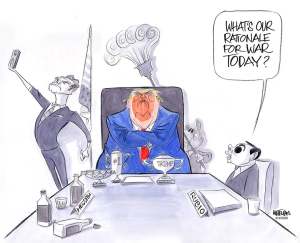
The Trump administration developed no real theory of the objectives of the Iran war, because they didn’t think there was going to be a war. Instead, the administration has backfilled a dizzying array of post-hoc goals for the strikes against Iran. Judd Legum counts seventeen different rationales offered by many different officials, from the president’s “feeling, based on fact” that Iran was about to strike the United Statesto a desire to free the Iranian people to a need to destroy a nuclear program the White House had claimed was already “obliterated.”
The Trump administration made no effort to get the American people on board with war, because they didn’t think there was going to be a war. A majority of the public is already opposed to war with Iran, and what support the war does have seems to be based on the questionable assumption that the conflict will be shortly resolved: 44 percent of Americans support the strikes so far, but only 12 percentwould be in favor of sending U.S. ground troops into the country. But the White House has made no broad effort to convince the public on a bipartisan basis that they should be prepared for a long-haul conflict.
They didn’t think there was going to be a war, and so the White House seemingly gave no thought to what the economic ramifications of war would be. After several days of strikes on Iran, President Trump seemed suddenly to realize last week that the ongoing conflict was going to be terrible for energy prices. He tried to slap a band-aid on the problem by announcing risk insurance and military escorts for all oil tankers through the Strait of Hormuz, but it wasn’t enough: Suddenly, oil prices went through the roof, and the White House was scrambling to contain the damage—rushing to reassure consumers that the price hikes would be temporary and even waiving some sanctions on Russian oil to try to ease pressures on global supply. “Short term oil prices, which will drop rapidly when the destruction of the Iran nuclear threat is over, is a very small price to pay for U.S.A, and World, Safety and Peace,” Trump posted on Truth Social yesterday. “ONLY FOOLS WOULD THINK DIFFERENTLY!”
They didn’t think there was going to be a war, and so the president assumed he’d be in charge of picking Iran’s next political leadership. This plan, admittedly, hit an unexpected snag early on: The initial round of strikes that took out Iran’s top leaders also killed a number of lower-ranking regime figures that the White House had identified as pragmatists who might be willing to negotiate. “The attack was so successful it knocked out most of the candidates,” Trump said a day after the strikes began. “It’s not going to be anybody that we were thinking of because they’re all dead. Second or third place is dead.” Still, Trump made it clear he expected to be involved in picking Iran’s next supreme leader, and absolutely ruled out Mojtaba Khamenei, the son of the slain ayatollah: “They are wasting their time . . . Khamenei’s son is unacceptable to me.” But this morning, Iran went ahead and proclaimed Mojtaba Khamenei their next supreme leader anyway.
Somehow, the president seems to remain so confident Iran will be buttoned up in no time that he’s already openly licking his chops over the next triumphant blitzkrieg. “Cuba is gonna fall pretty soon, by the way,” Trump told CNN Friday. “I’m going to put Marco over there and we’ll see how that works out. We’re really focused on this one right now.”
Judd LeGum at Popular Information specifies not the unknowables of the attack, but the rationale and plans for the future, which are blowing in the wind. “9 days in, the most basic question about the Iran war remains unanswered. In just over a week, Trump and top administration officials have given at least 17 different responses about why the war began.” Yup. We still don’t know why they did this.
On February 28, President Trump announced that “the United States military began major combat operations in Iran.” The war has claimed the lives of more than 1500 people, including about 1300 Iranians, dozens in neighboring countries, and six U.S. troops. The Pentagon has estimated the conflict is costing U.S. taxpayers about $1 billion per day — and that figure may be too low.
And yet, nine days into the war, Trump and his administration have failed to clearly answer the most fundamental question: Why did the war begin?
Instead, the Trump administration has offered a bewildering series of shifting, contradictory, and factually incorrect answers. In just over a week, Trump and top administration officials have given at least 17 different responses about why the war began:
A brief description of each of those 17 responses is given in the article. You may read it at this fully gifted link. The New York Times reports on information from Iran’s new Supreme Leader. “Live Updates: Oil Price Surge Rattles Markets; Iran’s Choice of Leader Signals Defiance. Stocks fell on fears of the Iran war’s effects on energy prices. Top clerics selected Mojtaba Khamenei as Iran’s supreme leader, despite President Trump’s warning that he was “unacceptable.”
U.S. stocks fell at the start of trading on Monday, after markets in Asia and Europe tumbled, as a spike in oil prices reflected global fears of a prolonged U.S.-Israeli war with Iran. Meanwhile, Iran projected defiance by naming a son of its slain supreme leader as his successor.
Oil prices briefly surged early Monday to almost $120 per barrel, their highest level since the Covid pandemic, as President Trump’s plans for the next steps in the war, let alone its endgame, remained unclear and Iran showed no sign of bowing to his demand for unconditional surrender.
It still looks like the start of World War 3 to me. From the same link above.
Eleven countries have asked Ukraine for security support to help counter Shahed drones, according to President Volodymyr Zelenskyy. He said in a social media post that the requests have come from countries neighboring Iran, European nations and the United States — and that some “have already been met with concrete decisions and specific support.”
He did not provide further details, though Zelensky earlier told The New York Times that Ukraine sent interceptor drones and a team of experts to protect U.S. military bases in Jordan.
“There is clear interest in Ukraine’s experience in protecting lives, relevant interceptors, electronic warfare systems, and training,” Zelensky added in his post on social media. “Ukraine is ready to respond positively to requests from those who help us protect the lives of Ukrainians and the independence of Ukraine.
This headline is one that worries me. It’s from the Times of Israel. “Trump to Times of Israel: It’ll be a ‘mutual’ decision with Netanyahu regarding when Iran war ends. US president, in phone interview, clarifies that he’ll make final call to end operation ‘at right time’; says he and PM ‘worked together’ against Islamic Republic: ‘We’ve destroyed a country that would have destroyed Israel’.”
US President Donald Trump told The Times of Israel on Sunday that a decision on when to end the war with Iran will be a “mutual” one that he’ll make together with Prime Minister Benjamin Netanyahu.
Trump also asserted in the brief telephone interview that the Islamic Republic would have destroyed Israel if he and Netanyahu had not been around. “Iran was going to destroy Israel and everything else around it… We’ve worked together. We’ve destroyed a country that wanted to destroy Israel.”
The US president was asked whether he alone would decide when the war with Iran ends or if Netanyahu would also have a say.
“I think it’s mutual… a little bit. We’ve been talking. I’ll make a decision at the right time, but everything’s going to be taken into account,” he responded, indicating that while Netanyahu will have input, the US president will have the final say.
Asked whether Israel could continue the war against Iran even after the US decides to halt its strikes, Trump declined to entertain the theoretical possibility before adding: “I don’t think it’s going to be necessary.”
So, it’s still two megalomaniacs avoiding prison sentences running the show. Don’t you feel much better now?
What’s on your Reading, Action, and Blogging list today?
Well, I know I’m not sleeping well at night. How about you?
JJ sent me the link to this horrifying story. It gave me my first share, but now I’m wondering if I’ll actually be able to eat lunch today. This is from the New York Times. “Inside Trump’s Decision. The Times pieced together the days and hours leading up to President Trump’s decision to strike Iran. It’s a story of diplomacy, deception, and a secret that almost got out.” We don’t have to worry about him being around to take that 3 am phone call. The Pentagon was worried about him putting the entire attack plan on Truth Social. I’ve gifted the link to you so you can read the entire thing. You know the Missouri Bombers he blathered about? One fleet was a ruse. Aaron Fritschner, Deputy Chief of Staff at Congressman Don Beyer, tweeted it out.
Inside the Pentagon and the U.S. Central Command, military planners worried that Trump was giving Iran too much warning about an impending strike. So they worked up their own ruse: They had two fleets of B-2 bombers leave Missouri at the same time, one flying east and one flying west. Flight trackers spotted the westward planes, which offered some idea of the timing of a possible attack. But those planes were a decoy.
The eastbound planes crossed the Atlantic undetected, joined with fighter jets and flew into Iranian airspace. At 2:10 a.m. local time yesterday, the lead bomber dropped two of the bunker-busters on the Fordo site. By the end of the mission, 14 of the bombs had fallen.
You may read about the details of the attack at PBS if you aren’t overwhelmed already by the thought of Sex Pest and Drunk, Pet Hegseth being a part of this. This headline from The Hillwon’t make you feel any less queasy. I’m assuming you knew that #FARTUS was also posted that he would help Iran Make Iran Great Again. That was while Hegseth and Rubio were busily telling the press that our hijacked country had no plans for regime change. Remember, if his lips are moving, he’s telling a big ol’ story. “Israel attacking government sites in Iran as Trump floats regime change.” The reporting here is by Sarah Fortinsky.
Israel said it is carrying out attacks on Iranian government sites and “regime targets” — including the notorious Evin Prison — as President Trump muses publicly about a regime change in Tehran.
Israeli Defense Minister Israel Katz said in a social media post at noon local time on Monday that Israeli forces are “currently striking with unprecedented force regime targets and governmental oppression entities in the heart of Tehran,” according to an English translation of the Hebrew statement.
He said those targets include the headquarters of Basij, the paramilitary volunteer militia within the Islamic Revolutionary Guard Corps; Evin Prison, used to incarcerate political prisoners and opponents of Iran’s leadership; and the “Destroy Israel” clock in Palestine Square.
Katz said the attacks are also striking “additional regime targets,” including internal security headquarters of the Revolutionary Guards and the ideology headquarters.
Throughout Monday morning, meanwhile, the Israeli military said sirens were sounding across the country as Iran continued to launch missiles targeting Israel.
That sure sounds like a war to me. Peter Nicholas, NBC News, reports that Democrats in the District are finally sounding some kind of alarm. “‘Biden didn’t start any wars’: Democrats sharpen their arguments against Trump’s foreign policy. In the wake of the U.S. airstrikes on Iran, Democrats are pointing to Trump’s own promises that he wouldn’t ensnare the country in foreign conflicts.”
Democrats are seizing on Donald Trump’s surprise attack on Iran’s nuclear facilities to make the case that the world is becoming more dangerous on his watch, not less, and that he is reneging on a promise to avoid foreign military interventions.
The argument strikes at Trump’s contention that his blend of negotiating skills and toughness is enough to keep the United States safe.
In the space of a few days, Trump has made the United States a combatant in another Middle East war that exposes soldiers to potential deadly reprisals, Democrats contend.
In a statement, Democratic National Committee Chairman Ken Martin pointed to Trump’s inaugural address, in which he said he would measure his success by “the wars we never get into.”
Yet, Martin said, “against his own words, the president sent bombers into Iran. Americans overwhelmingly do not want to go to war. Americans do not want to risk the safety of our troops abroad.”
The White House did not respond to a request for comment.
Several lawmakers said Sunday that they will press the Trump administration for clarity about the attack on Iran and the endgame he envisions. But they are also using the moment to try to undercut Trump’s standing with those who voted for him in the hope he would not get entangled in foreign wars.
Rep. Adam Smith, D-Wash., the ranking member of the Armed Services Committee, said Trump’s commitment was “to get us out of foreign wars.”
“Say what you want about Joe Biden, Joe Biden didn’t start any wars,” Smith said. “He got us out of the one war that we were in [in Afghanistan]. Trump has now started a war with Iran.”
The Guardianhas a headline today that’s spot on. George Bush got led on by his own advisors. Trump’s advisors said no to the mission. Evidently, Trump was taken by strongman Benjamin Netanyahoo! After all that speechifying about Hillary getting us into another World War and how he’d never drag us into something like Dubya did to Iraq and Afghanistan. Here we are. “Like George W Bush, Trump has started a reckless war based on a lie. The Iraq War was built on a lie. Now history is repeating itself.” Mohamad Bazzi has the analysis.
In May 2003, George W Bush landed on the deck of a US aircraft carrier to deliver a triumphant speech, declaring that major combat operations in Iraq had ended – six weeks after he had ordered US troops to invade the country. Bush spoke under a now-infamous banner on the carrier’s bridge that proclaimed: “Mission Accomplished”. It would turn into a case study of American hubris and one of the most mocked photo-ops in modern history.
As Bush made his speech off the coast of San Diego, I was in Baghdad covering the invasion’s aftermath as a correspondent for a US newspaper. It was clear then that the war was far from over, and the US was likely to face a grinding insurgency led by former members of the Iraqi security forces. It would also soon become clear that Bush’s rationale for invading Iraq was built on a lie: Saddam Hussein’s regime did not have weapons of mass destruction and was not intent on developing them. And Iraq had nothing to do with the September 11 terrorist attacks on the US, despite the Bush administration’s repeated attempts to connect Hussein’s regime to al-Qaida.
Today, Donald Trump has dragged the US into another war based on exaggerations and manipulated intelligence: the Israel-Iran conflict, which began on 13 June when Israel launched a surprise attack killing some of Iran’s top military officials and nuclear scientists, and bombing dozens of targets across the country.
The Israeli prime minister, Benjamin Netanyahu, claimed that Israel had to attack because Tehran was working to weaponize its stockpile of enriched uranium and racing to build a nuclear bomb. “If not stopped, Iran could produce a nuclear weapon in a very short time,” Netanyahu said, as the first wave of Israeli bombs fell on Iran. “It could be a year. It could be within a few months.”
Before dawn on Sunday, US warplanes and submarines bombed three major nuclear facilities in Iran. In a speech from the White House, Trump declared the operation a “spectacular military success” and said the sites had been “totally obliterated”. Trump added that his goal was to stop “the nuclear threat posed by the world’s number one state sponsor of terror”.
But does Iran pose the immediate threat that Netanyahu and Trump have claimed?
US intelligence officials, along with the UN’s nuclear watchdog and independent experts, say that while Iran has dramatically increased its supply of uranium enriched to nearly weapons grade, there is no evidence it has taken steps to produce a nuclear weapon. In March, the US director of national intelligence, Tulsi Gabbard, told Congress that America’s intelligence agencies continued “to assess that Iran is not building a nuclear weapon”. She added that Iran’s supreme leader, Ayatollah Ali Khamenei, “has not authorized the nuclear weapons program he suspended in 2003”.
I’m sure none of this is lost on us. Mark Landler writes this analysis for The New York Times. “Iran’s Nuclear Dreams May Survive Even a Devastating American Blow. Through revolution and upheaval, the program has become intertwined with the country’s security and national identity.” Let’s hope all of this sinks in before Trump’s Folly starts costing American lives.
By joining Israel’s military campaign against Iran, Mr. Trump has greatly raised the costs for Iran’s leaders in refusing to accept stringent curbs on their uranium enrichment program. Yet, however this conflict ends, he may have given them even more compelling reasons to seek a nuclear deterrent, experts say.
“Any strategic thinker in Iran, present or future, realizes that Iran is located in the Middle East, that its neighbors are Netanyahu’s Israel, the Taliban in Afghanistan, and M.B.S. in Saudi Arabia,” said Professor Alvandi, referring to Prime Minister Benjamin Netanyahu and Crown Prince Mohammed bin Salman.
To that list of threats, Iran can now add the United States.
The American bombardment likely inflicted serious damage on the enrichment facilities at Natanz and Fordo, and the research complex at Isfahan. Earlier Israeli strikes killed several of Iran’s prominent nuclear scientists, as well as damaging installations. Taken together, that could set back Iran’s program by years.
But bombs alone cannot erase the knowledge that Iranians have accumulated over nearly seven decades, since 1957, when Iran first signed a civil nuclear cooperation agreement with the Eisenhower administration. The United States was then encouraging countries to engage in the peaceful exploration of nuclear science through President Dwight D. Eisenhower’s “Atoms for Peace” initiative.
In 1967, with American help, Iran built a small research reactor in Tehran that still exists. A year later, it signed the Nuclear Nonproliferation Treaty, a symbol of the shah’s desire to be accepted into the club of Western nations.
Flush with cash from 1973 oil shock, the shah then opted to rapidly expand Iran’s civil nuclear program, including developing a homegrown enriching capacity. He sent dozens of Iranian students to the Massachusetts Institute of Technology to study nuclear engineering.
The shah viewed it as a prestige project that would vault Iran into the front ranks of Middle Eastern countries. But that put him at odds with the United States, which worried that Iran would reprocess spent fuel into fissile material that could be used in a weapon.
“It was an icon of the country having arrived as a major power, with the side idea that if Iraq ever threatened Iran, it could be diverted to military uses,” said Professor Alvandi, who published “Nixon, Kissinger and the Shah: The United States and Iran in the Cold War.”
Everything old is new again. History repeats itself. Yup, another Republican steps on the detonator. Historian Heather Cox Richardson has a bigger perspective at her Substack, Letters from an American.
In last night’s speech to the nation, Trump appeared to reach out to the evangelical wing of MAGA that wanted the U.S. to intervene on Israel’s side in its fight against Iran. Trump said: “And I want to just thank everybody and in particular, God, I want to just say we love you, God, and we love our great military, protect them. God bless the Middle East. God bless Israel, and God bless America. Thank you very much. Thank you.”
But while the evangelicals in MAGA liked Trump’s bombing of Iran, the isolationist “America First” wing had staunchly opposed it and are adamant that they don’t want to see U.S. involvement in another foreign war. So today, administration officials were on the Sunday talk shows promising that Trump was interested only in stopping Iran’s nuclear ambitions, not in regime change. On ABC’s This Week, Vice President J.D. Vance said explicitly: “We don’t want to achieve regime change.” On X, poster after poster, using the same script, tried to bring America Firsters behind the attack on Iran by posting some version of “If you are upset that Trump took out Obama’s nuclear facilities in Iran, you were never MAGA.”
This afternoon, Trump posted: “It’s not politically correct to use the term “Regime Change,” but if the current Iranian Regime is unable to MAKE IRAN GREAT AGAIN, why wouldn’t there be a Regime change??? MIGA!!!”
On ABC’s This Week, Representative Jim Himes (D-CT) said: “It’s way too early to tell what the actual effect on the nuclear program is, and of course, it’s way too early to tell how this plays out, right? I mean, we’ve seen this movie before. Every conflict in the Middle East has its Senator Tom Cottons who promise us mushroom clouds. In the Iraq war it was Condoleezza Rice promising us a mushroom cloud. And initially—and this is true of every one of these wars in Libya, in Iraq, and Afghanistan—initially, things looked pretty good. Saddam Hussein is gone. Muammar Qaddafi is gone. The Afghan Taliban are gone. And then, over time, we start to learn what the cost is. Four thousand, four hundred Americans dead in Iraq. The Taliban back in power. So bottom line, the president has taken a massive, massive gamble here.”
There are already questions about why Trump felt obliged to bomb Iran’s nuclear sites right now. In March, Trump’s director of national intelligence, who oversees all U.S. intelligence, told Congress that the intelligence community assessed that Iran was not building a nuclear weapon. The U.S. and Iran have been negotiating over Iran’s nuclear program since April, and when Israel attacked Iran on June 12, a sixth round of negotiations between the U.S. and Iran was scheduled to begin just two days later, in Oman.
White Christian Nationalists have been at the heart of the big problems in just living your American life, extending their warmongering, hateful, bigoted selves into a second century. Meanwhile, back in the USSR, the bear awakens. Has Trump changed his fealty? This is from the Washington Post. Will he give up his position as RasPutin Fangirl and such to Netanyahoo? “Russia condemns U.S. strikes on Iran but takes no concrete actions. Iran’s foreign minister is in Moscow seeking support, but other than condemning the attack, Putin has not taken any major moves to back Tehran.” I was last night years old when I read that a Russian official told the press there were lots of countries willing to send actual nukes to Iran. It was part of the reason I didn’t sleep last night without a hefty dose of Benadryl. I didn’t snore either, from my poor stuffed sinuses suffering from the humidity and pollen here.
Russian President Vladimir Putin on Monday condemned the U.S. and Israeli attacks on Iran ahead of a meeting with Iran’s top diplomat, describing the strikes as “absolutely unprovoked,” but he has so far stopped short of any more concrete measures to assist Russia’s regional ally.
The U.S. and Israeli attacks on Iran have underscored Putin’s declining capacity to influence events in the Middle East — once a key plank of his foreign policy — with the fall of the Assad regime in Syria last year, Moscow’s cooler relations with Israel and Putin’s failed effort to convince President Donald Trump that he could be a mediator in the Iran crisis.
In comments Monday to military graduates, Putin said Washington’s involvement was dangerous and a sharp escalation. “Non-regional powers are also being drawn into the conflict,” he said, referring to the U.S. bombings. “All this is bringing the world to a very dangerous point.”
The conflict has demonstrated the limits so far to Russia’s willingness to assist Iran militarily — after both sides signed a strategic agreement in January without a mutual defense clause.
I’m going to start wrapping things up, but I wanted to share a few of the reporters outside the beltway. Jude Legum writes this for Popular Information. “A new war based on manipulated intelligence. More than two decades after the Iraq War commenced, history is repeating itself.” Even the weirdos he put in his cabinet saw the intelligence and just thumbed their noses at them. He “knew” better and used his instincts.
On March 20, 2003, President George W. Bush began the bombing campaign in Iraq, justifying the attack with manipulated and bogus intelligence. Twenty-two years later, history is repeating itself.
The clear judgment of the U.S. Intelligence Community (IC) is that Iran is not building a nuclear weapon, and its leader, Ayatollah Ali Khamenei, has not authorized a nuclear weapons program. Director of National Intelligence Tulsi Gabbard, the nation’s top intelligence official, said so publicly on March 25, 2025. “The IC continues to assess that Iran is not building a nuclear weapon and Supreme Leader Khamenei has not authorized the nuclear weapons program he suspended in 2003,” Gabbard asserted in her opening statement.
Last Tuesday, asked about Gabbard’s testimony on Iran, Trump said, “I don’t care what she said.” On Friday, as his rhetoric became more bellicose, Trump was reminded of that March assessment and asked: “What intelligence do you have that Iran is building a nuclear weapon?” Trump did not say that the intelligence community had gathered new information since March. Rather, Trump said that “my intelligence community is wrong.” He also publicly rebuked Gabbard again, adding, “She’s wrong.”
Now, to justify the bombing of several sites in Iran, top members of the Trump administration claim Iran is actively pursuing a nuclear weapon. Appearing on Meet the Press on Sunday morning, Vice President JD Vance said that the administration believed “the Iranians were rushing toward a nuclear weapons program.” That directly contradicts the March assessment by the IC that no such program had been authorized, much less commenced.
Vance dodged questions on whether the intelligence has changed since March:
KRISTEN WELKER: Why launch this strike now? Has the intelligence changed Mr. Vice President?
VANCE: A couple things about that Kristen. What Tulsi said back in March is that Iran was producing highly-enriched Uranium that was only consistent with them wanting to build a nuclear weapon.
The transcript of Gabbard’s Congressional hearing reveals Vance’s characterization of Gabbard’s remarks is false and misleading. She did say that Iran was enriching Uranium, something that has been true for many years, and that its enriched uranium stockpile was higher than that of other nations without nuclear weapons. But she was clear that they had not taken steps to build a nuclear weapon, nor had such a program been authorized.
On Sunday, in an interview on CBS’ Face the Nation, Secretary of State Marco Rubio called the intelligence about whether Iran had decided to build a nuclear weapon “irrelevant.”
Margaret Brennan: Are you saying there that the United States did not see intelligence that the supreme leader had ordered weaponization?
Rubio: That’s irrelevant. I see that question being asked in the media all the time. That’s an irrelevant question. They have everything they need to build a weapon.
Brennan: No, but that is the key point in U.S. intelligence assessments. You know that.
Rubio: No, it’s not.
Brennan: Yes, it was.
Rubio: No, it’s not.
At a Pentagon press conference, Defense Secretary Pete Hegseth also avoided answering whether the intelligence assessment had changed since March …
Jennifer Ruben, now writing at The Contrarian, has the term I’ve been using for at least two weeks. “Trump’s wags the dog. Risky military action disrupts the political dynamic. He’s been trying to get us off the topics of Doge, the Big Beautiful Budget-Busting bill, and the incredible cuts floating around the Senate.
Donald Trump, without authorization from Congress and without substantive consultation, took a fateful step in ordering the bombing of three Iranian nuclear sites, based on the false pretext that Iran was on the verge of completing a nuclear weapon. The consequences of this move have yet to unfold, and the breathtaking array of outcomes—from another forever war to a failed state in Iran to a quickly negotiated nuclear deal—makes it impossible to predict how this will affect Trump’s agenda and his ongoing assault on democracy.
His failure to get authorization for a strike in a war in which the U.S. was acting offensively, despite there being no immediate threat (no one with sense believes Trump’s contradiction of our own intelligence that Iran was on the verge of making a bomb) raises grave constitutional and political consequences.
Despite Trump’s war-talk Saturday night, Vice President JD Vance insists we are not at war. That, as even this crew understands, would require congressional action. On one level, such an assertion is preposterous—as we have indeed become combatants in an extended, ongoing war.
Whatever fiction the administration advances, as Tom Nichols points out, “the enemy gets a vote.” The most likely scenario, he suggests, is not as tidy as Trump would have us believe:
The Iranian regime will be wounded but will likely survive; the nuclear program will be delayed but will likely continue; the region will become more unstable but is unlikely to erupt into a full-blown war involving the United States.
Should we get bogged down in an extended war or face retaliation, Trump’s unilateral action based on a lie (not even DNI Tulsi Gabbard thinks Iran was on the verge of making a bomb) will be viewed as a gross error and a constitutional overstep.
I’m ready for No Drama Obama to make a comeback. Trump is an exhausting and soul-snatching miscreant. I’m so tired but yet I cannot sleep. How are you doing? We shall live in Peace someday.
What’s on your Reading and Blogging list today?
Did you like this post? Please share it with your friends:
The Sky Dancing banner headline uses a snippet from a work by artist Tashi Mannox called 'Rainbow Study'. The work is described as a" study of typical Tibetan rainbow clouds, that feature in Thanka painting, temple decoration and silk brocades". dakinikat was immediately drawn to the image when trying to find stylized Tibetan Clouds to represent Sky Dancing. It is probably because Tashi's practice is similar to her own. His updated take on the clouds that fill the collection of traditional thankas is quite special.
You can find his work at his website by clicking on his logo below. He is also a calligraphy artist that uses important vajrayana syllables. We encourage you to visit his on line studio.


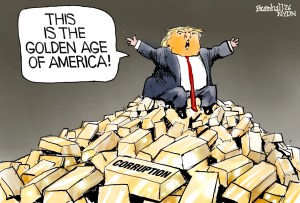 This insidious political behavior, resembling a toddler’s tantrum, has got to stop. I’m just glad they’re so glaringly egregious that lawyers and judges easily spot them. This story is from The New Republic. “Angry Trump Openly Urges GOP to Rig Midterms as Brutal Fox Poll Hits. As a striking Fox News poll suggests the GOP midterm position is deteriorating, a voting rights expert walks us through what Trump is really gearing up to attempt this fall—and how to defeat it.” Greg Sargent interviews Ari Berman. This comes from the transcript of his Podcast.
G. Elliot Morris presents evidence on who exactly would be hurt by this law in his blog Strength in Numbers. “Poll: These Americans say they’d be disenfranchised by Trump’s election law. Few Americans have heard a lot about the provisions of the SAVE Act. Support declines the more someone hears about it,”
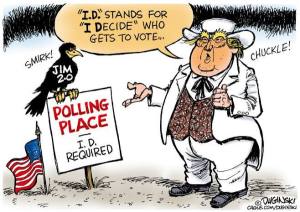 You may review the chart at the link as well as read more analysis on the subject. Lisa Needham of Public Notice has this headline today. “MAGA’s “pasta pass” talking point is height of gaslighting. They know better. They’re hoping voters don’t.”
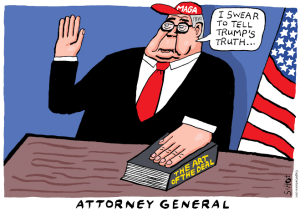 Law Dork‘s Chris Geitner explains just how low the DOJ can go in his post today. “Thursday was the worst day for DOJ. So far. DOJ withdrew its subpoenas issued to New York Times reporters, but the hearing that preceded that decision showed just how degraded DOJ has become.” Again, doesn’t the U.S. Constitution mean anything to any Republican these days?
 Read more details on Subramanian’s questions and the chaos that followed at the link. The New York Times comes out looking badly too. Of course, the DOJ is the only federal department that looks like it’s at an all-time low. This New York Times headline shows the shocking state of our country’s health as HHS is being run by scaliwags like Dr. Oz, and outright nut jobs like RFK Junior. “Measles Cases Hit New Record in U.S., as Vaccination Rates Wane. More measles cases have been reported in the United States in the last two years than in all the years from 2000 through 2024 combined.”Teddy Rosenbluth has the lede.
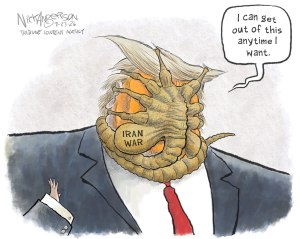 BTW, we’re still in a hot war, and the Epstein files are still not completely public. This is from NBC News. “U.S. launches new strikes and Trump threatens ‘massive attack’ as Iran widens war. There were signs Friday that some U.S. allies in the Middle East may be losing patience with the daily escalation and lack of diplomatic progress. “It’s only getting crazier,” one senior Arab official, directly involved with diplomatic efforts, told NBC News.”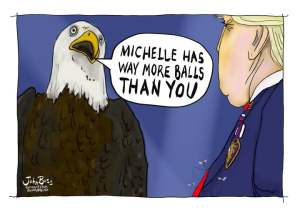
 That last sentence hits home. And I say no more going high when they go low. Call it out for what it is.
 The New York Times has a big story today about the institutional racism being put back into place in the military by drunk, rapey Pete Hegseth. We have to stop going backward. “Secret Vetting and Blocked Promotions: Inside Hegseth’s War on Diversity. A Black admiral fixed one of the Navy’s worst messes. Mr. Hegseth blocked his promotion anyway.” Greg Jaffe and Kate Kelly share the lede.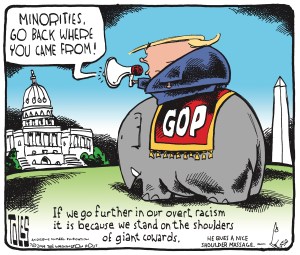
 It sure looks like we have a lot of leaders of major countries completely out of their league. And back to Iran. This is from Reuters. “Iran’s Revolutionary Guards set up covert Iraqi cells to attack Gulf neighbors, sources say.” It’s the same old, same old since the 1970s if you ask me.
 Feeling safer now? Me neither. Trump’s polls continue to fall on the Iraq war. As you can see from The Bulwark articles, the trad war hawks are not happy about the situation. Maybe we all need to start building bunkers. This is from the AP. “What Americans think about Trump’s handling of Iran, according to a new AP-NORC poll.”
 More at the link. CNBC shows the data with more analysis. “Oil prices topped $100 per barrel on record supply disruption, but are off session highs.” We’ll see if that lasts until the markets close this afternoon.
 It’s really odd to think that I started my career as an economist during the OPEC maneuvers and I’m winding down my career as one with the US maneuvers. Frankly, I think China is sitting pretty right now. They’ve been doing a lot with alternative energy and have the entire Pacific Region — including many Latin American Countries with oil — undoubtedly rooting for them right now.
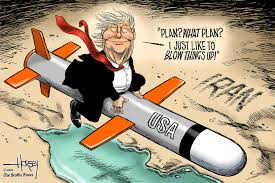 Trump donors are feeling this immediately. Trump voters will shortly see the impact on their budgets and gas prices. I can’t say I feel sorry for any of them, but there’s not a person who won’t feel this one way or another. The Bulwark’s Andrew Egger examines Trump’s seeming confusion over his War.
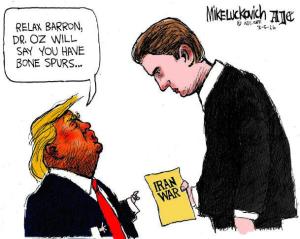 Judd LeGum at Popular Information specifies not the unknowables of the attack, but the rationale and plans for the future, which are blowing in the wind. “9 days in, the most basic question about the Iran war remains unanswered. In just over a week, Trump and top administration officials have given at least 17 different responses about why the war began.” Yup. We still don’t know why they did this.
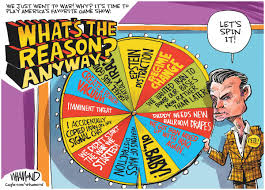 A brief description of each of those 17 responses is given in the article. You may read it at this fully gifted link. The New York Times reports on information from Iran’s new Supreme Leader. “Live Updates: Oil Price Surge Rattles Markets; Iran’s Choice of Leader Signals Defiance. Stocks fell on fears of the Iran war’s effects on energy prices. Top clerics selected Mojtaba Khamenei as Iran’s supreme leader, despite President Trump’s warning that he was “unacceptable.”
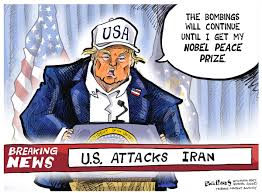 It still looks like the start of World War 3 to me. From the same link above.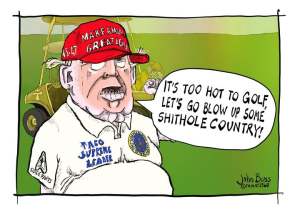
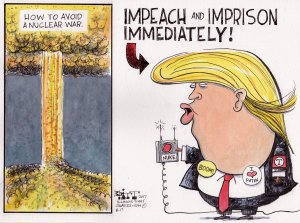 You may read about the details of the attack at PBS if you aren’t overwhelmed already by the thought of Sex Pest and Drunk, Pet Hegseth being a part of this. This headline from The Hill won’t make you feel any less queasy. I’m assuming you knew that #FARTUS was also posted that he would help Iran Make Iran Great Again. That was while Hegseth and Rubio were busily telling the press that our hijacked country had no plans for regime change. Remember, if his lips are moving, he’s telling a big ol’ story. “Israel attacking government sites in Iran as Trump floats regime change.” The reporting here is by Sarah Fortinsky.
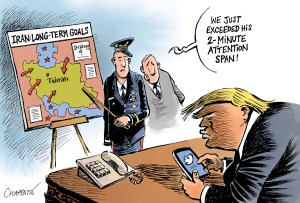 That sure sounds like a war to me. Peter Nicholas, NBC News, reports that Democrats in the District are finally sounding some kind of alarm. “‘Biden didn’t start any wars’: Democrats sharpen their arguments against Trump’s foreign policy. In the wake of the U.S. airstrikes on Iran, Democrats are pointing to Trump’s own promises that he wouldn’t ensnare the country in foreign conflicts.”
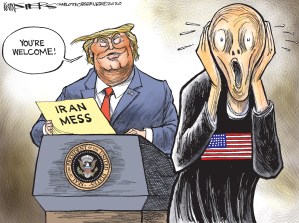 The Guardian has a headline today that’s spot on. George Bush got led on by his own advisors. Trump’s advisors said no to the mission. Evidently, Trump was taken by strongman Benjamin Netanyahoo! After all that speechifying about Hillary getting us into another World War and how he’d never drag us into something like Dubya did to Iraq and Afghanistan. Here we are. “Like George W Bush, Trump has started a reckless war based on a lie. The Iraq War was built on a lie. Now history is repeating itself.” Mohamad Bazzi has the analysis.
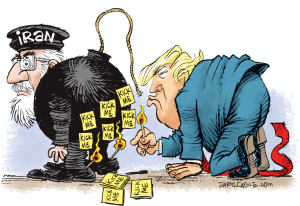 I’m sure none of this is lost on us. Mark Landler writes this analysis for The New York Times. “Iran’s Nuclear Dreams May Survive Even a Devastating American Blow. Through revolution and upheaval, the program has become intertwined with the country’s security and national identity.” Let’s hope all of this sinks in before Trump’s Folly starts costing American lives.
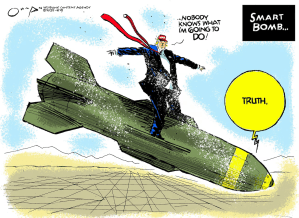 Everything old is new again. History repeats itself. Yup, another Republican steps on the detonator. Historian Heather Cox Richardson has a bigger perspective at her Substack, Letters from an American.
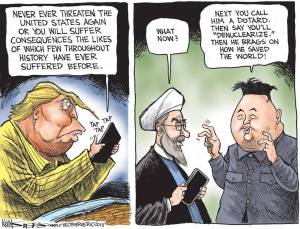 White Christian Nationalists have been at the heart of the big problems in just living your American life, extending their warmongering, hateful, bigoted selves into a second century. Meanwhile, back in the USSR, the bear awakens. Has Trump changed his fealty? This is from the Washington Post. Will he give up his position as RasPutin Fangirl and such to Netanyahoo? “Russia condemns U.S. strikes on Iran but takes no concrete actions. Iran’s foreign minister is in Moscow seeking support, but other than condemning the attack, Putin has not taken any major moves to back Tehran.” I was last night years old when I read that a Russian official told the press there were lots of countries willing to send actual nukes to Iran. It was part of the reason I didn’t sleep last night without a hefty dose of Benadryl. I didn’t snore either, from my poor stuffed sinuses suffering from the humidity and pollen here.
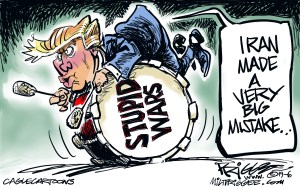 I’m going to start wrapping things up, but I wanted to share a few of the reporters outside the beltway. Jude Legum writes this for Popular Information. “A new war based on manipulated intelligence. More than two decades after the Iraq War commenced, history is repeating itself.” Even the weirdos he put in his cabinet saw the intelligence and just thumbed their noses at them. He “knew” better and used his instincts.
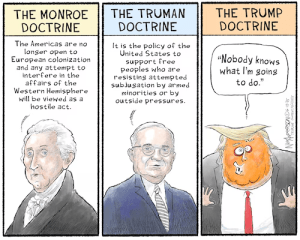 Jennifer Ruben, now writing at The Contrarian, has the term I’ve been using for at least two weeks. “Trump’s wags the dog. Risky military action disrupts the political dynamic. He’s been trying to get us off the topics of Doge, the Big Beautiful Budget-Busting bill, and the incredible cuts floating around the Senate.
 peej
peej Carissa
 bostonboomer
 dakinikat
 ecocatwoman
 jjlo
jjlo mablue2
 Mama Lopez
 peggysue22
 quixote
 skydancingguestblogger
 Mona (aka Wonk the Vote)



 Sky Dancing
Recent Comments